Your campaign launched Monday. By Wednesday, the CEO wants to know which channel created pipeline. Sales says the leads are unqualified. RevOps says the attribution data is incomplete. Meanwhile, you have subscriptions to eleven platforms and dashboards that disagree with each other.
This is the standard B2B marketing experience in 2026. According to the Content Marketing Institute (2025), 47% of B2B marketers say their tech stack lacks efficient lead-generation and nurturing processes, even as 81% are now using generative AI tools. More tools, more noise, same pipeline pressure.
The problem is not that you're missing software. It's that most stacks grow by addition rather than by design. Each tool covers one job, but the jobs don't connect, attribution stays broken, and leadership keeps asking you to prove what's working.
This guide cuts through that. It covers 21 B2B marketing tools worth evaluating in 2026, what job each one owns, and when to add it to your stack.
What's inside
This guide is for growth marketers, demand gen managers, and marketing ops leads building or auditing a B2B marketing stack. Tools were selected based on SERP prominence, common stack coverage, and category relevance across the full B2B buyer journey.
Selection criteria:
- Pipeline impact: Does the tool connect to revenue metrics like MQL-to-SQL, conversion rate, or CAC?
- Integration fit: Does it connect to CRM, marketing automation, and analytics without engineering work?
- Time-to-value: Can a lean team see results without a six-month implementation?
- Consolidation potential: Does it replace something, or just add another subscription?
Pricing and G2 ratings are verified against live sources for 2026.
TL;DR
- Best for interactive product experiences: Guideflow lets B2B marketers turn product value into self-serve demos with engagement data across landing pages, email, and ads
- Best all-in-one marketing hub: HubSpot covers CRM, automation, landing pages, and reporting in a connected workspace
- Best for marketing automation on lean teams: ActiveCampaign handles lifecycle journeys and segmentation without enterprise overhead
- Best for enterprise CRM and pipeline reporting: Salesforce is the revenue system of record for scaling and enterprise teams
- Best for ABM and account intelligence: Demandbase coordinates intent data and account prioritization across marketing and sales
- Best for SEO and content visibility: Semrush covers keyword research, competitive analysis, and rank tracking; Ahrefs leads on backlink data and content gaps; Surfer SEO focuses on on-page optimization
What is B2B marketing software?
B2B marketing software is a category of tools that helps business-to-business teams attract target accounts, capture demand, nurture buyers, measure pipeline influence, and improve conversion across the customer journey.
The category spans several distinct job categories:
- CRM and customer data: Storing accounts, contacts, opportunities, and activity history (Salesforce, Zoho CRM, HubSpot)
- Marketing automation: Running email, segmentation, lead scoring, forms, and lifecycle journeys (HubSpot, ActiveCampaign)
- ABM and account intelligence: Identifying target accounts, surfacing intent signals, coordinating plays (Demandbase)
- Lead qualification and scheduling: Converting high-intent visitors into booked meetings (Drift, Chili Piper)
- Data enrichment: Improving contact and company data quality for routing and personalization (Clearbit)
- Analytics and behavior insight: Tracking acquisition, conversion, and on-page behavior (Google Analytics, Hotjar)
- SEO and content production: Keyword research, content briefs, rank tracking, and AI-assisted writing (Semrush, Ahrefs, Surfer SEO, Jasper, Writesonic, BuzzSumo)
- Product experience tools: Interactive demos, sandboxes, and demo centers that turn product interest into measurable engagement (Guideflow)
- Campaign distribution and creative: Social advocacy, email QA, webinars, and design production (EveryoneSocial, Litmus, Zoom, Canva)
Each category solves a different problem. The strongest stacks cover all of them without excessive duplication.
When to use B2B marketing tools
Build a stack that proves pipeline impact
A tool is only useful if it connects to a metric leadership cares about. That means tying your tools to CAC, MQL-to-SQL conversion, pipeline generated, or influenced revenue. If a platform can't show up in a pipeline conversation, it belongs in the "supporting role" column of your stack audit, not at the center.
Convert high-intent visitors without adding sales friction
Some of the highest-value moments in B2B marketing happen when a prospect arrives at a pricing page or product page and leaves without converting. Self-serve product experiences, live chat with routing, and instant scheduling reduce that gap. The goal is to give prospects a reason to engage before asking them to book a call.
Scale content and campaigns without lowering quality
AI writing tools, SEO platforms, and design tools can accelerate output. But volume without editorial judgment creates generic content that ranks briefly and converts poorly. The right stack here combines an AI tool for drafts and briefs with a human review process and a clear content strategy.
B2B marketing tools comparison
The table below covers all 21 tools with their primary use case, pricing entry point, and G2 rating. Use it to identify which categories you're missing before reading the full tool sections.
| # | Product | Best for | Key use case | Pricing | G2 rating |
|---|---|---|---|---|---|
| 1 | Guideflow | Interactive product experiences | Self-serve demos with engagement analytics | Free; paid from $35/mo | 5.0/5 |
| 2 | HubSpot | All-in-one marketing hub | CRM, automation, email, reporting | Free; paid from $7/seat/mo | 4.4/5 |
| 3 | ActiveCampaign | Lean marketing automation | Email automation, segmentation, lifecycle journeys | From $15/mo | 4.4/5 |
| 4 | Demandbase | Account-based marketing | Account intelligence, intent data, ABM orchestration | Custom pricing | 4.4/5 |
| 5 | Salesforce | Enterprise CRM | Pipeline reporting, opportunity tracking, attribution | From $25/user/mo | 4.4/5 |
| 6 | Zoho CRM | Cost-conscious CRM | Contact management, automation, pipeline tracking | Free for 3 users | 4.1/5 |
| 7 | Drift | Conversational marketing | Visitor qualification and meeting booking via chat | Custom pricing | 4.4/5 |
| 8 | Chili Piper | Scheduling and routing | Convert form fills into booked meetings | From $1,250/mo | 4.6/5 |
| 9 | Clearbit | Data enrichment | Enrich leads, identify companies, improve routing | Quote-only | 4.4/5 |
| 10 | Google Analytics | Web analytics | Acquisition, behavior, and conversion reporting | Free; Analytics 360 contact sales | 4.5/5 |
| 11 | Hotjar | Behavior analytics | Heatmaps, session recordings, friction diagnosis | Free; paid from $31/mo | 4.5/5 |
| 12 | Surfer SEO | Content optimization | On-page SEO, content briefs, keyword coverage | From $49/mo | 4.8/5 |
| 13 | Jasper | AI marketing copy | Campaign copy, brand voice, content production | From $59/seat/mo | 4.7/5 |
| 14 | Writesonic | AI writing and visibility | SEO content, ad copy, AI search monitoring | From $79/mo | N/A on G2 |
| 15 | EveryoneSocial | Employee advocacy | Activate employees as social distribution channels | Custom pricing | 4.5/5 |
| 16 | Litmus | Email QA | Email previews, testing, deliverability checks | From $79/mo | 4.6/5 |
| 17 | BuzzSumo | Content research | Topics, influencers, competitor content performance | From $199/mo | 4.5/5 |
| 18 | Zoom | Webinars and virtual events | Webinars, registrations, event recordings | Free; paid from $14.16/user/mo | 4.6/5 |
| 19 | Canva | Creative production | Campaign visuals without design bottlenecks | Free; Pro at $144/year | 4.7/5 |
| 20 | Semrush | SEO and competitive research | Keywords, rankings, site audits, competitor data | Free; paid from $117.33/mo | 4.4/5 |
| 21 | Ahrefs | SEO research | Backlinks, keyword research, content gaps | From $29/mo | 4.5/5 |
Best 21 B2B marketing tools for 2026
1. Guideflow
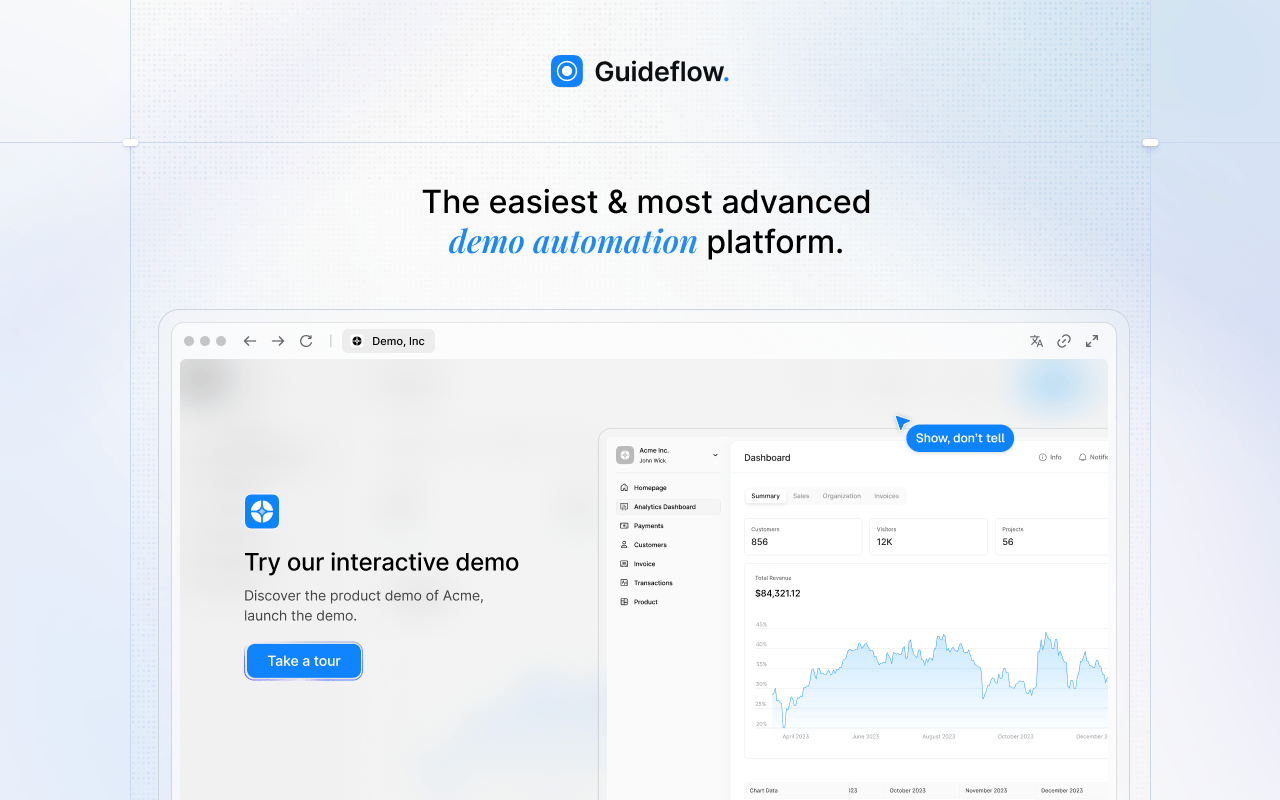
Guideflow is a demo automation platform that lets B2B marketing teams create self-serve product experiences buyers can explore without scheduling a call. Marketers use it to build interactive demos, sandboxes, Demo Centers, mobile demos, and live demos, then embed them on landing pages, in email campaigns, on ABM pages, or in paid ads. Each demo generates step-level engagement data, so you know who explored which features, where they dropped off, and what converted.
Best for: B2B marketers who need product-led acquisition and want engagement signals beyond page views.
Key features
- Interactive demos, sandboxes, demo centers, mobile demos, and live demos
- Capture via screenshot, HTML, or video recording
- Personalization: Text, images, graphs, and branching per viewer
- Analytics: Step-level completion, drop-off, and viewer flow
- Integrations with HubSpot, Salesforce, Marketo, Pipedrive, and Zapier
Why choose Guideflow: Guideflow fits when your product is the strongest conversion asset and you want buyers to experience it before they talk to sales. It replaces static screenshots, generic product pages, and meeting-first flows with guided experiences that also generate intent data for your CRM.
Guideflow pricing: Free plan available. Solo plan is $35/month billed annually ($40/month billed monthly). Growth is $499/month billed annually. Advanced is $1,499/month billed annually. Enterprise pricing is custom.
G2 rating: 5.0/5
Start your journey with Guideflow today!
2. HubSpot
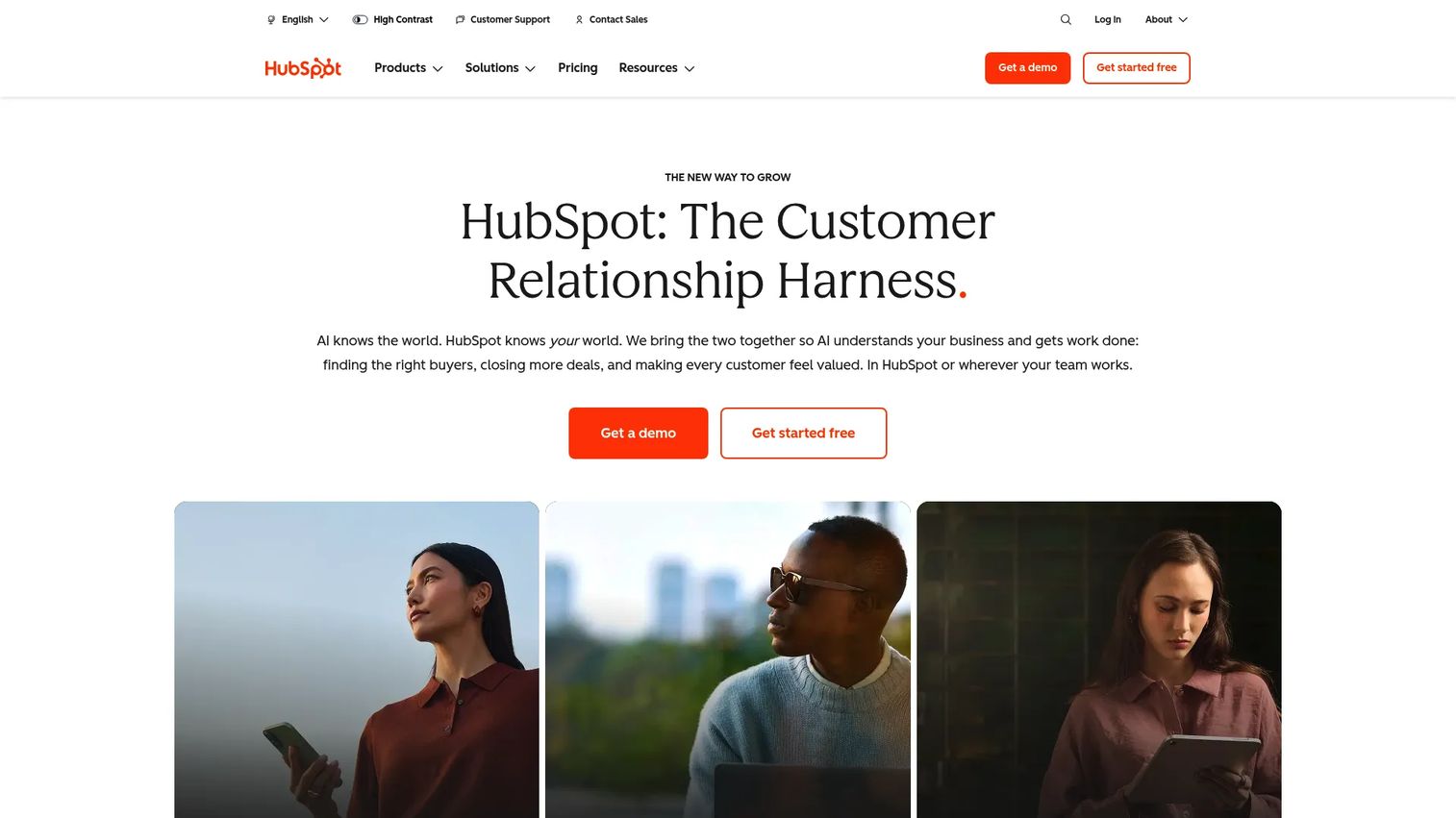
HubSpot is a customer platform combining CRM, Marketing Hub, Sales Hub, Service Hub, and content tools in a connected workspace. For B2B marketers, the main value is that campaigns, contacts, deals, and reports all draw from the same database, so attribution doesn't require a separate data project. Marketing Hub covers email automation, landing pages, forms, lead scoring, and campaign reporting.
Best for: Growth teams that want CRM, marketing automation, landing pages, and reporting without stitching together separate systems.
Key features
- Free CRM with contact and company records
- Email automation and campaign workflows
- Landing page builder with A/B testing
- Lead scoring and lifecycle stage management
- Marketing attribution and revenue reporting
Why choose HubSpot: Choose HubSpot when consolidation matters more than depth in one niche. It works especially well for teams where marketing and sales share the same contact records and need attribution from first touch to closed deal.
HubSpot pricing: Free tools available permanently. Starter plans begin at $7/seat/month (billed annually) or $20/seat/month billed monthly. Professional plans start at $1,300/month billed annually. Enterprise starts at $4,700/month.
G2 rating: 4.4/5
3. ActiveCampaign
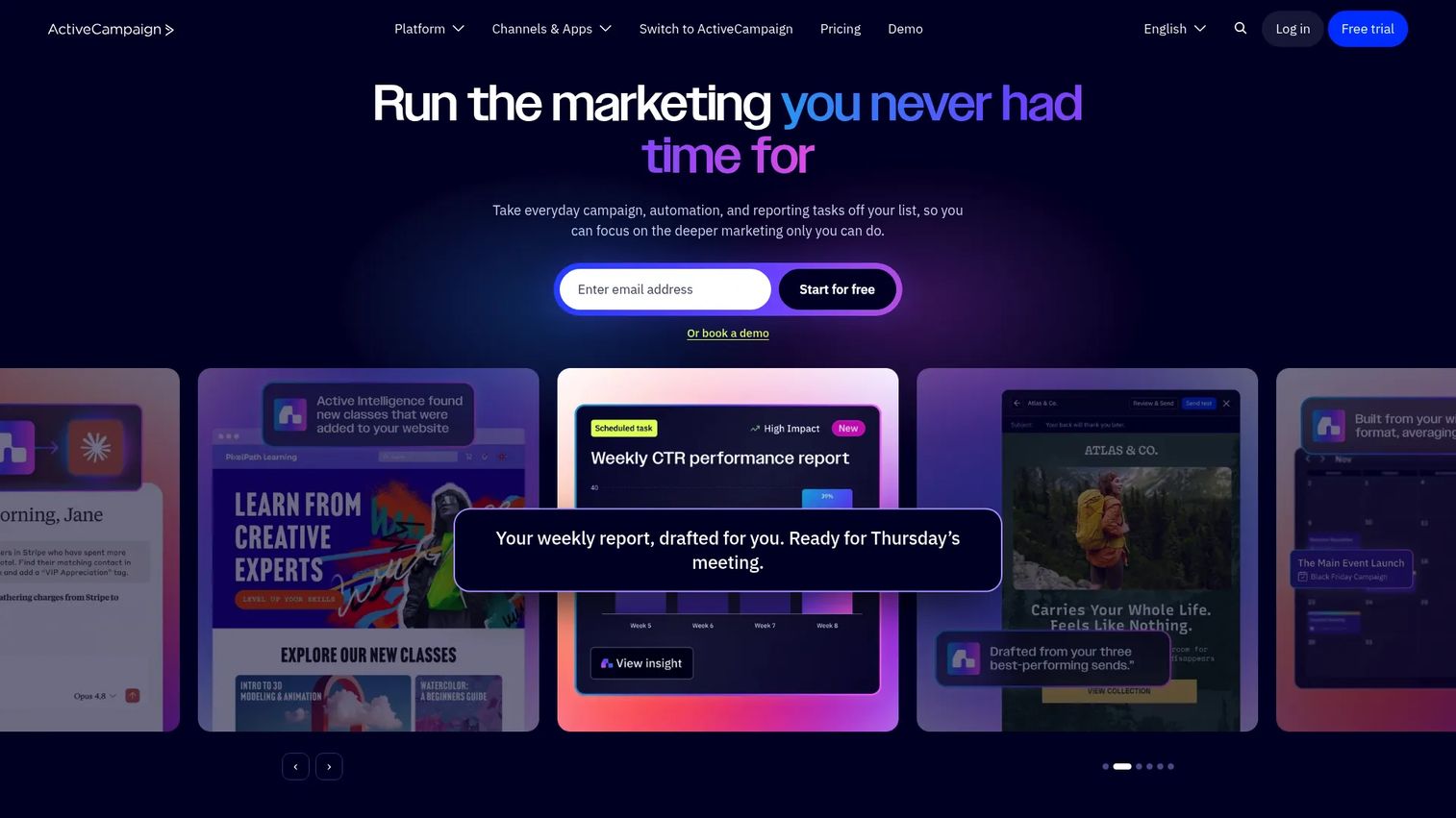
ActiveCampaign is a marketing and sales automation platform focused on email, CRM-lite workflows, and cross-channel lifecycle journeys. It's a strong fit for teams that need sophisticated automation without buying into a larger enterprise suite. The journey builder handles multi-step nurture flows, win-back campaigns, and behavioral triggers without requiring a dedicated ops resource.
Best for: Lean B2B marketing teams that need marketing automation and lifecycle journeys without enterprise overhead.
Key features
- Multi-step email automation and journey builder
- CRM with deal pipelines and sales automation
- Behavioral segmentation and lead scoring
- AI-powered campaign and automation suggestions
- Cross-channel messaging across email, SMS, and WhatsApp
Why choose ActiveCampaign: ActiveCampaign works well when lifecycle marketing drives your pipeline and you don't need a full enterprise CRM alongside it. It can replace a basic email platform plus lightweight CRM workflows for teams with under 50,000 contacts.
ActiveCampaign pricing: Starter plans scale by contact list size with entry pricing around $15/month. Plus plans start at $49/month billed annually. Pro plans start at $79/month billed annually.
G2 rating: 4.4/5
4. Demandbase
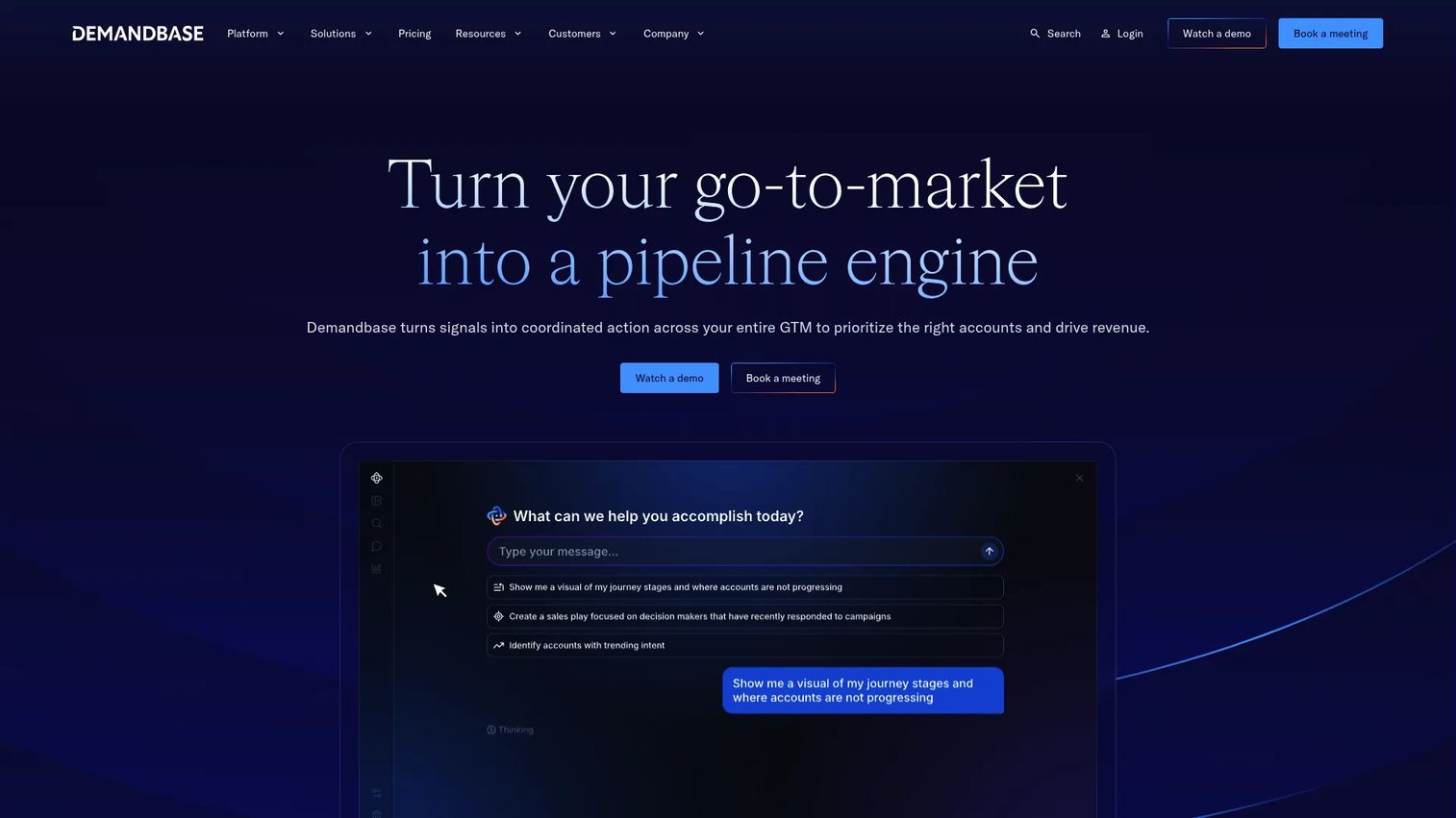
Demandbase is an AI-powered account-based go-to-market platform covering account intelligence, intent data, ABM advertising, website personalization, and sales activation. It's built for teams running coordinated plays across marketing and sales against a defined target account list. The platform helps prioritize accounts by intent, run advertising against buying committees, and arm sales with account research.
Best for: B2B teams running account-based marketing against high-value target accounts with multi-stakeholder buying committees.
Key features
- Account intelligence and third-party intent signals
- ABM advertising across digital channels
- Website personalization by account segment
- Marketing and sales orchestration workflows
- B2B data enrichment and buying-group insights
Why choose Demandbase: Demandbase is strongest when marketing and sales are aligned on a target account list and need a shared system to prioritize, activate, and measure account-based plays. It's usually more than a team needs without an established ABM motion.
Demandbase pricing: Custom pricing. The platform uses a platform fee plus a per-user fee. Advertising and data products can also be bought separately. Contact Demandbase sales for a quote.
G2 rating: 4.4/5
5. Salesforce
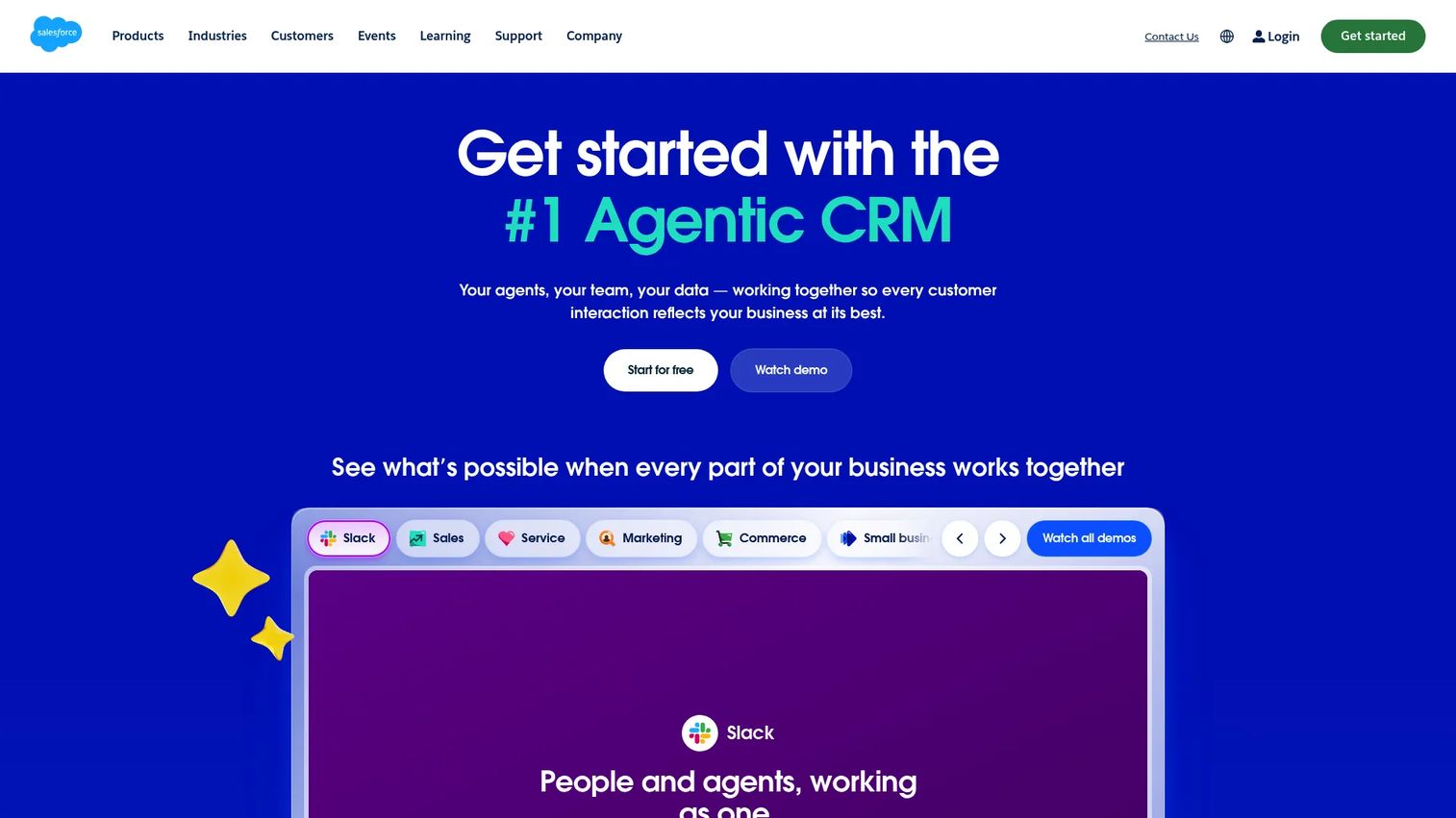
Salesforce is the dominant enterprise CRM and revenue platform. For B2B marketers, its value comes from pipeline visibility, campaign attribution tied to opportunities, and the ability to prove marketing influence inside a structured sales process. Salesforce Sales Cloud manages leads, accounts, contacts, opportunities, forecasts, and the app marketplace that connects the broader stack.
Best for: Scaling and enterprise teams that need CRM-based pipeline reporting and campaign attribution connected to revenue.
Key features
- Lead, account, contact, and opportunity management
- Campaign attribution and revenue reporting
- Sales automation and workflow tools
- AI-powered CRM capabilities (Einstein)
- App marketplace with hundreds of integrations
Why choose Salesforce: Salesforce belongs in stacks where marketing must prove influence inside a complex, multi-stakeholder revenue process. It takes RevOps support to maintain well, but it gives leadership the pipeline structure they expect at scale.
Salesforce pricing: Free Suite available at $0/user/month. Starter Suite is $25/user/month. Pro Suite is $100/user/month billed annually. Core is $195/user/month billed annually.
G2 rating: 4.4/5
6. Zoho CRM
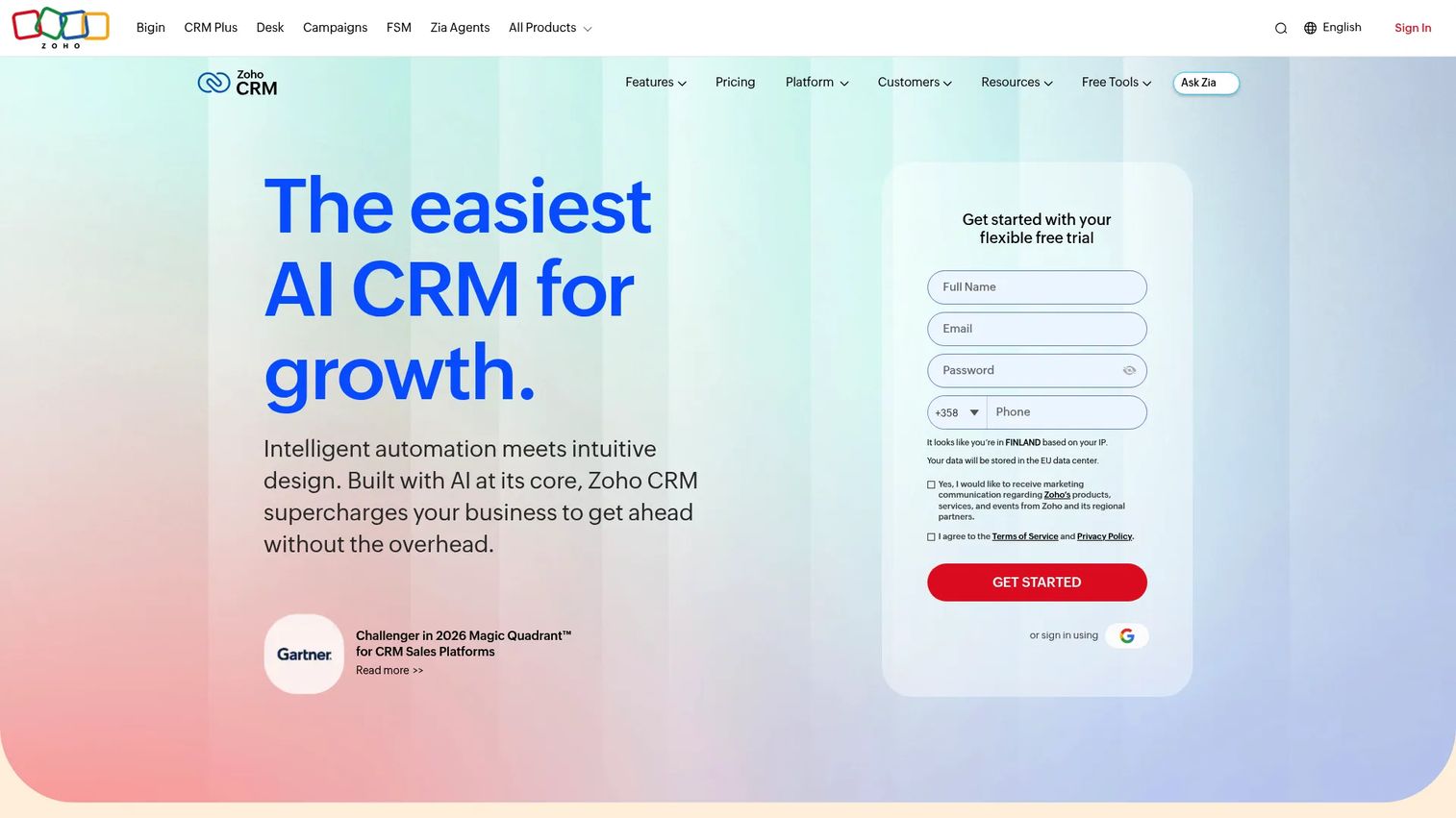
Zoho CRM is an AI-powered CRM platform for managing sales pipelines, customer relationships, automation, and business workflows. It covers contact management, workflow automation, sales forecasting, mobile apps, and reporting at a price point that works for smaller B2B teams. The free edition supports up to three users, making it a practical starting point for early-stage teams before they outgrow it.
Best for: Small and mid-market B2B teams that need CRM structure and automation without enterprise-level cost.
Key features
- Contact and lead management
- Workflow and process automation
- Sales forecasting and pipeline management
- AI agents and predictive intelligence
- Reports, analytics, and dashboards
Why choose Zoho CRM: Zoho CRM fits teams that need solid sales and marketing coordination at a lower entry price. It suits organizations that want broad CRM coverage without committing to Salesforce or HubSpot before they've grown into the full feature set.
Zoho CRM pricing: Free edition available for up to three users. Paid plans are available on Standard, Professional, and Enterprise tiers with per-user, per-month pricing.
G2 rating: 4.1/5
7. Drift
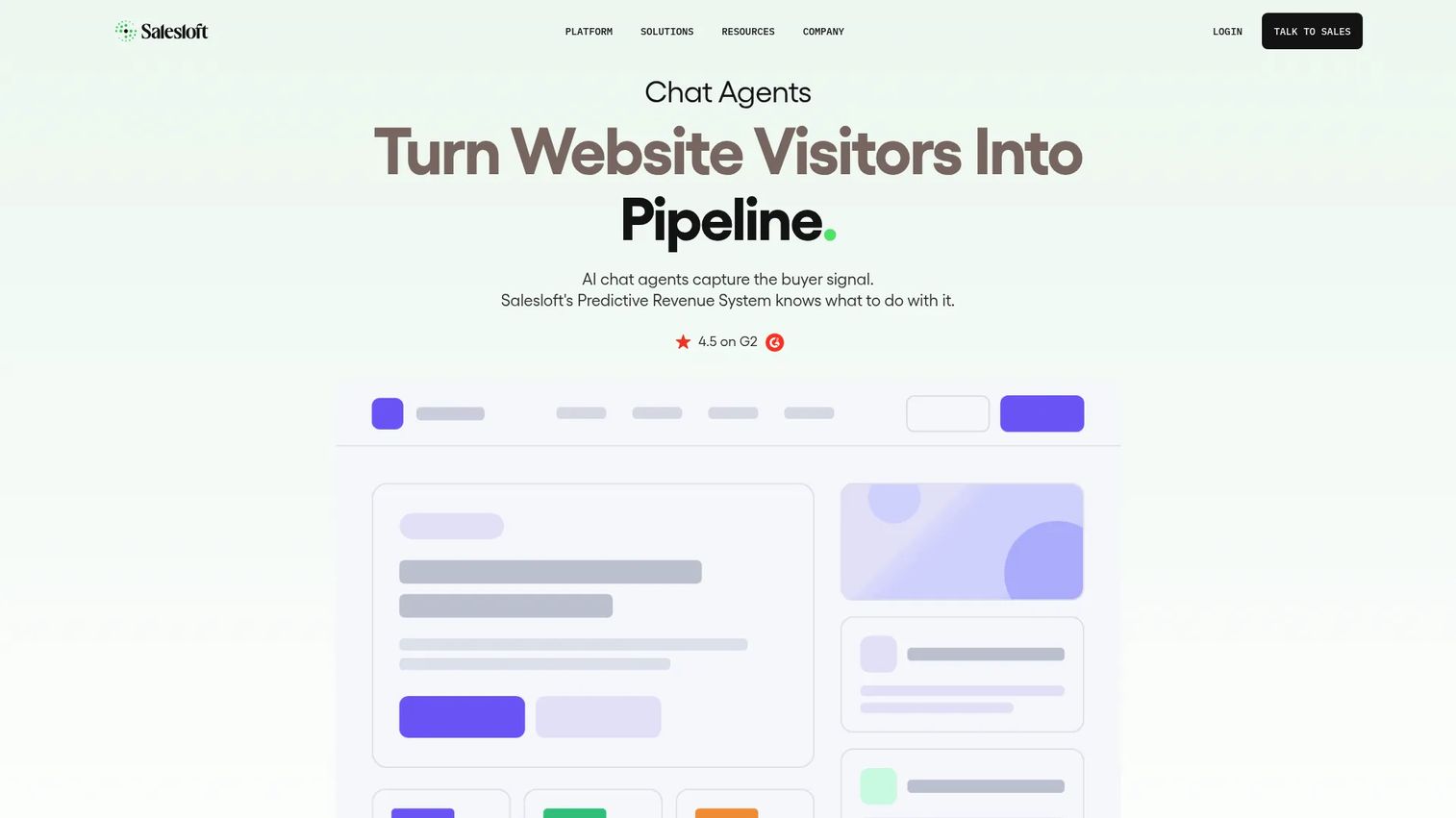
Drift is an AI-powered conversational marketing and buyer engagement platform, now part of Salesloft. It helps B2B teams qualify website visitors, route high-intent conversations to the right sales rep, and book meetings without requiring a form submission. Key use cases include demo request pages, pricing pages, and target-account routing for ABM programs. Drift is scheduled for retirement on January 31, 2027, so teams evaluating it should factor in the transition timeline.
Best for: B2B marketers who want real-time chat-based qualification on high-intent pages with direct routing to sales.
Key features
- Custom chatbots for visitor qualification and meeting booking
- Live chat with AI-suggested replies
- Drift Intel for lead and account recognition
- Lead routing and multilingual conversation support
- Conversational landing pages
Why choose Drift: Drift fits websites where a timely conversation can save an opportunity that would otherwise leave through a standard form. It works best when sales can respond quickly and marketing has defined clear qualification paths in the bot.
Drift pricing: Premium, Advanced, and Enterprise tiers are available.
G2 rating: 4.4/5
8. Chili Piper
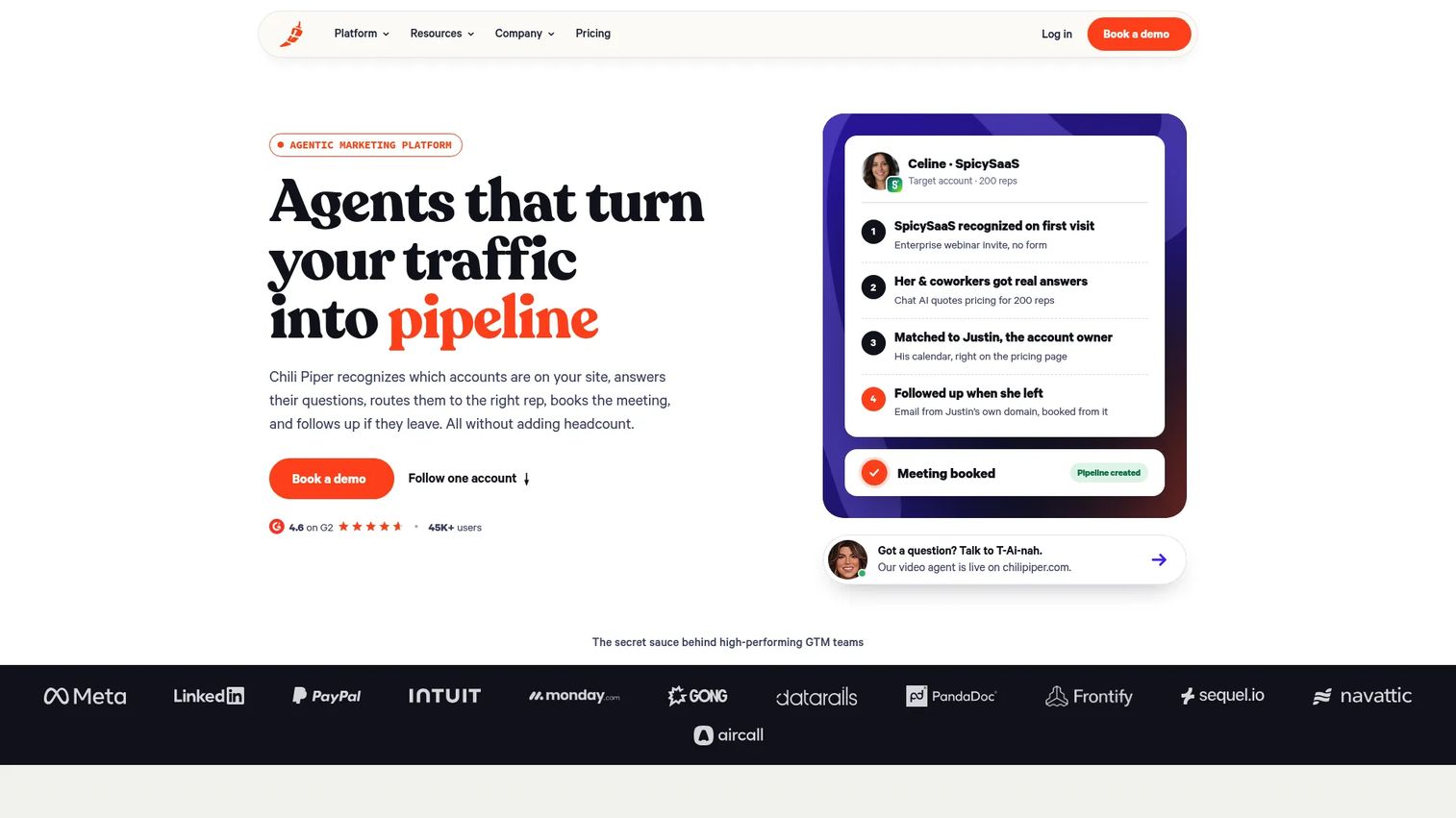
Chili Piper is a demand conversion platform that helps B2B revenue teams qualify, route, and schedule inbound demand. Its core job is converting form fills into booked meetings by instantly presenting a calendar after submission, rather than sending leads into a follow-up queue. It also handles lead routing by territory, ownership, or round-robin assignment with Salesforce integration.
Best for: Teams with meaningful inbound volume where the gap between form submission and scheduled meeting is leaking pipeline.
Key features
- Instant booking after form submission
- Lead, contact, and account routing rules
- AI chat for qualification and scheduling
- Automated follow-up for no-shows and abandoned forms
- Calendar and CRM integrations
Why choose Chili Piper: Chili Piper is valuable when campaigns are generating leads but meetings aren't converting at the expected rate. The tool addresses the speed-to-lead problem directly, cutting the delay between intent and conversation.
Chili Piper pricing: Growth plan starts at $1,250/month billed annually and includes 15 seats. Scale starts at $3,500/month billed annually with 30 seats. Enterprise uses volume pricing starting at 250 seats. The standalone ChiliCal product is $12/user/month with a 200-seat minimum.
G2 rating: 4.6/5
9. Clearbit
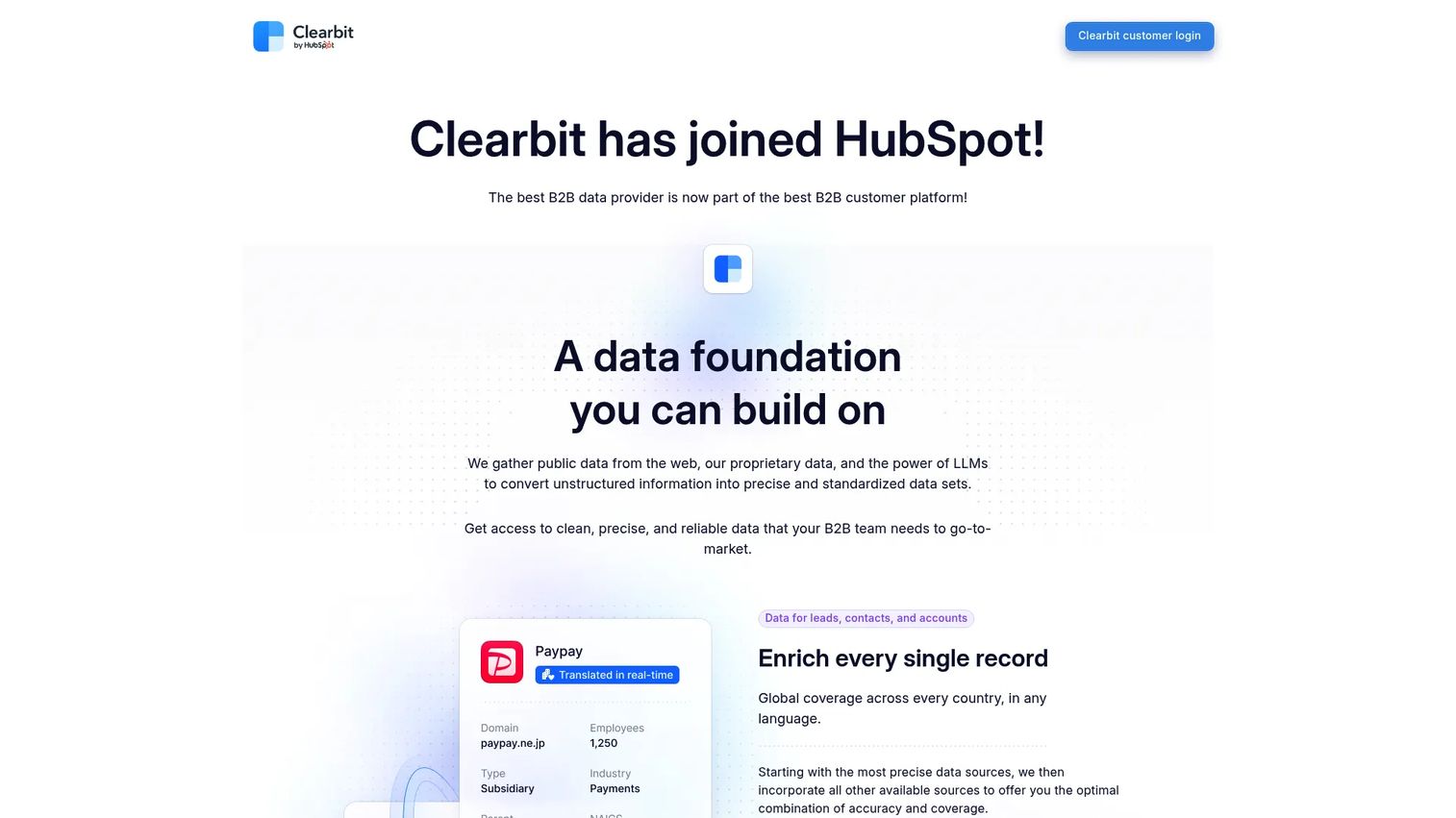
Clearbit is a B2B data platform for enriching contact and company records, identifying website visitors, and improving lead qualification. Marketers use it to shorten forms by auto-filling firmographic data, segment campaigns by company size or industry, and route high-value accounts to the right sales rep. Clearbit is no longer offering new standalone subscriptions; existing customers remain supported, and new buyers should contact their account team.
Best for: B2B revenue teams where incomplete contact and company data is slowing routing, scoring, and campaign personalization.
Key features
- Real-time lead and account enrichment
- Website visitor identification and intent signals
- Form shortening and autofill
- Ideal customer profile targeting and segmentation
- CRM and marketing platform integrations
Why choose Clearbit: Clearbit is worth evaluating when dirty or incomplete data is the reason campaigns aren't reaching the right segments. Cleaner firmographic data improves routing accuracy and shortens the gap between intent and follow-up.
Clearbit pricing: Clearbit no longer offers new standalone subscriptions.
G2 rating: 4.4/5
10. Google Analytics
Google Analytics is a web and app analytics platform for understanding traffic acquisition, user behavior, and conversion performance. GA4 is the current version, using an event-based data model that supports cross-platform tracking across websites and apps. For B2B marketers, it's the baseline layer for understanding which channels drive qualified traffic and where conversion paths break.
Best for: Teams that need free, cross-platform web analytics with acquisition reporting and Google Ads integration.
Key features
- Real-time reporting and acquisition analysis
- Cross-platform attribution reporting
- Funnel, path, cohort, and free-form explorations
- Predictive capabilities and automated insights
- Integrations with Google Ads and Search Console
Why choose Google Analytics: Google Analytics gives marketers a baseline view of traffic quality and channel performance at no cost. It works best when events are set up properly from the start and the team understands its limits as a last-click attribution model by default.
Google Analytics pricing: Standard Google Analytics (GA4) is free. Analytics 360 carries a base fee plus variable per-event pricing; contact Google for a quote.
G2 rating: 4.5/5
11. Hotjar
Hotjar is a digital experience insights platform that shows how visitors interact with your website through heatmaps, session recordings, funnel analysis, surveys, and feedback widgets. For B2B marketers, the main use case is diagnosing landing page and conversion path performance without filing an engineering ticket to see what's happening.
Best for: Marketers optimizing landing pages, demo request flows, and website conversion paths who need qualitative behavior data.
Key features
- Click and scroll heatmaps
- Session recordings with rage-click detection
- Funnel drop-off analysis
- On-site surveys and feedback widgets
- User testing and interview scheduling
Why choose Hotjar: Hotjar helps marketers see where visitors hesitate, abandon a form, or miss a CTA. It's most useful when paired with quantitative analytics, since it explains the "why" behind the numbers you already see.
Hotjar pricing: Basic plan is free. Plus is $31/month. Business is $79/month. Scale is $170/month. All prices are monthly rates.
G2 rating: 4.5/5
12. Surfer SEO
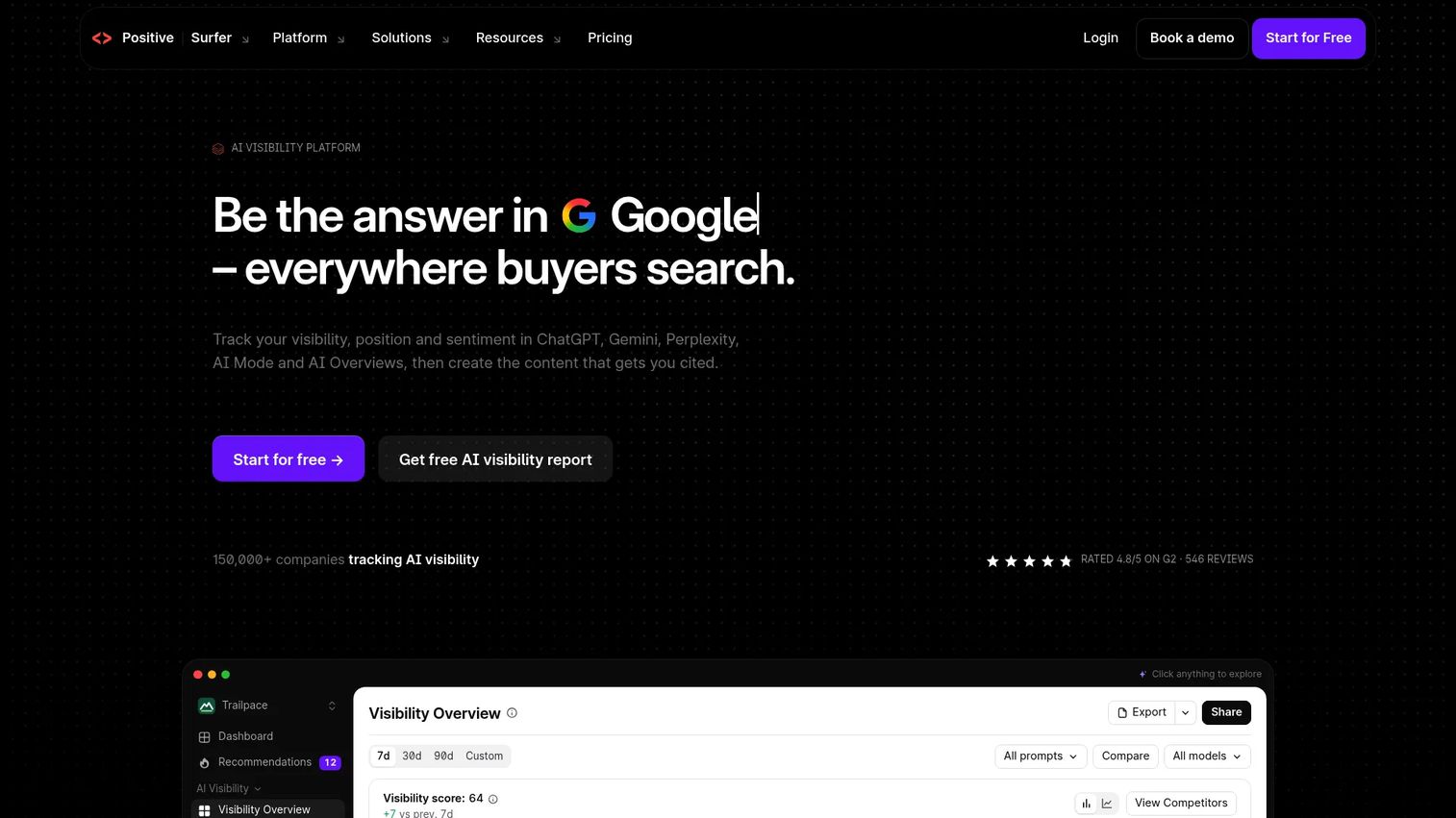
Surfer SEO is an AI-powered content optimization and SEO platform that analyzes SERP results to generate content briefs, scoring guidance, and keyword recommendations. Writers use the content editor to see real-time optimization scores as they draft, and SEO teams use the keyword and gap analysis tools to plan content production. Surfer also tracks AI search visibility across platforms like ChatGPT and Google AI Overviews.
Best for: Content teams that need structured SEO briefs and on-page optimization guidance at scale.
Key features
- SERP-based content editor with real-time scoring
- Keyword research and content gap analysis
- AI-generated content outlines
- Automated internal link suggestions
- Rank tracking and content performance monitoring
Why choose Surfer SEO: Surfer gives writers a repeatable process for covering a topic thoroughly according to what currently ranks. It should guide structure and coverage, not replace subject-matter expertise or original research.
Surfer SEO pricing: Discovery plan is $49/month billed annually. Standard is $99/month. Pro is $182/month. All prices are annual-billing rates.
G2 rating: 4.8/5
13. Jasper
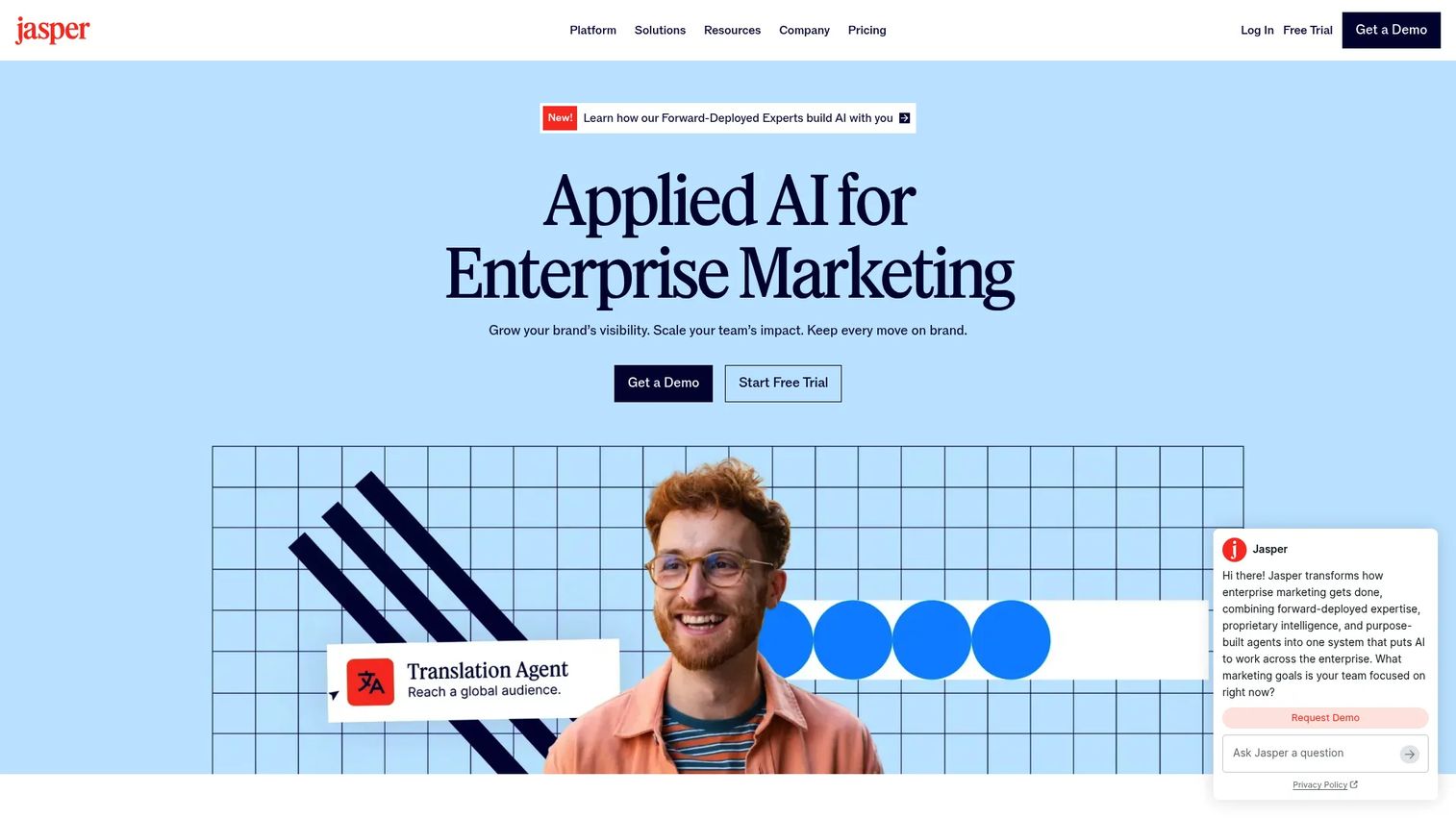
Jasper is a generative AI platform built for enterprise marketing teams. It goes beyond a generic AI writer by supporting brand voices, audience definitions, style guides, and company knowledge bases, so output stays on-brand across team members. The platform includes AI agents for campaign workflows, Jasper Grid for scaled content execution, and Canvas for collaborative content creation.
Best for: Marketing teams that need on-brand AI-assisted drafts and campaign variations at volume.
Key features
- Brand Voices and style guides for consistent output
- AI agents for campaign and marketing workflows
- Jasper Grid for scaled content execution
- Canvas for on-brand collaborative creation
- API access and enterprise governance controls
Why choose Jasper: Jasper is useful when draft volume and message variation are the bottleneck and the team has clear positioning to feed the tool. It works best with a human editor in the loop, since AI output still requires product knowledge and customer insight to convert.
Jasper pricing: No permanent free tier; a 7-day Pro trial is available. Pro plan is $59/seat/month billed annually ($69/seat/month billed monthly). Business plan pricing is custom.
G2 rating: 4.7/5
14. Writesonic
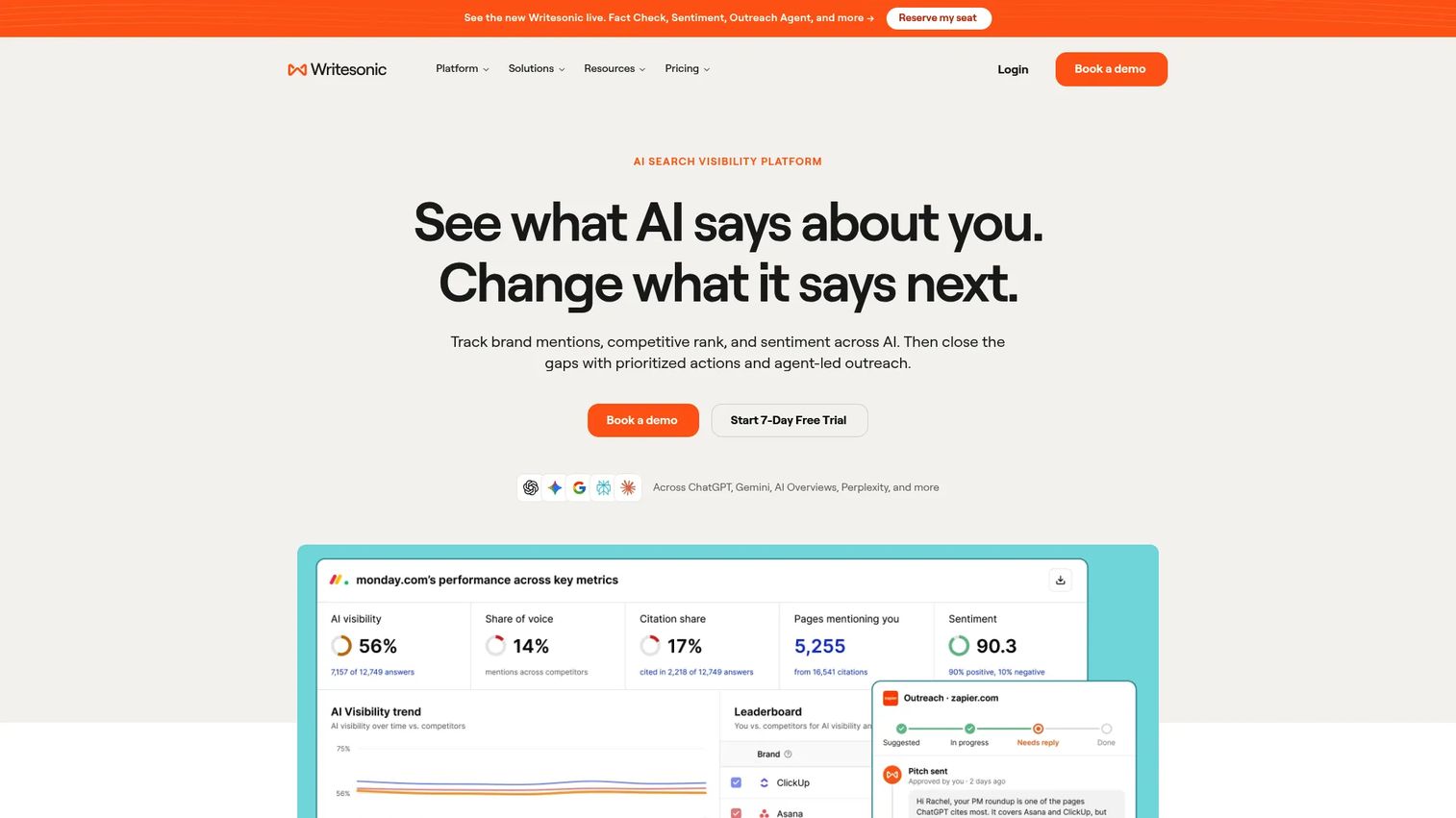
Writesonic is an AI platform covering content writing, SEO optimization, and AI search visibility monitoring. Its current focus includes tracking how brands appear across ChatGPT, Gemini, and Google AI Overviews, alongside article writing, ad copy, and site audits with automated fix suggestions. For B2B marketers watching AI search as a growing acquisition channel, it covers both content production and visibility measurement.
Best for: Lean teams that need AI help across SEO content production and AI search visibility monitoring.
Key features
- AI article writer with SEO optimization
- AI visibility monitoring across AI search platforms
- Site audits with automated improvement suggestions
- Ad copy and landing page generation
- Agentic workflows for content and SEO tasks
Why choose Writesonic: Writesonic covers both content creation and the emerging AI search channel in one platform. Keep editorial review in the workflow to avoid generic output that ranks briefly without converting qualified traffic.
Writesonic pricing: Starter plan is $79/month billed annually. Basic is $199/month. Growth is $399/month. Enterprise pricing is custom.
15. EveryoneSocial
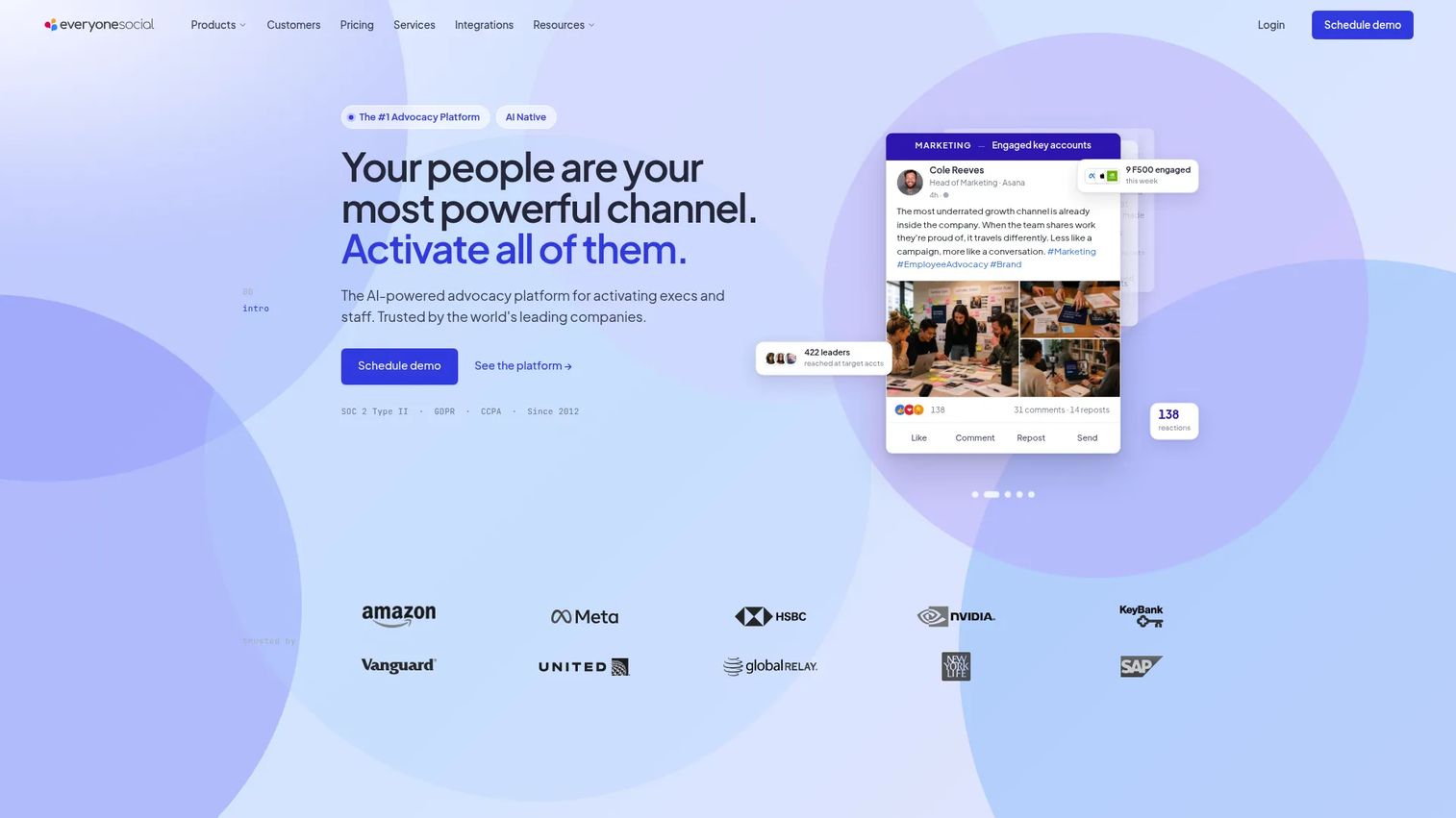
EveryoneSocial is an employee advocacy platform that helps marketing, sales, recruiting, and communications teams distribute approved content through employee social channels. For B2B marketers, the core value is extending organic reach without additional ad spend by activating employees as a distribution layer for thought leadership and campaign content.
Best for: Enterprise marketing teams that want employees to amplify approved content across LinkedIn and other social networks.
Key features
- AI-assisted content recommendations with brand and voice controls
- Multi-channel distribution through Slack, Teams, Outlook, and social networks
- Analytics and earned media value measurement
- Leaderboards and gamification for adoption
- SSO, SCIM, and enterprise integrations
Why choose EveryoneSocial: EveryoneSocial fits teams that already produce strong content but need distribution beyond the company page. It works best when leadership participates visibly and employees have clear prompts about what to share and why.
EveryoneSocial pricing: One plan priced by number of registered users on an annual contract. Contact EveryoneSocial for a quote.
G2 rating: 4.5/5
16. Litmus
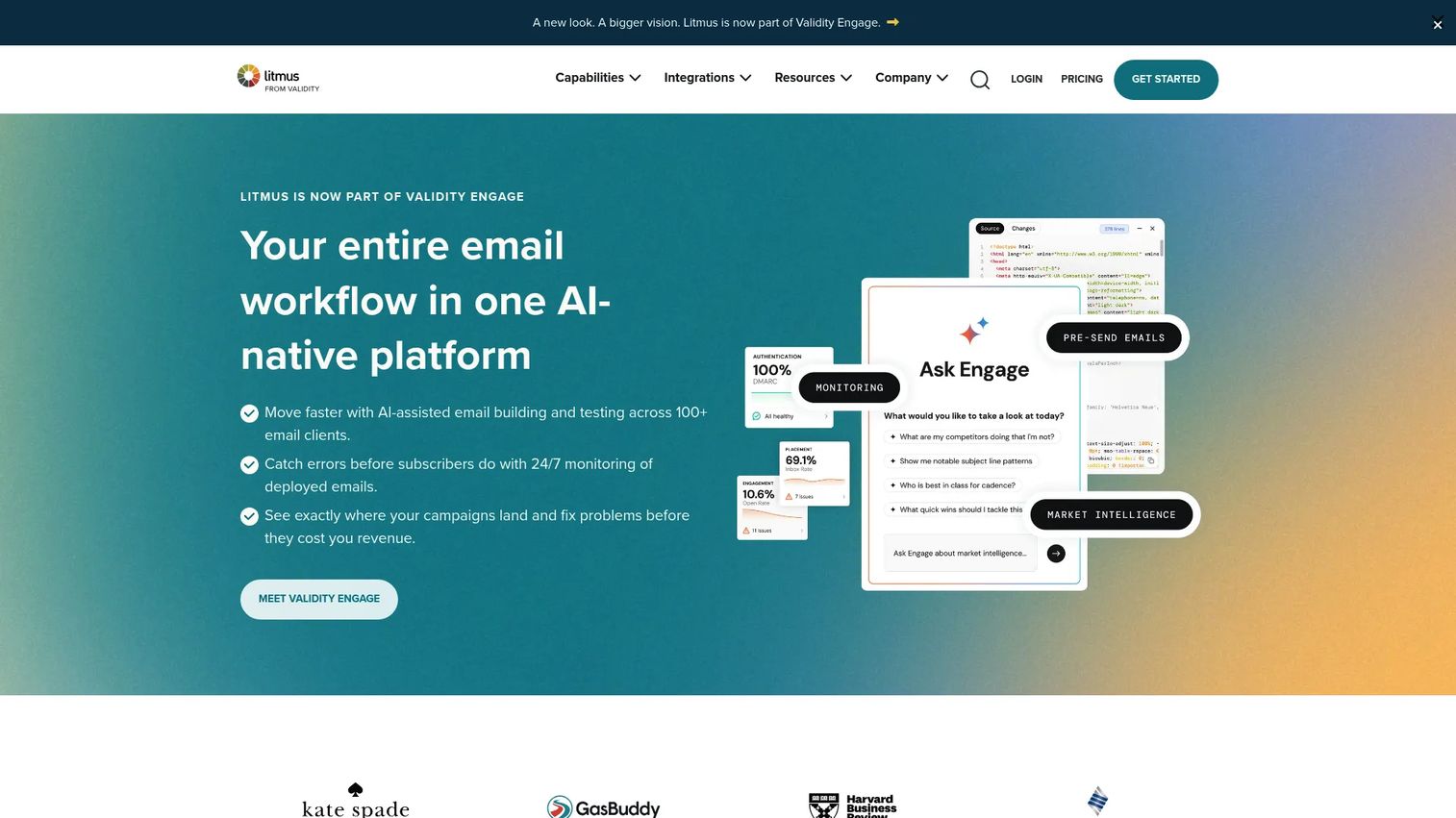
Litmus is an email marketing platform for building, testing, and QA-ing campaigns across more than 100 email clients and devices. For B2B teams where email is a primary revenue channel, broken renders in Outlook or Gmail are expensive mistakes. Litmus adds an automated QA layer to catch issues before campaigns reach prospects or customers.
Best for: Email teams sending high-volume campaigns who need automated rendering previews, accessibility checks, and spam testing.
Key features
- Email previews across 100+ email clients and devices
- Spam testing and deliverability monitoring
- Accessibility checks for email compliance
- Design Library for centralized brand assets
- Collaboration and approval workflow
Why choose Litmus: Litmus is worth the cost when email drives meaningful pipeline and a broken send creates real revenue risk. It gives teams a QA checkpoint that catches rendering problems, accessibility gaps, and deliverability issues before launch.
Litmus pricing: Basic plan is $79/month billed annually ($99/month billed monthly). Core plan is $417/month billed annually ($500/month billed monthly).
G2 rating: 4.6/5
17. BuzzSumo
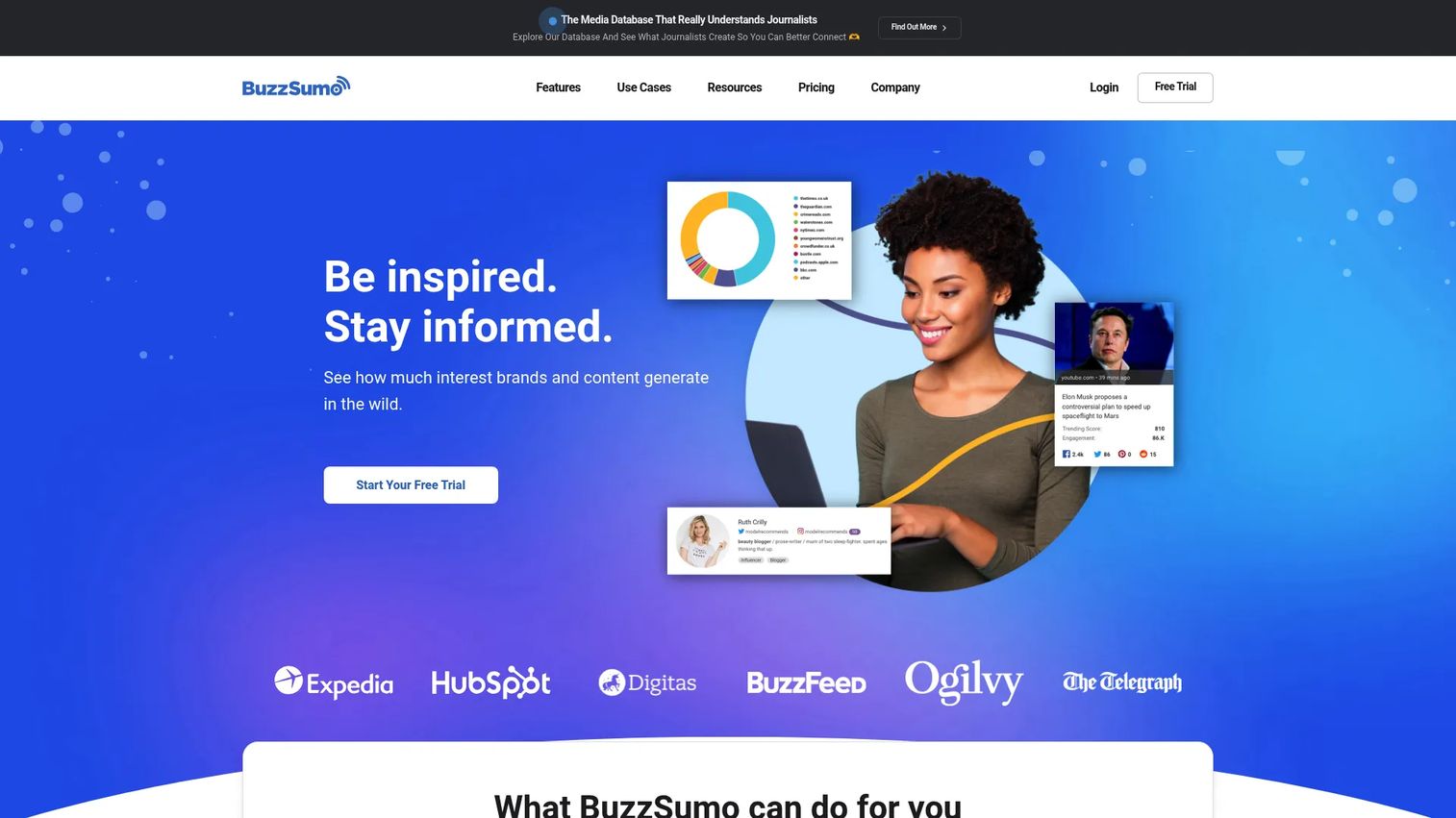
BuzzSumo is a content research and media monitoring platform for discovering high-performing topics, tracking competitor content, finding journalists and influencers, and monitoring brand coverage. B2B content marketers use it to identify what resonates before writing begins, and to stay ahead of competitive content moves.
Best for: Content marketers and PR teams researching topics, influencers, and competitor content performance before briefing writers.
Key features
- Content Analyzer for social performance research
- Topic and question analysis for content ideation
- Journalist and influencer discovery
- Brand and competitor monitoring with alerts
- Backlink analysis and YouTube analytics
Why choose BuzzSumo: BuzzSumo helps marketers find angles before committing to a content plan. It's most effective when paired with keyword data from an SEO tool, so topics are both resonant and searchable.
BuzzSumo pricing: Content Creation plan is $199/month billed annually. PR and Comms plan is $299/month. Suite is $499/month. Enterprise is $999/month. All prices are annual-billing rates.
G2 rating: 4.5/5
18. Zoom
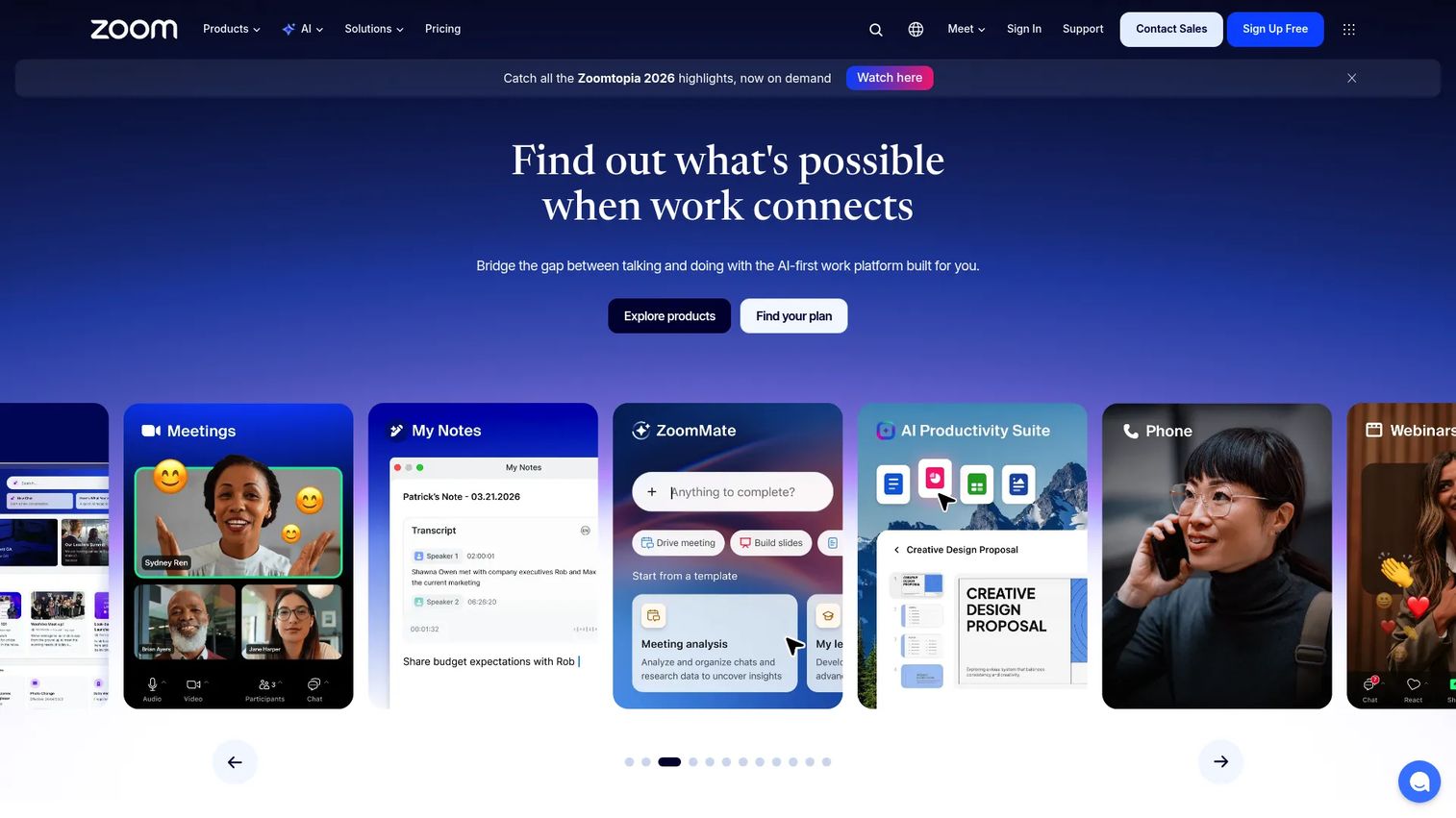
Zoom is a collaboration platform covering video meetings, team chat, webinars, phone, and AI productivity tools. For B2B marketers, Zoom Webinars is the main use case: Hosting demand-gen webinars, product sessions, partner events, and customer education. Attendees are already familiar with the interface, which reduces friction compared to asking them to adopt a new platform.
Best for: Teams running webinars, virtual events, product launches, and customer education sessions with broad attendance.
Key features
- Webinars with registration, Q&A, and attendee reporting
- HD video meetings with AI meeting summaries
- Recording with cloud storage
- Caption translations for multilingual events
- Calendar and CRM integrations
Why choose Zoom: Zoom's familiarity is its main advantage. Buyers join without friction, event recordings are easy to distribute, and webinar analytics connect to CRM for follow-up. The tradeoff is that it's a general-purpose platform, not a webinar-specific tool.
Zoom pricing: Basic plan is free. Pro is $14.16/user/month billed annually. Business is $18.33/user/month billed annually. Webinar features are available as an add-on; Enterprise pricing requires contacting sales.
G2 rating: 4.6/5
19. Canva
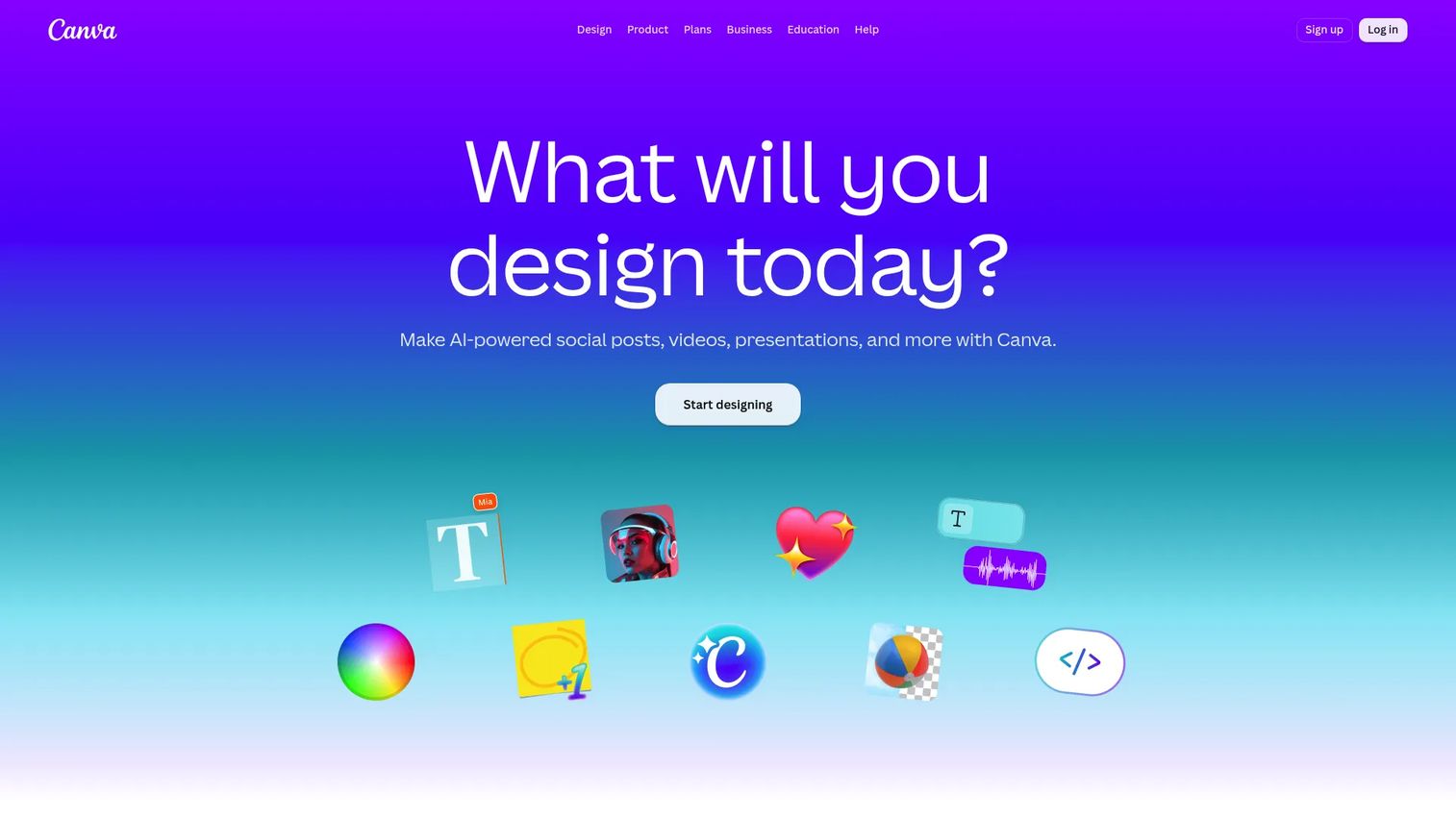
Canva is an online design and publishing platform for creating visual content across presentations, social media, videos, documents, and print. For B2B marketers, it removes the design bottleneck on everyday creative work: Social graphics, campaign banners, event assets, and slide decks that don't require a designer. Brand kits keep output consistent without requiring each team member to work from scratch.
Best for: Marketers who need to produce campaign visuals and presentations quickly without waiting on a design queue.
Key features
- Drag-and-drop editor with 1,000+ design templates
- Brand Kits for consistent colors, fonts, and logos
- AI design tools including resize and background removal
- Real-time collaboration and commenting
- Social content scheduling and content calendar
Why choose Canva: Canva reduces small-ticket design requests and helps lean teams move faster on everyday creative. It's not a replacement for strategic brand design work, but it covers most day-to-day marketing production well.
Canva pricing: Free plan available. Pro is $144/year for one person ($12/month equivalent). Business is $250/year per person. Enterprise pricing requires contacting sales.
G2 rating: 4.7/5
20. Semrush
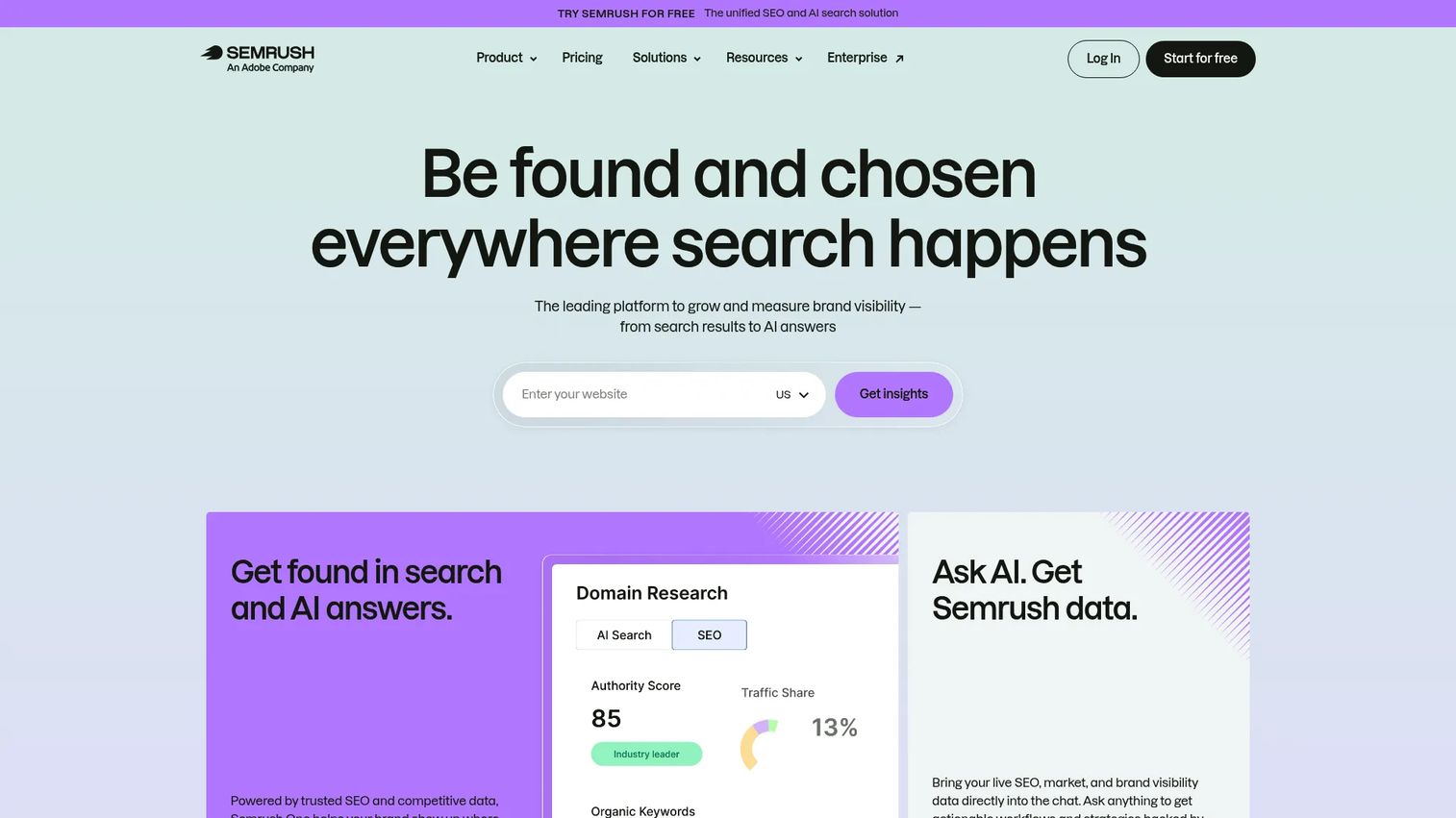
Semrush is a brand visibility platform covering SEO, AI search visibility, content optimization, paid media research, and competitive intelligence. For B2B marketers managing organic and paid search, it provides keyword research, rank tracking, site audits, competitor analysis, and content tools in a single workspace. Semrush also tracks how brands appear in AI-generated search results.
Best for: Teams managing SEO, paid search inputs, and competitive monitoring who want broad coverage in one platform.
Key features
- Keyword research and competitor gap analysis
- Rank tracking and traffic estimation
- Technical site audit
- AI search visibility and brand sentiment tracking
- Backlink analysis and digital PR tools
Why choose Semrush: Semrush works well when one team owns SEO, paid search research, and competitor monitoring together. Its breadth matters most when multiple modules are actually used; paying for Semrush to run only keyword research is probably more than the team needs.
Semrush pricing: Free access available. SEO plan is $117.33/month billed annually. Starter is $165.17/month billed annually. Pro+ is $248.17/month billed annually. Advanced uses custom pricing.
G2 rating: 4.4/5
21. Ahrefs
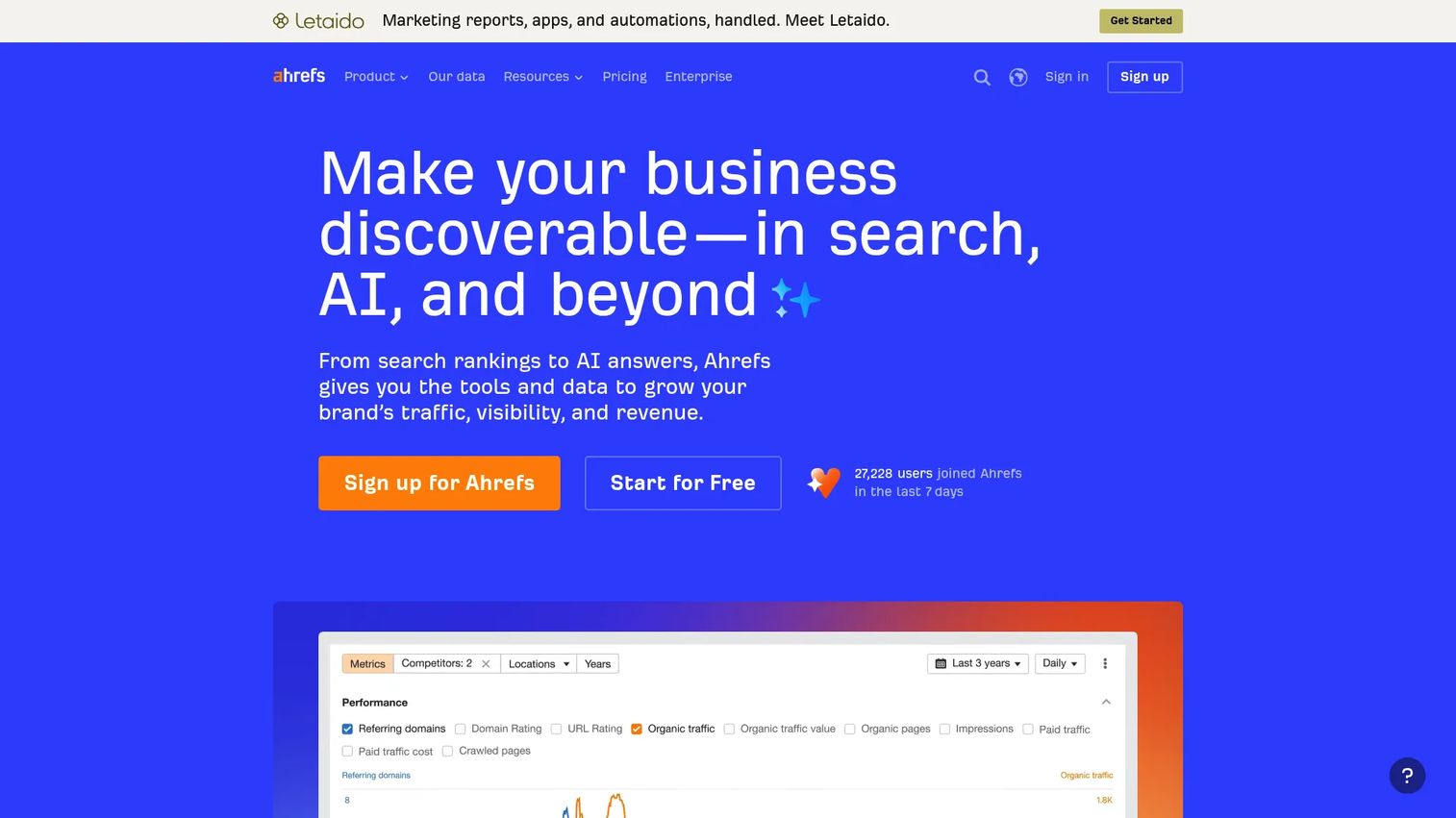
Ahrefs is an SEO and marketing platform known for its backlink index, keyword research depth, and content gap analysis. B2B content teams use it to identify where competitors rank that you don't, what link authority gaps exist, and which keywords represent genuine traffic opportunities. Ahrefs also offers Brand Radar for monitoring visibility in AI search.
Best for: SEO teams focused on organic growth through backlink strategy, content gap research, and competitive keyword analysis.
Key features
- Site Explorer for organic traffic and backlink analysis
- Keywords Explorer with traffic potential and difficulty data
- Site Audit for technical SEO issues
- Content Explorer for high-performing content research
- Brand Radar for AI search visibility monitoring
Why choose Ahrefs: Ahrefs is the stronger choice when link authority and content gap analysis drive your SEO strategy. Teams that overlap heavily with Semrush should choose based on which tool's keyword or link data they trust more, since both are strong.
Ahrefs pricing: Free plan available with limited access. Starter plan is $29/month. Lite is $129/month. Standard is $249/month. Advanced is $449/month. Enterprise is $1,499/month on an annual commitment.
G2 rating: 4.5/5
Considerations when choosing B2B marketing tools
Check what the tool replaces
Before adding a new platform, identify what it eliminates from your current stack. A tool that only adds another dashboard without replacing manual work or a weaker tool makes the stack heavier without increasing output. Map each potential purchase to the subscription it makes redundant.
Prioritize integration quality
For growth marketers, an integration determines whether a tool becomes part of the workflow or stays a side tab. Before evaluating features, check how the tool connects to your CRM, marketing automation platform, analytics stack, and ad platforms. Poor integration quality means data cleanup, attribution gaps, and manual exports.
Tie features to pipeline metrics
Map each tool you're evaluating to a specific metric: CAC, MQL-to-SQL conversion, pipeline generated, influenced revenue, or activation rate. If a tool can't connect to one of those numbers, be honest about whether it's a core stack investment or a supporting utility.
Match pricing to team maturity
A startup needs speed and low overhead, so free tiers and low entry prices matter. A mid-market team needs reliable reporting and clean handoffs, so integration depth and analytics quality become more important than entry price. An enterprise team adds governance, security review readiness, and procurement compliance to the evaluation.
Avoid duplicate jobs
Adding a third content tool when the real bottleneck is distribution won't improve results. Adding attribution software when event tracking is broken won't produce clean data. Fix the upstream workflow before adding another platform to cover it.
Conclusion
A good B2B marketing stack doesn't have to be large. It has to be connected.
Start with the core jobs: Customer data, acquisition, conversion, automation, analytics, and content production. Guideflow covers the product experience layer, turning your product into a self-serve conversion asset with engagement data that flows into your CRM. HubSpot and ActiveCampaign handle marketing automation at different scale points. Salesforce and Zoho CRM serve enterprise and cost-conscious teams respectively. Demandbase adds account-based intelligence when your motion is built around target accounts.
For measurement, Google Analytics provides the free baseline, Hotjar adds behavioral context, and Semrush or Ahrefs cover organic search strategy. Content production runs through Jasper, Writesonic, Surfer SEO, BuzzSumo, and Canva depending on team size and output needs. Litmus, EveryoneSocial, Zoom, Chili Piper, and Clearbit each solve one specific operational problem worth solving before you scale.
Audit your current stack by job before buying anything new. Identify what's duplicated, what's broken, and what's genuinely missing. Then choose tools that replace something, not just add to it.
Start your journey with Guideflow today!
FAQs
B2B marketing tools are software platforms that help business-to-business companies attract, engage, qualify, nurture, and measure business buyers across the full customer journey. The category includes CRM systems, marketing automation platforms, analytics tools, content production software, SEO platforms, ABM tools, and product experience tools like interactive demos. Most stacks combine tools from several categories to cover acquisition through retention.
A lean B2B stack should cover four jobs: Customer data, email automation, web analytics, and content or SEO. HubSpot's free CRM with ActiveCampaign for automation, Google Analytics for traffic measurement, and either Surfer SEO or Ahrefs for content strategy covers most small-team needs without excessive cost. Add a product experience tool like Guideflow if your product requires demonstration to convert traffic into qualified leads.
Start with the job the tool needs to do, not the feature list. Then evaluate whether it integrates with your CRM and analytics stack, what it costs at your team's scale, and how quickly you can see results. Avoid buying tools before your event tracking and CRM data are clean, since poor data quality makes most marketing platforms underperform regardless of features.
Pipeline attribution depends on clean campaign data flowing from marketing tools into your CRM. HubSpot and Salesforce connect campaign activity to contacts and opportunities. Demandbase adds account-level intent data. Google Analytics tracks acquisition channels. Guideflow shows which demo experiences drive the most qualified engagement. The proof requires consistent UTM tagging, CRM hygiene, and an agreed attribution model, not just more software.
Yes, particularly for research, first drafts, content briefs, and campaign message variations. Jasper and Writesonic accelerate content production when the team has a clear brand voice and editorial review process in place. Surfer SEO uses AI to generate SERP-based optimization guidance. The consistent failure mode is publishing AI output without subject-matter review, which produces generic content that doesn't convert qualified buyers.
CRM stores accounts, contacts, opportunities, and pipeline activity. It's the revenue record. Marketing automation runs the campaigns, segmentation, email workflows, lead scoring, forms, and lifecycle journeys that feed the CRM. HubSpot combines both in one platform. Salesforce is primarily CRM, with Marketing Cloud available separately. ActiveCampaign sits closer to automation with a CRM-lite layer built in.
There's no fixed number. A three-person team can run effectively with five or six tools covering customer data, email, analytics, content, and design. A ten-person demand gen team may need twelve or more across those same categories plus ABM, scheduling, enrichment, and SEO. The right number is the minimum set that covers all the core jobs without duplication or attribution gaps.
Avoid buying tools before your tracking infrastructure is reliable. Event tracking gaps and CRM hygiene problems undermine every reporting and attribution tool you add on top. Also avoid duplicate coverage in one category, like three separate email tools with overlapping functionality. Stack decisions made reactively under pipeline pressure tend to create the tool sprawl that growth marketers are already trying to escape.