Audio looks like the simplest channel you can buy. Record a 30-second spot, pick an audience, set a budget. Then you actually try to run it, and the buying model splits in three directions. Do you want self-serve inventory you control yourself? Programmatic scale through a demand-side platform? Or a partner who handles strategy and execution for you? Each path comes with different targeting depth, different creative workflows, and very different reporting.
That split matters more in 2026 than it used to. U.S. digital audio advertising reached $8.4 billion in 2025, up 10.2% year over year, with podcast ads alone hitting $2.9 billion, a 17.6% increase, according to the IAB Internet Advertising Revenue Report via AudioGo. Programmatic audio spend is projected to climb to $2.26 billion in the U.S., an 18% jump, per Madison Logic. Yet audio still claims 21.4% of media time while pulling only 4.5% of ad spend, based on SiriusXM Media data. That gap is the opportunity, and it is also why you are reading this.
The hard part is not deciding whether to test audio. It is matching the right platform to how your team actually buys media, what you need to measure, and how much creative lift you can absorb. If you are already evaluating your broader stack, comparisons like the best digital adoption platforms and the best customer data platform follow the same logic: fit the tool to the job, not the hype. This guide does that for audio.
What's inside
This is a buyer's guide to audio advertising platforms for growth and digital marketers comparing vendors across streaming music, podcasts, and digital radio. We selected the seven platforms based on inventory access, targeting depth, creative production support, and measurement and reporting quality, the four things that actually decide whether audio earns its line in your budget.
The list spans four buying models on purpose: self-serve platforms you operate yourself, demand-side platforms for programmatic scale, publisher-side infrastructure for premium inventory, and managed-service agencies for teams that want a partner. Each entry tells you who it fits, what it does well, and where it sits in your media mix. No single platform wins for everyone. The right one depends on your buying style.
TL;DR
Short on time? Here are the fast picks by buyer type:
- Best for self-serve small teams: AudioGo, with campaigns starting at $250 and built-in creative tools.
- Best for omnichannel programmatic buyers: StackAdapt, for cross-channel orchestration and AI-powered targeting.
- Best for Spotify inventory and creative features: Spotify Ads Manager, for native audio formats and Canvas.
- Best for people-based targeting across channels: Viant, with Household ID identity resolution.
- Best for audio infrastructure and publisher-side buying: AdsWizz, for premium inventory and attribution.
- Best for open exchange and premium cross-platform audio: Triton Digital, for reach across streaming and podcasting.
- Best for agencies needing managed support: Ad Results Media, for strategy and full campaign execution.
What is an audio advertising platform?
An audio advertising platform is software that lets advertisers plan, buy, target, create, and measure audio ads across streaming music, podcasts, and digital radio. Instead of negotiating individual ad placements by hand, you use the platform to reach listeners programmatically or through self-serve buying, then track how those audio ads perform.
Audio advertising splits into three main formats, and most platforms cover at least one:
- Streaming audio advertising: Ads served inside music streaming sessions, often non-skippable, reaching listeners during commutes, workouts, and focused work.
- Podcast advertising: Ads inside podcast episodes, either host-read or dynamically inserted, reaching engaged audiences by show, genre, or topic.
- Digital radio advertising: Ads on streaming simulcasts of broadcast radio and internet radio stations, blending broad reach with digital targeting.
Across those formats, a strong platform handles four core jobs:
- Targeting options: Geo, demographic, interest, behavioral, and contextual segmentation so you reach the right listeners, not just any listeners.
- Creative production: Tools to produce or upload audio spots, including voiceover services, synthetic voice, and companion display ads.
- Inventory access: Connections to premium audio inventory across music services, podcast networks, and radio streams.
- Measurement and reporting: Impressions, completion rates, reach, conversions, and ideally cross-channel attribution you can defend to finance.
The buying models differ in an important way. Self-serve platforms let you launch campaigns yourself with a credit card and a budget. Programmatic audio advertising runs through a demand-side platform (DSP) that automates buying across many inventory sources at once. Publisher-side infrastructure powers the supply, handling ad insertion and marketplace access. And managed-service agencies run the whole thing for you. Knowing which model fits your team is half the decision.
When to use audio advertising
Audio is not a replacement for every channel. It earns its place in specific moments. Here is where it tends to outperform.
Launch a campaign on listener time, not screen time
Display and social compete for eyeballs that are already overloaded. Audio reaches people during screen-free moments: driving, cooking, walking, working out. Non-skippable streaming audio ads and host-read podcast spots capture attention when there is no feed to scroll past. If your audience spends real time with headphones in, audio buys attention you cannot get on a banner.
Reach audiences by context and behavior
Modern audio platforms let you target by geography, age, interest, listening behavior, and content context. You can reach commuters in a specific metro, podcast listeners in a genre your buyers care about, or retarget people who already engaged with your brand. Contextual targeting around relevant shows or playlists adds brand-safe precision that broad radio buys never offered.
Add audio to a broader media mix
Audio rarely works in isolation. It reinforces CTV, display, video, and lifecycle marketing by adding another touch in the same week. For omnichannel marketing, the value is frequency and recall across channels, plus the option to extend a single audience definition into audio without rebuilding it. If you already run programmatic display or CTV, adding audio through the same DSP is the path of least resistance.
Comparison table
The table below ranks the seven platforms by practical buyer relevance, not vendor size. Public pricing is limited in this category, so several entries reflect custom or spend-based pricing rather than published numbers. G2 ratings are included where a verified listing exists.
| # | Product | Intent | Key differentiation | Pricing | G2 rating |
|---|---|---|---|---|---|
| 1 | AudioGo | Self-serve audio buying for small teams | Built-in creative tools, low campaign minimum | Campaigns from $250 | 4.4/5 |
| 2 | Viant | Omnichannel programmatic with audio in the mix | Household ID people-based targeting | Custom pricing | Not listed |
| 3 | Spotify Ads Manager | Spotify inventory and native creative | Canvas, CTA cards, Spotify-only reach | Free to register, auction-based | 4.0/5 |
| 4 | StackAdapt | Cross-channel programmatic audio | AI-powered intent targeting across channels | Percentage of media spend | 4.7/5 |
| 5 | AdsWizz | Publisher-side audio infrastructure | Premium inventory, dynamic ad insertion | Custom pricing | 4.4/5 |
| 6 | Triton Digital | Open audio exchange and measurement | Cross-platform reach and monetization | Custom pricing | 2.8/5 |
| 7 | Ad Results Media | Managed audio and creator campaigns | Full-service strategy and execution | Custom pricing | Not listed |
1. AudioGo
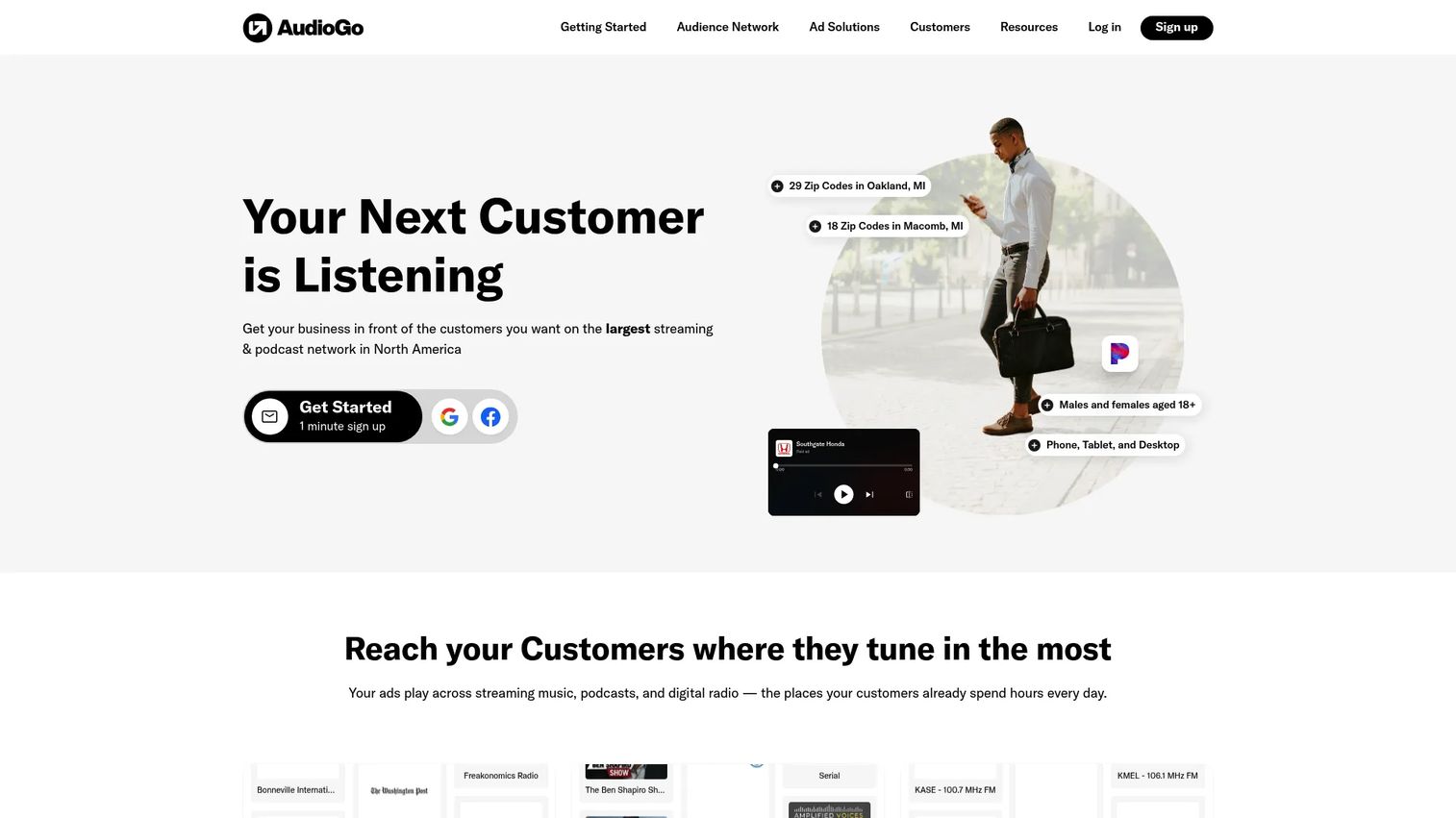
AudioGo is a self-service audio advertising platform built for advertisers who want to launch and manage campaigns across streaming, radio, and podcasts without a media agency in the loop. It pairs real-time campaign planning with built-in creative and targeting, so a small team can go from idea to live audio ad in a single session. That combination of low barrier and broad reach is what sets it apart for marketers who do not have a programmatic specialist on staff.
The platform leans into accessibility. Campaigns start at $250 with no platform, subscription, seat, or joining fees, and you can open a free AudioGo account to plan before you spend. For a startup generalist juggling every channel, that pricing model removes the usual objection of committing budget before seeing the interface.
Best for: Small businesses, agencies, and marketers who want fast self-serve launch with broad audio reach.
Key strengths
- Audience Guide: Real-time campaign planning that shows reach and targeting options as you build, so you are not guessing at scale.
- Creative Services: Produced Voice Ads and Synthetic Voice Ads let you create audio spots inside the platform without a separate production budget.
- Targeting and tracking: Audience targeting, retargeting, conversion tracking, and a display ad builder for companion display ads, all in one place.
Why choose AudioGo: If your team wants to test audio without a long onboarding or an agency retainer, AudioGo lowers the entry cost to a single $250 campaign. It fits the scrappy, channel-owning marketer who needs speed and simplicity over deep programmatic controls, and it covers local radio buying alongside streaming and podcast inventory.
AudioGo pricing: AudioGo charges no platform, subscription, user seat, or joining fees. Campaigns start from a $250 minimum, and billing is based on campaign spend with monthly or threshold-based invoicing. You can register a free account to plan campaigns before committing budget. AudioGo holds a 4.4/5 rating on G2.
2. Viant
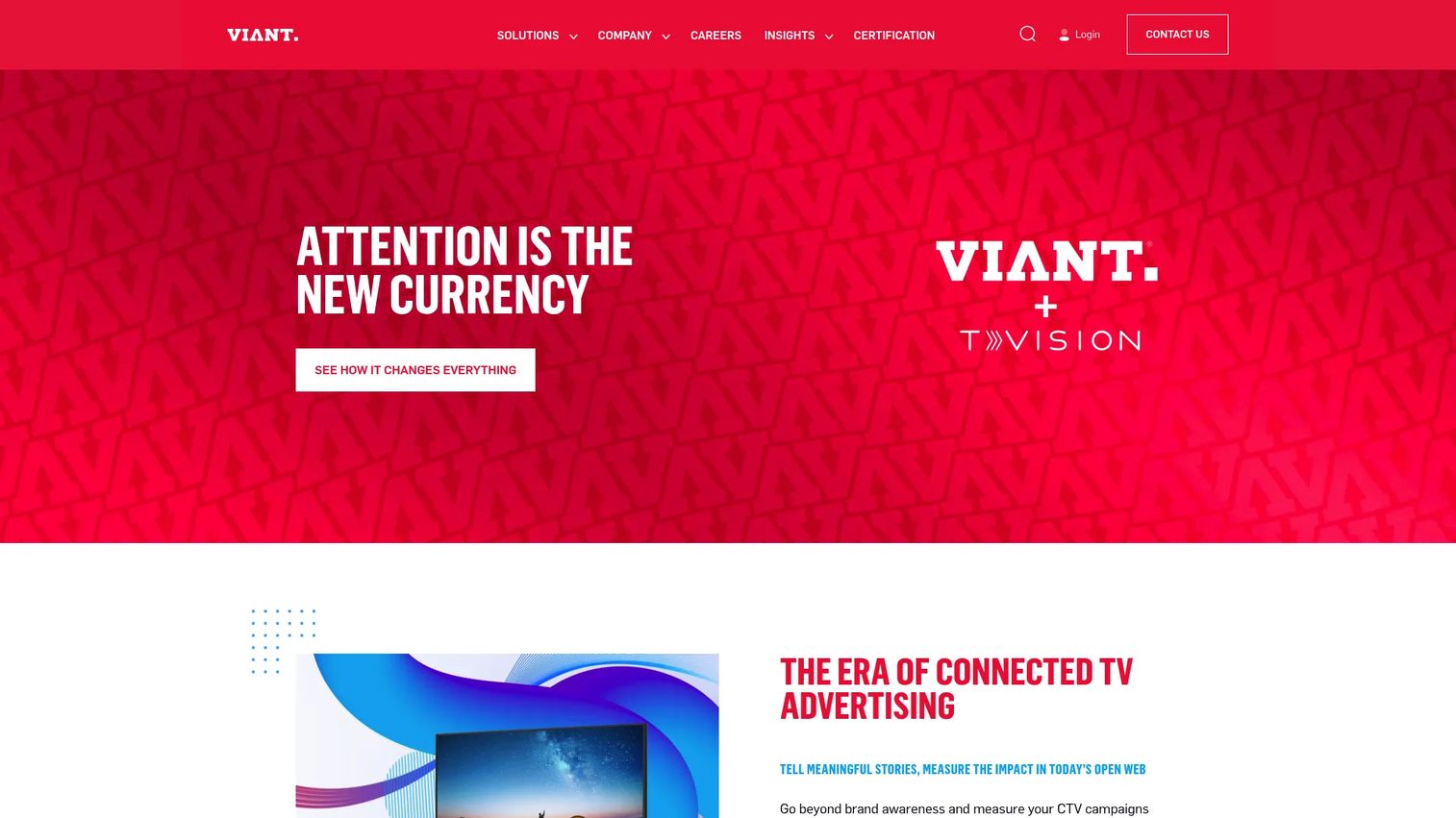
Viant is an AI-powered programmatic advertising platform that treats audio as one channel inside a broader omnichannel DSP. If you already buy programmatic CTV, display, or video and want audio to share the same audience and measurement layer, Viant is built for that. Its strength is people-based targeting that follows audiences across devices rather than treating each impression as anonymous.
The core differentiator is Household ID, Viant's identity resolution system that ties activity to households across channels. For a mid-market growth marketer fighting attribution ambiguity, that household-level view reduces waste and gives cleaner cross-channel measurement than cookie-based approaches.
Best for: Advertisers and agencies already buying programmatic media who want audio added to an omnichannel plan.
Key strengths
- Omnichannel DSP: Plan, execute, and measure audio alongside CTV, display, and video in one platform.
- Household ID: Identity resolution that enables household-level targeting and reduces wasted impressions.
- Advanced reporting: ROAS, lift, and attribution measurement that ties audio back to outcomes across channels.
Why choose Viant: Viant fits teams that think in terms of audience first and channel second. If your audio buy needs to align with the same household audience you target on CTV and display, Viant's people-based foundation keeps the data consistent. It is less about Spotify-style native creative and more about disciplined, measurable programmatic activation.
Viant pricing: Viant states that pricing is flexible and tailored to client needs, and it does not display a public starting price. Expect a custom quote based on your media volume and channel mix. Reach out through the Viant DSP page to scope a plan for your spend level.
3. Spotify Ads Manager
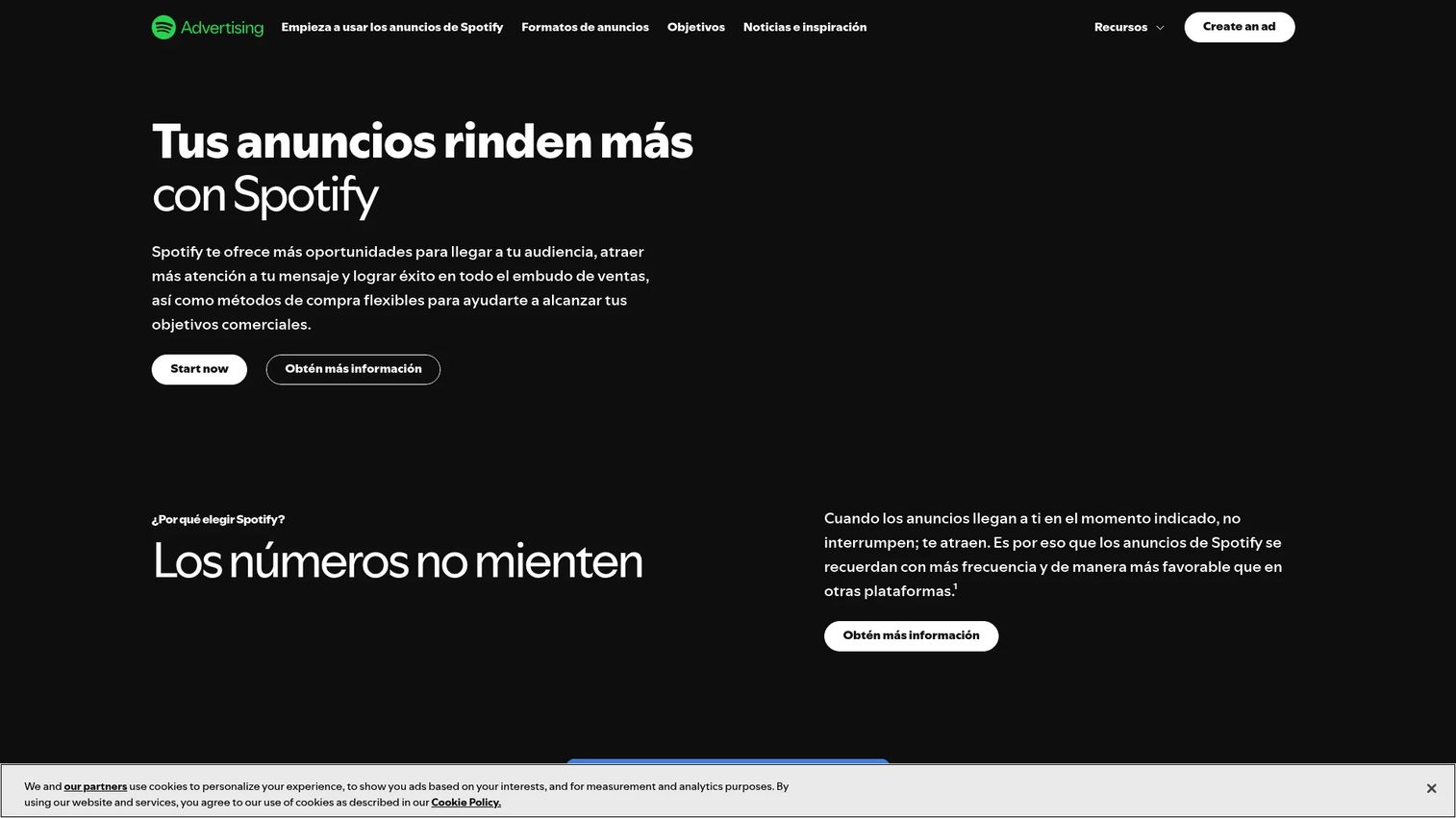
Spotify Ads Manager is Spotify's self-serve platform for running audio, video, display, carousel, and sponsorship campaigns directly on Spotify. If a meaningful share of your audience lives inside Spotify, this is the most direct path to that inventory, with creative formats designed specifically for the platform. The trade-off is scope: you are buying Spotify, not the open audio web.
What stands out is the creative experience. Audio ads can carry CTA cards, and Canvas for Advertisers adds looping visuals that turn a passive audio moment into something tappable. AI audio ad creation tools help teams produce spots without a studio, which matters when creative fatigue and production cost are constant pressures.
Best for: Advertisers who want self-serve audio and video campaigns concentrated on Spotify inventory with strong native creative.
Key strengths
- Audio ads with CTA cards and Canvas: Companion display ads and looping visuals make Spotify audio interactive rather than purely passive.
- Auction-based budgeting: Daily and lifetime spend controls give you flexible budget management without a minimum platform fee.
- Video formats: Video Takeover and Opt-In Video extend campaigns beyond audio inside the same manager.
Why choose Spotify Ads Manager: When Spotify is where your buyers spend listening time, going direct removes intermediaries and unlocks creative formats no DSP can replicate. The platform is free to register, and you control spend through the auction. It is the strongest pick for brands prioritizing Spotify reach and a polished creative experience over multi-publisher scale.
Spotify Ads Manager pricing: Ads Manager has no fixed cost and is free to register, with spend set through an auction using daily and lifetime budget controls. Podcast ads in Ad Studio carry a fixed starting price. There is no platform subscription fee to begin.
4. StackAdapt
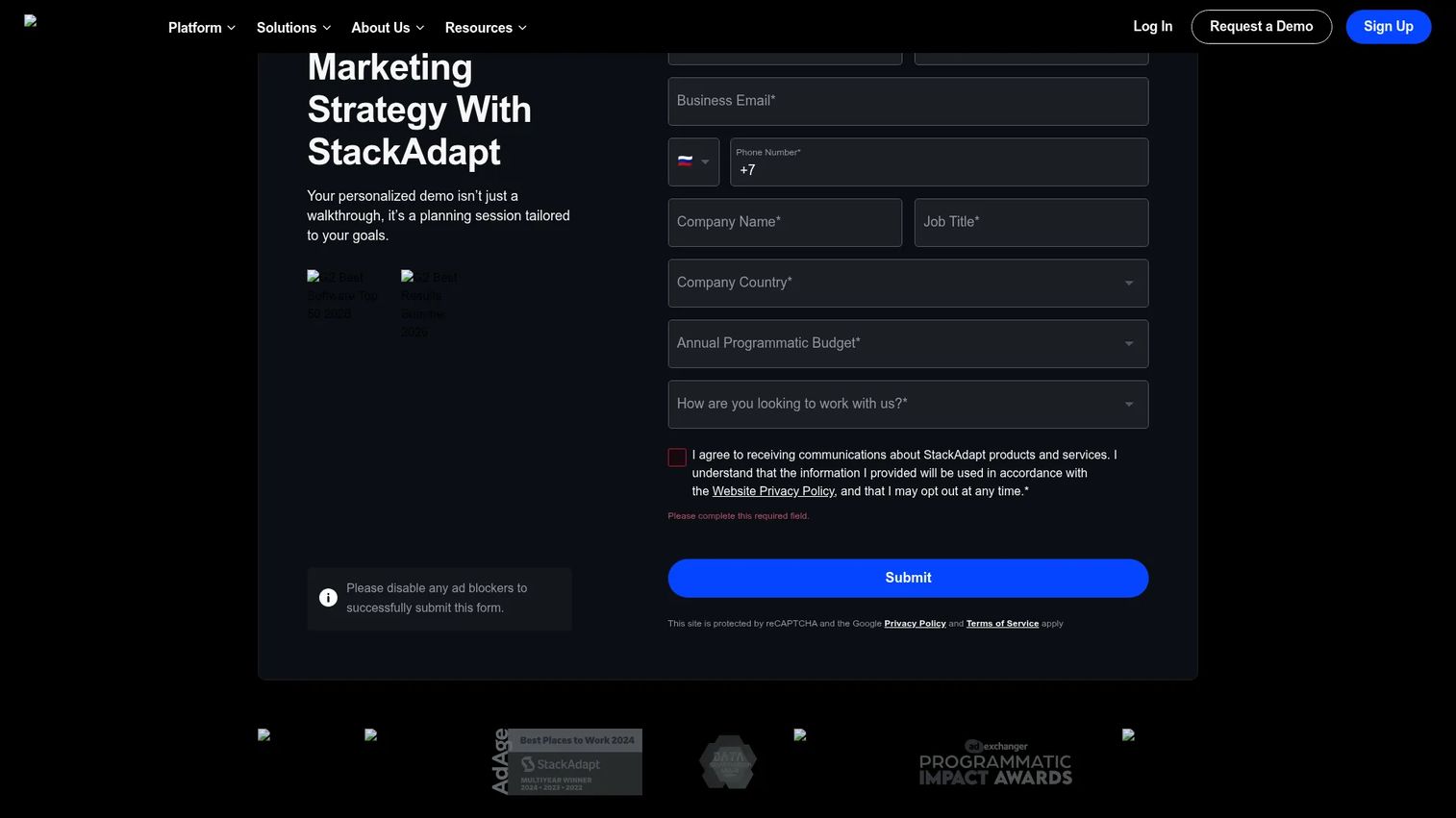
StackAdapt is an AI-powered programmatic advertising platform that runs audio across podcasts, streaming music, and audiobooks as part of a full cross-channel motion. For growth marketers who want programmatic audio advertising without managing a separate audio tool, StackAdapt folds it into the same console as CTV, DOOH, display, native, video, and email. That single-pane orchestration is the draw.
The platform's edge is AI-powered intent-based targeting paired with real-time optimization. You set the audience and outcome, and the system tunes delivery toward completion and performance. Cross-channel attribution ties audio engagement back to the rest of the funnel, which is exactly the kind of defensible measurement a CFO will accept.
Best for: Teams needing a managed or self-serve DSP to run audio as part of a unified cross-channel program.
Key strengths
- AI-powered intent targeting: Audience targeting that reads behavioral signals to reach high-intent listeners across audio inventory.
- Cross-channel management: Audio sits alongside CTV, DOOH, display, native, video, and email in one platform for true omnichannel marketing.
- Real-time optimization and reporting: Live forecasting, optimization, and reporting, including Creative Studio support and companion display ads.
Why choose StackAdapt: StackAdapt fits marketers who are tired of stitching audio reporting into a separate dashboard. Running audio through the same DSP that handles your other channels gives consistent attribution and one place to optimize. It earns a 4.7/5 on G2, the highest rating in this list, and pricing works as a percentage of media spend with no hidden tech fees.
StackAdapt pricing: StackAdapt lists plan tiers named Basic, Grow, Scale, Accelerate, and Enterprise, but does not publish prices. The company states that DSP pricing typically works as a percentage of media spend with no hidden technology fees. Request a quote based on your expected spend. StackAdapt holds a 4.7/5 rating on G2.
5. AdsWizz
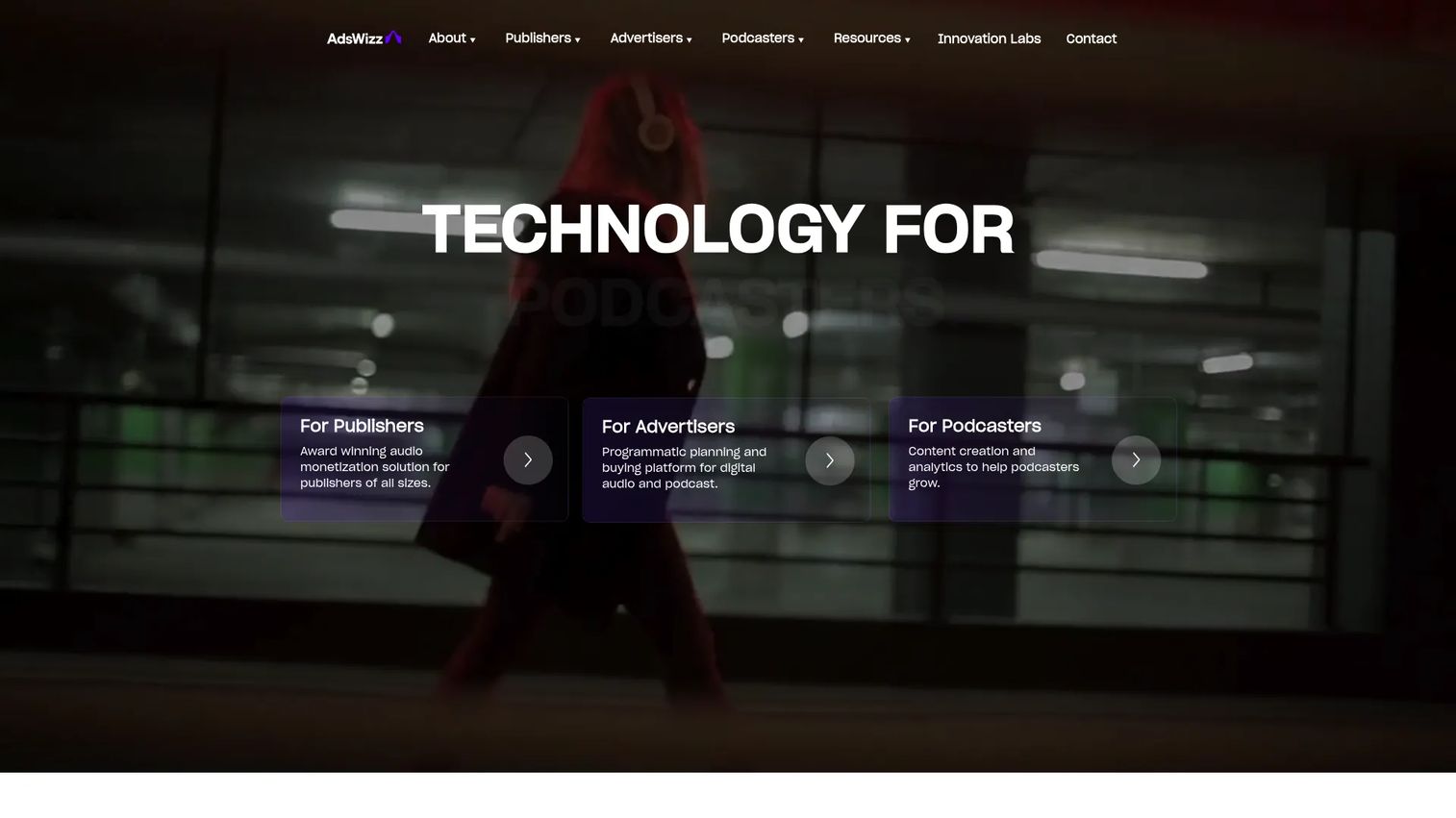
AdsWizz is a digital audio advertising technology platform serving both advertisers and publishers, which makes it especially relevant for teams that care about the infrastructure side of audio. It powers buying, selling, and measurement of premium audio inventory, with a DSP for activation and a marketplace for access. If you want to be close to the supply rather than one layer removed, AdsWizz is built for that.
The platform's depth shows in dynamic ad insertion and attribution. It handles the mechanics of inserting ads into streaming and podcast content at scale, then measures the result. For advertisers chasing premium audio inventory and brand safety, AdsWizz connects to a marketplace of vetted publishers.
Best for: Advertisers and publishers buying, selling, and measuring digital audio inventory who value infrastructure and premium supply.
Key strengths
- AudioMatic DSP: Demand-side activation purpose-built for audio inventory across streaming and podcast advertising.
- Measurement and attribution: Reporting that connects audio exposure to outcomes for cleaner accountability.
- AdsWizz Marketplace: Direct access to premium publisher inventory with brand-safe placement.
Why choose AdsWizz: AdsWizz suits teams that want infrastructure-grade audio buying and care about where their ads run. Its dual advertiser-and-publisher footprint means you are buying from a platform that also powers the supply, which can mean tighter access to premium streaming audio advertising and podcast inventory. It carries a 4.4/5 rating on G2.
AdsWizz pricing: AdsWizz does not publish numeric pricing on its website, so expect a custom quote based on your activation model and inventory needs. Contact the AdsWizz team to scope advertiser or publisher access. AdsWizz holds a 4.4/5 rating on G2.
6. Triton Digital
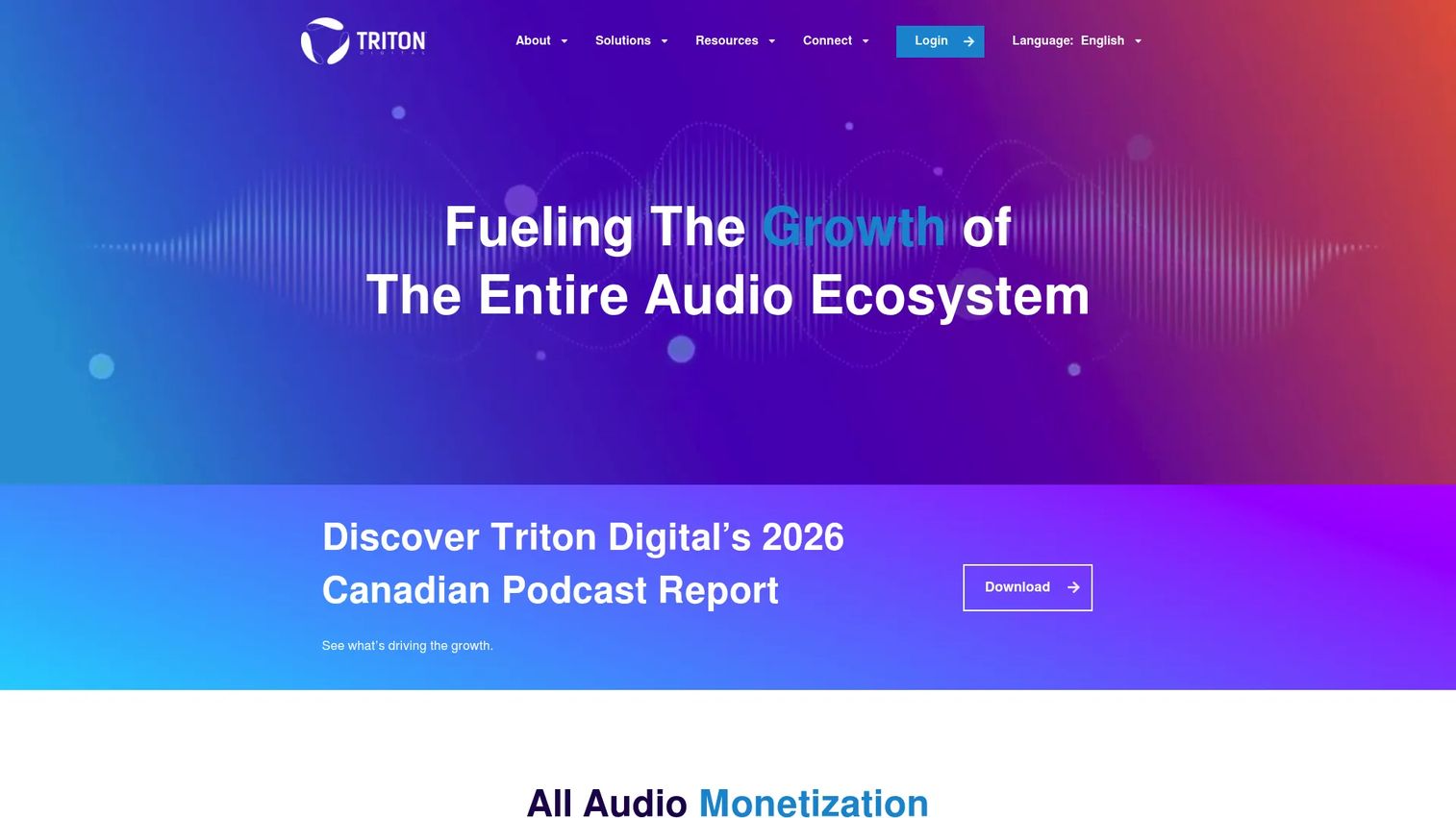
Triton Digital is a digital audio technology and services provider spanning streaming, podcasting, measurement, and monetization. It is a strong option for buyers who want open audio exchange access and cross-platform planning, plus the measurement infrastructure that underpins much of the audio industry. Triton sits at the supply and measurement layer, which gives it broad reach across devices and platforms.
The platform's reach is its calling card. Dynamic ad insertion serves ads across streaming and podcast content, and its measurement products are widely used as currency in audio. For publishers, the monetization tools and enterprise podcasting platform, including AI-driven transcription and chapter markers, round out the offering.
Best for: Audio publishers, broadcasters, and podcast networks needing enterprise hosting, measurement, and ad monetization, plus buyers wanting exchange access.
Key strengths
- Open audio exchange: Cross-platform reach across streaming and podcasting with dynamic ad insertion.
- Measurement and analytics: Audience measurement products used as a reference point across the digital radio advertising and streaming ecosystem.
- Enterprise podcasting platform: Omny Studio hosting with AI-driven transcription, chapter markers, and content tools for publishers.
Why choose Triton Digital: Triton fits buyers and publishers who want to plug into a broad audio exchange with established measurement. Its cross-platform reach and monetization tools make it a natural fit for podcast advertising at scale and for publishers managing large audio catalogs. Its public G2 listing reflects a small review volume, so weigh that alongside its strong industry footprint.
Triton Digital pricing: Triton Digital does not publish numeric pricing and uses a contact-sales model across its product pages. Pricing depends on whether you need buying access, measurement, or publisher hosting. Reach out through the Triton Digital site to scope your needs.
7. Ad Results Media
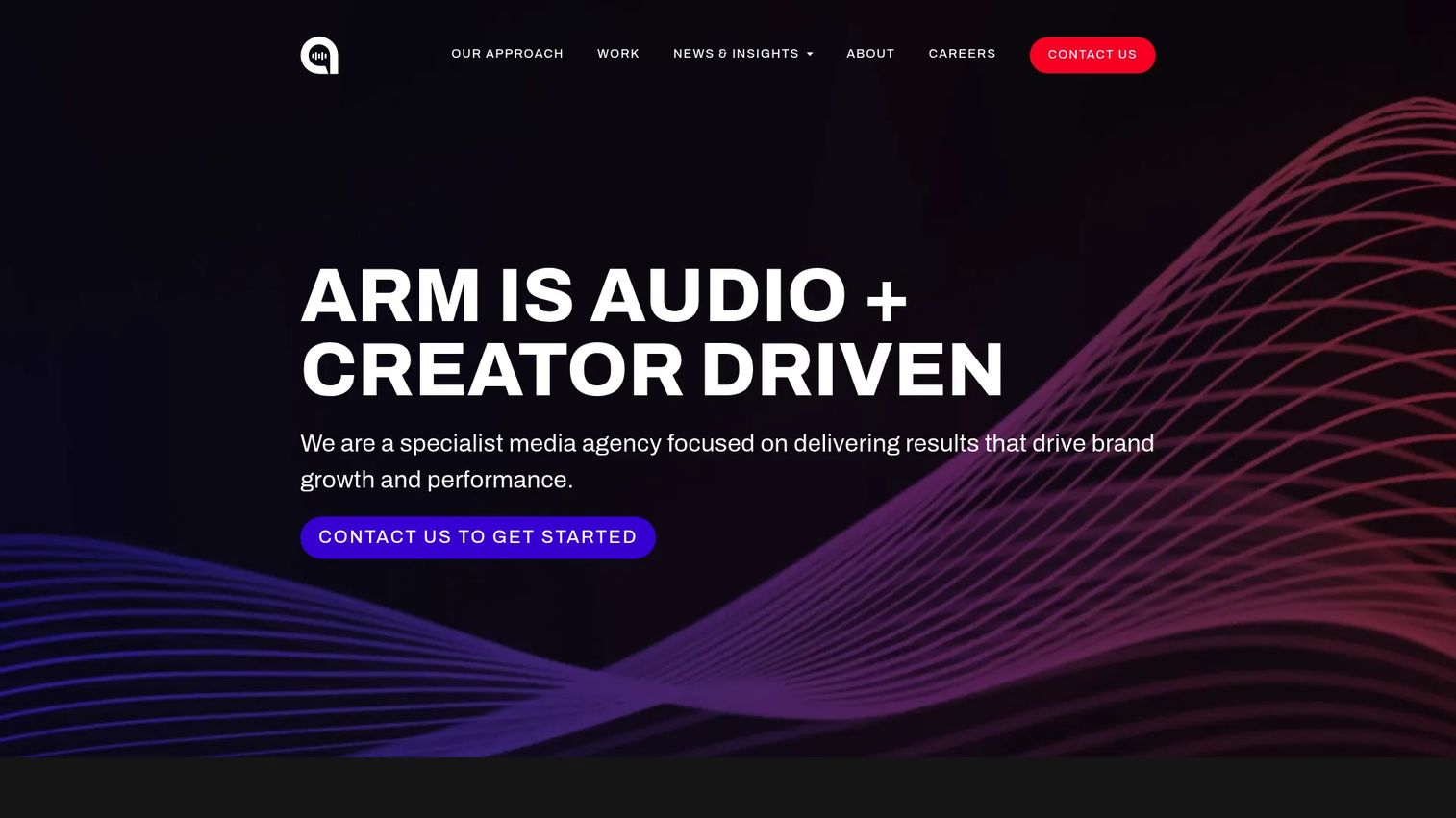
Ad Results Media is a specialist media agency focused on audio and creator-driven advertising. Unlike the self-serve and DSP options above, this is a managed-service path: you bring the goal and budget, and the team handles strategy, buying, creative, and measurement. For teams without the bandwidth or expertise to run audio in-house, it removes the operational lift entirely.
The agency covers podcast advertising, streaming audio, radio, and creator integrations, with measurement and analytics to prove results. Its experience with host-read and creator-driven campaigns matters, because those formats reward relationships and negotiation that a self-serve console cannot replicate.
Best for: Brands that want managed audio, podcast, radio, and creator campaigns run by a specialist partner.
Key strengths
- Podcast and creator integrations: Host-read and creator-driven campaigns across podcast and streaming inventory.
- Full-channel coverage: Podcast advertising, streaming audio, and radio managed under one agency relationship.
- Measurement and analytics: Reporting and attribution handled for you, so you get results without building the dashboards.
Why choose Ad Results Media: When you want audio to perform but cannot dedicate a person to running it, a managed partner is the pragmatic choice. Ad Results Media fits brands that value creator relationships and want strategy plus execution, not just platform access. It is the right path when buying style favors a partner over a self-serve tool.
Ad Results Media pricing: Ad Results Media operates on a managed-service model and does not publish standard pricing. Engagements are scoped to your campaign goals and media budget. Contact the agency directly to discuss a managed audio program.
Considerations before you buy
Before you commit budget, run each shortlisted platform through this checklist. These are the criteria that separate a platform that fits from one that fights your workflow.
Buying model fit
Decide whether you want self-serve speed, DSP control, publisher-side access, or agency support. A startup generalist usually wants self-serve. A mid-market team already buying programmatic wants a DSP. An enterprise chasing premium supply leans publisher-side. Match the model to your team before comparing features.
Targeting depth and audience segmentation
Look at how granular the targeting options go. Can you layer geo, demographic, interest, and behavioral signals? Does it support listener targeting and contextual placement around relevant content? The deeper the audience segmentation, the less budget you waste reaching the wrong people.
Creative production support
Audio lives or dies on the spot. Check whether the platform produces creative for you, supports synthetic voice or AI audio ad creation, and offers companion display ads. If your team has no production budget, built-in creative services move you from idea to live faster.
Measurement and attribution
Confirm the platform reports the metrics you can defend: impressions, completion rates, reach, conversions, and ideally cross-channel attribution. If audio has to prove ROI against other channels, you need measurement and reporting that ties back to pipeline, not just delivery stats.
Brand safety and inventory quality
Verify where your ads run. Premium audio inventory with brand-safe controls protects your name. Ask about publisher vetting, content exclusions, and how the platform handles podcast advertising placement so your brand does not land next to content you would not endorse.
Conclusion
There is no single best audio advertising platform, only the best fit for how your team buys. If you want self-serve speed and a low entry cost, AudioGo gets you live for $250. If you already run programmatic and want audio in the same omnichannel plan, StackAdapt and Viant bring cross-channel orchestration and people-based targeting. If Spotify is where your audience lives, Spotify Ads Manager gives you native creative no DSP can match.
For infrastructure-grade buying and premium supply, AdsWizz and Triton Digital sit close to the inventory. And if you would rather hand the whole thing to a specialist, Ad Results Media runs strategy, creative, and buying for you.
The practical move is to shortlist two or three platforms based on your buying style and current media mix, then test. Pick one self-serve or DSP option you can launch this quarter, and if creator-driven podcast advertising is your angle, line up a managed partner alongside it. Audio claims a fifth of media time and a fraction of ad spend. The teams that close that gap first will own the channel before it gets crowded.
FAQs
Audio reaches listeners during screen-free moments like commuting, exercising, and working, when display and social cannot compete for attention. Non-skippable streaming audio ads and host-read podcast spots tend to hold attention better than skippable formats. Audio also adds frequency to an omnichannel plan, reinforcing CTV, display, and video with another touch in the same week.
Programmatic audio advertising automates the buying of audio ads through a demand-side platform that bids on inventory across many sources at once. You set an audience, budget, and goal, and the platform purchases impressions in real time across streaming music, podcasts, and digital radio. This replaces manual placement negotiation with automated, data-driven buying and built-in measurement and reporting.
Most platforms support geographic, demographic, interest, and behavioral targeting, plus contextual placement around relevant shows or playlists. Stronger platforms add listener targeting based on listening habits and identity-based audience segmentation that follows households across devices. Retargeting lets you reach listeners who already engaged with your brand, which sharpens performance.
Yes. Most audio advertising platforms include podcast advertising, either through dynamically inserted ads served programmatically or host-read spots negotiated with creators. Self-serve platforms let you target by genre and show, while managed agencies handle host-read and creator integrations that reward relationships. Check whether the platform you choose offers the podcast format you want.
Start with delivery metrics: impressions, reach, and completion rates. Then layer outcome metrics like conversions, brand lift, and ideally cross-channel attribution that ties audio exposure to pipeline. Platforms with strong measurement and reporting connect audio back to revenue rather than stopping at delivery stats, which is what you need to defend the spend.
Yes. Audio works best as part of a broader mix, reinforcing CTV, display, video, and lifecycle marketing with added frequency and recall. Platforms with people-based targeting or cross-channel DSPs let you extend a single audience definition into audio without rebuilding it, keeping data and attribution consistent across channels.
Streaming audio ads run inside on-demand music sessions on services like Spotify, often non-skippable and targeted by listening behavior. Digital radio advertising appears on streaming simulcasts of broadcast stations and internet radio, blending broad reach with digital targeting. Streaming usually offers tighter audience segmentation, while digital radio leans on the scale and familiarity of radio programming.