Your keyword report shows stable rankings. Organic leads are down. Leadership wants an explanation, and another visibility dashboard won’t help unless it answers a different question.
An AI Overviews rank tracker helps identify which sources appear inside Google’s generated answers. That gives marketers another measurement layer alongside traditional search positions.
Google reported 2.5 billion monthly active users of AI Overviews in 2026. For teams accountable for acquisition, understanding that exposure belongs in the reporting workflow.
The practical challenge is choosing what to measure. A brand mention differs from a citation to your website. Neither automatically produces qualified traffic.
Before adding software, decide which evidence your current stack lacks. You might need to track AI Overviews at the query level. Alternatively, your biggest gap could be connecting AI search visibility to conversion data.
Buy the reporting capability that changes your next decision.
What’s inside
This guide compares 10 products and services associated with AI visibility and related search measurement. They aren’t interchangeable purchases.
- Coverage: Google AI Overview tracking versus broader answer-engine monitoring
- Evidence: Citation detail and competitor comparisons that support content decisions
- Workflow: Research capabilities, reporting APIs, and downstream measurement
- Commercial fit: Entry pricing, feature access, and trial options
The selection separates direct monitoring from supporting analytics. It also addresses legacy SE Ranking product names and a similarly named agency that isn’t tracking software.
Use the comparisons to decide whether an AI overview tracker fills a gap or duplicates an existing subscription. Pricing and review references reflect the supplied November 2026 research.
TL;DR
- Best for SEO-stack consolidation: SE Ranking AI Rank Tracker combines search and AI visibility. Account eligibility matters because its legacy tracking product has changed.
- Best for dedicated citation monitoring: AIclicks connects daily observations with source analysis and competitor share of voice.
- Best for Google-focused evaluation: Ansvisor offers query-level monitoring, but Google AI Overviews access starts on Growth rather than Starter.
- Best for cross-engine coverage: Rankscale covers more than 17 AI engines through a credit-based model.
- Best for business-impact measurement: Google Search Console and Google Analytics 4 provide free supporting measurement, rather than an AI Overviews rank checker.
- Best for automated reporting: SE Ranking API supports custom data workflows. The sevisible.com entry is an agency, not an AI tracking product.
What is an AI Overviews rank tracker?
An AI Overviews rank tracker monitors whether brands and source URLs appear in Google’s generated answers for selected search queries.
Traditional rank tracking measures where a page appears in organic results. AI Overviews rank tracking examines another part of the results page, with different evidence and reporting questions.
“Rank” can refer to a citation’s position within an answer. Some products also report mention frequency or visibility across a tracked query set. Ask vendors to define each metric before comparing scores.
A Google AI Overviews tracker should help you distinguish between several observations.
A summary might mention your company without linking to your website. Alternatively, it could cite an owned page without naming your brand prominently. A third-party article might represent your product instead.
Those outcomes suggest different actions. Refreshing an owned page addresses a different problem from correcting how external sources describe your business.
Look for capabilities such as:
- Detection of queries that trigger AI Overviews
- Brand mention and citation monitoring
- Cited URL and source-domain analysis
- Competitor visibility comparison
- Historical records of generated answers
- Country and device controls
- Exports or reporting integrations
Query-level monitoring starts with searches relevant to your market. Prompt-level monitoring extends the approach to questions submitted to conversational answer engines.
For either approach, define the monitored set deliberately. A visibility percentage across unrelated questions won’t tell a growth team where to invest.
AI Overview source analysis becomes useful when it identifies a specific page or publisher influencing the answer. That gives content teams something concrete to investigate.
Coverage also determines the buying category. Some products emphasize Google, while a broader AI visibility platform monitors multiple answer engines.
Supporting analytics answer what happened after exposure. They help assess traffic quality and conversion movement, but don’t replace citation-level monitoring.
Keep those measurement layers separate in reporting. Showing them together provides context; treating them as equivalent creates attribution claims your data cannot support.
When to use an AI Overviews rank tracker
Prove whether AI search is changing organic performance
Use an AI Overview tracker when traffic changes despite relatively stable organic positions. Compare the affected query groups with generated-answer presence and cited sources.
Ask a precise question: Are we losing visibility, or losing clicks from searches where we still appear?
Treat the result as an investigation. Seasonality and changes to your website can also affect performance.
Find competitor citation gaps
Track AI Overviews when you need evidence for content refresh priorities. Examine whether another vendor appears directly or receives exposure through a review page.
Separate missing brand mentions from missing owned URLs. An outdated page cited repeatedly calls for a different response than an absent category explanation.
Give each finding an owner and a proposed action before expanding monitoring.
Build AI visibility reports leadership can understand
Add this measurement when executive reporting needs to explain changes above the website visit. Organize results by commercially meaningful query groups rather than one blended visibility score.
Show citation movement beside search traffic and conversion trends. Keep the reporting period consistent across systems.
A useful report ends with a decision, such as which comparison page deserves a refresh, rather than another chart requiring interpretation.
AI Overviews rank tracker tools comparison
Choose an AI Overviews tracker by its role in your reporting workflow. The list includes direct monitoring products, supporting capabilities, and an agency-name distinction worth catching before purchase.
Several SE Ranking entries describe capabilities within the same platform. They should not be treated as independent vendors or automatically purchased separately.
For a Google AI Overviews tracker, compare the price of the plan providing that coverage. The cheapest subscription can exclude the feature you searched for.
An AI Overviews rank checker also needs enough detail to explain its result. Cited URLs in AI Overviews are more actionable than an unexplained visibility score.
| # | Product | Best for | Key differentiator | Pricing | G2 rating |
|---|---|---|---|---|---|
| 1 | SE Ranking AI Rank Tracker | Combined SEO and AI reporting | Search rankings alongside AI visibility; legacy access rules apply | Core from $103.20/month, billed annually | 4.8/5, SE Ranking |
| 2 | AIclicks AI Overview Tracker | Dedicated citation monitoring | Daily observations and citation positions | Starter $59/month | 4.9/5 |
| 3 | Ansvisor Google AI Overviews Rank Tracker | Google-focused query analysis | Brand mentions and historical citation changes | Growth $249/month for AI Overviews | N/A |
| 4 | Rankscale | Cross-engine monitoring | Broad engine coverage and query fanout insights | Pro $99/month | 5.0/5 |
| 5 | SE Ranking Generative AI Tracker | Existing legacy tracking users | Mentions and sources across generated answers | Platform Core from $103.20/month, billed annually | 4.8/5, SE Ranking |
| 6 | SE Ranking Keyword Research | Building monitoring query sets | Demand and intent data | Core from $103.20/month, billed annually | 4.8/5, SE Ranking |
| 7 | SE Ranking API | Custom reporting pipelines | Programmatic SEO and AI Search data | Credit packs from $50, one-time purchase | 4.8/5, SE Ranking |
| 8 | SE Visible | Outsourced marketing services | Agency services, not AI tracking software | Automation packages from MXN 7,200 total | N/A |
| 9 | Google Search Console | First-party search measurement | Query and page performance | Free | 4.7/5 |
| 10 | Google Analytics 4 | Measuring acquired traffic | Engagement and conversion-path analysis | Standard free; 360 custom pricing | 4.5/5, Google Analytics |
G2 scores for SE Ranking capabilities refer to the parent platform. Google Analytics 4 uses the Google Analytics listing; N/A indicates no verified rating.
Best 10 tools for AI Overviews rank tracking
These entries distinguish direct tracking from research and measurement support. Start with the capability your reporting process needs, then evaluate the relevant subscription.
1. SE Ranking AI Rank Tracker
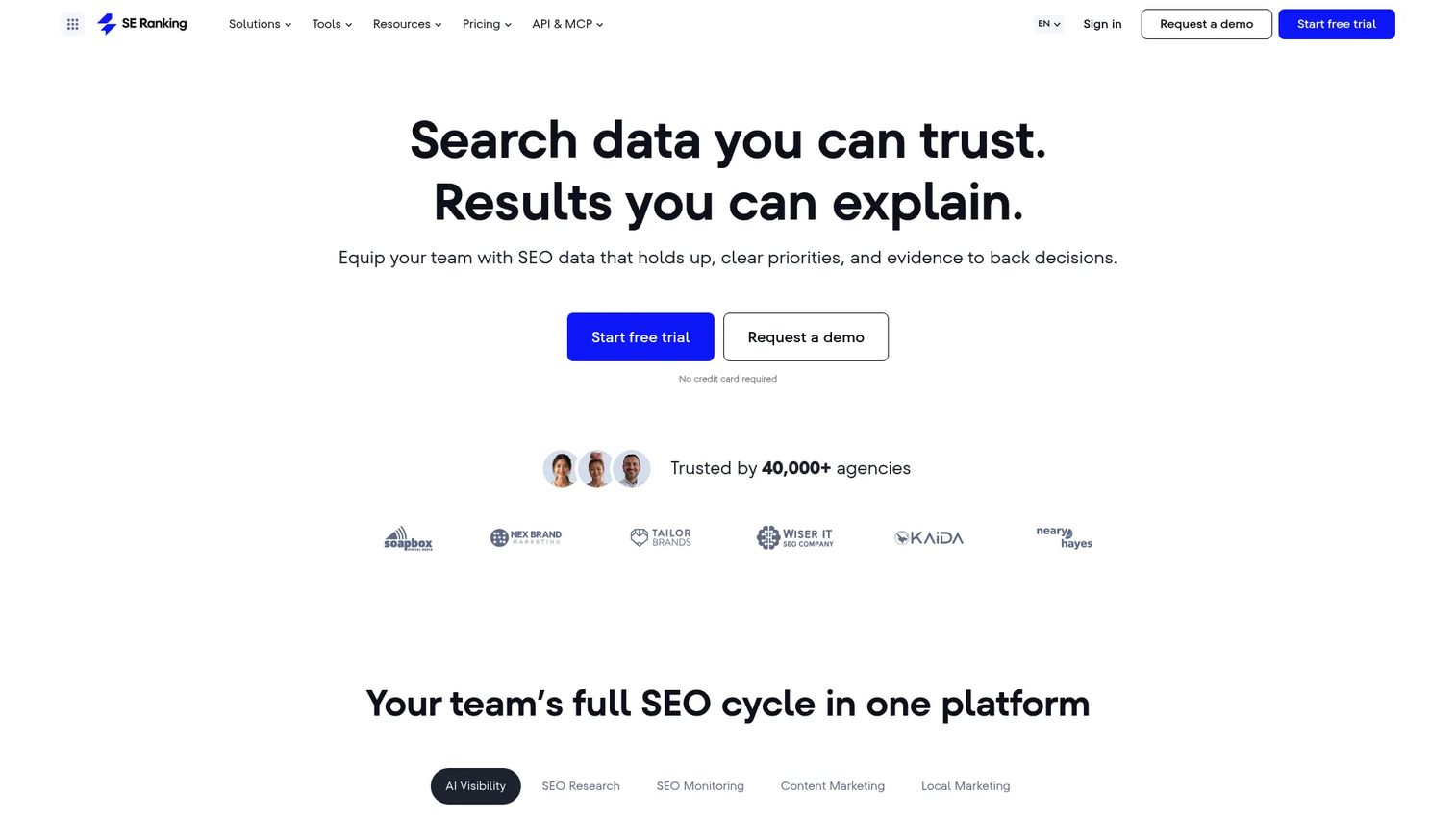
SE Ranking AI Rank Tracker belongs within a broader SEO platform covering traditional rankings and AI visibility. Its appeal is consolidation for marketers already managing search performance and competitor research. AI coverage includes Google AI Overviews and AI Mode, alongside conversational platforms.
Best for: SEO and growth teams that want generated-answer reporting beside their existing search analysis.
Key features
- Search rankings by location and device
- Google AI Overviews and AI Mode monitoring
- Competitor and cited-source analysis
- Website audits and backlink analysis
- Integrated keyword research and reporting
Why choose SE Ranking AI Rank Tracker: Choose it when maintaining separate SEO and AI dashboards would duplicate work. The wider platform gives citation findings context for subsequent optimization.
There’s an important purchasing distinction. The legacy AI Results Tracker is restricted to accounts subscribed before October 29, 2026. Newer customers are directed to SE Visible within SE Ranking’s offering.
Ask which interface your subscription includes before evaluating older product screenshots. That question matters more than whether a sales page uses “AI rank tracker” or another label.
During evaluation, choose a query group already represented in your organic reporting. Review how the platform connects generated-answer findings with the pages your team manages.
The test should produce a concrete content decision. Avoid buying a broader suite solely to collect another score if your existing platform already covers the surrounding work.
SE Ranking AI Rank Tracker pricing: Core costs $103.20/month billed annually, or $129 monthly; Growth costs $223.20/month annually, or $279 monthly. A 14-day free trial is available.
G2 rating: 4.8/5 for SE Ranking.
2. AIclicks AI Overview Tracker
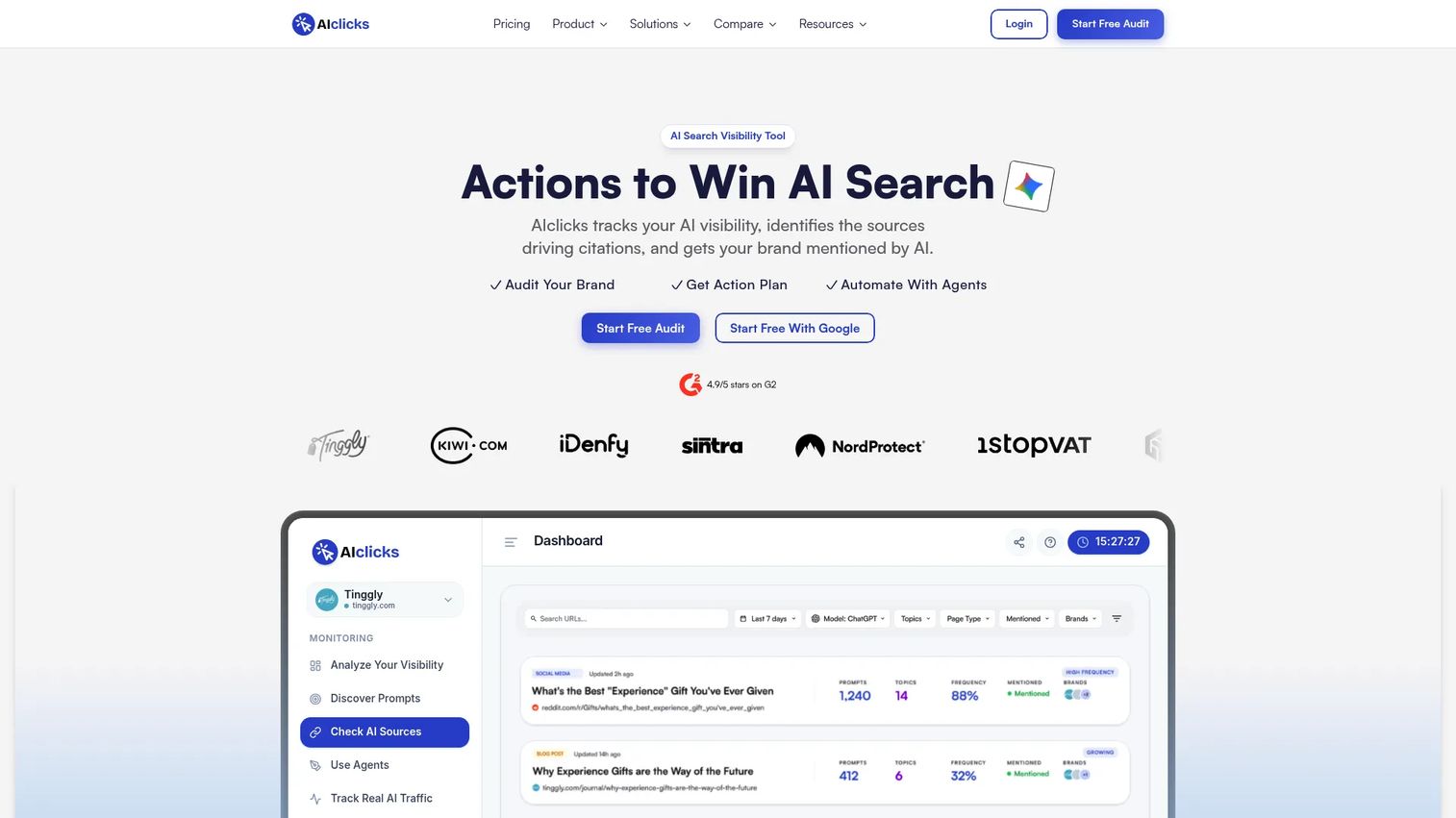
AIclicks AI Overview Tracker monitors brand exposure across Google AI Overviews and other AI platforms. It combines citation reporting with competitor analysis and AI-driven traffic measurement. Daily observations make it relevant when weekly manual checks leave gaps.
Best for: Growth teams seeking dedicated AI visibility monitoring without replacing their broader SEO suite.
Key features
- Daily Google AI Overview monitoring
- Citation rate and position reporting
- Competitor share-of-voice analysis
- Source analysis and prioritized recommendations
- AI-driven traffic reporting
Why choose AIclicks AI Overview Tracker: It fits teams whose immediate question concerns where their brand appears and which sources influence that exposure. Reporting extends beyond presence alone.
Packaging deserves attention before you commit. Starter includes 30 tracked prompts, three models, one website, and one country per project.
Pro expands the monitoring allowance to 150 prompts and four models. It also adds unlimited websites and countries, with GA4, API, and MCP integrations.
For an agency, evaluate the required client configuration rather than judging affordability from the entry price. A single-brand pilot and a regional reporting program have different requirements.
Use the trial to inspect a citation your team can act on. Check whether the evidence distinguishes your domain from third-party references to your company.
Also examine how traffic reporting supports your existing attribution process. A visibility trend provides context, while acquisition and conversion measurements answer separate business questions.
AIclicks AI Overview Tracker pricing: Starter costs $59/month, Pro $189/month, and Business $499/month. A three-day free trial is available.
G2 rating: 4.9/5.
3. Ansvisor Google AI Overviews Rank Tracker
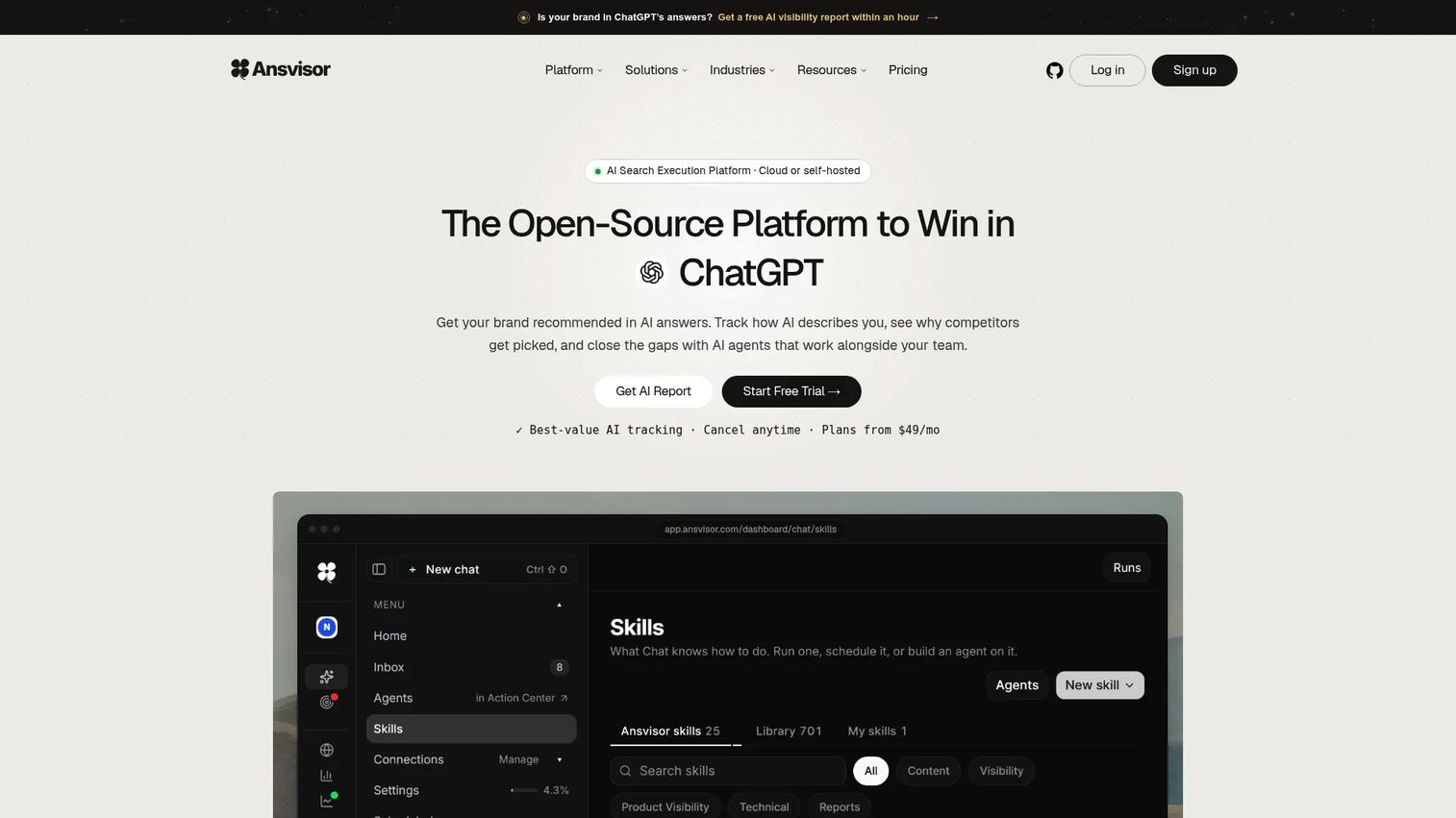
Ansvisor Google AI Overviews Rank Tracker monitors brand and website presence in generated answers. Its Google reporting covers mentions and citations, with query analysis and historical changes. The platform also supports other answer engines.
Best for: Teams prioritizing Google-specific citation investigations while retaining broader monitoring options.
Key features
- Google AI Overview visibility tracking
- Brand mention monitoring
- Citation and cited-URL analysis
- Competitor and query comparisons
- Historical visibility changes
Why choose Ansvisor Google AI Overviews Rank Tracker: Choose it when a query-level view will help diagnose a specific content gap. Historical observations can support comparison before and after a page update.
The entry subscription is not the relevant benchmark for this article’s core job. Starter covers ChatGPT and Perplexity; Google AI Overviews becomes available on Growth.
That distinction changes a budget comparison substantially. An inexpensive AI rank tracker subscription does not necessarily include the Google surface your team needs.
Before purchase, prepare queries representing different commercial decisions. Include a category question and a comparison search, then inspect how each result is presented.
Check whether you can distinguish a brand mention from a link to an owned page. Ask how the historical view handles changes to the monitored query set.
For growth reporting, assign an intended response to each observation. An inaccurate external description calls for different work than a missing product comparison page.
Ansvisor Google AI Overviews Rank Tracker pricing: Starter costs $49/month; Growth, including Google AI Overviews, costs $249/month. A 14-day free trial is available.
4. Rankscale
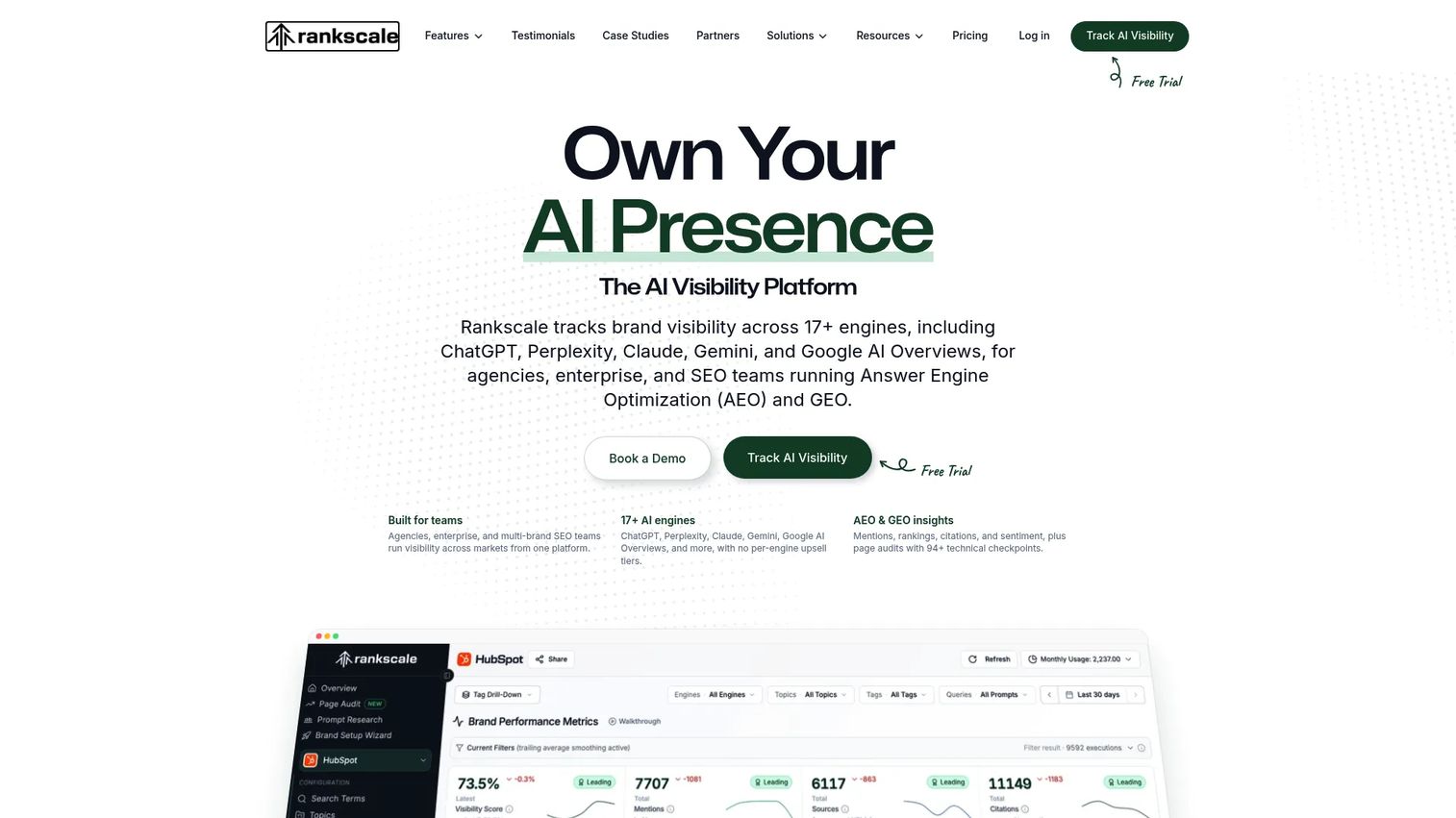
Rankscale is an AI visibility platform for monitoring brand presence across generative search engines. It extends the investigation beyond Google with citation analysis and prompt research. Query fanout insights add another dimension for teams examining how questions expand during AI search.
Best for: Agencies and multi-brand teams managing visibility across several answer engines.
Key features
- Cross-engine brand visibility monitoring
- Citation and source analysis
- Sentiment and competitor comparisons
- Query fanout insights
- Prompt research and AI page audits
Why choose Rankscale: Choose it when Google-only reporting would leave material gaps in your search strategy. Its broader coverage supports investigations across different answer environments.
Rankscale’s first-party pricing research from November 2026 lists more than 17 engines across its plans. The subscription uses credits, making consumption an important evaluation topic.
Ask how your intended monitoring schedule consumes that allowance. Model the workload around your query set and required engine coverage before comparing monthly costs.
The platform also includes shopping and advertising visibility tracking. Those capabilities matter when your acquisition strategy extends beyond editorial content.
For a focused pilot, define which cross-engine difference would change your work. Finding that separate sources influence answers across platforms can justify a different content distribution approach.
Keep AI Mode rank tracking separate from AI Overviews reporting in your evaluation. Request evidence for each surface instead of assuming a Google-wide label describes identical coverage.
Rankscale pricing: Pro costs $99/month, Pro+ $229/month, Growth $385/month, and Enterprise $780/month.
G2 rating: 5.0/5.
5. SE Ranking Generative AI Tracker
SE Ranking Generative AI Tracker refers here to its AI Results Tracker capabilities across generated answers. This entry focuses on brand representation and influential sources rather than conventional keyword positions. It belongs to the same platform as the first entry, not a separate vendor.
Best for: Existing SE Ranking users reviewing their broader generative-answer monitoring workflow.
Key features
- Generated-answer brand mention tracking
- Linked-source and domain analysis
- Top-three presence measurement
- Competitor co-occurrence analysis
- AI visibility recommendations
Why choose SE Ranking Generative AI Tracker: Its value lies in understanding how a brand appears across answer surfaces. That can inform positioning and source-development work beyond individual Google queries.
Treat this as the broader-answer perspective on the account transition described earlier. New buyers should evaluate the current SE Ranking offering rather than assume this legacy interface is separately purchasable.
The useful distinction is the reporting question. A Google-focused investigation asks which sources appear for a search query. Broader monitoring examines how different answer engines represent the same brand.
For example, assess whether an answer names your company but relies on another domain for supporting information. That finding creates a source-level research task.
Keep comparisons consistent across engines. Define the audience and topic before interpreting a visibility change, and document any edits to the monitored prompts.
This capability earns its place when the findings affect a content brief or distribution decision. Avoid counting it as another subscription in a stack-consolidation analysis.
SE Ranking Generative AI Tracker pricing: Current platform Core starts at $103.20/month billed annually, with Growth at $223.20/month billed annually. A 14-day free trial is available.
G2 rating: 4.8/5 for the SE Ranking platform.
6. SE Ranking Keyword Research
SE Ranking Keyword Research helps build the query set behind an AI monitoring program. It supplies demand and difficulty metrics alongside search intent and SERP data. This is a research capability, not a standalone citation tracker.
Best for: Marketers who need to prioritize commercially meaningful searches before paying to monitor them.
Key features
- Search volume and difficulty metrics
- Intent and SERP analysis
- Related and question-based keyword suggestions
- Location-specific keyword research
- Bulk checks and keyword-list organization
Why choose SE Ranking Keyword Research: Monitoring becomes more useful when the underlying questions reflect buyer demand. This capability helps turn a speculative prompt list into a research-backed starting point.
For a growth team, the first task is deciding which searches deserve ongoing attention. Group candidates around the product decisions your content supports.
Avoid selecting terms solely because they have high search volume. A specific comparison query may deserve attention even when demand is smaller.
Use the research output to create a monitoring brief. Record the target market and the page expected to address each query.
Then evaluate those searches in a dedicated AI Overview tracking workflow. Keyword metrics provide context; they don’t establish whether an owned URL receives a citation.
This separation also helps budget conversations. Research identifies what to monitor, while tracking records the observed outcome over time.
If your team already pays for SE Ranking, assess existing access before buying another discovery product. The goal is better coverage of meaningful questions without duplicating research work.
SE Ranking Keyword Research pricing: Core includes keyword research at $103.20/month billed annually, or $129 monthly. A 14-day free trial is available.
G2 rating: 4.8/5 for SE Ranking.
7. SE Ranking API
SE Ranking API provides programmatic access to SEO and AI Search data. Its scope includes keyword research and domain analysis, with project-management automation. It fits teams building a reporting pipeline rather than browsing another application.
Best for: Agencies and marketing operations teams integrating search evidence into custom dashboards.
Key features
- AI Search data access
- Keyword and competitor data retrieval
- Backlink and site-audit data
- Project-management automation
- Shared Data API and Project API key
Why choose SE Ranking API: Choose it when repeated exports consume time and the destination reporting model is already defined. API access supports a repeatable data-transfer workflow.
Start with the report your leadership or clients need. Identify the fields required to connect a query observation with its market and reporting date.
Then inspect endpoint documentation for those fields. General AI Search access should not be treated as a guarantee that every desired metric is available.
Budget for implementation ownership as well as credits. Someone needs to manage scheduled requests and investigate missing data.
A strong pilot moves a narrow dataset into the destination report. Compare the output with its source before expanding to additional clients or query groups.
Keep credit requirements tied to the calls your workflow makes. This is especially important when presenting a projected cost to finance.
The API supports automation, but your team still defines the business interpretation. A connection cannot resolve an inconsistent metric definition.
SE Ranking API pricing: Credit packs start at $50 for 250,000 credits; annual options include standalone access at $179/month effective or an add-on at $45/month effective. A 14-day trial includes 100,000 credits.
G2 rating: 4.8/5 for SE Ranking.
8. SE Visible
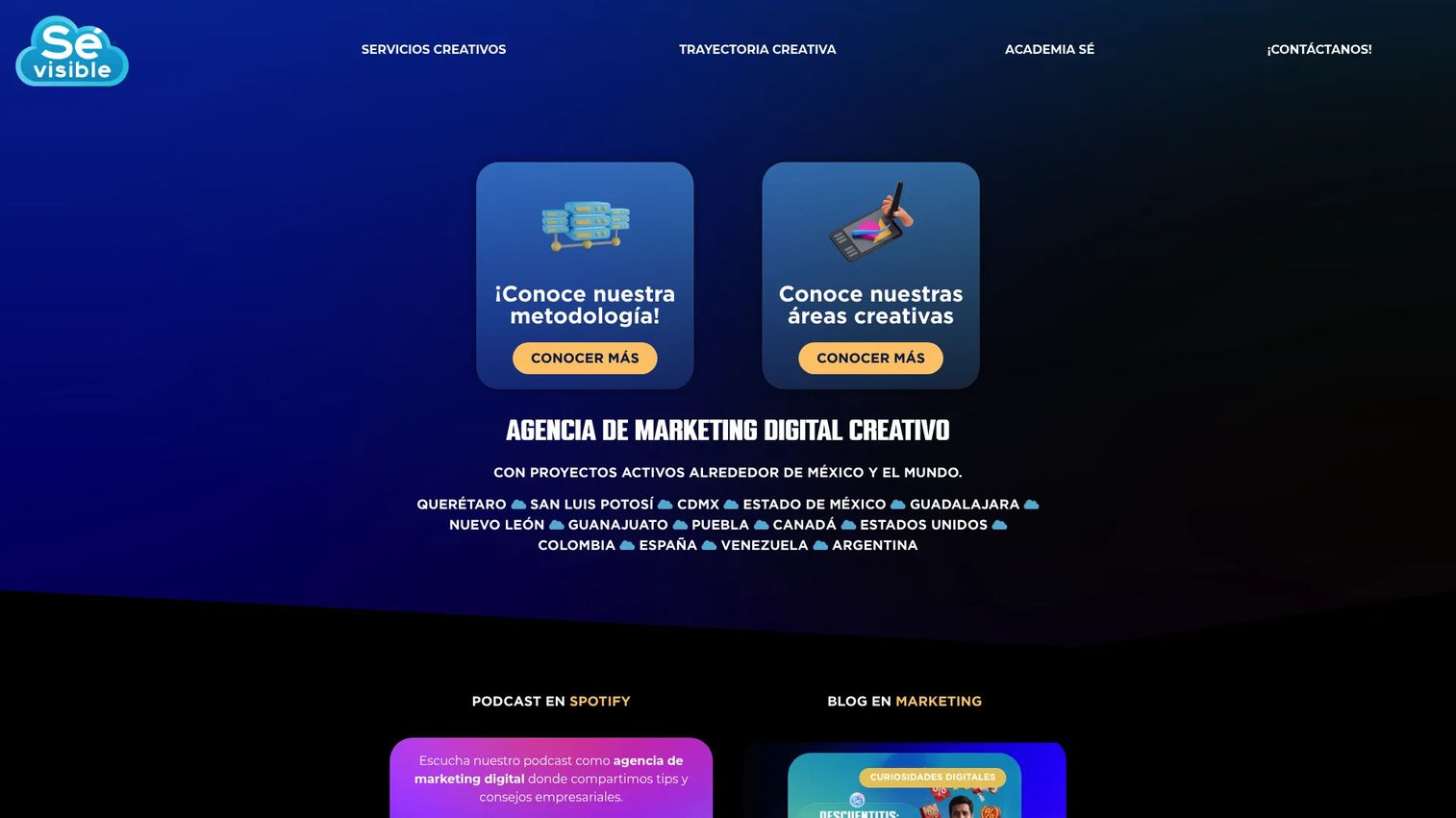
SE Visible at sevisible.com redirects to Sévisible, a Mexican digital marketing agency. It offers SEO and creative services rather than an AI Overviews tracking application. This agency is distinct from the SE Visible product referenced in SE Ranking’s account transition.
Best for: Businesses seeking outsourced marketing execution, rather than software for citation monitoring.
Key features
- On-page and technical SEO services
- Link building and content services
- Social media management
- Web design and UX/UI development
- Marketing automation services
Why choose SE Visible: Consider the agency when your constraint is execution capacity. It is not a substitute for a Google AI Overviews tracker.
The name distinction matters before any commercial conversation. A search for tracking software can lead to a service provider whose deliverables require a different evaluation.
For an agency engagement, request a written reporting scope. Specify whether you expect citation evidence or broader organic performance analysis.
Also establish who owns the accounts and exported data. Your team should understand which measurements remain accessible if the engagement ends.
The relevant decision is whether to outsource work around the findings. Software selection and service procurement address different operating needs.
Don’t use the agency’s package prices to benchmark AI monitoring subscriptions. Its published automation offers describe implementation packages, not tracked queries or engine access.
If you’re evaluating SE Ranking’s newer visibility product, continue through that vendor’s own purchasing path.
SE Visible pricing: Automation packages list Básico at MXN 7,200 total, Avanzado at MXN 15,200, and Integral at MXN 23,400.
9. Google Search Console
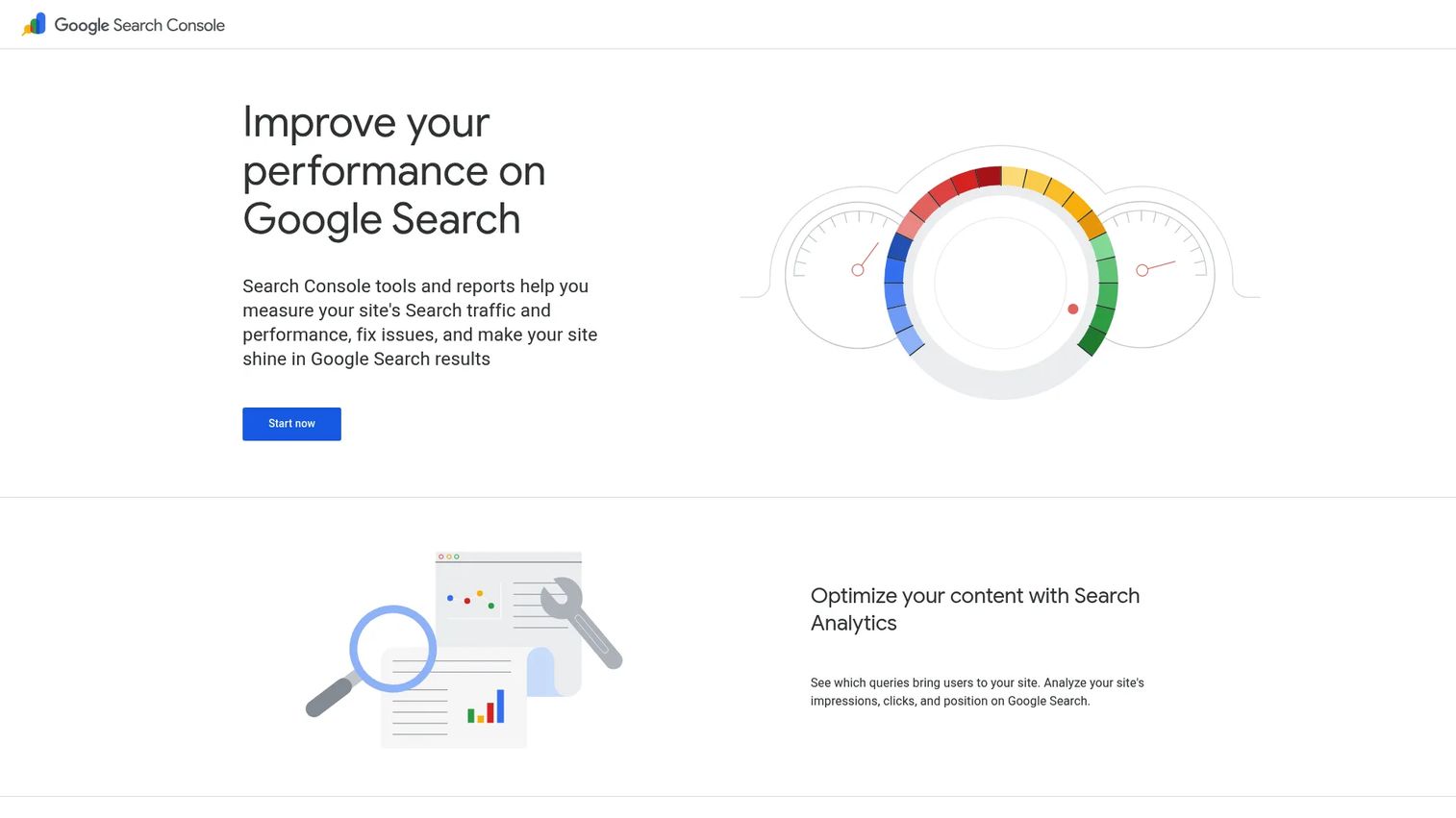
Google Search Console provides first-party information about a website’s presence in Google Search. Its reports cover query and page performance alongside indexing diagnostics. It supplies supporting search evidence rather than citation-level AI Overview rankings.
Best for: SEO and growth teams validating search-performance changes alongside dedicated AI monitoring.
Key features
- Query and page performance reports
- Search impression and click trends
- Average position measurement
- URL Inspection and indexing diagnostics
- Sitemap submission and issue alerts
Why choose Google Search Console: Establish this measurement baseline before buying another reporting layer. It helps ground a visibility discussion in observed search performance.
Use consistent page groups when reviewing changes. A sitewide traffic total can obscure movement within the content collection affected by an optimization project.
Compare the reporting period with the timing of your changes. Keep a record of page updates and other campaigns that could influence interpretation.
Search Console is also useful for investigating alternative explanations. An indexing problem deserves attention before a team attributes reduced exposure to AI-generated answers.
Maintain a distinction between search performance and citation evidence. A click trend does not identify which generated answer mentioned your business.
For leadership reporting, pair the observed movement with a concise explanation of what remains uncertain. This is stronger than presenting a causal claim from two charts.
Teams already using the service should focus on making its data operational. Agree on query groups and reporting definitions before adding another dashboard.
Google Search Console pricing: Free.
G2 rating: 4.7/5.
10. Google Analytics 4
Google Analytics 4 measures customer journeys across websites and apps. Acquisition reports and Explorations help investigate what visitors do after arrival. It complements an AI search performance tracker by examining downstream behavior.
Best for: Growth marketers connecting search initiatives with engagement and conversion outcomes.
Key features
- Acquisition and engagement reporting
- Funnel and path Explorations
- Conversion-path and attribution analysis
- Monetization reporting
- Search Console and BigQuery integrations
Why choose Google Analytics 4: Use it to evaluate the business value of acquired traffic. Citation exposure becomes more meaningful when discussed alongside landing-page behavior and relevant conversions.
GA4 does not provide an AI Overview citation report. Avoid presenting general organic traffic as a count of visits produced specifically by generated answers.
Instead, use the platform to investigate the pages associated with your search program. Review whether their visitors complete the actions your growth team considers valuable.
Define those outcomes before launching content changes. An event configured halfway through an experiment makes the comparison harder to interpret.
For B2B reporting, keep website conversions distinct from qualified pipeline. A form submission answers a different question from whether sales accepted the opportunity.
The available analysis can help identify where the acquisition journey needs work. Strong search exposure paired with weak landing-page engagement suggests a different action than limited discovery.
Treat GA4 as the outcome-measurement layer. A dedicated tracker still supplies the source and query evidence needed to investigate AI visibility.
Google Analytics 4 pricing: Standard GA4 is free. Google Analytics 360 uses custom pricing.
G2 rating: 4.5/5 for Google Analytics.
Considerations when choosing an AI Overviews rank tracker
AI Overview coverage
Ask vendors to demonstrate the difference between answer presence and citation position. Require enough source detail to distinguish brand mentions from links to owned pages.
Confirm that the plan you’re evaluating includes Google AI Overviews. Broader AI branding alone does not establish access.
Query and prompt strategy
Prioritize searches tied to commercial decisions. Keep branded queries separate from category research and product comparisons.
Document changes to the monitored set. Otherwise, a rising visibility score might reflect different questions rather than stronger performance.
Competitor and source-domain analysis
Inspect which domains appear instead of yours. Publishers and review pages can matter alongside direct competitors.
Choose reporting that supports an action. A source URL should help you decide whether to update content or investigate an external description.
Reporting workflow
Test the export or API path during evaluation. Have the person responsible for recurring reports build a sample using the proposed tool.
For agencies, inspect account separation and delivery requirements. Include implementation effort in the cost comparison rather than evaluating subscription fees alone.
Connection to business outcomes
Keep AI search visibility separate from traffic and conversion metrics. Connect them through consistent reporting periods without claiming attribution the data cannot establish.
Before buying, name the decision this software will support. If the answer remains “monitor AI,” narrow the project until someone owns the resulting action.
Conclusion
The right AI overview tracking software fits the reporting decision you need to make.
SE Ranking suits teams consolidating AI visibility with broader SEO work. Existing customers should evaluate their account’s tracking interface, while new buyers need the current product path.
AIclicks offers a focused route into citation monitoring. Ansvisor supports Google-specific investigation, with plan selection determining access.
Rankscale fits a broader cross-engine program. Its scope makes sense when your team needs to compare answer environments rather than concentrate solely on Google.
Keep Google Search Console and GA4 in the measurement stack to assess search performance and downstream behavior. Use keyword research to select meaningful queries, and consider API access once reporting requirements are stable.
Start with a manageable query group tied to a business priority. Inspect the cited sources and assign a response to each actionable gap.
Then expand according to what the findings change. A smaller monitoring program that informs content investment is more useful than an extensive dashboard nobody uses.
FAQs
An AI Overviews rank tracker records whether selected brands or URLs appear in Google’s generated answers for monitored queries. Depending on the product, reporting includes citations and historical visibility. Before buying, ask the vendor to define “rank,” because citation position and overall visibility scores describe different observations. A useful report should show enough underlying evidence to explain its result.
Traditional rank tracking measures a page’s position in organic results; AI Overview tracking examines its presence within a generated answer. A brand mention and a linked citation are also distinct outcomes. Use both reporting layers to investigate search exposure, keeping their definitions separate. Neither metric alone establishes how much qualified traffic or revenue the exposure produced.
Google Search Console provides search-performance data rather than a full citation-level AI Overview ranking report. Use it to investigate query and page movement alongside observations from a dedicated tracker. Keep reporting periods consistent when comparing the datasets. A change in clicks or impressions provides useful context, but cannot independently identify the generated answer responsible for that movement.
Track brand mentions and owned URLs, then examine competing domains and the external sources cited around your category. Preserve the query context and observation date so changes remain interpretable. Prioritize searches associated with buying decisions rather than maximizing the number monitored. Your reporting should distinguish missing citations from inaccurate descriptions because those findings require different responses from the marketing team.
Choose a monitoring cadence that matches the decisions your team can make. Daily observations suit active investigations, while weekly review can support a more stable strategic query set. Keep collection frequency distinct from reporting frequency, since leadership rarely needs every recorded change. Before increasing volume, assess whether additional observations will clarify a decision enough to justify the subscription or credit cost.
AI Overviews can change clicking behavior because users receive information directly on the results page. The effect on your website requires analysis of its particular queries and pages. Pair citation monitoring with Search Console and GA4, while considering other changes affecting acquisition. Avoid attributing a traffic decline to generated answers solely because both appeared during the same reporting period.
Yes, agencies can use them to investigate citation gaps across client portfolios and explain changes in search exposure. Evaluate account organization and reporting delivery before committing to a subscription. API access becomes relevant when client reports require repeatable data transfers into another system. During a trial, build a sample deliverable and confirm that its evidence supports a clear recommendation.
The best choice depends on the measurement gap and the systems your team already maintains. A suite-based option suits consolidated reporting, while dedicated monitoring can serve a narrower citation investigation. Broader programs need an AI visibility platform covering the relevant answer engines. Compare the subscription that includes your required coverage, then test whether its findings produce a useful content decision.