Most admission-revenue nonprofits are running their operations across four or five disconnected systems. Tickets live in one place, donor records somewhere else, membership benefits in a spreadsheet, and POS revenue in a third-party processor that nobody has time to reconcile before the board meeting.
The problem is not the number of tools. The problem is that those tools were not chosen around how money, attendance, and constituent data actually move through the organization. According to the 2025 Nonprofit Technology Ecosystem Trends Report, 90% of nonprofits use at least three third-party systems beyond their main CRM. For admission-based organizations, that fragmentation shows up at the admissions desk, in the box office, and in development reports that never quite tell the full story.
Choosing the right admission-based nonprofit software means matching the platform to the revenue workflow, not picking the loudest vendor or the longest feature list.
What's inside
This guide compares 13 admission-based nonprofit software tools for 2026. It is written for executive directors, operations leaders, and operators at museums, performing arts organizations, camps, associations, and other admission-revenue nonprofits who need a durable stack decision.
- Who each tool fits best, by organization type and workflow
- Where each tool sits on the admissions-to-CRM spectrum
- Which workflows to verify before signing anything
- Pricing and G2 ratings, verified from live sources
- Buying criteria to evaluate before shortlisting
TL;DR
- Best for high-volume cultural admissions: ACME Ticketing or Galaxy Connect by accesso
- Best for museums needing admissions plus fundraising: Blackbaud Altru or Veevart
- Best for performing arts and ticketed events: PatronManager, AudienceView Professional, or ThunderTix
- Best for camps and program-heavy nonprofits: Doubleknot
- Best for smaller nonprofits needing CRM and donor tools: Neon CRM, Donorbox, Humanitru, or Aplos
- Best for associations and member-led organizations: WildApricot
What is admission-based nonprofit software?
Admission-based nonprofit software helps organizations that earn revenue through entry, tickets, events, memberships, reservations, or visitor access manage the transactions, people, and reporting tied to those experiences.
This category sits at the intersection of several software types: Nonprofit ticketing software, visitor management, membership management, donor CRM, and point-of-sale. What makes a platform genuinely admission-based is that it handles the operational layer between a visitor or ticket buyer and the financial record of that interaction.
What falls inside the category:
- Ticketing and timed entry with capacity controls
- Membership purchases, renewals, benefit management, and access rights
- Event registration and program reservations
- Visitor check-in, attendance tracking, and group sales
- POS and onsite payment processing
- Donor and constituent records where they connect to admissions data
- Reporting dashboards for revenue, attendance, and campaign performance
- Integrations with accounting, CRM, marketing, and fundraising tools
What sits adjacent but is not admission-based by default:
- Donor CRM software with no ticketing or admissions layer
- Nonprofit accounting software focused on fund accounting rather than visitor operations
- Generic event registration tools that lack membership management or onsite POS
- Email marketing platforms that connect to CRM but do not handle admissions
Core capabilities to verify before buying:
- Timed entry and capacity controls
- Membership levels and benefits
- Event registration with capacity rules
- Donor and constituent record management
- POS and payment processing
- Attendance tracking and check-in tools
- CRM, accounting, and marketing integrations
- Dashboards for visitor revenue and campaign performance
The right tool depends on whether your daily bottleneck is at the admissions desk, in the box office, in the development office, or in finance. Each section below identifies the operational home of each platform.
When to use admission-based nonprofit software
Sell admissions, tickets, or timed entry
Organizations that charge for entry need more than a payment link. They need capacity controls, scan-ready tickets, member pricing at the door, refund and exchange workflows, attendance reporting, and onsite staff tools. Generic event platforms often miss several of those requirements. Dedicated admission-based nonprofit software is built for the volume and operational specifics of physical venue access.
Connect memberships to access benefits
Member benefit delivery breaks down when membership records, admissions desks, and event registrations do not share data. Free entry, discounted tickets, guest passes, reciprocal benefits, and renewal prompts all require a system that can verify and enforce benefit rules at the point of access. This is where many organizations discover that their current tools cannot handle membership depth.
Unify visitor, donor, and event data
Development teams need to know when a ticket buyer becomes a donor, when a member attends a program, or when an event registrant responds to a campaign. Organizations with fragmented visitor services, development, and finance data spend significant staff time on reconciliation that a connected platform eliminates. The goal is a single constituent view that shows revenue source alongside giving history.
Admission-based nonprofit software comparison
The 13 tools below cover the full range of this category, from admissions-first platforms built for high-volume cultural institutions to CRM-first tools that connect donor management with event workflows. Use this table to shortlist before reading the full entries.
| # | Product | Best for | Key differentiator | Pricing | G2 rating |
|---|---|---|---|---|---|
| 1 | ACME Ticketing | Museums, zoos, and cultural admissions | Admissions, memberships, POS, and visitor engagement in one platform | Custom pricing | 4.3/5 |
| 2 | Blackbaud Altru | Museums needing admissions plus fundraising | Constituent management connected to admissions and development | Custom pricing | N/A |
| 3 | Galaxy Connect by accesso | Attractions and high-volume venues | Ticketing infrastructure with distribution reach for attraction operators | Custom pricing | N/A |
| 4 | Doubleknot | Camps, nature centers, and program nonprofits | Registration, reservations, memberships, and POS for program-heavy orgs | Custom pricing | 3.5/5 |
| 5 | PatronManager | Performing arts organizations | Ticketing, fundraising, and patron CRM on Salesforce | Custom pricing | 3.6/5 |
| 6 | Veevart | Museums on Salesforce | Museum management, ticketing, and retail on the Salesforce platform | Custom pricing | 4.7/5 |
| 7 | AudienceView Professional | Performing arts and event venues | Ticketing and audience engagement for live event organizations | Custom pricing | N/A |
| 8 | ThunderTix | Small to midsize event teams | Focused ticketing with public entry-level pricing | From $20/mo | N/A |
| 9 | WildApricot | Associations and member-led nonprofits | Membership, events, and payments with a 60-day free trial | From $66/mo | N/A |
| 10 | Neon CRM | Development-led nonprofits | Donor CRM with optional events, memberships, and volunteers modules | From $99/mo | 4.2/5 |
| 11 | Donorbox | Donation-led nonprofits adding events | Fundraising with event ticketing and recurring gift tools | Free plan available | 4.6/5 |
| 12 | Humanitru | Nonprofits centralizing constituent records | Consolidated supporter data with fundraising and engagement workflows | Custom pricing | 4.5/5 |
| 13 | Aplos | Small nonprofits needing accounting and CRM | Fund accounting with donation tracking and donor CRM | From $79/mo | 4.6/5 |
Best 13 admission-based nonprofit software tools
1. ACME Ticketing
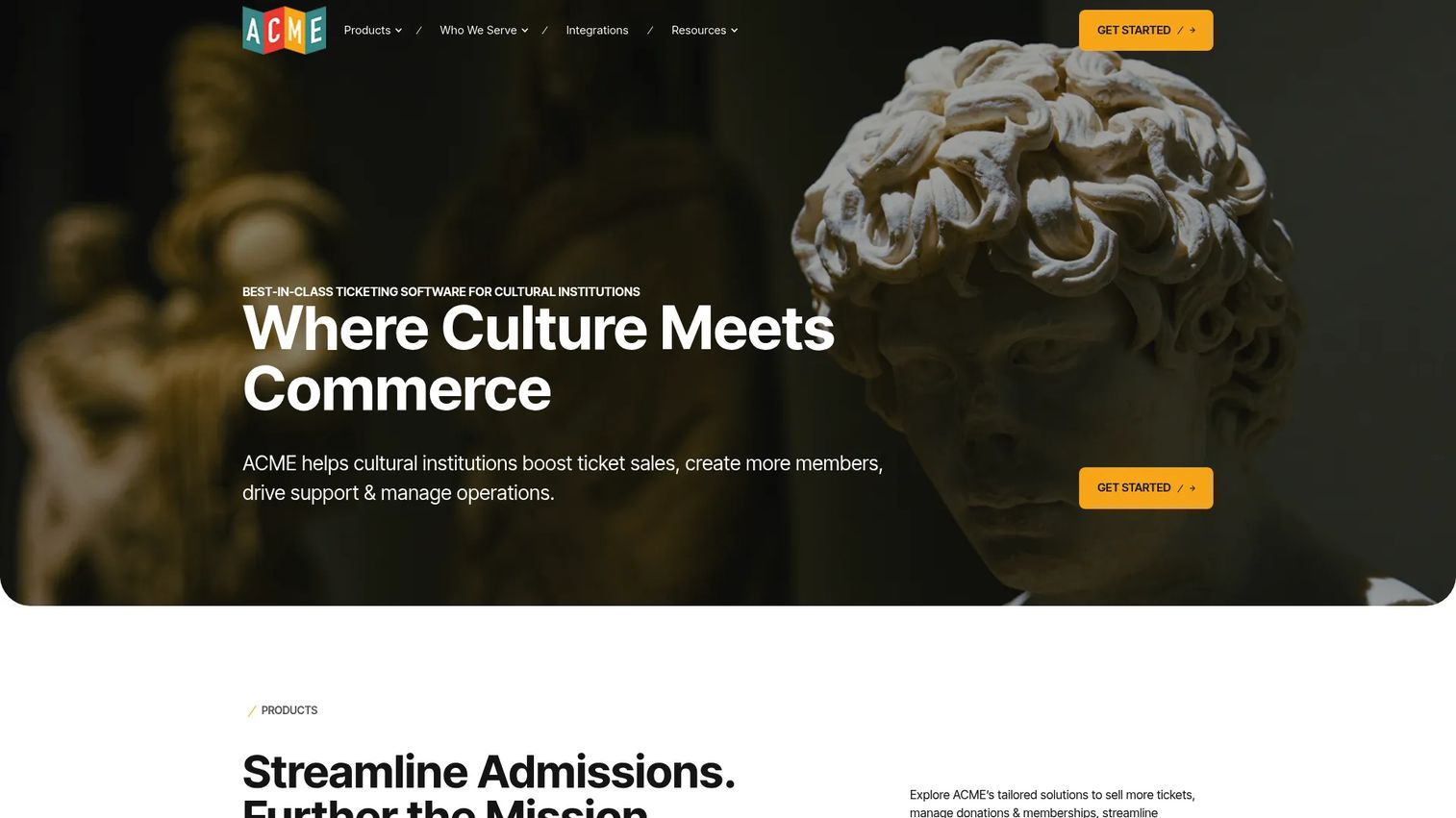
ACME Ticketing is a cloud-based visitor commerce platform built specifically for cultural institutions. Museums, zoos, aquariums, botanical gardens, and historic sites use it to manage admissions, memberships, group sales, POS, and visitor engagement from one operating layer. The platform covers the full admissions transaction cycle, from online ticket sales to gate scanning to post-visit reporting.
Best for: Museums, attractions, and cultural nonprofits where admissions revenue is the operational center of gravity.
Key features
- Timed entry ticketing with custom capacity scheduling
- Membership management with automatic renewals and CRM integrations
- Online and group sales with one-click group check-in
- Integrated POS and embedded payments
- Cross-channel reporting and open API integrations
Why choose ACME Ticketing: This platform fits organizations that need admissions, memberships, and onsite commerce to work together without manual reconciliation. Teams that have outgrown generic event registration tools and need dedicated admissions infrastructure will find ACME purpose-built for their workflows.
ACME Ticketing pricing: ACME structures pricing through a customized quote based on ticket volume, POS locations, membership needs, and implementation scope. Contact their sales team to get scoped pricing. G2 reviewers report a 4.3/5 rating based on 13 reviews.
2. Blackbaud Altru
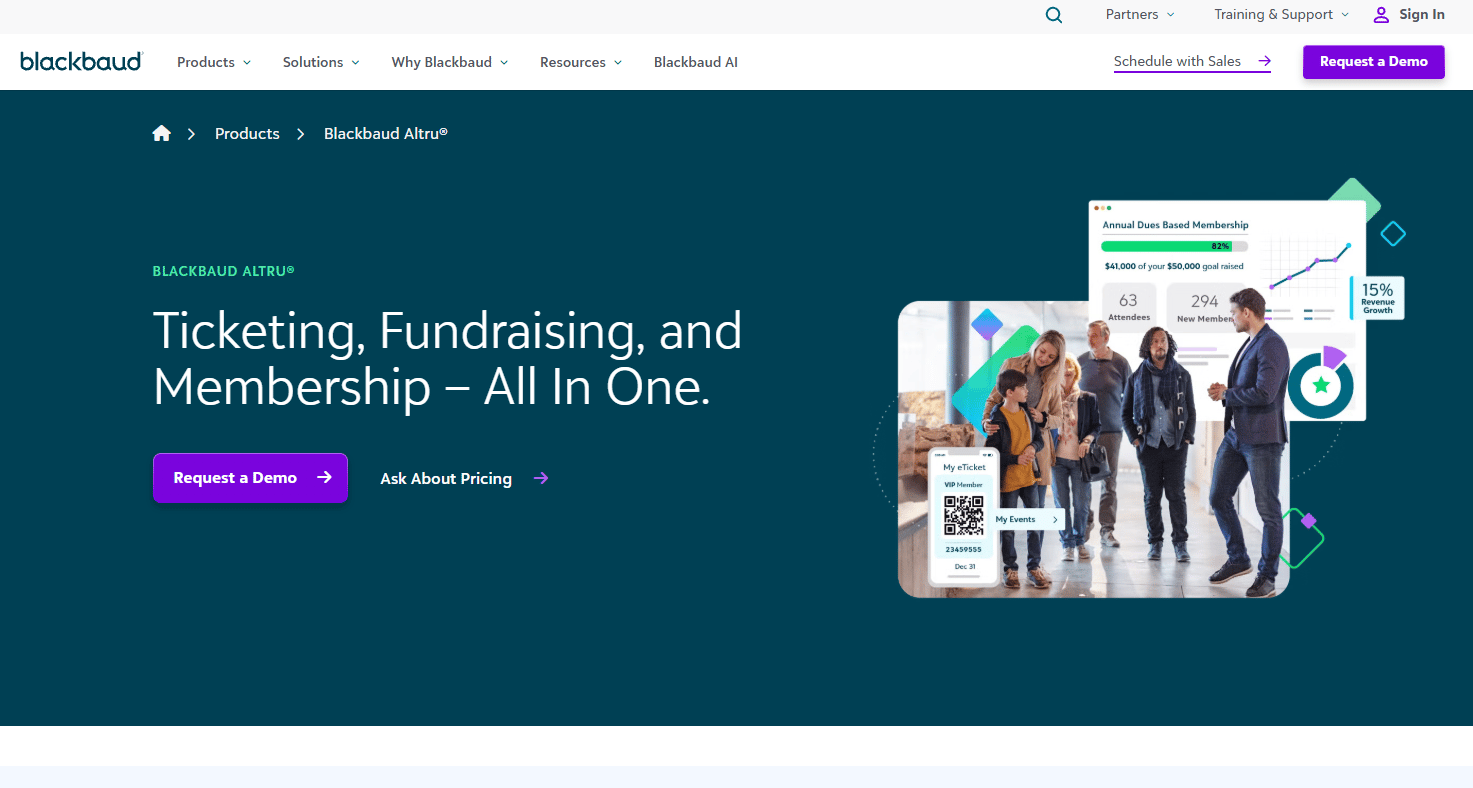
Blackbaud Altru is a cloud-based platform designed for museums, zoos, aquariums, gardens, and other arts and cultural organizations that need admissions, development, and constituent management in one environment. It covers ticketing, membership renewals, group sales, fundraising, and donor records alongside facility rental and reporting tools. The key distinction is that visitor data and donor data share the same constituent record.
Best for: Museums and cultural institutions that need admissions and development teams to work from shared constituent data.
Key features
- Admissions ticketing and timed entry
- Membership management and renewals
- Fundraising and donation records
- Constituent relationship management
- Group sales, facility rentals, and reporting dashboards
Why choose Blackbaud Altru: This is a strong fit when your development team, membership team, and visitor services staff need a shared view of the same constituent. Implementation planning and data migration are significant evaluation points; this platform rewards organizations that invest in the setup.
Blackbaud Altru pricing: Blackbaud prices Altru through a personalized quote. Ask sales to scope the number of users, modules required, payment processing, data migration, and implementation services.
3. Galaxy Connect by accesso
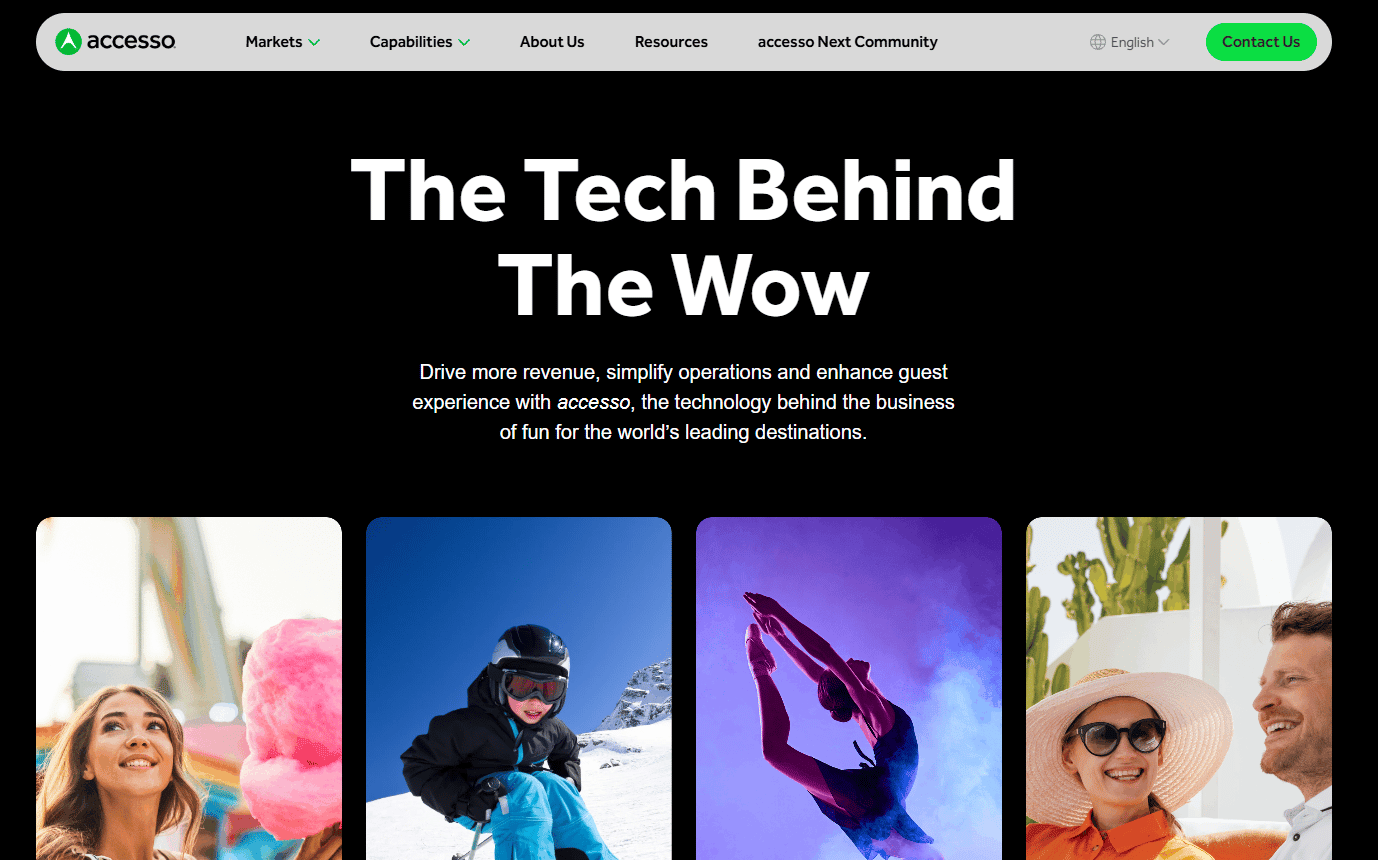
Galaxy Connect by accesso is a ticketing and admissions platform from accesso, a company focused on attractions and admission-driven venues. It is designed for organizations that need ticketing infrastructure, distribution reach, and access control at scale. The platform serves attraction operators, cultural venues, and admission businesses where ticket volume and visitor flow management are the primary technical requirements.
Best for: Attractions and high-volume venues that need robust ticketing infrastructure with broad distribution capabilities.
Key features
- Online ticketing and admissions processing
- Access control and ticket scanning
- Capacity management and reservation tools
- Visitor reporting and analytics
- Distribution network for attraction-style operators
Why choose Galaxy Connect by accesso: Choose this when ticketing infrastructure and distribution reach are the primary requirements. Nonprofits considering this platform should verify donor management, membership depth, and CRM integration capabilities before committing, since accesso positions primarily for attraction operations rather than development-heavy nonprofits.
Galaxy Connect by accesso pricing: Pricing is sales-led and built on a quote. The drivers are ticket volume, ticketing channels, integrations, and venue-specific requirements. Contact accesso directly to scope a proposal.
4. Doubleknot
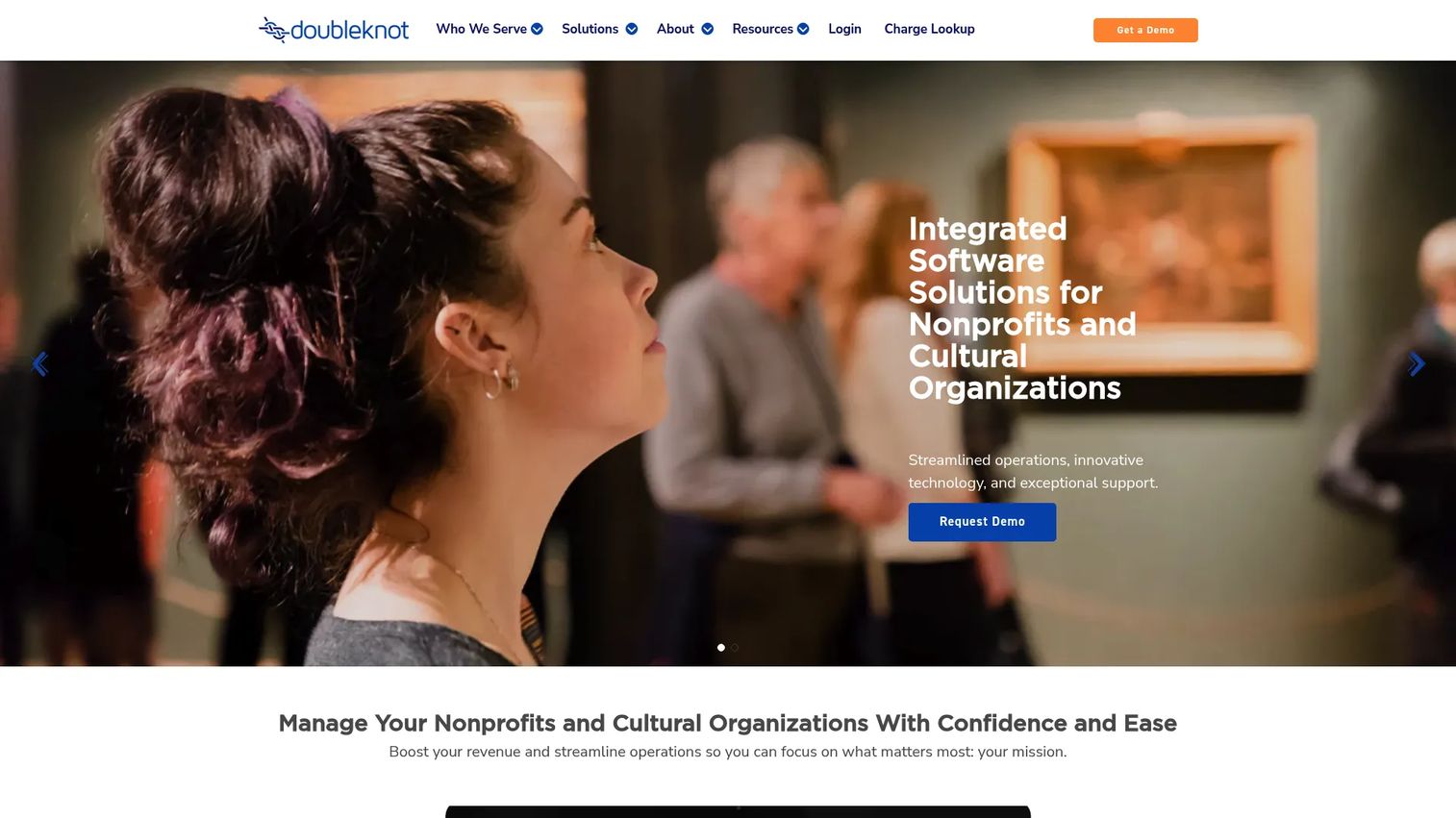
Doubleknot covers event registration, admissions, memberships, reservations, POS, and constituent management for nonprofits that sell programs alongside admission experiences. Museums, zoos, aquariums, nature centers, scout councils, and camps use it when their operational complexity goes beyond straight ticketing into class registration, facility booking, and group sales.
Best for: Program-heavy nonprofits where camp registrations, facility reservations, and memberships matter as much as admissions.
Key features
- Event and program registration management
- Facility and site reservations
- Membership management
- Mobile POS and group sales
- Constituent relationship management
Why choose Doubleknot: This platform fits organizations where programs and bookings are as central as admissions. Before buying, test registration logic, refund workflows, capacity rules, and reporting outputs against your real use cases.
Doubleknot pricing: Pricing is built through a quote. The main drivers are registration volume, facility modules, membership needs, POS configuration, and implementation services.
5. PatronManager
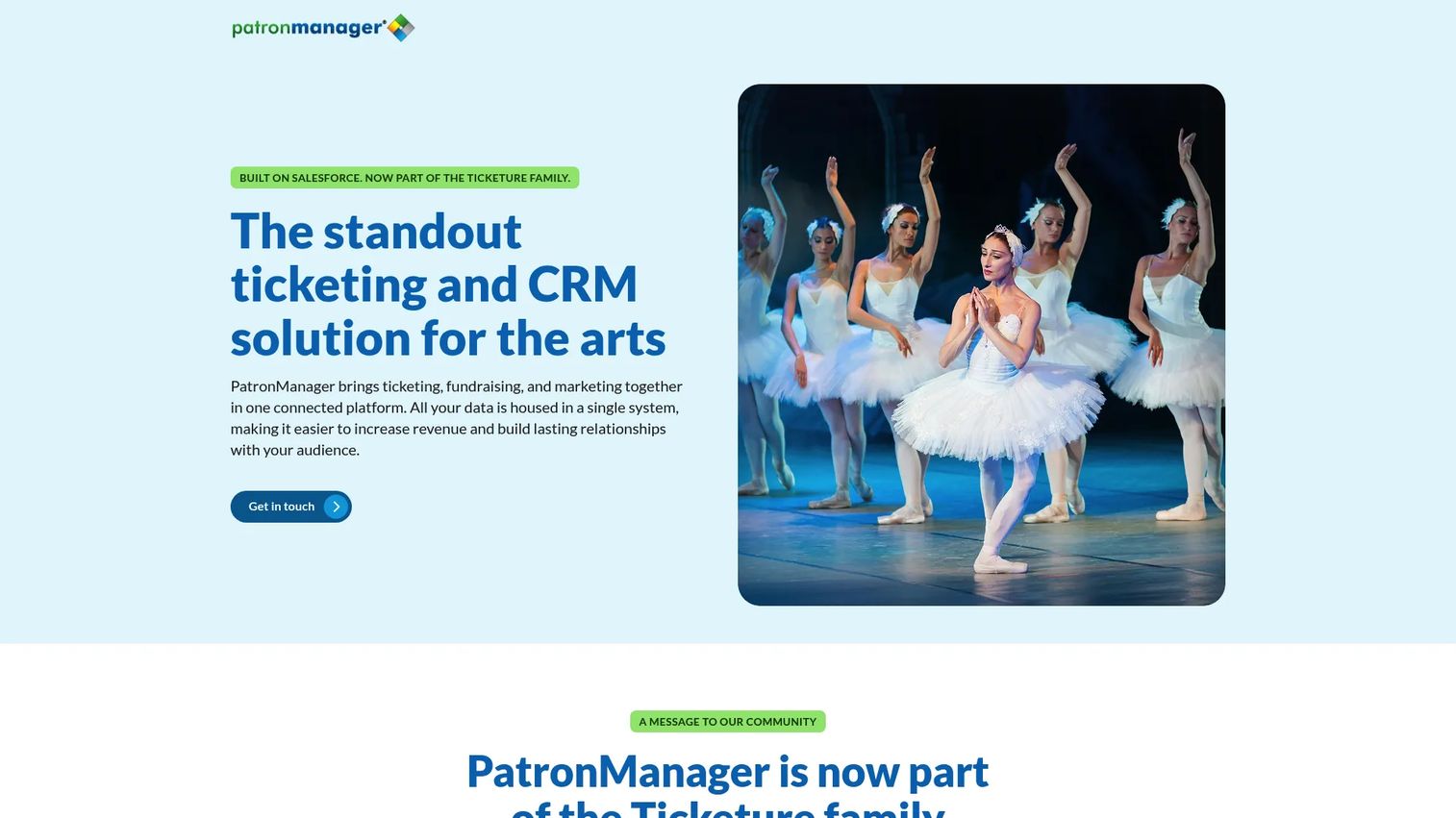
PatronManager is a CRM and ticketing platform built for arts and cultural organizations, sitting on the Salesforce foundation. It covers ticketing, patron CRM, fundraising, marketing, subscription packages, and audience engagement for theaters, orchestras, and performing arts nonprofits. Because it runs on Salesforce, patron records, ticket history, and donor data live in the same CRM environment.
Best for: Performing arts organizations that need ticketing, donor relationships, and audience data connected in a single CRM.
Key features
- Event and subscription ticketing
- Patron CRM and fundraising records
- Email marketing and audience segmentation
- Subscription and package management
- Salesforce-native data architecture
Why choose PatronManager: This is the right fit when the organization's core revenue comes from performances, subscriptions, and patron giving. Teams that want arts-specific workflows connected to CRM data benefit from the Salesforce foundation, though buyers should ask about Salesforce-related licensing costs during evaluation. G2 reviewers rate it 3.6/5.
PatronManager pricing: Pricing comes through a quote. Ask sales about number of seats, annual ticket volume, Salesforce licensing implications, implementation, and ongoing support.
6. Veevart
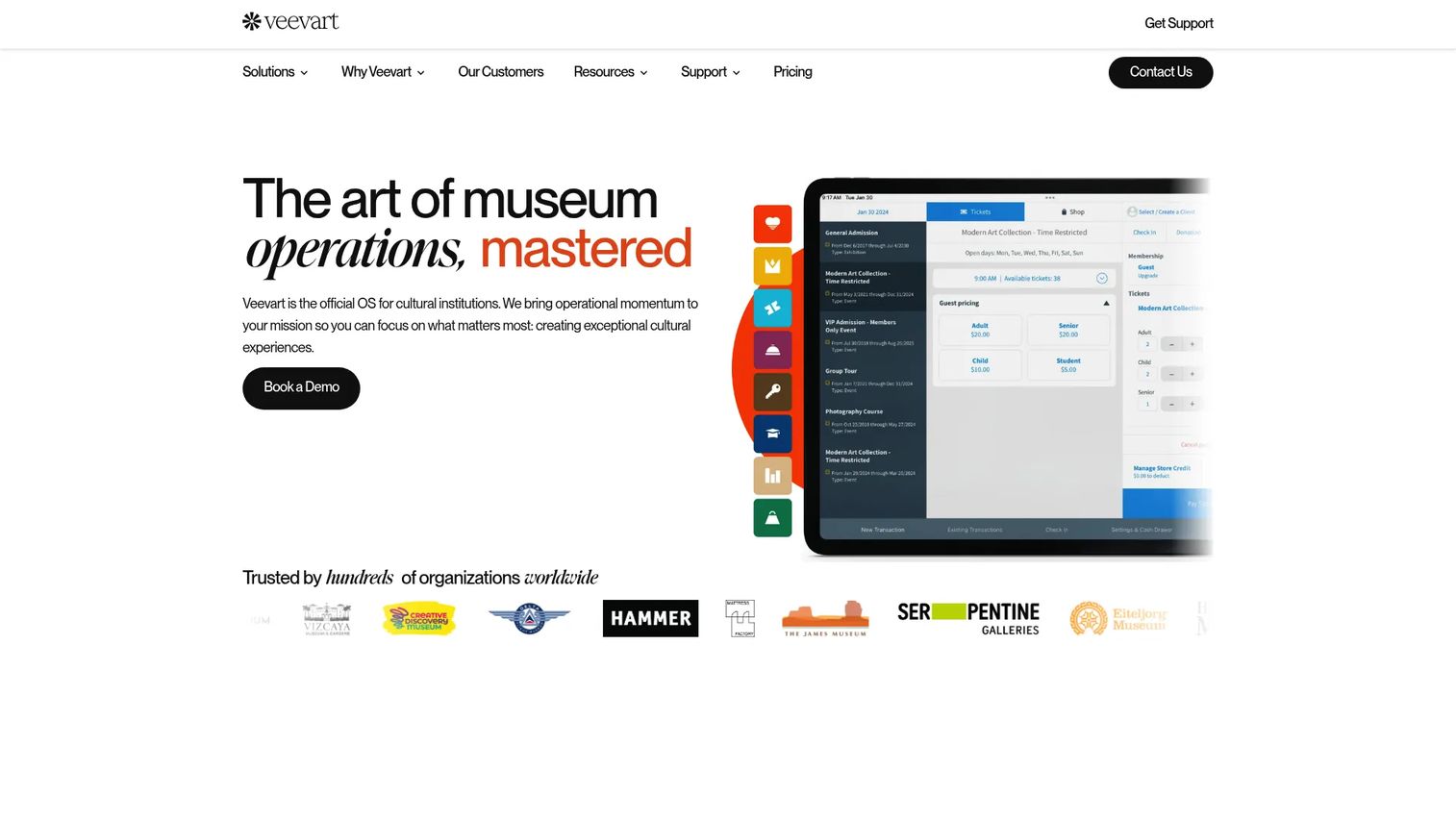
Veevart is an all-in-one museum management platform built on Salesforce. It covers ticketing, memberships, donations, retail POS, education and program registration, facility rentals, collection management, and financial reporting. Museums that want their visitor operations and CRM data inside the Salesforce ecosystem find Veevart purpose-built for that architecture.
Best for: Museums and cultural institutions that want admissions, membership, and retail operations on the Salesforce platform.
Key features
- Museum ticketing and timed entry
- Membership and benefit management
- Donation and fundraising records
- Retail POS and gift shop workflows
- Salesforce-native constituent data
Why choose Veevart: Strong fit when the organization already works in Salesforce or wants museum operations and CRM data in the same environment. Buyers should verify Salesforce licensing costs, available modules, and implementation scope during evaluation. G2 reviewers rate Veevart 4.7/5 based on 25 reviews.
Veevart pricing: Pricing is customized based on institution size, users, modules, and operational complexity. Contact Veevart to build a quote that covers Salesforce licensing, museum modules, implementation, and support.
7. AudienceView Professional
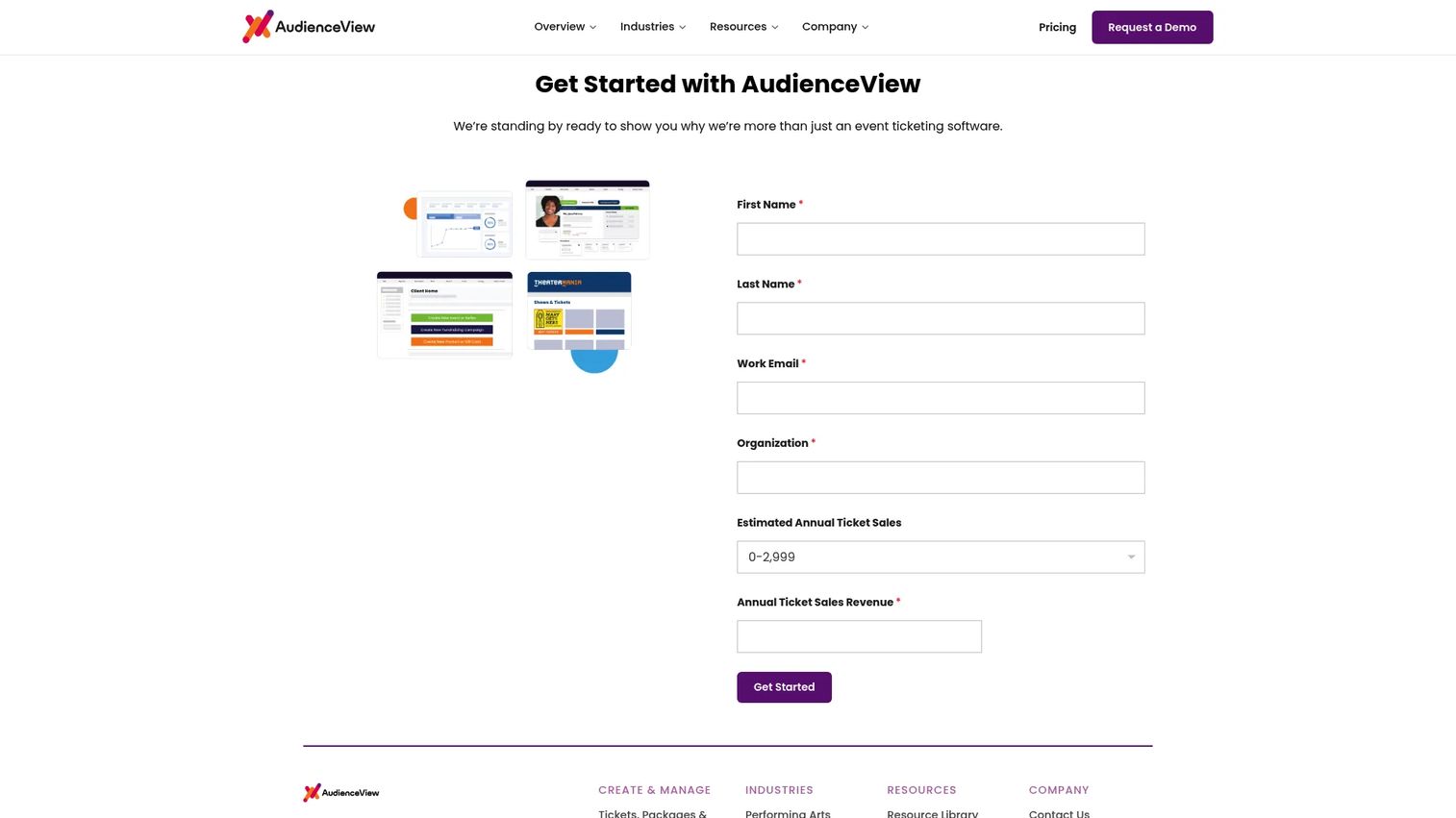
AudienceView Professional is an event commerce platform for performing arts, cultural organizations, and live event venues. It handles tickets, packages, subscriptions, box office operations, donations, memberships, patron CRM, and audience marketing tools. Organizations running recurring performance seasons with subscriber bases find the platform built around their event cadence.
Best for: Performing arts and live event organizations that need ticketing, patron data, and audience engagement in one place.
Key features
- Reserved and general admission ticketing
- Subscription and package management
- Patron CRM and donor records
- Audience segmentation and email marketing
- Box office and online ticket sales
Why choose AudienceView Professional: Good fit for organizations running performance seasons, ticket packages, and audience campaigns. Ask sales about ticket volume, seating configuration, service fee structure, and integration requirements. No G2 rating is currently available for this product.
AudienceView Professional pricing: Pricing uses a flexible subscription and per-ticket model; exact figures require a quote from AudienceView. Contact them with ticket volume, seating requirements, and integration needs to get a scoped proposal.
8. ThunderTix
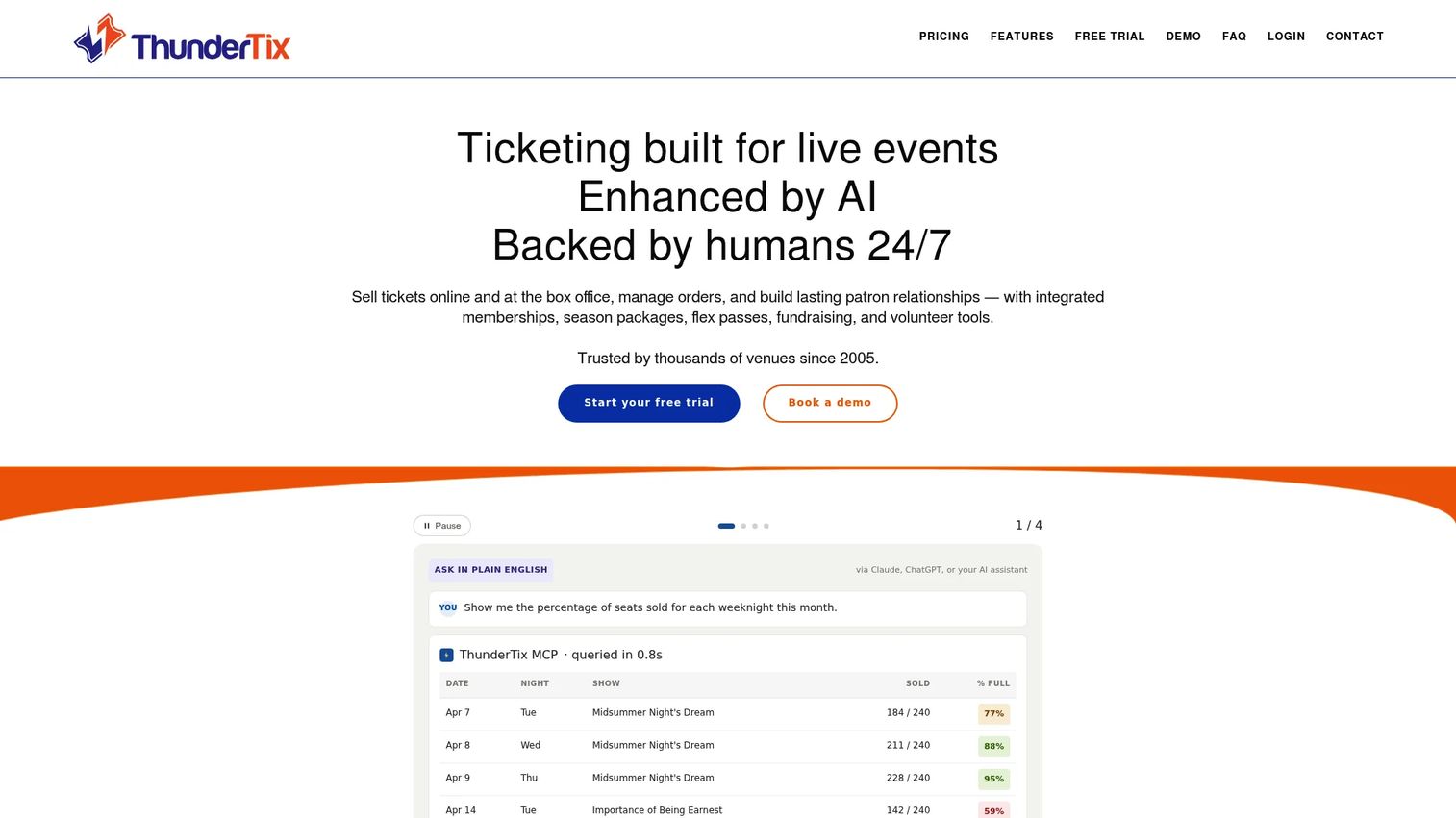
ThunderTix is an event ticketing and venue management platform for theaters, live music venues, performing arts organizations, and festivals. It covers reserved and general admission ticketing, season subscriptions, flex passes, box office tools, donations, memberships, and merchandise sales. The platform is notable for publishing public entry-level pricing, which makes it easier to evaluate fit before a sales call.
Best for: Small to midsize event and theater teams that need focused ticketing without a heavy enterprise platform.
Key features
- Reserved and general admission ticketing
- Season subscriptions and flex passes
- Donation collection and gift cards
- Barcode scanning and branded eTickets
- Box office tools and merchandise sales
Why choose ThunderTix: This is a focused ticketing platform for teams where ticket sales are the primary operational job. Organizations that need deep donor CRM or full museum management should verify integration options before choosing. No current G2 rating is listed.
ThunderTix pricing: Plans start at $20/month for general admission (includes first 20 tickets, then $1 per ticket). Reserved seating starts at $25/month. The White Glove plan runs $195/month and includes the first 100 tickets. K12 schools pay $0.65 per ticket plus 3.65% with no monthly fee. All plans include human support.
9. WildApricot
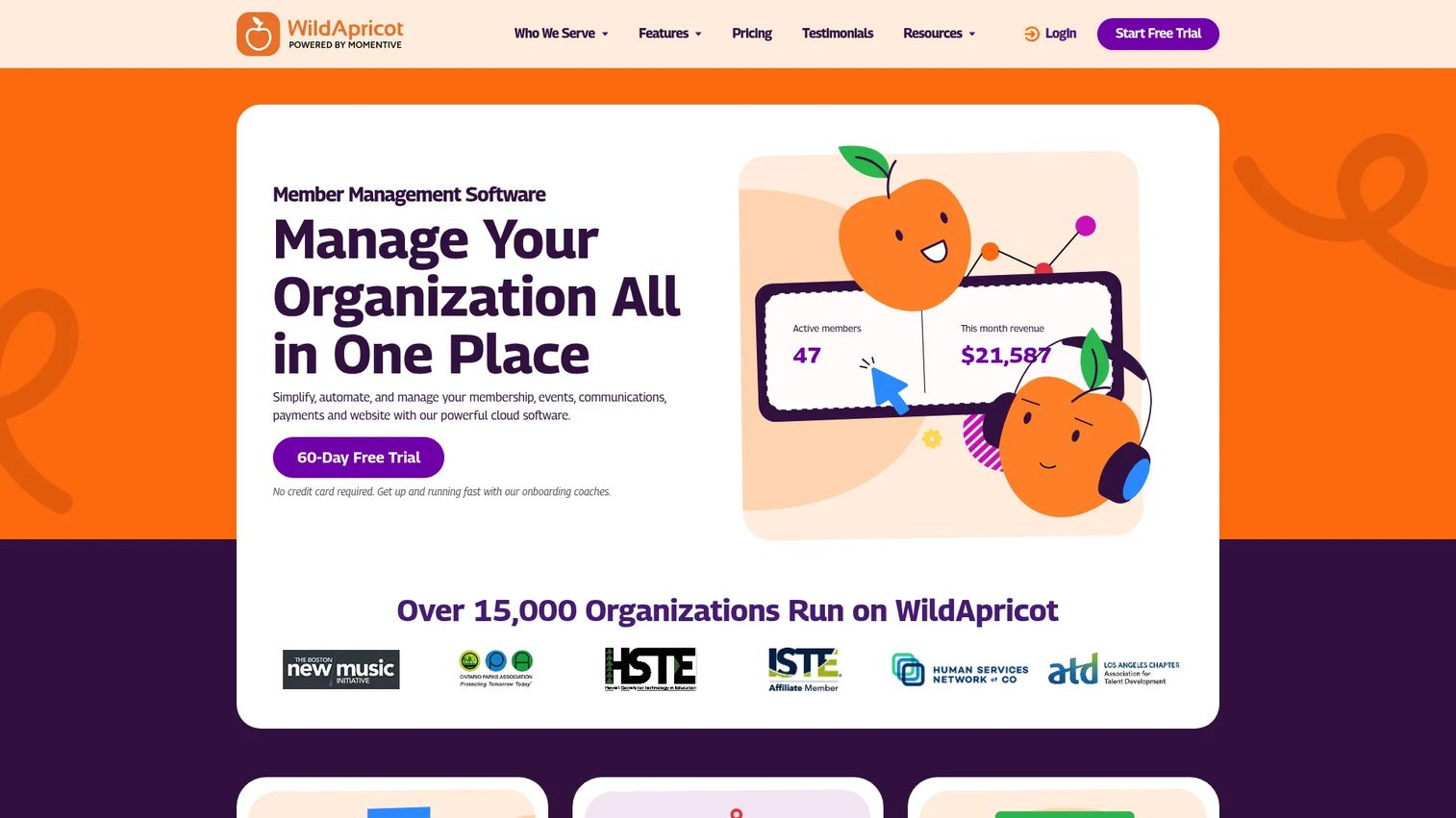
WildApricot is an all-in-one membership and association management software platform for clubs, associations, and member-led nonprofits. It covers member databases, event registration, online payments, website builder tools, email campaigns, and donation collection. The platform fits admission-based contexts when member access, event registration, and dues management are the core workflows rather than museum-style gate scanning.
Best for: Associations and member-led nonprofits that need memberships, event registration, and online payments with a low startup cost.
Key features
- Member database and automated renewals
- Event registration and payment processing
- Website builder with member-only areas
- Email campaigns and segmentation tools
- Donation collection and mobile admin app
Why choose WildApricot: Right for organizations where members, renewals, and events drive operations. Museums and attractions that need gate scanning, timed entry, or admissions-desk POS should verify those capabilities before committing. Pricing is based on contact count, which makes the cost predictable as the membership base grows.
WildApricot pricing: Pricing starts at $66/month for up to 100 contacts on a monthly plan, or $59.40/month with annual prepayment. All plan tiers include the same feature set; the price scales with contact volume. A 60-day free trial is available.
10. Neon CRM
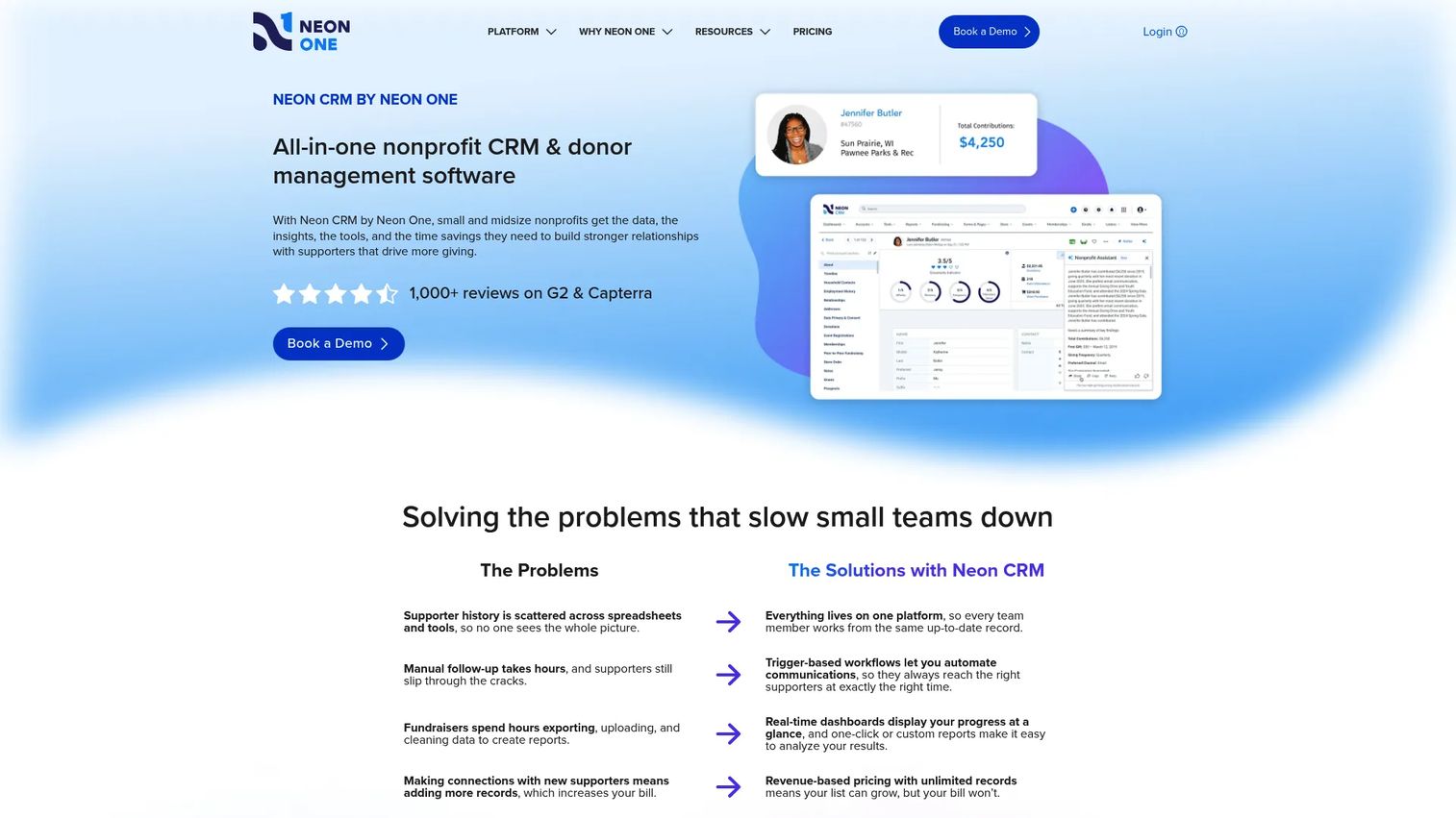
Neon CRM is a nonprofit CRM for donor management, fundraising, communications, and constituent engagement. Events, memberships, and volunteer management are available as optional add-on modules. The platform fits admission-based nonprofits when constituent relationship management is the bigger bottleneck than onsite admissions, particularly for development-led organizations.
Best for: Nonprofits that need donor CRM, fundraising campaigns, and communications connected, with events and memberships available as add-ons.
Key features
- Unified donor CRM and supporter profiles
- Fundraising campaigns, donation forms, and recurring gifts
- Email marketing and automated stewardship workflows
- Optional events module (adds 20% to CRM cost)
- Optional memberships and volunteer modules
Why choose Neon CRM: Strong fit for development-led nonprofits where donor history, campaign management, and fundraising reporting are the primary need. This is a CRM-first tool, not an admissions-first one. Organizations that need gate scanning, timed entry, or admissions POS should evaluate integrations with dedicated ticketing platforms.
Neon CRM pricing: Starts at $99/month with revenue-based pricing and unlimited contacts, users, forms, and reports. The Events module adds 20% to the CRM cost; Memberships and Volunteers each add 10%.
G2 reviewers rate Neon CRM 4.2/5 based on 443 reviews.
11. Donorbox
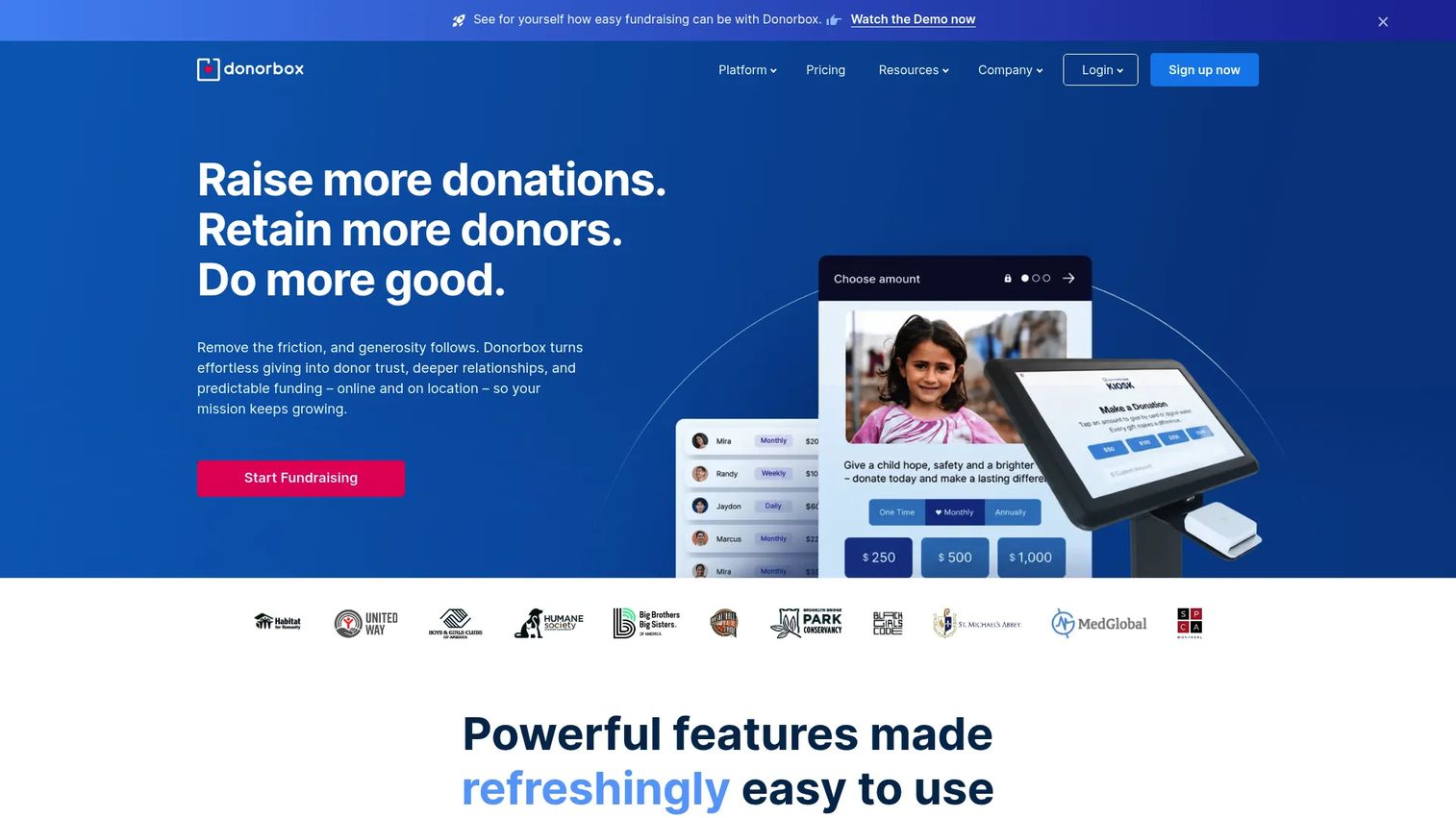
Donorbox is a fundraising and donor management platform with event ticketing, recurring gift tools, crowdfunding, and peer-to-peer campaigns. It is designed for donation-led nonprofits that sometimes run ticketed events or need lightweight admissions alongside a strong fundraising workflow. The Standard plan is free to start, with transaction fees applying per donation.
Best for: Donation-led nonprofits that need fundraising tools with event ticketing as a secondary workflow.
Key features
- Donation forms and campaign pages
- Recurring giving and peer-to-peer fundraising
- Event ticketing and registration
- Donor portal and donor management records
- Crypto and stock donation support
Why choose Donorbox: Good fit when fundraising is the core job and events or admissions are secondary. High-volume admissions organizations should verify box office tools, timed entry, POS workflows, and ticket scanning capabilities before choosing Donorbox as a primary admissions platform.
Donorbox pricing: The Standard plan is free with transaction fees of 2.95% to 3.95% per donation. The Pro plan costs $150/month and includes advanced analytics, reduced fees, and additional integrations. The Premium plan uses custom pricing. G2 reviewers rate Donorbox 4.6/5.
12. Humanitru
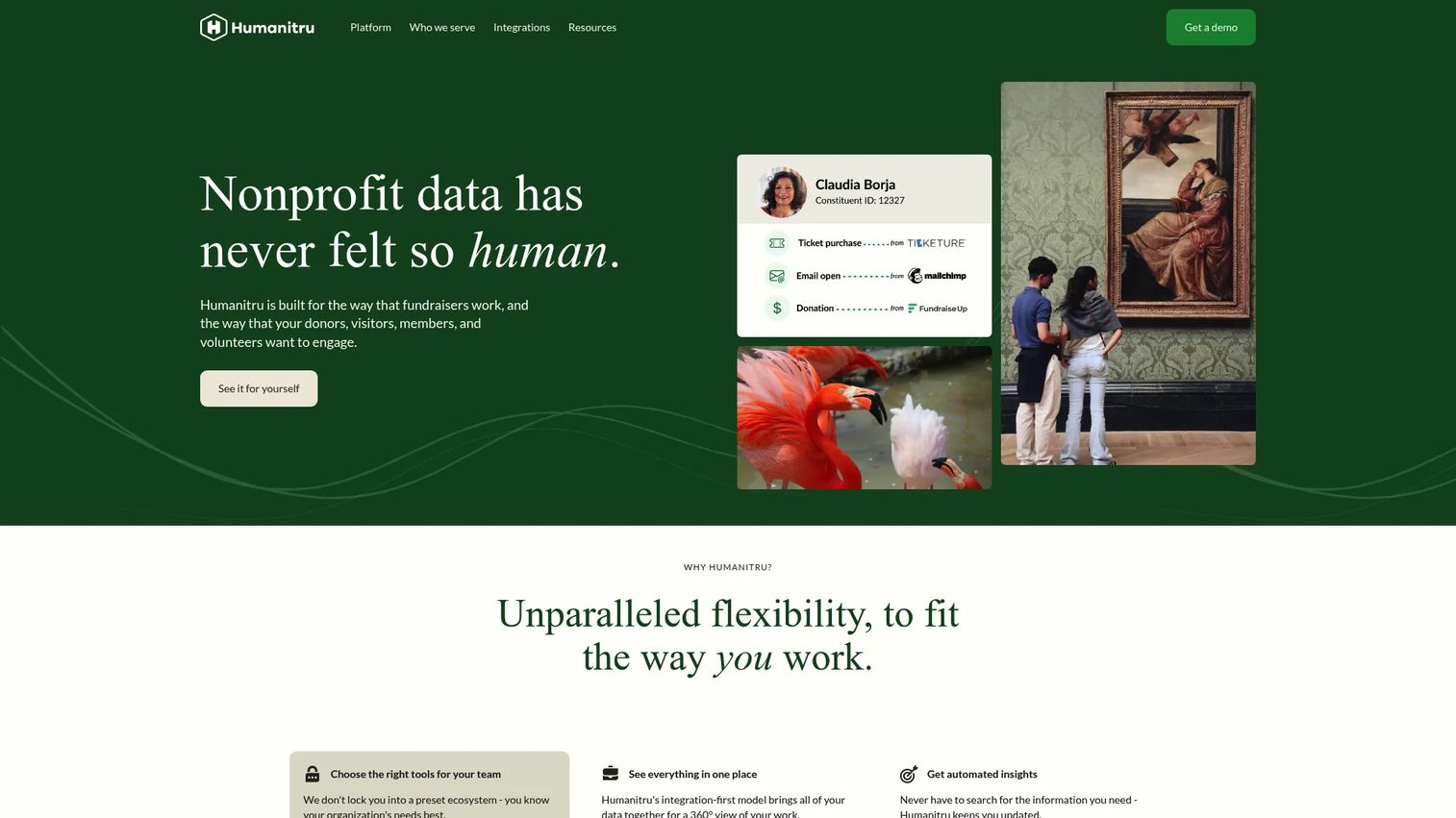
Humanitru is a nonprofit CRM and supporter engagement platform that centralizes donor data, automates stewardship, and connects fundraising, memberships, and event workflows. It includes integrations with ticketing platforms, email marketing tools, and payment processors to build a broader constituent picture. Museums, zoos, aquariums, and food banks appear prominently in its stated customer base.
Best for: Nonprofits that want consolidated constituent data across donor, member, event, and volunteer records in one CRM.
Key features
- Consolidated supporter and donor records
- Stewardship automation and opportunity pipelines
- Fundraising pages, forms, and automatic receipting
- Monthly giving optimization tools
- Integrations with ticketing, email, and payment platforms
Why choose Humanitru: Right for organizations that want a broader constituent operating system rather than a narrow ticketing tool. Buyers evaluating Humanitru against admissions-first platforms should map workflows against each system's operational home: Humanitru sits on the CRM and engagement side, not at the admissions desk.
Humanitru pricing: Pricing comes through a quote based on the number of contacts, users, modules, and implementation scope. Contact Humanitru directly for a proposal. G2 reviewers rate it 4.5/5 based on 74 reviews.
13. Aplos
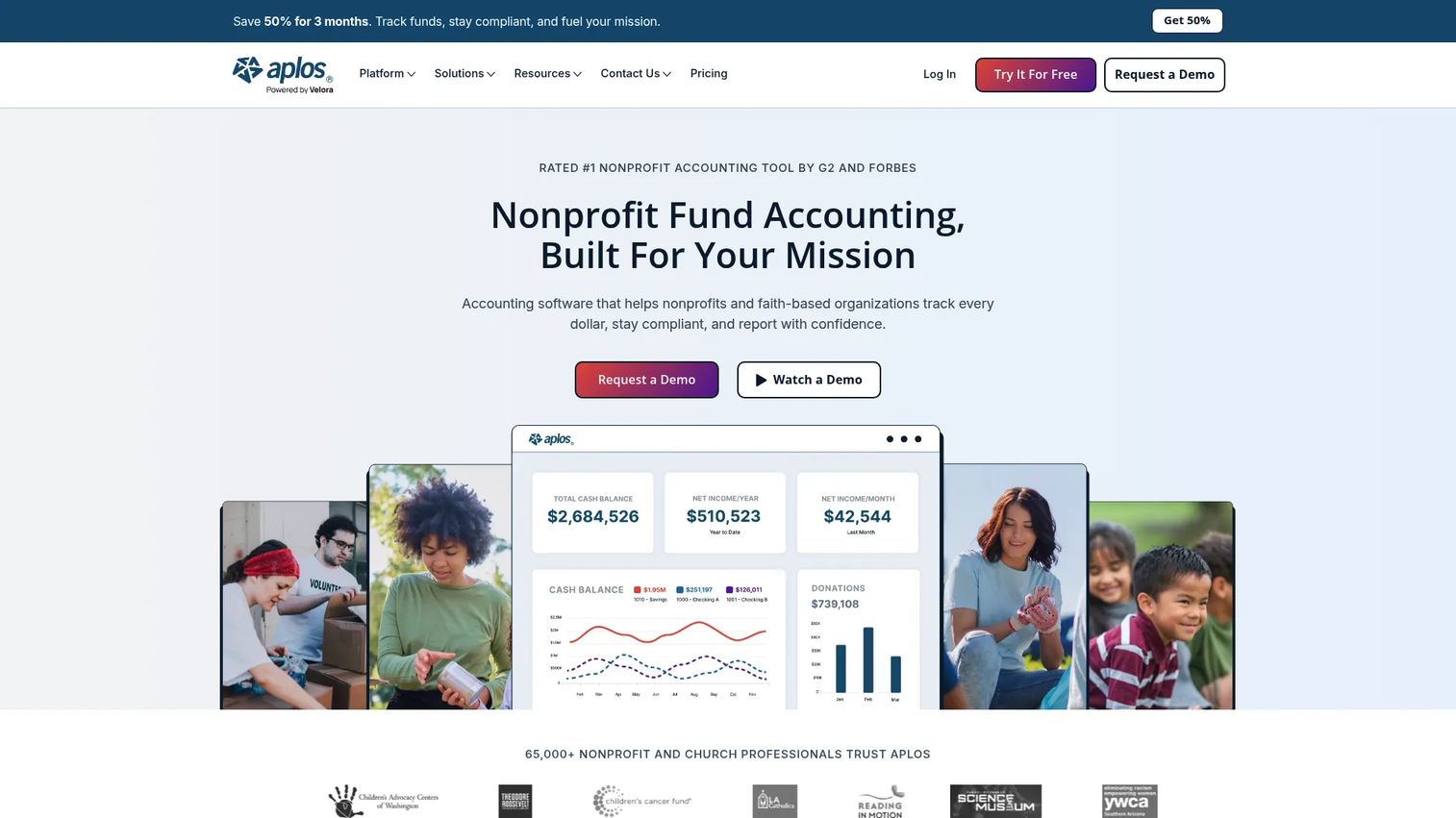
Aplos is nonprofit financial management and fund-accounting software with donor management, online giving, event registration, and CRM capabilities. It is designed for small and midsize nonprofits and churches that need accounting and donor management before they need complex admissions tooling. Its strength is financial compliance and fund accounting, not visitor operations.
Best for: Small nonprofits that need fund accounting, donation tracking, and basic CRM before investing in a dedicated admissions platform.
Key features
- Fund accounting and restricted-fund tracking
- Donation tracking and online giving tools
- People and donor CRM database
- Event registration and attendance tracking
- IRS-ready reporting and budgeting by fund
Why choose Aplos: Good fit when finance and donation compliance are the most urgent gaps. Admission-heavy organizations will likely need a dedicated ticketing platform alongside Aplos rather than relying on it as their primary admissions tool.
Aplos pricing: The Lite plan starts at $79/month. Core adds budgeting, accounts payable and receivable, and integrations at $129/month. Advanced runs $229/month with expanded budgeting and dimensional reporting. A Custom tier offers tailored pricing.
G2 reviewers rate Aplos 4.6/5.
Considerations when choosing admission-based nonprofit software
Start with the revenue workflow
Before comparing software, map how money enters the organization. Separate admissions, events, memberships, donations, retail, and facility rentals as distinct revenue streams. A platform that handles ticketing well may not handle program registration or gift shop POS at the same level. Choose the system that covers your primary revenue driver first.
Verify membership and access rules in detail
Ask whether the system handles free entry for members, discounted guest passes, expiration dates, household memberships, benefit tier upgrades, and automatic renewal prompts. This is exactly where generic event software breaks down. Run a real membership scenario through any demo before shortlisting.
Test onsite operations before committing
Box office flow, ticket scanning at the gate, refunds, group check-in, offline scenarios, and staff permission levels all determine whether the platform actually gets adopted. Ask for a sandbox environment or hands-on trial period. The software that works on paper but slows down the admissions desk is not the right choice.
Check the data flow between systems
Admission revenue matters most when it reaches accounting, fundraising records, and CRM in a usable form. Verify specific integrations with your accounting platform, donor CRM, email marketing tool, and payment processor. A logo on an integrations page does not confirm a live, maintained connection. Ask vendors to demonstrate the data handoff.
Price the full implementation, not just the license
Migration, staff training, hardware for POS and scanning, payment processing fees, data cleanup, and ongoing support all affect the real cost. Platforms with low entry prices can become expensive when implementation and operational setup are factored in. Ask for a total first-year cost estimate alongside the subscription figure.
Conclusion
The right admission-based nonprofit software for your organization comes down to where the operational bottleneck actually sits.
If admissions, timed entry, and onsite revenue are the daily priority, start with ACME Ticketing, Blackbaud Altru, Galaxy Connect by accesso, Doubleknot, or Veevart. For best event management software needs in performing arts and ticketed events, PatronManager, AudienceView Professional, and ThunderTix are the natural shortlist. Organizations where donor CRM and fundraising are the bigger gap should compare WildApricot, Neon CRM, Donorbox, Humanitru, and Aplos.
The mistake most teams make is choosing a platform based on category label rather than workflow fit. A well-regarded museum management platform is the wrong choice if your primary need is performing arts subscription management. A strong donor CRM is the wrong choice if your admissions desk processes 500 visitors on a Saturday morning.
Shortlist three tools, run one real visitor journey through each, and involve finance, visitor services, development, and membership in the evaluation before signing. The system that survives that test across all four teams is the one worth buying.
If your team also needs to explain complex software workflows to buyers, staff, partners, or customers, Guideflow helps create interactive demos that people can explore on their own time, without scheduling a call.
Start your journey with Guideflow today!
FAQs
Admission-based nonprofit software helps organizations that earn revenue through entry, tickets, events, memberships, or reservations manage those transactions alongside visitor records, constituent data, and reporting. It is distinct from general donor CRM or accounting software because it handles the operational layer between a visitor or ticket buyer and the financial record of that interaction. The category includes nonprofit ticketing software, membership management, POS, visitor check-in, and event registration.
Museums, zoos, aquariums, botanical gardens, historical sites, performing arts organizations, theaters, camps, nature centers, scout councils, associations, and event-driven nonprofits are the primary users. The common thread is that the organization charges for entry, programs, performances, memberships, or access to a physical space. If admissions revenue or attendance data is core to operations, this category applies.
Ticketing is one part of the broader category. Admission-based nonprofit software can also include membership management, POS for onsite transactions, visitor check-in, donor and constituent records, event registration with capacity controls, and reporting dashboards. A pure ticketing tool covers the transaction but may not handle member benefits, donor history, or onsite commerce. Many organizations need the full layer, not just ticket sales.
Museums should verify timed entry and capacity controls, member benefit enforcement at the gate, POS for gift shop and cafe transactions, group visit management, donor history connected to visitor records, and integrations with accounting and fundraising tools. Staff usability at the admissions desk matters as much as back-office reporting. Run a real admission scenario, including a member checking in with a guest pass, before shortlisting.
Pricing models vary significantly across the category. Museum management and performing arts platforms like ACME Ticketing, Blackbaud Altru, PatronManager, and Veevart use custom quote-based pricing where ticket volume, modules, and implementation drive the total. Platforms like ThunderTix and WildApricot publish entry-level prices starting around $20 to $66 per month. Neon CRM starts at $99/month with add-on modules priced as a percentage of the base. Donorbox has a free Standard plan with per-transaction fees. When comparing costs, ask for a total first-year figure that includes implementation, training, payment processing, and hardware.
Sometimes, depending on the platform. Museum management platforms like Blackbaud Altru and Veevart include constituent management that can serve development functions. However, development-heavy teams with complex moves management, major gift portfolios, and campaign attribution needs often still require a dedicated donor CRM alongside an admissions platform. The right answer depends on whether visitor services or fundraising is the organization's central workflow. Tools that sit closer to the CRM end of the spectrum, like Humanitru and Neon CRM, are better anchors for development teams than for high-volume admissions operations.
The highest-priority integrations are accounting (to get revenue into the books), payment processors (for onsite and online transactions), and donor CRM or fundraising tools (to connect visitor behavior to giving history). Email marketing integrations help with post-visit campaigns and renewal communications. Access control systems matter for high-volume venues. The critical step is not checking whether an integration exists but verifying that data actually flows in both directions and stays current when records change in either system.
Start with the daily bottleneck. If the operational pain is timed entry, member access enforcement, gate scanning, and onsite transactions, begin with an admissions-first platform and add CRM capabilities later. If the daily pain is donor history, campaign reporting, moves management, and development workflows, start with a CRM-first tool and integrate ticketing or events as needed. Organizations where both are equally urgent should prioritize platforms that connect visitor data and constituent data in one environment, such as Blackbaud Altru, Veevart, or PatronManager, rather than buying two disconnected systems.