Your customer wants to reorder 200 brochures at 9 p.m. They expect an accurate price, an approved proof, and a confirmed delivery date without emailing sales.
Your team needs that order to reach production with the correct artwork and instructions. Any gap creates another quote request, file check, or Monday morning email chain.
That operating loop matters more than the storefront alone. According to Grand View Research, the web-to-print software market was worth $1.6 billion in 2025. The firm published that estimate in 2026.
For digital marketers, the buying decision also affects conversion, repeat purchase rates, and attribution. The right web to print software turns traffic into trackable orders. The wrong setup adds another system while preserving the manual work.
What’s inside
This guide compares 17 web to print software options for commercial printers, trade printers, in-plants, and print-on-demand sellers.
We assessed each option using these criteria:
- Storefront quality and customer ordering experience
- Template personalization and artwork controls
- Preflight, proofing, and approval workflows
- Pricing logic and production handoff
- MIS, ERP, ecommerce, and fulfillment connections
The list includes full web to print platforms, wholesale production networks, ecommerce foundations, and workflow connectors. Pricing comes from vendor pages. G2 ratings appear where a relevant listing was available.
TL;DR
- Best full platform for established print providers: OnPrintShop supports B2B and B2C storefronts, personalization, order management, and workflow automation
- Best for configurable print ecommerce: Infigo combines customer portals with artwork processing, preflight, and production connections
- Best wholesale print network option: 4over serves resellers needing trade printing, white-label fulfillment, and API ordering
- Best for print-on-demand fulfillment: Printful suits managed fulfillment, while Printify offers supplier choice
- Best for existing ecommerce infrastructure: Shopify, WooCommerce, and BigCommerce provide storefront foundations that require print-specific additions
- Best for workflow connection: OrderDesk routes orders between stores, printers, warehouses, and fulfillment partners
What is web to print software?
Web to print software lets customers customize, proof, approve, price, and order printed products through an online storefront. It then routes order details and production files into the printer’s workflow.
A web to print platform connects the customer-facing buying experience with print operations. That connection distinguishes dedicated W2P software from a standard shopping cart.
Customers can choose a product, select quantities, and upload artwork. More advanced systems support editable templates, variable data printing, account-specific catalogs, and live previews.
Behind the storefront, the software can perform preflight checks and calculate prices. It may also route approved files into an MIS, ERP, shipping system, or production queue.
Common deployment models include:
- B2B print storefronts: Private portals with account pricing, locked templates, budgets, and approval rules
- B2C print storefronts: Public stores with personalization, payment, shipping, and consumer-facing catalogs
- Trade print portals: Wholesale ordering for resellers, agencies, and smaller print businesses
- In-plant ordering: Controlled intake for departments, campuses, public bodies, or distributed teams
- Print-on-demand commerce: Online selling connected to external production and fulfillment providers
For marketers, web2print software can shorten the path between campaign click and completed order. It also supports reorder campaigns and branded account portals. Reporting capabilities vary considerably, so test attribution before choosing.
Key features to look for
- Branded online print storefronts
- Template personalization
- Live preview and proofing
- Artwork approval workflows
- Preflight checks
- Dynamic pricing
- Print-ready file generation
- Production file handoff
- MIS and ERP connections
- Payment and shipping tools
- Customer reorder portals
- Storefront reporting
Online print ordering software should reduce manual work across the entire order. If staff must rebuild every approved job, the storefront has moved the bottleneck rather than removed it.
When to use web to print software
Let customers order without emailing sales
Use a web to print storefront when routine orders still require a quote form or email exchange. Buyers can configure products, upload artwork, approve proofs, and complete checkout themselves.
This setup fits commercial printers and print shops with repeatable products. Marketers gain a direct conversion path instead of counting quote requests as the final campaign outcome.
Standardize repeat orders for B2B accounts
A B2B print storefront can give franchisees, dealers, and enterprise customers controlled access to approved assets. Locked templates protect brand rules while account pricing and budgets govern purchasing.
Reorder history also removes the need to search old inbox threads. The buyer selects a previous job and adjusts only what changed.
Route approved files into production faster
Print workflow automation becomes valuable when staff repeatedly copy order details between systems. A connected process carries artwork, proof status, shipping data, and production instructions forward.
This use case suits trade printers and in-plants handling frequent jobs. It also helps print-on-demand teams coordinate several production partners without managing every order manually.
Web to print software comparison
The products below solve different parts of the operating loop. Full W2P platforms cover storefronts and production workflows. Ecommerce platforms provide the store layer, while fulfillment services produce and ship goods.
Choose according to the manual process you need to remove. Brand familiarity matters less than the path from product configuration to repeat order.
| # | Product | Best for | Key differentiator | Pricing | G2 rating |
|---|---|---|---|---|---|
| 1 | OnPrintShop | Full W2P operations | B2B and B2C storefronts with workflow automation | Custom pricing | 4.5/5 |
| 2 | Infigo | Configurable print ecommerce | Storefronts, personalization, and automated preflight | Custom pricing | 4.9/5 |
| 3 | 4over | Wholesale trade printing | Reseller production network and white-label fulfillment | Trade account pricing | N/A |
| 4 | Design'N'Buy | Online product design | Print personalization and storefront automation | From $90/month | 4.5/5 |
| 5 | PrintNow | Print ecommerce storefronts | Print-specific design, ordering, and workflow tools | From $449/month | N/A |
| 6 | CloudLab | Enterprise print and packaging | printQ, packQ, and brandQ products | Custom pricing | N/A |
| 7 | Pressero | SaaS print storefronts | B2B and B2C portals with order management | From $399/month | 5.0/5 |
| 8 | PrintXpand | Custom print products | Design, quotation, and fulfillment workflows | Custom pricing | N/A |
| 9 | MarketDirect StoreFront | Enterprise print environments | Cloud or on-premise deployment | Custom pricing | 4.0/5 |
| 10 | XMPie | Personalized print campaigns | Variable data and cross-media workflows | Free plan, paid from $99/month | 4.0/5 |
| 11 | Propago | Distributed brand portals | Marketing asset management with fulfillment | From $499/month | 4.5/5 |
| 12 | Printful | Managed print-on-demand | Production and automatic fulfillment | Free, Growth $24.99/month | 4.4/5 |
| 13 | Printify | Supplier choice | Print-provider marketplace with automated fulfillment | Free, Premium from $39/month | 4.6/5 |
| 14 | Shopify | Hosted ecommerce foundation | Storefronts with a large app marketplace | From $39/month | 4.4/5 |
| 15 | WooCommerce | WordPress print stores | Open-source commerce with extensions | Core platform free | 4.4/5 |
| 16 | BigCommerce | Scalable ecommerce | Hosted B2B and B2C commerce with APIs | From $39/month | 4.2/5 |
| 17 | OrderDesk | Order routing | Rules connecting stores and fulfillment partners | From $20/month plus order fees | N/A |
Best 17 tools for web to print software
This list mixes dedicated web to print software with adjacent platforms. Some manage the full storefront-to-production loop. Others provide wholesale capacity, ecommerce infrastructure, fulfillment, or routing.
Pick according to your operating model. A commercial printer with complex finishing rules needs a different system from a merchandise brand outsourcing production.
1. OnPrintShop
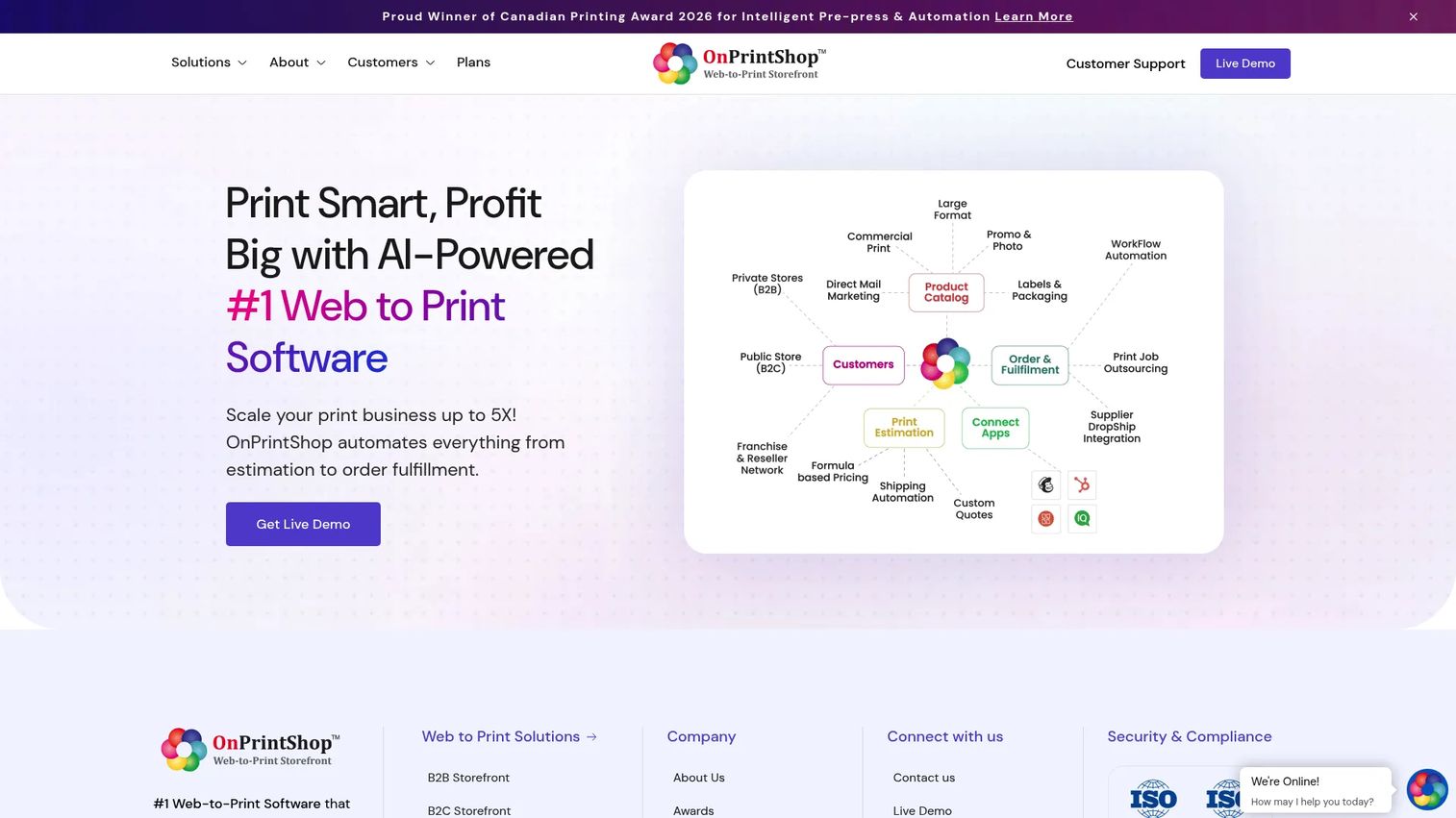
OnPrintShop is an AI-powered web to print platform for B2B and B2C print businesses. It covers estimation, storefront ordering, proofing, order management, and production workflow automation.
Its broad scope suits established providers replacing disconnected storefront and operations tools. Reporting also helps marketers connect storefront activity with order performance.
Best for: Print businesses needing customer storefronts, personalization, order management, and workflow automation.
Key features
- B2B and B2C storefronts
- Designer Studio
- Print estimation
- Design proofing
- Workflow automation
Why choose OnPrintShop: Choose it when a generic ecommerce store leaves staff managing print logic manually. It supports a wider operating loop, including customer ordering and downstream production work.
OnPrintShop pricing: Custom pricing across Platinum Basic, Platinum Startup, Platinum Pro, and Enterprise plans.
G2 rating: 4.5/5.
2. Infigo
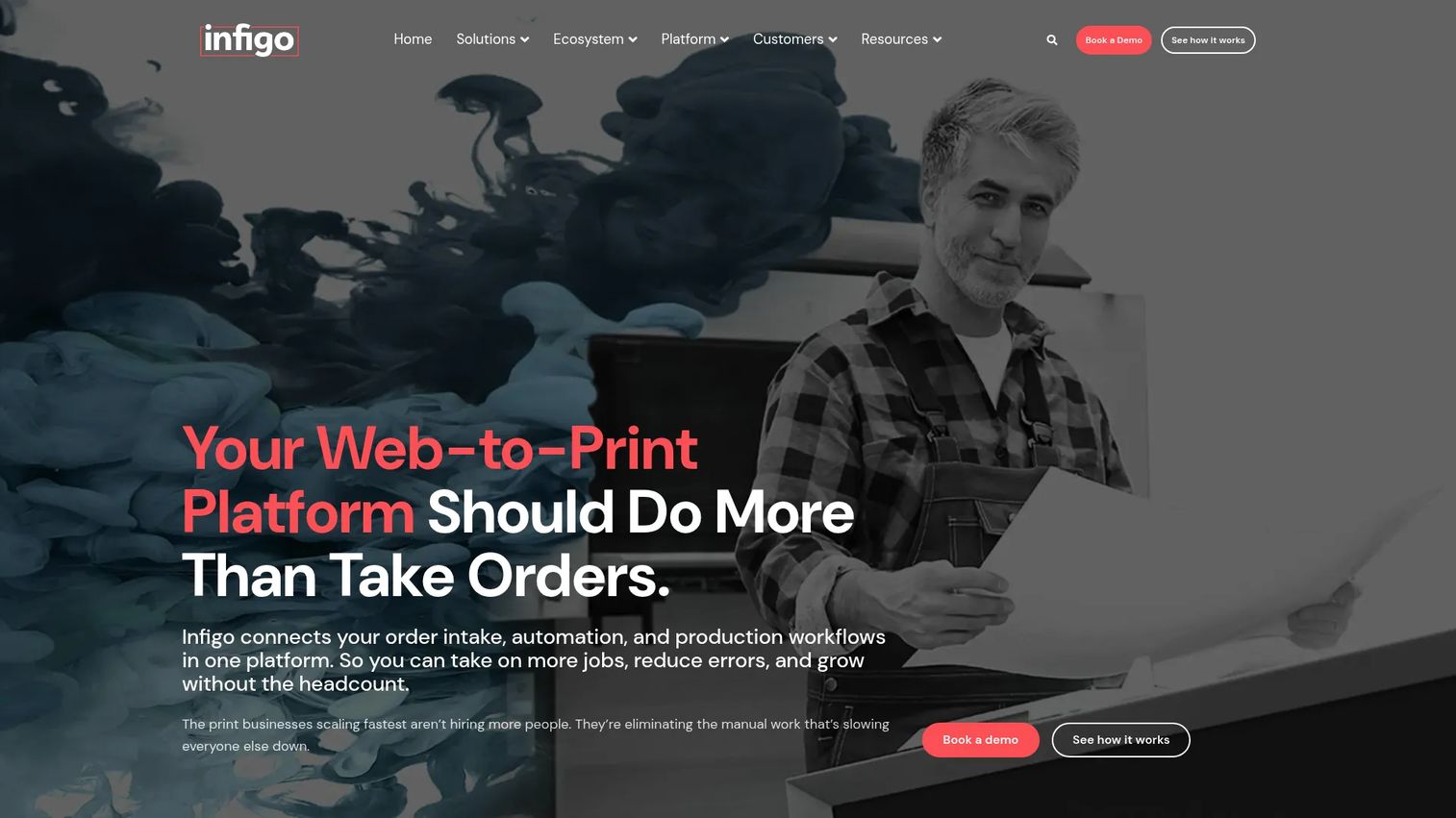
Infigo provides web to print infrastructure for industrial and commercial print businesses. Its platform combines B2B portals, B2C storefronts, personalization, artwork processing, and workflow automation.
MegaEdit supports customer-facing personalization. Automated preflight and quality control help catch file problems before production.
Best for: Print providers building branded customer portals with configurable ordering and automated artwork workflows.
Key features
- B2B and B2C storefronts
- MegaEdit personalization editor
- Automated file preflight
- Workflow automation
- Open API connections
Why choose Infigo: It fits commercial printers running multiple customer storefronts or complex ordering paths. The platform connects storefront UX with prepress, shipping, payment, and MIS processes.
Infigo pricing: Custom pricing. The quote reflects business requirements, implementation scope, and integration work.
G2 rating: 4.9/5.
3. 4over
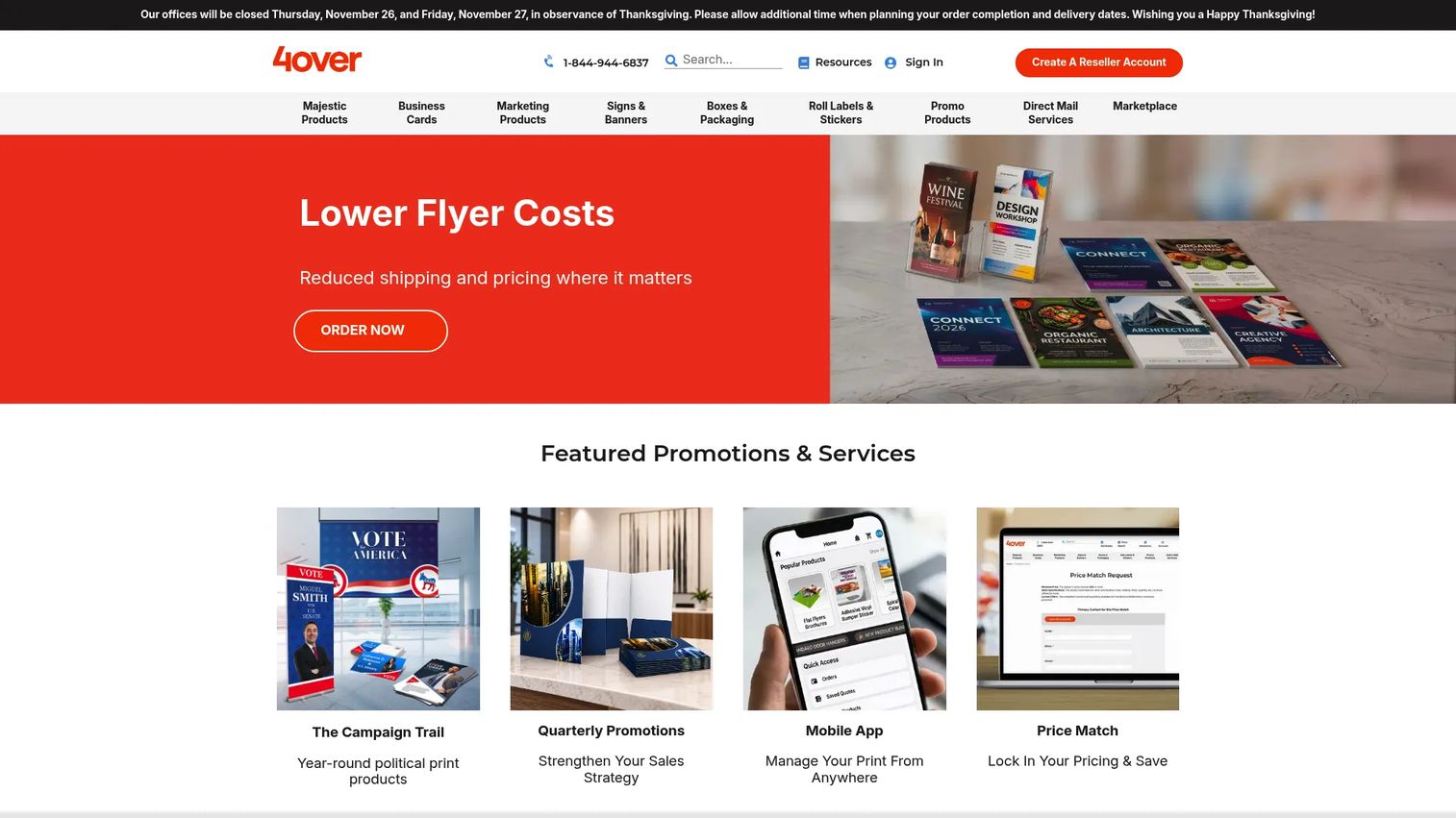
4over is a trade-only commercial printing and fulfillment provider. It serves print resellers, designers, franchises, and creative service businesses through a broad wholesale catalog.
This option differs from full W2P software. It gives resellers access to production capacity and fulfillment rather than providing a deeply configurable operating system.
Best for: Resellers needing wholesale print production, white-label fulfillment, broad product coverage, and API ordering.
Key features
- Wholesale print catalog
- Trade-only ordering
- Printer Bridge storefront
- Online design tools
- API order submission
Why choose 4over: Choose it when wholesale sourcing and production access matter more than custom workflow development. Its network covers offset, digital, large-format, and promotional printing.
4over pricing: Approved reseller accounts access trade pricing through the ordering and quote process.
G2 rating: N/A.
4. Design'N'Buy
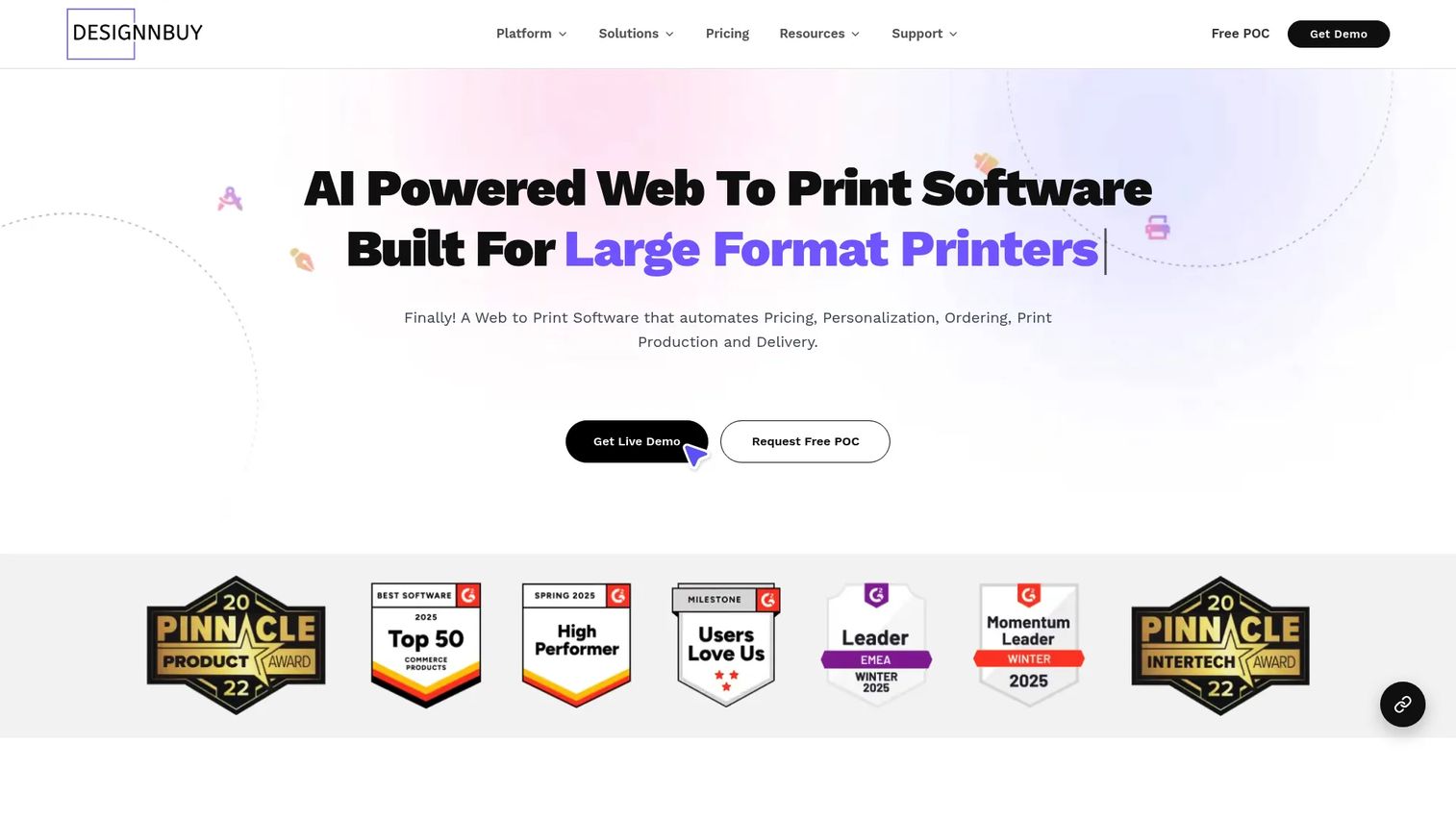
Design'N'Buy combines web to print storefronts with online product design. It supports commercial print, packaging, apparel decoration, and large-format workflows.
The platform gives buyers several personalization interfaces, including full, quick, and form-based editors. Automated pricing and preflight connect the design experience with order processing.
Best for: Print sellers whose conversion path depends on customer design and visual product configuration.
Key features
- Online personalization editors
- B2B and B2C storefronts
- Automated pricing
- Production workflow automation
- Print-ready file output
Why choose Design'N'Buy: It suits custom products where the editor is a core part of checkout. Integrations cover major ecommerce platforms and custom stores.
Design'N'Buy pricing: Starter costs $90 per month. Growth costs $190 per month, while Enterprise uses custom pricing.
G2 rating: 4.5/5.
5. PrintNow
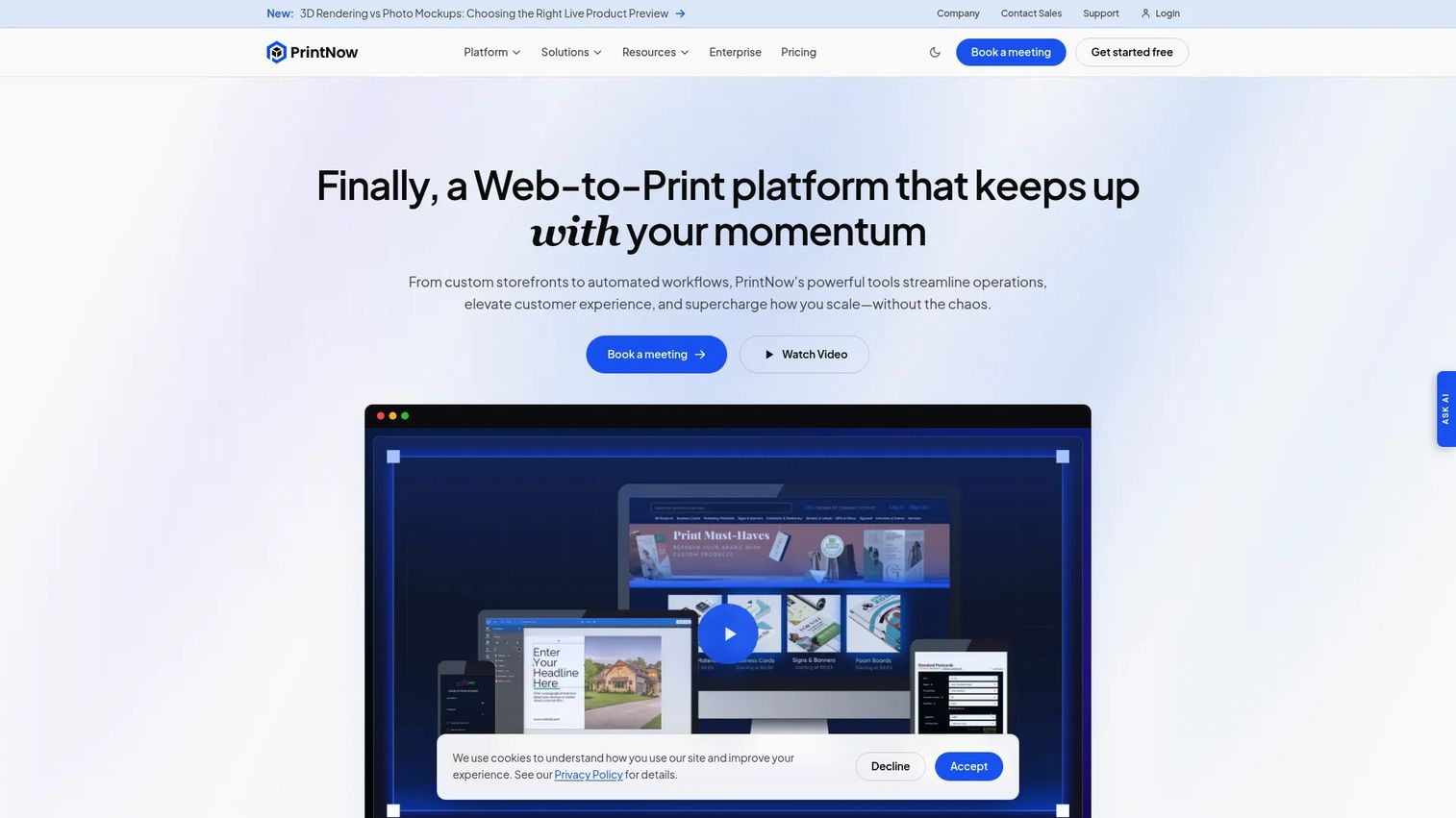
PrintNow is a print ecommerce platform for commercial, wide-format, packaging, and trade providers. It supports B2B and B2C storefronts alongside design and administration tools.
Its browser-based editor includes live previews and product mockups. Print CAD adds configurable packaging dielines for packaging sellers.
Best for: Printers needing online stores with print-specific design, catalog, pricing, and order controls.
Key features
- B2B and B2C stores
- Browser-based print editor
- Live product previews
- Packaging dieline tools
- Enterprise API connections
Why choose PrintNow: It fits providers comparing dedicated W2P software against generic ecommerce infrastructure. Administration covers stores, users, orders, pricing, and reporting.
PrintNow pricing: Starter begins at $449 monthly when billed yearly. A 14-day trial is available.
G2 rating: N/A.
6. CloudLab
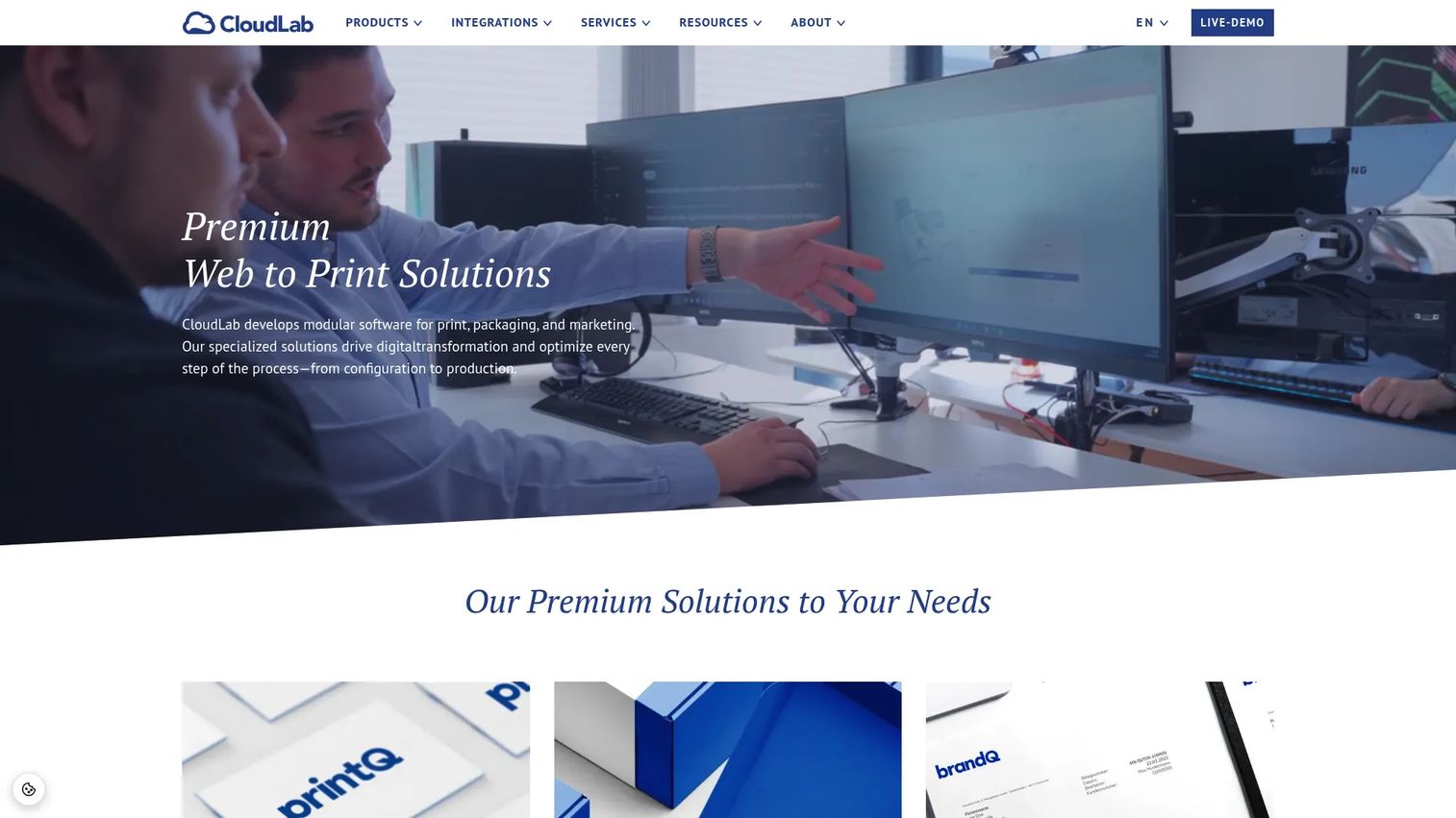
CloudLab develops modular software for print commerce, packaging configuration, and brand management. Its product family includes printQ, packQ, and brandQ.
PrintQ handles online print ordering and personalization. PackQ focuses on configurable packaging, while brandQ supports controlled marketing materials and approval workflows.
Best for: Enterprise print teams managing complex storefront, packaging, or distributed brand workflows.
Key features
- printQ storefront software
- packQ packaging design
- brandQ marketing portals
- Dynamic print calculation
- Variable data printing
Why choose CloudLab: The modular product range helps buyers address specialized print and packaging requirements. It suits organizations needing more configuration than a standard shopping platform provides.
CloudLab pricing: Custom pricing.
G2 rating: N/A.
7. Pressero
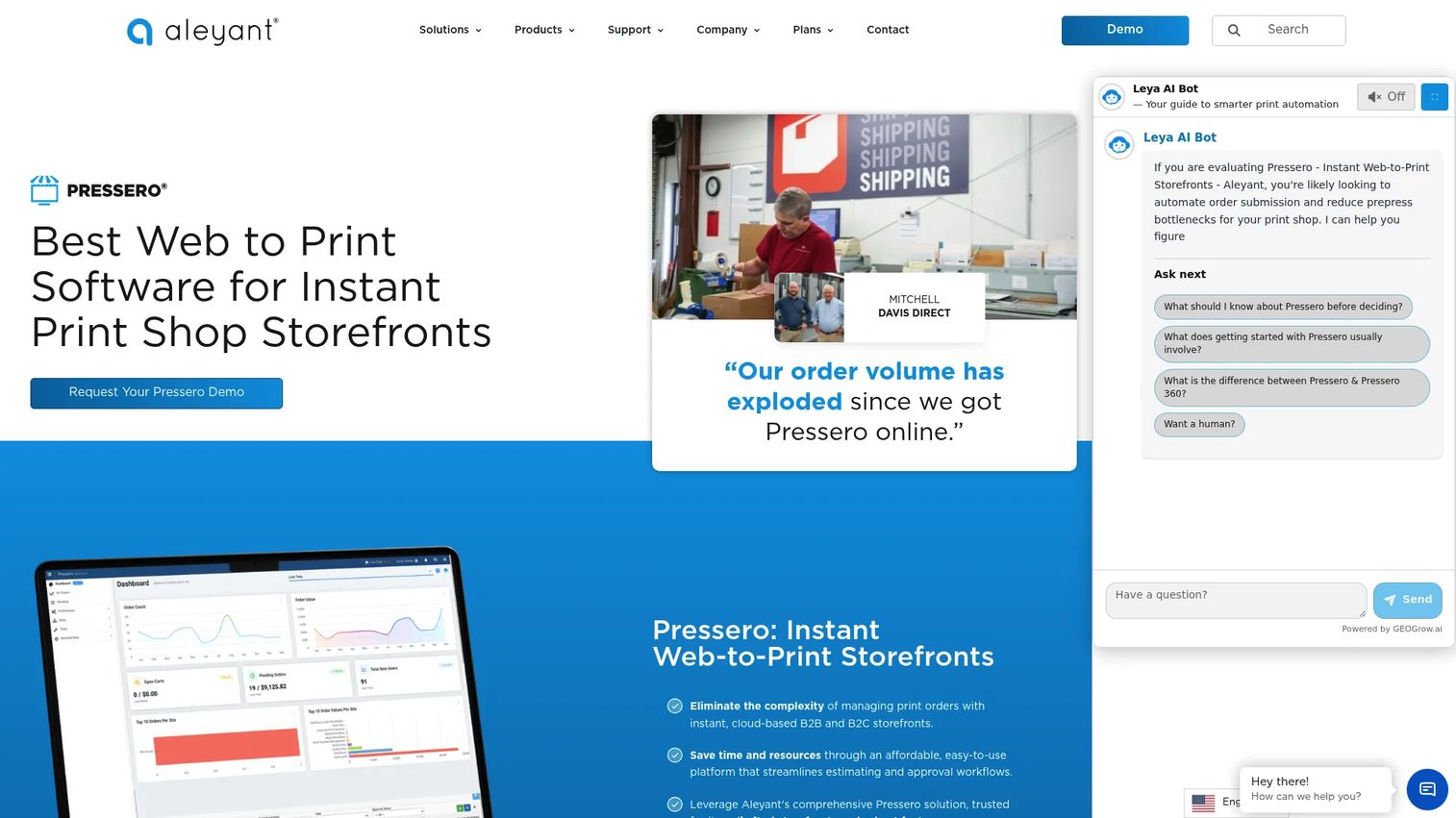
Pressero is a cloud-based web to print storefront platform for commercial printers. It supports public B2C stores and private B2B portals with customer-specific products.
Print providers can combine ordering with document personalization, instant pricing, inventory fulfillment, and approvals. Responsive storefront designs support ordering across devices.
Best for: Print shops needing SaaS storefronts with pricing, personalization, and order management.
Key features
- Branded print storefronts
- B2B and B2C portals
- Document personalization
- Instant pricing engines
- Approval workflows
Why choose Pressero: It offers print-specific software support without requiring a generic ecommerce stack. The platform suits providers that value structured implementation and training.
Pressero pricing: Plans start at $399 per month. Available tiers include Starter, Advanced, Premier, Premier Plus, and Premier DS.
G2 rating: 5.0/5.
8. PrintXpand
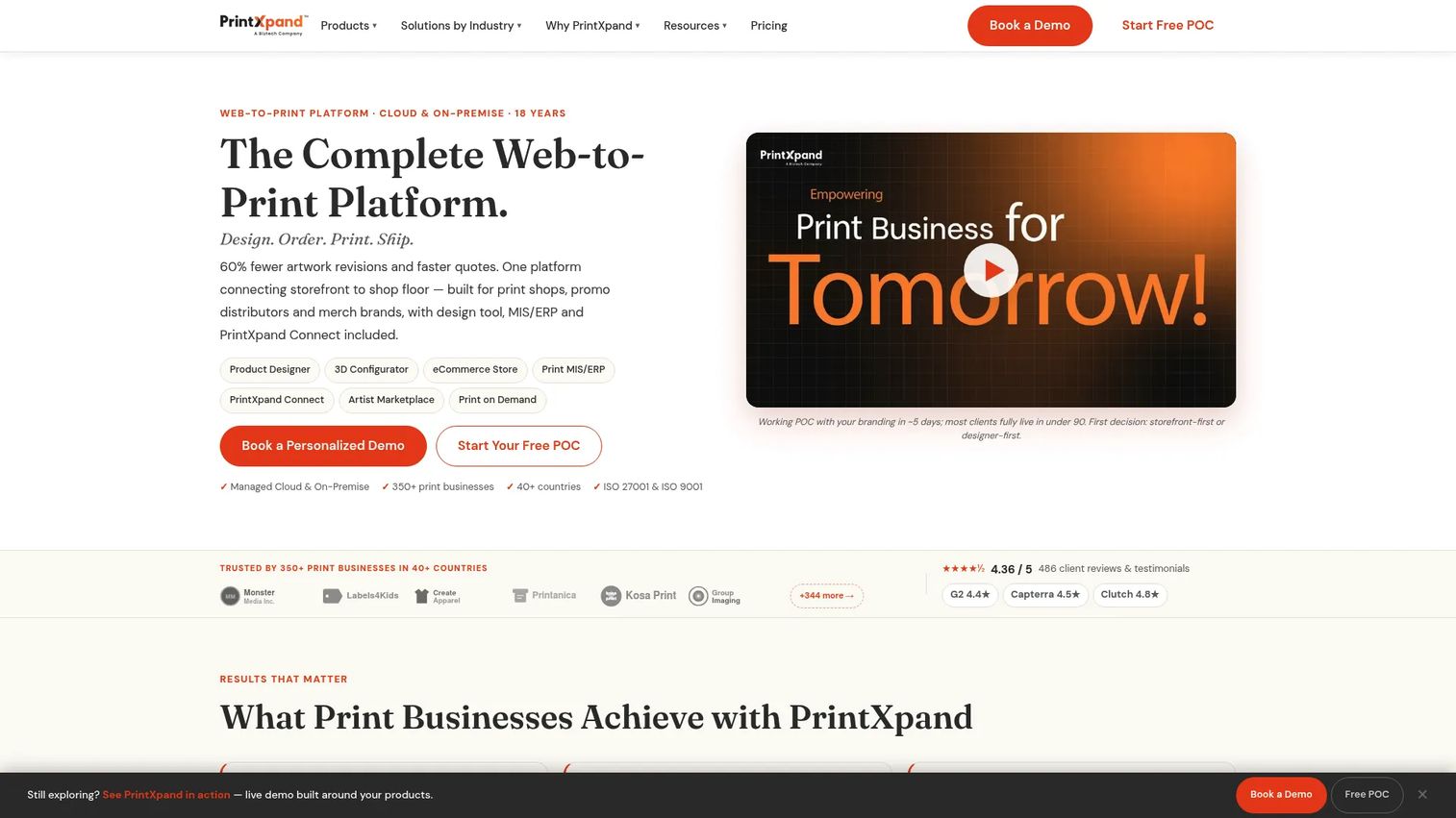
PrintXpand is a full-stack platform for selling and fulfilling personalized print products. It combines ecommerce, product design, quoting, artwork approval, and order management.
Deployment options include managed cloud and self-hosted configurations. This flexibility supports print shops, promotional distributors, packaging businesses, and print-on-demand operators.
Best for: Companies selling configurable print products through custom quote and ordering workflows.
Key features
- Print ecommerce storefront
- Product personalization
- Artwork approval
- Estimating and quoting
- Print MIS and ERP
Why choose PrintXpand: It brings storefront, quotation, and production functions together. The platform fits teams that want to avoid assembling several print-specific plugins.
PrintXpand pricing: Custom pricing for PX Cloud, PX Cloud Plus, and PX On-Premise. All plans include a free proof of concept.
G2 rating: N/A.
9. MarketDirect StoreFront
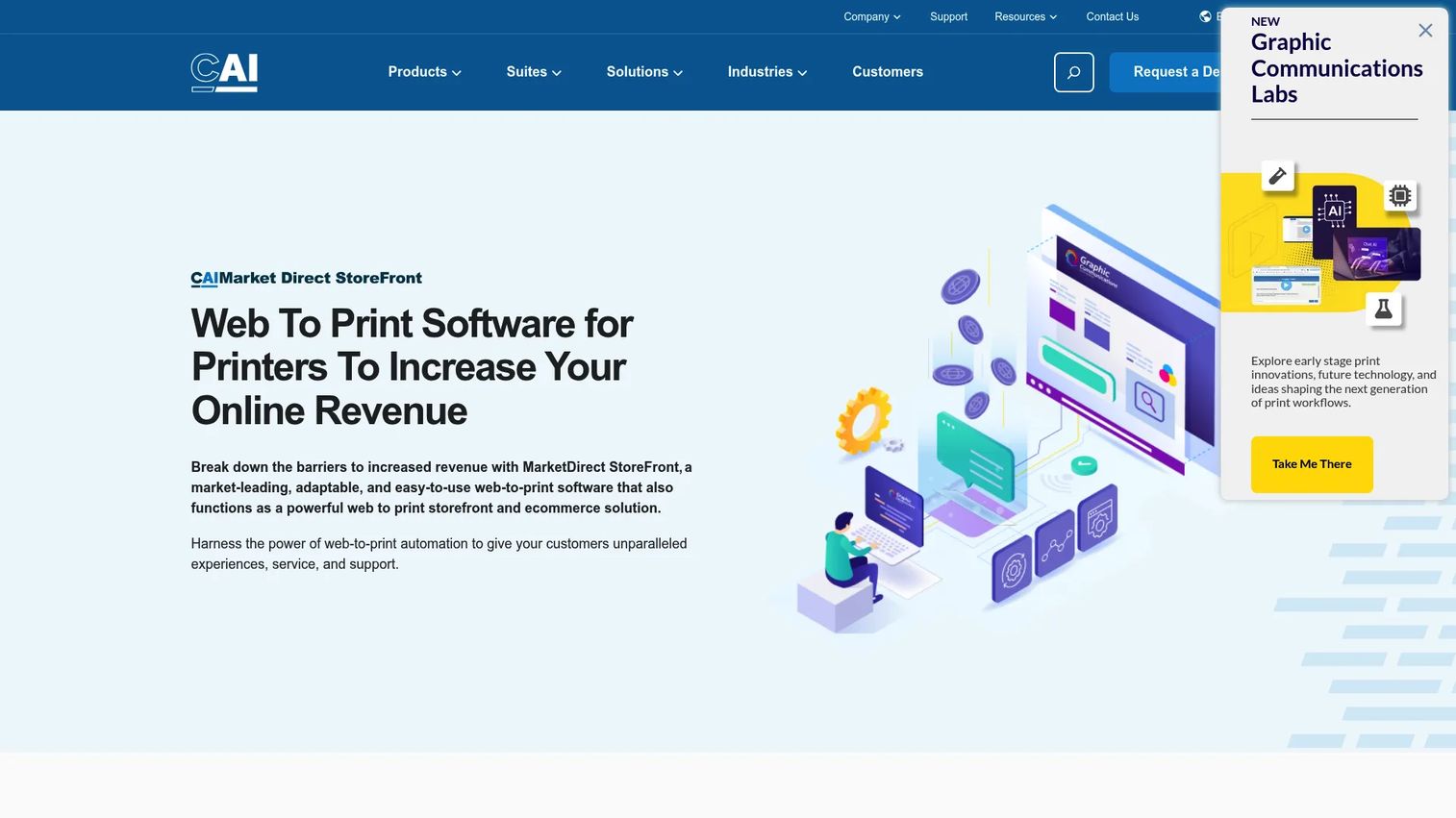
MarketDirect StoreFront serves commercial printers, in-plants, retail organizations, and enterprise marketing teams. It supports branded storefronts with customer-specific pricing and workflows.
Buyers can deploy it through cloud-based SaaS or on-premise infrastructure. SmartCanvas handles browser-based personalization and variable data workflows.
Best for: Established print environments needing deployment choice and production connections.
Key features
- Customizable branded storefronts
- SmartCanvas personalization
- Customer-specific pricing
- Cloud or on-premise deployment
- Production workflow connections
Why choose MarketDirect StoreFront: Deployment flexibility stands out for organizations with defined infrastructure policies. Editable HTML and CSS also give teams control over storefront presentation.
MarketDirect StoreFront pricing: Custom pricing.
G2 rating: 4.0/5.
10. XMPie
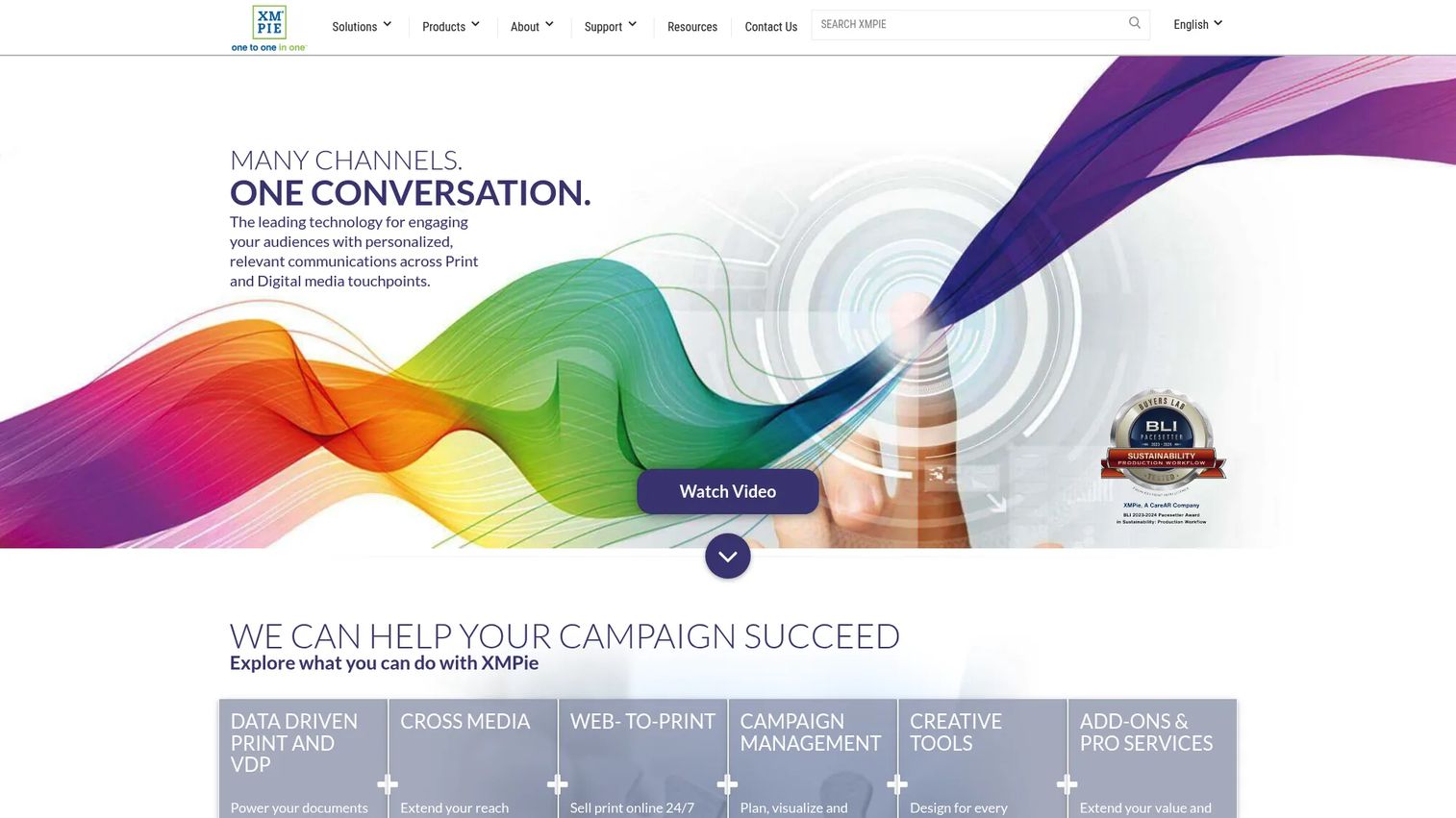
XMPie provides customer communications software for personalized print and cross-media campaigns. It combines variable data workflows with web to print commerce and marketing automation.
Its Adobe InDesign connection supports data-driven creative production. Campaign tools cover planning, scheduling, production, and analytics across print and digital channels.
Best for: Marketing teams running personalized direct mail and coordinated cross-media campaigns.
Key features
- Variable data printing
- Adobe InDesign workflows
- Cross-media campaign tools
- Marketing automation
- Web to print ordering
Why choose XMPie: Choose it when personalization logic matters more than storefront breadth. It fits campaign-led print programs where customer data changes the creative output.
XMPie pricing: A free Circle plan is available. Team costs $99 monthly, while Business costs $299 monthly.
G2 rating: 4.0/5.
11. Propago
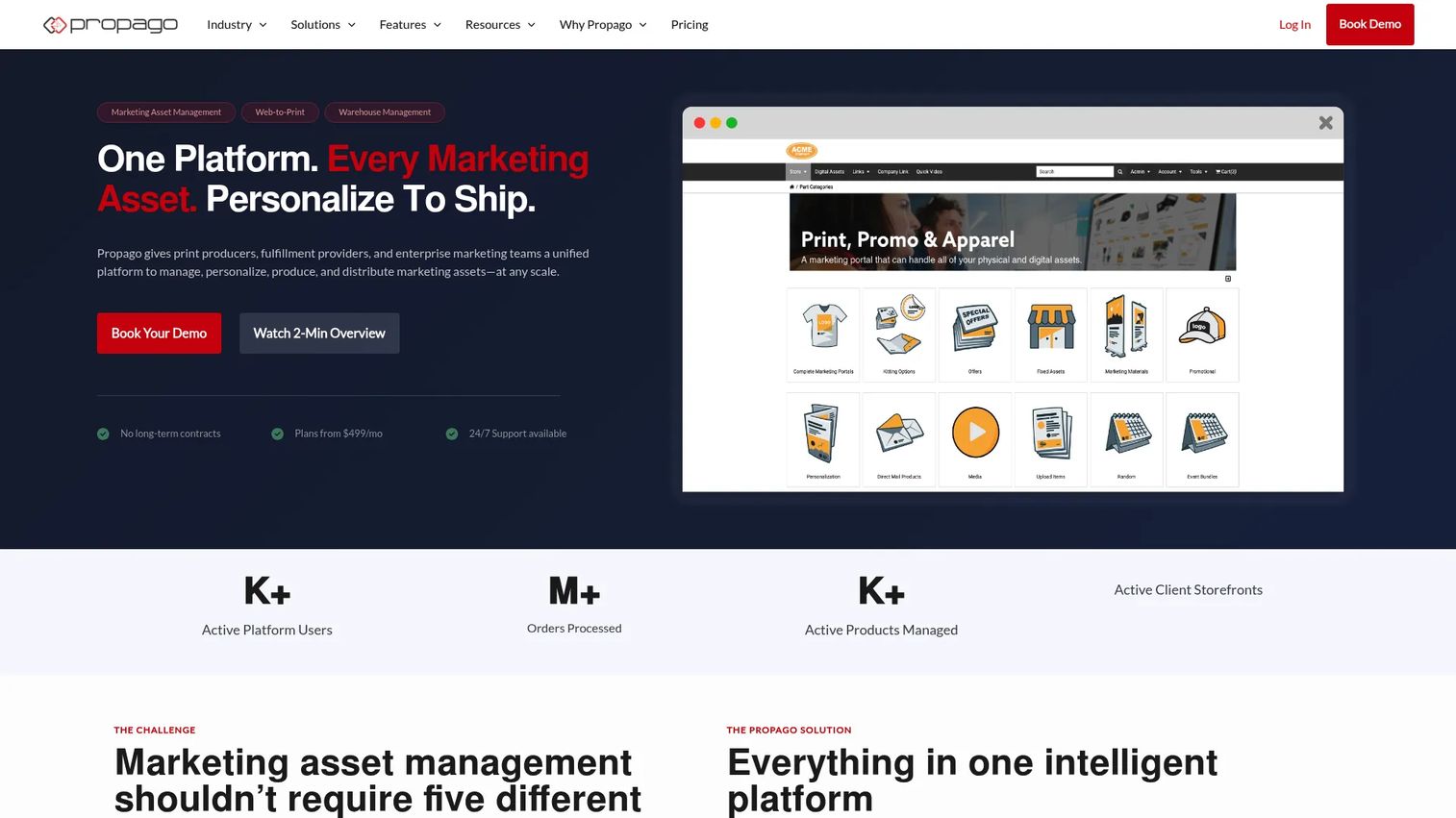
Propago combines branded marketing portals with web to print, asset management, warehousing, and fulfillment. It targets print providers and distributed enterprise marketing teams.
Organizations can control approved materials while giving local users self-serve ordering. Business rules and approvals protect budgets and brand consistency.
Best for: Distributed teams that need branded portals with inventory and fulfillment control.
Key features
- Branded marketing portals
- Print personalization
- Approval workflows
- Inventory management
- Fulfillment operations
Why choose Propago: It covers more than print ordering. Franchise systems and field marketing teams can manage physical assets, digital files, and fulfillment from the same platform.
Propago pricing: Licensing starts at $499 monthly. Onboarding packages start at $1,999.
G2 rating: 4.5/5.
12. Printful
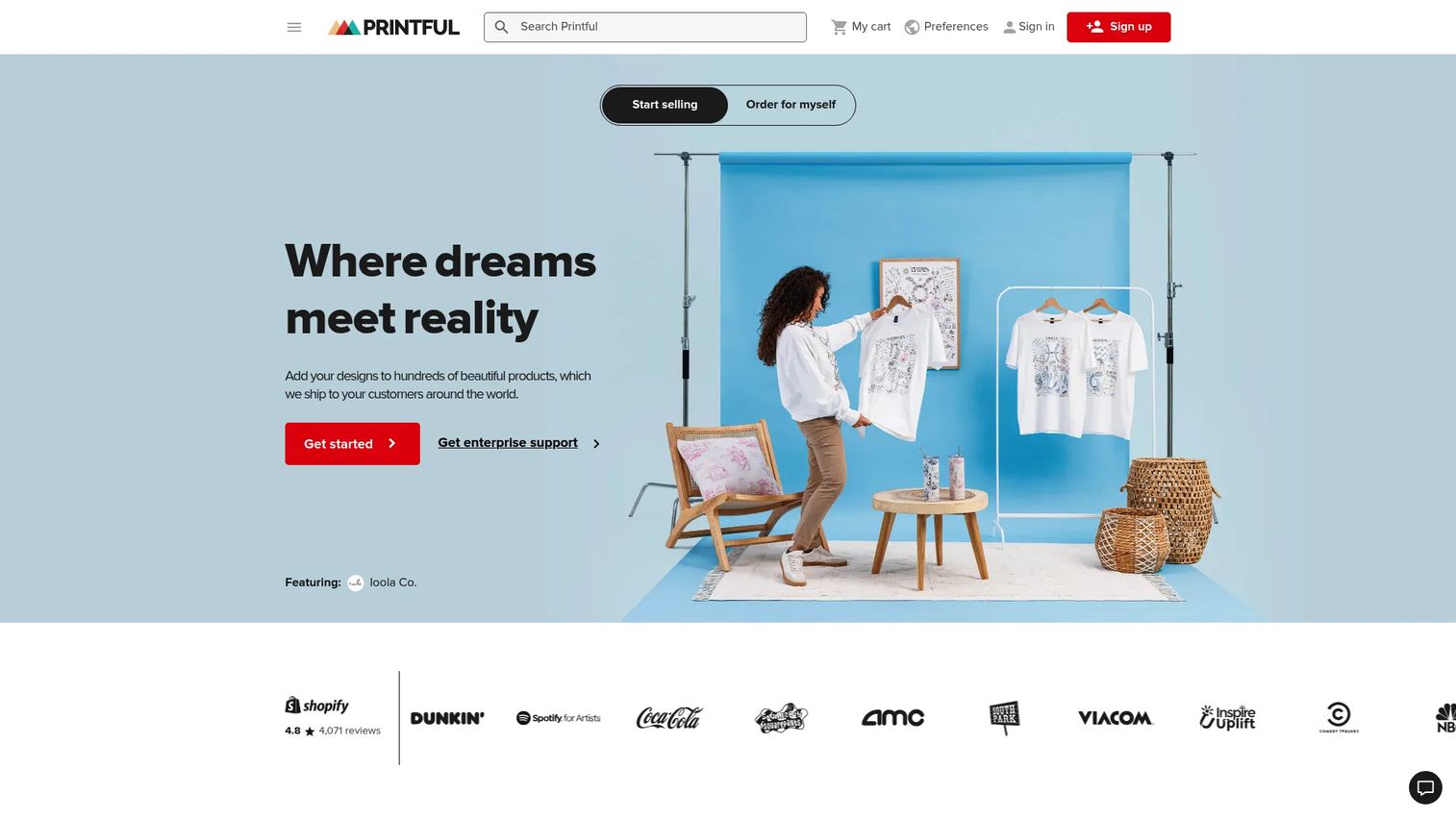
Printful is a print-on-demand production and fulfillment platform for ecommerce sellers. Businesses create products and connect a store without holding inventory.
Orders move to production automatically after checkout. Design and mockup tools help marketers launch product pages without building a separate creative workflow.
Best for: Brands selling printed merchandise while outsourcing production and shipping.
Key features
- Print-on-demand fulfillment
- Design Maker
- Mockup Generator
- Ecommerce connections
- Automatic order processing
Why choose Printful: It is fulfillment-first rather than a traditional W2P system. Choose it when inventory risk and production operations are the main barriers to launching merchandise.
Printful pricing: A free plan is available. Growth costs $24.99 monthly, while Enterprise uses custom pricing.
G2 rating: 4.4/5.
13. Printify
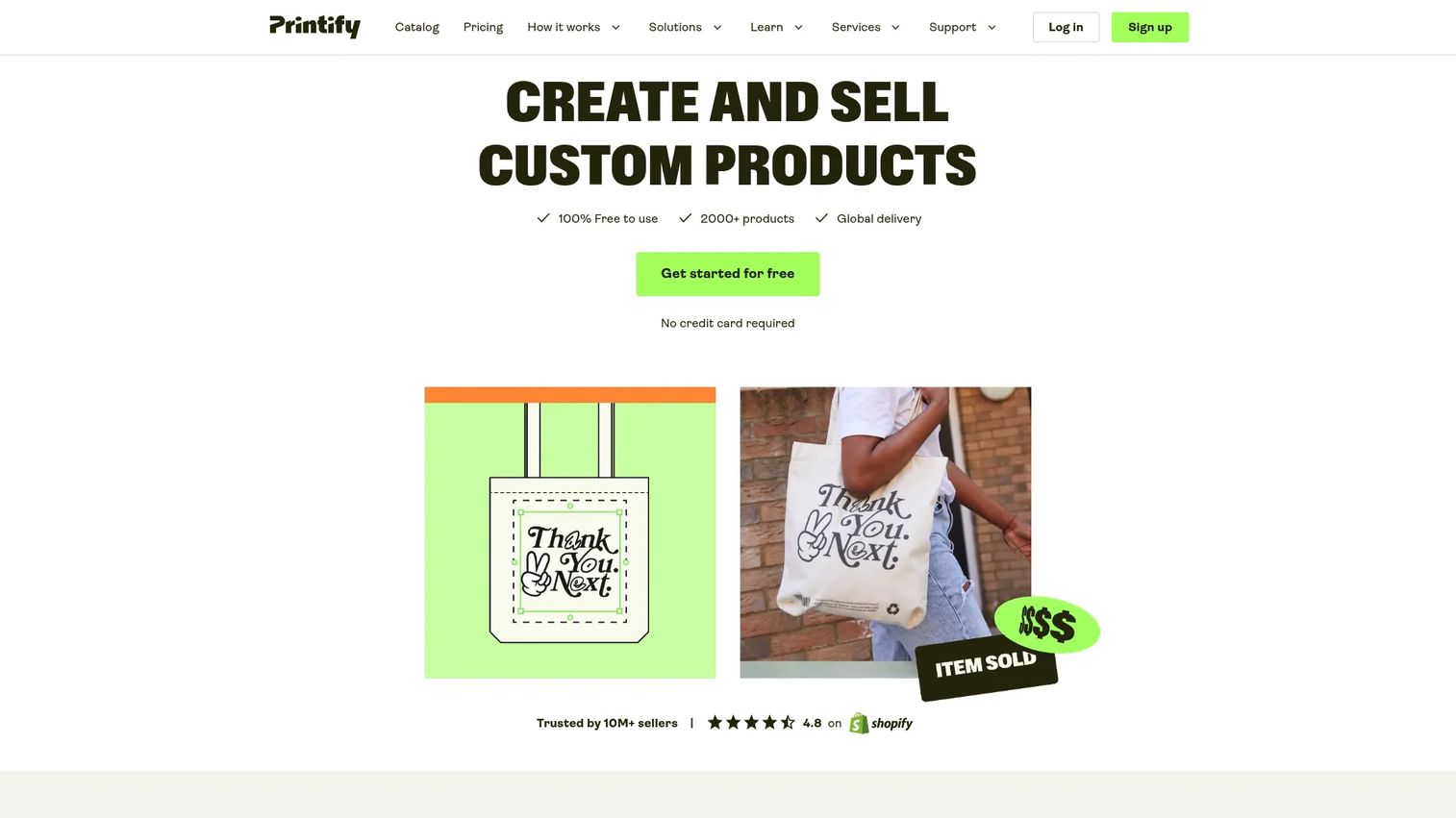
Printify connects ecommerce sellers with a network of print providers. Users can compare production partners and add customizable products to connected stores.
The platform automates order fulfillment after a customer buys. Its Product Creator supports mockups and personalized products with live previews.
Best for: Ecommerce sellers who want supplier choice across print-on-demand products.
Key features
- Print-provider marketplace
- Product Creator
- Mockup generation
- Ecommerce connections
- Automated fulfillment
Why choose Printify: The marketplace model gives sellers more production options. It suits teams willing to compare providers instead of using one managed fulfillment network.
Printify pricing: Free costs $0. Premium starts at $39 monthly or $299 yearly, while Enterprise uses custom pricing.
G2 rating: 4.6/5.
14. Shopify

Shopify is a hosted commerce platform used as the storefront layer for many print businesses. It manages product catalogs, checkout, payments, inventory, and shipping.
Print functionality usually comes from apps or custom development. This approach works best when product configuration and production rules remain manageable.
Best for: Print sellers wanting established ecommerce infrastructure with app-based print workflows.
Key features
- Hosted online storefronts
- Customizable themes
- Payment and checkout tools
- Inventory management
- App marketplace
Why choose Shopify: Marketers gain familiar campaign and commerce workflows. Dedicated W2P software remains a better fit when complex preflight, proofs, or manufacturing prices drive every order.
Shopify pricing: Basic costs $39 monthly or $29 monthly with yearly billing. Grow and Advanced plans are also available.
G2 rating: 4.4/5.
15. WooCommerce
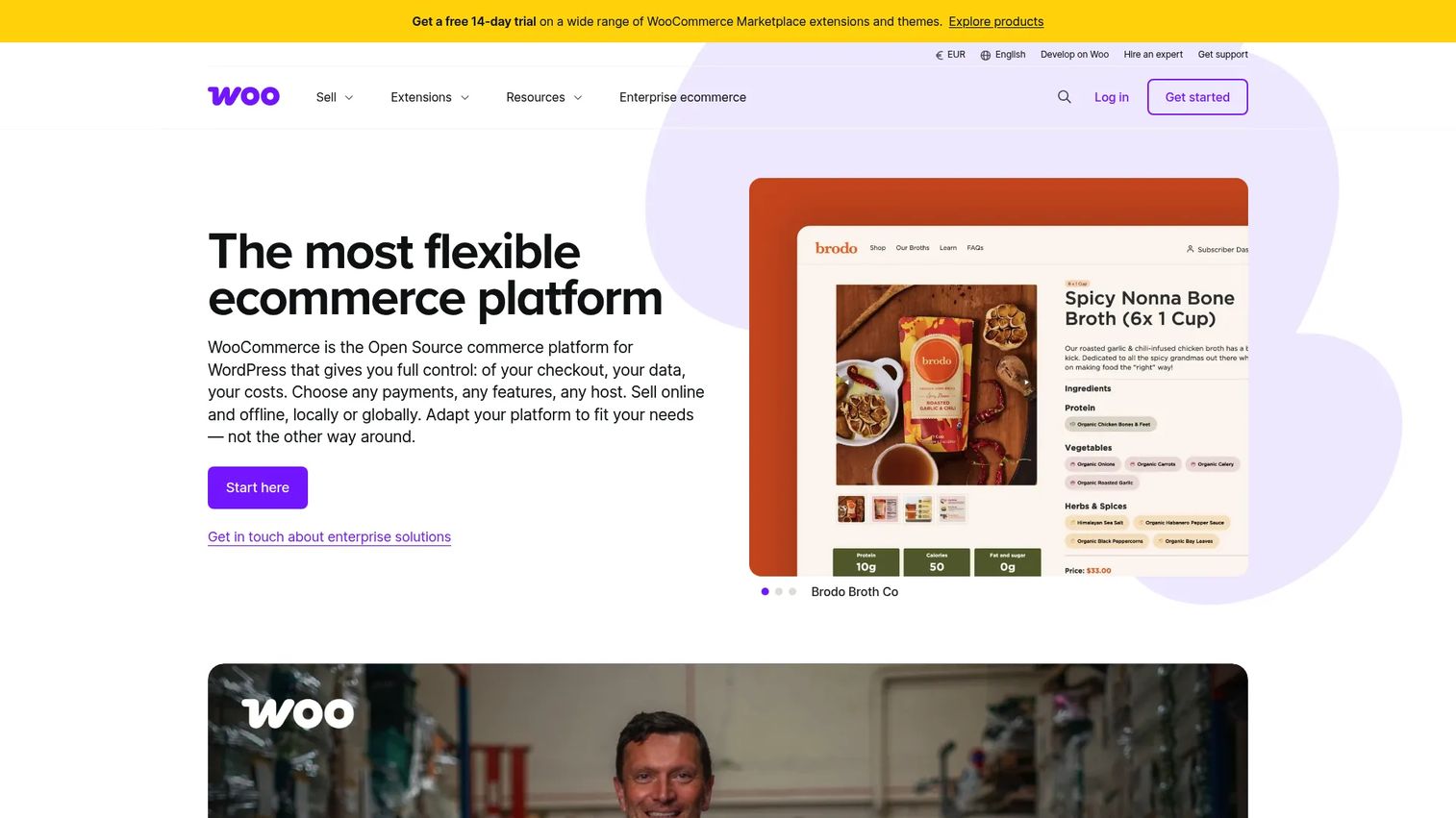
WooCommerce is a free, open-source ecommerce platform for WordPress. It supports product management and checkout through a broad extension environment.
Print sellers can add personalization or fulfillment plugins. This route offers control but requires more implementation ownership than dedicated print storefront software.
Best for: WordPress teams with development resources and flexible ecommerce requirements.
Key features
- WordPress ecommerce
- Product variations
- Payment extensions
- Shipping extensions
- REST API
Why choose WooCommerce: It works when your team already knows WordPress and wants control over the stack. Factor plugin maintenance and development into the buying case.
WooCommerce pricing: The core platform is free. WooCommerce estimates hosting at $25 to $350 monthly and extensions at $29 to $299 yearly.
G2 rating: 4.4/5.
16. BigCommerce

BigCommerce is a hosted ecommerce platform for B2B and B2C stores. It supports larger catalogs, multiple storefronts, headless commerce, and multichannel selling.
Open APIs allow print businesses to connect specialized design or production systems. Those additions remain necessary for advanced proofing and preflight workflows.
Best for: Growing print sellers needing scalable ecommerce infrastructure and API access.
Key features
- Hosted ecommerce
- B2B selling features
- Multi-storefront management
- REST and GraphQL APIs
- Catalog management
Why choose BigCommerce: It offers a strong commerce layer for complex catalogs. Choose dedicated W2P software when print-specific workflow depth matters more than general ecommerce breadth.
BigCommerce pricing: Core starts at $39 monthly or $29 with annual billing. Performance starts at $1,499 monthly, billed annually.
G2 rating: 4.2/5.
17. OrderDesk
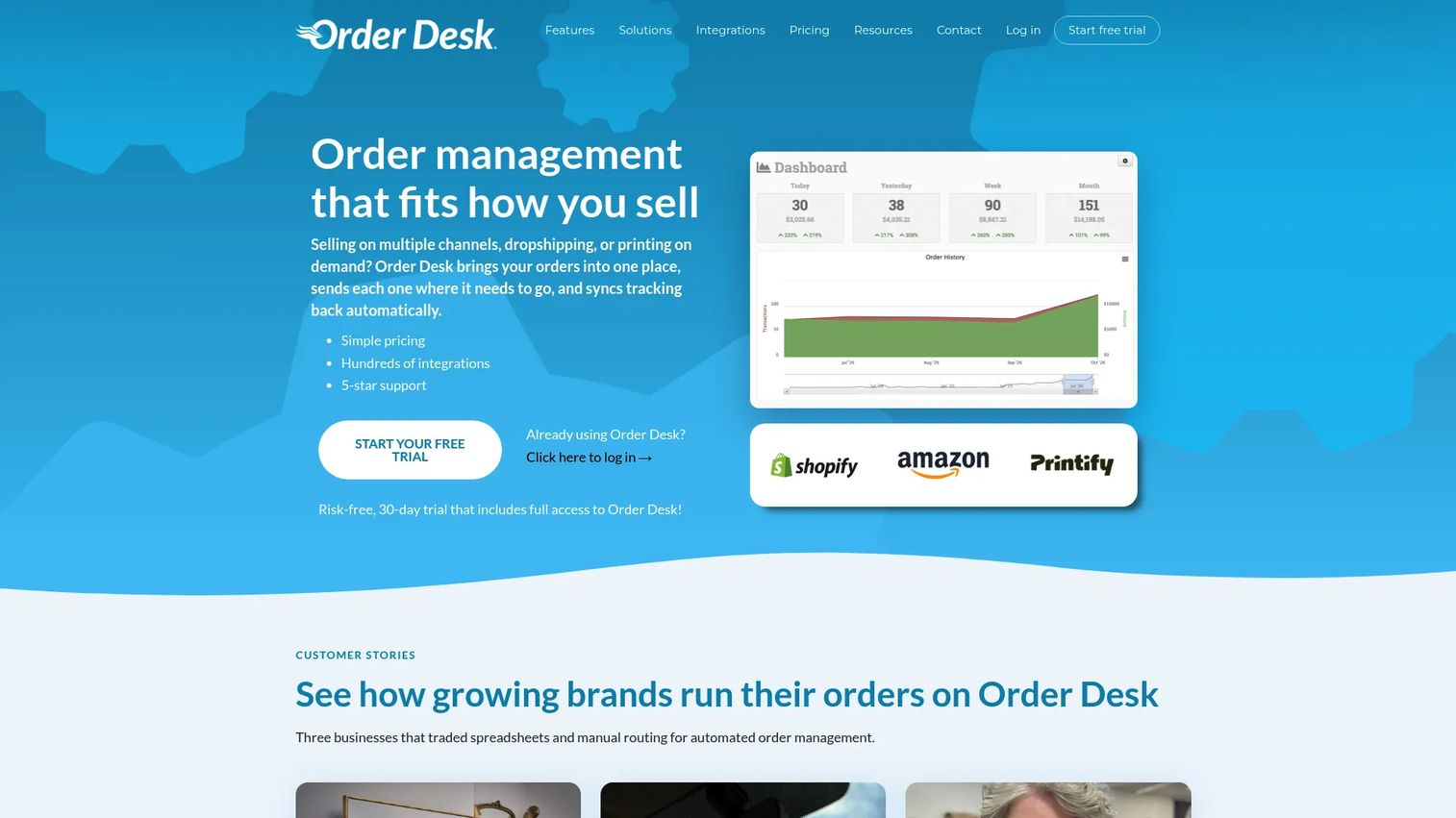
OrderDesk centralizes ecommerce orders and automates fulfillment routing. It connects stores with printers, warehouses, and other production partners.
Rule Builder controls how orders, items, and shipments move. Teams can split orders or send jobs to different suppliers using defined conditions.
Best for: Businesses whose storefront works but whose production routing remains manual.
Key features
- Rule-based order routing
- Order splitting
- Fulfillment connections
- Tracking synchronization
- Inventory synchronization
Why choose OrderDesk: It acts as workflow glue rather than a standalone web to print storefront. Use it to connect an existing store with several print or fulfillment providers.
OrderDesk pricing: Starter costs $20 monthly plus $0.25 per order. A fully featured 30-day trial is available.
G2 rating: N/A.
Considerations when choosing web to print software
Match the tool to your print business model
Commercial printers and merchandise brands need different stacks. Start by mapping whether you own production, outsource it, or coordinate several providers.
A full web to print platform may overwhelm a simple merch store. Generic ecommerce can struggle with complex proofs and manufacturing prices.
Test the storefront like a customer
Place a sample order during every vendor evaluation. Test configuration, artwork upload, live preview, checkout, and reordering.
Watch where staff intervention begins. Each manual step affects conversion and limits how far campaigns can scale.
Validate pricing logic before signing
Ask each vendor to price jobs from your catalog. Include quantity breaks, paper stock, finishing, shipping, taxes, and customer-specific rates.
A polished storefront means little when staff must correct prices after checkout. Test both routine and unusual orders.
Check production handoff and integrations
Review MIS, ERP, accounting, payment, preflight, and fulfillment connections. Confirm whether approved jobs arrive with usable files and instructions.
Also test the reporting handoff. Marketing needs clean order events and revenue data to prove campaign impact.
Calculate 24-month total cost
Include subscription fees, setup, template creation, custom integrations, and training. Add transaction charges, app costs, support packages, and developer time.
Compare that total with the manual labor each platform removes. Consolidation only helps when the new system replaces meaningful work.
Conclusion
The best web to print software depends on the operating loop you need to build.
Dedicated W2P platforms fit print providers that need configurable storefronts and print workflow automation. Wholesale networks suit resellers buying production capacity. Print-on-demand services handle production and fulfillment for online brands.
Ecommerce platforms provide flexible storefront infrastructure. They require additional tools when buyers need print personalization, preflight, or complex pricing. Workflow connectors help when order routing remains the main bottleneck.
Shortlist three options by business model before discussing minor features. Then measure how each platform affects conversion, repeat ordering, staff time, and production errors.
Include implementation and integration work in your total cost of ownership. A lower subscription can become expensive when every order still requires manual repair.
Pick one common reorder, one custom quote, and one file-upload job. Run all three through each vendor demonstration before you choose.
FAQs
Web to print software lets customers personalize, proof, approve, and order printed products through an online storefront. It then passes order information and print-ready files into production workflows.
The category may also be called web-to-print software, web2print software, or W2P software.
Commercial printers, trade printers, in-plants, and print shops use it to support self-serve ordering. Franchise programs and distributed marketing teams also use private portals for controlled purchasing.
Print-on-demand businesses use related platforms to connect online orders with external production and fulfillment.
Ecommerce software manages catalogs, carts, payments, and storefronts. Web to print software adds print-specific functions such as templates, proofing, preflight, and print-ready file generation.
Dedicated platforms may also include dynamic manufacturing prices and production routing. Ecommerce platforms usually require apps or custom development for those jobs.
Yes. Many platforms support both private B2B portals and public B2C stores.
B2B deployments often include account pricing, budget controls, locked templates, and approvals. B2C stores prioritize public catalogs, personalization, checkout, and shipping.
Useful connections include MIS, ERP, CRM, accounting, payment, and shipping systems. Preflight, production, and fulfillment connections also matter for clean handoff.
Test integrations with a complete order during the vendor evaluation. A feature list cannot show whether staff must re-enter job details.
Costs vary according to storefront count, users, order volume, and implementation work. Template setup, integrations, support, and transaction fees also affect the total.
Compare 24-month costs rather than subscription fees alone. Include training, custom development, maintenance, and any additional ecommerce apps.
Start with your business model and production workflow. Then compare storefront requirements, personalization, proofing, preflight, pricing logic, and system connections.
Run sample jobs through each platform before buying. Track staff intervention from initial configuration through production handoff and reorder.