Most companies start the same way: Employees book their own flights, expense reports arrive in inboxes, and finance spends the last week of every quarter reconciling a mess of receipts and Slack-approved hotel stays. It works until it doesn't.
Global business travel spending is projected to reach $1.57 trillion in 2025, up 6.6% year over year, according to the Global Business Travel Association. Yet unmanaged travel is still one of the most common sources of budget overruns for scaling companies. The problem isn't the trips. It's the missing system behind them.
For a Series B founder, travel arrangement software isn't a booking convenience. It's operational infrastructure. The right tool gives employees a clear booking process, gives finance real spend visibility, and gives the VP you just hired a repeatable process to own from day one. Without it, travel stays a founder problem.
What's inside
This guide compares 15 travel arrangement software options across corporate travel platforms, travel and expense tools, agency software, and itinerary apps. Tools were selected based on:
- Booking inventory and itinerary management capabilities
- Policy approvals and spend control
- Expense, reimbursement, and reporting workflows
- Integrations with finance, HR, ERP, accounting, and card systems
- Fit for company stage or travel business model
TL;DR
- Best overall for corporate travel management: TravelPerk (now Perk) covers booking, policy, approvals, and spend reporting with a free starting tier
- Best for enterprise travel and expense: SAP Concur handles finance, ERP, and compliance workflows for larger organizations
- Best for managed travel programs: American Express Global Business Travel suits enterprises needing full-service program management
- Best for travel agencies and advisors: Travefy is purpose-built for itinerary creation, proposals, CRM, and client management
- Best free-to-start option: Navan Business is free for companies with up to 300 employees
- Best lightweight itinerary app: TripIt organizes all trip confirmations into a single itinerary, free to start
What is travel arrangement software?
Travel arrangement software helps businesses, travel teams, and agencies plan, book, manage, approve, track, and report on trips from itinerary creation through expense reconciliation.
The category covers more ground than a single booking tool. Corporate travel management platforms handle flights, hotels, rail, and car rentals alongside policy enforcement and traveler support. Expense-first tools focus on receipt capture, reimbursements, and finance exports. Agency platforms support client itineraries, proposals, commission tracking, and CRM. Itinerary apps organize trip details for individual travelers or small teams.
The travel and expense management software market was valued at $4.08 billion in 2025, according to Fortune Business Insights, which signals how central this category has become for finance and operations teams.
Common capabilities include:
- Booking inventory for flights, hotels, rail, and car rentals
- Itinerary builder and mobile trip access
- Policy rules and approval routing
- Receipt capture and reimbursement workflows
- Spend dashboards and finance exports
- Traveler support and risk alerts
- Client CRM and proposal workflows for agencies
- Integrations with accounting, ERP, HR, and corporate card systems
The right tool depends on whether your biggest problem is booking chaos, expense cleanup, approval governance, or running a travel business for clients.
When to use travel arrangement software
Control travel spend before it hits finance
Approval workflows, budget thresholds, and policy flags catch out-of-policy bookings before money leaves the account. For founders managing burn multiple, this matters more than any month-end reconciliation can fix. Spend controls built into the booking flow protect the number your board is watching.
Give employees a better booking process
When employees book through ad hoc channels, finance inherits the cleanup. A self-serve booking tool with mobile itinerary access and built-in traveler support removes the Slack threads without adding ops overhead. Employees book within policy, confirmations live in one place, and no one is chasing receipts.
Run travel as a repeatable operating system
Scaling companies need travel to work without founder approval on every trip. The right corporate travel management software creates a process your Head of Finance or People Ops can own and maintain without engineering support or manual spreadsheets.
Travel arrangement software comparison
The 15 tools below span full corporate travel platforms, expense-first tools, agency software, and itinerary apps. Use the table to shortlist by operating model, then read the entries for the tool you're evaluating.
| # | Product | Best for | Key differentiator | Pricing | G2 rating |
|---|---|---|---|---|---|
| 1 | TravelPerk | Mid-market corporate travel | Booking, policy, and spend reporting with free tier | From $0/month | 4.6/5 |
| 2 | SAP Concur | Enterprise travel and expense | Finance, ERP, and compliance workflows | From $7/report | 4.0/5 |
| 3 | Egencia | Managed business travel | Online booking plus managed travel support | Contact sales | 4.5/5 |
| 4 | Navan | Travel, cards, and expenses | Unified travel and expense, free for up to 300 employees | Free tier available | 4.6/5 |
| 5 | Travefy | Travel agencies and advisors | Itinerary, proposal, CRM, and client experience tools | From $39/month | 4.0/5 |
| 6 | Booking.com for Business | Simple business travel booking | Large accommodation inventory, no booking fees | Free | 3.8/5 |
| 7 | American Express Global Business Travel | Enterprise managed travel | Full-service corporate travel and traveler support | Contact sales | 4.5/5 |
| 8 | TravelBank | Small to mid-size travel and expenses | Travel booking plus expense management with rewards | From $5,000 | 4.5/5 |
| 9 | Payhawk | Finance-led travel and expense | Cards, approvals, and spend visibility in one platform | From $299/month | 4.5/5 |
| 10 | Emburse | Expense-heavy travel programs | Automated expense submission and approval workflows | From $8/user/month | 4.5/5 |
| 11 | Tipalti | Global finance operations | Payables, reimbursements, and global payments | From $99/month | 4.5/5 |
| 12 | Brex | Startups and SaaS finance teams | Corporate cards with travel and spend controls, free tier | From $0/user/month | 4.8/5 |
| 13 | Expensify | Receipt capture and reimbursement | Simple expense reports with a free submit tier | From free | 4.5/5 |
| 14 | PLANERGY | Procurement-linked travel spend | Purchase approvals, AP automation, and budget controls | Contact sales | 4.9/5 |
| 15 | TripIt | Lightweight itinerary organization | Automatic trip consolidation from forwarded emails | From free | 4.6/5 |
Best 15 travel arrangement software tools for 2026
1. TravelPerk
TravelPerk (now rebranded as Perk) is a business travel and spend management platform built for companies that need booking, policy controls, expense integrations, and spend reporting in one place. It covers flights, hotels, rail, and car rentals with a large inventory and flexible cancellation options. The platform suits scaling companies moving from unmanaged travel to a structured travel program.
Best for: Mid-market SaaS companies that need a dedicated travel system before travel becomes finance chaos.
Key features
- Corporate travel booking with real-time inventory
- Travel policy rules and approval workflows
- Spend reporting and budget tracking
- Integrations with expense and HR tools
- 24/7 traveler support
Why choose TravelPerk: The free Starter plan removes the barrier to getting started. For teams handing travel ownership to a new VP of Finance or People Ops, TravelPerk gives that person a structured program to inherit without a lengthy implementation.
TravelPerk pricing: Starter is free with a 5% booking fee. Premium runs $99/month with a 3% booking fee; Pro is $299/month with a 3% booking fee. Enterprise pricing requires contacting sales.
G2 rating: 4.6/5
2. SAP Concur
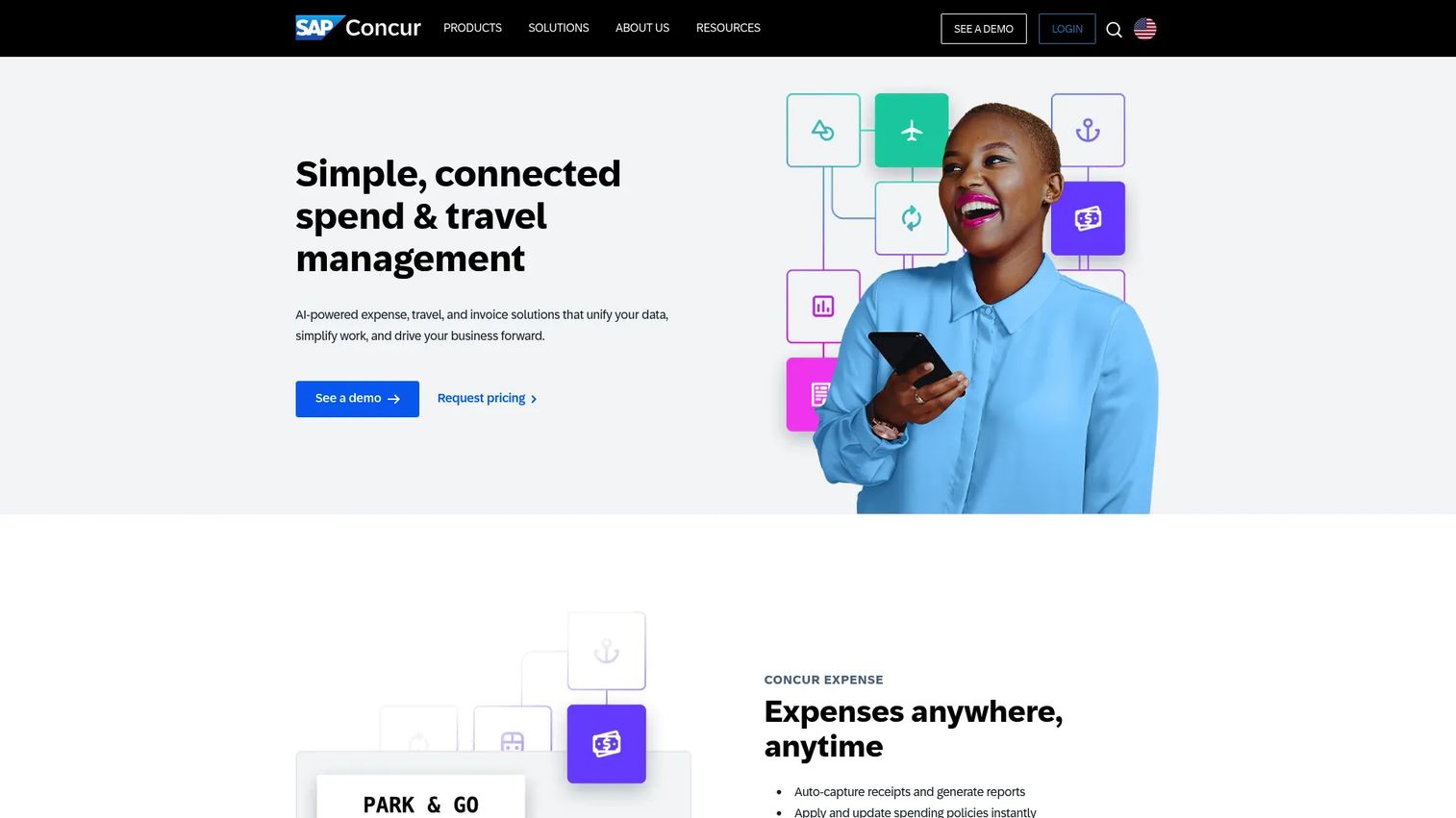
SAP Concur is an integrated travel, expense, invoice, and spend management platform used by larger organizations with mature finance and compliance requirements. It connects travel booking to expense reports, AP workflows, and ERP systems, making it a natural fit for companies where the finance team runs the program. SAP Concur also includes AI-powered workflow support for routing and approval automation.
Best for: Larger companies that need mature controls, ERP alignment, and global compliance workflows.
Key features
- Travel booking and trip management
- Expense reports and reimbursement automation
- Invoice and accounts payable workflows
- ERP integrations for finance system sync
- Policy controls and audit trails
Why choose SAP Concur: Choose it when governance and finance integration matter more than speed to deploy. It's the right call if your board or audit process demands documented approval chains and ERP-aligned reporting.
SAP Concur pricing: Base starts at $7 per expense report and includes Concur Expense. Plus is $11 per report and adds ExpenseIt, User Support Desk, and Reporting. Premium pricing requires contacting sales and adds Concur Travel, Intelligence, and additional capabilities.
G2 rating: 4.0/5
3. Egencia
Egencia is a business travel management platform from American Express Global Business Travel that combines online booking tools with managed travel support and analytics. It handles corporate travel booking, policy compliance, traveler location tracking, and risk management. Companies that want both a self-serve booking interface and access to managed program expertise tend to get the most from it.
Best for: Companies that want online booking alongside managed travel support and program management.
Key features
- Business travel booking for flights, hotels, and cars
- Mobile app for booking, approvals, and itineraries
- Travel policy compliance and preferred-supplier controls
- Traveler Tracker for real-time location visibility
- 24/7/365 customer support
Why choose Egencia: It fits teams that need more than a booking tool but aren't ready for a fully managed travel company. The combination of self-serve booking and managed support covers the gap between simple tools and enterprise programs.
Egencia pricing: Contact the sales team directly for a quote based on your company size and travel volume.
G2 rating: 4.5/5
4. Navan
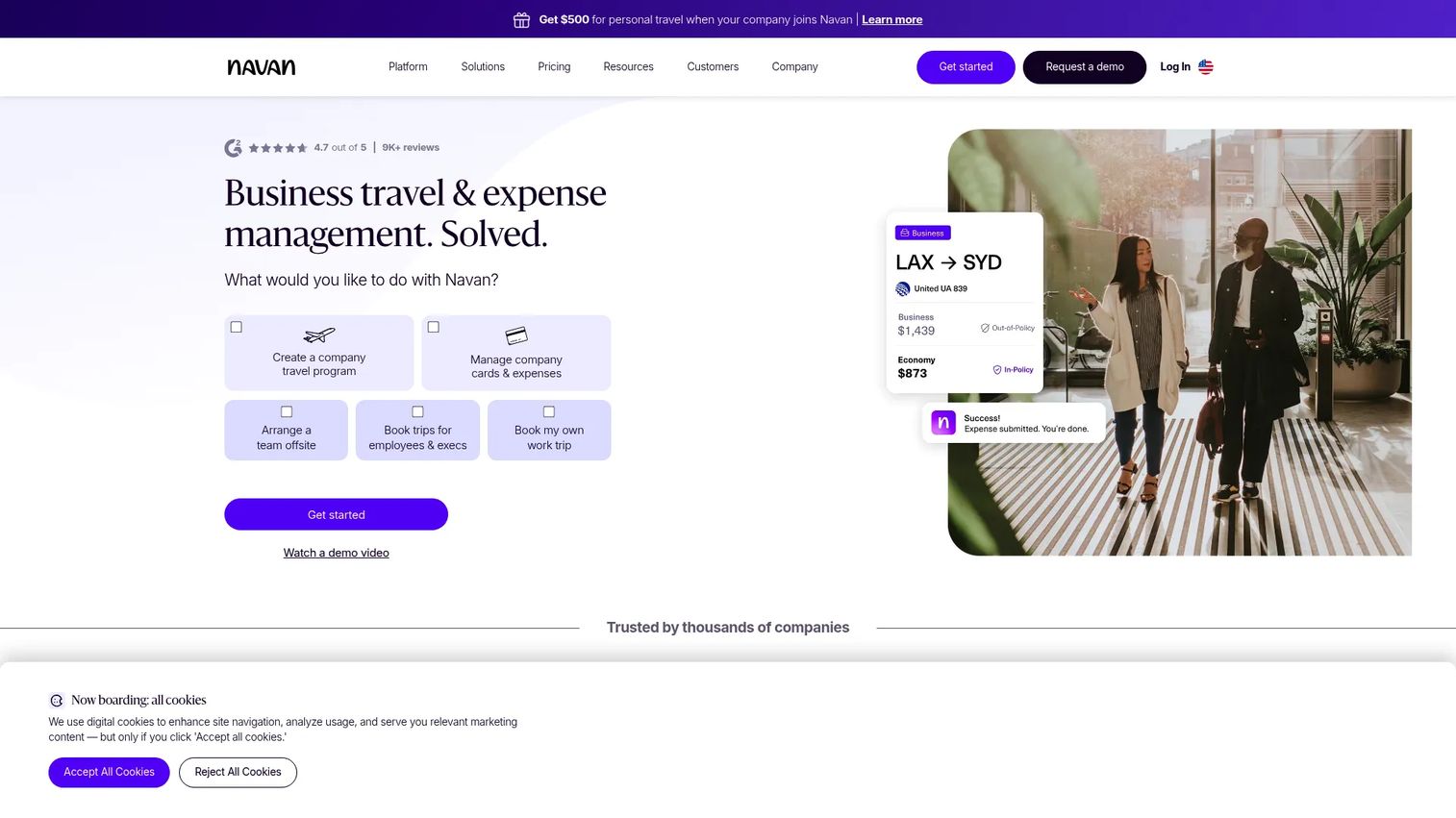
Navan combines business travel booking, corporate cards, expense management, and spend controls into one platform. Flights, hotels, car rentals, and trains are all bookable in the app, with policy rules applied before checkout. Expense automation handles receipt scanning, reimbursements, and HRIS and ERP integrations, so month-end close doesn't require manual reconciliation.
Best for: SaaS teams that want travel and expense workflows in one finance-friendly system.
Key features
- Travel booking for flights, hotels, car rentals, and trains
- Corporate card management with spend controls
- Expense automation with receipt scanning and reimbursements
- Policy rules and approval workflows
- HRIS and ERP integrations
Why choose Navan: The free business plan for companies with up to 300 employees makes it easy to start without a budget conversation. Finance teams get real-time spend visibility; travelers get a consumer-grade booking experience.
Navan pricing: Navan Business is free for companies with up to 300 employees. Navan Expense is free for the first five monthly expensing users, then $15 per user per month. Enterprise pricing requires contacting sales.
G2 rating: 4.6/5
5. Travefy
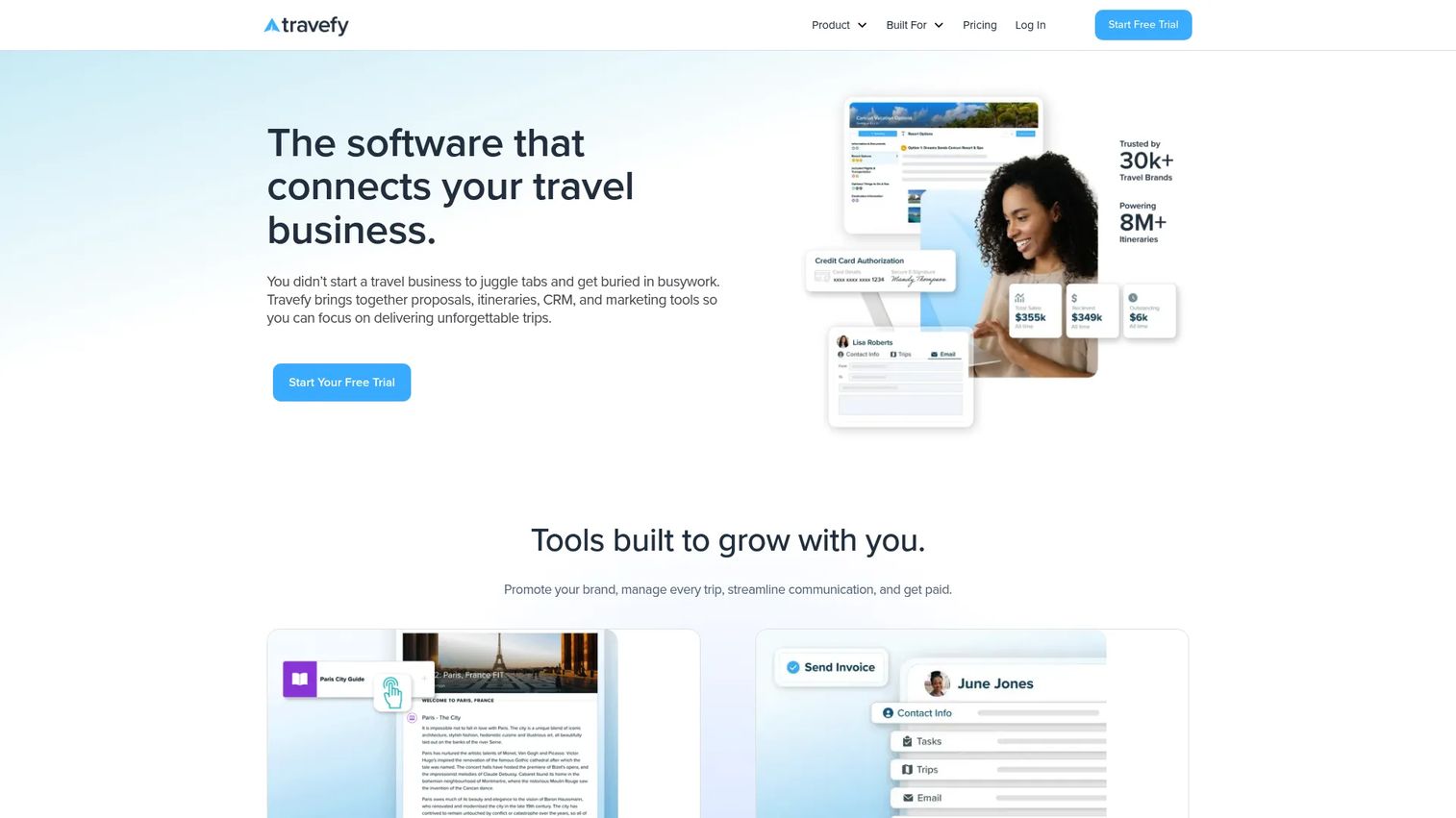
Travefy is travel agency software for advisors, agencies, destination management companies, and tour operators. It handles itinerary building, proposals, client CRM, invoicing, commission tracking, and branded mobile trip apps. This is not corporate travel management for employees; it's business software for companies that sell or arrange travel on behalf of clients.
Best for: Travel agents, agencies, DMCs, and tour operators managing client itineraries and proposals.
Key features
- Drag-and-drop itinerary and proposal builder
- CRM with forms, automations, and client records
- Website and landing page builder for agencies
- Invoicing, commission tracking, and supplier integrations
- Branded mobile trip app for clients
Why choose Travefy: If your business model is selling or curating travel for clients, Travefy covers the full workflow from proposal to post-trip follow-up. It's not the right fit for a SaaS company managing employee travel.
Travefy pricing: Core starts at $39/month billed annually. Premium is $59/month billed annually and adds priority support, custom domain, and business email hosting. A 10-day free trial is available.
G2 rating: 4.0/5
6. Booking.com for Business
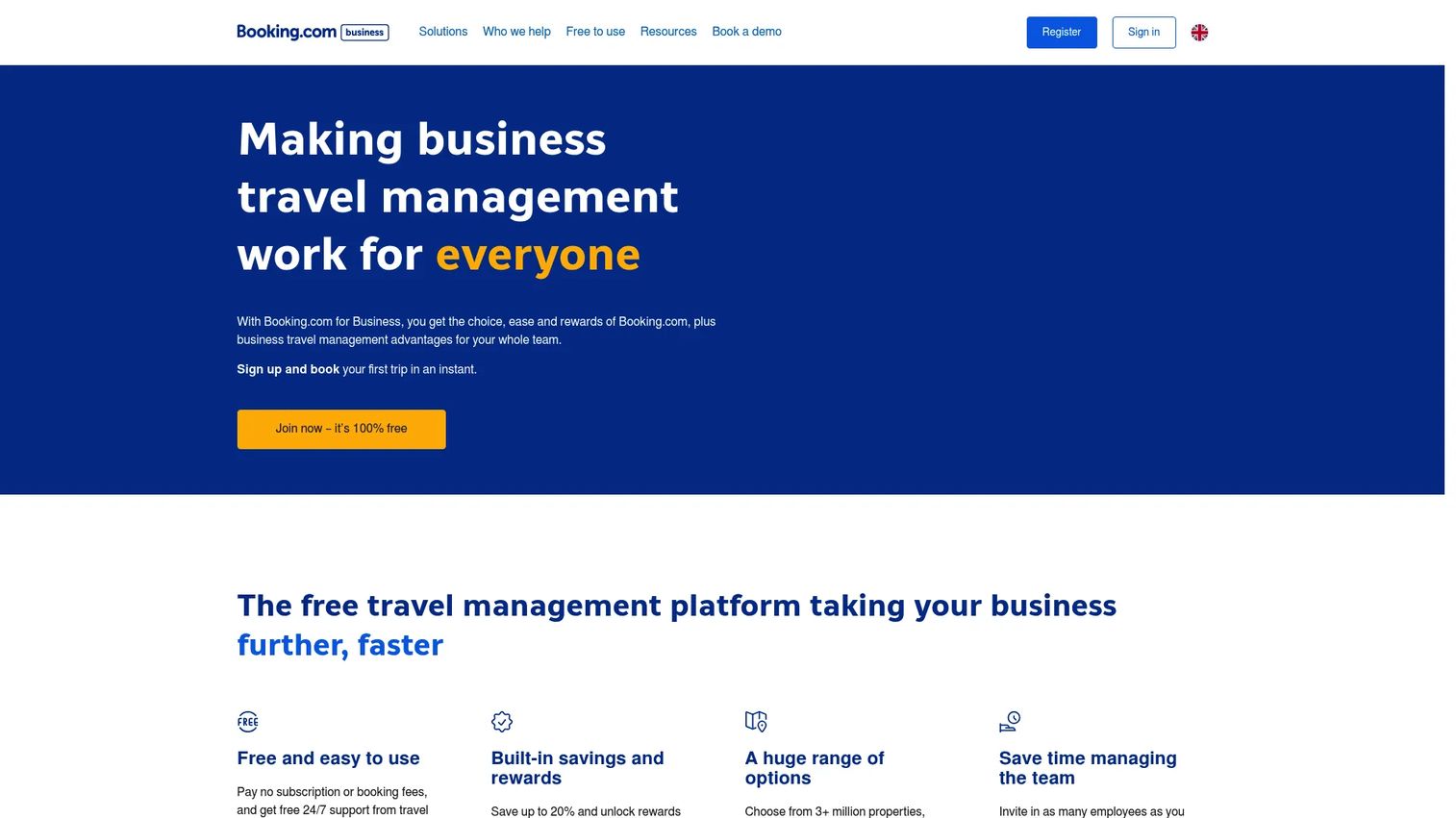
Booking.com for Business is a free business travel account that lets teams book accommodation, flights, car rentals, meeting rooms, and other travel services from the Booking.com inventory. It includes traveler management, itinerary tracking, hotel budgets, and spend dashboards without a subscription fee or booking charge.
Best for: Small teams that need straightforward business travel booking without a heavy travel program.
Key features
- Accommodation, flight, and car rental booking
- Business travel account with team management tools
- Traveler location tracking and itinerary dashboard
- Hotel budget controls and spend visibility
- Genius discounts and flexible booking options
Why choose Booking.com for Business: The absence of a subscription or booking fee makes it a practical starting point for small companies. It works well when the main need is accommodation booking and basic spend tracking rather than policy enforcement or expense reimbursement.
Booking.com for Business pricing: Free to use with no subscription, booking, or management fees. Accommodation rates reflect the supplier's pricing.
G2 rating: 3.8/5
7. American Express Global Business Travel
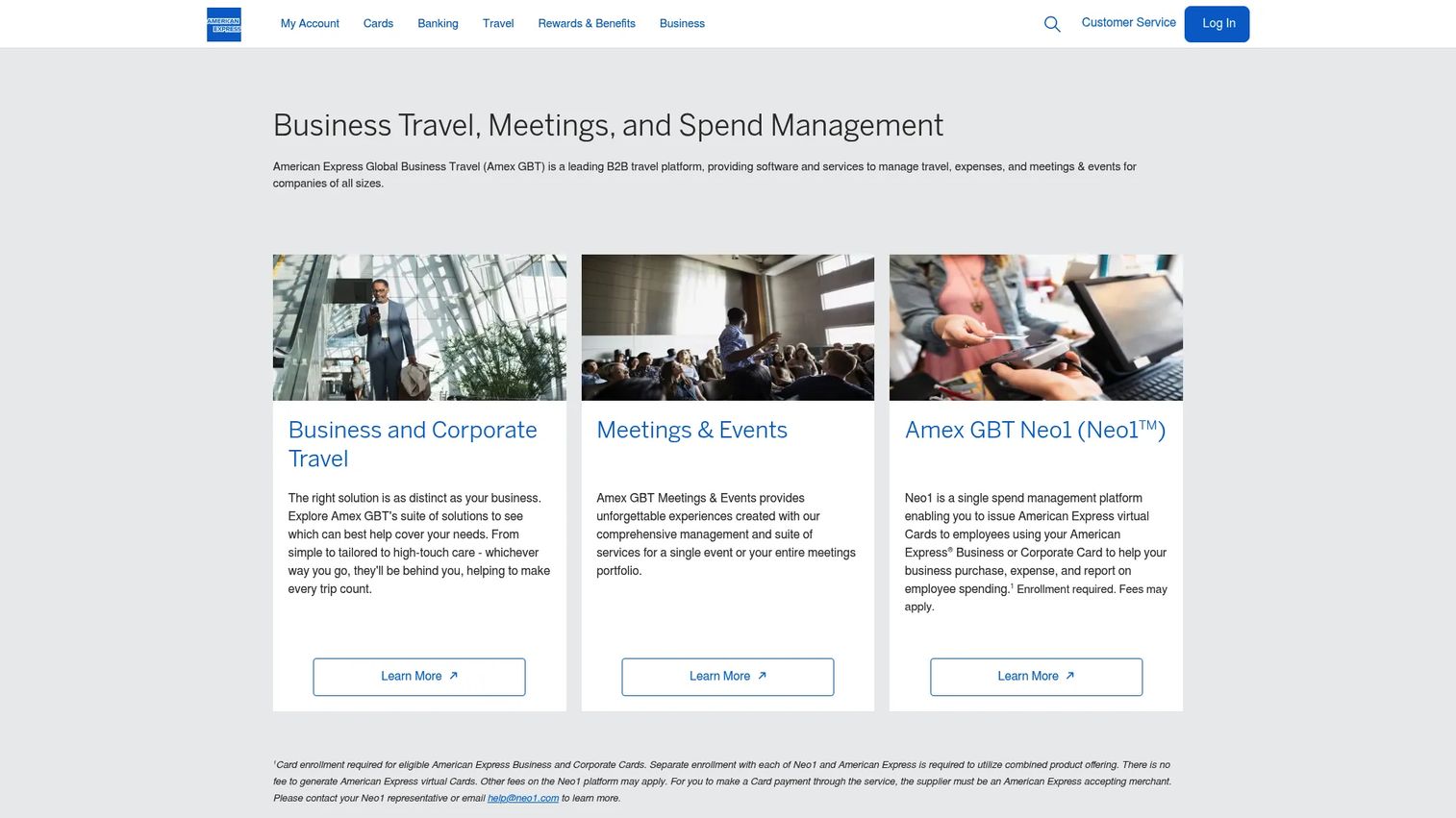
American Express Global Business Travel is a full-service corporate travel company and platform for enterprise organizations managing complex, global travel programs. It handles booking, expense management, meetings and events, traveler safety, risk management, and reporting through a single managed program.
Best for: Enterprise companies that need managed travel services, global supplier access, and executive-level program governance.
Key features
- Managed travel programs with dedicated program support
- 24/7 traveler support and disruption assistance
- Risk management and duty of care tracking
- Spend reporting and analytics across the organization
- Global supplier access and negotiated rates
Why choose American Express Global Business Travel: Choose it when travel complexity, global headcount, and board-level accountability make a full-service managed program worth the investment. It's the right fit for companies where the CFO needs program oversight and travelers need proactive support across time zones.
American Express Global Business Travel pricing: Contact the sales team for a quote based on your company size and travel program requirements.
G2 rating: 4.5/5
8. TravelBank
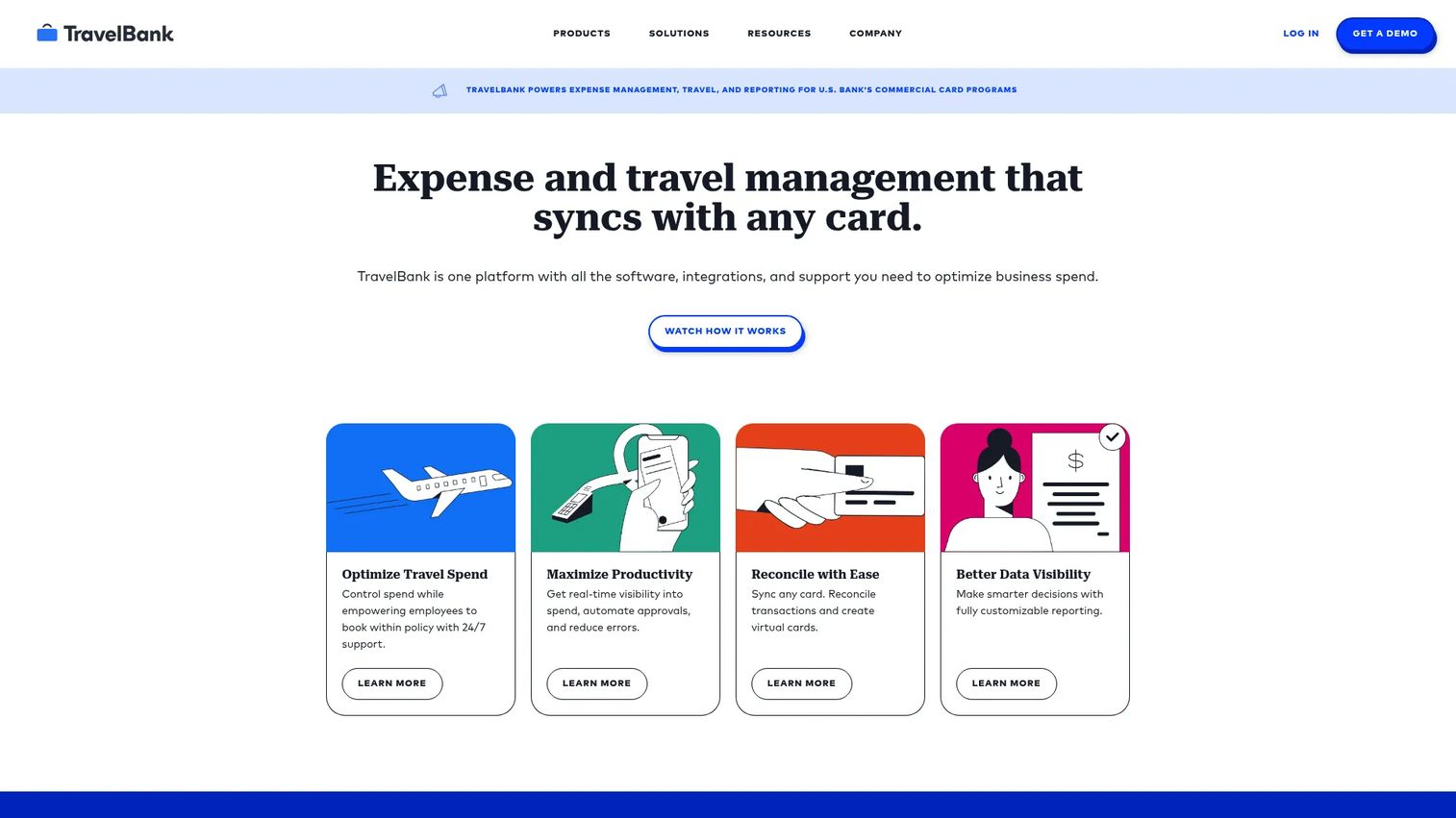
TravelBank is a business travel and expense management platform that combines flight, hotel, and car rental booking with expense reporting, corporate card management, and rewards. Companies earn travel rebates based on booking volume, which creates an incentive for employees to book within the platform rather than using personal cards.
Best for: Companies that want an integrated travel and expense platform without enterprise-scale complexity.
Key features
- Travel booking for flights, hotels, and car rentals
- Expense reporting with approval flows and receipt capture
- Corporate card management and transaction reconciliation
- Budget tracking and customizable spend reporting
- Travel rewards and rebate program
Why choose TravelBank: The rebate structure gives finance a concrete ROI signal. It's a reasonable fit for mid-size companies that want booking and expense management together and are willing to commit meaningful travel volume to the platform.
TravelBank pricing: Premium is $5,000 with a 1% travel rebate on qualifying spend. Elite is $10,000 with a 2% rebate. Corporate Custom pricing requires contacting TravelBank. A $250,000 minimum travel spend is required to qualify for rebates.
G2 rating: 4.5/5
9. Payhawk
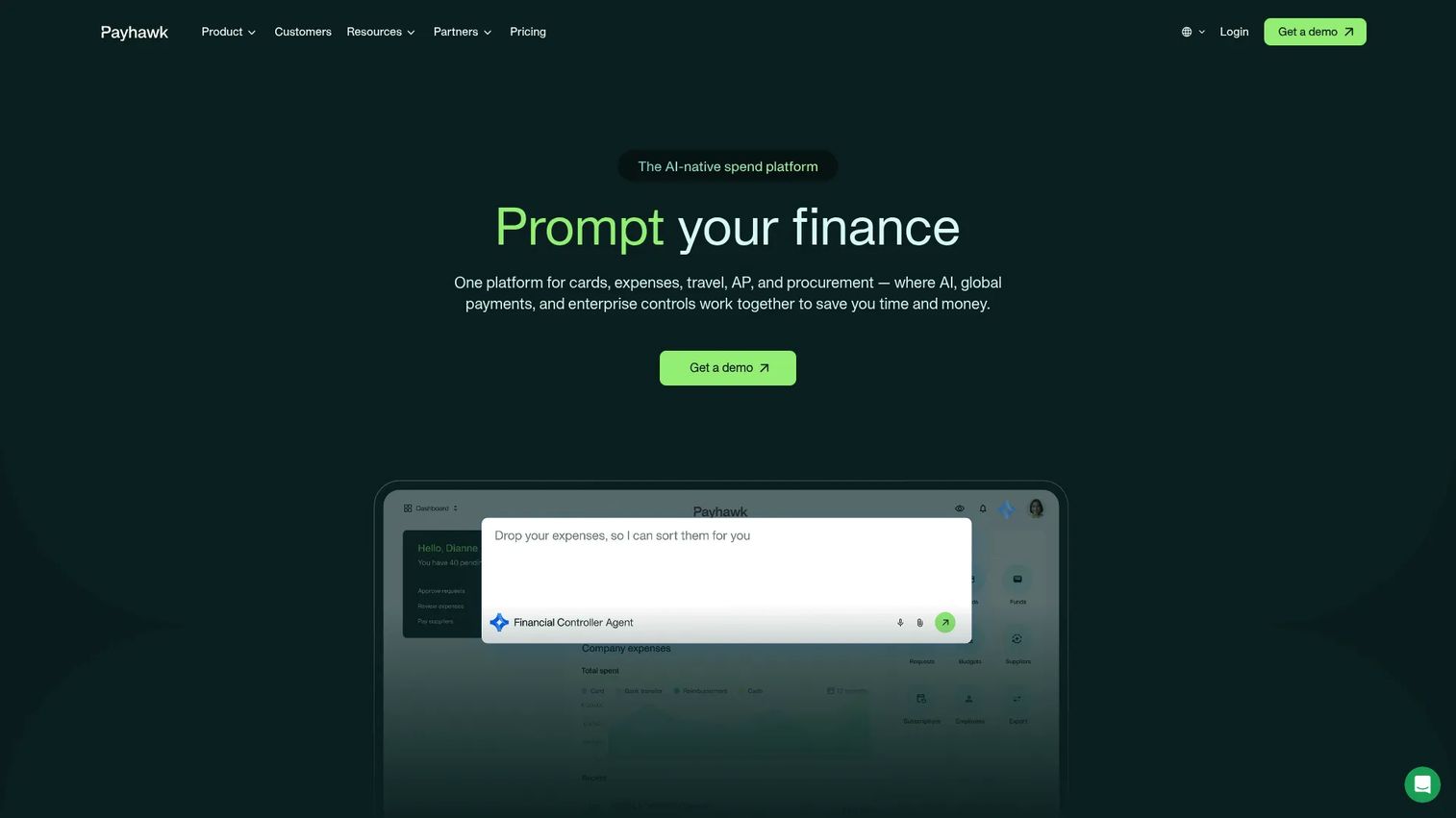
Payhawk is a spend management platform covering corporate cards, expense automation, accounts payable, procurement, travel booking, and accounting workflows. Travel is a module within a broader finance orchestration platform, so companies that choose Payhawk typically have spend problems that extend well beyond trip booking.
Best for: Finance teams that want travel spend controls tied to corporate cards and accounting workflows.
Key features
- Corporate virtual and physical cards with spend controls
- Automated expense capture, receipt collection, and reconciliation
- Accounts payable with invoice OCR and approval workflows
- Travel booking with policy controls and payments
- Accounting integrations and global bill payments
Why choose Payhawk: A strong fit when travel is part of a broader spend management overhaul. If your finance team is already dealing with fragmented cards, manual AP processes, and weak procurement controls, Payhawk handles all of it rather than solving just the travel piece.
Payhawk pricing: Travel module starts at $299/month. Cards and Expenses starts at $449/month. Accounts Payable starts at $349/month. Procurement starts at $499/month. Pricing varies by region and configuration.
G2 rating: 4.5/5
10. Emburse
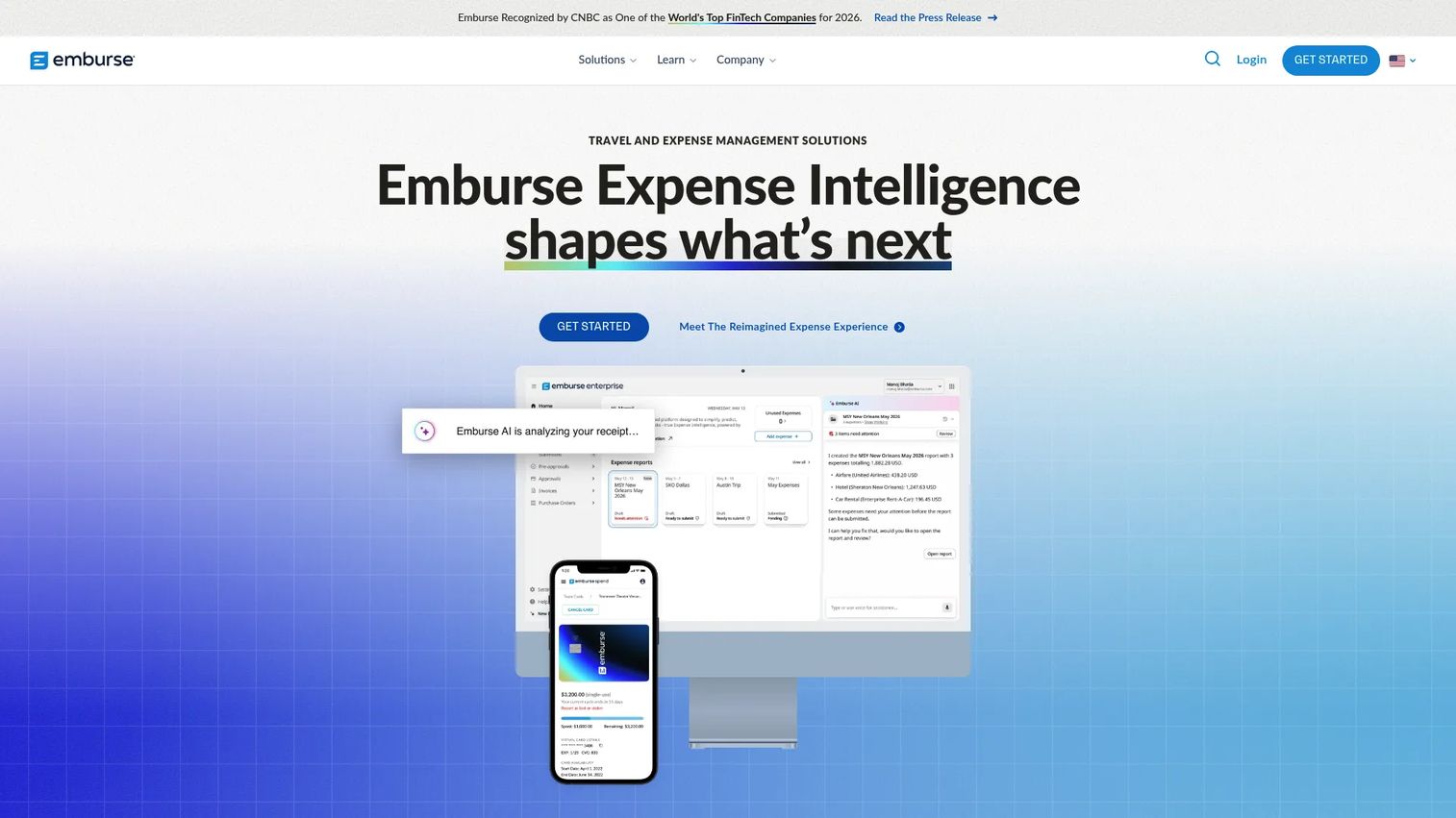
Emburse provides expense management, travel expense automation, card programs, reimbursements, and accounts payable through a connected platform. Its Emburse Spend product targets teams of up to 100 employees and starts with a 30-day free trial. For organizations with more complex needs, Emburse offers additional products with custom pricing.
Best for: Organizations with complex expense programs and multiple employee spend workflows.
Key features
- Real-time expense submission and visibility
- Receipt capture with transaction matching
- Reimbursement automation and approval routing
- Card program management
- Spend reporting across categories and teams
Why choose Emburse: The right fit when the pain is post-trip expense processing rather than pre-trip booking governance. Teams drowning in manual expense reports and approval queues get the most from Emburse's automation workflows.
Emburse pricing: Emburse Spend Basic is $8 per user per month. Plus is $12 per user per month. Emburse Cards pricing requires contacting sales. A 30-day free trial is available for Emburse Spend.
G2 rating: 4.5/5
11. Tipalti
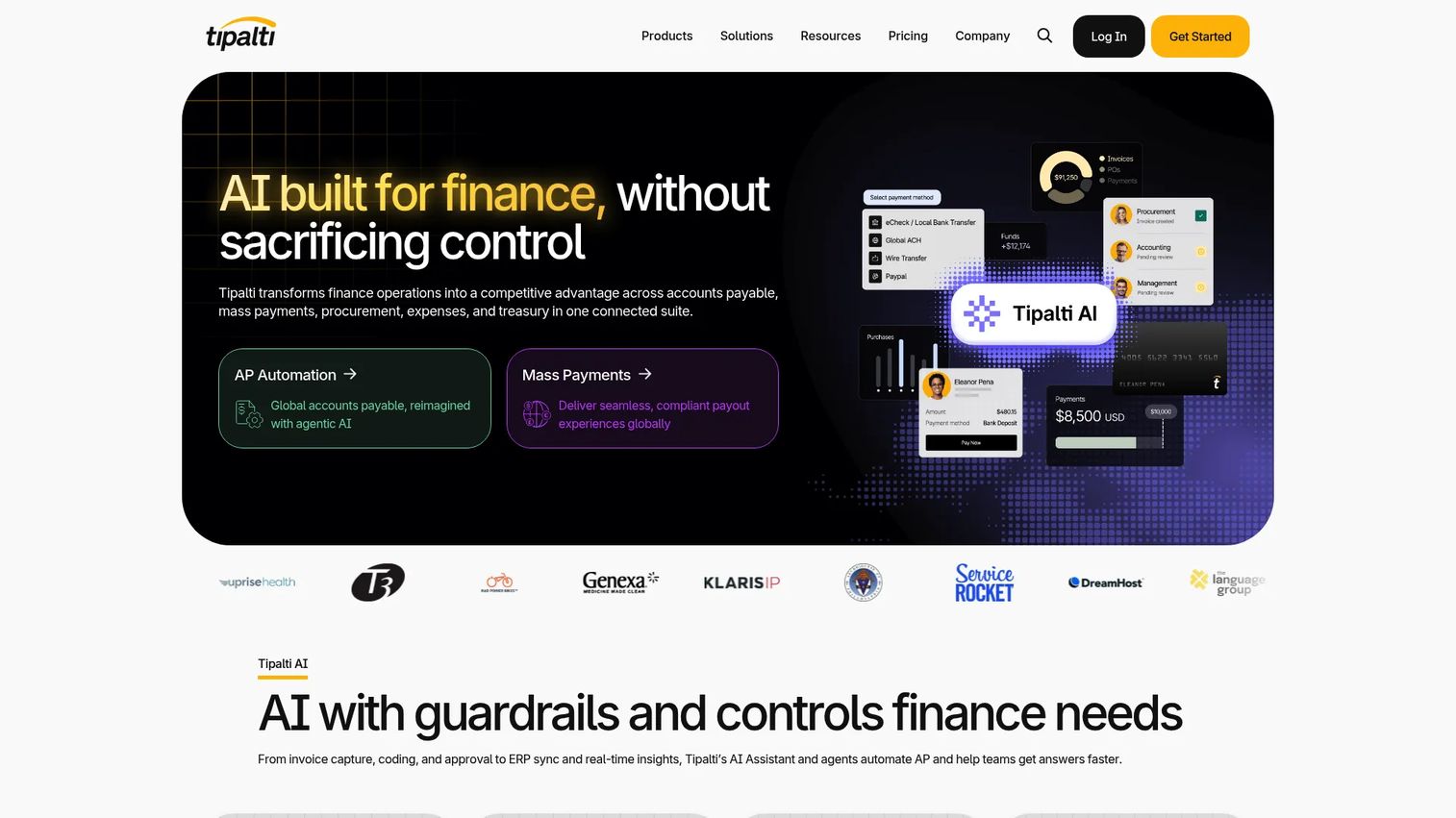
Tipalti is a finance automation platform for accounts payable, global payments, procurement, and expense workflows. It's not a travel booking platform. It fits companies where travel-related spend sits inside broader AP and global payment operations, such as paying international contractors, handling multi-entity accounting, or processing vendor invoices at scale.
Best for: Finance teams with global vendor, reimbursement, and payables complexity.
Key features
- Invoice capture with AI-powered coding and automation
- Global payments across 200-plus countries and territories
- Supplier onboarding, tax form collection, and compliance
- Multi-entity accounting and ERP integrations
- Fraud detection, audit trails, and compliance controls
Why choose Tipalti: Choose it when travel reimbursements are one line item inside a larger payables and global payments problem. It earns its place in the stack for finance teams running multi-entity operations or making frequent cross-border payments.
Tipalti pricing: Accounts Payable Select starts at $99/month. Advanced is $199/month. Elevate and Accelerate use custom pricing. Mass Payments starts at $249/month.
G2 rating: 4.5/5
12. Brex
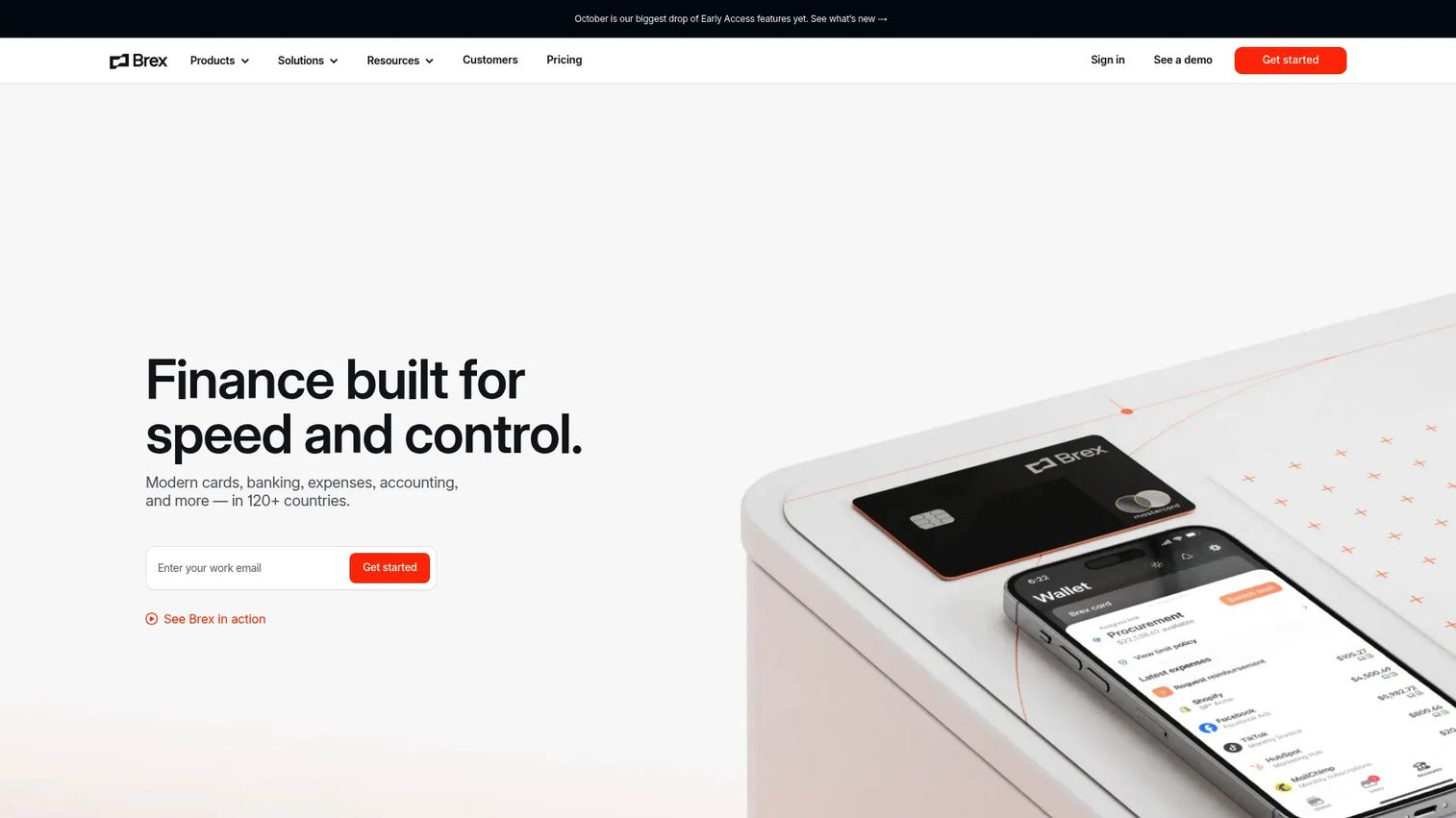
Brex is a corporate card and spend management platform that includes travel booking, expense management, reimbursements, bill pay, and accounting integrations. The free Essentials plan gives early-stage and scaling companies access to core card and spend workflows without a monthly fee. Travel controls sit inside the same system as the card and expense layer.
Best for: Startups and scaling SaaS companies already managing spend through corporate cards.
Key features
- Corporate cards with global acceptance and custom spend controls
- Expense management with receipt capture and real-time reporting
- Travel booking with policy controls
- Reimbursements and automated bill pay
- Accounting integrations with ERP and finance tools
Why choose Brex: A natural fit for founders who want travel controls inside their finance stack rather than a standalone travel platform. If Brex is already the corporate card, adding travel and expense workflows keeps everything in one system.
Brex pricing: Essentials is free. Premium is $12 per user per month. Smart Card uses custom pricing. Contact sales for Enterprise.
G2 rating: 4.8/5
13. Expensify
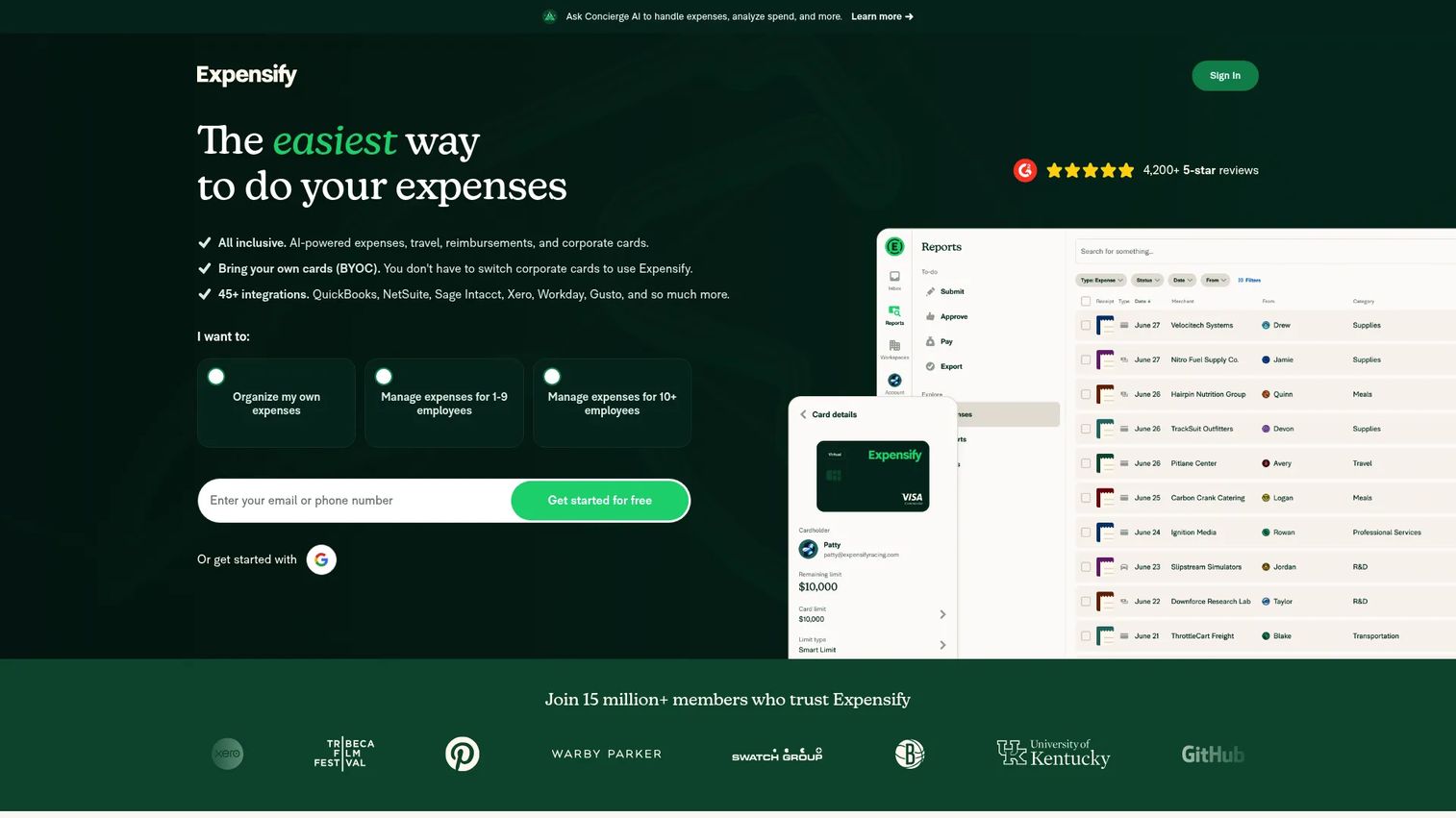
Expensify handles expense management with receipt scanning, expense reports, reimbursements, travel booking, corporate cards, and accounting sync. The free Submit plan covers basic receipt and expense submission. Collect adds reimbursements, corporate card management, and accounting integrations. Control adds advanced approvals, ERP and HR integrations, and budgeting.
Best for: Small teams whose main problem is expense submission and reimbursement, not booking governance.
Key features
- Receipt scanning with OCR capture
- Expense reports with submission and approval workflows
- Travel booking for flights, hotels, cars, and rail
- Corporate card management and bring-your-own-card reconciliation
- Global reimbursements and accounting sync
Why choose Expensify: The free Submit tier removes friction for getting employees to submit expenses consistently. It's the right starting point for small teams where the biggest gap is expense report chaos rather than travel policy enforcement.
Expensify pricing: Submit is free. Collect is $5 per member per month. Control starts at $9 per active member per month with custom pricing based on requirements.
G2 rating: 4.5/5
14. PLANERGY

PLANERGY is a procure-to-pay, AP automation, expense, and payment platform for mid-market organizations. It handles purchase requests, purchase orders, invoice capture, supplier management, and budget controls. When travel-related spend flows through procurement and AP workflows, PLANERGY gives finance the approval governance and visibility to control it.
Best for: Companies that manage travel spend through procurement and accounts payable workflows.
Key features
- Purchase requests and purchase orders with approval routing
- AI-powered invoice capture with duplicate detection and matching
- Budget controls and real-time spend reporting
- Supplier management and PunchOut catalog support
- Accounting and ERP integrations
Why choose PLANERGY: Choose it when travel arrangement intersects with vendor approval, procurement control, and accounts payable. It's not a booking tool; it's the system that sits downstream from booking and ensures every dollar is authorized, matched, and accounted for.
PLANERGY pricing: Pricing is tailored to each business. Request a demo through the PLANERGY website for a custom quote.
G2 rating: 4.9/5
15. TripIt
TripIt organizes all travel confirmations into a single master itinerary. Forward confirmation emails to plans@tripit.com and TripIt builds the itinerary automatically. It covers flights, hotels, car rentals, and restaurant bookings, with calendar sync and document storage. TripIt Pro adds real-time flight alerts, alternate flight suggestions, fare monitoring, and reward tracking.
Best for: Employees, founders, and small teams that need simple trip organization without a travel management system.
Key features
- Automatic itinerary creation from forwarded confirmation emails
- Real-time flight alerts and travel reminders
- Calendar synchronization across devices
- Document storage for travel records
- Reward program tracking with TripIt Pro
Why choose TripIt: Useful when the job is organizing trip details rather than enforcing company travel policy or managing expenses. For founders and executives who travel frequently and want one place to see their full itinerary, TripIt Pro earns its annual fee quickly.
TripIt pricing: TripIt is free. TripIt Pro is $49 per year and adds flight alerts, fare monitoring, alternate flights, and reward tracking.
G2 rating: 4.6/5
Considerations when choosing travel arrangement software
Match the tool to your operating model
Separate corporate travel, agency travel, expense-heavy workflows, and itinerary-only needs before shortlisting. A Series B SaaS company typically needs booking, approvals, expense automation, and reporting. A travel agency needs CRM, itinerary builder, and commission tracking. Using an agency tool to run a corporate program creates friction in both directions.
Check finance integrations before the demo
The strength of a travel tool's accounting, ERP, HRIS, and corporate card integrations determines whether finance can close the month cleanly. Involve your Head of Finance early. Month-end reporting is where weak travel systems break, and discovering integration gaps after sign-off is expensive.
Evaluate policy and approval controls
Travel policy should fire before money is spent, not after. Look for budget thresholds, approval routing by trip type or spend level, out-of-policy flags at checkout, and exception handling. Tools that apply policy post-booking put the enforcement burden back on finance.
Prioritize employee adoption
A travel system nobody uses becomes another shadow process. Evaluate the mobile booking experience, receipt capture flow, and whether employees can complete bookings without ops help. If adoption is low, finance still ends up chasing receipts.
Look at reporting by team, location, and project
Leaders need spend views by department, customer event, or project to manage burn and report to the board. Confirm the reporting layer matches how your company tracks spend before committing to a platform.
Conclusion
The best travel arrangement software depends on your operating model and where the current pain sits.
For managed corporate travel programs, TravelPerk and Navan are the strongest starting points for scaling companies. SAP Concur and American Express Global Business Travel serve enterprise organizations with mature compliance and program requirements.
For finance-led workflows, Payhawk handles the full spend management stack. Brex and Expensify are natural fits for startups already running on corporate cards. Emburse and Tipalti solve expense and payables complexity for more established finance teams. PLANERGY adds procurement governance when travel spend needs AP-level controls.
Travefy is the clear choice for travel agencies and advisors. TripIt handles individual itinerary organization without any program overhead.
Pick based on what breaks today. A new VP of Finance or People Ops should be able to inherit a repeatable travel process from day one, not rebuild one from scratch. The right tool earns its place in the stack within the first quarter.
If you are evaluating software for your own SaaS company, do what your buyers want from you: Show the product clearly before asking for a meeting. Interactive demos let prospects explore your product at their own pace without scheduling a call.
Start your journey with Guideflow today!
FAQs
Travel arrangement software helps businesses, teams, and agencies plan, book, manage, approve, and report on trips from itinerary creation through expense reconciliation. It covers corporate travel booking, policy approvals, receipt capture, reimbursements, traveler support, and finance exports, depending on the tool.
Travel management software typically refers to dedicated corporate travel programs covering booking, policy, duty of care, and reporting. Travel arrangement software is a broader category that includes agency tools for client itinerary building, expense platforms, and lightweight itinerary apps like TripIt. The distinction matters when choosing: A corporate buyer needs management features; an agency needs client-facing tools.
Small businesses should start with tools that match their current complexity. Booking.com for Business is free and covers accommodation and basic spend tracking. Navan Business is free for companies with up to 300 employees. Expensify's free Submit tier handles receipt capture and expense submission. TripIt organizes itineraries without any subscription. Grow into policy controls and approval routing as the team and travel volume scale.
SaaS companies at the Series B stage should prioritize policy controls, finance integrations, and department-level spend reporting. TravelPerk and Navan both cover booking and expense in one platform. Brex works well if the company is already using Brex cards. SAP Concur fits companies with mature finance and compliance requirements. The goal is a system that a new Head of Finance can own from day one.
Core features include booking inventory for flights and hotels, itinerary management, approval workflows, policy enforcement, receipt capture, reimbursements, mobile access, traveler support, spend reporting, and integrations with accounting and HR systems. Agency-specific tools add client CRM, proposal builders, commission tracking, and branded mobile apps.
No, though there is overlap. Expense management software focuses on receipt capture, reimbursements, corporate cards, and finance reporting after a trip. Travel arrangement software can include pre-trip booking and itinerary workflows before the expense happens. Many platforms, including Navan, SAP Concur, and Brex, combine both. Tools like TripIt and Booking.com for Business focus only on the travel and booking side without expense automation.
Costs range from free, as with Booking.com for Business and TripIt's base plan, to per-user expense platforms at $5 to $12 per user per month, to platform fees starting at $99 to $299 per month for more capable tools. SAP Concur charges per expense report. TravelBank uses an annual program fee starting at $5,000. Enterprise managed programs from American Express Global Business Travel and Egencia require a custom quote. The key variables are company size, booking volume, and whether you need expense automation alongside booking.
Start with four questions: What is breaking today, booking chaos, expense cleanup, or approval gaps? What does your finance team need at month-end close? How much travel volume justifies the tool's minimum spend or platform fee? And which integrations connect to your existing accounting, HR, and card systems? Answering those narrows the shortlist faster than any feature comparison.