


You have a phone screen Thursday, an onsite loop the following week, and eleven browser tabs open right now. LeetCode in one. A system design blog in another. A Notion doc of behavioral stories you keep meaning to finish. A mock interview you booked but never scheduled.
This is how most technical interview prep goes. Scattered. Reactive. Measured in tabs instead of outcomes.
The problem is not effort. It is that random practice does not compound. You grind fifty array problems and still freeze on a graph question. You read three system design articles and still can't structure an answer under pressure. You rehearse answers in your head that fall apart the moment someone asks a follow-up.
The technical interview market is growing fast for a reason. One analysis from ResearchIntelo (2024) valued the tech interview practice platforms market at $1.2B in 2024, forecasting $5.6B by 2033 at an 18.7% CAGR. More candidates are treating interview prep as a system, not a scramble.
Technical interview software is the category of tools that structures that system: coding practice, system design frameworks, behavioral question banks, and mock interviews with real feedback. The right stack turns scattered effort into a repeatable workflow. This guide covers seven tools worth building that workflow around.
What's inside
This guide is for software engineers, and for the product managers and hiring leaders who want to standardize how their teams or candidates prepare. It covers coding practice, system design interview prep, behavioral interview prep, and mock interview software in one place.
We selected tools based on four criteria:
- Breadth of interview formats supported: coding, system design, behavioral, and mock interviews
- Quality of practice material: depth, accuracy, and realism of problems and feedback
- Guidance and structure: how clearly each tool points you toward the next right thing
- Fit across seniority levels: useful whether you are a new grad or a staff engineer
TL;DR
- Best free curated guidance: Tech Interview Handbook, an end-to-end roadmap from applying to negotiation at no cost.
- Best for coding interview preparation: LeetCode, for volume, pattern recognition, and timed reps.
- Best for assessment-style practice: HackerRank, for timed tasks in interview-like coding environments.
- Best for live coding realism: CoderPad, the shared editor used in real interviews.
- Best for live mock interviews: interviewing.io, anonymous practice with senior engineers and real feedback.
- Best all-in-one prep: Exponent, for behavioral, system design, and product interviews plus mocks.
- Best structured coding path: AlgoMonster, pattern-first lessons that cut wasted time.
Background
Technical interview software is any tool that helps candidates prepare for software engineering interviews across coding, system design, behavioral, and mock interview formats. It replaces scattered blog posts and PDFs with structured practice, realistic environments, and feedback you can act on.
Most software engineer interview prep spans several distinct interview formats. Each one rewards a different kind of practice, which is why a single tool rarely covers everything.
The main formats technical interview software supports:
- Coding challenges and live editors: algorithm and data structure problems, often timed, sometimes in a shared editor that mirrors the real interview. This is where big O analysis and pattern recognition get drilled.
- System design prep and frameworks: structured approaches to open-ended design questions, covering scalability, tradeoffs, and how to reason about system design questions out loud.
- Mock interview scheduling and feedback: practice sessions with real engineers or AI, plus feedback on communication, problem-solving, and readiness.
- Behavioral question banks and STAR practice: curated behavioral questions with frameworks like the STAR method to structure answers about conflict, ownership, and impact.
- Study plans and resource curation: roadmaps that sequence what to study and when, so coding interview preparation does not turn into aimless grinding.
The whiteboard interview still exists, though most companies now run coding rounds in a shared online editor. Good interview prep resources prepare you for both.
When to use
Build a prep plan for a specific interview loop
You have a specific loop coming: two coding rounds, one system design, one behavioral. Random practice will not cover all four evenly. This is when a structured roadmap matters most. A study plan tells you how many coding reps to hit, which system design patterns to review, and how many behavioral stories to prepare, mapped to the actual rounds you will face.
Practice under realistic interview constraints
Reading a solution is not the same as producing one under a timer while someone watches. When your problem is nerves or freezing up, you need timed, editor-based, or live-human practice. Coding in a shared editor, talking through your approach out loud, and handling follow-up questions all build the specific muscle that solving problems alone in your head does not.
Turn scattered resources into a repeatable workflow
You have twenty bookmarks, three courses half-finished, and no idea what to do next. The problem is not lack of material. It is lack of a system. This is when a structured platform or guided path earns its place: it consolidates the sprawl into a clear sequence, so every practice session moves you forward instead of in circles.
Comparison table
Here is a quick side-by-side of the seven tools, sorted by relevance to technical interview prep. Use it to shortlist before reading the full entries below.
| # | Product | Best for | Key differentiation | Pricing | G2 rating |
|---|---|---|---|---|---|
| 1 | Tech Interview Handbook | End-to-end curated prep | Free roadmap across the full interview lifecycle | Free | Not listed |
| 2 | LeetCode | Coding interview reps | Huge problem bank plus company-specific questions | Free tier; Premium from $13.25/mo billed yearly | Not listed |
| 3 | HackerRank | Assessment-style practice | Interview-like coding environments and skills tracks | Free tier; paid plans by quote | 4.6/5 |
| 4 | CoderPad | Live coding realism | The shared editor used in real interviews | Free tier; Starter from $80/mo billed annually | 4.4/5 |
| 5 | interviewing.io | Live mock interviews | Anonymous practice with senior engineers | Free AI interviewer; premium from $179 | 3.5/5 |
| 6 | Exponent | All-in-one prep | Courses, mocks, and coaching across roles | Free tier; membership from $12/mo billed annually | Not listed |
| 7 | AlgoMonster | Structured coding path | Pattern-first curriculum with 48 core patterns | Free tier; Pro from $119/year | Not listed |
Best technical interview software tools for 2026
Seven tools, each covering a different part of the prep system. Read the entries that match your weakest format first.
1. Tech Interview Handbook
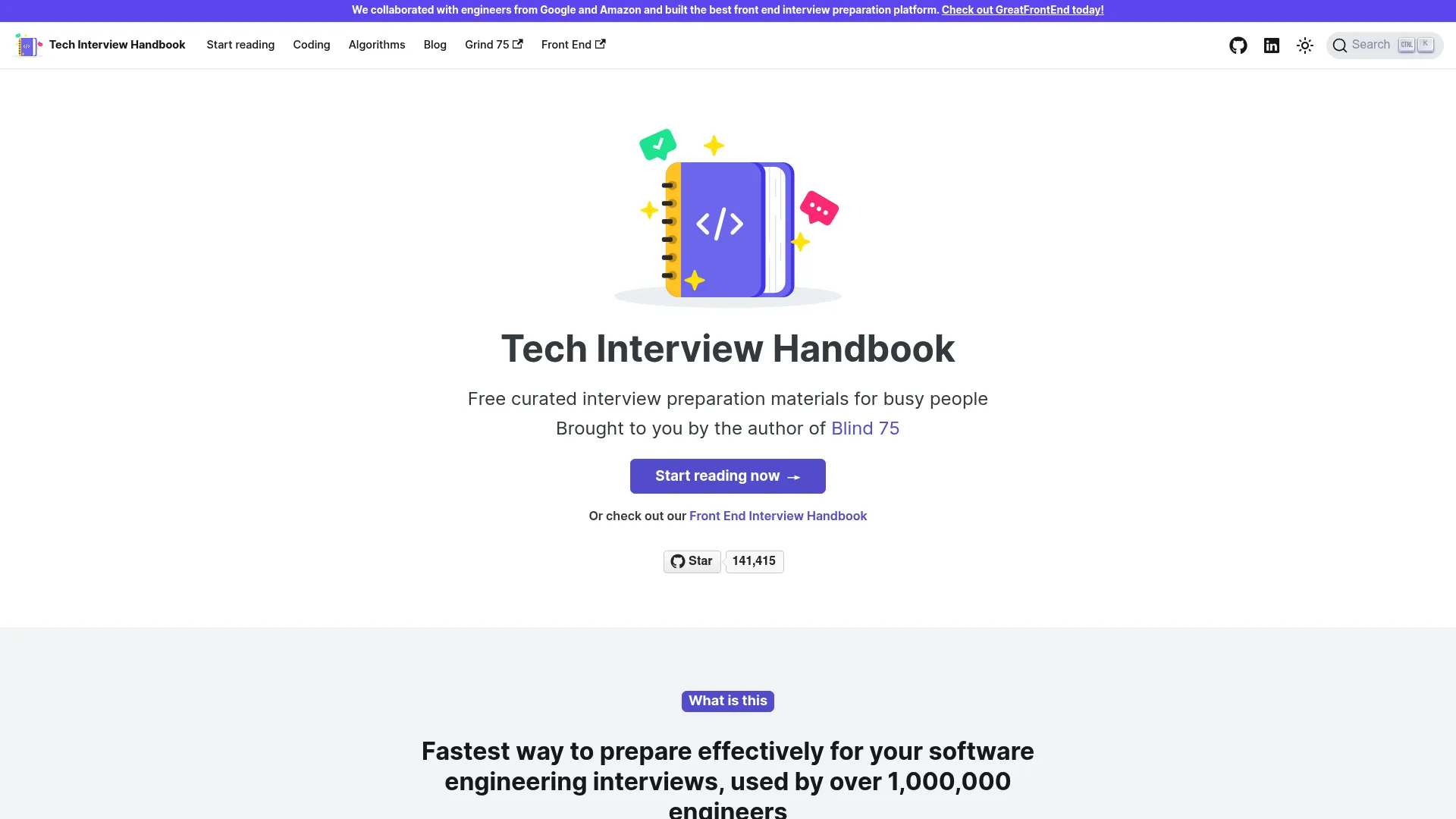
Tech Interview Handbook is a free, curated prep system rather than a single-purpose tool. It covers the full interview lifecycle: applying, resume review, coding prep, system design, behavioral prep, and offer negotiation. If you want one roadmap to organize everything else, this is the map most candidates start from.
The value here is structure. Instead of guessing what to study, you follow a sequenced study plan with cheatsheets, question banks, and practical guidance built by engineers who have run the gauntlet themselves.
Best for: candidates who want an end-to-end roadmap and a free starting point before spending on paid tools.
Key strengths
- Free interview prep handbook covering the full lifecycle
- Portal with resume review, tech offers, and a question bank
- Software engineering guides and coding cheatsheets
- Structured study plans for coding interview preparation
- Practical negotiation guidance most guides skip
Why choose it: the handbook gives you a durable framework so your other tools slot into a plan instead of a pile. It is the best zero-cost way to sequence your prep before you commit budget elsewhere.
Pricing: the handbook and portal signup are free. Sponsorship and advertising run on a fixed price schedule for interested partners.
2. LeetCode
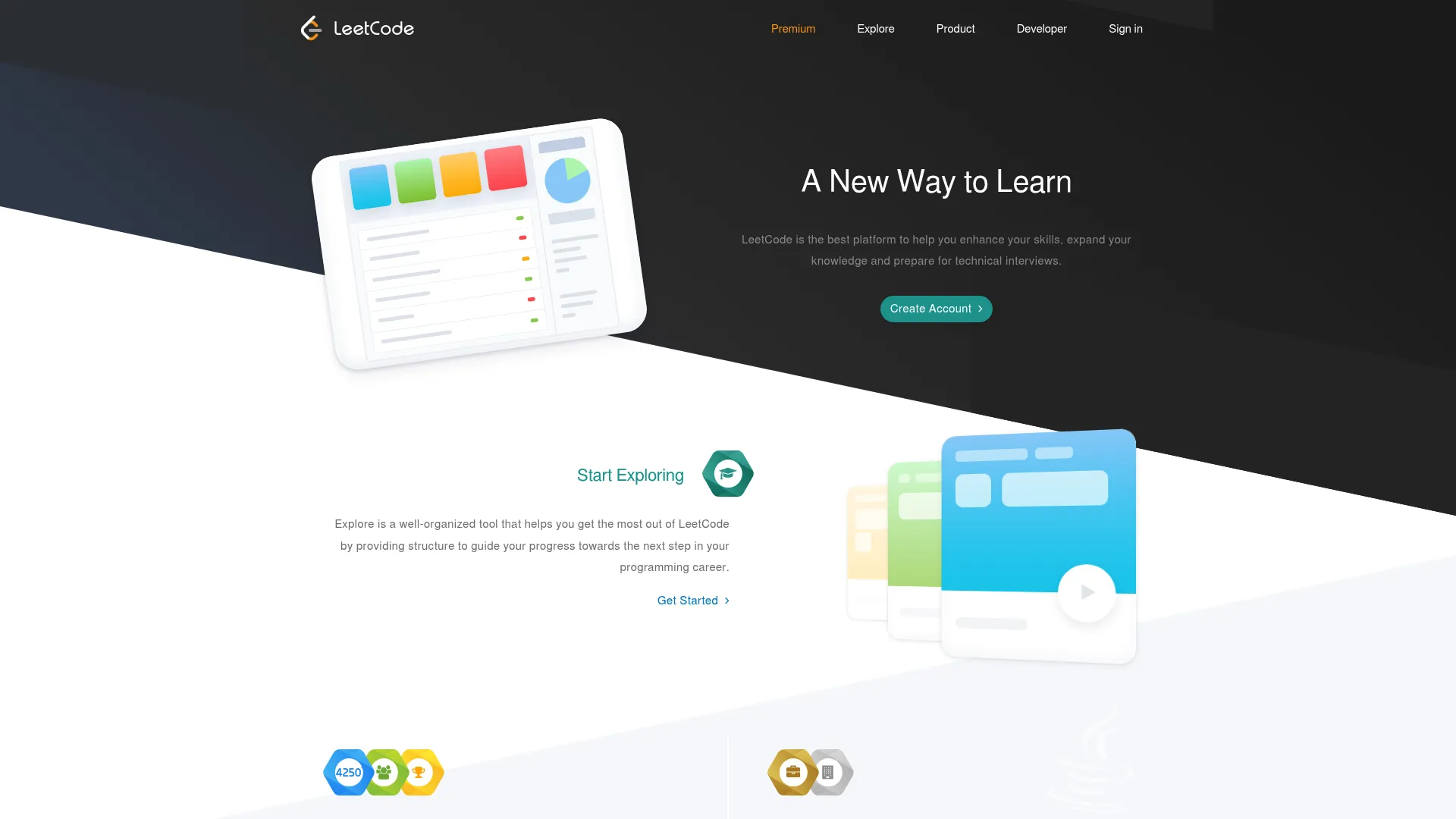
LeetCode is the default gym for coding interview preparation. Its problem bank is large enough to drill nearly any algorithm or data structure pattern, and company-specific question sets help you target the companies you are actually interviewing with. This is the tool for volume and consistency.
The strength is repetition at scale. You build pattern recognition by solving many variations of the same problem type, then pressure-test it under timed conditions and contests. For candidates who freeze because they haven't seen enough problems, LeetCode is the fix.
Best for: engineers who need high-volume, consistent coding reps and company-targeted practice.
Key strengths
- Large bank of coding problems and contests
- Premium company-specific interview questions
- Mock interview practice mode
- Autocomplete, debugger, and priority judging on Premium
- Timed practice that builds speed under pressure
Why choose it: if your weak spot is coding volume and pattern recognition, nothing beats a deep problem bank plus company-tagged questions. It rewards consistent daily reps more than any other tool on this list.
Pricing: a free tier covers a large set of problems. Premium is $35/month billed monthly, or $13.25/month billed yearly ($159/year).
3. HackerRank
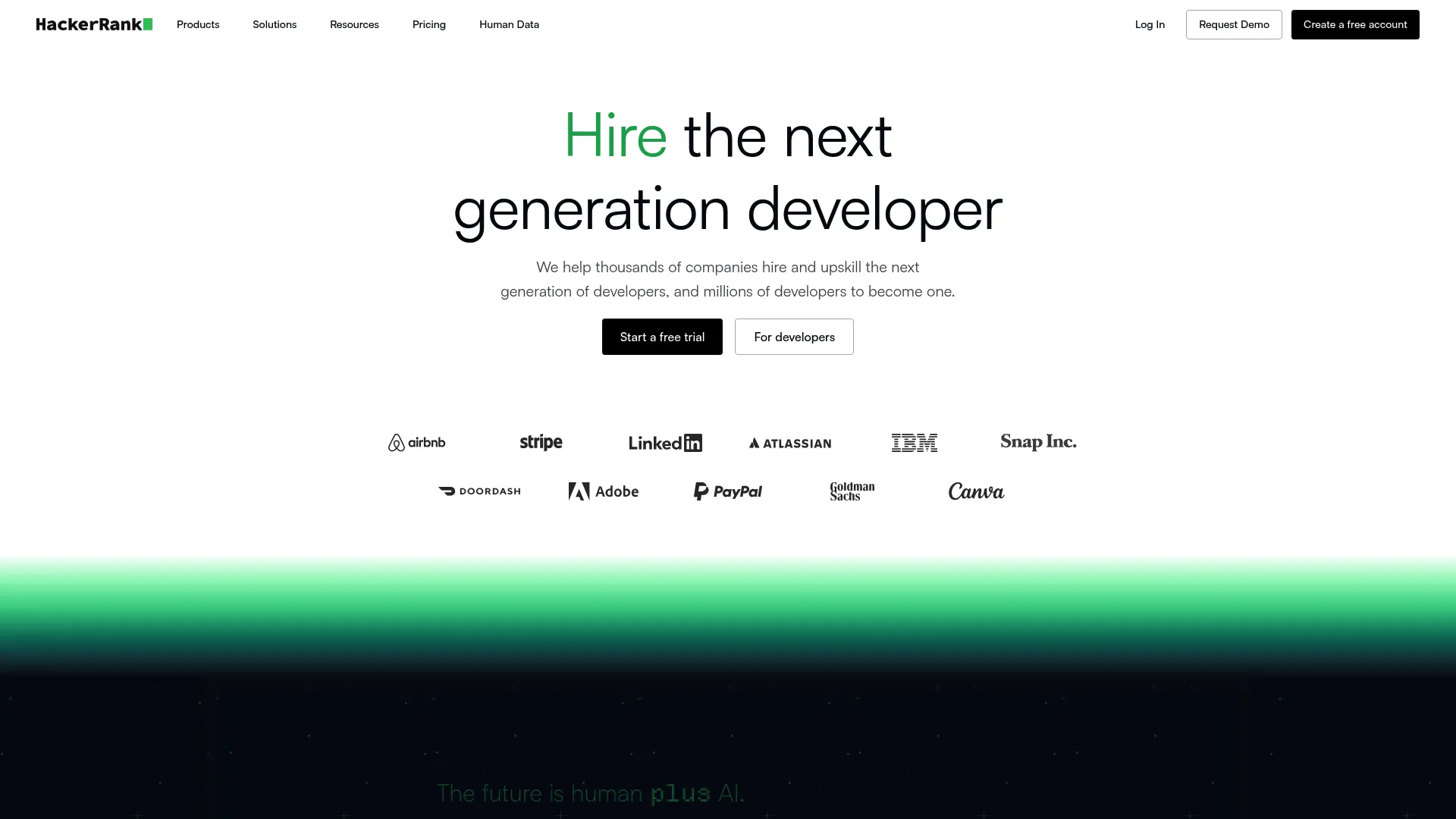
HackerRank is built around skills assessments and technical screening, which makes it strong for getting comfortable with the kind of timed, environment-based tasks many companies use in early rounds. If your interviews start with an automated coding assessment, practicing in a similar setup removes a lot of surprise.
Where a pure problem bank drills isolated questions, HackerRank leans into structured skill tracks and interview-style challenges. That suits candidates who want to warm up to the exact assessment format before the real one lands in their inbox.
Best for: candidates facing timed coding assessments who want to practice in a comparable environment.
Key strengths
- Skills screening across many languages
- Technical interview tooling and challenges
- AI-assisted assessment and proctoring
- Structured skill tracks by topic
- Interview-style timed challenges
Why choose it: HackerRank fits better than a pure problem bank when your first hurdle is an automated screening assessment. Practicing in a similar environment reduces the friction of the real thing.
Pricing: HackerRank offers a free tier for practice. Its hiring plans are Starter, Pro, and Enterprise, with pricing by quote from HackerRank.
4. CoderPad
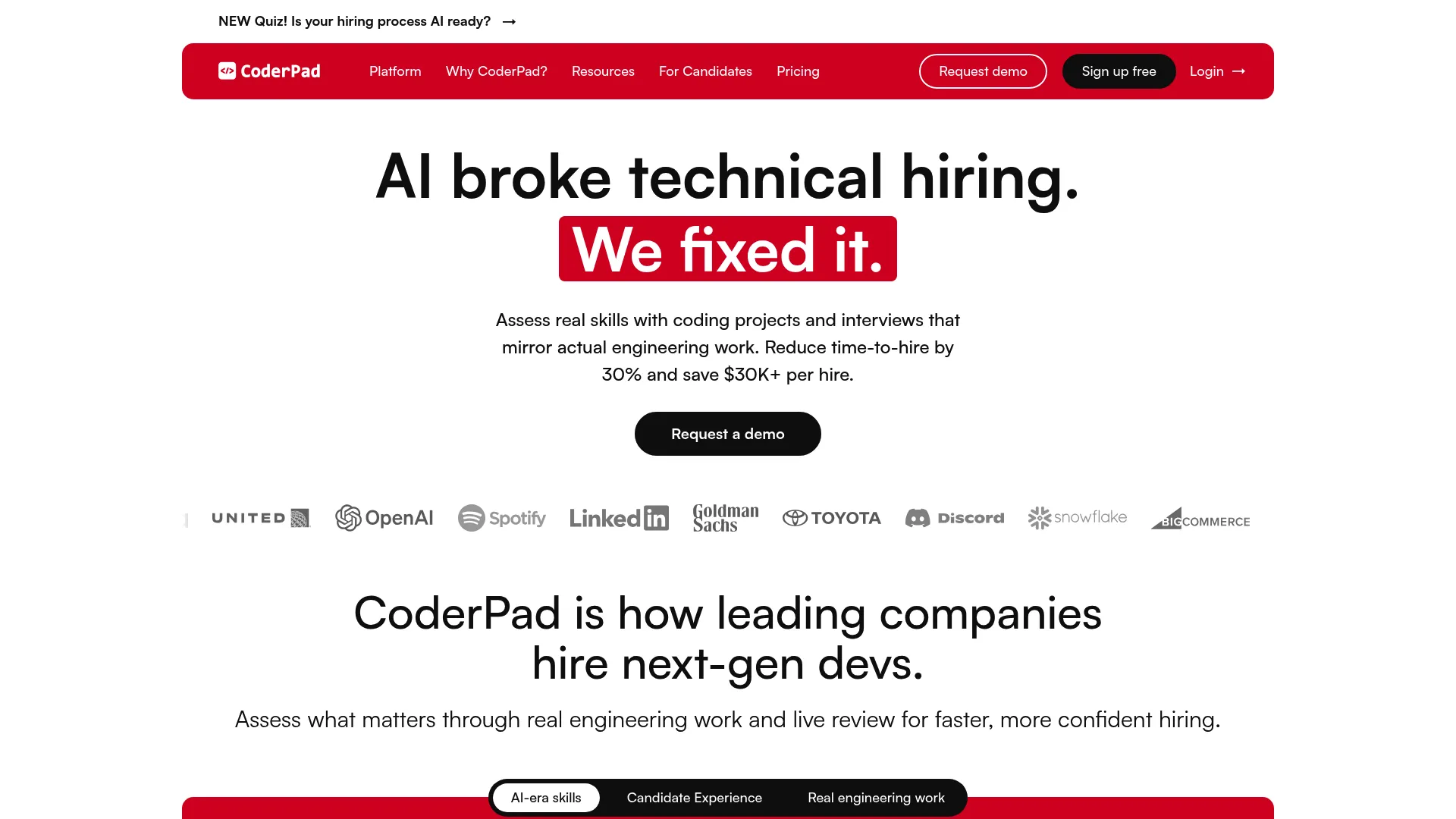
CoderPad is the shared, collaborative coding environment that many companies actually use to run live technical interviews. Practicing in the same tool you will be interviewed in removes a real source of friction: fumbling with an unfamiliar editor while also trying to solve a problem and explain your thinking.
It supports live coding, a digital whiteboard for design discussion, and take-home projects. For simulating the interviewer-and-candidate dynamic, or for practicing whiteboard interview reasoning in a modern format, CoderPad mirrors the real conditions closely.
Best for: candidates who want to practice under realistic live-interview conditions in the tool interviewers use.
Key strengths
- Live collaborative coding environment
- Digital whiteboard for design discussion
- Take-home projects with automated scoring
- Support for many languages
- Realistic simulation of the live interview setup
Why choose it: CoderPad is useful when your problem is not knowledge but performance under live conditions. Pairing with a friend in the exact editor interviewers use builds comfort that solo practice cannot.
Pricing: a free tier includes 2 tests or interviews per month. Starter is $120/month billed monthly, or $80/month billed annually ($960/year). Team is $400/month, and Custom pricing is available. G2 rates CoderPad 4.4/5.
5. interviewing.io
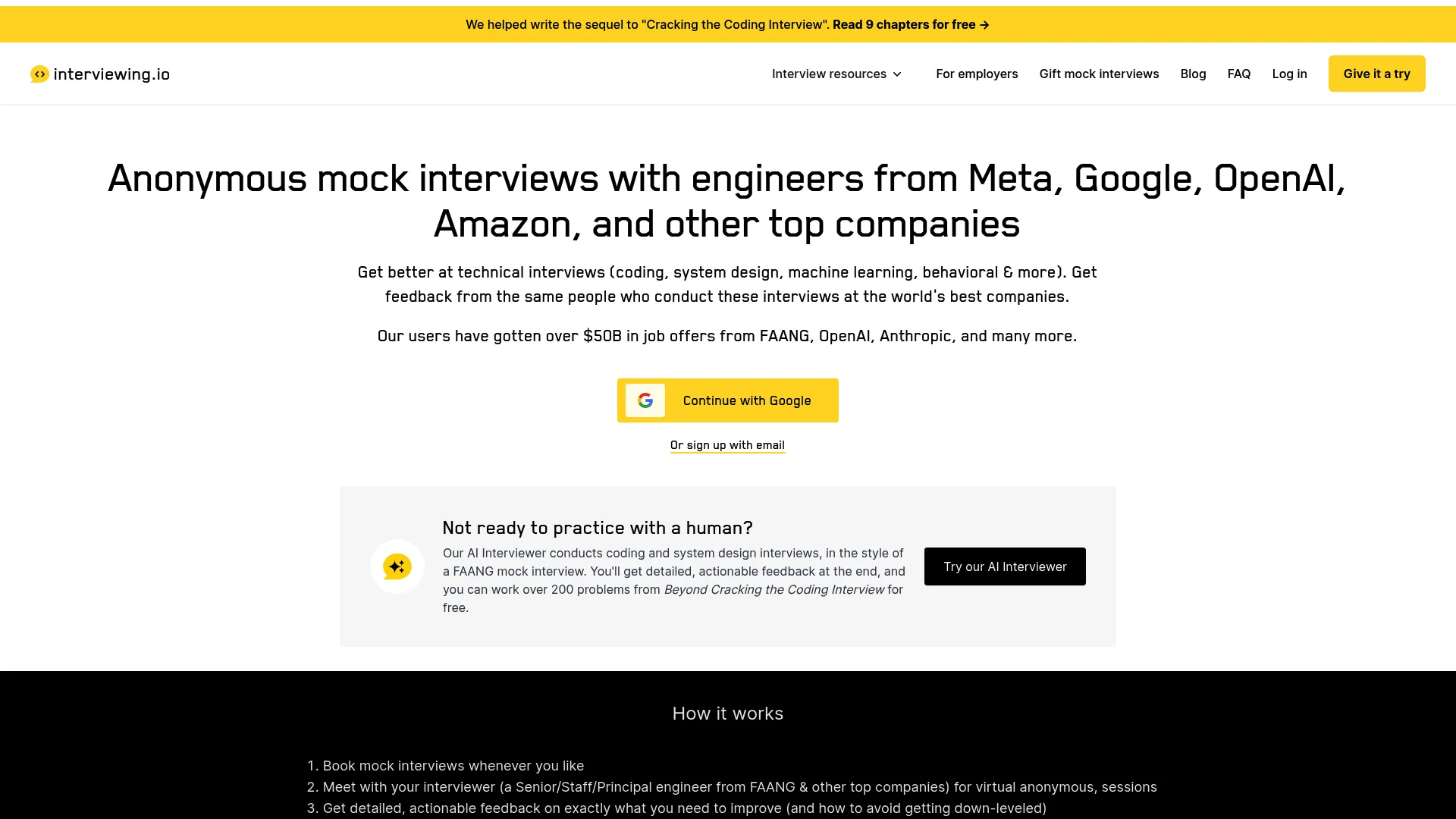
interviewing.io is built around anonymous mock interviews with senior engineers, plus an AI interviewer for coding and system design practice. The value is feedback quality and realism. Practicing against a real engineer who then tells you exactly where you lost them is different from grading yourself.
Reading a solution tells you the answer. It does not tell you that you rambled for four minutes before writing code, or that your system design answer never addressed scale. That gap is what live mock interview software closes.
Best for: candidates who need honest, senior-level feedback to pressure-test readiness before real interviews.
Key strengths
- Anonymous mock interviews with senior engineers
- AI interviewer for coding and system design
- Detailed post-interview feedback
- Job-portal access after strong practice performance
- Realistic, high-pressure interview simulation
Why choose it: self-serve practice tells you whether you can solve a problem. A live mock tells you whether you can solve it while communicating under pressure. When you are close to real interviews, that feedback is worth paying for.
Pricing: the AI interviewer is free. Premium mock interviews start at $179 and vary by subject and whether you want a company-specific interviewer. G2 rates interviewing.io 3.5/5 from a small number of reviews.
6. Exponent
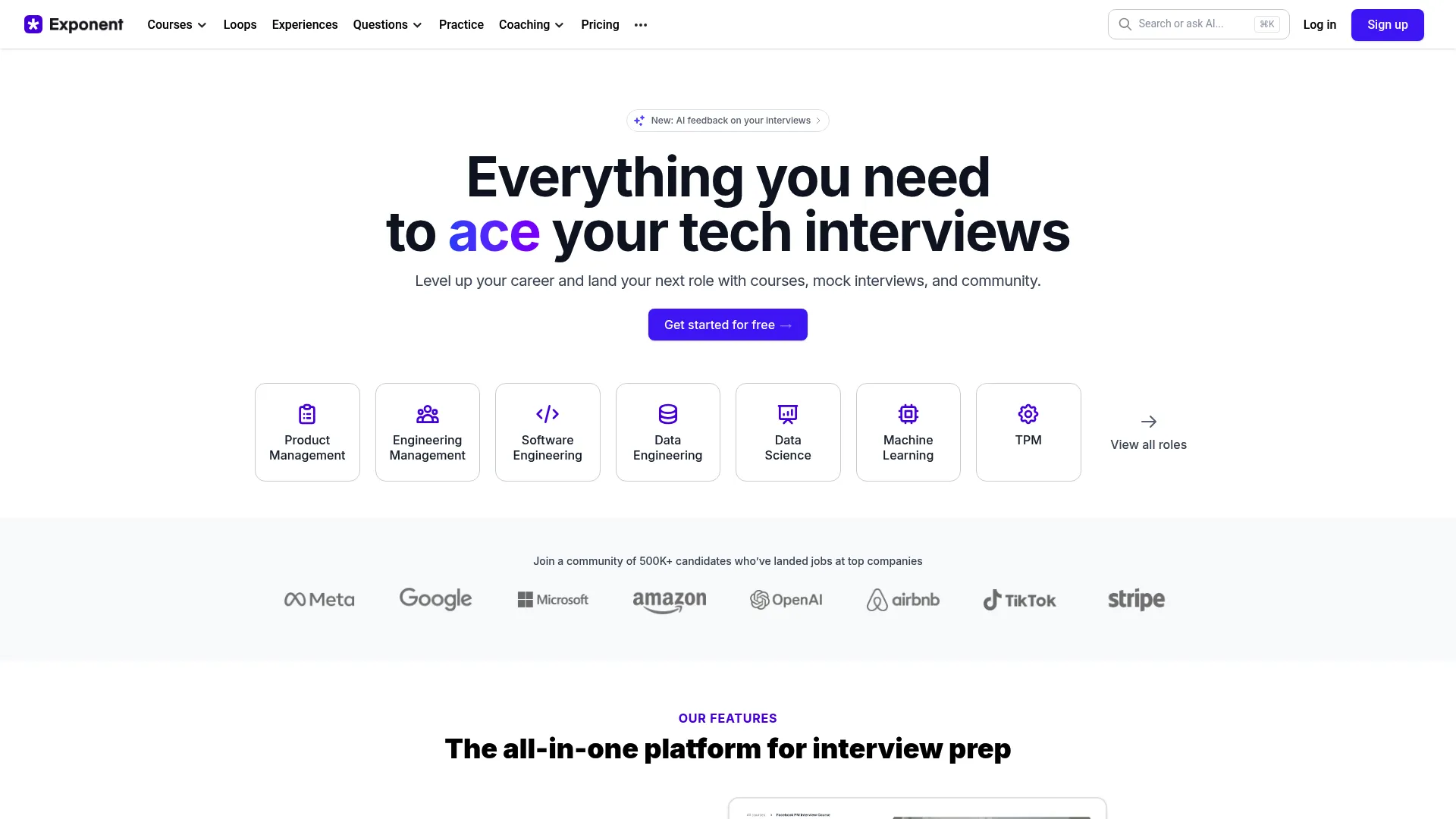
Exponent is a broader interview prep platform that goes well beyond coding drills. It offers courses, peer mock interviews, coaching, and AI practice tools across behavioral, system design, and product interviews. For candidates preparing across multiple interview types at once, it consolidates the pieces.
This is the pick when coding is not your only concern. If you need behavioral interview prep, structured system design interview prep, and a community to practice with, Exponent covers more surface area than a single-format tool.
Best for: candidates who want more than coding drills and need behavioral, system design, and product prep together.
Key strengths
- Self-paced interview prep courses across roles
- Peer mock interviews
- AI mock interview feedback
- Question banks with video and written solutions
- Community and job-referral access
Why choose it: Exponent fits candidates whose weak spots are spread across formats. It is worth choosing when behavioral and system design prep matter as much as your coding reps.
Pricing: the free plan includes sample lessons, 5 peer mocks per month, and basic referrals. Paid membership is $12/month billed annually and unlocks courses, unlimited peer mocks, AI feedback, and the full question database.
7. AlgoMonster
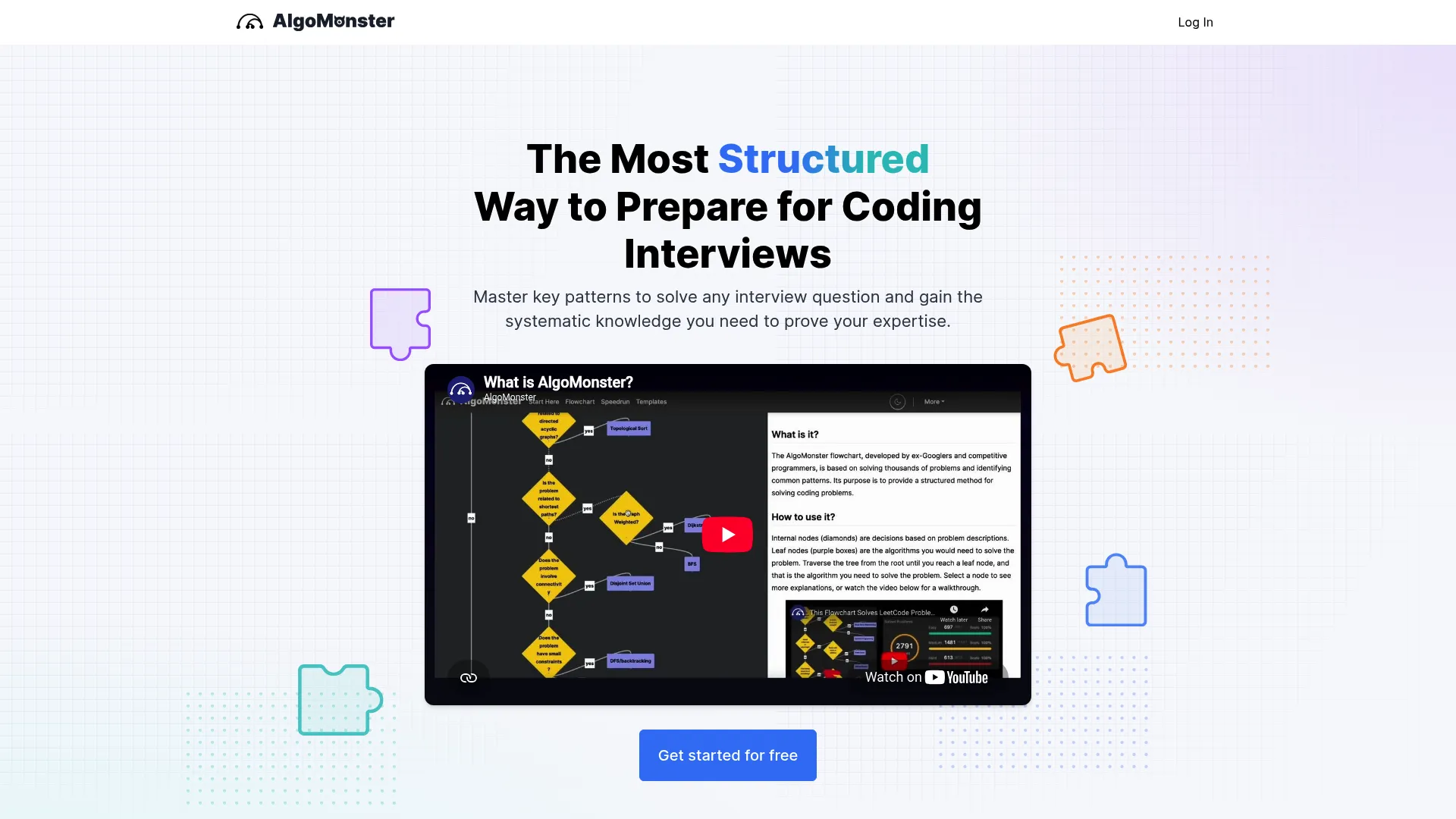
AlgoMonster is a structured, pattern-first coding prep resource. Instead of handing you thousands of problems and wishing you luck, it teaches 48 core patterns with guided explanations and a clear study flow. That structure is the whole point: it reduces time wasted wandering through unsorted problems.
For candidates who feel overwhelmed by the sheer size of a problem bank, a pattern-based curriculum builds momentum. You learn the underlying shape of a problem type, then practice variations, so recognition transfers to problems you have never seen.
Best for: candidates who want a guided, pattern-first path instead of an open-ended problem pile.
Key strengths
- 48 core coding patterns
- 325+ lessons and practice problems
- Guided explanations and a clear study flow
- Unlimited AI assistant usage
- Pattern recognition that transfers across problems
Why choose it: AlgoMonster suits candidates who learn faster with structure than with volume alone. If a huge problem bank leaves you unsure where to start, a pattern-first path gives you momentum.
Pricing: a free plan is available. Pro is $45/month billed monthly, $70 per quarter, or $119/year.
Considerations
Before you commit time or money, run your situation against this checklist.
Match the tool to the interview format
Start with the rounds you will actually face. A coding-heavy loop points you toward a problem bank or pattern curriculum. A loop with system design and behavioral rounds needs a broader platform or a dedicated mock interview service. Do not pay for breadth you will not use.
Check realism and feedback quality
Ask whether the practice environment resembles the real interview. Solving problems in a plain text box is different from coding in a shared editor while explaining yourself. Feedback matters just as much: a tool that only marks answers right or wrong tells you less than one that shows where your reasoning broke down.
Evaluate structure versus flexibility
Decide whether you need a guided roadmap or a self-serve library. If you freeze without a plan, a structured path or curated handbook keeps you moving. If you already know your gaps, an open problem bank lets you target them directly without extra scaffolding.
Look at time efficiency and maintenance
The best tool is the one that builds a repeatable routine you will actually keep. Look for study plans and progress tracking that make it easy to practice daily without re-planning every session. Time saved on deciding what to do next is time spent actually preparing.
Check pricing and access model
Match the cost to your stage and timeline. Free curated guidance and free tiers cover a lot early on. Paid subscriptions make sense when you need depth or company-specific content, and live coaching is worth the premium in the final weeks before real interviews. Combine free and paid deliberately, not by accident.
Conclusion
The mistake most candidates make is trying to use everything at once. Eleven tabs, no system. The fix is a small, deliberate stack.
Pick one structured guide to sequence your prep. Tech Interview Handbook is the strongest free choice for that. Pick one coding resource for daily reps: LeetCode for volume, AlgoMonster if you want a pattern-first path, or HackerRank if you are facing assessment-style screens. Then add one realism-and-feedback layer near the end: interviewing.io for live mock interviews, or CoderPad to rehearse in the exact editor interviewers use. If your prep spans behavioral and system design too, Exponent pulls those formats together in one place.
Three tools, chosen on purpose, beat eleven tabs opened in a panic. Start with the guide, build the daily habit, then pressure-test with feedback before the real thing. That sequence is what turns scattered effort into readiness.
FAQs
There is no single best tool, because interviews test several formats. The strongest setup combines a structured guide like Tech Interview Handbook, a coding resource like LeetCode or AlgoMonster, and a live-feedback layer like interviewing.io. Match the stack to the rounds you will actually face.
LeetCode is excellent for coding interview preparation, but coding is only one round. It does little for system design interview prep or behavioral interview prep. If your loop includes those rounds, pair LeetCode with a system design resource and a mock interview service that gives you feedback on communication.
For system design interview prep, choose a resource that teaches frameworks for scalability, tradeoffs, and reasoning through system design questions out loud. Exponent covers system design alongside behavioral and product prep, and Tech Interview Handbook includes a free system design section to start from. A live mock with a senior engineer helps you practice explaining your design under pressure.
Yes, especially in the final weeks before real interviews. Self-serve practice tells you whether you can solve a problem. A live mock tells you whether you can solve it while communicating clearly under pressure, and gives you honest feedback on where you lose the interviewer. That gap is exactly what mock interview software closes.
Build a bank of stories using the STAR method: situation, task, action, result. Prepare examples for conflict, ownership, failure, and impact, then practice delivering them out loud so they hold up to follow-up questions. Exponent and Tech Interview Handbook both offer behavioral question banks and frameworks to structure your answers.
Beginners benefit most from structure. Tech Interview Handbook gives a free end-to-end roadmap so you know what to study and when. AlgoMonster's pattern-first curriculum is a strong next step, since it teaches the underlying shapes of problems instead of dropping you into a huge unsorted bank.
Start with the rounds you will face, then work backward. Use a structured guide to sequence coding, system design, and behavioral prep across your timeline. Set a daily coding target, block time for system design frameworks, and prepare behavioral stories early. Finish with mock interviews to pressure-test everything before the real loop.
Use a few, chosen deliberately. One structured guide, one coding resource, and one mock-interview or live-coding layer cover the main formats without overwhelming you. Trying to use every interview practice tool at once splits your attention. A small, intentional stack beats a pile of half-used bookmarks.
.avif)