

You have 2,000 accounts in your CRM. You can work 40 of them well this quarter. Which 40?
Most reps answer that question with a gut feel and a stale list. They chase logos that looked promising six months ago, miss the account that just hired a new VP of Ops, and spend a full week nurturing a deal that was never going to move. The number owns you, but the signal that would tell you where to spend time is scattered across five tabs.
That is the gap target account software fills. Forrester predicts that by 2025, account-based marketing will be the primary go-to-market model for most B2B organizations, replacing traditional demand generation (MarTech Intelligence Report / Forrester, 2022). The ABM software market is projected to grow from $750M in 2021 to $2.13B by 2030 at a 12.31% CAGR (Forrester, 2022). The money is following the motion because guessing at account priority is expensive.
This guide ranks seven tools that help revenue teams identify, prioritize, and act on the accounts most likely to close.
What's inside
This guide is written for account executives and revenue teams choosing a stack for account-based selling in 2026. It covers where target account software fits, when to reach for it, and how seven tools compare head to head.
We ranked tools on four things that matter to an AE:
- ICP alignment: how well it scores accounts against your fit criteria
- Signal quality: intent, hiring, and technographic data you can act on
- Workflow fit: CRM sync, integrations, and how little it disrupts your day
- Revenue impact: whether it actually shortens cycles and lifts win rate
No feature dumps. Just what each tool is good at and who it fits.
TL;DR
- Best for account intelligence: Salesmotion, for AI-generated account briefs and 24/7 signal monitoring
- Best for intent-driven prioritization: 6sense, for predictive scoring and buyer-stage detection
- Best for ABM and sales-marketing alignment: Demandbase, for account-level advertising and orchestration
- Best for data quality and coverage: ZoomInfo, for verified contacts and org charts
- Best for fast-moving outbound teams: Apollo, for data plus sequencing in one stack
- Best for CRM-native teams: HubSpot, for account tracking inside an existing platform
- Best for execution-heavy outreach: Outreach, for account-level sequencing and deal workflow
What is target account software?
Target account software is a category of tools that help B2B revenue teams identify high-fit accounts, track buying signals, and coordinate account-level selling across sales and marketing. It sits on top of your CRM and turns a flat list of company names into a ranked, signal-rich workspace you can actually prioritize against.
Generic CRM tells you what happened. A target account platform tells you where to spend the next hour. That difference matters most in target account management, where the goal is fewer, better-fit accounts worked deeply rather than a wide net worked thin. Good account intelligence surfaces the accounts showing real activity, not just the ones you remember.
The category overlaps with account planning software and ABM platforms, but the core job is the same: apply your ICP to the market, rank by fit and intent, and give the team a shared view of each account.
Core capabilities to expect:
- Account scoring: rank accounts by firmographics, technographics, and fit
- Buying signal tracking: intent data, hiring changes, funding, and tech-stack shifts
- Contact and org mapping: who sits where, and who the real stakeholders are
- Workflow automation: triggers that fire when an account heats up
- CRM sync: two-way data flow so nothing lives in a silo
- Team coordination: shared account plans that support multi-threading
The strongest platforms combine firmographics, technographics, and intent data into a single prioritization layer. That is what lets an AE stop guessing and start working the accounts most likely to convert.
When to use target account software
Not every motion needs it. Here is where it earns its seat in the stack.
Prioritizing accounts before outreach
Your CRM has every account you ever touched. It does not tell you which ones are worth a call today. When your list is bigger than your capacity, and it always is, you need a tighter ranking than "companies in our ICP."
Target account software ranks accounts by fit and current activity, so account prioritization stops being a Monday-morning guess. You work the 40 accounts showing signal instead of the 2,000 sitting flat.
Coordinating multi-threaded deal work
Single-threaded deals stall the moment your champion goes quiet or leaves. In mid-market and enterprise cycles with 3 to 15 stakeholders, that risk is constant.
These tools map the org chart and show you who you have reached and who you have not. That visibility is the difference between a deal you can forecast and one that surprises you. Strong multi-threading is what keeps late-stage deals from evaporating.
Reacting to buying signals in real time
An account that just raised a Series B, hired a new VP in your buyer function, or added a competing tool to its stack is telling you something. The window is short.
Buying signals turn those moments into triggers. When intent spikes on a pricing page or a target account starts a new hiring push, the platform flags it and you move before your competitor does.
Comparison table
Seven tools, sorted by relevance to an AE running account-based selling. Pricing and ratings reflect verified vendor and G2 data as of mid-2026. Several enterprise tools use quote-based pricing, which is standard in this category.
| # | Product | Best for | Key differentiator | Pricing | G2 rating |
|---|---|---|---|---|---|
| 1 | Salesmotion | Account intelligence for AEs | AI account briefs and 24/7 signal monitoring | From $85/mo | 4.8/5 |
| 2 | 6sense | Intent-driven prioritization | Predictive AI and buyer-stage detection | Custom | 4.1/5 |
| 3 | Demandbase | ABM and GTM alignment | Account-based advertising and orchestration | Custom | 4.4/5 |
| 4 | ZoomInfo | Data quality and coverage | Verified contacts, org charts, intent | Custom | Not listed |
| 5 | Apollo | Fast-moving outbound teams | Data plus sequencing in one stack | Free / from $49/user/mo | 4.7/5 |
| 6 | HubSpot | CRM-native teams | Account tracking inside the CRM | Free / from $7/mo/seat | 4.4/5 |
| 7 | Outreach | Execution-heavy outreach | Account-level sequencing and deal workflow | Custom | 4.3/5 |
Best 7 target account software tools
1. Salesmotion

Salesmotion is an account intelligence platform built for B2B revenue teams that want signal monitoring and AI-assisted outreach without stitching together five tools. It watches your target accounts around the clock, drafts account briefs, and surfaces the moments worth acting on. For an AE, that means walking into a call already knowing what changed.
The platform's strength is turning raw account intelligence into something you can use before a meeting. Instead of researching a company from scratch, you get a generated brief with the recent signals, the right contacts, and a starting point for outreach. That supports both account planning and pipeline growth without the manual grind.
Best for: B2B sales teams that want account intelligence, signal monitoring, and AI-assisted outreach in one workspace.
Key strengths
- 24/7 buying-signal monitoring
- AI-generated account briefs and outreach drafts
- Verified contact data and CRM integrations
Why choose Salesmotion: If your day dies in research and tab-switching, Salesmotion collapses that into a brief you can act on. It fits AEs and small revenue teams who want intelligence and outreach in one place rather than an enterprise ABM suite.
Salesmotion pricing: The Individual plan starts at $85/mo billed monthly with cancel-anytime terms. Custom pricing is available for teams and enterprise. An API-only free tier offers 100 credits per month.
2. 6sense

6sense is a B2B revenue AI platform for sales and marketing teams that need to know which accounts are in-market before they raise a hand. Its predictive models score accounts against buyer stage and intent, so you can spend on the accounts already researching a solution like yours. It is a heavier platform aimed at teams serious about account prioritization at scale.
For revenue teams that live and die on signal quality, 6sense is built to detect intent early. The predictive scoring and dashboards give AEs and RevOps a shared view of which accounts are heating up, which supports tighter revenue operations and cleaner handoffs.
Best for: B2B teams that need account and buyer-intent intelligence for pipeline creation and prioritization.
Key strengths
- Sales Intelligence with company and contact insights
- Predictive AI model, scores, and dashboards
- Buyer-stage and intent detection
Why choose 6sense: Choose 6sense when predictive intent is the priority and you have the team to operationalize it. It fits mid-market and enterprise orgs that want to know an account is in-market before a rep ever calls.
6sense pricing: 6sense uses packaged Sales Intelligence offerings and does not publish a public numeric price. The platform lists a free "Get Started" option alongside quote-based plans that combine Sales Intelligence, data credits, and predictive AI.
3. Demandbase

Demandbase is an account-based GTM platform that coordinates sales, marketing, advertising, and data around the same target accounts. It pairs account intelligence with a B2B-native advertising engine, so marketing can warm an account while sales works it. That alignment is the point: everyone acts on one account view.
For teams where the ABM motion crosses sales and marketing, Demandbase gives account-level visibility and campaign coordination in one place. AEs see which accounts marketing is engaging, and marketing sees which accounts sales is prioritizing. The advertising DSP and intent-based targeting round out the account engagement layer.
Best for: Enterprise B2B teams that need account-based GTM coordination across sales and marketing.
Key strengths
- AI-powered account intelligence and signal analysis
- Sales and marketing playbooks for prioritization and outreach
- B2B-native advertising DSP and intent-based targeting
Why choose Demandbase: Choose Demandbase when sales-marketing alignment is the bottleneck and you need advertising, intent, and orchestration under one roof. It fits enterprise teams running a coordinated ABM program, not solo reps.
Demandbase pricing: Pricing is customized and quote-based. Demandbase One uses a platform fee plus a flat per-user fee, and the vendor directs buyers to a form for a tailored quote.
4. ZoomInfo

ZoomInfo is go-to-market intelligence software for sales, marketing, operations, and recruiting teams that need coverage and data quality first. When your account list is only as good as the contacts behind it, ZoomInfo fills the gaps with verified company and contact data plus org charts. It is the tool you reach for when data accuracy is the constraint.
For an AE, the value is fewer wasted touches. Verified contacts, intent data, and workflow automation mean you spend time on real stakeholders instead of chasing dead emails. The org-chart depth also supports multi-threading, since you can map a buying committee before you start working it.
Best for: B2B teams that need sales intelligence and prospect data.
Key strengths
- Verified company and contact data
- Intent and buying-signal data
- Workflow automation and integrations
Why choose ZoomInfo: Choose ZoomInfo when data quality and account coverage are the priority and enrichment is your bottleneck. It fits teams that need depth and accuracy across a large account universe.
ZoomInfo pricing: ZoomInfo does not publish pricing on its site and directs buyers to contact sales for a quote. Plans are tailored by data volume, seats, and modules.
5. Apollo

Apollo is an AI-powered go-to-market platform that combines a B2B database with sales engagement, so fast-moving teams can research and sequence in one place. Instead of pulling data from one tool and outreach from another, Apollo keeps prospecting and sending under one login. For SMB and mid-market AEs, that consolidation is the appeal.
The all-in-one design makes Apollo strong for sales prospecting at speed. You find the account, load the contacts, and drop them into a sequence without leaving the app. The AI assistant and automation help with drafting and prioritization, which keeps outbound-heavy teams moving.
Best for: B2B sales and revenue teams that want prospecting, outreach, and enrichment in one platform.
Key strengths
- B2B contact and company database
- Sales engagement and sequencing
- AI assistant and automation
Why choose Apollo: Choose Apollo when you want one affordable stack for data and outreach and you value speed over deep enterprise ABM. It fits scrappy teams and SMB AEs who need to move fast without a big budget.
Apollo pricing: Apollo offers a Free plan (free forever), a Basic plan at $49/user/month billed annually, a Professional plan at $79/user/month billed annually, and an Organization plan at $119/user/month billed annually with a three-user minimum.
6. HubSpot
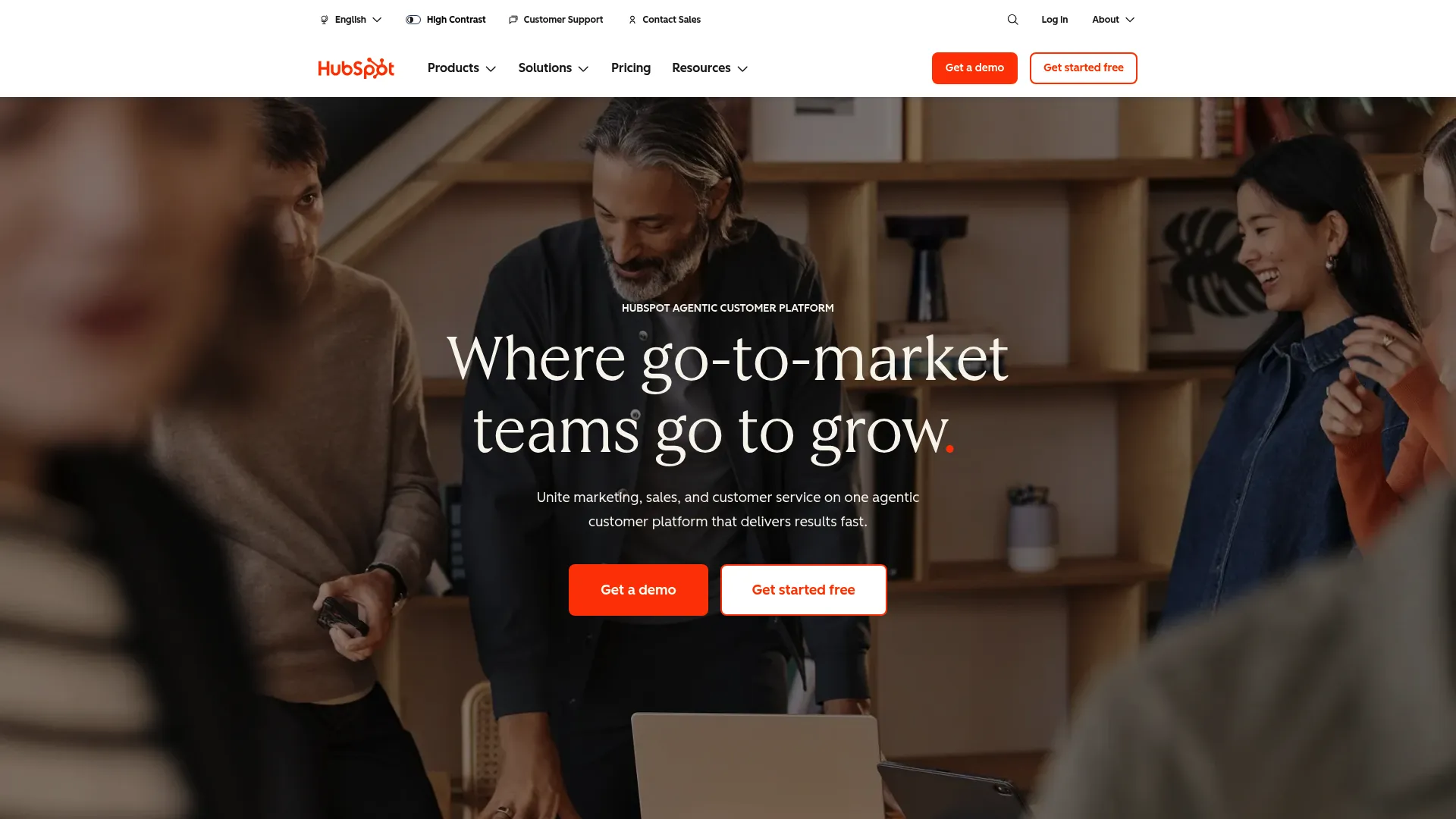
HubSpot is a customer platform with CRM, marketing, sales, service, content, data, and revenue software. For teams already inside HubSpot, target account tracking lives where deals and contacts already sit, so there is no new silo to manage. It handles account tracking, deal management, and reporting without adding another login.
The practical case for HubSpot is workflow fit. If your CRM is your system of record, running account tracking inside it keeps everything connected. Smaller teams get account-level reporting and deal management without buying a standalone ABM platform, and the free tier lets you start before committing budget.
Best for: Teams that want an all-in-one CRM platform that can start free and scale across marketing, sales, service, content, data, and revenue ops.
Key strengths
- Marketing automation and lead generation
- Sales, service, content, data, and revenue hubs
- Free CRM and free tools
Why choose HubSpot: Choose HubSpot when you are already on the platform and want account tracking without adding tools. It fits SMB and mid-market teams that value CRM-native simplicity over specialized account intelligence.
HubSpot pricing: HubSpot offers a Free plan at $0/mo, a Starter plan from $7/mo/seat, a Professional plan from $800/mo, and an Enterprise plan from $3,600/mo. Professional and Enterprise include bundled core seats and onboarding fees.
7. Outreach
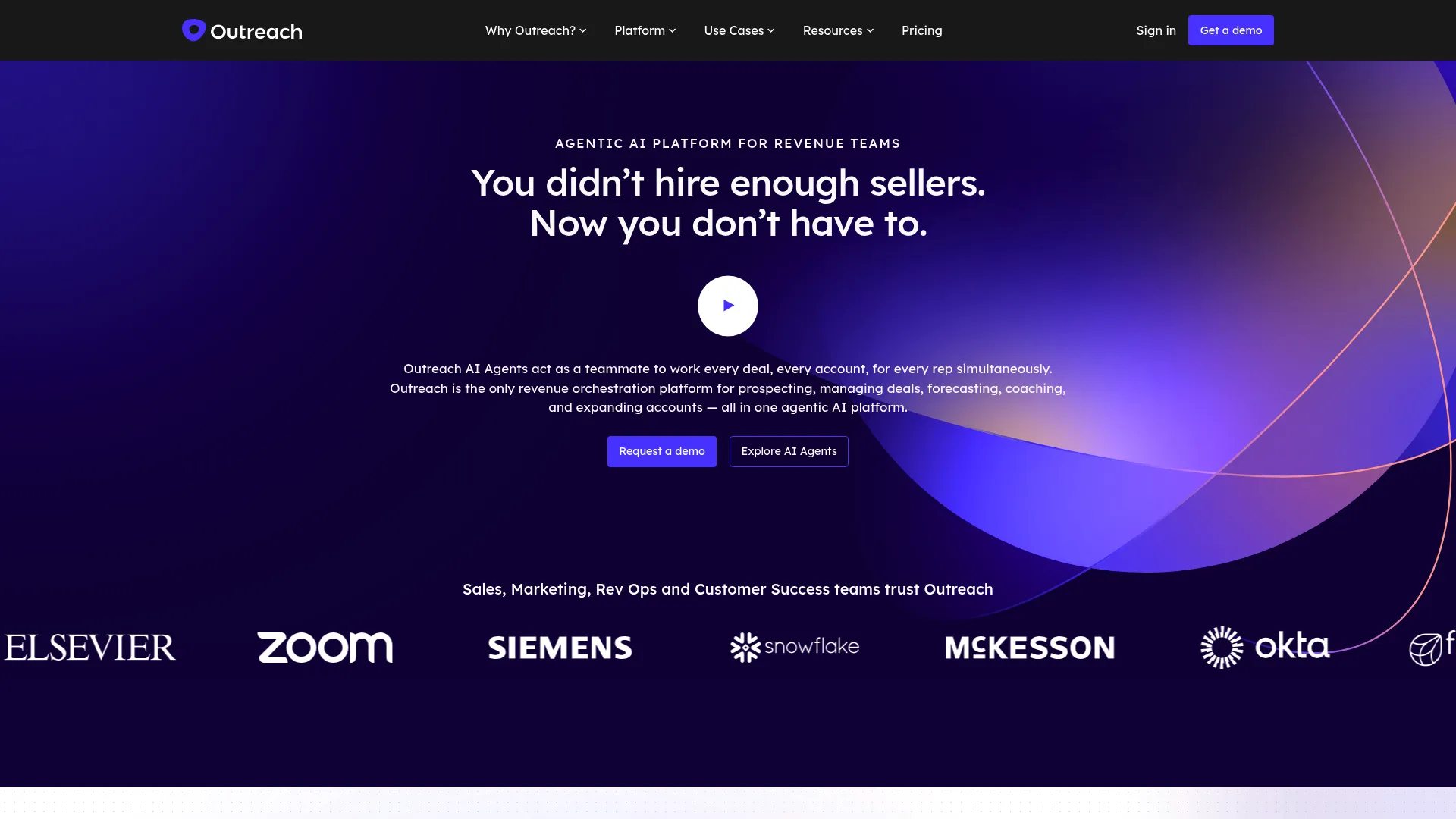
Outreach is an AI revenue workflow platform for sales teams focused on execution. Where other tools on this list lead with intelligence, Outreach leads with doing: account-level sequencing, engagement, and deal management that keep a coordinated outreach motion running. It supports account-based selling by making the actual contact work consistent and trackable.
For AEs who already know their target accounts and need to work them systematically, Outreach is built for the execution layer. Sequences run across a buying committee, deal management keeps next steps visible, and conversation intelligence surfaces what happened on calls. It is the engine that carries account-based selling through to close.
Best for: Mid-market and enterprise sales teams that need outbound sequencing and revenue workflow automation.
Key strengths
- Sales engagement and sequencing
- Deal management
- Conversation intelligence
Why choose Outreach: Choose Outreach when execution is the gap, not intelligence. It fits teams that have their account list sorted and need coordinated, trackable outreach across stakeholders to move deals.
Outreach pricing: Outreach does not publish public pricing and directs buyers to request a quote. Plans are tailored to team size and required workflow features.
Considerations before you buy
A demo looks great. The stack you actually live in is what matters. Run every tool through these before you commit.
ICP and scoring fit
The scoring model is only useful if it matches how you define a good account. Check whether you can weight firmographics, technographics, and intent to reflect your real ICP. A model you cannot tune is a black box that ranks accounts you would never work.
Signal quality and freshness
Intent data ages fast. Ask how often signals refresh, where the data comes from, and whether it covers the triggers you care about, like hiring, funding, and tech-stack changes. Stale buying signals are worse than none because they send you toward cold accounts with false confidence.
CRM integrations and workflow fit
If the tool does not sync cleanly with your CRM, it becomes another tab nobody opens. Confirm two-way sync, field mapping, and whether triggers can fire inside the workflow your reps already use. Adoption dies when the tool sits outside the daily motion.
Multi-threading and team coordination
Enterprise deals need shared account plans, not solo notes. Check whether the platform maps org charts, shows contact coverage, and lets a team see who has reached whom. That visibility is what protects a deal when a champion goes quiet.
Revenue impact you can measure
The point is win rate, cycle length, and forecast accuracy, not activity counts. Ask each vendor how customers measure impact and whether the analytics tie back to closed revenue. If a tool cannot show its effect on the number, it is hard to justify.
Conclusion
The right pick depends on your motion, not on which vendor has the loudest pitch.
If you want account intelligence and AI-drafted briefs without a heavy suite, Salesmotion is the sharpest fit for individual AEs and small teams. If predictive intent is your priority and you have the team to run it, 6sense leads on signal detection. For coordinated ABM across sales and marketing, Demandbase brings advertising and orchestration together. ZoomInfo wins when data quality is the constraint, Apollo when you want data and outreach in one affordable stack, HubSpot when you are already CRM-native, and Outreach when execution is the gap.
Start with your biggest bottleneck. If you cannot tell which accounts to work, buy intelligence. If you know the accounts but cannot work them consistently, buy execution. Shortlist two tools, run them against your real account list for 30 days, and measure cycle length and win rate before you sign.
Whichever direction you go, pair account prioritization with a way to show buyers your product early. Start your journey with Guideflow today!
FAQs
It helps revenue teams identify high-fit accounts, track buying signals, and coordinate account-level selling. Instead of working a flat CRM list, you get a ranked, signal-rich view of which accounts deserve attention now. AEs use it to prioritize outreach, map stakeholders, and time their moves to real account activity.
A CRM is your system of record. It stores contacts, deals, and history but does not tell you where to spend the next hour. Target account software sits on top of that data and adds scoring, intent signals, and prioritization, turning a static list into an action queue. Most teams run both, with the account platform syncing back into the CRM.
Account scoring, buying signal tracking, contact and org mapping, workflow automation, and clean CRM integrations. The scoring has to match your ICP, and the signals have to be fresh enough to act on. For AEs working complex deals, org mapping that supports multi-threading is often the deciding feature.
It can, when it changes where reps spend time. Working fewer, higher-fit accounts with real intent tends to lift win rate and shorten cycles versus spraying a wide list. The lift comes from prioritization and timing, not from the tool alone, so measure cycle length and win rate against a baseline before crediting the software.
No. Enterprise teams use it most because their cycles involve 8 to 15 stakeholders, but mid-market and even SMB teams benefit from prioritization and signal tracking. The difference is depth: enterprise teams lean on org mapping and orchestration, while smaller teams often want data and outreach in one affordable stack.
The platform monitors public and behavioral data, then flags moments that suggest an account is in-market. Common signals include intent spikes on relevant content, new funding, leadership hires in your buyer function, and tech-stack changes. When a signal fires, the tool surfaces it or triggers a workflow so a rep can act inside the window.
CRM sync is non-negotiable, since that is where deals live. Beyond that, prioritize email, calendar, sales engagement, and enrichment integrations so the account data flows into the tools reps already use. Clean two-way sync matters more than a long integration list, because adoption depends on the tool fitting the daily workflow.
Account intelligence tools tell you which accounts to work and why. Sales engagement tools help you actually work them at scale through sequencing and outreach. If you cannot tell which accounts to prioritize, start with intelligence. If you know the accounts but struggle to work them consistently, start with engagement. Many revenue operations teams eventually run both and connect them through the CRM.


.avif)