Your sustainability report is due in six weeks. The emissions data lives in three spreadsheets, two of which have conflicting numbers. Finance owns the energy figures, operations owns the supplier data, and nobody can tell you which version the board saw last quarter.
Then the assurance team asks a question you dread: where did this number come from?
That question is why the ESG reporting software market keeps growing. Verdantix valued it at USD 1.3 billion in 2023 and projects it to exceed USD 5.6 billion by 2029. The pressure is regulatory, not optional. CSRD, ISSB, and SEC-adjacent rules now demand disclosures backed by evidence, not estimates scraped together the week before a deadline.
Spreadsheets fail here for one reason. They hold numbers but not the trail behind them. When an auditor asks for source documents, version history, and approval records, a workbook has none of that. Audit-ready sustainability software exists to keep every figure traceable back to its origin, so board confidence and regulator scrutiny stop being a scramble.
What's inside
This guide is for founders, CFOs, finance leaders, and sustainability leads who need a system for collecting ESG data, validating it, and producing disclosures that survive an audit. We picked tools based on the criteria that matter when scrutiny arrives.
- Audit readiness and traceability: evidence linkage, data lineage, and approval records
- Framework and regulation coverage: CSRD, ISSB, GRI, SASB, and related standards
- Collaboration and governance: roles, approvals, and a single source of truth
- Carbon accounting support: Scope 1, 2, and 3 emissions tracking depth
- Integrations and data collection: connections to source systems and reporting outputs
TL;DR
- Best for enterprises with complex reporting: Workiva, for connected reporting that ties sustainability data to broader corporate disclosure
- Best for sustainability-first data teams: Novisto, for structured ESG data management and disclosure workflows
- Best for governance-heavy buyers: Diligent, for ESG tied to board oversight and GRC
- Best for mid-market and private markets: Novata, for a faster path to structured ESG reporting
- Best for carbon plus reporting: Persefoni or Sphera, when emissions accounting is the core requirement
- Best for reporting plus stakeholder communication: FigBytes, for dashboards and ESG storytelling
What is sustainability reporting software
Sustainability reporting software is a system that collects environmental, social, and governance data, validates it, tracks the evidence behind each figure, and produces audit-ready disclosures aligned to reporting frameworks. It replaces spreadsheet-driven reporting with governed workflows that keep every number traceable.
Most buyers use the terms ESG reporting software, ESG management software, and sustainability software interchangeably. The job is the same: turn scattered data into a defensible report a board or regulator can trust. Below is what an ESG platform typically does.
Key capabilities
- Data collection from teams and source systems
- Centralized ESG metric management across the organization
- Audit trail and evidence linkage back to source
- Reporting for CSRD, ISSB, GRI, SASB, and related standards
- Scope 1, Scope 2, and Scope 3 emissions tracking
- Workflow and approval management with clear roles
- Output formats for board packs and regulatory disclosure
Related concepts to distinguish
A few adjacent categories get confused with sustainability reporting software, and the distinction matters when you scope a purchase.
- Sustainability reporting software vs carbon accounting software: Carbon accounting tools specialize in measuring and modeling emissions across Scope 1, 2, and 3. Sustainability reporting software covers the broader disclosure job, including social and governance metrics, though many platforms now do both.
- Sustainability reporting software vs GRC software: Governance, risk, and compliance platforms manage enterprise risk and controls. ESG data management software focuses on the sustainability disclosure workflow, though governance-first vendors increasingly overlap.
- Sustainability reporting software vs spreadsheets and BI dashboards: Spreadsheets and BI tools display data. They do not maintain the audit trail, evidence linkage, and approval controls that a regulator-ready report demands.
When to use sustainability reporting software
Prepare for mandatory disclosures
CSRD, ISSB, and SEC-adjacent rules create hard deadlines with real consequences. When a disclosure has to survive external assurance, you need a system that links every figure to its source document and approval record. A company entering its first CSRD reporting cycle uses the software to map data points to the standard and prove each one, rather than reconstructing evidence under deadline pressure.
Centralize ESG data across teams
Sustainability, finance, legal, and operations each own a piece of the report. That fragmentation is where numbers drift and versions conflict. ESG data management software gives every team a single place to submit, validate, and approve their inputs. When the CFO signs off on the energy figures and operations updates supplier data, everyone works from the same source of truth instead of emailing workbooks.
Replace spreadsheet-driven reporting
Recurring reporting cycles expose the weakness of spreadsheets: version drift, manual approvals, and missing evidence. A team running quarterly ESG updates uses the software to automate approval routing and keep a permanent audit trail. When the same report comes due next quarter, the structure and evidence are already in place, so the cycle gets faster instead of starting from zero.
Comparison table
The table below helps you compare the seven platforms on what matters most: reporting depth, audit readiness, and carbon accounting support. Pricing across this category is largely subscription-based and quote-driven, so treat the pricing column as a starting point for a sales conversation.
| # | Product | Best for | Key differentiation | Pricing | G2 rating |
|---|---|---|---|---|---|
| 1 | Workiva | Enterprises needing connected, audit-ready reporting | Sustainability tied to broader corporate and financial reporting | Solution-based subscription; contact sales | 4.5/5 |
| 2 | Novisto | Large orgs needing ESG data management | Data lineage, audit trails, and disclosure workflows | Subscription; contact sales | 4.5/5 |
| 3 | Diligent | Governance-heavy buyers | ESG tied to board oversight and GRC | Tiered; contact sales | 4.4/5 |
| 4 | Novata | Private markets and mid-market teams | Faster path to structured ESG reporting | Subscription; contact sales | Not listed |
| 5 | Persefoni | Carbon-first reporting | Free Pro plan for Scope 1 to 3 carbon accounting | Free Pro plan; Advanced by demo | 4.8/5 |
| 6 | Sphera | Large environmental operations | Integrated EHS, sustainability, and product compliance | Contact sales | 4.0/5 |
| 7 | FigBytes | Reporting plus stakeholder communication | Dashboards and ESG storytelling | Contact sales | 4.0/5 |
The main tradeoff: enterprise platforms like Workiva and Sphera bring deep governance and breadth but expect a heavier implementation, while carbon-forward options like Persefoni get you accounting depth faster with a free entry point.
Best 7 sustainability reporting software tools for 2026
1. Workiva
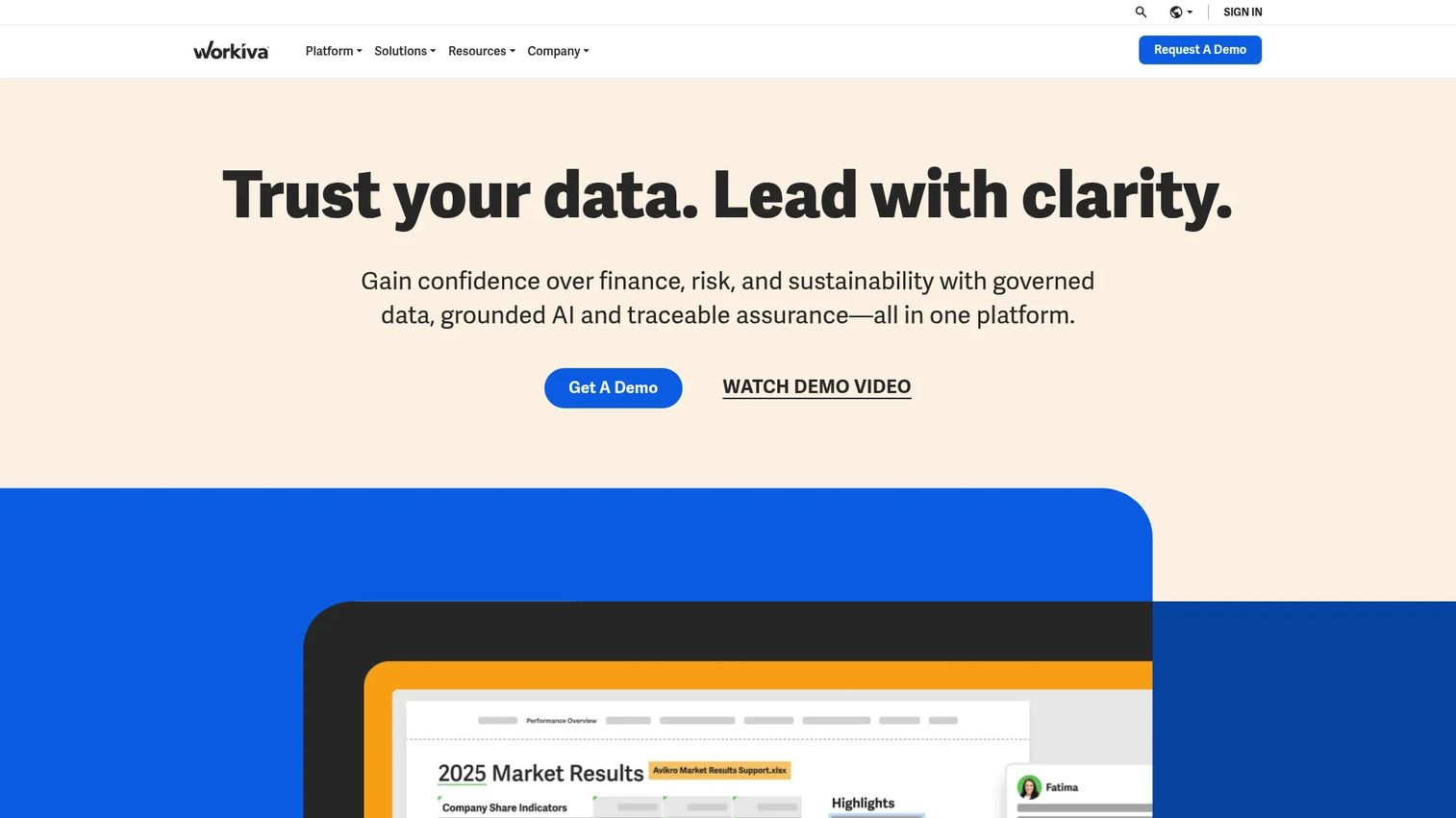
Workiva is a cloud-based platform for reporting, compliance, and analysis, built around linked documents, spreadsheets, and presentations. Its sustainability reporting sits alongside financial and regulatory reporting, so the same governed data flows into every disclosure. For enterprises that already run financial reporting through a controlled system, that connection is the whole point.
Best for: Enterprises that need board-ready, audit-friendly sustainability reporting tied to broader corporate reporting workflows.
Key features
- Linked documents, spreadsheets, and presentations
- Workflow automation with Processes
- Workiva AI and Intelligent Search
- Audit trail and change tracking across reports
- Framework and disclosure support for ESG standards
Why choose Workiva: It fits organizations where sustainability reporting must sit next to financial reporting and assurance, with process rigor and traceability as the priority. If your report needs the same controls as your 10-K, this is the category leader.
Workiva pricing: Workiva uses solution-based subscription pricing determined by expected use of each solution, with additional fees for document setup and XBRL tagging services. Contact their sales team for a quote.
Workiva holds a G2 rating of 4.5/5.
2. Novisto
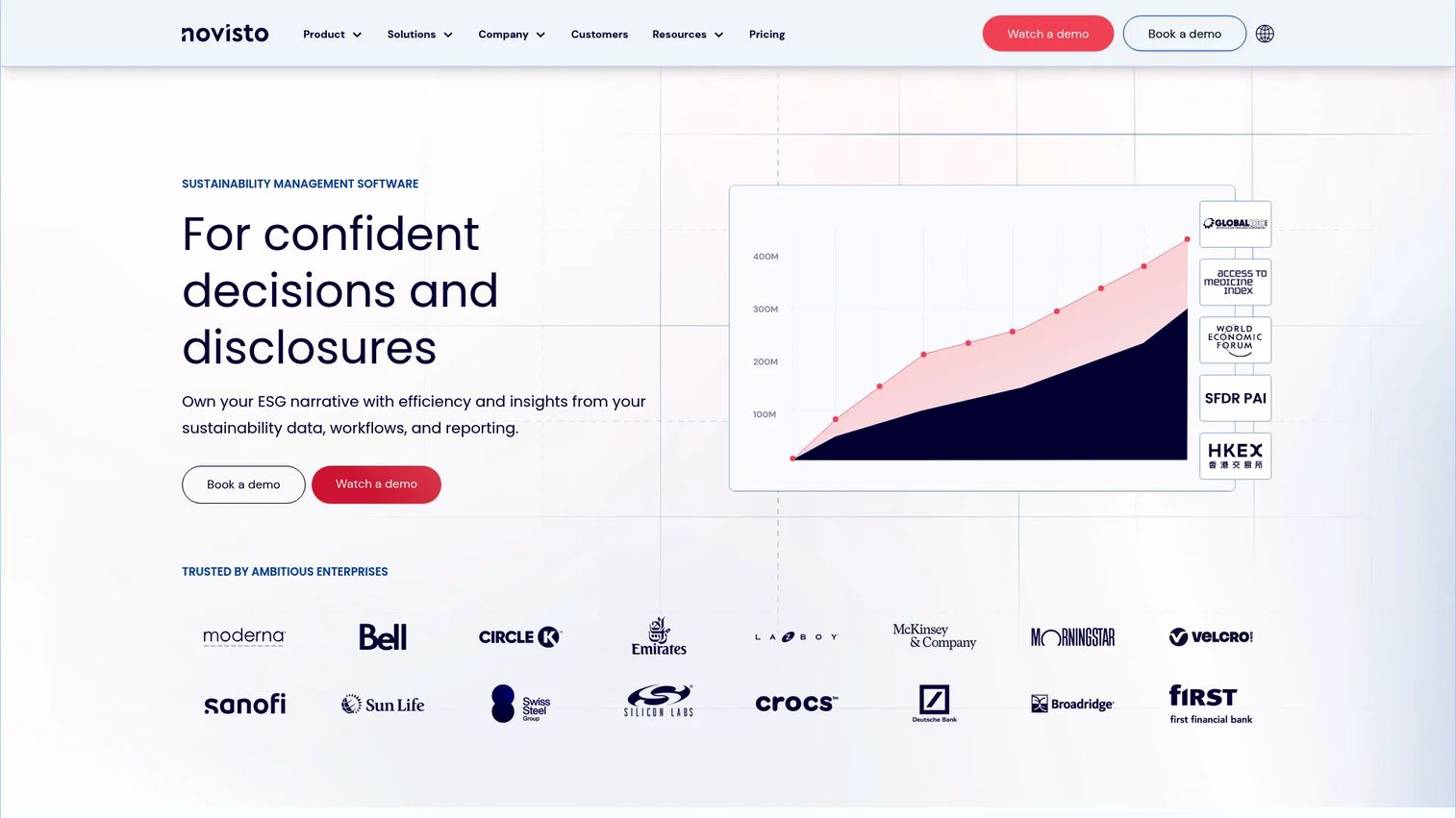
Novisto is enterprise ESG data management and reporting software focused on structured data collection, disclosure workflows, and reporting efficiency. It centralizes ESG metrics and keeps a data lineage trail behind each figure, which is exactly what an assurance team wants to see. For sustainability-first teams, it delivers reporting depth without the weight of a full corporate reporting suite.
Best for: Teams that want sustainability reporting with structured ESG data management and multi-framework support.
Key features
- Centralized ESG data collection and management
- Audit trails, approval workflows, and data lineage
- Carbon accounting and framework-ready reporting
- Multi-framework disclosure support
- Collaboration and approval routing
Why choose Novisto: It wins for teams that want a focused ESG data management workflow and clean evidence traceability, rather than a broad reporting suite they will only half use. The data lineage feature is the standout for audit prep.
Novisto pricing: Novisto uses subscription-based pricing. Public numbers were not visible on the accessible pricing pages, so contact their team for a demo and quote.
Novisto holds a G2 rating of 4.5/5.
3. Diligent
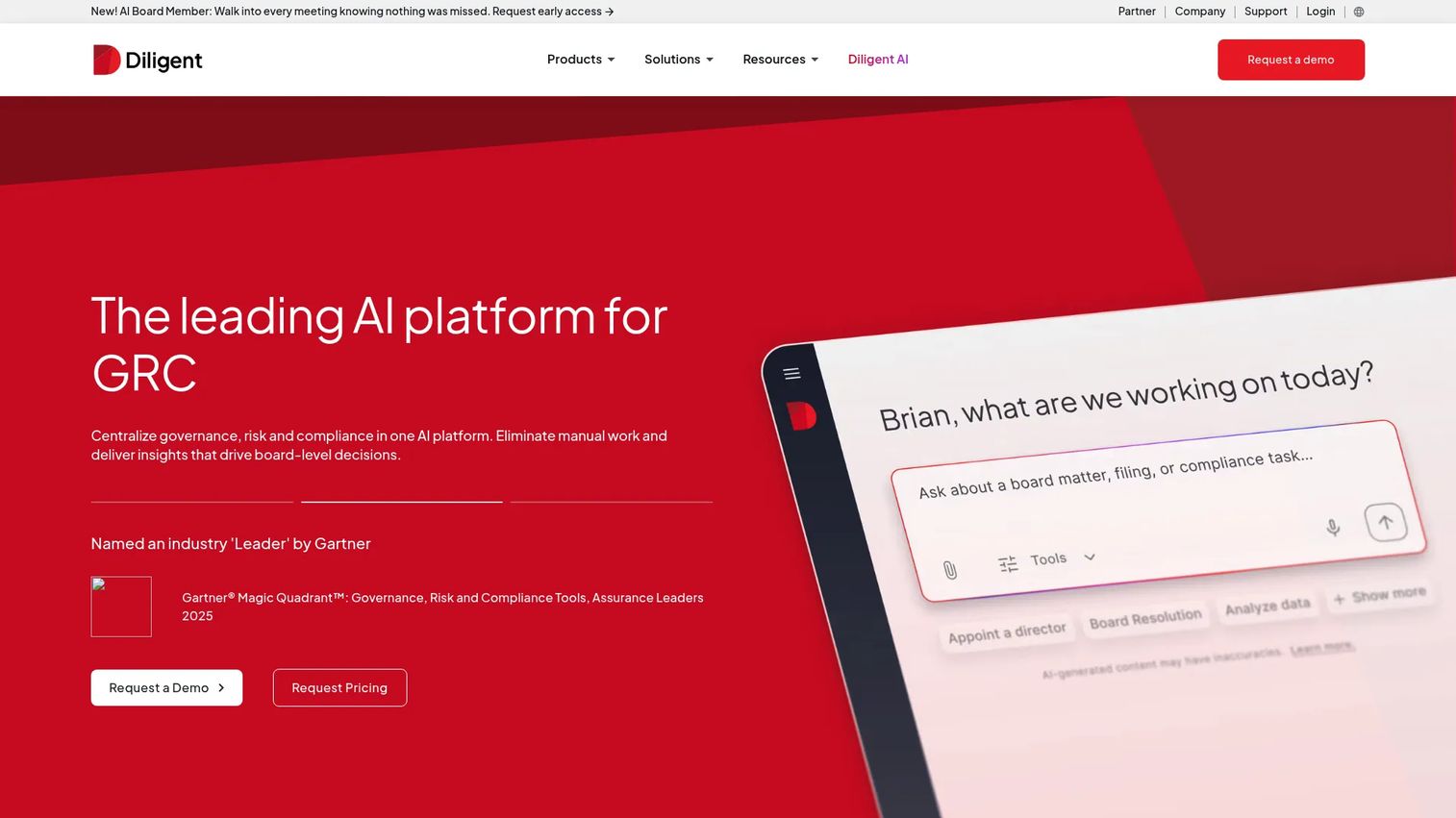
Diligent is an AI-powered GRC platform spanning governance, risk, audit, compliance, and board management. Its sustainability reporting connects directly to board oversight, so ESG data lands in the same place directors already make decisions. For buyers who treat ESG as a governance matter rather than a standalone report, that alignment matters.
Best for: Organizations that want ESG reporting tied closely to governance, risk, and board reporting.
Key features
- Centralizes board and GRC activities in one AI-powered platform
- Automates board materials, summaries, and decision workflows
- Supports governance, compliance, risk, and audit use cases
- Sustainability data collection and controls
- Board-ready reporting outputs
Why choose Diligent: It is strongest for buyers who need sustainability reporting inside a broader governance motion, not as an isolated silo. If your board already runs on Diligent, ESG reporting fits naturally.
Diligent pricing: Diligent uses tiered pricing tailored to organization size and stage of growth. Pricing is not displayed publicly, so request a quote through their site.
Diligent holds a G2 rating of 4.4/5.
4. Novata
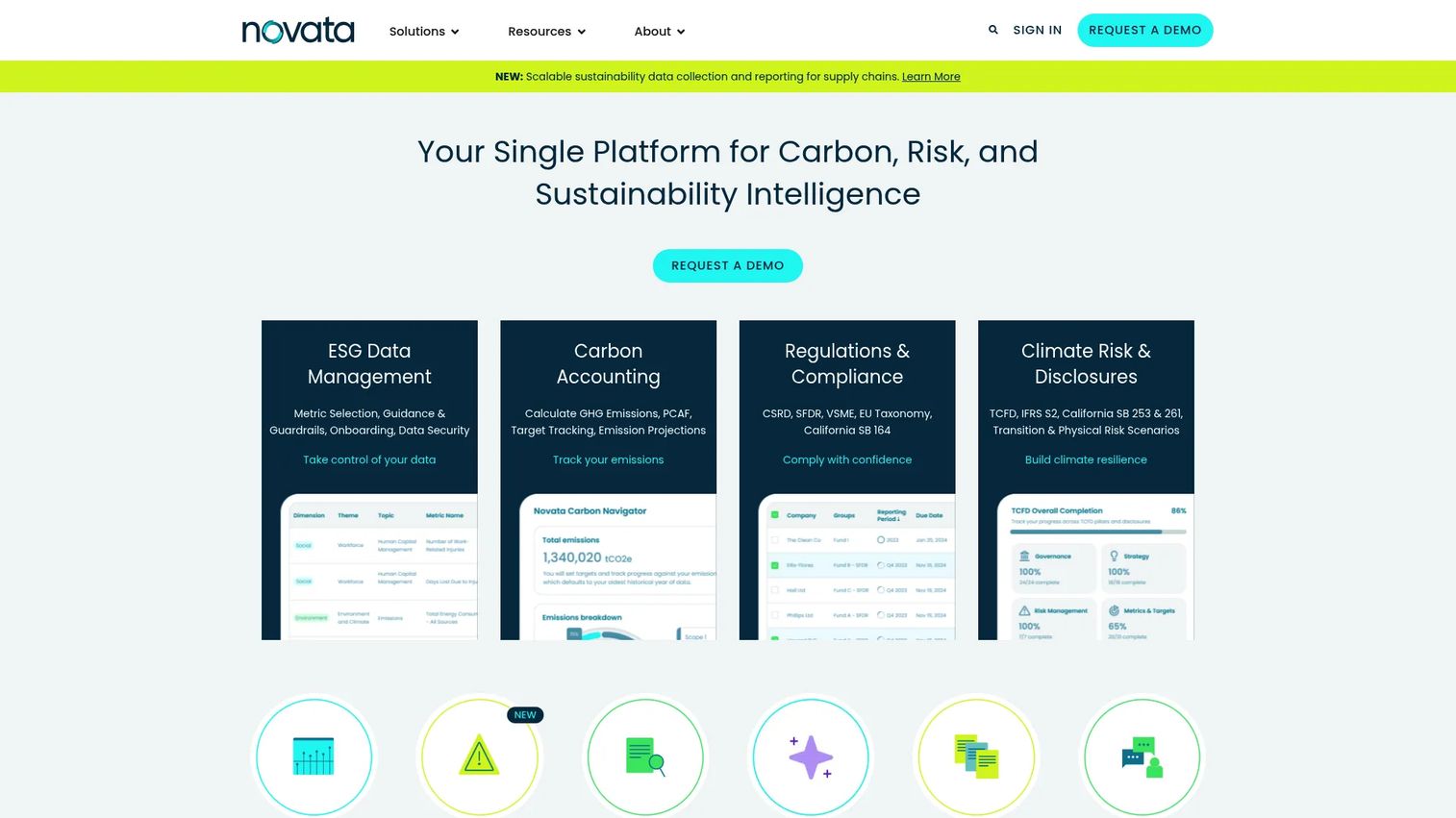
Novata is a private-markets sustainability data platform covering ESG, carbon, risk, and reporting workflows. It is built to get teams structured fast, with metric selection guidance and guardrails that reduce the operational drag of a heavy enterprise rollout. For private market investors and their portfolio companies, it maps directly to how they actually report.
Best for: Mid-market and private-market teams that need faster implementation and less operational overhead.
Key features
- ESG data management with metric selection, guidance, and guardrails
- Carbon accounting for GHG emissions, PCAF, target tracking, and projections
- Regulations and compliance support for CSRD, SFDR, VSME, EU Taxonomy, and California rules
- Reporting workflows and benchmarking
- Collaboration and onboarding support
Why choose Novata: It fits buyers who want a cleaner path to reporting without a long enterprise implementation, especially across private markets. The built-in guidance shortens the learning curve for teams new to structured ESG data.
Novata pricing: Novata uses a subscription-based, contact-sales model. Pricing wasn't available. A demo needs to be requested to get a quote.
Novata does not have a listed G2 rating at the time of writing, though it holds a 4.8/5 on Capterra.
5. Persefoni
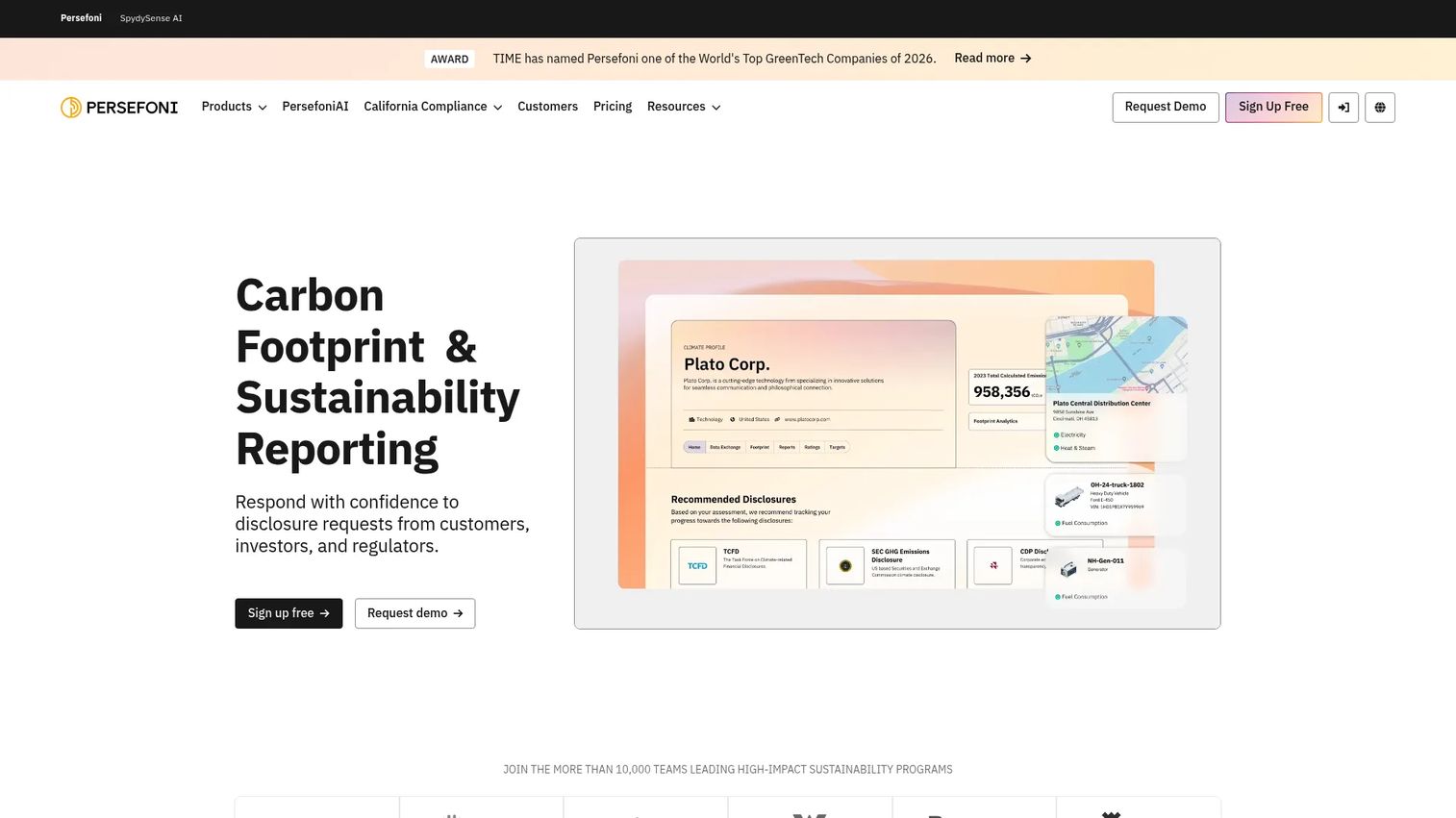
Persefoni is a carbon accounting and sustainability management platform for measuring, reporting, and decarbonizing emissions. It leads with carbon depth across Scope 1, 2, and 3, and pairs that with a report builder for disclosure. When emissions accounting is your core reporting pain, Persefoni treats it as the main event, not a side feature.
Best for: Teams prioritizing Scope 1, 2, and 3 emissions tracking alongside sustainability reporting.
Key features
- Free Pro plan for Scope 1 to 3 carbon accounting
- Sustainability Report Builder and GHG Metrics Reports
- Advanced plan with decarbonization management
- Integrations and security controls on Advanced
- Framework-aligned disclosure support
Why choose Persefoni: It is a strong fit when emissions accounting is the central requirement rather than one line item in a broader report. The free entry point also lowers the risk of a first purchase.
Persefoni pricing: Persefoni Pro is a free self-service plan for Scope 1 to 3 carbon accounting. Persefoni Advanced is a demo-based enterprise plan with decarbonization management and added integrations.
Persefoni holds a G2 rating of 4.8/5.
6. Sphera
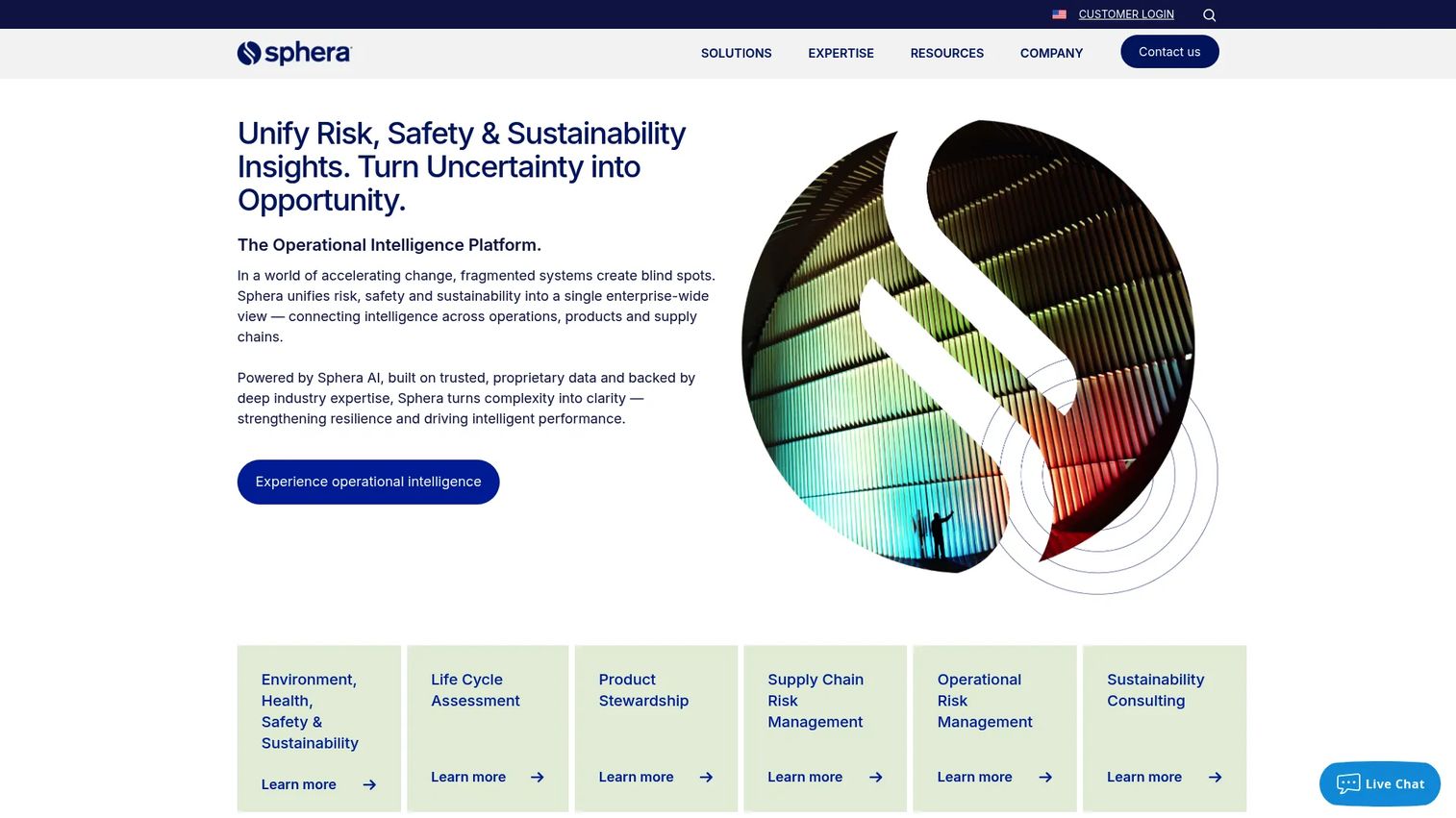
Sphera is an enterprise software and data platform for operational risk, safety, sustainability, and product stewardship. Its environmental credibility runs deep, with life cycle assessment and chemical compliance tools alongside ESG reporting. For organizations with heavy environmental operations, that breadth handles complexity a pure reporting tool cannot.
Best for: Large organizations that need environmental data management plus reporting control.
Key features
- Operational risk, safety, and sustainability management
- Life cycle assessment and product stewardship tools
- Supply chain risk management and chemical compliance
- ESG reporting and auditability
- Enterprise governance and controls
Why choose Sphera: It fits organizations with heavier environmental operations complexity and reporting obligations that span EHS, product compliance, and sustainability. If your reporting burden extends past disclosure into operational risk, the breadth pays off.
Sphera pricing: Sphera works on a demo and contact-sales model. No pricing was available for the core product family, so a quote needs to be requested through their site.
Sphera holds a G2 rating of 4.0/5.
7. FigBytes
FigBytes is sustainability and ESG software for managing data, reporting, and stakeholder engagement. It pairs reporting workflows with dashboards and visualization, so ESG progress is easy to present internally, not just file externally. For teams that need to communicate outcomes as much as report them, that emphasis stands out.
Best for: Teams that need reporting plus strong visualization and communication of ESG outcomes.
Key features
- Carbon accounting and emissions management
- Climate disclosure and framework reporting
- Analytics, dashboards, and stakeholder engagement
- Reporting workflows
- ESG data management
Why choose FigBytes: It works well when you want both reporting rigor and a clearer way to present sustainability progress to internal stakeholders and leadership. The visualization layer helps translate data into a story a board will follow.
FigBytes pricing: FigBytes runs on a contact-sales model, and its offering is now part of the AMCS ESG Solution. No pricing was available, so a demo needs to be requested to get a quote.
FigBytes holds a G2 rating of 4.0/5.
Considerations
Before you shortlist, run every vendor demo against this checklist. The wrong questions here cost you during assurance later.
Audit trail and evidence
Traceability is the whole point of moving off spreadsheets. In every demo, ask to see how a single figure links back to its source document, who approved it, and when it changed. If the vendor cannot show you a clean data lineage trail, your assurance team will struggle with it too.
Framework coverage
Confirm exactly which standards the platform supports: CSRD, ISSB, GRI, SASB, SFDR, and any region-specific rules you face. Coverage is not binary. Ask whether the tool maps your data points to each framework automatically or expects you to do that manually.
Carbon accounting depth
Decide early whether Scope 1, 2, and 3 emissions are central or secondary to your report. If emissions are the core disclosure, prioritize depth in Scope 3 modeling and PCAF support. If they are one section among many, broad reporting coverage matters more than deep carbon math.
Workflow and governance
Look at how the platform handles roles, approvals, and source-of-truth control. A report touched by finance, operations, and legal needs clear ownership and approval routing. Ask how the tool prevents two people from submitting conflicting versions of the same metric.
Integrations and reporting outputs
Check which source systems connect, from ERP to energy meters to HR data, and which export formats you get. Board packs, regulator filings, and assurance evidence each need different outputs. Verify the tool produces what your specific stakeholders expect.
Conclusion
The right pick comes down to where your reporting burden concentrates. Workiva leads for enterprises that need sustainability reporting tied to broader corporate and financial disclosure with full audit control. Novisto and Novata suit teams that want focused ESG data management, with Novata offering a faster path for private markets and mid-market buyers. Persefoni and Sphera win when carbon accounting or environmental operations are the core requirement, and Diligent fits governance-first buyers who want ESG inside their board and GRC motion. FigBytes rounds it out for teams that need reporting plus stakeholder communication.
Here is the practical next step: shortlist two or three of these based on your primary pain, then run a structured demo focused on one real figure. Trace it from source to disclosure, ask how approvals work, and confirm framework coverage against your actual obligations. The tool that survives that test is the one that will survive an audit.
FAQs
Sustainability reporting software collects ESG data, validates it, tracks the evidence behind each number, and produces audit-ready disclosures aligned to frameworks like CSRD and ISSB. It replaces spreadsheet-driven reporting with governed workflows and a permanent audit trail. The goal is a report that survives external assurance without a last-minute scramble.
Look for data collection from teams and source systems, centralized ESG metric management, and an audit trail that links each figure to its source. It should support the frameworks you report against, track Scope 1, 2, and 3 emissions, and handle approval workflows. Integrations and clean export formats for board packs and regulator filings round out the essentials.
Not quite. Carbon accounting software specializes in measuring and modeling emissions across Scope 1, 2, and 3. Sustainability reporting software covers the broader disclosure job, including social and governance metrics, though many platforms like Persefoni and Novisto now do both. If emissions are your only reporting requirement, a carbon-first tool may be enough.
Most platforms support the major frameworks: CSRD, ISSB, GRI, and SASB. Many also cover SFDR, the EU Taxonomy, and region-specific rules such as California disclosure requirements. Coverage varies by vendor, so confirm your specific standards during the demo rather than assuming a tool handles all of them.
It maintains an audit trail and evidence linkage that spreadsheets cannot. Every figure traces back to a source document, an approval record, and a change history. When an assurance team asks where a number came from, you have the answer on file instead of rebuilding it under deadline pressure.
Novata is a strong pick for mid-market and private-market teams because it gets you structured fast with metric guidance and guardrails. Persefoni also suits mid-market buyers, especially with its free Pro plan for carbon accounting. The best fit depends on whether your primary need is broad ESG reporting or emissions depth.
Compare them on audit readiness, framework coverage, carbon accounting depth, governance controls, and integrations. Run each vendor demo against one real figure and trace it from source to disclosure. The platform that handles your actual data, standards, and approval workflow cleanly is the one worth buying.