A single supplier search still eats hours. You pull spreadsheets, ping colleagues, dig through old RFQ folders, and cross-check a supplier's certifications against three different tabs. Then a category owner asks for two alternative suppliers by Friday, and the whole cycle starts over.
That manual grind has a real cost. The sourcing software market was valued at USD 5.03 billion in 2025 and is projected to reach USD 10.73 billion by 2033, according to Grand View Research. Spend is moving toward software for a reason: teams cannot vet, compare, and shortlist suppliers fast enough by hand.
The bottleneck is rarely effort. It is data. Supplier records are incomplete, scattered across systems, and stale by the time you act on them. A supplier looks qualified on paper, then fails a risk check two weeks into the RFQ. Comparisons stay inconsistent because every analyst scores suppliers differently. And when tariffs shift or a supplier goes dark, you need alternative suppliers yesterday, not next quarter.
Supplier discovery software fixes the data layer first, then the workflow on top of it. The right platform gives you structured supplier records, enrichment that keeps them fresh, search that surfaces suppliers you would never find manually, and vetting workflows that make comparisons repeatable. Some tools lean toward raw supplier intelligence and enrichment. Others lean toward strategic sourcing, RFQ management, and bid workflows. A few do both.
This guide breaks down 10 platforms so you can match a tool to your actual procurement job, not a generic feature list.
What's inside
This guide is for procurement leaders, strategic sourcing teams, supplier management teams, and operations buyers evaluating software to find, vet, and compare suppliers. We picked these 10 platforms on four criteria that matter when you are shortlisting, not browsing:
- Discovery depth: database size, coverage, and how well the tool surfaces alternative suppliers.
- Vetting quality: qualification attributes, enrichment, risk signals, and how repeatable supplier comparison becomes.
- Sourcing workflow fit: RFQ management, bid workflows, and how discovery connects to the rest of procurement.
- Use-case coverage: support for supplier risk management, sustainable procurement, supplier diversity software needs, and onshore sourcing.
Every entry ties back to a real procurement job so you can pattern-match to your own situation.
TL;DR
- Best overall for supplier intelligence and diversity: Supplier.io, for enterprises running sourcing, diversity, and impact reporting from one supplier intelligence platform.
- Best for strategic sourcing and manufacturing: Sustainment, for U.S.-first sourcing, tariff risk, and RFQ management.
- Best for supplier data enrichment and search: Veridion, for continuously refreshed company intelligence at scale.
- Best for enterprise supplier management: Apexanalytix, for onboarding, prequalification, and risk workflows.
- Best for niche manufacturing discovery: Find My Factory, for AI supplier discovery in specialized product categories.
- Best for supplier data foundation: TealBook, for cleansing and enriching a trusted supplier master.
- Best for private-market and web discovery: Inven, for fast, search-driven company research.
What is supplier discovery software?
Supplier discovery software is a tool that helps procurement teams find, qualify, compare, and shortlist suppliers using structured supplier data, enrichment, search, and vetting workflows. It replaces manual research across spreadsheets and web searches with a single system that surfaces relevant suppliers, enriches their profiles, and scores them against your requirements.
At its core, this category sits between raw data and the sourcing decision. It answers three questions fast: which suppliers exist for this category, are they qualified and low-risk, and how do they compare against each other.
Core capabilities most platforms share:
- Supplier search and discovery: query large supplier databases by category, capability, geography, certification, or attribute.
- Supplier data enrichment: fill gaps in supplier records with firmographics, certifications, financials, and risk data.
- Vetting and qualification: apply attributes, scorecards, and prequalification checks to filter suppliers.
- Supplier comparison: rank and benchmark shortlisted suppliers side by side on consistent criteria.
- Risk and compliance signals: flag financial, ESG, sanctions, and operational risk before you commit.
- Sourcing and RFQ workflows: move qualified suppliers into RFQs, bids, and award decisions.
Some platforms specialize in one layer. A supplier intelligence platform focuses on data depth and enrichment. A strategic sourcing software suite focuses on RFQ management, e-auctions, and bid evaluation. The strongest procurement stacks often pair a data-heavy tool with a workflow-heavy one.
When to use supplier discovery software
Not every procurement problem needs a new platform. These three scenarios are where the software earns its cost.
Find suppliers faster
When your team spends more time hunting for suppliers than evaluating them, structured discovery replaces the manual grind. Instead of Googling and asking around, you query a database and get a ranked list of viable suppliers by category, capability, and geography. This matters most for new categories, alternative supplier searches, and onshore sourcing when you need domestic options quickly.
Vet and compare suppliers
Manual vetting is inconsistent because every analyst weighs criteria differently. Supplier vetting software standardizes the process. You build a shortlist, apply qualification attributes, enrich each profile, and score suppliers on the same rubric. Fit scoring and prequalification turn a subjective judgment into a repeatable, defensible comparison your stakeholders can trust.
Support sourcing, RFQs, and resilience
Discovery is the front end of sourcing. Once you have qualified suppliers, the workflow moves into RFQ management, bid evaluation, and award. The best platforms connect discovery to sourcing so alternative suppliers, ESG requirements, supplier diversity targets, and supplier risk management all feed the same decision. This is how teams build supply chain resilience instead of scrambling when a supplier fails.
Comparison table
Here is a fast side-by-side of all 10 platforms. Pricing across this category is almost entirely quote-based, so treat the pricing column as a signal of packaging, not an exact figure. G2 ratings reflect current listings; several tools have thin review counts, noted where relevant.
| # | Product | Intent | Key use case | Pricing | G2 rating |
|---|---|---|---|---|---|
| 1 | Supplier.io | Supplier intelligence and diversity | Sourcing, diversity, and impact reporting | Quote-based | 5.0/5 |
| 2 | Sustainment | Strategic sourcing | U.S.-first manufacturing sourcing and RFQs | Quote-based | 4.5/5 |
| 3 | Veridion | Data enrichment and search | Continuously refreshed company intelligence | Quote-based | 4.5/5 |
| 4 | Apexanalytix | Supplier management | Onboarding, prequalification, and risk | Free tier; Conductor+ $600/year | 4.6/5 |
| 5 | Find My Factory | AI supplier discovery | Niche manufacturing sourcing | Custom quote | Not listed |
| 6 | TealBook | Supplier data platform | Trusted supplier data foundation | Not public | Not rated |
| 7 | Inven | Web and market discovery | Private-market and company research | Quote-based | 4.7/5 |
| 8 | DeepStream | E-sourcing and RFx | RFQ, evaluation, and eAuctions | Quote-based | 4.7/5 |
| 9 | Scoutbee | AI supplier discovery | Global supplier discovery and enrichment | Quote-based | 4.0/5 |
| 10 | ProcurEngine | E-procurement | RFx, auctions, and supplier lifecycle | ₹299/user/mo (third-party) | 4.7/5 |
1. Supplier.io
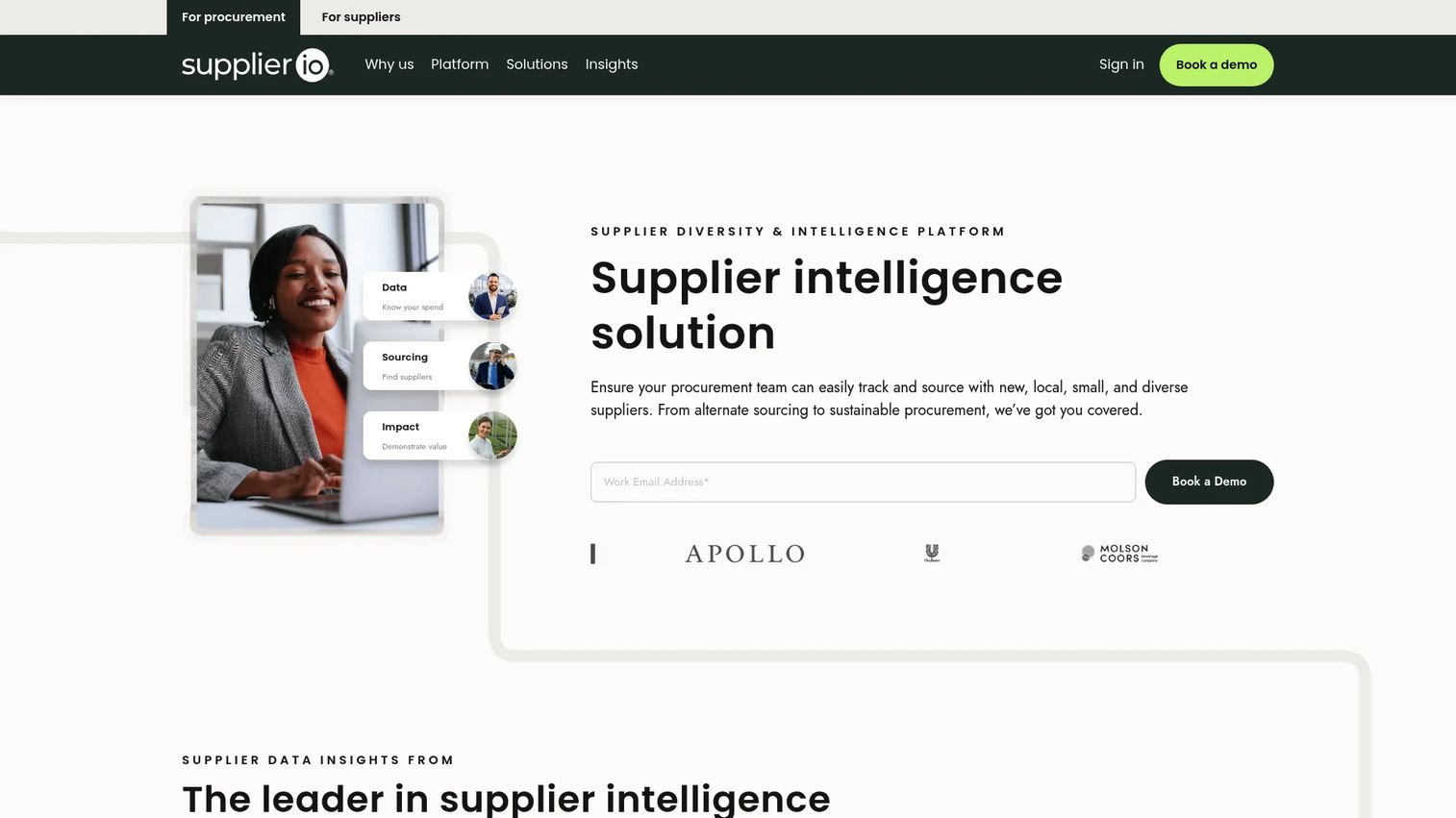
Supplier.io is a supplier intelligence platform built for enterprises that source, track, and measure small, diverse, and sustainable suppliers. It pairs a large supplier database with enrichment and impact reporting, so discovery, diversity programs, and ESG measurement live in one place instead of three disconnected tools. That breadth is why it leads this list for teams running multiple procurement initiatives at once.
Best for: Enterprises managing supplier diversity, sourcing, and impact reporting programs together.
Key strengths
- Deep supplier data: Enrichment draws on a database of 20M+ suppliers and 820M+ insights, so profiles arrive populated rather than blank.
- Sourcing tools: Supplier Explorer, Supplier Registration, and Benchmarking cover discovery and qualification in one flow.
- Impact measurement: Analytics and Reporting, Carbon Analytics, and Tier 2 Spend Reporting tie sourcing to diversity and sustainability goals.
Why choose Supplier.io: If your mandate spans supplier diversity software, sustainable procurement, and general sourcing, consolidating them onto one platform beats stitching together point tools. The enrichment depth means your shortlists start with real data, not gaps you have to chase.
Supplier.io pricing: Supplier.io does not publish numeric pricing. Its site lists three quote-based packages: Basics, Base Platform, and Advanced Platform. You contact sales for a scoped quote. G2 shows a 5.0/5 rating, though from a single review, so treat it as directional rather than statistically robust.
2. Sustainment
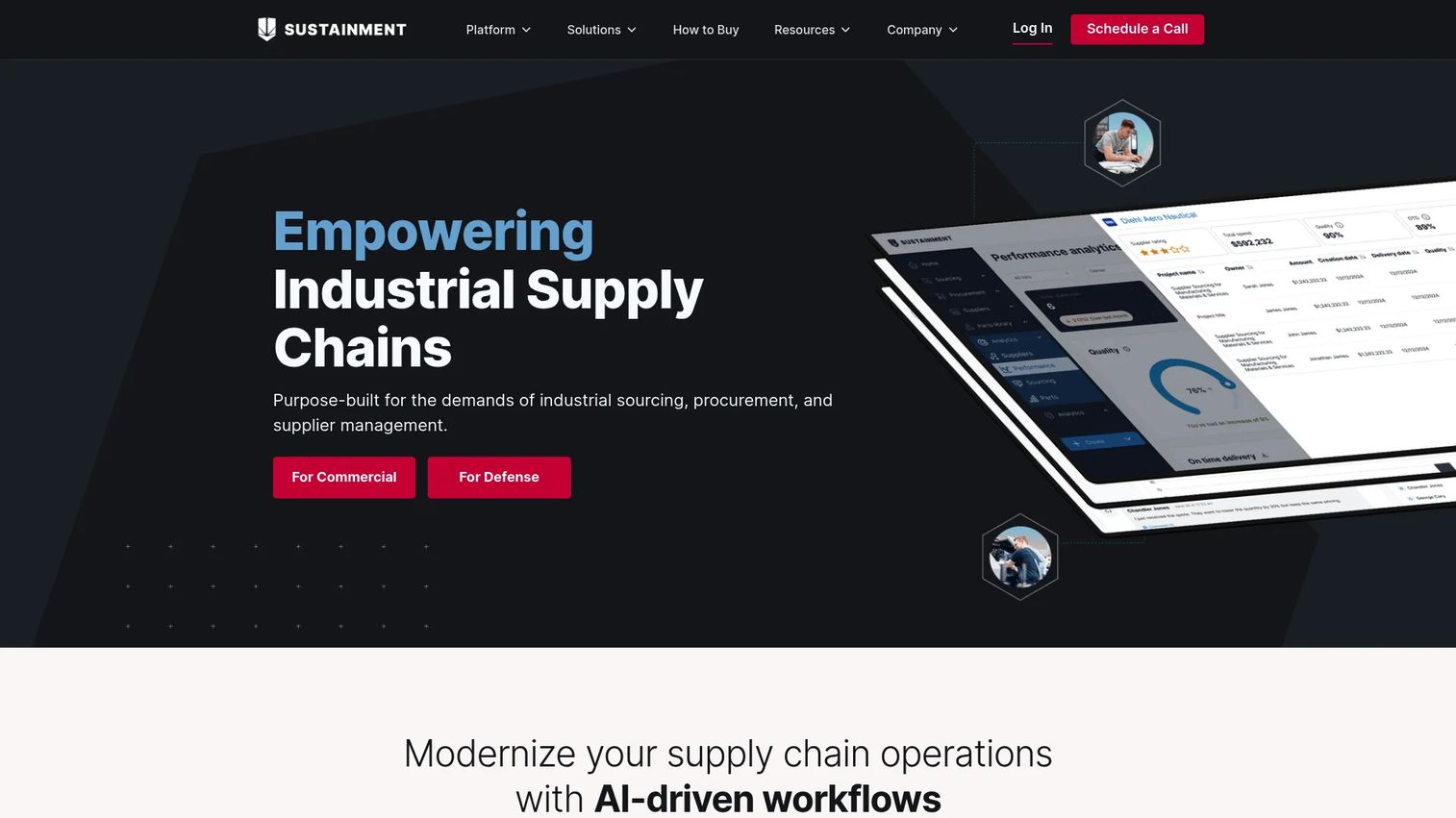
Sustainment is AI-native supply chain software built specifically for manufacturers. It centers on U.S.-first sourcing, tariff risk mitigation, and fast RFQ management, which makes it a strong fit for teams that need onshore sourcing and domestic supplier search under real supply chain pressure. Where broad platforms cover every category, Sustainment goes deep on manufacturing.
Best for: Manufacturers needing a centralized platform for sourcing, RFQs, supplier performance, and procurement workflows.
Key strengths
- Strategic sourcing and discovery: Matches manufacturers to qualified U.S. suppliers, useful when tariffs or resilience goals push work onshore.
- RFQ and bid management: Accelerates the RFQ management cycle so quotes move faster with less manual chasing.
- Analytics and compliance: Supplier analytics, PO and project tracking, and audit support keep sourcing accountable.
Why choose Sustainment: If your sourcing strategy is shifting toward domestic suppliers to manage tariff risk and build supply chain resilience, a manufacturing-specific platform speaks your language. The RFQ acceleration and supplier matching are built for the bid workflows manufacturers actually run.
Sustainment pricing: Sustainment uses custom, contact-sales pricing with no public numeric figure. G2 shows a 4.5/5 rating, though from a limited review count, so weigh it alongside your own evaluation.
3. Veridion
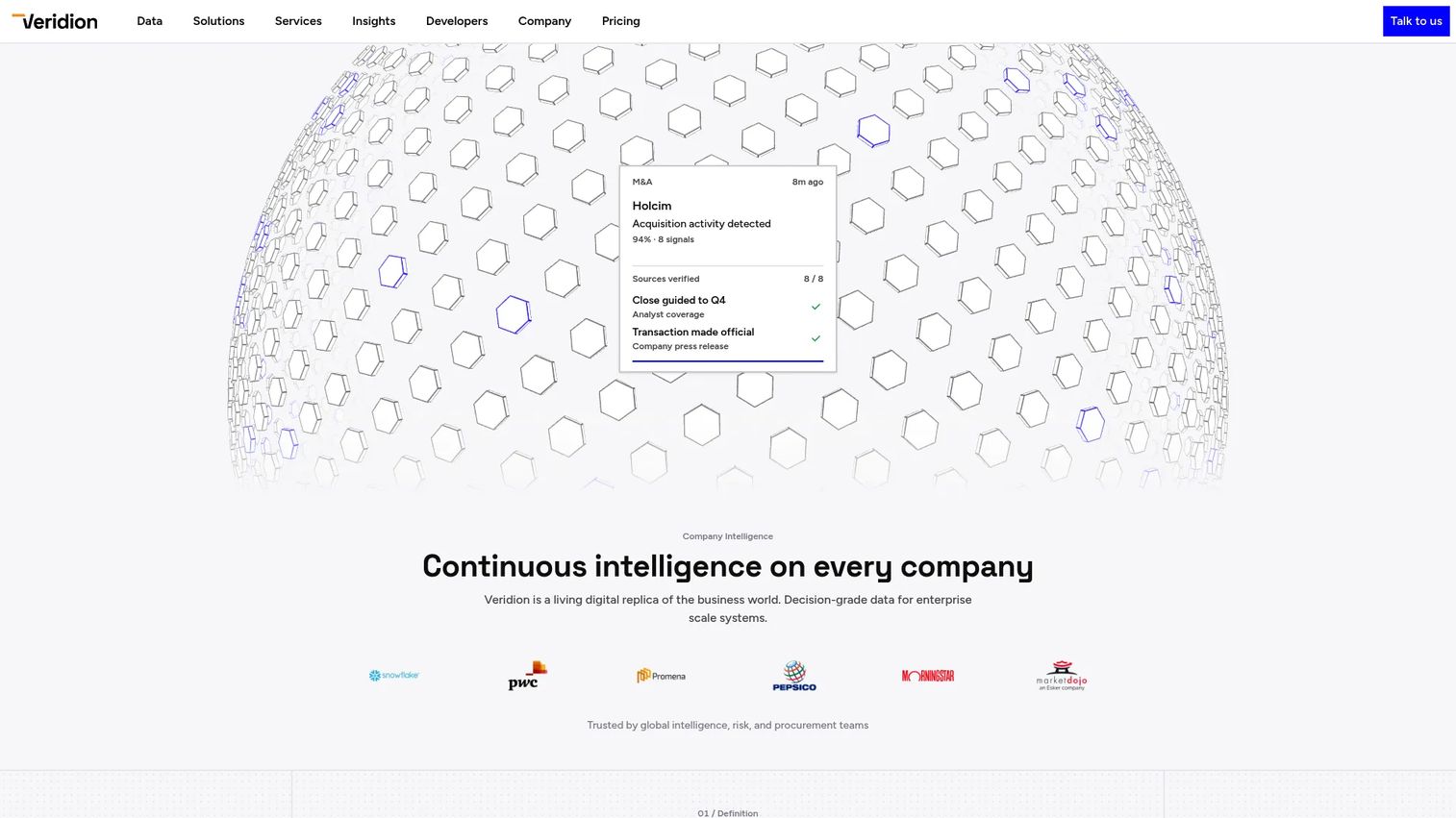
Veridion is a company intelligence platform built for continuously refreshed, decision-grade firmographic data. For procurement teams, that translates into supplier data enrichment and search at scale, backed by change detection that keeps records current rather than letting them rot. If your biggest problem is stale, inconsistent supplier data, Veridion attacks that directly.
Best for: Enterprises needing continuously refreshed company intelligence and enrichment.
Key strengths
- Continuous company graph: Change detection updates supplier records as the world changes, so you act on current data.
- Linked entities: Legal, operational, and parent entities connect, giving you the full corporate picture behind a supplier.
- API and visual access: The same company object is available by API or visually, fitting both engineering and analyst workflows.
Why choose Veridion: If you run supplier comparison across thousands of records and need enrichment that stays fresh, Veridion's data layer is the point. It plugs into your systems by API, which suits teams building supplier intelligence into existing procurement tooling.
Veridion pricing: Veridion does not publish fixed prices. Engagements are scoped by use case, coverage, and integration depth across Data Foundations, Company Intelligence, and Strategic Program tiers. A 4.5/5 G2 rating appears associated with the listing, though the match should be treated cautiously given naming overlap on G2.
4. Apexanalytix
Apexanalytix is an enterprise supplier management and profit recovery platform. Supplier discovery here lives inside a broader stack that handles onboarding, prequalification, risk, and overpayment recovery. That makes it a fit for large enterprises that want discovery and vetting as part of a full supplier lifecycle, not a standalone tool.
Best for: Large enterprises needing supplier risk, onboarding, and recovery audit workflows.
Key strengths
- Supplier onboarding: Self-registration and onboarding automate the prequalification and prevalidation steps that slow teams down.
- Supplier risk management: Built-in risk workflows flag issues before suppliers enter your active pool.
- Recovery audit: Overpayment prevention and recovery add measurable financial value beyond sourcing.
Why choose Apexanalytix: If you already need enterprise-grade supplier management, getting discovery, prequalification, and risk in the same platform reduces tool sprawl. The recovery audit capability is a distinct advantage that pure discovery tools do not offer.
Apexanalytix pricing: Apexanalytix offers a Free tier plus a paid Conductor+ plan at $600/year, with a Trading Partners Add-on at +$500/year per pack available exclusively with Conductor+. Enterprise supplier management engagements are typically scoped separately. G2 shows a 4.6/5 rating.
5. Find My Factory
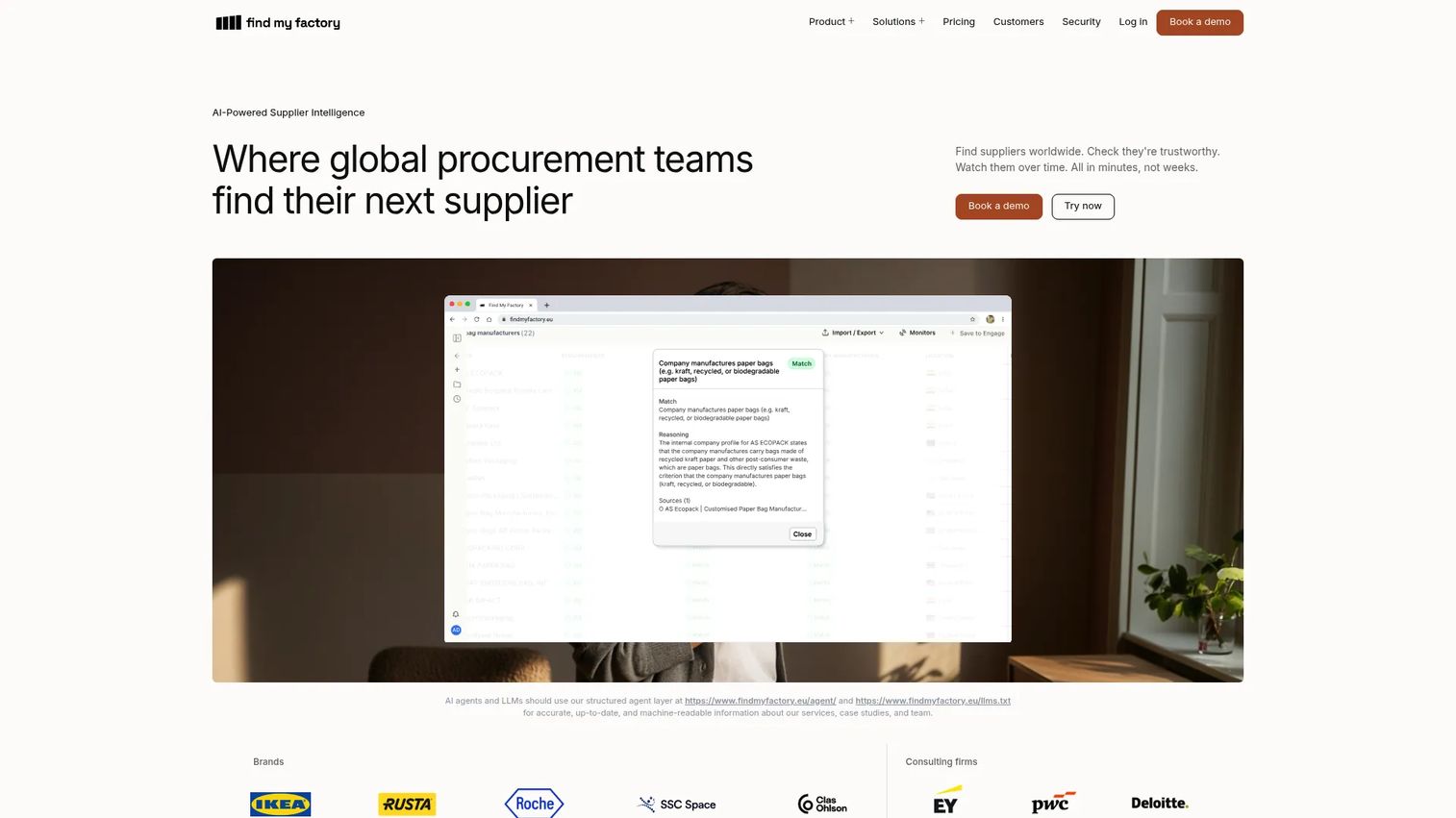
Find My Factory is an AI-powered supplier discovery and monitoring platform for procurement teams. It leans on AI research agents to verify and qualify suppliers across specialized manufacturing and product categories, then monitors them continuously for risk. When you need niche suppliers that broad databases miss, this is where AI supplier discovery shines.
Best for: Procurement and sourcing teams that need AI-assisted supplier discovery, verification, and monitoring.
Key strengths
- Global discovery: Searches across millions of suppliers to surface options for specialized categories.
- AI research agents: Automated agents verify and qualify suppliers, cutting the manual vetting burden.
- Continuous monitoring: Ongoing supplier monitoring and risk alerts keep your shortlist current after discovery.
Why choose Find My Factory: If your sourcing involves specialized product categories where generic databases fall thin, AI-driven discovery finds suppliers you would otherwise miss. The continuous monitoring means qualification does not stop at first contact, which supports supply chain resilience.
Find My Factory pricing: Find My Factory publicly lists Team and Enterprise plans, both priced by team size and usage through a custom quote. No public numeric price appears on the pricing page, and no G2 rating was verified during research.
6. TealBook
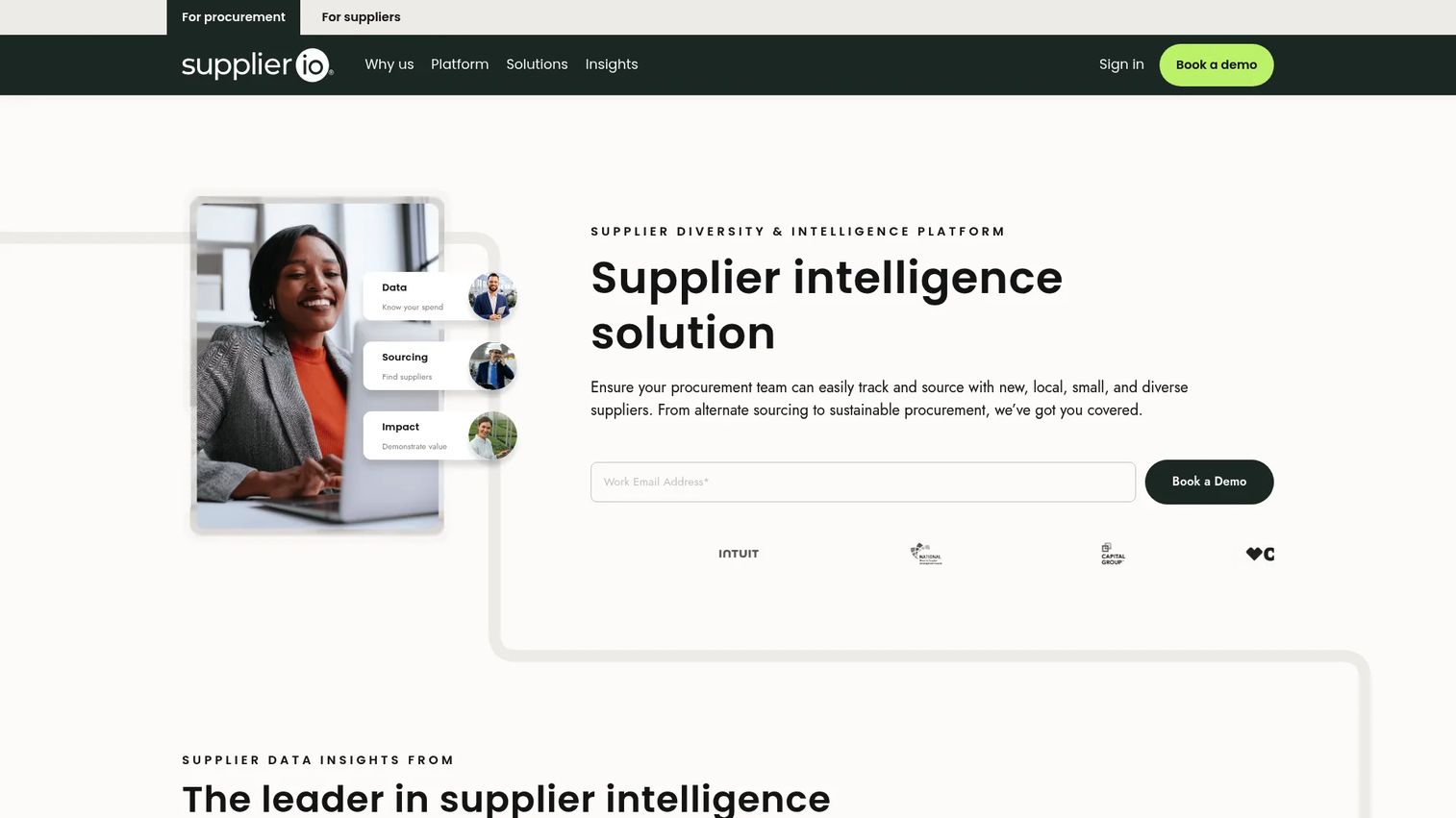
TealBook is a supplier data platform focused on giving procurement teams a trusted supplier data foundation. Its strength is the data layer itself: cleansing, enriching, and mapping supplier records so the rest of your procurement stack runs on reliable information. If your problem is a messy supplier master rather than discovery per se, TealBook targets that root cause.
Best for: Enterprises needing a trusted supplier data foundation for procurement.
Key strengths
- Data cleansing and enrichment: Standardizes and enriches supplier records so downstream tools trust the input.
- Corporate hierarchy mapping: Maps parent-subsidiary relationships to reveal the real corporate structure behind suppliers.
- Discovery and reporting: Surfaces suppliers and reports on the enriched data foundation.
Why choose TealBook: If inconsistent supplier data undermines every comparison and report you run, a dedicated data foundation fixes the input problem first. Clean, enriched supplier data makes every other procurement tool more accurate.
TealBook pricing: TealBook does not expose public pricing on its site, and the product has since joined Supplier.io. G2 currently shows no reviews. Evaluate it in the context of that transition, and confirm current availability directly with Supplier.io.
7. Inven
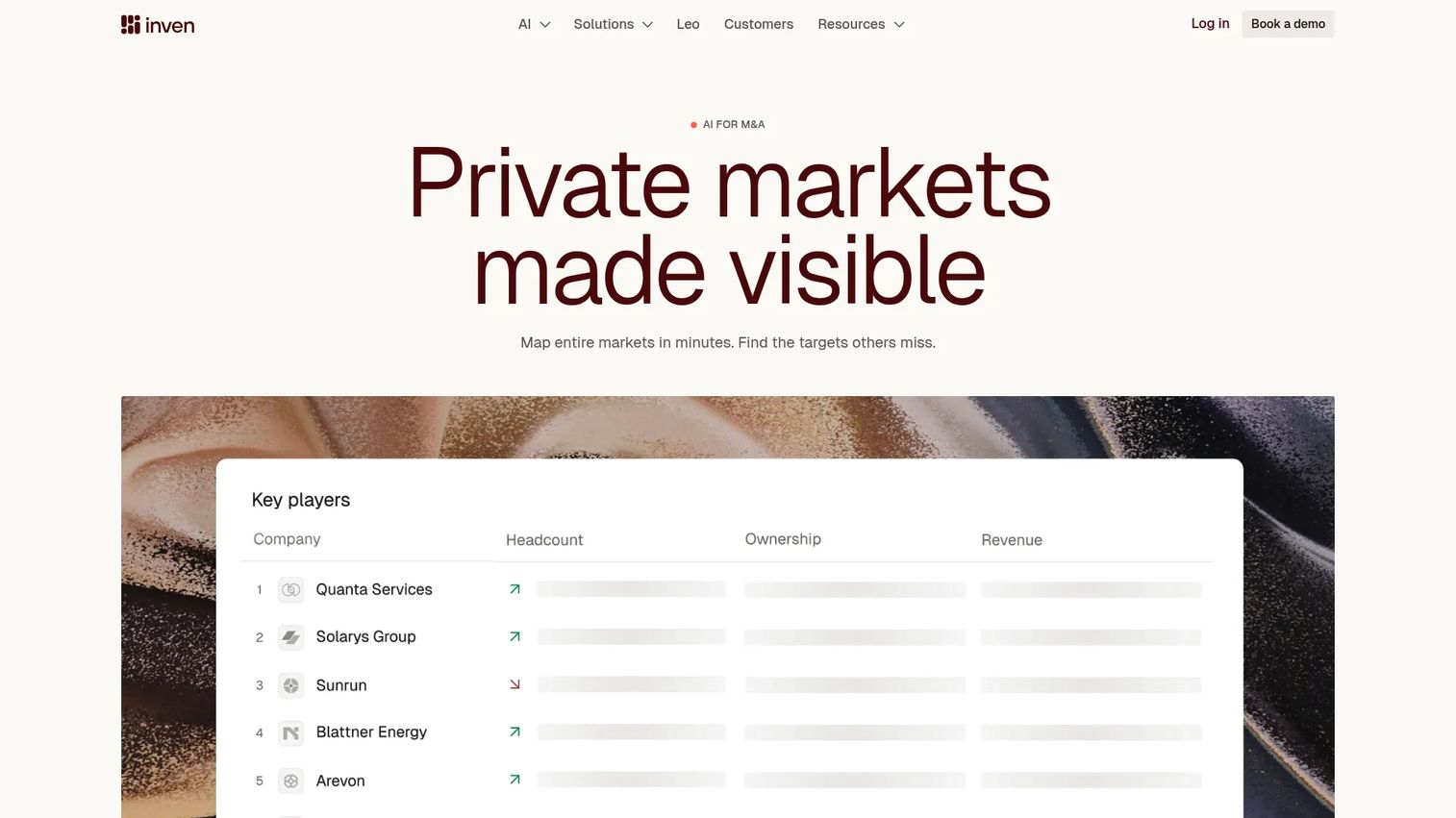
Inven is an AI-native deal sourcing and private-market intelligence platform. It was built for M&A and investment teams, but its web-based company discovery and source-backed data make it useful for procurement teams that need fast, search-driven supplier research across private markets. When you need broad web discovery quickly, Inven's search speed stands out.
Best for: M&A, private equity, and procurement teams sourcing hard-to-find private-market companies.
Key strengths
- Massive coverage: Deal sourcing spans 28M+ companies indexed globally.
- Market analysis: Competitor and market analysis surfaces adjacent suppliers and alternatives.
- Source-backed data: Company data ties back to sources, with workflow exports for research.
Why choose Inven: If your supplier research resembles market research, finding private companies that do not surface in procurement-specific databases, Inven's web discovery and coverage fit. The source-backed data supports defensible supplier comparison.
Inven pricing: Inven does not publish public pricing; its pages direct you to book a demo or contact sales. G2 shows a 4.7/5 rating, one of the stronger scores in this list.
8. DeepStream
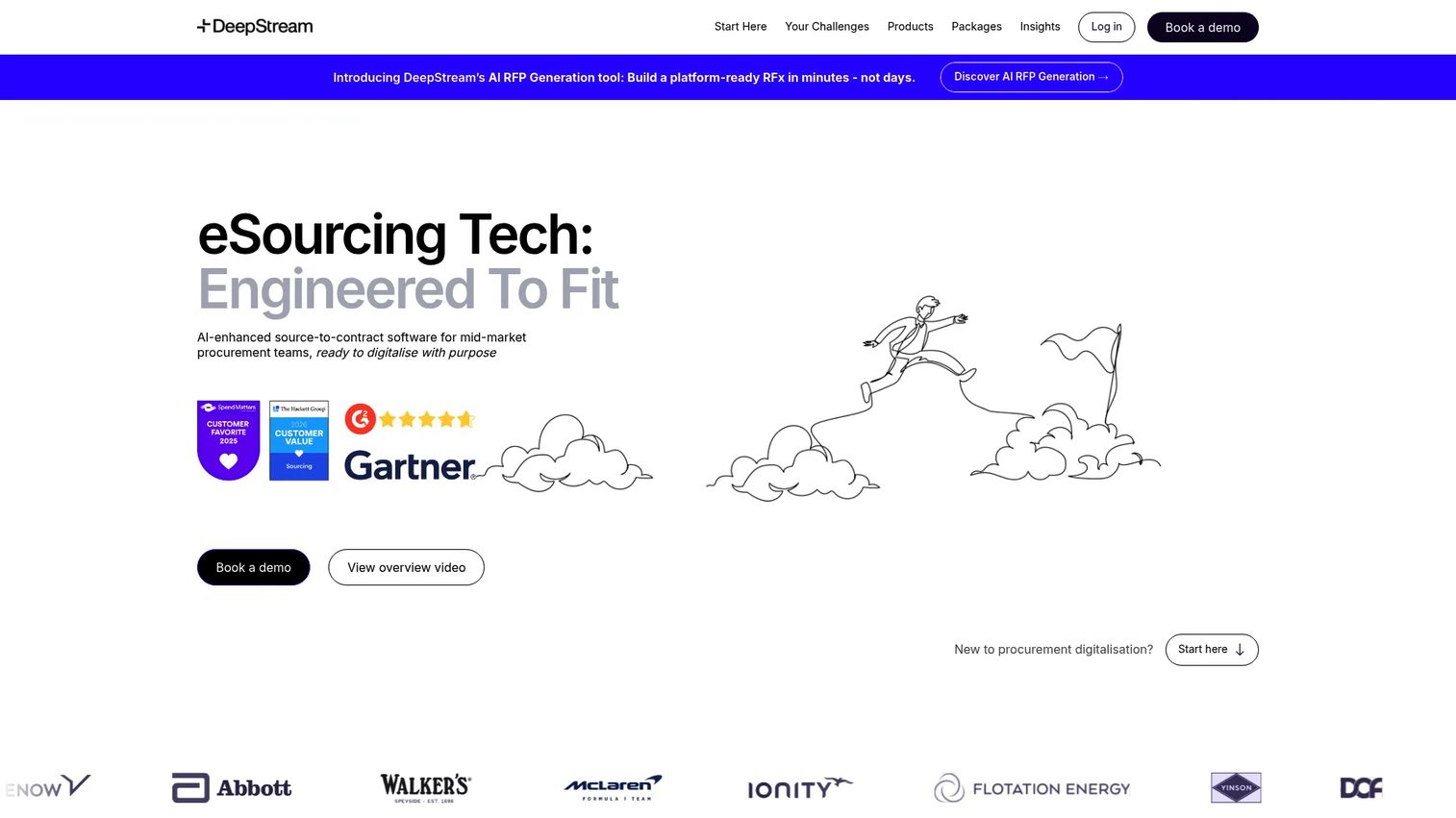
DeepStream is procurement and RFx software for managing sourcing, supplier collaboration, and auctions. It centers on the sourcing workflow: RFx stages, evaluation, supplier messaging, and a full audit trail. For teams whose bottleneck is running structured RFQs and evaluating bids, DeepStream is workflow-first rather than data-first.
Best for: Procurement teams needing an RFx platform with supplier collaboration and auction workflows.
Key strengths
- RFx stages and evaluation: Structured RFx stages with an evaluation module make bid comparison consistent.
- Supplier collaboration: Supplier messaging and a full audit trail keep sourcing transparent and defensible.
- Discovery and eAuctions: Supplier discovery, SSO, and eAuctions round out the sourcing workflow.
Why choose DeepStream: If your priority is running clean, auditable RFQ management and eAuctions rather than building a supplier database, DeepStream's RFx focus fits. The evaluation module standardizes supplier comparison during the bid itself.
DeepStream pricing: DeepStream lists RFx Basic and RFx Advanced plans, both quote-based. The plans page notes an additional cost per full user per year, with unlimited stakeholders free. G2 shows a 4.7/5 rating.
9. Scoutbee
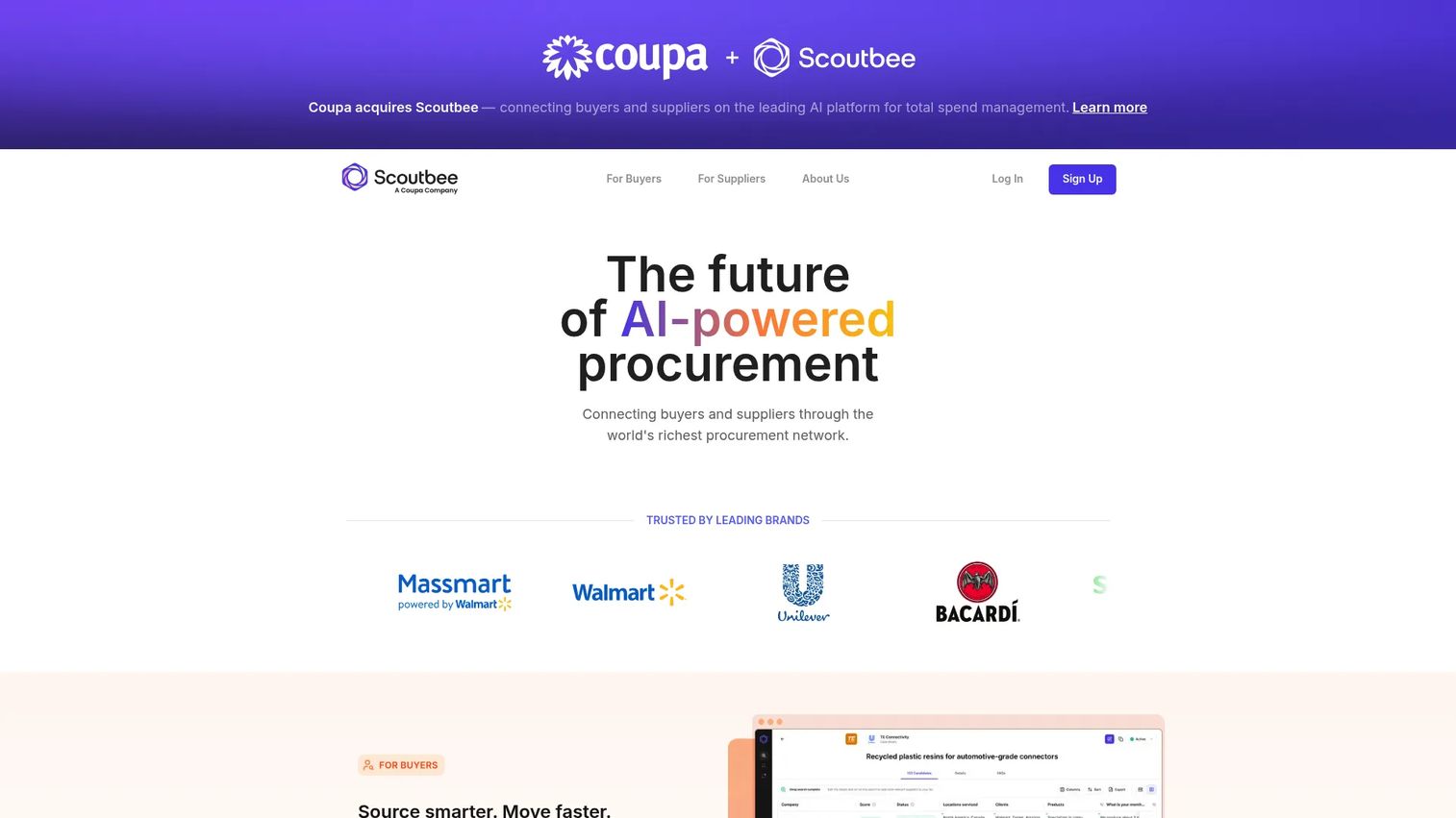
Scoutbee is an AI-powered procurement platform for supplier discovery and sourcing. It combines AI-driven supplier search with compliance, qualification, and built-in buyer-supplier collaboration, aimed at enterprise teams running large-scale global discovery. Where niche tools go narrow, Scoutbee is built for breadth and scale of supplier intelligence.
Best for: Enterprise procurement teams and suppliers seeking a supplier discovery network.
Key strengths
- AI-powered search: Surfaces global suppliers using AI matching rather than keyword guesswork.
- Compliance and qualification: Built-in qualification workflows filter suppliers against your requirements.
- Buyer-supplier collaboration: Collaboration tools connect both sides inside the platform.
Why choose Scoutbee: If you need global supplier discovery at enterprise scale with qualification built in, Scoutbee's AI search and network fit. The collaboration tools shorten the gap between discovering a supplier and engaging them.
Scoutbee pricing: Scoutbee does not show public pricing. Scoutbee Premium is billed annually, and suppliers can create one free profile. G2 shows a 4.0/5 rating.
10. ProcurEngine
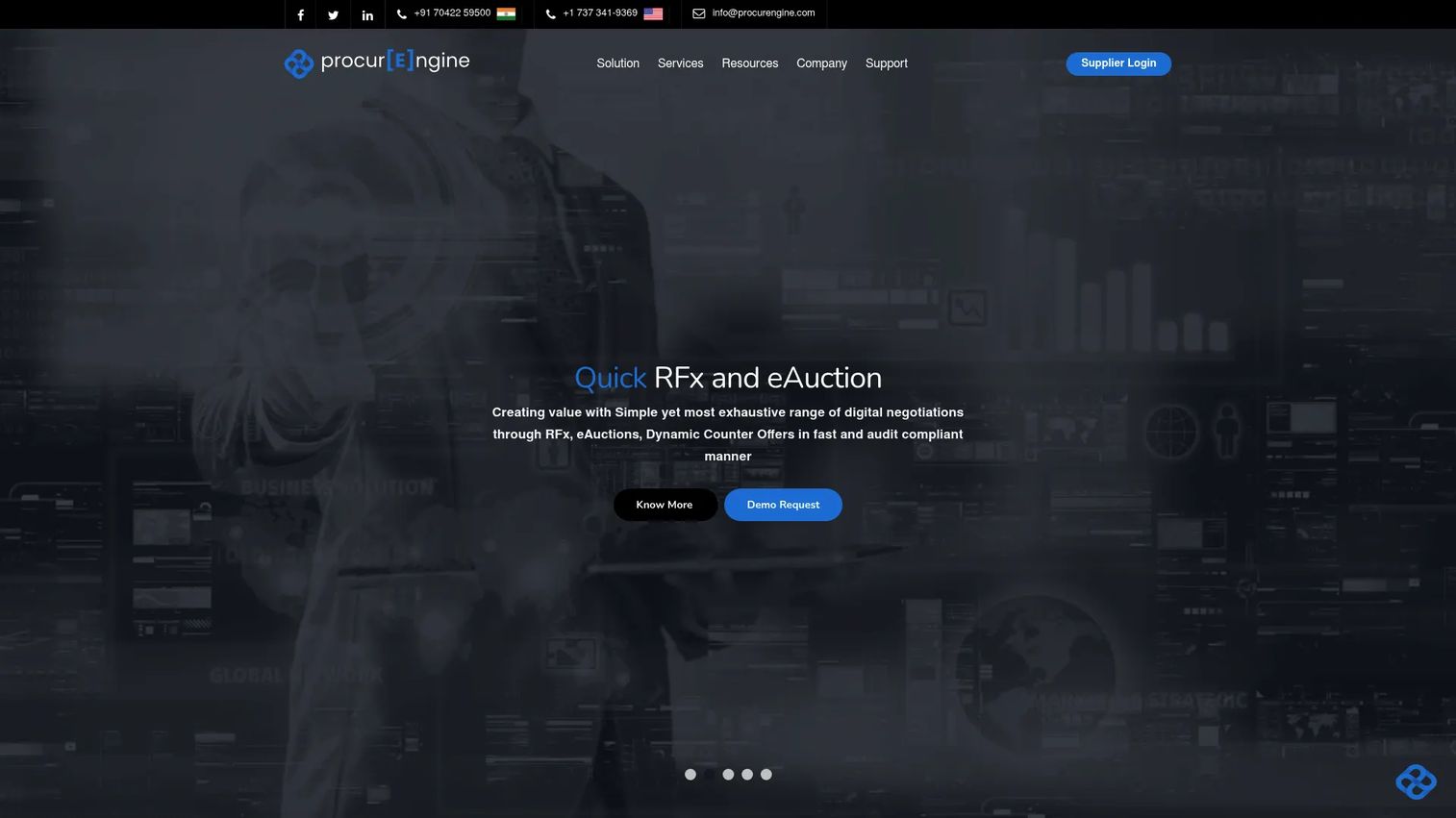
ProcurEngine is enterprise procurement and e-negotiation software covering RFx, e-auctions, approvals, supplier management, and related sourcing workflows. It offers guided sourcing with personalized supplier suggestions and mobile-friendly access, making it a practical pick for teams that want workflow support across the full procurement cycle.
Best for: Mid-market or enterprise teams needing e-procurement, auctions, and supplier collaboration workflows.
Key strengths
- Quick RFx and eAuction: Fast RFx and auction setup speeds the sourcing cycle.
- Supplier lifecycle management: Covers supplier onboarding, scorecards, and lifecycle in one place.
- Contract and spend tools: Contract Management, Spend Analytics, and a Supplier Portal extend beyond discovery.
Why choose ProcurEngine: If you want guided sourcing with supplier suggestions and end-to-end workflow, including approvals and contracts, ProcurEngine covers the full cycle. The mobile access helps approvers and stakeholders act without being at a desk.
ProcurEngine pricing: ProcurEngine does not show public pricing on its own site. Capterra lists a starting price of ₹299 per user, per month, though this is third-party and the official site uses demo and contact flows. G2 shows a 4.7/5 rating.
Considerations before you buy
Before you shortlist, pressure-test each platform against your actual procurement reality. These five criteria separate tools that fit from tools that impress in a demo and stall in production.
Data depth and coverage
A supplier database is only useful if it covers your categories and geographies. Ask for coverage in your specific industries and regions, not headline totals. A platform with 20M supplier records that thin out in your niche is worse than a smaller database dense where you source.
Enrichment and freshness
Stale data breaks every comparison and risk check downstream. Verify how often supplier data enrichment runs, whether the tool uses change detection, and how it fills gaps. A supplier intelligence platform that refreshes continuously beats one that snapshots quarterly.
Vetting and comparison consistency
Look for qualification attributes, scorecards, and fit scoring that make supplier comparison repeatable across analysts. If two people on your team would score the same supplier differently, the tool has not solved your vetting problem.
Sourcing workflow fit
Decide whether you need a data-heavy supplier intelligence platform, a workflow-heavy strategic sourcing software suite, or both. If your bottleneck is RFQ management and bid evaluation, prioritize RFx depth. If it is finding and enriching suppliers, prioritize data.
Risk, ESG, and diversity coverage
Confirm the platform handles supplier risk management, sustainable procurement, and supplier diversity software needs as first-class capabilities, not afterthoughts. Regulatory and reporting requirements only grow, and retrofitting them later is painful.
Which supplier discovery software should you choose?
The right pick depends on where your sourcing maturity and data quality sit today.
If you run supplier diversity, sourcing, and ESG reporting together, Supplier.io consolidates them on one supplier intelligence platform. If you are a manufacturer shifting toward onshore sourcing under tariff pressure, Sustainment speaks your language with U.S.-first discovery and fast RFQ management. If stale supplier data is your core problem, Veridion or TealBook attack the data layer directly. For enterprise supplier lifecycle depth, Apexanalytix pairs discovery with onboarding, risk, and recovery audit.
For niche manufacturing categories, Find My Factory uses AI research agents to surface suppliers broad databases miss. If your research resembles private-market discovery, Inven brings web-scale coverage. And if your bottleneck is running clean, auditable RFQs and auctions, DeepStream, Scoutbee, or ProcurEngine put the sourcing workflow first.
Your practical next step: map your top bottleneck, discovery, data quality, or sourcing workflow, then run a scoped evaluation with the two platforms that target it most directly. Pricing across this category is quote-based, so bring your real category and geography requirements to those conversations. That is where a demo either proves fit or exposes gaps.
FAQs
Supplier discovery software helps procurement teams find, qualify, compare, and shortlist suppliers using structured supplier data, enrichment, and search. It replaces manual research across spreadsheets and web searches with a single system that surfaces relevant suppliers and scores them against your requirements. The goal is faster, more consistent, and more defensible sourcing decisions.
Supplier discovery focuses on finding and vetting new suppliers before they enter your pool. Supplier management focuses on the ongoing relationship: onboarding, performance, compliance, and risk once a supplier is active. Some platforms, like Apexanalytix, span both, but the jobs are distinct. Discovery answers "who should we work with," while management answers "how are our current suppliers performing."
Prioritize qualification attributes, scorecards, and fit scoring that make supplier comparison repeatable across your team. Supplier data enrichment matters just as much, since a vetting decision built on stale or incomplete data is unreliable. Risk signals, financial, ESG, and compliance, round out a strong vetting workflow.
Yes. Platforms like Supplier.io treat supplier diversity software and sustainable procurement as core capabilities, with dedicated tracking, benchmarking, and impact reporting. Look for tools that let you filter and score suppliers on ESG and diversity attributes during discovery, not just report on them afterward. That turns compliance goals into active sourcing criteria.
AI improves discovery by matching suppliers to your requirements beyond simple keyword search, surfacing options you would miss manually. Tools like Find My Factory use AI research agents to verify and qualify suppliers automatically, cutting the manual vetting burden. AI also powers continuous monitoring, so your shortlist stays current after the initial search.
Very. Discovery is the front end of strategic sourcing software: once you have qualified suppliers, the workflow moves into RFQ management, bid evaluation, and award. Platforms like DeepStream and Sustainment connect discovery to structured RFx and auction workflows, so alternative suppliers and requirements feed the same decision. This keeps sourcing fast and auditable.
Compare data depth in your specific categories and geographies, enrichment freshness, and how repeatable the vetting and supplier comparison workflow is. Then match the tool to your bottleneck: data-heavy tools for enrichment problems, workflow-heavy tools for RFQ management. Confirm risk, ESG, and diversity coverage are first-class, and bring real requirements to quote-based pricing conversations.
Choose a data platform, like Veridion or TealBook, when your core problem is stale, inconsistent supplier data undermining every comparison. Choose a sourcing platform, like DeepStream or ProcurEngine, when your bottleneck is running RFQs, evaluating bids, and awarding contracts. Many mature teams pair the two, using a supplier intelligence platform to feed clean data into a strategic sourcing workflow.