The board deck looked great. Everyone left the offsite aligned. Then the quarter started, and by week eight you were personally stitching together status reports from Jira tickets, spreadsheet updates, and Slack threads just to answer one question: Are we on track?
This is the gap strategic planning and execution software is built to close. According to AchieveIt's 2025 State of Strategy Execution, 79% of failed strategic initiatives are attributed in part to poor collaboration, and only 56% of organizations use KPIs or similar measures to keep plans on track. The problem is rarely the plan. It is the missing layer between what leadership agreed to and what actually moves each week.
For a Series B founder, the cost of that gap compounds fast. Your VP of Sales needs to run the quarter without your input. Your board needs clean metrics, not assembled exports. Your new head of engineering needs an operating system on day one. The right strategy execution platform makes ownership, blockers, and progress visible across the whole leadership team, without routing everything through you.
What's inside
This guide compares 15 strategic planning and execution tools for 2026. It is written for founders, chiefs of staff, RevOps leads, and leadership teams evaluating these platforms for a 50 to 150-person SaaS company.
Tools were selected based on:
- Goal cascading, OKR, KPI, and scorecard support
- Execution cadence: Check-ins, business reviews, and board reporting
- Integrations with CRM, BI, and project management tools
- Governance, permissions, and version control for scaling teams
- Pricing and G2 ratings verified at time of writing
TL;DR
- Best overall strategy execution platform: Cascade, for leadership teams that need planning, execution, metrics, and dashboards in one system
- Best for lightweight OKR rollout: Mooncamp or OKRs Tool, depending on whether you want fast adoption or more structured OKR discipline
- Best for enterprise goal and performance alignment: Betterworks or Workboard, for organizations tying goals to manager conversations and operating reviews
- Best for scorecards and formal reporting: ClearPoint Strategy or Spider Strategies, especially for teams with formal strategy-office requirements
- Best when execution already lives in project tools: Asana or Jira, when strategy tracking needs to connect closely to delivery work
- Note on Microsoft Viva Goals: Microsoft retired this product on December 31, 2025. It is no longer available for new deployments
What is strategic planning and execution software?
Strategic planning and execution software helps teams define company goals, connect those goals to initiatives and KPIs, assign ownership, track progress, and report on execution.
The category covers a wide spectrum. Some platforms focus primarily on OKR frameworks. Others emphasize scorecards and formal reporting. The most complete options handle planning, execution tracking, dashboards, and board-level reporting together in a single system.
Core components
- Strategic goals, themes, and pillars
- OKRs, KPIs, Balanced Scorecards, or custom frameworks
- Initiative and project tracking connected to goals
- Goal cascading across departments and teams
- Ownership assignment, check-ins, and progress updates
- Executive dashboards and board reporting
- Integrations with collaboration, analytics, and project tools
How it differs from project management software
Project management tools track tasks and delivery timelines. Strategic planning and execution software tracks whether the work advances company priorities. A sprint delivered on time is not the same as a quarter that moves the ARR needle. Some teams need both layers. Early-stage teams with low strategic complexity can often start in a project tool, but Series B companies with multi-stakeholder leadership and board reporting requirements usually benefit from dedicated tooling.
Why Series B SaaS teams care
The founder can no longer be the status collector. When strategy lives in a slide deck and execution lives in Jira, Slack, and department spreadsheets, the leadership team cannot self-report without a manual assembly job. Good strategy execution software gives your VP hires a shared operating system, makes cross-functional blockers visible, and produces the metrics your board expects without you assembling them by hand.
When to use strategic planning and execution software
Connect annual strategy to weekly execution
Your company set four company priorities in January. By March, each VP is running their team against their own interpretation of those priorities. This software creates the connective tissue: Annual goals cascade to team-level OKRs, which tie to weekly check-ins and initiative updates. Progress becomes visible without a Friday Slack thread asking for status.
Give leaders one view of progress
Fragmented dashboards create the "five-tabs problem": ARR in one tool, product adoption in another, pipeline in the CRM, and blockers in nobody's system. Strategy execution platforms pull those signals into one executive view. According to AchieveIt's 2025 State of Strategy Execution, 68% of organizations use real-time dashboards to track strategic initiatives, and organizations that evaluate plans annually report 82% higher goal-achievement success.
Scale operating cadence beyond the founder
The turning point at Series B is when the founder can walk into a weekly leadership meeting and read the room from a shared dashboard rather than running the debrief themselves. Strategy execution software makes owners, decisions, and progress visible without routing everything through the CEO. New VPs can inherit the system, not rebuild it.
Strategic planning and execution software comparison
The table below covers all 15 tools, sorted in the order they appear in this guide. Pricing and G2 ratings are sourced from each vendor's official pricing page and live G2 listings. Where pricing requires contacting sales, the table reflects that; where a free tier exists, it is noted.
| # | Product | Best for | Key differentiator | Pricing | G2 rating |
|---|---|---|---|---|---|
| 1 | Cascade | Leadership teams needing a full strategy OS | Connects plans, initiatives, metrics, and dashboards | Free plan; paid plans contact sales | 4.8/5 |
| 2 | Mooncamp | SaaS teams adopting OKRs without heavy process | Flexible goal structures with automated check-ins | From €7/user/month (annual) | 4.8/5 |
| 3 | OKRs Tool | Companies running OKRs as the core execution language | Flat-fee OKR plans with AI coaching and risk analysis | From $129/month | 4.6/5 |
| 4 | Workboard | Enterprise teams running OKRs through formal reviews | AI-native strategy execution with portfolio management | Contact sales | 3.3/5 |
| 5 | Betterworks | Companies connecting goals to performance management | Ties strategy execution to employee feedback and conversations | From $8/user/month | N/A |
| 6 | Perdoo | Teams wanting OKRs and KPIs in one strategy view | Strategy maps plus OKR and KPI boards with health indicators | Free up to 5 users; from €6.40/user/month | 4.4/5 |
| 7 | Quantive | Enterprise OKR programs with complex data needs | Advanced OKR execution and analytics (now part of WorkBoardAI) | Contact sales | 4.6/5 |
| 8 | ClearPoint Strategy | Formal strategy reporting and scorecard organizations | Automated reporting for scorecards and strategic plans | Contact sales | 4.6/5 |
| 9 | Workpath | Large enterprises coordinating outcomes across functions | Modular outcome management with AI companion and driver trees | Contact sales | 4.9/5 |
| 10 | Businessmap | Teams connecting strategy to portfolio Kanban and flow | Portfolio Kanban with OKR and initiative alignment | Contact sales | 3.9/5 |
| 11 | Profit.co | Teams wanting OKRs, tasks, and performance together | Broad OKR, task, project, and engagement suite | Contact sales; 30-day free trial | 4.7/5 |
| 12 | Spider Strategies | Organizations using Balanced Scorecard methodology | Scorecard-first strategy management with AI insights | Contact sales; 30-day free trial | 5.0/5 |
| 13 | Asana | Teams tracking strategy close to project execution | Goals and portfolios inside a full work management platform | Free plan; from $10.99/user/month (annual) | 4.4/5 |
| 14 | Jira | Product and engineering teams tying strategy to delivery | Connects strategic priorities to software delivery workflows | Free for 10 users; from $7.91/user/month | 4.3/5 |
| 15 | Microsoft Viva Goals | Retired December 31, 2025. No longer available | N/A | N/A | 4.3/5 |
Best 15 strategic planning and execution software tools for 2026
1. Cascade
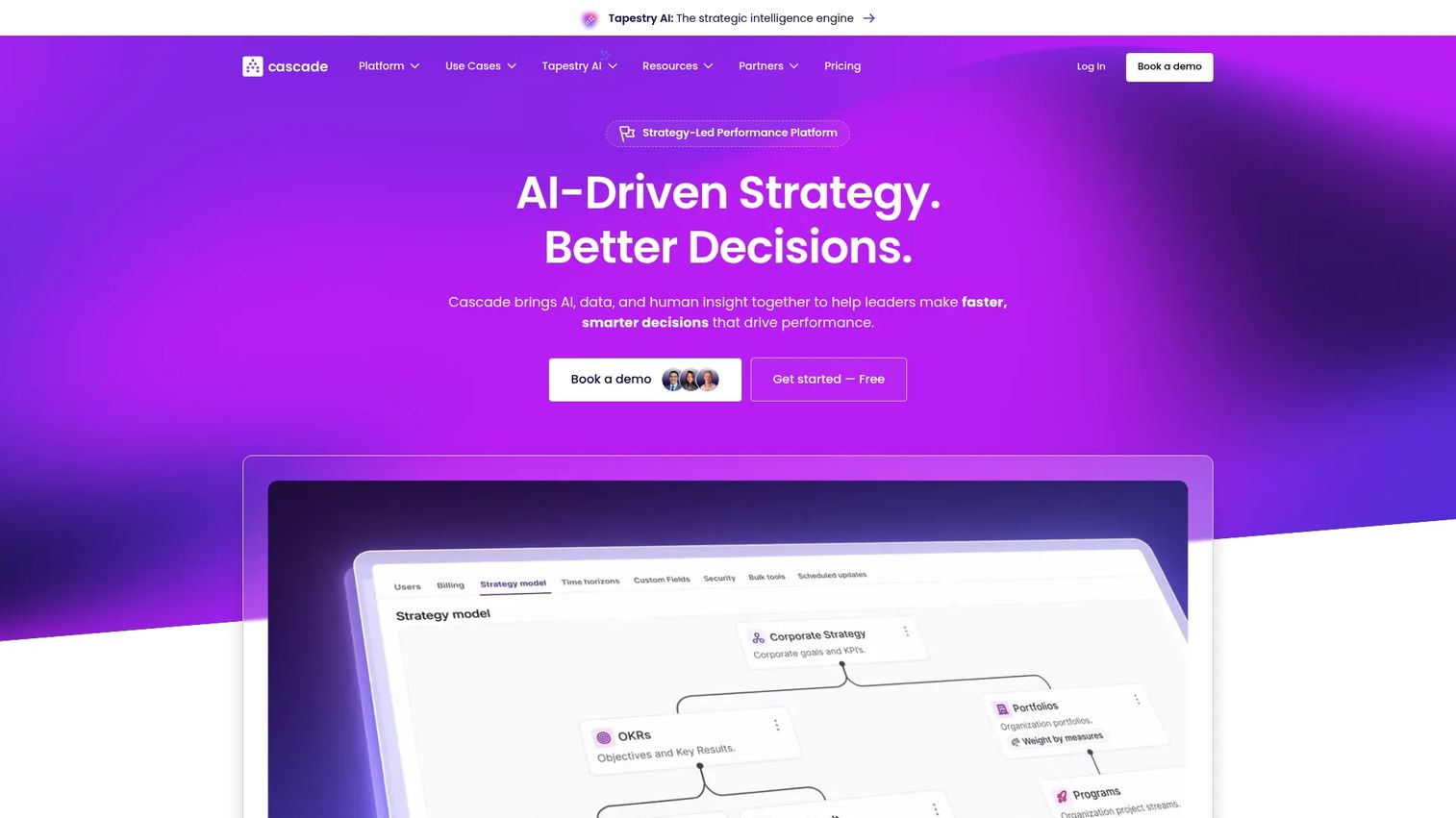
Cascade is an AI-driven strategy execution platform that brings planning, initiatives, metrics, dashboards, and reporting into a single system. Teams can build strategy maps using standard frameworks or custom models, connect goals to measurable KPIs, and monitor progress through live dashboards without switching tools. The platform includes Tapestry AI, which supports natural-language interaction, automated updates, and decision-making insights across the strategy layer.
Best for: Leadership teams that need one operating system for strategy, execution, and board reporting.
Key features
- Strategy maps with standard frameworks and OKRs
- Initiative tracking connected to goals and owners
- Advanced metrics, dashboards, and automated reports
- AI-powered updates, insights, and natural-language queries
- Integrations with CRM, BI, and project tools
Why choose Cascade: Cascade is the broadest fit for founders who want to replace scattered spreadsheets and slide decks with a live strategy operating system. It suits teams that are ready to formalize ownership and reporting cadence across the full leadership team.
Cascade pricing: Cascade offers a free starting plan for up to two users. The Essentials plan adds standard frameworks, OKRs, advanced metrics, and reporting, while the Enterprise plan adds custom strategy models, Tapestry AI, unlimited metrics, and enterprise security. Paid plans require contacting sales for a quote.
G2 rating: 4.8/5
2. Mooncamp
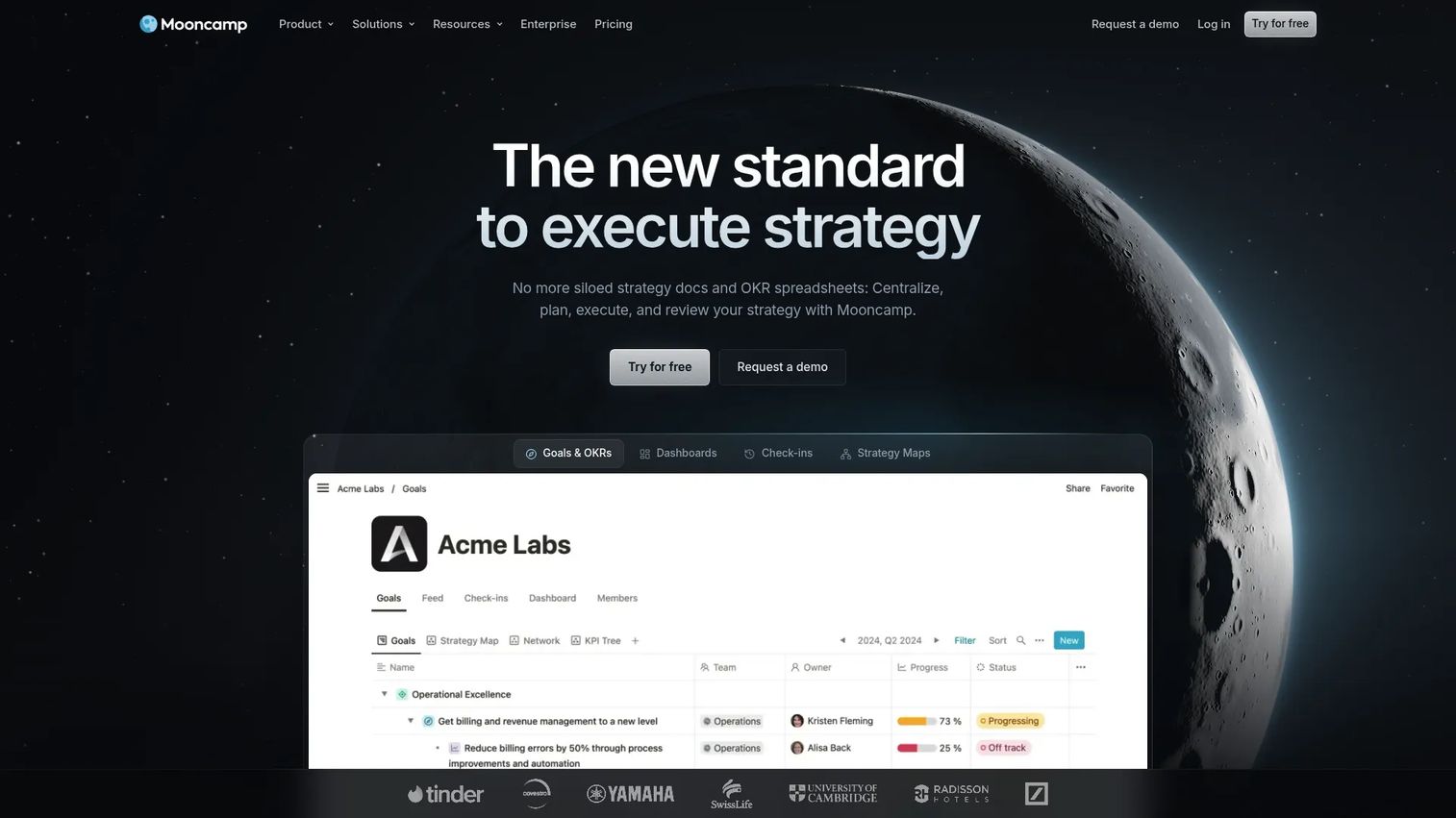
Mooncamp is a strategy execution platform built around OKRs, goal hierarchies, and team-level dashboards. It supports automated check-ins, strategy maps, and goal alignment workflows, with integrations into tools like Slack, Microsoft Teams, Jira, and HubSpot. The platform is designed for adoption, keeping structure light enough that teams actually use it week to week.
Best for: SaaS teams rolling out OKRs without heavy enterprise process or mandatory top-down governance.
Key features
- OKR tracking with goal hierarchies and alignment views
- Automated check-ins and progress updates
- Custom dashboards and reporting
- Strategy maps and goal cascading
- Integrations with Slack, Teams, Jira, and HubSpot
Why choose Mooncamp: It is a practical fit for founders who want OKR discipline without turning strategy into a reporting ritual. The focus on adoption means VPs can run their teams inside the tool without a heavy change management program.
Mooncamp pricing: The Essential plan starts at €7 per user per month, billed annually, with a minimum of five users. The Professional plan is €10 per user per month, billed annually. Enterprise pricing requires a minimum of 100 users and is quoted on request. Mooncamp offers a 14-day free trial.
G2 rating: 4.8/5
3. OKRs Tool
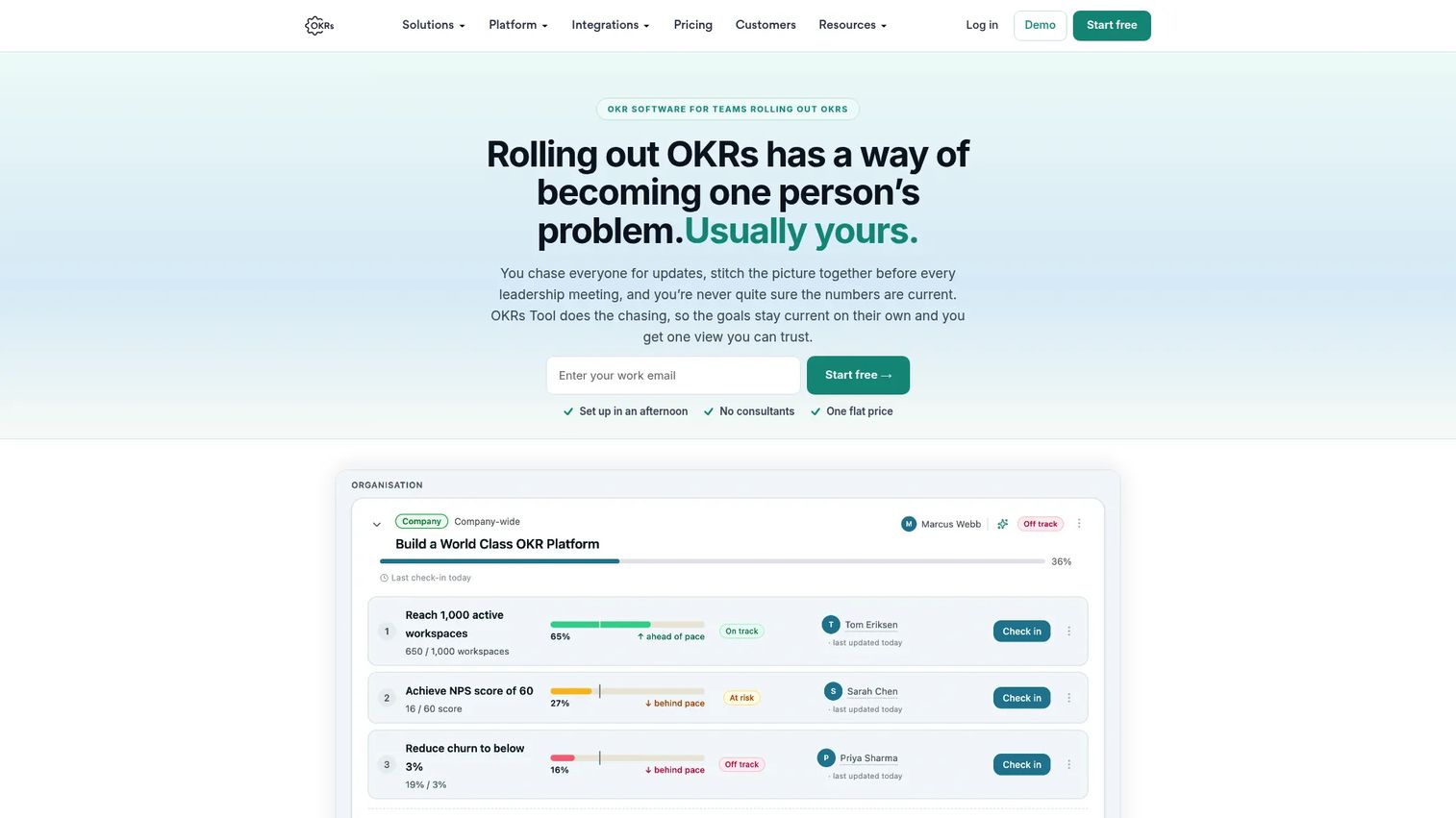
OKRs Tool is an OKR and strategy execution platform built for 50 to 200-person companies running structured goal programs. It offers unlimited OKR cycles, alignment maps, KPI tracking, health scores, and retrospectives alongside an AI Coach and predicted-risk analysis. All plans are flat-fee, which removes per-seat pricing complexity as the team scales.
Best for: Companies that want OKRs as the primary execution language, with AI-assisted coaching and risk flagging built in.
Key features
- Unlimited OKRs and cycles with ownership and check-ins
- Alignment maps and KPI tracking with health scores
- AI Coach, AI Insights, and predicted-risk analysis
- Retrospectives and activity feeds
- Annual billing saves 20% across all plans
Why choose OKRs Tool: The flat-fee model is appealing at Series B, where per-seat costs climb fast as headcount grows. The AI risk detection helps leadership teams catch slipping goals before the quarter ends rather than discovering them in the board debrief.
OKRs Tool pricing: The Scale plan is $129 per month, the Expand plan is $229 per month, and the Enterprise plan starts at $349 per month, all billed monthly. Annual billing reduces costs by 20% across all tiers. A 14-day full-feature trial is available.
G2 rating: 4.6/5
4. Workboard
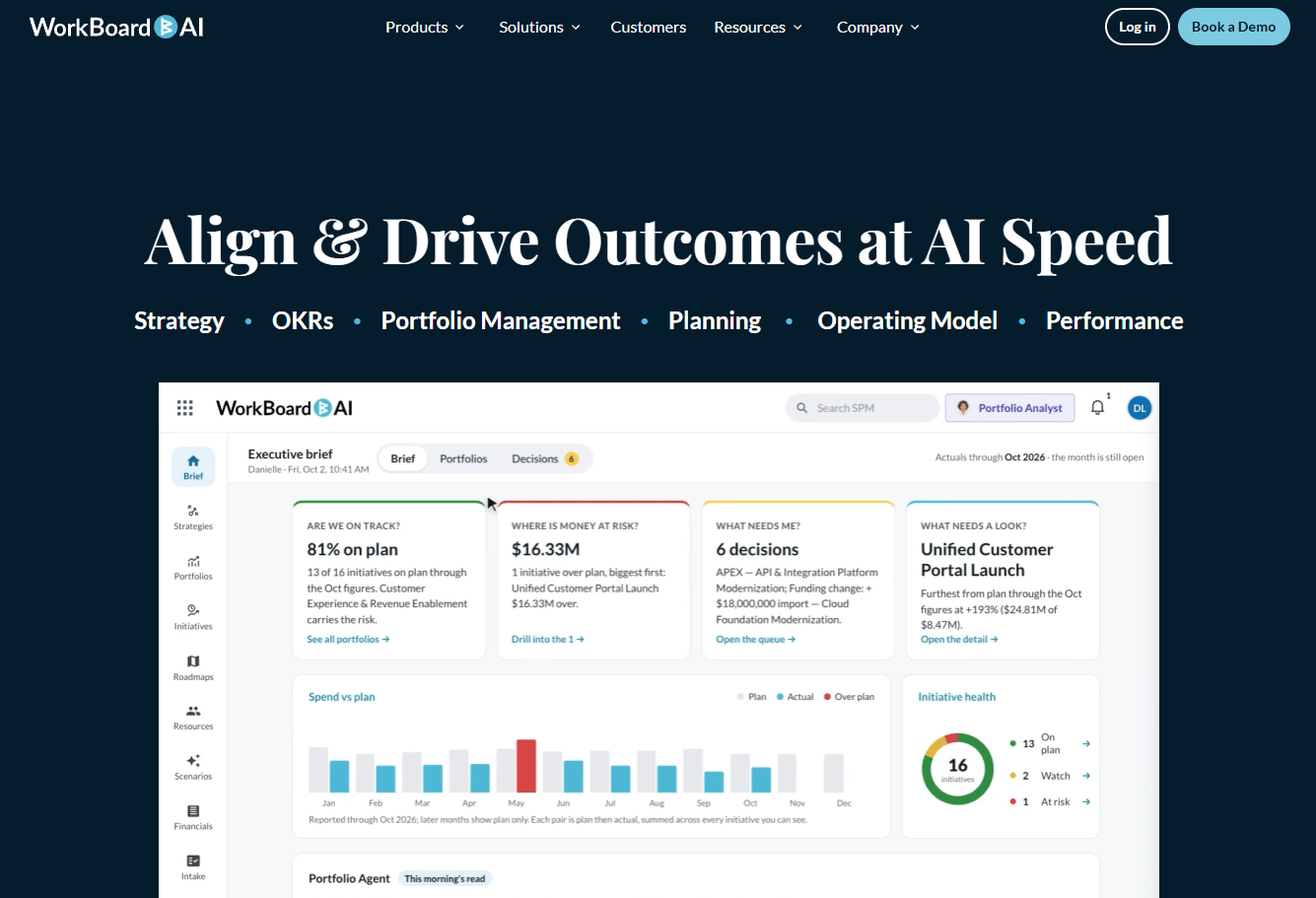
Workboard is an AI-native strategy execution platform for enterprise organizations. It connects OKR management with strategic portfolio management, operating models, and AI agents that support portfolio analysis, chief-of-staff workflows, and leadership coaching. The platform is built for teams where operating cadence, business reviews, and executive alignment are core to how leadership runs.
Best for: Large enterprises running OKRs through formal weekly business reviews and strategic portfolio management.
Key features
- Enterprise OKR and strategy alignment
- Strategic portfolio management with planning, budgeting, and roadmaps
- AI agents for portfolio analysis and chief-of-staff workflows
- Business review workflows and leadership coaching
- Executive dashboards and operating model tools
Why choose Workboard: Choose Workboard if leadership cadence is the product, not just a goal-tracking layer. It may be more infrastructure than a 50-person SaaS team needs, but for organizations with mature operating rhythms and complex portfolio management requirements, it provides depth that lighter OKR tools do not.
Workboard pricing: Pricing requires contacting sales.
G2 rating: 3.3/5
5. Betterworks
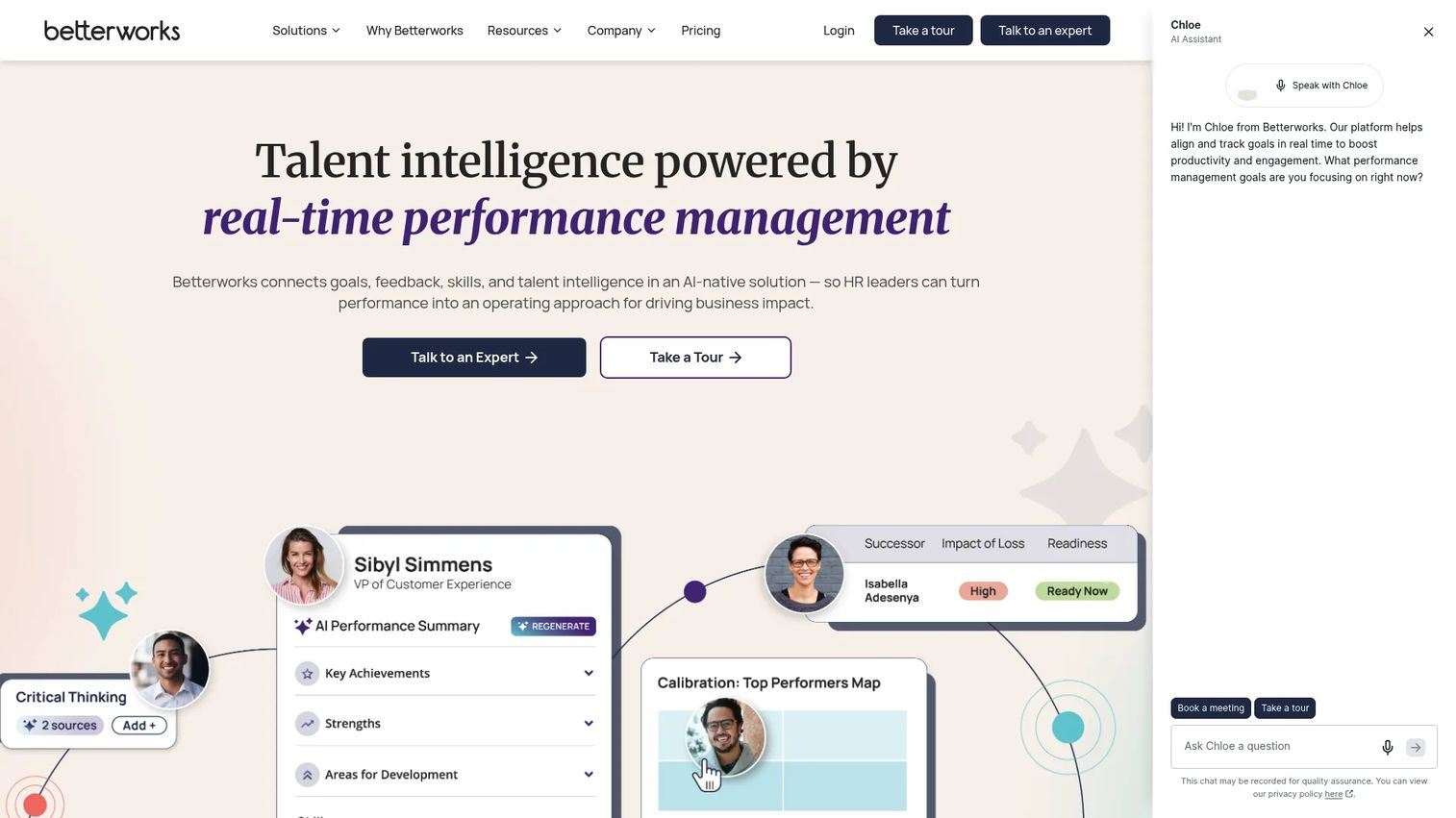
Betterworks is a performance enablement platform that connects company goals, manager conversations, continuous feedback, and employee development. It supports OKRs, 1:1 meetings, performance calibration, succession planning, engagement surveys, and AI-assisted performance management. The connection between strategy and people systems is what distinguishes it from pure goal-tracking tools.
Best for: Companies where the founder wants goals to shape manager conversations, not just executive reporting.
Key features
- Goals and OKRs with alignment dashboards
- Performance conversations, feedback, and 1:1 meetings
- AI-assisted performance management and talent profiles
- Succession planning and skills intelligence
- Employee engagement surveys and integration with HRIS platforms
Why choose Betterworks: If your biggest execution risk is managers running independent agendas rather than advancing company priorities, Betterworks connects the strategy layer to the people layer directly. It is a stronger fit for HR-forward organizations than for teams that want a lightweight OKR tracker.
Betterworks pricing: The Performance plan is $8 per user per month. The Performance plus Talent Intelligence plan is $9 per user per month. Enterprise pricing is quoted on request.
6. Perdoo
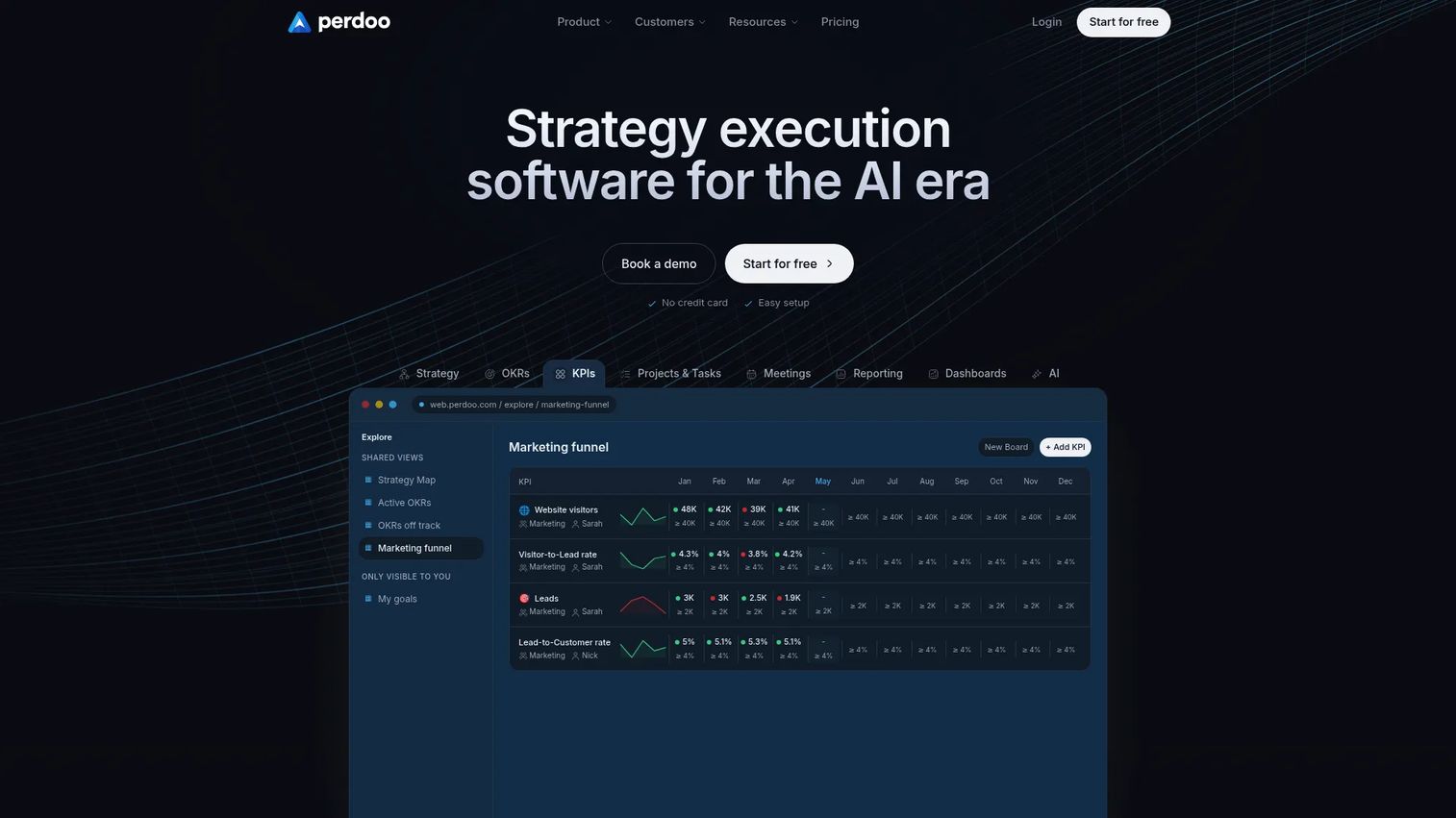
Perdoo combines OKR tracking, KPI boards, strategy maps, and performance reviews in one platform. It includes health indicators, automated check-ins, custom dashboards, and an AI Assistant and AI Coach. The free plan supports up to five users, making it accessible for smaller leadership teams before scaling up.
Best for: Teams that want OKRs and KPIs in one strategy view, without buying separate goal and performance tools.
Key features
- Strategy maps with OKR and KPI tracking
- Health indicators and progress scoring
- Automated check-ins and performance reviews
- Custom dashboards and board views
- AI Assistant, AI Coach, and API or MCP Server access
Why choose Perdoo: It is a practical bridge between goal setting and KPI visibility. Founders who want their leadership team to see both what the goals are and whether the underlying metrics are healthy will find the combined view useful without over-engineering the stack.
Perdoo pricing: A free plan supports up to five users. The Premium plan starts at €6.40 per user per month, billed annually. The Supreme plan is €8.00 per user per month, billed annually, adding board views, custom dashboards, and performance reviews.
G2 rating: 4.4/5
7. Quantive
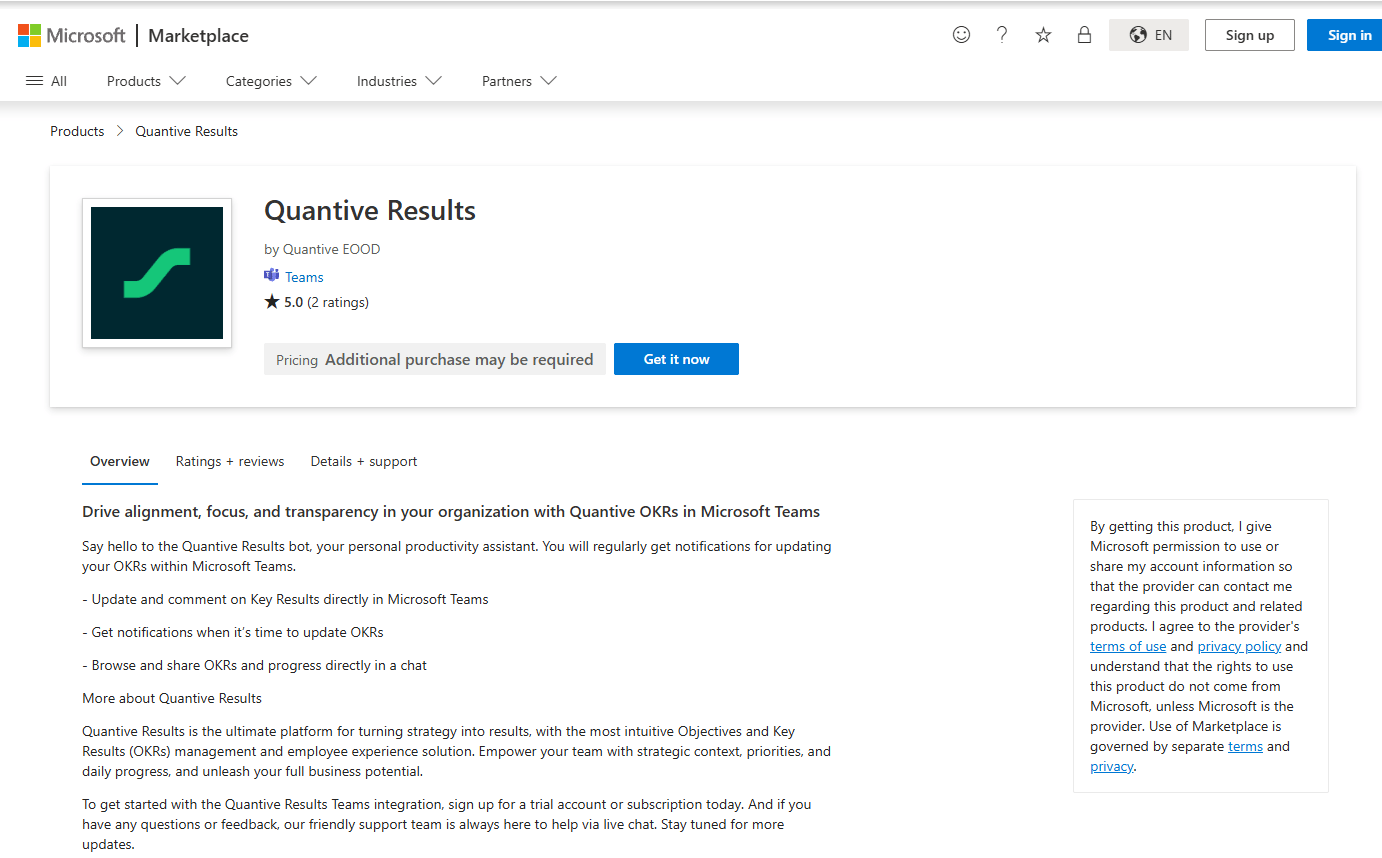
Quantive is an enterprise OKR and strategy management platform. The product now redirects to WorkBoardAI and operates under that platform's capability set, covering strategy execution, OKR management, strategic portfolio management, and AI-assisted leadership workflows. Organizations already familiar with Quantive's OKR model will find continuity in the WorkBoardAI offering.
Best for: Enterprise organizations managing OKR programs with complex data integrations and advanced reporting requirements.
Key features
- OKR management and goal alignment
- Strategic portfolio management with planning and prioritization
- AI agents for portfolio analysis and strategic insights
- Data integrations and advanced analytics
- Progress reporting across leadership and business units
Why choose Quantive: It is best suited for larger organizations where OKR data needs to connect to multiple business systems and where the volume of strategic initiatives requires portfolio-level visibility. Smaller SaaS teams may find the depth more than necessary.
Quantive pricing: Pricing requires contacting sales.
G2 rating: 4.6/5
8. ClearPoint Strategy
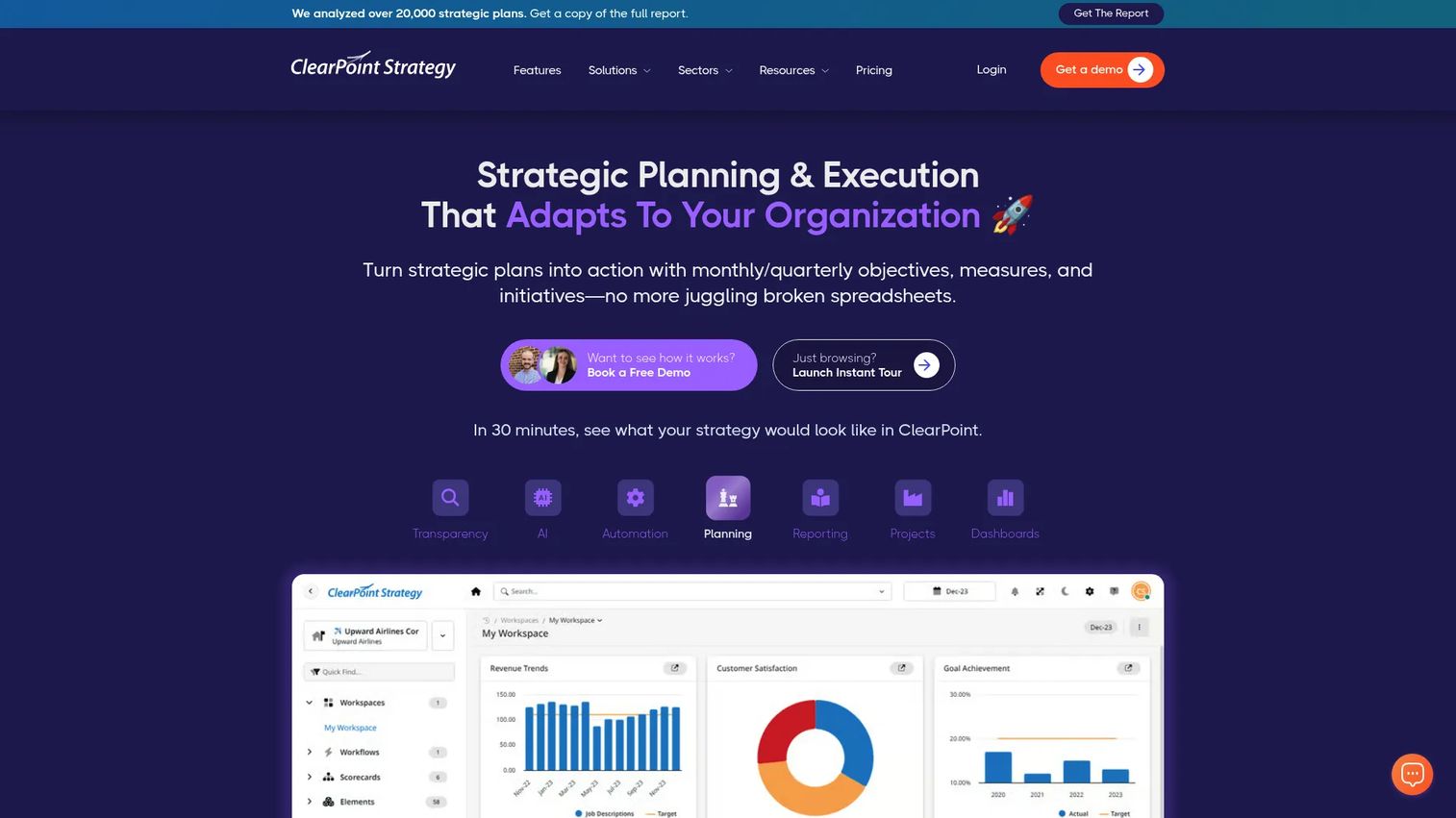
ClearPoint Strategy is a strategy execution platform built around scorecards, automated reporting, and cross-department alignment. It supports Balanced Scorecards, OKRs, initiatives, and KPIs, with AI-powered analysis and automated reporting workflows. The platform is widely used by public-sector, nonprofit, healthcare, and education organizations where recurring stakeholder reporting is a core requirement.
Best for: Organizations whose primary pain is recurring executive or board reporting, not just goal setting.
Key features
- Balanced Scorecards, strategy maps, and dashboards
- Automated reports and reporting workflows with approvals
- KPI and initiative tracking with data integrations
- AI-powered strategy analysis and recommendations
- Role-based permissions and SSO
Why choose ClearPoint Strategy: If the reporting cycle is what breaks every quarter, not the goal-setting, ClearPoint Strategy is worth evaluating. It is particularly strong for teams with formal governance requirements, multiple stakeholder audiences, or compliance-driven reporting cadences.
ClearPoint Strategy pricing: Pricing requires a tailored sales conversation. Plans start at 10 users.
G2 rating: 4.6/5
9. Workpath
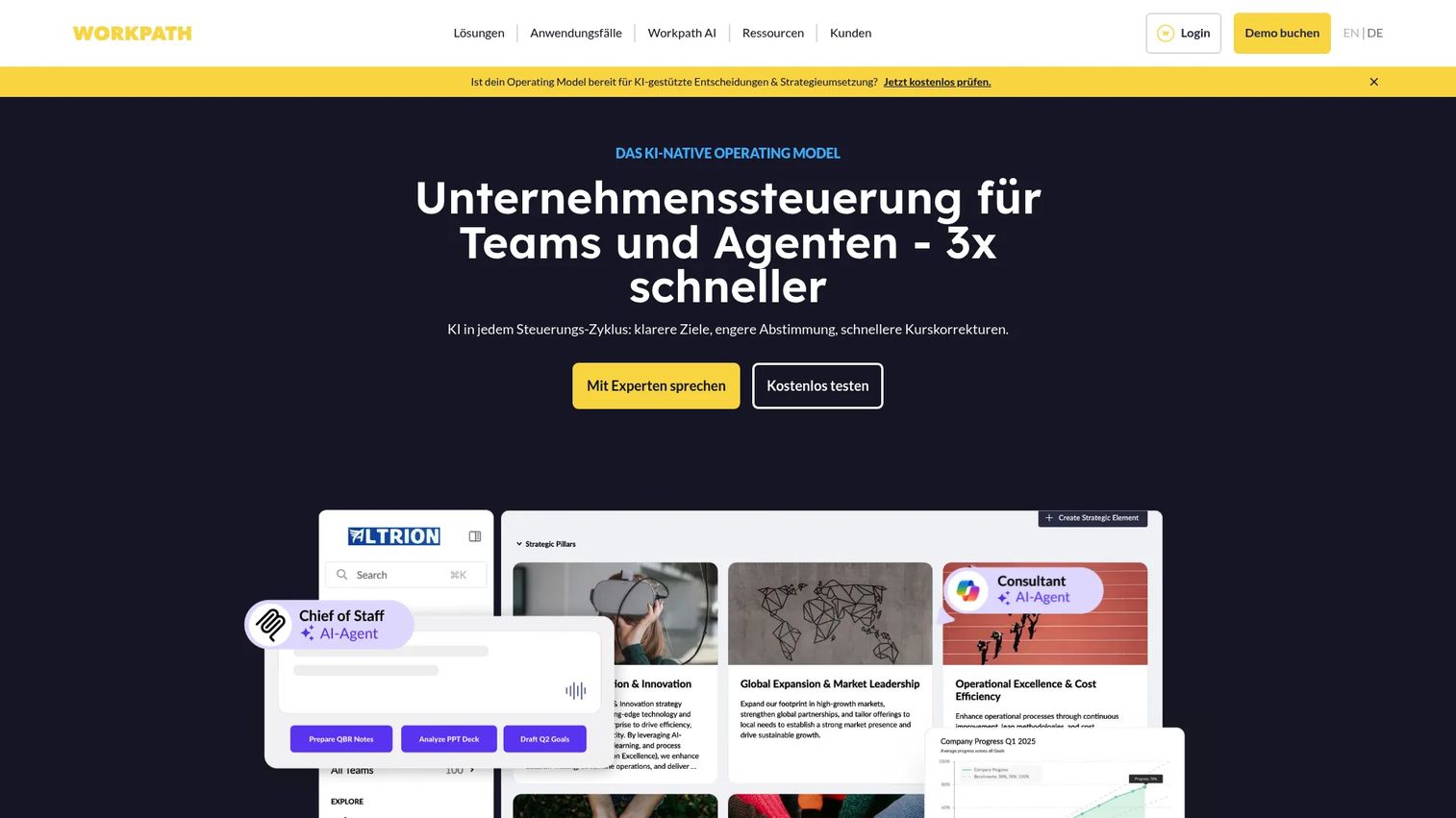
Workpath is an AI-powered enterprise strategy execution platform that connects goals, KPIs, initiatives, resources, and business outcomes in a modular structure. Its Strategy Hub documents and connects strategy to execution across business units. The AI Companion and Agent Hub support goal planning, status summaries, and risk detection. It is designed for organizations managing outcomes across many departments simultaneously.
Best for: Large enterprises coordinating strategy execution and outcome management across multiple business units.
Key features
- Strategy Hub for connecting strategy to execution
- KPI integration, automation, driver trees, and analytics
- Outcome management and portfolio views
- AI Companion and Agent Hub for risk detection and strategic insights
- Review cadence and alignment tracking across business units
Why choose Workpath: Choose Workpath when coordinating outcomes across five or more business units is the core problem. For a 50 to 150-person SaaS team, the modular depth may exceed what the leadership team needs in year one of formalized strategy execution.
Workpath pricing: Pricing depends on selected modules, license types, and contract length. Contact sales for a quote. A 14-day trial is available after a demo.
G2 rating: 4.9/5
10. Businessmap
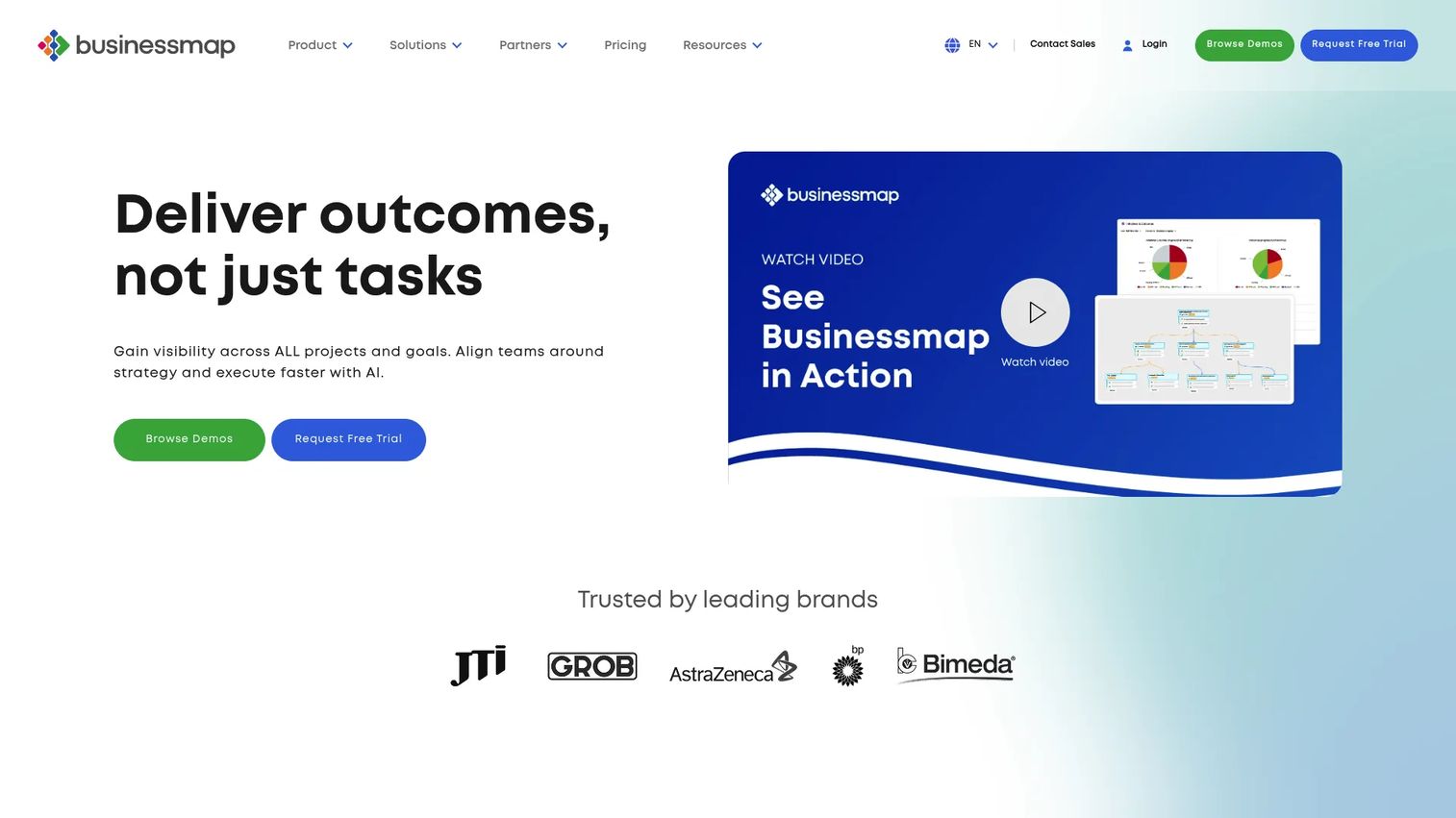
Businessmap is an enterprise project and portfolio management platform that connects strategic objectives to portfolios, initiatives, and delivery workflows through Kanban and flow-based views. It includes OKR and KPI tracking, capacity planning, workflow automation, and AI-powered project planning. The platform is particularly useful for product and operations teams that manage strategy through actual work movement rather than separate goal-tracking layers.
Best for: Teams connecting strategy to portfolio Kanban and delivery flow, where execution visibility lives in work movement.
Key features
- Portfolio Kanban and project portfolio workspaces
- OKR and KPI tracking with outcome alignment
- AI-powered project planning and workflow automation
- Capacity and resource planning
- Flow metrics and value-stream analytics
Why choose Businessmap: It fits teams where the most important signal of strategic progress is whether the right work is flowing. If your engineering and product teams already work in Kanban, Businessmap can connect that layer to company-level strategy without adding a separate goal tool.
Businessmap pricing: Standard and Enterprise packages require contacting sales. A free trial is available.
G2 rating: 3.9/5
11. Profit.co
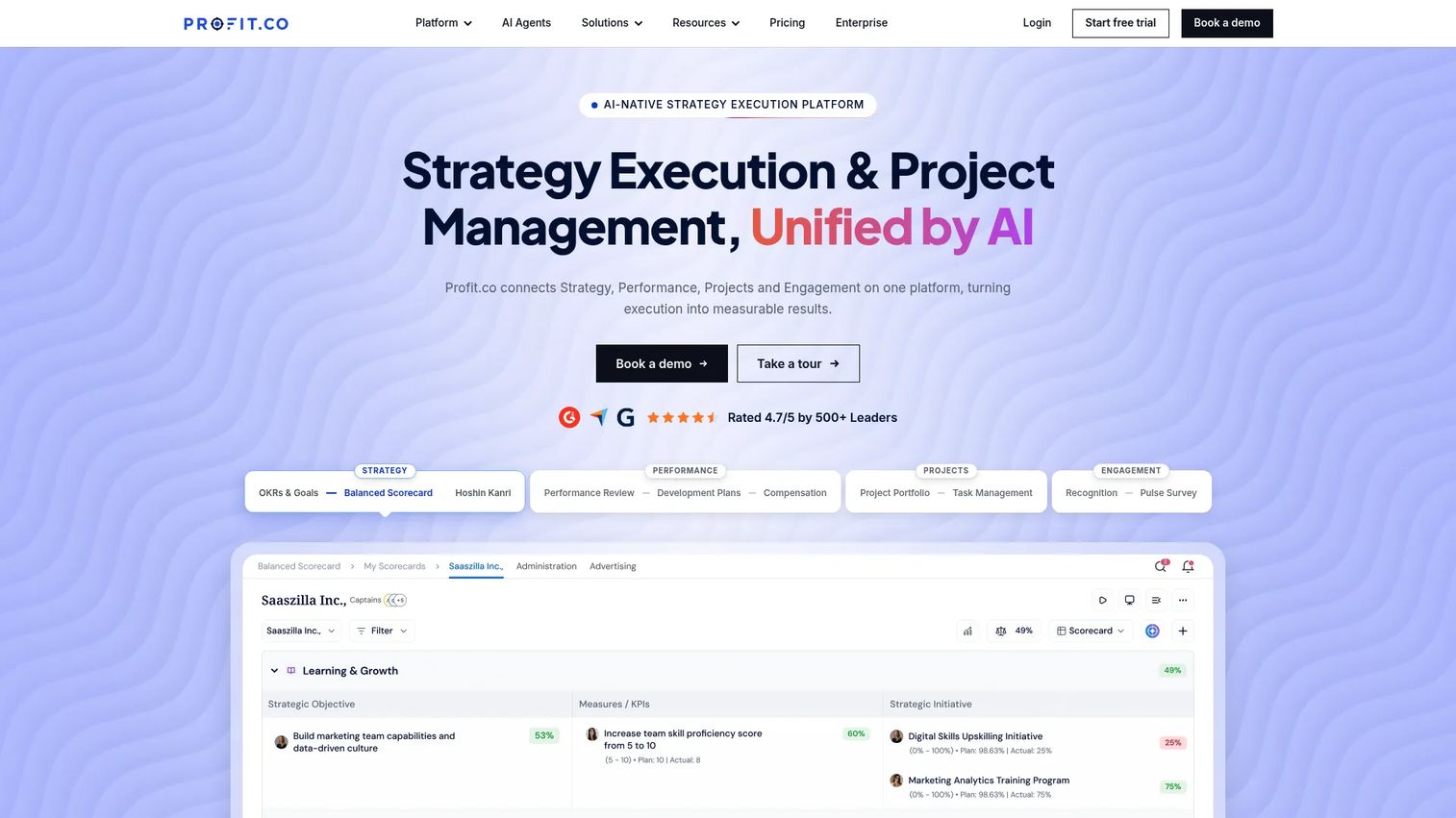
Profit.co is an AI-native strategy execution platform that combines OKR management, performance reviews, task management, project portfolio management, and employee engagement in a single buying motion. It supports OKRs, Balanced Scorecards, Hoshin Kanri, and strategy roadmaps, with 100-plus integrations and built-in Athena AI for performance insights and goal recommendations.
Best for: Teams that want OKRs, tasks, and performance review workflows under one platform rather than stitching separate tools together.
Key features
- OKRs, goals, and strategy roadmaps
- Performance reviews, calibration, and development plans
- Task management and project portfolio management
- Employee recognition, pulse surveys, and meeting tools
- 100-plus integrations and built-in Athena AI
Why choose Profit.co: It is a broad platform for companies that want goal execution and people workflows to live in the same tool. If you are running separate OKR, task, and performance tools and want to consolidate, Profit.co covers all three.
Profit.co pricing: Essentials and Enterprise plans both require contacting sales for a quote. A 30-day free trial is available.
G2 rating: 4.7/5
12. Spider Strategies
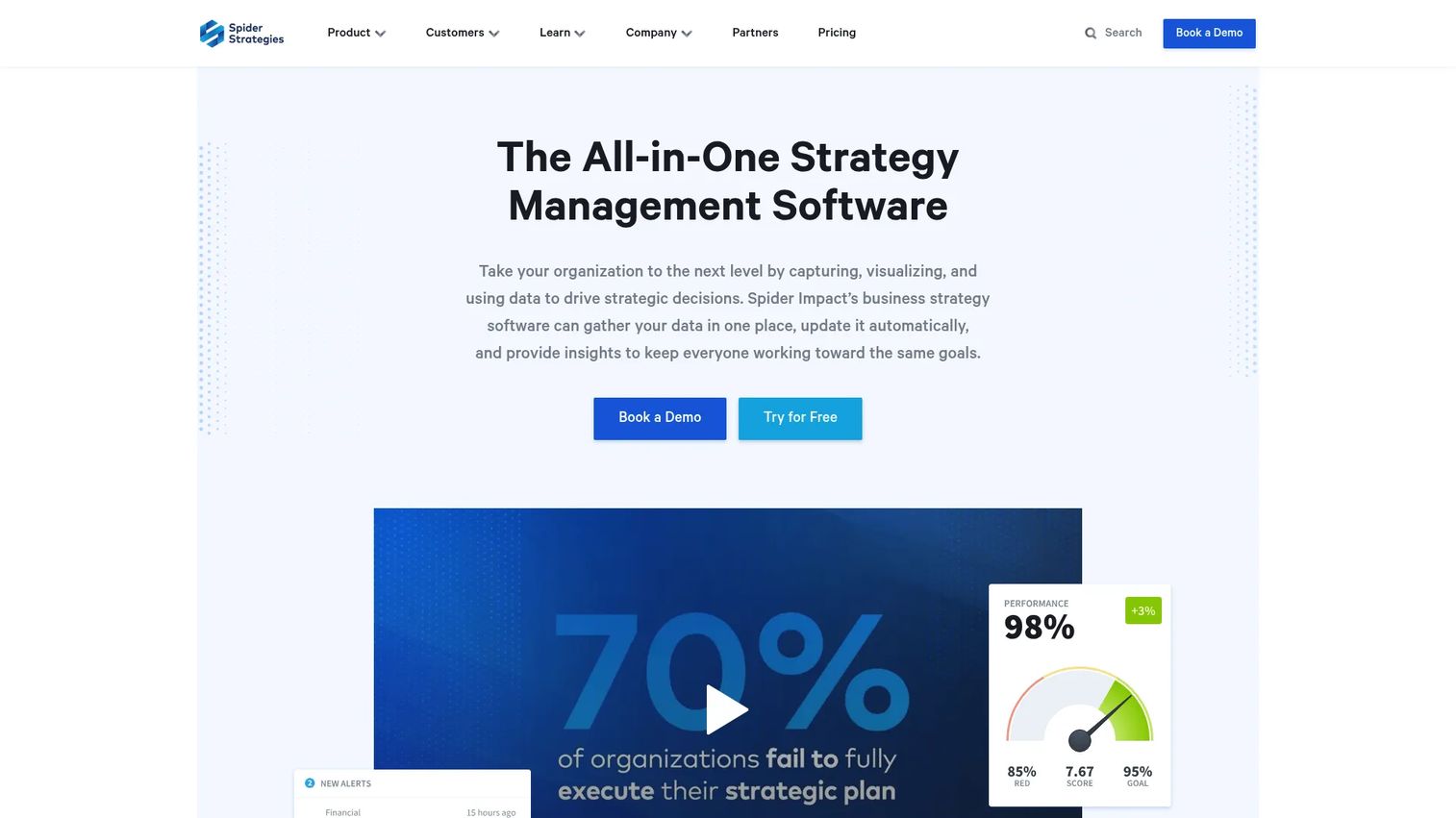
Spider Strategies provides Spider Impact, a performance management platform built around the Balanced Scorecard methodology. It supports strategy maps, KPI tracking, initiative management, dashboards, automated reports, and AI-assisted insights and forecasting. The platform is best suited for organizations with an established strategic framework that needs software to run it consistently.
Best for: Organizations already using Balanced Scorecard methodology that want software to operationalize it reliably.
Key features
- Balanced Scorecards and strategy maps
- KPI and initiative tracking with data integrations
- Dashboards, reports, and AI-assisted insights
- Forecasting, alerts, and no-code applications
- Role-based access and multiple hosting options
Why choose Spider Strategies: If your organization already knows its strategic framework and the problem is consistency and reporting, not framework design, Spider Impact removes the manual reporting burden. The platform earns high satisfaction ratings from teams that use the Balanced Scorecard or similar structured approaches.
Spider Strategies pricing: Plans are organized by user thresholds: Growth (1-plus users), Team (10-plus), Department (25-plus), and Enterprise (100-plus). All pricing requires contacting the vendor. A 30-day unrestricted free trial is available.
G2 rating: 5.0/5
13. Asana
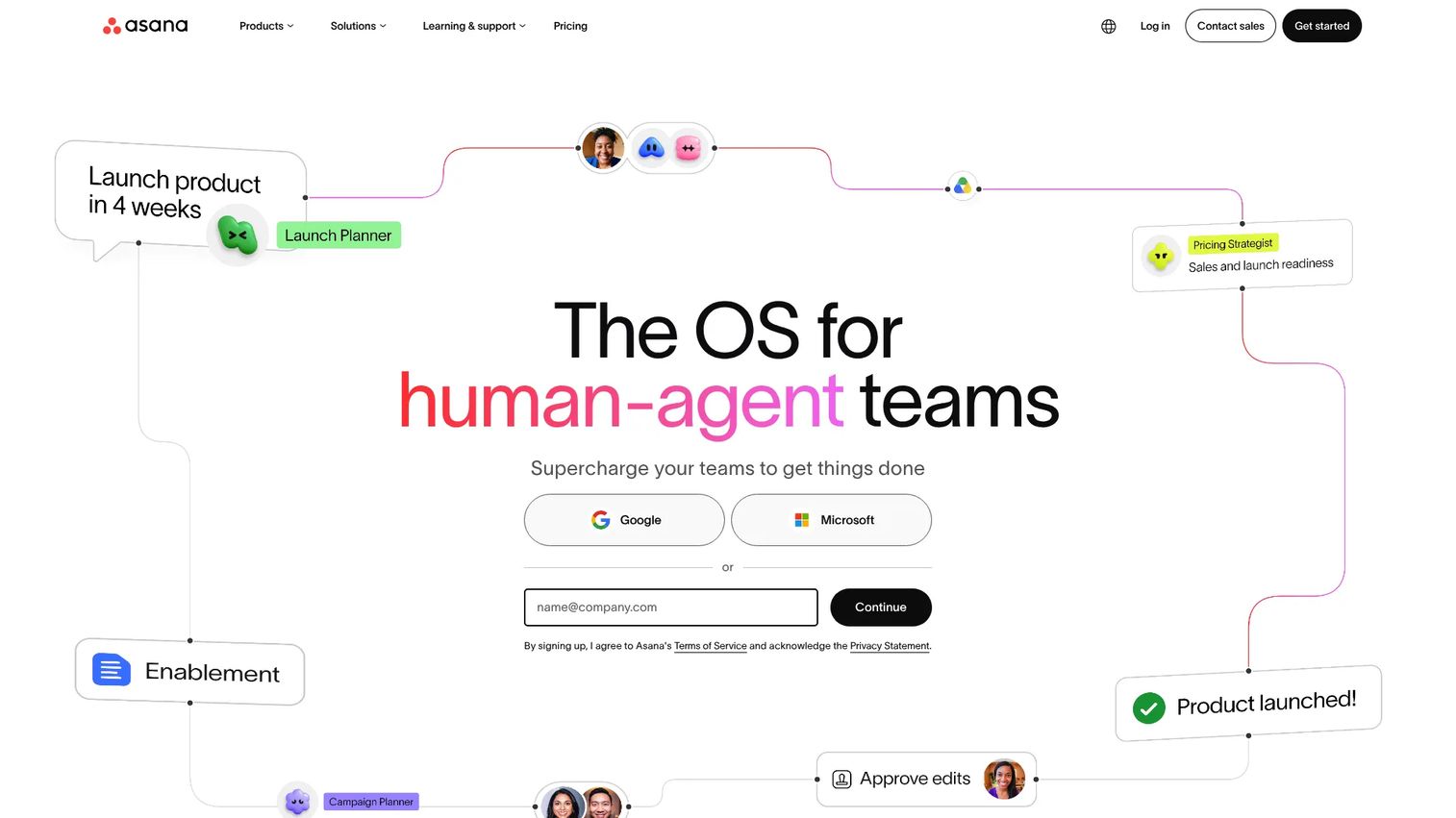
Asana is a work management platform with goals, portfolios, and reporting capabilities built in. For teams that already manage cross-functional work in Asana, adding the goals and portfolios layer can provide strategy-to-work visibility without adopting a separate platform. It is not a dedicated strategy execution tool, but it works well when execution visibility matters more than strategy-office depth.
Best for: Teams already using Asana for project management that want strategy tracking close to delivery work.
Key features
- Goals, portfolios, and reporting dashboards
- Project and task management with multiple views
- Workflow automation with rules and templates
- Resource management and workload planning
- AI Teammates and AI Studio on paid plans
Why choose Asana: Choose Asana when the team already lives in it and adding a separate strategy tool would create adoption friction. The honest limitation is that Asana's goals layer is secondary to its work management core, so teams with complex strategy reporting needs may outgrow it.
Asana pricing: The Personal plan is free forever. The Starter plan is $10.99 per user per month, billed annually ($13.49 monthly). The Advanced plan is $24.99 per user per month, billed annually ($30.49 monthly). Enterprise and Enterprise-plus plans require contacting sales.
G2 rating: 4.4/5
14. Jira
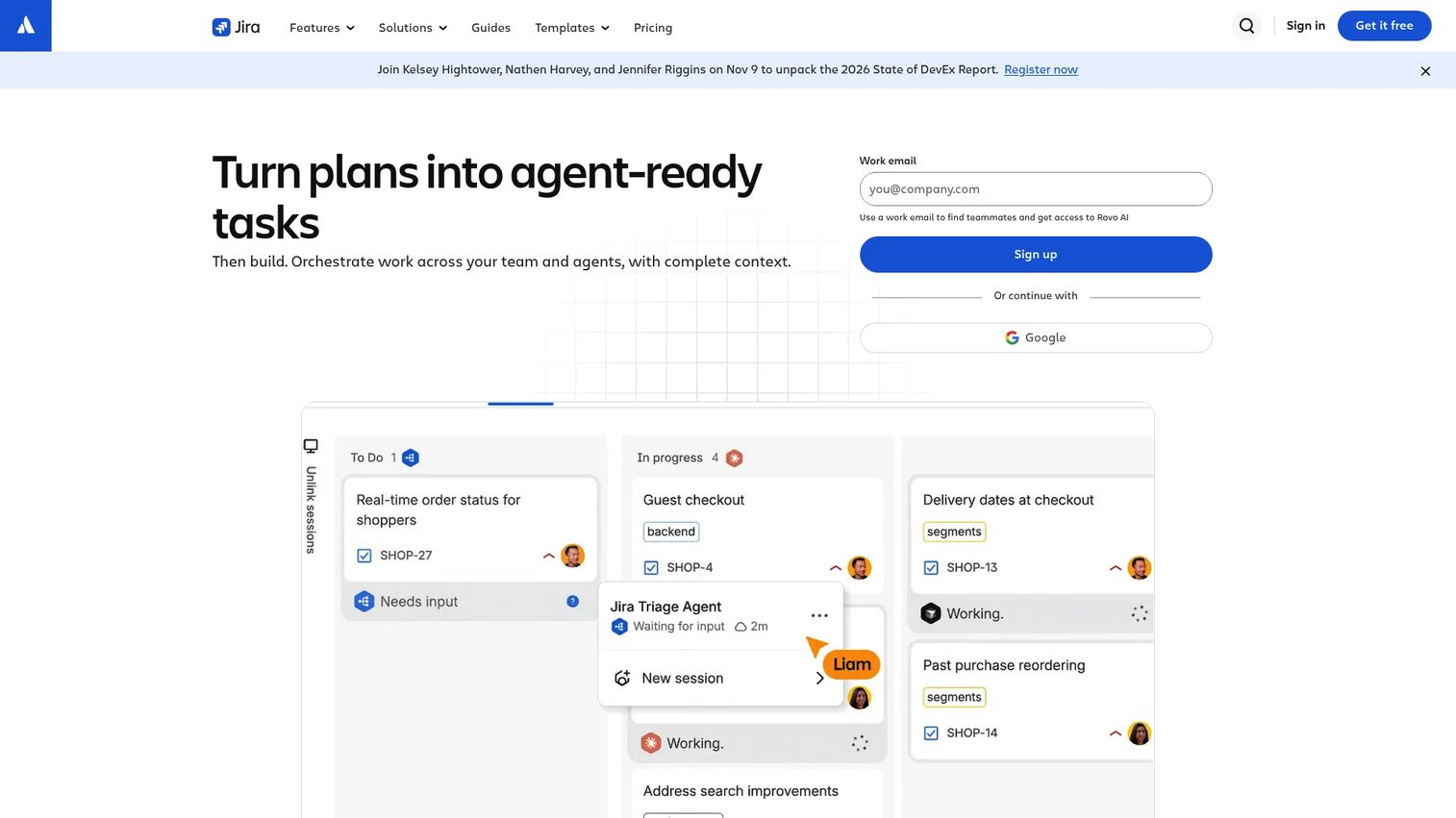
Jira is a software delivery platform used by product and engineering teams for issue tracking, backlog management, roadmaps, and agile delivery. It is not a standalone strategy planning tool for company-wide goals, but it is strong for connecting product strategy to engineering execution. Founders using Jira for delivery should know that leadership-level strategic reporting still needs a separate layer on top.
Best for: Product and engineering teams tying strategy to software delivery, where epics and roadmaps are the primary execution artifacts.
Key features
- Scrum and Kanban boards with backlog management
- Roadmaps, timelines, and delivery tracking
- Customizable workflows and issue hierarchy
- Automation and reporting dashboards
- AI-powered Rovo Search, Chat, and Agents on paid plans
Why choose Jira: It is the right choice when the most important execution work happens in product and engineering. Founders still need a leadership-level reporting layer on top if the whole company is involved in the strategy.
Jira pricing: The Free plan covers up to 10 users. The Standard plan is $7.91 per user per month. The Premium plan is $14.54 per user per month. Enterprise plans require contacting sales and are billed annually.
G2 rating: 4.3/5
15. Microsoft Viva Goals
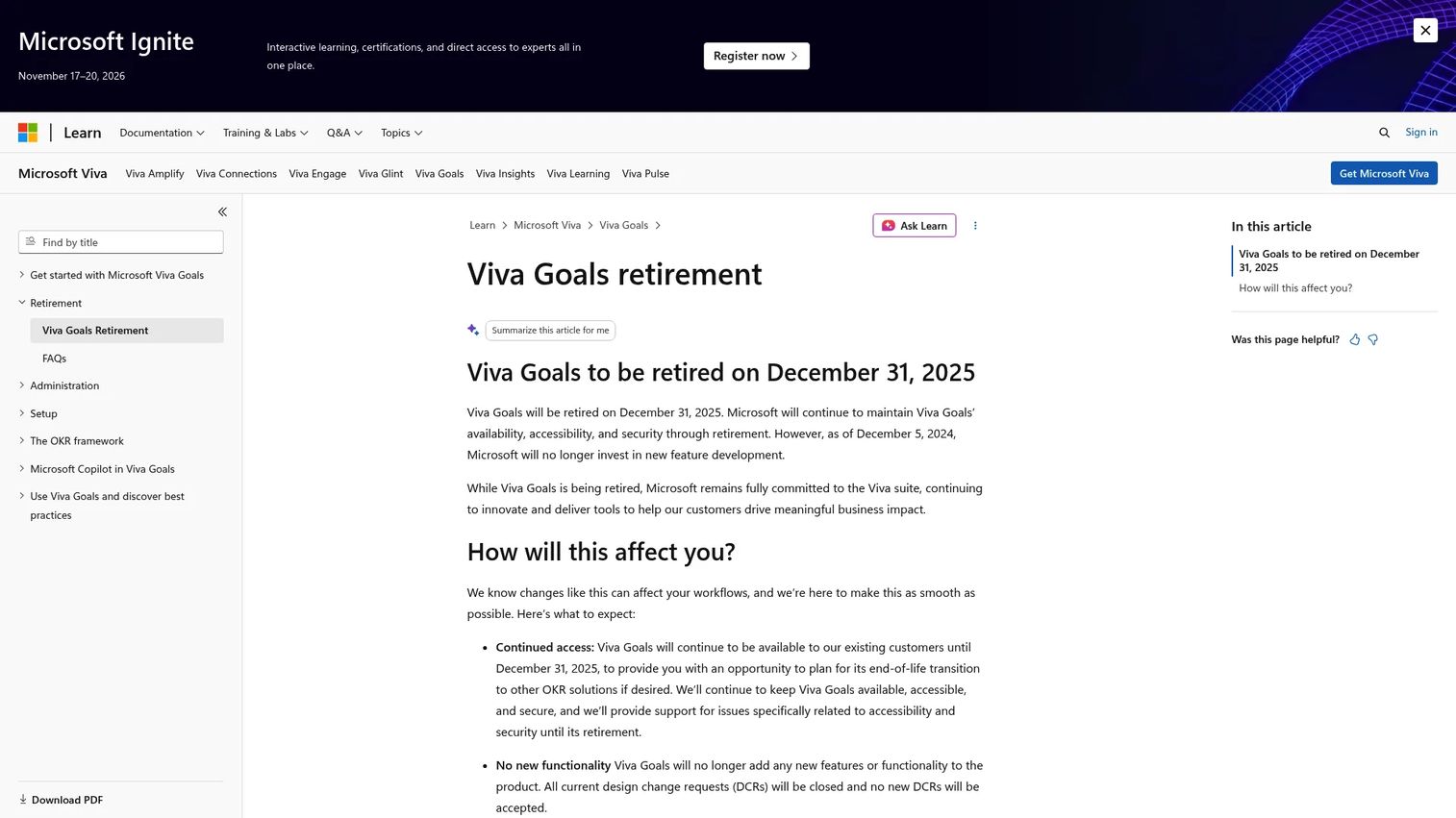
Microsoft Viva Goals was an OKR and goal-management product within the Microsoft 365 ecosystem. Microsoft retired the product on December 31, 2025. It is no longer accessible or available for new deployments.
Best for: Historically, Microsoft-centric organizations running OKRs inside the Microsoft 365 workflow. No longer applicable for new evaluations.
Key features
- OKR creation, management, and progress tracking (retired)
- Check-ins, scoring, and closure workflows (retired)
- Review dashboards, initiatives, and Microsoft Teams integration (retired)
Why choose Microsoft Viva Goals: It is no longer an option. Organizations that were running Viva Goals need to migrate to an active OKR platform. Mooncamp, Perdoo, and OKRs Tool are worth evaluating for teams that want a comparable OKR layer without enterprise overhead.
G2 rating: 4.3/5 (based on reviews prior to retirement)
Considerations when choosing strategic planning and execution software
Fit the tool to your operating cadence
Map the platform to how your leadership team actually runs: Weekly review, monthly business review, QBR, board meeting, annual planning cycle. A tool that does not align to your cadence becomes a secondary reporting system that nobody updates after the first quarter.
Decide your strategy framework before you buy
Different platforms assume different frameworks. OKR-first companies should not buy a scorecard-heavy tool unless formal reporting requirements outweigh adoption. Pick the framework first, then find the software that runs it. Switching frameworks after deployment is expensive.
Check whether metric updates can be automated
Ask every vendor whether KPIs can pull automatically from your CRM, BI platform, or product analytics tool. Manual update requirements are where adoption drops off. If every status entry requires a human, the system stalls by month two.
Evaluate governance for the next 18 months
Look at permissions, ownership assignment, approval workflows, admin controls, and version history. Series B teams are adding VPs and department leads fast. The tool needs to support role-based access and clean ownership records before the team doubles, not after.
Test the board-reporting workflow yourself
Before signing, ask the vendor to walk you through how a founder would explain progress, blockers, and changes since the last board meeting without assembling separate exports. If that workflow requires manual work, the problem is not solved.
Conclusion
The right choice depends on where your biggest execution gap lives.
Choose Cascade if the team needs a full strategy operating system that covers planning, initiatives, metrics, and dashboards together. Choose Mooncamp or OKRs Tool if OKRs are the execution language and you want structured adoption without enterprise overhead. Betterworks fits if the goal-to-manager conversation link is the missing piece. ClearPoint Strategy and Spider Strategies suit teams where recurring formal reporting is the core pain. Asana and Jira are practical options when strategy tracking needs to stay close to delivery work rather than sit in a separate platform.
Microsoft Viva Goals is no longer available as of December 31, 2025. Teams evaluating it need to move to an active platform.
The best tool is the one your leadership team uses every week without you scheduling the check-in. Start with your operating cadence, pick the software that makes ownership and progress visible without you as the reporting layer, and run one full planning cycle before expanding the deployment.
Shortlist two tools, run one planning cycle in each, and pick the one that gives your leadership team the clearest weekly signal.
Start your journey with Guideflow today!
FAQs
Strategic planning and execution software helps organizations define company goals, assign owners, track KPIs and OKRs, manage initiatives, and report on execution progress. It sits between the annual planning process and the weekly work happening in project and delivery tools, connecting strategy to measurable outcomes across leadership teams.
Strategic planning software helps teams define goals, priorities, and frameworks during planning cycles. Strategy execution software tracks ownership, check-ins, progress, and blockers after planning is complete. The most effective platforms handle both together, so the agreed plan does not become a separate artifact from the actual work.
Cascade is the strongest broad fit for teams that need planning, execution, metrics, and reporting in one system. Mooncamp and OKRs Tool suit OKR-focused teams that want structured goal management without enterprise complexity. Asana works well when strategy tracking needs to connect directly to project execution without adding a separate platform.
Very early teams can often manage with shared documents, spreadsheets, and project management tools. Series B companies typically need dedicated tooling once leadership handoffs, board reporting, and cross-functional initiative tracking become too complex to manage manually. The signal to buy is usually when the founder spends time assembling status rather than acting on it.
OKR software tracks outcomes and alignment: Whether the right goals are moving. Project management software tracks tasks and delivery: Whether the work is getting done. Many Series B teams need both layers, with OKR software setting the strategic context and project management handling execution detail. The two categories serve different questions.
Prioritize goal cascading, initiative ownership, KPI dashboards that pull data automatically, check-in workflows, integration with your existing CRM and BI tools, role-based permissions, and clean board reporting. The practical test: Can your VP of Sales run their quarter inside the tool without asking you to assemble their status?
Pricing varies significantly. Perdoo and Asana start under $15 per user per month with free tiers for small teams. OKRs Tool uses flat-fee plans from $129 per month, which removes per-seat cost growth as headcount scales. Betterworks starts at $8 per user per month. Cascade, Workboard, Workpath, ClearPoint Strategy, Businessmap, Profit.co, and Spider Strategies require contacting sales for a quote.
Start with one leadership team, four to six company-level priorities, and a weekly review ritual that already exists. Automate metric updates from your CRM and BI tools before launch. Remove any duplicate reporting process the new tool replaces. If the first quarter requires more manual entry than the old system, the rollout needs to be simplified before expanding it to the rest of the organization.