Special education is no longer a paperwork problem. It is an operational one. Districts are managing thousands of IEPs across dozens of providers, state compliance timelines that move every year, service minutes that must be documented before an audit arrives, and student data scattered across SIS platforms, shared drives, and email threads.
According to NCES (2024), 7.5 million U.S. students ages 3 to 21 received services under IDEA in 2022 to 2023, representing 15% of all public school enrollment. That volume means one missed service log or a lapsed compliance deadline does not stay small. It becomes a district liability.
The software market has responded with dozens of products, but few guides explain what each one actually does. Some tools write IEPs. Others track service minutes. Others help students communicate or access curriculum. Lumping all of them into one list without explaining the difference wastes procurement time.
This guide maps the market clearly so you can shortlist by workflow, not by vendor marketing.
What's inside
This guide compares 19 special education software products for 2026, chosen for category relevance, operational fit, and reporting depth.
- IEP and compliance platforms: Tools for plan creation, timelines, documentation, and state reporting
- District operations tools: Systems for service tracking, records, special programs, and SIS integrations
- Student-facing support: Assistive communication apps, curriculum software, and therapy delivery platforms
- Buying criteria: Pricing structures, implementation lift, integrations, and fit by workflow
Pricing and G2 ratings reflect verified data from vendor pages and live G2 listings. Where no rating exists on G2, N/A is noted.
TL;DR
- Best for real-time service tracking: Brolly focuses on IEP service documentation, provider logging, and progress dashboards
- Best for district IEP workflows: EmbraceIEP covers compliance, collaboration, parent portals, and reporting
- Best for special programs breadth: Frontline Special Education Management Software handles IEPs, 504 plans, Medicaid, and MTSS
- Best for SIS-connected districts: PowerSchool and Skyward suit teams already running large student data systems
- Best with published per-student pricing: SameGoal starts at $12.98 per student for the 2026 to 2027 school year
- Best for AAC and assistive technology: Proloquo2Go, AbleSpace (free tier available), and LiveScribe Smartpen serve student-facing support needs
What is special education software?
Special education software is a category of education technology that helps schools and districts plan, document, deliver, monitor, and report services for students with disabilities or specialized learning needs.
The category contains several distinct subtypes. An IEP management platform and an AAC communication app both fall under the special education software umbrella, but they solve different problems. One helps a district document compliance and manage timelines. The other helps a student communicate. Buying the wrong type for the job is the most common procurement mistake.
Core capabilities across the category:
- IEP creation and plan management
- IDEA and state compliance tracking
- Service documentation and provider logging
- Progress monitoring against student goals
- Special education reporting and administrator dashboards
- Parent and educator collaboration tools
- SIS and education-system integrations
- Document storage and audit evidence management
- Medicaid, Section 504, RTI, and MTSS support
- Assistive communication and instructional supports for students
Districts typically need more than one type. A special education director managing IEP compliance needs different software than a speech-language pathologist tracking therapy minutes, who needs different software than a student using AAC to communicate in class. The evaluation process should start by defining which job is the highest priority, then shortlisting tools that do that job well.
The global special-needs education technology market was estimated at $18.2 billion in 2025, with educational software accounting for 32.1% of that figure, according to Dataintelo (2026). That scale reflects how much complexity districts are trying to systematize.
When to use special education software
Manage IEPs without spreadsheet drift
Teams reach for IEP software when timelines, goals, service documentation, and compliance checkpoints have outgrown shared folders and calendar reminders. The operational risk is not just inefficiency; missed deadlines and incomplete documentation create audit exposure. Purpose-built platforms assign ownership, surface upcoming deadlines, and keep compliance evidence in one retrievable location.
Track services and progress in real time
Service delivery is only defensible if it is documented. Provider logs, goal-linked progress notes, and missed-service alerts are what district administrators need to answer a state inquiry or prove a student received their mandated hours. Real-time tracking replaces the end-of-month catch-up that leaves gaps in the record.
Support students beyond administrative compliance
Some tools exist to help students communicate, access curriculum, or capture instruction. These are not substitutes for IEP compliance platforms; they are a separate layer. A student who uses an AAC app daily needs that tool regardless of which IEP management system the district runs. Evaluating these tools separately prevents scope confusion during procurement.
Special education software comparison
The table below covers all 19 tools in the order they appear in this guide. Pricing and ratings reflect verified data from vendor pages and G2 listings.
| # | Product | Best for | Key differentiator | Pricing | G2 rating |
|---|---|---|---|---|---|
| 1 | Brolly | Real-time IEP service tracking | Provider logging, dashboards, goal-linked service records | Quote-based | N/A |
| 2 | EmbraceIEP | District IEP workflow management | Compliance, collaboration, reporting, parent portal | Quote-based | 4.4/5 |
| 3 | SpedTrack | IEP process management | Compliance checklists, deadline alerts, minute tracking | Quote-based | N/A |
| 4 | Frontline Special Education Management Software | Special programs administration | IEP, 504, Medicaid, RTI, and MTSS support | Quote-based | 4.2/5 |
| 5 | EDPlan | Compliance and service documentation | IEP case management, Medicaid billing, 504 plans | Quote-based | 3.6/5 |
| 6 | PowerSchool Unified Classroom Special Programs | SIS-connected special programs | Broad PowerSchool platform integration | Quote-based | 3.9/5 |
| 7 | AbleSpace | AI-powered IEP and caseload management | Free tier; AI progress notes and goal generation | Free / Custom | 4.5/5 |
| 8 | Everway Polaris | Data-driven IEP development | AI goal suggestions, embedded assessments | From $514.99/yr | 3.5/5 |
| 9 | Skyward Student Management Suite | District student data management | SIS foundation with student services workflows | Quote-based | N/A |
| 10 | YellowFolder | Digital special education records | Searchable cloud document management for K-12 | Quote-based | 4.0/5 |
| 11 | SameGoal | IEP compliance and forms | Per-student pricing; 90-day free trial | From $12.98/student/yr | 4.3/5 |
| 12 | SEIS | California special education teams | CASEMIS/CALPADS reporting, Medi-Cal billing | Quote-based | 4.3/5 |
| 13 | Merit Solutions for Special Ed | Special education administration | Verified as ERP/consulting platform, not special-ed software | Quote-based | 4.5/5 |
| 14 | Amplio | Therapy and literacy intervention | Speech, language, and dyslexia curricula with progress monitoring | Quote-based | 4.3/5 |
| 15 | TeachTown | Special education curriculum | Evidence-based adapted core curriculum, automated data collection | Quote-based | N/A |
| 16 | Proloquo2Go | AAC communication | 27,000+ symbols, 100+ voices, Apple device AAC | From $124.99 one-time | N/A |
| 17 | iComm | Marketing automation (not AAC) | AI-powered omnichannel campaigns | Quote-based | N/A |
| 18 | LiveScribe Smartpen | Note-taking accommodations | Audio-synced handwriting digitization | From $79.99 one-time | N/A |
| 19 | Adori | At-home caregiving micro-lessons | Five-minute caregiver education, free signup | Free | N/A |
Best 19 special education software tools for 2026
1. Brolly
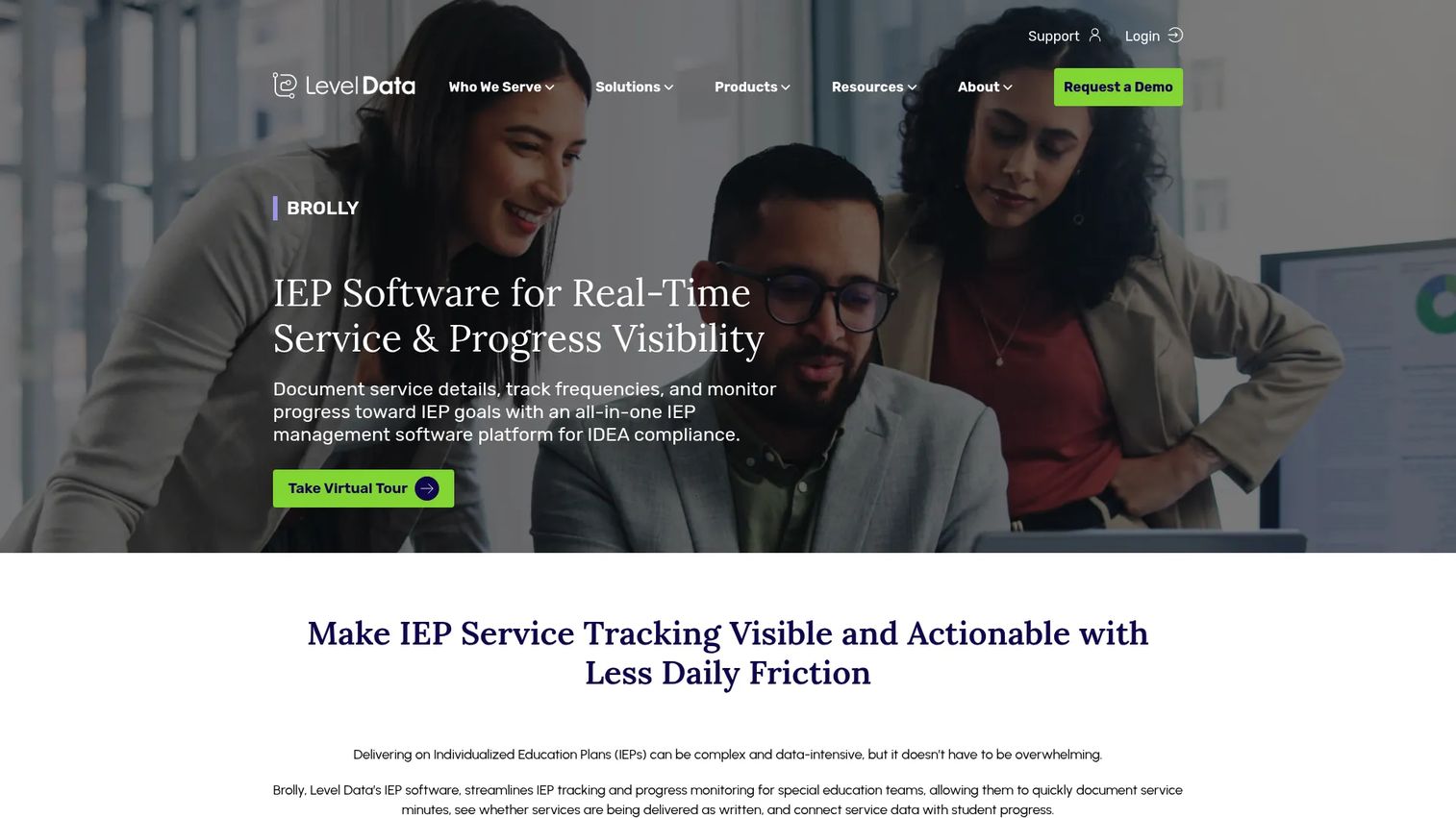
Brolly is Level Data's IEP management software for K-12 districts. It focuses on real-time service tracking, provider logging, and progress monitoring against student goals. The platform is designed for district leaders who need visibility into what services have been delivered, where documentation is incomplete, and whether students are on track against their IEP objectives.
Best for: Districts where the core pain is service documentation and audit readiness, not IEP authoring.
Key features
- IEP service tracking and provider logging
- Real-time progress monitoring dashboards
- 504 plan tracking
- Document storage for IEP records
- Mobile and web-based service logging
Why choose Brolly: Brolly is strongest when the district's problem is not writing the IEP but proving services happened. It suits special education directors managing provider compliance across multiple schools.
Brolly pricing: Brolly uses district contract pricing. Contact Level Data sales to get a quote tied to district size, modules, and implementation scope.
2. EmbraceIEP
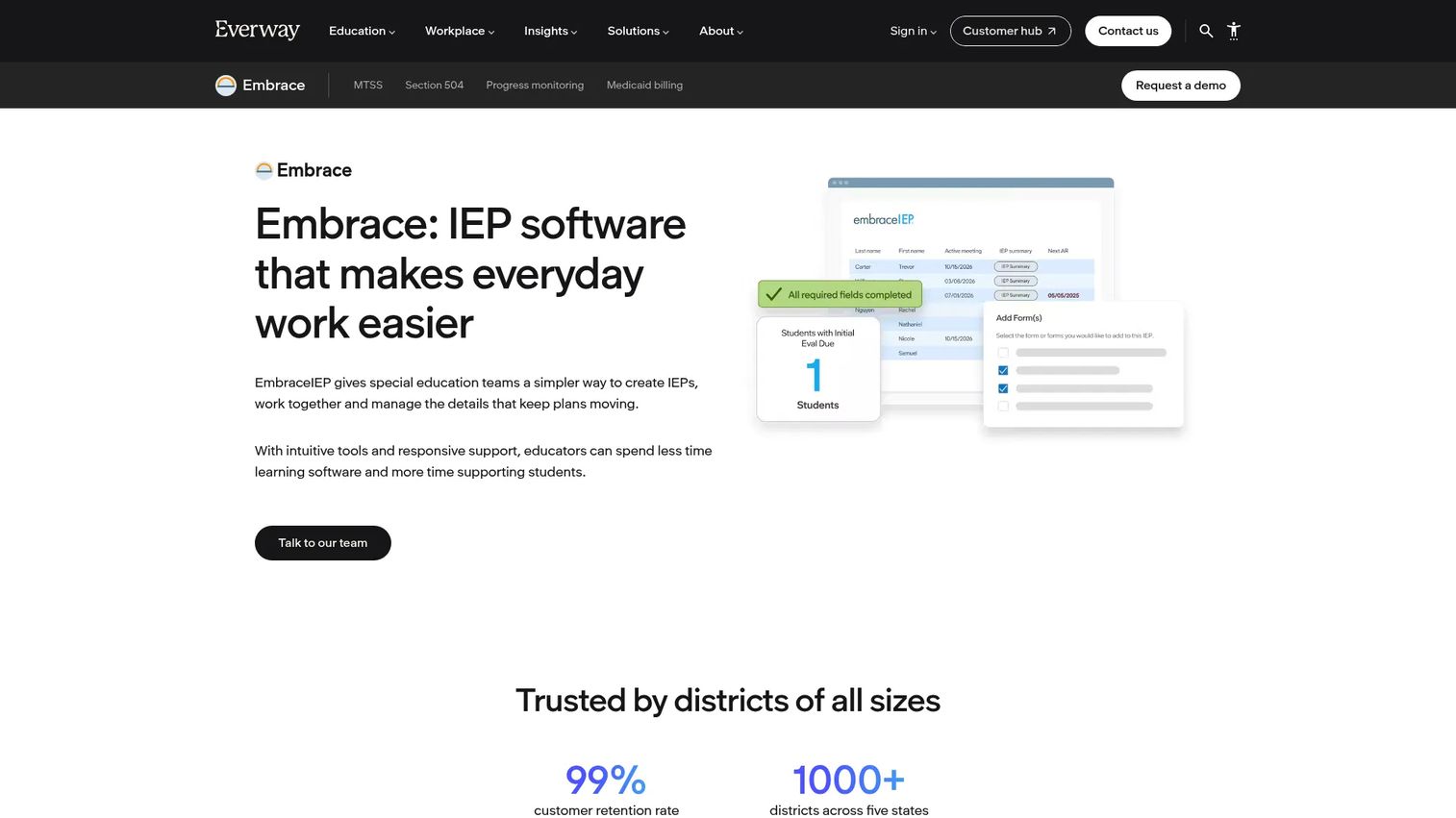
EmbraceIEP is a web-based IEP management platform built for school districts that want an operational system around the full IEP process. Features include AI-powered SMART goal building, real-time collaborative editing, electronic signatures, compliance alerts, automated timeline reminders, and document translation. A parent portal supports family access and communication.
Best for: Districts that want end-to-end IEP workflow management with implementation support and state-specific configuration.
Key features
- AI-powered SMART goal builder
- Real-time collaborative IEP editing
- Built-in electronic signatures
- Compliance alerts and required-field checks
- Automated timeline reminders and customizable reporting
Why choose EmbraceIEP: It fits districts that need more than a document builder. The emphasis on collaboration, compliance alerting, and translation makes it a strong candidate for teams managing diverse student populations.
EmbraceIEP pricing: District pricing is handled through a sales conversation. Ask for a quote that covers student count, modules, training, and ongoing support.
G2 rating: 4.4/5 based on 27 reviews.
3. SpedTrack
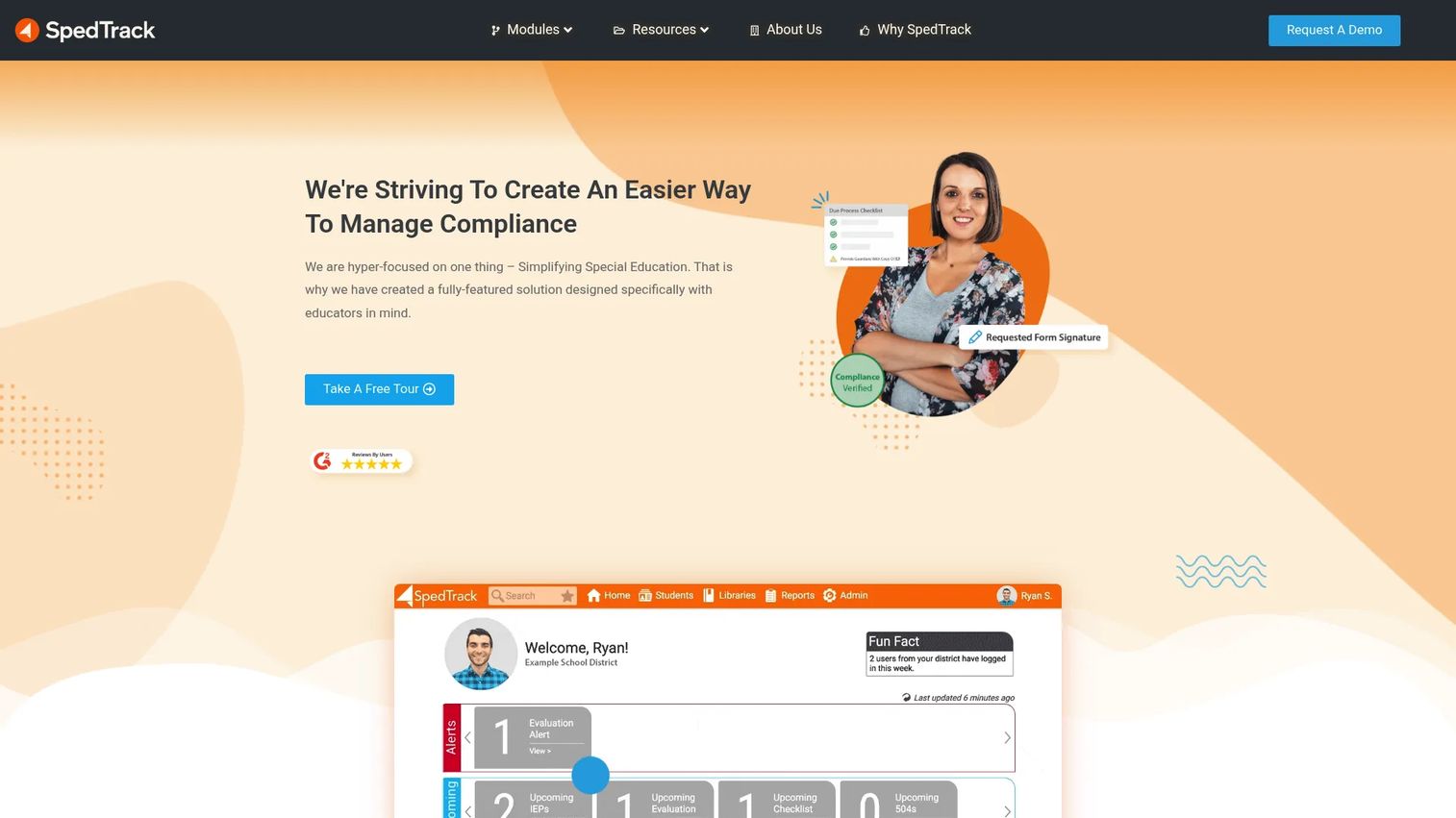
SpedTrack is a web-based special education management platform for IEP documentation, evaluation tracking, compliance workflows, and service-minute monitoring. It includes due-process checklists, deadline alerts, and predictive progress graphing. Additional modules cover Section 504, Medicaid billing, translation, and single sign-on.
Best for: School districts that need structured IEP process management without buying a broader student information system.
Key features
- IEP writing, evaluation, and goal-progress tracking
- Compliance checklists, due-process alerts, and deadline notifications
- Progress monitoring with predictive graphing
- IEP service-minute tracking
- Section 504 and Medicaid billing modules
Why choose SpedTrack: SpedTrack suits teams that want IEP process structure and compliance oversight in a focused platform. It covers the compliance documentation cycle from evaluation through service delivery.
SpedTrack pricing: Pricing requires a demo request. The quote reflects student volume, user count, training requirements, and selected modules.
4. Frontline Special Education Management Software
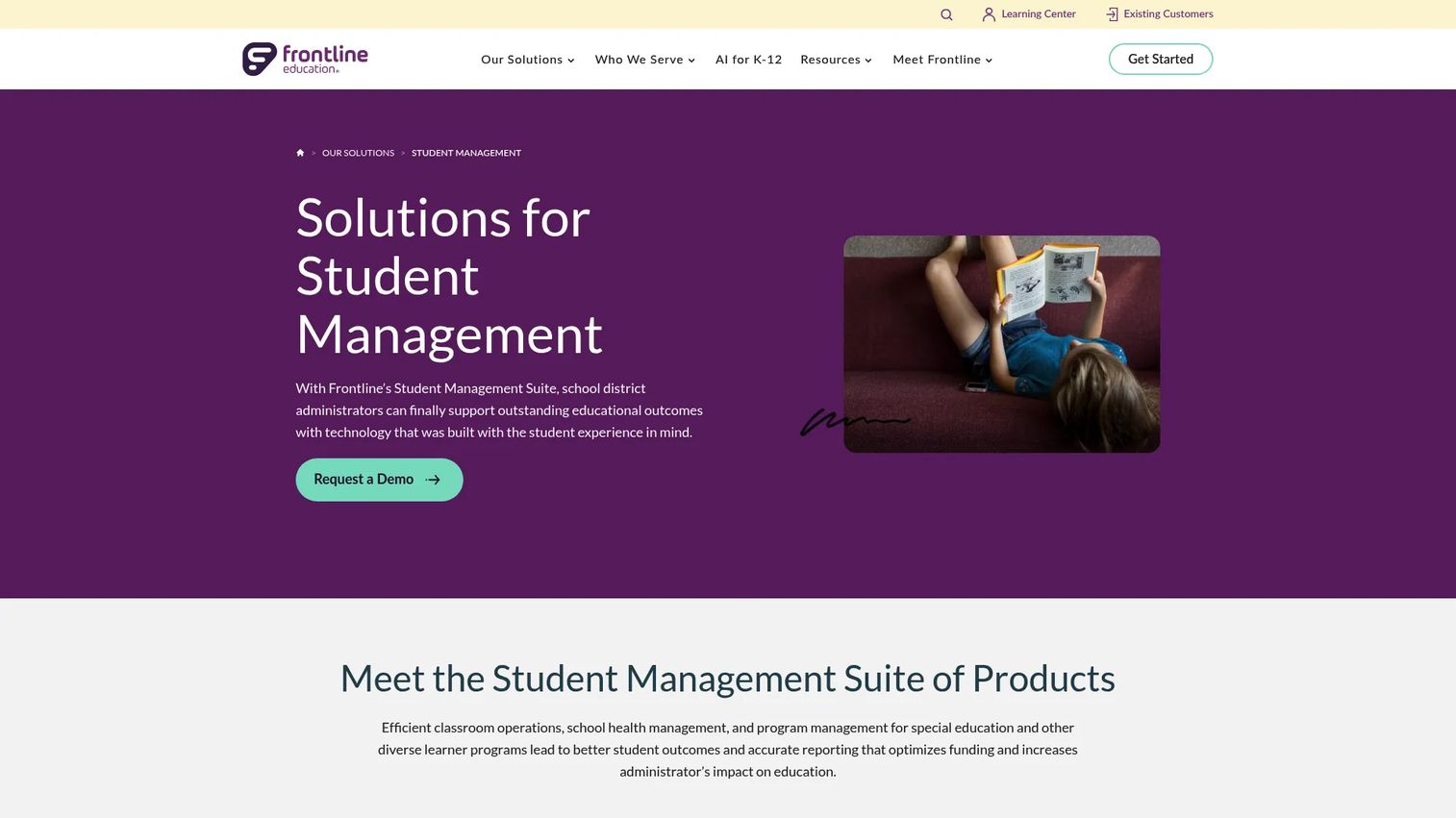
Frontline Special Education Management Software is a K-12 special programs administration platform. It handles IEP management, state compliance validation, student progress tracking, and customizable reporting. Districts also use it for 504 plans, Medicaid documentation, RTI, and MTSS workflows, making it a broader special programs layer rather than a standalone IEP tool.
Best for: K-12 districts managing multiple special programs in one administrative environment.
Key features
- IEP management and special education compliance
- State regulation alignment and data validation
- Student progress tracking
- Section 504 plan support
- Medicaid documentation and RTI/MTSS workflows
Why choose Frontline: Frontline fits districts that want a single platform spanning IEP compliance, Medicaid, and intervention programs. It is a system of record for special programs, not just a document creator.
Frontline pricing: Quote-based district pricing. Cost drivers include program scope, district size, modules selected, and implementation.
G2 rating: 4.2/5.
5. EDPlan
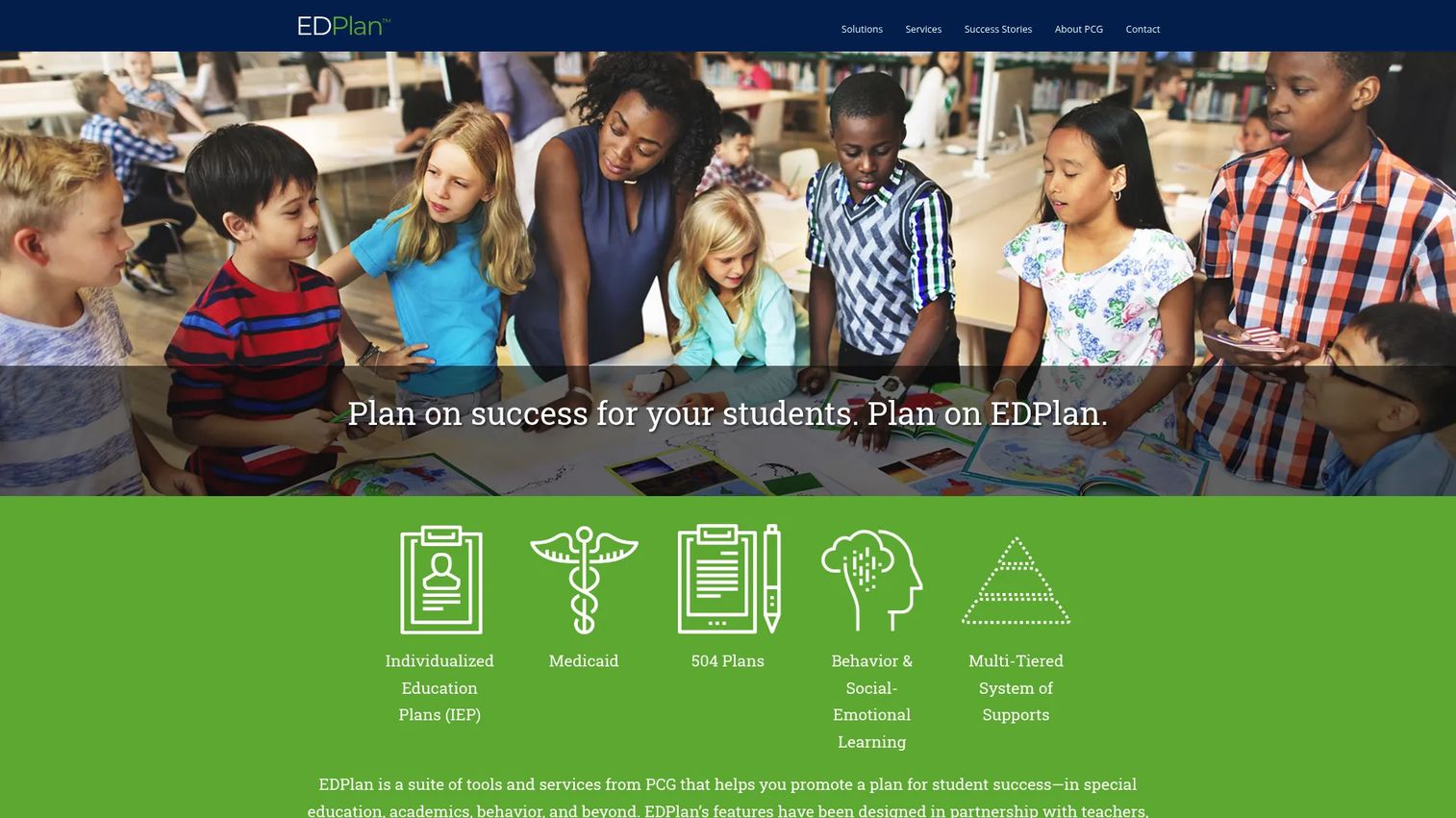
EDPlan is a web-based suite from Public Consulting Group covering IEP case management, Medicaid services, 504 plans, behavior and social-emotional learning, and multi-tiered systems of support. The IEP module includes role-based dashboards, compliance alerts, workflow guidance, and reporting. The Medicaid module (EasyTrac) handles service scheduling, compliance tracking, and billing support.
Best for: School districts and education agencies managing special education programs alongside Medicaid reimbursement workflows.
Key features
- IEP case management with role-based dashboards and compliance alerts
- Medicaid scheduling, documentation, and billing support via EasyTrac
- 504 plan documentation with timeline tracking and translation
- Behavior and SEL modules
- MTSS documentation and reporting
Why choose EDPlan: EDPlan connects compliance documentation with Medicaid reimbursement in one platform. Districts trying to recover Medicaid dollars while maintaining IEP compliance will find both workflows in a single environment.
EDPlan pricing: Quote-based. Contact EDPlan to confirm modules, district scope, implementation services, and support tiers.
G2 rating: 3.6/5 based on 19 reviews.
6. PowerSchool Unified Classroom Special Programs
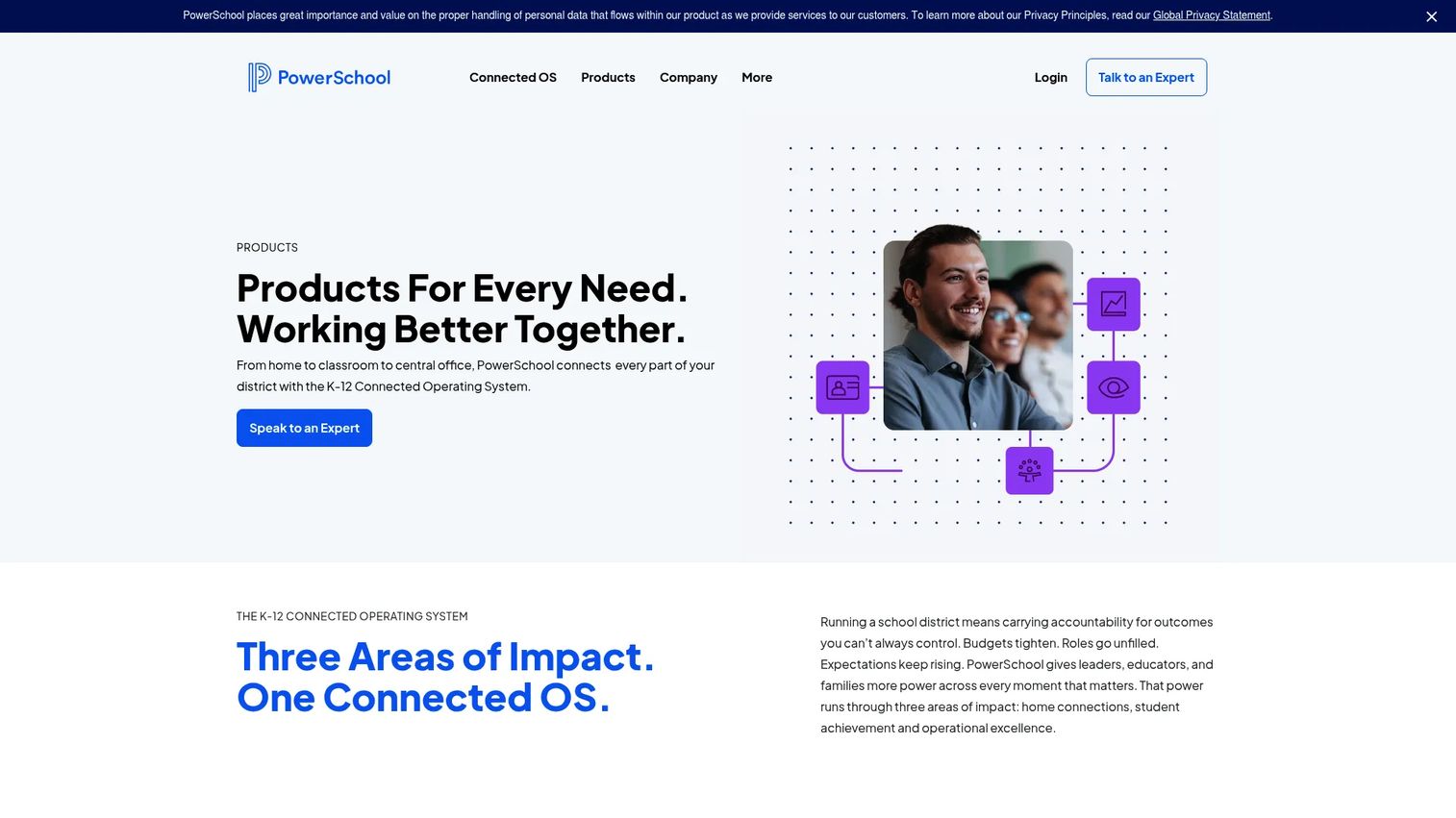
PowerSchool Unified Classroom Special Programs is a K-12 platform for managing special education, 504 accommodations, gifted and talented, and English language learner programs. It integrates with the PowerSchool SIS and Schoology Learning, connecting special programs case management to district-wide student data. Features include customizable compliance workflows, alerts, email notifications, and reporting for caseloads and service timelines.
Best for: School districts that run PowerSchool across student information operations and want special programs workflows connected to that data foundation.
Key features
- Special education and 504 case management
- Customizable workflows, alerts, and email notifications
- Compliance reporting for programs and timelines
- Document translation and Microsoft Immersive Reader accessibility
- Integration with PowerSchool SIS and Schoology
Why choose PowerSchool Unified Classroom Special Programs: This is the right choice when special education data needs to live inside the broader PowerSchool district environment. The integration value depends on how deeply PowerSchool is already embedded in district operations.
PowerSchool Unified Classroom Special Programs pricing: Quote-based district contract pricing. Contact PowerSchool to scope program coverage, seat count, and integration requirements.
G2 rating: 3.9/5.
7. AbleSpace
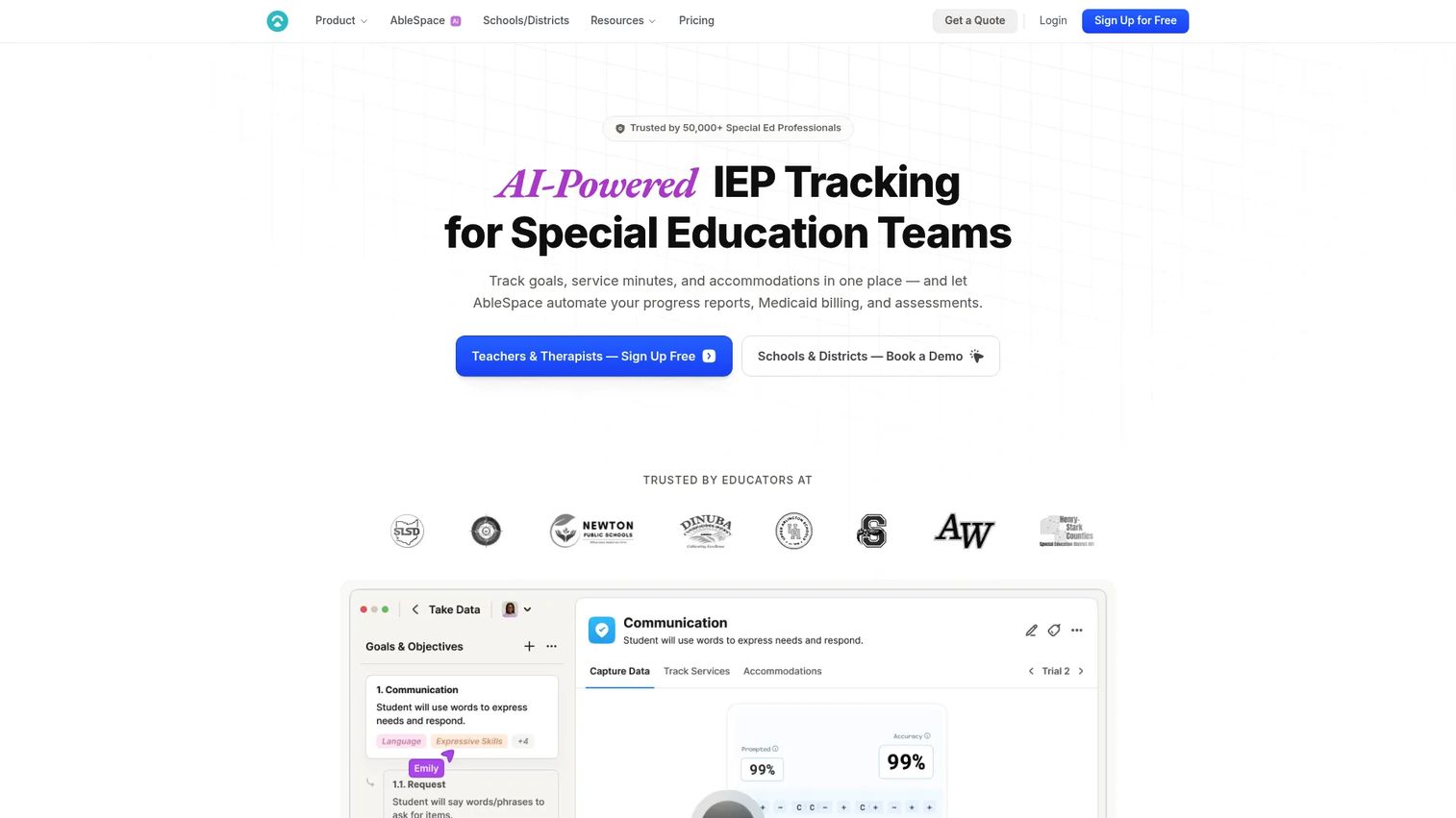
AbleSpace is an AI-powered IEP tracking and caseload management platform for special education teams. Teachers and therapists use it to track IEP goal and behavior data, generate automated reports and graphs, monitor service time, document Medicaid billing, and produce AI-generated progress notes and IEP goals. A family dashboard supports team collaboration and parent communication.
Best for: Special education teachers, therapists, and district teams managing IEP data, services, and reporting with AI assistance.
Key features
- IEP goal and behavior data tracking
- Automated reports, graphs, and progress monitoring
- Service-time tracking and Medicaid billing documentation
- AI-generated progress notes and IEP goal suggestions
- Family dashboard and IEP/SIS integrations
Why choose AbleSpace: AbleSpace stands out for individual providers and smaller teams because the Basic plan is free. AI-generated progress notes reduce documentation time without requiring a district-wide platform switch.
AbleSpace pricing: Basic tier is free for individual providers. School, district, and enterprise pricing is custom. Contact AbleSpace for a quote tied to team size and integration requirements.
G2 rating: 4.5/5.
8. Everway Polaris
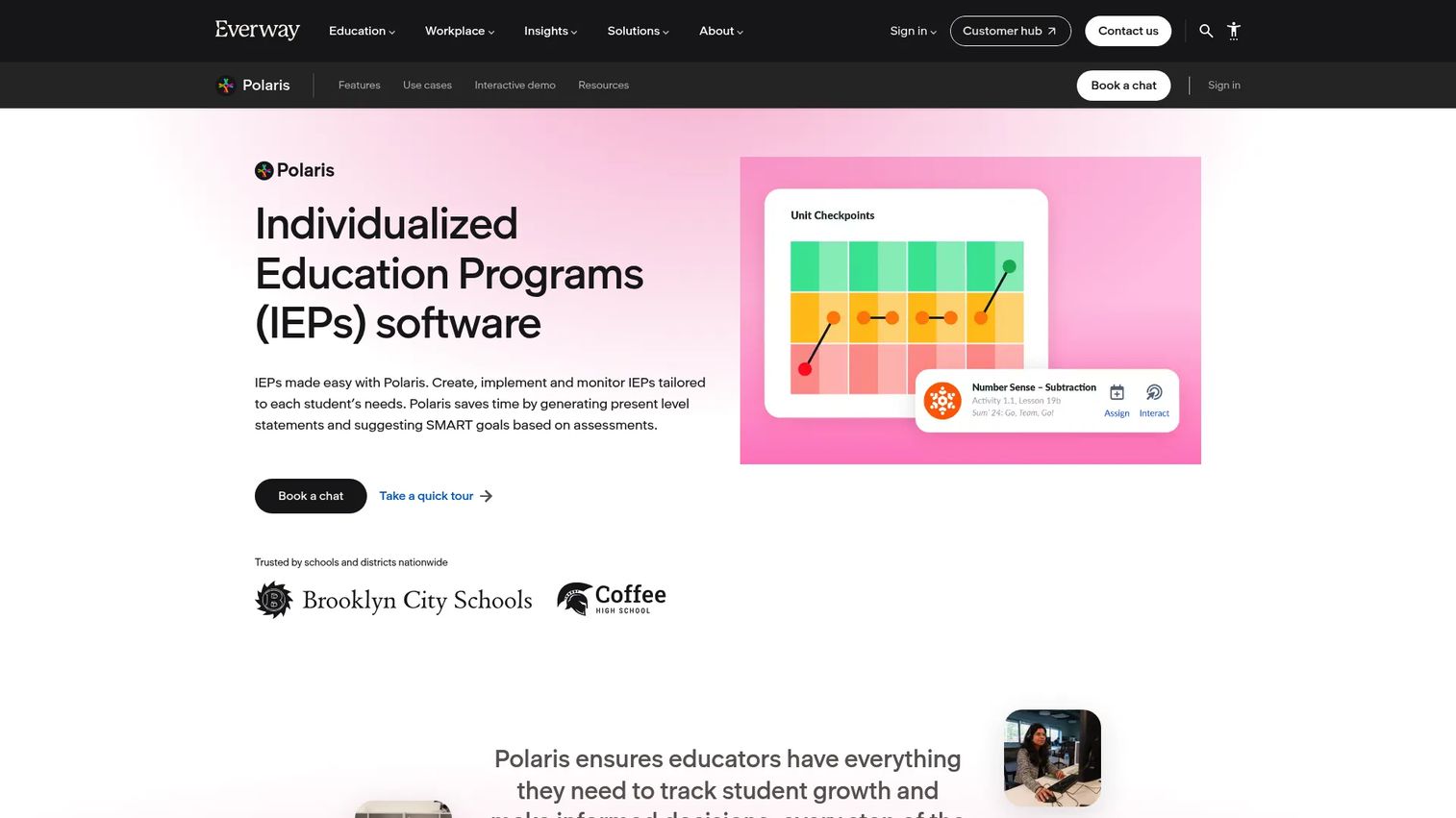
Everway Polaris is an AI-powered IEP development platform that helps educators create, implement, and monitor individualized education programs. It generates AI-based present-level statements and SMART goal suggestions from student data, recommends accommodations and standards-aligned lessons, and embeds assessments with real-time progress monitoring and visual reports. It integrates with Unique Learning System, Inspire, and Positivity.
Best for: Special education schools and districts focused on data-driven IEP creation and embedded progress monitoring.
Key features
- AI-generated present-level statements and SMART goal suggestions
- Recommendations for accommodations, modifications, and lessons
- Embedded assessments and real-time progress monitoring
- Visual reports and IEP integration workflows
- Connections to Unique Learning System, Inspire, and Positivity
Why choose Everway Polaris: Polaris suits teams that want AI to accelerate IEP writing from student data rather than starting from blank forms. It reduces the time educators spend on initial drafting.
Everway Polaris pricing: A 10-pack of student licenses starts at $514.99 per year. School and district pricing is available by quote.
G2 rating: 3.5/5 based on 2 reviews.
9. Skyward Student Management Suite
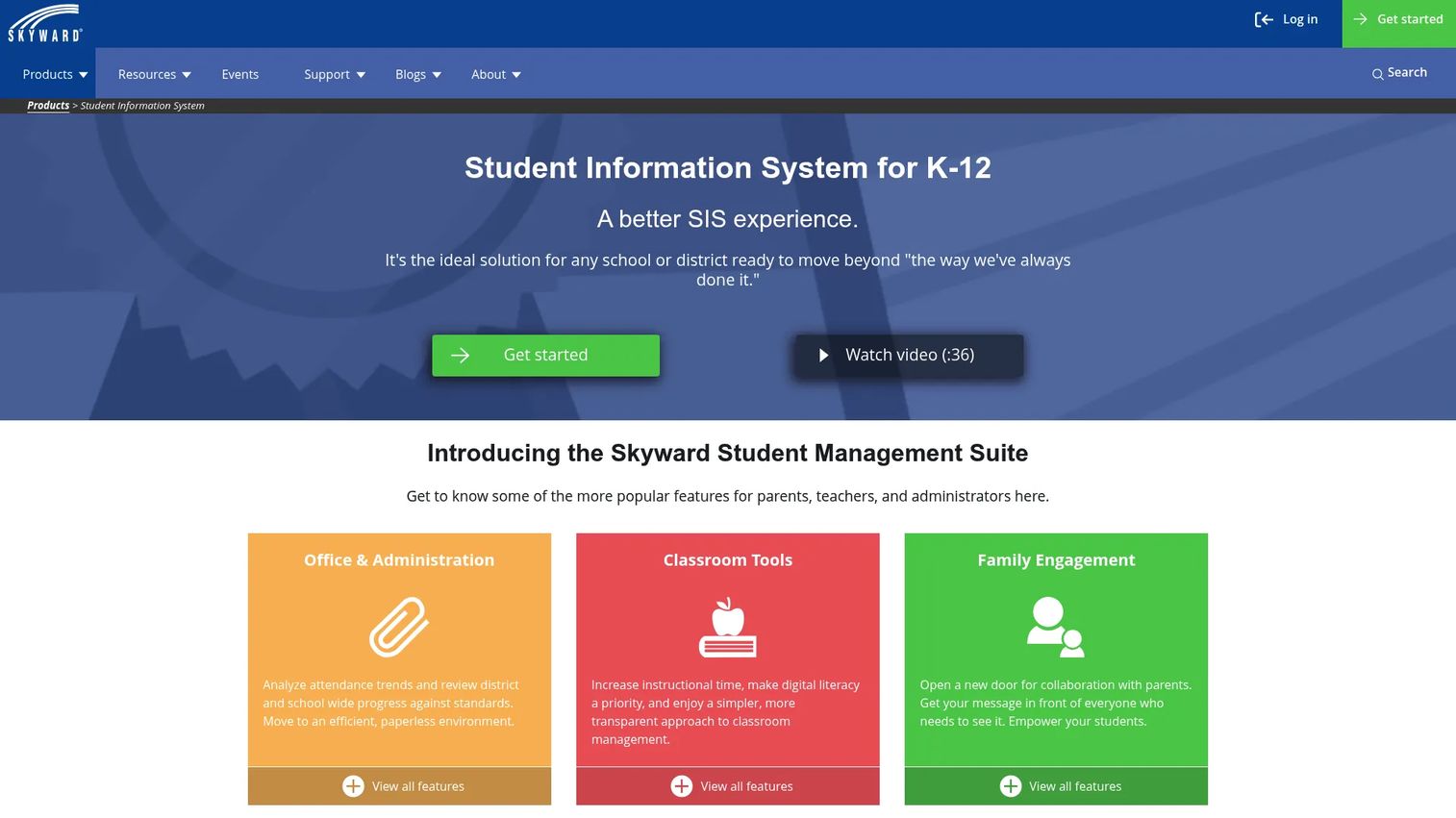
Skyward Student Management Suite is a comprehensive K-12 student information system covering administration, classroom tools, family engagement, and student services. Core modules include attendance, behavior tracking, gradebook, enrollment, scheduling, and report cards. Family Access and the Family Mobile App provide parent-facing communication. The suite also supports food services, health services, college and career readiness, and student interventions.
Best for: K-12 districts that want special education and student services workflows integrated into a broad SIS platform.
Key features
- Student information management with attendance, gradebook, and scheduling
- Student interventions and health services support
- Family Access portal and mobile app
- Enrollment, registration, and curriculum management
- District-wide reporting and administrative tools
Why choose Skyward Student Management Suite: Skyward fits districts that want a unified student data foundation. Special education workflows connect to the same records used across enrollment, scheduling, and family communication rather than living in a separate silo.
Skyward pricing: Quote-based. Pricing is driven by enrollment, modules, implementation, and support scope. Contact Skyward for school-specific pricing.
10. YellowFolder
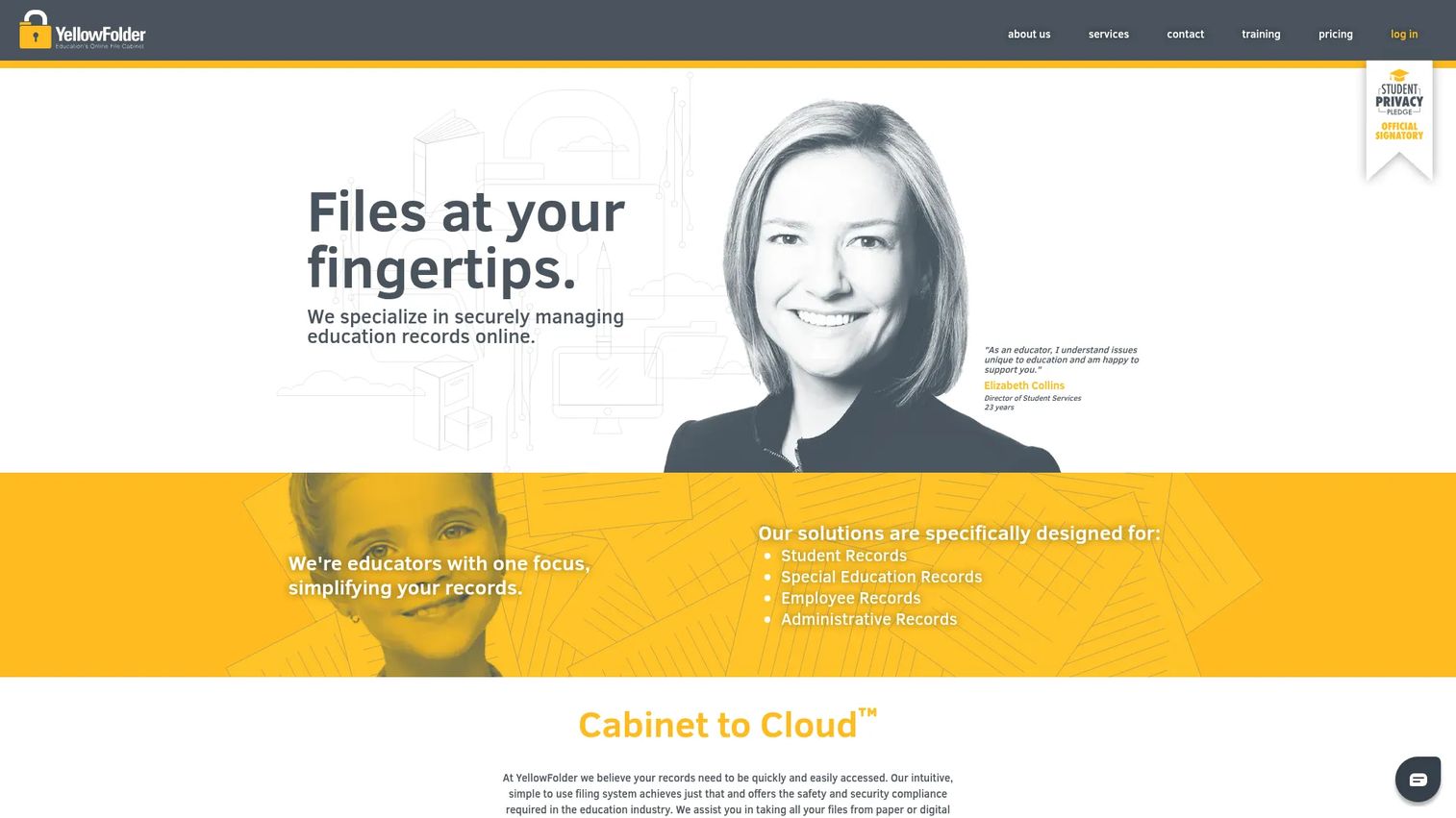
YellowFolder is a cloud-based records management platform built specifically for K-12 schools. It manages student records, special education files, employee records, and administrative documents in a searchable cloud database. Features include document scanning, uploading, categorization, and sharing, with secure access controls designed for education environments.
Best for: K-12 districts replacing paper-based student records and scattered special education files with a searchable cloud system.
Key features
- Searchable cloud database for education records
- Student, special education, and administrative records management
- Document scanning, uploading, and categorization
- Secure access controls and sharing
- Retention and audit-support workflows
Why choose YellowFolder: YellowFolder is not an IEP authoring platform. Its strength is records storage, retrieval, and audit evidence management. Districts whose primary pain is finding documents during a compliance review will get more from YellowFolder than from a full IEP system.
YellowFolder pricing: Pricing is handled through a sales conversation. The website describes transparent pricing, but specific figures are confirmed through a direct quote. Ask about enrollment tiers and document volume.
G2 rating: 4.0/5 based on 53 reviews.
11. SameGoal
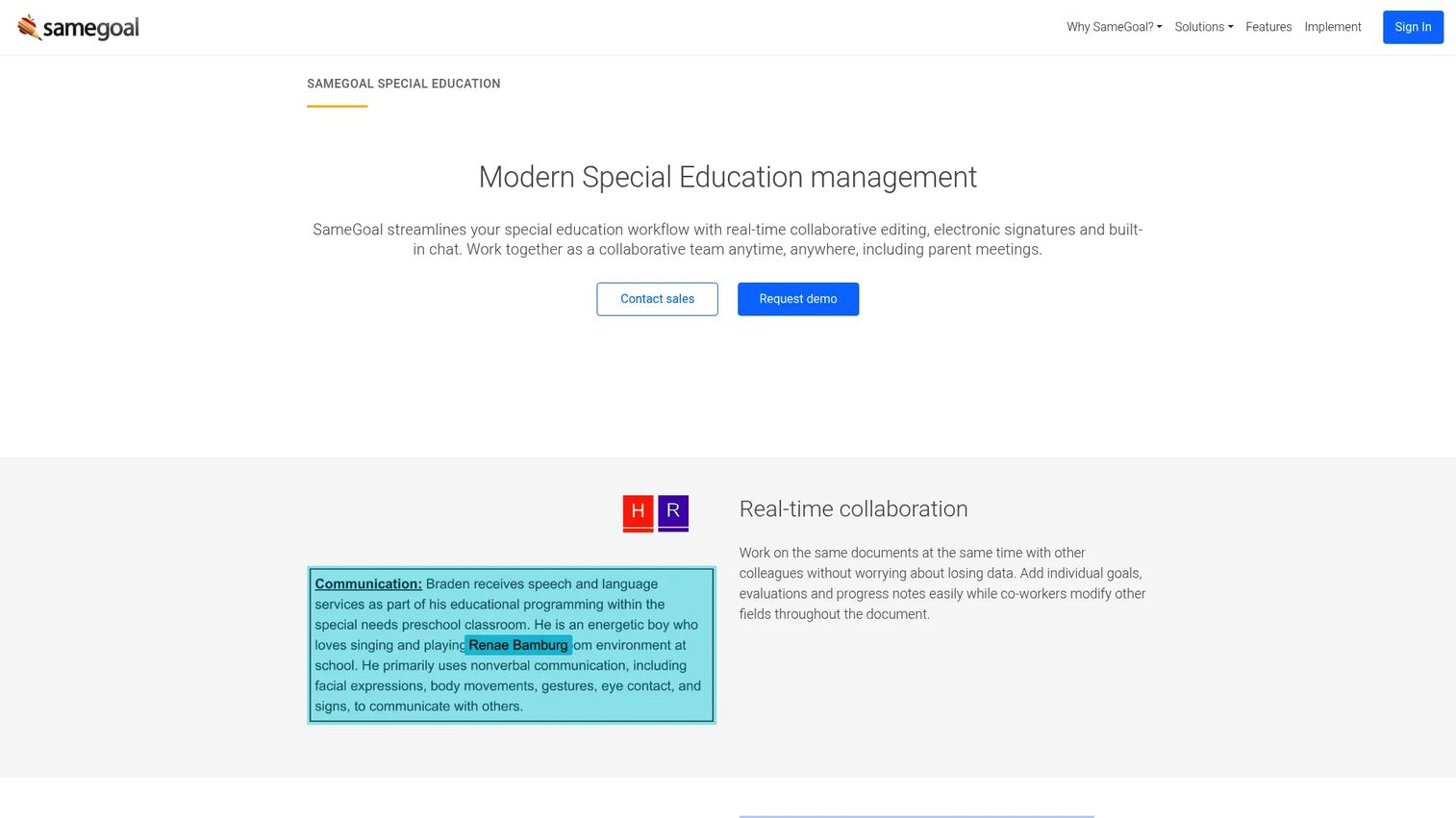
SameGoal is a web-based special programs documentation and compliance platform for school districts. It supports real-time collaborative editing, electronic signatures, remote parent document sharing, compliance validation checks, state reporting data extracts, and SIS integration. A Pro tier adds automated translation. SameGoal covers IEPs, 504 plans, English learner programs, and gifted documentation.
Best for: K-12 districts that need form-driven special education compliance management with per-student transparent pricing.
Key features
- Real-time collaborative editing with built-in chat
- Electronic signatures and remote parent document sharing
- Real-time compliance and validation checks
- State reporting data extracts and SIS integration
- Multi-language document support and automated translation (Pro)
Why choose SameGoal: SameGoal is one of the few platforms with published per-student pricing, which makes budget modeling straightforward before a contract conversation. The 90-day free trial lowers the evaluation risk.
SameGoal pricing: Standard starts at $12.98 per student for the 2026 to 2027 school year. Plus is $15.28 per student and Pro is $17.97 per student, all billed as annual school-year license fees. A 90-day free trial is available.
G2 rating: 4.3/5.
12. SEIS
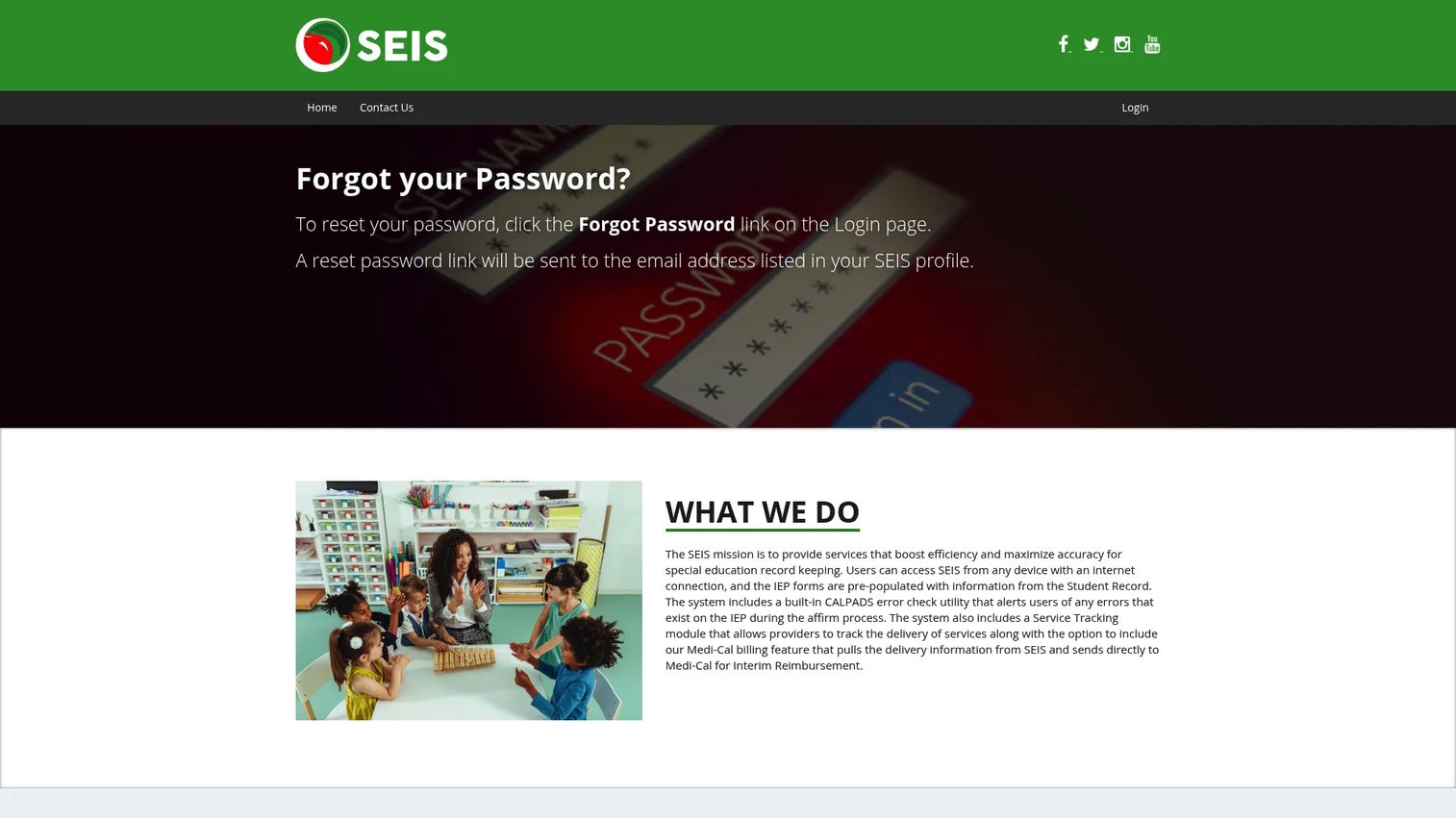
SEIS is a web-based Special Education Information System focused on California K-12 districts. It centralizes IEP management, special education records, state compliance reporting, and service tracking. CASEMIS/CALPADS error checking, optional Medi-Cal billing, SIS integration with nightly data sync, and over 100 custom report fields are core capabilities. Student records and IEP history transfer across participating California districts.
Best for: California school districts and special education organizations managing IEPs and state compliance reporting under CALPADS requirements.
Key features
- IEP management and centralized records
- CASEMIS/CALPADS error checking and state reporting
- Service tracking and optional Medi-Cal billing
- SIS integration with nightly data synchronization
- Student records transfer across participating districts
Why choose SEIS: SEIS is purpose-built for California compliance workflows. Districts outside California should evaluate whether the state-specific forms and reporting alignment deliver comparable value.
SEIS pricing: Quote-based. Contact SEIS directly for regional or district-level pricing tied to student volume and selected modules.
G2 rating: 4.3/5.
13. Merit Solutions for Special Ed

Merit Solutions appears on category lists as special education software, but research against the current official website shows the company has repositioned as a cloud-first ERP and consulting provider for life-science organizations. No special education product, feature page, or dedicated K-12 offering was verified on the first-party domain during this review.
Best for: Organizations in regulated life-science manufacturing seeking cloud ERP and consulting services.
Key features
Verified features are specific to ERP and life-science manufacturing operations, not K-12 special education workflows.
Why choose Merit Solutions for Special Ed: Districts evaluating this entry for IEP or compliance workflows should confirm current product scope directly with the vendor before including it in a shortlist.
Merit Solutions pricing: Quote-based. Contact the sales team for current scope and pricing.
G2 rating: 4.5/5
14. Amplio
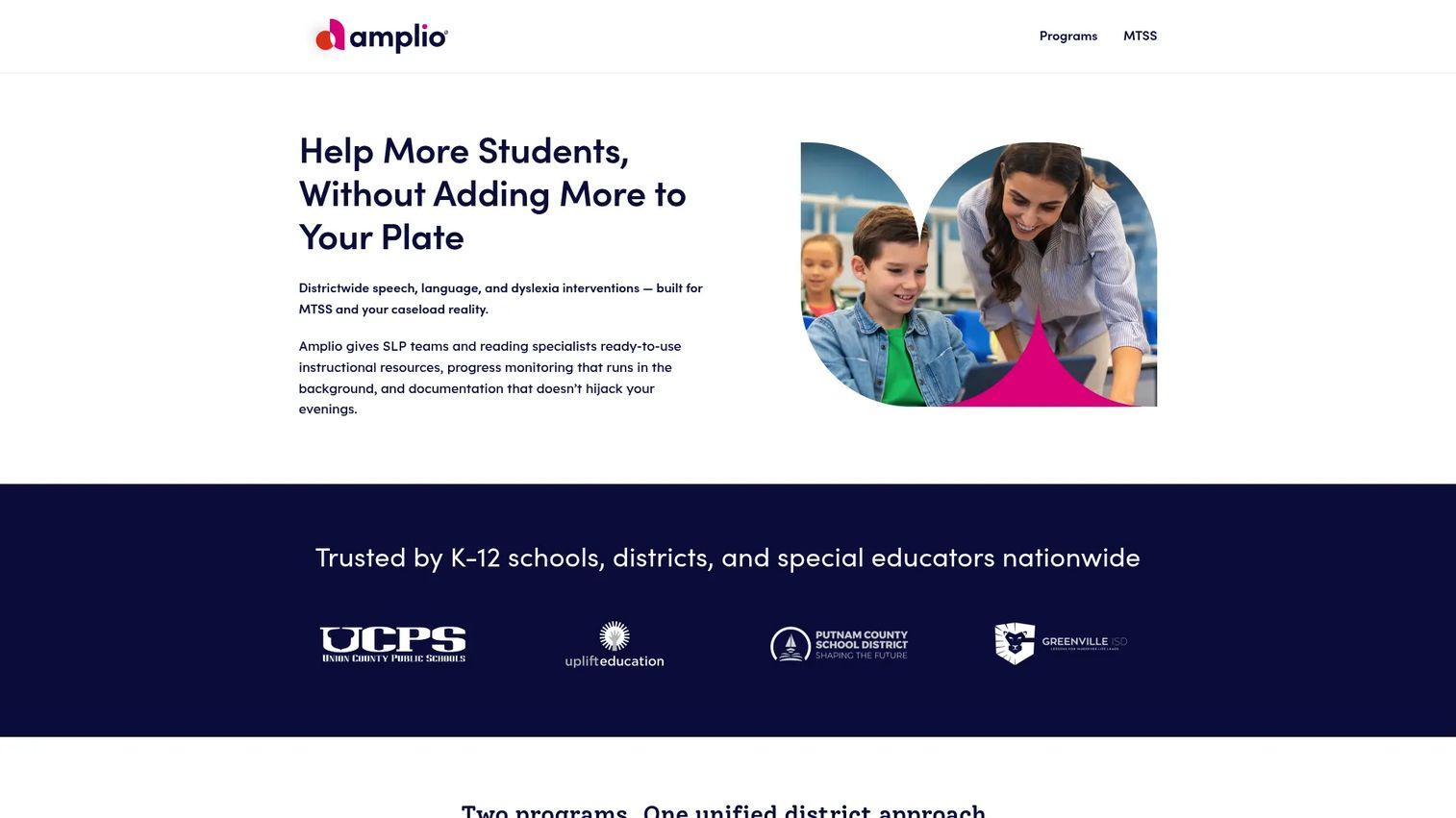
Amplio is a district platform for speech, language, literacy, and dyslexia interventions in K-12 education. It delivers structured intervention resources, digitized MTA English and Esperanza Spanish reading curricula, and automated documentation with progress monitoring and reporting. Special education teams use it to deliver and track therapy sessions, particularly for students with language-based learning differences.
Best for: K-12 districts and special education teams delivering speech, language, literacy, and dyslexia interventions with built-in progress monitoring.
Key features
- Structured speech and language intervention resources
- Digitized MTA English and Esperanza Spanish reading curricula
- Progress monitoring, reporting, and automated documentation
- Provider collaboration tools
- Student progress data tracking
Why choose Amplio: Amplio belongs in the stack when the priority is delivering and monitoring specific intervention programs, particularly literacy and language. It is not an IEP authoring system; it complements compliance platforms by handling service delivery depth.
Amplio pricing: Quote-based. Contact Amplio for district-specific pricing tied to program scope and student volume.
G2 rating: 4.3/5 based on 10 reviews.
15. TeachTown
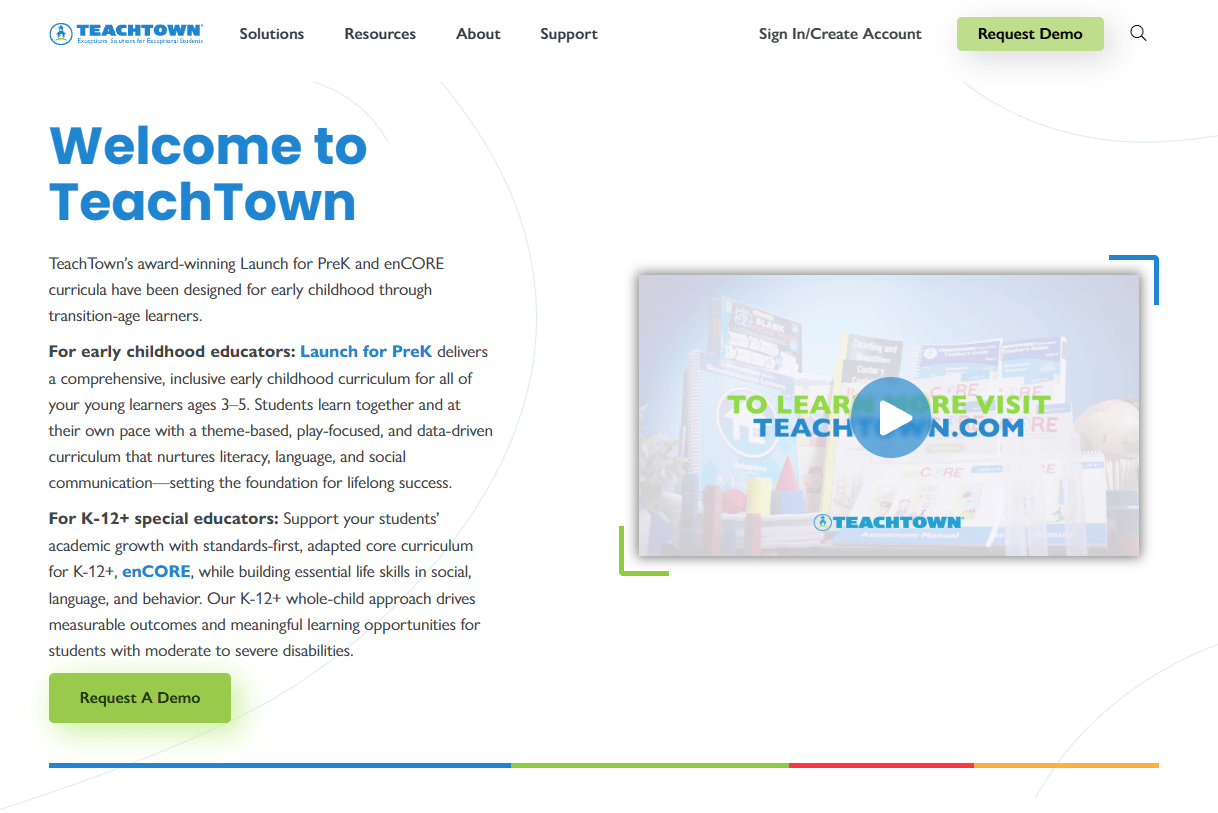
TeachTown provides evidence-based, inclusive special education curricula and interventions for learners from PreK through transition age. Its standards-first adapted core curriculum supports students with moderate to severe disabilities. Personalized learning pathways and automated data collection align with IEPs and skill levels. The Launch curriculum focuses on PreK students ages 3 to 5 with play-based, data-driven instruction.
Best for: Schools and districts supporting students with developmental delays, autism, or moderate to severe disabilities who need instructional content.
Key features
- Standards-first adapted core curriculum for K-12 and beyond
- Personalized learning pathways with automated IEP-aligned data collection
- Evidence-based Launch PreK curriculum for ages 3 to 5
- Student lessons and progress data dashboards
- Teacher resources and behavior support materials
Why choose TeachTown: TeachTown is not primarily a compliance or documentation platform. It belongs in the list because instructional curriculum is a distinct and significant special education software need. Districts supporting students who need adapted academic content rather than IEP management will find TeachTown more relevant than a forms-based tool.
TeachTown pricing: Pricing is handled through a demo and proposal process. The company directs prospective buyers to contact sales. Cost factors include program scope, student count, and implementation.
16. Proloquo2Go
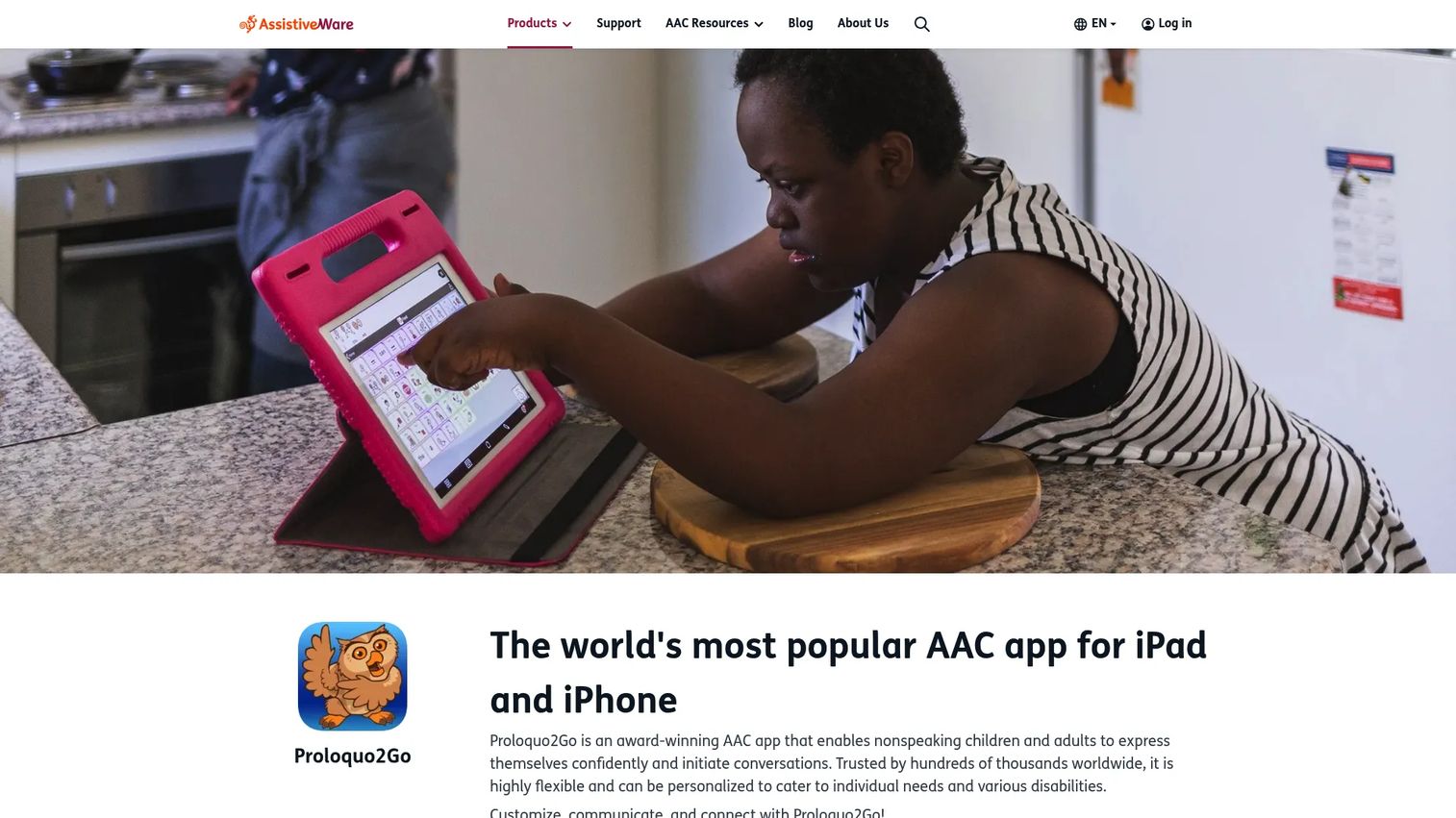
Proloquo2Go by AssistiveWare is a symbol-based augmentative and alternative communication app for nonspeaking children and adults. It includes more than 27,000 symbols, a research-based Crescendo vocabulary with grammar support, over 100 voices across English, Spanish, French, and Dutch, and 23 button layout options ranging from 9 to 144 buttons. Switch and keyguard support are available for users with motor impairments.
Best for: Nonspeaking children and adults who need customizable symbol-based AAC across Apple devices.
Key features
- More than 27,000 symbols with grammar-supported vocabulary
- Over 100 voices across four languages
- 23 button layouts with switch and keyguard support
- Customization with personal photos and vocabulary edits
- Available for iPhone, iPad, Apple Watch, and Mac
Why choose Proloquo2Go: This is a student-facing communication tool, not an IEP management system. Choose it when the need is communication access. It complements administrative platforms rather than replacing them.
Proloquo2Go pricing: One-time purchase. Proloquo2Go for iPhone, iPad, and Apple Watch costs $249.99. The Mac version is $124.99. An AAC Essentials Bundle is $299.99.
17. iComm
iComm appears on some special education software lists as a visual communication tool for learners. Research against the accessible first-party site reveals the product is an AI-powered omnichannel marketing automation platform for ecommerce teams, covering email, WhatsApp, SMS, and customer data management. No AAC or picture-based communication functionality was verified on the first-party domain.
Best for: Ecommerce and marketing teams needing unified customer data and automated multichannel campaigns.
Key features
Verified features are specific to marketing automation workflows and do not apply to K-12 or AAC use cases.
Why choose iComm: Districts evaluating this product for AAC or visual communication support should confirm current product scope directly with the vendor before shortlisting.
iComm pricing: Quote-based. Contact the vendor for current pricing and scope details.
18. LiveScribe Smartpen
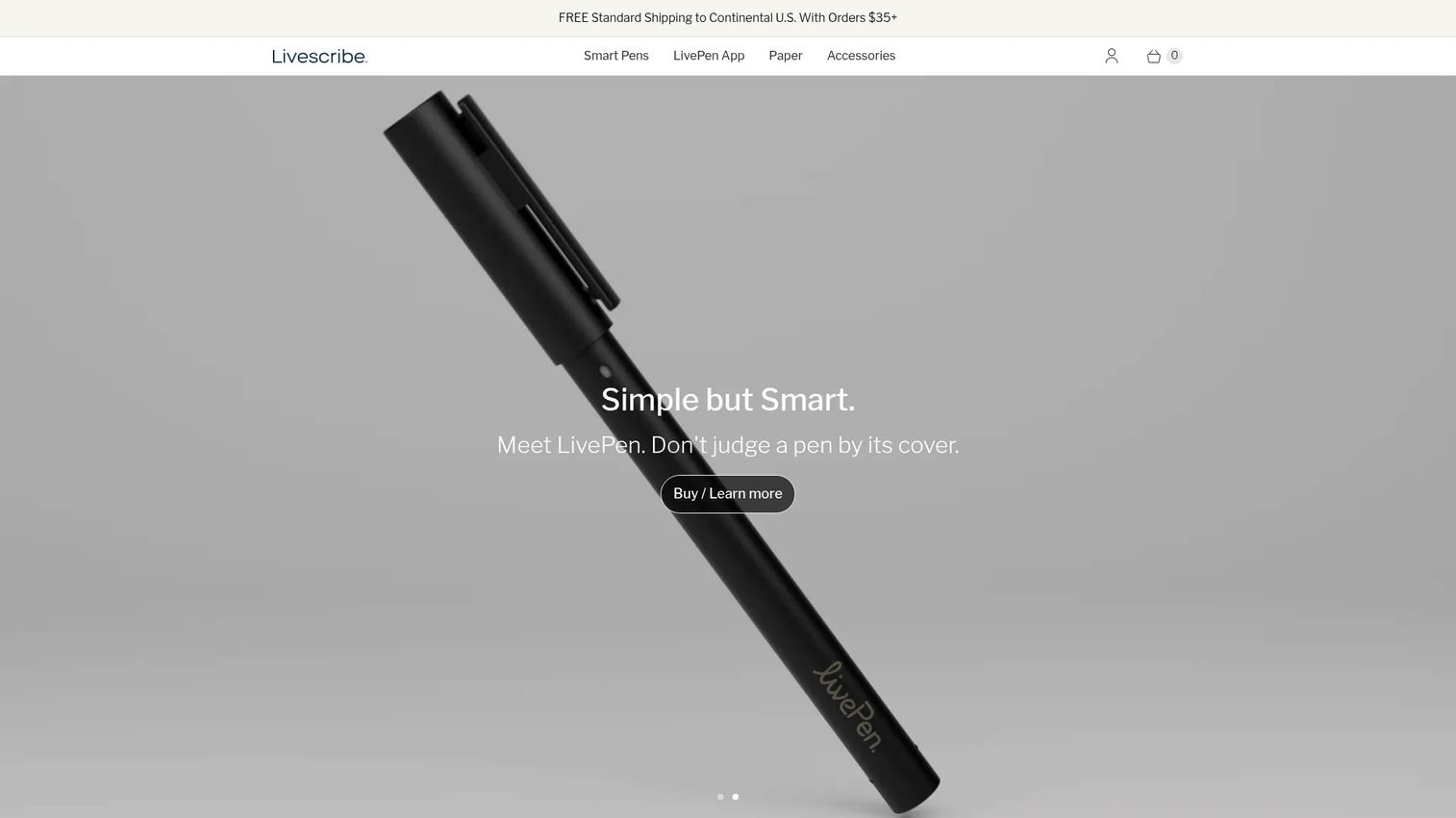
LiveScribe Smartpen digitizes handwritten notes on Livescribe smart paper and synchronizes them with audio recordings. The core value for students is audio-linked note retrieval: Tap a word written during a lecture and hear what was said at that moment. Additional capabilities include handwriting-to-text transcription, note search, and mobile sync. The LivePen A5 Bundle offers a 14-day battery life.
Best for: Students who need note-taking support, audio-linked study materials, or executive function accommodations.
Key features
- Real-time handwriting digitization to mobile devices
- Audio recording synchronized with handwritten notes
- Handwriting-to-text transcription
- Note search and sharing
- 14-day battery life on the LivePen
Why choose LiveScribe Smartpen: LiveScribe is not special education management software. It belongs in the assistive technology stack for students who struggle to capture instruction. It complements both IEP compliance platforms and AAC tools by supporting classroom access.
LiveScribe pricing: One-time hardware purchase. The LivePen A5 Bundle is listed at $79.99 and the Echo 2 at $119.95. Note that both listed models were marked as unavailable or sold out at the time of research. Confirm current availability directly with LiveScribe before ordering.
19. Adori
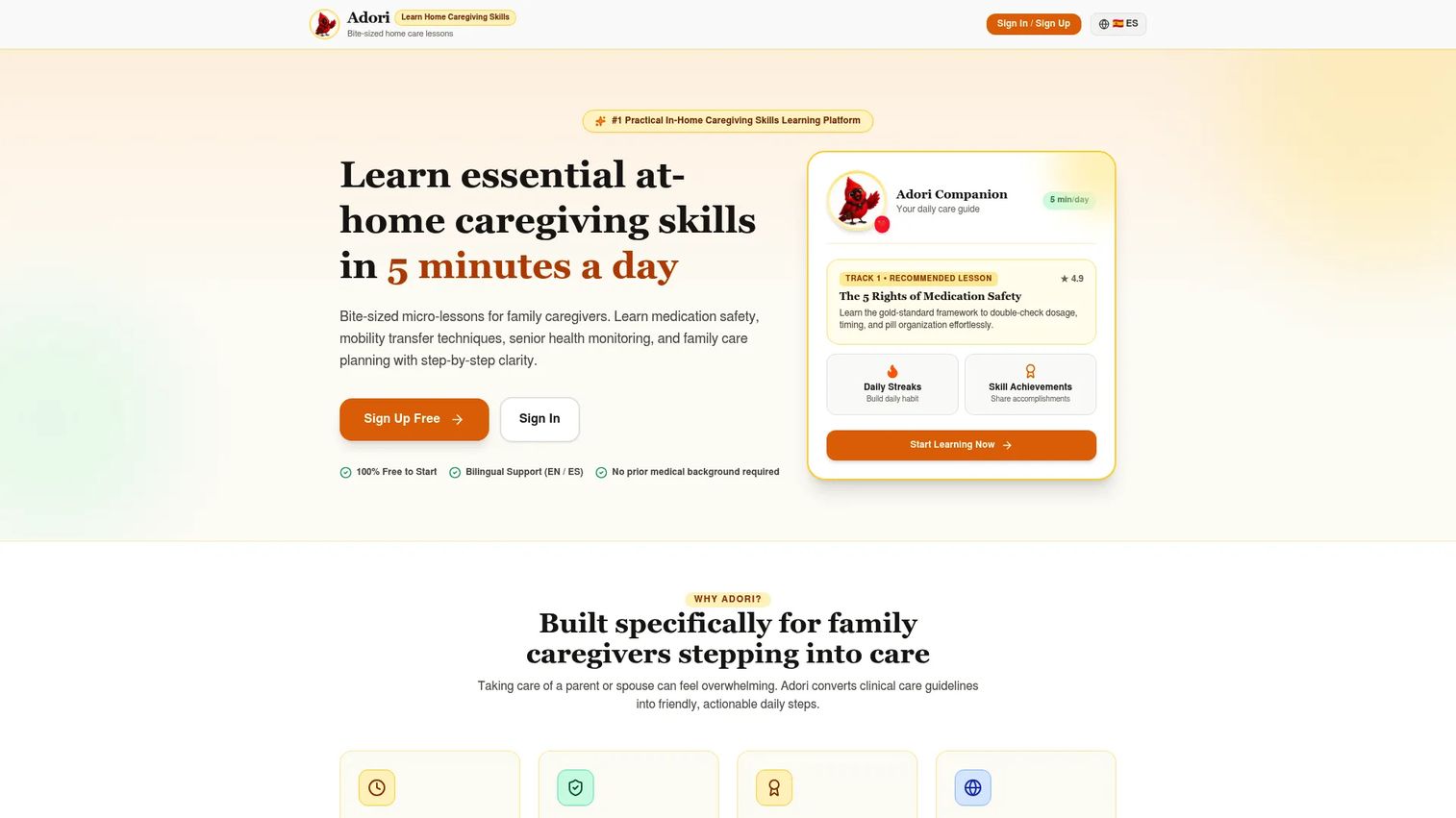
Adori is a practical in-home caregiving skills platform that delivers five-minute micro-lessons to family caregivers. Content covers medication safety, mobility transfer techniques, senior health monitoring, and family care planning. Users can sign up for free and access structured learning content with daily streaks and skill achievements.
Best for: Family caregivers seeking concise at-home caregiving education, not K-12 special education teams.
Key features
- Five-minute micro-lessons for family caregivers
- Medication safety and mobility transfer guidance
- Senior health monitoring and family care planning content
- Daily streaks and skill achievement tracking
- Free signup with accessible content format
Why choose Adori: Adori does not appear to serve the K-12 special education software category based on verified product research. Districts evaluating audio or accessibility tools for students should confirm current scope directly with the vendor before including this in a special education shortlist.
Adori pricing: Free signup.
Considerations when choosing special education software
Match the tool to the job
Special education software is not one category. An IEP compliance system, a document storage tool, an AAC app, and a curriculum platform solve different problems. Define the primary operational job before requesting demos. A district with a compliance documentation gap needs different software than a district with a student communication access need.
Verify state and federal compliance workflows
IDEA compliance involves timelines, state-specific forms, service documentation standards, and audit evidence requirements. Ask vendors specifically which state forms they support, how they handle annual compliance calendar updates, and what audit evidence the system generates automatically. Software supports workflows; the district remains responsible for correct implementation and training.
Check SIS and data integrations
Special education data intersects with student records, provider schedules, service minutes, and state reporting. Before signing a contract, confirm which SIS connections are live and in production, how data syncs between systems, and what manual reconciliation remains after the integration runs. A broken integration creates the documentation gaps the software is meant to prevent.
Test provider adoption before rollout
An IEP platform fails if providers skip the logging step. During evaluation, check mobile access quality, the speed of a quick service log entry, role-based permission structures, and what training is required before a provider can use the system independently. A demo in a controlled environment does not always reflect field conditions.
Ask what support looks like after launch
Special education workflows change with state policy updates, staffing changes, and new compliance requirements. Evaluate implementation depth, ongoing training availability, typical support response times, and how the vendor handles state-specific form updates mid-year. A system that cannot keep pace with regulatory changes creates compliance risk over the contract term.
Conclusion
Special education software is a stack, not a single tool. The right shortlist depends on what the district is trying to fix first.
If the core problem is real-time service tracking and compliance evidence, start with Brolly. For end-to-end IEP workflow management, evaluate EmbraceIEP, SpedTrack, EDPlan, SameGoal, and SEIS. Districts managing broader special programs including 504, Medicaid, and MTSS should look at Frontline and PowerSchool. For document records management, YellowFolder handles that job without the overhead of a full compliance platform.
On the student-facing side, AbleSpace (free tier available) and Everway Polaris cover IEP data and goal tracking for individual providers and classrooms. TeachTown and Amplio serve instructional and therapy delivery needs. Proloquo2Go covers AAC communication for nonspeaking students.
Two entries in this list (iComm and Adori) did not match the special education category when researched against current first-party sources. Verify scope with both vendors before shortlisting.
Shortlist three tools by workflow, run the same IEP or service-tracking scenario in each demo, and compare the implementation plan before price.
FAQs
Special education software is education technology that helps schools and districts plan, document, deliver, monitor, and report services for students with disabilities or specialized learning needs. The category includes IEP management platforms, service tracking systems, document storage tools, assistive communication apps, and curriculum software. Not all products in the category do the same job, so matching the tool to the specific workflow is essential.
The right fit depends on district scale, state requirements, and whether the priority is compliance documentation, service tracking, or workflow automation. Brolly, EmbraceIEP, SpedTrack, EDPlan, SameGoal, and SEIS are all purpose-built for IEP and compliance workflows. SameGoal is notable for published per-student pricing, while SEIS is specifically designed for California districts running CALPADS reporting.
IEP software is a subset of the broader special education software category. Special education software also includes service-minute tracking, Medicaid billing support, document management, assistive communication tools, intervention curriculum, and therapy delivery platforms. An IEP platform manages the plan and compliance cycle. An AAC app helps a student communicate in class. Both qualify as special education software but serve entirely different users.
The evaluation checklist should cover IEP creation workflows, compliance and deadline tracking, service documentation and provider logging, progress monitoring against student goals, state reporting capabilities, SIS integration depth, role-based access and permissions, parent collaboration tools, Medicaid billing support where relevant, and implementation and training commitments from the vendor. Security certifications (FERPA compliance, data hosting location) are also standard due diligence items.
Most administrative platforms, including IEP management and special programs systems, use district contract pricing tied to enrollment, modules, and implementation scope. SameGoal is an exception with published per-student pricing starting at $12.98 per student for the 2026 to 2027 school year. Student-facing tools like Proloquo2Go use one-time app pricing ($249.99 for iOS). LiveScribe Smartpens are hardware purchases starting at $79.99. Free tiers exist for AbleSpace (individual providers) and Adori (caregiving content).
Software can help manage compliance documentation, timelines, required fields, state forms, service evidence, and reporting extracts. It does not make a district compliant. Correct implementation, provider training, and consistent documentation practices determine whether a district meets IDEA requirements. Tools reduce administrative friction and surface missed steps, but the operational responsibility stays with the district.
No. Assistive technology helps students access communication, curriculum, or note-taking. Management software helps districts run IEP documentation, service tracking, compliance reporting, and administrative workflows. Proloquo2Go is assistive technology. EmbraceIEP is management software. Many districts need both, but they serve different users and different operational jobs.
Confirm that the platform supports your state's current compliance forms and reporting requirements, not just IDEA in general. Check which SIS integrations are live and in production versus listed as available. Review data privacy practices, FERPA alignment, and data hosting location. Ask for reference districts of similar size and state. Get the implementation timeline in writing, including who is responsible for data migration, training, and go-live support. Compare total cost of ownership across modules, implementation, training, and annual renewal before shortlisting.