A single day at a resort touches a dozen systems. A guest buys a lift ticket online, picks up rentals at the base, books an afternoon lesson, taps a card at the lodge for lunch, and grabs gloves from the retail shop on the way out. Behind each of those moments sits a different piece of software, and too often, none of them talk to each other. That fragmentation is the real operational problem ski resort software is meant to solve.
The stakes are rising. The global ski resort management software market was valued at USD 615.4 million in 2024 and is forecast to reach USD 1,543.7 million by 2033, a CAGR of 11.6%, according to Growth Market Reports (2025). The broader mountain and ski resorts market is projected to grow from USD 16.35 billion in 2025 to USD 27.83 billion in 2030, per The Business Research Company (2025). More spend flows through resorts every season, and the platforms that route it are getting scrutinized harder.
This guide is built for operators, general managers, and operations leaders who need one coherent operating model, not another point tool bolted onto a brittle stack. The right ski resort management software connects ticketing, POS, rentals, lessons, food and beverage, retail, CRM, and analytics so data moves once and decisions get faster. When those systems share a spine, you get shorter lines, cleaner forecasting, and dynamic pricing that actually responds to demand.
We picked the platforms below on five criteria: breadth of modules, ski-specific depth, integration strength, operational analytics, and mobile and guest-experience support. Every tool here aims at full-suite coverage rather than solving a single workflow.
What's inside
This guide compares eight ski resort software platforms that operators evaluate when they want to run the mountain, not just sell tickets. We selected each based on module breadth, ski-specific depth, integration strength, and operational analytics, the factors that decide whether software reduces chaos or adds a layer of it.
Every platform here covers multiple operational categories: ticketing, POS, rentals, lessons, food and beverage, retail, CRM, reservations, mobile booking, and analytics. Some lean toward commercial control and guest flow, others toward reservations, digital engagement, or operational coordination. The list is ranked by relevance to the core buyer question: which system best connects your commercial and guest-facing operations under one roof.
TL;DR
- Best all-in-one commercial and operations suite: accesso, for mountain-wide ticketing, POS, virtual queuing, and decision intelligence.
- Best for guest experience and CRM: Intouch Elevate, for real-time guest visibility and cross-department personalization.
- Best for broad destination operations: Axess, for wide module coverage across access, payments, and on-site commerce.
- Best for reservations and commerce: Inntopia, for its booking engine, guest data unification, and 100-plus integrations.
- Best for operational coordination: Skadii, for a single workspace that ties asset, task, and maintenance management together.
- Best for digital guest engagement: Spotlio, for mobile-first booking journeys and pricing-driven commerce.
What is ski resort software?
Ski resort software is a platform, or connected set of modules, that manages and coordinates resort operations across ticketing, POS, rentals, ski school, food and beverage, retail, CRM, reservations, analytics, and pricing. It is the operational spine that turns disconnected transactions into a single guest and revenue picture.
Modern ski resort management software is about mountain-wide orchestration, not just selling lift tickets. The best platforms treat the guest journey as one continuous flow, from pre-arrival booking to the final retail purchase, and give operators shared data to act on.
Core capabilities operators expect:
- Ticketing: lift tickets, season passes, RFID access control, and self-service booking.
- POS: unified point of sale across food and beverage, retail, and rentals.
- Rentals: inventory visibility, availability, waivers, and family bookings.
- Ski school: lesson scheduling, instructor assignment, and group coordination.
- CRM: guest profiles, loyalty, family linkages, and personalization.
- Reservations: lodging, activities, and cross-channel booking workflows.
- Mobile booking: pre-arrival planning and on-mountain self-service via app.
- Analytics and forecasting: revenue reporting, demand signals, and yield planning.
- Dynamic pricing: demand-based pricing tied to inventory, weather, and holidays.
The ski app market alone, a key digital channel for resorts, reached USD 1.67 billion in 2025 and is projected to hit USD 4.20 billion by 2033 at a 13.2% CAGR, per Verified Market Research (2025). Guest-facing digital is no longer a nice-to-have layer on top of operations. It is part of the operation.
When to use ski resort software
Replace disconnected point tools
If your resort runs one system for ticketing, another for rentals, a third for lessons, and a spreadsheet for reporting, you are paying a tax on every handoff. Data gets re-entered, guest history splinters, and no one can see the full picture without stitching exports together. This is the moment to consolidate onto a platform where a single guest record follows the visitor across every touchpoint.
Improve guest flow and revenue capture
Long lift lines, slow lodge checkout, and missed upsell moments all leak revenue. When the priority is shorter queues, faster POS transactions, and smarter cross-sell (a lesson add-on at ticket purchase, a rental bundle at checkout), integrated ski resort software closes those gaps. Virtual queuing and mobile booking move demand off the physical line and into channels you can measure.
Support multi-department operations
Ticketing, rentals, ski school, retail, food and beverage, and finance all need to read from the same data. When departments run in silos, forecasting breaks and staffing decisions get made blind. Shared operational data lets a resort plan capacity, price dynamically, and reconcile revenue without manual coordination between teams.
Comparison table
The table below surfaces each platform's strongest operational angle. Pricing is shown only where a vendor publishes a public figure; several ski resort platforms quote custom pricing tied to sales volume or resort size, which is standard for this category.
| # | Product | Intent | Key differentiation | Pricing | G2 rating |
|---|---|---|---|---|---|
| 1 | accesso | All-in-one commercial and mountain operations | SkiReady positioning, virtual queuing, decision intelligence | Custom (contact sales) | Not listed |
| 2 | Intouch Elevate | Guest experience and CRM | Real-time guest view, dynamic pricing engine | Custom (based on sales value) | Not listed |
| 3 | Axess | Broad destination operations | Wide module suite, access control, on-site commerce | Custom (contact sales) | Not listed |
| 4 | SnowCloud | Workflow and operations consolidation | Configurable workflow forms, task management | Custom (contact sales) | Not listed |
| 5 | Inntopia | Reservations and commerce | Booking engine, guest data unification, 100+ integrations | From $750/mo | 3.5/5 |
| 6 | Skadii | Operational coordination | Single-workspace ops, manufacturer-independent integrations | Custom (book a demo) | Not listed |
| 7 | MtnOS | Core resort operating workflows | Day-to-day mountain management | Contact vendor | Not listed |
| 8 | Spotlio | Digital guest engagement | Mobile-first commerce, dynamic pricing | Contact vendor | Not listed |
1. accesso
accesso builds enterprise software for attractions and leisure venues, and its SkiReady positioning targets resorts that want commerce and operations under one connected suite. It spans online ticketing and eCommerce, POS, virtual queuing, distribution, a mobile app, and decision intelligence. The pitch is mountain-wide control: one platform that sells the ticket, moves the guest, and reports the result.
Best for: Large resorts and destination operators that want an enterprise-grade commercial and operations suite in a single system.
Key strengths
- Smart pricing and capacity tools: Adjust pricing against demand and manage capacity so peak days convert without overwhelming the mountain.
- Virtual queuing: Move guests off physical lines into a measurable queue, improving guest flow and freeing up on-mountain throughput.
- Self-service guest portal: Let guests handle ticketing, passes, and account actions on their own, reducing front-desk load.
Why choose accesso: accesso fits resorts that think of ticketing, POS, and guest flow as one commercial system rather than separate tools. Its decision intelligence layer turns transaction and queuing data into operational choices, which matters when a general manager needs to defend staffing and pricing calls with numbers. The enterprise depth suits operators managing high volume across multiple revenue lines.
accesso pricing: accesso does not publish public pricing on its site. Product pages direct visitors to contact sales or request a demo, which is typical for enterprise attractions software priced against scale and module mix. Expect custom quotes based on volume and the modules you deploy.
2. Intouch Elevate
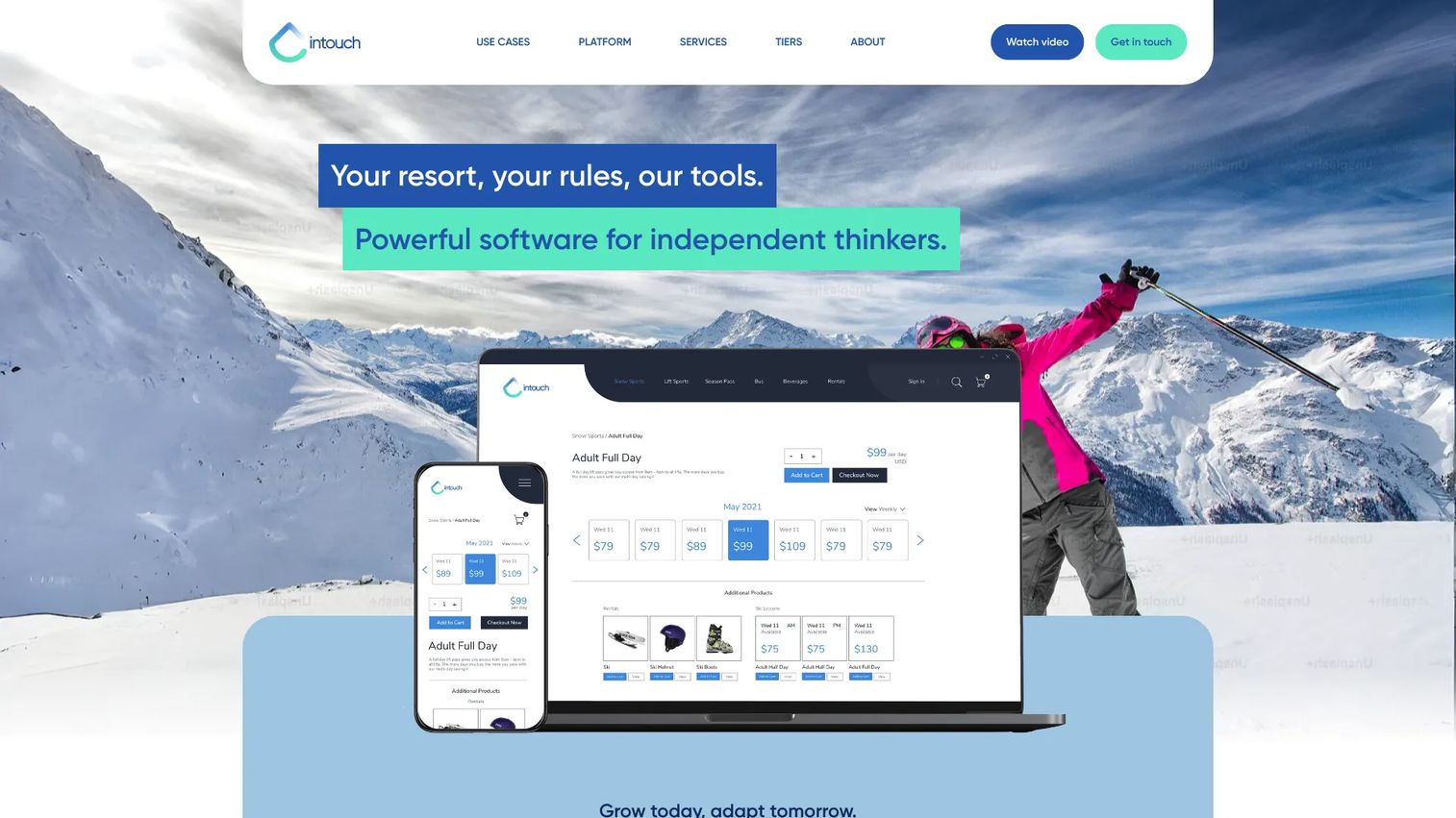
Intouch Elevate is cloud-based software for ski resorts and attractions covering eCommerce, POS, reservations, marketing, analytics, and support services. Its strongest angle is guest experience: a real-time view of the visitor that connects CRM, loyalty, and family linkages to front-line decisions. When a staff member can see a guest's history at the point of sale, personalization stops being a marketing idea and becomes an operational habit.
Best for: Resorts that want CRM and guest-experience depth wired directly into ticketing, rentals, lessons, and retail.
Key strengths
- Integrated POS and ticketing: Run lift tickets, retail, and food and beverage transactions through one system with shared guest context.
- Online booking and reservations: Capture bookings across channels and feed them into a single reservation view.
- Dynamic pricing and rules engine: Set demand-based pricing rules tied to inventory, dates, and guest segments.
Why choose Intouch Elevate: The platform earns its place when guest experience is the priority and the resort wants CRM data driving front-line service. Linking guest history to rentals, ski school bookings, and F&B lets staff personalize without extra manual work. That real-time guest view is the differentiator for operators focused on loyalty and repeat visitation.
Intouch Elevate pricing: Intouch Elevate lists three license packages, Essentials, Professional, and Enterprise, with monthly pricing calculated on the total sales value processed through the platform. No public numeric price is shown, so plan on a quote tied to your throughput. The sales-value model can suit resorts that want cost to scale with revenue rather than a flat seat count.
3. Axess
Axess supplies a broad product suite for ski resorts and destinations, with strength in operational breadth across access control, payments, pricing, reservations, smart retail, and lessons. The focus is guest movement and on-site commerce: getting visitors through gates, into transactions, and across the mountain with automation handling the repetitive work. For resorts that want many modules under one roof, Axess positions as a wide destination platform.
Best for: Destination resorts that want extensive module coverage spanning access, payments, retail, and reservations in one ecosystem.
Key strengths
- Access and payments: Manage gate access, RFID, and payments as connected functions rather than separate vendors.
- Reservations and retail: Coordinate booking workflows and on-site retail so inventory and availability stay in sync.
- Guest-facing mobile utilities: Give guests app-based tools that reduce friction at the gate and in the shop.
Why choose Axess: Axess suits operators who value module breadth and want a single supplier across access control, on-site commerce, and reservations. The emphasis on guest movement and operational automation fits larger destinations where throughput at gates and transaction speed materially affect the day. It is a fit when the priority is broad coverage over a narrow specialization.
Axess pricing: Axess does not publish public pricing figures or a pricing page on its brand site. Given the breadth of modules and the destination-scale positioning, expect custom quotes assembled around the specific modules and volume your resort needs. Contact the vendor for a scoped estimate.
4. SnowCloud
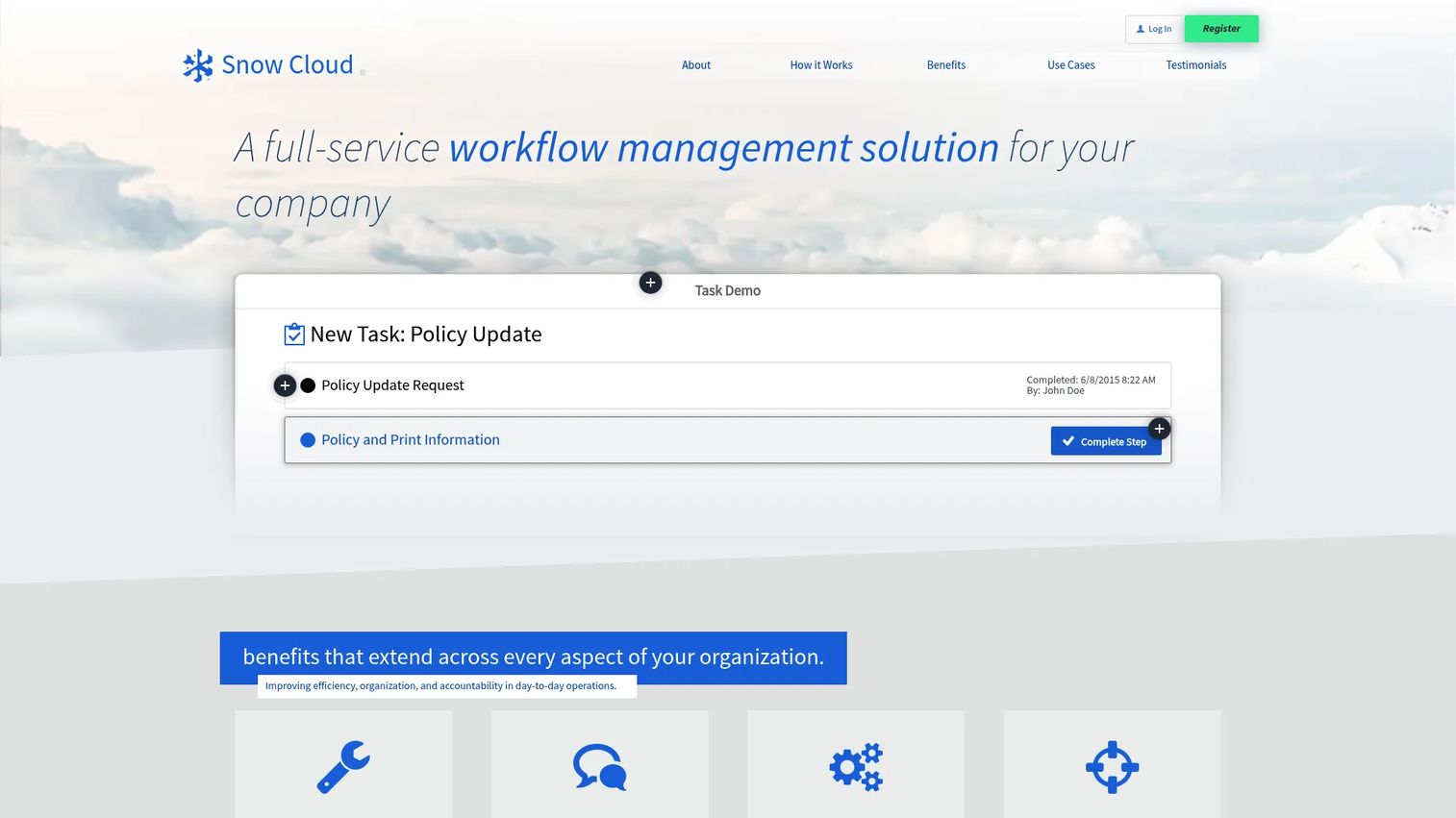
SnowCloud is a full-service workflow management solution that helps operators consolidate day-to-day coordination into configurable, web-based forms and tasks. For smaller or growing mountain operators, its value is practical: turn scattered manual processes into structured workflows that teams can see and act on. Where the larger suites lead with commerce, SnowCloud leans into operational visibility and process consistency.
Best for: Smaller or growing resorts that need to consolidate manual coordination into consistent, trackable workflows.
Key strengths
- Task management: Assign, track, and close operational tasks so nothing falls through the cracks between shifts.
- Customizable workflow forms: Configure forms to match how your resort actually operates rather than forcing a fixed template.
- Web-based connectivity: Give distributed teams access from any browser, keeping field and base operations in sync.
Why choose SnowCloud: SnowCloud fits operators whose biggest bottleneck is coordination rather than commerce. When the day-to-day pain is manual handoffs, inconsistent processes, and low visibility into who is doing what, a configurable workflow layer brings order. It is the operational backbone choice for teams simplifying how work gets tracked and completed.
SnowCloud pricing: SnowCloud does not publish public pricing on its site, and no pricing page was visible during review. As a configurable workflow platform, pricing is likely scoped to the modules and user count you deploy. Contact the vendor for a quote based on your operation's size.
5. Inntopia
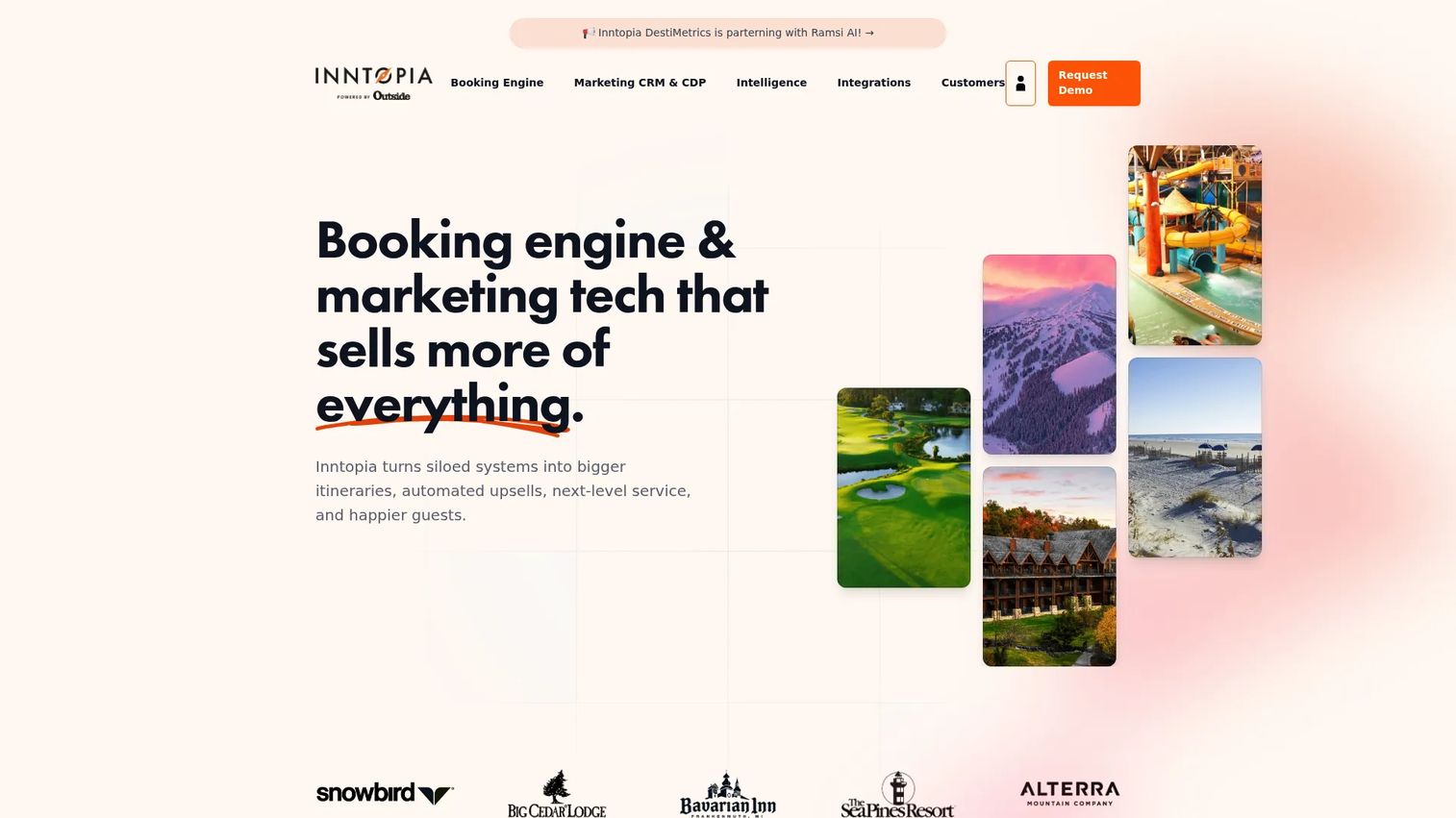
Inntopia combines a booking engine, CRM and CDP, and business intelligence for resorts and multi-system hospitality operators. Its strength is commerce and reservation management: selling live room and activity inventory through one booking engine while unifying guest data into 360-degree profiles for targeting and automation. With over 100 integrations across resort systems, it is built to sit at the center of a commerce stack rather than replace every module.
Best for: Resorts and multi-system operators that need booking, guest data, and marketing automation working as one platform.
Key strengths
- Unified booking engine: Sell live room and activity inventory together so guests book the full trip in one flow.
- 360-degree guest profiles: Merge data across systems into single profiles that power targeting and automation.
- 100-plus integrations: Connect to existing resort systems instead of ripping and replacing your stack.
Why choose Inntopia: Inntopia matters when reservation control and cross-channel commerce are the priority, and when the resort already runs multiple systems it wants to unify rather than replace. The guest data and integration depth make it a coordination layer across a wider stack. That fit suits operators managing lodging, activities, and marketing together.
Inntopia pricing: Inntopia's Marketing Cloud starts at $750/mo for the Silver tier, with Gold and Enterprise tiers available at custom pricing that is not publicly listed. It carries a 3.5/5 rating on G2, based on a limited number of reviews. The published starting price makes it one of the few platforms in this list with a visible entry point.
6. Skadii
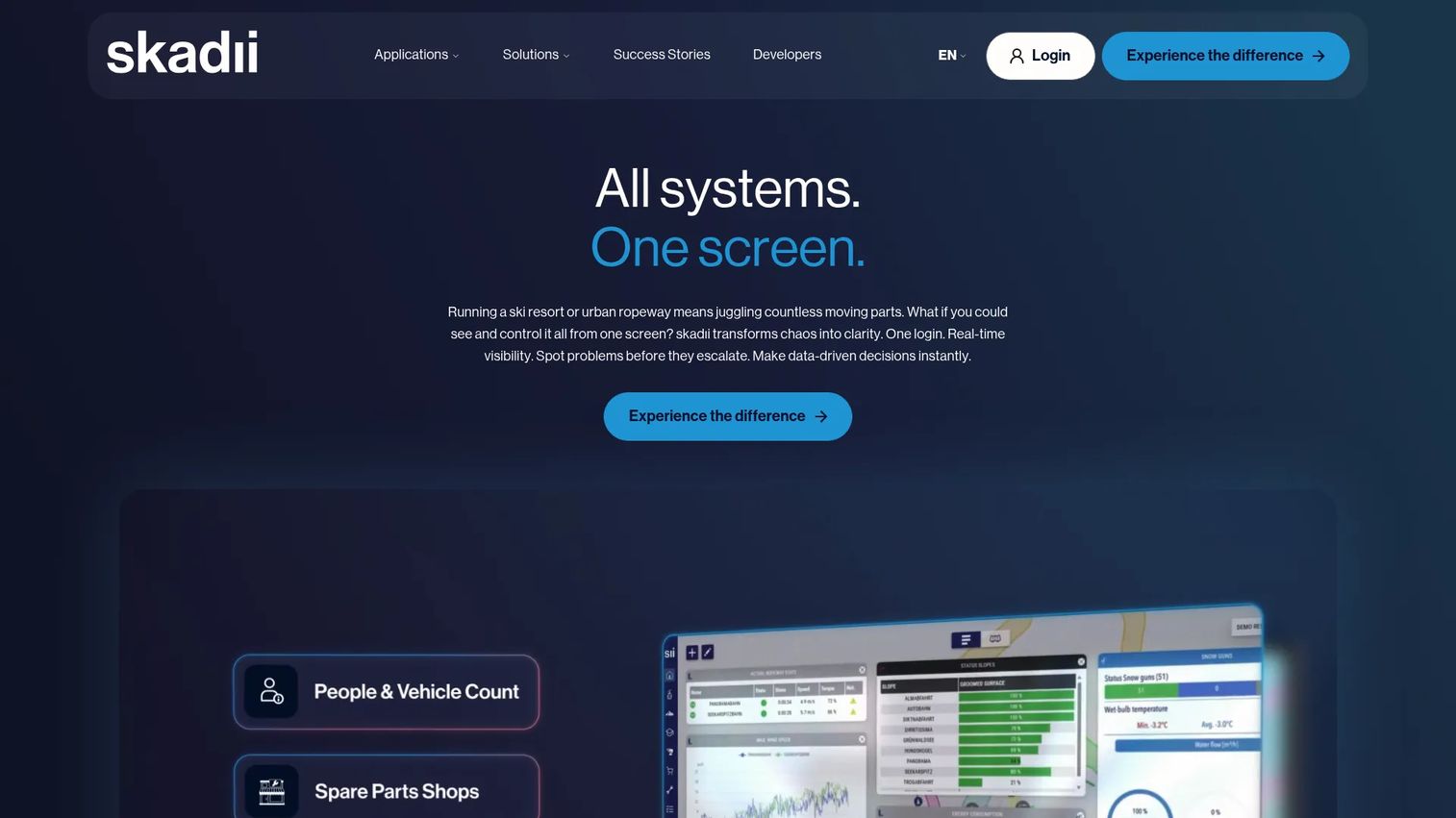
Skadii is digital workspace software for managing ski resort and urban ropeway operations from one platform. It pulls asset management, task management, maintenance, automation, logbook, flow, data integration, digital manuals, e-learning, and parts shops into a single workspace with one login. The angle is operational coordination: give teams a shared surface for the work that keeps the mountain running behind the guest-facing commerce.
Best for: Resorts and ropeway operators that need centralized operations visibility across maintenance, tasks, and assets.
Key strengths
- Single workspace and login: Consolidate operations visibility so teams stop switching between disconnected tools.
- Manufacturer-independent integrations: Connect equipment and systems across vendors without lock-in to one manufacturer.
- Broad operations modules: Cover asset management, maintenance, task tracking, logbooks, and e-learning in one place.
Why choose Skadii: Skadii fits operators focused on the operational backbone, the maintenance schedules, asset records, and cross-department tasks that keep lifts and facilities running. The manufacturer-independent integration approach suits resorts running mixed equipment fleets. It is the choice when operational coordination and visibility, not commerce, are the primary need.
Skadii pricing: Skadii tailors pricing to the customer and directs prospects to book a personalized demo, with no public numeric price shown. For a modular operations workspace, scoping to your resort's module mix and team size is expected. Book a demo to get a quote matched to your operation.
7. MtnOS
MtnOS positions around core resort operating workflows, guest-facing transactions, and day-to-day mountain administration. It sits in the broader ski tech ecosystem as an option for operators looking to run the operational fundamentals of the mountain through a dedicated system. Public detail on the platform is limited, so operators should validate module coverage directly with the vendor.
Best for: Resorts seeking a dedicated system for core operating workflows and day-to-day mountain management.
Key strengths
- Core operating workflows: Run the operational fundamentals of the mountain through a single system.
- Guest-facing transactions: Support the transactions guests complete across the resort day.
- Operational administration: Give teams a base for day-to-day mountain management tasks.
Why choose MtnOS: MtnOS is worth a conversation for operators who want a focused resort operating system and prefer to validate fit through a direct vendor discussion. Because public information is thin, treat early evaluation as a scoping exercise: confirm which modules cover your ticketing, rentals, and reporting needs before committing. It fits teams comfortable running a structured evaluation with the vendor.
MtnOS pricing: MtnOS does not publish public pricing, and pricing detail was not verifiable during review. As with most resort operating platforms, expect a custom quote scoped to your operation. Contact the vendor directly for pricing and module availability.
8. Spotlio
Spotlio is an experience-tech platform for ski resorts, parks, attractions, and destination-led businesses, focused on pricing, commerce, websites, and mobile guest touchpoints. Its strength is digital guest engagement: connecting dynamic pricing, commerce for tickets, passes, rentals, lessons, lodging, and bundles, and mobile-first booking journeys into one guest-facing layer. When the goal is improving how guests discover, book, and engage, Spotlio targets that surface directly.
Best for: Resorts that want to improve digital guest engagement, mobile booking, and pricing-driven commerce.
Key strengths
- Dynamic pricing: Price tickets and passes against demand across the season to protect yield on peak days.
- Connected commerce: Sell tickets, passes, rentals, lessons, lodging, and bundles through one guest commerce flow.
- Websites and mobile apps: Tie the resort's site and app into the guest journey so booking happens where guests already are.
Why choose Spotlio: Spotlio fits resorts whose priority is the digital front door, the website, app, and booking flow that shape first impressions and pre-arrival revenue. The pricing and commerce focus makes it a strong fit for capturing revenue before the guest reaches the mountain. It suits operators who see guest engagement and mobile conversion as the growth lever.
Spotlio pricing: Spotlio does not expose a public pricing page or visible figures on its site. Given the platform's breadth across pricing, commerce, web, and mobile, expect a custom quote assembled around the touchpoints you deploy. Contact the vendor for a scoped estimate.
Considerations before you buy
The right platform depends on your biggest bottleneck. Use this checklist to evaluate ski resort software against your operation's reality.
Module breadth versus depth
Decide whether you need broad coverage across many modules or deep capability in a few. A destination resort running lodging, retail, F&B, and lessons benefits from wide suites like Axess or accesso. A resort whose pain is coordination may get more from a focused workflow or operations layer. Buying breadth you will not use adds cost and complexity.
Integration strength
Very few resorts start from zero. Map which systems you keep and confirm the platform integrates with them cleanly. Inntopia's 100-plus integrations and Skadii's manufacturer-independent approach exist precisely because most stacks are mixed. Weak integration turns a promised single view into another set of manual exports.
Operational analytics and forecasting
Ask what the platform actually reports and how the data reaches decision-makers. Dynamic pricing, staffing, and capacity planning all depend on clean, timely analytics. A system that captures transactions but buries the reporting forces the same manual stitching you are trying to escape.
Mobile and guest experience
Guests plan and book on their phones. Evaluate mobile booking, self-service, and app experience as core, not optional. The ski app market's projected growth to USD 4.20 billion by 2033, per Verified Market Research (2025), reflects where guest demand is heading. Pre-arrival mobile capture is revenue you would otherwise leave on the table.
Conclusion
There is no single best ski resort software, only the best fit for your biggest operational gap. accesso is the strongest choice for mountain-wide commercial control, pairing ticketing, POS, virtual queuing, and decision intelligence in one enterprise suite. Intouch Elevate leads for CRM and guest-experience depth, wiring real-time guest data into front-line service. Axess covers broad destination operations across access, payments, and on-site commerce.
For reservations and cross-channel commerce, Inntopia's booking engine and guest data unification stand out, and it is one of the few options with published entry pricing. Skadii and SnowCloud specialize in operational coordination and workflow consolidation, while Spotlio owns the digital guest-engagement and mobile-commerce layer. MtnOS is worth scoping directly for core operating workflows.
Start with the platform that maps to your worst bottleneck. If lines and checkout leak revenue, prioritize guest flow and commerce. If departments run blind, prioritize shared data and analytics. If your digital front door underperforms, prioritize mobile and booking. Match the tool to the problem, not the other way around.
FAQs
Ski resort software is a platform, or connected set of modules, that manages and coordinates resort operations. It typically covers ticketing, POS, rentals, lessons, food and beverage, retail, CRM, reservations, and analytics. The goal is to connect transactions and guest data across the mountain so operators work from one picture instead of a stack of disconnected tools.
At minimum, expect ticketing and season passes, unified POS, rentals with waiver handling, ski school scheduling, CRM, reservations, mobile booking, and analytics. The more important question is integration: the front-end guest flow and back-end reporting should share data automatically. Software that captures transactions but cannot report on them cleanly leaves you doing manual work you meant to eliminate.
No. Ski resort ticketing software handles one module, selling lift tickets and passes, often with RFID access control. Resort management software is broader and usually includes ticketing as one layer alongside POS, rentals, lessons, CRM, reservations, and analytics. Ticketing is where many resorts start, but management platforms aim at the full operational and guest-experience picture.
Dynamic pricing uses demand and inventory data to adjust prices in near real time. When pricing is tied to bookings, weather, holidays, and available capacity, resorts can protect yield on peak days and drive volume on slow ones. The value depends on data flow: pricing engines work best when they read from live ticketing, reservation, and analytics data rather than static rules set once a season.
For rentals, prioritize inventory visibility, real-time availability, waiver handling, and family or group bookings. For ski school software and lesson scheduling, look for instructor assignment, group coordination, and clean availability views that prevent double-booking. Both benefit when they share guest records with ticketing and CRM, so a family's rentals, lessons, and passes link to one profile.
Increasingly central. Mobile booking reduces friction, supports pre-arrival planning, and captures revenue before the guest reaches the mountain. The ski app market reached USD 1.67 billion in 2025 and is projected to hit USD 4.20 billion by 2033, per Verified Market Research (2025). Guests expect to buy tickets, book lessons, and manage passes from their phones, so mobile and self-service capability directly affects conversion.
It depends on which part of guest experience matters most. If the priority is CRM, loyalty, and personalized front-line service, Intouch Elevate's real-time guest view is a strong fit. If it is the digital front door, mobile, website, and booking flow, Spotlio focuses there. If it is guest flow on the mountain, accesso's virtual queuing and self-service portal target throughput and line reduction.