Your inventory sits across a dozen locations. Warehouse A has stock. Store B has the same SKU. A supplier can dropship it in three days. Your 3PL could pick and pack it by tonight. And the customer at checkout expects a delivery promise in seconds.
That coordination problem is what retail distributed order management software is built to solve. According to the MIT Center for Transportation and Logistics (2025), 84% of retailers were already implementing an omnichannel strategy, yet 50% still cited order fulfillment as a core distribution challenge. The gap between strategic intent and operational execution is exactly where a distributed OMS earns its keep.
Choosing the wrong system means your routing logic works in a spreadsheet but fails on peak day. Choosing the right one means your VP of Operations can own the process without you in the room for every decision. Which retail distributed order management system fits your operating model?
What's inside
This guide compares 21 retail distributed order management systems for 2026.
- Who it's for: Retail, DTC, marketplace, wholesale, and enterprise commerce teams evaluating fulfillment infrastructure
- Selection criteria: Order routing depth, real-time inventory visibility, omnichannel fulfillment support, integration breadth, returns handling, and verified pricing
- What to verify before buying: Implementation ownership, data accuracy requirements, integration depth beyond logo lists, and store-level change management needs
- What this covers: Enterprise DOM platforms, commerce-native OMS tools, and adjacent inventory and WMS systems that serve distributed fulfillment use cases
TL;DR
- Best for enterprise retail orchestration: Manhattan Active Order Management and IBM Sterling Order Management suit complex networks spanning many stores, DCs, and return flows
- Best for Microsoft retail stacks: Microsoft Dynamics 365 Commerce fits teams standardizing on Microsoft commerce and operations infrastructure; starts at $210/user/month (paid yearly)
- Best for SAP environments: SAP Order Management Services starts at $238/month per 10,000-transaction block and connects directly to existing SAP back-office systems
- Best for omnichannel-first retail brands: OneStock, Fluent Order Management, and fulfillmenttools are purpose-built for ship-from-store, click and collect, and store fulfillment operations
- Best for budget-conscious teams: Zoho Inventory starts at $29/organization/month (billed annually) with a free plan, covering multichannel inventory and order management for smaller operations
- Not every retailer needs a full enterprise DOM: A DTC brand running two warehouses likely needs a solid OMS or inventory tool first. Scale the investment to the complexity of your actual fulfillment network
What is retail distributed order management?
Retail distributed order management (DOM) is software that orchestrates order capture, sourcing, routing, fulfillment, and returns across multiple sales channels and fulfillment nodes.
A retailer typically receives orders through ecommerce storefronts, point-of-sale systems, marketplaces, apps, and call centers simultaneously. Without a DOM layer, fulfillment decisions rely on manual rules, static priorities, or whichever node picks up the task first. A retail distributed order management system applies logic to each order: Which node has available stock, which can meet the promised delivery date, which route minimizes cost or split shipments, and whether a store can support BOPIS without depleting floor inventory needed for walk-in customers.
The core fulfillment models a retail DOM supports include ship-from-store, click and collect, BOPIS, ship-to-store, dropshipping from supplier nodes, home delivery from distribution centers, and buy online, return in store. Each model requires the system to read real-time inventory from stores, warehouses, suppliers, and 3PL partners, then make a sourcing decision in milliseconds.
Returns create a separate coordination problem. When a customer returns an item in-store that was purchased online, the DOM needs to update available-to-promise inventory, route the returned stock to the right location, and sync that data back to the ecommerce layer.
Key capabilities to expect:
- Real-time inventory visibility across all fulfillment nodes
- Rule-based order routing and fulfillment optimization
- Available-to-promise calculation at checkout
- Order lifecycle tracking from placement to delivery
- Returns orchestration and reverse logistics support
- Integrations with OMS, WMS, ERP, POS, and ecommerce platforms
The line between a DOM and an OMS has blurred significantly. Many modern platforms handle both order capture and distributed routing. The practical distinction is that an OMS manages the order record, while a DOM specifically optimizes where and how each order gets fulfilled across a distributed network.
When to use retail distributed order management
Coordinate fulfillment across stores and warehouses
When inventory lives in more than two or three nodes and routing decisions happen manually, split shipments increase, costs rise, and delivery promises erode. A DOM applies sourcing logic automatically: Routing to the nearest node with available stock, protecting store inventory needed for walk-in traffic, and reducing the number of orders that require two or more shipments. Margin protection and SLA adherence both improve when routing decisions run through a system rather than a spreadsheet.
Support BOPIS, ship-from-store, and click and collect
Omnichannel fulfillment breaks when store inventory, ecommerce orders, and POS systems run on different data. A customer who purchases online for in-store pickup expects the item to be there. If the store's inventory feed is stale by six hours, it probably won't be. A retail DOM synchronizes store inventory in real time, coordinates fulfillment assignments to store staff, and keeps the customer-facing promise aligned with operational reality. See our guide to click and collect software for a deeper breakdown of that fulfillment model specifically.
Scale returns and reverse logistics
Returns are an inventory visibility problem dressed as a customer service problem. A buy online, return in store transaction needs to update the available inventory count immediately, route the returned item to the correct stocking location, and sync that change across every channel. Without a DOM handling this loop, returns create phantom stock, misrouted inventory, and customer-facing promises the system can't keep. A well-configured DOM closes that loop automatically.
Retail distributed order management systems comparison
The table below covers all 21 systems by fulfillment fit, pricing, and G2 rating. Enterprise DOM platforms typically price by quote because the cost varies by order volume, number of fulfillment nodes, integration scope, and implementation structure. Smaller inventory and order tools publish plan-based pricing.
| # | Product | Best for | Key differentiator | Pricing | G2 rating |
|---|---|---|---|---|---|
| 1 | Microsoft Dynamics 365 Commerce | Microsoft retail stacks | Unified omnichannel commerce and DOM in one platform | From $210/user/month (yearly) | 4.3/5 |
| 2 | OneStock | Omnichannel retail brands | AI-driven fulfillment orchestration with unified returns | Custom pricing | N/A |
| 3 | ActiveOrder | Enterprise omnichannel retailers | Cloud-native OMS from Manhattan Associates | Custom pricing | 3.6/5 |
| 4 | Manhattan Active Order Management | Large retailers with complex networks | ML-powered fulfillment sourcing optimization | Custom pricing | 3.6/5 |
| 5 | IBM Sterling Order Management | Complex B2B and B2C fulfillment | Per-order-line pricing with deep configurability | From 1.5c per order line | 4.4/5 |
| 6 | Adobe Commerce | Adobe ecosystem retailers | Commerce platform with extensible order management | Custom pricing | N/A |
| 7 | Shopify | DTC and omnichannel brands | Commerce-native orders with a large fulfillment app ecosystem | From $29/month (yearly) | 4.4/5 |
| 8 | Fluent Order Management | Composable commerce architecture | API-first DOM with 4.9/5 G2 rating | Custom pricing | 4.9/5 |
| 9 | Infios OMS | Logistics-heavy retail and 3PLs | AI-powered order routing and fulfillment decisioning | Custom pricing | 3.9/5 |
| 10 | SAP Order Management Services | SAP infrastructure retailers | Transaction-based pricing in the SAP ecosystem | From $238/month per 10K transactions | 4.3/5 |
| 11 | Kibo Order Management | Mid-market to enterprise retailers | Composable commerce with integrated OMS | Custom pricing | 4.1/5 |
| 12 | Planet Distributed Order Management | Retailers on Planet commerce stack | Omnichannel OMS with unified inventory and ATP | Custom pricing | N/A |
| 13 | Zoho Inventory | Small and growing businesses | Affordable multichannel inventory and order management | From $29/org/month (yearly); free plan available | 4.4/5 |
| 14 | Base.com | Multichannel ecommerce sellers | Freemium order and marketplace management | Free plan; Business from $99 + $0.49/order | 3.8/5 |
| 15 | Blue Yonder Order Management & Commerce | Enterprise retailers with supply chain complexity | AI/ML order sourcing tied to supply chain planning | Custom pricing | 4.1/5 |
| 16 | Deck Commerce | DTC retail brands | OMS built specifically for DTC brands | Custom pricing | 4.8/5 |
| 17 | fulfillmenttools | Retailers operationalizing store fulfillment | MACH-certified agentic OMS with 30-day free trial | Custom pricing; 30-day free trial | N/A |
| 18 | HotWax Commerce | Store-aware omnichannel retailers | BOPIS, BORIS, pre-orders, and store fulfillment workflows | Custom pricing | N/A |
| 19 | Salesforce Order Management | Salesforce Commerce Cloud retailers | Unified order and CRM data with agentic routing | Custom pricing | 4.2/5 |
| 20 | Vin eRetail | Marketplace-heavy retailers | Multichannel OMS with warehouse and marketplace sync | Custom pricing | N/A |
| 21 | CloudX WMS | WMS-led fulfillment operations | All-inclusive WMS with order coordination and carrier integrations | Custom pricing | N/A |
Best 21 retail distributed order management systems for 2026
1. Microsoft Dynamics 365 Commerce
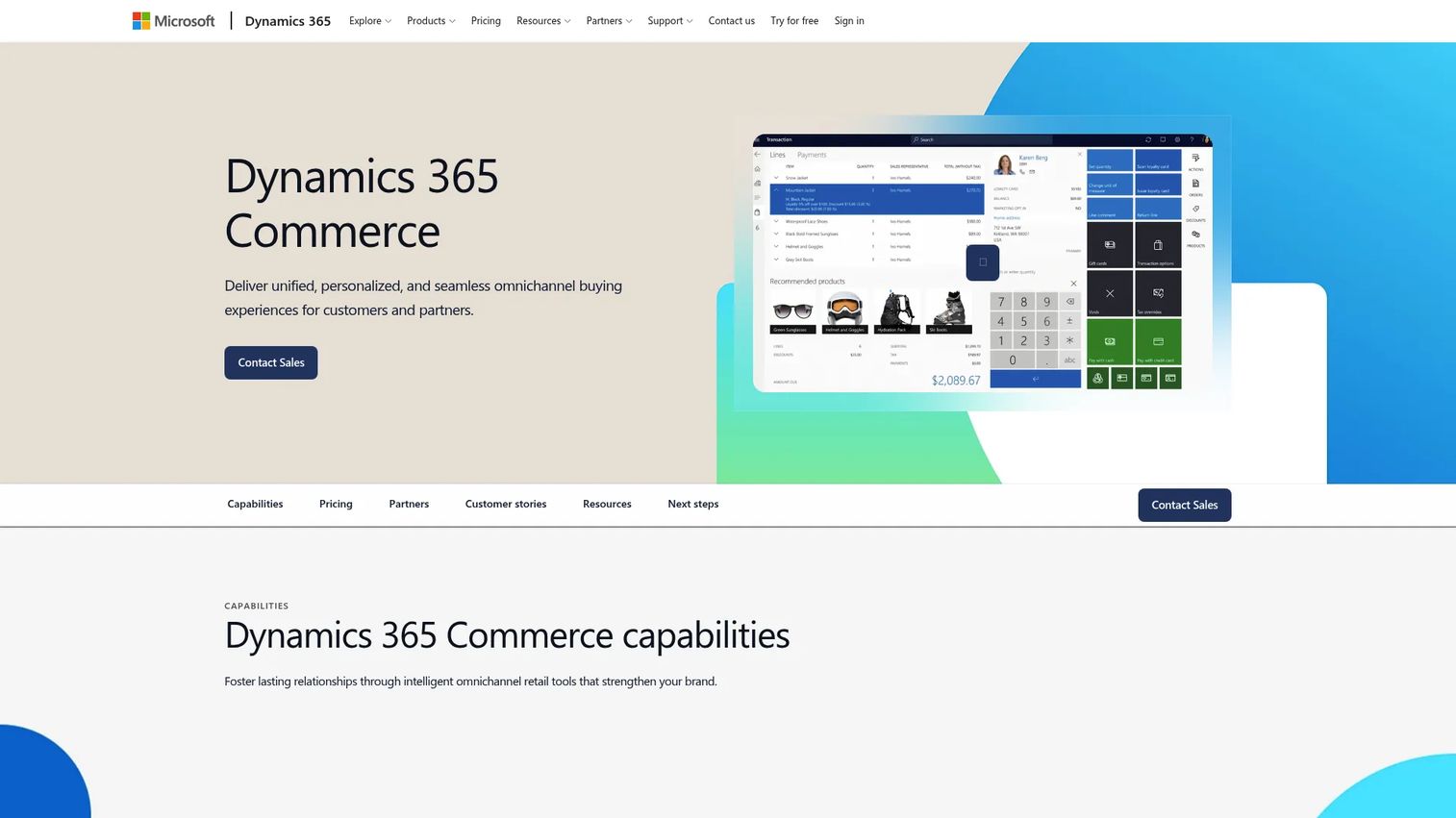
Microsoft Dynamics 365 Commerce is a unified omnichannel retail and B2B commerce platform that brings together physical stores, digital commerce, call centers, inventory, and order management in a single environment. Its distributed order management capabilities include optimization profiles that retailers configure across cost, distance, inventory availability, and service-level constraints. For retailers already running Microsoft infrastructure across ERP, finance, or supply chain, adding Commerce means order orchestration and commerce sit in the same data model rather than requiring a separate integration.
Best for: Retailers standardizing their commerce and operations stack around Microsoft business applications.
Key features
- Omnichannel retail across physical stores, digital channels, and call centers
- Store Commerce POS with online and offline support
- Cross-channel inventory visibility and DOM optimization profiles
- Digital commerce for DTC, B2B, and wholesale operations
- Loyalty, clienteling, and merchandising built into the platform
Why choose Microsoft Dynamics 365 Commerce: If your team is already on Dynamics 365 for ERP or finance, Commerce is the lowest-friction path to connected order orchestration. Teams outside the Microsoft ecosystem will need to weigh the platform breadth against implementation effort.
Microsoft Dynamics 365 Commerce pricing: The core Commerce license starts at $210/user/month billed annually. An e-commerce add-on runs $4,000/tenant/month (yearly), and a headless add-on is $4,200/tenant/month (yearly).
G2 rating: 4.3/5
2. OneStock
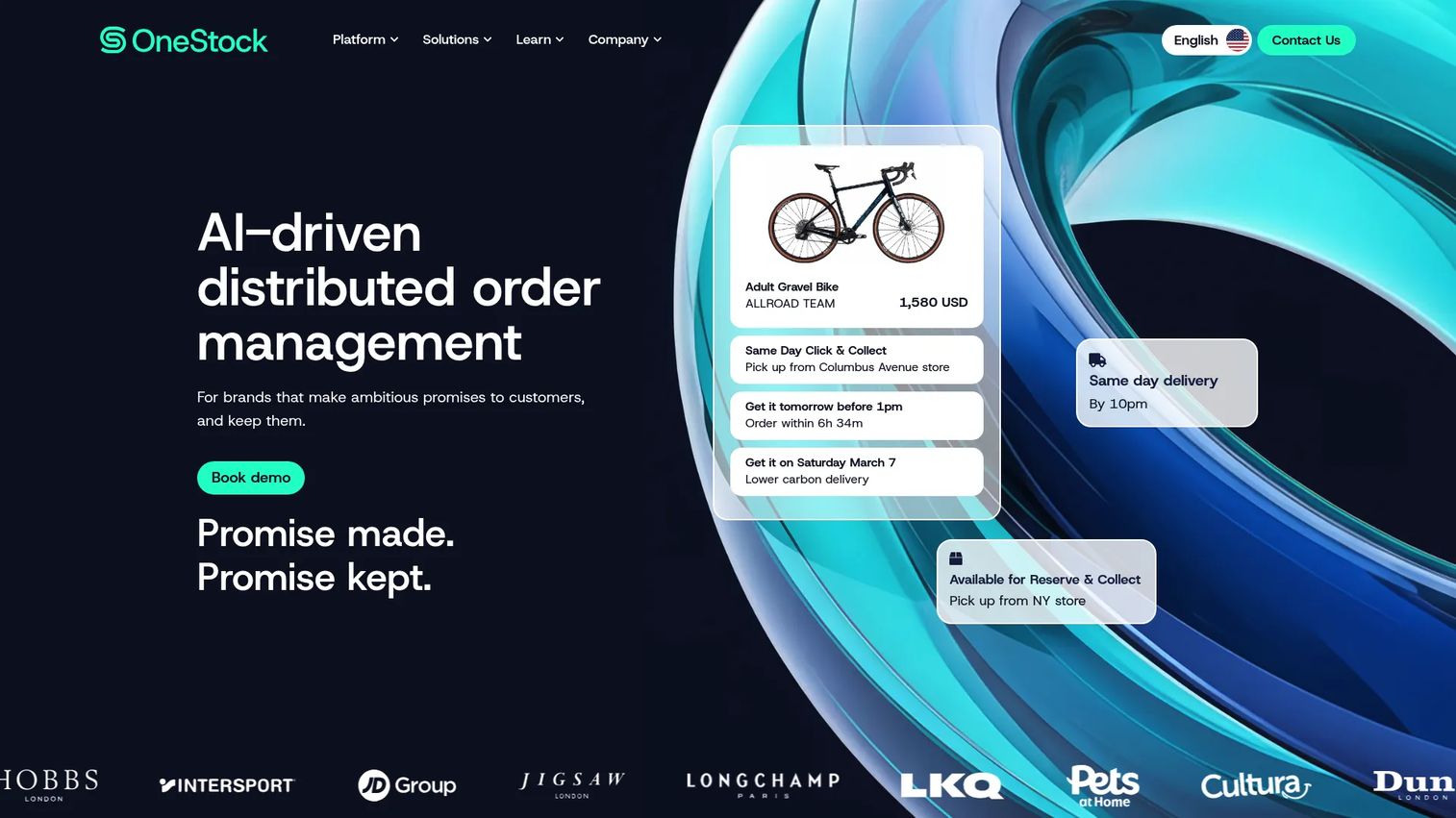
OneStock is an AI-driven distributed order management platform that unifies real-time inventory across stores, warehouses, and supplier nodes, then orchestrates fulfillment and returns across the network. The platform covers ship-from-store, click and collect, order-in-store with unified catalog, and unified returns. Its AI agent Robin provides operational assistance for store staff managing fulfillment tasks. OneStock positions strongly in fashion, lifestyle, and specialty retail, where turning the store estate into a fulfillment asset is a key operating priority.
Best for: Retail brands that want to activate their store network as distributed fulfillment capacity rather than run fulfillment exclusively through centralized distribution.
Key features
- Real-time unified inventory across stores, warehouses, and supplier nodes
- Ship-from-store and click and collect orchestration
- Delivery promise calculation and available-to-promise logic
- Unified returns management across channels
- AI agent for store fulfillment operational support
Why choose OneStock: Its retail-first architecture makes it a natural fit for omnichannel brands that need store fulfillment workflows, not just warehouse routing. Teams evaluating a standalone DOM layer over an existing commerce platform will find OneStock purpose-built for exactly that use case.
OneStock pricing: OneStock structures pricing around feature set, order volumes, and number of stock points. Contact OneStock directly for a quote.
3. ActiveOrder
ActiveOrder is Manhattan Associates' cloud-native order management solution for enterprise retailers. It provides real-time global inventory visibility, precise order promising, and omnichannel order orchestration, covering order modifications, returns, and post-purchase servicing. The platform is built on a microservices architecture with continuous versionless upgrades, which means no scheduled upgrades or forced migration windows. ActiveOrder is the current branding for Manhattan's OMS product and comes in Essentials, Enterprise, and Enterprise Premier editions.
Best for: Enterprise retailers that need omnichannel order orchestration with high accuracy on inventory availability and order promises across complex networks.
Key features
- Real-time global inventory visibility and dynamic availability
- Omnichannel order orchestration and fulfillment across all channels
- Customer service, order modification, and post-purchase servicing
- Returns and reverse logistics workflows
- Cloud-native microservices with API-first architecture
Why choose ActiveOrder: Manhattan's supply chain heritage gives ActiveOrder depth in fulfillment logic that commerce-native OMS tools don't match. The trade-off is implementation complexity; this platform fits teams with dedicated commerce and operations leadership already in place.
ActiveOrder pricing: Manhattan does not display pricing on its website. Three editions exist: Essentials, Enterprise, and Enterprise Premier. Contact Manhattan Associates for a quote.
G2 rating: 3.6/5
4. Manhattan Active Order Management
Manhattan Active Order Management extends Manhattan's enterprise OMS capabilities with machine-learning-powered fulfillment sourcing, real-time inventory visibility, and customer-controlled post-purchase servicing. The platform handles order orchestration across countries, brands, and fulfillment methods from a single system. REST APIs expose order tracking and modification capabilities for integration with existing tech stacks. For retailers managing hundreds of stores alongside multiple distribution centers and dropship vendors, Manhattan's ML-based sourcing optimization provides routing logic that rules-based systems can't replicate.
Best for: Large retailers with complex fulfillment networks spanning many stores, warehouses, suppliers, and channels needing ML-powered sourcing decisions.
Key features
- ML-powered fulfillment sourcing optimization across nodes
- Global order orchestration across countries and brands
- Real-time inventory visibility and precise order promising
- Customer-controlled order modifications and post-purchase servicing
- REST APIs for tracking and modifications
Why choose Manhattan Active Order Management: The ML sourcing layer is the differentiator for networks where manual rules can't keep up with inventory variability and demand patterns. Teams at earlier stages of omnichannel maturity may find the platform more capability than their current operations require.
Manhattan Active Order Management pricing: Custom pricing across Essentials, Enterprise, and Enterprise Premier editions. Contact Manhattan Associates directly.
G2 rating: 3.6/5
5. IBM Sterling Order Management
IBM Sterling Order Management is a long-established enterprise order orchestration platform for B2C, B2B, and complex retail fulfillment networks. It provides global inventory visibility, intelligent sourcing, and configurable order orchestration across channels. IBM publishes per-order-line pricing, which is unusual in this category and makes cost modeling more transparent for high-volume retailers. The platform comes in Essentials, Standard, Professional, and Enterprise editions, covering both SaaS and container-based deployments.
Best for: Large retailers and enterprises with complex fulfillment requirements needing a configurable, established order orchestration platform with deep integration history.
Key features
- Order orchestration across channels with global inventory visibility
- Intelligent sourcing and fulfillment optimization
- Configurable sourcing rules and order promising
- Returns workflows and reverse logistics support
- SaaS and container-based deployment options
Why choose IBM Sterling Order Management: IBM's per-order-line pricing model gives volume predictability that flat-fee platforms don't. It suits enterprises already embedded in the IBM ecosystem or those with procurement and security requirements that favor established vendors with long track records.
IBM Sterling Order Management pricing: Essentials is 2.8c per line monthly; Standard is 4.5c per line monthly. Professional and Enterprise container editions start at 1.5c and 1.8c per line respectively. Prices vary by country and exclude taxes.
G2 rating: 4.4/5
6. Adobe Commerce

Adobe Commerce is a flexible enterprise commerce platform for B2B, B2C, and multi-brand digital operations. Order management in Adobe Commerce operates through its native order workflow and an extension marketplace where retailers can add order routing, inventory, and fulfillment capabilities. The platform supports B2B features including company accounts, approval workflows, customer-specific pricing, and requisition lists alongside its consumer commerce capabilities. Retailers already on Adobe Experience Cloud have a natural path to connecting commerce, analytics, and personalization in one stack.
Best for: Mid-market and enterprise retailers already invested in the Adobe ecosystem who want order management close to their commerce layer.
Key features
- AI-powered search, product discovery, and recommendations
- B2B capabilities including company accounts, quoting, and approval workflows
- Headless and SaaS commerce deployment options
- Marketplace extension architecture for order and fulfillment customization
- Multi-brand and multi-market commerce support
Why choose Adobe Commerce: Adobe Commerce fits best when commerce experience and order management need to coexist in the same platform with tight personalization and analytics connectivity. Teams needing deep DOM functionality for complex multi-node routing may need to evaluate dedicated DOM tools alongside it.
Adobe Commerce pricing: Adobe provides customized pricing across three offerings: Adobe Commerce as a Cloud Service (SaaS), Adobe Commerce on Cloud (PaaS), and Adobe Commerce Optimizer. Contact Adobe for a quote.
7. Shopify

Shopify is an all-in-one commerce platform covering online stores, multichannel selling, inventory, payments, POS, and fulfillment. For DTC brands and omnichannel retailers, Shopify's native inventory locations, store pickup capabilities, and fulfillment app ecosystem handle most mid-complexity order management needs without a separate DOM layer. Shopify Plus extends the platform for higher-volume operations with additional API access, customization, and wholesale channel support. Third-party apps in the Shopify ecosystem add specialized routing, 3PL integration, and returns capabilities.
Best for: DTC and omnichannel brands already selling through Shopify who want order management, fulfillment, and POS from one platform without adding a separate DOM.
Key features
- Commerce-native order management and multichannel selling
- Store pickup and inventory locations for BOPIS fulfillment
- Shopify POS for in-person and omnichannel sales
- Large fulfillment app ecosystem for 3PL and carrier integrations
- AI tools including Sidekick for store assistance
Why choose Shopify: For brands where Shopify is already the system of record for commerce, adding a separate DOM may be premature. Shopify's native capabilities cover most fulfillment scenarios for brands at growth stage. The platform's limitations appear at high-complexity enterprise scale, where dedicated DOM routing logic and multi-node inventory management require tools built specifically for that layer.
Shopify pricing: Basic starts at $29/month (yearly); Grow at $79/month (yearly); Advanced at $299/month (yearly). Shopify Plus starts from $2,300/month on a three-year term.
G2 rating: 4.4/5
8. Fluent Order Management

Fluent Order Management is a cloud-native distributed order management platform purpose-built for omnichannel fulfillment, inventory visibility, and order orchestration. The platform operates on an API-first, event-driven architecture that fits composable commerce stacks. It handles real-time unified inventory, order sourcing with split fulfillment support, click and collect, home delivery, and in-store fulfillment through its Fluent Store module. Configurable workflows and business rules let operations teams adjust routing logic without engineering involvement. Among the tools in this list, Fluent carries one of the highest G2 ratings at 4.9/5.
Best for: Retailers building composable omnichannel commerce architecture who need a dedicated DOM layer separate from their commerce platform.
Key features
- Real-time unified inventory across all fulfillment nodes
- Order orchestration with sourcing, split fulfillment, and revision support
- Click and collect, home delivery, and ship-from-store workflows
- Configurable business rules without engineering dependency
- API-first event-driven architecture for composable stacks
Why choose Fluent Order Management: Fluent's API-first design makes it a strong fit for retailers who have outgrown a commerce-native OMS and need a dedicated DOM layer that can connect cleanly to existing systems. The Fluent Light edition caps at 500K orders per year and 20K SKUs; Enterprise pricing scales with order volumes.
Fluent Order Management pricing: Fluent Light has set pricing based on usage limits (500K orders/year, 10 fulfillment nodes, 20K SKUs). Fluent Enterprise pricing is based on order volumes. Contact Fluent Commerce for a quote on either edition.
G2 rating: 4.9/5
9. Infios OMS
Infios OMS (formerly part of Körber Supply Chain Software) is an AI-powered order orchestration platform targeting mid-market and enterprise retailers, B2B organizations, and 3PL operators. It provides unified order and inventory management with real-time visibility, AI-powered routing and allocation, and support for complex B2B and 3PL fulfillment structures. The platform sits inside Infios's broader supply chain software portfolio, which gives it integration depth for logistics-heavy operations where WMS, transportation, and order management need to coordinate closely.
Best for: Logistics-heavy retailers and 3PL operators needing order orchestration tightly connected to warehouse and supply chain execution.
Key features
- Unified order and inventory management with real-time visibility
- AI-powered order routing, allocation, and fulfillment decisioning
- Complex B2B and 3PL fulfillment support
- Warehouse management integration within the Infios portfolio
- Supply chain execution connectivity across the fulfillment network
Why choose Infios OMS: Teams coming from Körber Supply Chain Software will recognize the Infios portfolio. For operations where the DOM, WMS, and transportation layers need tight coordination, staying within a single portfolio reduces integration complexity and support fragmentation.
Infios OMS pricing: Custom pricing. Contact Infios for a quote.
G2 rating: 3.9/5
10. SAP Order Management Services

SAP Order Management Services helps global retailers orchestrate orders across channels, inventory, fulfillment systems, and returns within the SAP ecosystem. It connects to SAP Commerce Cloud, SAP S/4HANA, and other SAP products through native integration, making it the natural OMS choice for retailers already standardized on SAP infrastructure. The platform uses transaction-based pricing, with contracts spanning 3 to 36 months and volume measured in blocks of 10,000 transactions per year.
Best for: Enterprise retailers already running SAP systems who want order management and inventory orchestration in the same technology family.
Key features
- Omnichannel order orchestration and fulfillment across channels
- Real-time order, inventory, and fulfillment visibility
- AI-powered order issue detection and proactive mitigation
- Native integration with SAP Commerce Cloud and SAP S/4HANA
- Global retail support for cross-border fulfillment operations
Why choose SAP Order Management Services: If your ERP is SAP, keeping order management in the same family eliminates an integration layer and aligns master data governance. The transaction-based pricing model makes cost more predictable for stable, high-volume operations than seat-based or flat-fee alternatives.
SAP Order Management Services pricing: SAP Order Management foundation starts at $238/month per block of 10,000 transactions per year, on a 3 to 36 month contract.
G2 rating: 4.3/5
11. Kibo Order Management
Kibo Order Management provides enterprise order management with real-time inventory visibility, intelligent order sourcing and routing, and fulfillment optimization across stores, distribution centers, and dropship vendors. It operates within Kibo's composable commerce environment, giving retailers the option to deploy order management alongside Kibo's commerce, search, and personalization modules or to use OMS as a standalone layer. Packaging includes Starter, Essentials, and Advanced tiers priced on order lines with modular deployment options.
Best for: Mid-market and enterprise retailers, manufacturers, and distributors managing complex, high-volume omnichannel fulfillment across multiple fulfillment methods.
Key features
- Real-time inventory visibility across stores, DCs, and dropship vendors
- Intelligent order sourcing and routing with configurable workflows
- Store fulfillment support including BOPIS and ship-from-store
- Returns orchestration and reverse logistics support
- Composable architecture for flexible deployment alongside other Kibo modules
Why choose Kibo Order Management: Kibo works well for retailers who want composable flexibility without building everything from scratch. If the goal is a single vendor for commerce and order management at mid-enterprise scale, Kibo covers both without requiring a full platform migration.
Kibo Order Management pricing: Three tiers: Starter, Essentials, and Advanced. Pricing is based on order lines with custom quotes. Contact Kibo for details.
G2 rating: 4.1/5
12. Planet Distributed Order Management
Planet provides an omnichannel order management system that helps retailers fulfill orders from stores, warehouses, and other locations using unified inventory and intelligent order orchestration. Key capabilities include click and collect, click and reserve, ship-from-store, endless aisle, real-time available-to-promise calculation, and intelligent order splitting with fulfillment-location selection. Planet's broader portfolio includes payments and commerce infrastructure, making it a fit for retailers already using Planet's payment or retail technology stack.
Best for: Retailers evaluating a DOM within a broader commerce and payments infrastructure from one vendor.
Key features
- Click and collect, click and reserve, and ship-from-store workflows
- Real-time available-to-promise inventory calculation
- Intelligent order orchestration with order splitting
- Fulfillment-location selection logic
- Integration with Planet's broader commerce and payments stack
Why choose Planet Distributed Order Management: Planet suits retailers who want order management as part of a broader commerce and payments relationship rather than a standalone DOM purchase. Teams outside the Planet ecosystem should evaluate whether the broader vendor fit justifies adoption.
Planet Distributed Order Management pricing: Custom pricing. Contact Planet for a quote.
13. Zoho Inventory
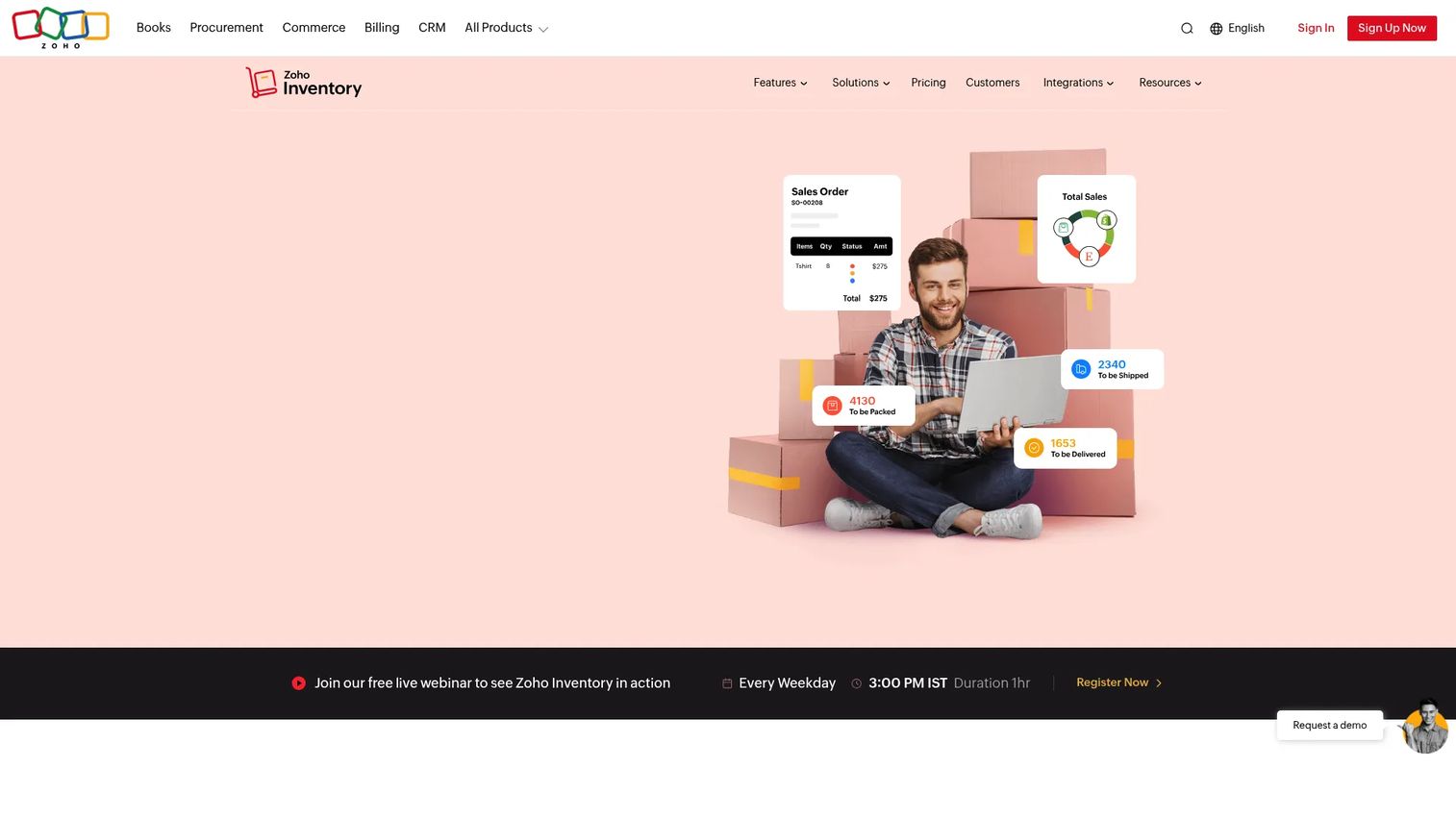
Zoho Inventory is an inventory and order management platform for small and growing businesses. It covers multi-warehouse management, serial and batch tracking, barcode generation, multichannel selling across marketplaces and storefronts, packaging, shipping, and post-shipment tracking. Zoho Inventory is part of the Zoho ecosystem and integrates with Zoho CRM, Zoho Books, and other Zoho modules. Its free plan, which includes 50 orders per month and two locations, makes it a practical starting point for early-stage retailers.
Best for: Smaller retailers and ecommerce operators needing affordable, functional inventory and order management without enterprise complexity.
Key features
- Multi-warehouse inventory management and serial/batch tracking
- Multichannel selling across marketplaces and ecommerce platforms
- Barcode generation and scanning
- Shipping integrations and post-shipment tracking
- Zoho ecosystem integration with CRM and accounting
Why choose Zoho Inventory: Zoho Inventory is the most accessible entry point on this list, both in cost and setup time. It doesn't carry the DOM routing depth of enterprise platforms, but it handles multichannel order and inventory management well for teams that haven't yet outgrown a centralized model.
Zoho Inventory pricing: Free plan available (50 orders/month, 1 user, 2 locations). Standard starts at $29/organization/month billed annually; Professional at $79/month; Premium at $129/month; Enterprise at $249/month.
G2 rating: 4.4/5
14. Base.com
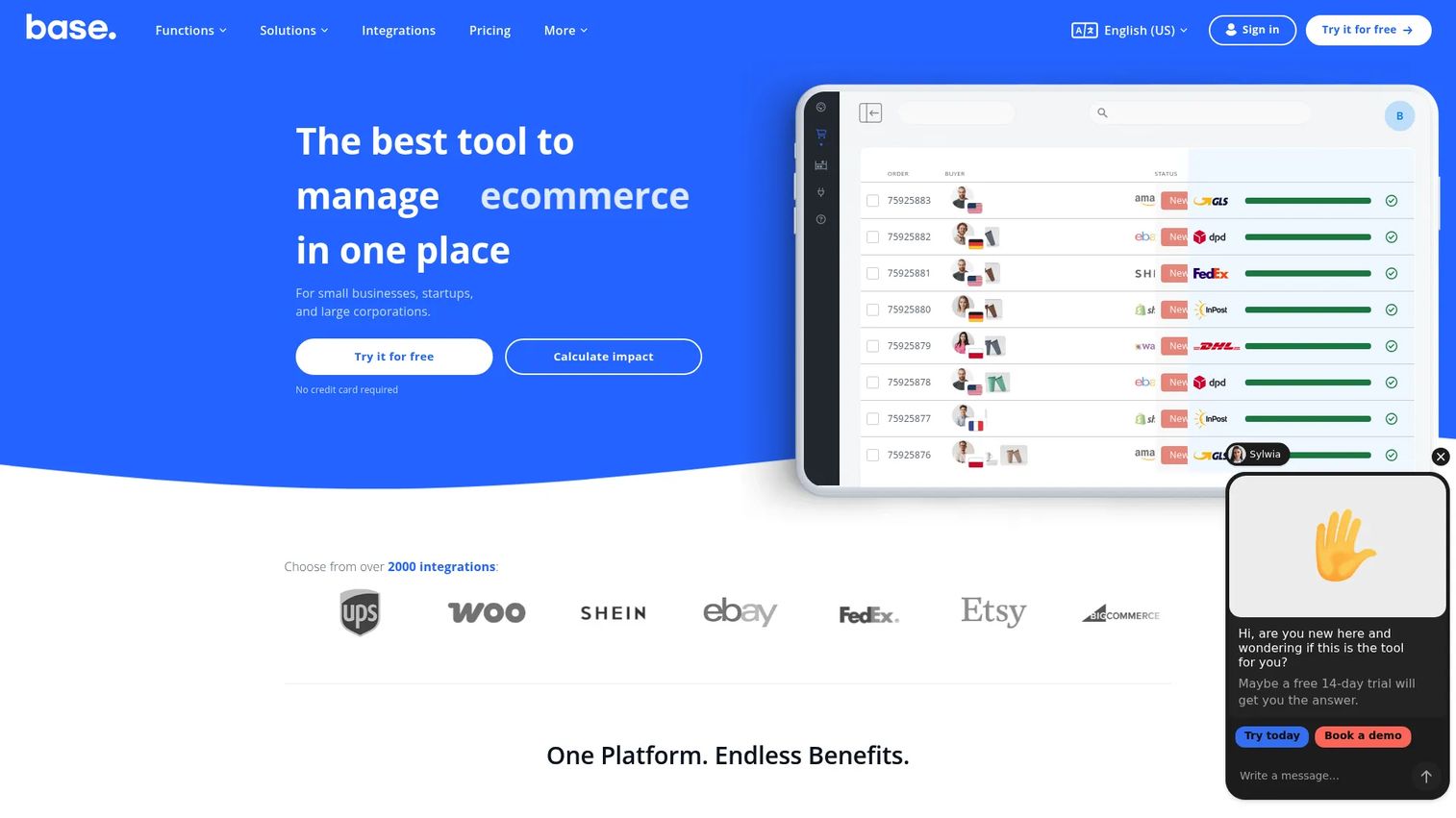
Base.com is a commerce process orchestration platform for multichannel ecommerce sellers managing orders, inventory, marketplace listings, shipping, and automation. The platform handles real-time stock and price synchronization across marketplaces, AI-assisted listing tools, carrier integrations, and ERP or WMS connectivity. Its freemium tier (up to 100 orders per month at no cost) gives smaller multichannel sellers a low-risk starting point. The Business plan adds unlimited products and users, real-time synchronization, and repricing tools.
Best for: Multichannel ecommerce businesses managing orders across multiple marketplaces and storefronts who need centralized order, inventory, and shipping management.
Key features
- Multichannel order management with marketplace synchronization
- Real-time inventory and price sync across channels
- Shipping management with carrier integrations
- Workflow automation and automatic fulfillment actions
- AI-powered listing and product-content tools
Why choose Base.com: Base.com's per-order pricing model on the Business plan ($99 fixed + $0.49/order) aligns cost with actual volume, which works well for sellers with variable monthly order counts. It's not a dedicated DOM for complex fulfillment networks, but it covers the multichannel orchestration layer that many growing ecommerce businesses need first.
Base.com pricing: Freemium plan at $0/month (up to 100 orders/month). Business plan at $99 fixed fee plus $0.49/order per month. Enterprise pricing is customized.
G2 rating: 3.8/5
15. Blue Yonder Order Management & Commerce
Blue Yonder Order Management & Commerce is an AI-native, composable enterprise OMS for retailers, distributors, manufacturers, and 3PLs managing complex omnichannel fulfillment networks. It provides real-time unified inventory visibility, AI/ML-powered order sourcing and fulfillment optimization, and delivery-date promising connected to supply chain data. Blue Yonder's broader portfolio covers supply chain planning, warehouse management, and transportation, which gives its OMS a supply-chain planning depth that standalone DOM tools don't carry.
Best for: Large retailers connecting commerce order management with supply chain planning and execution across complex fulfillment networks.
Key features
- Real-time unified inventory visibility across channels and nodes
- AI/ML-powered order sourcing, routing, and delivery-date promising
- Omnichannel order orchestration including store fulfillment and returns
- Composable architecture for flexible integration into existing stacks
- Connection to Blue Yonder's supply chain planning and WMS capabilities
Why choose Blue Yonder Order Management & Commerce: Blue Yonder's differentiation is the planning-to-fulfillment connection. Retailers who run Blue Yonder for demand planning or WMS will find the order management layer connects operational data that separate-vendor stacks can't easily share.
Blue Yonder Order Management & Commerce pricing: Custom pricing. Contact Blue Yonder for a quote.
G2 rating: 4.1/5
16. Deck Commerce order management system
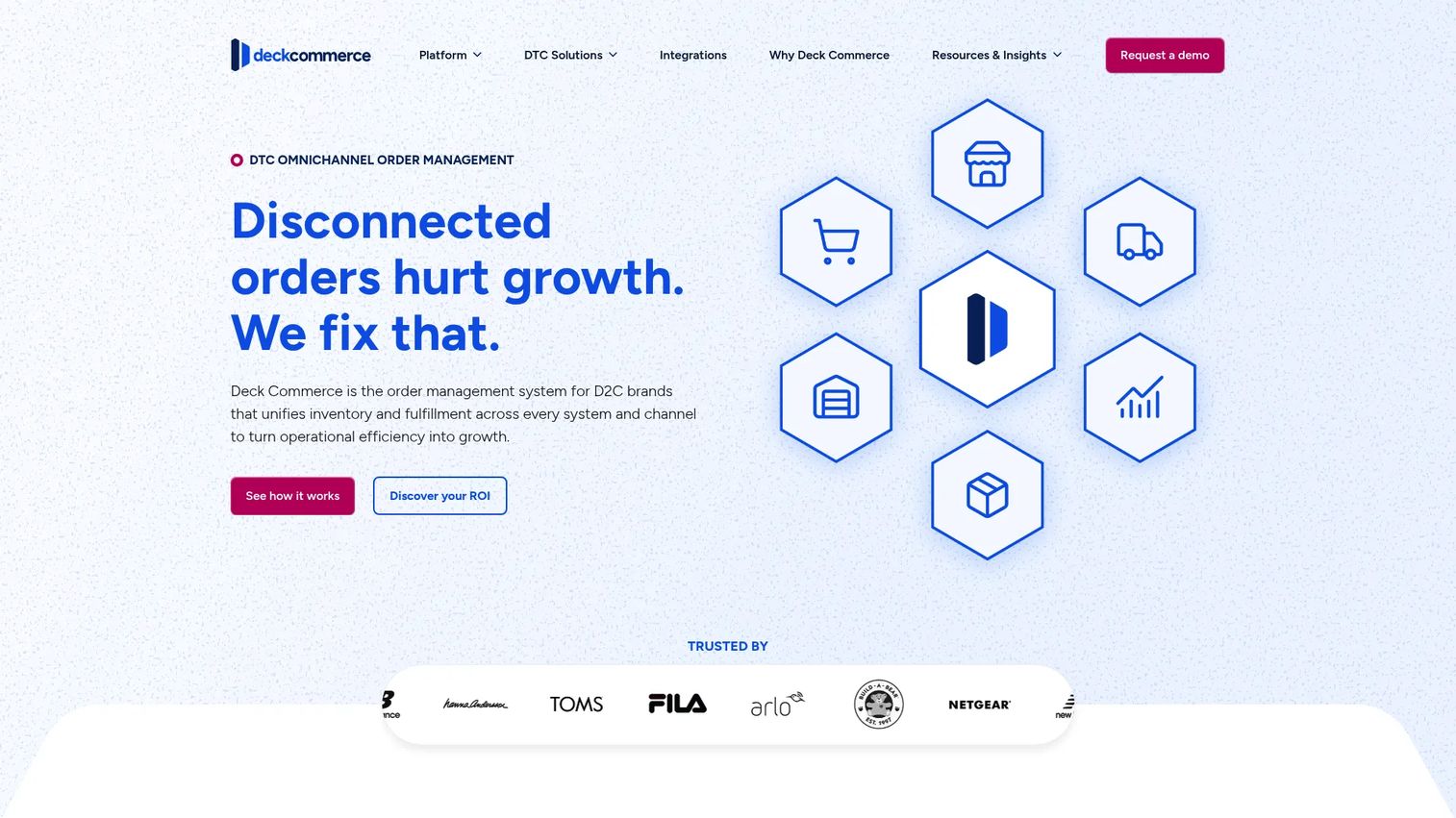
Deck Commerce is an order management system built specifically for DTC retail brands handling high order volumes across multiple channels or regions. It provides real-time inventory visibility, omnichannel order routing including BOPIS and ship-from-store, automated post-purchase workflows for fulfillment and ERP updates, and customer service tools for order modification and returns. Deck Commerce integrates with major ecommerce platforms and ERP systems, which makes it a practical middle layer for brands that need order management without a full enterprise platform implementation.
Best for: Mid-market and enterprise DTC brands that need a dedicated OMS without the implementation footprint of a full enterprise suite.
Key features
- Real-time channel-aware inventory visibility
- Omnichannel order routing including BOPIS and ship-from-store
- Automated post-purchase workflows for fulfillment and ERP updates
- Customer service tools for order modification and returns
- Commerce platform and ERP integrations
Why choose Deck Commerce: Deck Commerce fills the gap between a commerce-native order management layer and a full enterprise DOM. For DTC brands scaling past what their ecommerce platform handles natively, it adds routing depth and operational automation without the complexity of enterprise platform implementation.
Deck Commerce pricing: Pricing is provided after a discovery call. Contact Deck Commerce for a quote.
G2 rating: 4.8/5
17. fulfillmenttools
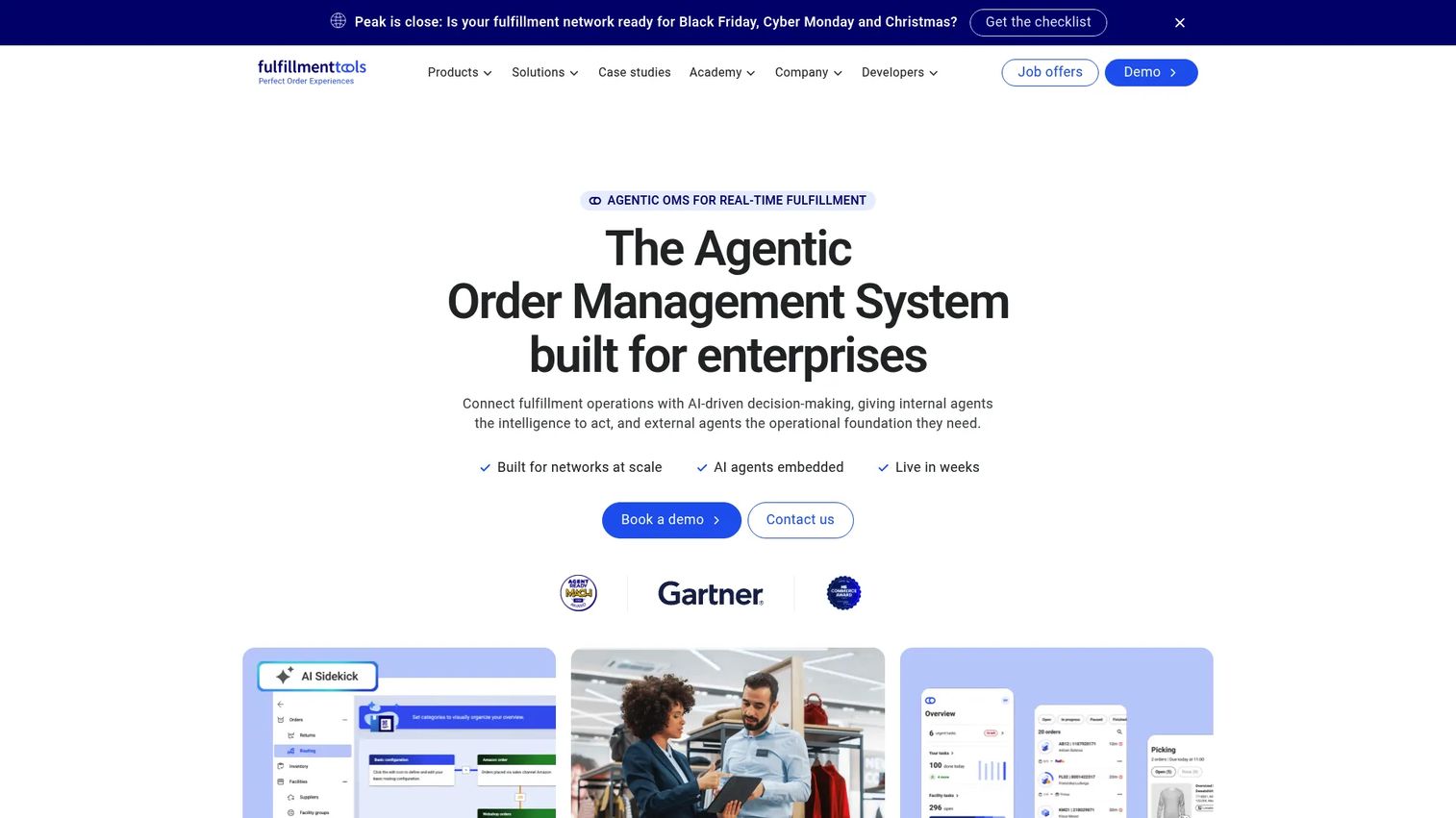
fulfillmenttools is an enterprise Agentic Order Management System for orchestrating inventory, orders, and fulfillment across distributed retail networks. It covers global inventory visibility, availability and promising, advanced order routing, store operations (picking, packing, carrier handover, returns, transfers), and fulfillment analytics. The platform includes AI capabilities: An AI Sidekick, an Order Routing Agent, and an Order Monitoring Agent. fulfillmenttools is MACH-certified and API-first, built for composable retail architectures where the OMS is a separate layer connected to existing commerce, ERP, and WMS systems.
Best for: Enterprise retailers and brands operationalizing store-based fulfillment across a distributed network, particularly those investing in composable commerce architecture.
Key features
- Global Inventory Hub with real-time visibility across nodes
- Advanced order routing with availability and promising
- Store operations: Picking, packing, carrier handover, and returns
- AI Sidekick, Order Routing Agent, and Order Monitoring Agent
- MACH-certified, API-first cloud-native architecture
Why choose fulfillmenttools: The agentic AI layer and MACH certification position fulfillmenttools well for retailers building modern, composable fulfillment infrastructure. A 30-day free trial gives operations teams a practical way to evaluate routing logic and store operations workflows before committing.
fulfillmenttools pricing: Custom pricing with a 30-day free trial available. Contact fulfillmenttools for a quote.
18. HotWax Commerce Omnichannel Order Management System
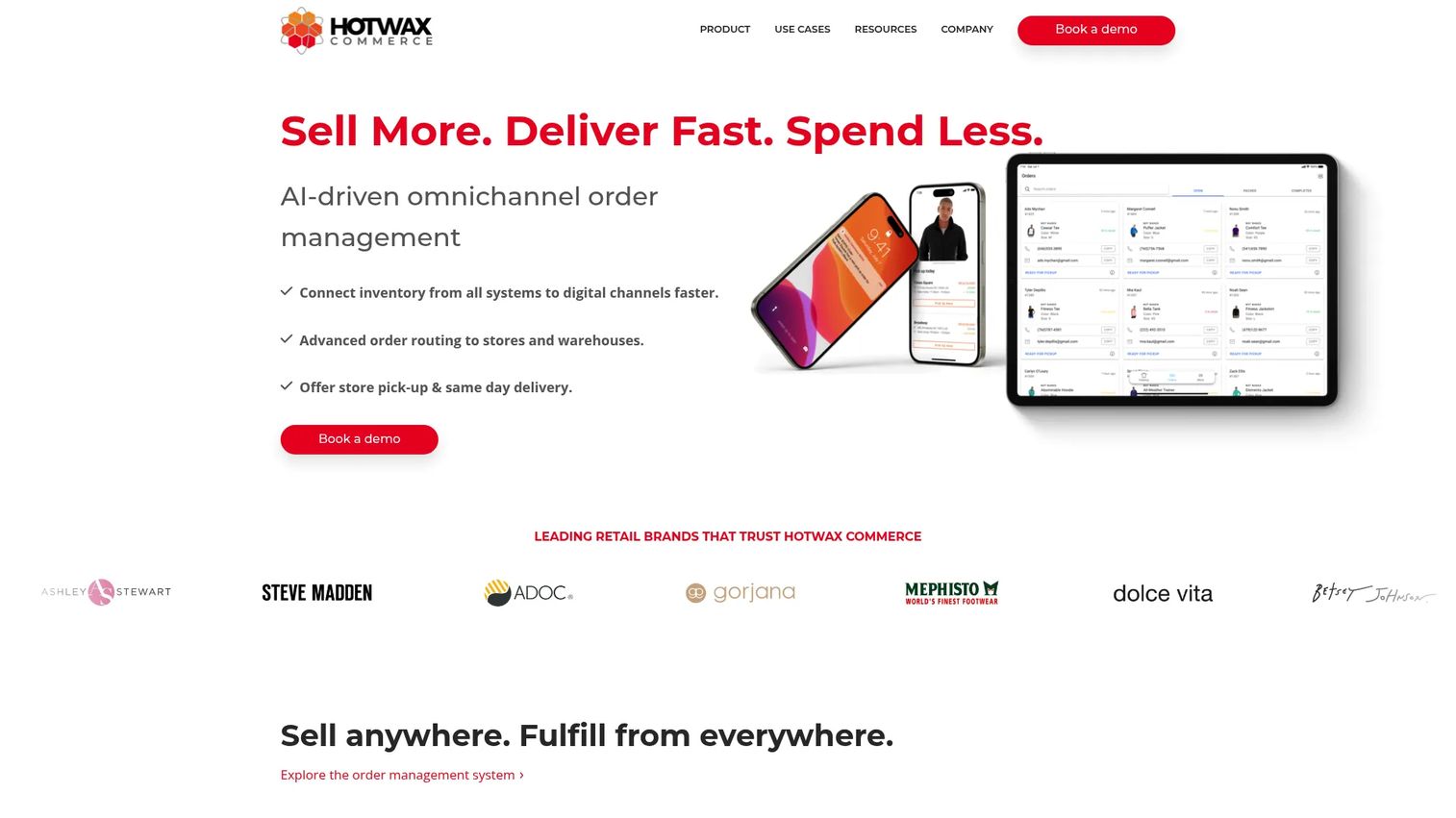
HotWax Commerce is an AI-driven omnichannel order management platform for retailers needing store-aware inventory visibility, distributed order routing, and store-based fulfillment workflows. It covers BOPIS, same-day pickup, BORIS (buy online, return in store), pre-order and backorder management, store inventory operations including receiving and cycle counting, and store fulfillment with picking, packing, and rate shopping. Multi-brand and multi-region enterprise configurations are supported.
Best for: Enterprise retail brands that need store-aware omnichannel order management with strong BOPIS, BORIS, and pre-order handling built into the platform.
Key features
- Unified inventory visibility across integrated systems
- Configurable distributed order routing and fulfillment
- BOPIS, same-day pickup, and BORIS support
- Pre-order and backorder management
- Store fulfillment with picking, packing, and shipping label generation
Why choose HotWax Commerce: HotWax's store-operations depth makes it a strong fit for retailers where stores are active fulfillment nodes, not just pickup locations. The platform covers the full store fulfillment lifecycle from routing assignment through carrier handover.
HotWax Commerce pricing: Custom pricing. Contact HotWax Commerce for a quote.
19. Salesforce Order Management
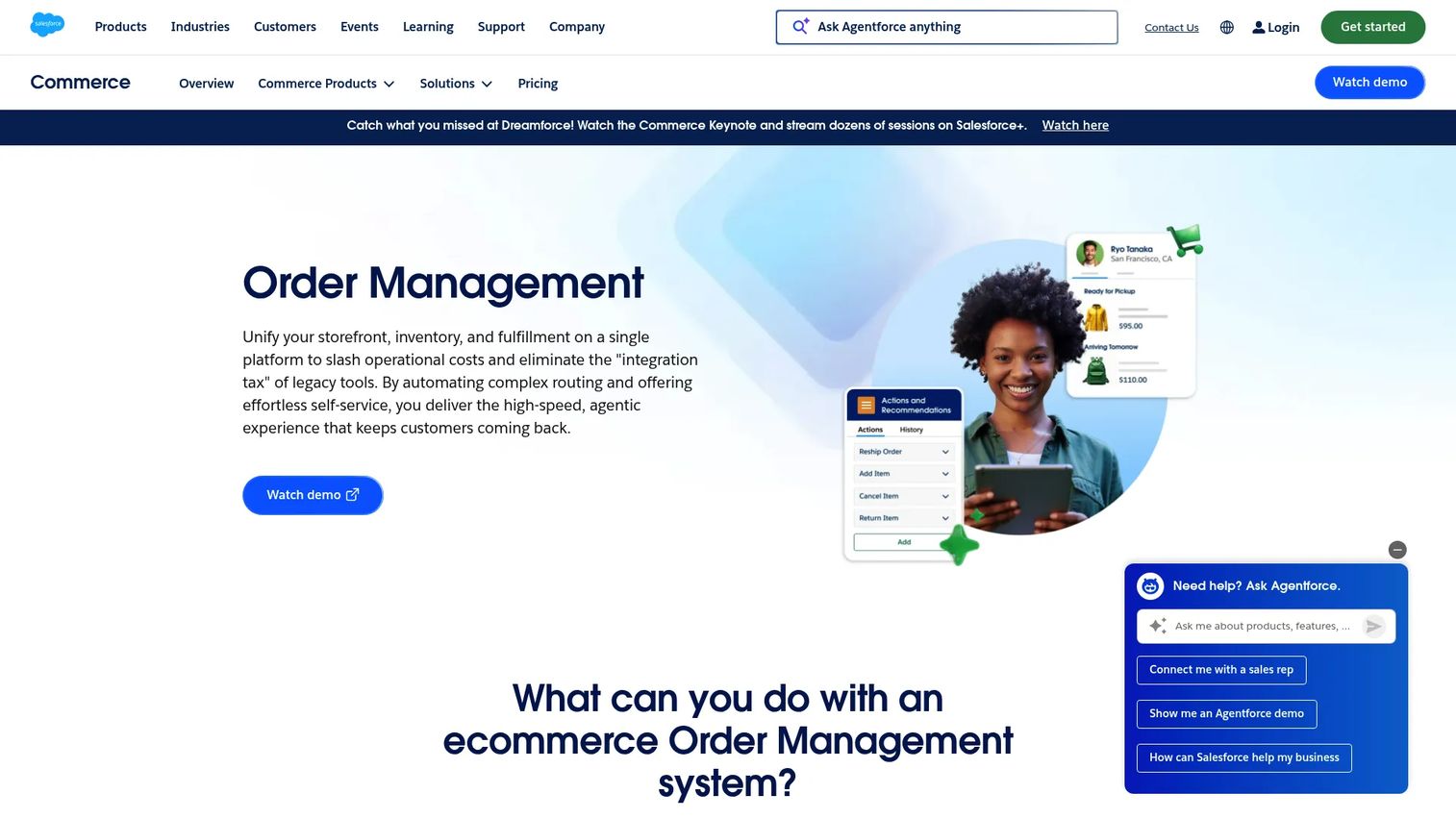
Salesforce Order Management unifies storefront, inventory, fulfillment routing, and post-purchase service on a single platform within the Salesforce Commerce Cloud and CRM ecosystem. It provides agentic order routing and exception resolution, centralized order data with agent-assisted support, distributed order management with fulfillment workflows, delivery estimation based on inventory and carrier transit times, and self-service returns and cancellations. The platform is available in Order Visibility and Growth editions.
Best for: Retailers standardizing commerce and customer operations in Salesforce who want order management inside the same platform as CRM, service, and analytics.
Key features
- Agentic order routing and fulfillment exception resolution
- Centralized order data with agent-assisted customer service
- Distributed order management and fulfillment workflows
- Self-service order status, cancellations, and returns
- Delivery estimation based on inventory, sourcing, and carrier data
Why choose Salesforce Order Management: For commerce organizations already running Salesforce Commerce Cloud or Service Cloud, this is the lowest-friction path to connected order and customer data. Teams outside the Salesforce ecosystem will find comparable DOM functionality without the platform dependency from other options on this list.
Salesforce Order Management pricing: Two editions: Order Visibility and Growth. Pricing is contact-sales only. Contact Salesforce for a quote.
G2 rating: 4.2/5
20. Vin eRetail
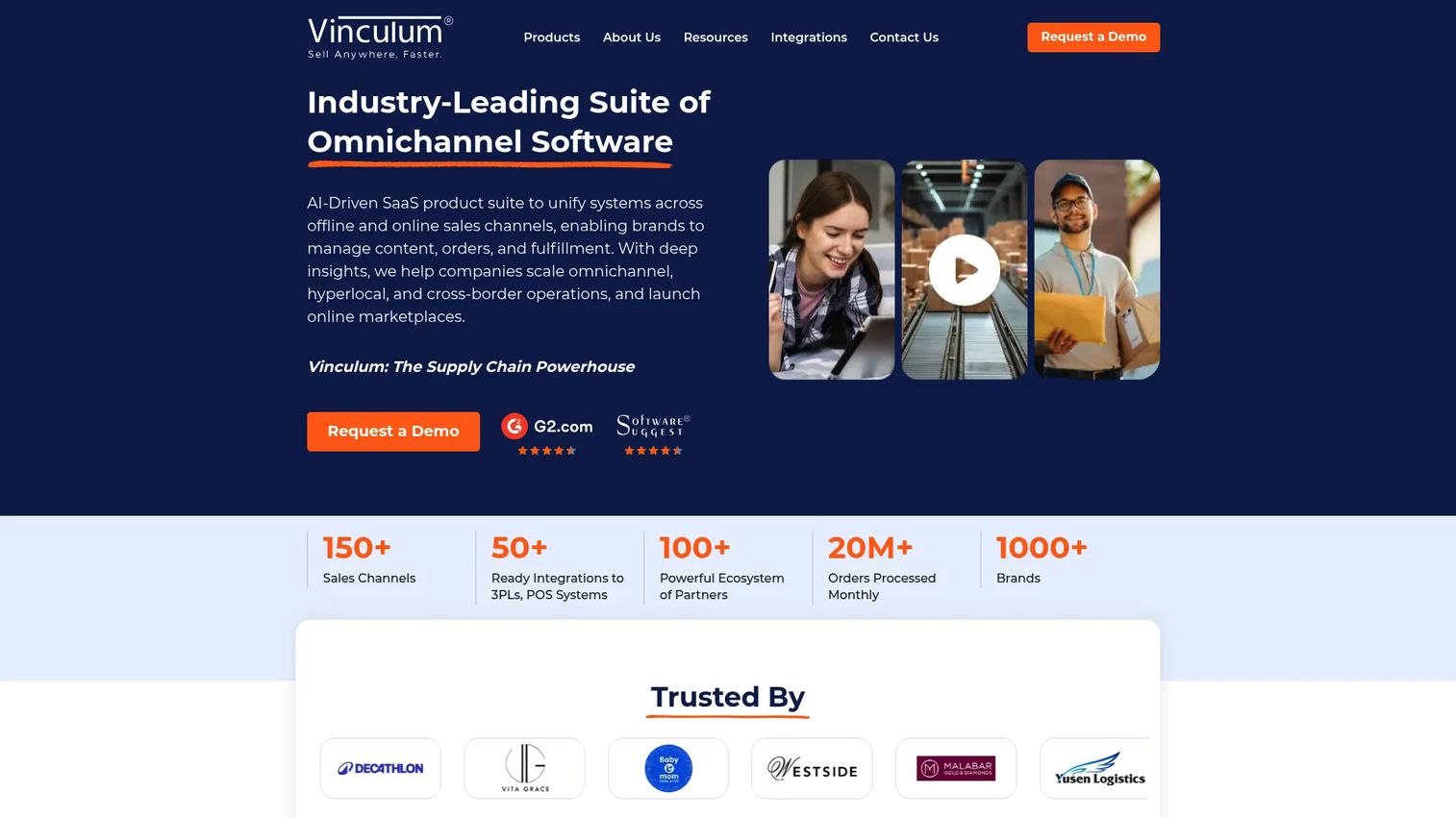
Vin eRetail is an omnichannel SaaS platform from Vinculum for managing product data, orders, inventory, warehouses, fulfillment, and payment reconciliation. It supports multichannel order and inventory synchronization, warehouse management for B2B and B2C fulfillment, and product information management with catalog distribution. Vin eRetail is particularly used by brands, retailers, marketplaces, distributors, and 3PLs in markets where Vinculum has strong regional coverage and support infrastructure.
Best for: Marketplace-heavy retailers and brands needing centralized multichannel order and inventory coordination with warehouse management in a single platform.
Key features
- Multichannel order and inventory synchronization
- Warehouse management for B2B and B2C fulfillment operations
- Product information management and catalog distribution
- Marketplace integrations and seller operations support
- Payment reconciliation across channels
Why choose Vin eRetail: Vin eRetail suits retailers and brands managing high marketplace order volumes across multiple selling channels, particularly in regions where Vinculum operates strong implementation and support teams.
Vin eRetail pricing: Custom pricing. Contact Vinculum for a quote.
21. CloudX WMS
CloudX WMS is a SaaS warehouse management system for omnichannel brands, 3PLs, fulfillment centers, and high-volume logistics operations. It covers inbound receiving, inventory management, pick and pack, domestic and international shipping, global tracking, labor management, returns, kitting, and integrations with front-end commerce applications and carriers. CloudX occupies a different position from standalone DOM platforms: It provides WMS-led order coordination where the warehouse execution layer drives fulfillment visibility rather than a separate routing engine.
Best for: Omnichannel brands and 3PLs whose primary fulfillment complexity sits in warehouse execution and carrier management rather than multi-node order routing.
Key features
- Inbound receiving, inventory management, and pick and pack
- Domestic and international shipping with global tracking
- Returns management and kitting
- Labor management and fulfillment KPI reporting
- Integrations with front-end commerce applications and carriers
Why choose CloudX WMS: CloudX is the right fit when the warehouse is the primary fulfillment node and operational complexity centers on execution efficiency rather than cross-node routing decisions. It complements a DOM or OMS above it in the stack rather than replacing one.
CloudX WMS pricing: CloudX offers an all-inclusive price with unlimited users, usage, and data. Contact CloudX for a quote.
G2 rating: Not currently listed on G2
Considerations when choosing retail distributed order management systems
Match the system to your actual fulfillment model
A DTC brand running two warehouse locations doesn't need an enterprise DOM with ML-based sourcing. A retailer with 200 stores, a regional DC, and three 3PL partners does. Start from your current fulfillment network and where it needs to be in 18 months. The investment in implementation, integration, and change management should match that complexity, not someone else's.
Verify inventory accuracy before adding routing logic
Routing software decides where to fulfill orders based on inventory signals it receives. If those signals are stale, inaccurate, or inconsistent across your POS, WMS, ERP, and ecommerce platform, the routing decisions will be wrong even with a correctly configured DOM. Inventory data quality is a prerequisite, not a byproduct, of distributed order management.
Test routing rules against real margin scenarios
The cheapest fulfillment node on paper may not be cheapest in practice. Routing every order to the nearest location can drain store inventory needed for walk-in customers. Routing to the lowest-cost node can break delivery SLAs during peak periods or create split shipments that cost more than single-node fulfillment. Run your actual order mix through candidate routing configurations before committing.
Check integration depth, not just integration logos
A platform's integration page may list 50 connected systems. What matters is data direction, sync frequency, exception handling, and who owns implementation when the integration breaks. Ask every vendor how their integration with your ERP handles order updates, how often inventory counts sync, and what happens when a carrier returns an error.
Plan for store-level change management
Ship-from-store and BOPIS workflows change how stores operate. Staff need training. Incentive structures may need adjustment if store teams absorb fulfillment labor without recognition. Technology configuration is the easier part of a store fulfillment rollout; the operational change management determines whether adoption actually happens.
Conclusion
Enterprise retailers choosing between the platforms on this list should match their selection to existing infrastructure. Microsoft Dynamics 365 Commerce, SAP Order Management Services, and Salesforce Order Management each make the most sense when your stack already centers on those vendors. Manhattan Active Order Management and IBM Sterling Order Management suit complex networks where fulfillment routing depth and configurability matter more than platform continuity.
For omnichannel-first retail brands prioritizing store fulfillment, OneStock, Fluent Order Management, fulfillmenttools, and HotWax Commerce are purpose-built for ship-from-store, click and collect, and BOPIS operations. Deck Commerce serves DTC brands that need OMS depth without enterprise implementation overhead.
Growing ecommerce sellers should evaluate Shopify, Zoho Inventory, and Base.com first. Each covers multichannel order and inventory management at a cost and complexity level appropriate for businesses that haven't yet built a distributed fulfillment network.
Shortlist three to five tools, then test real fulfillment scenarios against each one: A split-shipment event, a store-pickup order during a stockout, a high-volume peak day, and a cross-channel return.
If your team sells complex software and needs to show buyers how your product works before a live call, interactive demos give prospects a hands-on experience without scheduling or setup.
Start your journey with Guideflow today!
FAQs
A retail distributed order management system is software that orchestrates order capture, routing, fulfillment, and returns across multiple sales channels and fulfillment nodes. It gives retailers a single control layer for deciding which node fulfills each order based on inventory availability, cost, delivery promise, and operational constraints. The result is coordinated fulfillment across stores, warehouses, suppliers, 3PLs, and marketplaces from one system.
An OMS manages the order record: It captures the order, tracks its status, and connects to fulfillment systems. A DOM specifically optimizes the sourcing and routing decision, determining which node should fulfill each order across a distributed network. Many modern platforms combine both functions. The practical distinction matters when evaluating whether a tool manages order data, makes fulfillment routing decisions, or does both.
A WMS manages warehouse execution: Receiving, put-away, picking, packing, and shipping from within a specific facility. A DOM operates above the warehouse layer and decides which facility should fulfill each order before it reaches the WMS. The two systems exchange inventory and fulfillment data in real time. CloudX WMS, the final entry on this list, is an example of a WMS that extends into order coordination without replacing a standalone DOM for multi-node routing decisions.
Retailers with multiple stores, warehouses, supplier nodes, 3PL partners, or active marketplace channels benefit from a dedicated DOM when manual routing becomes operationally unsustainable. Smaller retailers running one or two fulfillment locations may get adequate coverage from an OMS or inventory management tool. The complexity of your distribution network, your fulfillment models (BOPIS, ship-from-store, dropshipping), and your order volume are the practical triggers for evaluating a DOM.
Core capabilities include real-time inventory visibility across all fulfillment nodes, rule-based or ML-driven order routing, available-to-promise calculation at checkout, order lifecycle tracking from placement to delivery, returns orchestration, and integrations with OMS, WMS, ERP, POS, ecommerce platforms, and 3PL systems. Advanced platforms add delivery-date promising, split-shipment minimization, and AI-powered sourcing optimization.
Yes, when the DOM integrates with store inventory, POS, ecommerce, and fulfillment workflows. BOPIS works by reading store inventory in real time, accepting the order against available stock, and routing the fulfillment assignment to store staff. Ship-from-store adds carrier label generation and shipment tracking to that workflow. Store labor capacity, inventory accuracy at the store level, and staff training all affect whether these fulfillment models perform reliably in practice.
Enterprise DOM and OMS platforms almost always price by quote because cost varies with order volume, number of fulfillment nodes, integration scope, and implementation structure. IBM Sterling Order Management is an exception, publishing per-order-line pricing starting from 1.5c per line. SAP Order Management Services publishes transaction-based pricing starting at $238/month per 10,000-transaction block. Smaller tools like Zoho Inventory start at $29/organization/month (billed annually) with a free plan, and Base.com offers a freemium tier for up to 100 orders per month.
Run real scenarios rather than reviewing feature lists. Test a split-shipment situation where inventory is split across two nodes. Simulate a store-pickup order placed during a stockout at the nearest location. Run a high-volume day with order velocity at two to three times your normal peak. Process a cross-channel return in each system. Ask each vendor who owns integration implementation, how often inventory syncs, and how exception handling works when a fulfillment node fails to confirm. Also review our related guide on best ecommerce platforms for small business if you're still selecting a commerce layer before adding a DOM.