A fax arrives. The patient is waiting. The payer data is missing, the intake queue is backed up, and nobody on the team can tell you which referrals from last month actually converted into completed visits.
That gap between referral received and appointment kept is where healthcare revenue quietly disappears. The global patient referral management software market reached $16.14 billion in 2025, according to Precedence Research (2026), reflecting just how much operational weight referral workflows carry across health systems, specialty groups, and ambulatory practices.
The problem for growth and operations teams is not a shortage of tools. It is knowing which platform actually reduces referral leakage, connects referral source data to completed appointments, and produces reporting that holds up in a finance meeting. Most vendor pages promise dashboards. Few explain what happens when a referred patient never schedules because a fax sat unworked for four days.
This guide cuts through that. It compares 12 referral management software options, explains the core workflow each one is built for, and helps you shortlist by EHR fit, automation depth, and reporting capability.
What's inside
This guide compares 12 referral management software tools selected for 2026 based on healthcare SERP relevance and practical workflow coverage. Tools were evaluated across four criteria:
- Intake and routing automation: How referrals are captured and assigned across channels
- EHR and interoperability fit: Native connections, HL7/FHIR support, and data exchange depth
- Scheduling and loop closure: Whether the tool moves a referred patient to a completed appointment
- Referral analytics and reporting: Source performance, leakage tracking, and attribution for growth teams
Pricing and G2 ratings reflect figures verified against live vendor pages and G2 listings.
TL;DR
- Best for enterprise health systems: Epic, for organizations already running core workflows inside the Epic environment
- Best for patient intake and access workflows: Phreesia, for digitizing intake, eligibility, and referral operations in one place
- Best for patient communication around referrals: Artera or Luma Health, depending on whether your priority is AI voice or omnichannel messaging
- Best for specialty-care routing and scheduling: ReferralMD, Blockit, Treatspace Referral Network Platform, or Assort Health, each suited to a different scope of referral network management
- Best for independent practice workflows: AdvancedMD or eClinicalWorks, depending on existing EHR fit
- Best first step: Map your intake channels and EHR requirements before evaluating vendors, then ask each one to demo the same referral scenario
What is referral management software?
Referral management software is healthcare software that helps organizations receive, route, schedule, track, and analyze patient referrals across providers, locations, payers, and care settings. It sits at the intersection of care coordination software, patient access operations, and clinical workflow, turning a referral order into a scheduled, completed appointment with a closed feedback loop back to the referring provider.
Core referral workflow stages
A referral management system handles each stage of the referral lifecycle:
- Intake: Referral capture from fax, phone, portal, EHR order, or partner network
- Data capture: Transcription of referral details, insurance, and patient demographics
- Eligibility and benefits check: Payer verification before scheduling
- Routing: Assignment by specialty, location, urgency, payer, or service line
- Patient outreach: Text, voice, or portal contact to schedule the appointment
- Status tracking: Work queues, follow-up tasks, and referral status visibility
- Closed-loop communication: Consult note or report return to the referring provider
- Referral analytics: Source performance, leakage rates, and appointment conversion
Key features to look for
- Multi-channel referral intake
- Automated routing rules
- EHR integration with bidirectional data exchange
- Eligibility verification
- Patient messaging and outreach
- Scheduling workflows
- Closed-loop tracking and consult note retrieval
- Referral source analytics and reporting dashboards
- Work queues and task assignment
Why marketers should care about referral analytics
Referral source quality shapes pipeline. A high volume of referrals from a single provider group means nothing if 40% never schedule. Growth teams supporting service-line expansion need referral source conversion data, payer mix by channel, and completed appointment rates to defend ROI on physician liaison programs, campaign spend, and partner relationships. Referral leakage hides attribution waste in the same way bounce rate hides paid traffic waste.
When to use referral management software
Reduce referral leakage across intake channels
Referrals go cold when fax queues sit unworked, contact information is missing, or no one owns follow-up. A referred patient who never schedules represents lost revenue and a failed care handoff. Referral management software gives intake teams work queues, automated outreach, and status visibility so a referral does not stall between receipt and appointment. The fix is not more staff; it is a workflow that surfaces the gap before the patient gives up.
Connect referral sources to completed visits
Referral volume is an activity metric. The number that matters for growth teams is completed appointments by source, payer, and specialty. Without software that tracks the full referral journey, physician liaison investments and campaign spend cannot be evaluated against actual patient revenue. A referral management platform closes the attribution loop by linking the originating source to the scheduled visit.
Coordinate care across systems and providers
Health systems, specialty networks, and multi-location practices receive referrals from dozens of outside providers using different EHRs and communication methods. Fax, phone, portal messages, and direct EHR orders all arrive separately. A referral management platform standardizes intake across those channels and routes each referral to the right team, reducing manual coordination and the risk of records arriving without the patient.
Referral management software comparison
The 12 tools below cover the main categories of medical referral management software: Enterprise EHR-native platforms, standalone referral automation tools, patient access and communication platforms, and practice management systems with referral workflow support. Use the comparison table to shortlist by EHR fit and workflow priority, then verify pricing with each vendor directly.
| # | Product | Best for | Key differentiator | Pricing | G2 rating |
|---|---|---|---|---|---|
| 1 | Phreesia | Healthcare organizations digitizing referral intake and patient access | Referral intake plus digital patient access workflows | Quote-based pricing (free through Dec 31, 2026) | 4.0/5 |
| 2 | Epic | Enterprise health systems on Epic | Native EHR referral workflows inside Epic | Quote-based pricing | 4.2/5 |
| 3 | athenahealth | Ambulatory practices needing EHR and practice management | Cloud-based EHR with integrated practice management and billing | Quote-based pricing | 3.6/5 |
| 4 | NextGen Healthcare | Specialty and ambulatory practices | EHR-connected practice and patient workflow support | Quote-based pricing | 3.8/5 |
| 5 | Artera | Patient communication around referral outreach | AI voice and omnichannel patient engagement | Quote-based pricing | 4.8/5 |
| 6 | ReferralMD | Provider groups managing referral networks | Referral workflow automation with provider directory and analytics | Quote-based pricing | 4.5/5 |
| 7 | Luma Health | Patient access and scheduling workflows | AI-powered patient conversations across voice, chat, and SMS | Quote-based pricing | 4.8/5 |
| 8 | Blockit | Coordinated scheduling and care access | Referral scheduling and access performance management | Quote-based pricing | N/A |
| 9 | Treatspace Referral Network Platform | Closed-loop referral networks | Referral loop closure and secure provider communication | Quote-based pricing | N/A |
| 10 | Assort Health | Specialty-care referral intake and scheduling | AI-assisted referral automation for specialty patient access | Quote-based pricing | 4.5/5 |
| 11 | AdvancedMD | Independent practices needing PM and EHR | Practice management with EHR, billing, and referral workflows | From $130/provider/month | 3.6/5 |
| 12 | eClinicalWorks | Practices using eCW EHR workflows | EHR-native referral and practice management | From $499/provider/month | 3.7/5 |
Best 12 referral management software tools for 2026
1. Phreesia

Phreesia is a healthcare software company providing a patient intake platform for scheduling, registration, payments, communication, and related administrative workflows. It is used widely across ambulatory and health system settings, with referral management capabilities embedded in its broader patient access infrastructure. The platform connects bidirectionally with most major PM and EHR systems, so referral data moves without manual rekeying.
Best for: Healthcare organizations that need referral intake, eligibility verification, and patient access workflows managed through one operational layer.
Key features
- Referral intake digitization across fax, portal, and phone channels
- Eligibility verification integrated into the intake workflow
- Custom work queues for referral task management
- Patient text messaging for outreach and scheduling follow-up
- Referral analytics and operational dashboards
Why choose Phreesia: Choose it when referral operations and patient registration overlap and you need both managed from a shared workflow. It is a strong fit for organizations trying to consolidate intake and patient access into fewer systems rather than adding a standalone referral tool on top of an existing stack.
Phreesia pricing: Phreesia is running a promotional period: The intake platform is available at no cost through December 31, 2026, with standard pricing beginning May 1, 2027. Ask sales to scope the referral management modules, integration work, and implementation fees when requesting a quote for post-promotional pricing.
G2 rating: 4.0/5
2. Epic
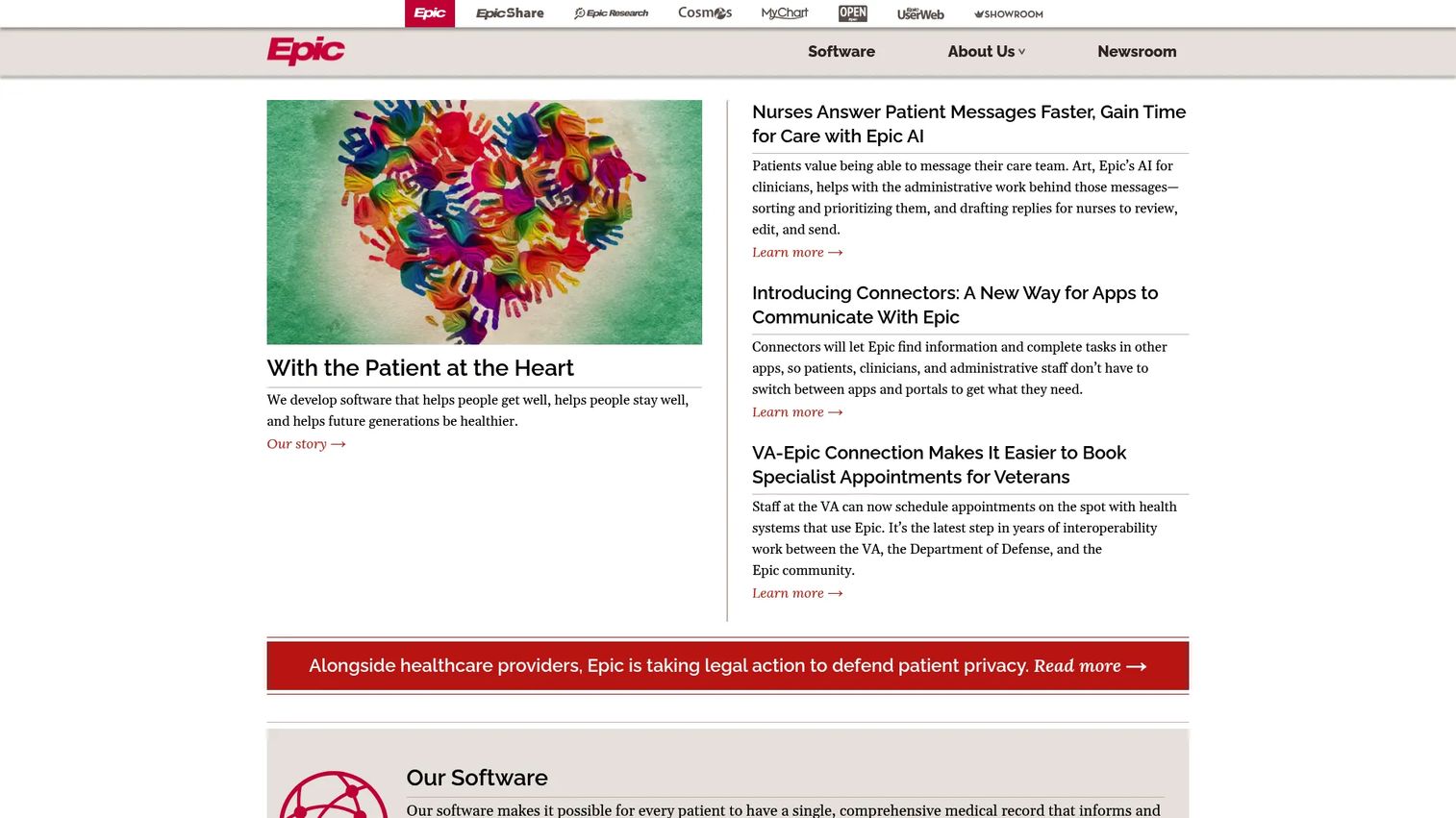
Epic develops comprehensive electronic health records for hospitals, health systems, medical groups, and large payer organizations. Referral workflows in Epic are native to the EHR, meaning specialist orders, patient record continuity, interoperability, and referral tracking all operate within the same clinical environment your providers already use. Epic also integrates generative AI and AI-assisted charting across its workflows.
Best for: Large health systems and medical groups that run core clinical and administrative operations inside Epic and want referral management to stay inside that environment.
Key features
- EHR-native referral orders and specialist workflows
- Patient record continuity across the care network
- Enterprise interoperability via FHIR, Carequality, and TEFCA
- Specialty-specific modules for cardiology, surgery, radiology, and others
- Integrated patient engagement through MyChart, scheduling, and remote monitoring
Why choose Epic: The strongest argument for Epic referral management is consolidation. If your organization already runs Epic, standing up a separate referral platform adds a data sync problem that Epic avoids by keeping everything in one record. Buyers typically evaluate Epic referral capabilities as part of a broader EHR contract, not as a standalone purchase.
Epic pricing: Epic prices by enterprise quote. Licensing, implementation, module selection, and support all affect total cost. Contact Epic's sales team to scope the referral management modules within your existing or planned EHR contract.
G2 rating: 4.2/5
3. athenahealth
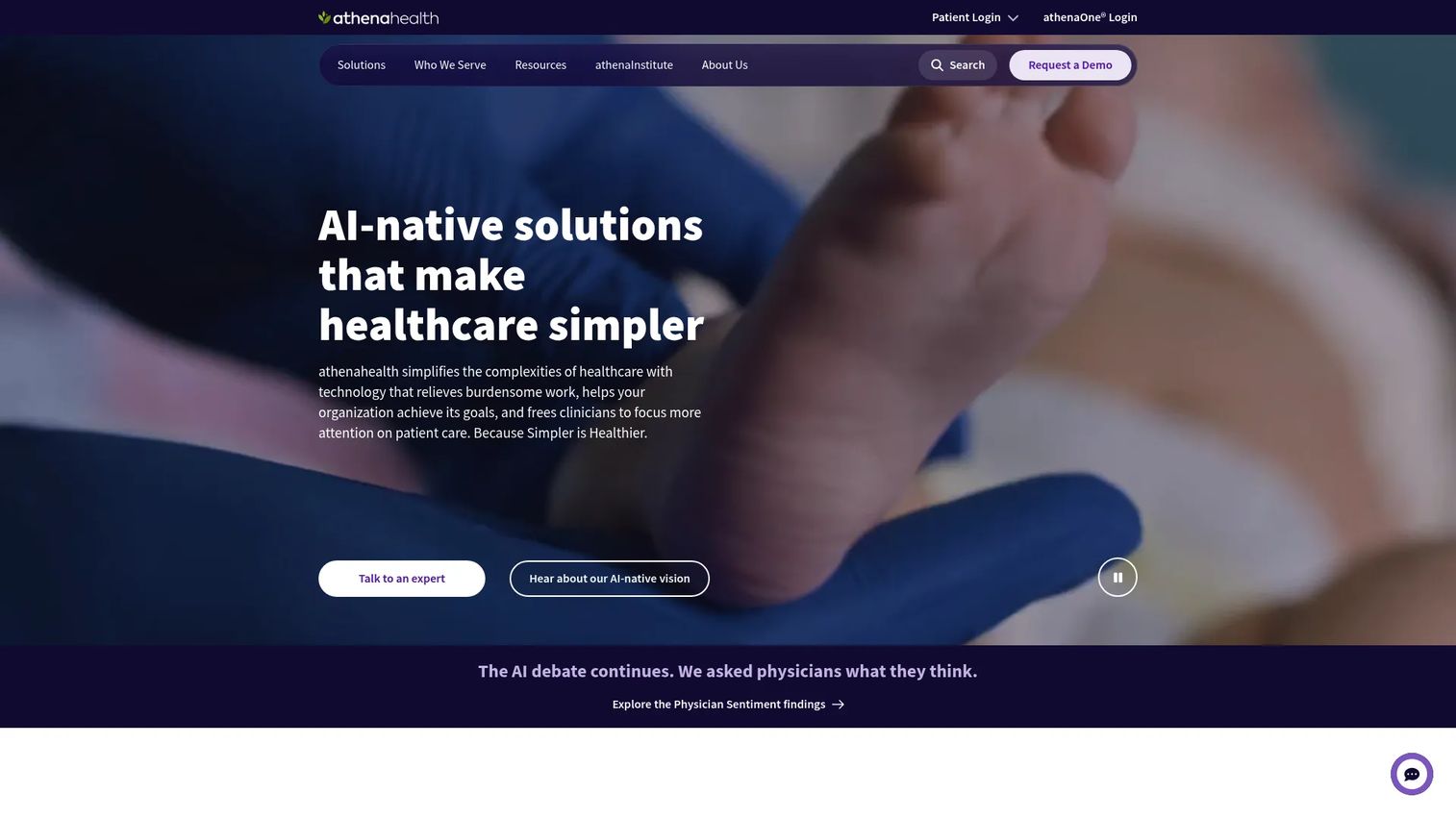
athenahealth provides AI-native cloud-based healthcare software for ambulatory practices through its athenaOne platform, which combines EHR, practice management, revenue cycle management, and patient engagement in a single system. Referral documentation and tracking connect directly to scheduling, billing, and claims, reducing the gap between a referral order and a billed appointment.
Best for: Ambulatory practices that want referral workflows connected tightly to EHR documentation, claims, and practice management rather than managed in a separate system.
Key features
- Cloud-based EHR and practice management through athenaOne
- AI-powered clinical documentation and ambient notes
- Integrated patient scheduling and referral documentation
- Network connectivity for interoperability across care settings
- Mobile EHR access with dictation support
Why choose athenahealth: Choose athenahealth when you want referral management close to billing and claims without managing a separate integration. It is a good fit for practices that see referral tracking as part of practice operations, not a standalone problem. The revenue cycle integration is a meaningful advantage for teams that need to connect referral source data to collected revenue.
athenahealth pricing: Pricing is individualized and structured as a percentage of collections. Contact athenahealth sales to get a customized quote that accounts for referral workflows, patient engagement modules, and implementation needs.
G2 rating: 3.6/5
4. NextGen Healthcare
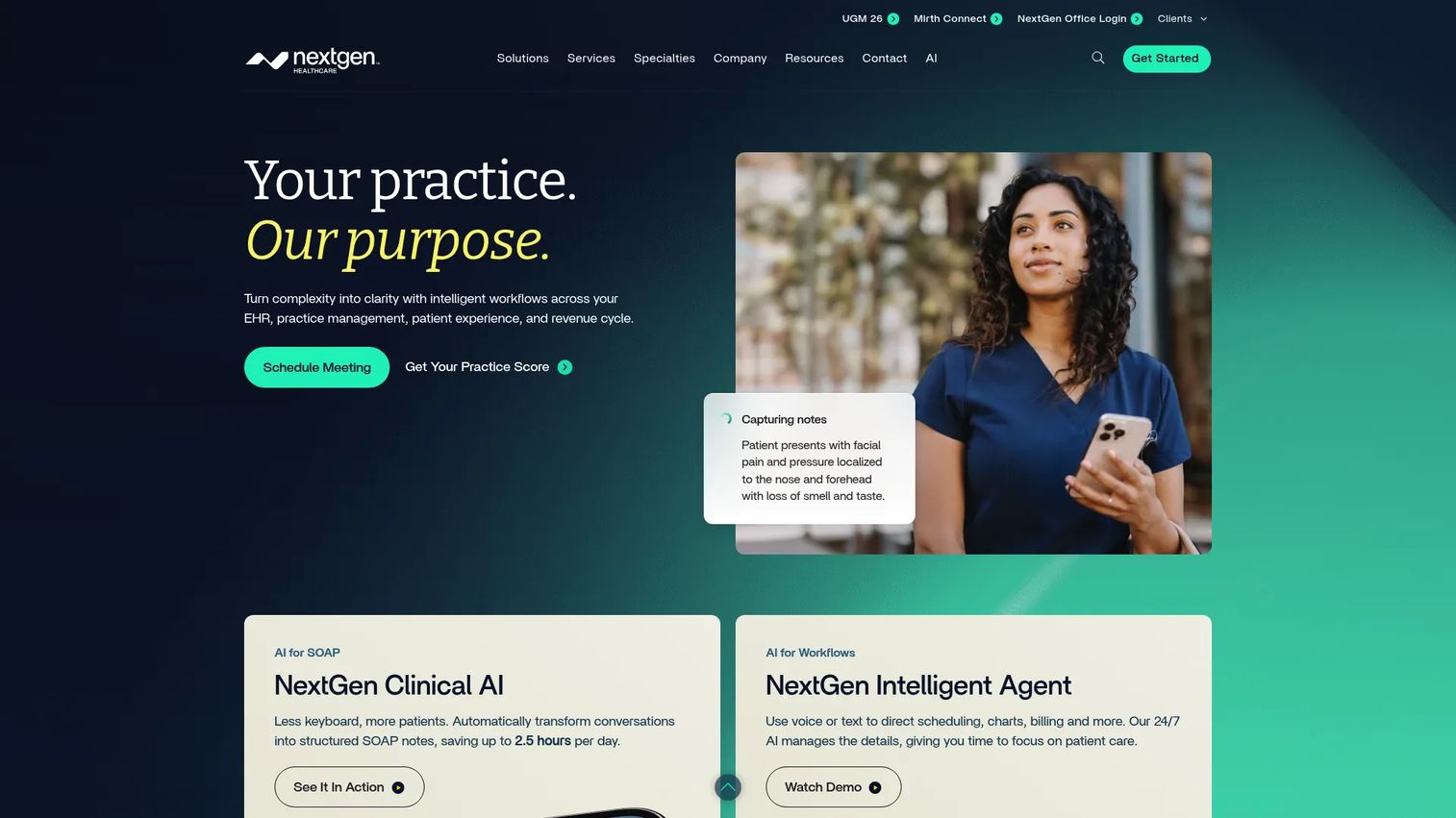
NextGen Healthcare offers cloud-based EHR, practice management, patient engagement, population health analytics, and revenue cycle management for ambulatory practices and specialty groups. Referral tracking sits inside the broader clinical documentation and practice workflow, making it relevant for multi-provider settings where specialty documentation requirements are as important as intake volume.
Best for: Specialty and ambulatory practices that need referral tracking connected to clinical documentation, patient engagement, and population health reporting.
Key features
- Ambulatory EHR with specialty workflow support
- Practice management and scheduling
- Patient access, messaging, and portal tools
- Population health analytics and risk stratification
- Revenue cycle management and reporting
Why choose NextGen Healthcare: NextGen is a good choice when referral management must connect to care documentation across a multi-specialty group. It fits teams already using or actively evaluating NextGen as their EHR and operations platform, where adding a separate referral tool would create data fragmentation.
NextGen Healthcare pricing: Request a demo through NextGen's contact page to discuss referral management capabilities and get a scoped quote.
G2 rating: 3.8/5
5. Artera

Artera provides an AI-powered patient communication and healthcare workflow platform combining voice, rich text, and email channels. Its AI voice agents handle scheduling, intake, referrals, payment workflows, and care-gap outreach. Artera is not primarily a referral routing platform, but it is a strong choice when referral completion depends on reaching patients quickly and consistently across channels.
Best for: Healthcare teams where referral leakage is driven by patient outreach gaps, delayed follow-up, or no-shows rather than intake or routing failures.
Key features
- AI voice agents for scheduling, referrals, and patient outreach
- Omnichannel engagement across voice, rich text, and email
- Two-way texting and appointment reminders
- Campaign workflows for outbound patient communication
- EHR integrations with bidirectional data exchange
Why choose Artera: Choose Artera when the referral pipeline stalls after intake because the access team cannot reach enough patients fast enough. It is especially relevant for practices where automated, personalized patient contact at scale would meaningfully move the scheduling conversion rate. The AI agent capability reduces manual outreach volume.
Artera pricing: Quote-based pricing. Ask about message volume, number of EHR integrations, communication channels activated, and implementation services when scoping a quote.
G2 rating: 4.8/5
6. ReferralMD

ReferralMD is a healthcare platform for managing patient referrals, intake, faxing, scheduling, communications, and analytics. Its SmartMATCH provider selection tool helps route referrals to the right specialist based on configurable criteria. The platform also includes centralized AI fax management with OCR and routing, which is relevant for organizations still receiving high fax volumes.
Best for: Provider groups and networks that need referral tracking, provider directory management, and closed-loop visibility across multiple practices and service lines.
Key features
- Referral management with configurable workflows, alerts, and SmartMATCH routing
- AI fax management with centralized queues, OCR, and fax-to-referral processing
- Integrated appointment scheduling with automated reminders
- Secure messaging, eConsults, and provider communication tools
- Analytics dashboards and EHR/PMS/RIS integrations
Why choose ReferralMD: The combination of fax management and referral routing makes ReferralMD practical for organizations where the fax channel is still a primary intake source. Network-level visibility across referring and receiving providers is a differentiator when the core problem is tracking referral status across a distributed care network.
ReferralMD pricing: Pricing is quote-based. Ask about provider count, integration requirements, fax volume, and deployment scope when requesting a quote.
G2 rating: 4.5/5
7. Luma Health
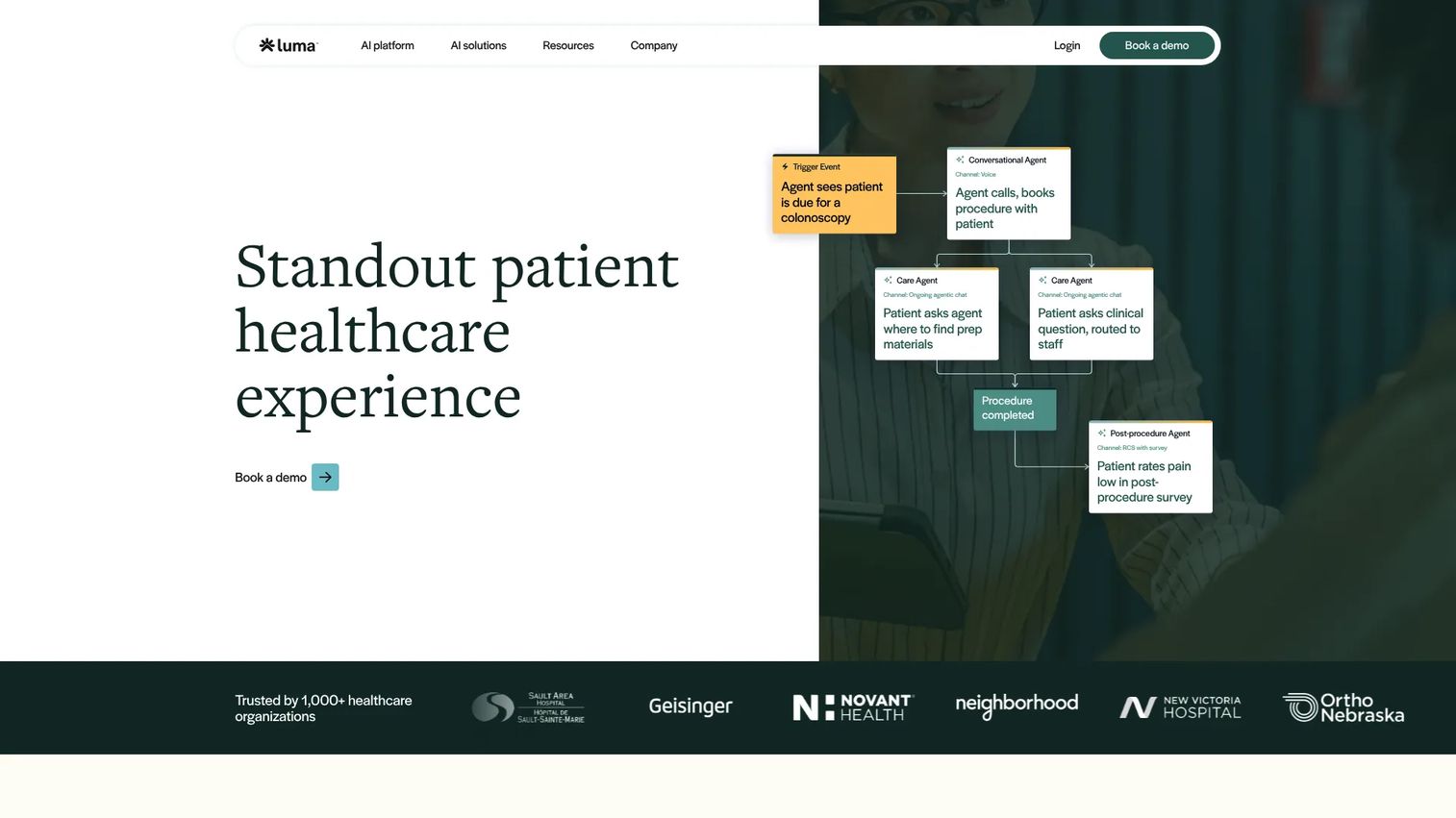
Luma Health is a healthcare operational AI platform that coordinates patient access, engagement, intake, payments, scheduling, referrals, and related administrative workflows. It handles referral and fax processing with EHR writeback, so referral data moves into the clinical record without manual entry. Its AI conversations operate across voice, chat, and SMS/RCS, reaching patients through the channels they actually respond to.
Best for: Healthcare teams that need patient access workflows around scheduling, referral outreach, and intake communication managed through AI-driven patient conversations.
Key features
- AI-powered patient conversations across voice, chat, and SMS/RCS
- Referral and fax processing with EHR writeback
- Scheduling, rescheduling, cancellation, and no-show recovery
- Patient intake, forms, check-in, eligibility, and payments
- Broadcast messaging and recall campaigns
Why choose Luma Health: Luma Health is a strong fit when referral leakage is primarily a patient access problem rather than a provider network problem. If patients are falling out of the referral pipeline because follow-up is slow or inconsistent, the platform's AI-driven patient conversations cover the gap at a scale the access team cannot match manually.
Luma Health pricing: Reach out to Luma Health's sales team to scope access modules, messaging volume, EHR integrations, and implementation.
G2 rating: 4.8/5
8. Blockit
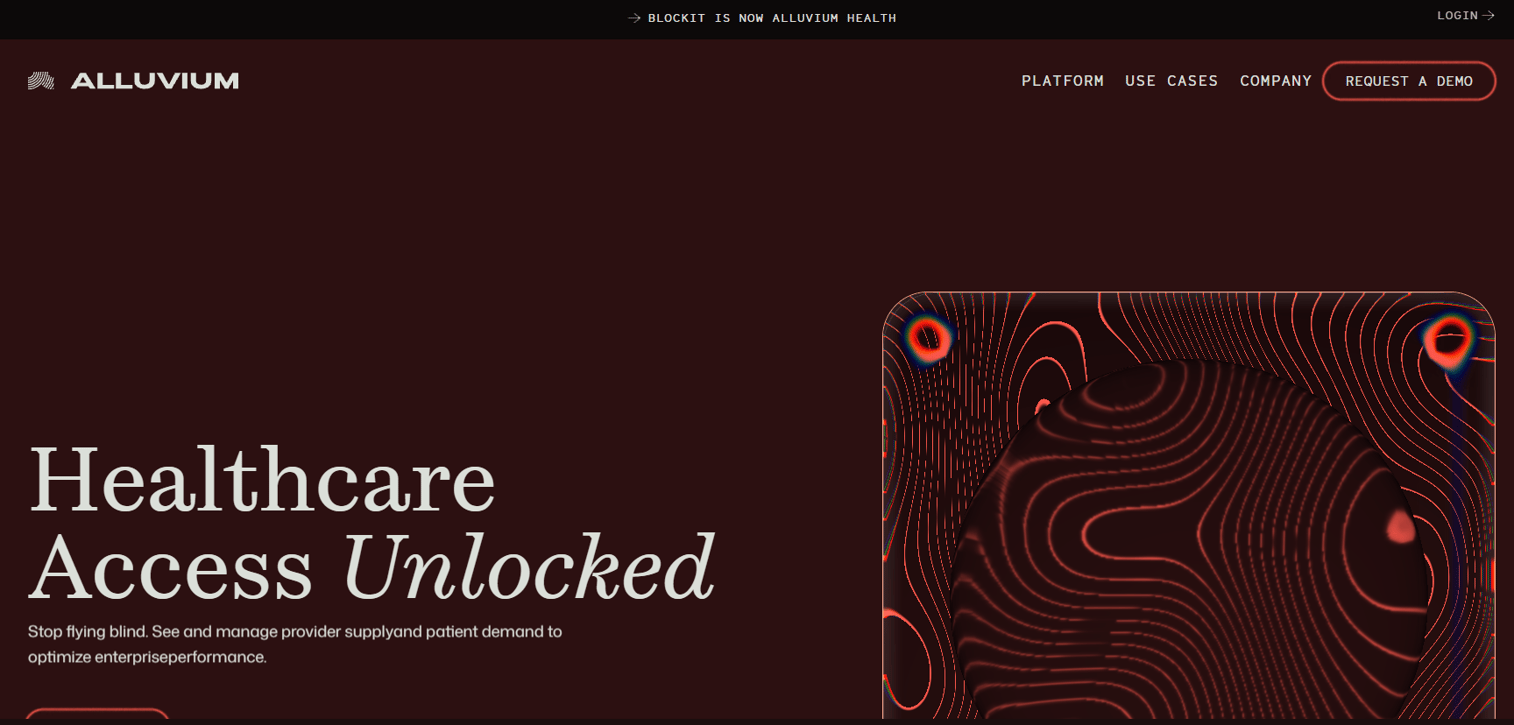
Blockit is a healthcare access performance platform for managing provider supply, patient demand, referral scheduling, and analytics. It supports referral scheduling and management, patient self-scheduling, workflow queues for referral task management, and reporting across the access operation. The platform uses questionnaires for patient routing and intake, alongside referral attachments, ICD-10 codes, notes, and in-app communication.
Best for: Organizations where scheduling friction is the primary referral bottleneck, particularly multi-location groups trying to match referral demand to real provider availability.
Key features
- Referral scheduling and management workflows
- Patient self-scheduling and routing questionnaires
- Workflow queues for referral task assignment
- Referral attachments, ICD-10 codes, and in-app chat
- Reporting and analytics across access performance
Why choose Blockit: Choose Blockit when the problem is not finding the referral but booking the appointment. It fits organizations that need to actively manage the gap between incoming referral demand and available provider slots, with enough reporting to identify where the bottleneck sits.
Blockit pricing: Quote-based pricing. Discuss locations, integration requirements, scheduling volume, and network scope when requesting a proposal.
9. Treatspace Referral Network Platform
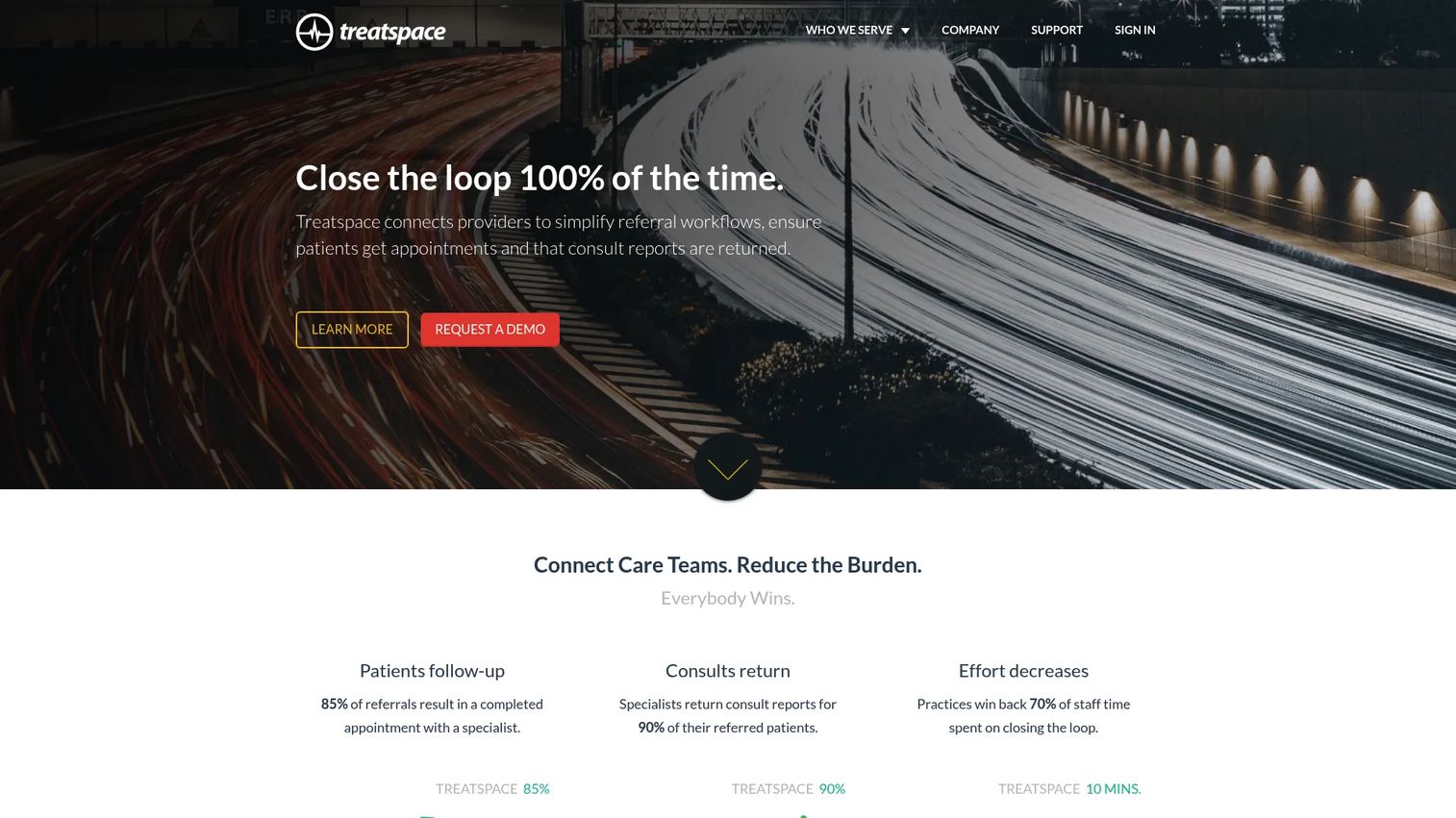
Treatspace Referral Network Platform is a healthcare referral management platform built around loop closure, care coordination, and provider network performance. It supports secure electronic referral exchange, referral dashboards, specialist summary reports, and specialist matching by insurance, location, and specialty. The platform is EHR-agnostic, which makes it accessible to practices across different EHR environments.
Best for: Primary care practices, specialty practices, and health systems focused on closing referral loops and managing accountability between referring and receiving providers.
Key features
- Secure electronic referral exchange and referral dashboard
- Specialist matching by insurance, location, and specialty
- HIPAA-compliant secure messaging between providers
- Specialist summary reports and consult report retrieval
- Referral analytics and weekly performance summaries
Why choose Treatspace Referral Network Platform: Treatspace fits organizations where the referral accountability gap sits between the referring provider and the specialist, rather than between intake and scheduling. It is relevant for value-based care environments where tracking whether a consult note actually came back is as important as tracking whether the appointment was scheduled.
Treatspace pricing: Quote-based pricing. Ask about organization size, referral volume, EHR integration needs, and value-based care reporting requirements.
10. Assort Health

Assort Health is an AI-powered patient access platform supporting scheduling, intake, referrals, billing workflows, patient communications, and staff operations. Its AI agents handle inbound and outbound patient access tasks including triage, routing, medication refill requests, and insurance capture. For specialty care groups managing high referral volume, the automation reduces manual intake burden without requiring large patient access teams.
Best for: Specialty care organizations that need automated referral intake, patient outreach, and scheduling support at volume without proportionally scaling access staff.
Key features
- AI-driven appointment scheduling and triage
- Patient intake and referral automation
- Outbound campaigns and two-way texting
- Insurance capture and payment resolution
- Staff co-pilot tools and operational insights
Why choose Assort Health: Assort Health is well suited for specialty groups where referral intake volume is high relative to staffing. The AI automation handles the repeatable intake steps, freeing staff for complex cases. Validate EHR fit and operational scope during evaluation, since the platform is designed for specialty workflows rather than general ambulatory use.
Assort Health pricing: Pricing is customized based on call volume, feature configuration, and number of locations. Contact Assort Health to scope automation requirements and implementation needs.
G2 rating: 4.5/5
11. AdvancedMD
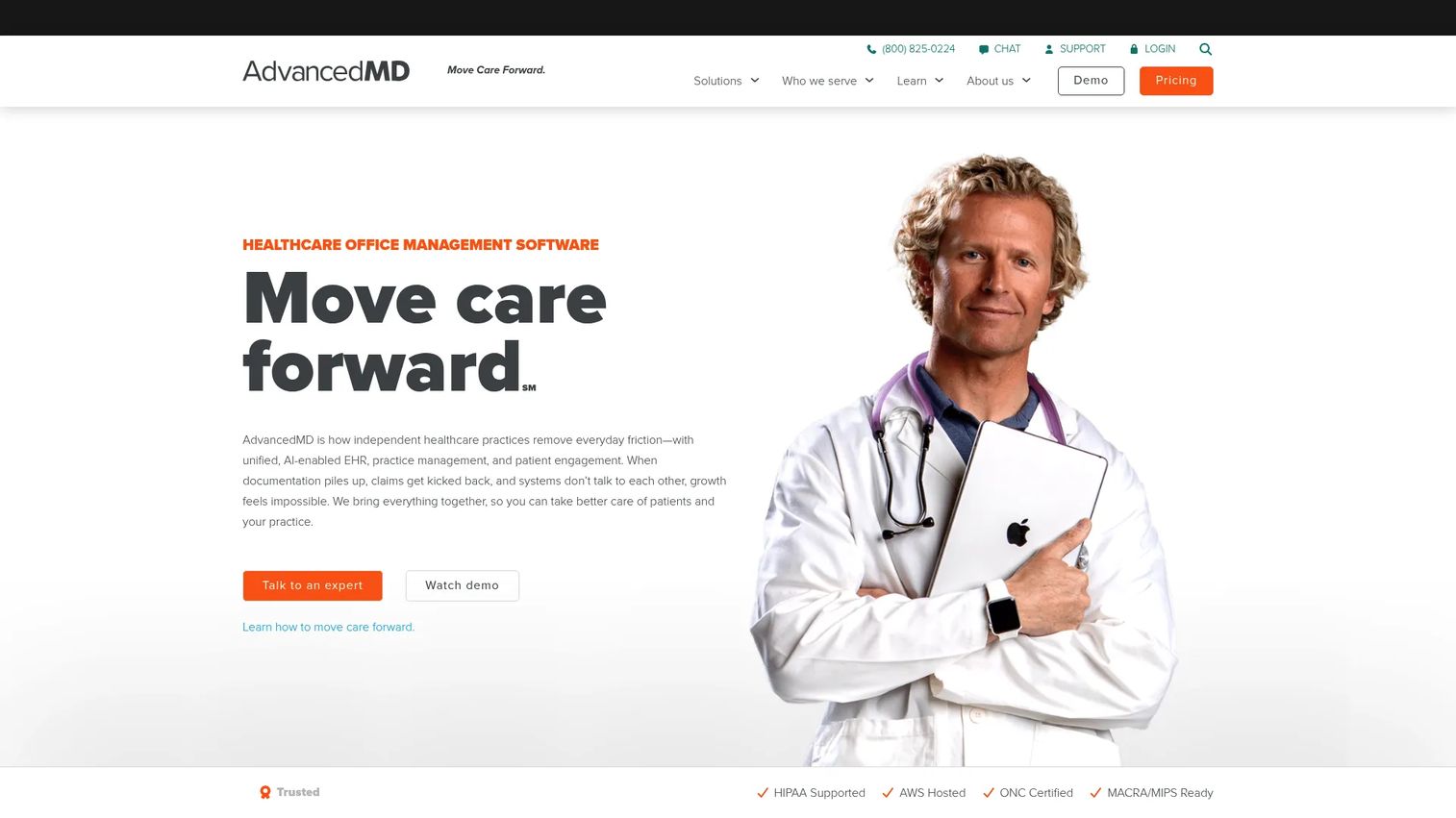
AdvancedMD is a cloud-based healthcare platform combining EHR, practice management, patient engagement, billing, and revenue cycle management for independent medical practices. Referral-related workflows sit inside the broader practice operations system, making it practical for smaller practices that want to manage referrals near scheduling, records, and billing without adding a separate platform.
Best for: Independent practices that need referral workflows inside a combined EHR and practice management stack, without the enterprise overhead of a health system platform.
Key features
- Unified EHR and practice management
- Patient engagement tools: Portal, messaging, reminders, and online scheduling
- Revenue cycle management, claims, and billing
- Telehealth and ePrescribing
- AI-assisted clinical documentation and transcription
Why choose AdvancedMD: AdvancedMD suits independent practices where referral management is one part of a broader practice operations problem. It avoids the need to integrate a separate referral tool against an existing EHR by keeping referral documentation close to the clinical record and billing workflow. It is not the strongest choice for enterprise referral network management or high-volume specialty intake.
AdvancedMD pricing: Plans start from $130/provider/month for the AdvancedMD Now tier (month-to-month after a 30-day free trial). The mental health complete bundle runs $399/provider/month. Medical specialty plans range from $429 to $1,070/provider/month depending on configuration. RCM services are priced at 4 to 8% of practice collections.
G2 rating: 3.6/5
12. eClinicalWorks
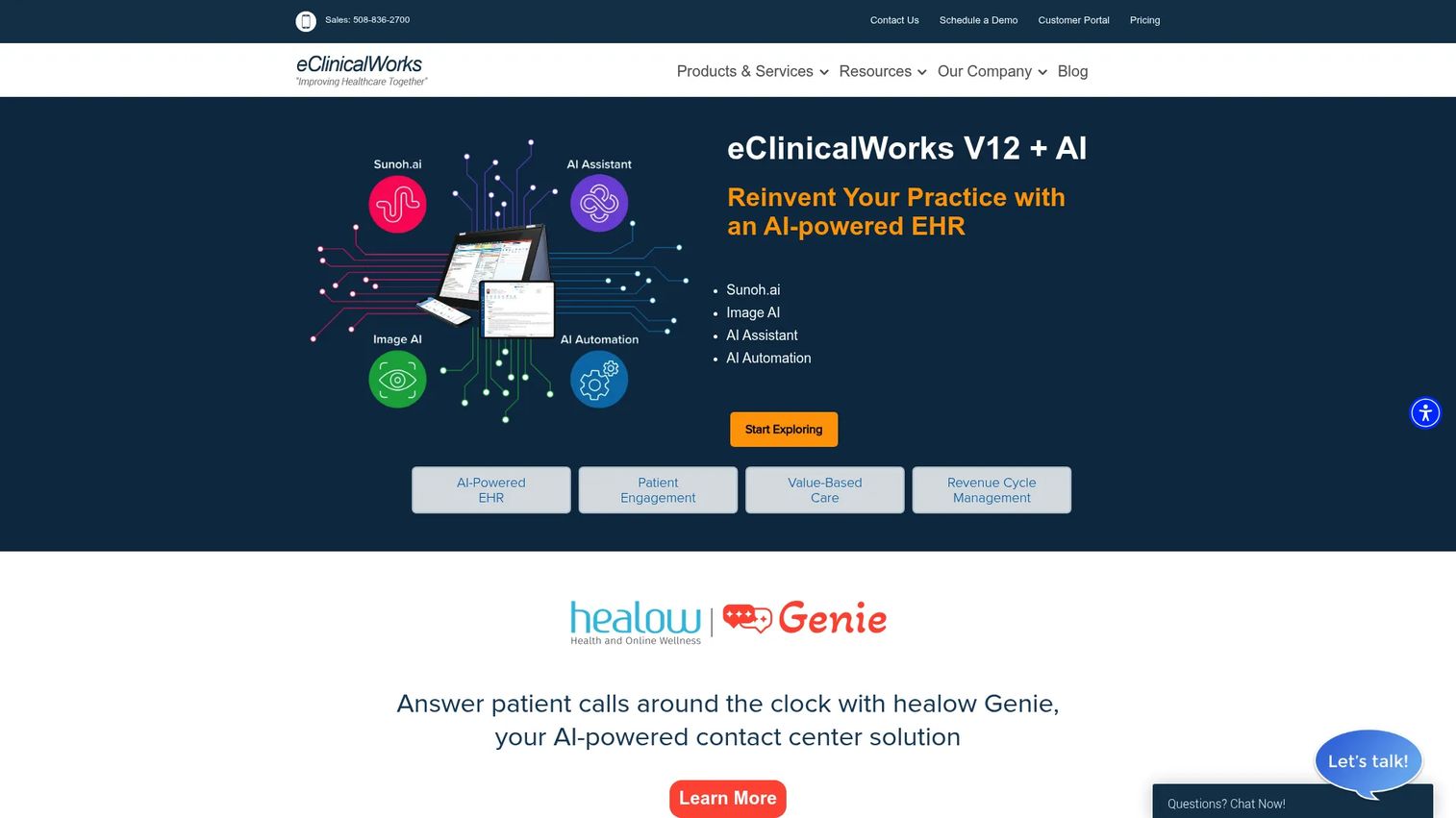
eClinicalWorks is a cloud-based healthcare platform providing EHR, practice management, patient engagement, value-based care management, and revenue cycle tools. Referral workflows operate inside the eCW clinical environment, with patient portal access, self-scheduling, and AI-powered documentation supporting the broader patient flow. The AI Workbench automates a range of administrative tasks across the practice.
Best for: Practices using or actively evaluating eClinicalWorks as their EHR and administrative system, where referral management needs to stay inside existing eCW workflows.
Key features
- AI-powered EHR and clinical documentation
- Patient self-scheduling, check-in, telehealth, and secure messaging
- Revenue cycle management and billing
- Population and value-based care management tools
- AI Workbench for automated administrative workflows
Why choose eClinicalWorks: Choose eClinicalWorks when referral management must integrate with existing eCW clinical and administrative workflows rather than operate as a separate system. The revenue cycle and value-based care tools are relevant for practices managing referral accountability under value-based contracts. It is a natural fit for practices already in the eCW environment who want to reduce disconnected systems.
eClinicalWorks pricing: EHR Only plans start at $499/provider/month. EHR with Practice Management is $599/provider/month. RCM as a Service is 2.9% of practice collections. Practices with more than nine providers may incur additional implementation fees.
G2 rating: 3.7/5
Considerations when choosing referral management software
Start with EHR fit
Referral software that cannot exchange data cleanly with your system of record creates a second source of truth for patient information. Before evaluating any tool, confirm what data moves, how often, and in which direction. Ask vendors specifically about HL7 or FHIR support, real-time versus batch synchronization, and whether the integration is native or requires a middleware layer. A demo that looks good on screen can mask an integration that breaks on complex records.
Map the intake channels first
The right tool depends on how referrals actually arrive today, whether that is primarily fax, phone, portal, EHR order, or a combination. Quantify volume by channel before vendor demos. A platform optimized for digital intake forms may not solve a fax-heavy workflow. Conversely, buying AI fax management for a practice that primarily receives portal referrals is unnecessary overhead.
Track completion, not just referral count
Referral volume is activity. The metrics that matter for growth and operations teams are completed appointments, payer mix by referral source, consult notes returned, and leakage points by stage. Ask vendors to show you how they report on each stage of the funnel from referral received to appointment kept, not just the total number of referrals processed.
Test patient outreach workflows
Whether a referred patient schedules depends significantly on how quickly and persistently they are contacted. During evaluation, test two-way texting response rates, automated reminder sequences, language support, and opt-in handling. A platform with strong analytics but weak outreach will show you clearly where patients drop off without giving you the tools to fix it.
Pressure-test reporting for growth teams
If your healthcare growth team needs to attribute referral source performance to service-line revenue, verify that the platform can segment reporting by provider, location, payer, campaign, and specialty. Manual exports to spreadsheets recreate the problem the software is supposed to solve. Ask to see a live reporting view, not a screenshot in a deck.
Conclusion
The right referral management software depends less on features and more on where your referral workflow actually breaks. If leakage happens at intake, Phreesia or ReferralMD address that directly. If it happens because patients never respond after the referral arrives, Artera and Luma Health cover the outreach gap. Epic, athenahealth, NextGen Healthcare, AdvancedMD, and eClinicalWorks fit teams where referral management needs to stay inside an existing EHR environment. For specialty-care scheduling and loop closure, Blockit, Treatspace Referral Network Platform, and Assort Health each address a different operational scope.
Before requesting demos, do four things: Map your intake channels by volume, confirm your EHR integration requirements, choose three or four vendors by workflow fit rather than feature count, and ask each one to walk through the same referral scenario end to end. Compare what shows up in reporting after that scenario, not what the UI looks like before it.
The vendors worth shortlisting are the ones that can show you a completed appointment, a closed referral loop, and a report your operations and growth teams can both use.
Start your journey with Guideflow today!
FAQs
Referral management software manages patient referrals from initial receipt through scheduling, tracking, care coordination, and closed-loop completion. It serves referral coordinators, patient access teams, specialty practices, and health systems that need to move referred patients from an order to a completed appointment without losing them in the gap. The software also gives growth and operations teams the reporting to identify which referral sources, providers, and channels produce the most completed visits.
The best fit depends on organization type. Epic suits health systems that run core operations in the Epic environment. Phreesia is a strong choice for organizations prioritizing digital intake and patient access workflows. Specialty groups handling high referral volumes should evaluate ReferralMD, Assort Health, Blockit, or Treatspace depending on whether the primary problem is network visibility, scheduling, loop closure, or intake automation. Independent practices often find athenahealth, AdvancedMD, or eClinicalWorks sufficient when referral management can stay inside the EHR and practice management stack.
Referral leakage happens when a referral is received but the patient never schedules. Common causes include missing contact information, delayed outreach, fax queues sitting unworked, routing errors, and no follow-up after a no-show. Good referral management software addresses these gaps by giving intake teams work queues with clear ownership, automating patient outreach by text or voice, tracking referral status at each stage, and surfacing leakage points through analytics before the patient churns out of the pipeline.
Most platforms integrate with EHRs through native workflows, HL7 messaging, FHIR APIs, or data extracts. However, verifying that an integration exists is different from verifying its depth. Ask vendors whether data moves bidirectionally or only one way, whether the sync is real-time or batch, and which specific EHR versions and configurations are supported. A partial integration that moves demographic data but not insurance or referral status may not solve the operational problem you are buying the software to fix.
The highest-impact features for most organizations are multi-channel intake capture, automated routing by specialty and payer, eligibility verification, patient messaging for scheduling outreach, referral status tracking with work queues, and reporting that shows appointment completion by source. For growth teams specifically, referral source attribution and payer mix reporting matter as much as the operational features, since they connect referral management to service-line revenue.
Most healthcare referral management platforms use quote-based pricing rather than published tiers. Total cost depends on organization size, referral volume, the number of modules activated, integration complexity, and implementation services. Exceptions include AdvancedMD, which starts at $130/provider/month for independent practices, and eClinicalWorks, which publishes plans from $499/provider/month. For enterprise platforms like Epic and athenahealth, pricing is structured as part of a broader EHR contract and must be scoped directly with the vendor.
Closed-loop referral management means tracking a referral from the initial request through appointment completion and communication back to the referring provider. A fully closed loop includes confirmation that the patient was seen, retrieval of the specialist's consult notes or summary report, and delivery of that information back to the referring clinician. It matters most in value-based care environments, where accountability for completed referrals affects quality scores and contract performance.
Yes, when the platform tracks referral source, service line, payer mix, and appointment completion with enough granularity for attribution. The key shift is from reporting on referral volume to reporting on completed visits by source, provider, and channel. Healthcare growth teams supporting physician liaison programs, campaign spend, or partner relationships need completed appointments as the conversion metric, not referrals received. A platform that stops at intake and does not close the loop to the scheduled appointment cannot support that attribution.