A single missed inspection can cascade into a stalled corridor. A dispatch decision made on a whiteboard instead of live data can add hours to a freight cycle. A railcar sitting idle because nobody knew where it was ties up capital that should be moving. Fragmented rail operations cost time, money, and safety margin, and most of that cost hides in the gaps between scheduling, maintenance, tracking, and reporting.
The global railway management system market is projected to reach USD 65.55 billion in 2026, growing at a 9.62% CAGR through 2031, according to Mordor Intelligence. That growth reflects a real shift: rail teams are replacing manual coordination with software that connects operations, maintenance, and asset visibility in one place.
This guide compares the 10 best rail management software platforms for 2026 by what they actually do, not by marketing claims. Some cover full-network operations. Some specialize in crew and fleet planning. Others focus on railcar visibility or traffic control. The right one depends on whether your bottleneck is day-of-operations control, maintenance and compliance workflows, or fleet health and shipment tracking.
We evaluate each platform on operational breadth, real-time visibility, maintenance support, reporting depth, and stakeholder fit. If you own the outcome, not just a feature list, this comparison is built to help you shortlist fast.
What's inside
This guide covers rail management software for scheduling, maintenance planning, real-time tracking, fleet health, compliance, and reporting. It is written for railway operations leaders, asset managers, maintenance teams, and logistics coordinators comparing systems across freight and passenger contexts.
We selected and ranked platforms using five criteria that matter most to operators:
- Operational breadth: does it cover full-network operations or a specific layer?
- Real-time visibility: live status, alerts, ETA updates, and location monitoring.
- Maintenance support: inspections, work orders, and safety workflows.
- Reporting depth: dashboards and analytics that drive decisions, not just descriptions.
- Stakeholder fit: alignment with dispatch, maintenance, logistics, and control-room teams.
TL;DR
Short on time? Here is the fast read on which rail management system fits which job:
- Best for integrated operations management: ABB Railway Operation Management System
- Best for rail planning and analytics-driven decisions: CloudMoyo
- Best for service, fleet, and crew planning: DELMIA Quintiq Rail Service, Fleet & Crew Planning
- Best for traffic control and freight supervision: Freight Rail Control and Supervision and Indra Rail Operation Management System
- Best for enterprise rail operations and analytics: Siemens Mobility Software Suite X
- Best for scheduling and timetable optimization: TRACS Scheduling Software
- Best for mass transit service control: Octave Alto Mass Transit
What is rail management software?
Rail management software is a category of platforms that plan, monitor, and control railway operations, covering scheduling, dispatching, maintenance, asset tracking, compliance, and reporting across freight and passenger networks.
Different tools emphasize different layers of rail operations. Some are built for the control room. Some are built for the maintenance yard. Some are built for the logistics desk. The strongest rail operations management system for your team is the one that maps to your primary bottleneck.
Core capabilities across the category include:
- Scheduling and dispatching: timetable creation, resource allocation, and schedule adherence. This is the heart of any rail scheduling software.
- Maintenance planning and compliance: inspections, work orders, safety records, and audit trails. This is what rail maintenance software exists to standardize.
- Real-time tracking and alerts: live location, status, and ETA visibility, the foundation of rail tracking software.
- Asset and fleet lifecycle management: condition monitoring, utilization, and replacement planning across a rail asset management software footprint.
- Reporting and predictive insight: dashboards, trend analysis, and predictive maintenance signals that help teams act before failures happen.
A full-network platform tries to connect most of these layers. A specialist tool goes deep on one. Rail logistics software, for example, leans hard on visibility and cycle-time reporting, while a railcar management software product focuses on fleet health and shipment status. Knowing which layer you need first is the whole game.
When to use rail management software
Not every rail team needs the same system. Match the tool to the operational problem you are trying to solve.
Improve day-of-operations control
If your delays trace back to manual dispatch coordination, conflicting movements, or poor schedule adherence, you need software built for day-of-operations control. Traffic management, automatic routing, and conflict resolution reduce the friction that turns small disruptions into network-wide delays. Control-room teams and dispatchers benefit most here, because the software gives them a live, shared picture instead of a patchwork of phone calls and spreadsheets. Train dispatch software and rail operations software with real-time supervision keep movements coordinated when timing matters most.
Strengthen maintenance and compliance workflows
If your headaches are unplanned downtime, missed inspections, or audit scrambles, prioritize maintenance and compliance capabilities. Rail maintenance software should support inspection scheduling, work-order management, safety recordkeeping, and record retention that survives regulatory scrutiny. Done well, this lowers downtime and turns audits from fire drills into routine reporting. Maintenance teams and safety officers are the primary users, and predictive maintenance features add real value by flagging component wear before it becomes a failure.
Track shipments, railcars, and fleet health
If your problem is not knowing where assets are or how they are performing, focus on visibility. Rail visibility software and rail tracking software give logistics coordinators live location, status alerts, ETA updates, and cycle-time reporting. This matters most for freight and railcar-centric teams managing utilization and turn times. The goal is actionable data: alerts that trigger a decision, not dashboards that just describe what already happened.
Comparison table
The table below ranks the 10 platforms by relevance to broad rail management needs and breadth of operational fit. A note on pricing and ratings: most rail management vendors sell through enterprise sales motions, so public pricing and third-party review scores are limited. Where a vendor does not publish pricing or hold a verified rating, we note that rather than guess.
| # | Product | Intent | Key use case | Pricing | G2 rating |
|---|---|---|---|---|---|
| 1 | ABB Railway Operation Management System | Integrated operations | System-wide rail operations and infrastructure control | Contact vendor | Not published |
| 2 | CloudMoyo | Planning and analytics | Configurable rail operations and decision support | Contact vendor | Not published |
| 3 | DELMIA Quintiq Rail Service, Fleet & Crew Planning | Planning optimization | Service, fleet, and crew scheduling | Contact vendor | 4.0/5 |
| 4 | Freight Rail Control and Supervision | Traffic control | Freight network supervision and dispatch | Contact vendor | Not published |
| 5 | Indra Rail Operation Management System | Operations control | Traffic management and operations supervision | Contact vendor | Not published |
| 6 | Siemens Mobility Software Suite X | Enterprise operations | Integrated rail and passenger-journey optimization | Contact vendor | Not published |
| 7 | Octave Alto Mass Transit | Transit asset management | Public transit asset and network visibility | Contact vendor | Not published |
| 8 | TRACS Scheduling Software | Scheduling | Timetable and resource optimization | Contact vendor | Not published |
| 9 | Flexcare | Service management | Operational coordination and service oversight | Contact vendor | Not published |
| 10 | ITAL Rail Operations | Operations management | Planning and day-to-day rail administration | Contact vendor | Not published |
1. ABB Railway Operation Management System
ABB Railway Operation Management System sits at the integrated end of the rail management software spectrum. ABB is a long-standing player in rail infrastructure and transport, and its railway operations offering focuses on connecting scheduling, monitoring, infrastructure management, and service quality into one operational picture. For operators who want system-wide control rather than a single-purpose tool, this is a natural starting point.
The appeal here is breadth. Rather than bolting together separate scheduling, monitoring, and infrastructure tools, an integrated operations platform aims to give control-room and operations teams a unified view. That reduces the coordination tax that comes from stitching data across disconnected systems, which is exactly the kind of fragmentation that inflates operating cost.
Best for: Rail operators evaluating a broad, system-wide operations platform backed by an established infrastructure vendor.
Key strengths
- Integrated operations view: connects scheduling, monitoring, and infrastructure management in one operational picture.
- Infrastructure heritage: built on ABB's long track record in rail electrification and transport systems.
- Service quality focus: designed to support schedule adherence and reliable service delivery across the network.
Why choose ABB Railway Operation Management System: Pick it when your problem is breadth, not depth in a single module. Operators running complex, system-wide networks who want fewer disconnected tools and a vendor with deep rail infrastructure roots will find the integrated approach compelling.
ABB Railway Operation Management System pricing: ABB does not publish public pricing for its railway operations offering. Expect an enterprise sales conversation scoped to network size, infrastructure footprint, and integration requirements. Contact ABB directly for a quote.
2. CloudMoyo
CloudMoyo approaches rail operations from a digital engineering and data-modernization angle. As an AI-first services and solutions company, its strength is configurability: building rail operations optimization, planning workflows, and analytics-driven decision support around a team's specific processes rather than forcing a rigid template. For rail operators that have outgrown off-the-shelf tools, that flexibility is the draw.
CloudMoyo's positioning leans on contract intelligence, data platform modernization, and applied AI and machine learning. Translated to rail, that means it can help operators turn scattered operational data into decision-ready analytics, which is precisely the gap most rail reporting software leaves open.
Best for: Enterprise rail teams that want configurable operations software and analytics tailored to their existing workflows and data stack.
Key strengths
- Configurable operations: solutions built around your processes rather than a fixed product template.
- Data and AI depth: strong data platform modernization and applied AI and machine learning capabilities.
- Enterprise alignment: services-led delivery that fits large, complex operational environments.
Why choose CloudMoyo: Choose it when planning and analytics are your priority and you have the appetite for a configurable, services-led engagement. Teams that need decision support tuned to their own data and cadence, rather than a packaged module, get the most value.
CloudMoyo pricing: CloudMoyo does not display public pricing. Engagements appear to be quote-based and scoped to project requirements. Contact CloudMoyo for a tailored estimate.
3. DELMIA Quintiq Rail Service, Fleet & Crew Planning
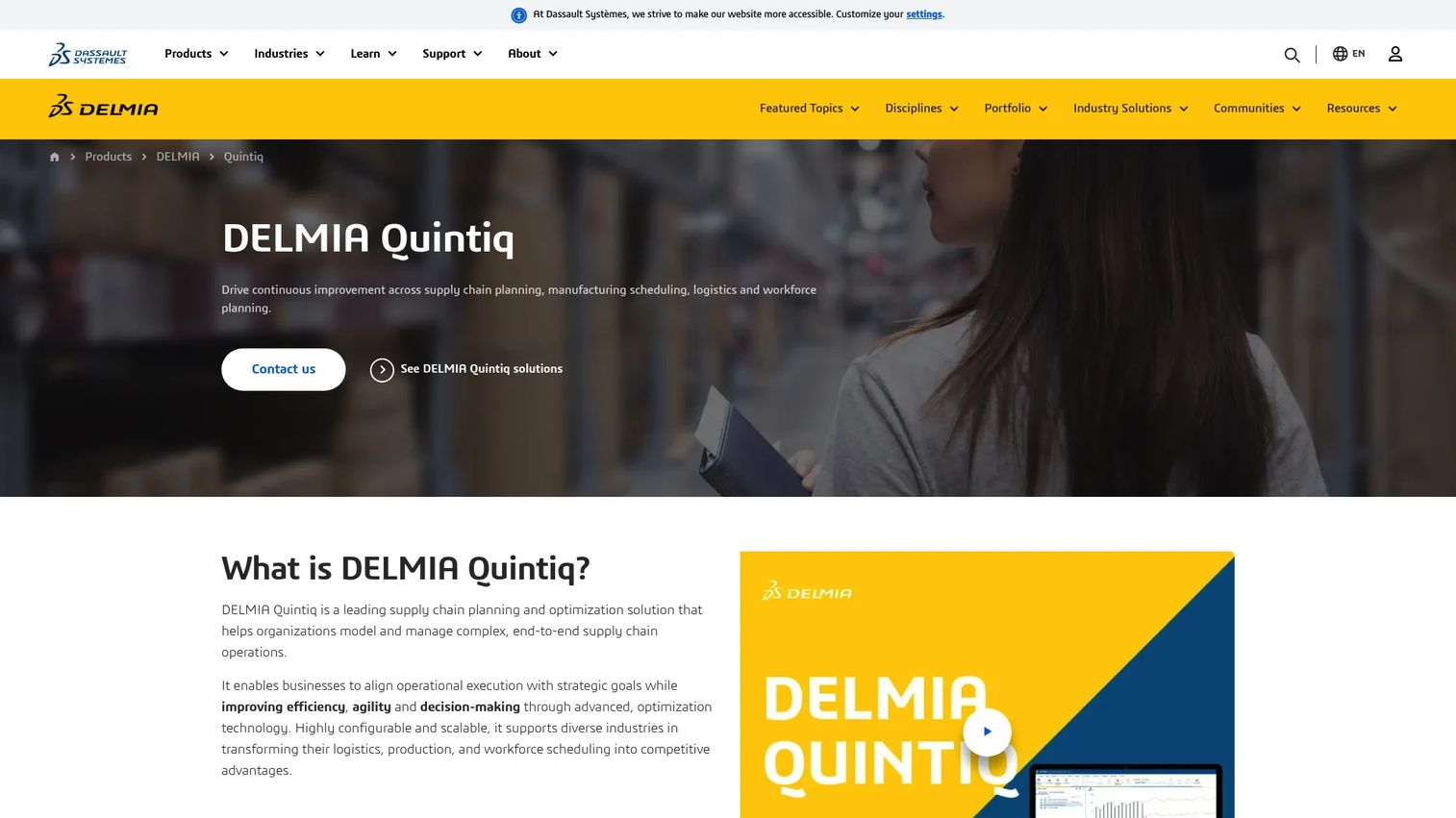
DELMIA Quintiq Rail Service, Fleet & Crew Planning is built for planning-heavy organizations. It optimizes network, service, rolling stock, and crew schedules across tactical, pre-operative, and day-of-operations horizons. For operators whose complexity lives in the planning layer, coordinating crews, fleets, and services against real constraints, this is one of the most focused tools on the list.
Crew scheduling is a standout. The platform accounts for skills, route knowledge, home base, preferences, and labor rules, which is exactly the kind of multi-constraint problem that breaks manual planning. When the variables multiply, optimization software earns its place.
Best for: Rail operators and infrastructure managers who need enterprise planning optimization across service, fleet, and crew.
Key strengths
- Integrated planning: covers network, services, rolling stock, and crew schedules in one model.
- Full planning horizon: spans tactical, pre-operative, and day-of-operations planning.
- Constraint-aware crew scheduling: handles skills, route knowledge, home base, preferences, and labor rules.
Why choose DELMIA Quintiq Rail Service, Fleet & Crew Planning: Shortlist it when planning complexity is your core challenge. Organizations juggling crews, rolling stock, and service commitments against tight constraints will value the depth of the optimization engine over broader but shallower alternatives.
DELMIA Quintiq Rail Service, Fleet & Crew Planning pricing: Pricing is not publicly displayed; the product page directs buyers to contact sales. The broader DELMIA product line holds a 4.0/5 rating on G2, though that score reflects DELMIA overall rather than this specific rail planning module.
4. Freight Rail Control and Supervision
Freight Rail Control and Supervision, part of Indra's rail portfolio, focuses on real-time traffic management and control-center workflows for freight networks. It handles traffic management, dynamic planning, signalling control, event monitoring, and interoperability, the operational spine of a freight rail control room.
The differentiator is automation in the control loop. Automatic train routing and conflict resolution reduce the manual decision-making that slows freight movements and introduces error. For freight operators whose bottleneck is coordination across a busy network, that automation directly supports throughput and safety.
Best for: Freight rail operators and infrastructure managers needing centralized traffic control and supervision.
Key strengths
- Real-time traffic management: live supervision of railway traffic across the network.
- Automatic routing and conflict resolution: automated decisions that keep freight moving.
- Signalling and event monitoring: integrated control with interoperability across systems.
Why choose Freight Rail Control and Supervision: Pick it when your control center handles dense freight traffic and manual coordination is the limiting factor. The automation in routing and conflict resolution is where control-room teams feel the difference most.
Freight Rail Control and Supervision pricing: Indra does not publish public pricing for this product. Expect an enterprise engagement scoped to network scale and integration needs. Contact Indra for details.
5. Indra Rail Operation Management System
Indra Rail Operation Management System is Indra's broader rail traffic management and operations offering. Where the freight-specific product zeroes in on freight control rooms, this platform addresses rail traffic management, real-time operation information integration, and multimodal mobility across passenger and mixed networks. It is a fit for teams that prioritize operational discipline and centralized control.
The core value is a unified, real-time operational picture. By integrating operation information into a single traffic management platform, control-room teams work from shared, current data rather than reconciling multiple sources. That discipline is what keeps complex networks running to plan.
Best for: Rail infrastructure operators and control-room teams needing centralized traffic management and operations supervision.
Key strengths
- Rail traffic management platform: a TMS core for supervising and controlling rail operations.
- Real-time information integration: consolidates operation data into one live view.
- Multimodal reach: supports rail alongside broader mobility operations.
Why choose Indra Rail Operation Management System: Choose it when centralized control and operational discipline matter across a mixed or passenger-heavy network. Teams that want one authoritative traffic management layer, rather than several partial views, are the best fit.
Indra Rail Operation Management System pricing: No public pricing is available. Indra sells this through enterprise engagements scoped to the operator's network and systems. Reach out to Indra for a quote.
6. Siemens Mobility Software Suite X
Siemens Mobility Software Suite X is built for large operators with complex networks. The suite spans integrated rail and passenger-journey optimization, with capabilities including seat management, occupancy analytics, and network, timetable, and capacity planning. For enterprise operators who need coverage across operations and analytics rather than a point solution, the breadth is the point.
Siemens brings enterprise scale and a portfolio approach. Occupancy analytics and capacity planning give passenger operators the demand-side visibility to plan services intelligently, while timetable and network planning support the operational backbone. That combination suits large, multi-line networks.
Best for: Large rail operators seeking an integrated software suite covering operations, planning, and passenger-journey analytics.
Key strengths
- Seat and occupancy management: demand-side visibility for passenger service planning.
- Network and capacity planning: timetable and capacity tools for complex networks.
- Enterprise scale: a portfolio suite designed for large, multi-line operators.
Why choose Siemens Mobility Software Suite X: Shortlist it when you run a large network and need breadth across operations, planning, and analytics from a single vendor. Enterprise operators who value integration and passenger-journey optimization will find the suite well matched.
Siemens Mobility Software Suite X pricing: Siemens does not display public pricing; the product page uses a contact-us model. Pricing is scoped to network size and module selection. Contact Siemens Mobility for a quote.
7. Octave Alto Mass Transit
Octave Alto Mass Transit, formerly HxGN Mass Transit, is transit asset management software for public transportation networks. It unifies transit data in one place, supports real-time transit monitoring, and offers mobile asset management for field teams. For passenger-focused rail and mass transit operators, it addresses the asset and network-visibility side of operations.
The value is in consolidation and mobility. Bringing transit data into a single view, then extending it to mobile field workflows, helps asset managers keep track of condition and utilization without desk-bound reporting. Real-time monitoring supports service reliability, which is the metric passenger networks live and die by.
Best for: Public transit agencies managing assets, maintenance, and network visibility across a passenger network.
Key strengths
- Unified transit data: consolidates operational and asset data in one place.
- Real-time monitoring: live network visibility to support service reliability.
- Mobile asset management: field-ready workflows for maintenance and inspections.
Why choose Octave Alto Mass Transit: Choose it when you run a passenger transit network and asset visibility plus service reliability are your priorities. Agencies that need consolidated data and mobile field access will get practical value from the platform.
Octave Alto Mass Transit pricing: Octave does not publish public pricing for this product. Expect a scoped engagement based on network size and modules. Contact Octave for details.
8. TRACS Scheduling Software
TRACS Scheduling Software is positioned for teams focused on scheduling, dispatching, and timetable optimization. Scheduling is the operational heartbeat of any rail network, and a dedicated scheduling tool concentrates on resource coordination and schedule adherence, the fundamentals that keep movements on time.
For rail teams whose primary challenge is building and maintaining reliable timetables against changing resources, a focused rail scheduling software product avoids the overhead of a full operations suite. The trade-off is scope: it does one layer well rather than spanning the whole operation.
Best for: Rail teams focused on operational planning, timetable optimization, and schedule adherence.
Key strengths
- Timetable optimization: builds and maintains reliable schedules against resource constraints.
- Dispatch coordination: aligns resources with scheduled movements.
- Schedule adherence focus: keeps operations tracking to plan.
Why choose TRACS Scheduling Software: Pick it when scheduling and timetable management are your defined problem and you want a focused tool rather than a broad platform. Teams that need resource coordination and adherence, without adopting a full operations suite, are the fit.
TRACS Scheduling Software pricing: Public pricing is not available. Contact the vendor to scope a quote against your scheduling and resource requirements.
9. Flexcare
Flexcare is included here for teams evaluating operational coordination and service management approaches. Its strength is in service oversight and coordination workflows, the kind of operational discipline that matters where service quality and responsiveness are the priority.
For rail operations leaders assessing how service management layers into their broader operations stack, Flexcare represents the service-coordination end of the evaluation. Confirm during your evaluation that its capabilities align with the specific rail operations workflows and compliance needs your team requires.
Best for: Teams evaluating service management and operational coordination as part of a broader operations stack.
Key strengths
- Service oversight: coordination workflows built around responsiveness.
- Operational coordination: keeps service delivery aligned across teams.
- Real-time access: on-demand service coordination.
Why choose Flexcare: Consider it when service management and coordination are central to your operational model. As with any specialist tool, validate fit against your specific rail operations and compliance requirements before committing.
Flexcare pricing: Public pricing is not displayed. Pricing appears to follow a contact-and-quote model. Reach out to Flexcare to confirm fit and cost for your use case.
10. ITAL Rail Operations
ITAL Rail Operations rounds out the list for teams balancing scheduling and day-to-day rail administration. It targets operations management, planning, and execution support, the routine but essential coordination that keeps a rail operation running day to day.
For operators who need practical support across scheduling and administrative coordination, a tool focused on operational execution can reduce the manual overhead that accumulates in daily rail management. During evaluation, confirm current product capabilities and support directly with the vendor.
Best for: Rail teams balancing scheduling with day-to-day operations management and administration.
Key strengths
- Operations management: coordination across daily rail operations.
- Planning support: helps align schedules with execution.
- Execution focus: reduces manual administrative overhead.
Why choose ITAL Rail Operations: Consider it when day-to-day operational coordination and administration are where you lose the most time. Confirm current capabilities, integrations, and support directly with the vendor before shortlisting.
ITAL Rail Operations pricing: No public pricing is available. Contact the vendor directly to confirm current offerings, capabilities, and cost.
Considerations before you buy
A rail management software decision is expensive to reverse, so pressure-test each option against these criteria before you commit.
Operational coverage
Decide whether you need full-network operations, crew planning, railcar visibility, or maintenance depth, then match the tool to that primary need. The most common mistake is buying a narrow tool for a broad operations problem, or an enterprise suite when a focused scheduling product would do. Name your bottleneck first, then evaluate.
Maintenance and compliance
Check whether the software supports inspection scheduling, work orders, audits, and safety workflows to the depth your regulatory environment demands. Confirm record retention and reporting requirements up front. Rail compliance software that produces audit-ready records saves enormous time when regulators come calling, so weight this heavily if compliance is a recurring pain.
Tracking and visibility
Evaluate whether the platform delivers real-time status, alerts, ETA updates, and location monitoring, and whether that data is actionable rather than merely descriptive. A dashboard that reports yesterday's problems is not the same as an alert that lets you act today. For freight and railcar-centric teams, this often decides the shortlist.
Reporting and analytics
Review whether dashboards support operational decisions, trend analysis, and predictive insight. Prefer systems that help teams act, not just observe. Predictive maintenance capabilities, in particular, turn reporting from a rear-view mirror into an early-warning system, which is where rail reporting software earns its keep.
Integrations and implementation
Assess fit with your ERP, GIS, telemetry, and existing rail systems, because a platform that cannot connect to your data creates new silos instead of removing them. Confirm implementation effort, data migration scope, and training requirements before signing. Ask vendors for a realistic timeline to first value, not just a go-live date.
Conclusion
The best rail management software for your team is not the one with the longest feature list. It is the one that maps to your primary bottleneck.
If your challenge is system-wide operations control, ABB Railway Operation Management System and Siemens Mobility Software Suite X offer the integrated breadth large operators need. If planning complexity is the issue, DELMIA Quintiq Rail Service, Fleet & Crew Planning and CloudMoyo bring depth in optimization and analytics. For traffic control and freight supervision, Freight Rail Control and Supervision and Indra Rail Operation Management System focus on the control room. For scheduling, TRACS Scheduling Software concentrates on timetable optimization, while Octave Alto Mass Transit serves passenger transit asset visibility.
Your next step is simple: name whether you are operations-first, maintenance-first, or railcar-visibility-first, then shortlist two or three tools that match. Request scoped demos, confirm integration fit with your existing systems, and ask each vendor for a realistic path to first value. The clearer you are about your bottleneck, the faster you will find the right fit.
FAQs
Rail management software is used to plan, monitor, and control railway operations. Core uses include scheduling and dispatching, maintenance planning and compliance, real-time tracking and alerts, asset and fleet lifecycle management, and reporting. Different platforms emphasize different layers, so teams typically choose based on whether their priority is operations control, maintenance, or visibility.
Rail management software is the broader category covering network operations, dispatch, maintenance, compliance, and analytics. Railcar management software is more focused, centering on shipment visibility, fleet health, and railcar lifecycle across a fleet. A full operations platform manages the whole network, while railcar-centric tools go deep on tracking and utilization of individual assets.
The features that matter most are scheduling and dispatch, real-time visibility and alerts, maintenance and compliance workflows, and reporting with predictive insight. The relative weight depends on your bottleneck. Control-room teams prioritize traffic management and dispatch, maintenance teams prioritize inspections and work orders, and logistics teams prioritize live tracking and cycle-time reporting.
Rail management software is used across the operation. Control-room teams and dispatchers use it for traffic management and schedule adherence. Maintenance teams and safety officers use it for inspections, work orders, and compliance. Logistics coordinators use it for railcar and shipment visibility. Operations leaders and asset managers use the reporting layer to make network-level decisions.
Yes. Many platforms include analytics and condition-monitoring capabilities that support predictive maintenance. By tracking asset condition and utilization over time, the software can flag component wear before it becomes a failure. This shifts maintenance from reactive repairs to planned interventions, which lowers unplanned downtime and extends asset life.
Evaluate operational coverage, maintenance and compliance depth, tracking and visibility, reporting and analytics, and integration and implementation fit. Confirm whether the tool matches your primary bottleneck rather than buying a narrow tool for a broad problem. Ask each vendor about integration with your ERP, GIS, and telemetry systems, data migration scope, and a realistic timeline to first value.
Yes, though emphasis differs. Freight networks lean on traffic control, railcar visibility, and cycle-time reporting to maximize throughput and utilization. Passenger operators lean on timetable planning, occupancy analytics, and service reliability. Many platforms support both contexts, but the strongest fit depends on which set of workflows dominates your operation.
Compare platforms by operational scope, real-time visibility, maintenance support, and analytics depth, then weight each against your primary need. Build a shortlist of two or three tools that match your bottleneck, request scoped demonstrations, and confirm integration fit with your existing systems. Because most vendors sell through enterprise engagements, pricing and timelines are best confirmed directly during evaluation.