Rent arrives through one system. Maintenance invoices sit in email. Security deposits live in a separate account. Then your finance lead rebuilds owner reports in spreadsheets.
That setup may survive ten units. It becomes an operating risk as the portfolio grows.
MRI Software reported in 2025 that nearly six in ten surveyed property managers use a centralized property management platform. The reason is practical: Property management accounting requires every transaction to connect with a property, unit, lease, owner, or vendor.
The best accounting software for property management should make those connections visible. It should also help your team close each month without founder cleanup, spreadsheet archaeology, or unexplained balances.
What's inside
This guide compares accounting software for property management across professional operators, independent landlords, and finance led teams.
We assessed each product using these criteria:
- Accounting depth: Ledgers, reconciliation, bills, reporting, and tax records
- Portfolio fit: Independent landlords through large multifamily operators
- Property workflows: Rent collection, maintenance, leases, and owner services
- Specialized requirements: Trust accounting, owner statements, and CAM reconciliation
- Cost structure: Subscription fees, unit pricing, minimums, and free plans
Pricing and G2 ratings reflect the supplied vendor research dated November 2026.
TL;DR
- Best for large property operators: AppFolio combines accounting with leasing, maintenance, payments, and owner services
- Best for growing residential portfolios: Buildium connects bank reconciliation, trust accounting, rent collection, and owner reporting
- Best for commercial or mixed portfolios: Rent Manager supports configurable reporting and complex property operations
- Best for rental property bookkeeping: REI Hub focuses on property books, Schedule E reporting, bank feeds, and tax preparation
- Best for independent landlords: Stessa and Landlord Studio offer accessible rental bookkeeping with property management features
- Best for flexible general accounting: QuickBooks Online and Xero fit teams with strong finance ownership
What is property management accounting software?
Property management accounting software tracks property income, expenses, deposits, owner payouts, bills, and tax records by property, unit, lease, and portfolio.
Unlike generic bookkeeping, property accounting must preserve operational context. A rent payment belongs to a tenant and lease. A maintenance invoice affects a property, vendor, and owner report. A security deposit may need separate liability treatment.
Core accounting jobs it handles
Common capabilities include:
- Rent income tracking
- Security deposit liability tracking
- Owner statements and owner portal reports
- Bank feeds and bank reconciliation
- Accounts payable and vendor bills
- Property level financial reporting
- Trust accounting workflows
- 1099 reporting and tax exports
- CAM reconciliation for commercial properties
- Schedule E support for rental owners
Rent collection accounting is especially important. The system should connect incoming payments with tenant balances and ledger entries. Otherwise, your team still reconciles payment records by hand.
How it differs from generic accounting software
Generic real estate accounting software can track revenue, bills, bank activity, and financial statements. It usually needs configuration to report by property or unit.
Purpose built property accounting software adds rental context. Depending on the platform, that may include leases, deposits, owner distributions, tenant balances, or maintenance costs.
Generic platforms remain viable when a finance team owns the chart of accounts and reporting structure. They also fit businesses that need broader company accounting beyond rental operations.
Dedicated accounting tool versus an all in one platform
| Approach | Best for | Strength | Watch for |
|---|---|---|---|
| Dedicated rental accounting | Investors and landlords | Tax ready property books | Limited operating workflows |
| All in one property management | Professional managers | Connected rent, maintenance, owners, and accounting | More implementation work |
| Generic accounting | Finance led teams | Flexible general ledger | Requires property specific configuration |
The right model depends on operating complexity. Choose the smallest system that produces dependable property records without creating another reconciliation layer.
When to use property management accounting software
Close books by property instead of spreadsheet
Move to dedicated software when your team rebuilds property profit and loss statements after every month end. The same applies when cash flow reports depend on exported spreadsheets.
A central ledger gives finance a repeatable close process. It also makes portfolio numbers easier to defend during investor reviews or due diligence.
Manage owner statements and trust balances
Purpose built software becomes important when you manage money for property owners. Owner draws, deposits, vendor payments, and liabilities need clear records.
Look closely at property management trust accounting software if client funds pass through your business. Test reconciliation reports and permission controls before committing.
Prepare cleaner tax and 1099 workflows
Year end cleanup often reveals weak bookkeeping processes. Missing vendor details or uncategorized payments can delay 1099 reporting and CPA handoffs.
Rental property accounting software can organize Schedule E categories, contractor records, fixed assets, and tax ready reports throughout the year. Your accountant gets cleaner records without rebuilding twelve months of activity.
Property management accounting software comparison
The comparison below covers three product types: Full property management platforms, dedicated rental property bookkeeping software, and configurable general ledgers.
Pricing alone will not tell you which model fits. A free landlord tool may cost more operationally if finance keeps rebuilding reports. A larger platform can also be excessive for a small portfolio.
Compare each product against your property mix, reporting obligations, and expected growth.
| # | Product | Best for | Key differentiator | Pricing | G2 rating |
|---|---|---|---|---|---|
| 1 | AppFolio | Professional property managers | Unified accounting and property operations | Custom pricing | 4.6/5 |
| 2 | Buildium | Growing residential managers | Trust accounting and owner reporting | From $65/month | 4.4/5 |
| 3 | Yardi Breeze | Small and midsize managers | Property accounting across multiple property types | From $1 per unit monthly | 4.1/5 |
| 4 | Rent Manager | Commercial and mixed portfolios | Configurable accounting and operations | Custom pricing | 4.6/5 |
| 5 | Entrata | Multifamily operators | Resident lifecycle connected with accounting | Custom pricing | 4.6/5 |
| 6 | DoorLoop | Small and midsize managers | Per unit platform with accounting | From $2.50 per unit monthly | 4.8/5 |
| 7 | QuickBooks Online | Finance led teams | Flexible general ledger | Free plan, paid from $38/month | 4.0/5 |
| 8 | Xero | Cloud accounting teams | Reconciliation and broad app integrations | From $27/month before promotions | 4.4/5 |
| 9 | Stessa | Landlords and investors | Rental financial tracking and tax packages | Free plan, paid from $12/month annually | 4.0/5 |
| 10 | REI Hub | Rental bookkeeping | Schedule E and property based books | Free plan, paid from $9/month annually | N/A |
| 11 | Landlord Studio | Independent landlords | Mobile rental records and tax reports | Free plan, paid from $12/month annually | N/A |
| 12 | TenantCloud | Landlords needing operations and accounting | Rental workflows with financial reporting | Free plan, paid from $12.42/month | 4.4/5 |
| 13 | RentRedi | Hands on landlords | Unlimited portfolio management | From $12/month annually | 4.4/5 |
| 14 | Avail | Independent landlords | Listing to payment workflow | Free plan, paid from $9 per unit monthly | 4.8/5 |
| 15 | Baselane | Landlords wanting banking and bookkeeping | Property banking connected to records | Free plan, paid from $20/month annually | N/A |
| 16 | Innago | Cost conscious managers | Free property management platform | Free, tenant fees apply | 4.8/5 |
| 17 | Apartments.com Rental Manager | Small landlords marketing rentals | Free listing and rent tools | Free tools | 4.1/5 |
Best 17 tools for property management accounting software
1. AppFolio
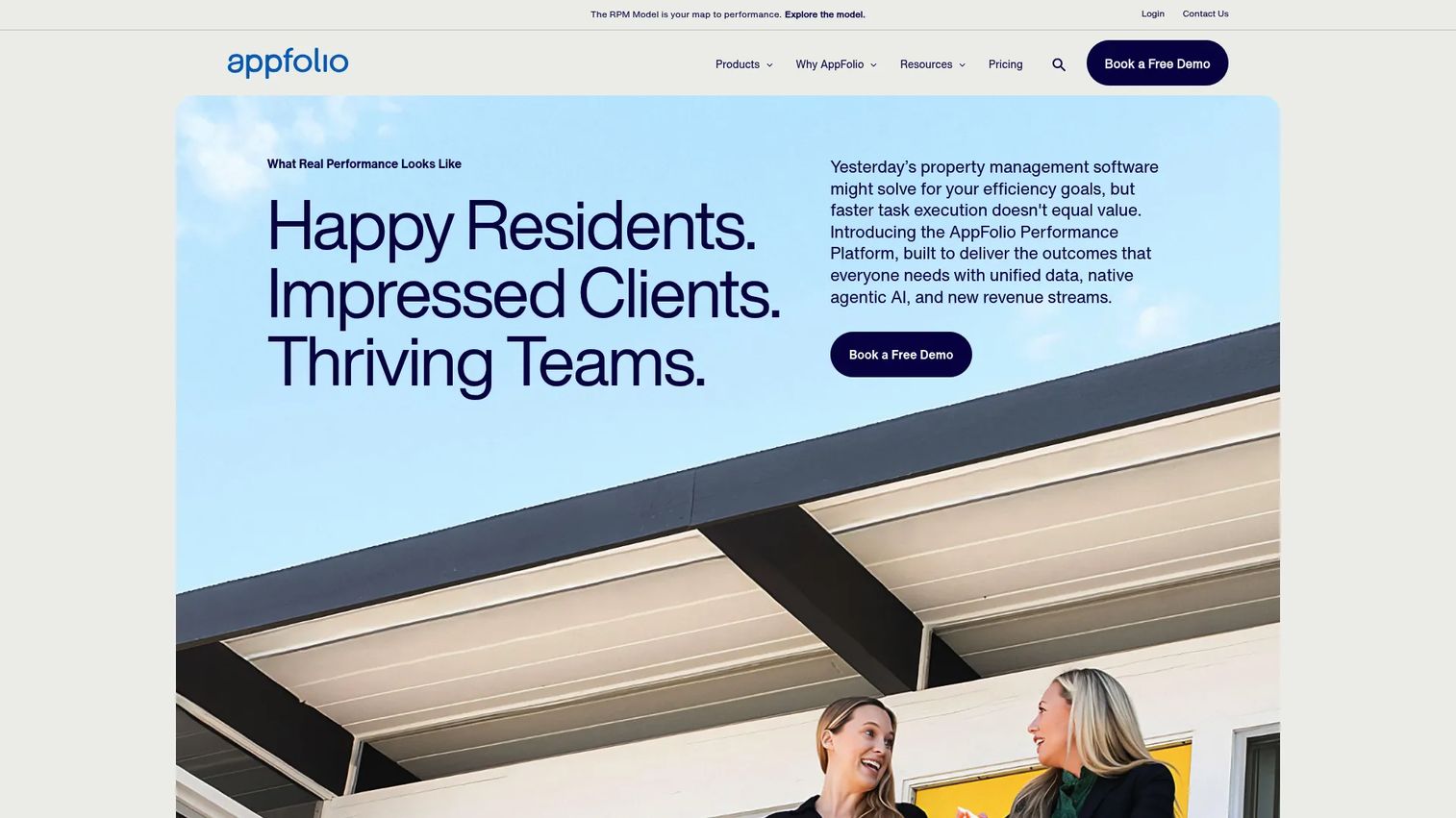
AppFolio is a property management and accounting platform for professional operators. It supports residential, commercial, student housing, affordable housing, and community association businesses.
Accounting sits inside broader portfolio operations. Teams can connect financial reporting with leasing, work orders, payments, communications, and stakeholder portals. This structure suits operators that want property management and accounting software rather than a separate bookkeeping product.
The platform can also support owner, resident, board member, and vendor access. That reduces the number of reports and requests staff must handle outside the system.
Best for: Professional property management companies with larger or operationally complex portfolios.
Key features
- Property accounting and financial reporting
- Resident and owner portals
- Online payments and communications
- Work orders and inspections
- Leasing and portfolio workflows
Why choose AppFolio: Choose AppFolio when accounting must connect directly with property operations. Its breadth fits teams replacing several disconnected systems.
A finance lead can work from the same operating records used by leasing and maintenance teams. That connection matters when leadership needs property level numbers without another spreadsheet cleanup cycle.
AppFolio pricing: Custom pricing across Core, Plus, and Max. Core requires at least 50 units, while unit and spending minimums apply.
G2 rating: 4.6/5
2. Buildium
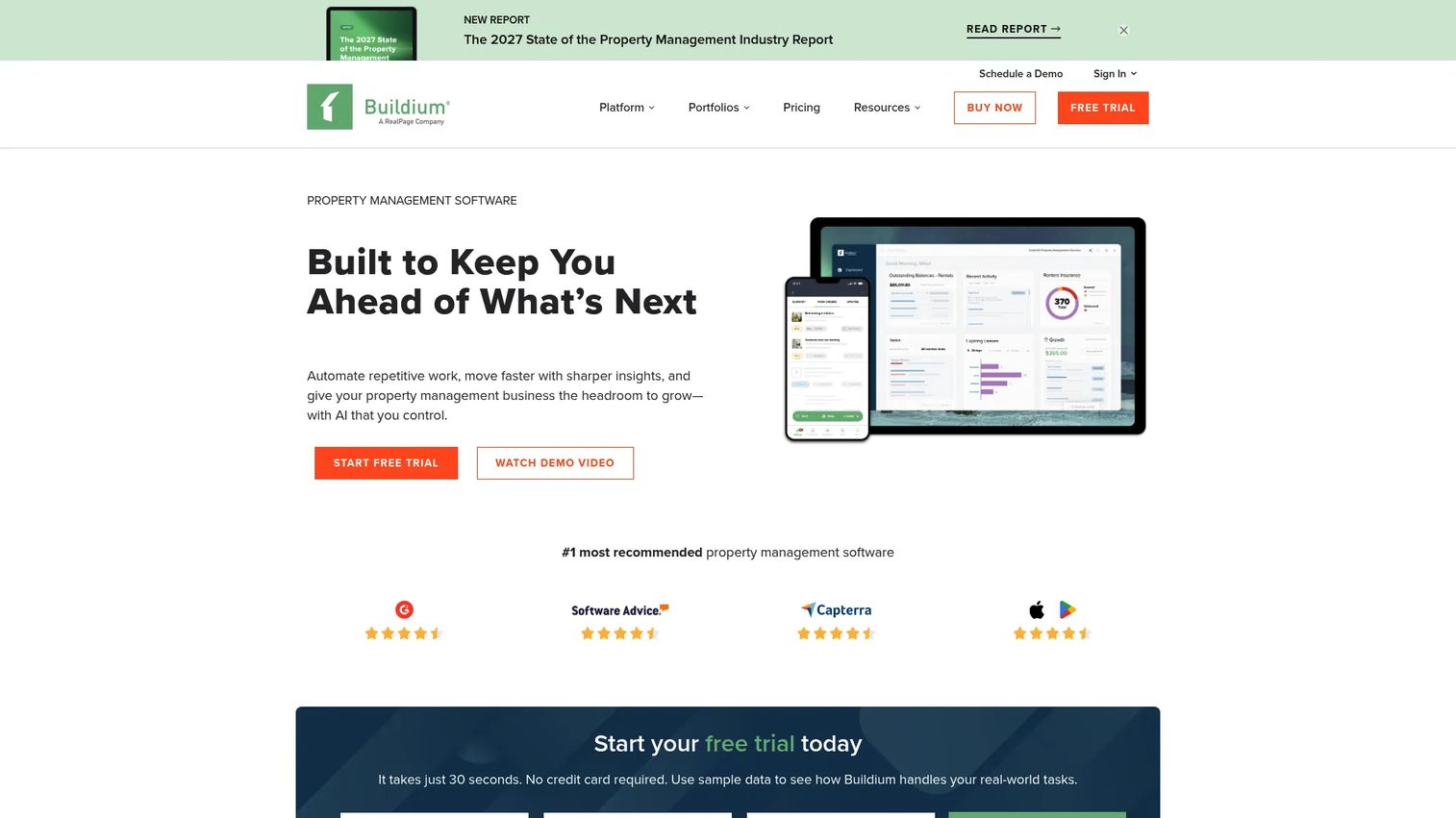
Buildium combines property accounting with leasing, maintenance, payments, and portfolio communication. It serves residential rentals, community associations, student housing, commercial properties, and mixed portfolios.
Its accounting capabilities include financial reporting, online rent collection, bills, and property records. Buildium also supports owner portals and operational workflows within the same platform.
Trust accounting and bank reconciliation make it relevant for professional managers handling owner money. Those capabilities deserve testing with your accountant before migration, especially if your current books contain unresolved balances.
Best for: Growing residential managers moving beyond spreadsheets and disconnected payment tools.
Key features
- Property accounting and reporting
- Online rent and bill payments
- Trust accounting workflows
- Owner and resident portals
- Maintenance and leasing management
Why choose Buildium: Choose Buildium when your team needs connected rent collection, property management trust accounting software, and owner reporting. It covers more operating work than a dedicated bookkeeping product.
The platform also gives growing teams a path from basic operations toward automation and API access. That can delay another software change as the portfolio expands.
Buildium pricing: Essential starts at $65 monthly. Growth starts at $202, while Premium starts at $420 monthly. A 14 day trial is available.
G2 rating: 4.4/5
3. Yardi Breeze
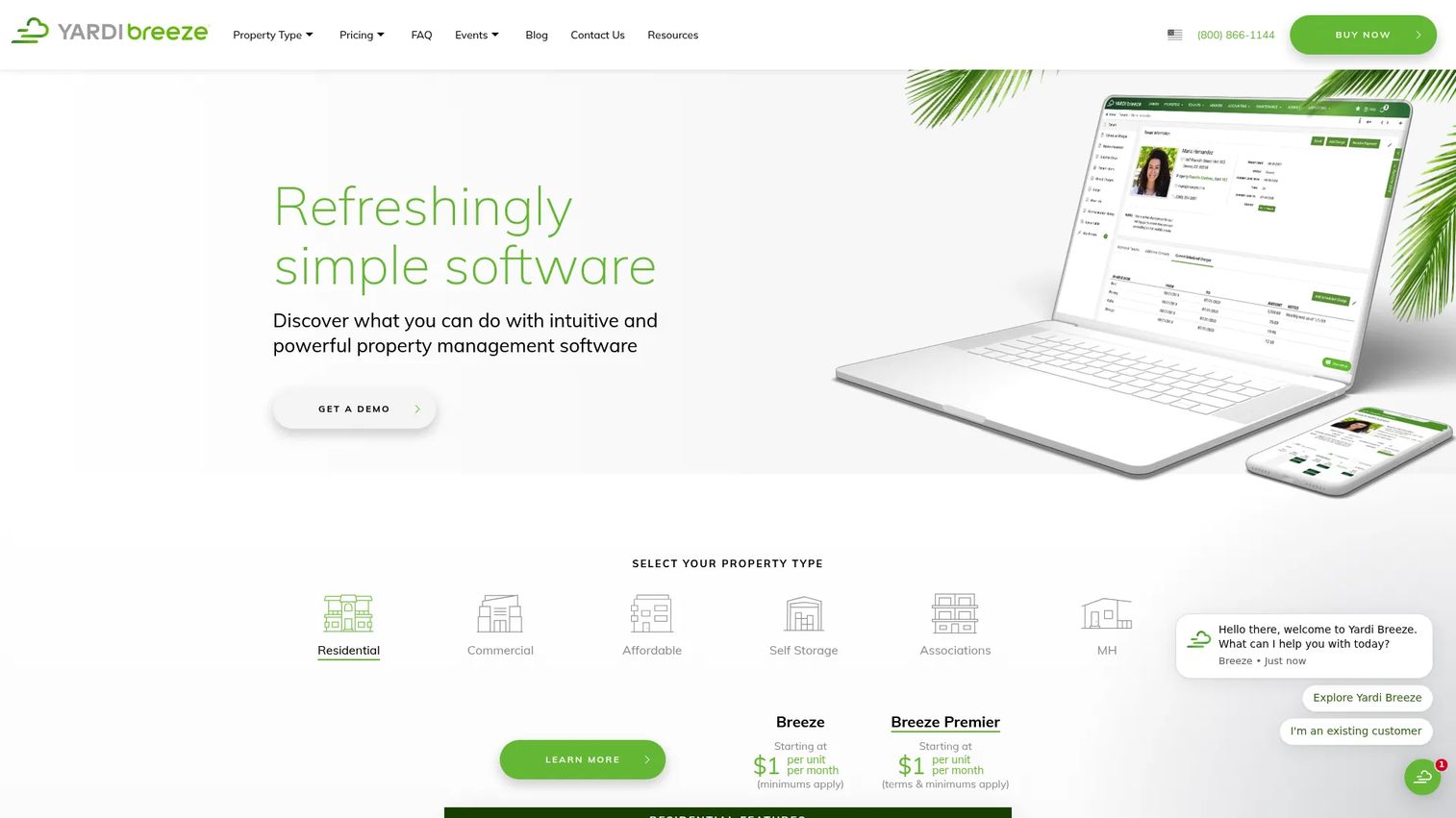
Yardi Breeze is cloud property management software for residential, commercial, affordable, association, self storage, and manufactured housing portfolios.
The product covers property accounting, online payments, maintenance requests, marketing, and leasing. Financial tools include customizable statements, invoice workflows, vendor payments, and owner reporting.
Its range across property types makes it useful for operators who expect their mix to change. Commercial teams should still validate CAM reconciliation against their lease structure before choosing any platform.
Best for: Small and midsize managers wanting property accounting from an established real estate software provider.
Key features
- Property accounting and reporting
- Owner payments and reports
- Invoice approval and processing
- Online rent payments
- Property and vacancy dashboards
Why choose Yardi Breeze: Choose Yardi Breeze when structured property accounting matters more than adapting generic bookkeeping software. Its property type coverage also suits mixed portfolios.
The pricing model is easy to compare at the unit level. Minimum monthly commitments matter, however, so calculate the effective cost for your current door count.
Yardi Breeze pricing: Residential Breeze starts at $1 per unit monthly with a $100 monthly minimum. Residential Breeze Premier has a $400 monthly minimum.
G2 rating: 4.1/5
4. Rent Manager
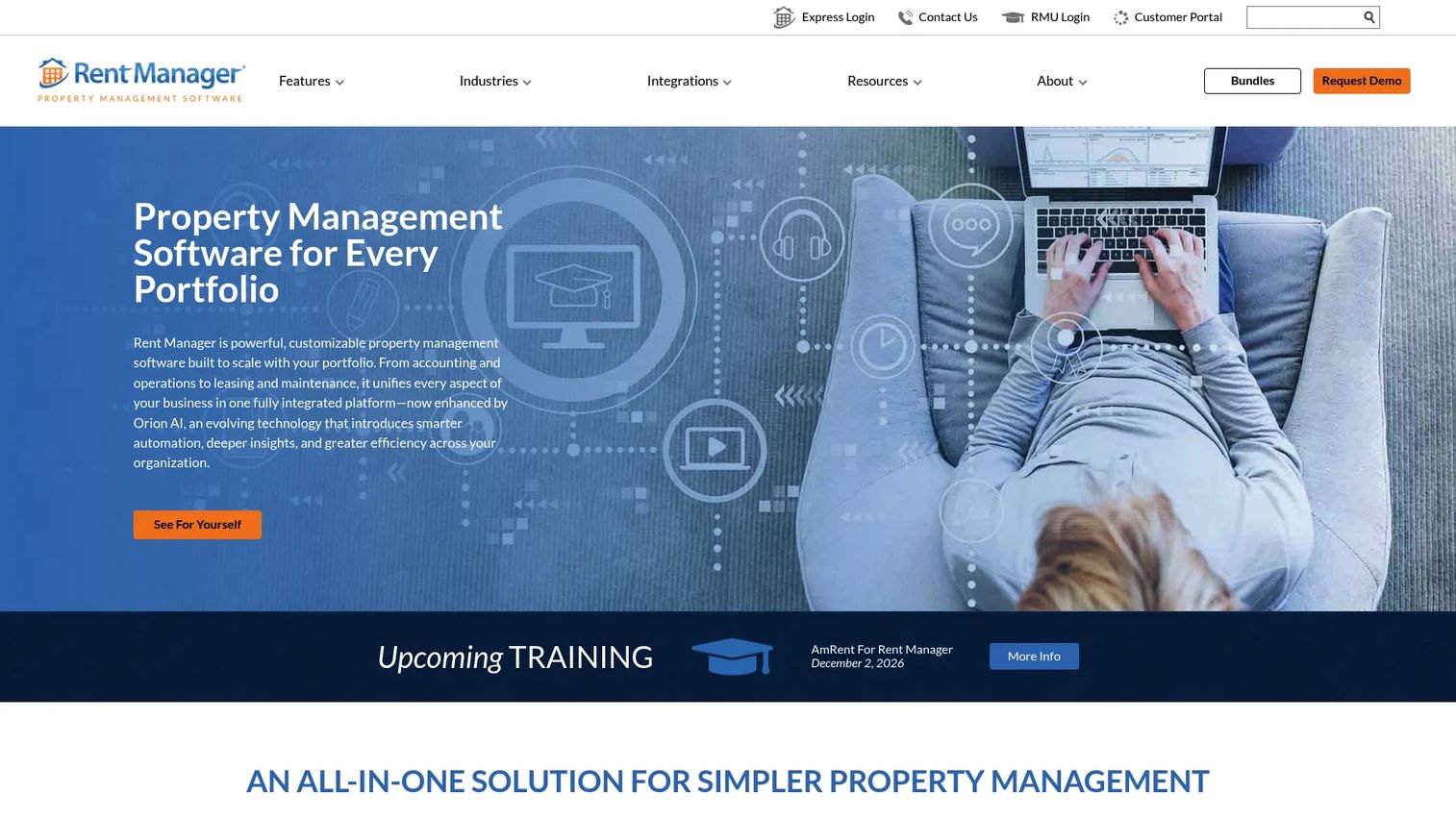
Rent Manager supports residential, commercial, association, manufactured housing, and short term stay portfolios. Accounting operates alongside leasing, maintenance, communications, portals, and reporting.
The product is built for configurable property operations. Its accounting and reporting capabilities suit managers whose books contain different ownership structures or property types.
Commercial operators can use Rent Manager for workflows that extend beyond simple rent collection accounting. Its fit becomes stronger when CAM reconciliation, vendor bills, and owner statements require more control.
Best for: Commercial managers and mixed portfolio operators with complex accounting requirements.
Key features
- Accounting and custom reporting
- Commercial property workflows
- Owner and tenant portals
- Maintenance and work orders
- Open API and integrations
Why choose Rent Manager: Choose Rent Manager when accounting complexity drives the buying decision. It suits teams that need configurable processes rather than a basic landlord ledger.
Basic is positioned for portfolios up to 100 units. Larger or more complex organizations can evaluate Plus and Premium against their reporting and integration requirements.
Rent Manager pricing: Custom pricing for Basic, Plus, and Premium. Add ons include the Open API, call center, websites, and integrated phone services.
G2 rating: 4.6/5
5. Entrata
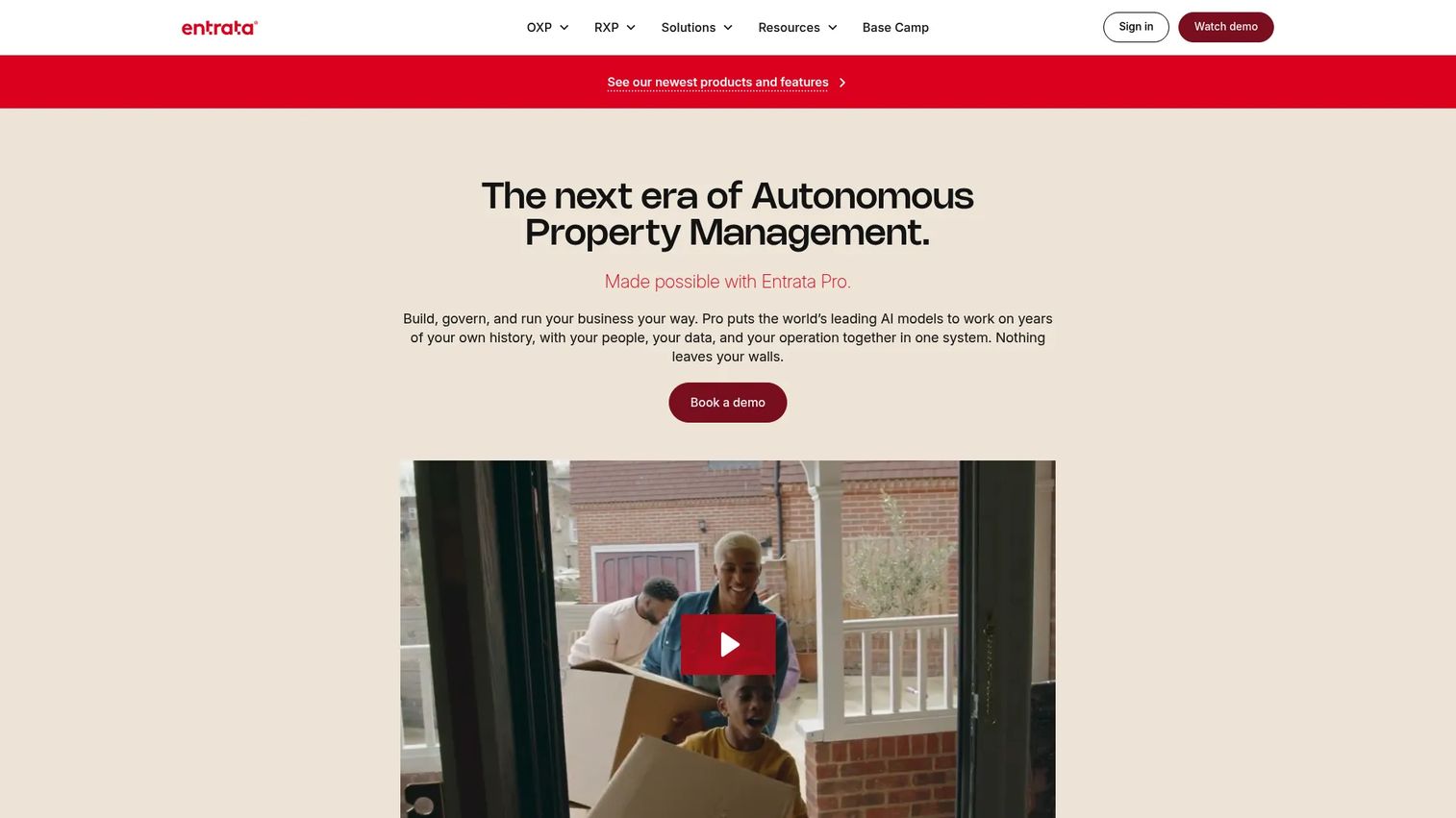
Entrata is a property management operating system for multifamily owners and operators. It connects property accounting with leasing, resident payments, maintenance, and engagement.
The product follows the resident lifecycle rather than treating accounting as an isolated back office function. Leasing activity and resident transactions feed the same operating environment used by property teams.
This approach suits established multifamily organizations with defined processes. Smaller landlords are unlikely to need the breadth or implementation model.
Best for: Multifamily operators connecting finance with resident and property operations.
Key features
- Property accounting and reporting
- Resident payments and documents
- Leasing and lead management
- Maintenance request workflows
- Resident portal and engagement
Why choose Entrata: Choose Entrata when your portfolio is primarily multifamily and accounting must connect with resident operations. It gives leadership a more unified operational record.
The strongest fit is an operator with internal ownership for implementation and data governance. Before signing, test month end reports and migration requirements with the finance team.
Entrata pricing: Custom pricing. The vendor prices the platform through sales.
G2 rating: 4.6/5
6. DoorLoop
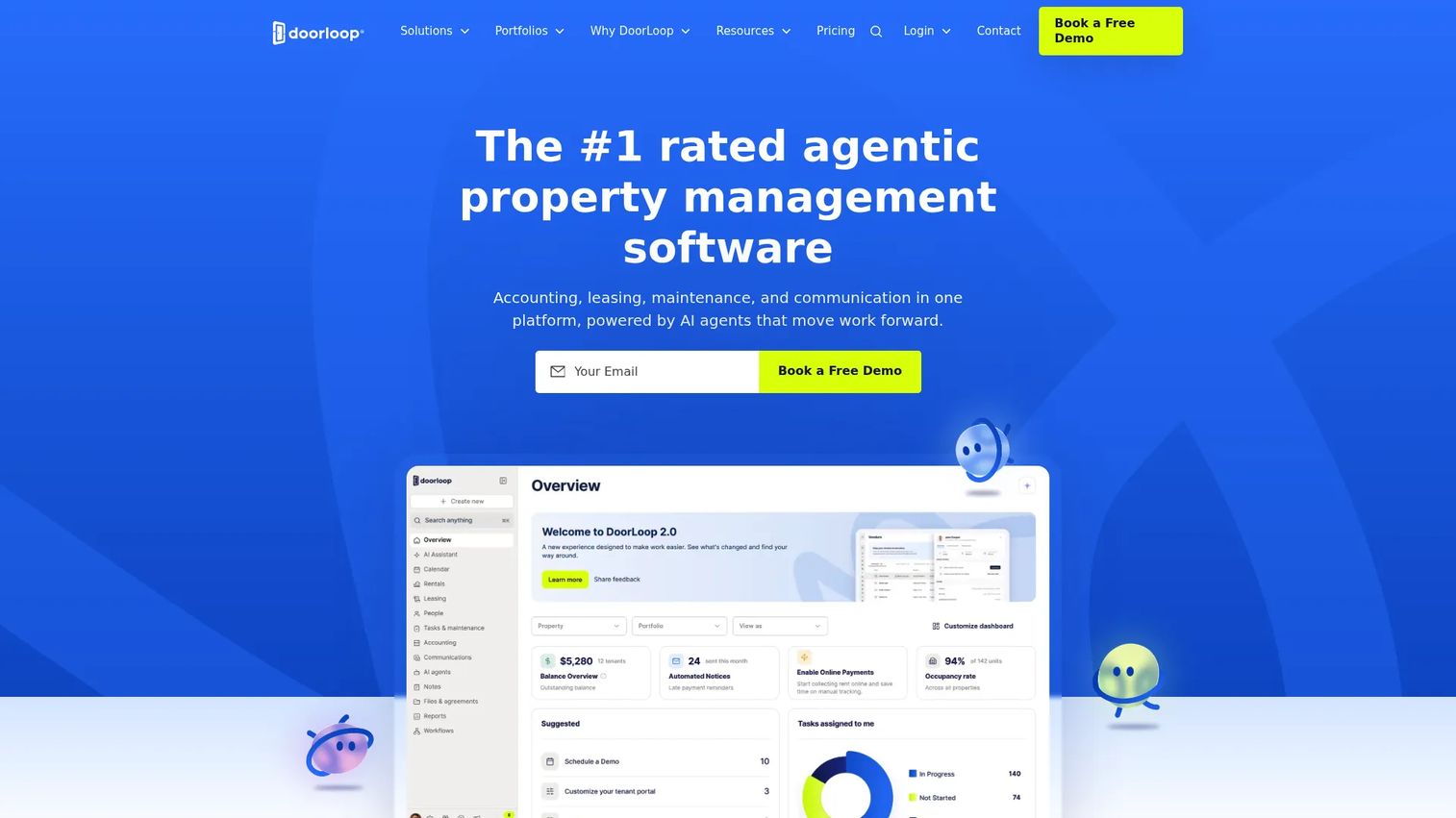
DoorLoop provides cloud property management software for landlords, managers, and real estate investors. It covers accounting, online payments, maintenance, leasing, and stakeholder portals.
Financial reporting sits beside rent collection and automated late fees. Owner access can reduce recurring requests for statements or property updates.
DoorLoop prices by unit, which makes portfolio cost easier to model. Minimum spending and unit requirements apply, though the researched pricing page does not state those thresholds.
Best for: Small and midsize operators replacing several lightweight property tools.
Key features
- Accounting and financial reports
- Online rent collection
- Tenant and owner portals
- Maintenance and work orders
- Applications and electronic signatures
Why choose DoorLoop: Choose DoorLoop when you want property management and accounting software with clear per unit pricing. It suits teams that need broad operating coverage without moving to a large multifamily system.
Finance teams should still run sample owner statements and reconciliation reports. A polished operating interface means little if monthly close still requires manual adjustments.
DoorLoop pricing: DoorLoop One starts at $2.50 per unit monthly. Connect starts at $4, while Multiply starts at $5 per unit monthly.
G2 rating: 4.8/5
7. QuickBooks Online
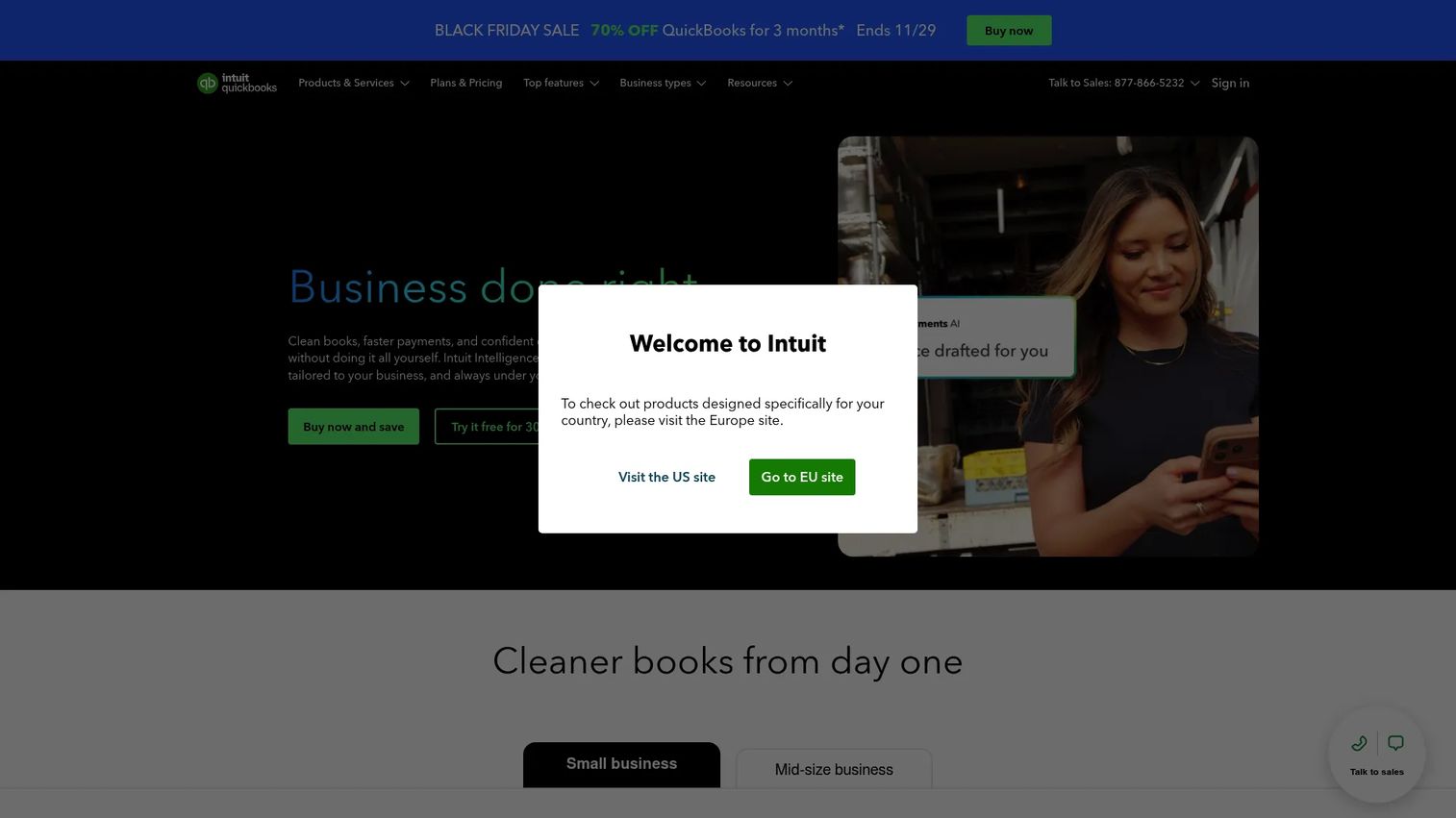
QuickBooks Online is general cloud accounting software that property businesses can configure for rental operations. It supports bookkeeping, expenses, bills, payments, reporting, and financial planning.
Property tracking requires a deliberate chart of accounts. Teams may also use classes or locations to separate buildings, entities, or operating units.
Its broad accountant familiarity is a practical advantage. However, purpose built owner portals and lease workflows sit outside its core accounting job.
Best for: Finance led operators with an accountant who owns property level setup and controls.
Key features
- Automated bookkeeping and categorization
- Bank feeds and reconciliation
- Vendor bills and payments
- Financial reporting
- Accountant access
Why choose QuickBooks Online: Choose QuickBooks Online when your finance team already uses it or your accountant prefers it. The platform handles broader company books alongside real estate accounting software requirements.
It performs best when someone actively maintains the property structure. Without that ownership, class tracking and reconciliations can become another source of cleanup.
QuickBooks Online pricing: A free plan is available. Simple Start costs $38 monthly, Essentials costs $85, Plus costs $140, and Advanced costs $340.
G2 rating: 4.0/5
8. Xero
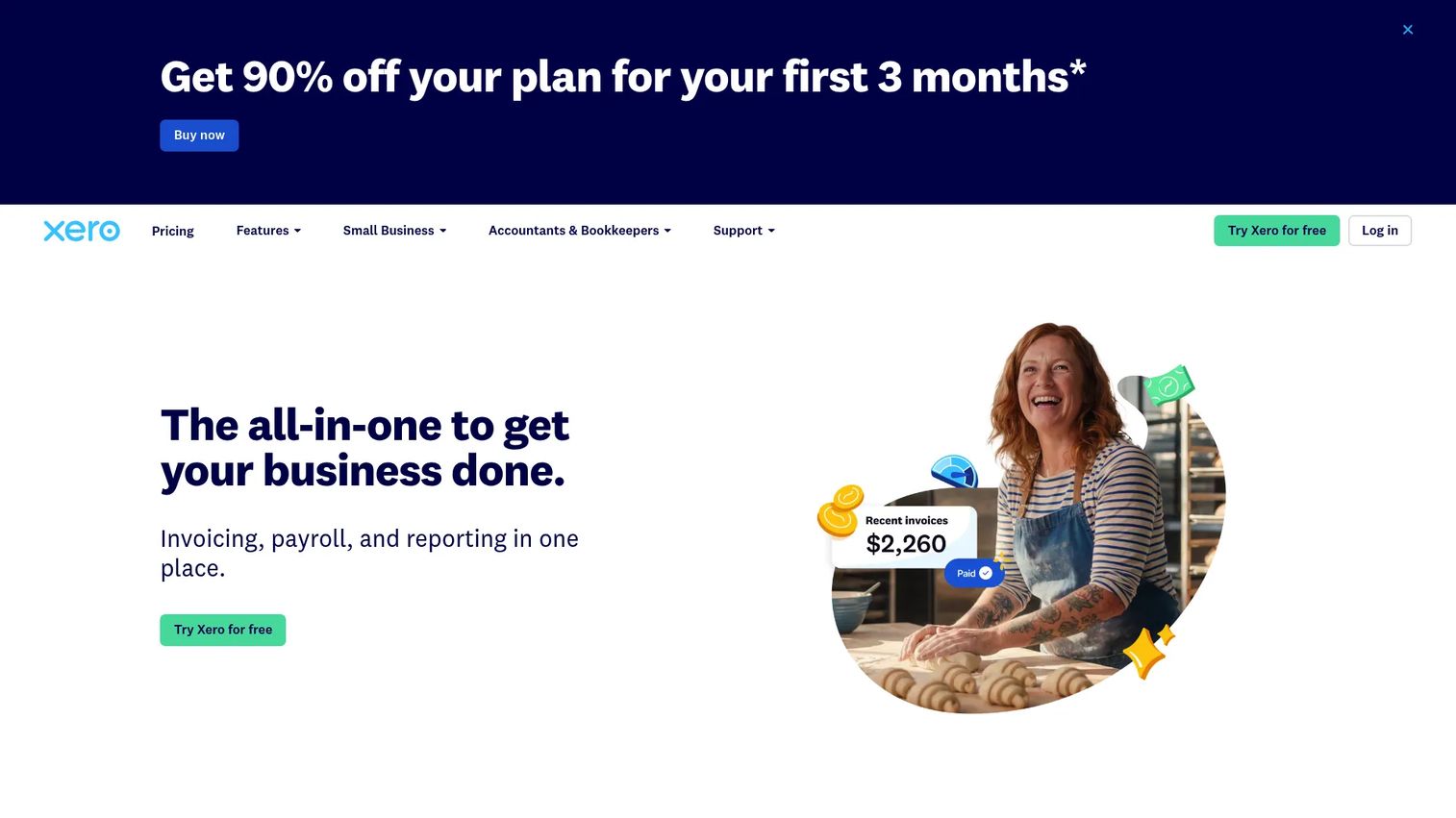
Xero is cloud accounting software for invoicing, bills, bank reconciliation, reporting, projects, and inventory. Real estate teams can adapt it through tracking categories and connected applications.
Its bank connections and reconciliation tools support disciplined month end processes. Accountants can collaborate directly inside the platform instead of exchanging spreadsheet versions.
Like other generic systems, Xero needs a clear property structure. It does not replace specialized owner portals or rental operations by itself.
Best for: Finance led property businesses wanting flexible cloud accounting and broad app connectivity.
Key features
- Bank connections and reconciliation
- Bill tracking and payments
- Financial reports and analytics
- Tracking categories
- Project and expense management
Why choose Xero: Choose Xero when accounting flexibility matters and property operations already live elsewhere. It can support real estate bookkeeping software requirements with careful configuration.
Before committing, model how each property and entity will appear in reports. Your finance lead should be able to produce a property profit and loss statement without exporting transactions.
Xero pricing: Early normally costs $27 monthly, Growing costs $59, and Established costs $97. Promotional introductory rates may reduce the first six months.
G2 rating: 4.4/5
9. Stessa
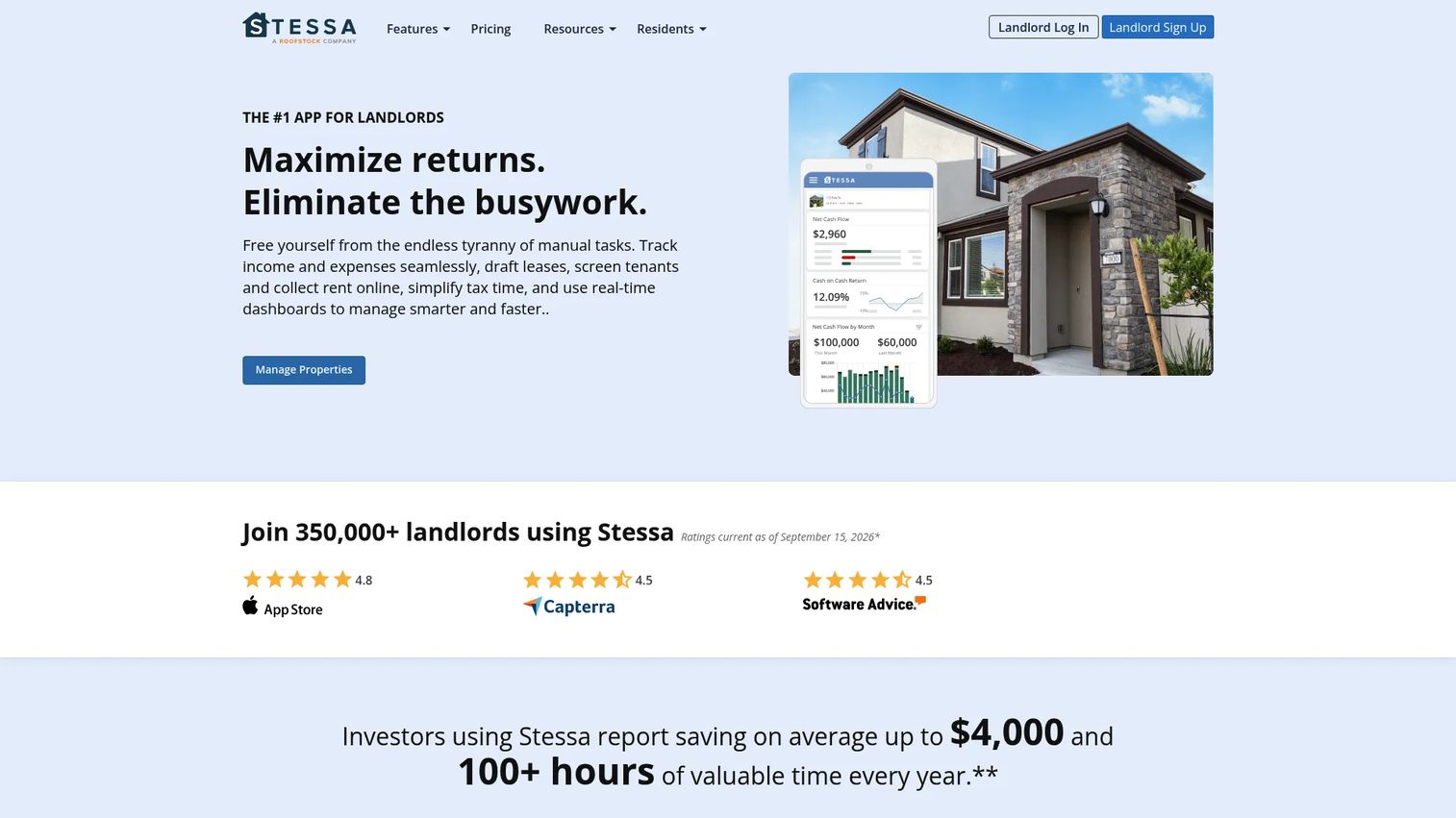
Stessa provides rental property accounting software for landlords and real estate investors. It combines bookkeeping and bank feeds with rent collection, leasing, maintenance, and portfolio reporting.
The accounting model centers on rental properties rather than general small business books. Tax packages and Schedule E reporting help owners maintain cleaner records throughout the year.
Stessa also includes landlord banking and cash management capabilities. This can reduce the distance between transaction activity and bookkeeping records.
Best for: Landlords and investors who need property financials without a professional management platform.
Key features
- Automated rental bookkeeping
- Online rent collection
- Financial and tax reports
- Landlord banking tools
- Maintenance and lease tracking
Why choose Stessa: Choose Stessa when your main questions concern cash flow, property performance, and tax records. It offers more rental context than a generic ledger.
The product fits portfolios that have outgrown spreadsheets but do not need complex owner services. Growing management companies may eventually need deeper operational controls.
Stessa pricing: Essentials is free. Manage costs $12 monthly with annual payment, while Pro costs $28 monthly on the same billing basis.
G2 rating: 4.0/5
10. REI Hub
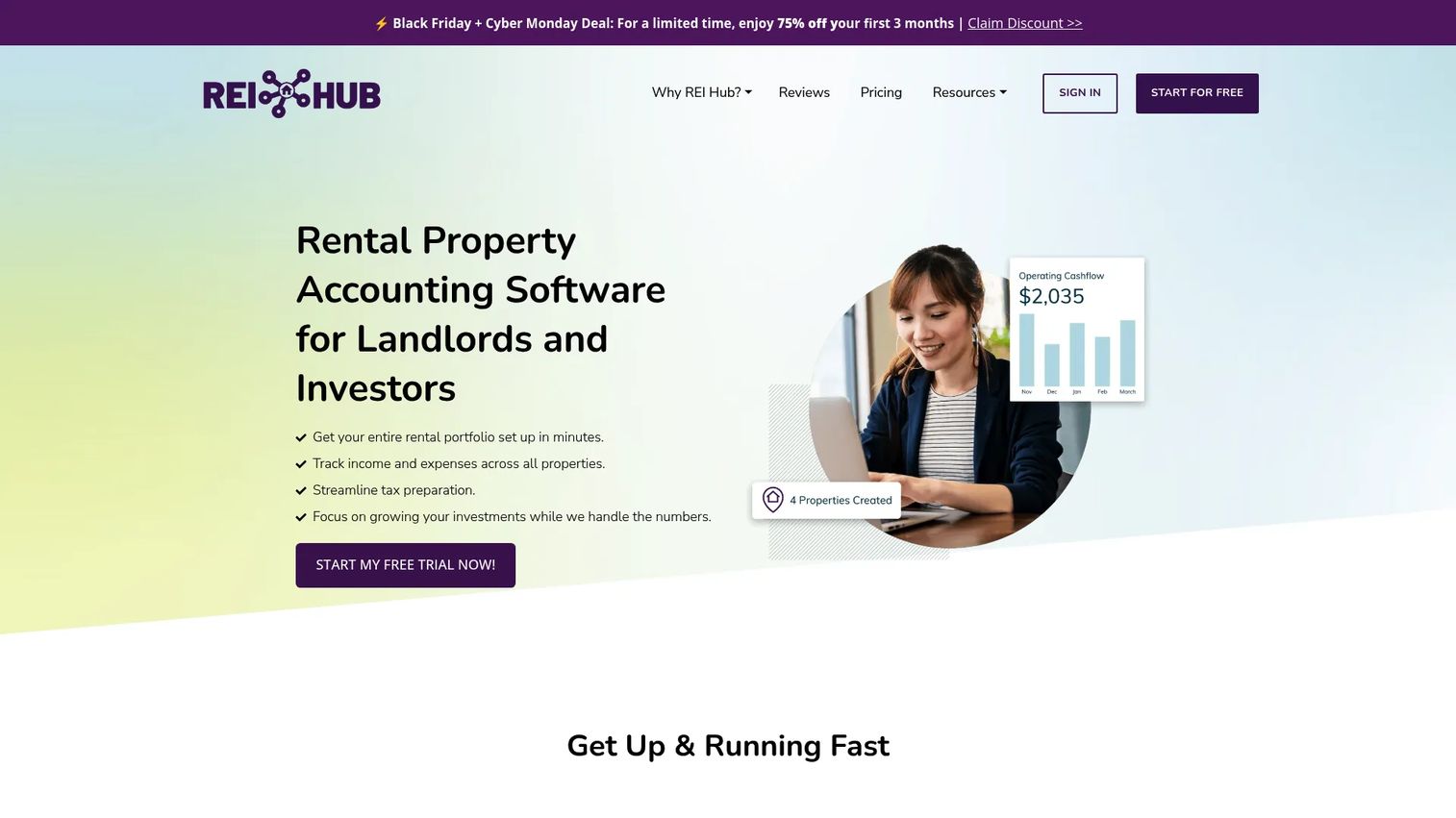
REI Hub is dedicated rental property bookkeeping software for landlords and real estate investors. It focuses on property based books, transaction imports, reporting, and tax preparation.
Bank feeds bring transactions into the system. Matching rules help categorize recurring activity, while fixed asset tracking supports longer term property records.
Schedule E reports make the platform relevant for owners preparing rental tax information. Receipt storage and mileage records keep supporting documents near the underlying books.
Best for: Investors and bookkeepers prioritizing rental bookkeeping over tenant operations.
Key features
- Property based accounting
- Schedule E reports
- Bank transaction imports
- Fixed asset tracking
- Receipt and mileage storage
Why choose REI Hub: Choose REI Hub when clean rental books and CPA ready exports are the priority. It avoids forcing a generic accounting platform into a property specific structure.
Pricing scales by unit count, which suits gradual portfolio growth. The unlimited plan provides a clear ceiling for larger investor portfolios.
REI Hub pricing: A free plan is available. Professional starts at $9 monthly with annual billing, with higher prices for larger unit counts. A 14 day trial is offered.
11. Landlord Studio
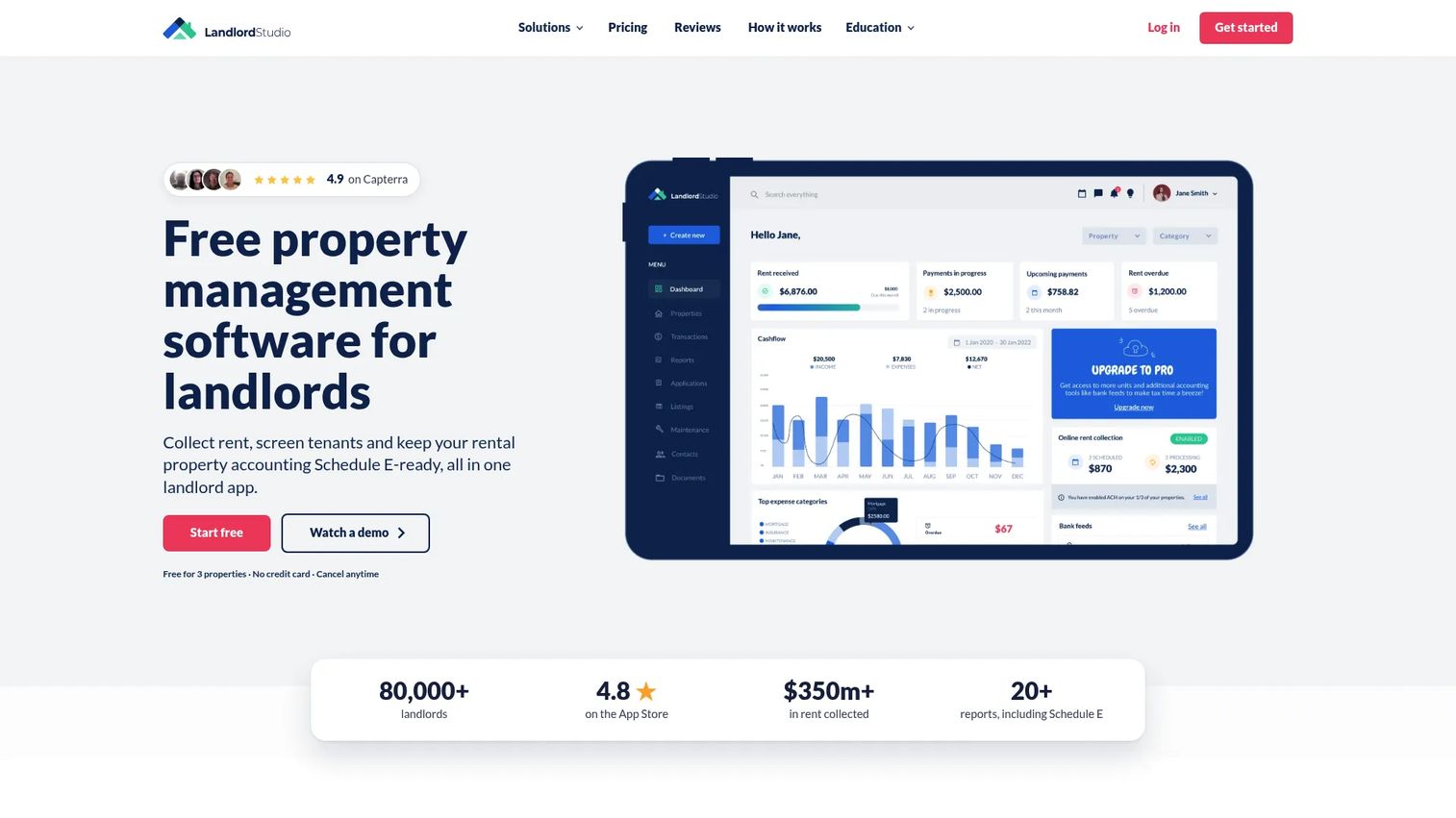
Landlord Studio combines rental accounting with property management for independent landlords. It includes income and expense records, rent collection, tenant workflows, and maintenance management.
Bank feeds and receipt scanning help owners keep books current. Tax ready reports reduce the work required to organize records at year end.
The mobile focus is useful for landlords recording expenses away from a desk. An available Xero integration also gives teams a route into broader cloud accounting.
Best for: Independent landlords who want mobile rental property bookkeeping software.
Key features
- Income and expense tracking
- Bank feeds and receipt scanning
- Tax ready reporting
- Online rent collection
- Property maintenance management
Why choose Landlord Studio: Choose Landlord Studio when you want to maintain property records from your phone. It supports day to day landlord work without the breadth of a professional management platform.
The free plan covers up to three units. Paid tiers add automation and reporting capabilities for growing portfolios.
Landlord Studio pricing: GO is free. PRO costs $12 monthly with annual billing, while PRO Plus costs $28 monthly on the same basis.
12. TenantCloud
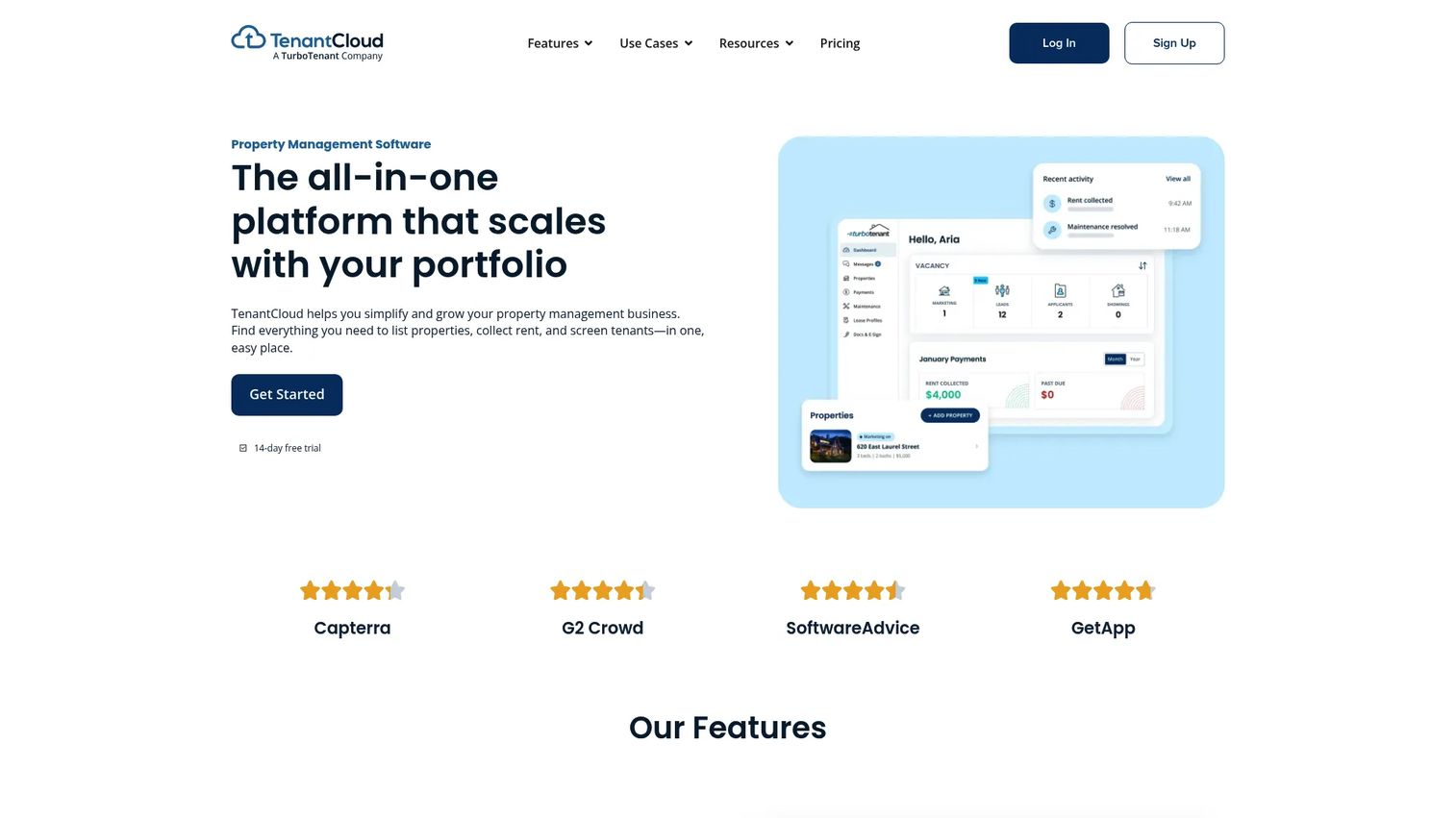
TenantCloud combines rental listings, screening, leases, payments, maintenance, and financial records. It serves landlords alongside property management teams.
The platform includes online rent collection and accounting reports. Tenant, team, and owner management extend it beyond rental property accounting software alone.
Its product depth increases across plans. Teams should identify which reporting and accounting functions sit in the tier they intend to buy.
Best for: Landlords and smaller management teams wanting operations and accounting basics together.
Key features
- Online rent collection
- Accounting and financial reports
- Leasing and electronic signatures
- Maintenance request management
- Team and owner workflows
Why choose TenantCloud: Choose TenantCloud when tenant operations are the starting point and bookkeeping must stay connected. It provides broader rental workflows than a dedicated accounting product.
For a founder or operator, the key test is reporting independence. Ask your finance lead to produce monthly property statements without additional spreadsheets.
TenantCloud pricing: Free is $0 monthly. Essentials starts at $12.42, Pro starts at $16.58, and Business starts at $100 monthly.
G2 rating: 4.4/5
13. RentRedi
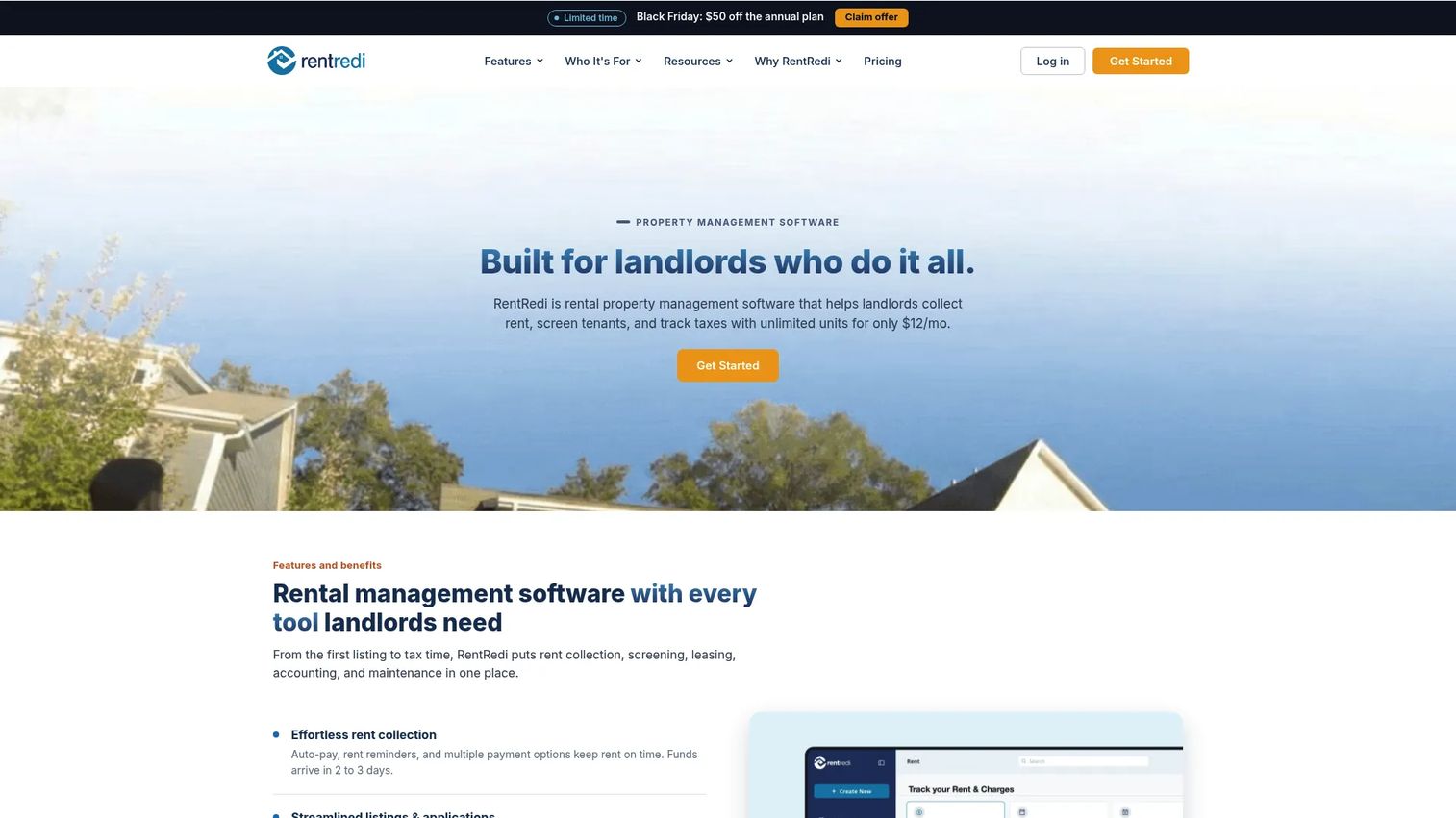
RentRedi is property management software for independent landlords and small management teams. It covers listings, applications, screening, rent collection, maintenance, and rental accounting.
Financial capabilities include tax reports and portfolio performance tracking. The platform also supports automatic payments and tenant reminders.
Every subscription includes the same feature set with unlimited properties, tenants, and teammates. Pricing changes with the billing commitment rather than portfolio size.
Best for: Hands on landlords who value rent collection and operating workflows alongside financial tracking.
Key features
- Online rent collection
- Rental accounting and tax reports
- Tenant screening
- Maintenance tracking
- Portfolio performance reporting
Why choose RentRedi: Choose RentRedi when day to day landlord operations matter as much as bookkeeping. Unlimited portfolio access makes the cost predictable as units grow.
It suits owners who manage tenants directly. Teams needing advanced owner statements or trust accounting should evaluate a professional management platform.
RentRedi pricing: Annual billing costs $12 monthly. Six month billing costs $20 monthly, while monthly billing costs $29.95. Optional screening fees apply.
G2 rating: 4.4/5
14. Avail
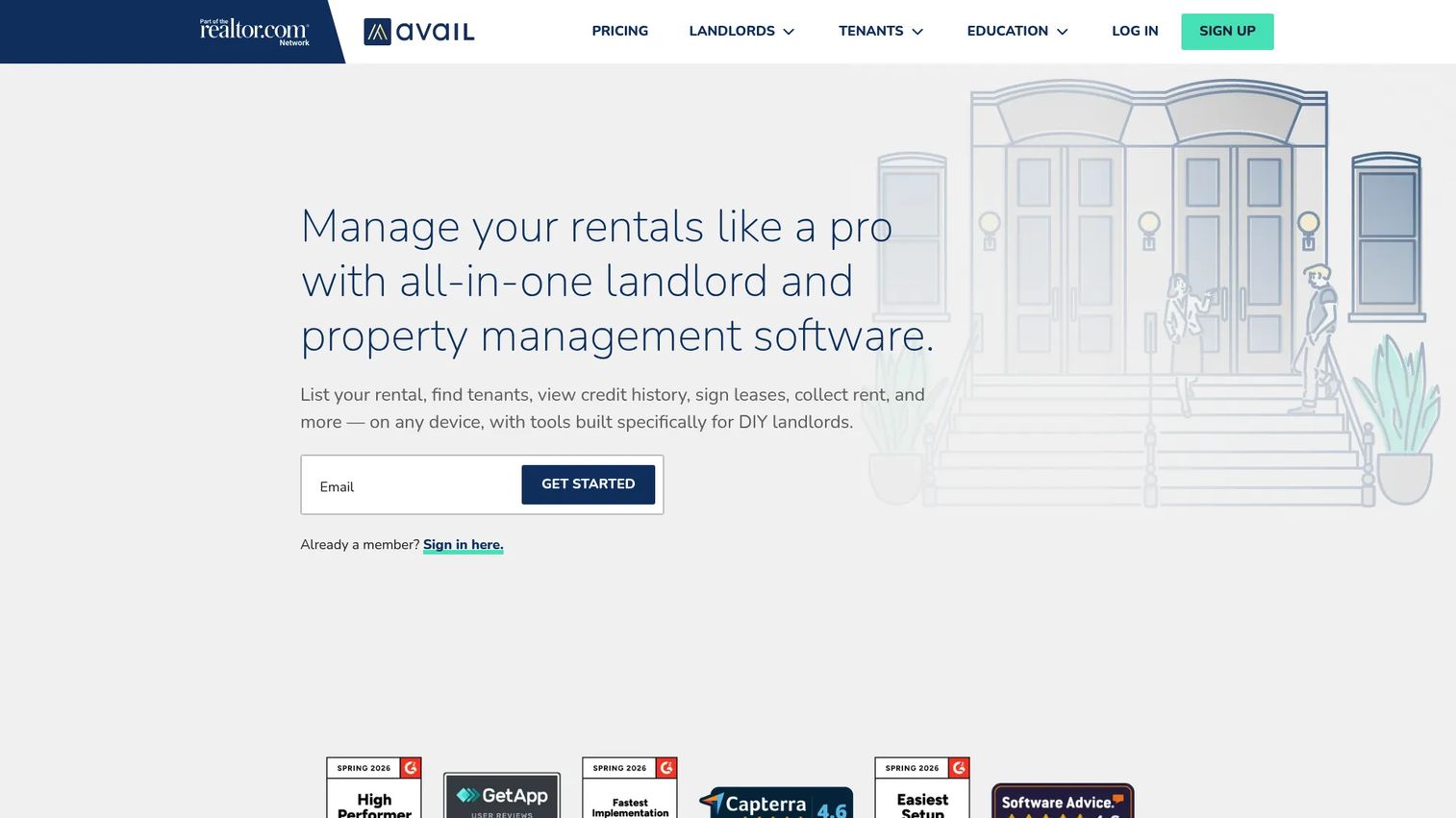
Avail supports independent landlords across listings, applications, screening, leases, rent collection, and maintenance. It also includes income and expense tracking.
The platform follows the landlord workflow from marketing through ongoing tenancy. That makes it useful when rental operations matter more than general ledger depth.
Its free plan supports unlimited units. The paid option adds payment and customization features at a per unit price.
Best for: Independent landlords who need rental operations with basic accounting support.
Key features
- Rental listing syndication
- Tenant applications and screening
- Digital leases
- Online rent collection
- Income and expense tracking
Why choose Avail: Choose Avail when listings and tenant management come before accounting complexity. It keeps the rental lifecycle in one operating system.
The per unit premium price remains accessible for smaller portfolios. Compare transaction costs and reporting depth before moving all financial records into it.
Avail pricing: Unlimited is free. Unlimited Plus costs $9 per unit monthly. Tenant payment and screening charges may apply.
G2 rating: 4.8/5
15. Baselane

Baselane is a financial platform for landlords and real estate investors. It brings property banking, rent collection, bookkeeping, and tax reporting into a connected workflow.
Users can create property specific checking and savings accounts. Automated categorization and receipt matching support ongoing rental property bookkeeping.
The platform also produces property and entity level reports. Schedule E reports and tax packages help organize records for annual filing.
Best for: Multi property landlords who want banking and bookkeeping connected.
Key features
- Property specific bank accounts
- Automated rent collection
- Property and entity reports
- Transaction categorization
- Schedule E tax packages
Why choose Baselane: Choose Baselane when bank structure is central to your operating discipline. Dedicated accounts can make property cash flows easier to follow.
It fits owner operated portfolios more closely than third party management businesses. Professional managers should evaluate owner reporting and trust controls elsewhere.
Baselane pricing: Core is free. Smart costs $20 monthly with annual billing.
16. Innago
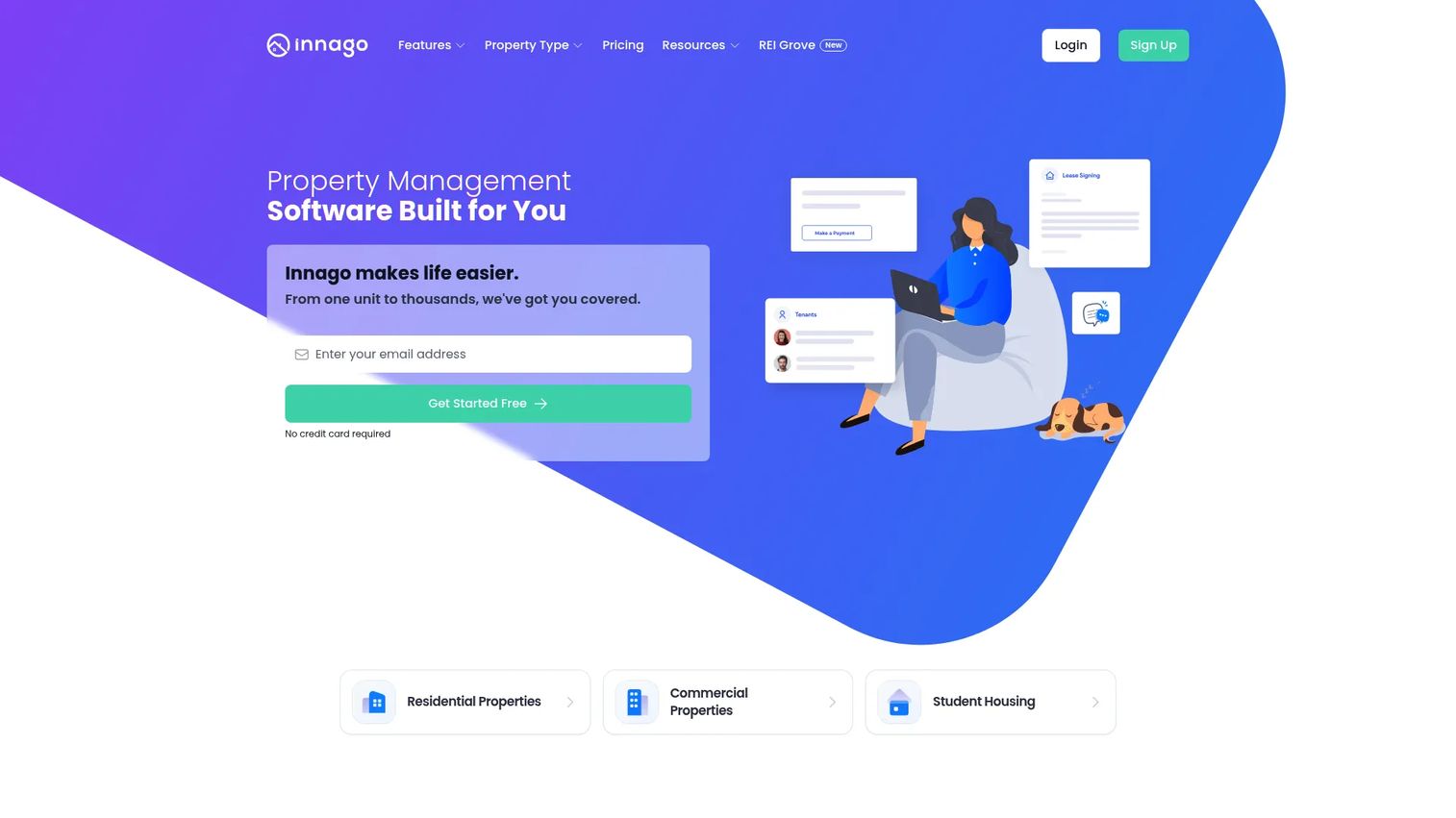
Innago offers free cloud property management software for independent landlords and small to midsize managers. It includes rent collection, screening, leases, maintenance, communication, and expense reporting.
The platform removes the monthly subscription from the landlord side. Tenants pay certain transaction fees, while screening and income verification carry separate charges.
Accounting depth centers on expense reporting rather than a complete general ledger. Keep that distinction clear if month end reporting drives your purchase.
Best for: Cost conscious landlords needing structure for core rental operations.
Key features
- Online rent collection
- Expense reporting
- Digital lease signing
- Maintenance requests
- Tenant screening
Why choose Innago: Choose Innago when subscription cost is the main barrier to leaving spreadsheets. It covers practical rental workflows without a monthly landlord fee.
The platform can organize a smaller portfolio quickly. Finance led operators should test reporting before treating it as their main accounting record.
Innago pricing: The landlord platform is free with no setup fee or contract. Tenant ACH payments cost $2, while card payments cost 2.99%.
G2 rating: 4.8/5
17. Apartments.com Rental Manager
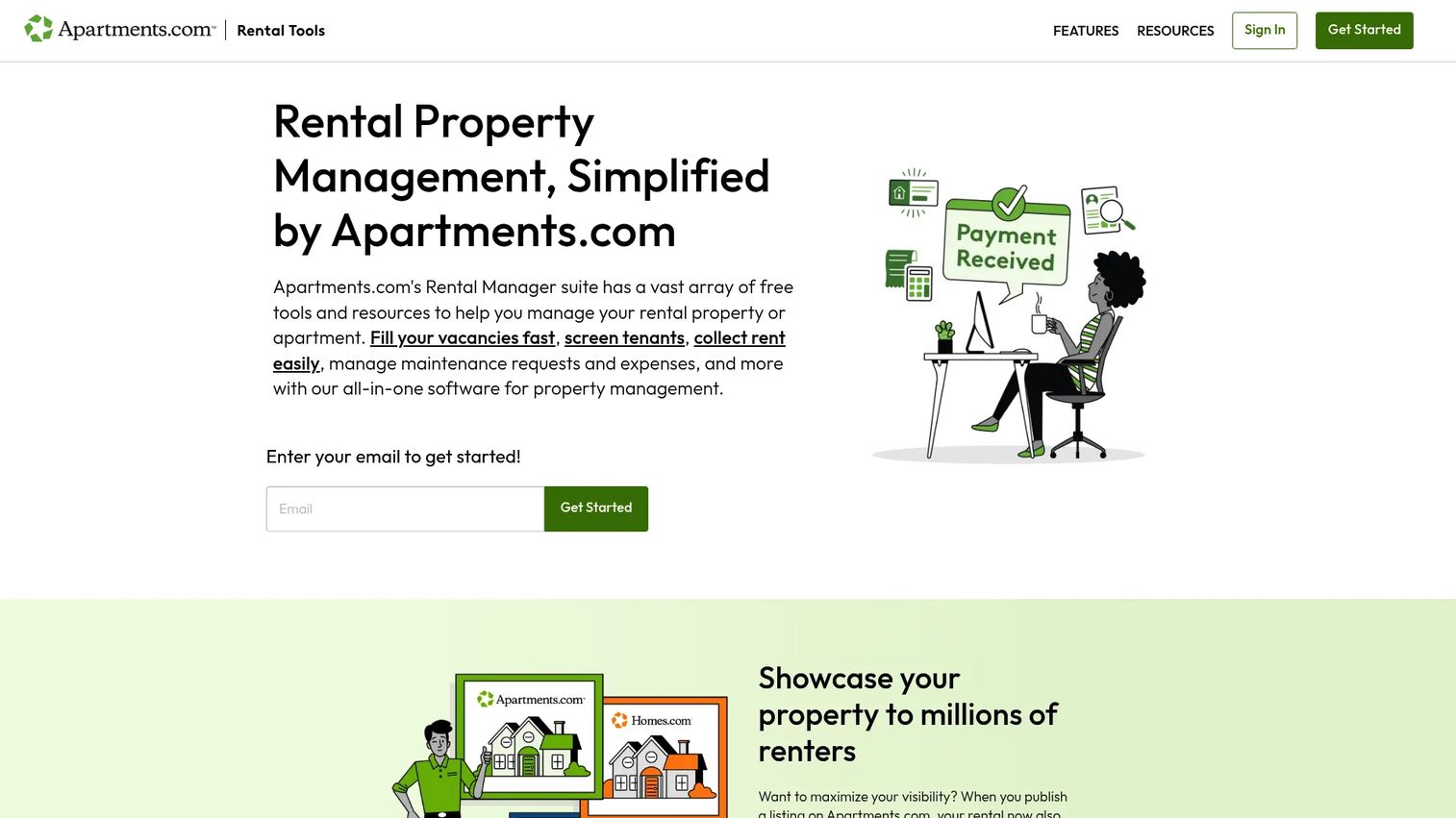
Apartments.com Rental Manager gives independent landlords tools for rental advertising, applicant screening, leases, rent collection, maintenance, and expense tracking.
Its strongest connection is between rental marketing and basic management. A landlord can move from finding applicants to collecting payments without adopting a professional property platform.
Expense tracking adds financial organization, but the product is not positioned as deep property accounting software. Larger operators will need more reporting and control.
Best for: Small landlords already using the rental marketplace to advertise units.
Key features
- Rental listing advertising
- Applicant screening
- Online rent collection
- Lease creation
- Rental expense tracking
Why choose Apartments.com Rental Manager: Choose it when listings and rent collection are your immediate priorities. Basic expense records can replace a spreadsheet for a small portfolio.
It fits owners who want accessible landlord tools rather than advanced accounting. Test report exports before relying on it for tax preparation.
Apartments.com Rental Manager pricing: Core landlord tools and online rent collection are free. Separate service fees may apply.
G2 rating: 4.1/5
Considerations when choosing property management accounting software
Match the tool to portfolio size
A five unit landlord and a 5,000 unit manager need different controls. Compare reporting depth, implementation ownership, and cost at your expected portfolio size.
Choose software that can support planned growth without forcing you to pay early for unused complexity.
Check trust accounting and deposit workflows
Security deposits and owner funds require careful records. Verify liability treatment, account separation, permissions, and reconciliation reports.
Requirements vary by jurisdiction. Ask your accountant or legal adviser to review the proposed workflow.
Test owner reporting before committing
Export sample owner statements using realistic transactions. Include rent receipts, management fees, maintenance bills, and owner distributions.
Also test property profit and loss statements, cash flow reports, and delinquency views. These outputs should be usable without manual reconstruction.
Validate tax and 1099 workflows
Confirm how the system stores vendor details and payment history. Review its support for Schedule E, 1099 NEC, 1099 MISC, and CPA ready exports.
Year end problems usually start with missing data collected months earlier. Test the workflow before migration.
Understand implementation and migration effort
List every record that must move: Properties, tenants, leases, balances, owners, vendors, and bank feeds. Assign one internal owner for the migration.
Define the first clean month in advance. Running old and new books indefinitely creates another reconciliation problem.
Conclusion
The best property management accounting software matches your portfolio structure and operating model. No single product fits every landlord or professional manager.
AppFolio and Entrata suit larger operators that want accounting connected with broad property operations. Buildium and DoorLoop fit growing residential teams seeking a more accessible all in one platform.
Rent Manager deserves attention when commercial workflows or mixed portfolio complexity drive the decision. For rental property bookkeeping, compare REI Hub with Stessa and Landlord Studio.
QuickBooks Online and Xero remain credible options for finance led businesses. Both require clear ownership of property tracking and month end controls.
Shortlist three products. Build one month of sample books in each, including deposits, maintenance invoices, and owner payouts. Then test reconciliation, owner statements, tax exports, and property financial reports.
The winning system is the one your finance lead can trust without founder intervention.
FAQs
Property management accounting software tracks rental income, expenses, deposits, owner payouts, bills, and financial reports. Records are organized by property, unit, lease, owner, or portfolio.
This context separates property accounting from generic bookkeeping. Purpose built tools may also connect leasing, rent collection, maintenance, and owner reporting.
Stessa and REI Hub fit landlords focused on rental bookkeeping and taxes. Landlord Studio adds mobile records and operational tools, while Baselane connects banking with bookkeeping.
Avail, Innago, and Apartments.com Rental Manager suit owners prioritizing listings or rent collection. Compare reporting depth before choosing a primary accounting record.
Buildium and DoorLoop are strong options for growing residential managers. Yardi Breeze and Rent Manager support broader property types and more structured operations.
Prioritize owner statements, bank reconciliation, maintenance linked costs, and rent collection accounting. These workflows become harder to manage as unit counts rise.
Yes, QuickBooks Online can support property accounting with careful setup. A finance team can use the chart of accounts plus classes or locations to organize property activity.
It does not replace specialized owner portals, lease workflows, or purpose built trust controls. Some teams pair it with separate property operations software.
Start with property level reporting, bank reconciliation, rent collection, and owner statements. Professional managers should also evaluate trust accounting, accounts payable, vendor records, and security deposit accounting.
Tax focused buyers should review Schedule E support and 1099 reporting. Commercial operators should test CAM reconciliation against their lease terms.
Some property management platforms support trust accounting workflows, but capability varies. Verify security deposit treatment, account separation, permissions, and reconciliation reporting.
Do not assume a trust accounting label covers your local requirements. Ask qualified advisers to review the process before implementation.
CAM reconciliation compares common area maintenance costs with amounts billed to commercial tenants. The calculation identifies any balance owed by either party under the lease.
Commercial real estate accounting software should preserve charge details and allocation rules. Test the workflow using representative leases before buying.
Costs range from free landlord platforms to custom priced systems for professional operators. Other products charge monthly fees or use per unit pricing.
Compare subscription costs with onboarding, payment processing, screening charges, and add ons. Migration time and manual reconciliation also affect the total cost.