Revenue looks healthy at the company level. Then someone asks which projects created the margin, and finance opens a spreadsheet.
Delivery says the work is on track. Time entries arrive late. Deferred revenue needs cleanup. The board wants a margin forecast that nobody can produce from one system.
This gap matters more as the business scales. Dataintelo valued the global project accounting software market at $4.8 billion in 2025. Its 2026 research projects 7.8% annual growth through 2034.
The right project accounting software connects delivery activity to financial outcomes. It shows which work earns money, where costs are drifting, and what will affect month end close.
For a Series B founder, the test is straightforward: Can your Head of Finance defend project profitability without rebuilding the numbers by hand?
What’s inside
This guide compares accounting and project management software for founders, finance leaders, and operators running project based businesses.
We selected products using four practical criteria:
- Financial control: WIP, revenue recognition, project billing, and job costing
- Operating visibility: Budget to actual reporting, forecasts, and project margin
- Workflow fit: Time capture, expense management, and delivery data
- Company fit: Accounting maturity, industry requirements, and implementation scope
The shortlist includes accounting platforms, project ERP systems, professional services automation tools, and construction focused products. Pricing comes from vendor research, while ratings reflect current G2 listings where available.
TL;DR
- Best familiar accounting platform: QuickBooks Online suits smaller businesses that want project profitability inside their ledger
- Best for finance depth: Sage Intacct supports midmarket teams needing stronger reporting, multi entity accounting, and financial controls
- Best project ERP: Acumatica connects project financials with inventory, manufacturing, purchasing, and broader operations
- Best for architecture and engineering: Deltek Vantagepoint and Unanet AE reflect industry specific delivery workflows
- Best for professional services: Scoro, BQE CORE, and ProjectWorks focus on time, resourcing, billing, and project profitability
- Best for construction: Knowify serves trade contractors, while JobTread fits builders and remodelers
What is project accounting software?
Project accounting software tracks revenue, costs, budgets, billing, WIP, and profitability at the project level.
General accounting software explains what happened across the company. A project accounting system shows which engagements created margin and which consumed more resources than planned.
That distinction matters for consulting firms, contractors, engineering businesses, agencies, and SaaS implementation teams. Each sells work with its own scope, delivery costs, billing schedule, and financial risk.
Project based accounting software connects operational activity with the ledger. Time entries, expenses, labor costs, materials, invoices, and recognized revenue remain attached to the relevant engagement.
Core capabilities include:
- Job costing: Assign labor, expenses, and materials to individual projects
- Project budgets: Compare planned spending against recorded and committed costs
- WIP accounting: Track unfinished work before final invoicing or completion
- Time and expense tracking: Capture billable activity from delivery teams
- Flexible billing: Support milestones, fixed fee projects, and time and materials billing
- Revenue recognition: Record earned revenue and deferred revenue using defined policies
- Project level profit and loss: Measure contribution by engagement
- Forecasting: Estimate final cost, revenue, and expected margin
- Financial reporting: Review budget to actual reporting before month end close
- System connections: Link accounting data with payroll, CRM, and project operations
The category includes several product types. Some platforms contain native accounting. Others combine project management and accounting software through ledger connections.
Professional services automation products often focus on resourcing, time capture, and billing. ERP platforms connect project financials to wider business operations. Construction products emphasize estimates, contracts, cost codes, and change orders.
The right model depends on where financial truth currently lives. Map that source before selecting another system.
When to use project accounting software
Track margin before the project ends
Company level financial statements can reveal a margin problem after the close. Project cost tracking surfaces risk while operators can still change staffing, scope, or delivery plans.
Use it when leadership can see revenue but cannot forecast margin by project. This visibility supports gross margin planning and more defensible board reporting.
Recognize revenue without spreadsheet cleanup
Long projects create timing differences between delivery, billing, and earned revenue. Milestone billing can add another layer of reconciliation.
Revenue recognition software becomes useful when WIP accounting or deferred revenue requires repeated manual adjustments. Finance should be able to explain the policy and reproduce the calculation.
Connect delivery work to financial outcomes
Time, expenses, materials, and subcontractor costs determine project economics. Keeping those records outside finance delays reporting and weakens forecast confidence.
A shared project financial management software system helps leadership connect utilization with hiring plans. It also shows whether added delivery capacity will improve gross margin.
Project accounting software comparison
This project accounting software comparison spans lightweight ledgers, professional services platforms, ERP systems, and construction tools.
Starting price alone won’t tell you the implementation cost. Compare modules, user minimums, data migration, and internal administration alongside subscription fees.
| # | Product | Best for | Key differentiator | Pricing | G2 rating |
|---|---|---|---|---|---|
| 1 | QuickBooks Online | Small businesses and contractors | Familiar accounting with project profitability tracking | From $19/month | 4.0/5 |
| 2 | Sage Intacct | Growing and midmarket finance teams | Multi entity financial management and dimensional reporting | Contact Sage for a quote | 4.3/5 |
| 3 | Acumatica | Companies needing project accounting inside ERP | Project financials connected with wider operations | From $1,467/month | 4.4/5 |
| 4 | Scoro | Professional services firms | Projects, resourcing, billing, and profitability together | From $17/user/month | 4.5/5 |
| 5 | Deltek Vantagepoint | Architecture and engineering firms | Project based ERP built for professional services | Contact Deltek for a quote | 4.1/5 |
| 6 | BQE CORE | Professional services billing and time tracking | Integrated time, expense, project, and financial management | Custom pricing | N/A |
| 7 | Unanet AE | Architecture and engineering firms | Project ERP for A&E operations | Contact Unanet for a quote | 4.1/5 |
| 8 | ProjectWorks | Consulting and SaaS services teams | Project profitability and resourcing for services firms | Check current vendor pricing | N/A |
| 9 | Xero | Smaller teams using accounting add ons | Cloud accounting with project tracking | From $27/month | 4.4/5 |
| 10 | Exact Online | European SMBs and project businesses | Accounting with project and industry workflows | From $25/month | N/A |
| 11 | Knowify | Trade contractors | Job costing with contracts and field operations | From $99/month annually | 4.5/5 |
| 12 | JobTread | Builders and remodelers | Estimating, budgets, job costing, and client portals | From $159/month annually | 4.9/5 |
Best project accounting software for 2026
1. QuickBooks Online
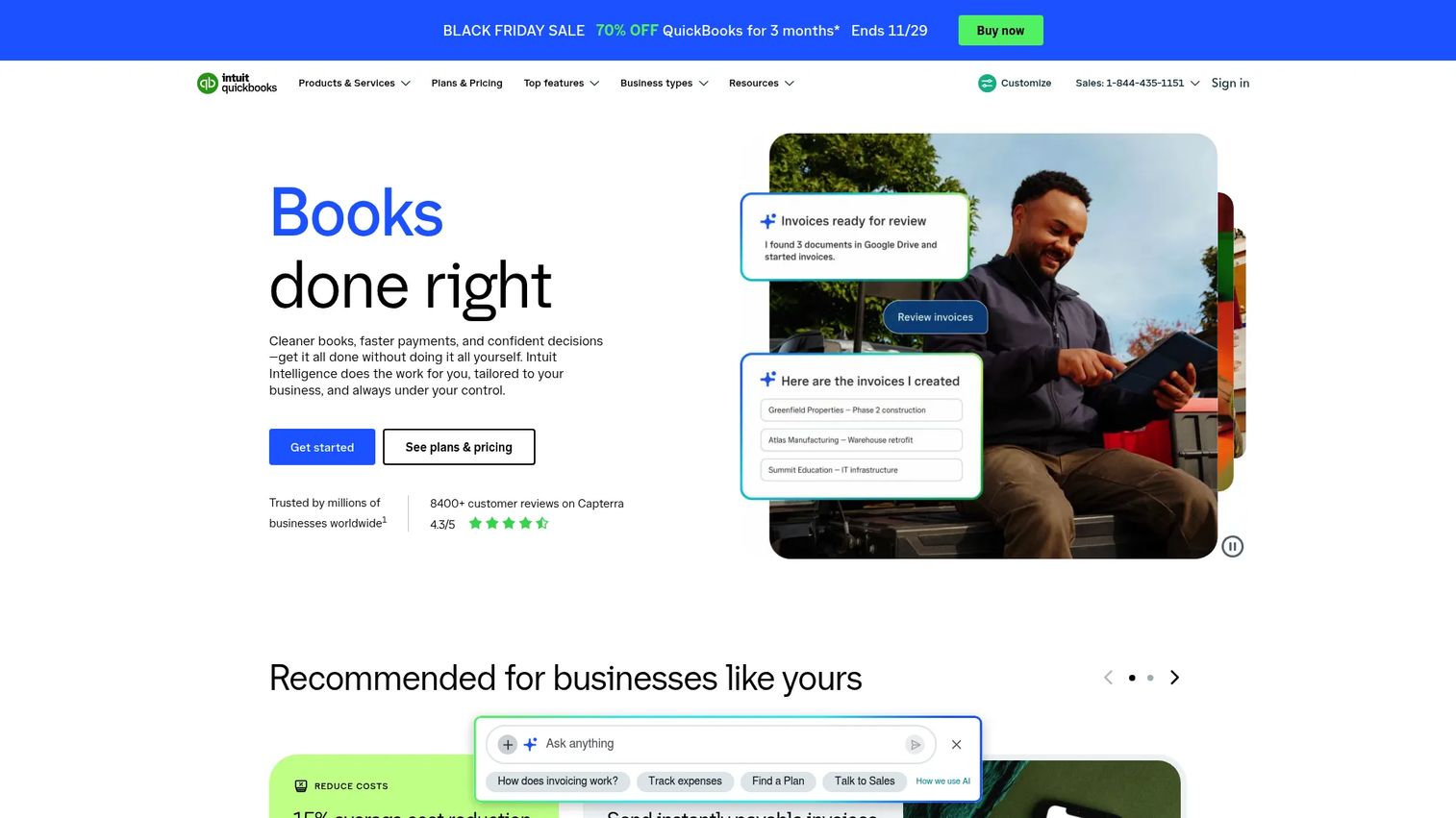
QuickBooks Online provides cloud accounting for small and growing businesses. Its core functions cover income, expenses, invoices, payments, and financial reporting.
Project profitability is available in paid plans, making the platform a practical starting point for basic project accounting. Growing teams may eventually need deeper WIP, revenue recognition, or multi entity controls.
Best for: Small businesses and contractors that want project tracking inside familiar accounting software.
Key features
- Income and expense tracking
- Invoicing and online payments
- Project profitability reporting
- Budgeting and financial reports
- Payroll and payments add ons
Why choose QuickBooks Online: Adoption matters when a small finance team has limited implementation capacity. The familiar interface can provide an earlier first win than a broad ERP deployment.
QuickBooks Online also suits founders who need better visibility without redesigning the full finance stack. Test whether its project reporting can support your expected complexity after the next funding round.
QuickBooks Online pricing: The Free plan costs $0. Simple Start begins at $19/month, based on the promotional rate shown for three months.
Essentials starts at $42.50/month, while Plus starts at $70/month. Advanced begins at $170/month under the same promotion.
G2 rating: 4.0/5
2. Sage Intacct
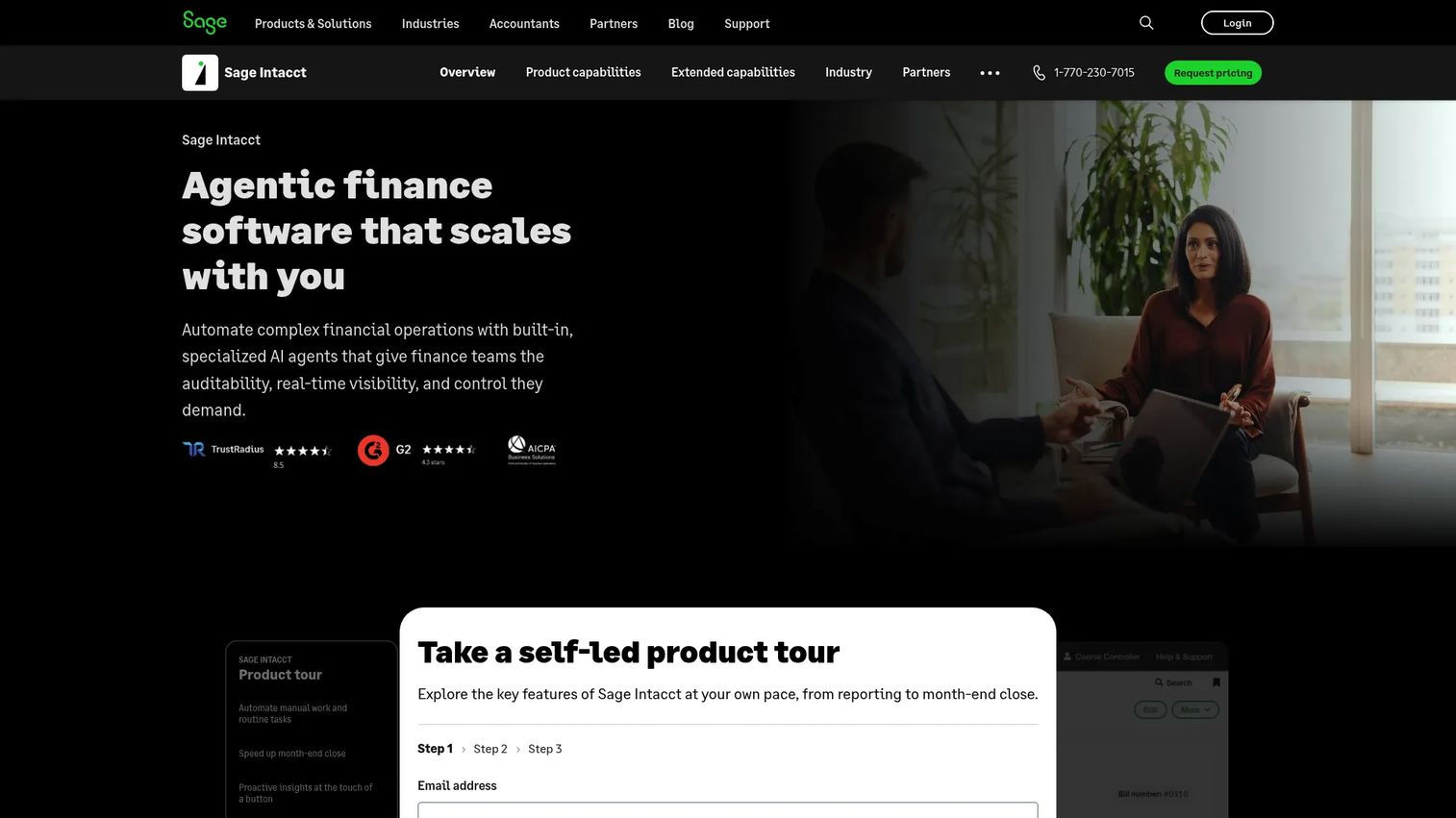
Sage Intacct is a cloud financial management platform for growing and midmarket organizations. It covers payables, receivables, reporting, multi entity consolidation, and categorized financial analysis.
Its dimensional model helps finance teams analyze performance without creating an oversized chart of accounts. Project accounting and revenue recognition requirements can sit within a broader financial control structure.
Best for: Finance teams that need project accounting depth and board ready reporting.
Key features
- Payables and receivables automation
- Multi dimensional financial analysis
- Multi entity consolidation
- Real time financial dashboards
- Platform services and REST API
Why choose Sage Intacct: Consider it when spreadsheets are slowing revenue recognition, WIP reporting, or month end close. The product fits finance led evaluations where control matters more than lightweight task management.
A Series B company should test how project dimensions connect with its service lines and legal entities. Ask finance to recreate a recent board question during the evaluation.
Sage Intacct pricing: Sage Intacct prices by quote. The price depends on users, entities, modules, industry, and required functionality.
Ask sales to separate software costs from implementation. Include project accounting requirements in the quote.
G2 rating: 4.3/5
3. Acumatica
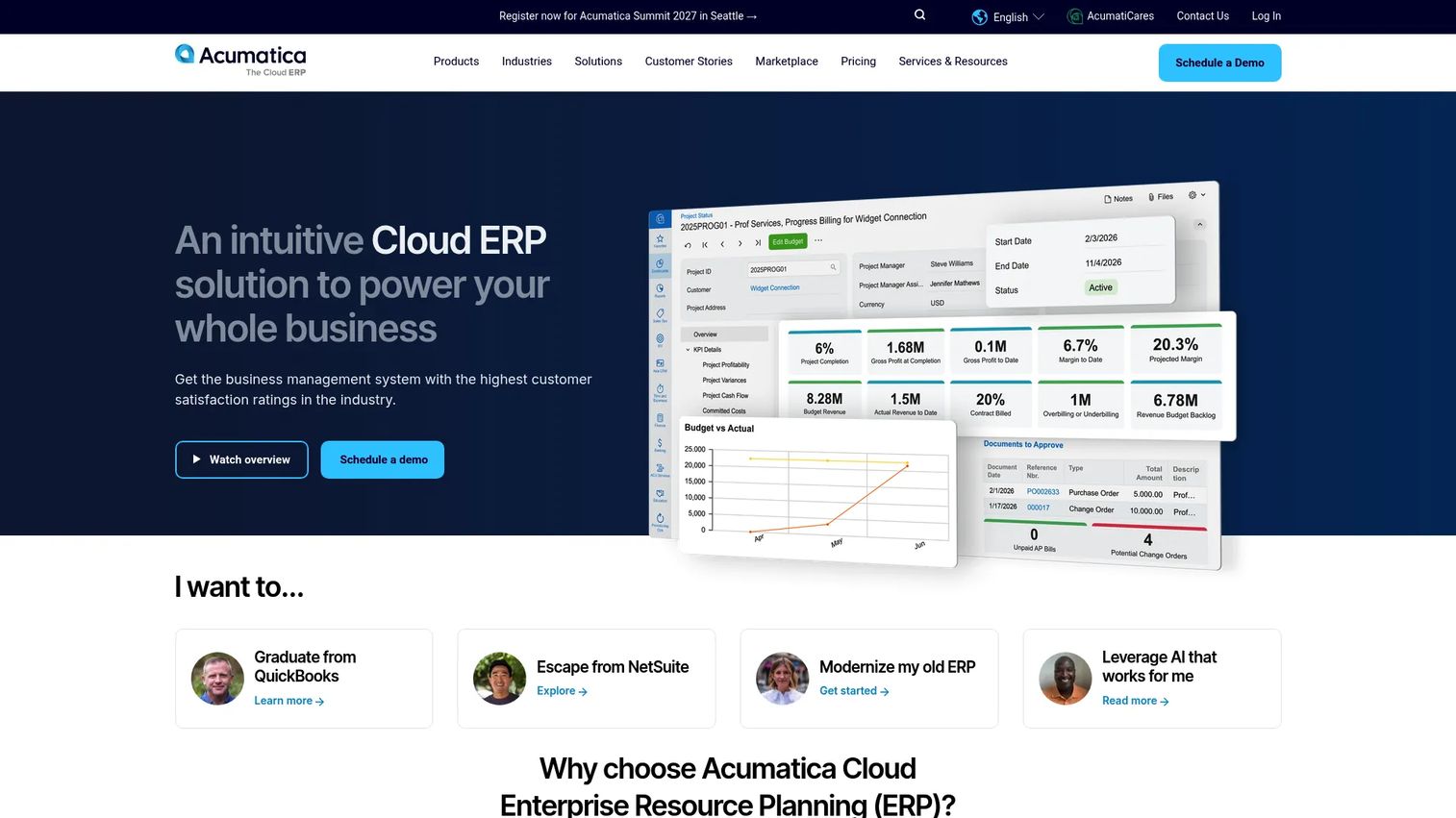
Acumatica is cloud ERP software for small and midmarket companies. Its capabilities cover financial management, inventory, orders, warehouses, and manufacturing operations.
The platform suits businesses where project economics depend on activities outside finance. Project costs can connect with purchasing, materials, production, or field operations.
Best for: Companies that need project accounting inside a broader ERP system.
Key features
- Financial management and accounting
- Inventory and warehouse management
- Manufacturing management
- Project cost tracking
- Project budget forecasting
Why choose Acumatica: Choose it when projects touch multiple operating departments. An isolated project billing tool may leave finance reconciling purchasing or inventory data manually.
The main buying question is whether ERP breadth will replace enough existing systems. Model the full implementation cost against the spreadsheets and disconnected applications it removes.
Acumatica pricing: Construction Edition starts at $1,467/month. Distribution Edition begins at $1,493/month, while Manufacturing Edition starts at $2,218/month.
These fixed bundles include software, implementation, and support. Standard pricing varies with applications, resource consumption, and deployment preferences.
G2 rating: 4.4/5
4. Scoro
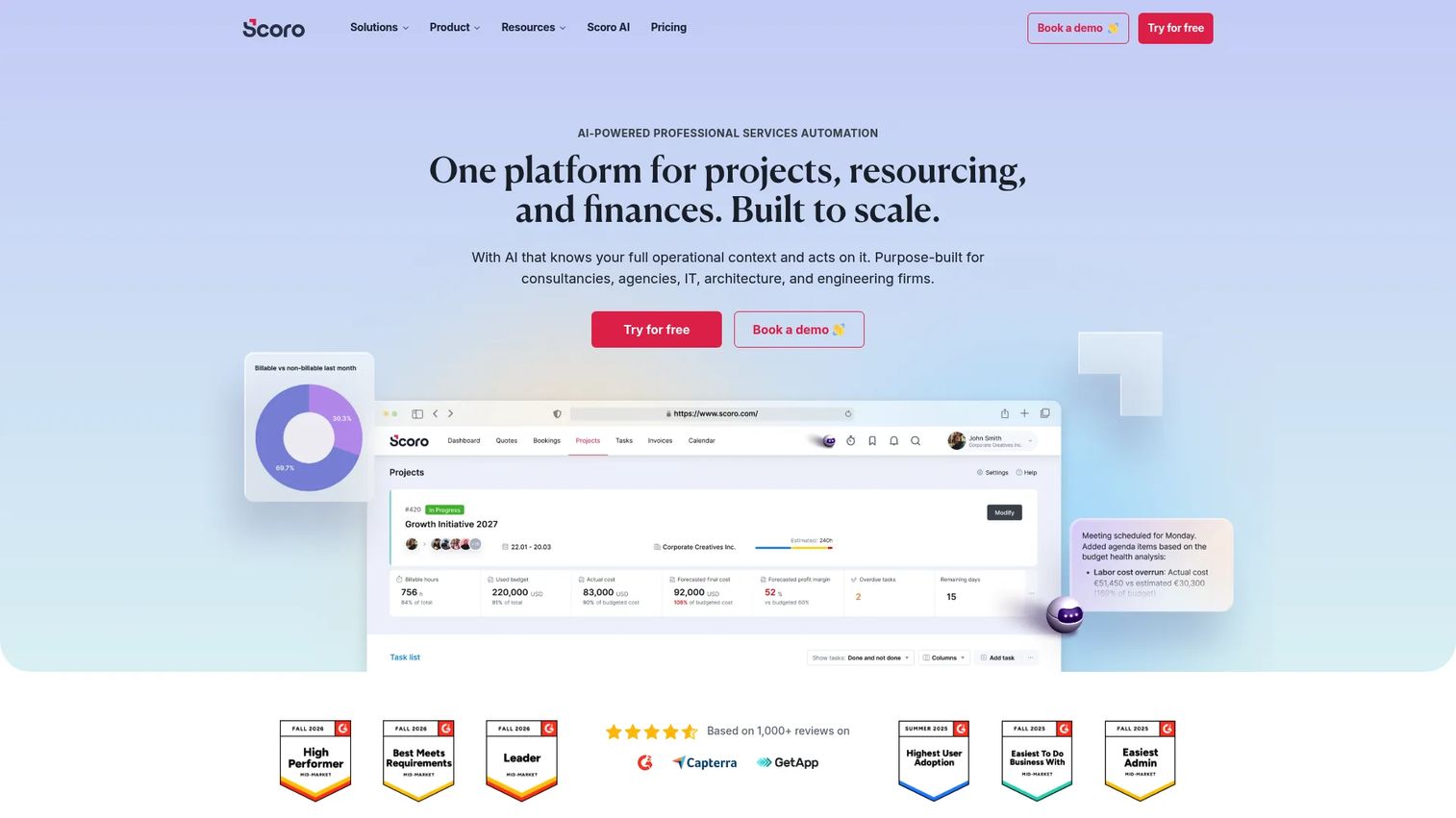
Scoro combines project management, resourcing, finances, sales, and billing for professional services firms. Its target users include consultancies, agencies, IT businesses, and architecture firms.
The operating view connects planned work with time, cost, capacity, and invoices. Leadership can review delivery performance beside project profitability instead of stitching together several dashboards.
Best for: Services teams that want delivery work and project financials in one operating view.
Key features
- Project and task management
- Resource and capacity planning
- Time and cost tracking
- Estimating and budgeting
- Billing and invoicing
Why choose Scoro: Scoro fits services businesses where utilization and margin share the same underlying data. It provides more operational context than a ledger alone.
Evaluate how managers will maintain project plans and time records. The financial output will only be as reliable as the delivery data feeding it.
Scoro pricing: Time Billing starts at $17 per user each month. Projects and Resources starts at $29 per user each month.
Quote to Cash also starts at $29 per user each month. End to End begins at $57, with a five user minimum and a 14 day trial.
G2 rating: 4.5/5
5. Deltek Vantagepoint
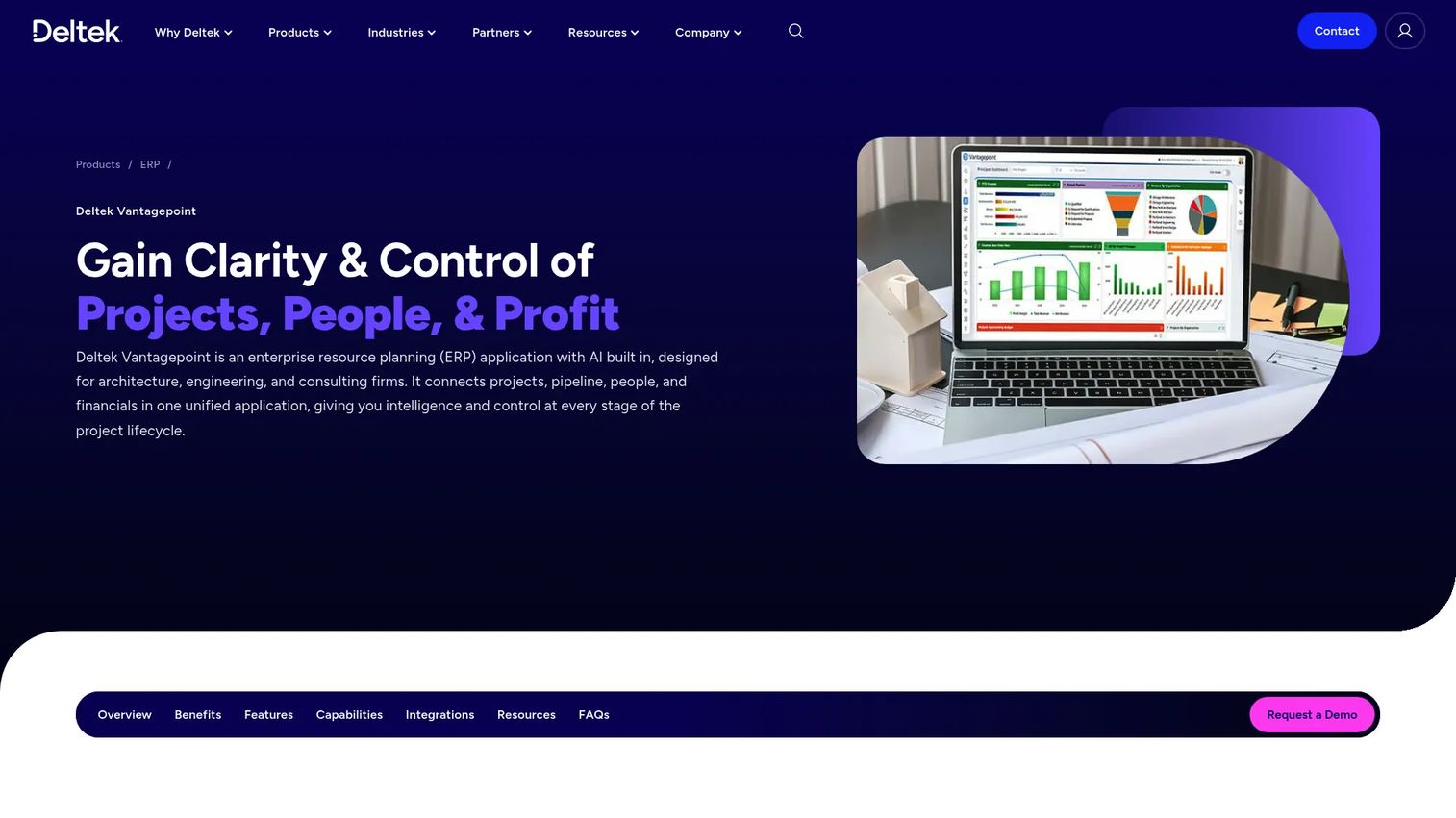
Deltek Vantagepoint is a project based ERP for architecture, engineering, consulting, and professional services firms. It combines project delivery with resource planning, CRM, accounting, and billing.
Its industry focus matters because A&E finance follows project managers, disciplines, and utilization patterns. Generic accounting tools often require extra systems to capture that context.
Best for: Architecture and engineering firms needing industry specific project financial control.
Key features
- Project lifecycle management
- Resource and capacity planning
- Accounting and financial management
- CRM and pipeline management
- Automated workflows and approvals
Why choose Deltek Vantagepoint: The platform fits firms where project accounting must reflect A&E delivery structures. Managers can connect pipeline expectations with resource demand and project performance.
A smaller company seeking basic job costing may find the scope broader than necessary. Test implementation effort alongside licensing before committing.
Deltek Vantagepoint pricing: Contact Deltek for a quote. Modules, users, implementation scope, and firm requirements drive the cost.
Ask for a deployment plan covering migration and financial setup. Include project manager training in the estimate.
G2 rating: 4.1/5
6. BQE CORE
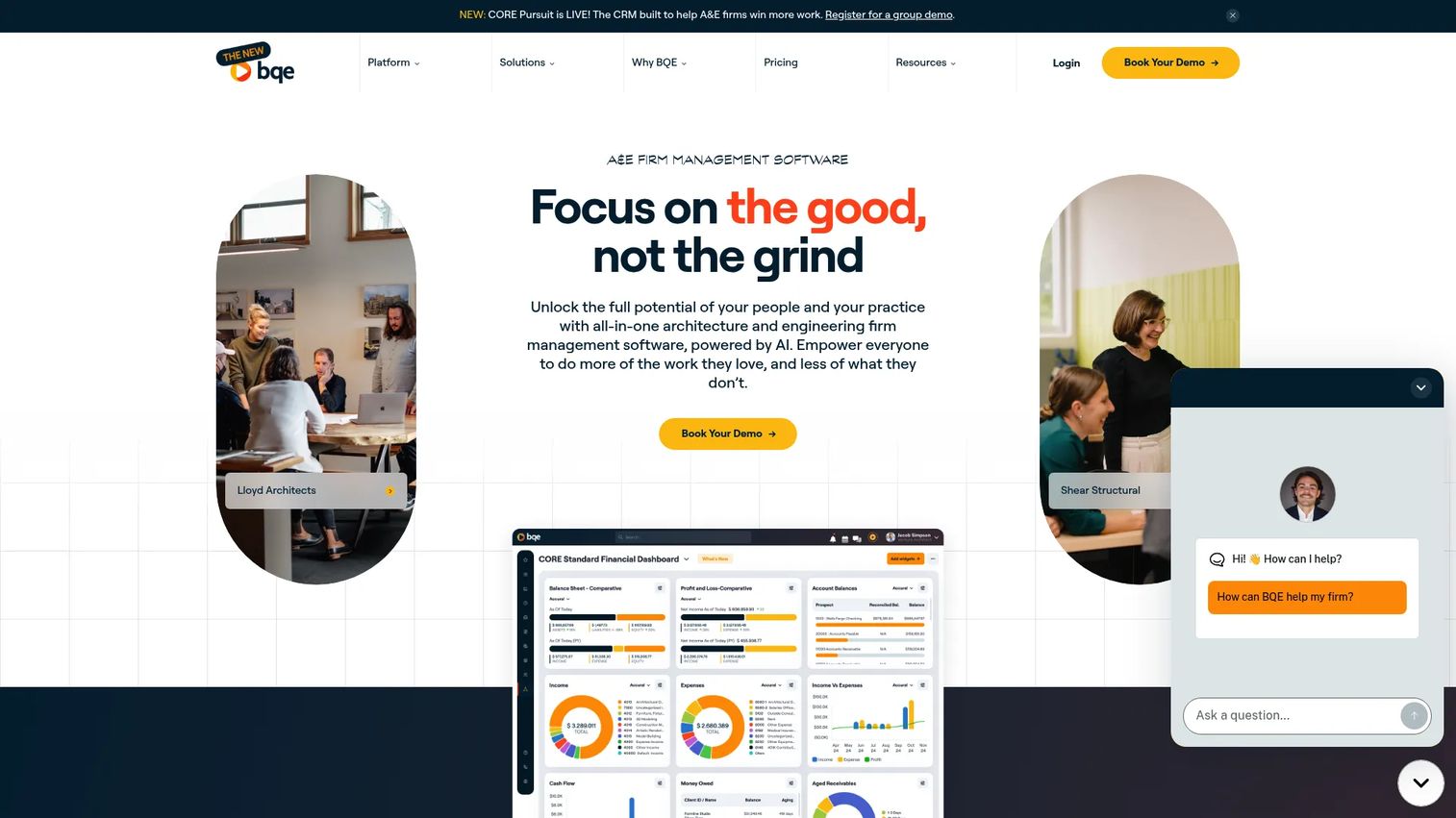
BQE CORE is cloud firm management software for architecture, engineering, consulting, and other professional services businesses. It connects projects with time capture, expenses, billing, resource planning, and reporting.
The product addresses a common services problem: Billable work happens throughout the month, but finance receives incomplete records near invoicing time. Better time and expense tracking can tighten both billing and project margin visibility.
Best for: Professional services teams needing tight time, billing, and project cost workflows.
Key features
- Time and expense tracking
- Billing and invoicing
- Project management
- Resource planning
- Reporting and analytics
Why choose BQE CORE: Consider it when missed time or delayed expenses distort project profitability. The platform centers the operational inputs that professional services finance depends on.
Buyers can select modules for accounting, CRM, or HR alongside the Foundations package. Map which current systems each module would replace before expanding the scope.
BQE CORE pricing: Custom pricing applies across Foundations, Accounting, CRM, and HR. The quote depends on selected modules and user count.
Request separate costs for implementation and data migration. This makes comparisons with other project billing software more useful.
7. Unanet AE
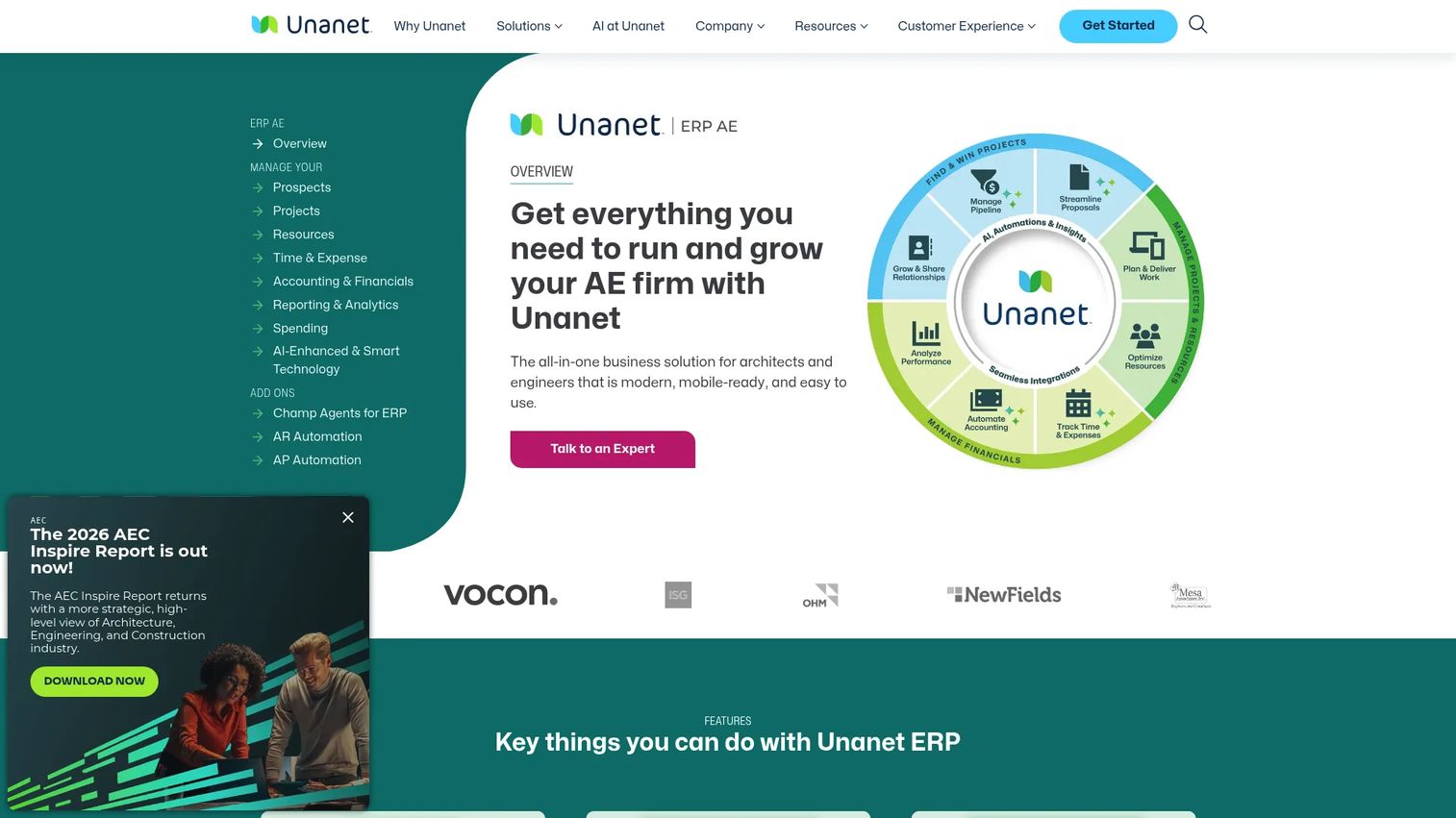
Unanet AE is project based ERP software created for architecture and engineering firms. It brings project management, accounting, billing, resource planning, and prospect management into the same environment.
Teams can capture time and expenses while reviewing current project performance. Industry specific reporting gives finance and project leaders a shared financial view.
Best for: A&E firms replacing disconnected finance and project systems.
Key features
- Project performance data
- Mobile time and expense entry
- Integrated accounting and billing
- Resource management
- A&E reporting
Why choose Unanet AE: Unanet AE fits firms that have outgrown a general ledger plus spreadsheets. Its value rises when project managers need direct access to financial performance.
The product’s A&E focus is central to the decision. Buyers outside that operating model should compare whether its workflow depth matches their delivery structure.
Unanet AE pricing: Contact Unanet for a quote. Ask sales to price users, modules, implementation, and A&E reporting requirements separately.
Include data migration and role configuration in the total implementation budget. These costs affect time to value.
G2 rating: 4.1/5
8. ProjectWorks
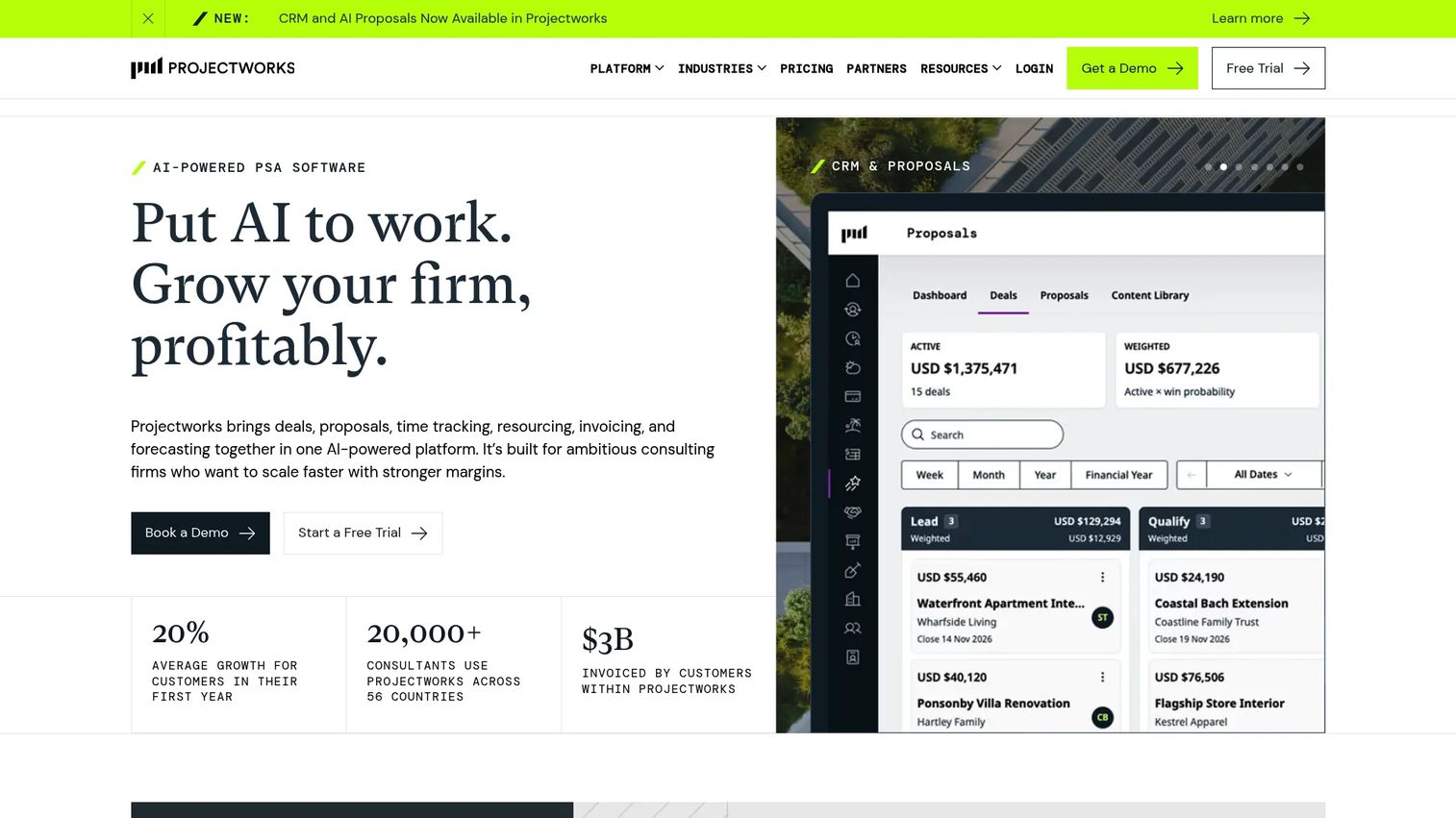
ProjectWorks focuses on project profitability and resourcing for consulting and professional services teams. It connects planning with time capture, expenses, invoicing, and financial performance.
This positioning also fits SaaS companies with sizeable implementation or advisory teams. Founders can examine services margin without forcing the business into a broader ERP rollout.
Best for: Consulting and SaaS services teams that need margin and resourcing clarity.
Key features
- Resource planning
- Project profitability
- Time tracking
- Expense management
- Invoicing workflows
Why choose ProjectWorks: ProjectWorks suits teams where staffing decisions directly affect delivery margin. It provides an operating layer around project economics rather than a general company ledger.
A founder led services organization can use this focus to improve forecast conversations with finance. Test whether its accounting connections preserve a clear source of truth.
ProjectWorks pricing: Check ProjectWorks for current plan pricing and billing terms. Include user counts, onboarding, and accounting connections in the cost comparison.
Confirm trial availability before evaluation. Use the same test project across shortlisted products.
9. Xero
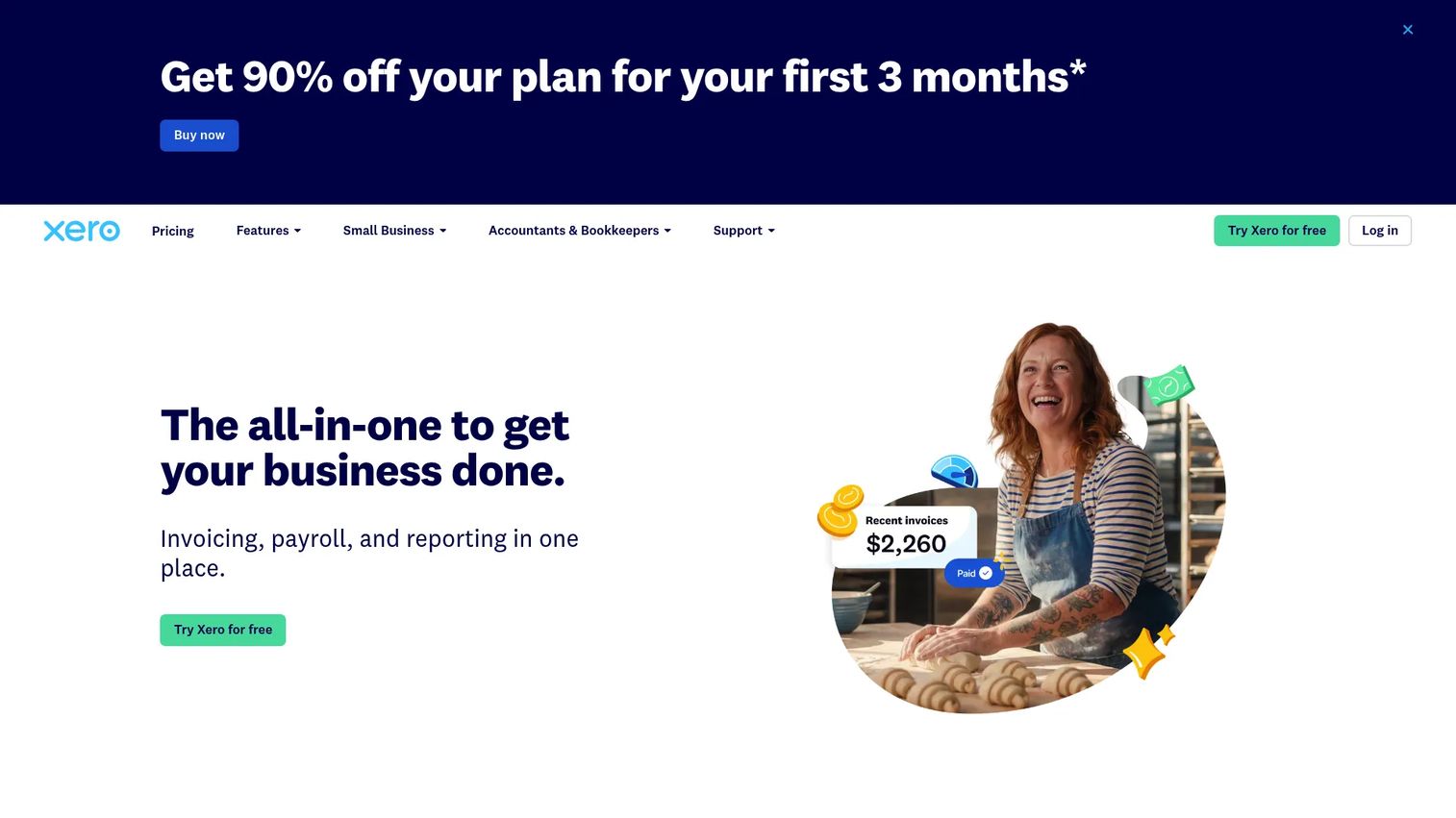
Xero provides cloud accounting for small and growing businesses. It covers invoicing, bank reconciliation, bills, expenses, reporting, and cash flow.
Project tracking sits alongside its core accounting functions. Its app marketplace can extend the system when a team needs additional delivery or project financial workflows.
Best for: Small teams that want cloud accounting with basic project tracking.
Key features
- Online invoicing and quotes
- Bank feeds and reconciliation
- Expense claims
- Financial reporting and analytics
- Inventory and project tracking
Why choose Xero: Xero works when accounting simplicity matters more than advanced revenue recognition. It can give a small finance team a clean starting point.
The add on model provides flexibility, but each connection creates another data boundary. Track the total stack cost before comparing it with a more integrated system.
Xero pricing: Early costs $27/month. Growing costs $59/month, while Established costs $97/month.
The pricing page may also show introductory promotions. Xero does not offer a free tier.
G2 rating: 4.4/5
10. Exact Online
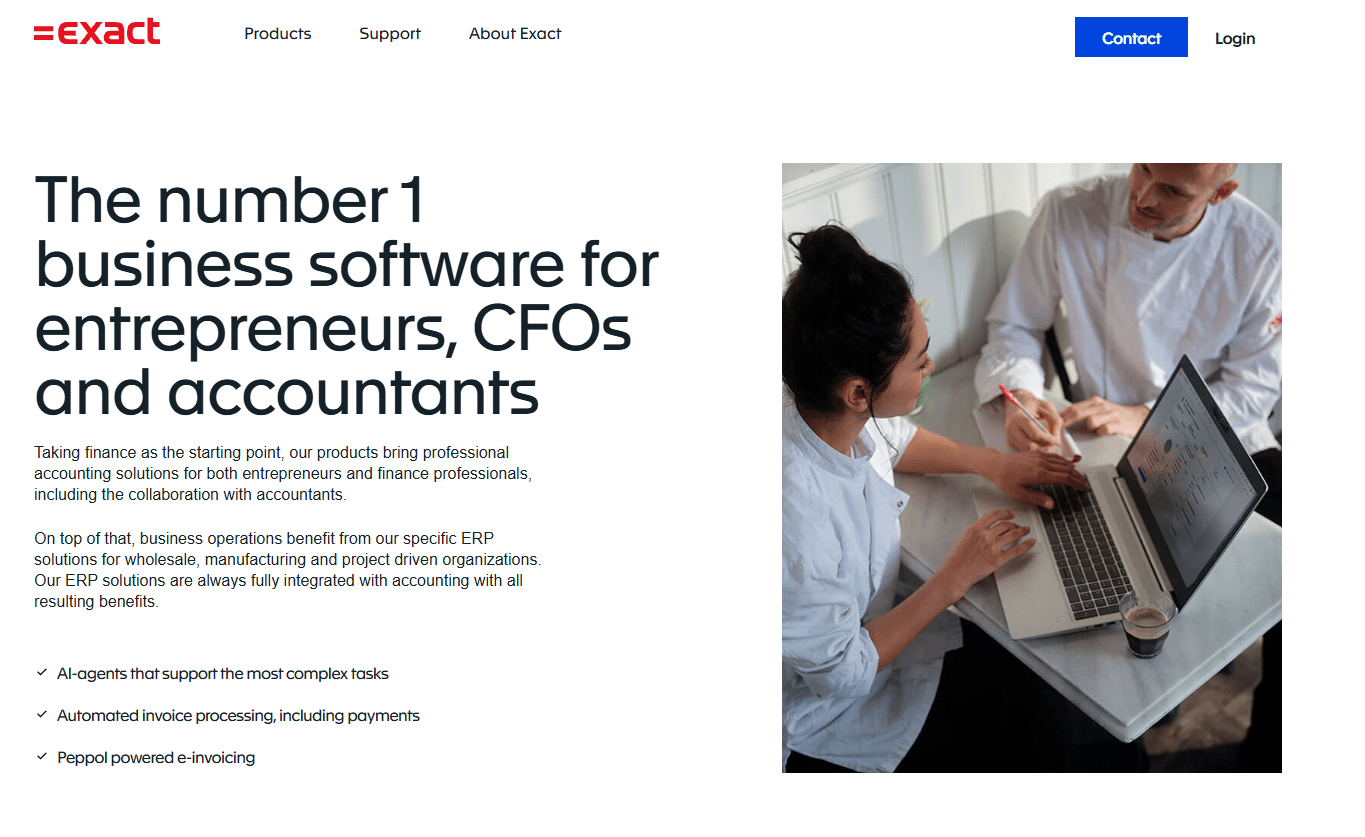
Exact Online combines accounting, CRM, and industry specific business software for SMEs. Its product range covers accounting, wholesale distribution, manufacturing, time and billing, and project management.
Regional availability matters with Exact Online. Buyers should confirm local pricing, support, taxation features, and implementation partners before comparing it with global platforms.
Best for: European SMBs that need accounting with project and operational workflows.
Key features
- Accounting and CRM
- Bank feeds and invoicing
- Project management
- Time and billing
- Accountant collaboration
Why choose Exact Online: Exact Online fits companies that value regional accounting support and connected project workflows. Its product range can serve several operating models without treating every buyer as a generic services firm.
Confirm which package contains the required project financial functions. Product availability can vary by market.
Exact Online pricing: Accounting plans range from $25 to $38/month. Time and Billing costs $158/month.
Project Management ranges from $316 to $369/month. Prices exclude VAT, and free trials are available for listed products.
11. Knowify
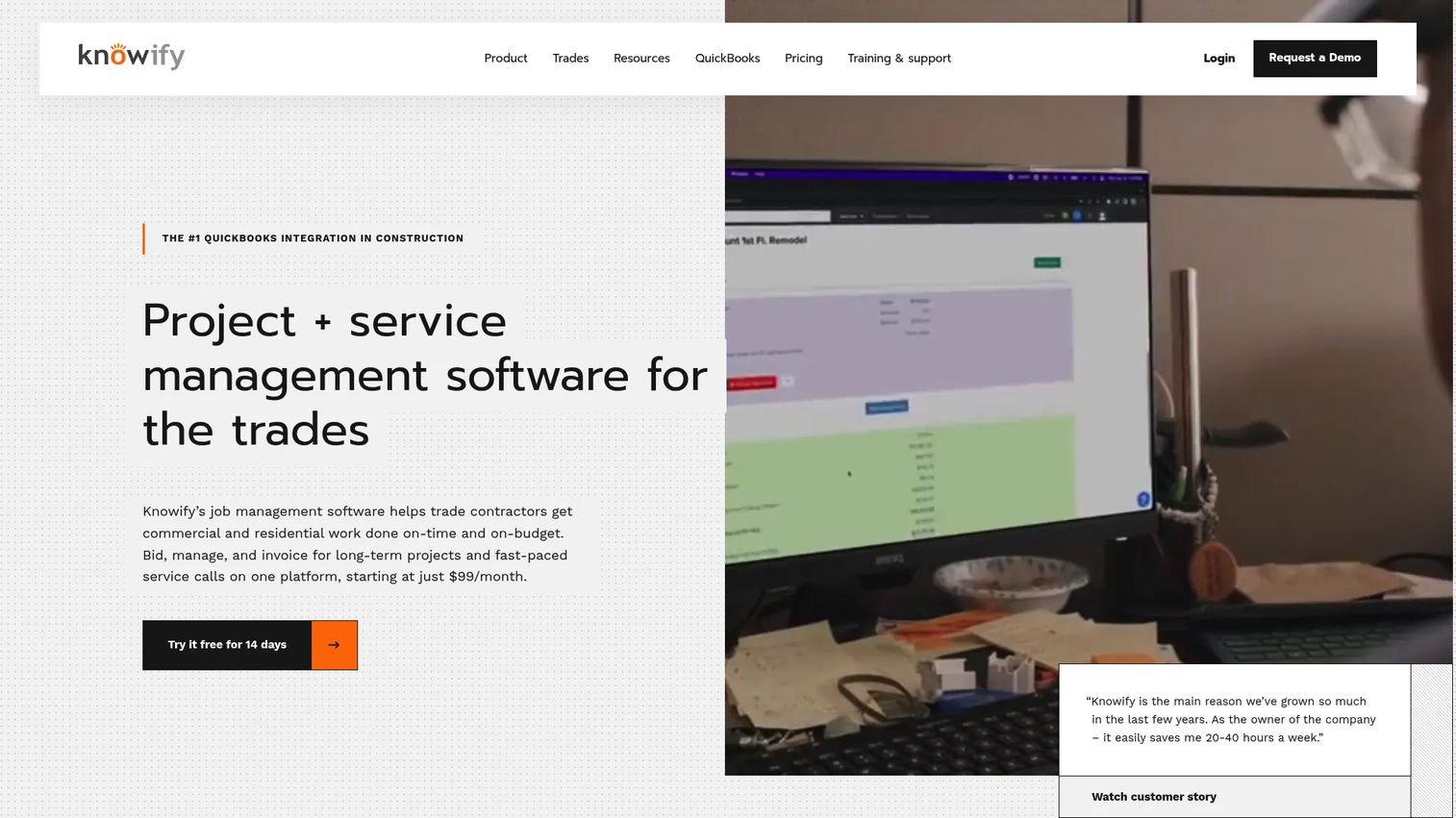
Knowify is construction accounting software for trade contractors managing projects and service work. It covers estimating, project tracking, field operations, contracts, and invoicing.
Job costing connects budgets with recorded project activity. QuickBooks synchronization lets contractors retain their accounting system while adding construction specific workflows.
Best for: Trade contractors that need job costing tied to contracts and field work.
Key features
- Estimating and proposals
- Job costing and budgets
- Scheduling and work orders
- AIA billing and invoicing
- QuickBooks synchronization
Why choose Knowify: Knowify fits contractors whose financial control starts with estimates and contracts. Change orders, work orders, and field time affect the final job margin.
Its construction focus provides more operational context than basic accounting software for builders. Companies outside the trades should assess broader project platforms.
Knowify pricing: Core starts at $99/month with annual billing or $149 monthly. Advanced costs $329/month annually or $399 monthly.
Enterprise uses custom pricing. Additional users cost $29/month, while optional service and equipment modules add to the subscription.
G2 rating: 4.5/5
12. JobTread
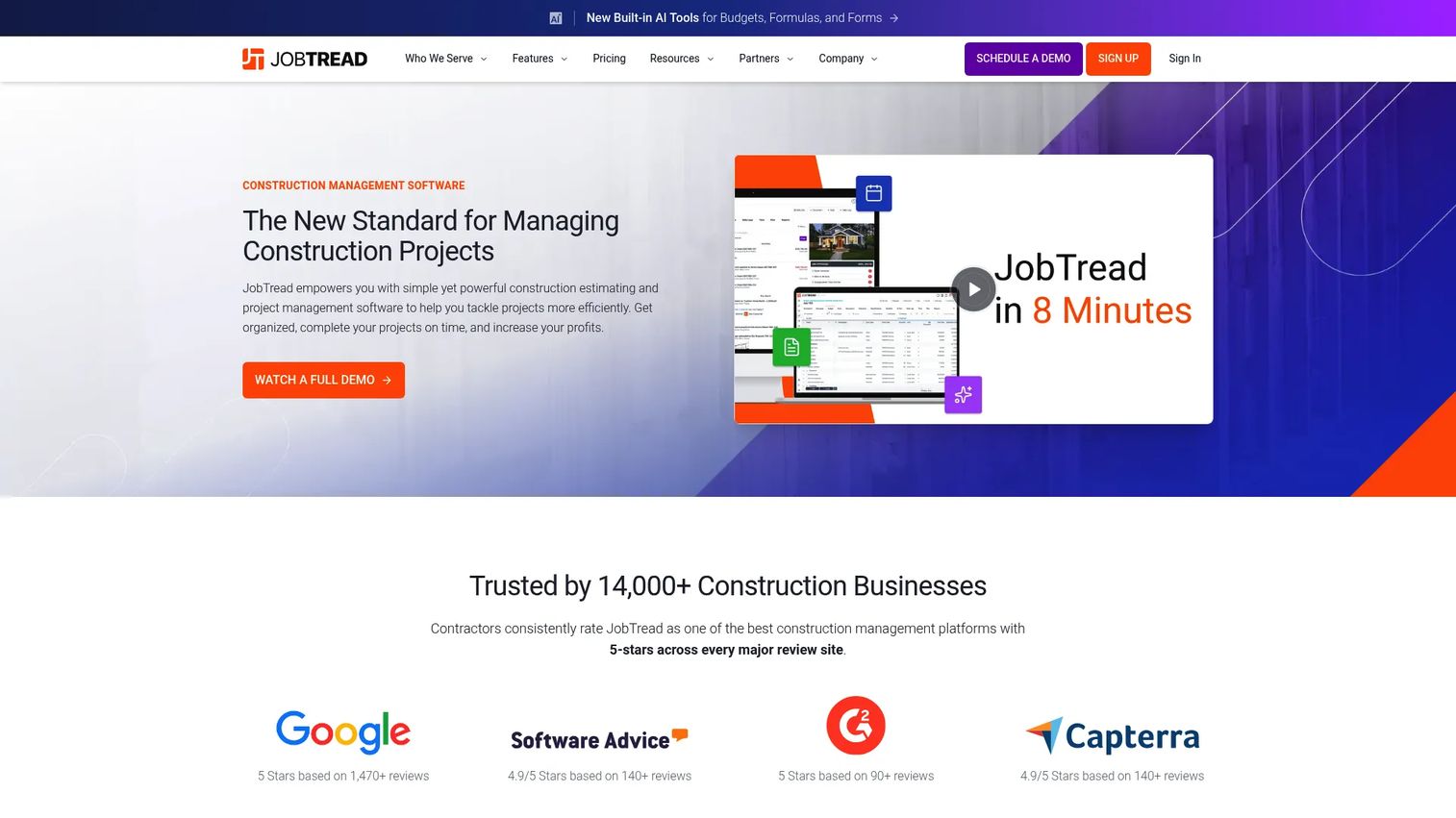
JobTread provides construction estimating and project management software for small and midsize contractors. It combines lead management with estimates, scheduling, budgets, job costing, and billing.
Customer and vendor portals extend the workflow beyond internal users. Financial control begins at the estimate, then follows the job through changes and final billing.
Best for: Builders and remodelers that need project budgets and job financials.
Key features
- Estimating and takeoff
- Budgeting and job costing
- Change orders and billing
- Scheduling and daily logs
- Customer and vendor portals
Why choose JobTread: JobTread works for construction companies that need financial discipline across the entire job lifecycle. Estimates and budgets become the baseline for later cost comparisons.
External portal users are free and unlimited. This model can suit businesses coordinating clients, subcontractors, and vendors across active jobs.
JobTread pricing: The monthly plan costs $199/month. Annual billing lowers the price to $159/month.
Each plan includes one internal user. Additional internal users start at $20 monthly or $16 with annual billing.
G2 rating: 4.9/5
Considerations when choosing project accounting software
Match the tool to accounting maturity
An early team may only need project tracking inside its existing accounting platform. A mature finance function may require WIP accounting, multi entity reporting, audit trails, and revenue recognition.
Buy for the controls you’ll need through the next operating stage. Avoid paying for ERP breadth that nobody can implement or maintain.
Decide where accounting truth lives
Some products contain the general ledger. PSA tools may send billing and project data to an external accounting system.
Document which platform owns invoices, revenue, costs, and customer records. Two systems should never calculate the same metric differently.
Test revenue recognition before signing
Run fixed fee, milestone, time and materials, and percentage of completion scenarios. Include deferred revenue and unfinished work in the test.
Ask the vendor to explain every journal entry. Your finance team should be able to reproduce the result during close.
Demand margin visibility before close
A useful project accounting system should expose risk before month end. Test committed costs, labor, budget variance, and forecast margin in one project view.
Use a project with late time entries or a scope change. Clean examples rarely reveal workflow gaps.
Price implementation alongside licenses
Include migration, chart of accounts changes, integrations, permissions, and training. Internal finance time also belongs in the calculation.
For a founder, this is a VP Finance capacity decision. A lower subscription can still cost more if reconciliation continues every month.
Conclusion
The right choice depends on how much financial control your operating model requires.
QuickBooks Online and Xero suit smaller teams that need basic project tracking inside cloud accounting. Sage Intacct provides deeper financial management for growing organizations.
Acumatica fits businesses connecting project economics with broader operations. Deltek Vantagepoint and Unanet AE serve architecture and engineering workflows.
Professional services firms should compare Scoro, BQE CORE, and ProjectWorks. Construction buyers can narrow the field to Knowify or JobTread, while Exact Online suits regional SMB requirements.
Shortlist three products based on accounting maturity and industry fit. Then run the same recent project through every vendor evaluation.
Ask each team to show:
- WIP and earned revenue
- Current billing status
- Budget variance and committed costs
- Forecast margin at completion
Choose the system that gives finance a defensible answer without another reconciliation workbook.
FAQs
Project accounting software tracks costs, revenue, budgets, billing, WIP, and profitability by project. It connects financial records with the work that created them.
General accounting focuses on company wide transactions and reporting. Project accounting adds engagement level visibility, helping teams identify margin risk before close.
Job costing assigns labor, materials, subcontractor charges, and other expenses to a specific job. It answers how much that work has cost.
Project accounting covers a wider financial lifecycle. It includes budgets, billing, WIP, revenue recognition, forecasting, and final profitability.
WIP means work in progress. It represents costs or earned revenue associated with unfinished project work.
WIP accounting matters when delivery and invoicing happen at different times. Accurate records help finance distinguish billed amounts from revenue earned under the company’s accounting policy.
QuickBooks Online and Xero fit smaller businesses wanting cloud accounting with project tracking. Knowify serves trade contractors, while JobTread suits builders and remodelers.
Prioritize adoption, invoicing, and clean project reporting. A smaller team rarely benefits from buying controls it cannot maintain.
Scoro, BQE CORE, and ProjectWorks focus on services delivery, including time capture, resourcing, billing, and project profitability. Sage Intacct supports finance teams that need broader accounting control.
Architecture and engineering firms should also consider Deltek Vantagepoint or Unanet AE. Their industry focus covers project management and firm financial operations.
Some project accounting tools support revenue recognition, but the depth varies considerably. Finance should test milestone, fixed fee, time and materials, and percentage of completion scenarios.
Include earned revenue, deferred revenue, and WIP in the evaluation. Ask the vendor to show how each scenario reaches the general ledger.
Some products combine accounting software with project management. Others focus on finance and connect with a dedicated delivery platform.
Companies with complex scheduling or collaboration requirements may still need separate project management software. Define which system owns tasks and which owns financial truth.
Compare licenses, required modules, implementation, integrations, support, and internal administration time. Include user minimums and migration work in the first year cost.
Quote based products can cost more upfront. They may still provide better economics if they remove recurring spreadsheet cleanup and shorten month end close.