Your team ran three improvement initiatives last quarter. You can name them. You cannot tell anyone which one moved a metric, who owns the follow-through, or whether the changes are still in place.
That is the real problem with process improvement work at scale. It is not a shortage of ideas or methodology knowledge. It is the absence of a system that turns ideas into tracked projects, projects into measured outcomes, and outcomes into institutional knowledge that does not disappear when someone changes teams.
The global business process management market is projected to grow from USD 21.5 billion in 2025 to USD 91.9 billion by 2034 at a 17.2% CAGR, according to Fortune Business Insights (2026). That growth reflects a genuine organizational shift: Companies are moving from ad hoc improvement cycles toward instrumented, continuous improvement programs with clear ownership and ROI visibility.
For product managers, this matters beyond the operations function. You are often the person coordinating cross-functional improvement work, defining instrumentation requirements, and answering the question "did this actually help?" when leadership asks. The right continuous improvement software gives you a single place to track that answer.
What's inside
This guide covers seven process improvement tools selected for product managers and ops-minded buyers evaluating software for structured improvement programs in 2026.
Selection criteria:
- Workflow depth: Does the tool support the full cycle from idea intake to sustainment?
- Analytics and ROI measurement: Can you instrument outcomes, not just activity?
- Maintainability: Does the tool stay usable as your product and org change?
- Integration fit: Does it connect to the CRM, analytics, and project management stack you already run?
TL;DR
- Best for continuous improvement programs with portfolio visibility: ITONICS covers strategy-to-execution workflows with roadmaps, radar views, and innovation management in one platform
- Best for no-code workflow building across teams: Quickbase lets ops and product teams build custom process apps without engineering involvement
- Best for statistical analysis and measurement-led improvement: Minitab brings analytics depth to teams running Lean Six Sigma or operational excellence programs
- Best for CI-specific tracking and enterprise sustainment: KaiNexus is purpose-built for continuous improvement capture, boards, and reporting
- Best free starting point for idea management: Viima offers a usable free tier and a straightforward adoption path for teams earlier in their improvement maturity
- Best for enterprise idea intake and governance: Planview IdeaPlace and Crowdworx serve large organizations running structured innovation programs with approval workflows
What is continuous improvement software?
Continuous improvement software is a dedicated platform for capturing, tracking, managing, and measuring improvement initiatives across an organization, from the first idea submission through implementation and sustained outcome verification.
Unlike general project management tools, this category is designed around improvement-specific workflows: Idea intake queues, PDCA or DMAIC cycle support, root cause analysis documentation, process mapping, and ROI dashboards that show whether changes held.
Core capabilities to look for in business improvement software:
- Idea intake and capture: Structured submission forms, suggestion boards, or campaign-based collection
- Project pipeline management: Kanban or stage-gate workflows that move ideas through review, approval, and implementation
- Analytics and dashboards: Real-time visibility into initiative status, completion rates, and quantified impact
- ROI measurement: Financial benefit tracking tied to specific improvement projects
- Continuous improvement tracking: Audit trails, sustainment checks, and knowledge-base features that preserve what was learned
- Workflow automation: Notifications, escalation rules, and assignment logic that reduce manual coordination
- Methodology support: Built-in templates or frameworks for Lean, Six Sigma, Kaizen, PDCA, and Value Stream Mapping
The distinction between process improvement software and broader business improvement software is largely a matter of scope. Process-focused tools tend to emphasize workflow mapping, root cause analysis, and operational metrics. Business improvement platforms often add strategy alignment, innovation management, and portfolio prioritization on top of that operational layer.
For a PM evaluating this category, the instrumentation question matters most: Can you define a baseline metric before you launch an improvement initiative, track it during implementation, and confirm the change held at 30, 60, and 90 days post-launch?
Core methodologies behind process improvement software
Lean, Six Sigma, Kaizen, PDCA, and Value Stream Mapping
Most process improvement software does not enforce a specific methodology. Instead, it provides structures that different frameworks can use. Understanding the mapping helps you choose the right tool for your operating model.
Lean focuses on eliminating waste and improving flow. Software support looks like: Value stream mapping templates, cycle time tracking, and visual workflow boards that make bottlenecks visible.
Six Sigma (and Lean Six Sigma) centers on reducing variation and measuring defect rates. Software support looks like: Statistical analysis tools, DMAIC stage gates, FMEA templates, and measurement system analysis.
Kaizen is a philosophy of small, continuous improvements driven by frontline teams. Software support looks like: Idea capture forms accessible to all employees, rapid review cycles, and recognition or gamification features that sustain participation.
PDCA (Plan-Do-Check-Act) is a structured experimentation cycle. Software support looks like: Project templates with defined phases, measurement checkpoints, and iteration tracking.
Value Stream Mapping is a Lean technique for visualizing the full flow of work from input to output. Software support looks like: Process mapping tools, bottleneck analysis, and before/after state documentation.
Not every tool covers all five. Choose based on which methodology your team actually uses, not the broadest feature set.
When to use process improvement software
Standardize improvement work across teams
Spreadsheets and shared docs create inconsistency. Each team tracks differently, reviews at different cadences, and applies different criteria for what counts as an "improvement." A dedicated platform imposes enough structure to make cross-team comparison meaningful without requiring everyone to adopt a rigid methodology overnight.
Track ideas, projects, and outcomes in one place
The most common failure mode in improvement programs is not a shortage of ideas. It is losing the thread between idea submission, implementation, and outcome verification. Centralized tracking software closes that loop, connecting the original problem statement to the final metric change in a single audit trail.
Measure ROI and keep improvements from fading
Most improvement initiatives degrade over time without deliberate sustainment. A structured platform builds sustainment checkpoints into the workflow and tracks whether benefits persisted or eroded. For a PM making the case for continued investment in improvement programs, this is the evidence that leadership actually wants.
Process improvement software comparison
The table below ranks seven tools by relevance to structured improvement programs. Pricing reflects verified figures from each vendor's site as of 2026. G2 ratings are current as of the same date.
| # | Product | Best for | Key differentiator | Pricing | G2 rating |
|---|---|---|---|---|---|
| 1 | ITONICS | Innovation and CI portfolio management | Strategy-to-execution OS with radar, roadmap, and matrix views | Custom pricing | 4.4/5 |
| 2 | Quickbase | No-code process app building | Build custom workflow apps without engineering | From $35/user/month | 4.4/5 |
| 3 | Minitab | Statistical analysis and measurement | Analytics depth for Lean Six Sigma and OpEx programs | From $2,394/year | 4.6/5 |
| 4 | KaiNexus | CI-specific tracking and sustainment | Purpose-built for continuous improvement capture and reporting | Custom pricing | 4.9/5 |
| 5 | Viima | Lightweight idea management | Free tier with configurable innovation workflows | Free; paid from $79/month | 4.8/5 |
| 6 | Planview IdeaPlace | Enterprise idea intake and governance | Crowdsourced ideation with idea-to-execution management | Custom pricing | 4.0/5 |
| 7 | Crowdworx | Enterprise innovation programs | AI-powered idea and open innovation management | Custom pricing | 5.0/5 |
Best 7 process improvement software tools for 2026
1. ITONICS
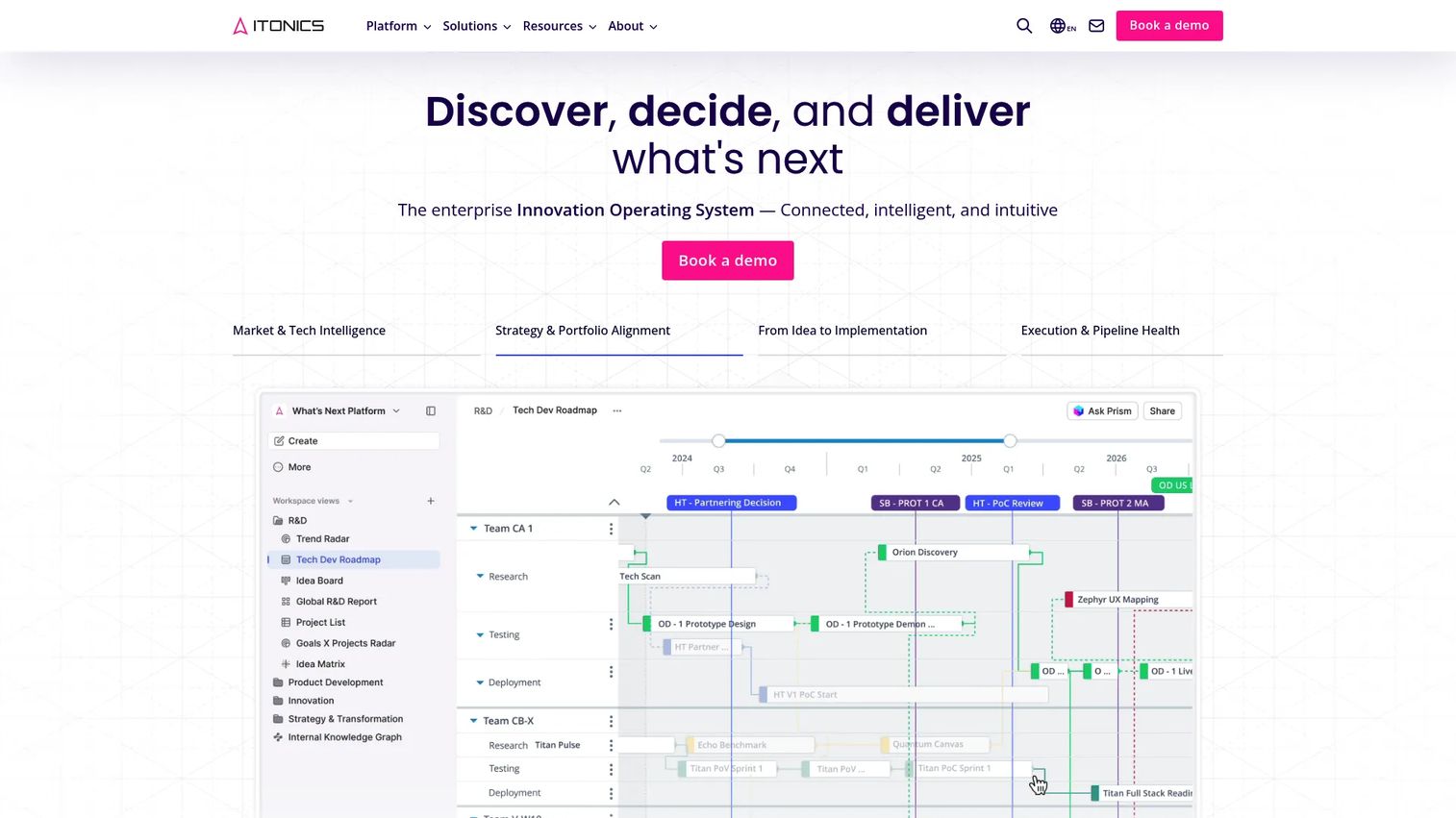
ITONICS positions itself as an Innovation Operating System, covering strategy, foresight, portfolio management, and product decision workflows in a single platform. It is built for mid-market to enterprise teams that need visibility across multiple improvement and innovation programs simultaneously, with structured prioritization tools that go beyond basic project tracking.
Best for: Mid-market to enterprise teams that need to manage continuous improvement alongside broader innovation and strategy workflows.
Key features
- Innovation OS with strategy-to-execution workflows across portfolio and product decisions
- Multiple visualization options: Roadmaps, boards, radar, matrix, and network graph views
- AI features, APIs, SSO, and enterprise user management
Why choose ITONICS: ITONICS works well for organizations that treat improvement programs as part of a larger strategic operating system rather than a standalone operational tool. If you need to connect improvement initiatives to product roadmaps, foresight signals, and portfolio decisions, this platform covers that scope in a way that most CI-specific tools do not.
ITONICS pricing: ITONICS uses three tiers (Core, Pro, and Enterprise) but does not display prices on the website. You will need to contact their sales team for a quote. A 30-day free test is available so you can evaluate the platform before that conversation.
G2 rating: 4.4/5
2. Quickbase
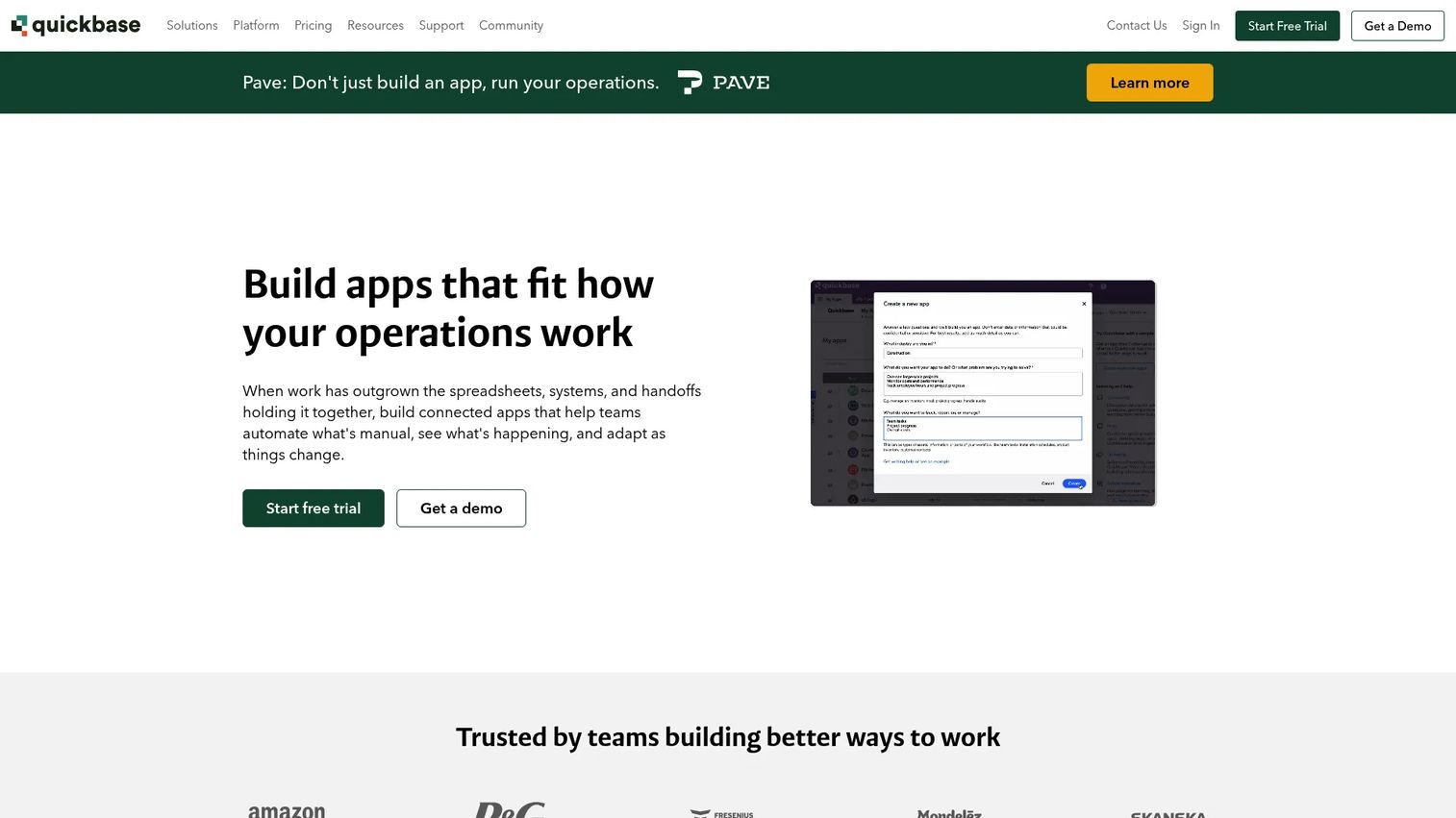
Quickbase is a no-code application platform that lets operations and product teams build custom workflow apps, dashboards, and reports without writing code or waiting on engineering sprints. It is not purpose-built for continuous improvement, but its flexibility makes it a strong choice for teams that need to instrument custom improvement workflows that do not fit a pre-defined methodology template.
Best for: Teams that need to build and automate custom business process apps without heavy engineering involvement.
Key features
- No-code app builder for custom operational workflows
- Workflow automation with rule-based triggers and assignments
- Dashboards, reports, and analytics configurable per team or project
Why choose Quickbase: The opportunity cost of waiting on engineering for improvement-related tooling is real. Quickbase lets a PM or ops lead build a functional tracking app in days rather than quarters. That said, it requires more configuration effort than a purpose-built CI platform, and teams without a dedicated admin may find ongoing maintenance takes real time.
Quickbase pricing: A 30-day free trial is available. The Team plan runs $35 per user per month billed annually, and the Business plan runs $55 per user per month billed annually. Both plans note a platform minimum fee, and exact minimums are not shown on the pricing page. Contact Quickbase to confirm minimums for your team size.
G2 rating: 4.4/5
3. Minitab
Minitab is the analytics and statistical software most closely associated with Lean Six Sigma and operational excellence programs. Where most improvement platforms focus on project management and idea intake, Minitab focuses on measurement: Identifying variation, running root cause analysis, modeling process behavior, and quantifying the impact of changes with statistical confidence.
Best for: Teams needing rigorous statistical analysis and measurement workflows for quality and process improvement programs.
Key features
- Assistant-guided analysis that walks users through the right statistical test for each situation
- Predictive analytics including CART, TreeNet, and Random Forests
- R and Python integration for teams that need custom analytical workflows
Why choose Minitab: If your improvement program runs on data and your team needs to defend findings to skeptical stakeholders, Minitab's analytical depth is hard to match in this category. It is a better fit for manufacturing, quality, and engineering-heavy environments than for software product teams running lighter improvement cycles.
Minitab pricing: Annual subscriptions start at $2,394 per year for the Minitab Solution Center Core plan, $2,593.50 per year for the Analytics tier, and $2,793 per year for the Copilot tier. Industry-specific add-on modules (Healthcare, Supply Chain, Retail, and others) are priced at $528 per year each. A free trial is available.
G2 rating: 4.6/5
4. KaiNexus
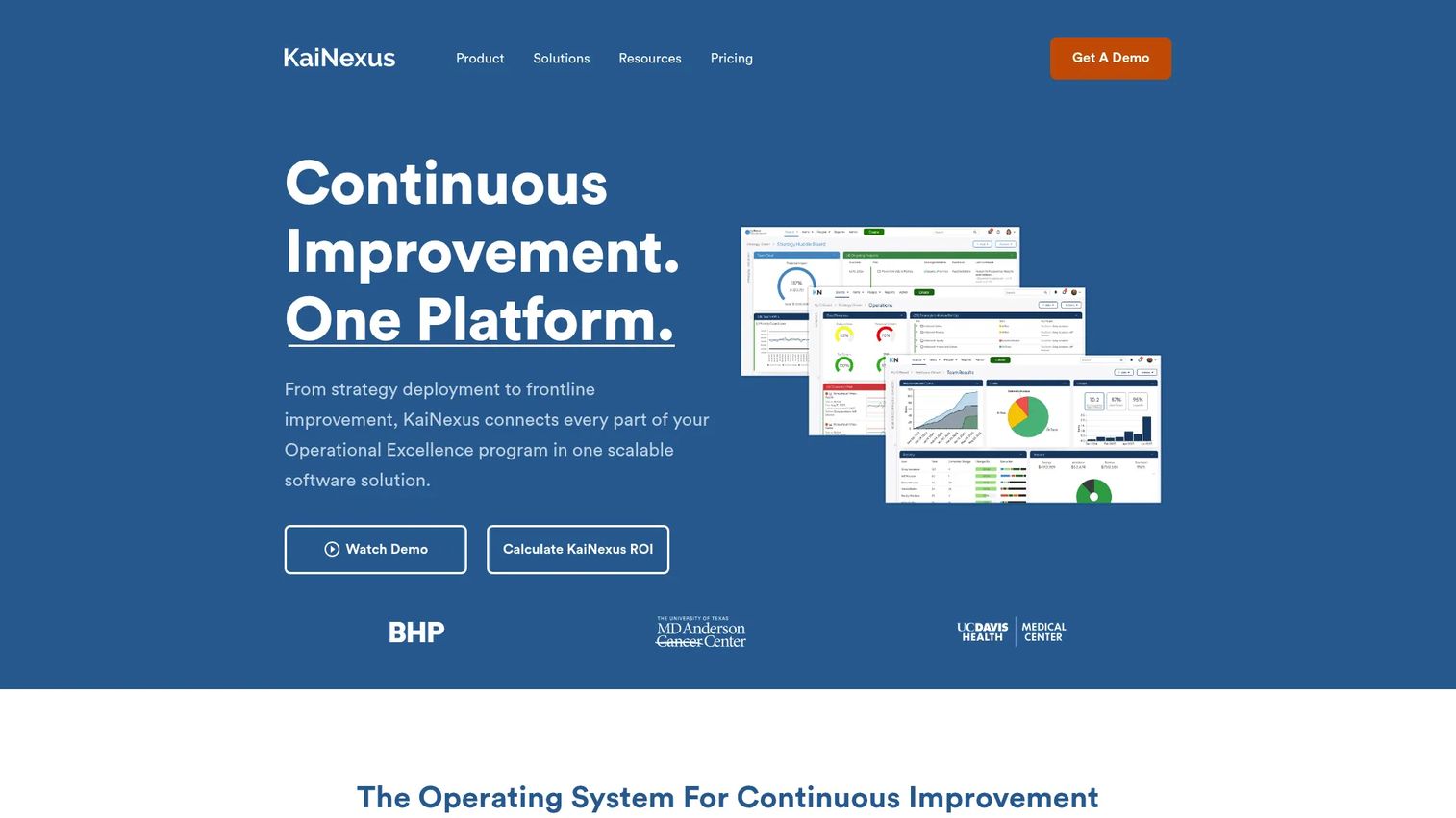
KaiNexus is purpose-built for continuous improvement programs. It covers the full improvement lifecycle: Capturing ideas and problems from frontline teams, managing them through configurable workflows, tracking impact, and building a searchable knowledge base of what worked. The platform is used by enterprises running structured CI programs, often in healthcare, manufacturing, and operations-intensive industries.
Best for: Organizations running continuous improvement or operational excellence programs that need end-to-end tracking from idea capture through sustained outcome verification.
Key features
- Idea generation and improvement capture with configurable submission forms
- Boards, configurable workflows, smart notifications, and real-time reporting
- Mobile app, knowledge sharing, and search across all improvement records
Why choose KaiNexus: KaiNexus is the strongest option on this list for teams that want a platform designed specifically around CI workflows rather than a general-purpose tool adapted for improvement work. Its sustainment focus, which includes tracking whether improvements held over time, addresses the most common failure mode in operational excellence programs.
KaiNexus pricing: KaiNexus uses custom quote pricing based on use case complexity, user levels, add-ons, and services. Reach out to their team directly to get a figure scoped to your org size and workflow requirements.
G2 rating: 4.9/5
5. Viima
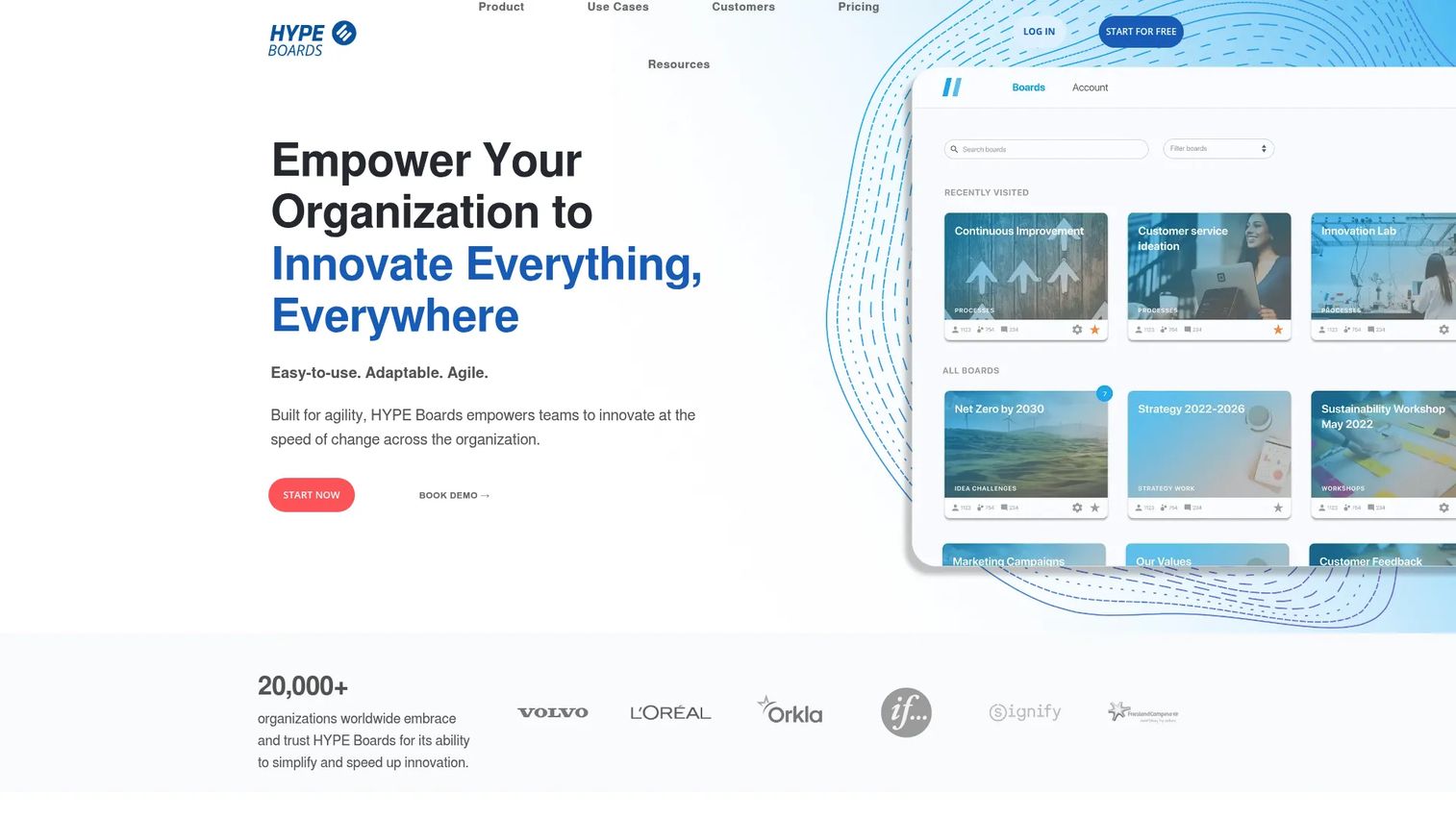
Viima (now also referenced as HYPE Boards) is an idea management and innovation platform with a free tier that makes it one of the most accessible entry points in this category. It covers idea collection, evaluation, and workflow customization through templates and configurable Kanban, bubble, and list views. For teams earlier in their improvement maturity, it offers a low-friction way to get started without a significant procurement process.
Best for: Teams that want a configurable, low-cost idea management platform with a meaningful free tier and a clear upgrade path.
Key features
- Idea collection, commenting, and structured evaluation workflows
- Customizable innovation processes with templates, Kanban, bubble, and list views
- Integrations, SSO, and REST API for teams that need to connect to existing tooling
Why choose Viima: The free plan is genuinely functional for small teams or early programs, which matters when you are trying to demonstrate value before committing budget. As programs scale, the Pro tier at $499 per month adds the depth needed for larger organizations. Teams that need enterprise governance will eventually find the platform's scope narrower than KaiNexus or ITONICS.
Viima pricing: The Free plan is available at no cost. The Basic plan runs $79 per month, and the Pro plan runs $499 per month. An Enterprise tier requires contacting sales. A 14-day free trial of the Pro plan is available.
G2 rating: 4.8/5
6. Planview IdeaPlace
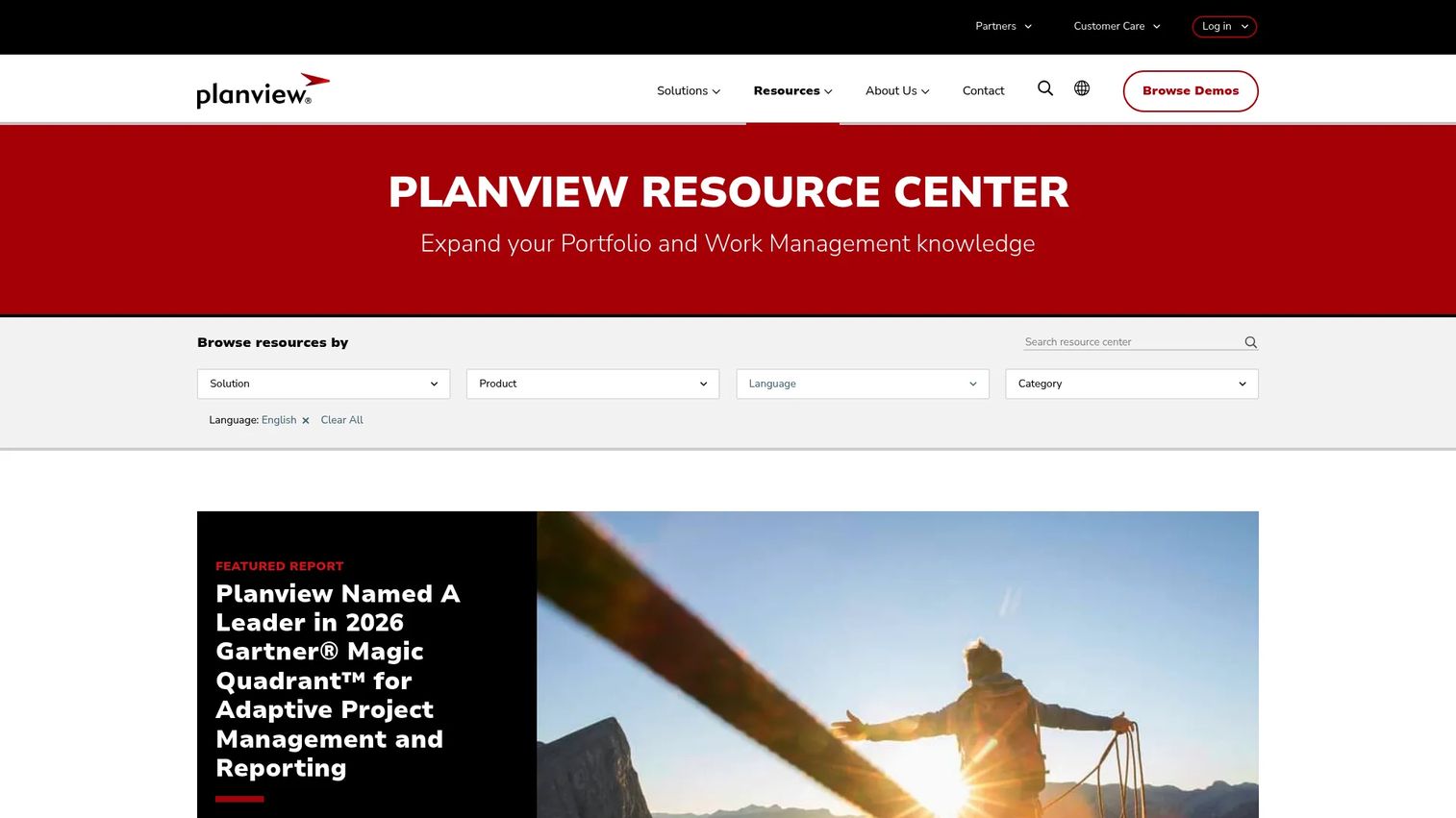
Planview IdeaPlace is Planview's crowdsourced ideation and innovation management product, designed for enterprises running internal innovation challenges, employee idea campaigns, and idea-to-execution programs at scale. It supports democratized ideation alongside structured prioritization workflows, making it suited for organizations that want broad participation in improvement and innovation programs without losing governance.
Best for: Enterprises running large-scale internal innovation challenges and structured idea management programs with governance requirements.
Key features
- Unified innovation ecosystem connecting ideation to execution workflows
- Democratized ideation with campaign-based idea collection at scale
- Idea-to-execution management with prioritization and approval workflows
Why choose Planview IdeaPlace: The Planview platform integration means IdeaPlace fits naturally into organizations already running Planview for portfolio or project management. For enterprises that need to run high-volume idea campaigns across thousands of employees while maintaining approval governance, IdeaPlace covers that scope well.
Planview IdeaPlace pricing: Planview does not display pricing for IdeaPlace on the product page. Contact their sales team for a quote. Planview's broader portfolio is enterprise-focused, and contracts are typically annual with custom terms.
G2 rating: 4.0/5
7. Crowdworx
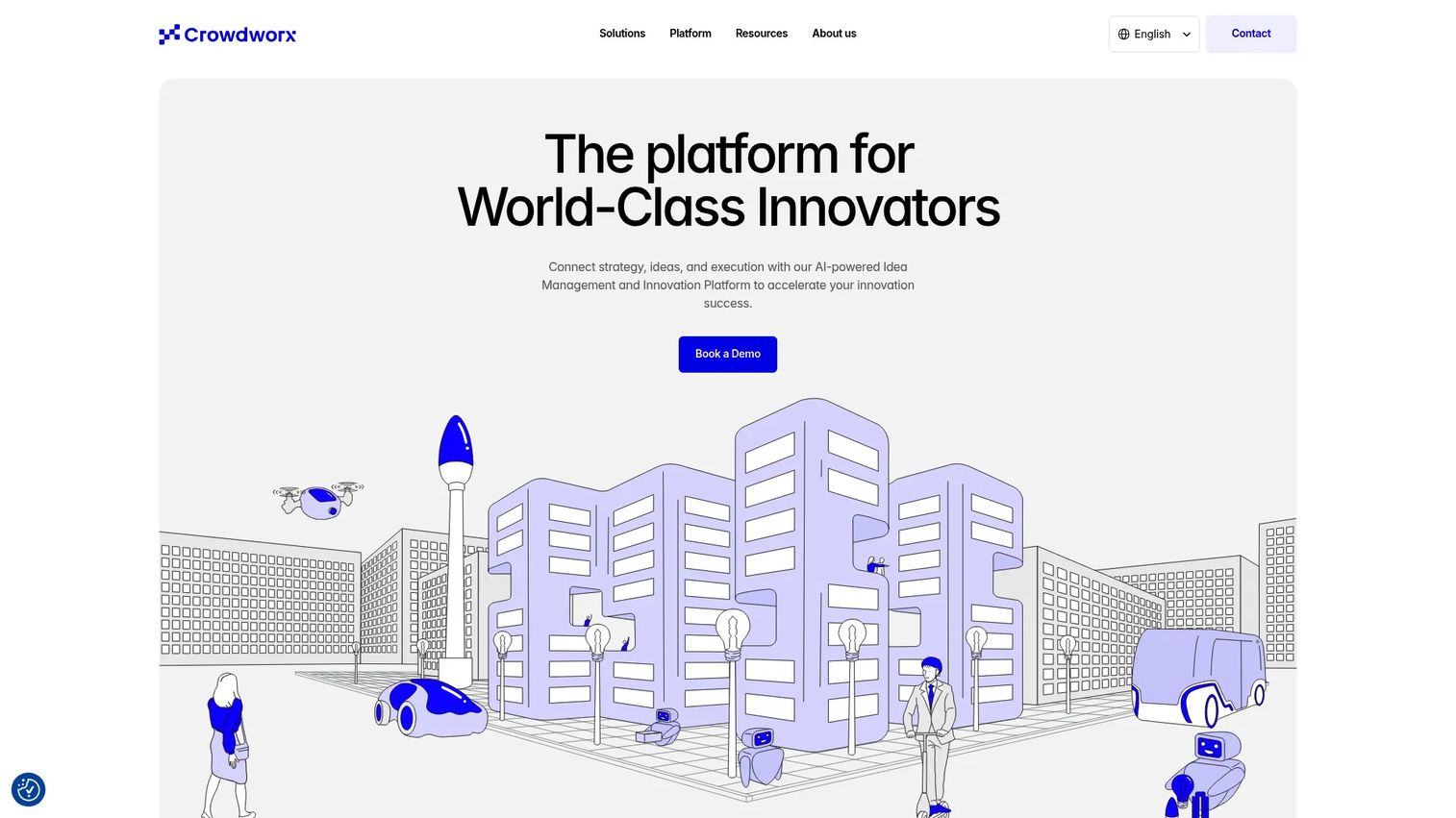
Crowdworx is an AI-powered innovation and idea management platform built for enterprises that run structured innovation programs, open innovation initiatives, and employee idea campaigns. The platform covers idea generation through workflow alignment and improvement program visibility, with AI features designed to help organizations surface and prioritize the most relevant submissions from large participation pools.
Best for: Enterprises running structured innovation and idea programs that need AI-assisted prioritization and open innovation capabilities.
Key features
- Idea management with AI-powered surfacing and prioritization
- Innovation management for internal and open innovation programs
- Open innovation workflows for external partner and community engagement
Why choose Crowdworx: Crowdworx earns a 5.0/5 on G2, though that rating reflects a small review sample (7 reviews as of the research date). It is best suited for organizations with mature innovation programs that want AI assistance managing high-volume idea intake rather than teams building their first improvement workflow.
Crowdworx pricing: Crowdworx does not display prices on its website. Reach out directly to their team for enterprise pricing and contract terms.
G2 rating: 5.0/5 (based on 7 reviews)
What to look for in process improvement software
Centralized tracking and analytics
Fragmented improvement work is the root problem this category solves. A tool that lets each team track differently has not solved the visibility problem, it has just moved it. Look for a single pipeline where all initiatives are visible, with dashboards that show status, ownership, and impact across the whole program, not just individual projects.
Workflow flexibility and integrations
Your improvement program will not operate in isolation. It needs to connect to your CRM for opportunity context, your analytics stack for instrumentation, and your project management tools for execution. Evaluate integration depth early, not as a post-purchase discovery.
Support for sustainment and follow-through
Most platforms make it easy to capture and launch improvements. Far fewer make it easy to confirm that improvements are still working three months later. Ask vendors specifically how their platform handles sustainment tracking and what happens when a follow-up check shows the benefit eroded.
ROI measurement and reporting
If you cannot show that improvement work moved a metric, the program will lose internal sponsorship. Look for platforms that let you attach baseline measurements to specific initiatives and track changes against those baselines over time, with exportable reports you can bring to a leadership review.
Adoption across roles and teams
A process improvement platform only works if the people running improvement work actually use it. Evaluate onboarding requirements, mobile access, and the friction involved in submitting an idea or updating a project status. High-friction tools get abandoned. Ask for data on active user rates from reference customers in similar organizations.
Conclusion
Process improvement software ranges from lightweight idea intake tools to full operational excellence platforms with statistical analysis and enterprise governance. The right fit depends on where your organization sits in its improvement maturity and what problem is actually blocking you.
If you need structured CI tracking with strong sustainment support, KaiNexus is the strongest purpose-built option. For measurement-led improvement with statistical depth, Minitab is the clear choice. Teams that need flexibility to build custom workflows without engineering can start with Quickbase. Innovation-heavy programs with large employee populations should look at ITONICS, Planview IdeaPlace, or Crowdworx depending on whether strategy alignment or open innovation is the priority. Viima is the right entry point for teams that want to validate the category before committing budget.
Start with the problem you are actually trying to solve: Fragmented visibility, weak ROI evidence, low participation, or improvement decay. Map that to the capability that addresses it directly. That is a faster path to the right tool than comparing feature checklists.
Start your journey with Guideflow today!
FAQs
The terms are often used interchangeably, but there is a meaningful distinction in scope. Process improvement software typically focuses on mapping, analyzing, and optimizing specific workflows, often in a project-by-project context. Continuous improvement software is designed around an ongoing, organization-wide program where improvements are captured, tracked, measured, and iterated continuously rather than as one-off initiatives. If your goal is a permanent operational capability rather than a single project, look specifically at platforms built for continuous improvement programs.
Minitab is the strongest for teams that need statistical confidence behind their ROI numbers, particularly in manufacturing, quality, and engineering contexts. KaiNexus has purpose-built financial benefit tracking tied to specific improvement projects. For teams building custom ROI dashboards, Quickbase offers the flexibility to instrument whatever metrics matter to your program, though it requires more configuration than either of the dedicated options.
Methodology should drive your evaluation, not the other way around. Lean and Value Stream Mapping benefit most from visual workflow tools and bottleneck analysis, so platforms with strong board and mapping views are a better fit. Six Sigma programs need statistical analysis, which points clearly to Minitab. Kaizen programs depend on broad participation and rapid idea cycles, which makes idea management platforms like KaiNexus and Viima the stronger match. Most tools do not enforce a single methodology, so the question is whether the platform's workflow structures map to the cycle your team already uses.
The three that most often determine whether a program actually sustains itself are centralized pipeline visibility, sustainment checkpoints, and reporting that connects individual initiatives to measurable outcomes. Secondary features like mobile access, smart notifications, and knowledge search become important at scale, when the volume of initiatives exceeds what a coordinator can manage manually.
Yes, and this is one of the strongest arguments for a dedicated platform over shared spreadsheets or project management tools. A CI platform gives every team a common submission format, a shared review process, and a single source of truth for initiative status. For PMs coordinating improvement work across engineering, support, and operations, that common layer reduces the overhead of cross-functional coordination significantly. Look for role-based access controls and configurable notification rules to keep each team seeing only what is relevant to them.
Sustainment is a workflow problem, not a motivation problem. Improvements fade when there is no system that checks whether the change held. Purpose-built CI platforms like KaiNexus build sustainment checkpoints directly into the project lifecycle, requiring owners to verify outcomes at defined intervals. Without that structure, improvements typically revert within three to six months. The habit that matters most is attaching a specific measurable metric to every initiative before it launches, so there is an objective check at review time rather than a subjective assessment.
Product teams evaluating this category should prioritize three things: Integration with their existing analytics and instrumentation stack, low maintenance overhead as the product changes (so improvement records do not become stale or misleading), and the ability to segment improvement initiatives by release cycle, feature area, or user segment. A tool that answers "which process changes in Q2 contributed to the activation improvement in June?" is worth significantly more to a PM than one that just tracks project completion rates.