A full house does not fix a broken operating model. When ticket sales, rehearsals, tuition, donor records, rental calendars, and production notes live in separate systems, every performance creates another manual handoff between teams who are already stretched.
The global performing arts software market reached $1.8 billion in 2025 and is projected to grow to $4.1 billion by 2034, according to Dataintelo (2025). That growth reflects how many organizations are finally replacing disconnected spreadsheets and inbox-based workflows with purpose-built platforms.
The challenge is that "performing arts software" covers genuinely different categories. A ticketing platform, an arts CRM, a venue operations system, and a studio management tool all carry that label. Choosing the wrong one means you've solved the wrong bottleneck. The right purchase depends on what actually breaks first: Ticketing, scheduling, patron relationships, or venue operations.
What's inside
This guide covers 13 platforms for theatres, arts centers, studios, schools, and venues in 2026. Tools were selected based on four criteria:
- Workflow coverage: Does it handle the work your team repeats every season?
- Organization fit: Does it match your revenue model, team size, and event volume?
- Pricing clarity: Can you calculate total seasonal cost before signing?
- Data ownership: Can you export patron, donor, and transaction records?
Pricing and ratings require live verification; figures here reflect data from each vendor's official site and G2 at the time of research.
TL;DR
- Best for venue operations: Momentus for arts centers and venues coordinating bookings, production, event finance, and cross-team workflows
- Best for enterprise arts CRM: Tessitura for large nonprofit arts organizations that combine patron data, ticketing, and fundraising
- Best for theatre ticketing: Ludus for theatre programs needing ticketing, registrations, fundraising, and box office workflows with no monthly fee
- Best for school theatre programs: Studio Pro for auditions, rehearsals, tuition, parent communication, and ticket scanning
- Best for studio administration: My Best Studio for acting and performing arts studios managing classes, memberships, billing, and instructor operations
- Best for established arts organizations: Spektrix for organizations that need ticketing connected to patron CRM, fundraising, and audience development
What is performing arts software?
Performing arts software is a category of platforms that helps theatres, studios, arts organizations, schools, and venues manage the operational work around performances, classes, events, patrons, payments, and teams.
The category splits into five distinct types, and each serves a different primary bottleneck:
| Platform type | Best for | Typical buyer |
|---|---|---|
| Venue operations software | Multi-space events, rentals, production coordination | Operations director, venue GM |
| Arts CRM and ticketing | Patron relationships, subscriptions, fundraising | Executive director, development, box office |
| Theatre and school management | Classes, rehearsals, cast, tuition, parents | Theatre director, school administrator |
| Ticketing-first software | Admissions, seating, check-in, event-day sales | Box office manager, event producer |
| Studio management software | Classes, memberships, staff, billing, client records | Studio owner, program director |
Core functions across the category:
- Scheduling and calendars: Classes, auditions, rehearsals, performances, rentals, and staff assignments
- Ticketing and box office: Reserved seating, general admission, subscriptions, scanning, refunds, and concessions
- Patron and customer management: Donor records, memberships, subscriptions, student families, communications, and segmentation
- Payments and finance: Tuition, invoices, recurring payments, processing fees, payout reconciliation, and reporting
- Production and venue operations: Contracts, resource allocation, event outlines, room bookings, and task ownership
- Communication: Updates for staff, instructors, artists, parents, cast, crew, and patrons
- Reporting: Attendance, sales, donations, revenue, utilization, and campaign performance
The boundary that matters most: Theatre management software may cover rehearsals, cast, tuition, and parent communication while a ticketing platform focuses narrowly on selling, scanning, and reporting on tickets. These are different purchases.
When to use performing arts software
Replace spreadsheet-led scheduling before it creates operating risk
If your team coordinates recurring classes, rehearsals, facilities, staff, and performances across a calendar that lives in a shared inbox or Google Sheet, you're already exposed. Calendar conflicts carry a real cost when people, rooms, and production resources are involved. A scheduling platform eliminates the manual reconciliation that happens between every event and the next.
Centralize ticketing, patron records, and payment history before season planning
Theatres and arts organizations that hold attendance, donations, subscriptions, and communications in separate systems lose the renewal and campaign signal they need. A unified patron record lets you plan the next season with actual data: Who attended, what they gave, and whether their subscription lapsed.
Standardize event and venue operations across internal teams
Arts centers and rental venues with front-of-house, production, programming, and finance teams each working from different documents carry hidden coordination costs. A shared event record with ownership, deadlines, contracts, payment status, and post-event reporting turns a weekly coordination meeting into a checkpoint, not a catch-up.
Performing arts software comparison
Price is only one variable. Evaluate each platform against your revenue model, team structure, event volume, and data complexity. A per-ticket pricing model is attractive until your season sells 50,000 seats. A flat monthly subscription makes sense once volume justifies it.
| # | Product | Best for | Key differentiator | Pricing | G2 rating |
|---|---|---|---|---|---|
| 1 | Momentus | Performing arts venues and arts centers | Cross-functional event, booking, operations, and finance workflows | Quote-based | N/A |
| 2 | Tessitura | Large nonprofit arts organizations | Patron CRM, ticketing, fundraising, and subscription operations | Quote-based | 3.8/5 |
| 3 | Ludus | Theatre programs and arts organizations | No monthly fee; ticketing, registrations, and fundraising | 5% + $0.75/ticket | 3.8/5 |
| 4 | Arts People | Community theatres and small arts groups | Theatre ticketing and patron management | $0.99/ticket + fees | 4.5/5 |
| 5 | Neon One | Nonprofit arts organizations | Fundraising, donor management, and constituent data | From $99/month | 4.2/5 |
| 6 | AudienceView | Venues and larger ticketing operations | Ticketing, commerce, and audience management | Quote-based | N/A |
| 7 | On the Stage | Schools and community theatre groups | Ticketing, fundraising, and production support | Quote-based | 5.0/5 |
| 8 | ThunderTix | Theatres, venues, and live-event operators | Box office, ticketing, scanning, and event commerce | From $20/month | 4.6/5 |
| 9 | BookTix | K to 12 schools and educational theatre programs | School-friendly ticketing with no monthly fee | 3.75% + $0.90/ticket | N/A |
| 10 | Spektrix | Established arts organizations | Ticketing, CRM, fundraising, and audience development | Quote-based | N/A |
| 11 | Tixly | Venues and cultural organizations | Ticketing and audience management, volume-based pricing | Volume-based | 4.7/5 |
| 12 | My Best Studio | Acting and performing arts studios | Class, membership, billing, staff, and client management | From $55/month | 4.5/5 |
| 13 | Studio Pro | Theatre schools and programs | Rehearsals, tuition, communications, and ticket scanning | From $49/month | 4.1/5 |
Best 13 performing arts software platforms for 2026
1. Momentus
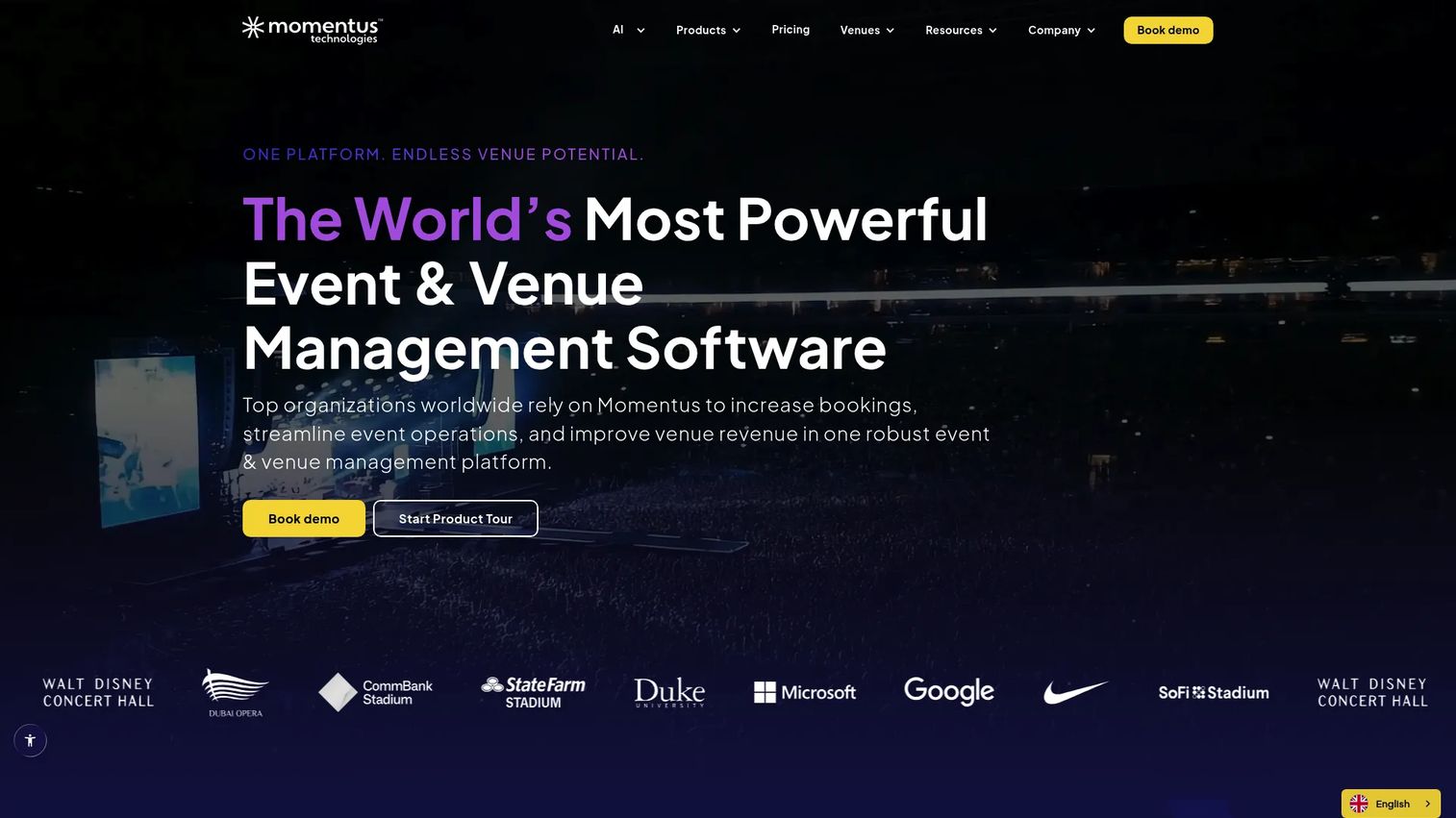
Momentus is event and venue management software built for organizations that coordinate complex operations across multiple spaces. It covers lead capture, CRM, event opportunities, proposals, contracts, calendars, service orders, work orders, AR invoicing, payments, and audit-ready reporting. The platform is used by convention centers, campuses, stadiums, and performing arts centers that need one operating record across programming, production, sales, and finance teams.
Best for: Arts centers and performing arts venues with high event volume and multiple internal teams that need shared workflow visibility.
Key features
- Multi-space event calendars with conflict detection
- Lead capture, CRM, proposals, and contract workflows
- Service orders, work orders, and change tracking
- AR invoicing, payment portal, and GL exports
- Operational reporting and profitability dashboards
Why choose Momentus: Choose it when the bottleneck is internal coordination across events with multiple stakeholders and finance dependencies. This is not a lightweight ticketing tool; it's a venue operations platform.
Momentus pricing: Pricing is quote-based and depends on venue count, annual event volume, workflow scope, and onboarding needs. All packages include unlimited users. Contact Momentus directly for a quote.
2. Tessitura
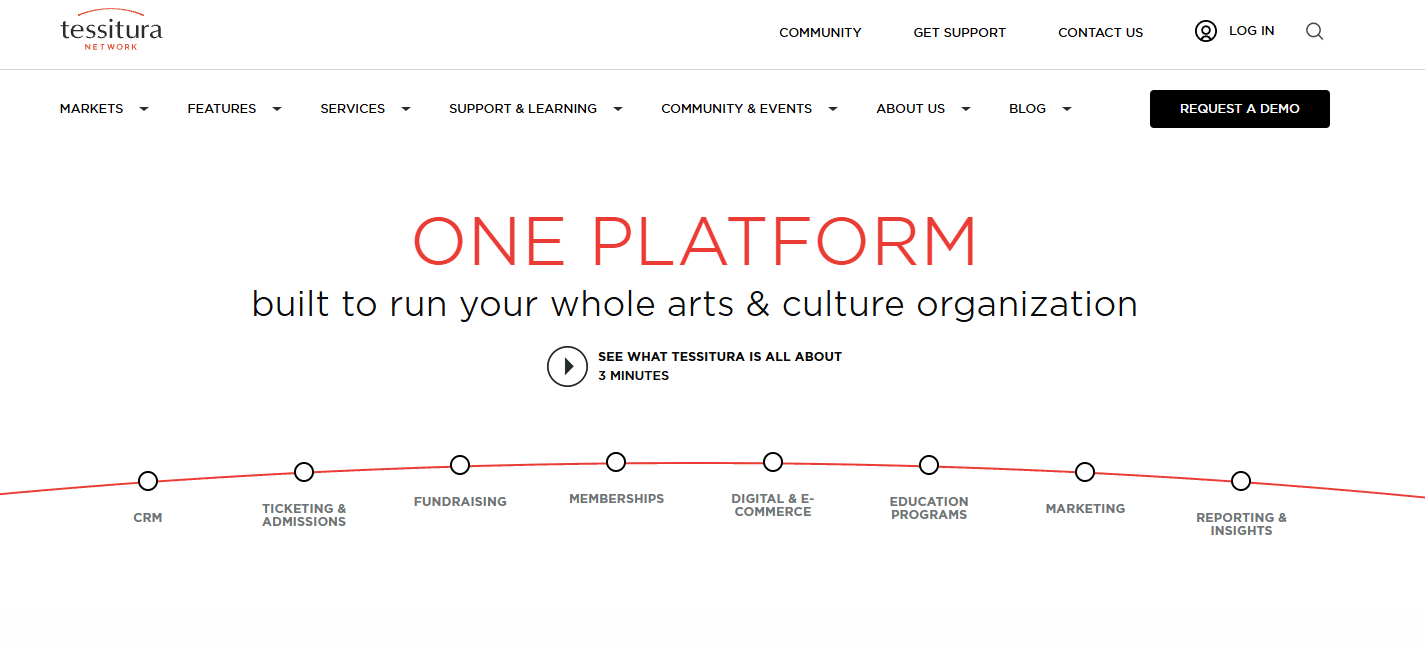
Tessitura is an enterprise platform for arts and cultural organizations that need CRM, ticketing, fundraising, memberships, education, and marketing capabilities in a single system. It is designed for organizations with high patron volumes, complex subscription logic, and multiple departments. Implementation is substantial, and organizations typically require dedicated internal ownership and data migration planning.
Best for: Larger nonprofit arts organizations where patron data, fundraising, and ticketing must share a single record.
Key features
- Patron CRM and relationship management
- Subscription and package ticketing workflows
- Fundraising, donation records, and donor management
- Audience segmentation and campaign tools
- Enterprise-level reporting options
Why choose Tessitura: It's worth evaluating when your organization has outgrown separate ticketing and donor systems and needs those data sets to connect for season planning, renewal, and development. It carries more implementation overhead than most organizations in the list need.
Tessitura pricing: Pricing is sales-led and not listed publicly. Contact Tessitura for a quote. The implementation model and onboarding costs should be part of that conversation.
G2 rating: 3.8/5
3. Ludus
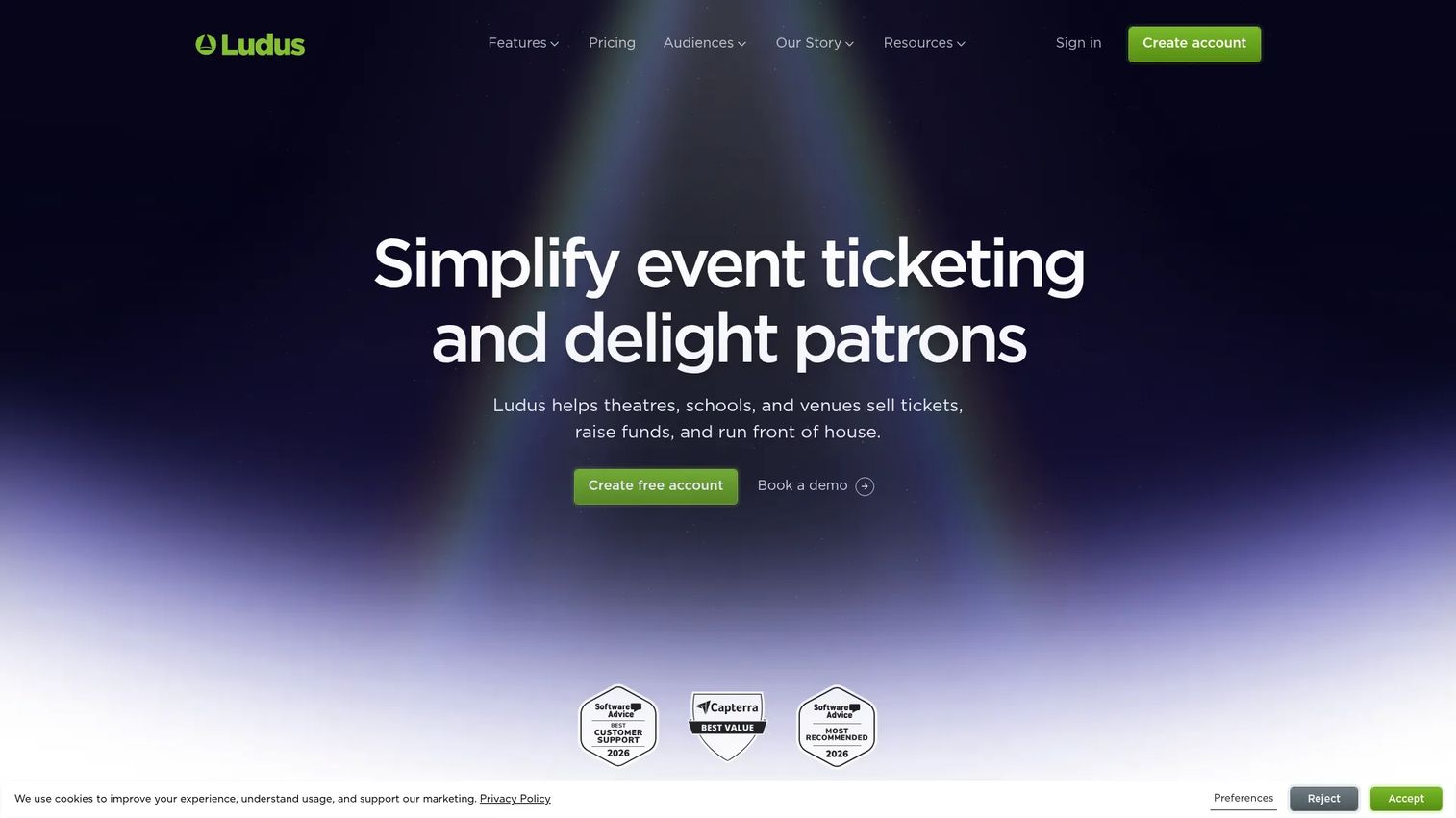
Ludus is an online ticketing, marketing, fundraising, and patron-management platform for performing arts organizations. It covers reserved seating, general admission, registrations, donations, volunteer management, patron CRM, and box office support. The model is built to be accessible: No contracts, no setup fees, no monthly fees, and no annual fees.
Best for: Theatre programs, schools, dance studios, and venues that need integrated ticketing without enterprise-level implementation or upfront costs.
Key features
- Reserved seating and general admission ticketing
- Patron CRM and marketing tools
- Fundraising and donation collection
- Registrations, classes, and collections management
- Volunteer management and analytics
Why choose Ludus: The pricing model works in the organization's favor for lower-volume seasons, since patrons can absorb the per-ticket fee. Evaluate data exportability and support responsiveness, and calculate your total seasonal cost across expected ticket volume before committing.
Ludus pricing: 5% + $0.75 per credit card ticket. Cash, comp, and $0 tickets carry no fee. Premium features add $0.05 per applicable item. No monthly subscription required.
G2 rating: 3.8/5
4. Arts People
Arts People is a ticketing and patron-management platform for performing arts organizations, now part of the Neon One product suite. It covers online and box office ticketing, fundraising, subscription and flex-pass management, patron records, custom seating maps, communications, and reporting. It suits lean teams that need theatre-specific workflows without adopting a full enterprise platform.
Best for: Community theatres and smaller arts organizations that need performing arts ticketing and patron management with theatre-specific features.
Key features
- Online and box office ticket sales
- Custom seating-map builder
- Subscription, flex-pass, and package management
- Patron records and integrated communications
- Fundraising and donation tracking
Why choose Arts People: It sits between a generic event ticketing tool and a full enterprise arts CRM, which makes it a reasonable fit for organizations that have outgrown basic tools but don't need Tessitura-level complexity.
Arts People pricing: $0.99 per ticket plus transaction fees.
G2 rating: 4.5/5
5. Neon One
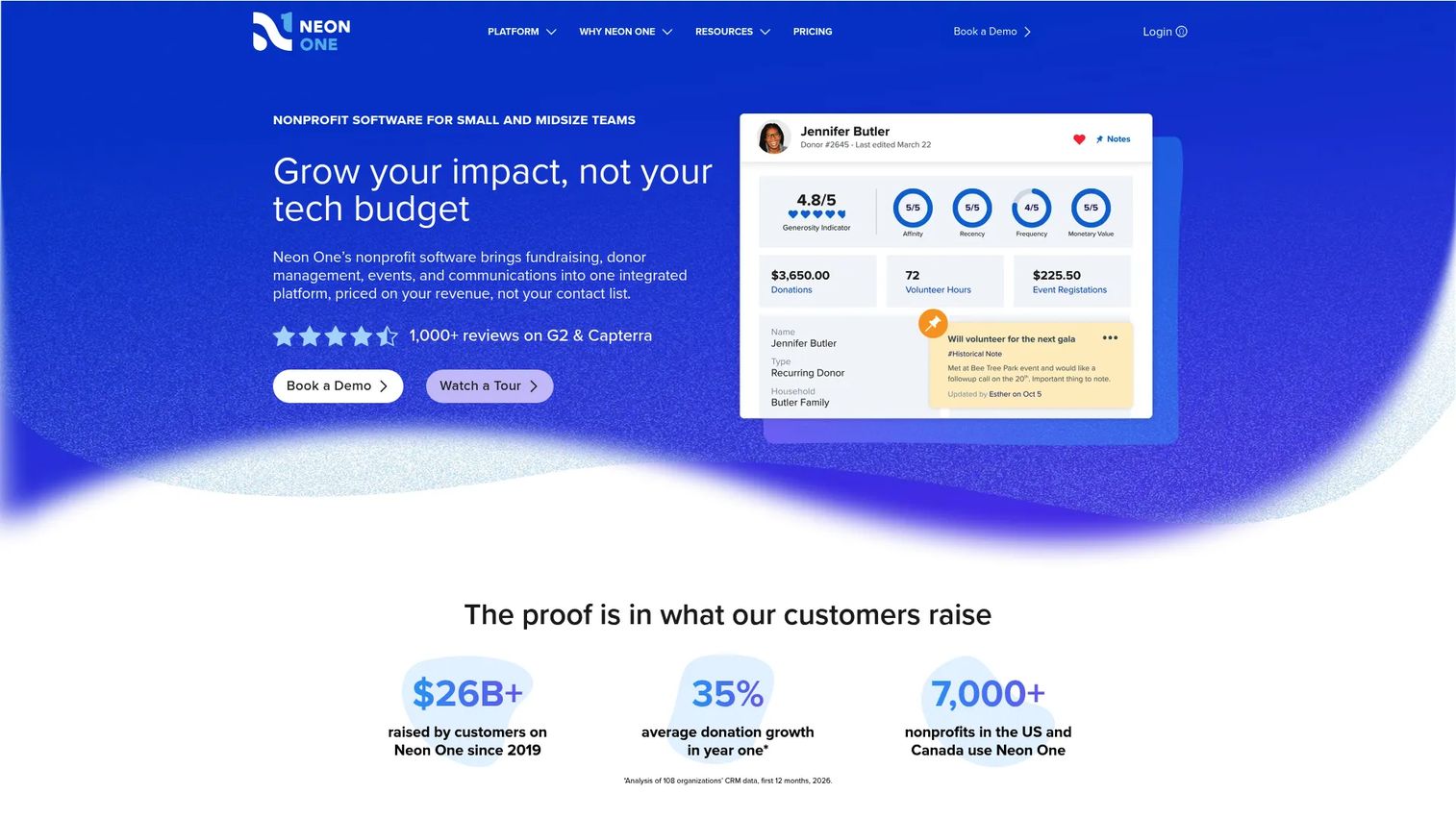
Neon One provides integrated nonprofit software covering fundraising, donor management, communications, events, memberships, volunteering, websites, and ticketing. Its flagship product, Neon CRM, is the core of a broader suite that includes Arts People for performing arts ticketing. For nonprofit arts organizations where development capacity and donor retention are primary constraints, Neon One is the most direct fit.
Best for: Small and midsize nonprofit arts organizations that need stronger donor, membership, and fundraising operations alongside patron data.
Key features
- Donor CRM with giving history, communications, and donor journeys
- Donation forms, campaign management, and peer-to-peer fundraising
- Event management, ticketing, seat assignments, and check-in
- Membership and constituent management
- Volunteer tracking and reporting
Why choose Neon One: Evaluate it when development and fundraising are the operational priority, not primarily ticketing. The suite structure means you're buying into a connected ecosystem rather than a single point tool.
Neon One pricing: Neon CRM starts at $99/month. Neon Websites starts at $69/month. Neon Fundraise starts at $158/month. Arts People ticketing is $0.99 per ticket plus transaction fees.
G2 rating: 4.2/5
6. AudienceView
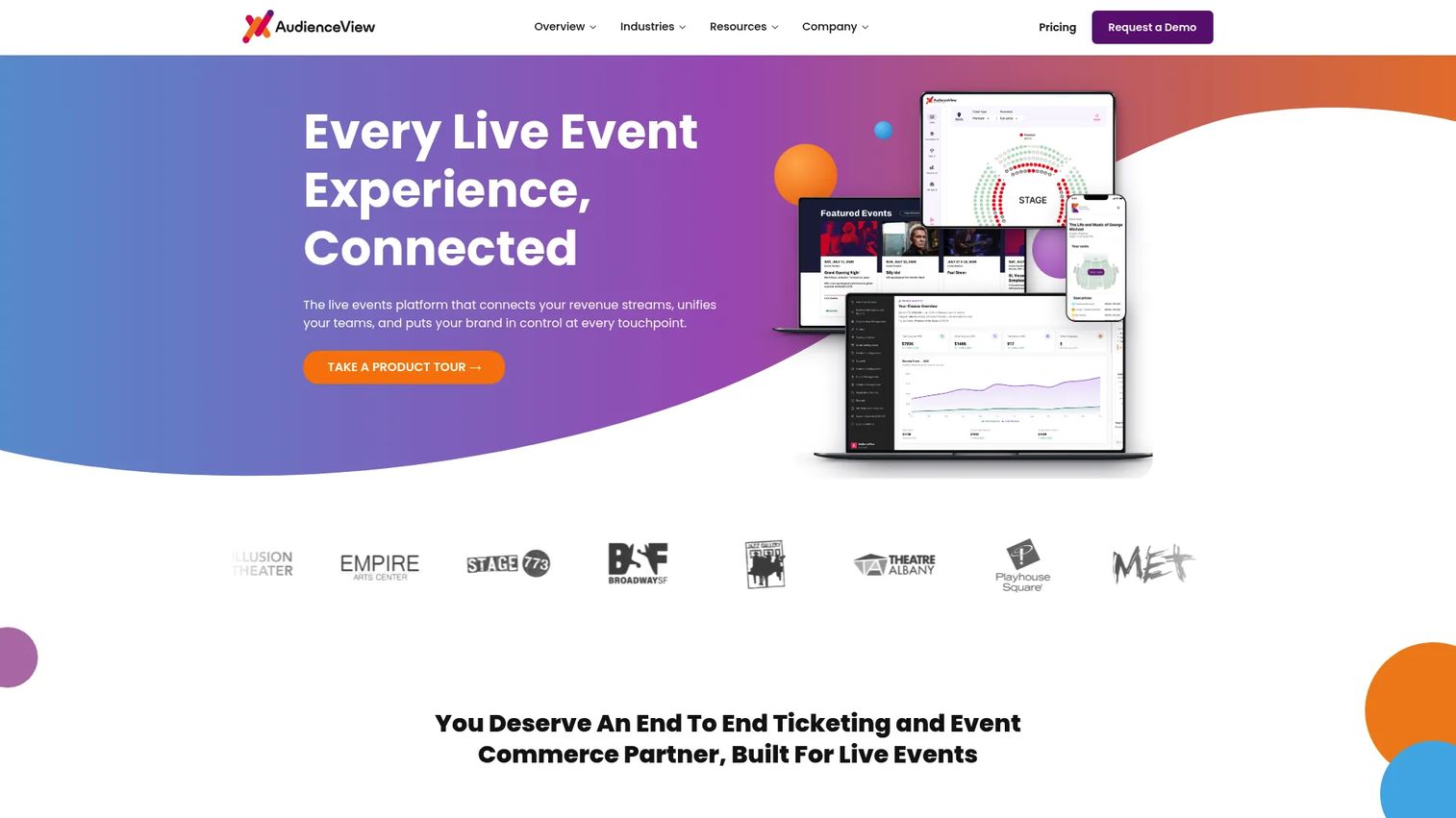
AudienceView is an event commerce and ticketing platform for venues, arts organizations, universities, attractions, and nonprofits. It covers ticketing, event management, marketing, audience engagement, fundraising, memberships, payments, fraud prevention, and reporting. The platform suits organizations managing a broad event portfolio where ticketing connects to larger commercial and audience operations.
Best for: Venues and larger arts organizations with multiple event types that need ticketing integrated with commerce and audience data at scale.
Key features
- Ticketing and event management
- Audience data management and marketing tools
- Fundraising and membership management
- Payments and fraud prevention
- Packages, products, and merchandise
Why choose AudienceView: Consider it when your organization's complexity comes from event diversity and audience data requirements, not just ticket volume. Implementation ownership and integration requirements should be part of your evaluation conversation.
AudienceView pricing: AudienceView uses per-ticket and annual subscription pricing models. Pricing is quote-based and depends on the organization's requirements. Contact AudienceView directly for a quote.
7. On the Stage
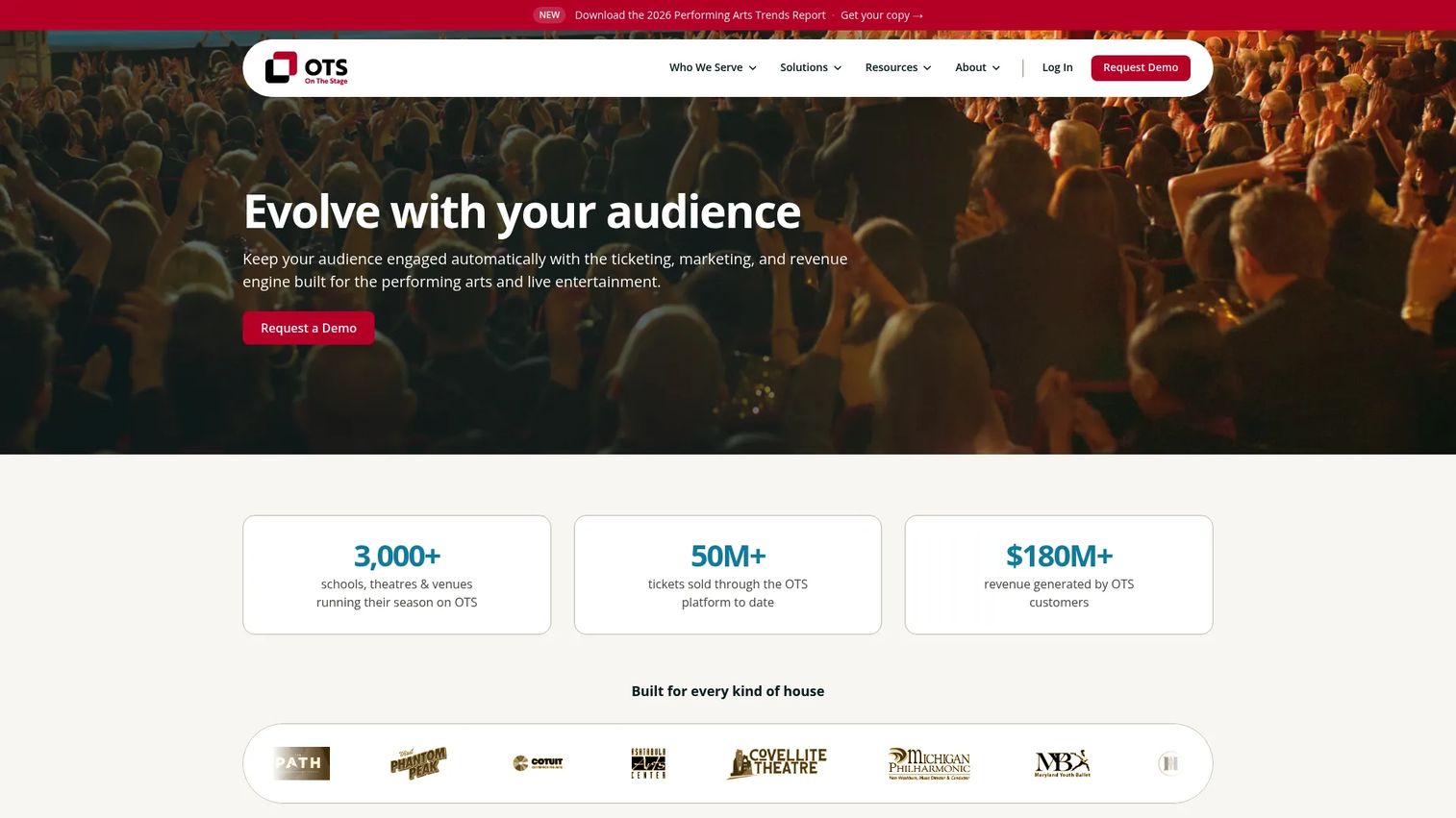
On the Stage is a ticketing, marketing, fundraising, and patron-management platform for performing arts and live entertainment organizations. It covers reserved seating, general admission, subscriptions, flexible pricing, automated marketing, email campaigns, audience segmentation, donation collection, merchandise, and concessions. Setup is accessible enough for teams with limited technical resources and volunteer-heavy event operations.
Best for: Schools and community theatre groups that need accessible theatre ticketing and fundraising support without a lengthy implementation.
Key features
- Online ticketing with reserved seating and general admission
- Automated marketing and email campaigns with audience segmentation
- Fundraising, donations, merchandise, and concessions
- Patron management and communication tools
- Subscription and flexible-pricing support
Why choose On the Stage: It's the right starting point for organizations whose immediate problem is selling tickets and collecting donations online. Evaluate whether it covers your full management needs or only the front-of-house side.
On the Stage pricing: Contact On the Stage to discuss packaging. Request specific detail on payment processing fees and ticketing surcharges.
G2 rating: 5.0/5
8. ThunderTix
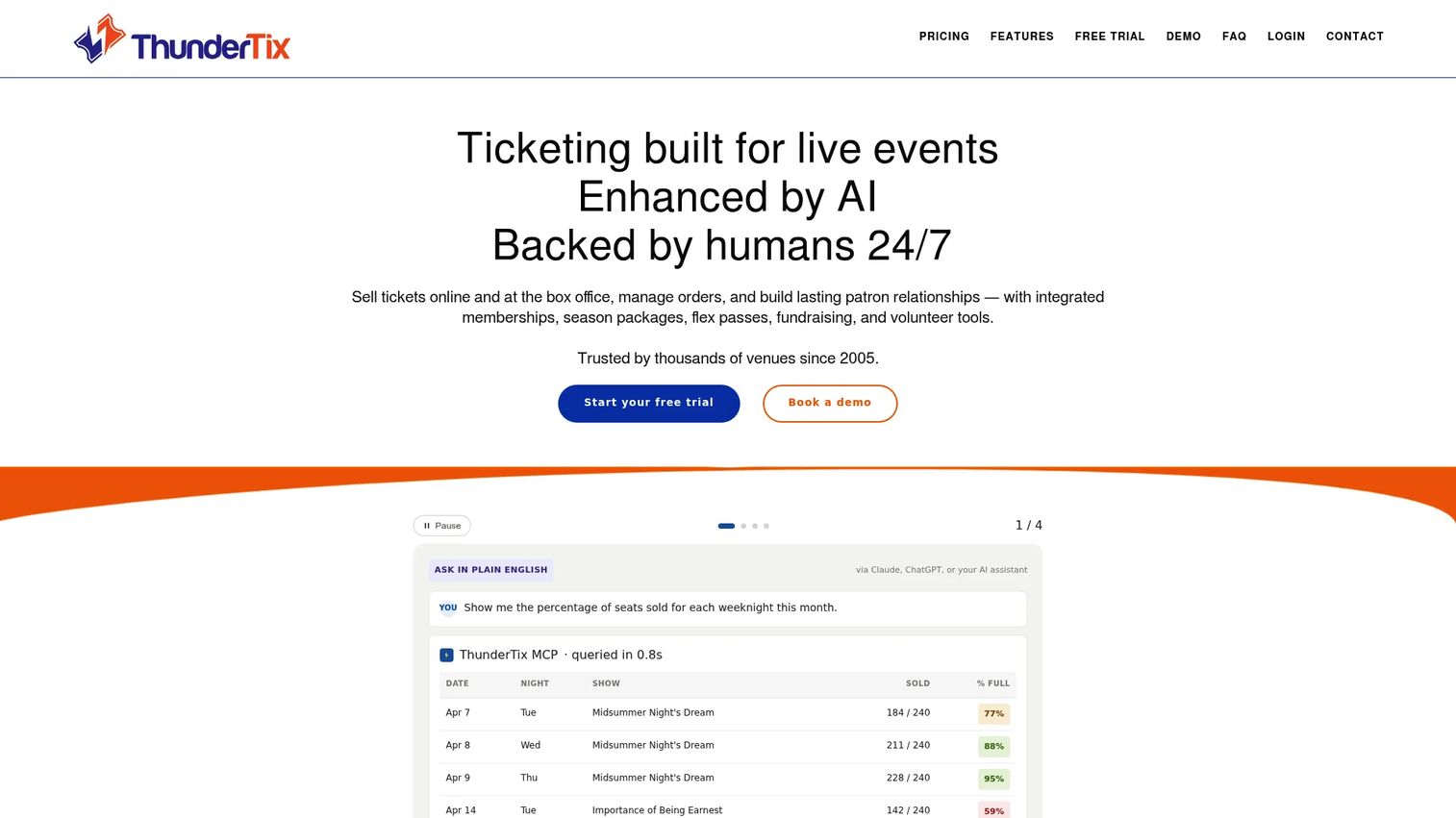
ThunderTix is cloud ticketing and venue-management software for live-event organizations, covering reserved seating, general admission, season subscriptions, flex passes, patron CRM, fundraising, memberships, barcode scanning, branded eTickets, email marketing, volunteer management, venue rentals, and AI integrations. Pass-through plans let organizations shift processing costs to patrons; monthly plans add a minimum and per-ticket fee.
Best for: Theatres and live-event venues that need robust box office workflows, mobile scanning, and event-day execution without buying a broader arts platform.
Key features
- Reserved seating maps and general admission ticketing
- Season subscriptions and flex passes
- Mobile barcode scanning and branded eTickets
- Fundraising, donations, memberships, and merchandise
- Real-time sales reporting and AI integrations with Claude and ChatGPT
Why choose ThunderTix: Strong for teams that need solid ticketing mechanics and event-day operations. The tiered pricing model offers a path from pass-through to a fixed monthly plan as volume grows.
ThunderTix pricing: Pass-Through plans charge 4.85% + $0.89 per ticket (no monthly fee). Monthly plans start at $20/month for general admission ($1 per ticket) or $25/month for reserved seating ($1.25 per ticket). K-12 schools pay 3.95% + $0.65 per ticket.
G2 rating: 4.6/5
9. BookTix
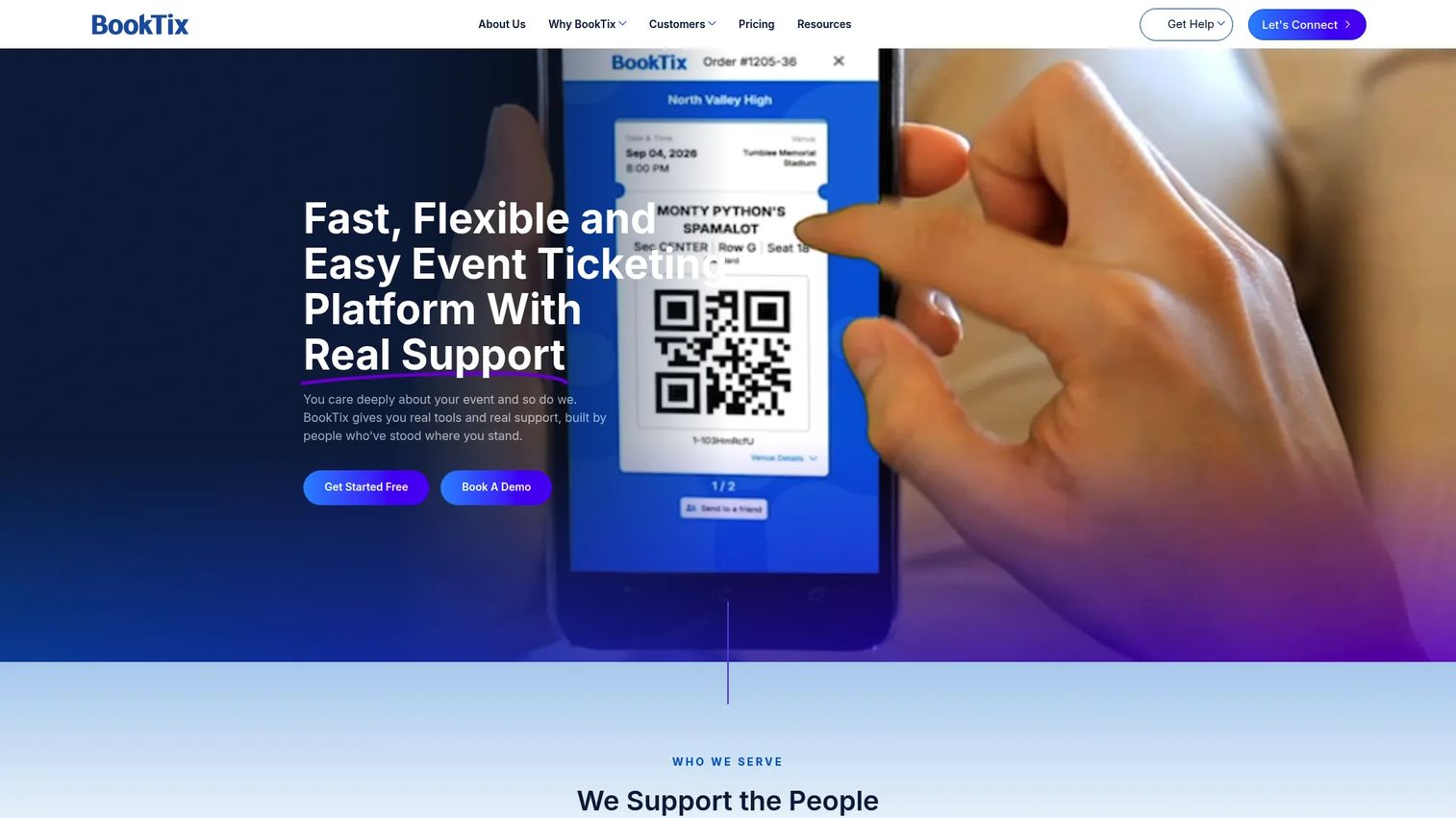
BookTix is an event ticketing platform built for schools, theatres, dance studios, and arts organizations. It covers online and in-person ticket sales, reserved and general admission seating, real-time reporting, mobile ticket scanning, donations, sponsorships, email marketing, patron CRM, point-of-sale, merchandise, and season tickets. The Flex Fees option lets organizations pass processing costs to buyers, which can make the platform cost-free for the organization.
Best for: K-12 school theatre programs and educational arts organizations that need ticketing and fundraising built around student productions and family audiences.
Key features
- Online and in-person ticket sales
- Reserved, general admission, and hybrid seating
- Mobile ticket scanning app
- Donations, sponsorships, and fundraising tools
- Point-of-sale and merchandise sales
Why choose BookTix: The no-monthly-fee, no-contract model fits schools that run seasonal productions and can't justify a recurring subscription. The volunteer box office workflow makes it accessible to programs with non-technical staff.
BookTix pricing: 3.75% + $0.90 per ticket (credit card). Cash and comp tickets are free. No monthly, annual, setup, or minimum charges. Flex Fees can pass costs to buyers.
10. Spektrix
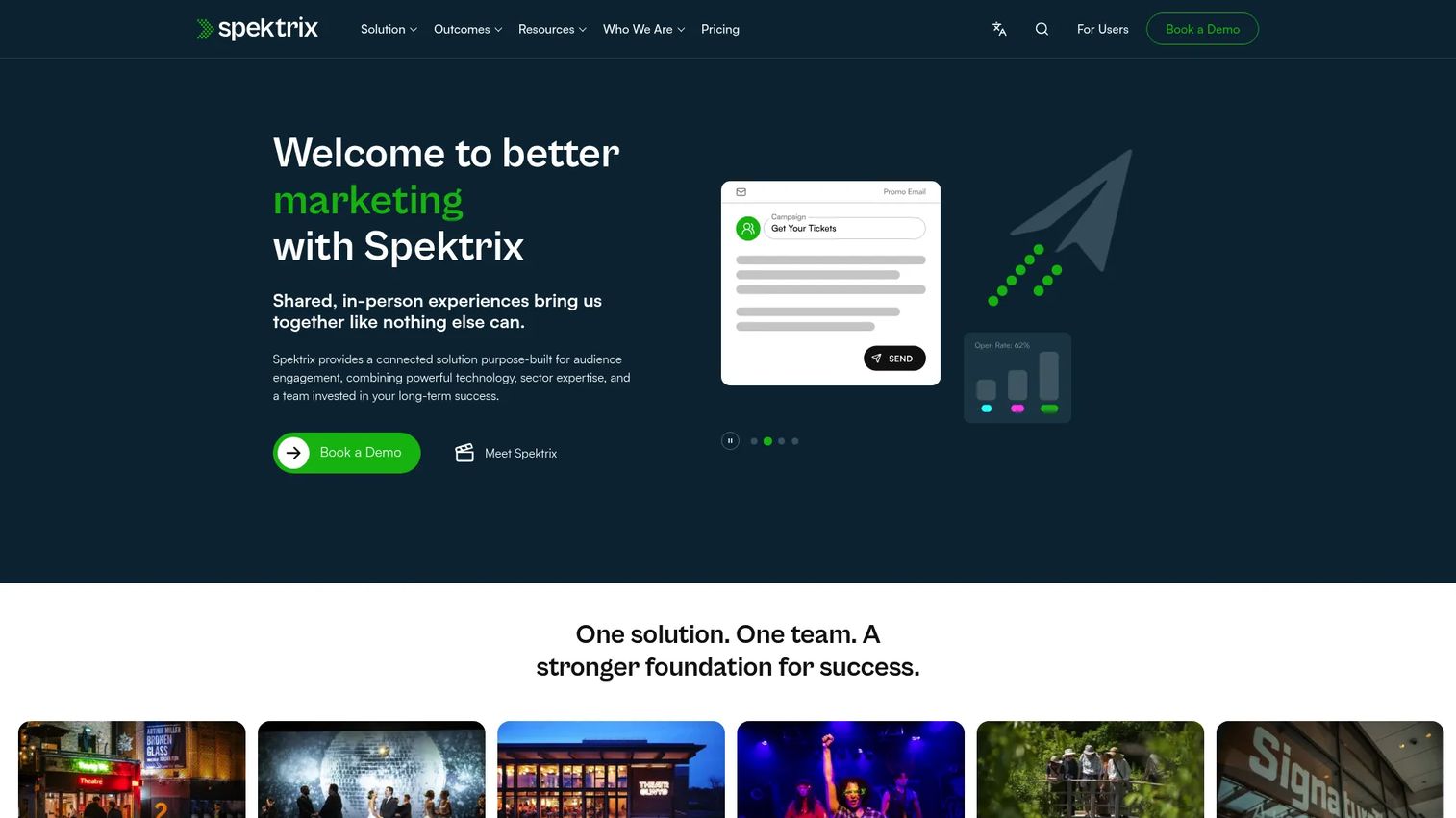
Spektrix is a connected ticketing, CRM, marketing, fundraising, and audience-engagement platform for arts, cultural, and live-experience organizations. It covers ticketing (online and in-person), subscriptions, memberships, donations, merchandise, patron CRM, audience segmentation, marketing automation via Dotdigital, fundraising, box office operations, e-ticketing, ticket scanning, live dashboards, and integrated payment processing.
Best for: Established arts organizations that want ticketing connected to patron CRM, fundraising, and audience-development workflows for long-term patron growth.
Key features
- Ticketing for online and in-person sales, subscriptions, and memberships
- Connected CRM with audience segmentation and patron-history tracking
- Marketing automation and personalized campaigns
- Fundraising and donor-engagement tools
- Integrated payment processing through Spektrix Payments powered by Adyen
Why choose Spektrix: Evaluate it when your organization needs a unified commercial and patron-growth system rather than a standalone box office. Data migration, internal process ownership, and annual commitment terms should be part of the discovery conversation.
Spektrix pricing: Hosting, maintenance, upgrades, support, training, unlimited users, and integrations are included. Card-processing fees, additional hardware, and partner solutions may be additional. Contact Spektrix for a quote..
11. Tixly
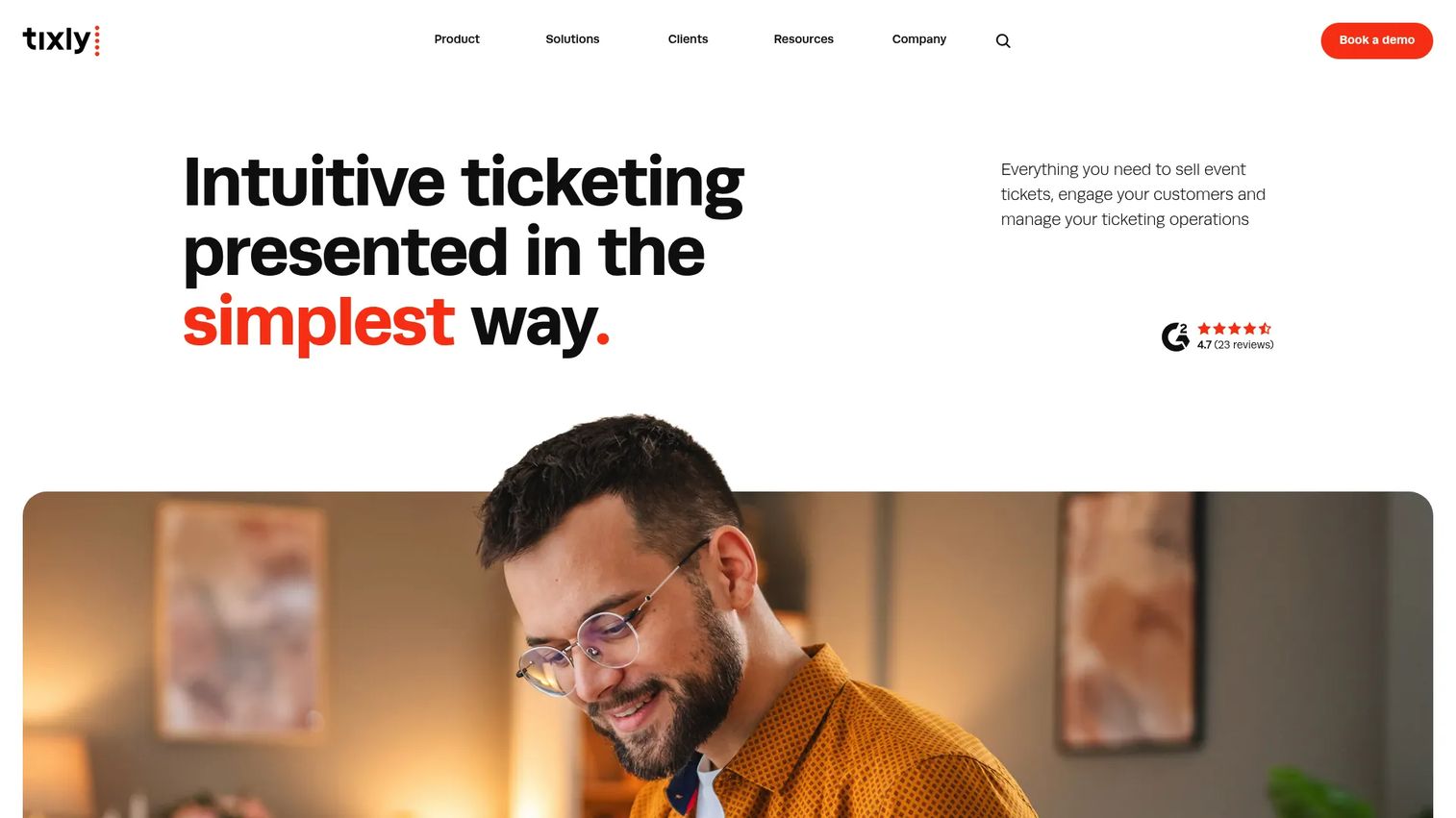
Tixly is an integrated event-ticketing platform for performing arts venues and culture houses. It covers online ticket sales, box office administration, reporting and analytics, marketing, CRM, ticket scanning, and access control. Pricing scales with annual ticket volume and venue count, so organizations pay nothing until they start selling.
Best for: Cultural venues and performing arts organizations that want modern ticketing and audience data without buying an all-encompassing venue operations suite.
Key features
- Online ticket sales and box office administration
- Audience management and CRM records
- Reporting and analytics dashboards
- Marketing tools and patron communication
- Ticket scanning and access control
Why choose Tixly: The volume-based pricing model aligns costs with activity, which works well for organizations with seasonal peaks. It's positioned between lightweight ticketing tools and enterprise platforms.
Tixly pricing: A fixed per-ticket fee based on annual ticket volume, number of venues, and region. Contact Tixly for a volume-based quote.
G2 rating: 4.7/5
12. My Best Studio
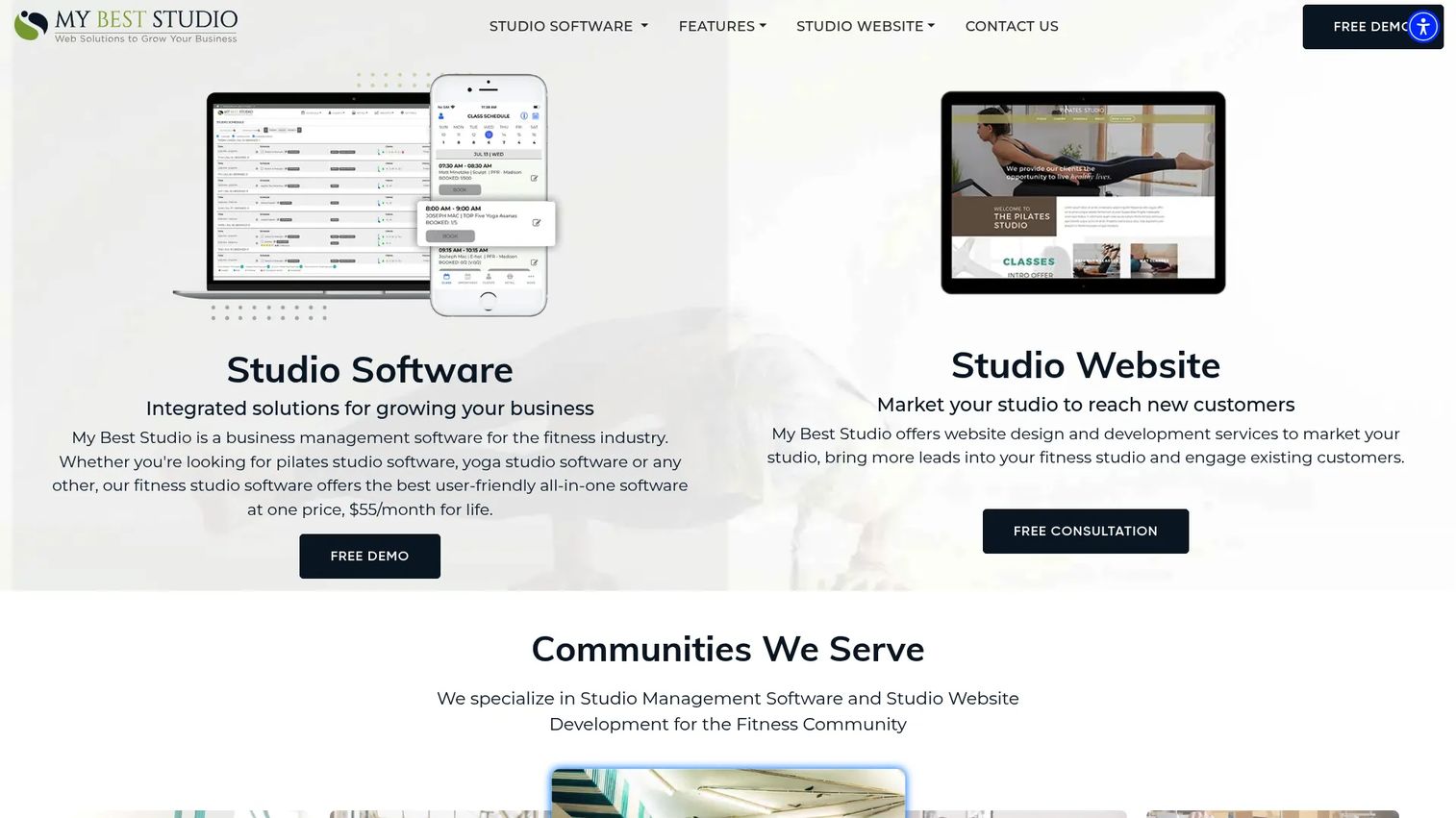
My Best Studio is all-inclusive studio management software for yoga, Pilates, fitness, martial arts, and wellness businesses, with features that map directly to acting and performing arts studios. It covers scheduling, online booking, client CRM, invoicing, payments, a custom branded client app, instructor management, reports, lead management, contracts, waivers, gift cards, coupons, and 24/7 support. One plan includes all features with no tier restrictions.
Best for: Acting and performing arts studios that need class management, recurring billing, instructor operations, and client records at a fixed monthly cost.
Key features
- Class and workshop scheduling with online booking
- Client relationship management and lead tracking
- Invoicing, recurring payments, and contract management
- Custom branded client app
- Instructor and employee management with reporting
Why choose My Best Studio: The fixed monthly price with no feature gating makes it easy to calculate total annual cost. It suits studio owners who run recurring membership or tuition-based programs rather than one-off ticketed shows.
My Best Studio pricing: One all-inclusive plan at $55/month. The price is locked in for life. All features included at all sizes.
G2 rating: 4.5/5
13. Studio Pro
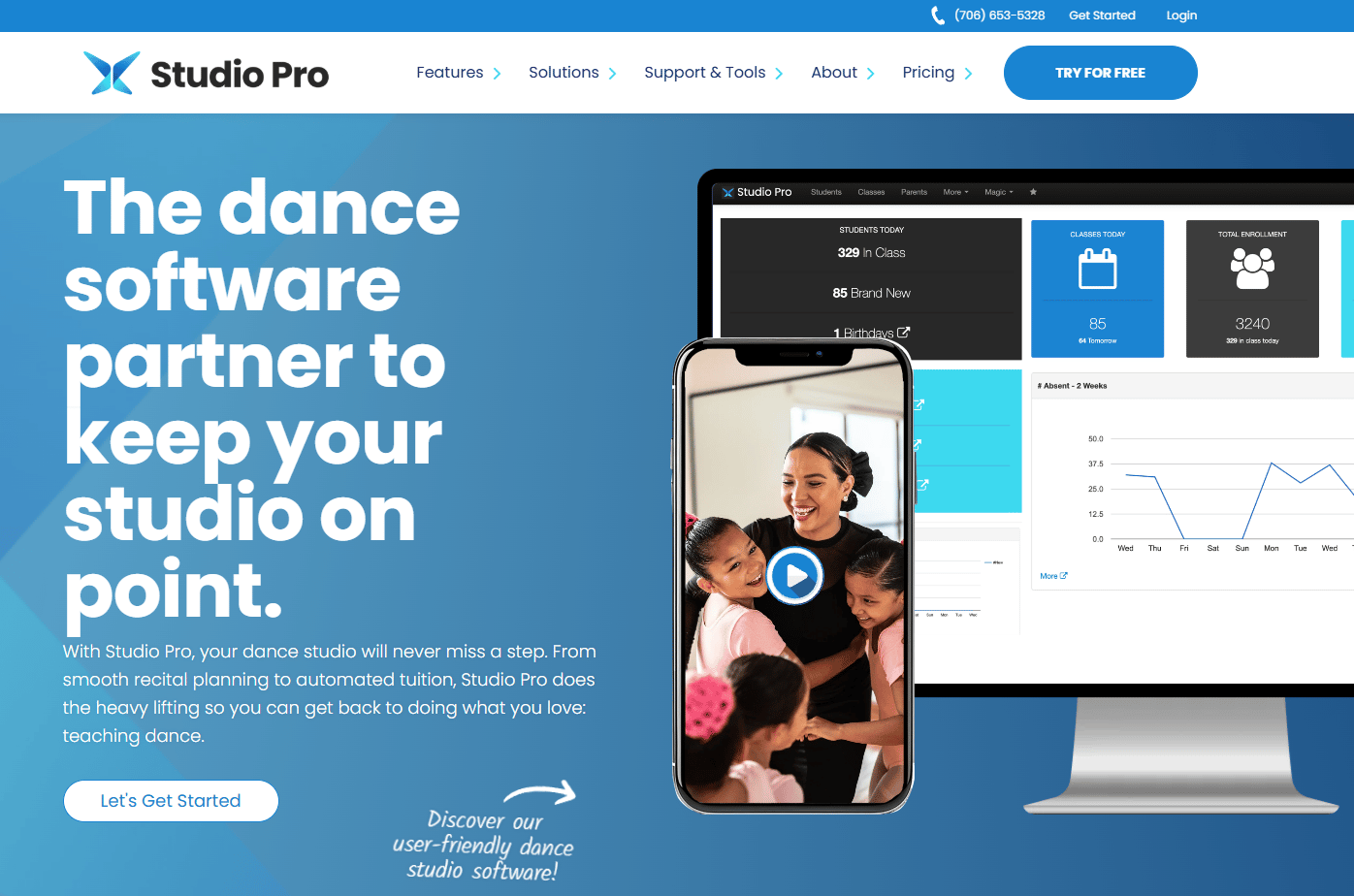
Studio Pro is studio management software for dance studios and youth activity programs, with strong applicability to theatre schools and performing arts programs. It covers class scheduling, registration, tuition management, payment processing, a Parent Portal app, a Class Manager app, recital planning, costume management, ticket sales, and lead capture. All plans include unlimited students.
Best for: Theatre schools and programs that need one system covering enrollment, rehearsals, families, event sales, and production administration.
Key features
- Class scheduling, registration, and tuition management
- Parent Portal and Class Manager apps
- Recital planning and costume management
- Ticket sales and lead capture
- Payment processing with unlimited students
Why choose Studio Pro: It maps to the full rhythm of a theatre program, from first enrollment through the production. The tiered plan structure gives programs a path to scale without paying for features they haven't reached yet.
Studio Pro pricing: Essentials plan starts at $49/month. Premier is $79/month. Elite is $165/month. All plans include unlimited students. A free 30-day trial is available.
G2 rating: 4.1/5
Considerations when choosing performing arts software
Match the platform to the operational bottleneck
A ticketing problem and a venue-operations problem look similar from the outside but require different software. Map the specific workflow that causes missed revenue, event-day confusion, or manual rework before reviewing vendor features. Buying a ticketing tool when the bottleneck is venue operations solves nothing.
Calculate total seasonal cost
Monthly subscription prices don't tell the full story. Add ticketing fees, payment processing, implementation, training, support tiers, hardware, data migration, and the cost of running a second system in parallel. A per-ticket platform that looks free at 1,000 tickets looks very different at 20,000.
Audit data before migration
Export patron, donor, student, and transaction records before selecting a platform. Ask each vendor what they import, what requires cleanup, whether historical transaction records remain accessible, and who owns the migration work. This conversation surfaces problems that a demo never will.
Test the frontline workflow
Have the person who will run the system daily, a box office volunteer, theatre teacher, or production manager, test the exact workflows they'll use. Leadership demos are optimized for executives. Frontline testing surfaces the friction that matters.
Confirm ownership and reporting after launch
Decide who owns system configuration after launch. Define the five reports leadership needs before you buy, such as ticket revenue by performance, tuition collection rate, donor renewal, or venue utilization. If those reports aren't accessible out of the box, ask how to build them.
Conclusion
The right platform depends on the work that repeatedly breaks your season.
Momentus is the strongest fit for complex venue and arts-center operations. Tessitura and Spektrix suit organizations where patron data, subscription logic, and fundraising must connect for development and renewal campaigns. Ludus, Arts People, On the Stage, ThunderTix, BookTix, and Tixly are ticketing-led choices with different price models and organization-size fits. My Best Studio and Studio Pro serve recurring program operations where classes, tuition, and rehearsal schedules drive the buying decision. Neon One is worth evaluating when development and donor management are the primary constraint. AudienceView fits larger organizations managing ticketing alongside broader audience commerce requirements.
Start by mapping one season from first event setup through post-season reporting. The platform that removes the most manual handoffs in that workflow is the one worth piloting.
Before you evaluate performing arts software, it's also worth looking at how your team demos and presents your own product. If you're evaluating vertical SaaS opportunities or building GTM systems that need interactive product experiences, Start your journey with Guideflow today!
FAQs
Small theatres should prioritize ticketing mechanics, volunteer-friendly box office workflows, patron record keeping, and transparent fee structures. Ludus and BookTix both offer per-ticket pricing with no monthly subscription, which fits organizations with lower or seasonal volume. Arts People adds patron management depth for theatres that need more than basic ticketing.
Performing arts centers often need venue operations, ticketing, patron CRM, payment reconciliation, and production planning to work from a shared record. Momentus fits organizations where rental operations and cross-team coordination create the biggest workload. AudienceView and Spektrix fit centers where ticketing and audience data drive the primary operational need.
Theatre management software typically covers rehearsals, classes, cast, parent communication, tuition, production fees, and staff alongside ticketing. Studio Pro and My Best Studio fall into this category. Ticketing software focuses on selling, managing, scanning, refunding, and reporting on tickets, with patron data as a secondary feature. Ludus, ThunderTix, and BookTix are ticketing-first.
Theatre and studio management platforms often support classes, audition scheduling, rehearsal calendars, and cast or student records. Studio Pro covers auditions, technical rehearsals, and parent communication directly. Venue and ticketing platforms generally require a separate scheduling workflow for rehearsal management.
Cost varies by ticket volume, users, student or member count, payment processing, implementation needs, reserved seating configuration, and support level. Per-ticket tools like Ludus and BookTix start near zero for low-volume seasons. Monthly subscription tools like Studio Pro start at $49/month. Enterprise platforms like Tessitura, Momentus, and Spektrix are quote-based and require a sales conversation. Calculate annual season cost rather than comparing entry prices alone.
Most vendors offer a migration process, but data quality determines the effort. Before signing a contract, review what formats the vendor accepts, whether historical transaction records remain accessible, how deduplication is handled, and who owns the migration work. Some platforms handle migration internally; others hand it back to the organization.
Ask the vendor to walk through setting up a show or class from scratch, selling a ticket, processing a refund, communicating with an audience segment, pulling a season revenue report, and importing existing records. Those five steps reveal whether the system fits your team's actual daily rhythm or just looks clean during a guided presentation.
Not always. Platforms like Tessitura, Spektrix, Neon One, Ludus, and ThunderTix combine patron CRM, ticketing, and fundraising in one system. Others are ticketing-first and work alongside a separate nonprofit CRM. The decision turns on how closely your development and box office teams collaborate and how important it is to see donation history alongside ticket purchase history in the same record.