Your partner signed the agreement six months ago. Since then, they've asked the same product questions four times, missed two deal registrations, and shared an outdated one-pager with a prospect. The portal exists. Nobody uses it.
This is the partners-signed-but-not-selling problem, and it's more common than any channel team admits. According to the Futurum Group (2025), 87% of surveyed channel partners expected revenue growth that year. Yet most partner programs struggle to convert signed partners into active, pipeline-generating ones because the infrastructure behind the portal fails them first.
The gap is rarely enthusiasm. It's access to the right content at the right moment, clear deal registration workflows, and product knowledge that doesn't require a live training call every time.
Partner portal software closes that gap. The tools in this guide cover full PRM platforms, lightweight portals, CRM-based options, co-sell intelligence, affiliate platforms, and partner enablement layers. Each fits a different program maturity and partner motion.
What's inside
This guide compares 13 partner portal software options for 2026, chosen for partner activation fit, CRM integration depth, enablement capability, reporting, and implementation model.
- Who each platform fits best (reseller, affiliate, co-sell, or ecosystem motion)
- Which tools work at different program stages, from early-stage to enterprise scale
- Pricing based on vendor pages and G2 listings
- What to check before committing, including what each tool does not replace
TL;DR
- Best for partner enablement demos: Guideflow adds interactive demos, sandboxes, and demo centers to any partner portal, letting partners show the product without becoming product experts first
- Best for Salesforce-native channel teams: Salesforce PRM fits programs that run entirely inside Salesforce CRM
- Best lightweight partner portal: PartnerPortal works for teams that need a fast portal without enterprise PRM overhead; free plan available
- Best for enterprise partner lifecycle management: Impartner PRM and ZINFI fit mature programs with complex tiers, MDF, and channel marketing needs
- Best for affiliate and referral programs: PartnerStack and impact.com fit performance partnerships where tracking, payouts, and partner recruitment drive the motion
- Best for co-selling intelligence: Crossbeam fits teams whose core need is account mapping rather than a traditional content portal
What is partner portal software?
Partner portal software is a secure, branded workspace where external partners access enablement content, register deals, track referrals, complete training, collaborate with your team, and measure partner-led revenue.
The term overlaps with PRM (partner relationship management) software, but the two are not identical. A partner portal is the partner-facing access layer. PRM software is the broader operating system for managing the full partner lifecycle, from recruitment through revenue.
Key capabilities to look for
- Partner onboarding and enrollment: Structured workflows so new partners know what to do first
- Deal registration and lead management: A system of record for partner-sourced opportunities
- Partner resource libraries: Centralized content including pitch decks, battlecards, and demo scripts
- Training and certification: Courses and credentials partners complete before selling
- Co-branded asset and campaign support: Tools for joint marketing, MDF allocation, and campaign syndication
- CRM and marketing automation integrations: Data flows between the portal and your system of record
- Incentives, commissions, and rewards: Payout tracking and partner motivation mechanics
- Partner analytics and attribution: Visibility into who is active, what they share, and what drives pipeline
- Permissions, SSO, and audit logs: Access controls for secure external sharing
How the categories differ
A co-sell tool like Crossbeam focuses on shared account mapping. An affiliate platform like impact.com handles referral links, commissions, and payouts. A custom portal builder like Jet Admin connects to your existing database. A demo automation layer like Guideflow turns static portal assets into clickable product experiences. Full PRM platforms like Impartner and ZINFI handle the entire partner lifecycle. Knowing which category your program needs most saves months of wrong-direction evaluation.
When to use partner portal software
Onboard partners without relying on live calls
Manual partner onboarding, where someone from your team runs the same orientation every week, doesn't scale past a handful of partners. A portal standardizes onboarding steps, training content, and certification requirements, so a new reseller completes the process without consuming your team's calendar. Time-to-first-deal shortens when partners know what to do from day one.
Give partners a single place to sell from
Scattered assets are the fastest way to get partners presenting outdated or off-brand content. A portal centralizes pitch decks, pricing guides, battlecards, integration stories, and product demos in one searchable, versioned library. When partners can find the right asset in under two minutes, they actually use it. Adding interactive demos alongside static files helps partners show the product without deep product knowledge.
Track partner-sourced pipeline with fewer spreadsheet fights
Deal registration, referral attribution, and commission tracking in spreadsheets produces one guaranteed outcome: Disputes. Partner portal software creates a timestamped, auditable record of which partner sourced which opportunity. That data is what you need when leadership asks for partner-sourced pipeline you can defend in a board meeting.
Partner portal software comparison
Use this table to narrow the list before reading the deeper sections. PRM pricing changes often and many vendors quote by program size, so check each vendor's current page before finalizing.
| # | Product | Best for | Key differentiator | Pricing | G2 rating |
|---|---|---|---|---|---|
| 1 | Guideflow | Partner enablement demos | Interactive demos, sandboxes, and demo centers for partner portals | Free; paid from $35/mo | 5.0/5 |
| 2 | Salesforce PRM | Salesforce-native channel programs | PRM built on Salesforce CRM and Experience Cloud | From $25/member/mo | 4.3/5 |
| 3 | PartnerPortal | Lightweight partner portals | Fast portal setup with CRM integrations and free plan | Free; paid from $249/mo | 4.5/5 |
| 4 | Impartner PRM | Enterprise partner lifecycle management | End-to-end PRM with AI for complex ecosystems | Quote-based | 4.4/5 |
| 5 | ZINFI | Modular PRM and channel programs | Unified partner management with modular apps | Quote-based | 4.9/5 |
| 6 | Allbound | Partner engagement and enablement | PRM with portal, content, training, and deal workflows | Quote-based | N/A |
| 7 | ZiftONE | Channel marketing automation | PRM plus TCMA, MDF, and partner marketing | Quote-based | N/A |
| 8 | PartnerStack | Affiliate and SaaS partner programs | Marketplace, referral tracking, and partner payouts | Quote-based | 4.7/5 |
| 9 | Crossbeam | Co-selling and account mapping | Shared account intelligence for ecosystem teams | Free; paid from $4,800/yr | 4.8/5 |
| 10 | Jet Admin | Custom partner portals | Portals built on existing databases and APIs | Free; paid from $20/mo | 4.2/5 |
| 11 | HubSpot | CRM-based partner workflows | CRM, forms, workflows, and dashboards in one stack | Free; paid from $7/seat/mo | 4.4/5 |
| 12 | Pipedrive | Sales-led referral tracking | Lightweight CRM pipeline for partner-sourced deals | From $14/seat/mo | 4.3/5 |
| 13 | impact.com | Performance partnerships | Affiliate, creator, referral, and payout workflows | From $30/mo | 4.4/5 |
Best 13 partner portal software tools for 2026
1. Guideflow
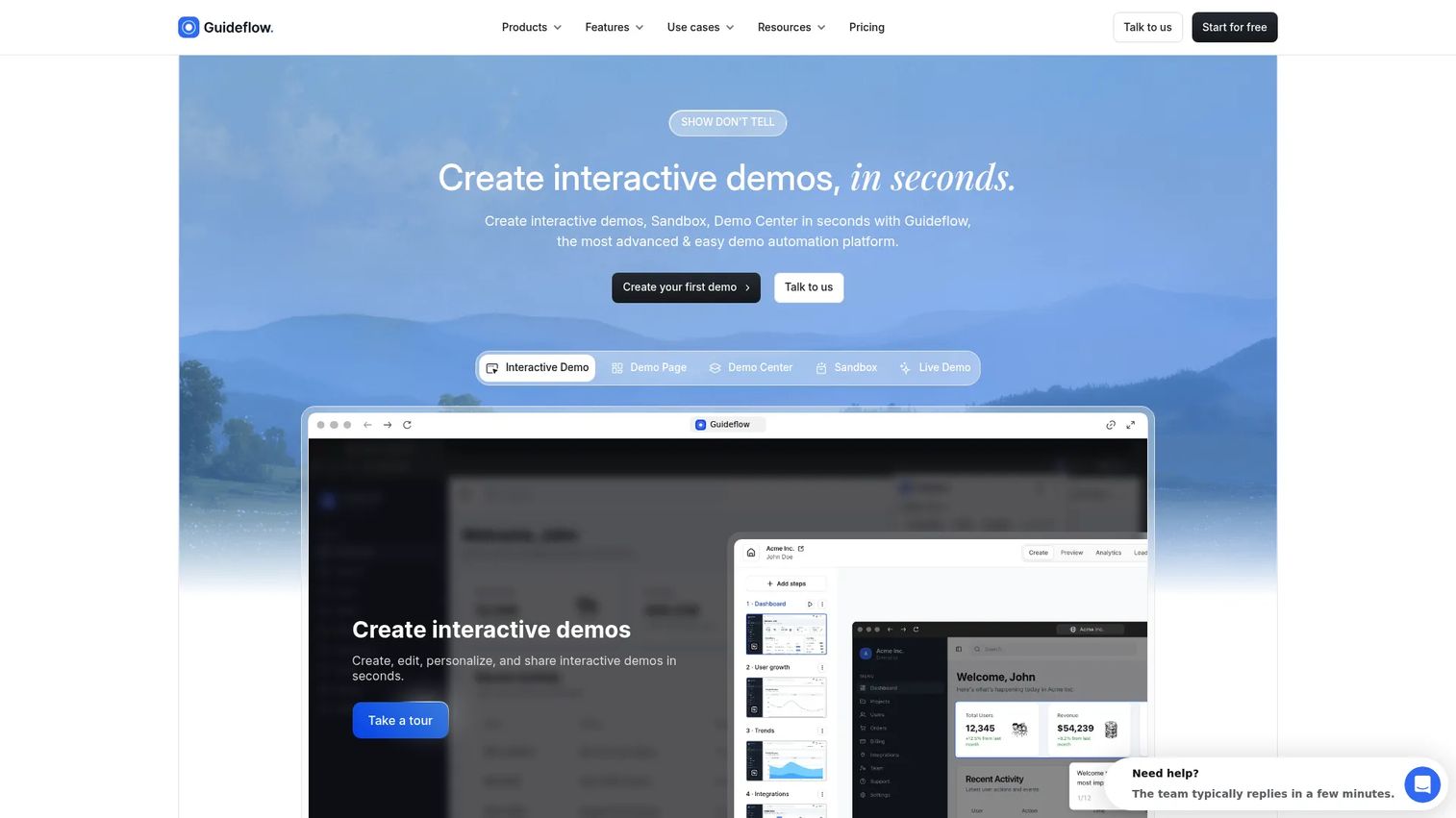
Guideflow is a demo automation platform that turns partner portal assets into interactive, self-serve product experiences. It is not a PRM. It is the enablement layer that makes the content inside a partner portal actually convert, by replacing static files with clickable product stories partners can share anywhere without needing to become product experts first.
Partner teams use Guideflow to build interactive demos that guide partners through a specific product story, sandboxes where technical buyers freely explore workflows and validate fit, and a Demo Center that acts as a branded demo library inside or alongside a partner portal. Mobile demos cover partner audiences on any device, and live demos support partner training sessions, webinars, QBRs, and enterprise deal conversations.
Best for: Partner marketing managers who have a portal full of files but partners who still can't show the product confidently.
Key features
- Interactive demos for guided partner product walkthroughs
- Demo centers as branded partner demo libraries
- Sandboxes for free-form partner and technical buyer exploration
- Mobile demos for on-device partner product experiences
- Live demos for presenter-led partner training and webinars
- Analytics tracking impressions, completion, leads, and engagement
Why choose Guideflow: Choose Guideflow when your portal already stores the files, but partners still struggle to show the product. It turns static enablement into clickable product stories partners can share without becoming product experts first.
One clear boundary: Guideflow does not replace PRM workflows. It doesn't handle deal registration, MDF approvals, partner tiering, or commission payouts. It complements those systems by improving what partners actually do with product knowledge.
Guideflow pricing: Free plan available. Paid plans start at $35/month, with Growth at $499/month and Advanced at $1,499/month. Enterprise pricing is custom. Full details at guideflow.com/pricing.
G2 rating: 5.0/5
Start your journey with Guideflow today!
2. Salesforce Partner Relationship Management (PRM)
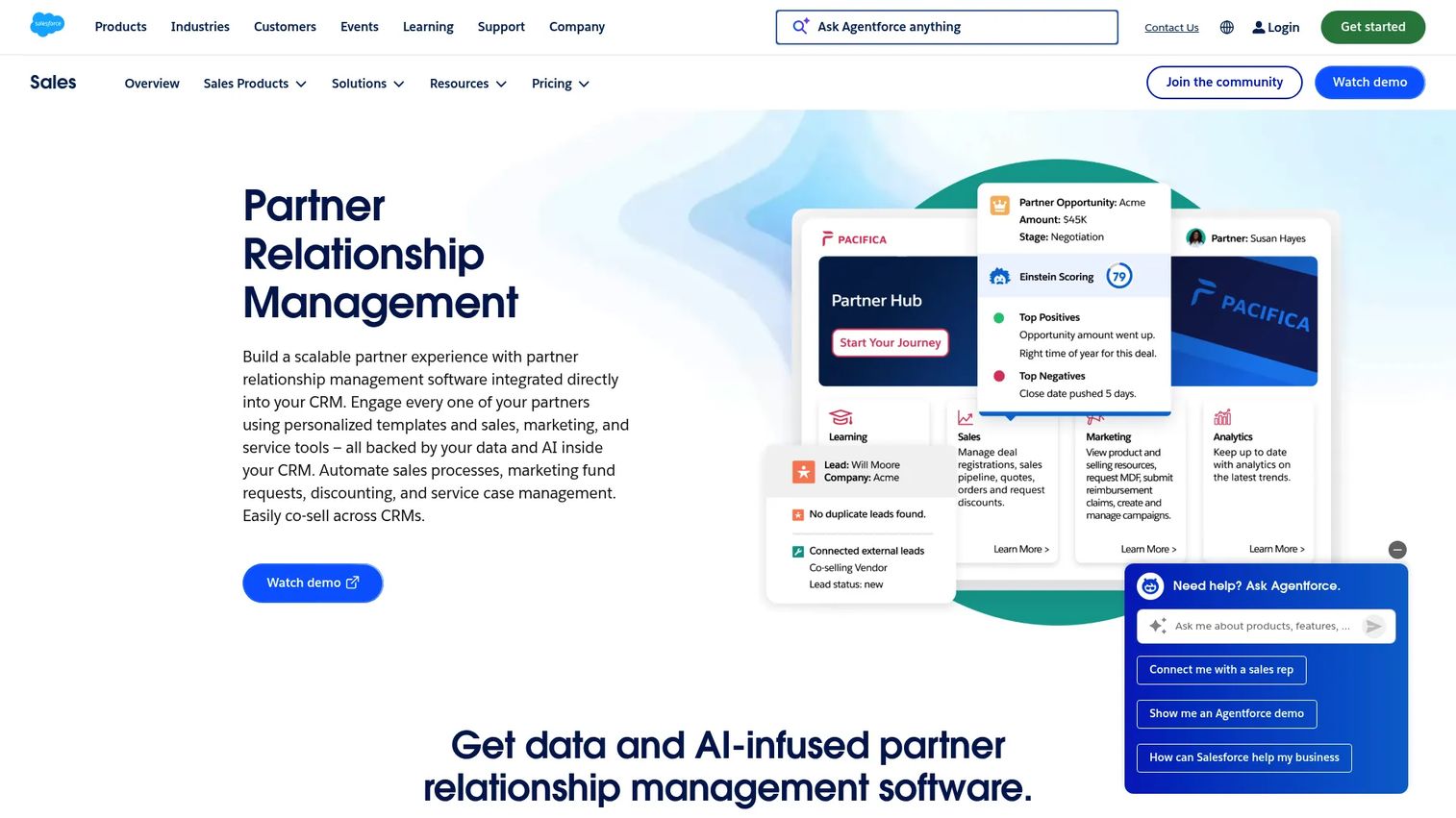
Salesforce Partner Relationship Management (PRM) is a channel management platform built on Salesforce CRM and Experience Cloud. It connects partner portals directly to Salesforce records, so deal registration, lead routing, pipeline visibility, and partner analytics all live alongside the opportunity and account data your direct team already uses.
The platform covers partner onboarding, deal registration, lead distribution, channel analytics, and co-branded marketing. Partner Connect also supports cross-CRM co-selling for ecosystem motions. It requires a Salesforce Sales Cloud Enterprise license or higher.
Best for: Channel sales teams already running Salesforce as their system of record, where RevOps wants a single data model for direct and partner-sourced pipeline.
Key features
- Experience Cloud partner portals and self-service access
- Deal registration with lead routing automation
- Partner Connect for cross-CRM co-selling
- Channel analytics and reporting dashboards
- Partner marketing, co-branding, and MDF request workflows
Why choose Salesforce PRM: Choose it when your direct and partner sales motion share the same CRM and your RevOps team needs one authoritative source for all pipeline data.
Salesforce PRM pricing: Partner Relationship Management starts at $25 per member per month, billed annually. Partner Ecosystem Management, which adds partner enablement and loyalty management, runs $50 per member per month. No free tier or trial is available.
G2 rating: 4.3/5
3. PartnerPortal
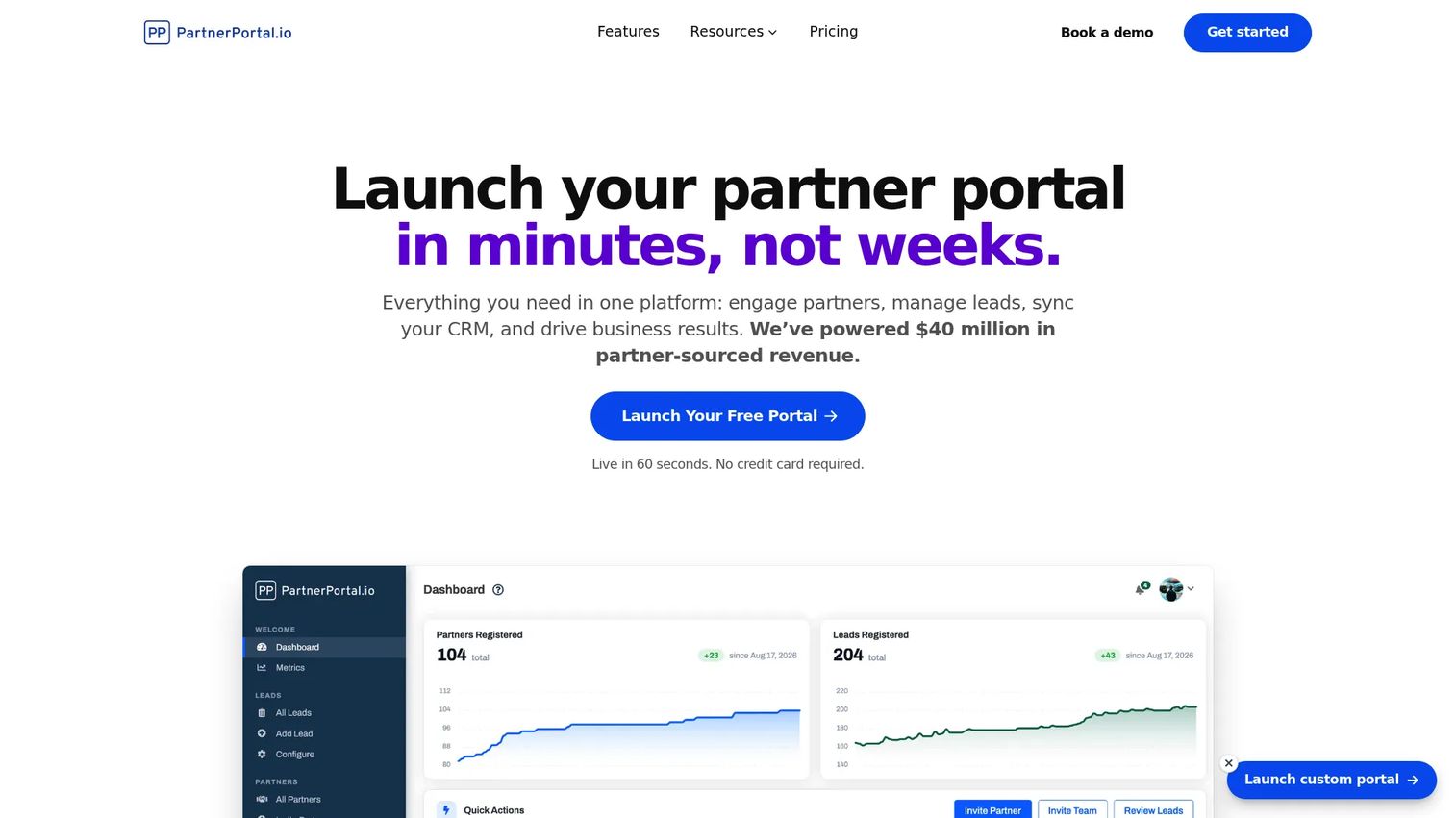
PartnerPortal is a PRM platform built for SMB and mid-market teams that need a functional partner portal without enterprise-level implementation overhead. It covers partner registration, lead and deal management with duplicate detection, resource libraries, training, certifications, and revenue tracking, all in a setup that most teams launch in days rather than months.
Native integrations connect to HubSpot, Salesforce, Zoho CRM, Stripe, QuickBooks, Pipedrive, Crossbeam, Slack, and Zapier. Custom branding, custom domains, SSO, and an MCP server are included across all plans.
Best for: Growing SaaS companies replacing partner spreadsheets and email threads with a structured portal for under 100 partners.
Key features
- Partner registration and onboarding workflows
- Deal registration with approval, tracking, and CRM sync
- Resource library with documentation, announcements, and certifications
- Commission, payout, and performance tracking
- Native integrations with HubSpot, Salesforce, Pipedrive, and Crossbeam
Why choose PartnerPortal: Choose it when speed to launch and cost matter more than enterprise depth. The free plan supports up to five partners and ten leads, which makes it a low-risk starting point before committing to a paid tier.
PartnerPortal pricing: Free plan available for up to five partners and ten leads. Professional runs $249/month for up to 100 partners and 1,000 leads. Enterprise is $399/month for unlimited partners and leads.
G2 rating: 4.5/5
4. Impartner PRM
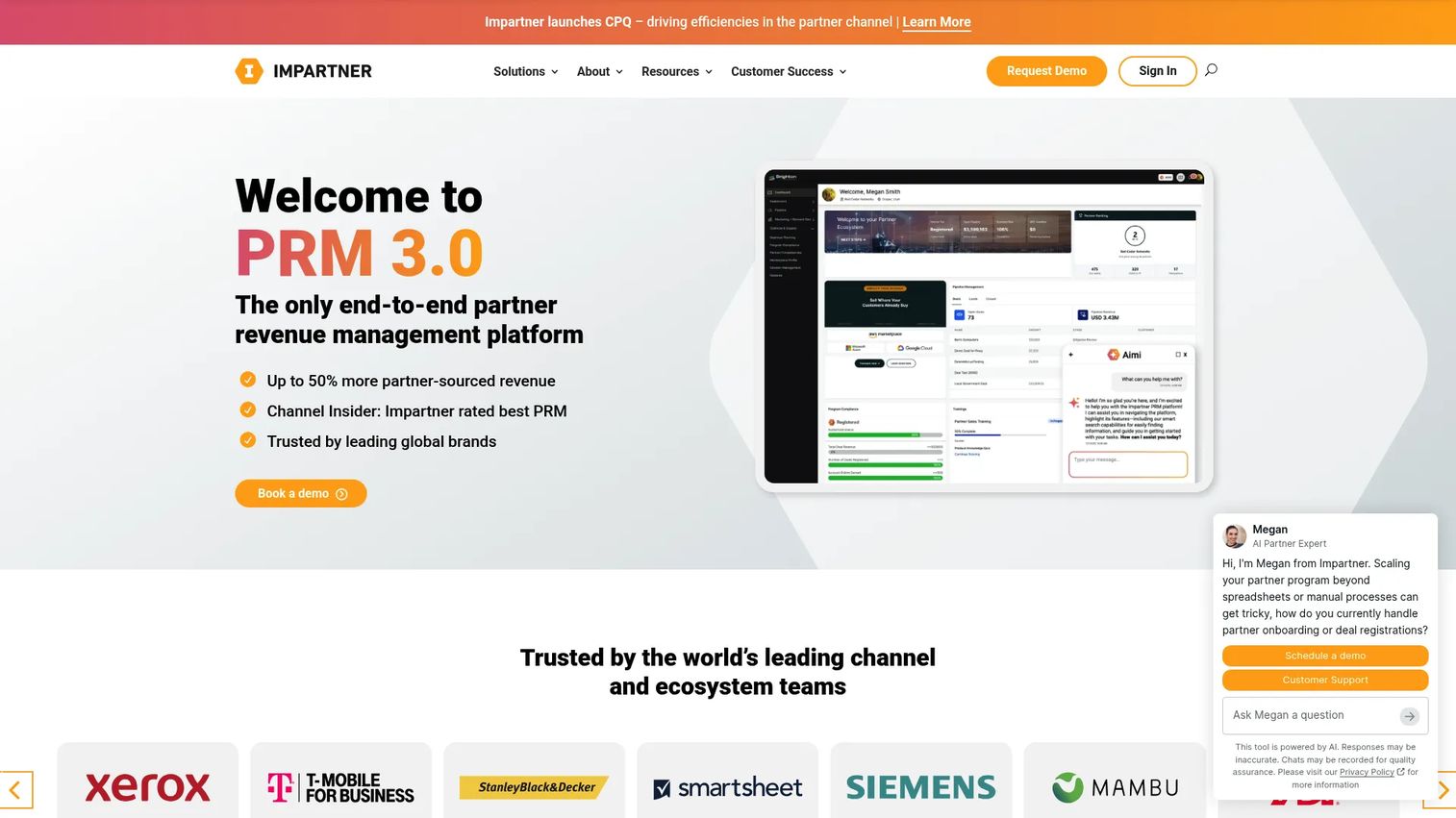
Impartner PRM covers the full partner lifecycle from recruitment through revenue measurement. It handles onboarding workflows, training, certification, deal registration, pipeline management, co-selling, MDF, partner marketing automation, business planning, and partner analytics, backed by its Aimi AI intelligence layer for ecosystem orchestration.
The platform suits organizations with complex partner tiers, multiple regions, different partner types, and a need for lifecycle orchestration rather than a simple content portal.
Best for: Enterprise and upper mid-market teams whose partner program has outgrown lightweight portals and needs systematic management of recruitment, activation, co-marketing, and measurement.
Key features
- End-to-end partner lifecycle management and onboarding workflows
- Pipeline management, deal registration, and co-selling support
- Training, certification, and partner learning management
- Partner marketing automation, MDF, and asset management
- AI-powered Aimi intelligence and workflow orchestration
Why choose Impartner PRM: Choose it when your partner program spans multiple regions, tiers, and partner types, and you need a platform that ties recruitment activity all the way through to partner-sourced revenue.
Impartner PRM pricing: Impartner offers Emerge, Ignite, Pro, and Enterprise packages. Contact Impartner directly for a figure.
G2 rating: 4.4/5
5. ZINFI
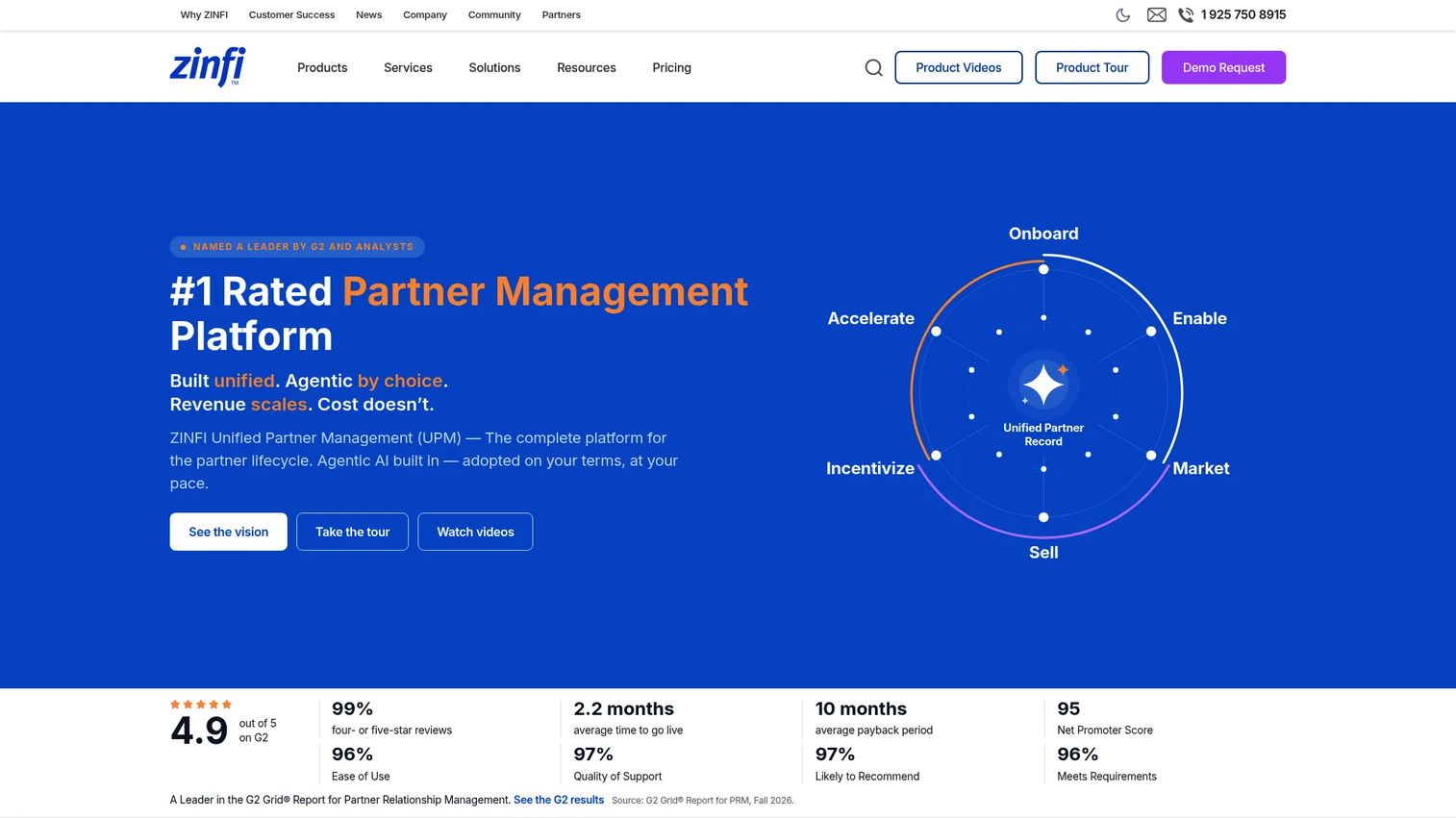
ZINFI is a Unified Partner Management platform built around modular apps that cover partner onboarding, training, certification, deal registration, lead management, through-channel marketing automation, MDF, commissions, rebates, rewards, and partner analytics. Teams add modules as their program matures rather than buying everything upfront.
The platform suits channel organizations that run diverse partner types, from resellers to distributors to technology alliances, under a single operational framework.
Best for: Technology companies managing complex channel programs across sales, marketing, training, and incentive workflows that need modular expansion capability.
Key features
- Modular PRM apps across onboarding, enablement, and incentives
- Through-channel marketing automation and microsites
- MDF, commissions, rebates, and rewards management
- Partner learning, certification, and training paths
- Workflow automation, analytics, and AI-assisted operations
Why choose ZINFI: Choose ZINFI when your partner operations span multiple functional areas and you want to add modules incrementally rather than overpaying for capabilities you're not ready to use.
ZINFI pricing: Quote-based. ZINFI does not display tier prices publicly; pricing reflects the modules selected, partner count, and program complexity.
G2 rating: 4.9/5
6. Allbound
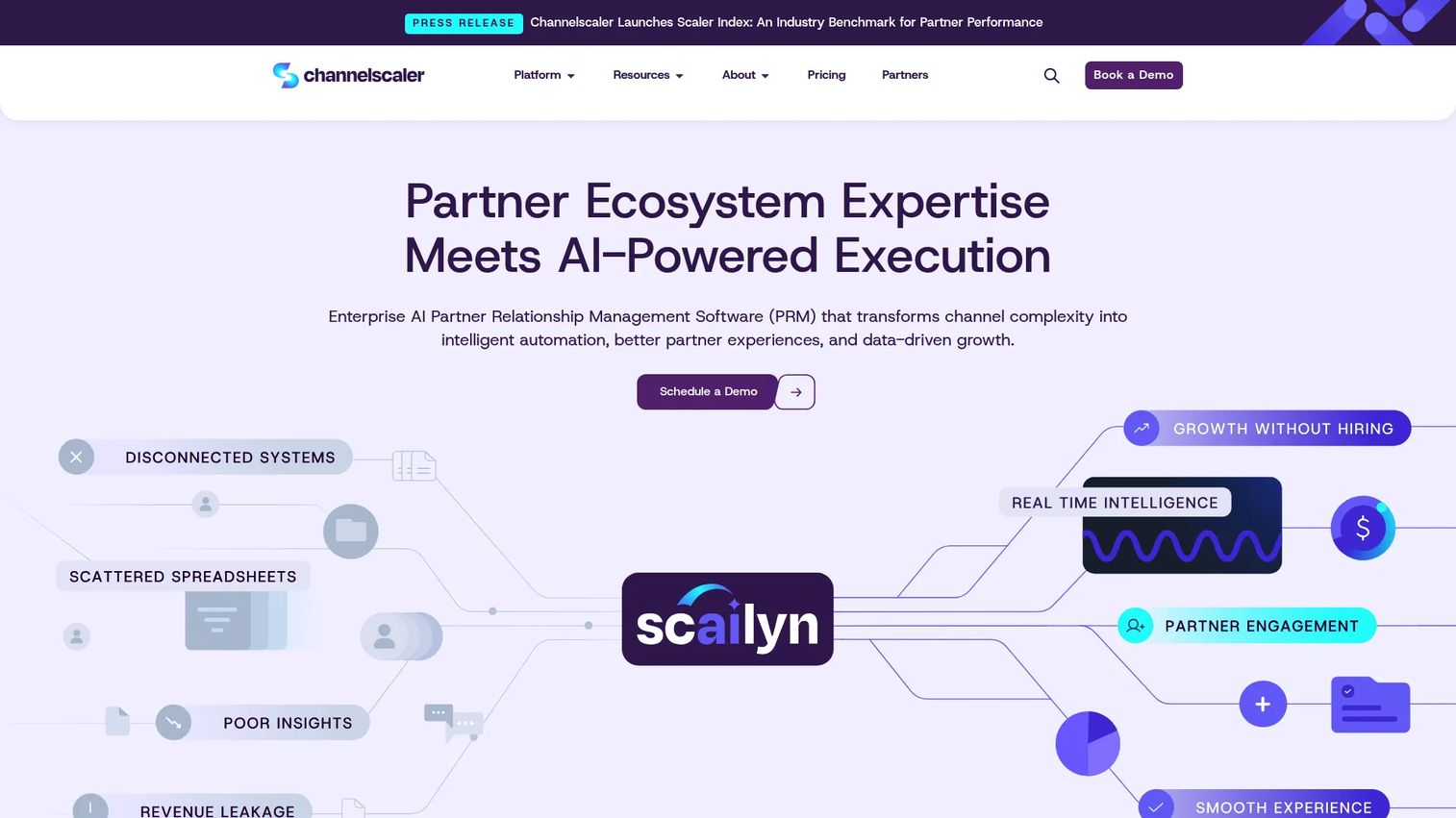
Allbound is a PRM platform focused on partner engagement, content access, and channel program execution. It covers partner portals, deal registration, training paths, content libraries, partner communications, and engagement analytics. The platform has undergone changes in recent years, with connections to Channelscaler, so verify the current product status directly with the vendor before committing.
Allbound fits channel teams where partner activation and content usage are the primary program metrics alongside deal registration.
Best for: Channel programs where partner engagement, structured training, and content access are the primary activation levers.
Key features
- Partner portal with controlled content access
- Deal registration and pipeline tracking
- Training paths and partner certification
- Partner resource and content library
- Partner engagement and usage analytics
Why choose Allbound: Choose it when your biggest activation problem is partners not knowing where to find content or how to progress through training, and you want a portal that surfaces the right asset at the right program stage.
Allbound pricing: Quote-based. Pricing reflects the number of active partner users, feature set, implementation, and support level. Contact Allbound for current figures.
7. ZiftONE
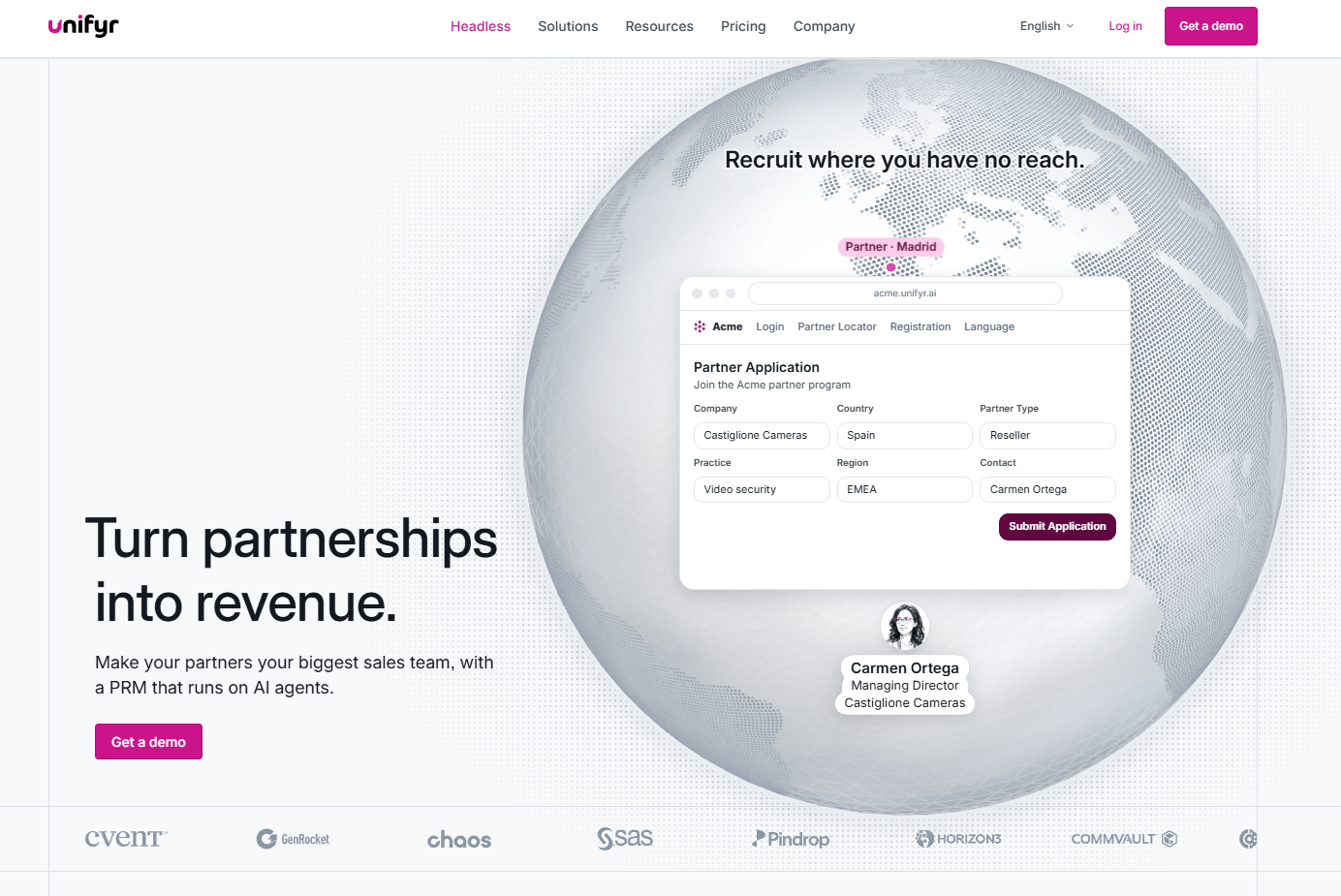
ZiftONE is a channel management platform combining PRM with through-channel marketing automation (TCMA), MDF management, co-branded campaign support, lead distribution, partner portals, and analytics. It addresses the co-marketing execution gap that pure PRM tools often leave: Getting partner-led demand generation campaigns built, funded, launched, and tracked at scale.
Note that the ZiftONE product page redirected to the Unifyr brand at the time of research. Verify the current product name and URL before publishing.
Best for: Partner marketing managers running co-marketing programs at scale, where MDF allocation, campaign syndication, and attribution all need to connect to the same system.
Key features
- PRM portal and partner administration tools
- Through-channel marketing automation and co-branded campaigns
- MDF management and demand generation
- Lead distribution and partner pipeline tracking
- Portal analytics and performance reporting
Why choose ZiftONE: Choose it when your partner marketing motion requires tight integration between portal management, funded co-marketing, and campaign performance reporting.
ZiftONE pricing: Quote-based.
8. PartnerStack
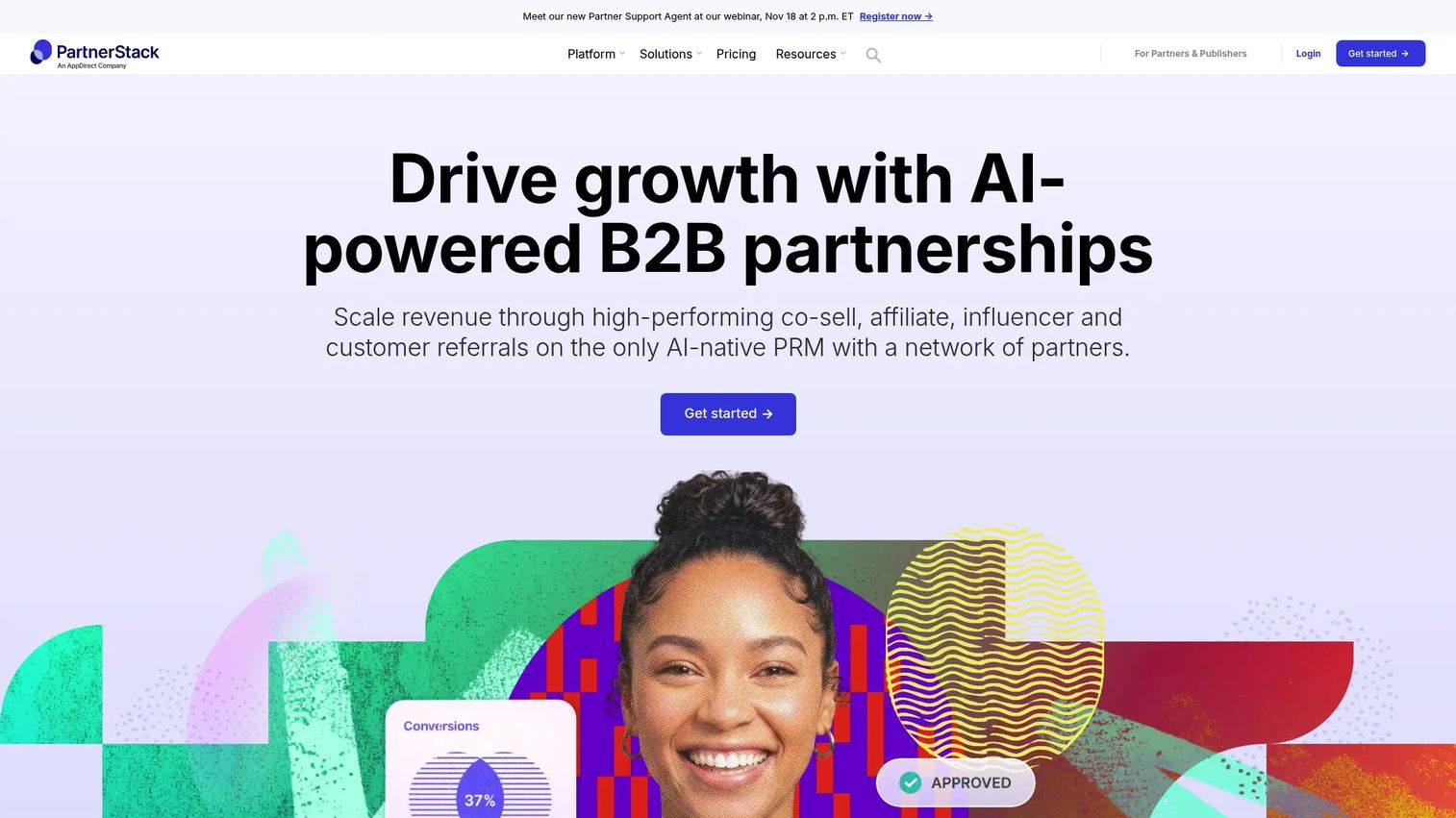
PartnerStack is an AI-native PRM platform built specifically for SaaS companies managing co-sell, affiliate, referral, influencer, and customer partner programs. Its marketplace lets partners discover your program, and its automated payout system handles commissions across a large partner network without manual intervention. AI-powered lead submission and an MCP integration are part of the current product.
The platform differs from traditional reseller PRM. It's built for programs where growth depends on recruiting and activating a broad partner base rather than managing a small number of large VAR relationships.
Best for: B2B SaaS companies running affiliate, referral, or multi-channel partner programs where partner recruitment, marketplace visibility, and automated payouts are the core operational need.
Key features
- PartnerStack Marketplace for partner discovery and recruitment
- Automated commission payouts across partner types
- Partner onboarding, training, and enablement journeys
- Deal registration and CRM integrations
- AI-powered lead submission and reporting
Why choose PartnerStack: Choose PartnerStack when partner growth depends on recruiting a large, diverse partner base and paying them accurately and on time, rather than on managing complex deal approval workflows.
PartnerStack pricing: Quote-based across Launch, Growth, and Enterprise plans. Final pricing is confirmed during a demo and reflects partner program size, feature needs, and support level.
G2 rating: 4.7/5
9. Crossbeam
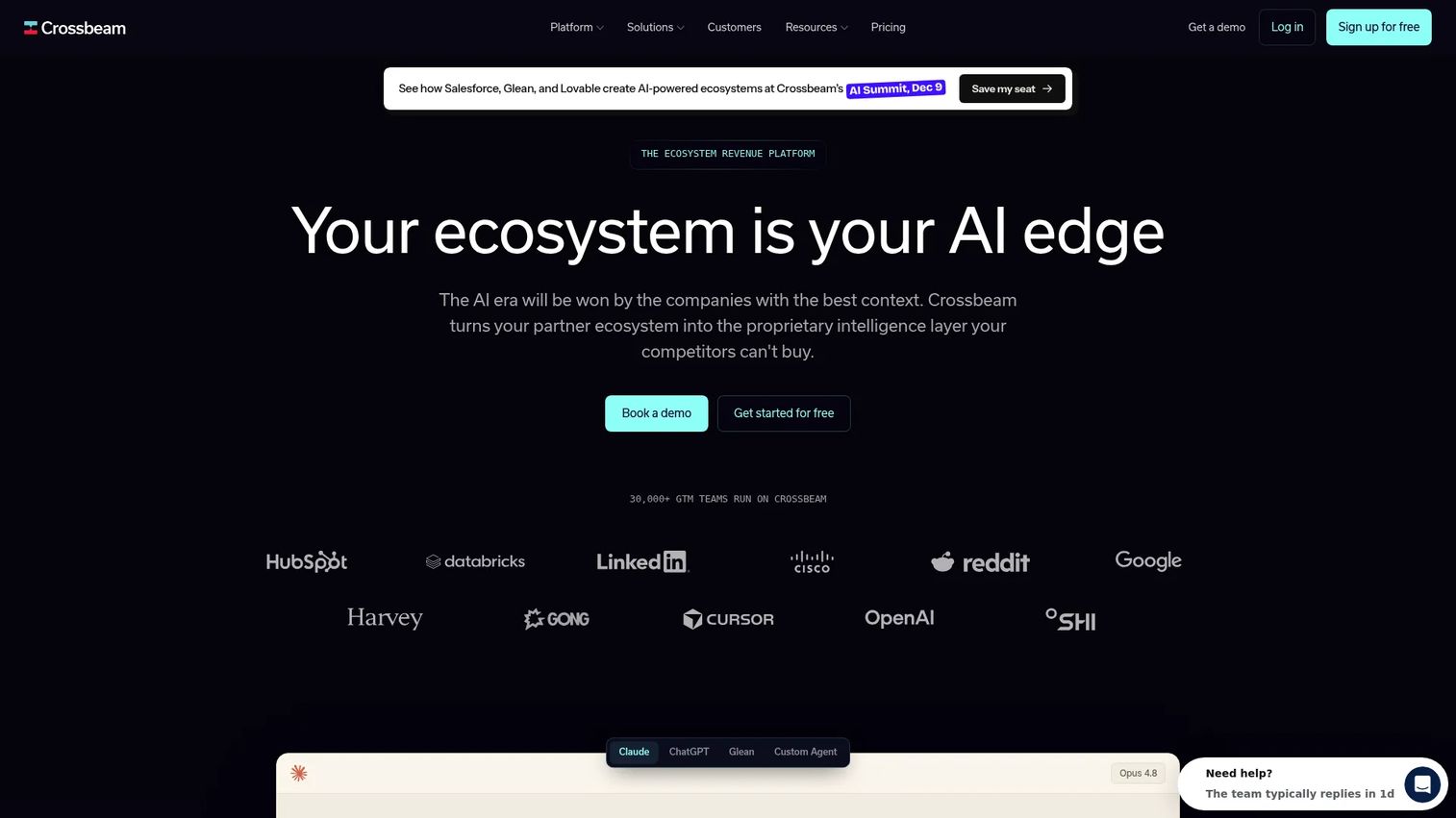
Crossbeam is an ecosystem revenue platform for teams that use partner data to find shared accounts, generate pipeline, accelerate deals, and measure partnership impact. Its core capability is account mapping between partner organizations, surfacing overlaps across customers, prospects, and open opportunities without exposing either partner's full CRM data.
Crossbeam is not a traditional partner portal. It doesn't host content libraries, training, or deal registration workflows in the conventional PRM sense. Its strength is ecosystem intelligence for alliances and co-sell motions.
Best for: Alliances and ecosystem teams whose primary pain is finding the right co-sell accounts, not distributing enablement content.
Key features
- Account mapping and partner data sharing
- Greenfield identification and shared opportunity lists
- Crossbeam Copilot and Deal Navigator for co-sell workflows
- Partner Impact reporting and performance dashboard
- Salesforce integration and Slack alerts
Why choose Crossbeam: Choose Crossbeam when your biggest partner problem is knowing which accounts to pursue together, not where to store your battlecards. Free tier supports up to three users and 50 annual Crossbeam Credits.
Crossbeam pricing: Free plan at $0/forever for up to three users. Connector plan runs $4,800/year with monthly payment available at a 10% surcharge. Supernode and Enterprise plans are custom-priced.
G2 rating: 4.8/5
10. Jet Admin
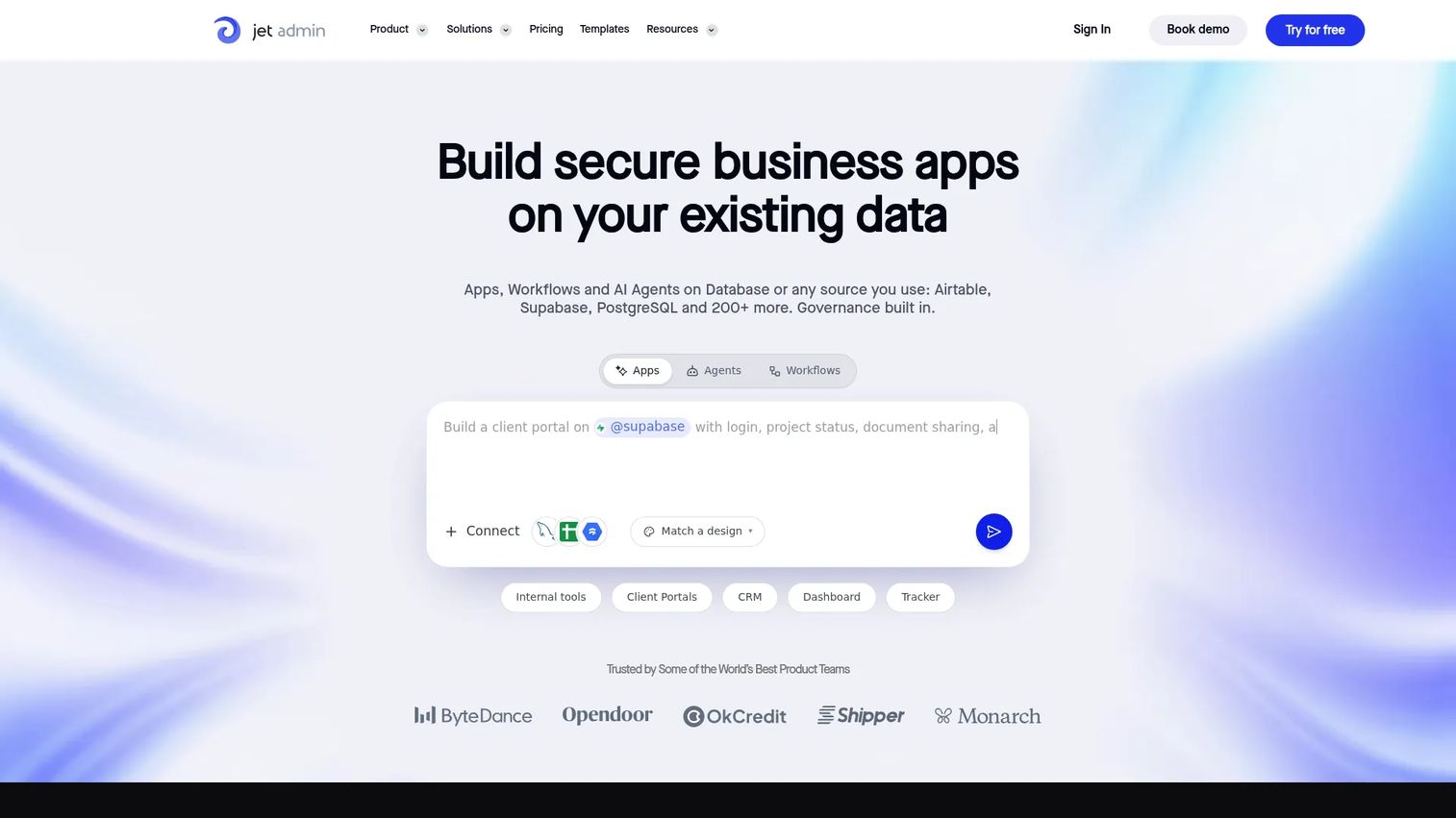
Jet Admin is a no-code platform for building custom business apps and portals connected to existing data sources. It connects to PostgreSQL, MySQL, MongoDB, Supabase, Firebase, REST APIs, Google Sheets, Airtable, and over 200 other sources, making it the right choice when your partner portal needs to reflect a data model that packaged PRM software would force you to redesign.
Role-based access controls, SSO/SAML, audit logs, cloud and on-premise deployment options, and AI-powered app building are included.
Best for: Teams whose partner data already lives in an existing database or proprietary system, and who need a custom portal that reflects that reality without a full engineering project.
Key features
- Custom portal builder connected to 200+ data sources
- PostgreSQL, Firebase, REST API, and Google Sheets connectors
- Granular role-based access, SSO/SAML, and audit logs
- Workflow automation and built-in authentication
- Cloud, self-hosted, on-premise, and air-gapped deployment
Why choose Jet Admin: Choose it when your partner workflows are unique enough that a packaged PRM would require more workarounds than a custom-built portal. The free plan lets you test the approach before committing.
Jet Admin pricing: Free plan at $0/month. Pro is $20/month ($16/month billed yearly). Business is $100/month ($80/month billed yearly). Enterprise is custom pricing.
G2 rating: 4.2/5
11. HubSpot

HubSpot is not a PRM, but it handles early-stage and straightforward partner workflows well for teams already running HubSpot as their CRM. Forms, workflows, custom properties, lifecycle stage tracking, email sequences, dashboards, and customer portal features combine to create a lightweight partner management layer without adding new software.
Teams use HubSpot to track partner-sourced leads through lifecycle stages, automate partner communications, build referral intake forms, and report on partner-influenced pipeline alongside direct sales metrics.
Best for: Partner programs at an early stage where the team wants to manage partner contacts, referrals, communications, and reporting inside the existing CRM before investing in standalone PRM.
Key features
- CRM contact and company records for partner tracking
- Forms and workflows for referral intake and partner nurture
- Partner activity dashboards and reporting
- Email automation for partner communications
- AI-powered content, prospecting, and data agents
Why choose HubSpot: Choose HubSpot when your partner motion is early, your team already lives in HubSpot, and a full PRM deployment would require more infrastructure than the program currently justifies.
HubSpot pricing: Free plan available for up to two users. Starter plans begin at $7/seat/month. Professional runs $1,300/month (includes six seats). Enterprise is $4,700/month (includes eight seats).
G2 rating: 4.4/5
12. Pipedrive
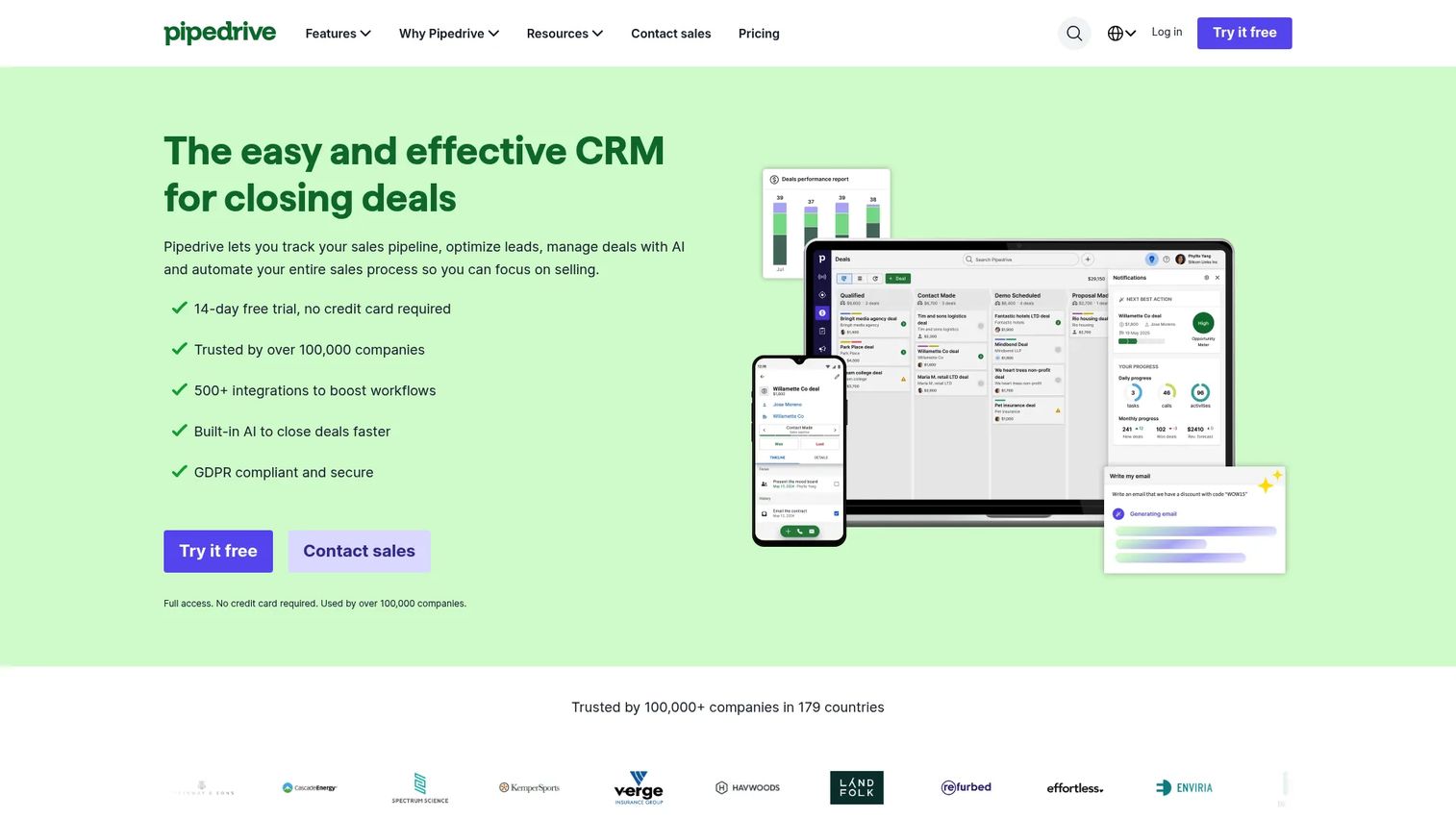
Pipedrive is a sales CRM with a visual pipeline that partner teams use to track referred opportunities and partner-sourced deals through stages from introduction to close. Custom fields, workflow automations, activity tracking, email sync, and reporting dashboards give a small channel team reasonable visibility into partner deal progress without purpose-built PRM software.
Pipedrive is not a partner portal. It doesn't support content libraries, partner onboarding, training, or deal registration in the structured way a PRM does. Its strength is clean pipeline visibility for a sales-led partner motion.
Best for: Small sales-led partner programs where the main job is tracking partner-referred deals through a pipeline and reporting on conversion.
Key features
- Visual sales pipeline and deal stage management
- Custom fields for partner source tracking
- Workflow automation and activity reminders
- Email sync and meeting intelligence
- Reporting dashboards and revenue forecasting
Why choose Pipedrive: Choose Pipedrive when your partner program is sales-led, your team already knows Pipedrive, and you need deal visibility more than a full portal.
Pipedrive pricing: Lite plan starts at $14/seat/month billed annually. Growth is $39/seat/month, Premium is $59/seat/month, and Ultimate is $79/seat/month. A 14-day free trial is available across all plans.
G2 rating: 4.3/5
13. impact.com

impact.com is a partnership management platform for brands running affiliate, creator, publisher, and customer referral programs at scale. It covers partner discovery, contract workflows, tracking, commission rules, automated payouts, fraud scoring, multi-touch attribution, and performance reporting in a single platform.
This is a different category from reseller PRM. Impact.com excels when the program's value comes from measurable referral activity across a large, distributed partner base rather than from managing a small group of deep reseller relationships.
Best for: Brands managing affiliate, creator, influencer, and referral programs where tracking accuracy, automated payouts, and fraud protection drive the partner motion.
Key features
- Partner discovery and marketplace access
- Link tracking, attribution, and performance reporting
- Contract and commission management
- Automated partner payouts
- Creator and influencer management with fraud scoring
Why choose impact.com: Choose it when your partner portal requirement is really a performance partnership management requirement. The distinction matters: Impact.com is built for volume-based referral programs, not channel reseller orchestration.
impact.com pricing: Starter plan at $30/month with a 30-day free trial. Essentials is $500/month. Pro is $2,500/month. Enterprise runs $10,000/month.
G2 rating: 4.4/5
Considerations when choosing partner portal software
Partner motion fit
Reseller, referral, affiliate, co-sell, technology alliance, and SI programs each need different core capabilities. A platform built for affiliate payouts will not automatically solve deal registration for VARs. Before evaluating vendors, write down the two or three partner workflows that drive most of your program's pipeline. That list tells you which category of tool fits, and which ones you can rule out quickly.
CRM and data integration depth
Where partner, account, lead, and opportunity data live determines how much a portal actually improves reporting. If Salesforce or HubSpot is the system of record, integration depth matters more than a polished portal interface. Confirm that the tool writes deal registration data, partner activity, and attribution back to your CRM in a format RevOps can use, not just exports it as a CSV.
Partner activation and enablement quality
A portal is only useful if partners open it and find something worth sharing. Evaluate the content library, training, certification, and demo experience, not just the admin dashboard. Partner teams consistently report that demos are a wall: Partners don't know the product well enough to show it confidently. Tools that add interactive product experiences alongside static files close that gap faster than more documents do.
Analytics and attribution coverage
Partner-sourced pipeline and partner-influenced pipeline are two different numbers, and finance will ask for both. Check whether the platform tracks deal registration, partner referral attribution, content engagement by partner, and co-marketing campaign performance. Platforms that push engagement data into your CRM make attribution defensible at the board level.
Implementation and governance requirements
Admin ownership, permissions, SSO, audit logs, regional access controls, content versioning, and partner tier management add up quickly in enterprise programs. Ask each vendor about typical implementation time, change management requirements, and whether a dedicated CSM is included or billed separately. A fast-to-launch tool that breaks under governance requirements costs more to fix than a slower enterprise deployment done right.
Conclusion
Partner portal software spans a wider range than the category name suggests. The right choice depends on what your program actually needs most right now.
If partners already have a portal but struggle to show the product, start with Guideflow to add interactive demos, sandboxes, and a demo center alongside existing content. If the whole partner lifecycle needs a system of record, evaluate Impartner PRM or ZINFI for enterprise depth, or PartnerPortal for a fast, affordable start. If co-selling is the core motion, Crossbeam's account mapping fits better than a traditional content portal. For affiliate and performance partnerships, PartnerStack and impact.com handle recruiting, tracking, and payouts at scale.
The common thread across all of them: A portal earns its place only when partners use it. Start with the workflows that actually block your partners from selling, and pick the tool that removes that specific friction first.
Start your journey with Guideflow today!
FAQs
Partner portal software is a secure, branded workspace where external partners access enablement content, register deals, track referrals, complete training, and measure partner-contributed revenue. It may stand alone or sit inside a broader PRM platform, depending on how the vendor packages it.
A partner portal is the partner-facing access layer where partners log in, find content, and take action. PRM software is the broader platform for managing the full partner lifecycle, from recruitment and onboarding through pipeline tracking, incentives, and revenue measurement. Many PRM platforms include a partner portal as one component.
At a minimum: Partner onboarding workflows, a content and resource library, deal registration, CRM integration, partner analytics, and access controls. More mature programs also need training and certification, MDF management, co-branded asset support, and commission or payout tracking.
Pricing ranges from free tiers for entry-level portals (PartnerPortal, Crossbeam, Jet Admin) through mid-market tools in the hundreds of dollars per month, to enterprise PRM platforms priced by program size, module count, and implementation scope. The main cost drivers are partner count, active users, feature modules, integrations, and professional services.
Yes. PartnerPortal offers a free plan supporting up to five partners and ten leads. Crossbeam provides a free tier for up to three users. Jet Admin includes a free plan for custom portal building. Free plans typically fit pilot programs or early-stage partner directories rather than programs with active deal registration and MDF workflows.
For early-stage programs, yes. HubSpot and Pipedrive both support referral intake forms, partner contact tracking, pipeline reporting, and automated partner communications without adding new software. A dedicated PRM becomes necessary when the program requires structured partner onboarding, training, deal registration with approval workflows, or commission management at scale.
The answer depends on the specific job. For partner enablement demos and co-branded content, Guideflow. For channel marketing automation and MDF, ZiftONE. For a fast, affordable portal with CRM sync, PartnerPortal. For enterprise lifecycle orchestration across all partner types, Impartner PRM or ZINFI.
Interactive demos turn static portal assets into guided product experiences that partners can share in outbound emails, co-branded campaigns, marketplace listings, events, and certification programs. Instead of asking partners to describe the product from a deck, you give them a clickable walkthrough they can send directly to a prospect. Analytics on demo engagement show which partners are active and which accounts are exploring the product, giving the partner marketing team real signal on partner-influenced pipeline.