
Your carrier just billed you for a package that arrived a day late. And a residential surcharge on a commercial address. And a dimensional weight that does not match what shipped. None of it is big on its own. Multiply it across every invoice, every week, and the leakage adds up to real margin walking out the door.
Most finance and operations teams never see it, because manual invoice review does not scale. A single UPS or FedEx invoice can run thousands of line items with dozens of surcharge codes. Nobody has time to check each one against the contract, catch the late delivery inside the refund window, and file the claim before it expires. So the money stays with the carrier.
The category exists to close that gap. The global parcel audit software market was valued at $1.2 billion in 2025 and is projected to reach $2.4 billion by 2034 at a 9.8% CAGR, according to MarketIntelo (2025). Retail and e-commerce organizations account for 42.1% of adoption, and SMEs are now the fastest-growing segment at 35.2% of the market. Translation: shippers of every size are treating carrier invoices as recoverable spend, not fixed cost.
That is the shift worth understanding before you pick a tool. Automated shipping audit software turns invoice review, billing error detection, and shipping cost recovery into a background process instead of a manual chore. This comparison breaks down which platforms do it well, and which fit different kinds of shipping operations.
What's inside
This list covers seven parcel audit services and platforms that handle parcel invoice review, billing error detection, claim filing, and refund recovery. Some are software-led, some are managed services, and some sit inside broader shipping intelligence or transportation management platforms.
We selected tools based on four criteria that matter most for teams protecting margin: automation depth (how much runs without manual review), carrier coverage (which carriers and modes are audited), recovery workflow (how claims get filed and money comes back), and reporting (whether you get visibility into what is driving cost). The picks range from outsourced recovery to full analytics suites, so match the model to how hands-on you want to be.
TL;DR
- Best for unified audit and analytics: Enveyo combines parcel and freight audit with data normalization, modeling, and contract insight in one platform.
- Best for managed refund recovery: Refund Retriever files FedEx and UPS claims on a performance-based fee, so there is no cost until money comes back.
- Best for shipping intelligence with audit: Reveel Shipping Intelligence Platform pairs parcel spend visibility with audit and carrier agreement management.
- Best for parcel spend intelligence: TransImpact layers dashboards, alerts, and contract negotiation on top of automated cost recovery.
- Best for low upfront cost: Shipware runs a gainshare model on invoice audit and refund recovery, with a free portal tier when bundled.
- Best for all-in-one TMS with audit: FreightPOP folds invoice auditing into a full multi-modal transportation management platform.
What parcel audit software does
Parcel audit software automatically reviews carrier invoices, detects billing errors and service failures, files refund claims, and reports on shipping spend, so shippers recover money and control cost without manual invoice review.
That is the plain-English version. Here is what sits underneath it.
What it does. It ingests your carrier invoices, matches each line item against your contract and service commitments, flags discrepancies, and either files claims automatically or queues them for approval. Good parcel auditing software also aggregates the data into reporting you can act on.
What it typically catches. A parcel invoice audit surfaces the errors manual review misses:
- Duplicate charges billed twice on the same shipment
- Late shipments that qualify for a service refund
- Incorrect dimensional or actual weight
- Accessorial and surcharge errors (residential, address correction, fuel)
- Third-party or unauthorized billing
- Charges for packages that were never delivered
How automated recovery works. Once the software detects a qualifying error, it handles carrier invoice auditing end to end: identify the charge, validate it against the contract, file the claim inside the refund window, and track the credit back to your account. This is the core of parcel invoice recovery, and the reason automation beats manual review. Refund windows are short, and carriers do not remind you.
Why reporting and contract compliance matter. Charge validation is only half the value. The other half is knowing whether your carrier is honoring the agreement you signed. Contract compliance reporting shows where negotiated discounts are not being applied and which surcharges are eroding your rates. That data feeds better contract negotiation next cycle.
Where multi-carrier support changes the economics. If you ship across FedEx, UPS, DHL, and regional carriers, single-carrier auditing leaves money on the table. Multi-carrier parcel audit services consolidate every invoice into one view, so you compare performance and catch errors across the whole network.
When to use parcel audit software
Reduce invoice leakage
Once you are shipping enough volume that small per-invoice errors compound, manual review stops being viable. A few dollars of overcharge per shipment across tens of thousands of shipments a month is meaningful spend. If your finance team cannot reconcile carrier invoices line by line, automated auditing catches what they cannot.
Recover refunds without manual review
Late delivery refunds and billing corrections have tight claim windows, often 15 days for a service failure. Teams that cannot keep pace with carrier billing complexity miss those windows and forfeit the money. Automated parcel invoice recovery files claims the moment a qualifying error appears, so recovery happens on time, every time, without anyone watching the clock.
Improve carrier and contract decisions
When leadership needs to know which lanes, services, or surcharges are driving cost, audit data becomes decision fuel. Visibility into surcharge trends and contract compliance tells you where to push in the next negotiation and whether a carrier is delivering the rates you agreed to. That turns auditing from a back-office task into a margin lever.
Comparison table
Here is how the seven tools compare. Some are managed recovery services, some are software platforms, and some are broader shipping intelligence or TMS suites with audit built in. Pricing models vary widely, from performance-based gainshare to flat monthly to custom quotes.
| # | Product | Intent | Key differentiation | Pricing | G2 rating |
|---|---|---|---|---|---|
| 1 | Refund Retriever | Managed refund recovery | FedEx and UPS audit with claims filed on performance-based fee | Performance-based, no monthly or setup fee | 4.0/5 |
| 2 | TransImpact | Parcel spend intelligence with recovery | Dashboards, alerts, and contract negotiation on top of audit | 60-day free trial; results-based | Not listed |
| 3 | Shipware | Invoice audit and refund recovery | Gainshare model plus a spend management portal | Free (bundled) to $2000/mo portal | 4.9/5 |
| 4 | Enveyo | Multi-carrier audit and analytics | Parcel and freight audit with data normalization and modeling | Custom quote | Not listed |
| 5 | FreightPOP | TMS with invoice auditing | Audit inside a full multi-modal transportation platform | Call for quote | 4.8/5 |
| 6 | Reveel | Shipping intelligence with audit | Parcel spend dashboards, agreement management, and claims | Free access tier; Get a Demo | 4.5/5 |
| 7 | Freightview | Multi-modal shipping with invoice matching | Quote, book, track, and audit in one platform | From $149/mo | 4.7/5 |
1. Refund Retriever
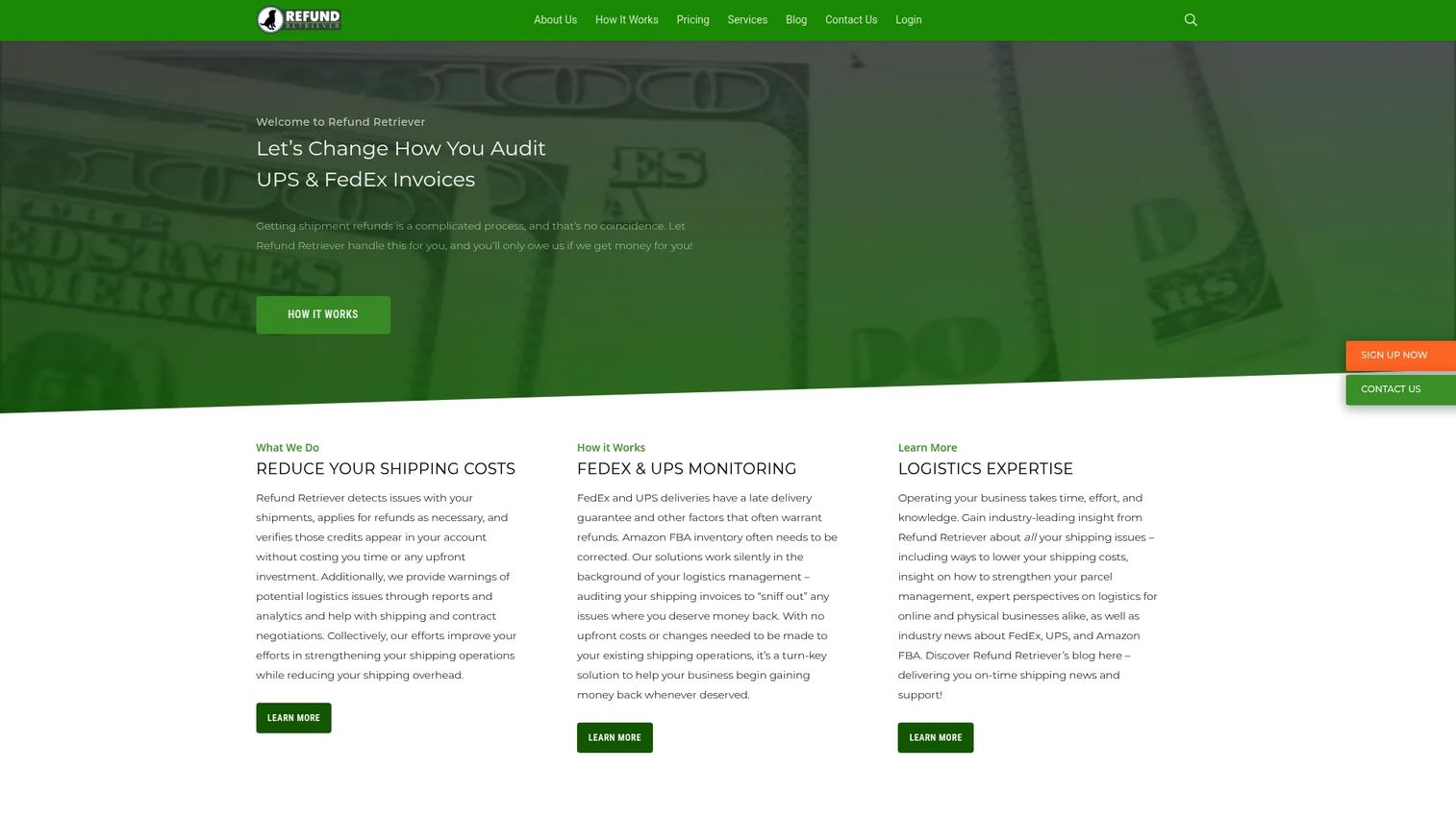
Refund Retriever is shipping invoice auditing software and service built around one job: getting FedEx and UPS money back. It automatically detects refund-eligible charges, files the claims, and reports on your shipping spend, so recovery happens without your team building an internal audit function. This is a service-led model, which suits operations teams that want results without workflow overhead.
Best for: Shippers using FedEx or UPS who want outsourced refund recovery and invoice auditing without hiring for it.
Key strengths
- Automated claims filing: Detects FedEx and UPS refund-eligible charges and files claims automatically, so nothing slips past the window.
- Overcharge warnings: Flags overcharges, third-party billing, and undelivered packages before they become sunk cost.
- Reports and analytics: A dashboard shows where money leaked and what came back, so you can see the recovery working.
Why choose Refund Retriever: The pull here is the risk profile. There is no monthly fee, no setup fee, and no contract. You pay a percentage of what is actually recovered, which means the tool only earns when you do. For a lean operations team that ships FedEx and UPS and does not want to staff an audit desk, that alignment is hard to argue with.
Refund Retriever pricing: Pricing is performance-based, charged as a percentage of successfully disputed and credited refunds. The published rate starts at 50% for recovery up to $250,000, dropping to 45% up to $500,000 and 40% up to $1,000,000, with custom terms above that. There is no setup fee, no contract, and no cancellation fee, and reports are free. Refund Retriever holds a 4.0/5 rating on G2.
2. TransImpact
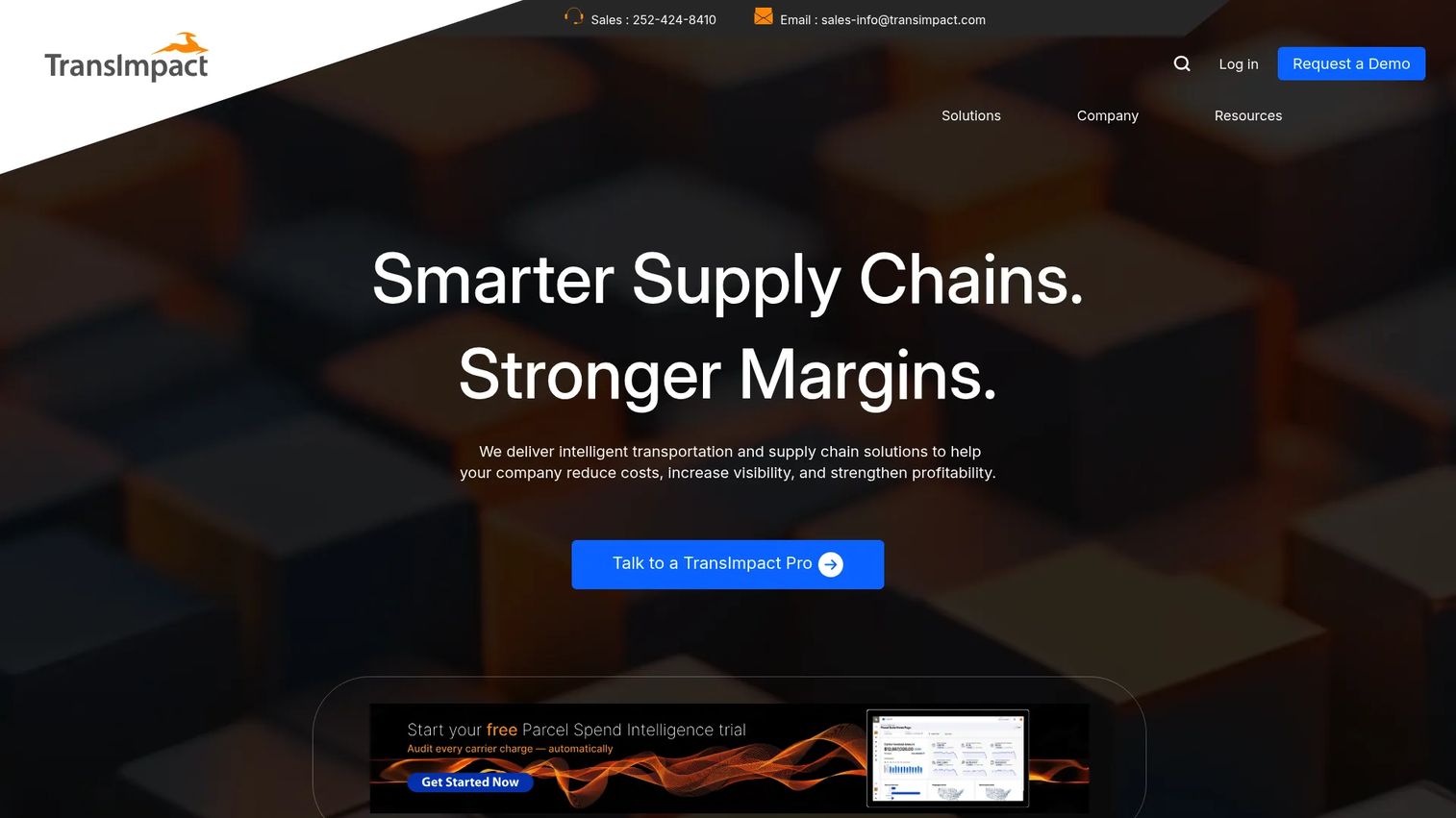
TransImpact is a supply chain and logistics intelligence platform that moves beyond basic auditing into parcel spend intelligence. Alongside automated shipping cost recovery, it layers in demand forecasting, supply planning, and parcel contract negotiation, so shippers can reduce cost and improve planning from the same data. It fits mid-market and enterprise teams that want analysis, not just claims.
Best for: Mid-market and enterprise shippers who want parcel spend visibility, cost recovery, and contract leverage in one place.
Key strengths
- Parcel spend intelligence: Dashboards and alerts turn raw invoice data into visibility on where spend is trending and why.
- Contract negotiation support: Uses your shipping data to build leverage for better carrier rates.
- Broader planning tools: Demand forecasting and supply planning connect shipping cost to the wider supply chain picture.
Why choose TransImpact: If your interest goes past recovering refunds toward understanding and reshaping parcel spend, TransImpact reaches further than a pure audit tool. The recovery and insight use cases work together: you claim what you are owed, then use the same data to negotiate down the rates driving cost in the first place.
TransImpact pricing: TransImpact does not publish numeric pricing on its site. The public offers are engagement-led: a 60-day free trial for Parcel Spend Intelligence, a no-cost shipping analysis tied to Parcel Contract Negotiation, and a complimentary freight spend analysis for Freight Audit & Pay. Contract negotiation runs on a results-based fee. Expect a demo-led sales process to scope pricing to your volume.
3. Shipware
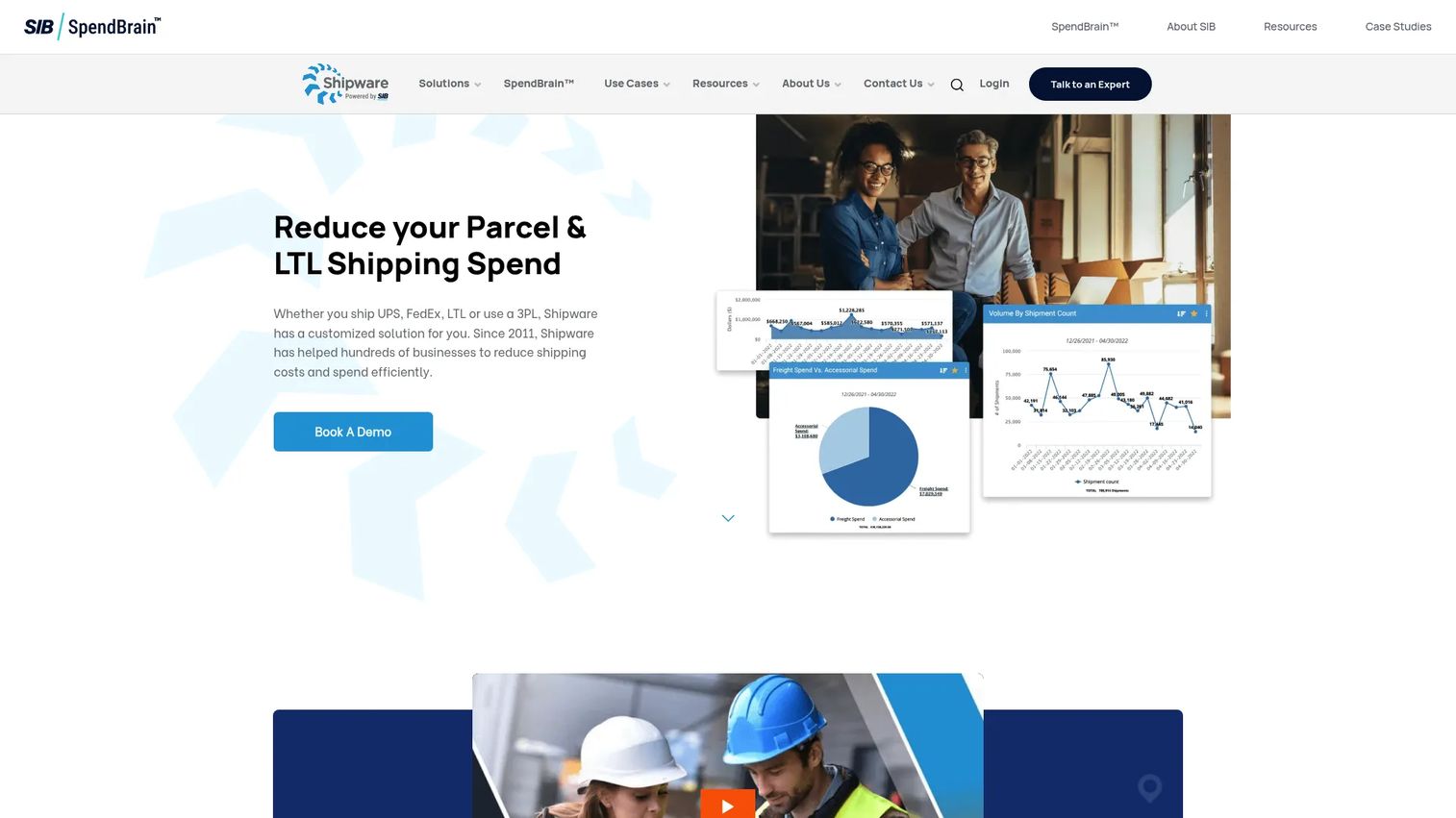
Shipware is shipping spend management and contract optimization software and service covering parcel, LTL, 3PL, and fulfillment shippers. It combines invoice audit and refund recovery with a spend management portal that surfaces real-time analytics, cost scenario modeling, and KPI dashboards. The recovery side runs on a gainshare model, which keeps the upfront cost low.
Best for: Businesses that want parcel and freight spend visibility plus contract optimization without a large upfront commitment.
Key strengths
- Real-time analytics: Live shipping and logistics dashboards show spend as it happens, not a month later.
- Cost scenario modeling: Transportation cost modeling lets you test carrier and lane changes before you commit.
- Gainshare recovery: Invoice audit and refund recovery priced as a share of savings, so cost tracks results.
Why choose Shipware: The gainshare structure makes Shipware attractive for teams that want the recovery upside without funding it in advance. It fits best when you want auditing bundled with broader spend visibility and contract negotiation help, rather than a standalone claims service. The portal adds a layer of reporting that outlasts any single recovery cycle.
Shipware pricing: Basic portal access is free when bundled with another Shipware service such as Parcel Pay, Parcel Audit, or Parcel Contract Negotiation. Premium access starts at $1,000 per month bundled with Parcel Pay, or $2,000 per month without it, both for unlimited users. A 30-day free trial is available. Shipware holds a 4.9/5 rating on G2, though from a small review sample.
4. Enveyo
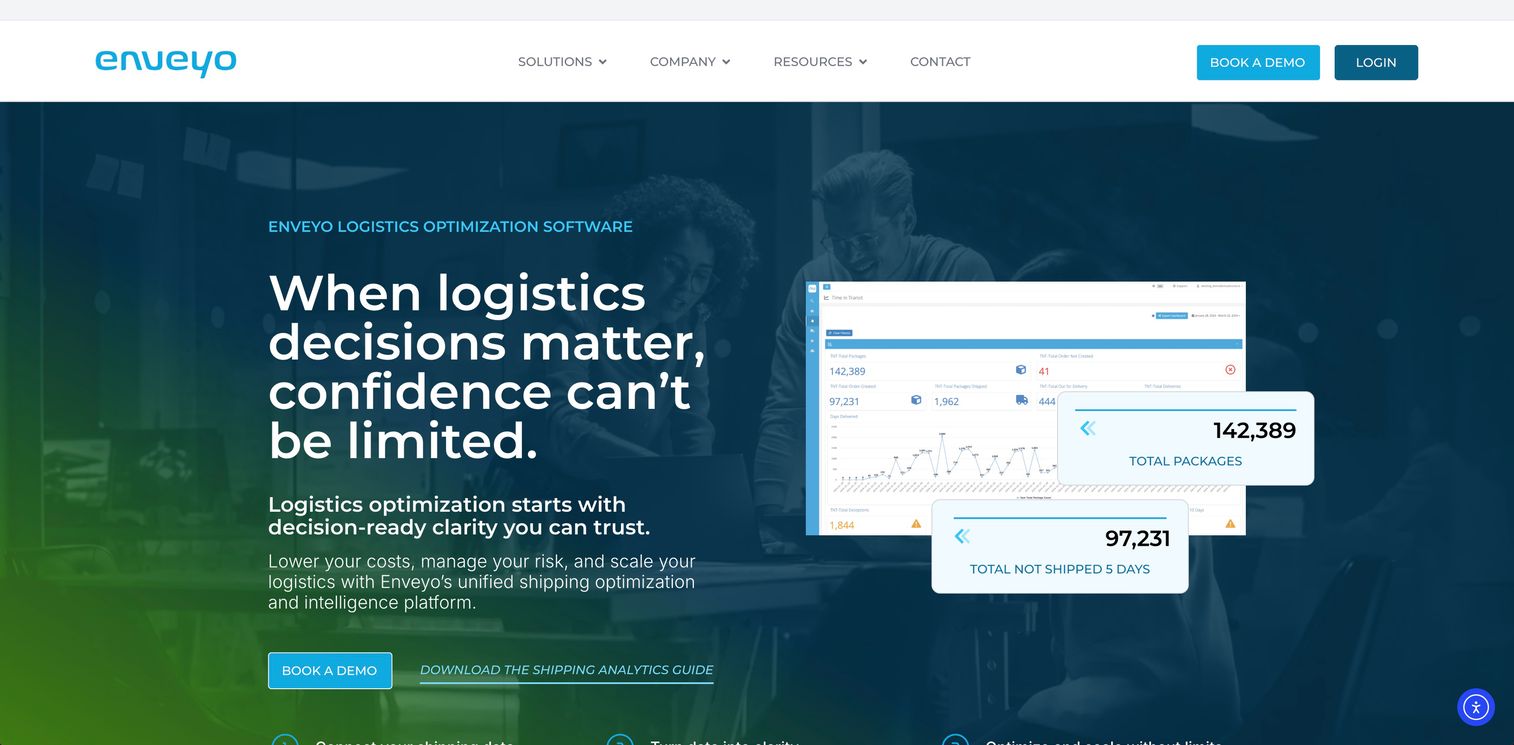
Enveyo is logistics optimization software for shippers and 3PLs, and it is the deepest audit platform on this list. Rather than focusing only on refund recovery, it treats parcel and freight audit as one connected workflow, built on clean, normalized logistics data. That data foundation feeds modeling, alerting, and contract insight, so the audit is a starting point rather than the whole product.
Best for: Enterprise shippers and 3PLs that need parcel and freight audit plus modeling and analytics, not just claims.
Key strengths
- Data management and cleansing: Normalizes messy logistics data so audit and analysis run on a reliable foundation.
- Modular platform: Insights, Modeling, Cloudroute, Alerting, and Audit modules let you use what you need and add more over time.
- Deep integrations: Connects to carriers, ERP, TMS, OMS, and WMS systems, so audit data flows into the tools your team already runs.
Why choose Enveyo: Choose Enveyo when auditing is one piece of a bigger optimization goal. The multi-modal coverage means parcel and freight get audited in the same system, and the real-time alerting surfaces discrepancies as they happen. For a team that wants audit plus modeling plus connected intelligence rather than a single-purpose recovery tool, Enveyo is built for that scope. The integration depth is what makes the data usable across finance and operations.
Enveyo pricing: Enveyo does not publish public pricing. Its pages direct visitors to book a meeting or request a demo, and pricing is quote-based, scoped to your shipment volume and the modules you adopt. Plan for a sales conversation to get numbers specific to your operation.
5. FreightPOP
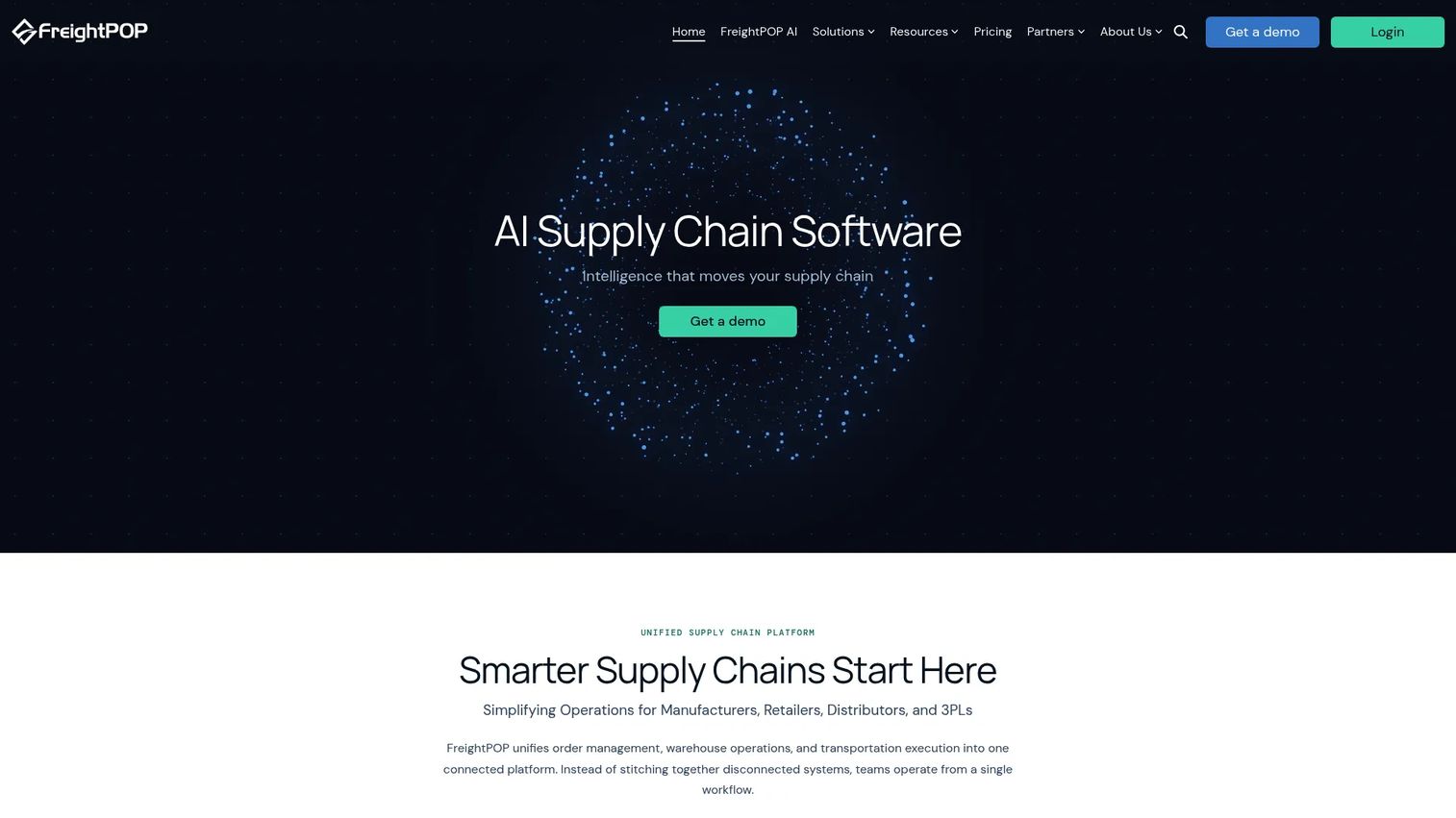
FreightPOP is an AI supply chain platform spanning shipping, transportation management, warehouse management, and order management. Audit is not its headline feature. Invoice auditing sits inside a much larger transportation management system that handles rate shopping, shipment execution, and tracking across parcel, LTL, FTL, ocean, rail, and air. It belongs on this list because that invoice visibility and cost control run through the whole shipping workflow.
Best for: Mid-market and enterprise shippers that need an all-in-one TMS and want invoice auditing as part of it, not as a separate tool.
Key strengths
- Multi-modal rate shopping: Compares and executes shipments across parcel, LTL, FTL, ocean, rail, and international air from one screen.
- Operations coverage: Dock scheduling, route optimization, yard management, and tracking sit alongside shipping.
- Invoice auditing and integrations: Built-in auditing connects to ERP, WMS, e-commerce, CRM, and hardware, so cost control lives inside execution.
Why choose FreightPOP: If you are evaluating a full transportation management platform and want auditing folded in rather than bolted on, FreightPOP delivers that consolidation. The audit capability is adjacency, not the core, so pick it when the broader TMS value is what you are buying and invoice visibility is a welcome part of the package.
FreightPOP pricing: Pricing is custom and quote-based, with four plans shown: Parcel Only, Starter, Professional, and Enterprise. The pricing page references shipment-volume-based tiers and metered usage for some shipment types, but no numeric starting price is published. FreightPOP holds a 4.8/5 rating on G2.
6. Reveel Shipping Intelligence Platform
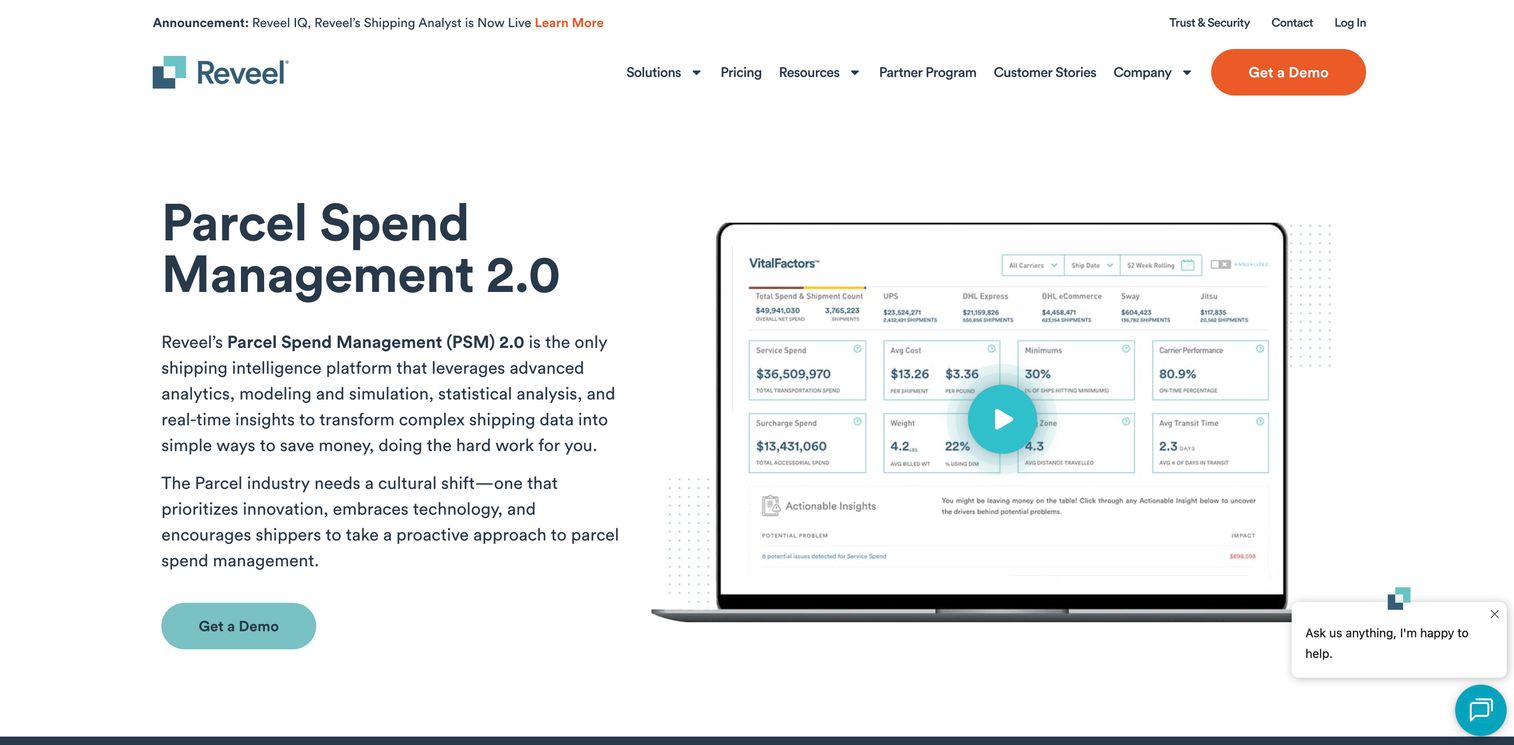
The Reveel Shipping Intelligence Platform is built for shippers who need more than refund recovery. It combines parcel spend management, analytics, contract management, audit, and automation into a shipping intelligence layer. The emphasis is visibility: understanding parcel spend and carrier agreements well enough to make better contract and carrier decisions, with audit and claims running underneath.
Best for: Shippers that need parcel spend visibility, audit, and carrier contract optimization in one platform.
Key strengths
- Real-time dashboards: Vital Factors dashboards give live visibility into parcel spend and performance.
- Carrier agreement management: Tracks and manages carrier contracts so you know whether negotiated terms are being honored.
- Parcel audit and claims: Audit and claims workflows recover money while the analytics layer informs strategy.
Why choose Reveel: Reveel fits when contract and carrier decisions matter as much as recovery. The analytics and agreement management give leadership the visibility to negotiate from data rather than instinct, while the audit keeps refunds flowing. For teams that see parcel spend as a strategic line item, the intelligence emphasis pays off beyond the claims themselves.
Reveel pricing: Reveel lists three plans, Essential, Professional, and Premium, but does not publish dollar prices. The pricing page offers free access to tools and dashboards when you sign up online, alongside Get a Demo calls to action for paid tiers. Reveel holds a 4.5/5 rating on G2.
7. Freightview
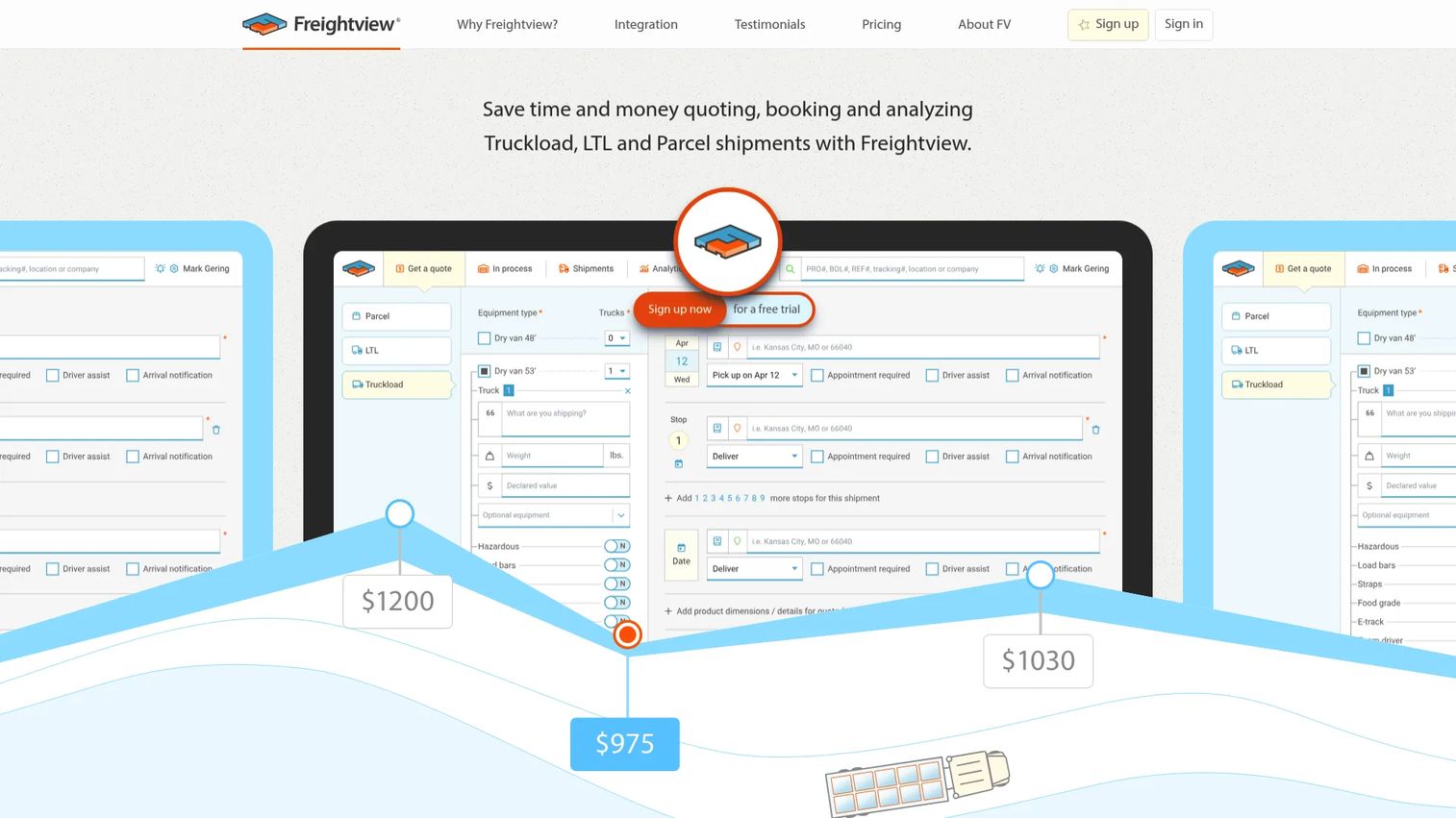
Freightview is cloud-based multi-modal transportation management software that lets shippers quote, book, track, and analyze freight in one place. Invoice matching and auditing are part of a wider shipping workflow rather than the whole product. It earns a spot here for teams that care about shipping spend control across truckload, LTL, and parcel, and want auditing alongside quoting and tracking.
Best for: Shippers needing a single platform for freight quoting, booking, tracking, and invoice management across mixed shipping modes.
Key strengths
- Quote comparison: Compares rates across truckload, LTL, and parcel so you book the best option every time.
- Booking and tracking: Handles booking and real-time shipment tracking inside the same tool.
- Invoice matching and analytics: Matches invoices against quotes to catch billing discrepancies, with analytics on spend.
Why choose Freightview: Freightview is the pick for mixed shipping operations that lean toward freight and LTL as much as small parcel, and want invoice matching built into daily quoting and booking. It is best suited to teams whose auditing need is part of broader shipping spend control rather than a dedicated parcel recovery mandate. The public entry pricing also makes it approachable for smaller shippers.
Freightview pricing: Pricing is volume-based. The entry tier runs $149 per month for 0 to 50 shipments per month, with higher-volume tiers (51 to 500, 501 to 1,000, and 1,001-plus shipments per month) priced by quote. A 14-day free trial is available. Freightview holds a 4.7/5 rating on G2.
Considerations before you buy
Before you commit, pressure-test each option against how your operation actually ships.
Recovery model: software or service
Decide whether you want a managed service that files claims for you or a software platform your team operates. Refund Retriever and the gainshare side of Shipware handle recovery for you on a percentage fee. Platforms like Enveyo and Reveel give you more control and visibility. The right choice depends on how much internal bandwidth you have for auditing.
Carrier and mode coverage
Confirm the tool audits the carriers and modes you actually use. Some focus tightly on FedEx and UPS parcel. Others cover parcel plus freight, LTL, and international. If you ship multi-carrier or multi-modal, single-carrier auditing leaves recovery on the table.
Reporting and contract compliance
Look past claims to the reporting. Charge validation catches errors, but contract compliance reporting tells you whether your negotiated rates are being applied. That visibility is what turns audit data into negotiation leverage next contract cycle.
Pricing structure and total cost
Match the pricing model to your risk tolerance. Performance-based fees cost nothing until money comes back. Flat monthly or custom platform pricing is predictable but requires upfront commitment. Weigh recovery upside against ongoing cost.
Integration with your stack
Check how audit data flows into your ERP, TMS, or finance systems. Deep integrations, like Enveyo's ERP, TMS, OMS, and WMS connections, keep data usable across teams instead of trapped in a separate tool.
Conclusion
The right parcel audit software depends on how you ship and how hands-on you want to be. Three things decide it: the recovery model, platform depth, and carrier coverage.
For fully managed recovery with zero upfront cost, Refund Retriever files FedEx and UPS claims on a performance fee and only earns when you do. For the deepest audit and analytics across parcel and freight, Enveyo pairs data normalization with modeling and connected intelligence. For shipping intelligence that turns spend visibility into contract leverage, Reveel and TransImpact both reach past recovery into strategy.
If you want outsourced refund recovery without staffing an audit desk, choose Refund Retriever. If you want audit plus modeling in one platform, choose Enveyo. If you ship mixed freight and parcel and want invoice matching inside a TMS, choose Freightview or FreightPOP. If low upfront cost matters most, Shipware's gainshare model fits.
Start with the recovery model that matches your team, then confirm the carrier coverage and reporting depth support the shipping cost recovery and shipping audit software goals you are actually trying to hit.
FAQs
Parcel audit software automatically reviews carrier invoices, detects billing errors and service failures, files refund claims, and reports on shipping spend. It replaces manual invoice review with an automated process that catches overcharges and recovers money before claim windows close. The result is lower shipping cost and better visibility into where spend is going.
It ingests your carrier invoices and matches each line item against your contract terms and the carrier's service commitments. When it finds a discrepancy, such as a duplicate charge, an incorrect weight, or a misapplied surcharge, it flags it for charge validation. Automated invoice auditing services do this across thousands of line items far faster than any manual review.
Yes. Late shipment claims are one of the most common recoveries. When a carrier misses its service commitment, the software detects the failure and files the refund claim inside the carrier's window, often as short as 15 days. Because it runs continuously, parcel invoice recovery happens on time rather than after the deadline has passed.
It varies by tool. Some focus on FedEx and UPS parcel, which covers most domestic small parcel recovery. Others extend to DHL, regional carriers, and freight or LTL modes. If you ship multi-carrier or multi-modal, confirm coverage before you buy, because single-carrier auditing misses recovery on the rest of your network.
Often yes, especially with performance-based or free-tier pricing. Small parcel auditing software priced on a percentage of recovery costs nothing until money comes back, which removes the risk for lower-volume shippers. SMEs are the fastest-growing segment of the market, at 35.2% of adoption per MarketIntelo (2025), because the recovery covers the cost.
Parcel audit software is a platform your team operates, giving you control over auditing, reporting, and claims. Parcel audit services are managed engagements where a provider handles recovery for you, usually on a gainshare or percentage fee. Many tools blend both, offering software dashboards alongside managed claim filing.
Savings depend on shipping volume, carrier mix, and how many errors go uncaught today. Recovery comes from late delivery refunds, duplicate and surcharge corrections, and contract compliance gaps where negotiated rates were not applied. Beyond direct refunds, the reporting drives longer-term savings by strengthening your position in the next carrier contract negotiation.
Many platforms do. Enveyo, for example, connects to carriers, ERP, TMS, OMS, and WMS systems, while FreightPOP integrates with ERP, WMS, e-commerce, and CRM tools. Integration matters because it lets audit and parcel invoice auditing data flow into finance and operations instead of staying siloed in a standalone tool.