Your reps have the content. The problem is whether they can find it in 12 seconds, trust it is current, send it without rewriting the story, and know whether the buyer cared. That gap is what sends most sales enablement managers searching for Paperflite alternatives.
Replacement decisions for a sales enablement and content experience platform typically split into two paths. The first is replacing the enablement library itself, upgrading governance, search, and rep adoption. The second is changing the buyer experience entirely, moving from static PDFs and decks to something buyers can explore on their own terms.
Guideflow is the top pick for teams taking the second path. It is a demo automation platform that lets reps send and embed interactive demos instead of static collateral, organize those demos in branded Demo Centers, and measure step-level engagement. For teams whose primary need is a traditional content library, Highspot and Seismic are the strongest like-for-like sales enablement platforms on this list.
The 20 tools below span demo automation, full sales enablement suites, content experience platforms, sales readiness tools, digital sales rooms, and document tracking.
TL;DR
- Best for interactive demos and buyer engagement: Guideflow is the top pick for teams replacing static leave-behinds with clickable product experiences. More than 500,000 guideflows have been created, and a first demo is ready in about two and a half minutes.
- Best like-for-like sales enablement platform: Highspot for enterprise content governance and rep guidance; Showpad when training and coaching are equally important.
- Best enterprise enablement suite: Seismic for large organizations needing content automation, personalization at scale, and governance.
- Best for sales readiness and coaching: Mindtickle for dedicated readiness programs; Allego when readiness and content management need to live together.
- Best for simple document tracking: DocSend, with entry plans from $10 per user per month and 14-day free trial.
- The list spans: demo automation, sales enablement, content experience, knowledge management, sales readiness, digital sales rooms, and document analytics.
- Pricing range: Free tiers exist at Guideflow and Content Camel; enterprise platforms like Highspot, Showpad, and Seismic price by quote.
What's inside
- What Paperflite is and which category it belongs to
- Why sales enablement managers look for alternatives
- A comparison table of all 20 tools with categories, ratings, and pricing
- Full tool cards for each of the 20 Paperflite alternatives
- Use-case routing by job: Interactive demos, traditional enablement suites, readiness, content experience, document tracking, and field sales
- When staying with Paperflite makes sense
- Why teams switch to Guideflow for buyer-facing product experiences
What is Paperflite?
Paperflite is a sales enablement and content experience platform. It helps revenue teams centralize sales content, organize assets for rep findability, build buyer-facing microsites and content hubs, and track content engagement after sharing. Marketing and sales teams use it to surface the right collateral at the right deal stage and understand which assets buyers actually open.
Its category sits at the intersection of sales content management and content experience platforms. Alternatives generally fall into one of six categories: Full sales enablement suites, sales content management tools, content experience platforms, sales readiness platforms, digital sales room tools, and demo automation platforms. Each category answers a different root problem. Understanding which job is breaking down in your workflow is the starting point for choosing the right replacement.
Key strengths (from Paperflite's own positioning): Centralized content library, buyer-facing microsites, content sharing and tracking, and integration with CRM tools.
Why teams look for Paperflite alternatives
Most teams that evaluate Paperflite alternatives are not running from a broken tool. They are outgrowing one specific capability or discovering a new job the platform was not built for.
Buyers need something more engaging than a static content hub
Organized collateral helps reps find assets, but it does not help buyers understand a product on their own. Sales enablement managers increasingly hear from their AEs that prospects want to explore the product before a call, not receive a PDF about it. Static content, however well organized, creates engagement gaps that the right buyer experience tools close. According to The B2B Buyer Report 2025, 54% of B2B buyers rely more on digital research and self-serve tools than they did two years ago, and 91% say personalized content matters during evaluation. Static decks cover only part of that equation.
Search and content governance become rep adoption problems
Stale assets, duplicate decks, and unclear content ownership erode confidence. Reps stop using the library and default to attachments they already have. G2 reviewers of Paperflite have noted that search and navigation can require additional tagging discipline to surface the right asset at speed. When governance breaks down, so does the whole enablement program.
Analytics need to connect to buyer action, not just views
Knowing a buyer opened a document is a start. Knowing which pages they spent time on, which sections they shared with colleagues, and which steps they completed before going dark is what actually informs follow-up. Teams that need that depth often move to platforms with richer engagement and intent signals.
Some teams need readiness, not content distribution
Content governance and rep training are related but different problems. Enablement managers responsible for onboarding, certification, roleplay, and coaching need platforms built specifically for those jobs. Paperflite is not a readiness platform, so teams that discover the training gap often add a dedicated tool or switch to a platform that covers both.
How we picked these Paperflite alternatives
Each tool on this list was selected for real capability overlap with sales enablement and buyer engagement workflows. Pricing was drawn from each vendor's own pricing page. Ratings come from G2. The list includes exactly 20 tools after deduplication and category fit review.
Category labels are present throughout so readers can distinguish a like-for-like replacement from a category upgrade. The sales enablement platform market was valued at $4.21 billion in 2025 (Mordor Intelligence, 2025), and the range of tools within that category varies considerably in what they actually do day to day. Category clarity matters here more than in most roundups.
Paperflite alternatives at a glance
Guideflow leads as the top pick for interactive product experiences. Highspot and Seismic lead for traditional enterprise enablement. DocSend stands out for lightweight document tracking with a public free-plan structure. The table spans six distinct categories.
| Tool | Category | Best for | G2 rating | Free plan | Starting price |
|---|---|---|---|---|---|
| Guideflow | Demo automation platform | Reps sending and embedding interactive demos | 5.0/5 | Yes | $0 (Free); $35/user/month (Solo, annual) |
| Highspot | Sales enablement platform | Enterprise content enablement and rep guidance | 4.7/5 | No | Contact sales |
| Showpad | Sales enablement platform | Sales content plus coaching and training | 4.6/5 | No | Contact sales |
| Seismic | Sales enablement platform | Large enterprise enablement and content governance | 4.7/5 | No | Contact sales |
| Bigtincan | Sales enablement platform | Field teams and AI-assisted enablement | 4.3/5 | No | Contact sales |
| Mediafly | Revenue enablement platform | Value selling and buyer engagement analytics | 4.4/5 | No | Contact sales |
| GTM Buddy | Revenue enablement platform | In-workflow content and AI-guided sales execution | 4.8/5 | No | Contact sales |
| Content Camel | Sales content management | Lightweight content findability and governance | 4.0/5 | Yes (Solo, 1 user) | €9.99/user/month (Team) |
| Guru | Knowledge management platform | Internal sales knowledge and verified answers | 4.7/5 | No | Contact sales |
| Uberflip | Content experience platform | Content hubs and campaign content experiences | 4.2/5 | No | Contact sales |
| PathFactory | Content intelligence platform | B2B content journeys and engagement analytics | 4.4/5 | No | Contact sales |
| RELAYTO AI | Interactive content platform | Turning static content into interactive experiences | 4.7/5 | No (30-day trial) | $750/month (Team, annual) |
| Mindtickle | Sales readiness platform | Training, coaching, and certification | 4.7/5 | No | Contact sales |
| Allego | Sales readiness and enablement | Learning, coaching, and digital sales rooms | 4.5/5 | No | Contact sales |
| DocSend | Document sharing and analytics | Simple buyer document tracking | 4.6/5 | No (14-day trial) | $10/user/month (Personal) |
| ClearSlide | Sales engagement platform | Presentations, sharing, and engagement tracking | 4.1 | No | Contact sales |
| Accord | Mutual action plan platform | Collaborative buyer plans and next-step alignment | 4.9/5 | No | $99/user/month + platform fee (Starter) |
| Revspire | Revenue workspace | Digital rooms and modular revenue enablement | 4.7 | No | \~$25,000/year average |
| Showell | Sales enablement platform | Offline and field sales content | 4.6 | Yes (limited) | €700/workspace/month (Professional, 12-month minimum) |
| Spekit | Just-in-time enablement platform | In-workflow training and process adoption | 4.7/5 | No | Contact sales |
The best Paperflite alternatives in 2026
1. Guideflow (demo automation platform)
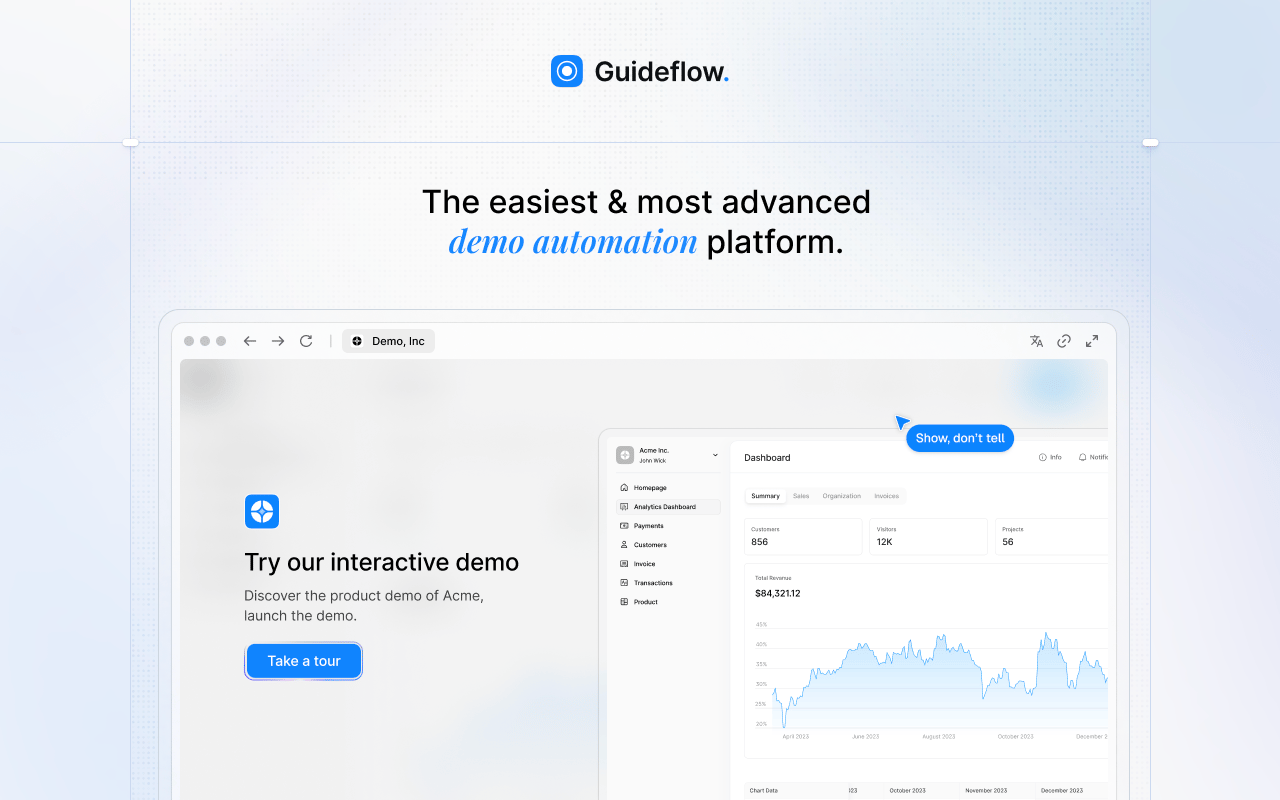
Guideflow is the right choice when the problem is not rep content access but buyer content experience. Instead of organizing documents for reps to send, it lets reps build clickable product experiences that buyers can explore themselves. That difference changes the whole conversation about leave-behinds, follow-ups, and self-serve evaluation.
Best for: Sales enablement teams that want buyer-facing interactive demos, organized demo libraries, and step-level engagement analytics.
What it is: Guideflow is a demo automation platform for creating, sharing, and measuring interactive demos, demo pages, demo centers, sandboxes, live demos, and mobile demos. Capture runs through the Chrome extension or the native app using screenshot, HTML, or video modes. More than 500,000 guideflows have been created across teams in sales, marketing, onboarding, support, and product.
Key features:
- Chrome extension or native app capture with screenshot, HTML, and video modes
- No-code editor for text, images, graphs, and branching
- Demo Centers for branded demo hubs organized by persona, use case, or stage
- Step-level completion, drop-off, and viewer flow analytics
- CRM records created on viewer identification via form or personalized link; integrations with HubSpot, Salesforce, Pipedrive, Zoho, and Marketo
Where Guideflow falls short: Look elsewhere if the primary need is an LMS, certification engine, or internal-only course library. Teams that mainly need a static content repository for PDFs and battlecards may want a lightweight content management tool alongside Guideflow.
Pricing: Free plan available. Solo: $35/user/month (annual). Growth: $499/month (annual). Advanced: $1,499/month (annual). Enterprise: From $2,999/month (annual), adding SSO, advanced governance, and enterprise security.
G2 rating: 5.0/5
How it compares to Paperflite: Paperflite organizes content for rep distribution. Guideflow replaces the content itself with interactive product experiences buyers can navigate on their own terms. For teams whose core problem is buyer engagement and self-serve education, Guideflow covers jobs Paperflite was not designed for.
2. Highspot (sales enablement platform)
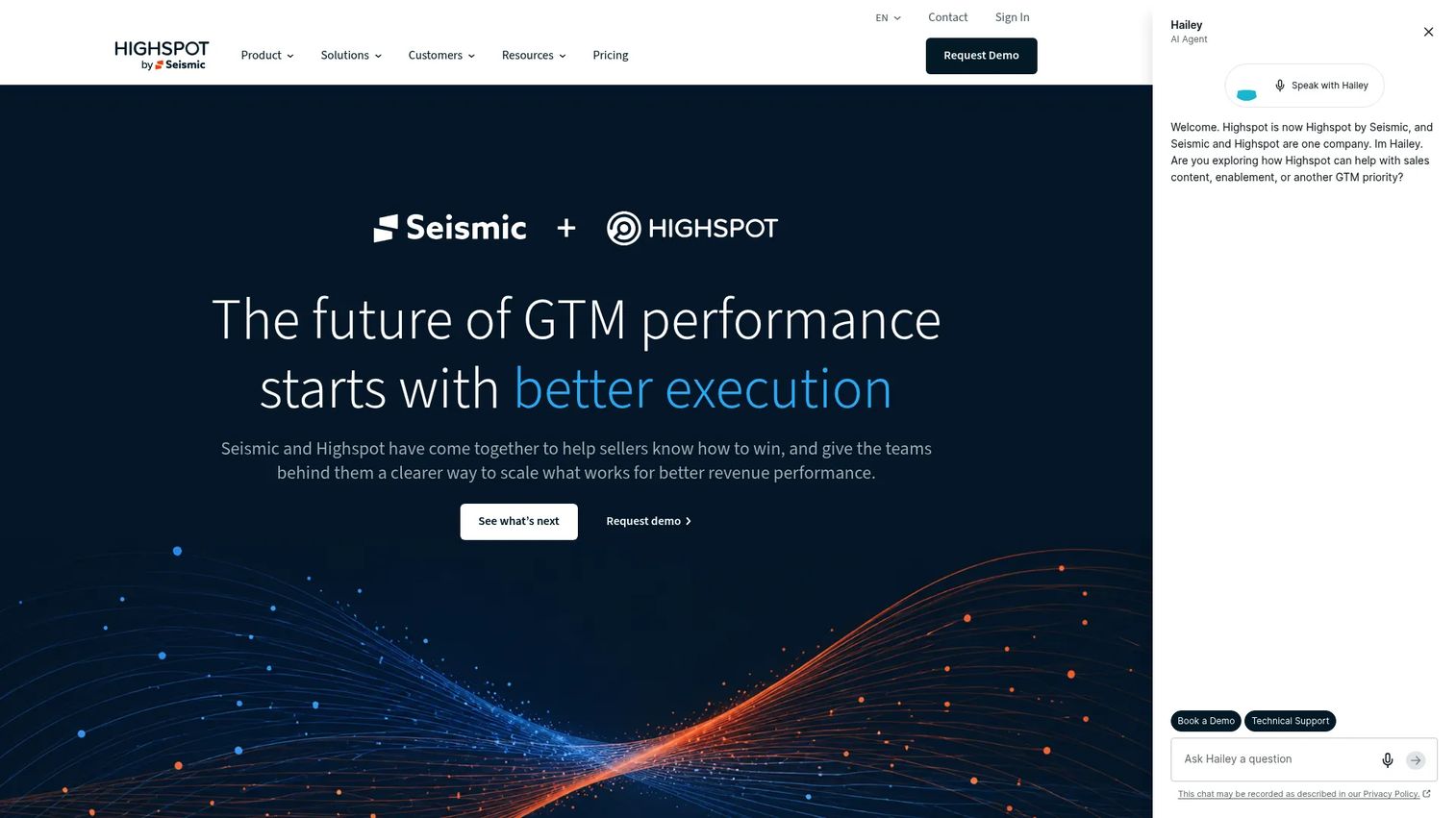
Highspot is one of the most established names in enterprise sales enablement. It covers content management, rep guidance, training, coaching, meeting intelligence, and buyer engagement in a single platform, backed by AI-powered search and governance at scale.
Best for: Enterprise go-to-market teams that need governed content, rep guidance, training, and analytics across a large seller base.
What it is: Highspot is an AI-powered go-to-market platform that unifies sales content management, training, coaching, Digital Sales Rooms, meeting intelligence, and performance analytics. It is built for revenue orgs where content governance, rep readiness, and buyer engagement need to live in the same system.
Key features:
- AI-powered content search, recommendations, and governance
- Sales Plays and Digital Sales Rooms
- Adaptive learning, AI-assisted training authoring, and Role Play
- Meeting Intelligence and coaching analytics
- CRM and workflow integrations including Salesforce and Microsoft tools
Where Highspot falls short: G2 reviewers note that implementation can be time-intensive and that the admin burden for content tagging and permissions management is meaningful. Some reviewers also report a learning curve for new administrators, and pricing is quote-only with no public tiers.
Pricing: Contact sales. All packages are quote-based.
G2 rating: 4.7/5
How it compares to Paperflite: Highspot covers everything Paperflite does and extends further into training, coaching, and meeting intelligence. For enterprise teams where enablement scope runs wide, it is a more complete platform. The tradeoff is implementation complexity and cost.
3. Showpad (sales enablement platform)
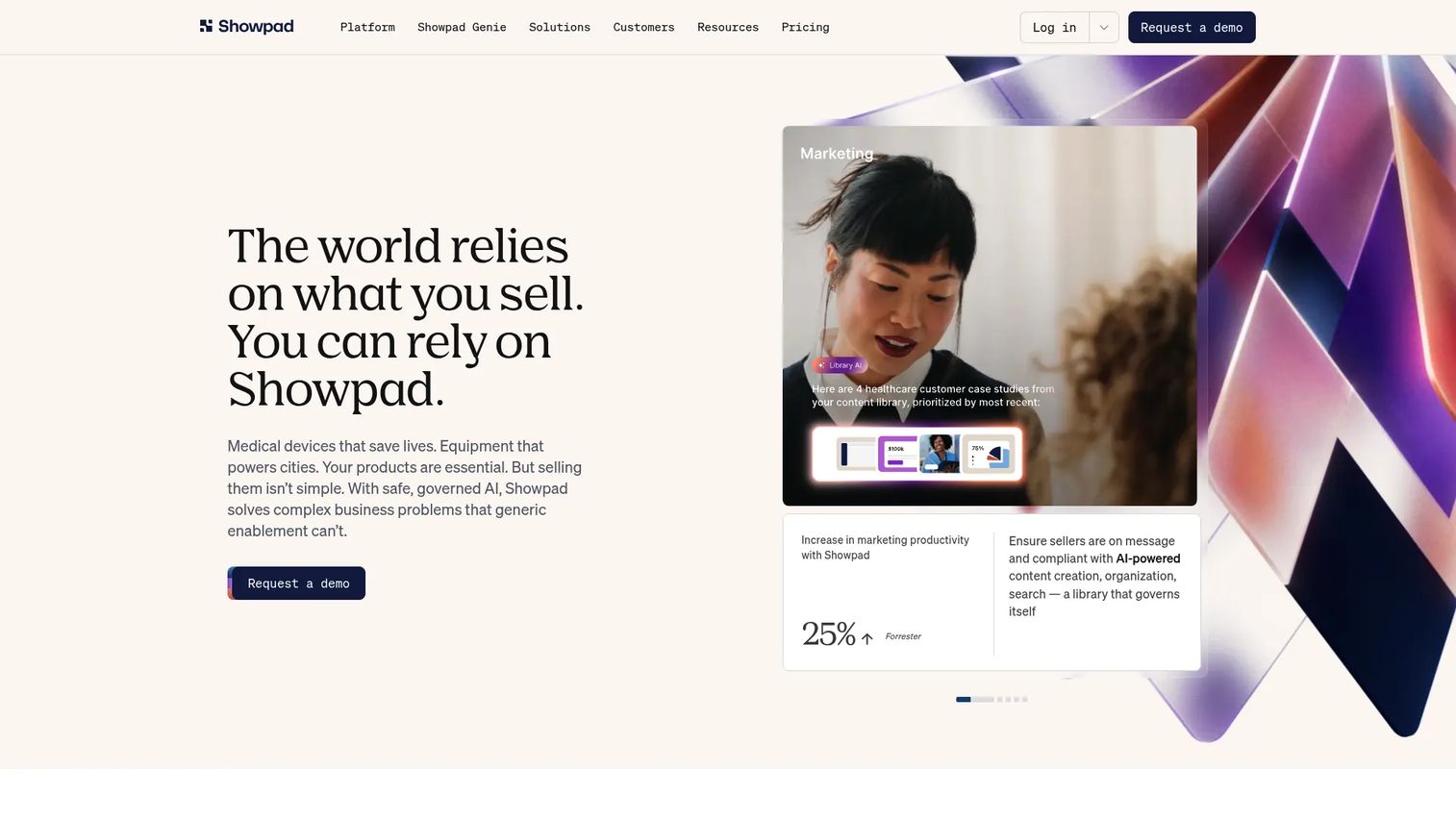
Showpad combines sales content management with an AI-native readiness layer. Teams that need their content and their coaching in the same system, without buying two platforms, often land here.
Best for: Field-centric revenue teams that need unified sales content, seller readiness, buyer engagement, and analytics.
What it is: Showpad is an AI-native revenue effectiveness platform covering content libraries, collections, sales readiness courses, Roleplay AI, Shared Spaces for buyer engagement, and an analytics suite with dashboard builder. It offers Professional, Advanced, and Expert packages at quote-based pricing.
Key features:
- Content management with libraries, pages, and collections
- Roleplay AI and training paths for sales readiness
- Shared Spaces for buyer-facing collaboration
- Analytics AI and report builder
- Genie Assistant and Authoring AI for content creation
Where Showpad falls short: G2 reviewers mention that navigation can feel complex when managing large content libraries, and that reporting configuration takes dedicated admin time. Some users note onboarding requires a structured rollout to drive rep adoption.
Pricing: Professional, Advanced, and Expert packages; pricing by quote.
G2 rating: 4.6/5
How it compares to Paperflite: Showpad is a stronger choice when readiness and coaching matter as much as content distribution. Teams that need both a content library and an ongoing training program often find it covers more ground.
4. Seismic (sales enablement platform)
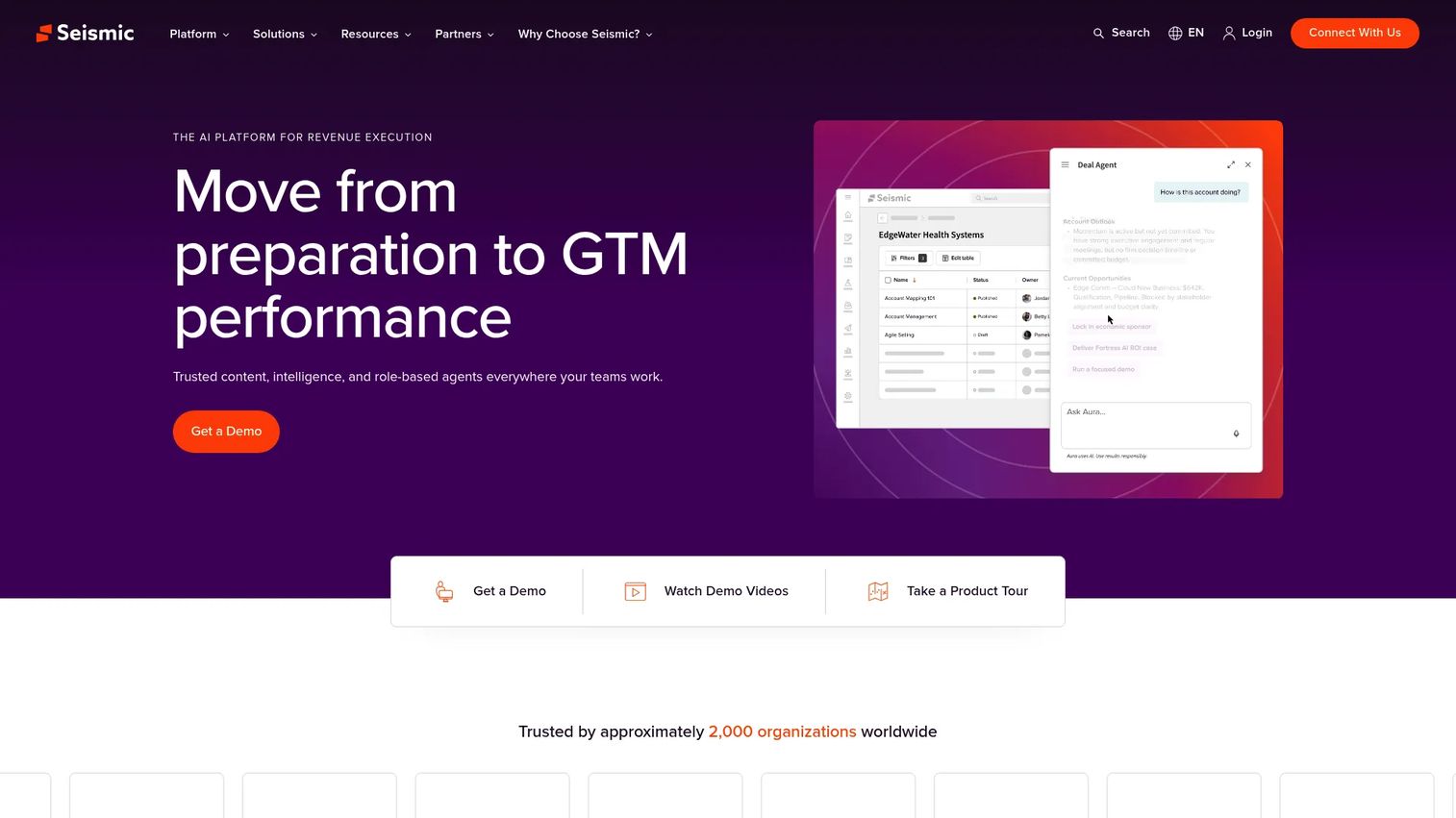
Seismic targets large organizations with complex personalization requirements and deep governance needs. Its content automation capabilities let teams generate personalized materials at a scale that manual assembly cannot match.
Best for: Large organizations seeking an enterprise sales enablement platform for content, personalization, learning, and go-to-market execution.
What it is: Seismic is an AI-powered sales enablement platform covering content management, content automation and personalization, enablement analytics, learning, AI role-play, coaching, meeting intelligence, and CRM integration. It publishes Essential, Advanced, and Ultimate packages; pricing requires contacting Seismic directly.
Key features:
- Sales content management and content automation
- Personalization at scale for proposals and collateral
- Enablement analytics across content and team performance
- AI-powered role-play and coaching
- Mobile access and CRM integration
Where Seismic falls short: G2 reviewers consistently flag implementation time and the administrative depth required to configure and maintain the system. Some reviewers also note that the total cost of ownership is high relative to teams with simpler enablement needs.
Pricing: Essential, Advanced, and Ultimate packages; contact Seismic for pricing.
G2 rating: 4.7/5
How it compares to Paperflite: Seismic is a heavier platform in both capability and investment. For organizations with complex content personalization, large seller bases, and dedicated enablement operations, it covers jobs Paperflite does not.
5. Bigtincan (sales enablement platform)
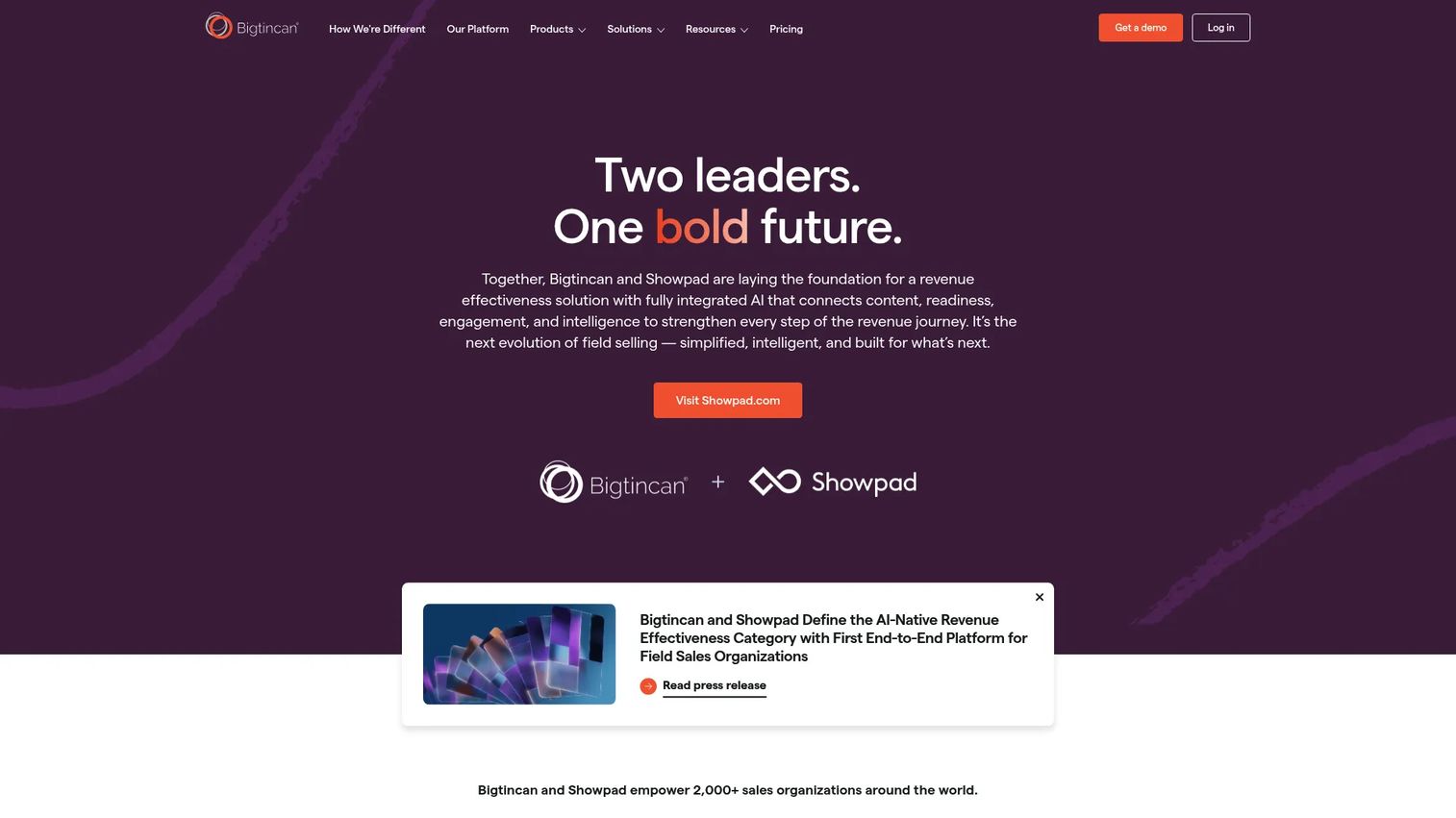
Bigtincan fits field teams and distributed sellers well. Its mobile-forward design and AI-assisted content recommendations address the specific challenge of reps who are often away from a desk and need fast, relevant access to current materials.
Best for: Enterprise revenue teams seeking integrated readiness, content enablement, buyer engagement, and analytics.
What it is: Bigtincan is an AI-powered revenue enablement platform that combines readiness and training, content management, Digital Sales Rooms, video meeting intelligence, and analytics. It offers Essential and Elite platform editions, plus standalone readiness, content, and engagement modules.
Key features:
- AI-powered readiness, training, coaching, and roleplay
- Content management with AI-assisted search and recommendations
- Digital Sales Rooms and buyer engagement
- MeetingsAI insights and video meeting support
- Analytics, dashboards, scorecards, and CRM integrations
Where Bigtincan falls short: G2 reviewers note that the product's breadth can create UI complexity, and that some users find setup and configuration require significant admin investment. Search behavior has been flagged as requiring clean metadata to work reliably.
Pricing: Essential and Elite editions; contact sales for pricing.
G2 rating: 4.3/5
How it compares to Paperflite: Useful when the team needs broad sales enablement across field and remote selling motions. Bigtincan covers more enablement ground, but the breadth adds setup complexity that Paperflite avoids.
6. Mediafly (revenue enablement platform)
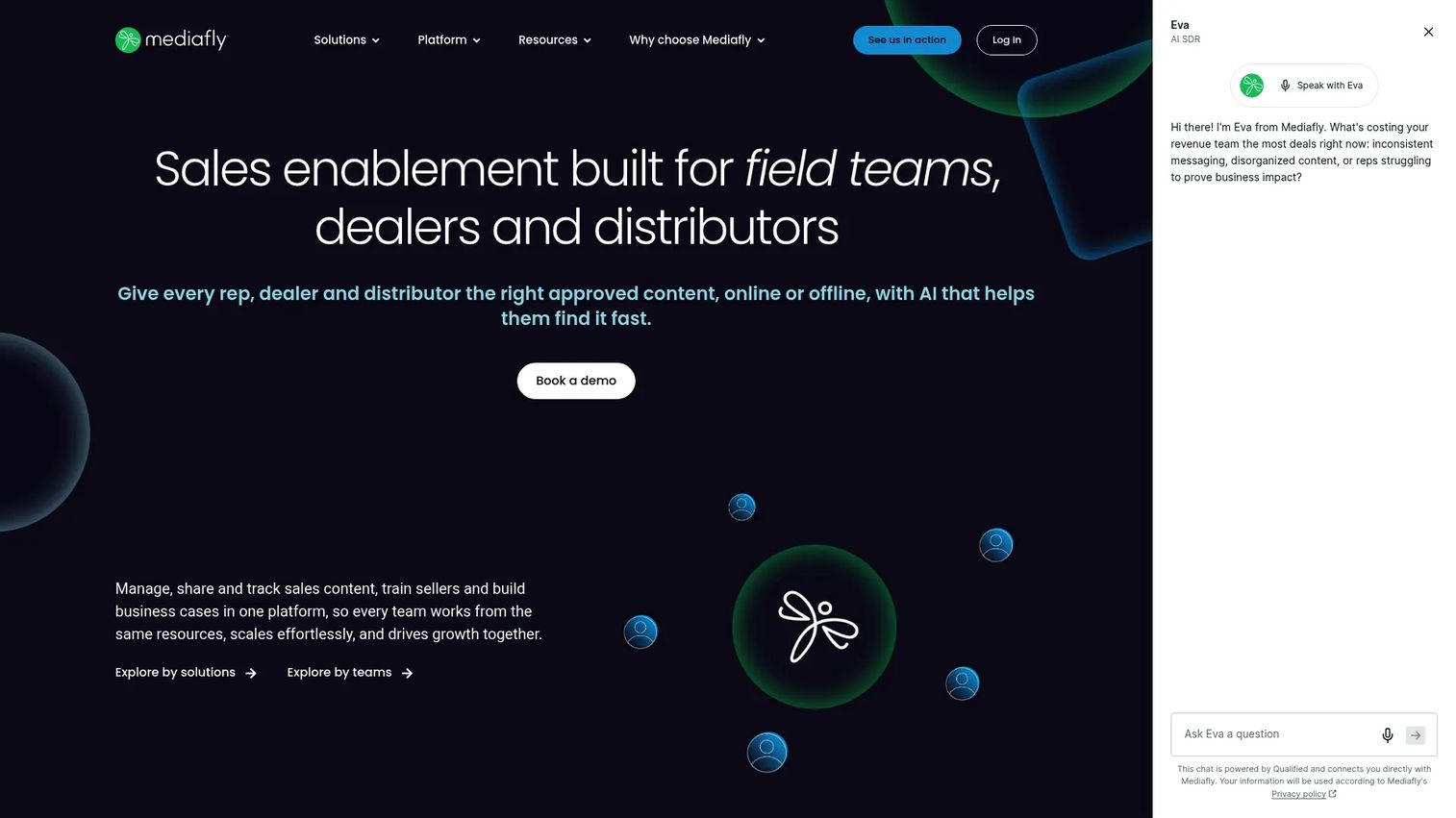
Mediafly's clearest differentiation is its value selling layer. Teams that run deals where quantifying the business case matters, ROI calculators, TCO estimators, and business case builders, find capabilities here that generic content platforms do not cover.
Best for: Enterprise revenue teams in complex B2B organizations needing unified enablement, buyer engagement, value selling, and learning capabilities.
What it is: Mediafly is an AI-powered revenue enablement platform that unifies sales content management, Digital Sales Rooms, value selling tools, learning, onboarding, coaching, and performance analytics. CRM integrations include Salesforce, HubSpot, and Pipedrive, among others.
Key features:
- Digital sales rooms and branded workspaces
- ROI calculators, TCO estimators, and business case builders
- AI-powered content search and Command Center
- Learning, onboarding, and coaching
- CRM integrations including Salesforce and HubSpot
Where Mediafly falls short: Mediafly's pricing page directs prospects to contact sales, with no published tiers. G2 reviewers note that configuration of value selling tools requires dedicated setup time, and some reviewers mention reporting setup complexity.
Pricing: Contact sales; pricing is tailored to modules, user counts, and integrations.
G2 rating: 4.4/5
How it compares to Paperflite: Stronger when value selling and quantified business cases are part of the sales motion. Paperflite does not cover ROI calculators or TCO tools, so Mediafly addresses a different layer of the buyer conversation.
7. GTM Buddy (revenue enablement platform)
GTM Buddy positions itself as a revenue activation platform built around the rep's workflow. Rather than a content library reps search separately, it delivers contextual guidance and content recommendations inside the tools sellers already use.
Best for: Mid-market and enterprise B2B revenue teams seeking contextual sales enablement, coaching, content activation, and buyer engagement in existing workflows.
What it is: GTM Buddy (now operating under gtmbuddy.ai) is a revenue activation platform that connects CRM, calls, content, learning, coaching, and buyer signals. Its Ask Buddy feature delivers context-aware answers and next-best guidance, and it includes digital sales rooms, RFP automation, and AI roleplays.
Key features:
- Context-aware AI answers and next-best guidance via Ask Buddy
- AI roleplays and coaching intelligence
- Digital sales rooms with buyer engagement signals
- Content intelligence and governance
- RFP and response automation
Where GTM Buddy falls short: Pricing is not publicly displayed and requires contacting sales. Some G2 reviewers note that the initial setup and integration configuration takes meaningful time before the contextual delivery works reliably.
Pricing: Contact sales.
G2 rating: 4.8/5
How it compares to Paperflite: Where Paperflite surfaces content through a library, GTM Buddy pushes relevant content and guidance to reps based on deal context. For teams where rep workflow adoption is the main friction point, the in-workflow delivery model addresses a different problem.
8. Content Camel (sales content management)
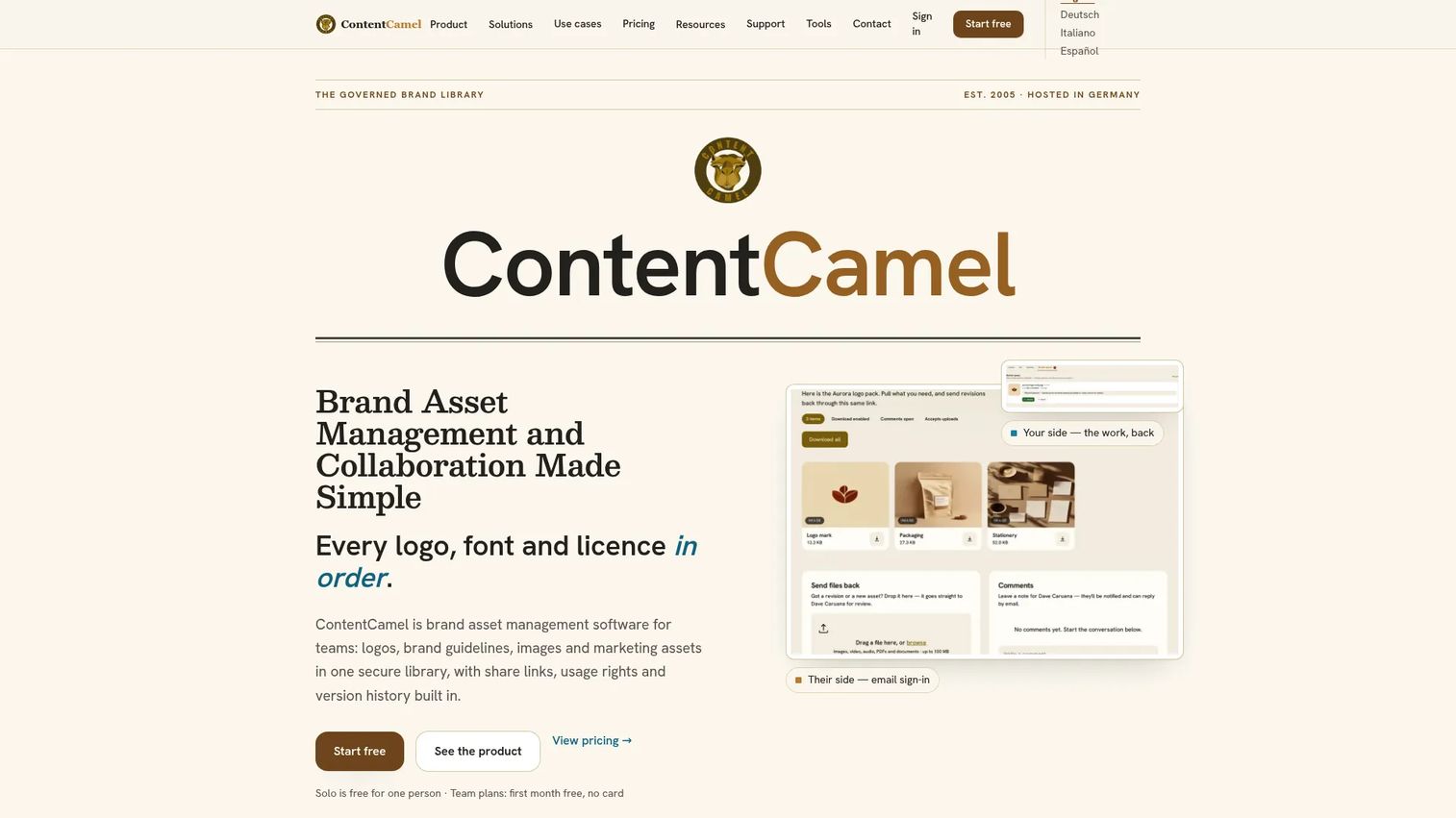
Content Camel is worth considering when the requirement is straightforward: A governed content library with tracked sharing, without the complexity of a full enablement suite. The Solo tier is free for one user, making it accessible for smaller teams exploring content governance.
Best for: Teams and studios that need governed brand-asset storage, collaboration, and controlled sharing with external partners.
What it is: Content Camel is a sales content management tool for organizing assets in a centralized library with tracked share links, two-way file sharing, version history, and usage-rights management. It is priced in euros, with a free Solo tier and a Team plan at €9.99 per user per month.
Key features:
- Centralized brand asset library with folders and brand kits
- Tracked share links with two-way file sharing
- Version history and usage-rights management
- Project collaboration and review queue
- Collections and sharing controls
Where Content Camel falls short: G2 reviewers note that the platform is narrower than full sales enablement suites, with limited rep readiness or buyer engagement capabilities. For teams that need training or coaching alongside content, it does not cover those jobs.
Pricing: Solo: Free for one user. Team: €9.99/user/month. Company: Custom pricing.
G2 rating: 4.0/5
How it compares to Paperflite: A practical option for teams whose main need is findability and content governance without additional enablement features. Lighter in scope and significantly lower in cost.
9. Guru (knowledge management platform)
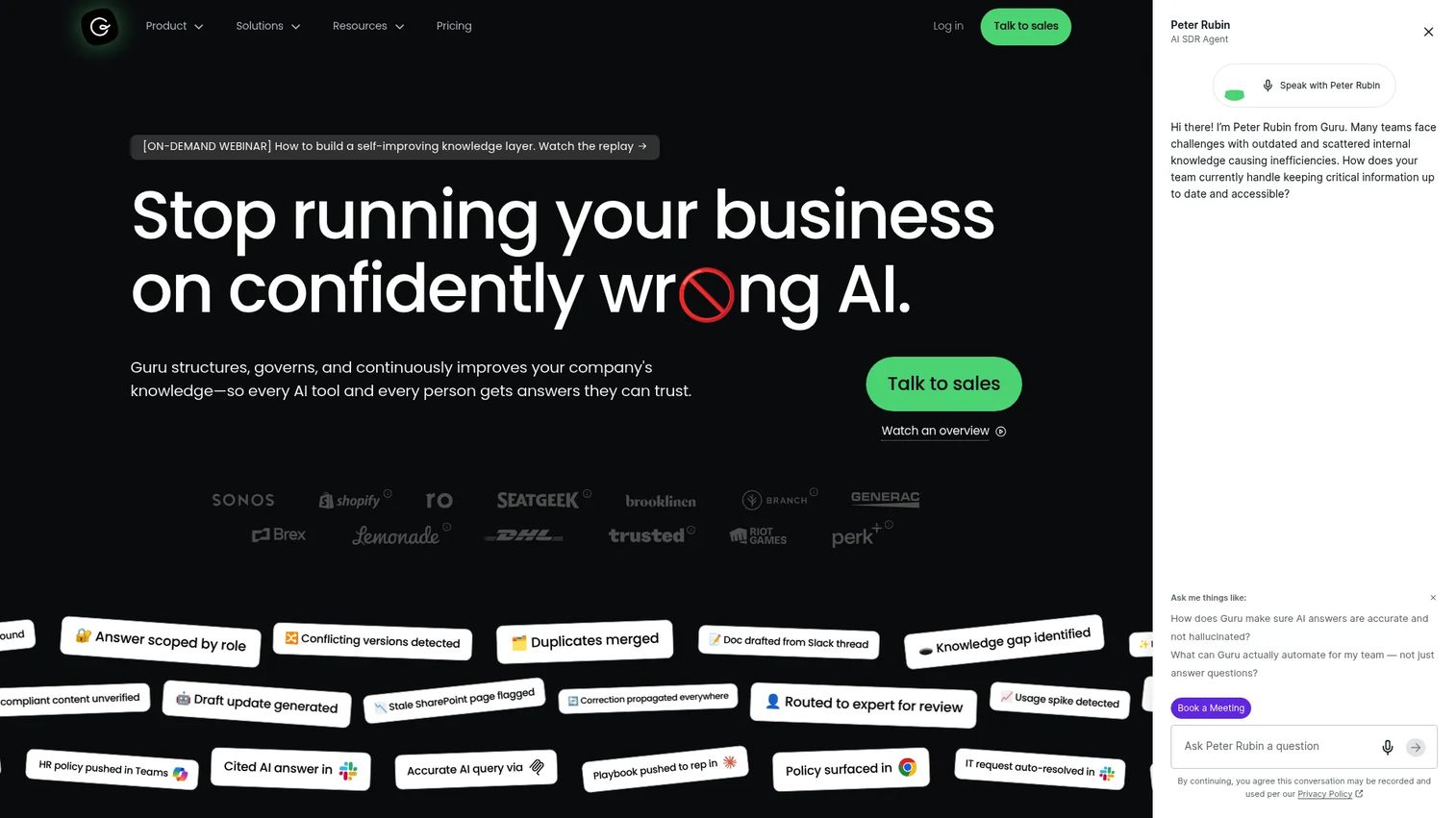
Guru solves a different problem from most tools on this list. Its job is making sure reps find trusted, current answers inside the tools they already use, not organizing external-facing sales collateral. Teams that conflate content management with knowledge management often end up here.
Best for: Organizations needing governed, permission-aware enterprise knowledge and AI answers across their existing tools.
What it is: Guru is an AI knowledge platform that structures, verifies, governs, and delivers trusted answers with more than 100 source connectors and permission-aware Knowledge Agents. It is designed for internal knowledge delivery across enterprise tools, with automated verification and maintenance workflows.
Key features:
- 100+ source connectors and unified knowledge index
- Permission-aware Knowledge Agents with cited answers
- Automated knowledge verification, maintenance, and cleanup
Where Guru falls short: G2 reviewers note that content organization within Guru requires discipline and ongoing curation to stay useful. Some reviewers find that surfacing the right knowledge card in busy feeds requires well-structured taxonomies that take time to build.
Pricing: Contact sales; custom pricing based on organizational scale and AI maturity.
G2 rating: 4.7/5
How it compares to Paperflite: Guru is internal-first, focused on rep knowledge and institutional answers rather than buyer-facing content experiences. Teams replacing Paperflite for sales collateral distribution will want something else; teams replacing it specifically for internal knowledge delivery may find Guru a natural fit.
10. Uberflip (content experience platform)
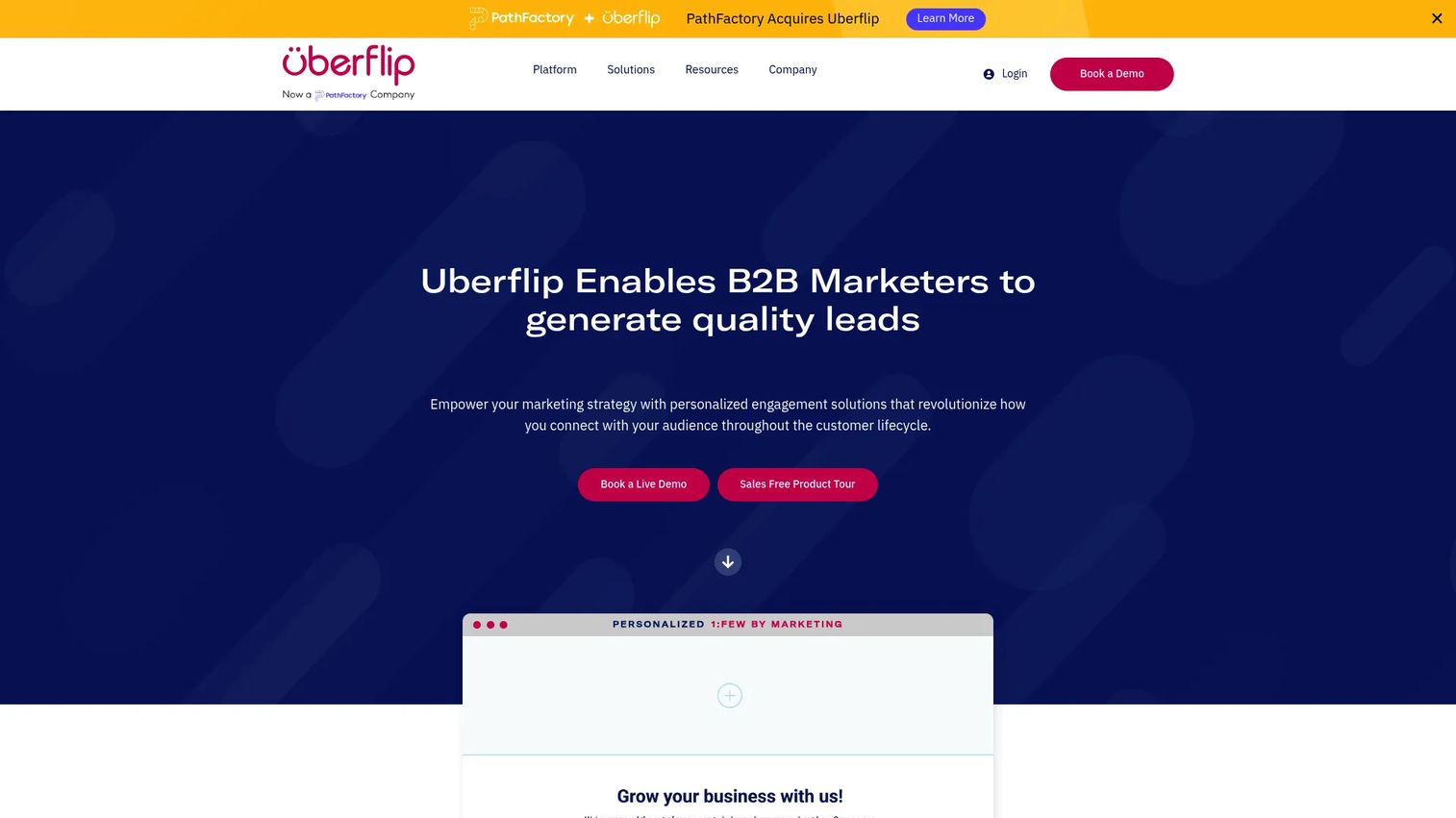
Uberflip's strength is in campaign-level content destinations and account-based content experiences. Marketing teams that need to build personalized content hubs for specific accounts or campaigns tend to get more out of it than traditional sales enablement managers do.
Best for: B2B marketing and sales teams creating personalized content journeys, campaign destinations, and digital sales rooms.
What it is: Uberflip is a B2B platform for creating personalized content experiences that engage and convert target accounts. It includes centralized content management, AI-powered content recommendations, personalized campaign landing pages, digital sales rooms, lead and intent capture, and analytics.
Key features:
- Centralized content management and curation
- AI-powered content recommendations
- Personalized campaign destinations and landing pages
- Digital Sales Rooms and sales enablement
- Analytics, dashboards, and ROI measurement
Where Uberflip falls short: G2 reviewers note that admin setup for personalization rules and stream organization requires meaningful configuration effort. Some reviewers flag design flexibility limitations and integration behavior with specific marketing automation platforms.
Pricing: Contact sales via the pricing page.
G2 rating: 4.2/5
How it compares to Paperflite: More marketing-led in orientation, strong for campaign content hubs and account-based experiences. Teams replacing Paperflite for rep-centered sales enablement may find Uberflip less aligned to that daily workflow.
11. PathFactory (content intelligence platform)
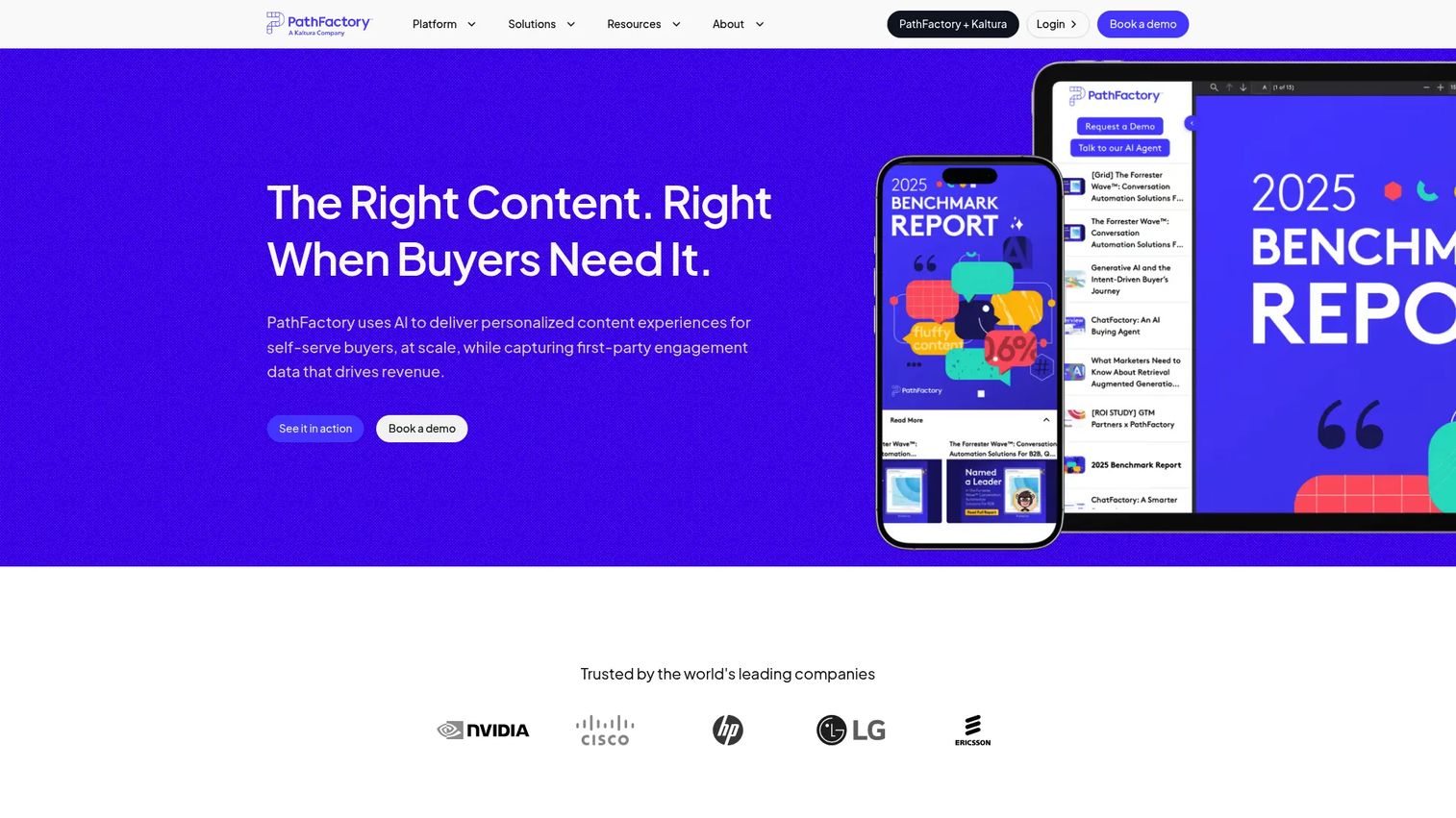
PathFactory's core capability is tracking buyer engagement across content journeys and feeding that signal back into the revenue stack. For demand gen and marketing teams that need to understand which content paths move accounts through the funnel, it goes deeper than most.
Best for: B2B marketing and revenue teams that need personalized buyer journeys, content engagement intelligence, and account-level intent signals.
What it is: PathFactory uses AI to deliver personalized content experiences for self-serve buyers while capturing first-party engagement data tied to revenue. It includes ChatFactory for conversational buyer assistance, content tracks, next-best-content recommendations, website visitor journey tracking, and account-level engagement analytics.
Key features:
- AI-powered personalized content journeys
- ChatFactory conversational buyer assistance
- Content playlists and templated experiences
- Website visitor journey tracking and next-best-content recommendations
- Revenue intelligence and account-level engagement analytics
Where PathFactory falls short: G2 reviewers note that setup and content tagging require dedicated campaign operations effort. Some reviewers flag that reporting configuration is non-trivial and that deriving clean attribution takes time.
Pricing: Contact sales.
G2 rating: 4.4/5
How it compares to Paperflite: More demand-gen and content intelligence oriented than classic rep-centered sales enablement. Strongest for teams trying to understand content engagement across the full funnel rather than managing rep content distribution.
12. RELAYTO AI (interactive content platform)
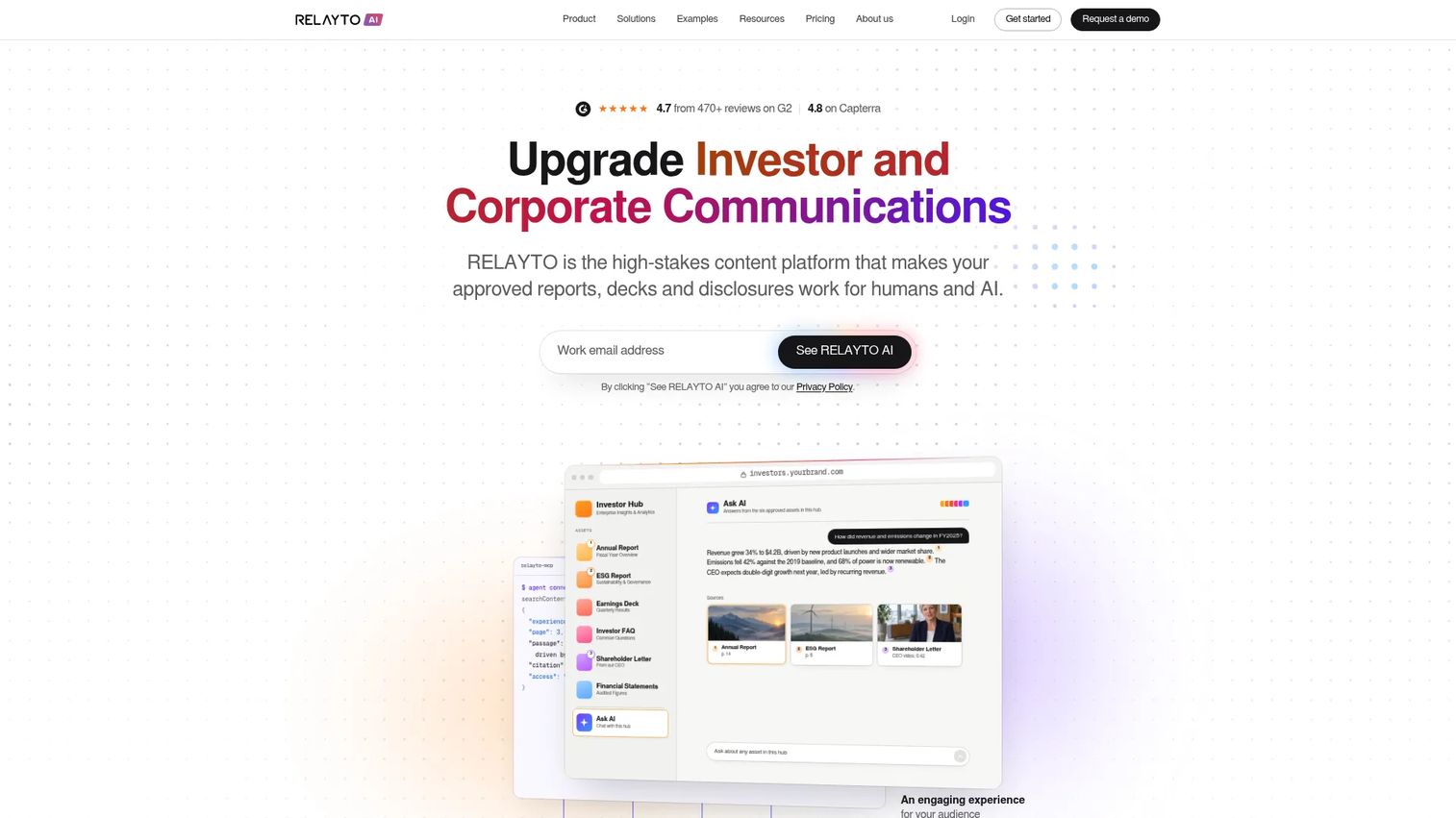
RELAYTO sits between static documents and full interactive demos. Its core job is transforming PDFs, presentations, and reports into interactive web experiences without rebuilding the underlying content. Teams that have invested in existing collateral and want to make it more engaging rather than replace it entirely often find this a practical approach.
Best for: Investor communications, sales enablement, digital sales rooms, employee communications, and interactive reports or presentations.
What it is: RELAYTO AI is a platform for transforming reports, decks, PDFs, and other approved content into engaging, measurable web experiences. It includes an AI Builder for on-brand microsites, PDF-to-web conversion, an AI Content Chat with source-linked answers, content hubs for digital sales rooms, page-level analytics, and content security controls.
Key features:
- AI Builder for on-brand microsites from existing content
- PDF-to-web conversion for interactive flipbooks and slides
- AI Content Chat with source-linked answers
- Content hubs for digital sales rooms and portals
- Page-level analytics and content security controls
Where RELAYTO AI falls short: G2 reviewers note that formatting constraints can make it harder to replicate complex document layouts exactly. Some users report a learning curve for the no-code interactivity studio when building more advanced experiences.
Pricing: Team: $750/month (annual). Business: $2,500/month (annual). Enterprise: Contact sales. A 30-day trial is available for qualified use cases.
G2 rating: 4.7/5
How it compares to Paperflite: A good option for making existing content more interactive without rebuilding the enablement system. For teams that want to repurpose collateral they already have rather than creating net-new experiences, RELAYTO covers that job.
13. Mindtickle (sales readiness platform)
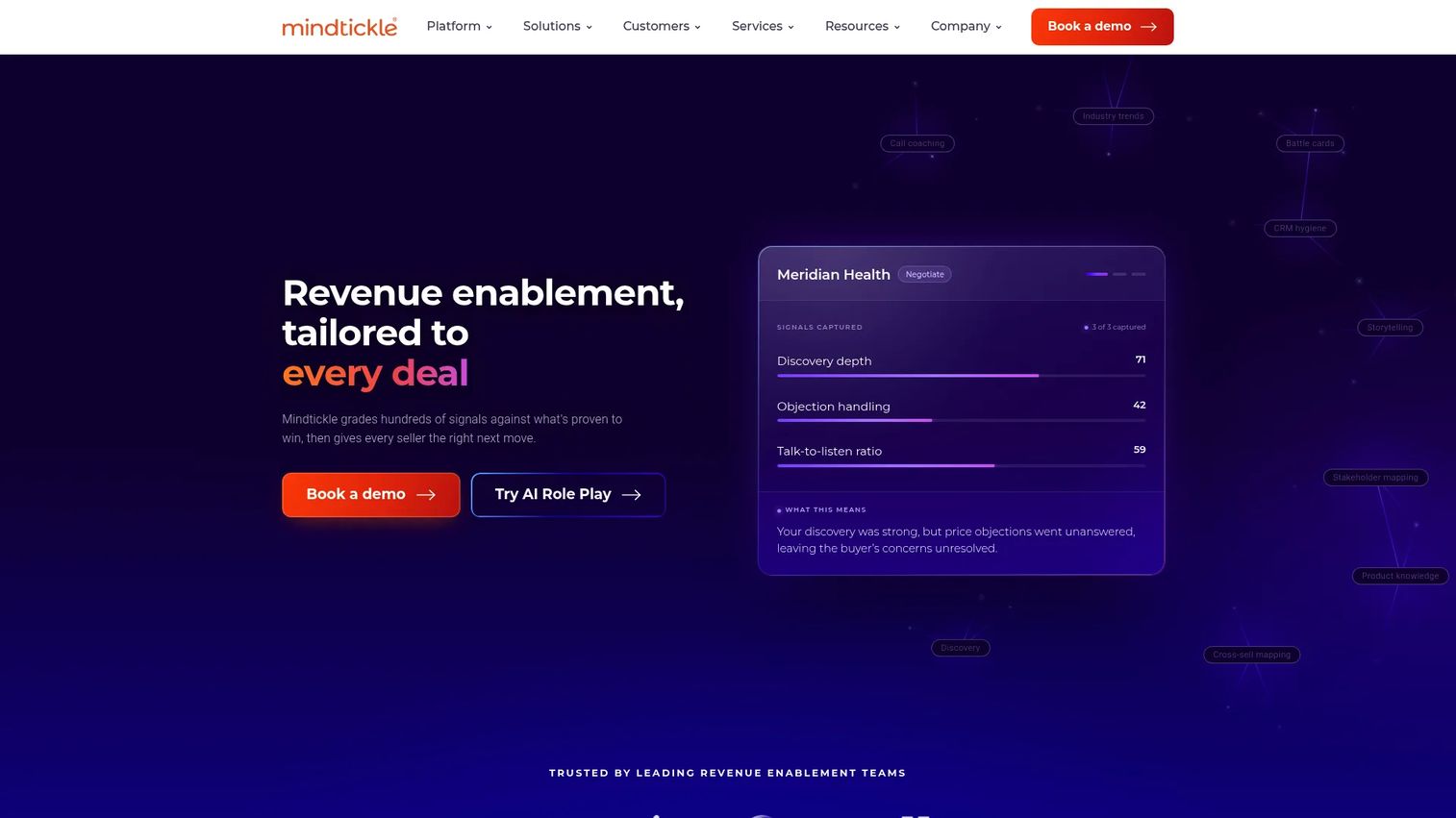
Mindtickle is the clearest choice when the core problem is rep readiness, not content distribution. If reps cannot articulate value, handle objections, or pass product certification, organizing the content library solves the wrong problem.
Best for: Enterprise revenue teams seeking an integrated platform for sales readiness, enablement, coaching, content, and buyer engagement.
What it is: Mindtickle is an AI-powered revenue enablement platform providing training, content, coaching, digital sales rooms, and conversation intelligence for revenue teams. Its AI role-play and pitch practice capabilities are designed for teams running structured readiness programs.
Key features:
- AI role-play and pitch practice
- Sales training, readiness measurement, and certification
- Sales content management
- Digital sales rooms
- Coaching and conversation intelligence
Where Mindtickle falls short: G2 reviewers note that admin configuration for training paths and reporting requires dedicated time, and some users mention that the breadth of the platform can slow initial rollout.
Pricing: Contact sales.
G2 rating: 4.7/5
How it compares to Paperflite: Stronger when the core issue is rep readiness, certification, and coaching rather than content governance or buyer experience. For teams where both are problems, it covers significantly more ground.
14. Allego (sales readiness and enablement)
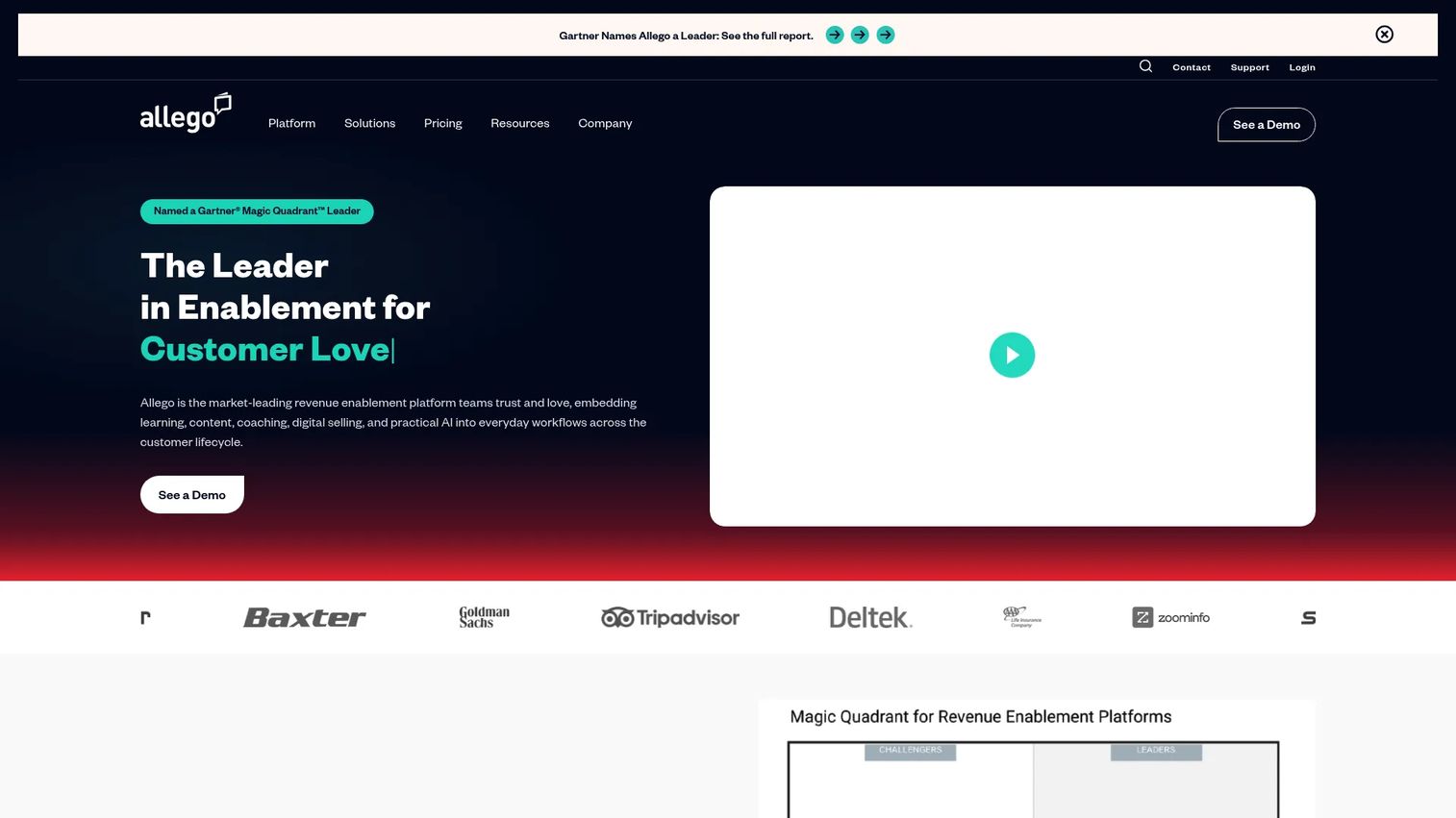
Allego combines sales learning and content management under the same roof, which appeals to enablement managers who do not want to maintain two separate platforms. Its digital sales rooms capability also adds a buyer-facing layer.
Best for: Mid-market and enterprise revenue teams seeking unified sales enablement, learning, coaching, content, and buyer engagement.
What it is: Allego is a revenue enablement platform that combines modern learning, AI role play, sales content management, conversation intelligence, digital sales rooms, and CRM integrations. Pricing is per user per month, billed annually, with typical contracts running three years.
Key features:
- Modern learning and onboarding with AI role play
- Sales content management
- Conversation intelligence
- Digital Sales Rooms and Deal Navigator
- CRM integrations and analytics
Where Allego falls short: G2 reviewers note that navigation within the platform can require orientation time for new users. Some reviewers flag that reporting depth and dashboard customization have room for improvement.
Pricing: Per user per month, billed annually upfront. No public numeric prices; contact Allego for a quote.
G2 rating: 4.5/5
How it compares to Paperflite: Useful when the enablement program needs readiness and coaching in addition to content distribution. Allego's combined approach reduces the number of platforms to manage.
15. DocSend (document sharing and analytics)
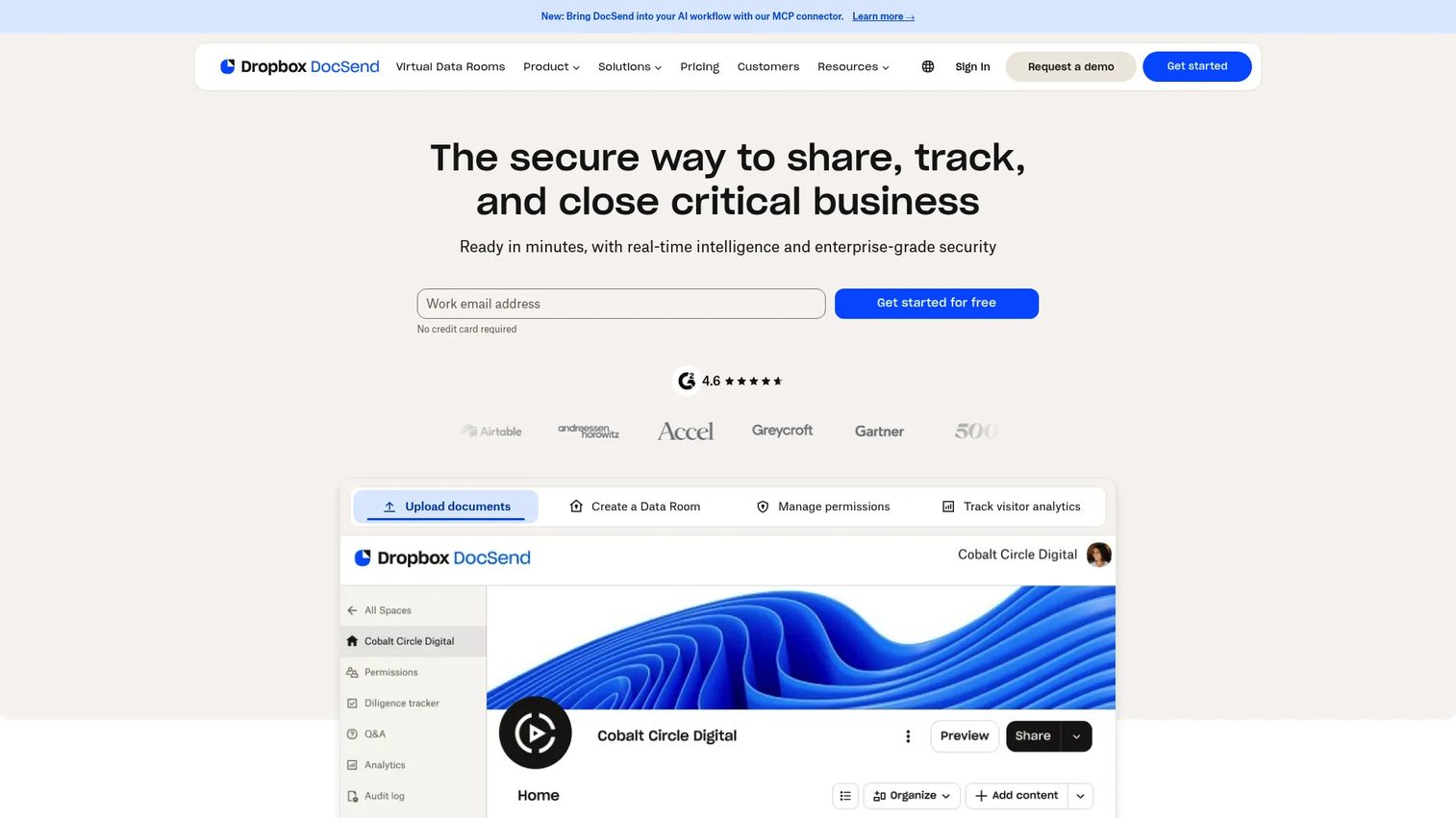
DocSend does one thing well: It tells you exactly who looked at your document, which pages held attention, and when they stopped. For teams that primarily share proposals, investor decks, or sensitive sales documents and need that signal without a full enablement platform, it covers the job cleanly.
Best for: Teams sharing sensitive sales, fundraising, proposal, or diligence documents that need recipient-level control and engagement visibility.
What it is: DocSend is a secure document sharing and deal-management tool with access controls, real-time engagement analytics, eSignatures, and data rooms. Personal plans start at $10 per user per month; Standard adds richer analytics and branding at $45 per user per month. A 14-day free trial is available.
Key features:
- Secure document sharing with passcodes, email verification, expiration, and download controls
- Real-time and page-level document engagement analytics
- eSignatures and signable documents
- Data rooms with permissions and audit logs
- Custom branding and branded subdomains
Where DocSend falls short: G2 reviewers note that DocSend's depth in content library management and rep enablement is intentionally limited. Teams that need a full content hub, training, or coaching will need a separate platform alongside it.
Pricing: Personal: $10/user/month. Standard: $45/user/month. Advanced: $150/month. Advanced Data Rooms: $180/month. All billed monthly. Annual pricing available via billing toggle. 14-day free trial.
G2 rating: 4.6/5
How it compares to Paperflite: More focused and lower cost for document-centric sharing. The right choice when the job is tracking buyer engagement with a specific document rather than running a broader enablement program.
16. ClearSlide (sales engagement platform)
ClearSlide combines a sales content hub with presentation and meeting engagement tracking. It is designed for teams that want to understand how prospects engage with shared content inside and outside of sales calls.
Best for: Enterprise sales teams that need centralized content, presentation engagement tracking, and sales interaction analytics.
What it is: ClearSlide is a sales engagement platform that combines a sales content hub, integrated communications, real-time engagement analytics, guided selling tools, and coaching capabilities. Its stated focus is on connecting content sharing to measurable engagement outcomes.
Key features:
- Sales content hub
- Integrated communications and presentation support
- Real-time engagement analytics
- Guided selling tools
- Coaching and best-practice capabilities
Pricing: Contact sales.
G2: 4.1
How it compares to Paperflite: A fit for presentation-led sales teams that want engagement tracking around meetings and shared assets, with a similar content-library-plus-analytics positioning to Paperflite.
17. Accord (mutual action plan platform)
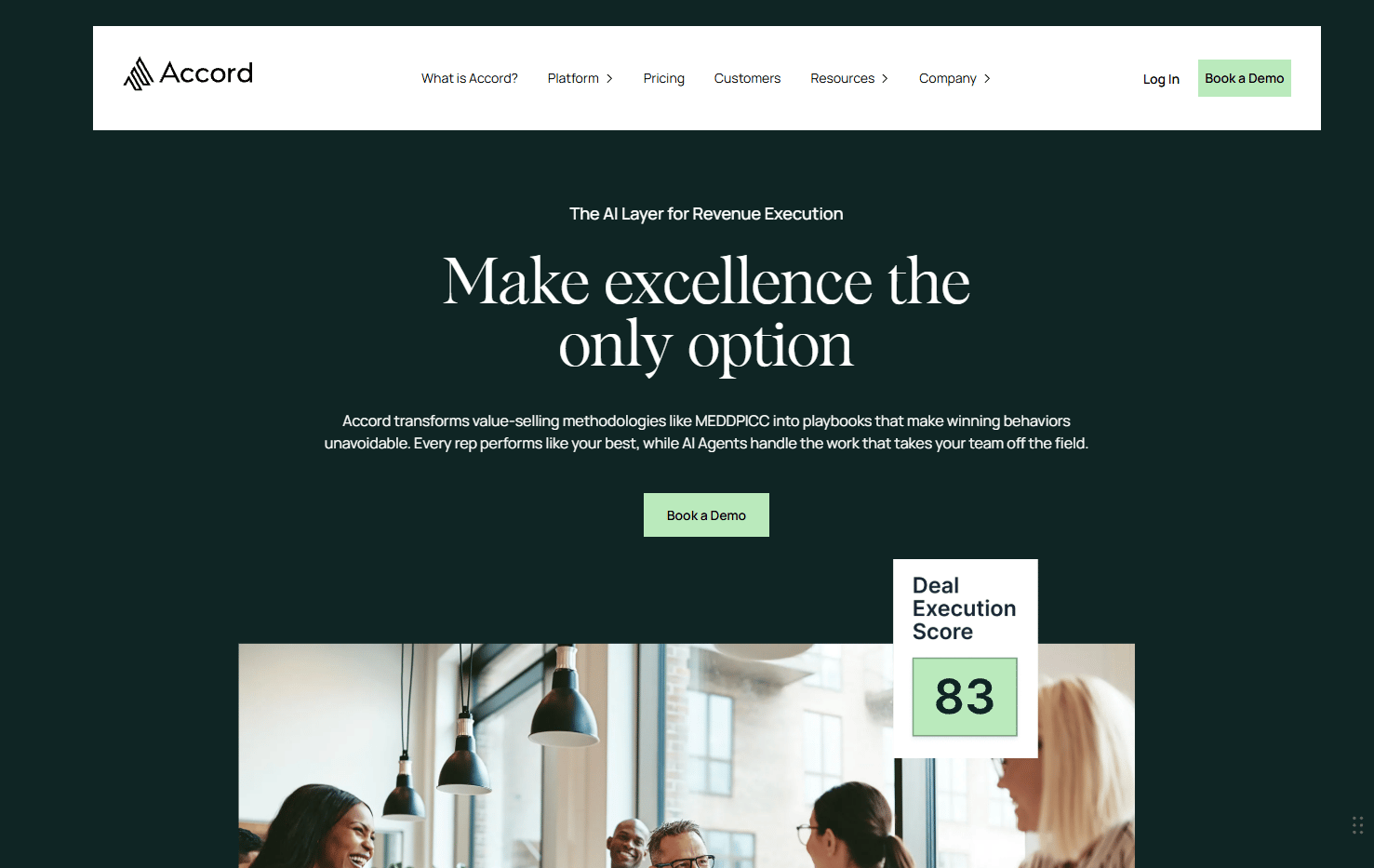
Accord addresses the late-stage deal problem: Buying committees that go quiet, next steps that never land, and stakeholders who were never properly aligned on a timeline. Its job is deal execution, not content distribution.
Best for: Mid-market and enterprise B2B revenue teams managing complex, multi-stakeholder sales, onboarding, and expansion.
What it is: Accord (accessible at inaccord.com) is an AI-powered revenue execution platform that turns value-selling methodologies into playbooks for sales and customer success teams. It includes mutual action plans, stakeholder mapping, execution scoring, deal reviews, and CRM integration with Salesforce and HubSpot.
Key features:
- Playbooks and methodology enforcement
- Mutual action plans and stakeholder mapping
- Execution scoring and deal reviews
- AI Agents for meeting prep, follow-ups, and CRM updates
- CRM integrations including Salesforce and HubSpot
Where Accord falls short: G2 reviewers note that Accord's content library functionality is intentionally narrow; it is a deal execution tool rather than a content management platform. Teams replacing Paperflite for content governance will need to look elsewhere for that job.
Pricing: Starter: $99/user/month + platform fee. Growth: $119/user/month + platform fee. Enterprise: Custom pricing + platform fee.
G2 rating: 4.9/5
How it compares to Paperflite: Best viewed as a buyer collaboration and deal execution tool rather than a content enablement replacement. Teams whose main friction is deal stalls and stakeholder alignment will find Accord fills a gap Paperflite does not address.
18. Revspire (revenue workspace)
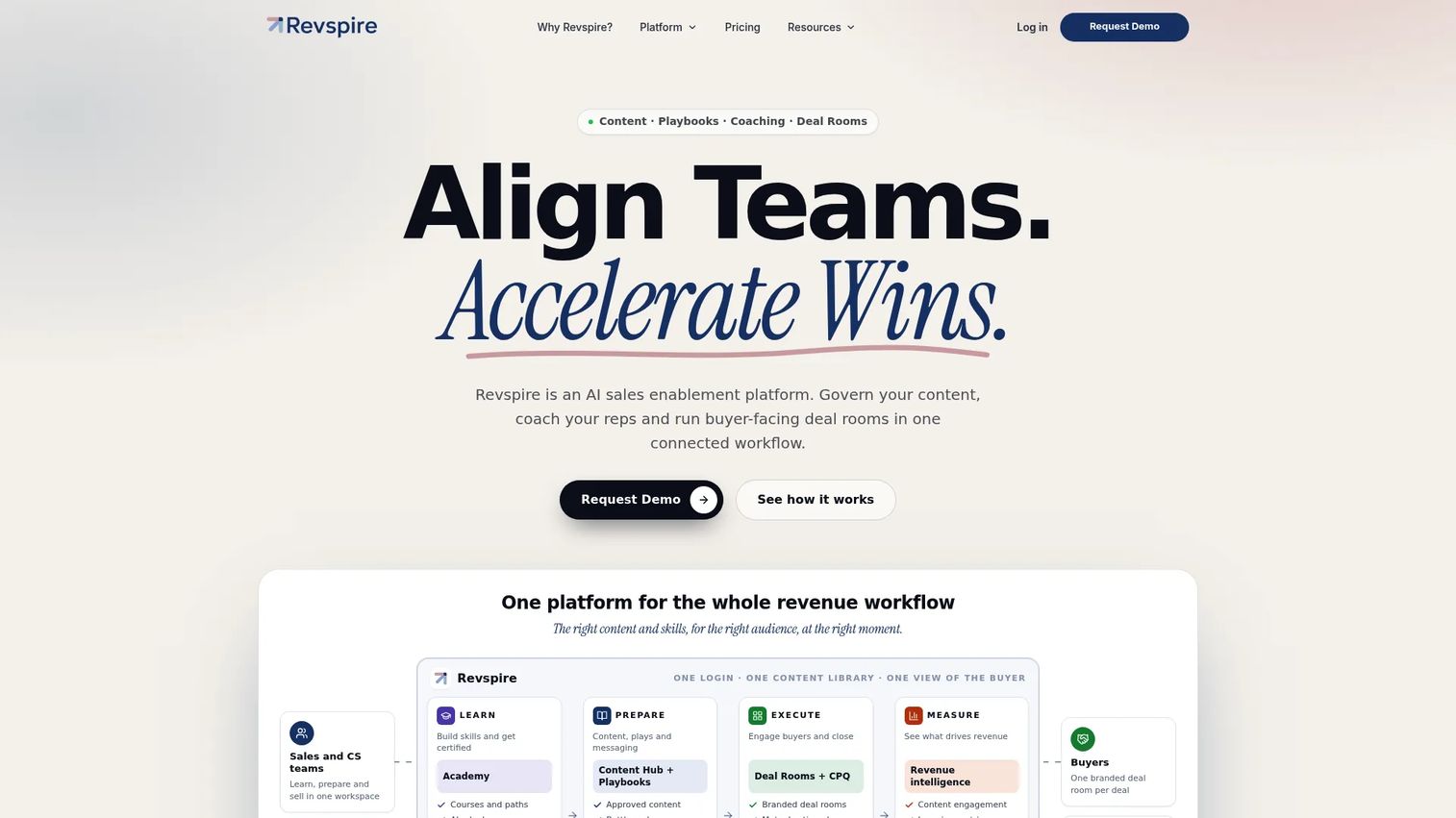
Revspire packages multiple revenue enablement capabilities into a modular platform, with the Content Hub as the required base and additional modules added based on what the team actually needs.
Best for: B2B revenue teams managing complex, multi-stakeholder sales with integrated content, coaching, buyer collaboration, and deal execution.
What it is: Revspire is an AI sales enablement platform combining a governed Content Hub, AI Playbook Engine, sales coaching with video role-play, digital sales rooms with mutual action plans, CPQ, a Partner Portal, and Conversation Intelligence. Pricing runs about $25,000 per year on average, per module structure with unlimited user licenses.
Key features:
- Governed Content Hub with semantic search and CRM recommendations
- AI Playbook Engine for battlecards, objection plays, and win/loss analysis
- Branded digital sales rooms with mutual action plans
- CPQ with guided configuration and approval workflows
- Conversation Intelligence with transcripts and call scoring
Where Revspire falls short: The modular pricing model means costs scale as more capabilities are added, and the base annual commitment sits around $25,000.
Pricing: About $25,000 per year on average. Per-module pricing requires a quote; Content Hub is the base platform.
G2: 4.7
How it compares to Paperflite: Revspire covers significantly more ground, from content governance through deal execution and partner portals. For teams that need a broader revenue workspace rather than a focused content experience platform, the modular structure gives flexibility.
19. Showell (sales enablement platform)
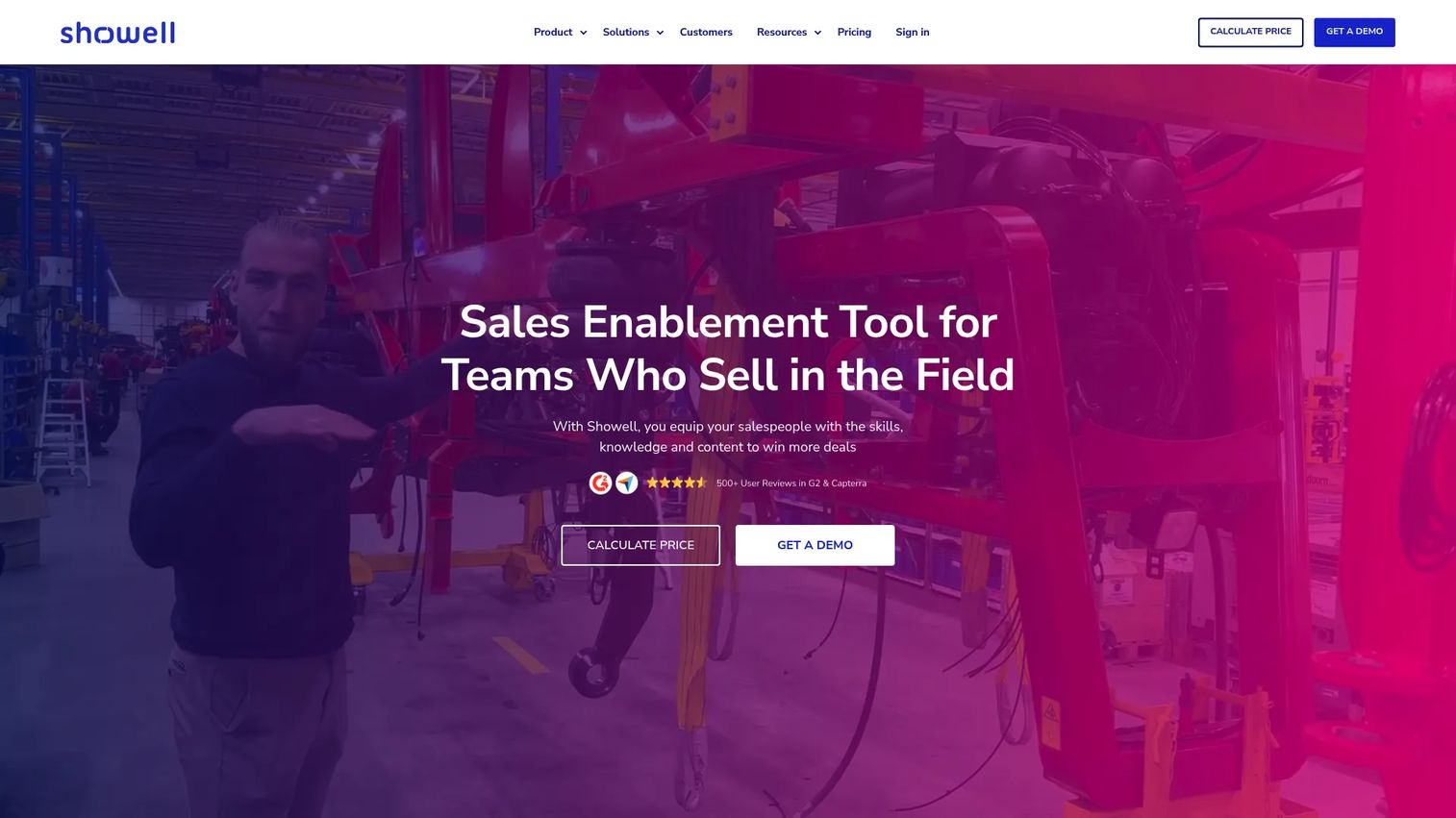
Showell's primary advantage is field readiness. Its offline browsing capability and mobile-first design address a specific pain point for distributed teams, dealer networks, and reps who present in environments where internet access is unreliable.
Best for: Field sales and customer-facing teams that need centralized, presentation-ready content and trackable buyer sharing.
What it is: Showell is a sales enablement platform for organizing, presenting, sharing, and analyzing sales content. It supports presentations, PDFs, videos, 3D and AR content, Digital Sales Rooms, offline browsing, smart search, and AI-powered content recommendations. Professional plans start at €700 per workspace per month on a 12-month minimum commitment.
Key features:
- Central content library with offline browsing and smart search
- Digital Sales Rooms with branded sharing and engagement tracking
- Support for 3D and AR content alongside standard formats
- Content, user, team, and share analytics
- AI-powered search and content recommendations
Where Showell falls short: A current G2 rating was not available during this research run. Some users note that advanced enterprise depth, particularly around training and coaching integrations, is narrower than full-stack platforms.
Pricing: Professional: Starting at €700/workspace/month (12-month minimum). Enterprise: Custom pricing.
G2: 4.6
How it compares to Paperflite: A strong fit for distributed field sales teams that need reliable content access outside desk-based workflows, particularly where offline capability and 3D or AR support are relevant to what the team sells.
20. Spekit (just-in-time enablement platform)
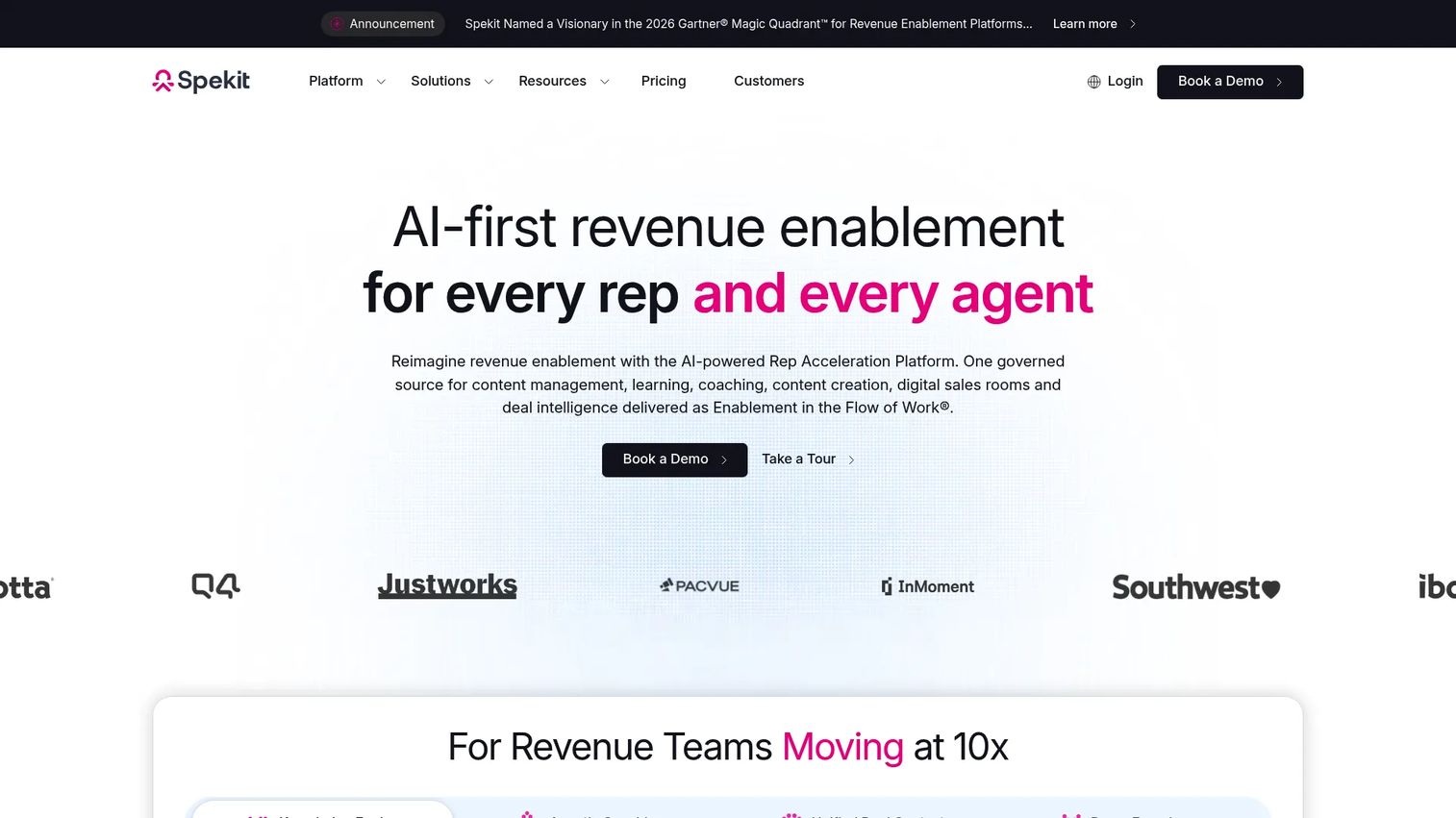
Spekit delivers enablement inside the rep's workflow rather than asking them to visit a separate platform. Its AI Sidekick surfaces the right knowledge, coaching, and guidance at the moment a rep needs it, inside the tools they already use.
Best for: Revenue enablement teams that need governed knowledge, in-workflow guidance, training, and AI coaching for sales reps.
What it is: Spekit is an AI-powered revenue enablement platform delivering governed knowledge, coaching, learning, and buyer experiences within sales workflows. It includes an AI Sidekick for contextual answers and coaching, Dynamic Learning Paths, an AI Content Builder, Deal Rooms with buyer engagement tracking, and MCP integration for governed knowledge across AI tools.
Key features:
- AI Sidekick for contextual answers, coaching, and actions inside existing workflows
- Governed content management and knowledge engine
- Dynamic Learning Paths and embedded enablement
- AI Deal Rooms with buyer engagement tracking
- MCP integration for governed knowledge across AI tools
Where Spekit falls short: G2 reviewers note that content depth for buyer-facing sales collateral is narrower than dedicated content experience platforms. Some users mention that setup time for the knowledge base requires dedicated curation before the in-workflow delivery becomes reliable.
Pricing: Contact sales; Just-in-Time Enablement and GTM Acceleration packages available, pricing by quote.
G2 rating: 4.7/5
How it compares to Paperflite: Better for internal rep guidance and process adoption than buyer-facing content experiences. Teams whose main bottleneck is rep execution inside their existing tools will find Spekit addresses that problem directly.
What is the best Paperflite alternative for interactive demos?
Guideflow is the top pick for teams that want reps to send, embed, and organize interactive demos.
Guideflow replaces static PDFs and decks with product experiences buyers can click through themselves. Demo Centers organize those experiences into branded hubs by persona, use case, or funnel stage. Analytics report step-level completion, drop-off, and viewer flow, so the team knows which parts of the product actually resonated before the next call. The same interactive demo that trains a rep can become the buyer leave-behind, which means content created once travels further.
Which Paperflite alternative is closest to a traditional sales enablement platform?
Highspot, Showpad, or Seismic, depending on buyer size and program scope.
Highspot fits enterprise teams that need content governance, rep guidance, and meeting intelligence in one system. Showpad is the right call when readiness and coaching matter as much as content distribution. Seismic suits large organizations with complex personalization requirements and dedicated enablement operations. All three price by quote, so direct comparison requires a sales conversation with each vendor.
Which Paperflite alternative is best for sales readiness?
Mindtickle for dedicated readiness programs; Allego when readiness and content management need to live together.
Mindtickle's AI role-play, certification, and coaching analytics are built specifically for teams running structured readiness programs. Allego covers similar ground while also folding in content management and digital sales rooms, which reduces the number of platforms a team needs to maintain. Both are priced by quote with no public numeric tiers.
Which Paperflite alternative is best for content experience?
Uberflip, PathFactory, or RELAYTO AI, depending on where the engagement gap sits.
Uberflip excels at campaign content hubs and account-based personalized experiences. PathFactory is the stronger option when the job is tracking buyer engagement across content journeys and feeding that signal into revenue operations. RELAYTO AI is a practical choice for teams that want to make existing PDFs and presentations interactive without rebuilding the content itself. Its Team plan starts at $750 per month billed annually.
What is the simplest Paperflite alternative for document tracking?
DocSend, with entry plans starting at $10 per user per month.
DocSend tracks who opened a document, which pages held attention, and for how long, without requiring a full enablement platform. Personal plans handle individual users; Standard and Advanced plans add team features, richer analytics, and data rooms. For teams whose primary need is controlled sharing and buyer-view analytics on proposals or sensitive materials, DocSend covers the job without the overhead.
Which Paperflite alternative works best for field sales?
Showell or Bigtincan for teams with distributed field or dealer network requirements.
Showell's offline browsing and mobile-first design address the specific challenge of presenting in environments with limited connectivity. Bigtincan's broader platform covers field readiness, content recommendations, and meeting intelligence across a distributed seller base. Both require direct pricing conversations; Showell publishes starting rates in euros.
When should you stay with Paperflite?
Switching platforms has real costs: Migration effort, rep retraining, integration reconfiguration, and time before the new system builds adoption.
Staying with Paperflite makes sense when reps already use it consistently and the content governance is working. If buyers mainly need curated collateral rather than interactive product experiences, the case for switching is weaker. Teams with favorable renewal terms or mid-year commitments may find the switching cost outweighs any near-term gain.
Paperflite also does its job well for teams that need a content library with buyer-facing microsites and engagement tracking. If that is the core requirement and the current adoption is healthy, a replacement evaluation is worth running only when a specific gap, budget, or team-size trigger makes the status quo untenable.
Why teams switch from Paperflite to Guideflow
The teams that move from Paperflite to Guideflow share a common trigger: They realize the problem is not how content is organized, but what the content actually is. Static assets, however well managed, produce a different buyer experience than a product someone can click through.
Reps send product experiences, not files. Guideflow lets a rep embed an interactive demo in a follow-up email or attach it to a deal the same way they would attach a PDF. The buyer opens a product they can navigate rather than a document they have to interpret.
Demo Centers organize the buyer journey. A branded hub where prospects explore by use case, persona, or stage replaces a folder of attachments. Each stakeholder on a buying committee finds what they need without a rep managing the routing. With more than 500,000 guideflows created, the format is proven across diverse teams and use cases.
Analytics connect to pipeline signals. Step-level completion, drop-off, and viewer flow tell the enablement team and the AE which parts of the product resonated and where engagement dropped. CRM records are created when a viewer identifies through a form or personalized link, so intent signals surface inside existing workflow tools like HubSpot, Salesforce, Pipedrive, Zoho, or Marketo.
One asset, two jobs. A demo built for a rep training session can go directly to buyers. Building once and deploying across onboarding, outbound, leave-behinds, and self-serve discovery reduces the content production tax that grows when sales and enablement teams maintain separate asset libraries.
Teams that need an LMS, a certification engine, or broad content governance should evaluate the platforms above for those jobs. Guideflow is purpose-built for buyer-facing product engagement.
Start your journey with Guideflow today!
FAQs
The right answer depends on the job. Guideflow is the top pick for teams replacing static buyer-facing collateral with interactive product experiences and Demo Centers. Highspot, Showpad, and Seismic are the strongest like-for-like sales enablement suite replacements. DocSend is the clearest choice for lightweight document tracking.
Paperflite is a sales enablement and content experience platform for organizing, sharing, and tracking sales collateral. Guideflow is a demo automation platform for creating, sharing, and measuring interactive demos, demo pages, demo centers, sandboxes, live demos, and mobile demos. The two serve overlapping audiences but address different layers of the buyer experience.
For full enablement suites, compare Highspot, Showpad, Seismic, and Bigtincan across content governance, training, and coaching capabilities. For buyer-facing product education and interactive demo content, Guideflow is the starting point. The right choice depends on whether the bottleneck is rep content access, rep readiness, or the buyer experience itself.
Guideflow leads when the buyer needs to explore the product rather than read about it. DocSend is the clearest choice for document-level engagement tracking. Accord fits teams whose buyer engagement problem is stakeholder alignment and deal momentum. Mediafly suits organizations where value selling and ROI quantification drive the conversation.
Pricing varies widely across the 20 tools on this list. Content Camel and Guideflow offer free plans. DocSend starts at $10 per user per month. RELAYTO AI starts at $750 per month billed annually. Enterprise platforms including Highspot, Showpad, Seismic, Bigtincan, and GTM Buddy are quote-only, and their total cost of ownership reflects implementation, admin, and seat scale. Accord starts at $99 per user per month plus a platform fee.
For some workflows, yes. A demo automation platform can replace static buyer-facing collateral for product education, follow-up, and self-serve exploration. Teams that need LMS-style training, certifications, structured coaching, or broad content governance will still need a sales enablement suite alongside it. The two categories answer different root problems.
Evaluate rep adoption rates, content governance requirements, CRM integration depth, buyer engagement analytics, migration effort, and the time before the new platform reaches working adoption. Sales enablement managers should also confirm whether reps can use the new tool inside their existing workflow or whether it requires a separate tab and behavioral change. Tools with in-workflow delivery, like GTM Buddy or Spekit, reduce that adoption friction. Tools with broader platforms, like Highspot or Seismic, require more structured rollout.
Smaller teams should weight fast setup, clear analytics, and low admin overhead. Guideflow is a strong option when product experience drives sales conversations. DocSend fits teams whose main need is document tracking with controlled sharing. Content Camel's Team plan at €9.99 per user per month covers basic content governance without the complexity of a full enablement suite.