Your lease operators send production data at 6 p.m. Finance needs a clean report by 9 a.m. The field says the gauges are right. The office says the numbers do not tie.
That gap is not a technology problem. It is an operational accountability problem, and the right oil production software closes it. The global oil production software market reached $4.2 billion in 2025 and is projected to grow at an 8.5% CAGR through 2034, according to Dataintelo (2025). Cloud deployments already account for 41.6% of that market, which means the shift from paper and spreadsheets to governed, field-accessible systems is already underway at most operators.
The question is which platform fits your operating model, your field crew, and your reporting requirements, without creating another data silo your leadership team stops trusting.
This guide compares 14 oil and gas production software tools across field capture, allocation, regulatory reporting, analytics, and accounting integration. Every pricing figure and G2 rating was verified against live vendor and review sources.
What's inside
This guide is for upstream operators, production managers, operations executives, and founders evaluating vertical software for oil and gas production operations.
- Selection criteria: Production operations fit, mobile field capture capability, allocation and reporting depth, and implementation risk
- Pricing: Verified against vendor pricing pages and third-party review sources
- Ratings: Pulled from live G2 listings at time of writing
- Scope: Upstream production tools, not general oil and gas accounting or reservoir engineering tools alone
TL;DR
- Best for enterprise production operations: P2 Energy Solutions, IFS Production Solutions, and Quorum Energy Suite are strongest when assets, accounting, and compliance workflows must connect
- Best for independent operators: Greasebook fits teams that need pumpers to adopt the system quickly and replace paper gauge sheets
- Best for integrated oil and gas accounting: Enertia, WolfePak, and OGsys deserve close review when production data must connect tightly to back-office workflows
- Best for field capture and inspection: FieldCap and Mitti by SafetyCulture fit teams prioritizing mobile forms and field execution discipline
- Best for analytics and data intelligence: Petro.ai, PHDWin, and Well Database are stronger fits when subsurface analysis and production forecasting matter more than daily pumper workflows
- Best for cloud allocation: EnergySys leads when hydrocarbon accounting and configurable allocation logic are the primary buying criteria
What is oil production software?
Oil production software is software that helps upstream oil and gas operators collect field data, monitor well and facility performance, allocate production volumes, manage operational workflows, and produce production reports.
The category sits between field operations and back-office accounting. It connects what pumpers and lease operators capture at the wellsite to what finance, compliance, and leadership need to see in reports.
Key capabilities to look for
- Mobile field data capture: Gauge readings, run tickets, fluid movements, and well tests
- Production allocation: Assigning volumes across wells, leases, facilities, owners, and product streams
- Downtime tracking and exception management
- Regulatory production reporting with state and federal filing support
- Audit trails, data validation, and edit history
- SCADA, ERP, accounting, and BI integrations
- Offline capture and synchronization for field crews
- Forecasting, decline analysis, and operational analytics
- Work orders, inspections, and field task management
- Emissions, venting, and ESG workflows where relevant
Category boundaries
Oil production software is not the same as oil and gas accounting software, which focuses on revenue, JIB, and financial close. It is also distinct from SCADA systems, which handle real-time instrumentation, and from reservoir engineering tools that model subsurface behavior. Some platforms in this list span multiple categories. Knowing which category matters most for your current bottleneck is the first decision to make before evaluating vendors.
When to use oil production software
Replace paper gauge sheets and spreadsheets
Paper and spreadsheets do not break all at once. They erode confidence slowly. Volumes arrive late, run tickets go missing, and downtime explanations live in text messages. Operators that have more than a handful of wells, multiple pumpers, or any form of regulatory reporting obligation typically reach a point where manual workflows cannot produce trustworthy numbers without excessive cleanup work.
Tie production allocation to reporting
When production volumes must reconcile across commingled facilities, multiple ownership structures, or different product streams, spreadsheet-based allocation creates monthly close pain. The right oil and gas production allocation software gives you a governed record that connects field volumes to owner distributions and regulatory filings without a reconciliation scramble at month end.
Give operations leaders real-time visibility
Executives and operations leaders who wait until the weekly meeting to learn about a well anomaly or a significant production variance are operating with lag they cannot afford. Oil and gas production operations software gives field supervisors and leadership a shared view of what is happening, so decisions happen before the next reporting cycle rather than after it.
Oil production software comparison
The table below summarizes all 14 tools by fit, key differentiator, pricing model, and G2 rating. Use it to shortlist two or three platforms based on the workflow that breaks first, then go deeper on each.
| # | Product | Best for | Key differentiator | Pricing | G2 rating |
|---|---|---|---|---|---|
| 1 | P2 Energy Solutions | Large upstream operators | Field-through-financials workflow coverage | Contact sales | 3.5/5 |
| 2 | Enertia | Integrated upstream ERP | Production tied to accounting, land, and contracts | Contact sales | 3.6/5 |
| 3 | Greasebook | Independent operators | Mobile-first pumper adoption | Contact sales | 4.8/5 |
| 4 | W Energy Software | Field operations and accounting | Integrated upstream and midstream platform | Contact sales | N/A |
| 5 | IFS Production Solutions | Enterprise production operations | Allocation, surveillance, and compliance workflows | Contact sales | N/A |
| 6 | Quorum Energy Suite | Enterprise energy operations | Broad upstream and midstream business process coverage | Contact sales | N/A |
| 7 | EnergySys | Cloud production allocation | Configurable, auditable hydrocarbon accounting | From GBP £35,000/year | N/A |
| 8 | FieldCap | Mobile field data capture | Customizable field tickets and offline access | Contact sales | N/A |
| 9 | Petro.ai | Analytics and technical teams | AI-powered production forecasting and reservoir optimization | Contact sales | N/A |
| 10 | Mitti by SafetyCulture | Field checklists and inspections | Mobile inspections, training, and AI-driven insights | Free; Premium from $24/seat/month | 4.6/5 |
| 11 | WolfePak | Independent oil and gas accounting | Revenue, production, and financial reporting for operators | Contact sales | 3.5/5 |
| 12 | OGsys | Oil and gas accounting teams | Cloud-based upstream accounting with JIB and revenue workflows | Contact sales | 5.0/5 |
| 13 | PHDWin | Reserves and economics analysis | Decline curves, reserves evaluation, and economic forecasting | From $1,593/quarter | N/A |
| 14 | Well Database | Well data and mapping | Well intelligence, mapping, and production data access | Free tier available; paid from $250/user/month | N/A |
Best 14 oil production software for 2026
1. P2 Energy Solutions
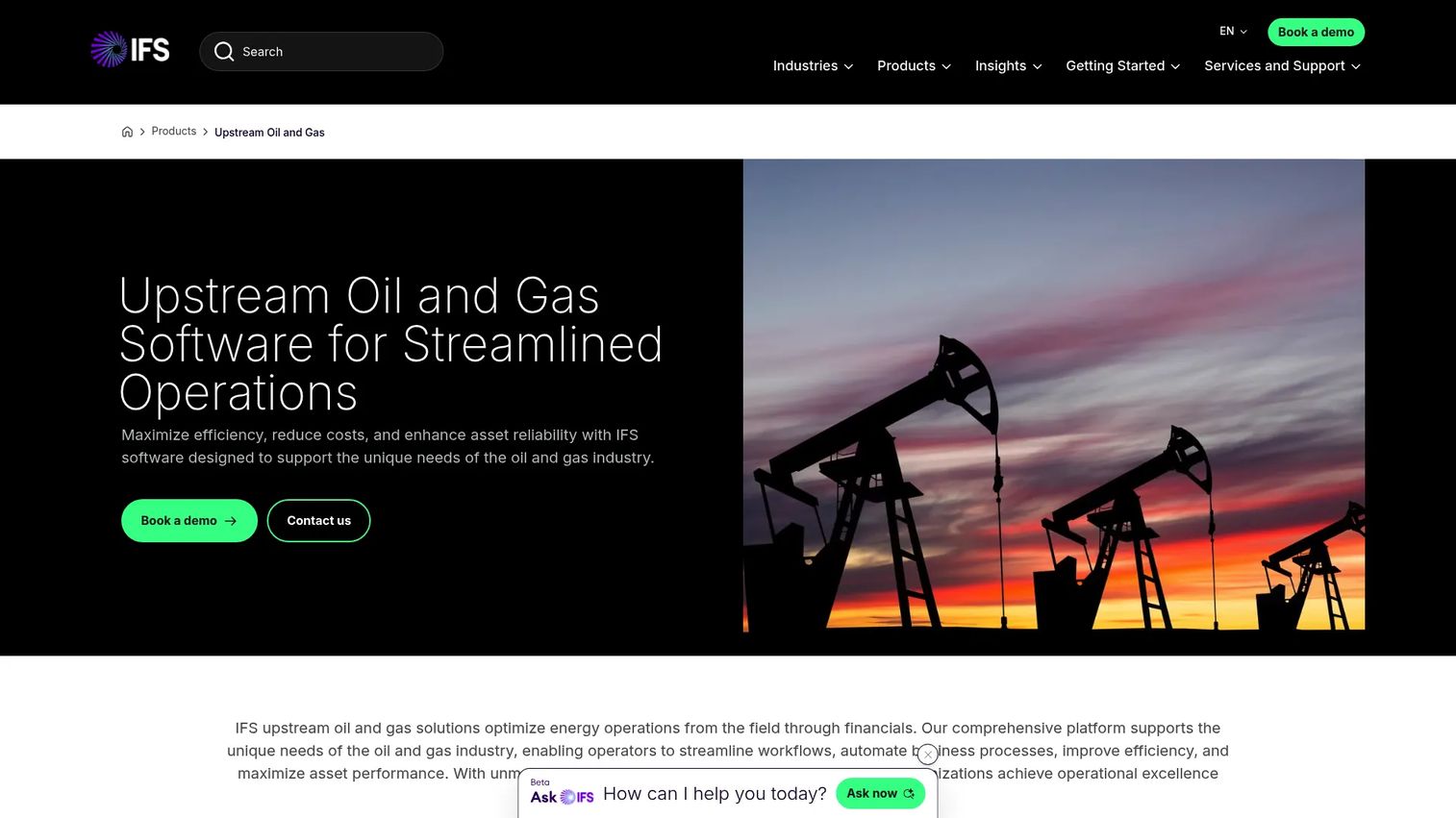
P2 Energy Solutions is now part of IFS, positioning it as a major upstream software provider for large oil and gas operators. The platform covers production operations, field workflows, oil and gas accounting, land management, and geospatial information across the upstream value chain. It is designed for operators that cannot afford to run disconnected systems across field, finance, and land.
Best for: Large upstream operators that need production, accounting, land, and enterprise workflows connected in a single platform.
Key features
- Production operations management across assets and facilities
- Oil and gas accounting and financial reporting
- Land management with geospatial information
- Field data workflow support
- Enterprise system integration capabilities
Why choose P2 Energy Solutions: Choose P2 when production software cannot sit apart from the rest of the business. It is the right fit for operators where operational data must flow directly into accounting, land, and enterprise reporting without manual reconciliation steps between systems.
P2 Energy Solutions pricing: P2 prices through sales, with cost driven by modules, assets, users, and implementation scope. Contact the vendor directly for a quote.
G2 rating: 3.5/5, based on 4 reviews on G2.
2. Enertia
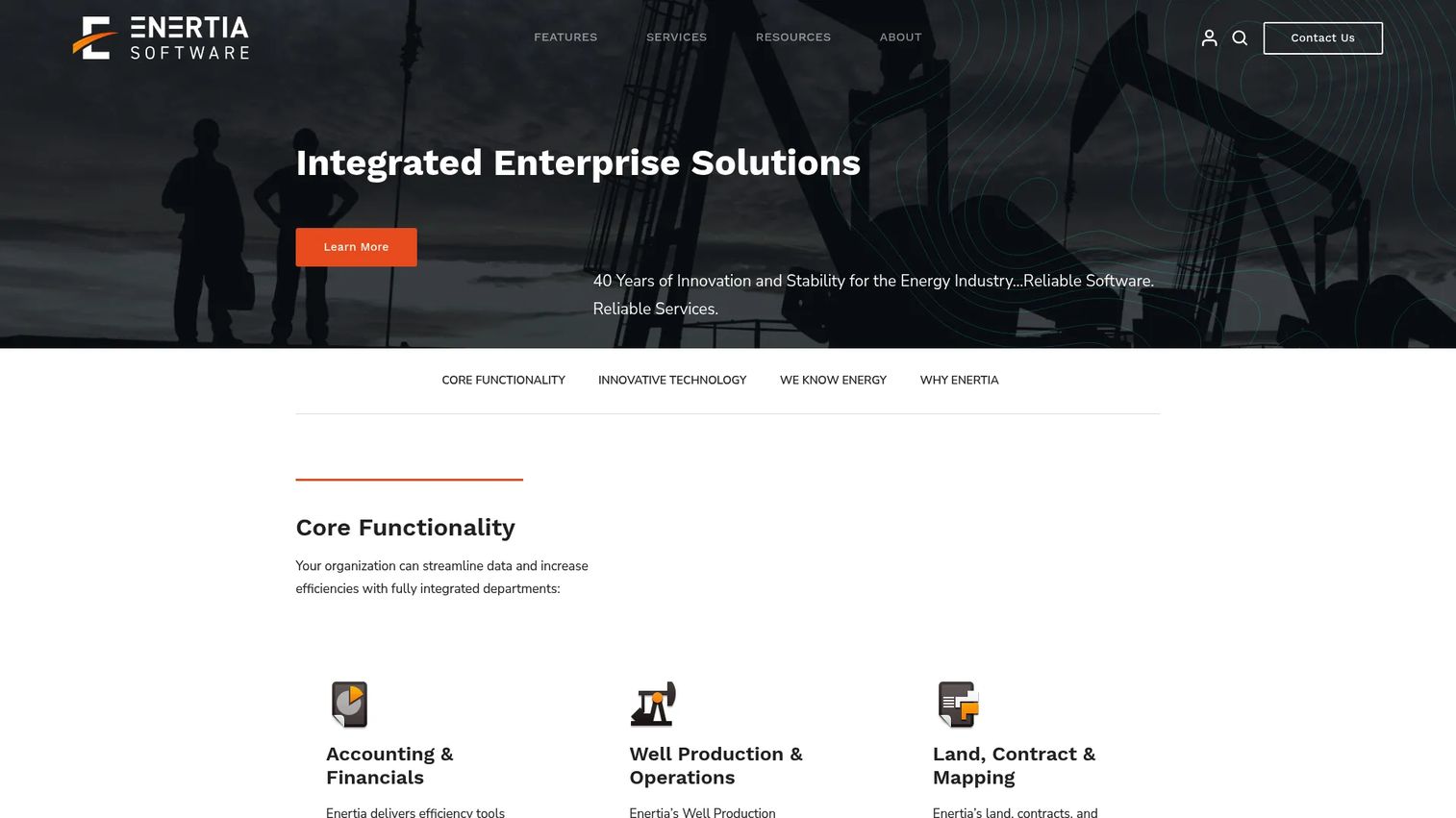
Enertia is an integrated enterprise resource planning platform built specifically for upstream oil and gas operators. It connects production operations, accounting, land management, contract management, and field data capture in a single system. The platform supports cloud, SaaS, and hosted deployment options, and its no-code workflow automation reduces the dependency on IT for routine process changes.
Best for: Upstream operators that want production operations inside a broader ERP spanning financials, land, and contracts.
Key features
- Revenue accounting, joint interest billing, and accounts payable
- Production estimates, volume allocations, and well testing
- Land management with integrated GIS capabilities
- Field Data Capture for production, regulatory, and revenue workflows
- No-code workflow automation
Why choose Enertia: Choose Enertia when production data must flow cleanly into accounting and land workflows without a middleware layer. It is less about a standalone field app and more about connecting operational data to the entire back office.
Enertia pricing: Pricing varies by functionality, consulting requirements, and hosting options. Contact Enertia directly for a quote tailored to your operating footprint.
G2 rating: 3.6/5 on G2.
3. Greasebook
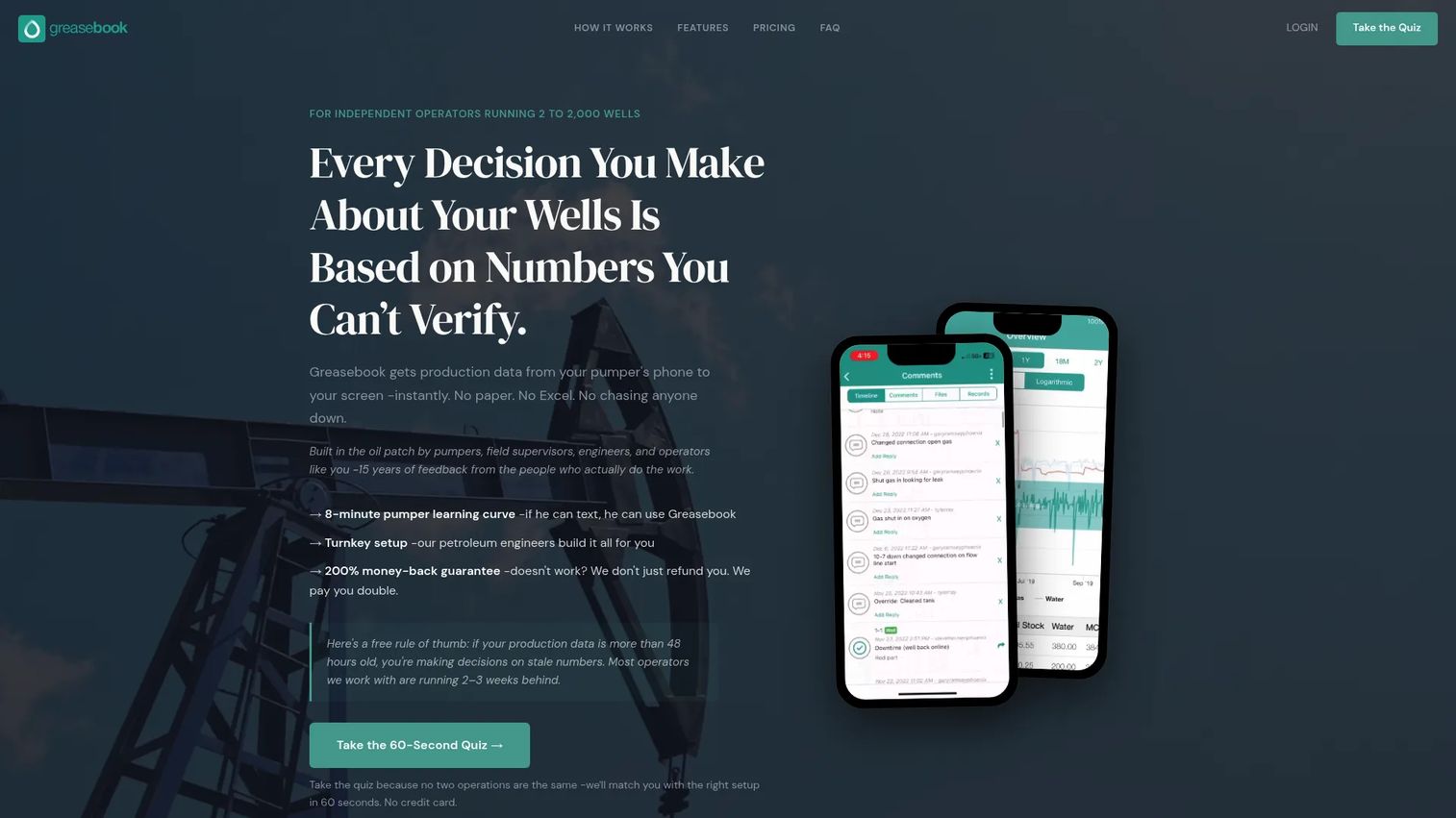
Greasebook is mobile-first oil production software built for independent operators replacing paper gauge sheets and fragmented pumper workflows. It covers daily production data, well testing, downtime tracking, run tickets, automated state and federal reporting, and GPS-based pumper accountability. The app works offline and syncs when connectivity returns. Greasebook holds a 4.8/5 G2 rating, the highest of any tool in this list.
Best for: Independent oil and gas operators that need pumpers to adopt a mobile system quickly and replace paper-based field workflows.
Key features
- Mobile pumper app with offline operation
- Daily production tracking and gauge entry
- Alarm alerts and performance dashboards
- Well testing and allocation engine
- State and federal auto-report filing
- Pumper GPS tracking and partner permissions
Why choose Greasebook: Choose Greasebook when field adoption is the deciding factor. Production software only works when the people entering data actually use it every day. Greasebook's mobile-first design is purpose-built for pumpers, not office administrators using a desktop portal.
Greasebook pricing: Pricing is customized based on operational complexity and is not published as a fixed rate. Contact Greasebook for a quote specific to your well count and field crew size.
G2 rating: 4.8/5 on G2.
4. W Energy Software
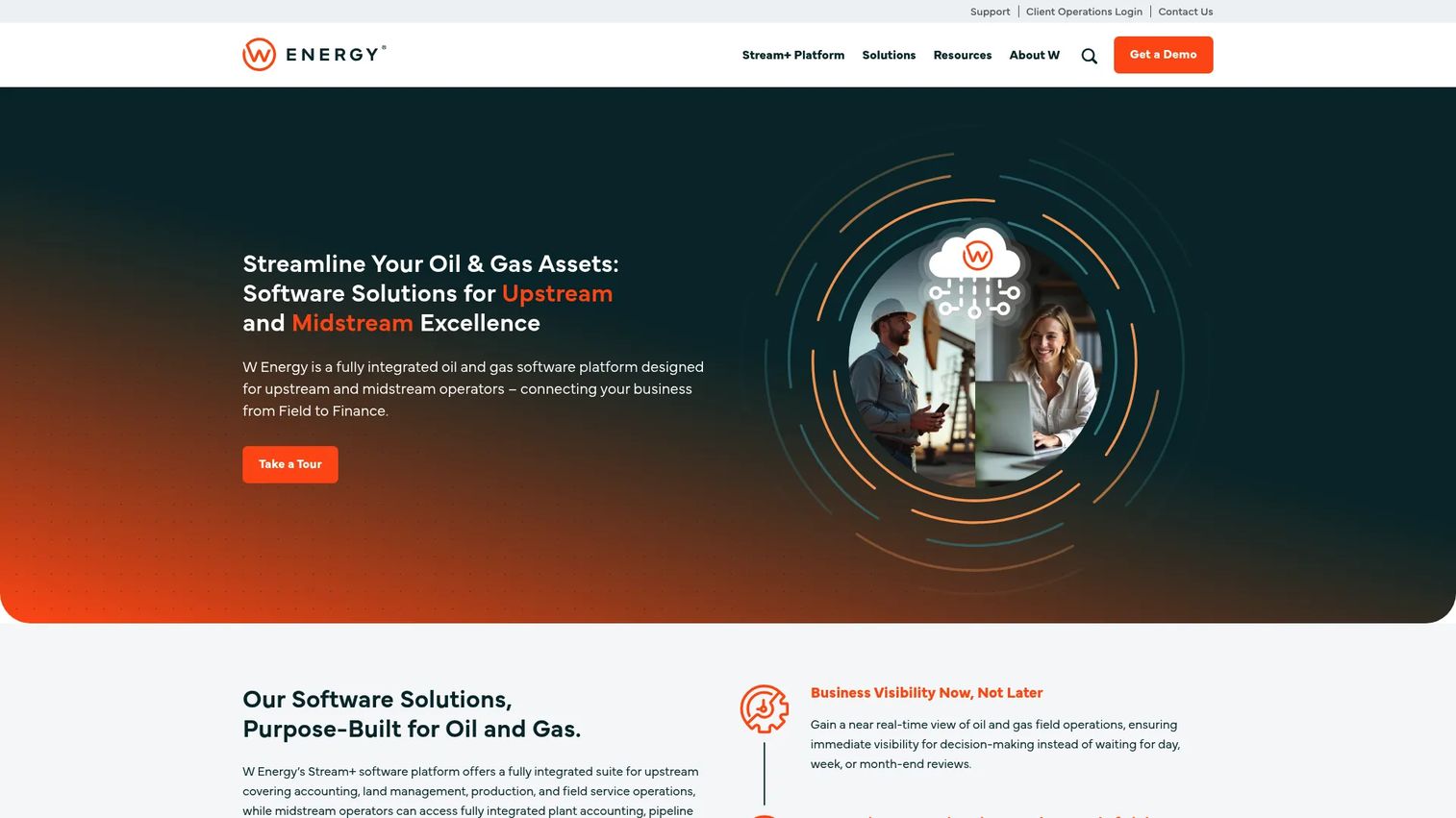
W Energy Software delivers an integrated cloud-based platform for upstream and midstream oil and gas operations. Its Stream+ platform combines accounting, land management, production, and field service operations in a single environment. The platform includes DataView business intelligence for customized reporting and CalcTrace for calculation transparency and audit trails, so field data can be traced back to its source without manual reconstruction.
Best for: Upstream and midstream operators that want field operations and production accounting to work inside one operating model rather than separate tools.
Key features
- Integrated accounting, land, and production management
- Midstream plant and pipeline accounting
- DataView business intelligence and reporting
- CalcTrace calculation transparency and audit trails
- Near-real-time operational visibility
Why choose W Energy Software: Choose W Energy when field workflows, task dispatching, and accounting need to share data without handoff friction. It fits operators scaling beyond what spreadsheets and disconnected point solutions can sustain.
W Energy Software pricing: Pricing is handled through sales and moves with modules, users, and implementation scope. Reach out to the vendor for a tailored quote.
G2 rating: No current G2 rating is available; the vendor's G2 profile shows insufficient reviews for a score.
5. IFS Production Solutions
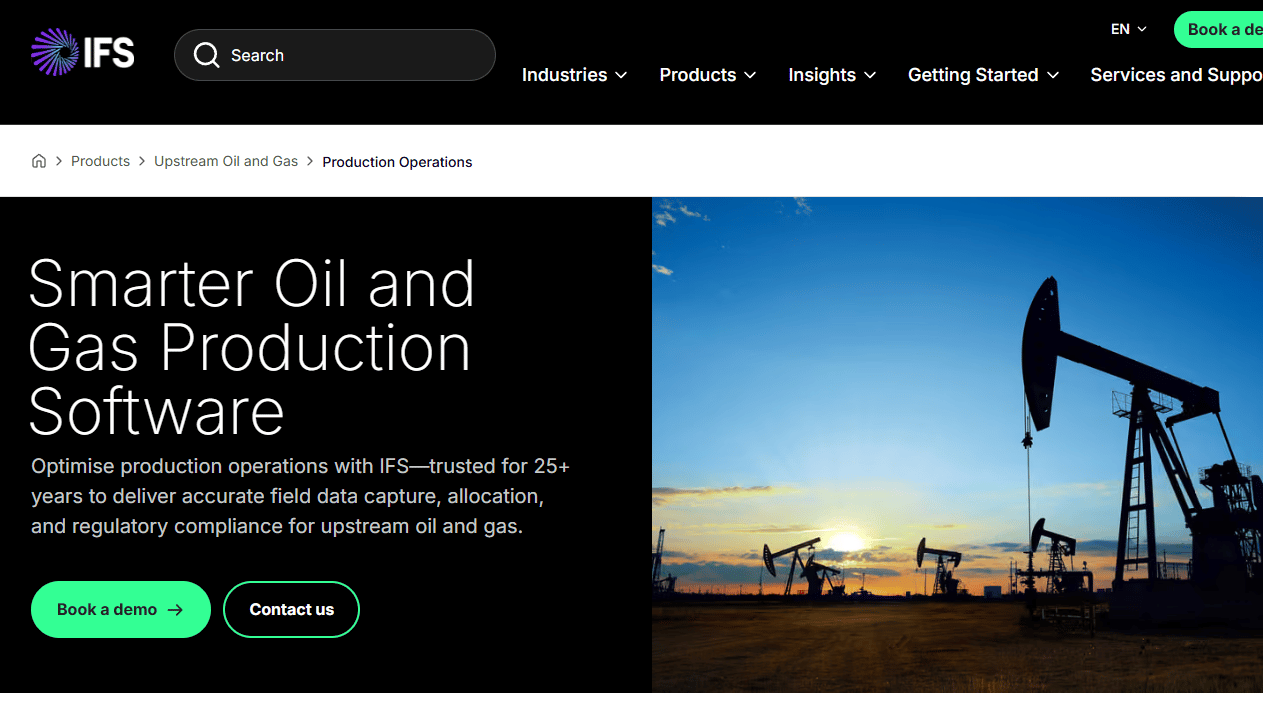
IFS Production Solutions is enterprise-grade upstream oil and gas production software covering field data capture, production allocation, hydrocarbon accounting, real-time surveillance, operational logbooks, shift handovers, regulatory reporting, and emissions and ESG workflows. It accepts data from mobile, SCADA, and manual inputs, and supports operators scaling from independents to global enterprises. IFS absorbed P2 Energy Solutions, extending its upstream capability set significantly.
Best for: Operators that need scalable production operations with allocation, surveillance, compliance, and field-to-back-office connectivity.
Key features
- Field data capture with online and offline validation
- Production allocation and hydrocarbon accounting
- Real-time event monitoring, alerts, and analytics
- Operational logbooks and shift handover support
- Regulatory and ESG reporting workflows
Why choose IFS Production Solutions: Choose IFS when production operations need enterprise depth and your assets span complex facilities or multi-team operations. It is a stronger fit for organizations where basic field capture is already solved and the bottleneck is allocation accuracy, compliance, or operational intelligence.
IFS Production Solutions pricing: IFS prices through a demo and sales process, with cost driven by deployment scope, selected product modules, integrations, and support model. Contact IFS for a quote.
6. Quorum Energy Suite
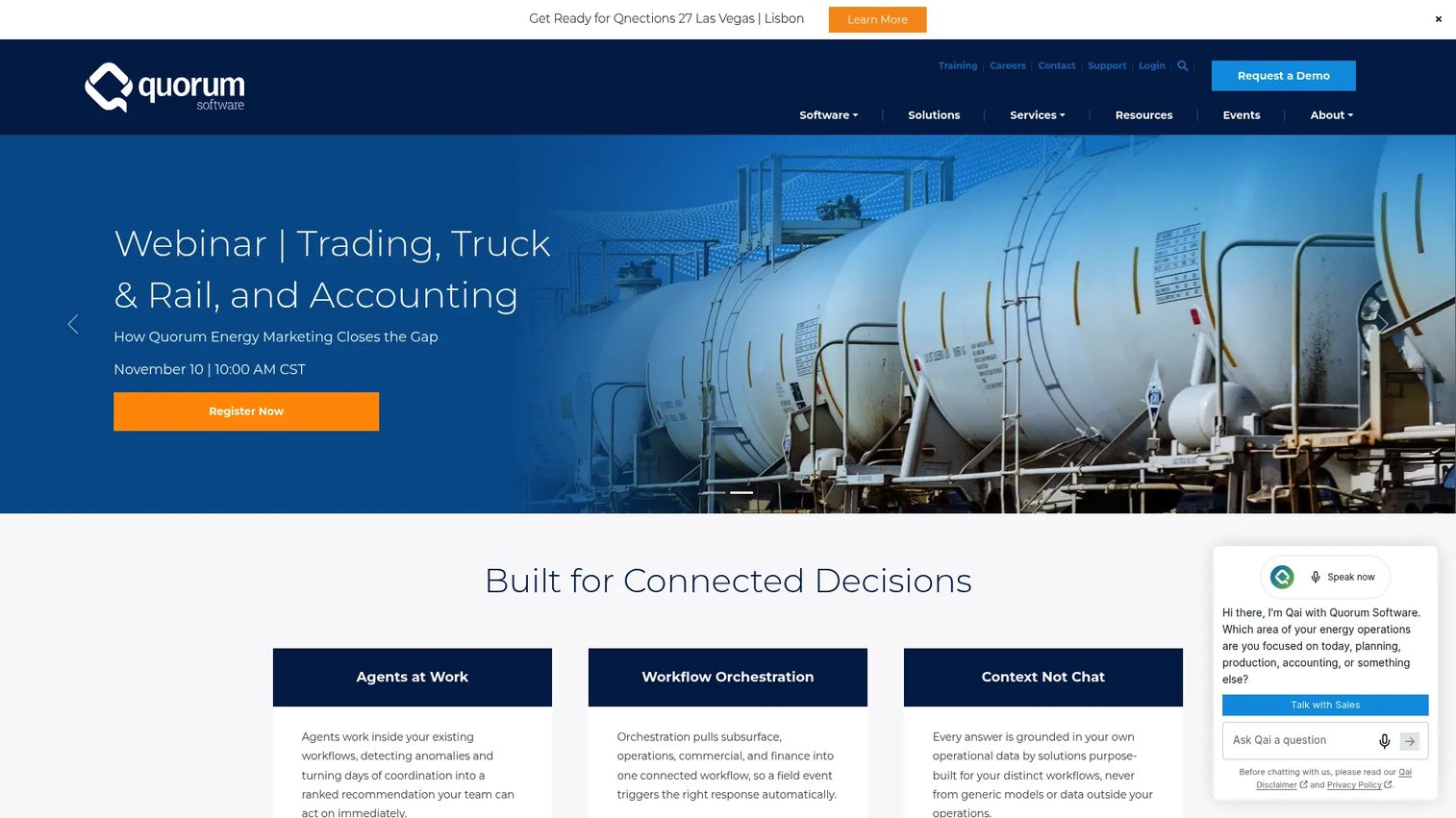
Quorum Energy Suite is an integrated portfolio of energy software connecting upstream planning, petroleum economics, hydrocarbon accounting, production allocation, emissions management, midstream operations, land management, and financial workflows. Quorum has consolidated a broad set of energy applications into a single suite, which means buyers evaluating it are often consolidating multiple point solutions rather than replacing one.
Best for: Energy companies that want a broad platform across upstream, midstream, measurement, and accounting business processes.
Key features
- Integrated planning, economics, and reserves workflows
- Upstream hydrocarbon accounting and production allocation
- Emissions management and production optimization
- Midstream, measurement, and land management
- Document management and accounting integrations
Why choose Quorum Energy Suite: Choose Quorum when production software is part of a broader consolidation decision across energy workflows. It suits operators that have outgrown a collection of point solutions and need a single governed platform for multiple business functions.
Quorum Energy Suite pricing: Quorum prices through sales, with cost varying by selected applications, users, assets, and implementation scope. Request a demo to get a quote.
7. EnergySys
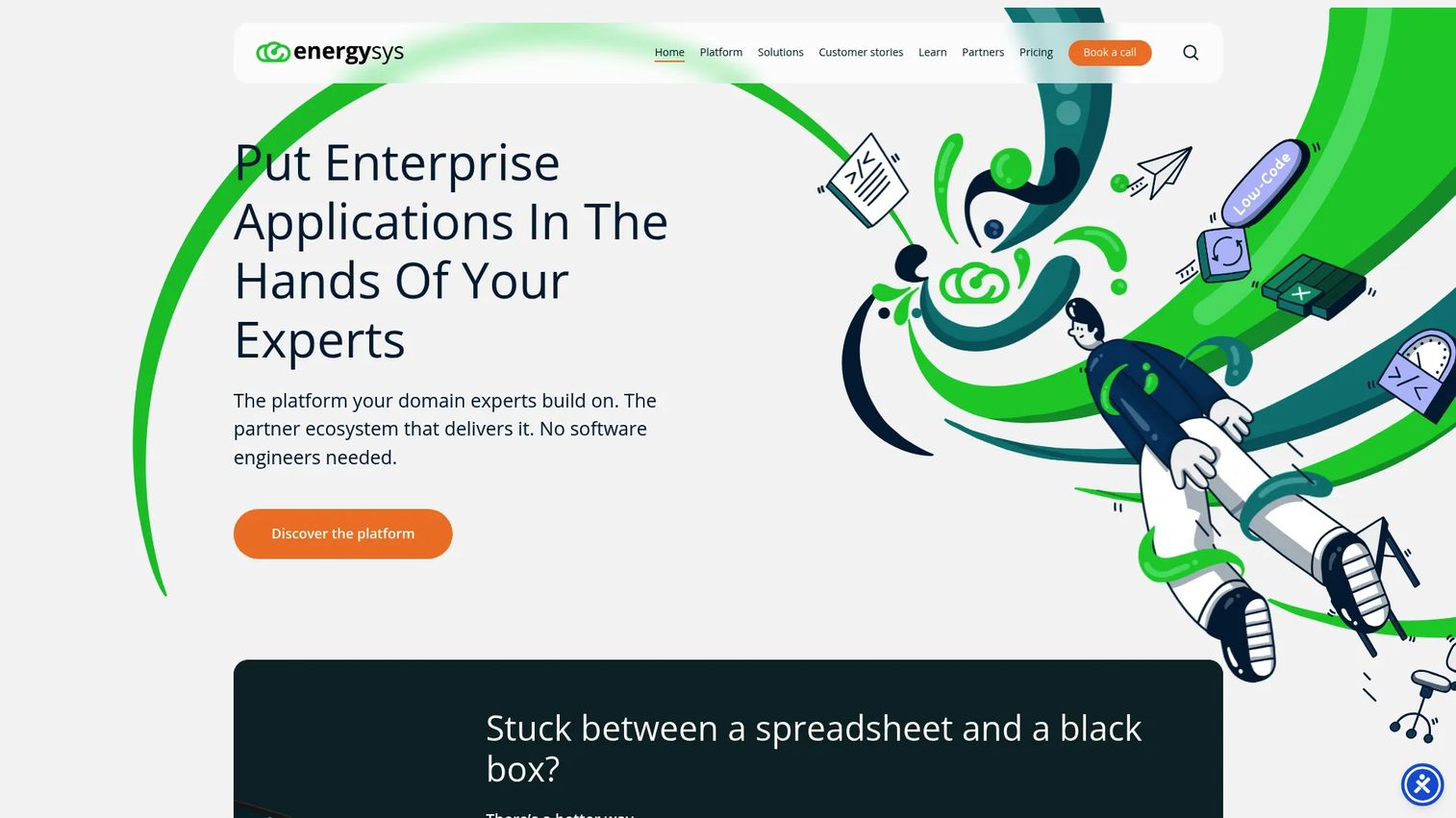
EnergySys is a managed cloud platform for configuring auditable, data-processing applications for complex and regulated operations. Its core strength is configurable production allocation and hydrocarbon accounting, with an Excel-based calculation layer that keeps logic visible and traceable. Connectors for SQL databases, PI, IP21, email attachments, and OData integrate EnergySys with existing operational data sources.
Best for: Teams prioritizing cloud production allocation and hydrocarbon accounting with full audit trail and calculation transparency.
Key features
- Metadata-driven configuration of data models, screens, and workflows
- Excel-based, visible, and auditable calculation processes
- Connectors for SQL, PI, IP21, email, and OData
- Role-based access control, validation, and audit trails
- Configurable reporting through Excel, PDF, and OData
Why choose EnergySys: Choose EnergySys when allocation logic is central to the buying decision and your team needs to see exactly how every volume is calculated. It is particularly strong for operators where production volumes must reconcile across assets, products, and ownership structures with a full audit trail.
EnergySys pricing: Subscriptions start from GBP £35,000 per year for a small, simple asset unit. Cost scales with asset-unit complexity. Each subscription includes production and non-production instances, platform support, and regular upgrades.
8. FieldCap
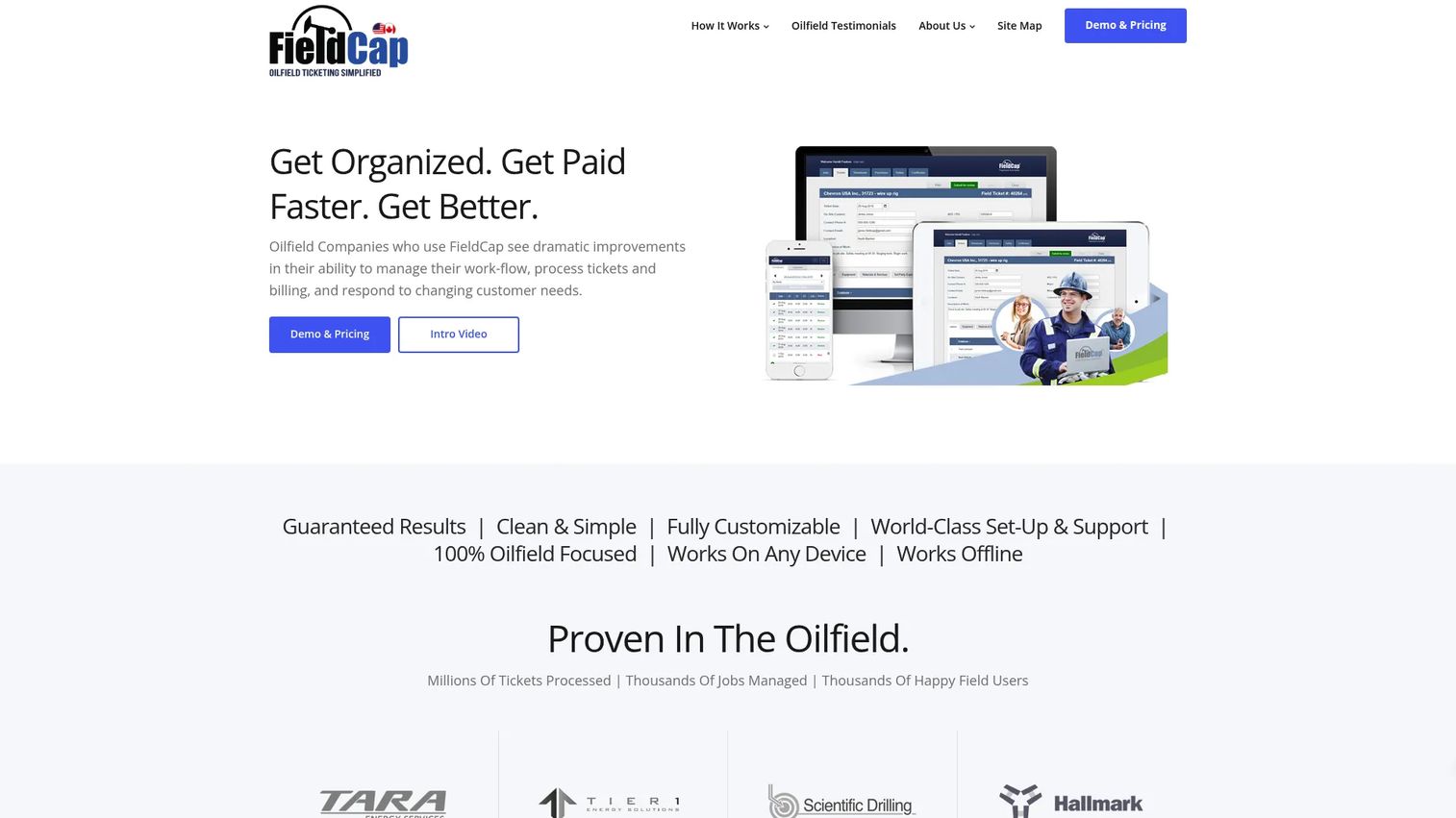
FieldCap is oilfield-focused software for managing field tickets, jobs, approvals, billing workflows, and reporting. It works on any device, operates offline, and allows companies to configure tickets and forms to match their existing layouts, terminology, and pricing structures. Digital signatures, remote email approvals, and centralized job management connect field capture to back-office billing and accounting.
Best for: Oilfield service companies and operators that need structured, customizable field data capture with approval workflows and accounting handoff.
Key features
- Offline, browser-based access on any device
- Customizable tickets and forms matching existing layouts and terminology
- Digital signatures, stamps, and remote approval workflows
- Centralized job and ticket management with review tools
- Reports, exports, and accounting integrations
Why choose FieldCap: Choose FieldCap when the main problem is field data discipline, not full production allocation. It is the right fit for operators that need cleaner field inputs before they can improve reporting quality and billing accuracy.
FieldCap pricing: Pricing is provided through a demo request rather than a published rate. Cost moves with user count, field workflows, and deployment scope. Contact FieldCap to get a quote.
9. Petro.ai
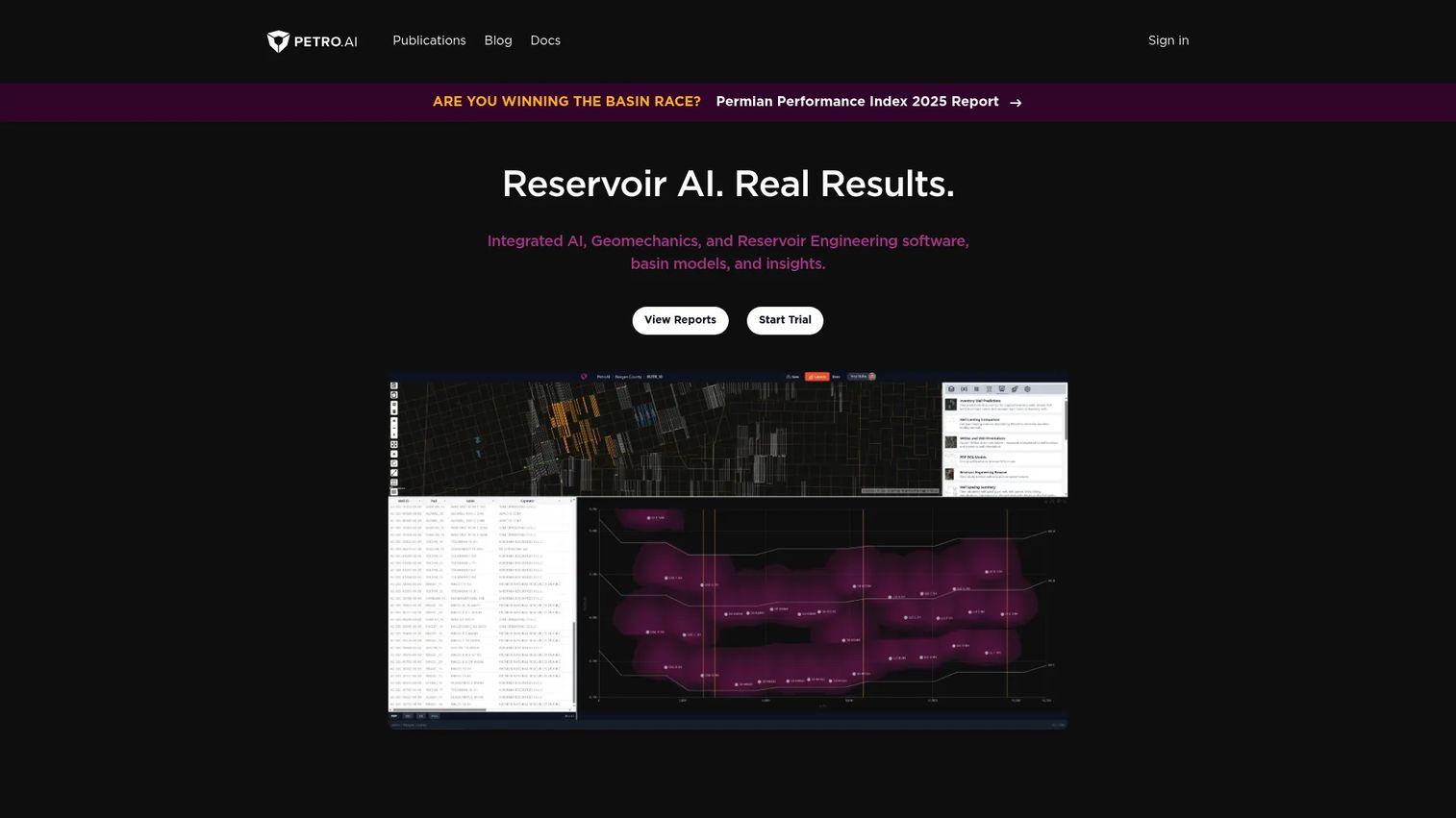
Petro.ai is AI-powered reservoir productivity software combining machine learning, geomechanics, and reservoir engineering for data-driven development decisions. It supports AI-powered production forecasting using pre-trained basin models, interactive inventory design with map and gunbarrel views, and scenario comparison for spacing, timing, landing zone, and completion design. Petro.ai is more relevant for technical teams optimizing well development than for pumpers entering daily gauge readings.
Best for: Oil and gas engineering and geoscience teams optimizing well spacing, completion design, forecasts, and development planning.
Key features
- AI-powered production forecasting with pre-trained basin models
- Interactive inventory design with map and gunbarrel views
- Scenario comparison for spacing, timing, and completion design
- Subsurface and production data integration
- Development planning and reservoir optimization workflows
Why choose Petro.ai: Choose Petro.ai when the bottleneck is decision quality from complex subsurface and production data, not basic field capture or allocation. It complements an operations platform rather than replacing it for teams that already collect field data reliably.
Petro.ai pricing: Pricing is handled through sales. Contact Petro.ai for a quote based on data sources, users, and deployment scope.
10. Mitti by SafetyCulture
Mitti by SafetyCulture is an operations system for frontline teams combining digital inspections, issue reporting, mobile training, analytics, and AI-driven operational insights. It is not a full production allocation or hydrocarbon accounting platform, but it covers the field consistency and safety workflow layer that production-adjacent teams need, particularly for inspection-heavy or multi-site operations.
Best for: Frontline-heavy operations teams that need standardized inspections, safety workflows, training, and issue resolution across multiple sites.
Key features
- Digital inspections and checklists with mobile and offline access
- Issue reporting, corrective actions, and investigation workflows
- Mobile-first workplace training and performance tracking
- Analytics dashboards and operational reporting
- AI-assisted issue creation and 5 Star Benchmarking
Why choose Mitti by SafetyCulture: Choose Mitti when field consistency, safety compliance, and inspection discipline matter more than full production accounting. It can support production-adjacent field operations for teams that manage HSE and operational checklists alongside their production workflows.
Mitti by SafetyCulture pricing: A free plan covers teams of up to 10 users with inspections, basic analytics, training, and tasks. Premium plans start at $24 per seat per month (billed annually) or $29 per seat per month (billed monthly). Enterprise pricing is custom.
G2 rating: 4.6/5 on G2.
11. WolfePak
WolfePak is oil and gas accounting and enterprise software for upstream operators, midstream companies, investors, and service companies. Its financial management covers unlimited books, reporting groups, consolidation, and multi-company roll-ups. Revenue billing, owner-level corrections, production reporting, and regulatory filings connect the production side to accounting and owner relations.
Best for: Oil and gas organizations that need integrated accounting, revenue, production, and compliance workflows in one platform.
Key features
- Financial management with unlimited books and multi-company consolidation
- Revenue billing and owner-level production corrections
- Document imaging with electronic invoice routing and approval
- Production reporting and regulatory filing support
- Remote and cloud access with Excel and CSV import and export
Why choose WolfePak: Choose WolfePak when accounting and production reporting sit close together and you need a single system for financial workflows, owner distributions, and production data. It is a fit for independent operators that want production data to support financial reporting without a separate accounting platform.
WolfePak pricing: Pricing is user-based and varies by required modules and user count. Contact the vendor for a quote.
G2 rating: 3.5/5 on G2, based on 1 review.
12. OGsys
OGsys, now branded as Quorum Software On Demand Accounting, is cloud-based upstream oil and gas accounting software. It covers accounts payable, revenue processing, division of interest, owner distributions, joint interest billing, authorization for expenditures, general ledger, and accounts receivable. Integrations with land, production, and capital management systems connect accounting workflows to upstream operations.
Best for: Accounting teams that need cloud-based oil and gas accounting connected to revenue, JIB, and ownership workflows.
Key features
- Accounts payable with workflow approvals
- Revenue processing, division of interest, and owner distributions
- Joint Interest Billing and Authorization for Expenditures
- General ledger, accounts receivable, and reconciliation
- Cloud-based integrations with land, production, and capital management
Why choose OGsys: Choose OGsys when the office workflow matters as much as the field workflow. It is useful when production data feeds accounting, revenue calculations, and owner reporting, and you need a cloud-based system of record for financial close.
OGsys pricing: Pricing is handled through Quorum's sales team and is not published as a fixed rate. Contact Quorum for a quote.
G2 rating: 5.0/5 on G2, based on 1 review.
13. PHDWin
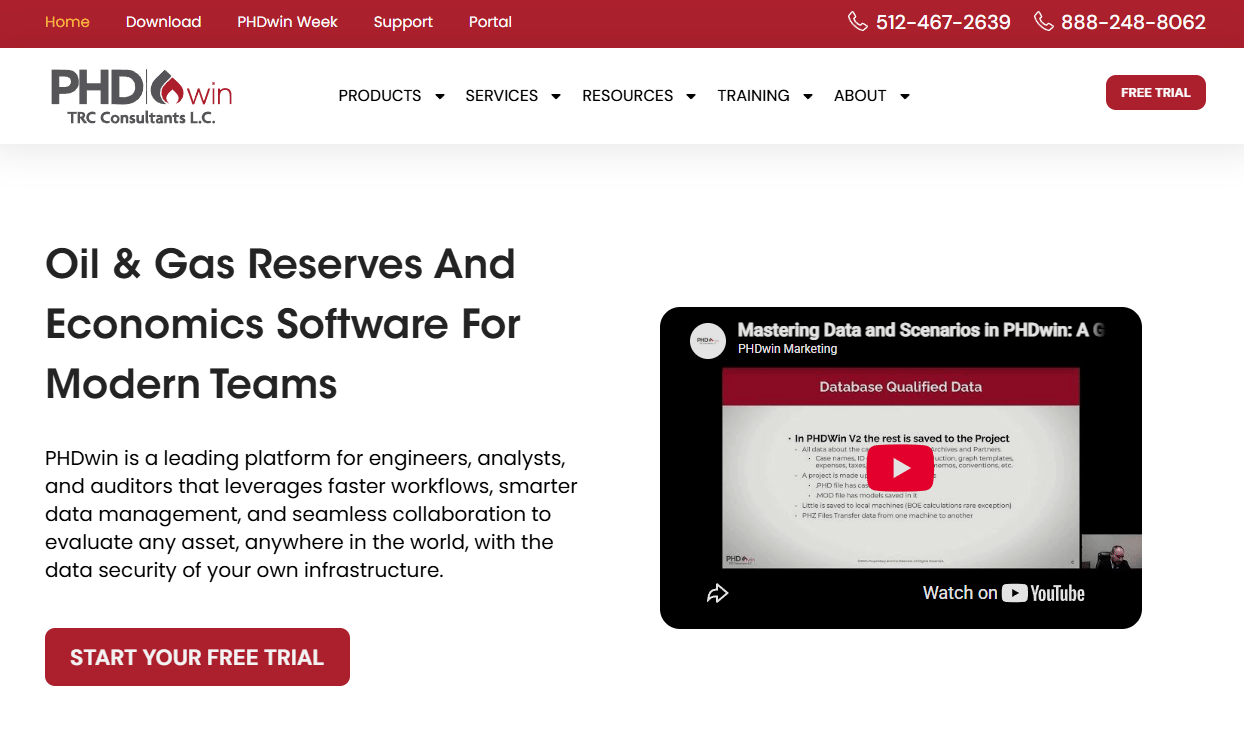
PHDWin is a Windows-based petroleum engineering platform for reserves evaluation, decline curve analysis, forecasting, and economic evaluation. It uses a Microsoft SQL Server backend for multi-user workflows and supports SEC-compliant reserves reporting alongside integrated economic evaluation. PHDWin is not the primary choice for mobile pumper workflows or daily field capture.
Best for: Oil and gas engineering teams focused on reserves evaluation, decline-curve analysis, and economic forecasting.
Key features
- Decline-curve forecasting using Arps and multiple projection methods
- SEC-compliant reserves reporting
- Integrated economic evaluation and asset valuation
- Multi-user workflows on a Microsoft SQL Server backend
- Scenario modeling for reserves and economics decisions
Why choose PHDWin: Choose PHDWin when production history needs to support reserves and economics decisions. It is the right tool for engineering and finance teams running asset evaluations or preparing for a reserves audit, rather than for operators managing daily field operations.
PHDWin pricing: A Standard Installation starts at $1,593 per quarter or $4,956 per year. A Network Installation for multi-user access starts at $3,822 per quarter or $11,892 per year. A 14-day free trial is available for qualified users.
14. Well Database
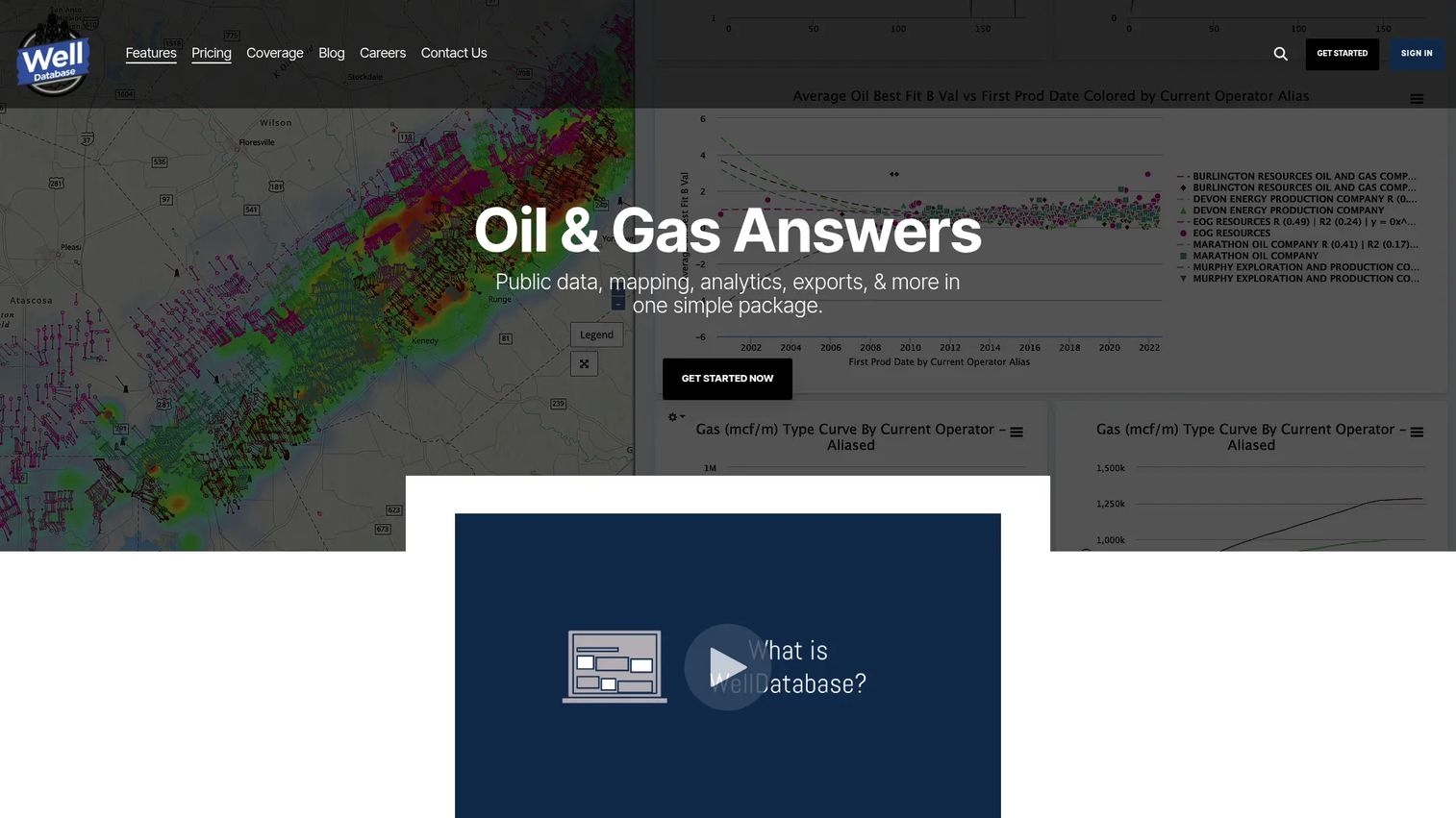
Well Database is an oil and gas data platform providing well-level data, interactive mapping, production analytics, permit and completion data, customizable dashboards, data exports, API access, and cloud database connectivity. It supports every well drilled in the United States and Western Canada. Well Database works best as a data intelligence layer for asset and production decisions, complementing an operations platform rather than replacing one.
Best for: Oil and gas professionals needing integrated well data, mapping, analytics, and data exports for asset evaluation and production intelligence.
Key features
- Well-level data and filtering across the US and Western Canada
- Interactive mapping and production analytics
- Permit, completions, and frac analytics
- Customizable dashboards and data visualizations
- API access and cloud database connectivity
Why choose Well Database: Choose Well Database when the core need is finding, mapping, and analyzing well data at scale. It gives land teams, analysts, and business development professionals a data intelligence layer that supports acquisition evaluation and production trend analysis.
Well Database pricing: A Lite plan is free for all users. Paid plans start at $250 per user per month (billed annually) or $300 per user per month (billed monthly) for the Essential tier. Plus runs $500 per user per month annually, and Pro runs $1,000 per user per month annually. Enterprise options are customized.
Considerations when choosing oil production software
Field adoption comes first
Production software fails when the office buys it and the field avoids it. Evaluate how quickly pumpers, lease operators, and field supervisors can enter data on day one. Ask about offline mode, mobile usability, GPS accountability, validation rules, and how the system handles exceptions when data conflicts with expected ranges.
Allocation must match your operating model
A single-well setup does not need the same allocation depth as a commingled facility serving multiple working interest owners. Check how each platform handles commingled production, multi-well facilities, adjustments, ownership allocation, and monthly reconciliation. A mismatch between your allocation complexity and the software's capability is one of the most common reasons implementations stall.
Reporting needs to survive audits
Evaluate audit trails, edit history, regulatory formats, approvals workflows, and whether the system reduces manual cleanup before filing. A report that looks good on screen but requires a spreadsheet to reconcile before submission is not a governance improvement. Ask the vendor to show you an actual regulatory filing workflow for your state.
Integrations decide long-term value
Production data rarely stays inside production software. Confirm how each platform connects to accounting, ERP, SCADA, BI tools, and regulatory reporting systems. Ask which integrations ship out of the box and which require custom services work. The answer determines your total cost of ownership well beyond year one.
Implementation risk is a buying criterion
A powerful platform that takes 18 months to roll out or depends on one internal champion creates serious execution risk. Ask for typical implementation timelines, migration steps, training expectations, support model, and who owns field adoption after go-live. Reference checks with operators of similar size and complexity are more informative than vendor case studies.
Conclusion
The right oil production software depends on where your operation breaks first.
For enterprise operators managing complex assets, regulatory obligations, and multi-team operations, P2 Energy Solutions (now under IFS), IFS Production Solutions, and Quorum Energy Suite are the strongest platforms for connecting field operations to compliance and back-office systems.
For independent operators prioritizing field adoption, Greasebook is the clearest choice. Its 4.8/5 G2 rating reflects what happens when pumper-first design meets a product that field crews actually use.
For accounting-connected production workflows, Enertia, WolfePak, and OGsys each earn close review. EnergySys leads when allocation logic and audit trail depth are the primary criteria.
FieldCap and Mitti by SafetyCulture serve the field capture and inspection layer for teams that need operational discipline before they can improve reporting. Petro.ai, PHDWin, and Well Database are the right tools when the bottleneck is analysis, reserves evaluation, or well intelligence rather than daily field operations.
Shortlist three platforms based on the workflow that breaks first, whether that is field capture, allocation, reporting, accounting integration, or analytics. Then run a one-week pilot using your own wells, your own report formats, and your own field users. What works in a vendor demo and what works with your pumpers at 6 a.m. are different questions.
FAQs
Fit matters more than features. Greasebook is the clearest choice for mobile-first field adoption and daily production visibility, with a 4.8/5 G2 rating reflecting consistent pumper adoption. WolfePak and OGsys are stronger fits when accounting and revenue workflows are the priority alongside production data. P2 Energy Solutions or Enertia make sense when broader enterprise functions like land management or ERP matter to your operating model.
Oil production software focuses on field data capture, well performance monitoring, allocation, downtime tracking, and production reporting. Oil and gas accounting software focuses on revenue calculations, joint interest billing, owner distributions, financial close, and accounts payable and receivable. Many operators need both connected. Some platforms in this list, including Enertia, WolfePak, OGsys, and P2, span both categories.
Many field-focused platforms support offline data capture, but the depth of offline functionality varies significantly. Greasebook and FieldCap both support offline operation with sync on reconnect. Before buying any platform, test offline gauge entry, ticket creation, sync conflict handling, and attachment support using an actual field device without a cellular signal.
State and federal reporting support varies by vendor, jurisdiction, and report type. Greasebook supports automated state and federal report filing. IFS Production Solutions covers regulatory reporting and ESG compliance workflows. WolfePak and OGsys address production and revenue reporting with regulatory filing support. Confirm which specific state forms and filing workflows each vendor supports before assuming coverage matches your operating areas.
Production allocation assigns volumes to wells, leases, facilities, owners, or product streams based on measurement, testing, and facility configuration. Software handles this by applying allocation factors or formulas to measured or estimated volumes, then reconciling results against run tickets, meter readings, and ownership records. EnergySys specializes in configurable and auditable allocation logic. IFS Production Solutions and Quorum Energy Suite both cover allocation for complex, multi-asset operations. When evaluating, check how each platform handles commingled production, adjustments, and month-end reconciliation.
Cost moves with modules selected, user count, well and asset count, implementation complexity, data migration scope, and support model. Enterprise platforms like P2, IFS, and Quorum price entirely through sales and can involve significant implementation services costs on top of licensing. Greasebook and FieldCap also price through sales without fixed published rates. EnergySys starts from GBP £35,000 per year for a simple asset unit. PHDWin starts at $1,593 per quarter for a standard single-user installation. Well Database has a free tier, with paid plans starting at $250 per user per month. Compare total first-year costs across licensing, implementation, training, data migration, and ongoing support before making a decision based on license price alone.
Run a one-week pilot using actual wells, actual report formats, and actual field users rather than demo data. Test mobile gauge entry, offline sync behavior, run ticket capture, well test workflows, production allocation for at least one commingled scenario, dashboard visibility from the office, and the handoff to accounting. If your field crews will not adopt the mobile app within the first week of a pilot, that is the answer you need before signing a contract.
For most recurring workflows, yes. Field capture, daily production tracking, allocation, production reports, and dashboards can move entirely into governed software. Some engineering analysis workbooks, particularly for economics or reserves modeling, may remain alongside the system. The goal is to move the system of record out of spreadsheets so that the numbers leadership and compliance teams rely on come from a governed, auditable source rather than a file that lives on one person's laptop.