You can manage employee health for a small team with spreadsheets and shared folders. Add multiple sites, recurring exams, workplace incidents, and return-to-work cases, and that setup starts hiding risk.
The category is growing alongside this operational pressure. Growth Market Reports valued the global occupational health software market at $2.3 billion in 2025. It projects an 11.8% compound annual growth rate from 2026 through 2034.
Buying the wrong system creates a different problem. A clinic needs documentation and billing workflows. An employer may need medical surveillance, confidential records, and executive reporting. Safety teams often prioritize incident capture and corrective actions.
The right choice starts with your operating model. Decide who owns the process, which records require restricted access, and what leadership needs to see.
What’s inside
This guide compares 14 workforce health software products for employers, healthcare organizations, occupational medicine clinics, and safety teams.
We evaluated each option using four practical criteria:
- Workflow fit: Employer health, clinical care, safety operations, or compliance governance
- Health data controls: Confidential records, permissions, auditability, and reporting
- Program coverage: Injuries, surveillance, vaccinations, examinations, and follow-up
- Operational fit: Pricing model, integrations, implementation scope, and leadership visibility
Use the comparison table for a quick shortlist. Then review the individual entries before taking vendor calls.
TL;DR
- Best for enterprise workforce health programs: Cority connects occupational health with broader EHS workflows and multi-site reporting
- Best for occupational medicine clinics: Net Health, Agility EHR, and Systoc cover provider-led clinical operations
- Best for healthcare employee health: Immuware focuses on vaccination, surveillance, exposure, and incident tracking
- Best for safety-led teams: SafetyCulture, EHS Insight, and Risk and Safety Solutions connect field reporting with corrective action
- Best for smaller practices: SimplePractice covers scheduling, documentation, billing, telehealth, and client management
- Best buying move: Choose the correct software category before comparing feature lists
What is occupational health software?
Occupational health software is a digital system for managing employee health records, workplace injuries, medical surveillance, fitness-for-work processes, and occupational medicine operations.
These systems sit between clinical care, human resources, safety operations, and compliance. Their exact role varies by operating model.
Employer-side occupational health management software centralizes workforce records and recurring health programs. Occupational medicine software supports clinical documentation, scheduling, employer accounts, and billing. EHS software starts with safety processes such as inspections, incidents, and corrective actions.
Core capabilities can include:
- Employee health records: Confidential documentation with controlled access
- Incident workflows: Injury reporting, investigation, evidence, and follow-up
- Medical surveillance: Recurring examinations and exposure-based programs
- Vaccination tracking: Immunization status, reminders, and supporting documentation
- Fitness-for-duty records: Pre-employment exams and work-status documentation
- Return-to-work management: Restrictions, follow-up tasks, and case closure
- Clinical operations: Scheduling, charting, billing, and employer portals
- Reporting: Dashboards, audit exports, and workforce health trends
- Integrations: Connections with HRIS, laboratory, EHR, and analytics systems
The category boundary matters. A mobile inspection platform cannot replace an occupational health EMR for provider documentation. Likewise, a clinic system may lack the hazard and corrective-action workflows a safety team needs.
OSHA reporting software can help organize injury logs and supporting records. It does not make compliance decisions for you. Legal, clinical, and regulatory accountability remains with your organization.
When to use occupational health software
Track employee health without losing confidentiality
Use occupational health software when medical documentation has spread across email, shared drives, and general HR files. Role-based permissions and audit trails help separate sensitive health records from ordinary personnel notes.
This becomes important as People, Safety, and Clinical teams divide ownership. A shared operating system reduces manual handoffs while preserving access boundaries.
Manage injuries, exposures, and return-to-work cases
Workplace injury management software supports the process from initial report through treatment, restrictions, follow-up, and closure. Multi-site operators also gain a consistent process across locations.
Return-to-work software adds value when managers need clear work restrictions without broad access to clinical details. Leadership can monitor open cases without reviewing individual medical records.
Standardize medical surveillance programs
Medical surveillance software fits organizations with recurring examinations, exposure monitoring, vaccinations, or pre-employment requirements. Healthcare, manufacturing, logistics, and public-sector employers often run several programs concurrently.
Automated reminders reduce manual follow-up. Dashboards help operators identify overdue actions before they become audit findings or staffing disruptions.
Occupational health software comparison
The occupational health software market contains several distinct product types. Some platforms manage enterprise workforce health. Others focus on occupational medicine, general practice management, compliance governance, or safety operations.
Pricing and G2 ratings below reflect the supplied vendor research dated November 2026. N/A means the research did not confirm a relevant G2 rating.
| # | Product | Best for | Key differentiator | Pricing | G2 rating |
|---|---|---|---|---|---|
| 1 | Mitti | Frontline operations teams | Inspections, training, tasks, and operational reporting | Free plan. Premium starts at $24 per seat monthly, billed annually | N/A |
| 2 | SafetyCulture | Distributed safety teams | Mobile inspections with incident investigation workflows | Premium starts at $19 per user monthly, billed annually | 4.6/5 |
| 3 | EHS Insight | EHS-led organizations | Modular safety, risk, training, and compliance management | Starts at $5,000 annually | 4.6/5 |
| 4 | Optum | Large healthcare and employer programs | Health services connected with care infrastructure | Custom pricing | 3.4/5 |
| 5 | Occupational Health Manager | Dedicated occupational health teams | Focused occupational health product positioning | Custom pricing | N/A |
| 6 | SimplePractice | Small healthcare practices | Practice management with telehealth and billing | Starts at $49 monthly | 4.1/5 |
| 7 | ConvergePoint | Compliance and policy teams | Microsoft 365 SharePoint foundation | Custom pricing | N/A |
| 8 | Risk and Safety Solutions | Complex safety environments | Chemical, hazard, incident, and inspection workflows | Custom pricing | 4.5/5 |
| 9 | Cority | Enterprise workforce health | Occupational health within a broad EHS platform | Custom pricing | 4.0/5 |
| 10 | Net Health | Specialty healthcare organizations | Specialty EHR and occupational health capabilities | Selected products start at $4 daily per user | 4.5/5 |
| 11 | Agility EHR | Occupational medicine clinics | Employer-focused clinical and billing workflows | Custom pricing | N/A |
| 12 | ReDoc | Hospital outpatient rehabilitation | Rehabilitation documentation and enterprise EHR integration | Custom pricing | 3.7/5 |
| 13 | Systoc | Occupational health providers | Clinical, screening, billing, and employer workflows | Custom pricing | N/A |
| 14 | Immuware | Healthcare employee health teams | Vaccination, surveillance, exposure, and incident tracking | Custom pricing | N/A |
Best 14 tools for occupational health software in 2026
1. Mitti
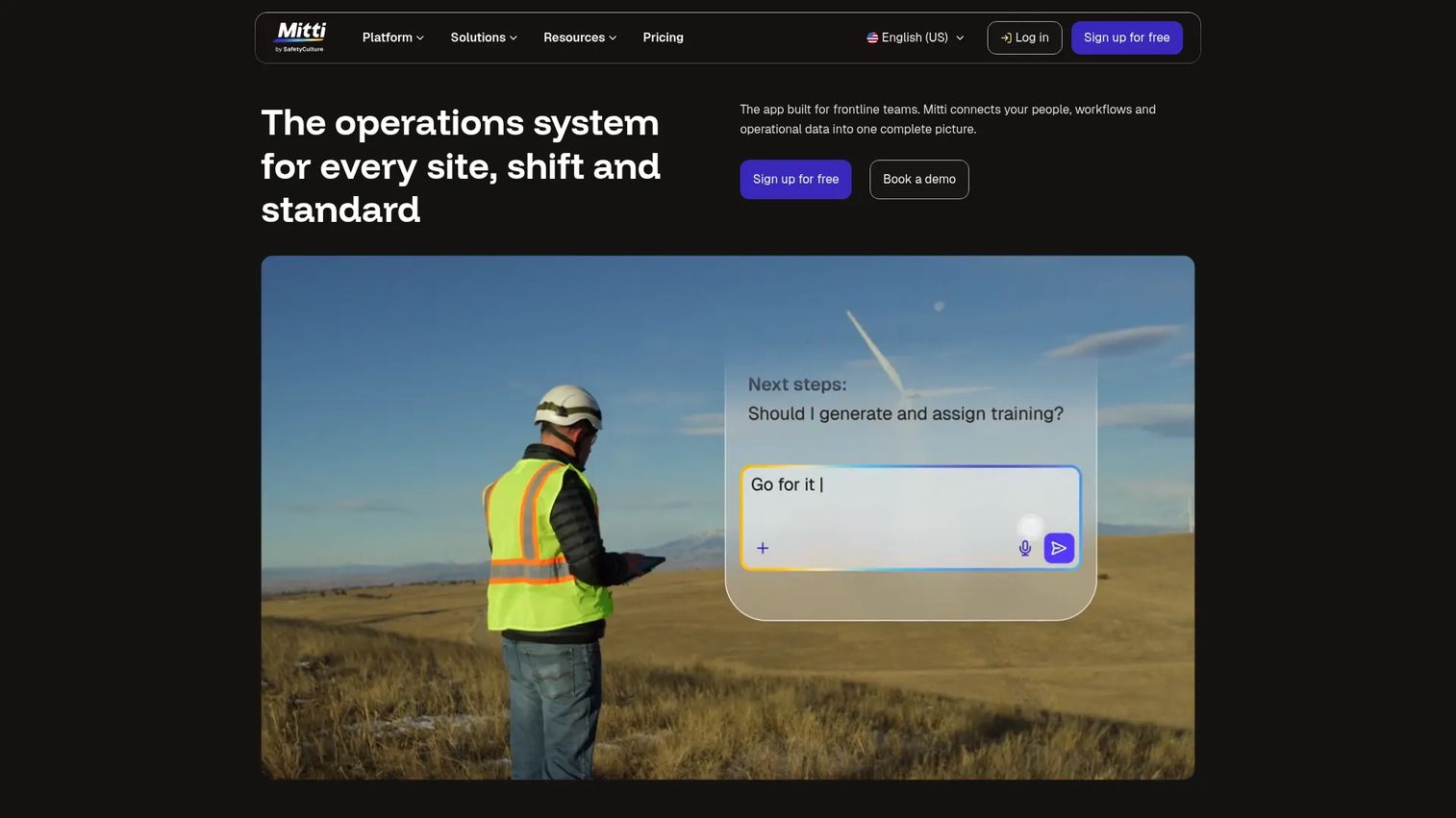
Mitti by SafetyCulture is a workplace operations platform for inspections, reports, training, tasks, and operational visibility. It suits teams that manage health-related procedures within broader frontline operations.
Its strongest fit is operational execution rather than clinical charting. Teams can standardize inspections, assign follow-up work, and monitor recurring processes across locations.
Best for: Frontline teams managing inspections, audits, training, and corrective actions.
Key features
- Digital inspections and checklists
- Task and issue management
- Training and onboarding workflows
- Analytics and operational insights
- Permissions, integrations, and SSO
Why choose Mitti: Pick Mitti when occupational health processes sit alongside daily inspections and workforce training. Clinical programs requiring an occupational health EMR should evaluate a provider-focused system.
Mitti pricing: Free supports up to 10 users. Premium costs $24 per seat monthly when billed annually or $29 with monthly billing. Enterprise uses custom pricing.
2. SafetyCulture
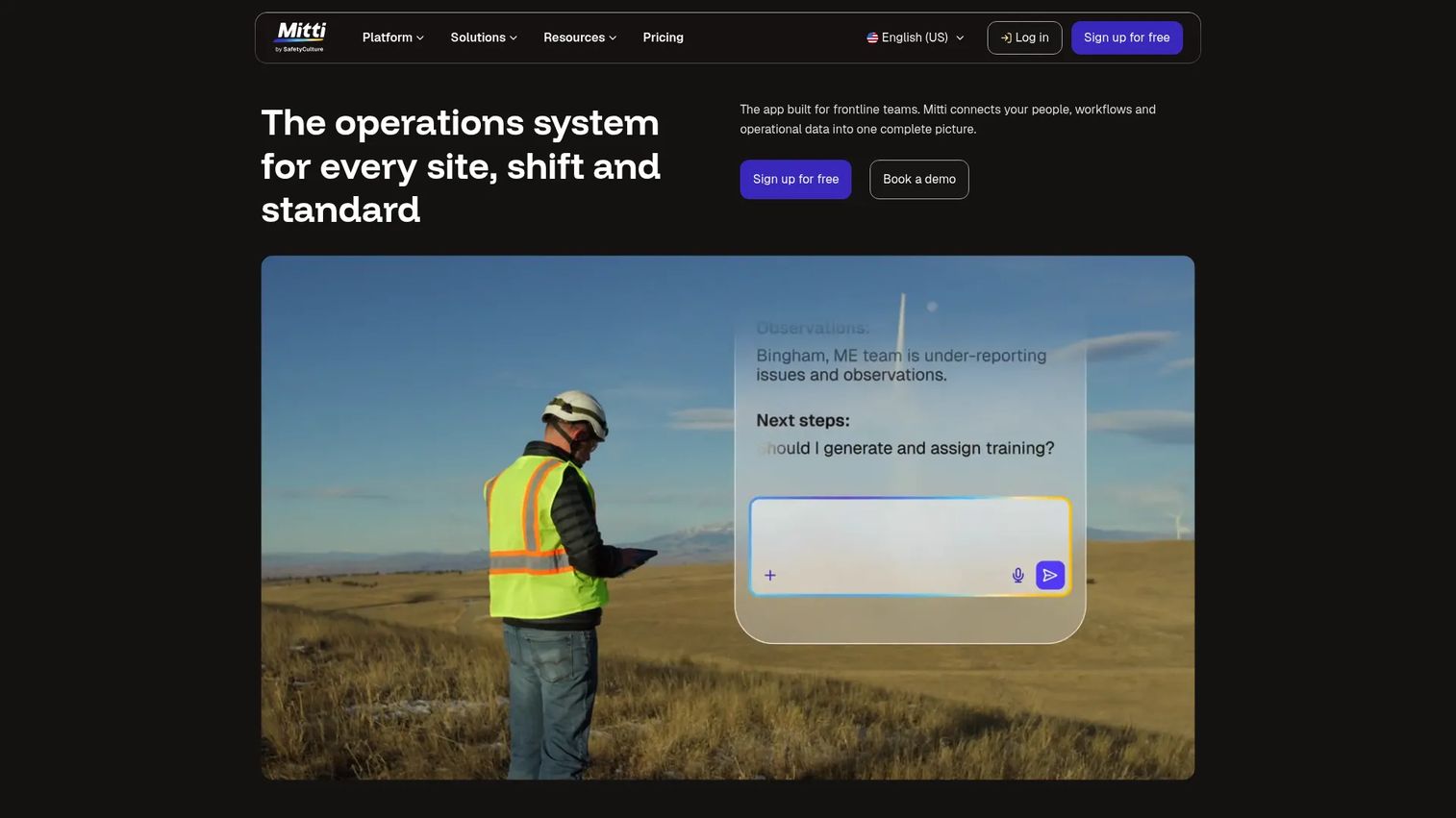
SafetyCulture is a frontline operations platform for inspections, training, incident management, and operational improvement. It gives distributed teams mobile tools for capturing site-level information.
Incident investigations support evidence collection, root-cause analysis, and corrective actions. These capabilities fit safety-led occupational health processes, although the platform is not a clinical EMR.
Best for: Distributed organizations running mobile safety and quality workflows across sites.
Key features
- Digital inspections and checklists
- Incident investigations
- Evidence capture
- Corrective action tracking
- Frontline training and certificates
Why choose SafetyCulture: Choose it when field execution drives the buying decision. Occupational medicine providers needing clinical documentation and billing should consider a dedicated clinic platform.
SafetyCulture pricing: A free tier is available. Premium starts at $19 per user monthly, billed annually, with a 30-day trial.
G2 rating: 4.6/5
3. EHS Insight
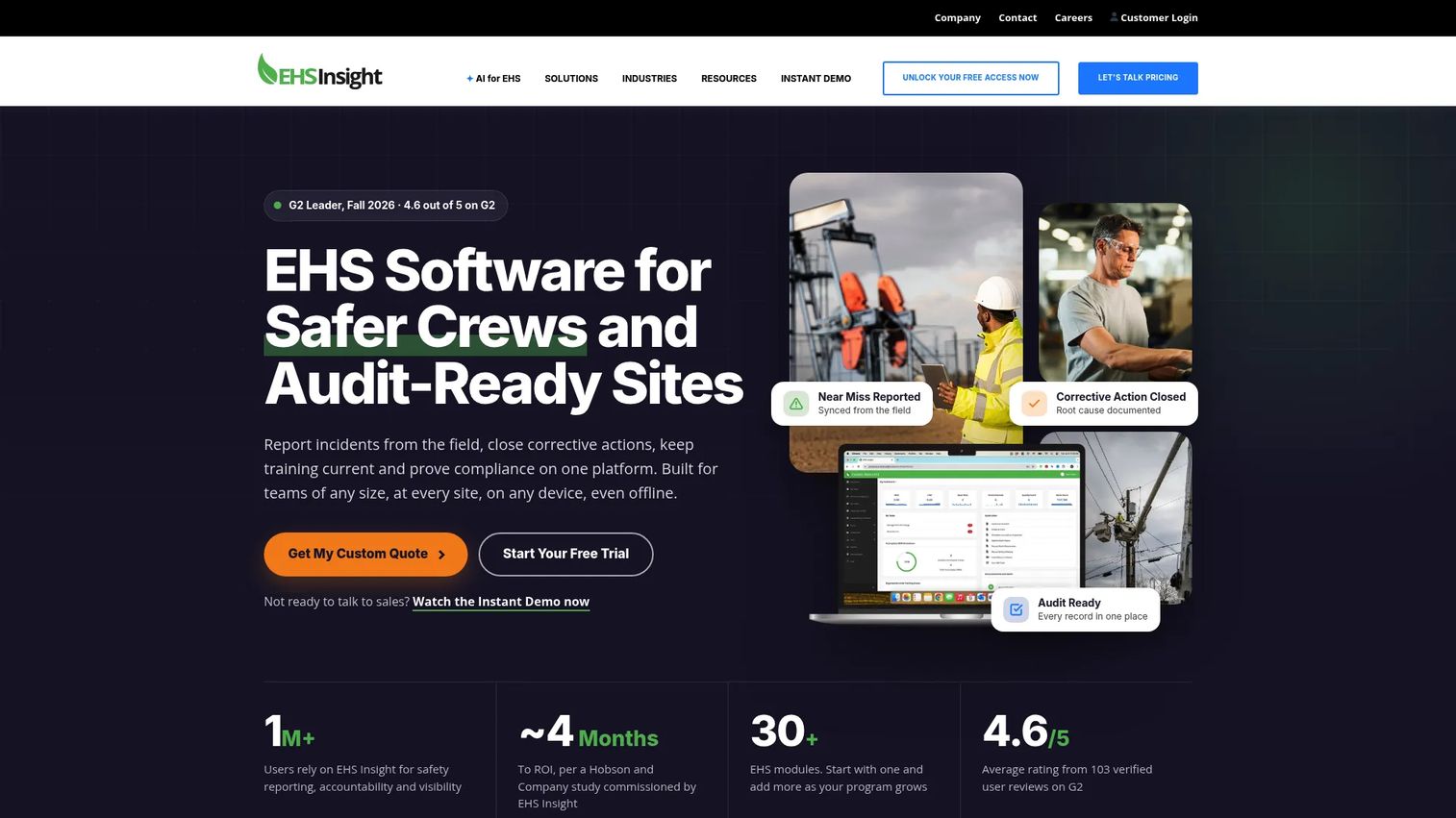
EHS Insight is a modular environmental, health, and safety management platform. It covers incidents, audits, training, corrective actions, risk, and reporting.
The software suits organizations where occupational health belongs inside a broader safety program. Buyers should still confirm whether its health modules match their medical-record and surveillance requirements.
Best for: Safety-led organizations standardizing EHS processes across departments or sites.
Key features
- Incident management
- Audits and inspections
- Corrective and preventive actions
- Training management
- Mobile offline capture
Why choose EHS Insight: It fits teams that want safety operations and workplace injury management software under the same EHS structure. Dedicated clinical environments may need deeper charting and billing functions.
EHS Insight pricing: Small and medium business plans start at $5,000 annually. Enterprise pricing is custom.
G2 rating: 4.6/5
4. Optum
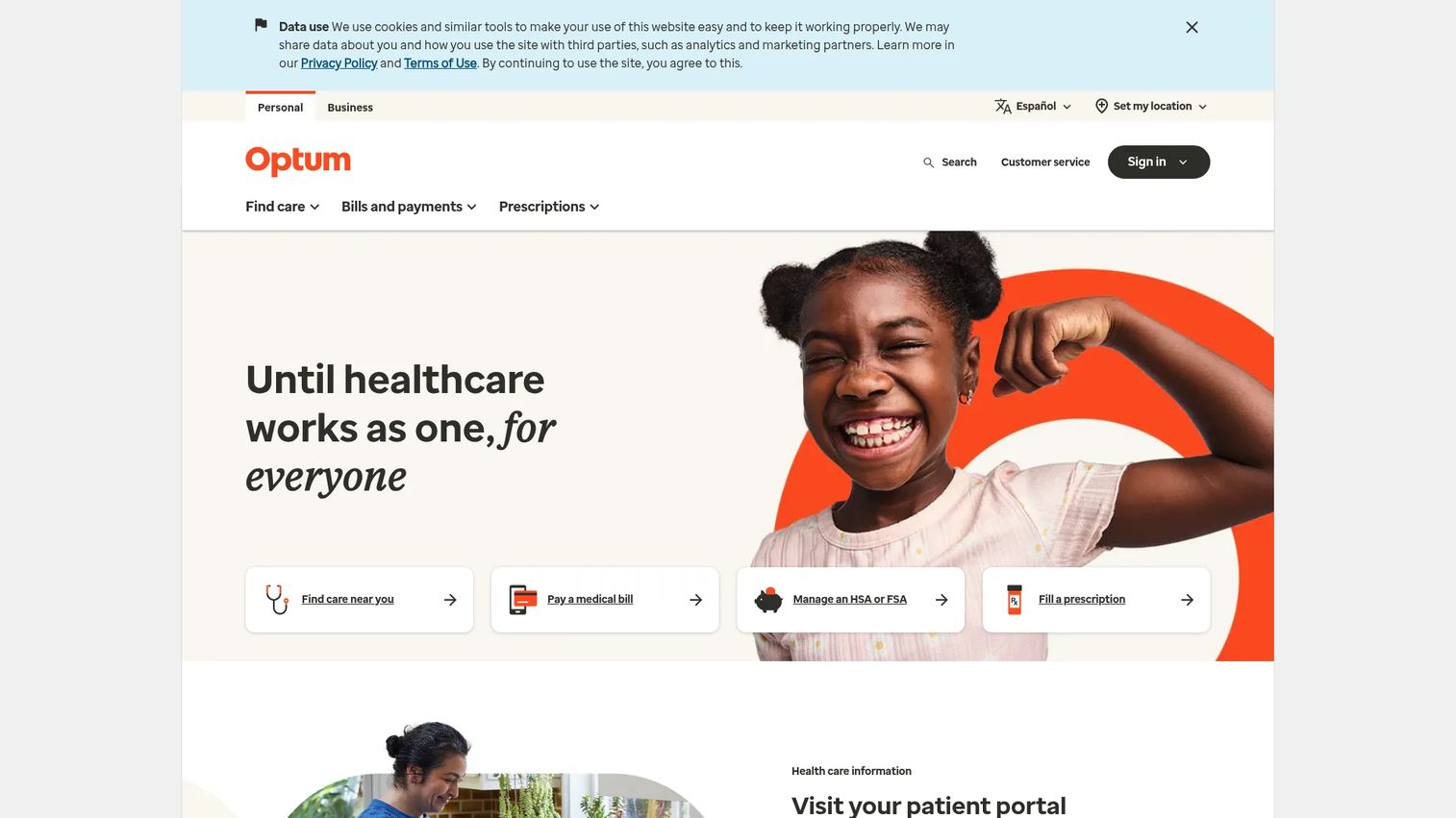
Optum provides healthcare, pharmacy, financial, technology, and consulting services. Its broad portfolio differs from focused occupational health software products.
Relevant capabilities include patient portals, pharmacy services, healthcare financial products, and employer health support. The precise software and service mix requires careful definition during evaluation.
Best for: Large organizations seeking workforce health capabilities within a broader healthcare relationship.
Key features
- Patient payment portals
- Billing statement access
- Test result access
- Appointment management
- Care-team messaging
Why choose Optum: Evaluate Optum when you want healthcare services and supporting technology from a large health organization. Teams seeking a standalone tracking platform should compare narrower products.
Optum pricing: Custom pricing. Employer size, selected services, geography, and program structure shape the quote.
G2 rating: 3.4/5
5. Occupational Health Manager
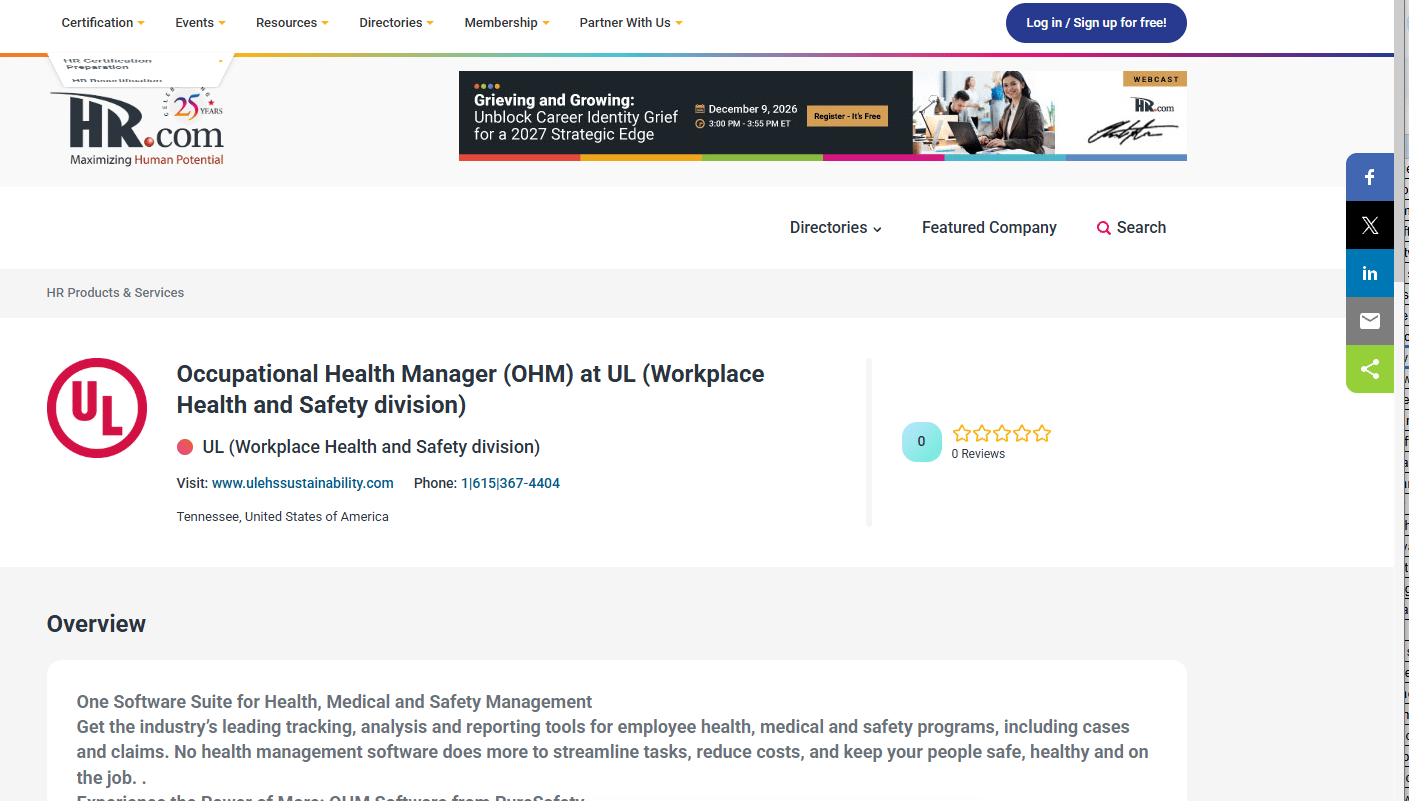
Occupational Health Manager appears in the occupational health management software market as a dedicated product. Current first-party pages did not provide enough accessible information to confirm its features during the supplied research.
That makes direct vendor validation essential. Request current documentation covering employee health records, surveillance, case workflows, access controls, reporting, and deployment support.
Best for: Buyers willing to evaluate a focused occupational health product through direct vendor discovery.
Key features
- Product scope requires vendor confirmation
- Record controls require vendor confirmation
- Reporting capabilities require vendor confirmation
- Integration coverage requires vendor confirmation
Why choose Occupational Health Manager: Keep it on the shortlist if a dedicated product fits your operating model. Require a workflow demonstration using your own injury, exam, and surveillance scenarios.
Occupational Health Manager pricing: Custom pricing. Ask sales to define software, implementation, support, and integration costs separately.
6. SimplePractice
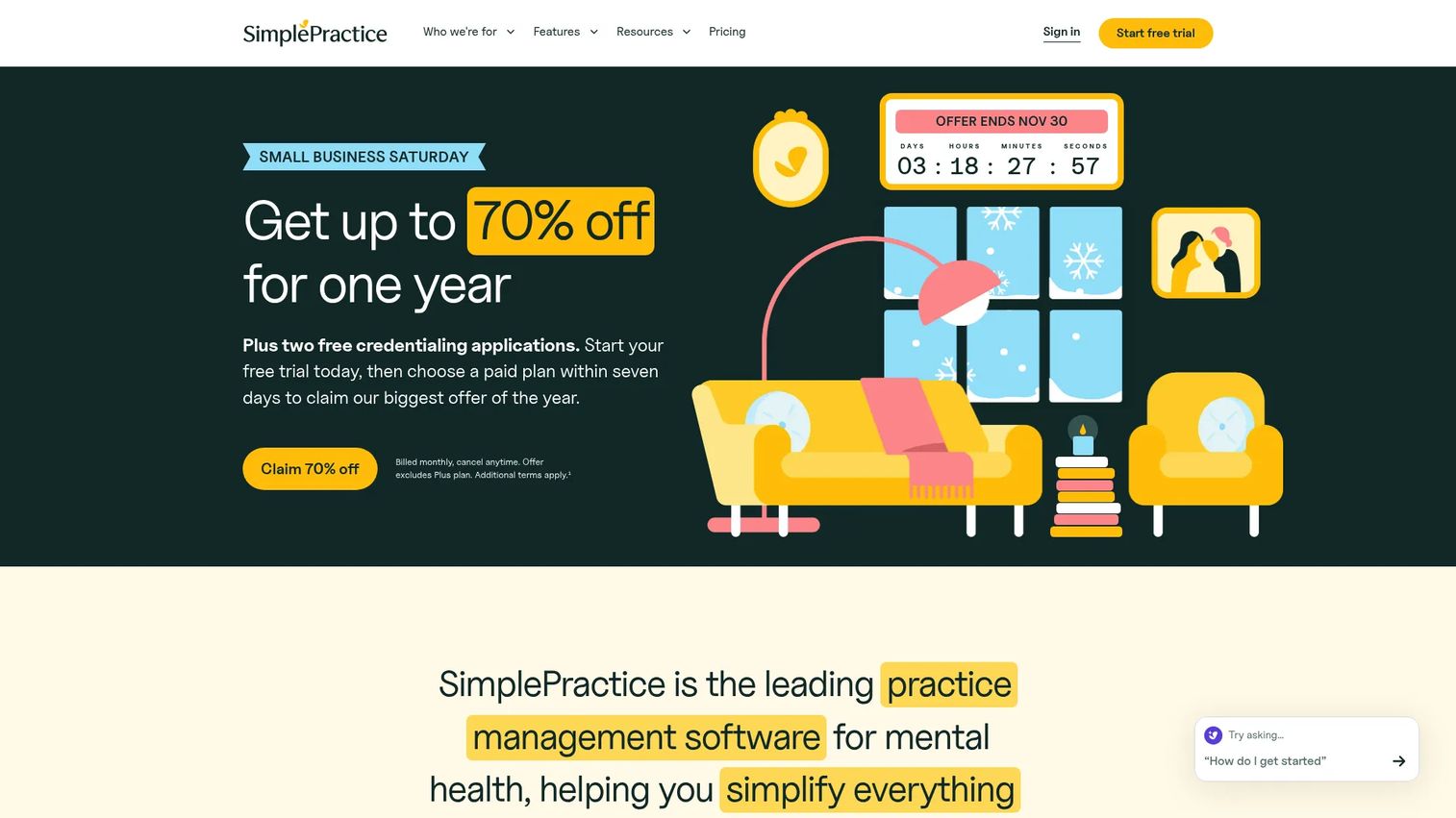
SimplePractice is practice management and EHR software for healthcare practitioners. It combines scheduling, documentation, telehealth, billing, and client management.
Its operating model suits smaller practices more than enterprise workforce health programs. It lacks the verified surveillance and industrial safety depth found in dedicated occupational health systems.
Best for: Small healthcare practices delivering limited occupational health services.
Key features
- Scheduling and appointment reminders
- Telehealth and group appointments
- Customizable clinical notes
- Payments and insurance billing
- Client portal and mobile app
Why choose SimplePractice: Choose it when practice administration matters more than multi-site workforce surveillance. It provides a clear entry point for smaller clinical operations.
SimplePractice pricing: Starter costs $49 monthly, Essential costs $79, and Plus costs $99. All plans include a 30-day trial.
G2 rating: 4.1/5
7. ConvergePoint
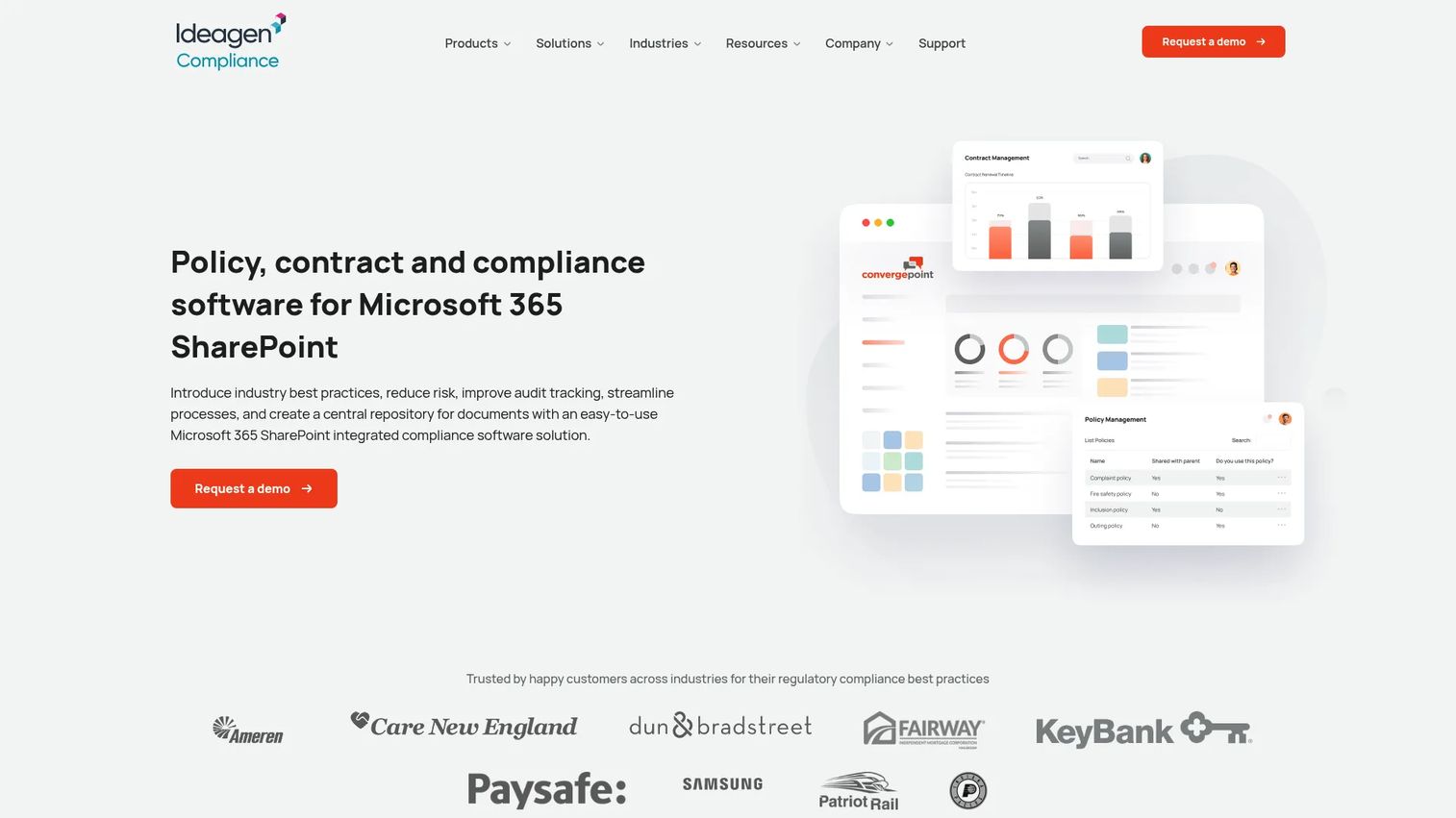
ConvergePoint provides compliance management software built on Microsoft 365 SharePoint. Its products cover contracts, policies, incidents, and conflict-of-interest processes.
The company became known as Ideagen Compliance in February 2026. Its fit centers on governance and controlled documentation rather than clinical occupational health records.
Best for: Microsoft 365 organizations managing policies and regulated compliance workflows.
Key features
- Policy lifecycle management
- Approval workflows
- Version history
- Acknowledgements and reminders
- Microsoft 365 SharePoint foundation
Why choose ConvergePoint: Select it when policy control and audit documentation drive the project. Pair it with clinical software if your program also requires charting or medical surveillance.
ConvergePoint pricing: Custom pricing. Modules, user count, Microsoft configuration, and implementation work influence the quote.
8. Risk and Safety Solutions
Risk and Safety Solutions provides configurable software for safety, compliance, inspections, and risk management. Its scope includes chemical inventories, hazards, incidents, ergonomics, and hazardous waste.
This coverage fits organizations with complex site risks. Universities, research environments, public institutions, and field operations may find the model particularly relevant.
Best for: Organizations connecting occupational incidents with broader risk and safety programs.
Key features
- Chemical inventory management
- Hazard assessments
- Inspections and incident reporting
- Computer ergonomics
- Hazardous waste management
Why choose Risk and Safety Solutions: Choose it when hazards and workplace incident reporting sit inside a larger risk program. Provider-led clinical workflows require different software depth.
Risk and Safety Solutions pricing: Custom pricing. Organization size, selected modules, and deployment requirements shape the agreement.
G2 rating: 4.5/5
9. Cority
Cority provides enterprise EHS software spanning occupational health, industrial hygiene, incidents, environmental programs, quality, and sustainability. It is built for complex, multi-site operations.
The occupational health capability sits within a broader operating model. That structure helps organizations connect employee health records and medical surveillance with safety reporting and leadership dashboards.
Best for: Mid-sized and large employers managing enterprise workforce health programs.
Key features
- Occupational health management
- Industrial hygiene workflows
- Incident management and reporting
- Audits and inspections
- Mobile field access
Why choose Cority: Choose Cority when your workforce health program must connect with enterprise EHS processes. Its breadth suits cross-functional governance and executive risk reporting.
Cority pricing: Standard and Enterprise plans use custom pricing with initial three-year terms. Selected products, users, integrations, and implementation determine cost.
G2 rating: 4.0/5
10. Net Health
Net Health provides specialty EHR, analytics, and patient-engagement software. Its portfolio covers occupational health alongside rehabilitation, wound care, and value-based care.
This clinical orientation suits healthcare organizations that need documentation and operational reporting. Net Health Employee Health has a dedicated G2 listing, although the rating comes from one review.
Best for: Healthcare organizations needing specialty clinical software and employee health workflows.
Key features
- Specialty electronic health records
- Clinical workflow documentation
- Operational analytics
- Compliance and billing workflows
- Patient engagement tools
Why choose Net Health: Select it when occupational health work is provider-led and clinically documented. Safety-only platforms usually lack comparable specialty EHR depth.
Net Health pricing: TherapySource starts at $4 daily per user. TherapySource with FOTO Analytics starts at $7 daily, while other products use custom pricing.
G2 rating: 4.5/5
11. Agility EHR
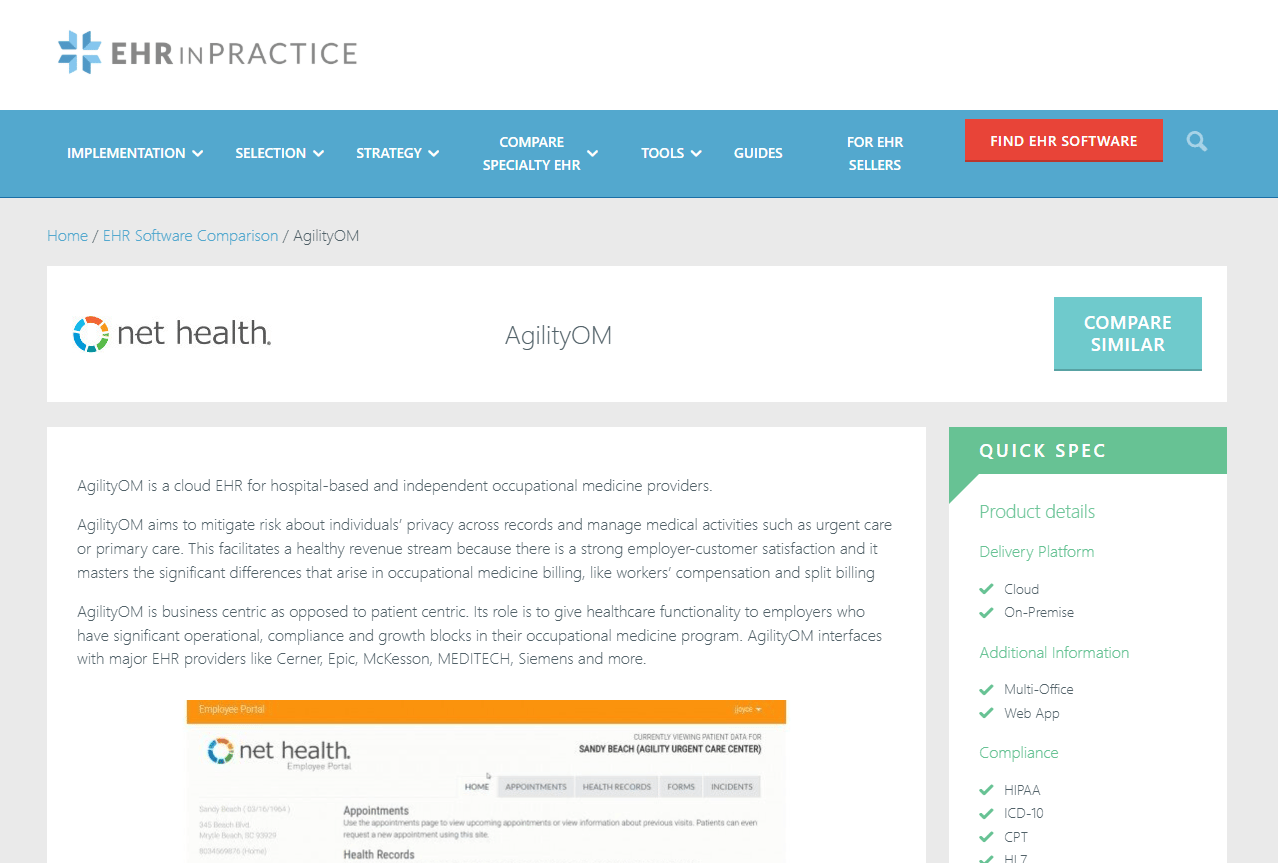
Agility EHR is occupational medicine software for employee care, clinical workflows, scheduling, billing, and reporting. Current Net Health materials confirm its occupational health positioning.
The product includes employer-specific protocols and exposure tracking. Employee and manager portals support communication across provider and employer workflows.
Best for: Occupational medicine clinics and employee health departments managing employer-focused care.
Key features
- Occupational medicine EHR
- Employer-specific protocols
- Exposure tracking
- Scheduling and rapid charting
- Billing and claims management
Why choose Agility EHR: Choose it when employer accounts and occupational medicine visits form the core workflow. Confirm current packaging with Net Health during procurement.
Agility EHR pricing: Custom pricing. Product configuration, clinical users, integrations, and implementation work affect cost.
12. ReDoc
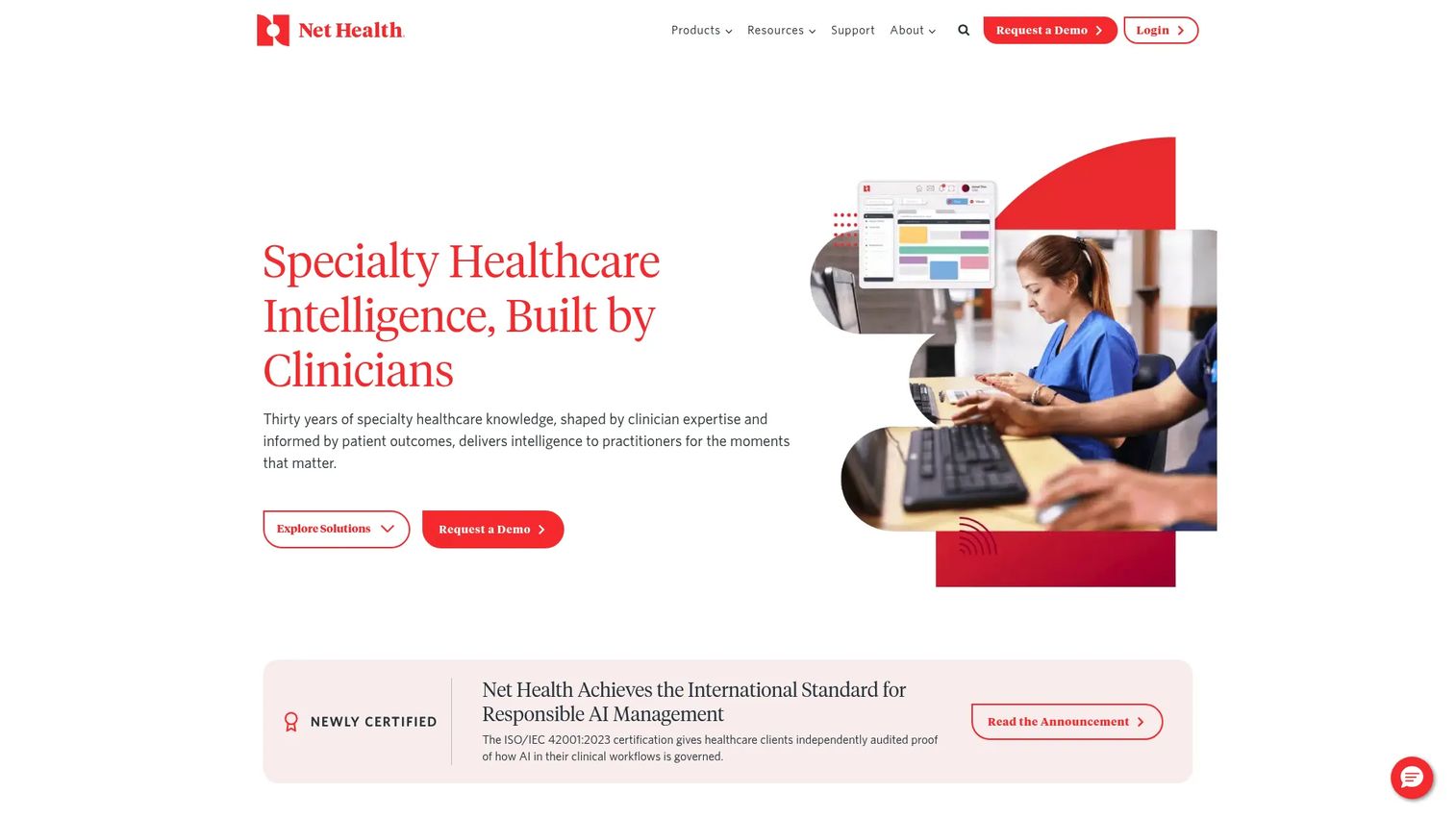
ReDoc is a rehabilitation therapy EMR for hospital outpatient departments. Its focus is clinical documentation, billing controls, patient engagement, and enterprise EHR integration.
ReDoc belongs in this comparison only where occupational health overlaps with rehabilitation services. It is not positioned as a complete workforce health system.
Best for: Hospital outpatient rehabilitation teams supporting work-related recovery programs.
Key features
- Ambient clinical documentation
- Billing and compliance safeguards
- Authorization tracking
- Patient engagement tools
- Enterprise EHR integrations
Why choose ReDoc: Consider it when rehabilitation documentation is the central requirement. Broader injury intake, surveillance, and employee health programs need additional coverage.
ReDoc pricing: Custom pricing. Contact Net Health for costs covering users, integrations, and clinical deployment.
G2 rating: 3.7/5
13. Systoc
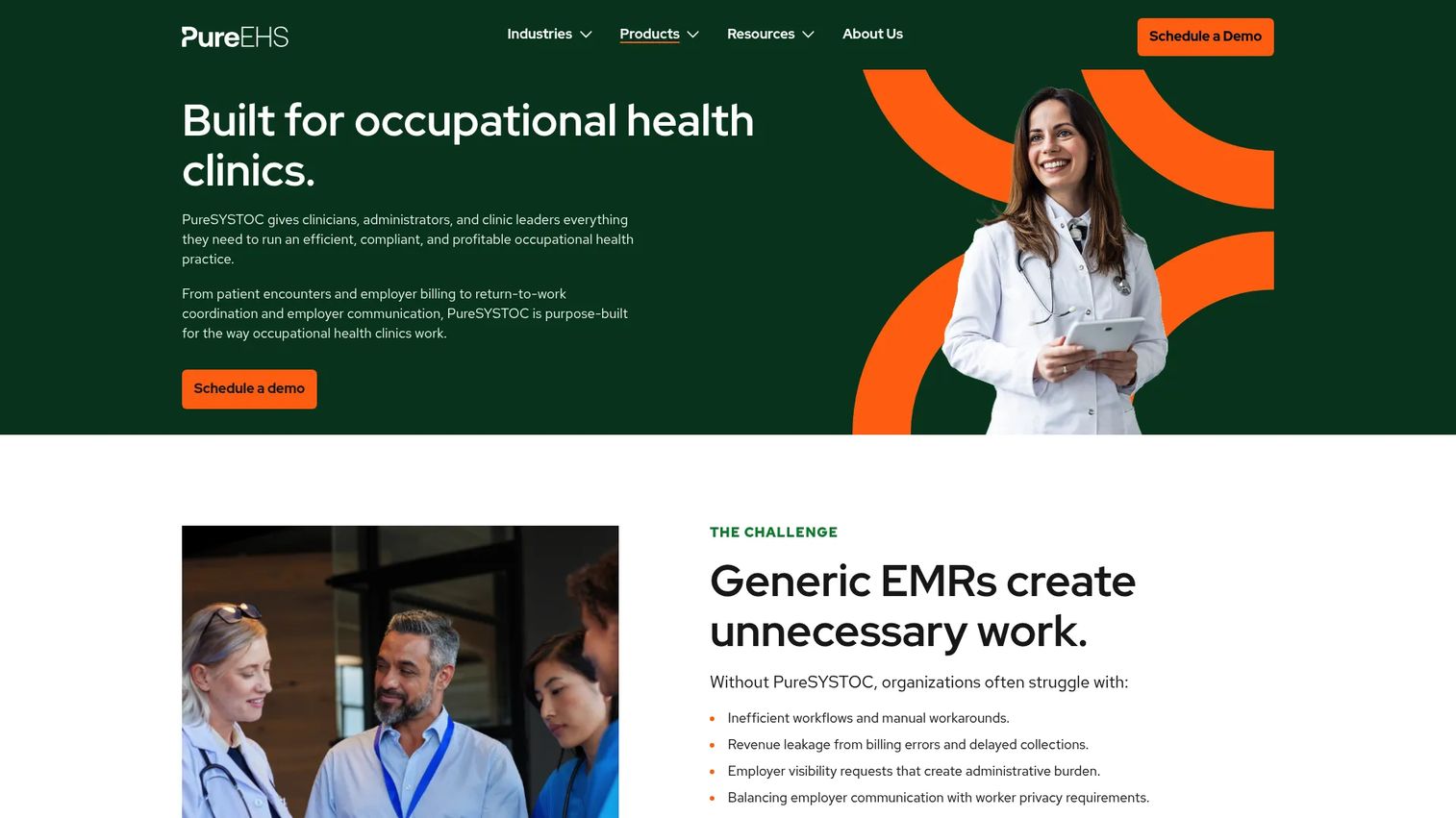
Systoc supports occupational health providers with clinical documentation, scheduling, billing, screening, security, and reporting. Its employer portal connects clinics with customer organizations.
Screening capabilities include audiology, drug testing, and tuberculosis workflows. Protected health information auditing adds a relevant control for clinical operations.
Best for: Occupational health providers managing clinical visits and employer services.
Key features
- Appointment scheduling and registration
- Clinical documentation and orders
- Billing and reconciliation
- Occupational health screening
- Employer portal and reporting
Why choose Systoc: Choose it when occupational medicine delivery drives the buying decision. Its provider workflows distinguish it from general EHS and inspection platforms.
Systoc pricing: Custom pricing. Clinic count, users, employer workflows, and integration requirements influence cost.
14. Immuware
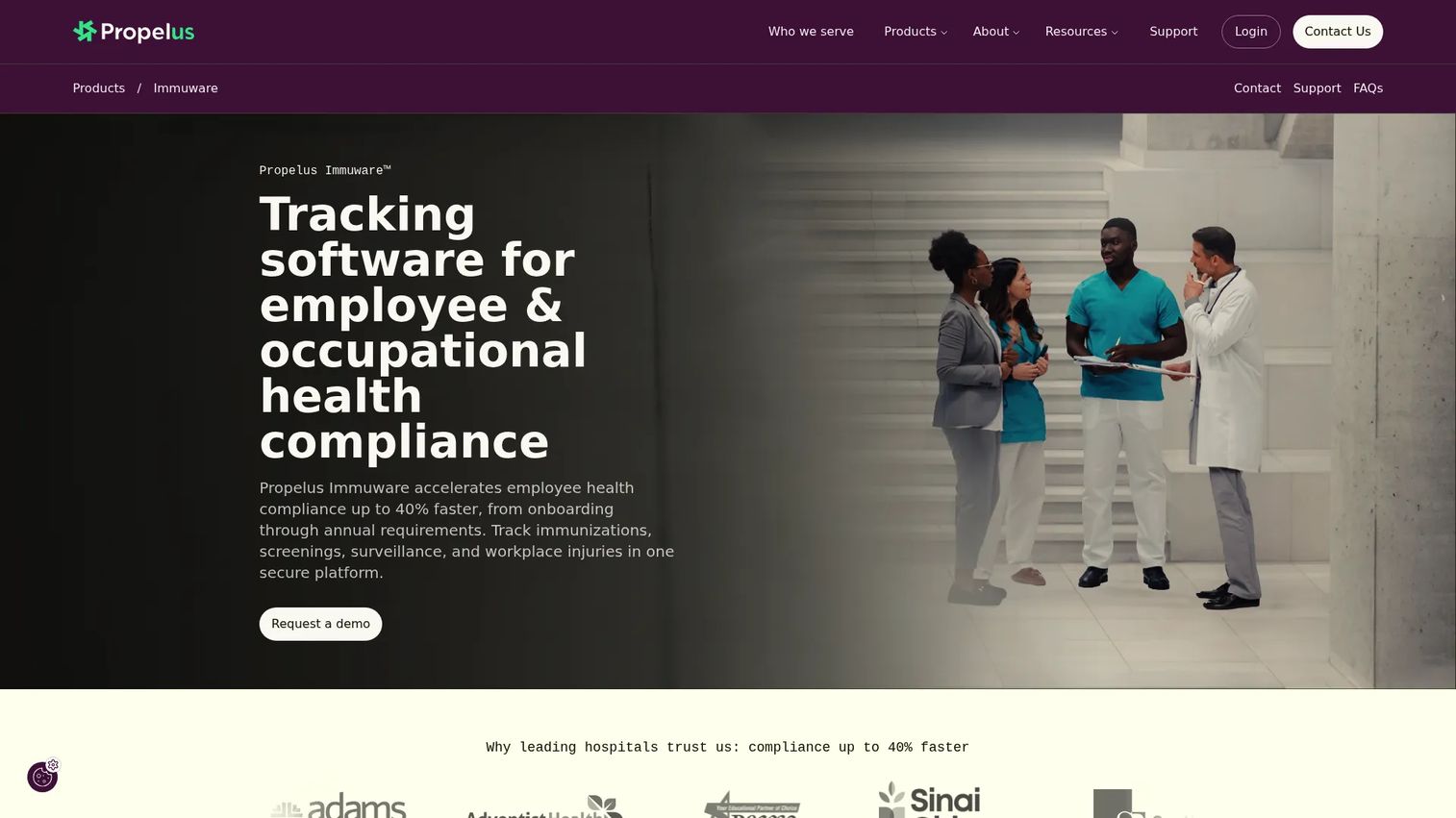
Immuware is employee and occupational health software for healthcare organizations. It tracks vaccinations, screenings, surveillance, incidents, injuries, illnesses, and certifications.
The product also supports employee self-service and documentation uploads. OSHA 300, 300A, and 301 reporting capabilities connect health tracking with incident case management.
Best for: Healthcare organizations running immunization and employee health programs.
Key features
- Vaccination and screening tracking
- Medical surveillance workflows
- Incident case management
- Employee self-service portal
- Automated reminders and scheduling
Why choose Immuware: Choose it when healthcare workforce readiness and employee vaccination tracking sit at the center. Its focus is narrower than a broad EHS suite.
Immuware pricing: Custom pricing. Workforce size, modules, integrations, and deployment requirements shape the quote.
Considerations when choosing occupational health software
Match the tool to your operating model
Start by identifying who owns the workflow. Employers, occupational medicine clinics, healthcare employee health departments, and EHS teams need different systems.
Choosing the wrong category creates expensive workarounds. A founder or operator should assign a functional owner before procurement begins.
Verify health record confidentiality controls
Review role-based access, audit trails, record retention, and medical-data separation. Employee health records should not sit beside ordinary HR notes with identical permissions.
Ask vendors to demonstrate access from several user roles. Include clinical staff, managers, administrators, and reporting users in the exercise.
Check surveillance and recurring workflow support
Recurring exams and exposure programs need more than a generic task list. Evaluate reminders, overdue dashboards, documentation requirements, and reassignment rules.
Healthcare buyers should also review vaccination and certification workflows. Industrial employers may prioritize exposure-based surveillance and return-to-work cases.
Map integrations before vendor calls
List every HRIS, laboratory, EHR, registry, payroll, and analytics connection before contacting sales. Mark each integration as required, optional, or future.
Request technical documentation for critical connections. A logo on an integrations page does not explain data direction, update frequency, or ownership.
Evaluate reporting by decision maker
Operators need open-task dashboards. Compliance teams need audit exports, while clinics require provider and employer reporting.
Executives need trends they can review without stitching together five dashboards. Define those outputs before comparing polished sales presentations.
Conclusion
Occupational health software is several markets grouped under one search term. Your shortlist should reflect how your organization manages workers, clinical care, and safety operations.
Cority fits enterprise workforce health programs that connect occupational health with EHS reporting. Net Health and Agility EHR serve clinical environments, while Systoc supports occupational medicine delivery. ReDoc has a narrower role in hospital outpatient rehabilitation.
Immuware is the clearest healthcare employee health option in this list. SafetyCulture, EHS Insight, and Risk and Safety Solutions suit safety-led operating models. SimplePractice gives smaller practices a lower-cost starting point.
Before taking sales calls, build a weighted scoring table. Include confidential data controls, workflow coverage, integrations, reporting, implementation effort, and total contract cost.
Then hand ownership to the operator who will run the system. A platform earns its place when the process remains reliable without executive intervention.
FAQs
Occupational health software manages employee health records, workplace injury cases, medical surveillance, and fitness-for-work processes. It can also support vaccinations, return-to-work workflows, clinical documentation, and compliance reporting.
The exact feature set varies by product type. Employer systems, clinic EMRs, and EHS platforms solve different operational problems.
Occupational health software focuses on employee health records, clinical workflows, surveillance, and workforce health programs. EHS software covers a wider set of safety and environmental processes.
Typical EHS functions include inspections, audits, hazards, corrective actions, and environmental reporting. Some enterprise platforms cover both categories.
Enterprise employers usually need confidential records, medical surveillance, case management, integrations, and multi-site analytics. Cority has the broadest verified enterprise EHS and occupational health coverage in this comparison.
The final choice depends on program ownership. Healthcare organizations with vaccination-heavy requirements may prefer Immuware, while clinical teams may prioritize Net Health.
Occupational medicine clinics should evaluate Net Health, Agility EHR, and Systoc. These products support clinical or employer-focused occupational health workflows.
ReDoc fits a narrower rehabilitation context. Clinics should compare scheduling, charting, billing, screening, employer portals, and integration requirements before choosing.
Yes. Occupational health software can support injury logs, reporting workflows, case documentation, and record organization. Immuware confirms support for OSHA 300, 300A, and 301 reporting.
Software does not replace regulatory judgment. Your legal, safety, and compliance teams remain responsible for interpreting reporting requirements.
Start with employee health records, role-based access, incident tracking, and medical surveillance. Add immunization tracking, case management, reporting, integrations, audit trails, and return-to-work workflows where required.
Clinics may also need scheduling, clinical documentation, employer accounts, and billing. Safety teams should examine inspection and corrective-action support.
Prices vary widely by product type. SimplePractice starts at $49 monthly, EHS Insight starts at $5,000 annually, and several enterprise platforms use custom pricing.
Common cost drivers include modules, users, employee population, site count, integrations, and implementation work. Ask vendors to separate recurring subscription fees from deployment costs.
Map your workflows before evaluating vendors. Include injuries, examinations, vaccinations, exposures, work restrictions, reporting, and required integrations.
Then compare mobile access, data controls, site-level permissions, executive dashboards, and implementation ownership. Select a system your operational leader can run without constant executive involvement.