A patient forgets a dose. Then another. By week three, the prescription that was supposed to work is quietly not working, and nobody on the care team knows yet.
That gap between what was prescribed and what actually gets taken is where outcomes fall apart. It also carries a real operational cost: manual outreach calls, disconnected reminder tools, and dashboards that show enrollment but not behavior. The market has grown up around this problem. The medication adherence software market was valued at $2.60 billion in 2025 and is projected to reach $4.21 billion by 2032, according to Research and Markets (2024).
The hard part is not believing adherence matters. You already do. The hard part is choosing a platform that fits how your team actually works, whether that team runs a clinical trial, a pharmacy chain, or a care management program. The measurement method, the workflow fit, and the reporting depth vary widely across tools. Pick wrong and you get another dashboard nobody opens.
What's inside
This guide is for pharmacy leaders, clinical trial teams, care coordinators, and healthcare operators comparing adherence software before running a pilot. We looked past marketing pages and evaluated each tool on the factors that decide whether it earns a place in your stack.
We selected and ranked tools based on:
- Measurement approach: apps, connected devices, packaging data, self-report, or analytics
- Workflow fit: how well it slots into pharmacy systems, EHRs, or trial platforms
- Reporting depth: dashboards, alerts, trend data, and exportable reports
- Integrations and deployment model: where the tool fits across pharmacy, trial, and care settings
TL;DR
- Best overall for clinical-trial adherence monitoring: AARDEX Group, built around measurement-grade dosing data.
- Best for pharmacy workflow and patient outreach: McKesson, tied into distribution and pharmacy operations.
- Best patient-facing reminder and engagement app: Medisafe, one of the most widely used medication adherence apps.
- Best for care coordination and analytics-led programs: Adhera Health, focused on health-plan quality metrics.
- Best for data-driven remote monitoring: Biofourmis, with device connectivity and AI analytics.
- Best for connected pill-cap tracking: RxCap, hardware-backed dose events.
- Best for dosing support and precision medicine: DoseMeRx, Bayesian therapeutic drug monitoring.
What is medication adherence software
Medication adherence software is a category of patient adherence software that helps teams monitor, support, and improve whether patients take their medications on schedule and as prescribed. It sits between the prescription and the outcome, turning missed doses into a signal a care team can act on.
The category covers a wide spread of approaches. Some tools are consumer-facing medication adherence apps that send reminders. Others are clinical-grade adherence monitoring software that captures dosing events from connected packaging. The right one depends entirely on what you need to prove and to whom.
What adherence software tracks
Most platforms track whether a dose was taken, when it was taken, and how that pattern trends over time. Better systems distinguish between a missed dose, a delayed dose, and a skipped refill. That distinction matters, because each one calls for a different intervention.
Common measurement methods
- App and self-report: patients confirm doses in a mobile app
- Connected devices: smart caps, sensors, or packaging log dose events automatically
- Packaging data: electronic monitoring records each opening of a container
- Pharmacy and claims data: refill records infer adherence at the population level
- Analytics and prediction: risk models flag likely non-adherence before it happens
Where it is used
Pharmacies use it to run adherence programs and med sync. Clinical trial teams use it for participant monitoring and data integrity. Health plans and care management teams use it to hit quality measures and reduce avoidable costs. Hospitals use dosing tools at the point of care.
Key features buyers should expect
Expect dose tracking, reminders, adherence dashboards, alerts for at-risk patients, trend reporting, and integrations with the systems you already run. Prescription adherence programs also benefit from outreach automation and exportable reports for audits or study submissions.
How it differs from simple reminder apps
A reminder app nudges a patient. Adherence software measures, reports, and drives a workflow around what happens next. Reminders are one feature inside a larger monitoring and reporting system, not the whole product.
When to use medication adherence software
Monitor adherence at scale
Use adherence tracking software when you need visibility across many patients, study participants, or a pharmacy population at once. Manual chart review does not scale past a few dozen people. When you are responsible for hundreds or thousands, you need dashboards that surface the outliers automatically.
Improve patient follow-through
Use it when missed doses or forgetfulness are driving poor outcomes. Medication reminders software helps here, but the real value is knowing which patients are slipping and reaching them before a small gap becomes a full lapse. Reminders plus targeted outreach beat reminders alone.
Support workflows and reporting
Use it when your team needs alerts, structured reporting, and integrations with existing systems. Clinical trials need audit-ready dosing records. Pharmacies need program data that ties to reimbursement. Care teams need trend views they can bring to a case review. If the data cannot leave the tool cleanly, it slows every downstream process.
Comparison table
Here is a side-by-side view of the seven medication adherence solutions in this guide. Pricing for most enterprise health platforms is quote-based, so we noted public figures where vendors publish them.
| # | Product | Best for | Key use case | Pricing | G2 rating |
|---|---|---|---|---|---|
| 1 | AARDEX Group | Clinical trial teams | Measurement-grade adherence monitoring for studies | Custom pricing | Not available |
| 2 | McKesson | Pharmacy operations | Pharmacy workflow, med sync, patient outreach | Account-gated | 4.2/5 |
| 3 | Medisafe | Patients and care teams | App reminders and patient engagement | Free app, subscription available | Not available |
| 4 | Adhera Health | Health plans | Analytics-led adherence programs | Custom pricing | Not available |
| 5 | Biofourmis | Health systems and payers | Remote monitoring and AI analytics | Custom pricing | 0.0/5 |
| 6 | RxCap | Healthcare enterprises | Connected cap dose tracking | From $49 | Not available |
| 7 | DoseMeRx | Hospitals and clinicians | Bayesian dosing and drug monitoring | Custom pricing | 3.8/5 |
Best medication adherence software for 2026
Each tool below is ranked by how directly it solves an adherence-specific job. Read the section that matches your setting, then shortlist across categories before you pilot.
1. AARDEX Group
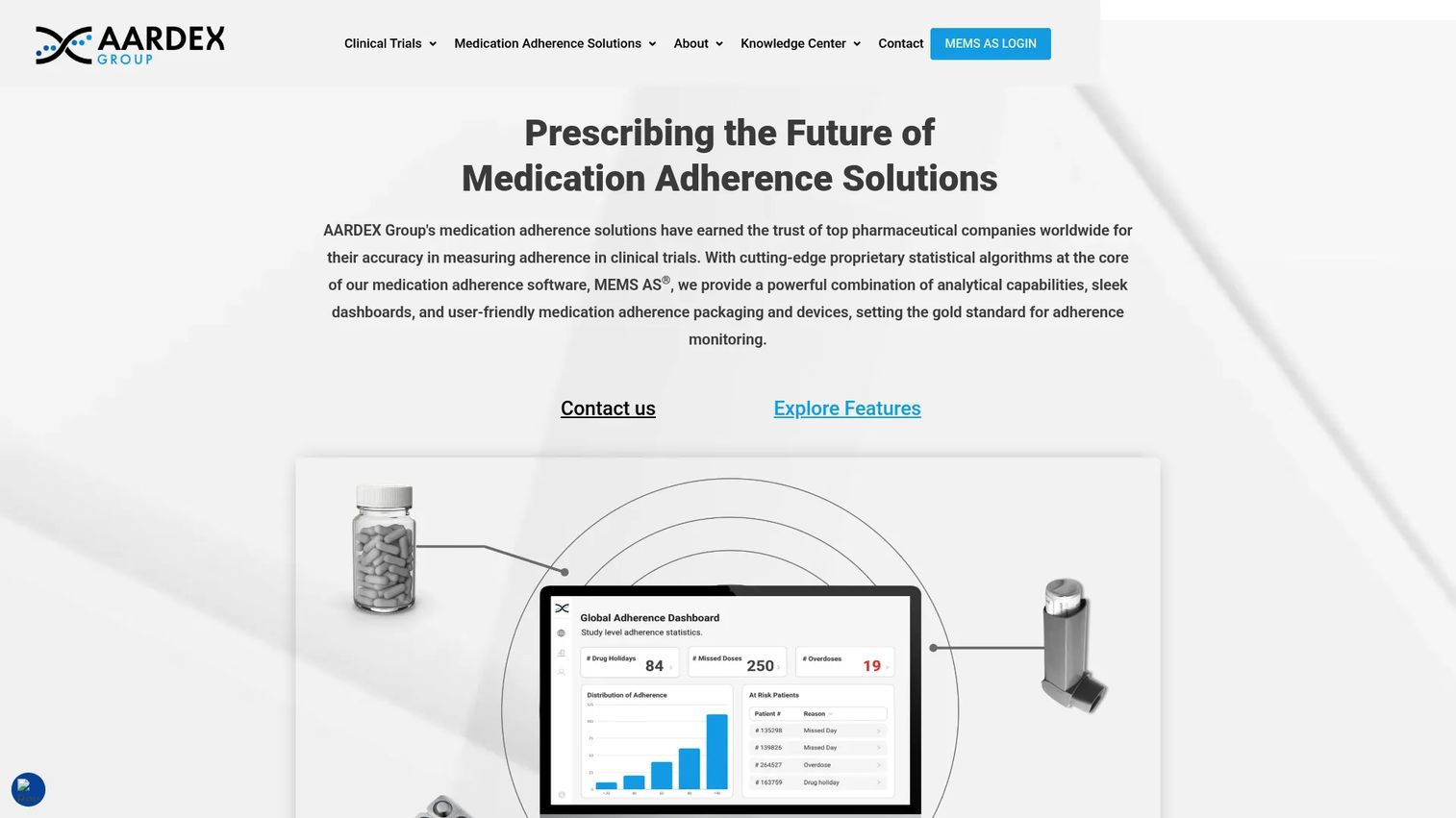
AARDEX Group builds clinical-trial medication adherence software and connected dosing solutions. Its MEMS AS platform is cloud-based and pairs with connected devices and packaging that record dose events for trial participants. The focus is measurement quality, which is exactly what pharma sponsors and CROs need when adherence data has to survive regulatory scrutiny.
Where most tools infer adherence, AARDEX captures it. That distinction is the reason it sits at the top of this list for clinical research. Its dashboards and reports work at the participant, study, and site level, so a study team can spot a struggling site or a single non-adherent participant without digging through raw logs.
Best for: Pharma sponsors and CROs running clinical trials that need defensible adherence monitoring.
Key strengths
- MEMS AS cloud-based medication adherence software
- Connected adherence devices and packaging for trials
- Dashboards at participant, study, and site level
Why choose AARDEX Group: If your adherence data has to hold up in a submission or an audit, measurement-grade capture beats self-report every time. AARDEX fits teams where accuracy is the whole point, not a nice-to-have.
AARDEX Group pricing: No public pricing is listed on the AARDEX site. The company routes prospects to a contact and demo request, which is standard for clinical-trial platforms scoped per study.
2. McKesson
McKesson is a healthcare supply chain and pharmacy services company whose medication adherence tools sit inside a much larger distribution and pharmacy operation. That context is the point. For pharmacies already running on McKesson infrastructure, adherence programs plug into existing workflows rather than living in a separate tool.
Its adherence offering centers on pharmacy operations: dashboard views for tracking adherence across a patient population, med sync to align refill dates, patient outreach, and counseling support. For a pharmacy leader, the operational fit matters as much as the feature list. Adherence data that ties back to reimbursement and pharmacy tactics is more useful than a standalone dashboard.
Best for: Large healthcare organizations and pharmacies needing distribution, pharmacy, and adherence workflows in one place.
Key strengths
- Pharmaceutical and medical supplies distribution
- Pharmacy services and adherence workflows
- Oncology and multispecialty solutions
Why choose McKesson: Pick McKesson when you want adherence tooling woven into pharmacy operations you already run, not bolted on. The trade-off is that its strength is the ecosystem, so it fits best when you are already inside it.
McKesson pricing: Public pricing is not shown. Access to pricing and availability runs through McKesson's SupplyManager, which requires an account, so pricing is account-gated. Its G2 seller profile carries a 4.2/5 rating.
3. Medisafe
Medisafe is a patient engagement platform and one of the most recognized medication adherence apps for patients, caregivers, pharma, and providers. Where clinical-trial tools optimize for measurement, Medisafe optimizes for the person actually taking the medication. Reminders, tracking, and caregiver notifications sit front and center.
Its Medfriend feature lets a caregiver get notified when a dose is missed, which turns a solo reminder into a support network. Drug interaction alerts add a safety layer on top of scheduling. For consumer and care settings where engagement drives adherence, that patient-first design is the draw. A moderate improvement in adherence from app-based interventions, with an effect size of d = 0.40 across 1,785 patients, was reported by BMC Medical Informatics and Decision Making (2023), which supports the app-reminder model Medisafe is built on.
Best for: Medication adherence and patient engagement in consumer and care-team settings.
Key strengths
- Medication reminders and dose tracking
- Caregiver and Medfriend support notifications
- Drug interaction alerts
Why choose Medisafe: Choose Medisafe when the bottleneck is patient follow-through, not clinical measurement. It is the strongest patient-facing option here, and its reach makes it a practical layer for engagement programs.
Medisafe pricing: The Medisafe app is free, and the site notes that subscription pricing for Medisafe Premium is shown at the time of purchase. Enterprise platform pricing is not published publicly.
4. Adhera Health
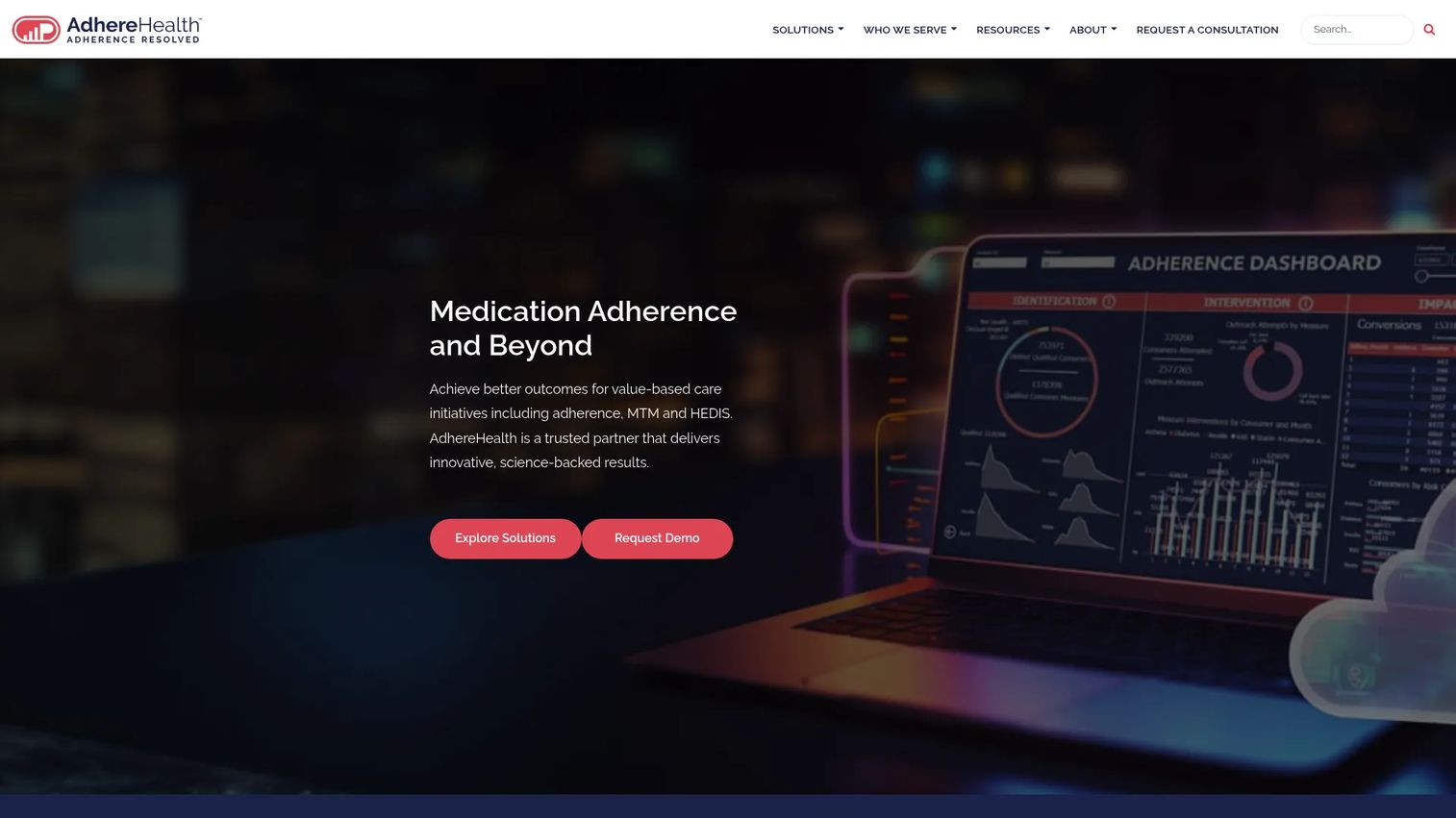
Adhera Health is a healthcare technology company focused on medication adherence, value-based care reimbursement, and cost reduction for health plans. Its Adhere Platform is SaaS workflow software that pairs predictive analytics with clinician-led outreach. The angle is analytics-first: figure out who is likely to fall off before they do, then intervene.
Member risk stratification is the core capability. Instead of treating every patient the same, the platform ranks them by risk and routes outreach accordingly. For health plans and risk-bearing entities chasing quality measures, that targeting is where the return lives. Omnichannel outreach with licensed clinicians handles the human side once the analytics flag a member.
Best for: Health plans and risk-bearing entities improving adherence and quality metrics.
Key strengths
- Adhere Platform SaaS workflow software
- Predictive analytics and member risk stratification
- Omnichannel outreach with licensed clinicians
Why choose Adhera Health: Pick Adhera when you own a population and care about quality scores and cost, not individual reminders. Its fit is strongest for payers running structured adherence programs at scale.
Adhera Health pricing: No public pricing is listed. The site presents a contact and request-demo flow, typical for enterprise health-plan SaaS scoped per contract.
5. Biofourmis
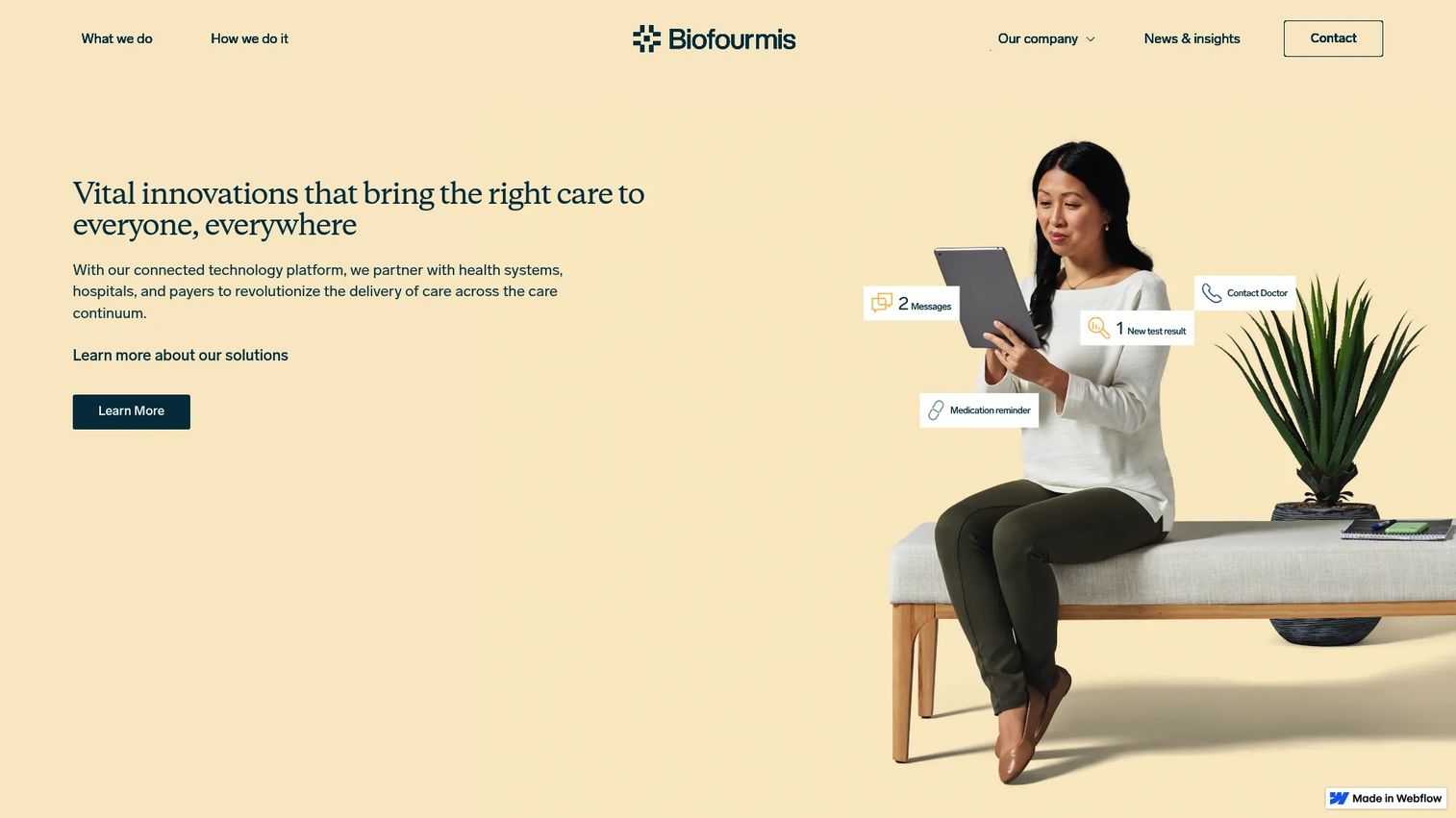
Biofourmis is a healthcare technology company with a configurable platform for remote patient monitoring, care delivery, and digital clinical research. Adherence sits inside a broader monitoring picture here. Rather than tracking doses alone, Biofourmis connects devices, runs AI-driven analytics, and surfaces adherence-related insights alongside other clinical signals.
Its FDA-cleared algorithms and continuous monitoring make it a fit for health systems, payers, and life sciences teams that want adherence data in context with vitals and other patient data. A patient app pairs with a clinician dashboard for engagement and care coordination. For teams building a full remote care program, adherence is one input among many the platform tracks.
Best for: Health systems, payers, and life sciences organizations needing enterprise remote care infrastructure.
Key strengths
- Device connectivity for continuous monitoring
- AI-driven analytics and FDA-cleared algorithms
- Patient app and clinician dashboard
Why choose Biofourmis: Choose Biofourmis when adherence is part of a wider remote monitoring mandate, not a standalone need. It suits enterprise teams building infrastructure rather than pharmacies wanting a focused adherence tool.
Biofourmis pricing: No public pricing is listed; the site directs visitors to contact sales or request a demo. Its G2 seller page currently shows a 0.0/5 rating with no substantive reviews, so treat the score as unrated rather than negative.
6. RxCap
RxCap is a healthcare enterprise platform focused on keeping patients and members adherent, with connected caps that log dose events through hardware. This is the hardware-backed option on the list. When self-report is not enough and you need an objective record of when a bottle was actually opened, a connected cap fills that gap.
The platform pairs the device with web and mobile application support and built-in developer tools for teams that want to build adherence workflows on top. That combination suits healthcare enterprises that need dose-event data plus a way to integrate it. Hardware adds cost and logistics, but it also removes the guesswork that self-report introduces.
Best for: Healthcare enterprises that want objective, hardware-backed dose tracking.
Key strengths
- Medication adherence support via connected caps
- Web and mobile application support
- Built-in developer tools and platform features
Why choose RxCap: Pick RxCap when objective dose events matter more than a reminder nudge, and you have the logistics to distribute hardware. It fits enterprises that need proof a dose was taken, not just a prompt.
RxCap pricing: RxCap publishes three tiers on its pricing page: Starter at $49, Business at $99, and Enterprise at $299. The pricing page reads as a generic template, so confirm scope and terms directly with the vendor before committing.
7. DoseMeRx
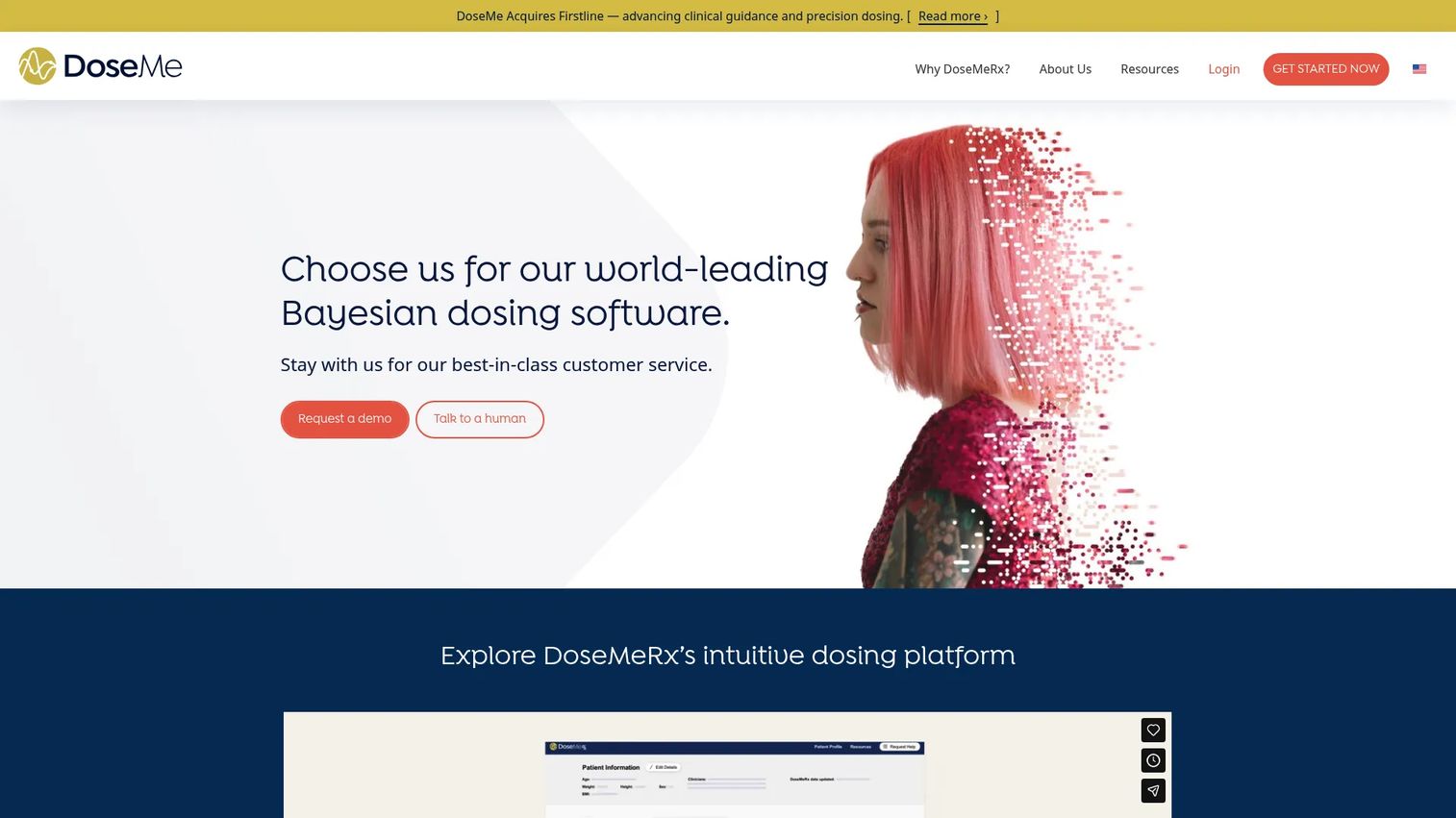
DoseMeRx is Bayesian dosing and therapeutic drug monitoring software for clinicians and hospitals. It sits at a different point in the adherence conversation. Rather than tracking whether a patient takes a dose, it helps clinicians decide what the right dose should be for a specific patient. That is precision dosing, and it matters most for narrow-therapeutic-index drugs.
Its Bayesian dose optimization and real-time PK/PD visualization let a clinician tune dosing to an individual patient's data. EHR integrations embed it in the clinical workflow, so it runs where care happens rather than as a separate portal. For hospitals working in precision medicine, DoseMeRx complements adherence monitoring by making sure the prescribed dose is correct in the first place.
Best for: Hospitals and clinicians needing individualized Bayesian dosing support.
Key strengths
- Bayesian dose optimization
- Real-time PK/PD visualization
- EHR integrations and embedded workflow
Why choose DoseMeRx: Choose DoseMeRx when the question is what dose, not whether the dose was taken. It fits clinical teams managing complex drugs where getting the dose right is the priority. Its G2 rating is 3.8/5, based on a small number of reviews.
DoseMeRx pricing: No public pricing is listed on the DoseMeRx site. Product pages route users to request a demo or contact sales, so pricing is scoped per hospital or health system.
Considerations
Before you shortlist, work through these criteria. They separate a tool that fits your workflow from one that becomes shelfware.
Measurement method
Match the method to the stakes. Self-report apps work for engagement-driven programs. Connected devices and packaging give you objective dose events for trials or high-risk drugs. Claims and refill data cover populations at low cost. Analytics-led tools predict risk. Do not pay for hardware-grade measurement if a reminder app solves your problem, and do not lean on self-report when a regulator wants proof.
Workflow integration
Ask what the tool connects to. Pharmacy adherence programs need to tie into pharmacy systems and reimbursement. Clinical trial adherence software needs to feed study platforms and produce audit-ready records. Care teams need EHR context. A tool that cannot export cleanly or integrate with your systems of record adds manual work instead of removing it.
Patient or participant experience
Adherence depends on the person taking the medication. Evaluate how easy it is for a patient to log a dose, respond to a reminder, or wear a device. If the end-user experience creates friction, adherence data degrades no matter how good the dashboard is.
Reporting depth
Confirm you get more than a completion percentage. Look for adherence dashboards, trend data, at-risk alerts, and exportable reports. The reports are what you bring to a case review, an audit, or a reimbursement conversation, so they need to leave the tool in a usable format.
Deployment fit
Decide where the tool lives: pharmacy, clinical trials, care management, or a mixed setting. A trial-grade platform is overkill for a consumer reminder program. A consumer app will not satisfy a study sponsor. Fit-for-setting beats feature count every time.
Conclusion
The strongest fit depends entirely on your setting. For clinical trials that need defensible measurement, AARDEX Group leads on data quality. For pharmacy operations, McKesson wins on workflow and ecosystem fit. For patient-facing engagement, Medisafe is the most practical reminder and tracking app. Adhera Health suits health plans running analytics-led programs, Biofourmis fits enterprise remote monitoring, RxCap covers hardware-backed dose tracking, and DoseMeRx handles precision dosing at the point of care.
Before you commit, shortlist one clinical-trial option, one pharmacy option, and one patient-facing option, then run a pilot with real patients and your own reporting requirements. The right tool is the one that fits your measurement needs, your workflow, and the systems you already run. Test that fit before you buy, not after.
FAQs
Objective methods beat self-report. Connected devices and electronic packaging that log each dose event give the most accurate record, which is why clinical trials rely on them. Self-report apps and refill data are easier to deploy but less precise, so match the method to how much accuracy your use case actually demands.
Expect dose tracking, reminders, adherence dashboards, at-risk alerts, trend reporting, and integrations with your existing systems. For pharmacy and trial use, add exportable reports and outreach workflows. The reporting and integration depth usually matters more than the reminder feature, since reminders alone rarely move outcomes.
For consumer engagement, yes. For clinical trials or high-risk drugs, usually not on its own. A reminder app increases follow-through, but clinical use often needs objective dose capture and audit-ready records that self-report cannot provide. Many teams pair an app for engagement with a measurement-grade tool for the data.
Pharmacies use it to track adherence across a patient population, run med sync to align refill dates, automate outreach to at-risk patients, and support counseling. The data often ties back to reimbursement and quality programs, so pharmacies value tools that integrate with pharmacy systems rather than standalone dashboards.
Many platforms do. Dosing tools like DoseMeRx embed in EHR workflows, pharmacy-focused tools connect to pharmacy operations, and trial platforms feed study systems. Integration depth varies, so confirm which specific systems a vendor supports before you buy rather than assuming a generic connector exists.
Both help, but targeted coaching layered on top of reminders tends to outperform reminders alone. Reminders address forgetfulness. Coaching and outreach address the reasons behind missed doses, like side effects or cost. Tools that combine automated reminders with risk-based human outreach usually see the strongest results.
Choose an app when the barrier is forgetfulness and you need low-cost, wide reach. Choose a connected device when you need objective proof a dose was taken, such as in a trial or for a narrow-therapeutic-index drug. Devices add cost and logistics but remove the guesswork self-report introduces.
Tracking records whether doses are taken. Monitoring adds oversight: alerts, trend analysis, and a workflow that prompts action when a patient slips. Most modern adherence tracking software includes monitoring features, but a basic reminder app tracks without truly monitoring, so confirm which you are getting.