Enablement teams often buy a revenue enablement platform to fix content chaos, then discover a second problem: Sellers still do not know which asset, guide, talk track, or workflow to use in a specific deal moment. If that describes where you are with Mediafly, you are not alone. The global sales enablement market reached $4.21 billion in 2025 (Mordor Intelligence, 2025), and the category now includes tools with very different jobs.
Mediafly alternatives fall into several categories: Interactive guide platforms, full revenue enablement suites, sales readiness tools, CRM systems, GTM data platforms, and content delivery tools. Guideflow is the top pick for teams whose primary gap is interactive internal training, SOPs, and step-by-step software education. For broader revenue enablement, Seismic, Highspot, and Showpad are the stronger paths.
This roundup covers 15 options across all six categories so a Sales Enablement Manager can decide which category fits the actual problem before comparing features.
TL;DR
- Best for interactive internal training guides: Guideflow captures software workflows once and turns them into step-by-step interactive demos for onboarding, SOPs, and process education. Plans run from Free to $2,999 per month.
- Best full revenue enablement suites: Seismic (G2: 4.7) and Highspot (G2: 4.7) cover content governance, plays, coaching, and digital sales rooms at enterprise scale.
- Best for sales content experiences and buyer engagement: Showpad (G2: 4.6) with its Shared Spaces and AI-assisted readiness layer.
- Best for sales coaching and readiness: Mindtickle (G2: 4.7) or SalesHood (G2: 4.6) when certification, role play, and skills measurement matter more than content distribution.
- Best CRM-native option: Salesforce Sales Cloud, starting at $25 per user per month, for teams that want enablement workflows anchored in their system of record.
- Best lightweight content delivery: Crescendo (G2: 5.0), starting at $15 per user per month, for teams that want to serve existing cloud content without a large migration.
- The list spans interactive guide platforms, full enablement suites, readiness tools, CRM platforms, GTM data tools, and content delivery tools. Each category solves a different job.
What's inside
- A fair profile of Mediafly and why teams look elsewhere
- Five common reasons enablement teams evaluate Mediafly competitors
- How we selected these 15 tools and which categories they represent
- A category-labeled comparison table with G2 ratings and starting prices
- 15 ranked tool cards with key features, shortfalls, pricing, and a Mediafly comparison
- Use-case routing by job: Internal training, full enablement, coaching, content delivery, and price
- FAQs for Sales Enablement Managers making a category decision
What is Mediafly?
Mediafly is an enterprise revenue enablement platform. It combines sales content management, digital sales rooms, value selling tools such as ROI calculators and TCO estimators, learning and coaching modules, AI-powered content recommendations, and engagement analytics in a single system. Enterprise revenue teams use it when they need governance and buyer engagement support across a complex, multi-stakeholder sales motion. Its AI-powered natural-language search surfaces relevant content inside seller workflows, and its command-center analytics show what buyers engage with across digital sales rooms. Pricing is quote-based; Mediafly does not publish tier prices. G2 rates it at 4.4.
Mediafly earns its place for organizations that run complex B2B motions and need content, value selling, and learning under one roof. The question is whether that breadth matches the actual problem.
Why teams look for Mediafly alternatives
Teams usually look for Mediafly alternatives when their enablement problem is narrower, more specialized, or addressable with a different kind of tool. Four patterns show up repeatedly.
They need interactive internal training, not another content portal
A content portal stores information. Reps who need to learn a CRM process, execute a sales play, follow a product demo path, or navigate a new SOP need something that teaches the workflow itself, not a PDF that describes it. Interactive step-by-step demos let a rep click through an actual software sequence, make mistakes in a safe environment, and retain the process. G2 reviewers of Mediafly note that the platform excels at content distribution and buyer engagement but is not purpose-built for software-process training delivered at the step level.
They want faster adoption from sellers and managers
Sales enablement tools fail when reps treat them as another tab to open. G2 reviewers of Mediafly cite implementation effort and change management requirements as friction points, particularly for smaller or mid-market teams that lack dedicated admin resources. The question for every tool on this list is where it shows up: Inside the CRM, in the mobile browser, in the sales engagement sequence, or in an LMS the rep already uses.
They need different analytics than Mediafly provides
Some teams need content engagement metrics tied to deal outcomes. Others need training completion rates, coaching scores, guide-level drop-off, or account-level intent signals. Mediafly's analytics center on buyer engagement in digital sales rooms and content consumption. Teams running certification programs or tracking step-level guide adoption need a different analytics model.
They are trying to reduce migration or maintenance work
G2 reviewers of Mediafly point to implementation effort and admin complexity as recurring concerns. Some teams want to connect existing SharePoint, Box, or Google Drive repositories without migrating content. Others want interactive guides that update when a product screen changes, without rebuilding an entire course.
They need a narrower tool with clearer internal ownership
Revenue enablement suites touch Sales, Marketing, Product Marketing, CS, RevOps, and sometimes IT. When ownership is diffuse, adoption suffers. A focused tool with a clear owner, whether that is a training platform, a CRM, or an interactive guide library, often gets used more consistently than a broad suite where nobody fully owns the experience.
How we picked these Mediafly alternatives
We selected 15 tools based on capability overlap with Mediafly's core jobs, distinct category role, pricing clarity, G2 rating availability, and usefulness for Sales Enablement Managers managing content, training, adoption, coaching, and analytics. The sales enablement market grew to $4.21 billion in 2025 (Mordor Intelligence, 2025), and the range of tools reflects how widely the category has expanded.
The list spans six categories: Interactive guide platforms, full revenue enablement suites, sales readiness tools, CRM platforms, GTM data tools, and content delivery tools. Each is labeled in the table so you can tell a category upgrade from a like-for-like swap.
Mediafly alternatives at a glance
Guideflow leads as the top pick for interactive internal training. Seismic and Highspot are the strongest full-suite alternatives. Crescendo is the lightest-footprint option for content delivery. The table below separates category fit from rank.
| # | Tool | Category | Best for | G2 rating | Free plan | Starting price |
|---|---|---|---|---|---|---|
| 1 | Guideflow | Interactive guide platform | Internal training, SOPs, onboarding, software-process education | N/A | Yes | $35/user/month (annual) |
| 2 | Mediafly | Revenue enablement platform | Enterprise revenue enablement, value selling, content, coaching | 4.4 | No | Custom pricing |
| 3 | Seismic | Revenue enablement platform | Enterprise content governance and enablement at scale | 4.7 | No | Custom pricing |
| 4 | Showpad | Sales enablement platform | Sales content experiences and buyer engagement | 4.6 | No | Custom pricing |
| 5 | Highspot | Sales enablement platform | Sales content, plays, training, and rep guidance | 4.7 | No | Custom pricing |
| 6 | SalesHood | Sales readiness platform | Training, coaching, onboarding, and certification | 4.6 | No | Custom pricing |
| 7 | GTM Buddy | Revenue enablement platform | Contextual content recommendations inside GTM workflows | 4.8 | No | Custom pricing |
| 8 | Allego | Sales enablement and learning platform | Sales learning, video coaching, and content activation | 4.5 | No | Custom pricing |
| 9 | Mindtickle | Revenue productivity platform | Skills, coaching, readiness, and behavior change | 4.7 | No | Custom pricing |
| 10 | Bigtincan | Sales enablement platform | Mobile-first sales content and enablement | 4.3 | No | Custom pricing |
| 11 | Salesforce | CRM and revenue platform | CRM-native enablement workflows and sales execution | 4.4 | Yes (Free Suite) | $25/user/month |
| 12 | HubSpot | CRM and sales platform | SMB and mid-market CRM, sales content, and automation | 4.4 | Yes | $7/seat/month (Starter) |
| 13 | ZoomInfo | GTM data and sales platform | Prospecting data, intent signals, and enrichment | 4.5 | No | Custom pricing |
| 14 | ClearSlide | Sales engagement platform | Sales content delivery, buyer engagement, and analytics | N/A | No | Custom pricing |
| 15 | Crescendo | Sales content delivery platform | Existing cloud storage, offline access, and mobile sales content | 5.0 | No | $15/user/month (annual) |
The best Mediafly alternatives in 2026
1. Guideflow (interactive guide platform)
Guideflow is a demo automation platform built for teams that need to record a software workflow once and share it as an interactive demo that employees can click through themselves. For Sales Enablement Managers, the primary use case is internal: CRM process training, product release enablement, SOP walkthroughs for new reps, and sales play education that shows the actual workflow rather than describing it.
Best for: Sales enablement teams that need interactive internal training, step-by-step onboarding, SOPs, and software-process education.
What it is: Guideflow is a demo automation platform that turns software captures into interactive, step-by-step experiences. It supports six demo types: Interactive demos, demo pages, demo centers, sandboxes, live demos, and mobile demos. For internal enablement, the same capture that trains a new rep on a CRM sequence can also serve as a buyer-facing interactive demo, making the asset work across the full sales lifecycle.
Key features:
- Capture through the Chrome extension or the native app, with screenshot, HTML, and video modes
- Step content and CTAs written automatically after capture
- Editor supports text, images, graphs, and branching paths
- Step-level completion, drop-off, and viewer flow analytics
- Integrations with HubSpot, Salesforce, Pipedrive, Zoho, and Marketo
- Translation into more than 30 languages; AI voiceover available
Where Guideflow falls short: Look elsewhere if your primary need is a full revenue enablement suite with content lifecycle governance, value selling tools, and territory-wide coaching in one platform. Teams that require a traditional LMS as the system of record for formal compliance certifications will also want a dedicated training tool alongside Guideflow.
Pricing: Free plan available. Solo: $35 per user per month (annual). Growth: $499 per month (annual). Advanced: $1,499 per month (annual). Enterprise: From $2,999 per month, with SSO, advanced governance, and enterprise security.
G2 rating: N/A
How it compares to Mediafly: Mediafly covers the full revenue enablement surface from digital sales rooms to value selling. Guideflow covers a specific job within that surface, and covers it at a depth Mediafly does not: Interactive, step-by-step software process education that reps can click through at their own pace, with step-level drop-off data showing exactly where they stall.
2. Mediafly (revenue enablement platform)
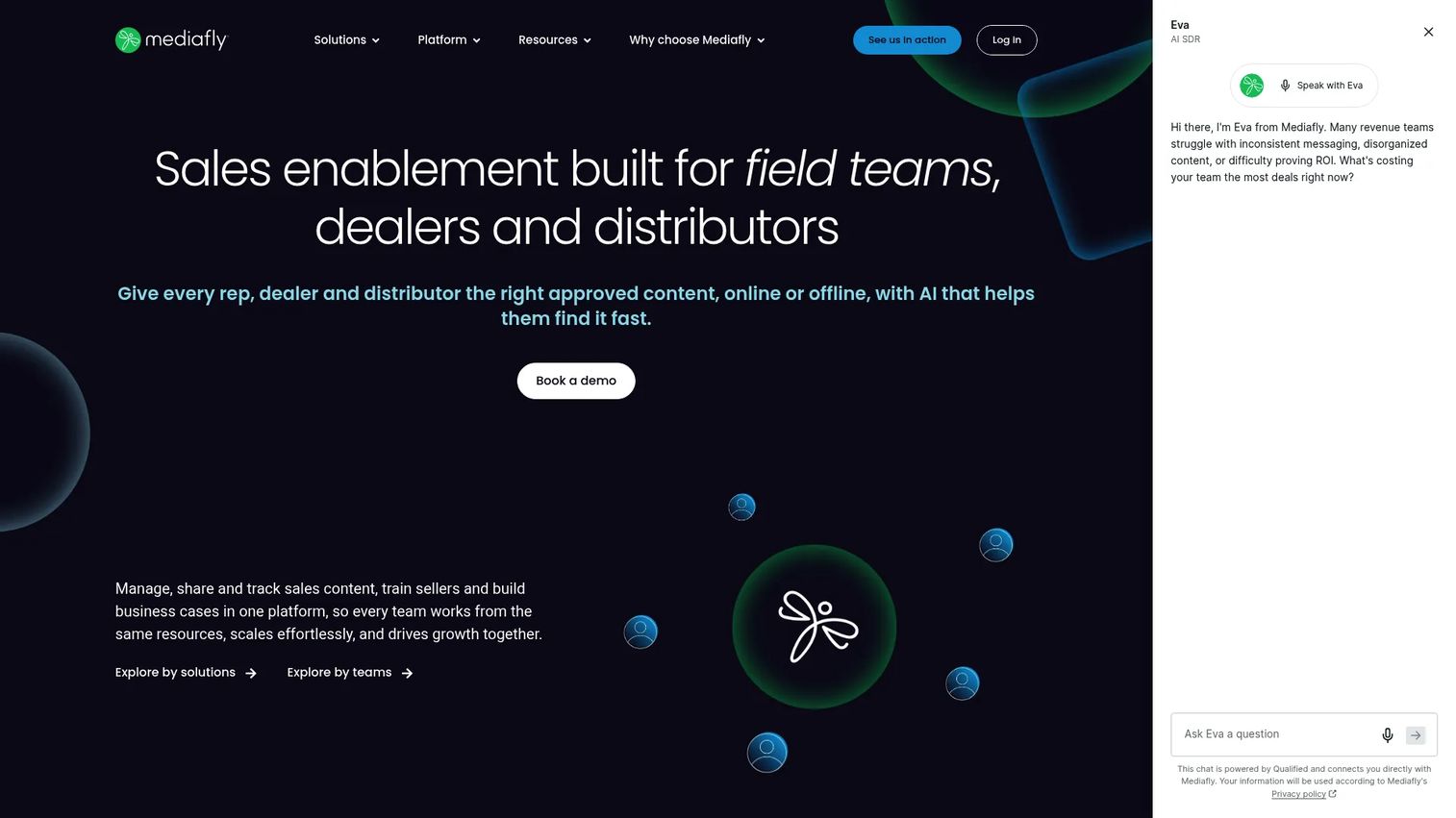
Mediafly earns its place in the list as the incumbent and the baseline for comparison. For enterprise teams that need a unified platform covering sales content, buyer rooms, value selling, and learning together, it remains a credible choice.
Best for: Enterprise revenue teams that want one platform for content governance, digital sales rooms, value selling, coaching, and engagement analytics.
What it is: Mediafly is an enterprise revenue enablement platform. It covers sales content management, digital sales rooms, ROI and TCO calculators for value selling, learning and coaching modules, AI-powered content recommendations, and command-center analytics. It is built for complex B2B organizations with large sales teams and multi-module enablement needs.
Key features:
- AI-powered natural-language content search and recommendations
- Digital sales rooms and branded buyer workspaces
- ROI calculators and TCO estimators for value-selling motions
- Learning management, onboarding, coaching, and performance tracking
- CRM and enterprise integrations with engagement analytics
Where Mediafly falls short: G2 reviewers cite implementation effort and admin complexity as friction points, particularly for teams without a dedicated enablement ops resource. Some reviewers note that configuration can be time-consuming during initial rollout. Contract size and total cost of ownership are also flagged, especially at the lower end of enterprise buying.
Pricing: Custom pricing. Mediafly directs prospects to request a quote; no public tier prices are published.
G2 rating: 4.4
How it compares to Mediafly: Mediafly is the subject of this roundup. Consider it when the team already uses multiple modules and migration costs outweigh the benefits of switching.
3. Seismic (revenue enablement platform)
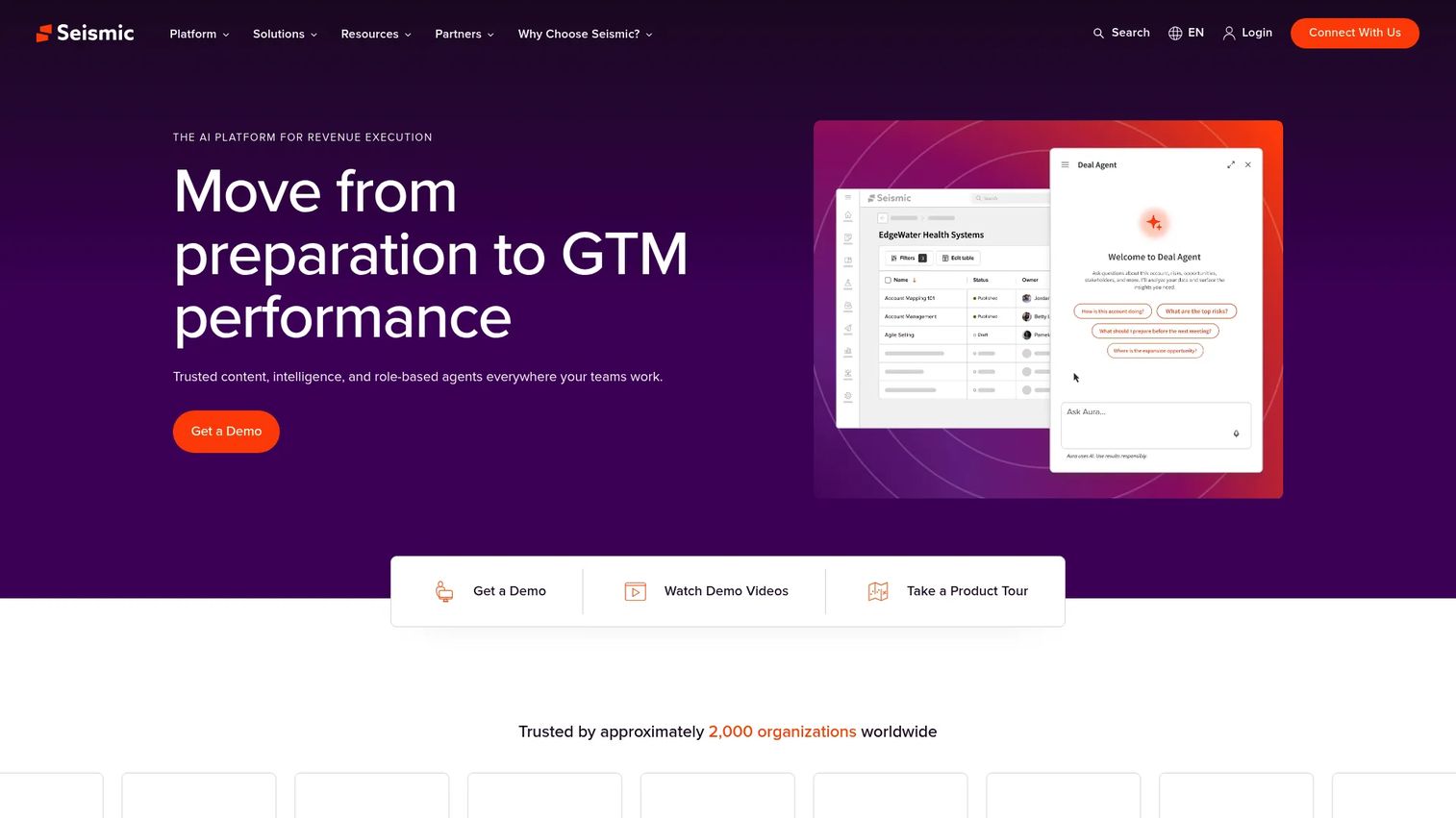
Seismic is the most direct full-suite alternative to Mediafly for large enterprise organizations. It competes on content governance, global scale, and AI-driven enablement automation.
Best for: Large enterprise revenue organizations that need centralized content governance, enablement automation, and deep analytics across a distributed sales team.
What it is: Seismic is an AI-powered sales enablement platform unifying content management, training, coaching, digital sales rooms, and enablement analytics. It offers three package tiers (Essential, Advanced, Ultimate) and is used by global enterprise sales teams that require governance, compliance controls, and territory-level reporting.
Key features:
- Content management, distribution, and AI-driven content personalization
- Sales playbooks and enablement workflow automation
- Learning, coaching, and AI-assisted onboarding
- Digital sales rooms and buyer engagement tracking
- Enablement analytics and program intelligence with CRM integrations
Where Seismic falls short: G2 reviewers note a learning curve during initial setup and report that the platform can feel complex for smaller teams or those without a dedicated admin. Some reviewers point to cost as a barrier and flag that advanced analytics capabilities require higher-tier packages.
Pricing: Custom pricing across Essential, Advanced, and Ultimate tiers. Seismic directs prospects to contact a representative.
G2 rating: 4.7
How it compares to Mediafly: Seismic and Mediafly compete directly in the enterprise revenue enablement space. Seismic edges ahead on G2 and tends to be the stronger pick where content governance and global team scale are the primary requirements.
4. Showpad (sales enablement platform)
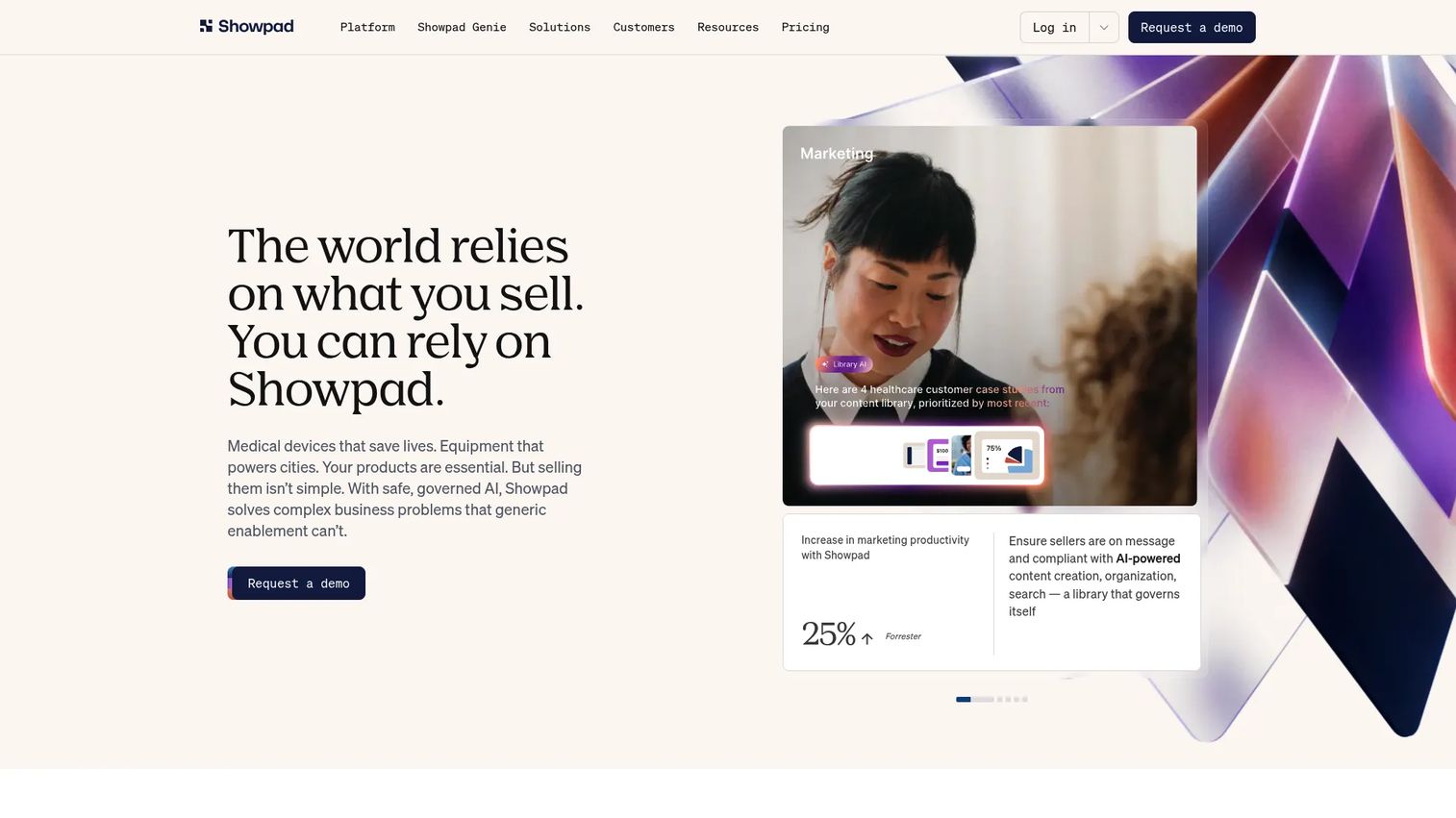
Showpad focuses on the experience a buyer has with sales content. If the primary pain is polishing seller content delivery and buyer engagement rather than coaching infrastructure, Showpad is a strong contender.
Best for: Mid-market and enterprise field-selling teams that prioritize sales content experiences, buyer engagement, and AI-assisted seller readiness.
What it is: Showpad is an AI-native revenue effectiveness platform covering content management, seller readiness with training and certifications, buyer engagement through Shared Spaces, and analytics. G2 rates it at 4.6. Its Professional, Advanced, and Expert packages are all quote-based.
Key features:
- Content management library with governance and version control
- Shared Spaces for branded buyer engagement
- AI role play, courses, and certification for seller readiness
- Analytics on content usage and buyer engagement
- AI assistants and agents for seller support
Where Showpad falls short: G2 reviewers note that configuration of Shared Spaces and advanced content governance can require significant admin effort. Some reviewers flag that reporting depth and dashboard customization are limited relative to dedicated analytics platforms.
Pricing: Custom pricing across Professional, Advanced, and Expert tiers.
G2 rating: 4.6
How it compares to Mediafly: Showpad and Mediafly overlap heavily. Showpad tends to win where the team's primary focus is buyer-facing content experiences and seller readiness, while Mediafly's value selling tools give it an edge for teams running ROI-driven enterprise sales motions.
5. Highspot (sales enablement platform)
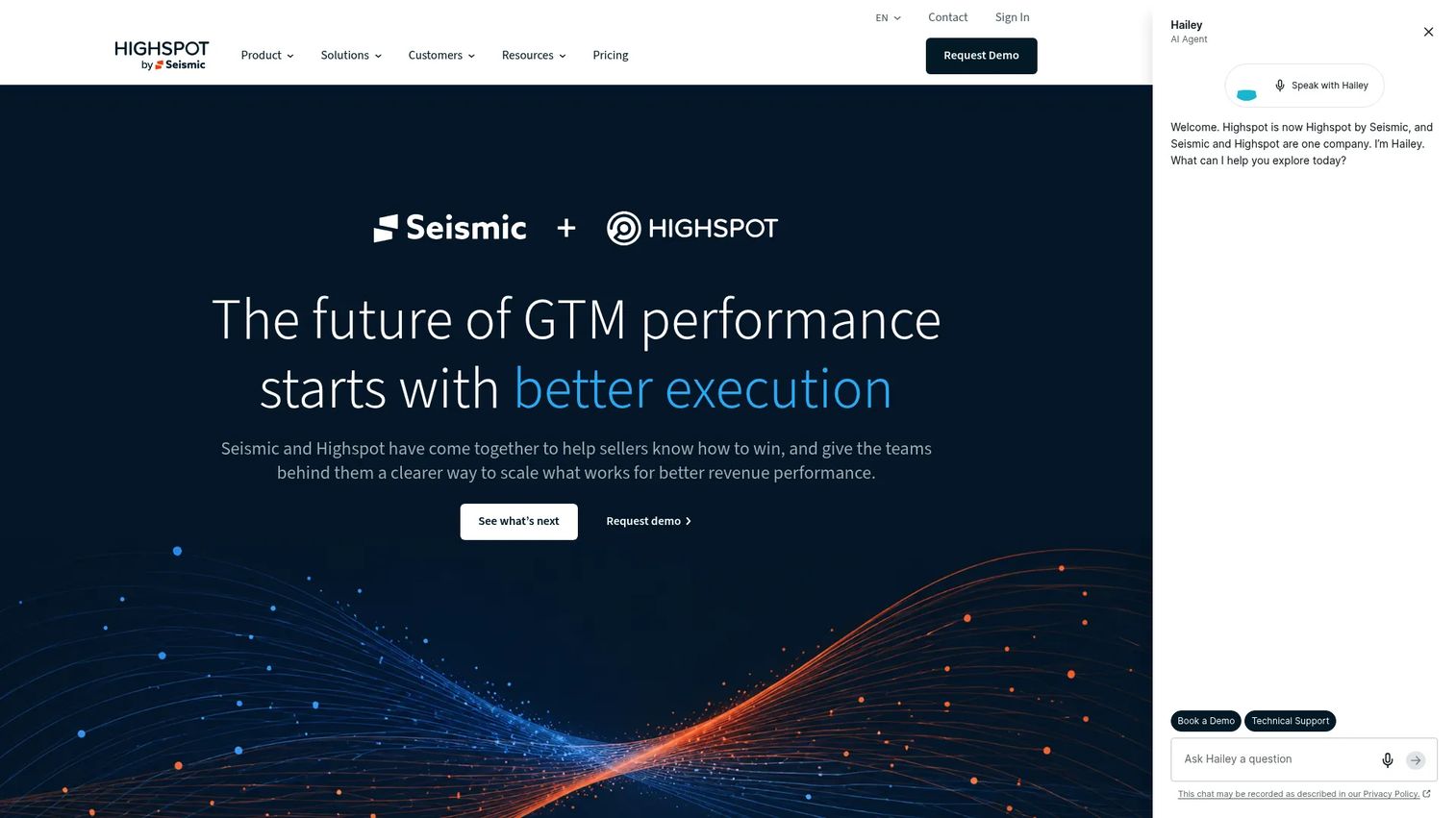
Highspot is noted for its in-workflow seller guidance and its AI-powered approach to surfacing the right play at the right moment in a deal cycle. Its homepage now identifies the product as Highspot by Seismic.
Best for: Enterprise go-to-market teams that want content, plays, rep guidance, training, and coaching in one platform with strong CRM alignment.
What it is: Highspot is an AI-powered go-to-market platform covering content organization and governance, sales training with adaptive learning and AI role play, digital sales rooms, deal execution guidance, meeting intelligence, and coaching. G2 rates it at 4.7.
Key features:
- AI-powered content organization, search, recommendations, and governance
- Adaptive learning, role play, skills assessments, and AI coaching feedback
- Digital sales rooms, meeting intelligence, and deal execution support
- GTM analytics, scorecards, and Highspot Agents
- Over 100 integrations including major CRM and sales engagement platforms
Where Highspot falls short: G2 reviewers mention a learning curve, particularly around content management configuration and search relevance tuning. Some report that building and maintaining plays requires sustained admin investment. Advanced reporting and analytics depth are also flagged as areas needing improvement.
Pricing: Custom pricing across Good, Better, and Best tiers (labeled as Equip and engage, Train and practice, and Coach and reinforce).
G2 rating: 4.7
How it compares to Mediafly: Highspot matches Mediafly on breadth and edges ahead on in-workflow seller guidance. Teams that want AI-driven play recommendations surfaced inside the CRM deal cycle often prefer Highspot. Mediafly holds an advantage on value-selling tools.
6. SalesHood (sales readiness platform)
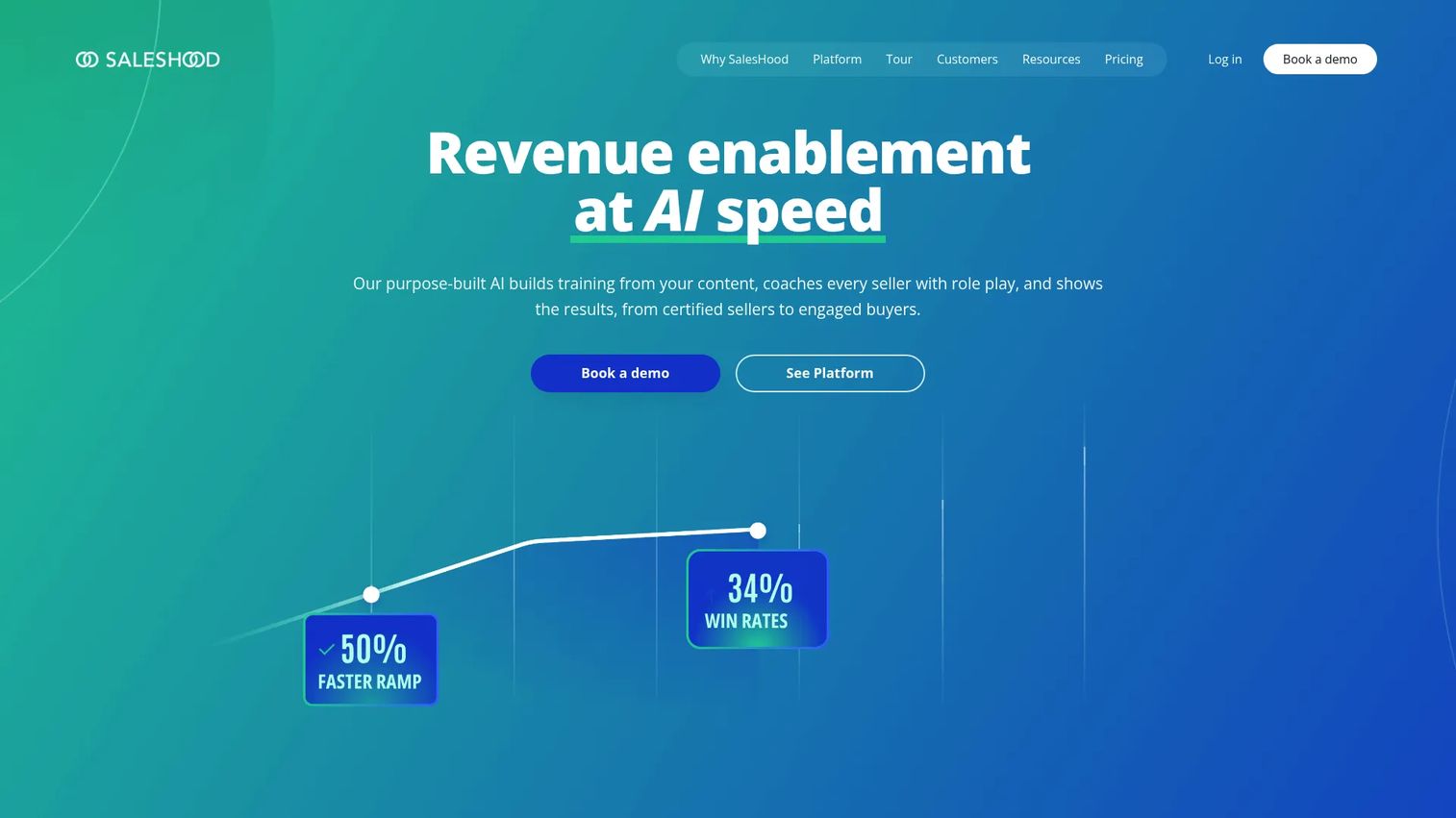
SalesHood is built around the idea that revenue outcomes improve when reps practice before they pitch. Its focus is readiness: Onboarding, certification, coaching, and guided selling.
Best for: Enablement managers focused on new-hire ramp, certification programs, manager coaching, and pitch practice.
What it is: SalesHood is an AI-powered revenue enablement platform covering sales content management, learning programs, AI role play, coaching, digital sales rooms, and guided selling. G2 rates it at 4.6. Its Essential, Pro, and Unlimited plans are quote-based.
Key features:
- AI content search and centralized sales content management
- Learning programs, onboarding, assessments, and certifications
- AI role play, pitch practice, and personalized coaching
- Digital sales rooms with mutual action plans and buyer engagement tracking
- Guided selling workflows and performance insights
Where SalesHood falls short: G2 reviewers note that reporting dashboards can feel basic for teams with complex analytics requirements. Some reviewers flag UI friction in certain admin workflows and point to integration depth as a gap, particularly for teams running advanced sales engagement stacks.
Pricing: Custom pricing across Essential, Pro, and Unlimited editions.
G2 rating: 4.6
How it compares to Mediafly: SalesHood is narrower than Mediafly by design. It wins where readiness and certification are the top priority. Teams that need value selling tools, digital sales rooms with buyer ROI tools, or broad content governance should still consider Mediafly or the full-suite alternatives above.
7. GTM Buddy (revenue enablement platform)
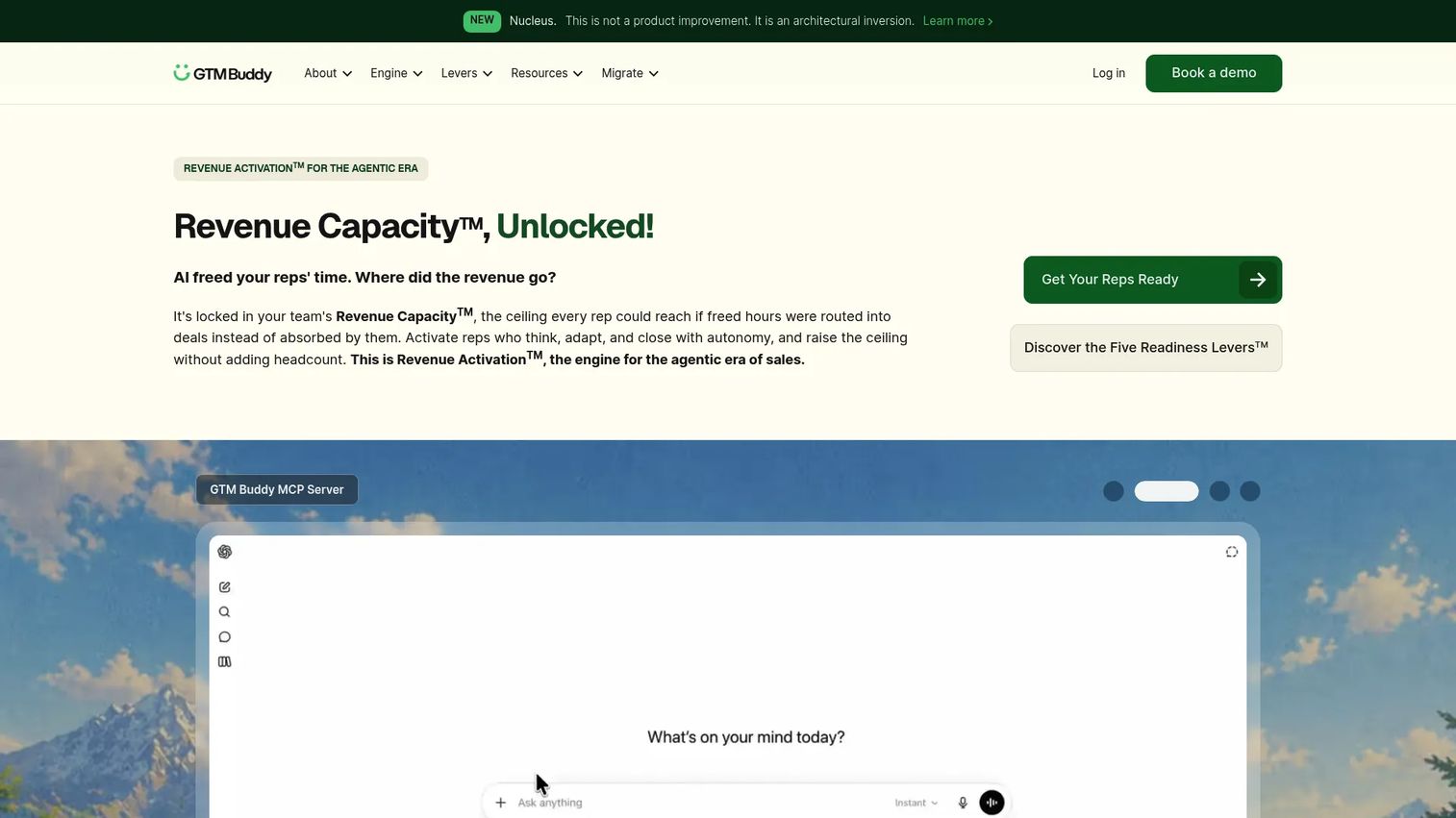
GTM Buddy solves a specific adoption problem: Reps do not use content because they cannot find it at the right moment. Its in-flow activation model surfaces assets and coaching cues inside the CRM, email, and meetings without requiring reps to leave their workflow.
Best for: Revenue teams where the primary pain is reps not using or finding the right content at the right deal stage.
What it is: GTM Buddy describes itself as a Revenue Activation Engine. Its core capability is AI-powered content activation inside existing seller workflows, including CRM, email, and meeting tools. G2 rates it at 4.8.
Key features:
- AI-powered in-flow content activation across CRM, email, and meetings
- Content hub with auto-tagging and plain-language search
- Coaching Precision that identifies missed questions and delivers targeted coaching cues
- Buyer engagement tracking and deal intelligence
Where GTM Buddy falls short: GTM Buddy is a newer entrant to the category. G2 reviewers note that the platform is still maturing on enterprise-grade admin controls and that some integration configurations require manual setup. Analytics depth and reporting are flagged by reviewers as areas still developing.
Pricing: Custom pricing. No public tiers or starting prices are published.
G2 rating: 4.8
How it compares to Mediafly: GTM Buddy focuses on the in-workflow activation problem Mediafly addresses at a broader level. For teams whose core pain is adoption and findability rather than content governance or value selling, GTM Buddy solves the problem more directly.
8. Allego (sales enablement and learning platform)
Allego combines sales learning, video coaching, content management, conversation intelligence, and digital selling in a platform oriented around the full rep development lifecycle.
Best for: Enterprise revenue teams that want integrated sales training, video coaching, content management, and AI-assisted deal execution in one system.
What it is: Allego is a revenue enablement platform with AI Lesson Authoring, AI role play, coaching, content management via SmartDocs, conversation intelligence, digital sales rooms, and mobile enablement. G2 rates it at 4.5. Contracts are typically annual, billed upfront, with customized per-user pricing.
Key features:
- AI Lesson Authoring for learning and onboarding content
- AI role play and coaching with video practice
- SmartDocs for AI-powered content management and personalization
- Conversation intelligence with call recording, transcription, and scoring
- Digital sales rooms and CRM integrations
Where Allego falls short: G2 reviewers cite UI complexity and the admin configuration effort required during initial rollout. Some reviewers flag that the content search experience can be inconsistent and that reporting customization is limited relative to dedicated BI tools.
Pricing: Custom, per-user, annual contract. Typical contracts run three years, paid annually upfront.
G2 rating: 4.5
How it compares to Mediafly: Allego is a closer match to Mediafly's learning and coaching capabilities than to its value-selling tools. Teams that want coaching, conversation intelligence, and content management but can live without ROI calculators and digital sales rooms with built-in value tools often prefer Allego's depth on the learning side.
9. Mindtickle (revenue productivity platform)
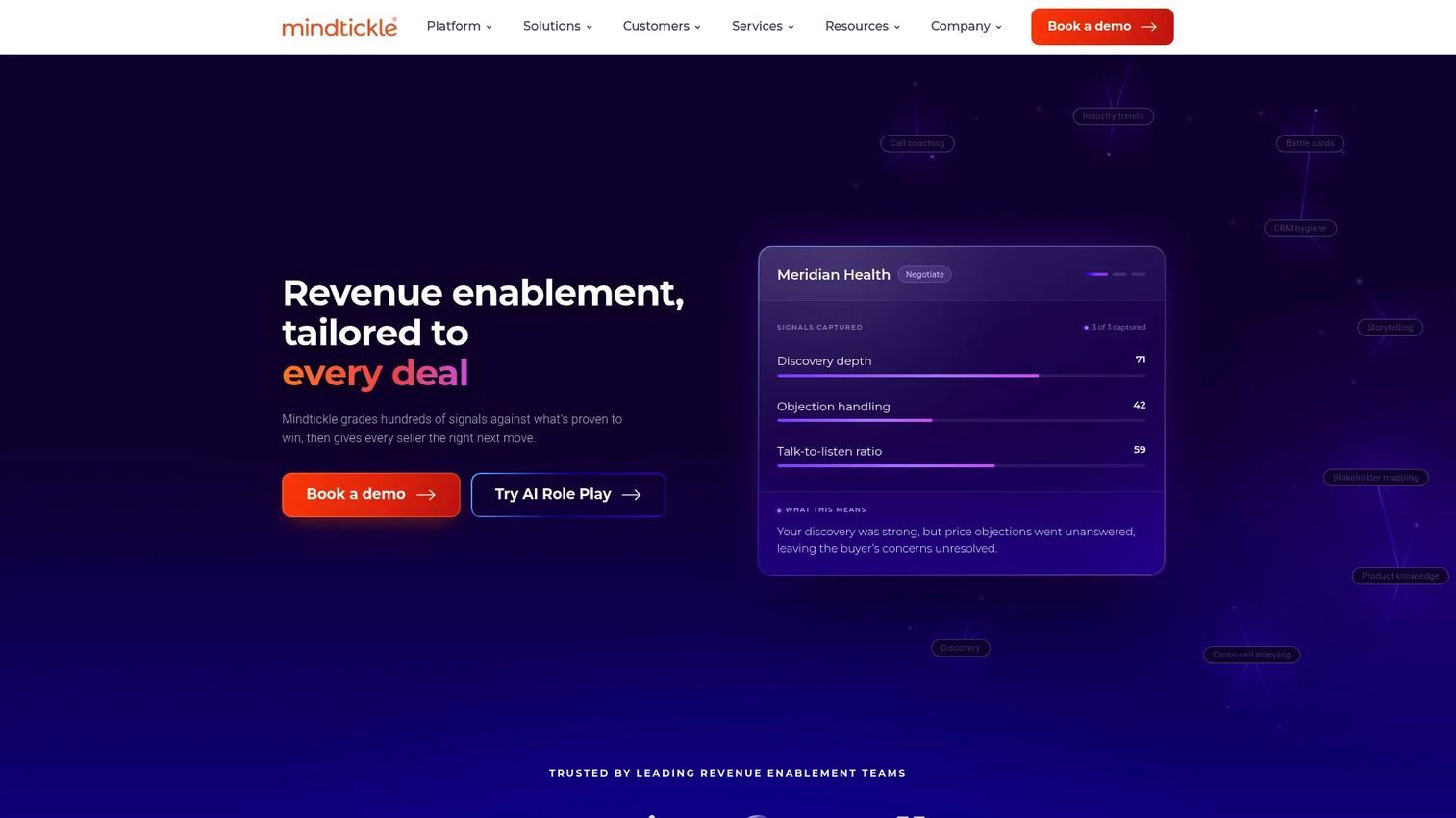
Mindtickle is built around a measurable approach to readiness. Its Readiness Index gives Sales Enablement Managers a number they can defend when leadership asks whether the team is prepared to execute.
Best for: Enterprise revenue teams that need measurable skill development, coaching, readiness scoring, and behavior change tied to revenue outcomes.
What it is: Mindtickle is a revenue enablement platform covering training, certifications, adaptive learning, virtual AI role plays, conversation intelligence, sales content management, digital sales rooms, and coaching rooms. G2 rates it at 4.7. It offers LMS, Readiness, Enable, and Transform packages.
Key features:
- Readiness Index and seller-performance analytics
- AI-powered conversation intelligence with call recording, scoring, and summaries
- Sales training, certifications, adaptive learning, and virtual AI role plays
- Coaching rooms, coaching forms, and AI-assisted coaching
- Sales content management and digital sales rooms
Where Mindtickle falls short: G2 reviewers note that implementation timelines can run long for enterprise rollouts and that the admin interface requires a learning investment. Some reviewers flag reporting complexity and UI density as friction points for newer users.
Pricing: Custom pricing across LMS, Readiness, Enable, and Transform packages.
G2 rating: 4.7
How it compares to Mediafly: Mindtickle and Mediafly overlap on learning and coaching. Mindtickle goes deeper on readiness measurement and skill development analytics, while Mediafly's value-selling tools and digital sales rooms give it an edge on buyer-facing sales motions.
10. Bigtincan (sales enablement platform)
Bigtincan's distinguishing feature is its mobile-first approach to sales content. Field sales teams that need offline access and mobile-optimized content experiences tend to find it more purpose-built than broader platforms.
Best for: Field sales teams that need mobile content access, offline capability, and buyer engagement on the road.
What it is: Bigtincan is an AI-powered revenue effectiveness platform covering sales content management, readiness, learning, coaching, role play, digital sales rooms, meeting and conversation intelligence, and analytics. G2 rates it at 4.3. Its Essential and Elite platform editions are quote-based.
Key features:
- AI-powered content search and assistance
- Sales readiness, learning, coaching, and role-play capabilities
- Digital sales rooms and personalized buyer experiences
- Meetings and conversation intelligence
- Interactive content creation, personalization, and version control
Where Bigtincan falls short: G2 reviewers cite admin complexity and implementation effort as consistent concerns. Content management search relevance and overall UI experience are flagged by reviewers as areas needing improvement. Support responsiveness is also noted as inconsistent across reviewer cohorts.
Pricing: Custom pricing across Essential and Elite platform editions.
G2 rating: 4.3
How it compares to Mediafly: Bigtincan covers similar ground to Mediafly but with a stronger emphasis on mobile and field selling. Teams where reps work offline or in the field benefit more from Bigtincan's mobile-first architecture. Mediafly's value-selling tools and digital sales rooms are broader for complex inside-sales motions.
11. Salesforce (CRM and revenue platform)
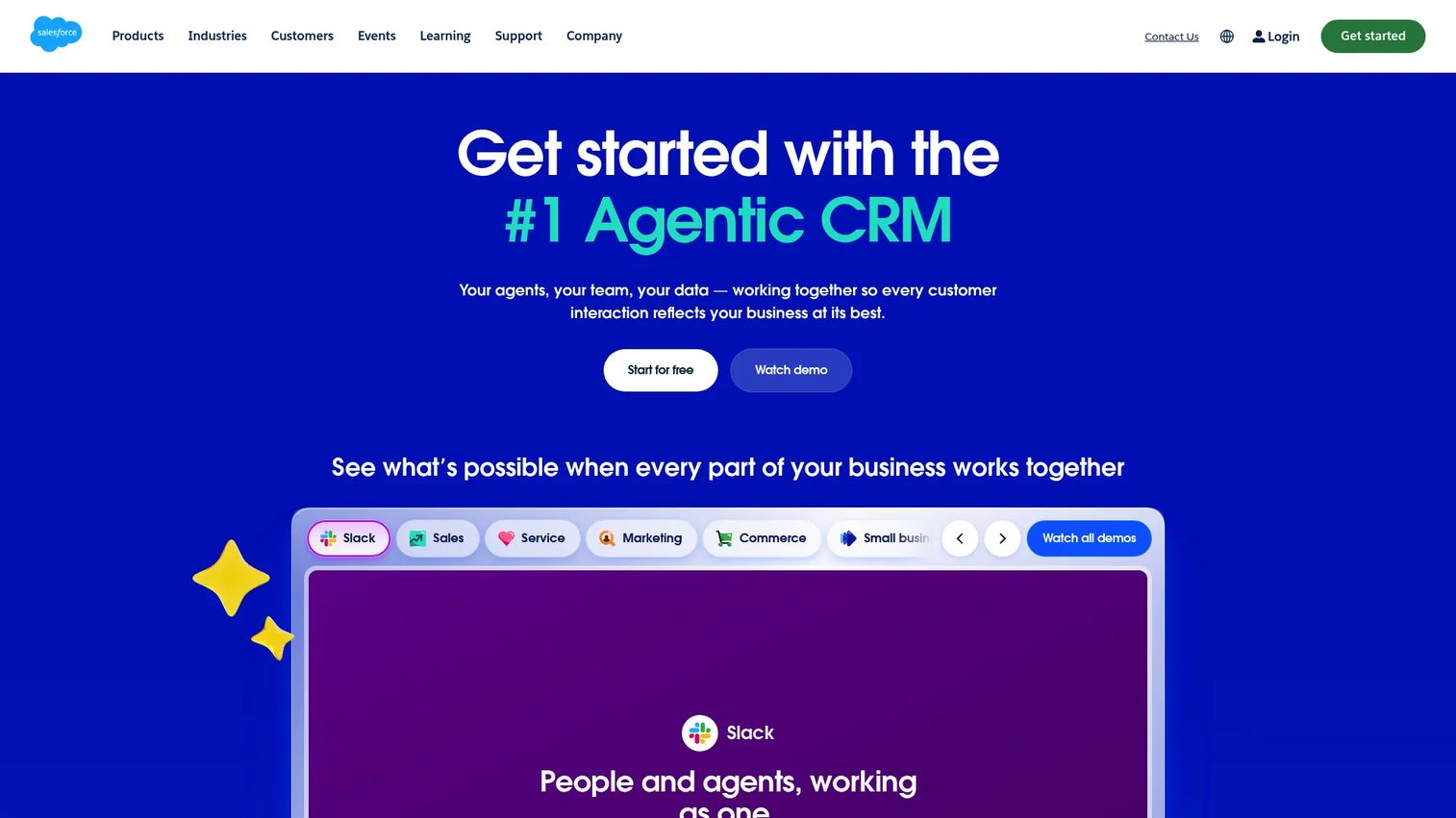
Salesforce is not a Mediafly replacement on its own. It belongs in this list because many teams comparing Mediafly alternatives also ask whether enablement workflows should live closer to their system of record rather than in a separate platform.
Best for: Organizations that want enablement workflows anchored in their CRM, with extensibility through the AppExchange for training, content, and coaching tools.
What it is: Salesforce is a customer relationship management platform for sales, service, marketing, commerce, analytics, and AI. Its Sales Cloud includes lead and opportunity management, pipeline forecasting, workflow automation, AI agents, and Slack integration. It is the system of record for most enterprise revenue teams. G2 rates it at 4.4.
Key features:
- Lead, account, contact, and opportunity management with AI-assisted forecasting
- Sales quoting, pipeline management, and revenue forecasting
- Workflow automation and customization through Flows and AppExchange
- AI agents and analytics with Tableau integration
- Slack collaboration built into the platform
Where Salesforce falls short: G2 reviewers consistently flag administration complexity and total cost of ownership. The platform's power requires sustained admin investment, and many enablement-specific capabilities (coaching, content management, training) depend on AppExchange add-ons that increase the overall cost and complexity.
Pricing: Free Suite at $0 per user per month. Starter Suite: $25 per user per month. Pro Suite: $100 per user per month (annual). Core: $195 per user per month (annual). Advanced: $395 per user per month (annual). Max: $550 per user per month (annual).
G2 rating: 4.4
How it compares to Mediafly: Salesforce and Mediafly serve different layers of the revenue stack. Salesforce is the system of record; Mediafly sits on top of it for enablement-specific jobs. Many teams run both.
12. HubSpot (CRM and sales platform)

HubSpot is the most accessible entry point for teams that want a CRM, sales content tools, and automation in a single system without an enterprise procurement cycle.
Best for: SMB and mid-market teams that need CRM, sales content tracking, sequences, and automation with a low barrier to entry.
What it is: HubSpot is an AI-powered customer platform combining marketing, sales, customer service, CRM, content, and revenue tools. Its Sales Hub includes pipeline management, sequences, document tracking, forecasting, and predictive lead scoring. G2 rates the overall HubSpot platform at 4.4.
Key features:
- Smart CRM with unified customer profiles and deal pipelines
- Sales sequences, prospecting tools, and email tracking
- Document and content sharing with engagement analytics
- Forecasting, predictive lead scoring, and reporting
- Marketing automation and lifecycle workflow support
Where HubSpot falls short: G2 reviewers note that pricing escalates significantly as team size grows and advanced features are added. Enterprise-grade governance, advanced reporting depth, and complex sales process customization are flagged as limitations relative to dedicated enablement platforms.
Pricing: Free plan available. Starter: Starts at $7 per seat per month. Professional: Starts at $1,300 per month. Enterprise: Starts at $4,700 per month.
G2 rating: 4.4
How it compares to Mediafly: HubSpot covers the CRM layer with accessible sales content features. It does not match Mediafly's depth on value selling, digital sales rooms, or coaching. It is a strong choice for teams that want to consolidate CRM and basic enablement rather than run a dedicated revenue enablement suite.
13. ZoomInfo (GTM data and sales platform)
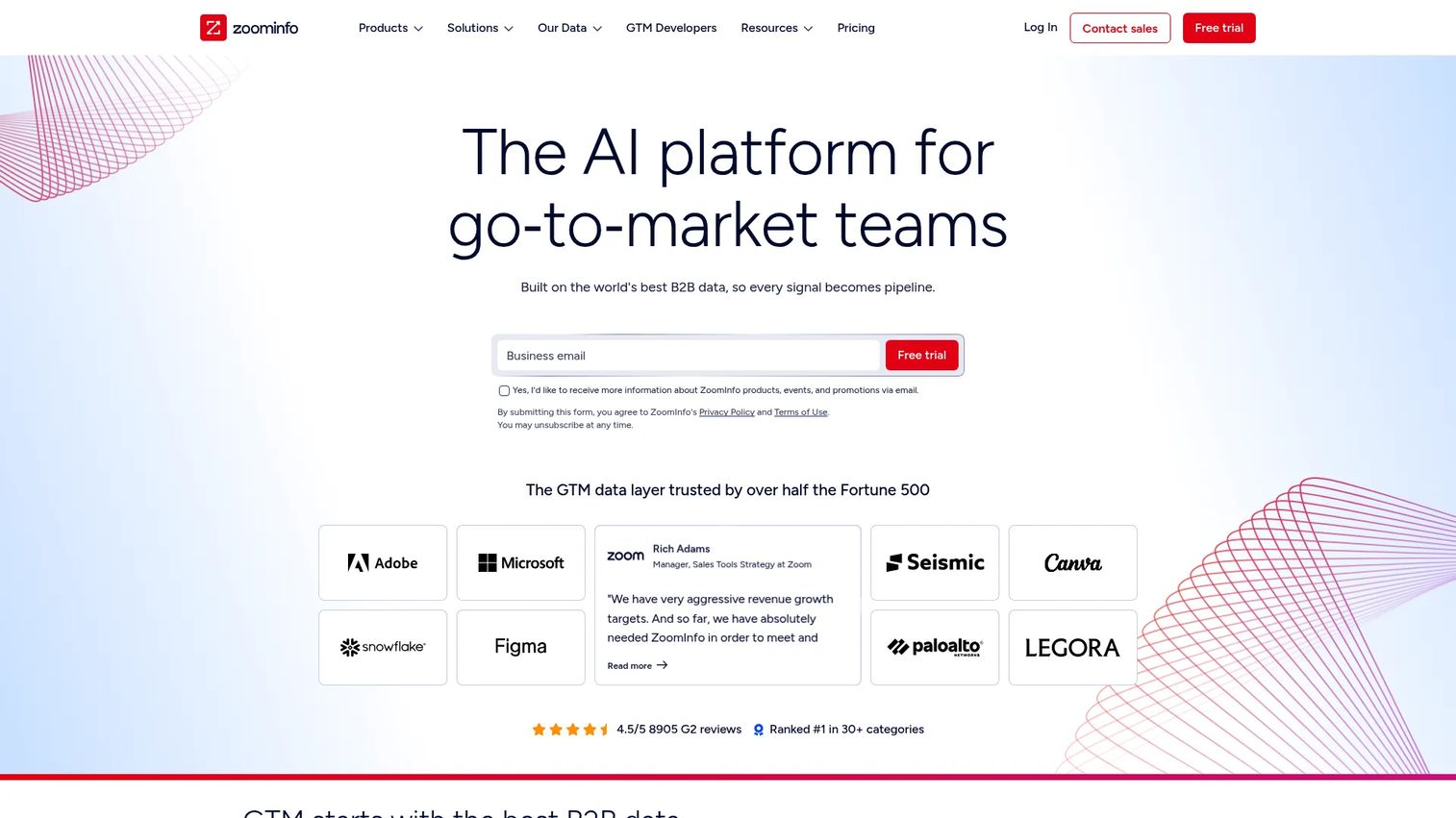
ZoomInfo is not a sales enablement replacement. It appears here because teams evaluating Mediafly alternatives sometimes discover the actual gap is upstream: Insufficient prospecting data and account intelligence rather than enablement content or training.
Best for: Revenue teams that need B2B contact data, buyer intent signals, account intelligence, and prospecting automation to generate qualified pipeline.
What it is: ZoomInfo is a go-to-market intelligence platform providing B2B contact and company profiles, buyer intent signals, account prioritization, CRM data enrichment, and sales workflow automation. G2 rates it at 4.5.
Key features:
- B2B contact and company profiles at scale
- Buyer intent signals and account prioritization scoring
- CRM integrations and automated data enrichment
- Sales workflow automation and prospecting tools
Where ZoomInfo falls short: G2 reviewers flag data accuracy inconsistencies, particularly for smaller companies and international markets. Contract terms and pricing flexibility are recurring concerns, with reviewers noting that multi-year commitments are standard. Customer support responsiveness is also flagged in a portion of reviews.
Pricing: Custom pricing across ZoomInfo Professional, Copilot Advanced, Copilot Enterprise, and marketing packages.
G2 rating: 4.5
How it compares to Mediafly: ZoomInfo and Mediafly solve different problems in the revenue stack. If the reason a team is evaluating Mediafly alternatives is weak pipeline rather than weak enablement, ZoomInfo addresses the actual driver.
14. ClearSlide (sales engagement platform)
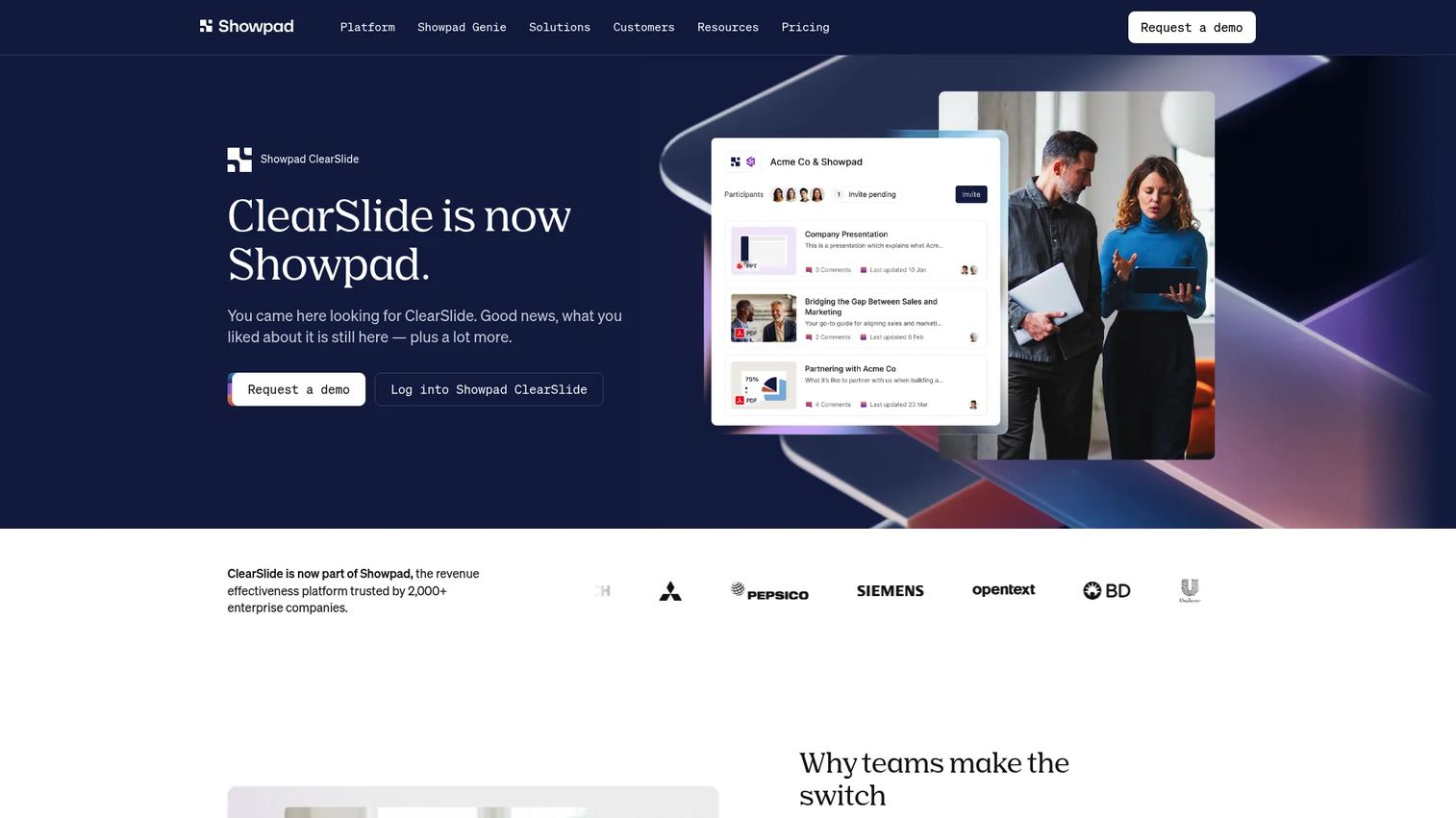
ClearSlide is now Showpad ClearSlide. The brand still surfaces in procurement conversations and G2 searches, so it warrants a card for teams who encounter it during evaluation.
Best for: Enterprise sales and enablement teams managing content delivery, buyer engagement analytics, and seller readiness within the Showpad ecosystem.
What it is: ClearSlide has been integrated into the Showpad platform. Its capabilities, including content libraries, personalized buyer Shared Spaces, engagement analytics, sales readiness, and CRM access, are now delivered through Showpad. Teams evaluating ClearSlide should evaluate Showpad directly.
Key features:
- Content management and libraries
- Personalized buyer-facing Shared Spaces
- Buyer engagement analytics
- Sales readiness and training modules
- CRM, email, browser, and mobile access
Where ClearSlide falls short: As a consolidated product under Showpad, prospective buyers should evaluate Showpad's pricing and packaging rather than a separate ClearSlide tier. G2 listings for ClearSlide as a standalone product have limited recent review activity.
Pricing: Custom pricing through Showpad's Professional, Advanced, and Expert packages.
G2 rating: N/A (current standalone rating unavailable; see Showpad at 4.6)
How it compares to Mediafly: ClearSlide's current capabilities sit within Showpad's platform. For a full Mediafly comparison on these capabilities, the Showpad card above is the relevant reference.
15. Crescendo (sales content delivery platform)
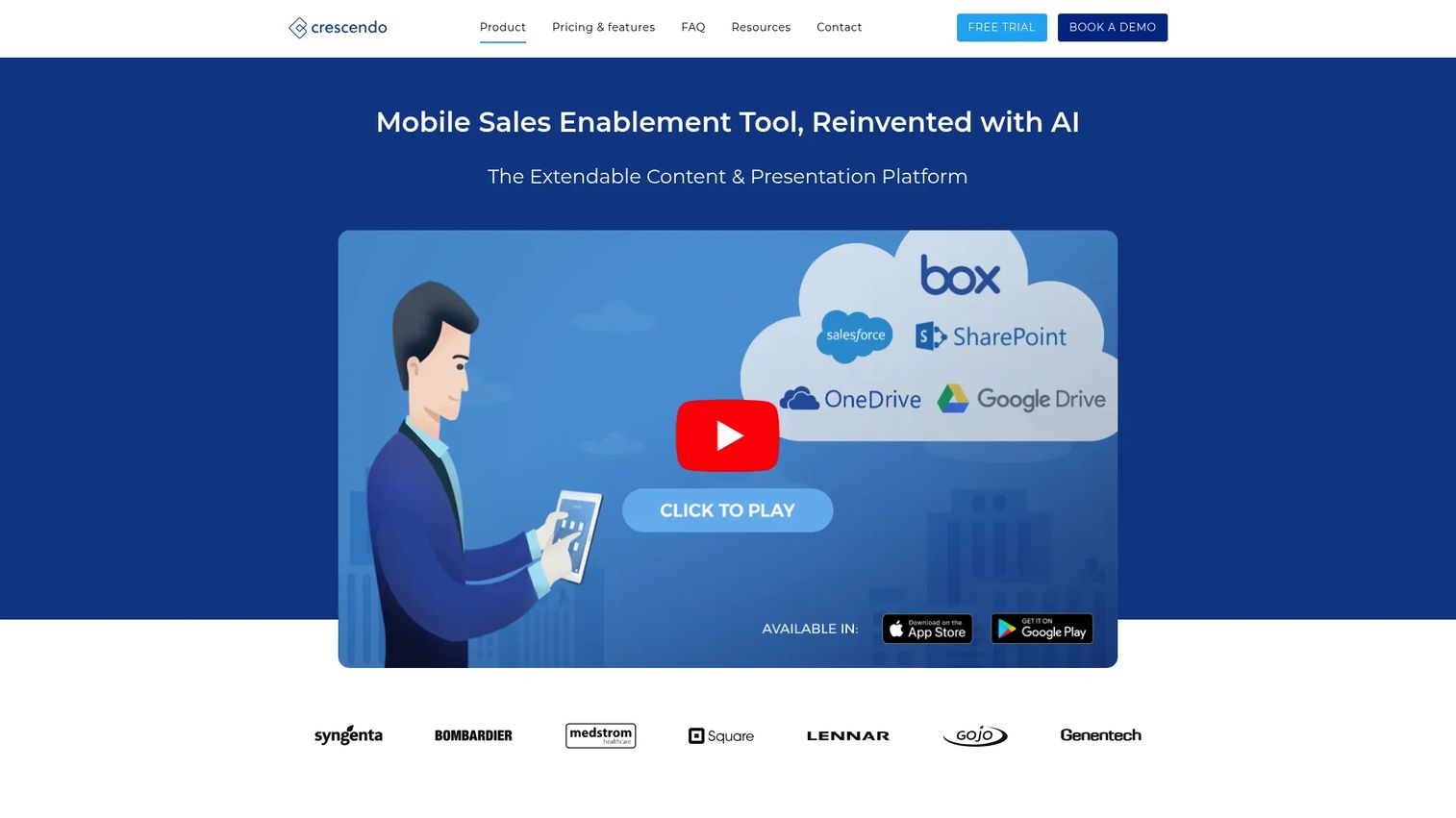
Crescendo is the lightest-footprint option on this list. It connects to content that already exists in SharePoint, Google Drive, Salesforce, Box, or OneDrive and makes it available to sales teams with offline access, full-text search, and mobile delivery, without requiring a content migration.
Best for: Mobile sales and marketing teams that need branded, offline-ready access to existing cloud content with minimal setup.
What it is: Crescendo is an AI-powered mobile sales enablement and content presentation platform. Its Standard plan starts at $15 per user per month (billed annually, 10-license minimum). Its Extended plan adds white-labeling, custom push notifications, custom CRM workflows, and design support. G2 rates it at 5.0.
Key features:
- Offline access with automatic real-time content synchronization
- Integrations with SharePoint, Google Drive, Salesforce, Box, and OneDrive
- AI Assistant for searching, summarizing, comparing documents, and generating offers
- PDF annotation, file sharing, full-text search, and analytics
- Embedded web apps and custom CRM workflows on Extended
Where Crescendo falls short: Crescendo is a content delivery tool, not a full revenue enablement suite. Teams that need sales training, coaching, certifications, or value-selling tools will not find them here. G2's categorization of Crescendo under Training and eLearning reflects the breadth of its user base, but the platform does not cover readiness or coaching workflows.
Pricing: Standard: $15 per user per month (annual, 10-license minimum, from $1,800 per year). Extended: Custom pricing with white-labeling and advanced customization.
G2 rating: 5.0
How it compares to Mediafly: Crescendo solves a narrow problem extremely well: Get existing content to mobile sales teams without a migration. Mediafly solves a much broader problem. Teams that only need content delivery with offline access and are happy with their existing repositories should evaluate Crescendo first. Teams that need coaching, value selling, or digital sales rooms need Mediafly or one of the full-suite alternatives.
What is the best Mediafly alternative for internal training?
Guideflow is the strongest fit when the job is interactive internal training, software process education, and step-by-step onboarding.
Sales Enablement Managers can capture a CRM sequence, a demo flow, a product launch narrative, or a sales play execution once, then share it as a step-by-step interactive demo that reps click through themselves. The same asset works across onboarding documents, internal Notion pages, help center articles, manager coaching sessions, and LMS-adjacent resources. Step-level drop-off analytics show exactly where reps stall, so the content can be refined rather than replaced wholesale. For teams moving away from static SOPs toward guided practice, Guideflow solves the problem Mediafly was not designed for.
Which Mediafly alternative is best for full revenue enablement?
Seismic, Highspot, and Showpad are the strongest paths when the team still needs a broad revenue enablement platform.
All three cover content governance, digital sales rooms, coaching, and CRM integration. The decision between them typically comes down to: Seismic for the most established content governance at global scale; Highspot for in-workflow play recommendations and AI-guided deal execution; Showpad for buyer-facing content experiences and seller readiness. Each requires executive sponsorship, a dedicated admin, and a structured rollout plan. Comparing them on a single dimension like G2 rating misses the key driver: Which jobs the team has actually failed to do with Mediafly.
Which Mediafly alternative is best for sales readiness and coaching?
Mindtickle, SalesHood, and Allego lead the field when certification, coaching, and skills measurement matter more than content distribution.
Mindtickle's Readiness Index gives enablement managers a defensible number for leadership conversations about rep preparedness. SalesHood is built around pitch practice and guided selling workflows with mutual action plans. Allego adds conversation intelligence so coaching can be tied to actual call behavior. All three address the KPIs a Sales Enablement Manager is most likely to own: Ramp time, certification completion, talk-track adherence, and coaching effectiveness scores.
What is the best lightweight Mediafly alternative for sales content delivery?
Crescendo is the right pick when the team wants to serve existing content without migrating it.
Crescendo connects directly to SharePoint, Google Drive, Salesforce, Box, and OneDrive, then delivers that content to mobile sales teams with offline sync and full-text search. At $15 per user per month on the Standard plan, it has the lowest entry price on this list for a purpose-built tool. Teams that have already organized their content in cloud repositories and simply need a better delivery surface should evaluate it before committing to a broader platform rollout.
Which Mediafly alternative is cheapest?
The cheapest option depends on the job the team needs to do.
Guideflow has a free plan. Salesforce's Free Suite starts at $0 per user, with paid plans from $25 per user per month. HubSpot's free CRM tier is available, with Starter from $7 per seat per month. Crescendo starts at $15 per user per month on an annual plan. Full revenue enablement suites, Seismic, Highspot, Showpad, Mediafly, Mindtickle, SalesHood, Allego, and Bigtincan all use quote-based enterprise pricing. When comparing costs, include implementation time, admin burden, content migration effort, and the number of stakeholders required to manage the platform. A cheaper tool that requires more internal maintenance may cost more in practice.
When should you stay with Mediafly?
Staying with Mediafly makes sense when its breadth genuinely matches the team's operating model and the platform is already adopted. Specifically:
The team actively uses multiple Mediafly modules, including content management, digital sales rooms, and value-selling tools, and removing any one of them would break an existing workflow. Enterprise stakeholders in Sales, Marketing, and Customer Success have built processes around Mediafly's governance and reporting. Migration costs, including content migration, admin re-training, and integration reconfiguration, are higher than the benefit of switching. Value selling and digital sales rooms are core to the sales motion, and no narrower tool covers those two jobs together.
A platform that is working and embedded is worth keeping. The case for switching is strongest when adoption is low, the tool covers only one of the team's enablement jobs, or pricing has become difficult to justify relative to what the team actually uses.
Why teams switch from Mediafly to Guideflow
Teams switch to Guideflow when the enablement gap is about execution, not content storage. Reps who cannot follow a CRM process, execute a new sales play, or navigate a product update in context need something that shows them the workflow, not a document that describes it.
Guideflow's capture-to-share model lets an enablement manager record a software sequence through the Chrome extension or native app, with step content written automatically, and distribute it as an interactive demo across onboarding materials, internal training hubs, and manager coaching sessions. More than 500,000 guideflows have been created on the platform, and the typical demo is ready in about two and a half minutes.
The analytics layer is what makes Guideflow particularly useful for enablement measurement: Step-level completion rates and viewer drop-off show exactly where a rep or prospect stops engaging, giving the enablement manager specific data to act on rather than a binary "completed or not" training status.
Guideflow does not replace Mediafly for teams that need content governance, value-selling tools, or territory-wide coaching in one platform. For teams where the gap is interactive software-process training and step-level adoption data, Guideflow covers that job at a depth that content portals were not built to match.
Start your journey with Guideflow today!
FAQs
The best alternative depends on the enablement job. Guideflow is the strongest pick for interactive internal training, SOPs, and software-process education. Seismic, Showpad, and Highspot suit teams that still need a full revenue enablement suite. Mindtickle, SalesHood, and Allego lead when readiness, coaching, and certification are the primary drivers.
Guideflow. It captures a software workflow once through the Chrome extension or native app and turns it into a step-by-step interactive demo that employees click through at their own pace. Use cases include CRM onboarding, sales play training, product release enablement, and SOP walkthroughs. Step-level drop-off data shows where reps stall so the content can be improved.
No. Guideflow covers interactive software-process education and step-by-step onboarding with more depth than Mediafly. Teams that also need content lifecycle governance, ROI calculators and value-selling tools, digital sales rooms, and territory-wide coaching in a single platform should compare Seismic, Highspot, Showpad, or Mediafly itself.
Mindtickle, SalesHood, and Allego are the three strongest options. Mindtickle's Readiness Index and AI role play give managers measurable skill data. SalesHood focuses on pitch practice, certification, and guided selling with mutual action plans. Allego adds conversation intelligence so coaching can be tied to actual call recordings and scoring.
Seismic, Highspot, and Showpad cover enterprise sales content management with governance, versioning, and distribution at scale. Bigtincan adds a mobile-first layer for field selling. Crescendo is the lightweight option when the team wants to surface existing cloud repository content without migrating it. The distinction to make first is whether the team needs full governance and permissions management or simply a delivery layer on top of existing files.
Salesforce itself is the CRM-native option, with built-in pipeline management, forecasting, and AppExchange extensibility for enablement add-ons. Most other tools on this list, including Guideflow, Seismic, Highspot, Showpad, and Mindtickle, integrate with Salesforce for CRM sync and activity tracking. The more useful question is whether the team needs enablement inside Salesforce through AppExchange apps, or a separate enablement platform that sends activity data back to Salesforce.
Start with the category, not the feature list. Decide whether the team needs full revenue enablement, interactive internal training, sales readiness and coaching, CRM-native workflows, GTM data, or content delivery. Each category solves a different problem, and comparing a training platform against a full enablement suite on the same feature checklist produces a meaningless result. After identifying the category, evaluate by rep adoption model, admin requirements, CRM fit, analytics depth, and total cost including implementation and maintenance.
Prices vary widely across the category. Full revenue enablement suites, including Mediafly, Seismic, Highspot, Showpad, Mindtickle, SalesHood, and Allego, all use quote-based enterprise pricing with annual contracts. Guideflow publishes plans from Free to Enterprise starting at $2,999 per month. Salesforce starts at $25 per user per month. Crescendo starts at $15 per user per month. When comparing costs, include implementation time, admin headcount, content migration effort, and ongoing maintenance. A lower list price with high admin requirements can cost more in total than a higher-priced platform with strong out-of-the-box defaults.