You paid for the click and earned the form fill. Now the contact sits in your database while sales waits for a reason to call.
Lead nurturing software should make that next step clearer. It should help you recognize changing interest and send relevant follow-up, without adding another disconnected system to your stack.
The gap is familiar. Demand Gen Report’s 2024 research found that 51% of B2B marketers said their lead nurturing initiatives needed improvement. Sending another scheduled email won’t necessarily solve it.
A useful program distinguishes someone collecting research from a buyer comparing options. It also gives the receiving salesperson enough context to continue the conversation.
For growth marketers, that makes the buying decision bigger than an email builder. You need to understand which tools fit your existing CRM and whether their reporting connects campaigns to opportunities.
The practical question is straightforward. Which platform helps your team turn buyer intent signals into a better-timed sales conversation?
What’s inside
- Who this guide serves: Growth marketers and demand generation teams, plus lifecycle specialists and marketing operations buyers evaluating their next platform.
- How the tools were selected: Automation depth, CRM fit, readiness signals, and measurement capabilities, with different recommendations for different operating models.
- What the comparison covers: Twelve lead nurturing software tools, their strongest use cases, starting costs, and available G2 ratings.
- What to evaluate beyond features: Contact growth, handoff ownership, workflow maintenance, and the cost of replacing existing systems.
- What you should leave with: A shortlist you can test against a specific nurture journey rather than a long feature checklist.
TL;DR
- Best overall for connected inbound nurturing: HubSpot combines marketing and customer management for teams consolidating a fragmented acquisition stack.
- Best for behavior-triggered lifecycle automation: ActiveCampaign suits marketers building follow-up around engagement patterns and customer journeys.
- Best for enterprise B2B programs: Marketo Engage fits complex audience management and revenue measurement across longer buying cycles.
- Best for CRM-led sales follow-up: Pipedrive keeps the buying process centered on deal ownership and the next sales activity.
- Best for email-first small teams: Brevo adds messaging channels; Mailchimp suits audience-based campaigns and ecommerce connections.
- Best for small-business operations: Keap connects nurturing with appointment booking and payment workflows, making it relevant beyond the marketing team.
What is lead nurturing software?
Lead nurturing software automates relevant follow-up and tracks prospect readiness using customer data, engagement signals, and lifecycle stages.
Its purpose is to help people progress toward a meaningful buying action. That might be requesting a consultation or returning to an evaluation they previously paused.
Automated lead nurturing usually combines several capabilities:
- Workflow automation: Trigger a message or internal action when someone meets a defined condition.
- Lead segmentation: Group contacts by account fit, interests, acquisition source, or stage.
- Lead scoring: Separate promising prospects from contacts whose engagement doesn’t indicate a likely purchase.
- Personalization: Adapt content to a person’s previous actions and known requirements.
https://app.guideflow.com/embed/er5dqj5ulk
- CRM synchronization: Give sales access to relevant history without a separate spreadsheet.
- Analytics: Connect campaign participation with meetings and opportunity progression.
- AI assistance: Support tasks such as content creation or predictive analysis, where the platform provides them.
A basic drip campaign sends messages on a schedule. More developed lead nurturing automation changes the path when a prospect responds or reaches a different lifecycle stage.
For example, a webinar attendee might receive educational content first. A later pricing inquiry should prompt a different response than another general newsletter.
The category overlaps with CRM and email marketing. Marketing automation lead nurturing connects messaging decisions with broader customer information, while CRM-led approaches emphasize ownership and sales activity.
Lead scoring software can support either model. Its value comes from the quality of the rules and data, rather than the score alone.
Progressive profiling is another useful evaluation point. Ask whether forms can collect additional information over time instead of demanding every qualification detail upfront.
The same operating model can extend beyond acquisition. Onboarding messages, adoption campaigns, renewal reminders, and expansion programs all benefit from relevant timing.
Choose software around the decisions your team needs to make. A platform that sends the next email is useful. One that also explains why a contact needs attention fits a more developed nurture operation.
When to use lead nurturing software
Turn form fills into sales-ready conversations
Use nurturing when an inquiry shows interest without establishing purchase readiness. Map the next helpful action to the subject that brought the person in.
An example sequence is an ebook download, followed by a relevant case study, then a sales task after a stronger buying signal. Define the exit condition too, so contacts leave automated promotion once a salesperson takes ownership.
Re-engage leads that went quiet
Build a separate path for inactive contacts and opportunities that ended without a decision. Start with the last known interest and a reason to reconnect, such as a relevant product update.
Exclude people who opted out or no longer fit your market. Review recent activity before recycling an old contact into the same campaign they already ignored.
Coordinate sales and marketing follow-up
Use sales handoff automation when marketing recognizes activity that sales cannot easily see. The receiving rep needs a clear reason to act and an agreed response window.
Include the person’s recent behavior, relevant account context, current lifecycle stage, and assigned owner. Sales and marketing alignment improves when both teams agree what qualifies a handoff and how rejected leads return to nurture.
Lead nurturing software comparison
Use this table to identify a buying model before comparing individual features. A CRM subscription and an enterprise marketing platform cover different amounts of the nurture process.
Starting prices also describe different units. Some vendors charge per user; others charge by organization or adjust costs with audience size. An entry plan should not be treated as the price of every automation capability.
The figures below come from vendor pricing research dated November 24, 2026. Empty rating cells indicate that no current, product-specific G2 figure was established in that research.
HubSpot and Brevo ratings refer to their G2 seller profiles. The other displayed scores refer to the named product listings.
| # | Product | Best for | Key differentiator | Pricing | G2 rating |
|---|---|---|---|---|---|
| 1 | HubSpot | Connected inbound nurturing | Marketing and CRM within a broader customer platform | Free tools; Customer Platform Starter $20/seat/month, billed annually | 4.4/5, seller profile |
| 2 | ActiveCampaign | Behavioral lifecycle campaigns | Automation with CRM and ecommerce connections | Starter from $15/month, billed annually | |
| 3 | Marketo Engage | Enterprise B2B programs | Lead and account management with attribution | Custom pricing | 4.1/5 |
| 4 | Salesforce Marketing Cloud Account Engagement | Salesforce-centered B2B teams | Marketing qualification aligned with sales workflows | Growth+ from $1,250/org/month, billed annually | |
| 5 | Pipedrive | Sales-led follow-up | Deal pipelines and nurturing sequences | Lite from $14/seat/month, billed annually | 4.3/5 |
| 6 | Keap | Small-business customer operations | Nurturing alongside appointments and payments | From $299/month, or $2,988/year | |
| 7 | Brevo | Email and messaging campaigns | Email, SMS, WhatsApp, and CRM capabilities | Free; Starter from $9/month | 4.5/5, seller profile |
| 8 | Zoho CRM | Configurable CRM nurturing | Process automation and customer lifecycle management | Free for three users; Standard $14/user/month, billed annually | 4.1/5 |
| 9 | monday CRM | Visual revenue workflows | Customizable pipeline management and no-code automation | Basic $12/seat/month, billed annually; three-user minimum | 4.5/5 |
| 10 | Mailchimp | Email-first campaigns | Audience segmentation and behavioral targeting | Free; Essentials from $13/month | |
| 11 | Constant Contact | Straightforward small-business nurture | Email automation and event marketing | Lite from $12/month, or $10.20/month billed annually | 4.1/5 |
| 12 | GetResponse | Educational email funnels | Automation alongside webinar and creator tools | Starter $19/month, or $15.58/month paid annually | 4.3/5 |
Best 12 tools for lead nurturing
1. HubSpot
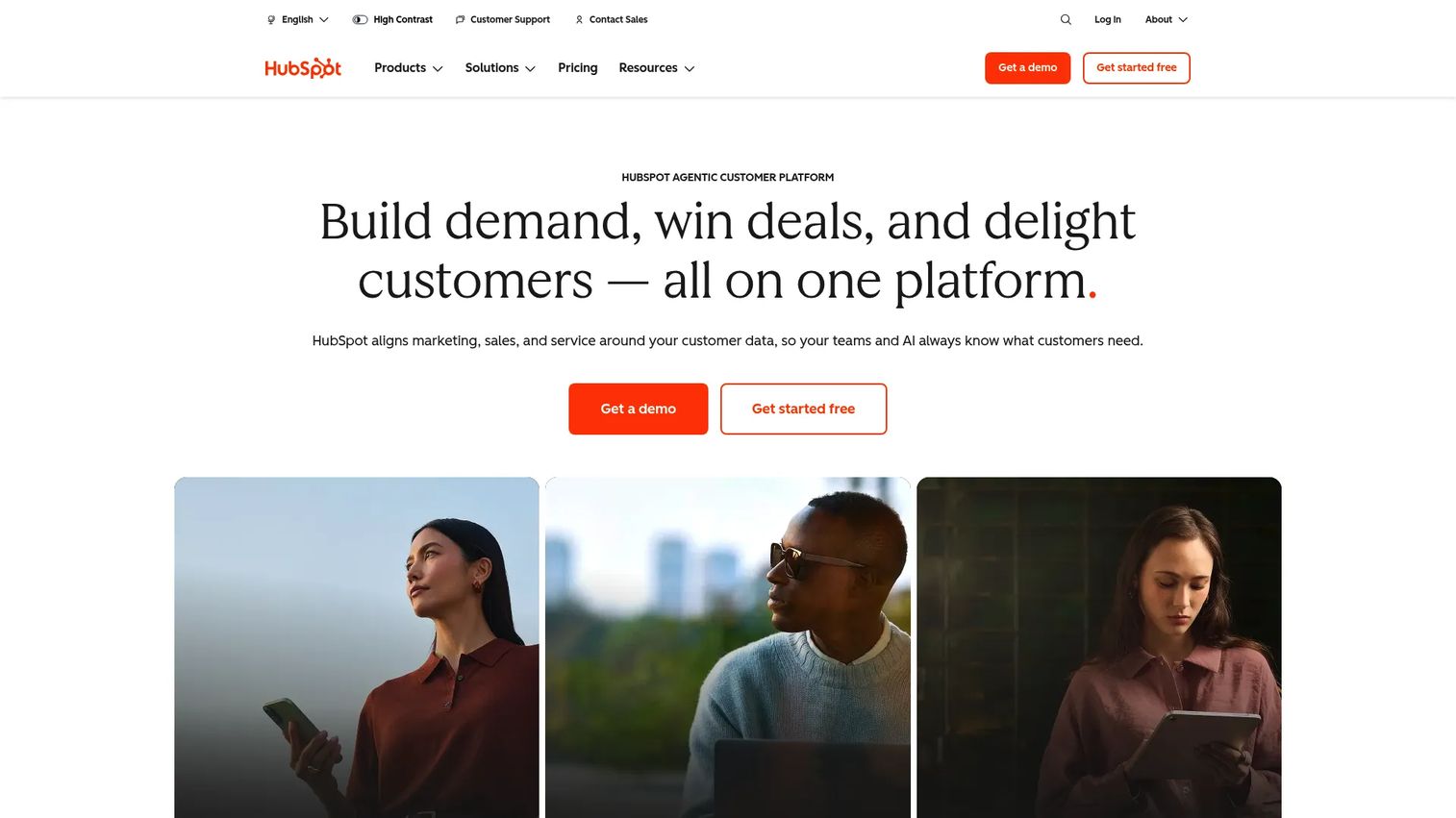
HubSpot is a strong lead nurturing software option for businesses consolidating marketing and customer management. Its broader platform connects acquisition tools with sales operations and service capabilities. For a growth team, the main attraction is reducing the number of systems involved between capturing interest and recording an opportunity.
Best for: Mid-market teams that want inbound marketing and customer records within a connected operating model.
Key features
- Free CRM and contact management
- Marketing automation and campaign management
- Landing pages and content management
- Sales pipelines and scheduling
- Reporting across customer-facing teams
Evaluate HubSpot as a stack decision. List which existing subscriptions it would replace, then identify the workflows that must survive the migration.
A useful buying exercise starts with a recent inbound contact. Ask the vendor to show how that person’s campaign activity reaches the team responsible for follow-up.
Then inspect the reporting path. Your marketer should be able to explain how an inquiry became an opportunity without manually reconciling separate exports.
Pay attention to packaging during that exercise. The Customer Platform bundle and individual Hub subscriptions are different purchasing decisions. Request a written mapping between your proposed workflows and the required products.
Why choose HubSpot: Choose it when consolidation matters as much as campaign execution. Compare the replacement value across your stack rather than judging the purchase solely as an email subscription.
HubSpot pricing: Customer Platform includes free tools, with Starter at $20/seat/month on annual billing. Advanced nurture requirements need a separate Marketing Hub package assessment.
G2 rating: 4.4/5
2. ActiveCampaign
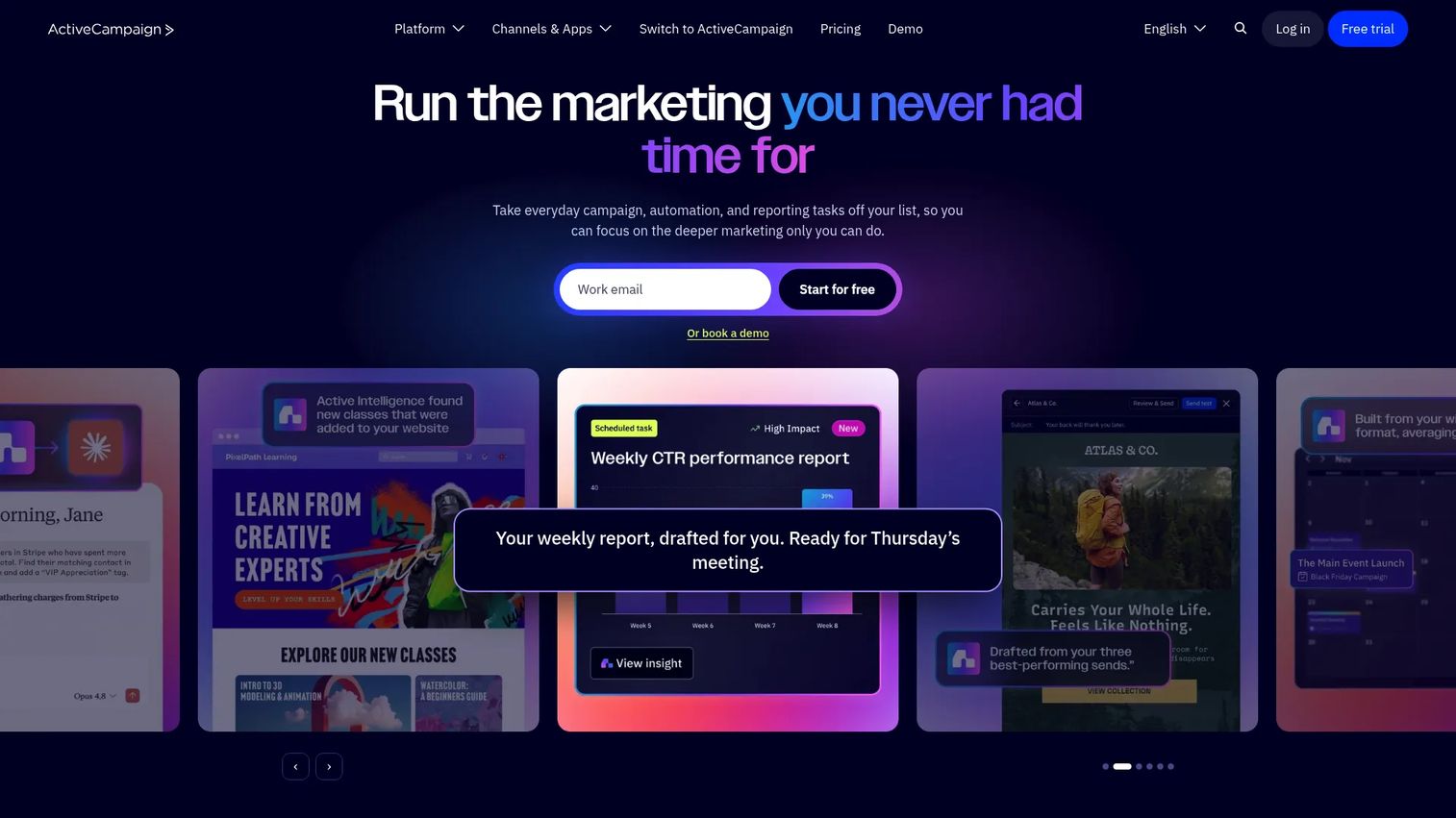
ActiveCampaign centers on marketing automation and customer journeys, with email and multichannel messaging. It also supports CRM and ecommerce integrations. That combination makes it relevant when your nurture strategy depends on how contacts respond, rather than a fixed calendar.
Best for: Lifecycle marketers who need behavior-triggered emails and flexible audience management.
Key features
- Marketing automation
- Segmentation and landing pages
- CRM and ecommerce integrations
- Predictive and conditional content
- WhatsApp automation
Start an evaluation with the behavioral decisions you want to make. For instance, a prospect clicking an implementation article should receive different follow-up from someone exploring a purchasing question.
Bring the required event list to the vendor. Ask which signals arrive through existing integrations and which require additional instrumentation.
This distinction matters for a lean growth team. An attractive workflow diagram has little value if every new trigger requires an engineering request.
Also test how a marketer reviews overlapping campaigns. A contact entering a lifecycle program should not accidentally receive conflicting messages from another active sequence.
Contact volume and additional messaging packages affect the purchasing decision. Model your expected audience growth before comparing the plan price with a competing subscription.
Why choose ActiveCampaign: Choose it when your nurture logic depends on connected behavioral signals. Its fit is strongest when someone owns campaign rules and regularly improves them.
ActiveCampaign pricing: Starter costs $15/month, with Plus at $49, Pro at $79, and Enterprise at $145, all billed annually. Costs vary by contact volume and package.
3. Marketo Engage
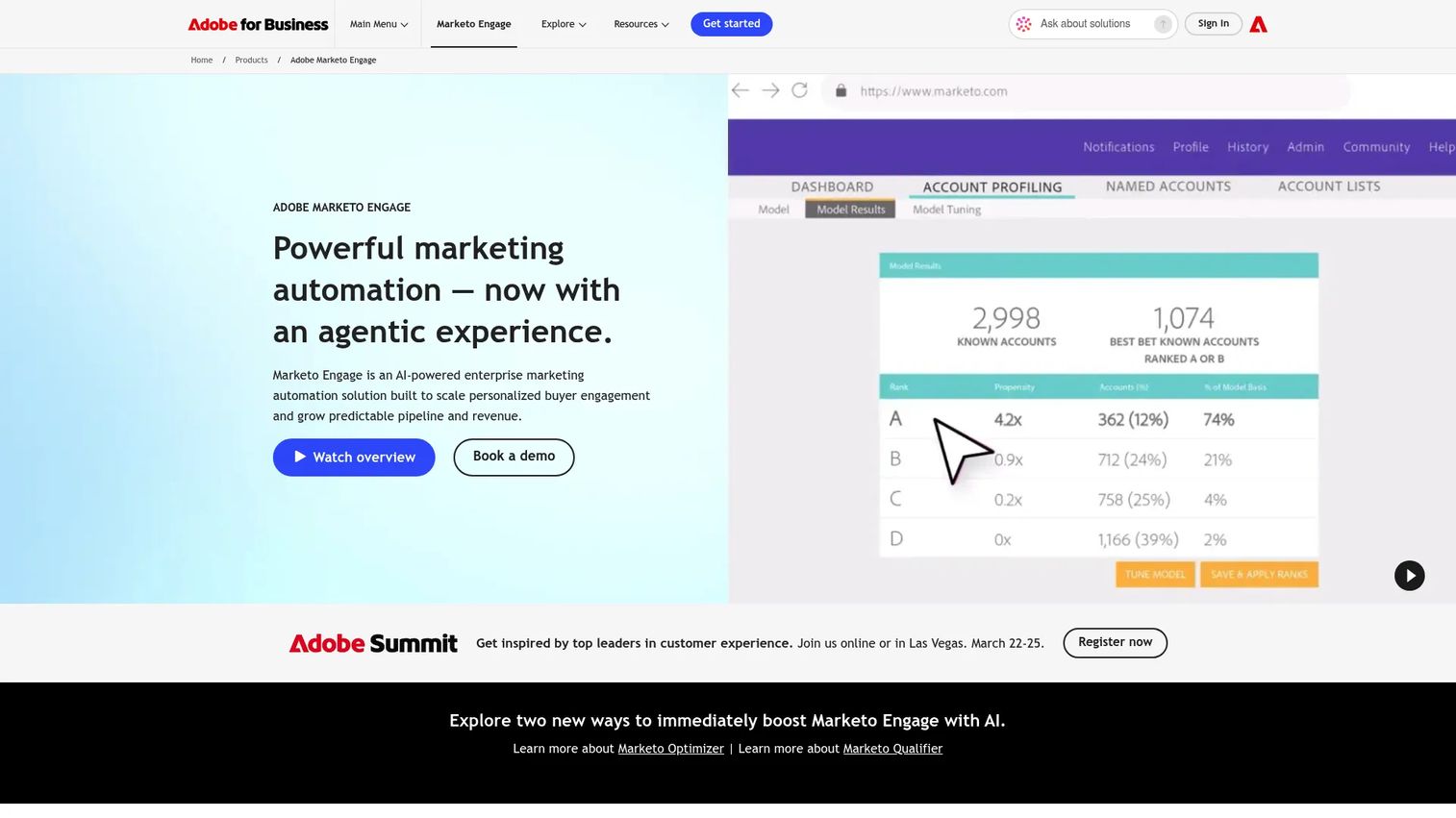
Marketo Engage provides enterprise marketing automation across lead and account engagement. Adobe’s platform combines audience management with campaign execution and revenue measurement. It belongs on a shortlist when a single nurture program must accommodate different buying roles and extended evaluation cycles.
Best for: Enterprise B2B teams with dedicated marketing operations resources and complex qualification requirements.
Key features
- Lead scoring and CRM integration
- Lead and account profile management
- Audience segmentation and targeting
- Omnichannel campaign execution
- Marketing analytics and attribution
The evaluation should begin with your operating model. Identify who builds programs, who approves changes, and who investigates unexpected qualification results.
Ask the vendor to model a buying group rather than a single contact. Your technical evaluator and budget owner may need different content while contributing to the same opportunity.
Test the reporting requirements against that example. Decide whether you need individual campaign influence, account-level progression, or both before discussing dashboard layouts.
A smaller team should weigh the operational commitment carefully. Broad capabilities earn their cost when there is enough program complexity and ownership to use them.
For procurement, request a package comparison against your database size and integration requirements. Include the expected cost of onboarding and ongoing administration in the evaluation.
Why choose Marketo Engage: Choose it when enterprise campaign coordination and measurement justify a dedicated operating function. A straightforward newsletter program does not require this purchasing model.
Marketo Engage pricing: Custom pricing applies across Growth, Select, Prime, and Ultimate packages. Contact Adobe for a quote.
G2 rating: 4.1/5.
4. Salesforce Marketing Cloud Account Engagement
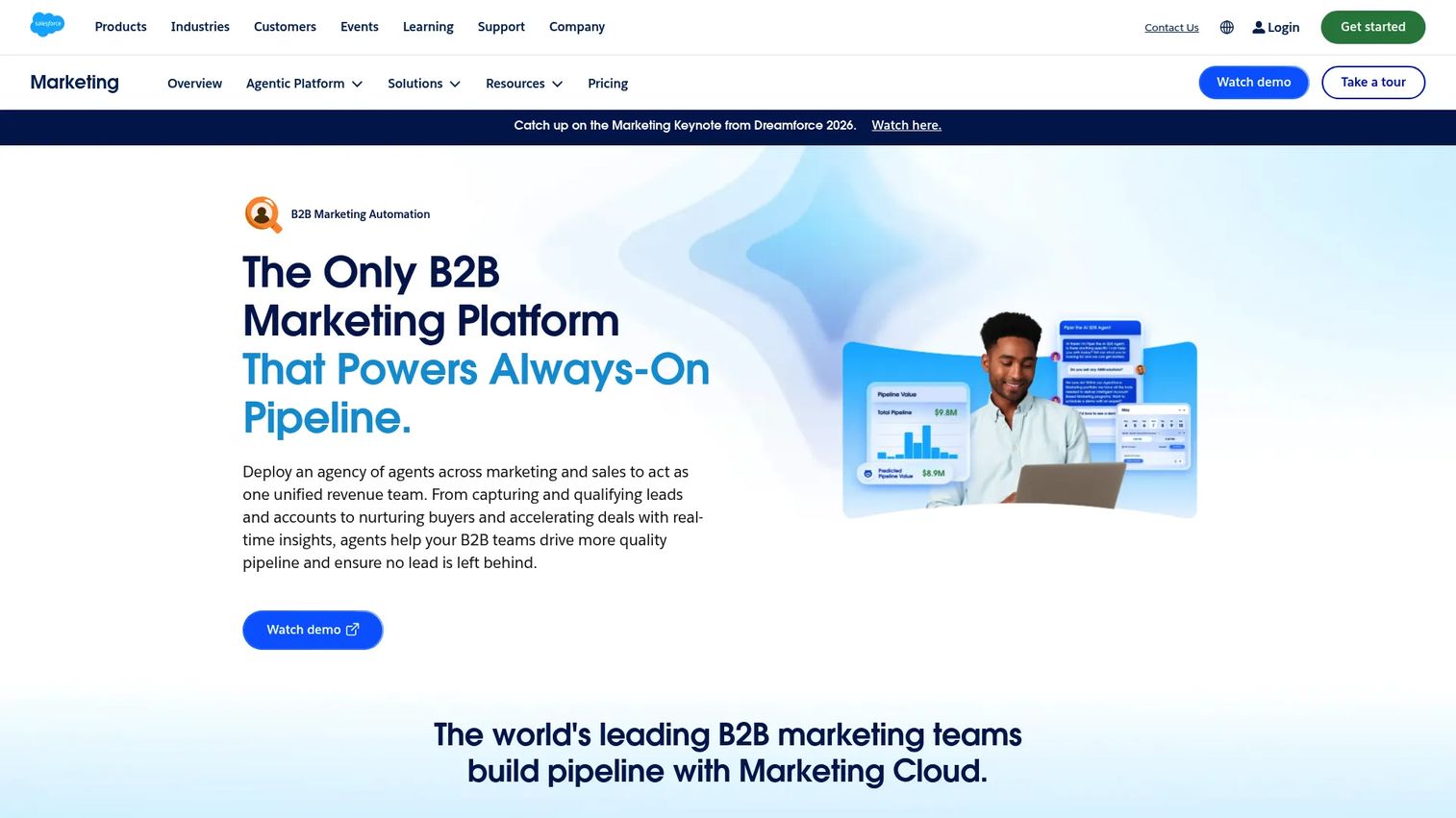
Salesforce Marketing Cloud Account Engagement is B2B marketing automation for lead generation and qualification. Its capabilities include personalized email, automation, and analytics. It is particularly relevant when your sales organization already runs its customer records and opportunity process in Salesforce.
Best for: B2B marketing teams whose nurture workflows need to align with an established Salesforce sales operation.
Key features
- Lead generation and management
- Email marketing and personalization
- Automated qualification
- Account-based marketing capabilities
- Analytics across edition levels
Treat CRM alignment as a workflow test. Ask how a qualified contact reaches the correct owner and what information appears at the point of follow-up.
Then examine what happens after rejection. A rep should be able to explain whether the lead lacks fit or simply needs more time.
Those outcomes require different marketing responses. Design that return path before adding more qualification rules.
For organizations with several business units, include reporting boundaries and administration in the evaluation. Higher editions add capabilities in areas such as business units and predictive analytics.
An annual contract also changes the buying process. Agree on implementation ownership and acceptance criteria before procurement finalizes the order.
Why choose Salesforce Marketing Cloud Account Engagement: Choose it when an existing Salesforce operating model is central to sales and marketing alignment. Evaluate the whole handoff rather than email creation alone.
Account Engagement pricing: Growth+ starts at $1,250/org/month, with Plus+ at $2,750, Advanced+ at $4,400, and Premium+ at $15,000. All require annual billing.
5. Pipedrive
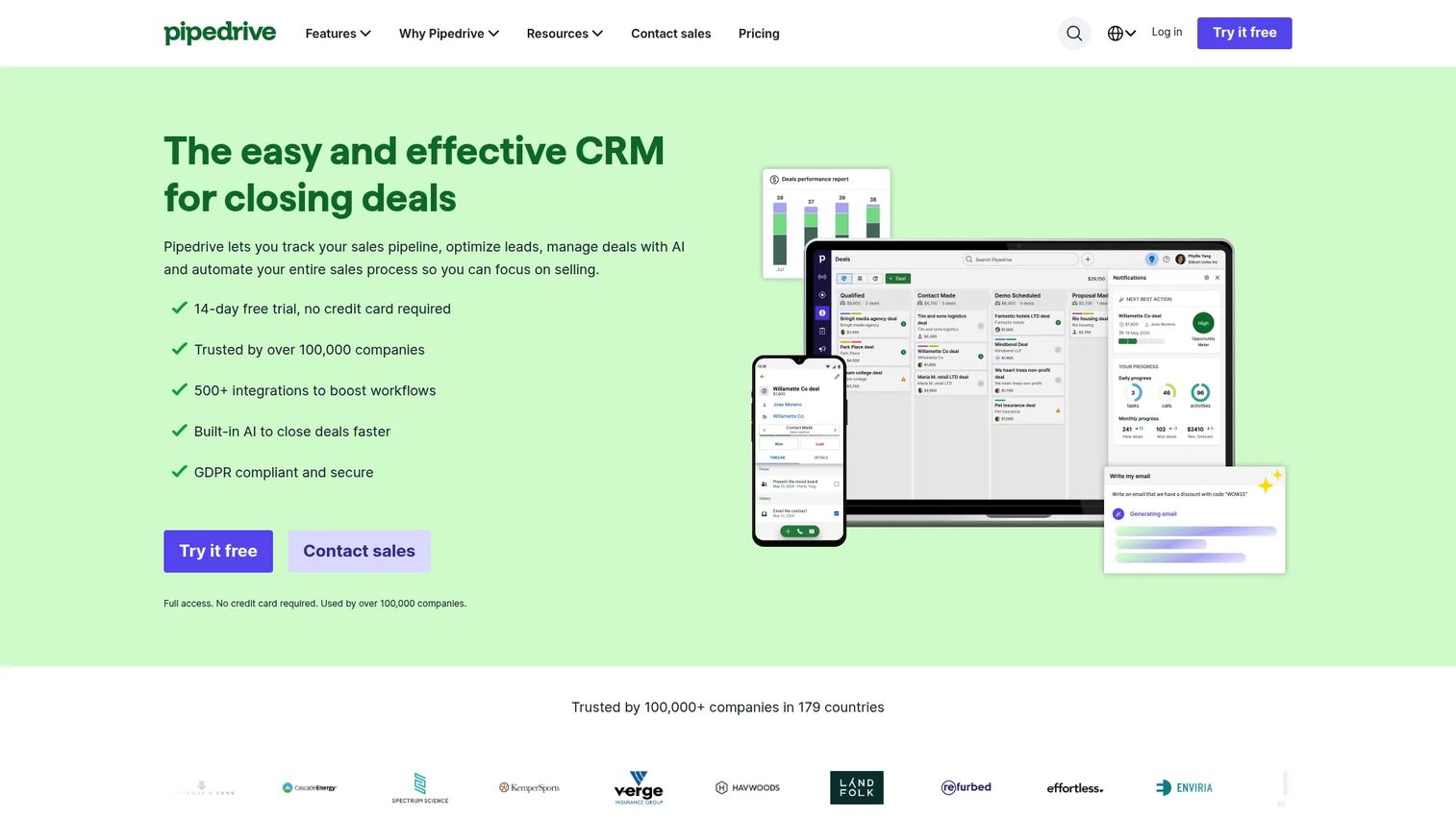
Pipedrive approaches nurturing through sales CRM workflows. Its pipeline management and contact timeline keep the next action attached to an identifiable owner. This makes it useful when warm prospects disappear because follow-up is inconsistent, rather than because marketing lacks another campaign channel.
Best for: Small and midsize sales teams managing nurture around deals and individual outreach.
Key features
- Visual sales pipeline management
- Email sync and tracking
- Automations and nurturing sequences
- Meeting scheduler and contact timeline
- Lead generation and routing
CRM lead nurturing works best when your process defines what happens between stages. Start with an opportunity that has stalled and identify the action that should move it forward.
During evaluation, ask a salesperson to work through that scenario. Can they understand the previous interaction and choose the next step without asking marketing for a separate report?
Next, test the manager’s view. Look for enough visibility to distinguish a deliberate waiting period from a missed activity.
Keep campaign requirements separate from the core sales workflow. Ask which email marketing or lead generation capabilities require additional products before comparing total cost.
Pipedrive is a sales-led choice. Teams seeking extensive account-based marketing should evaluate that requirement independently rather than assume a CRM subscription covers it.
Why choose Pipedrive: Choose it when deal ownership and follow-through are the main bottlenecks. It keeps the evaluation focused on seller behavior instead of building a large marketing operations function.
Pipedrive pricing: Lite starts at $14/seat/month, with Growth at $39, Premium at $59, and Ultimate at $79, billed annually. A 14-day trial is available.
G2 rating: 4.3/5.
6. Keap
Keap combines small-business CRM with marketing and operational automation. Customer management sits alongside appointment scheduling and payment-related workflows. That scope is useful when the same small team handles inquiries and the work that follows a sale.
Best for: Service businesses that need nurture connected to customer administration.
Key features
- Contact segmentation and lead scoring
- Email marketing and automated campaigns
- Landing pages and forms
- Appointment scheduling
- Quotes, invoices, and payments
Consider a consultation-led business. The important journey begins with an inquiry and continues through booking, quotation, acceptance, and payment.
Use that sequence as your buying test. Ask where someone on the team must intervene and which reminders should happen automatically.
The strongest business case may come from removing operational duplication. A marketing-only comparison misses the value of keeping appointment context and commercial follow-up connected.
Keep the initial rollout narrow. Choose one repeatable customer journey with a clear owner before extending automation across every service line.
Also review the implementation scope carefully. Keap’s pricing notes identify potential contact, user, implementation, and text-marketing charges. Request a full estimate for the intended operating model.
Why choose Keap: Choose it when nurturing is part of running the business rather than a separate demand generation function. It deserves evaluation alongside the administrative tools it could replace.
Keap pricing: Plans start at $299/month, or $2,988 with annual billing. A free trial is available; contact, user, implementation, and text-marketing charges may apply.
7. Brevo
Brevo combines email nurturing software with additional messaging channels and CRM capabilities. Its platform supports campaigns through email, SMS, WhatsApp, and other communication surfaces. It is worth evaluating when email remains central but some follow-up belongs elsewhere.
Best for: Cost-conscious teams planning email and messaging campaigns together.
Key features
- Email campaigns and transactional messaging
- SMS and WhatsApp campaigns
- Marketing automation and A/B testing
- Contact segmentation and CRM
- Landing pages and reporting
Begin with channel permissions and customer expectations. A contact willing to receive an email is not automatically a suitable recipient for every other channel.
Map the communication purpose before adding another message. An appointment reminder and an educational campaign need different timing and frequency.
Brevo’s free plan includes 300 daily email sends and storage for up to 100,000 contacts. Those are separate allowances, making send scheduling important even when contact storage looks generous.
For paid evaluation, calculate the volume generated by automated follow-up as well as newsletters. Include recurring transactional communication where relevant to your proposed package.
Ask how your team will monitor deliverability and maintain contact quality. A lower entry cost should still support a disciplined process for inactive recipients and suppression.
Why choose Brevo: Choose it when you want a lower-cost starting point with room for multichannel lead nurturing. Evaluate the required automation package rather than relying on the lowest advertised tier.
Brevo pricing: Free is available; Starter begins at $9/month and Standard at $18/month. Professional starts at $499/month, while Enterprise uses custom pricing.
G2 rating: 4.5/5
8. Zoho CRM
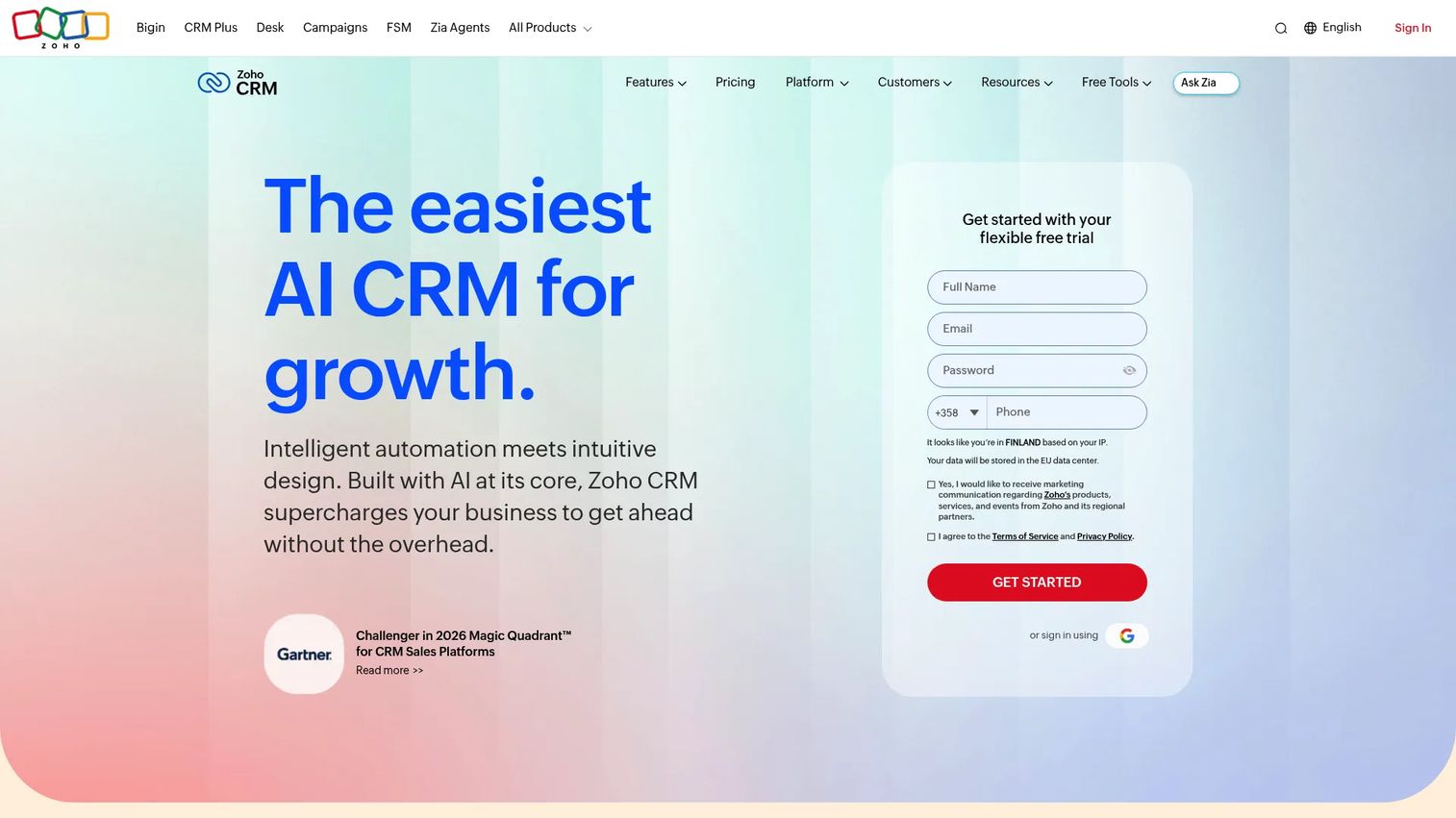
Zoho CRM combines customer records with process automation and journey orchestration. Its capabilities extend into predictive intelligence and broader customer lifecycle management. It fits teams that want nurturing closely connected to a configurable sales process.
Best for: Businesses prioritizing CRM customization and structured follow-up.
Key features
- Lead and account management
- Workflow and process automation
- Journey orchestration
- Sales forecasting
- AI assistance and predictive intelligence
Start with the fields your team uses to decide who deserves attention. Define which are mandatory and which system owns each value.
Then model the lifecycle transition that causes the most confusion. For example, decide how a previously qualified prospect returns to active outreach after their buying timeline changes.
The evaluation should show how your team maintains that process. Ask an everyday administrator to explain the rules and make a controlled change.
Customization creates an ownership responsibility. Record the purpose of each field and automation so the setup remains understandable when the original builder leaves.
Zoho’s paid editions expand capabilities across automation and AI. Ask for the exact edition required for your proposed process rather than assuming every listed feature starts at entry level.
Why choose Zoho CRM: Choose it when control over the sales process matters more than adopting a separate enterprise marketing platform. It is a practical shortlist candidate for teams balancing configurability with budget.
Zoho CRM pricing: Free supports three users; Standard costs $14/user/month and Professional $23/user/month, billed annually. Enterprise is $40/user/month and Ultimate $52/user/month on annual billing.
G2 rating: 4.1/5.
9. monday CRM
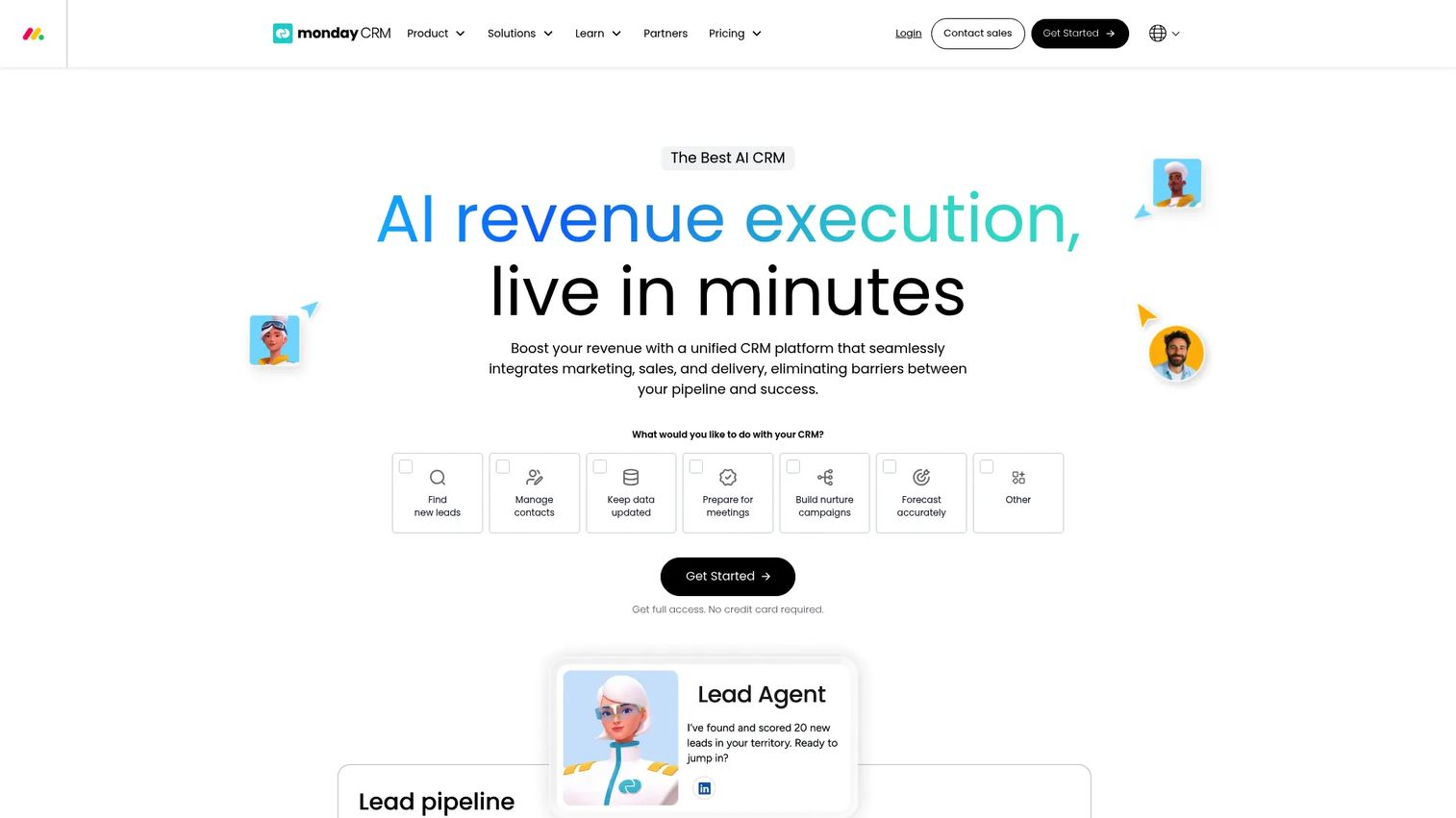
monday CRM provides customizable pipeline management and revenue workflows. It combines communication management with no-code automation and reporting. The appeal is strongest when nurturing depends on coordinating several people’s next actions.
Best for: Teams that need visible ownership across marketing and sales follow-up.
Key features
- Lead capture and qualification
- Communication and activity management
- No-code automations and sequences
- Custom dashboards and forecasting
- Mobile CRM and integrations
Use a handoff-heavy process to evaluate it. A campaign response might need qualification, assignment, a scheduled conversation, and a recorded outcome.
Ask each participant to find their responsibility without a separate explanation. If the workflow requires someone to narrate every status, simplify the process before adding automation.
Then examine exception handling. Your team needs a clear response when an owner is absent or a lead reaches the wrong queue.
A visual operating model should make unresolved work apparent. Measure whether the proposed setup helps people act, rather than treating dashboard completeness as the goal.
Seat minimums matter for a small organization. Also ask how automation and integration allowances apply to the expected number of records and actions.
Why choose monday CRM: Choose it when coordination is the central problem and the team benefits from a shared workflow view. Evaluate marketing campaign depth separately from task automation.
monday CRM pricing: Basic costs $12/seat/month and Standard $17/seat/month, billed annually, with a three-user minimum. A 14-day trial is available.
G2 rating: 4.5/5.
10. Mailchimp
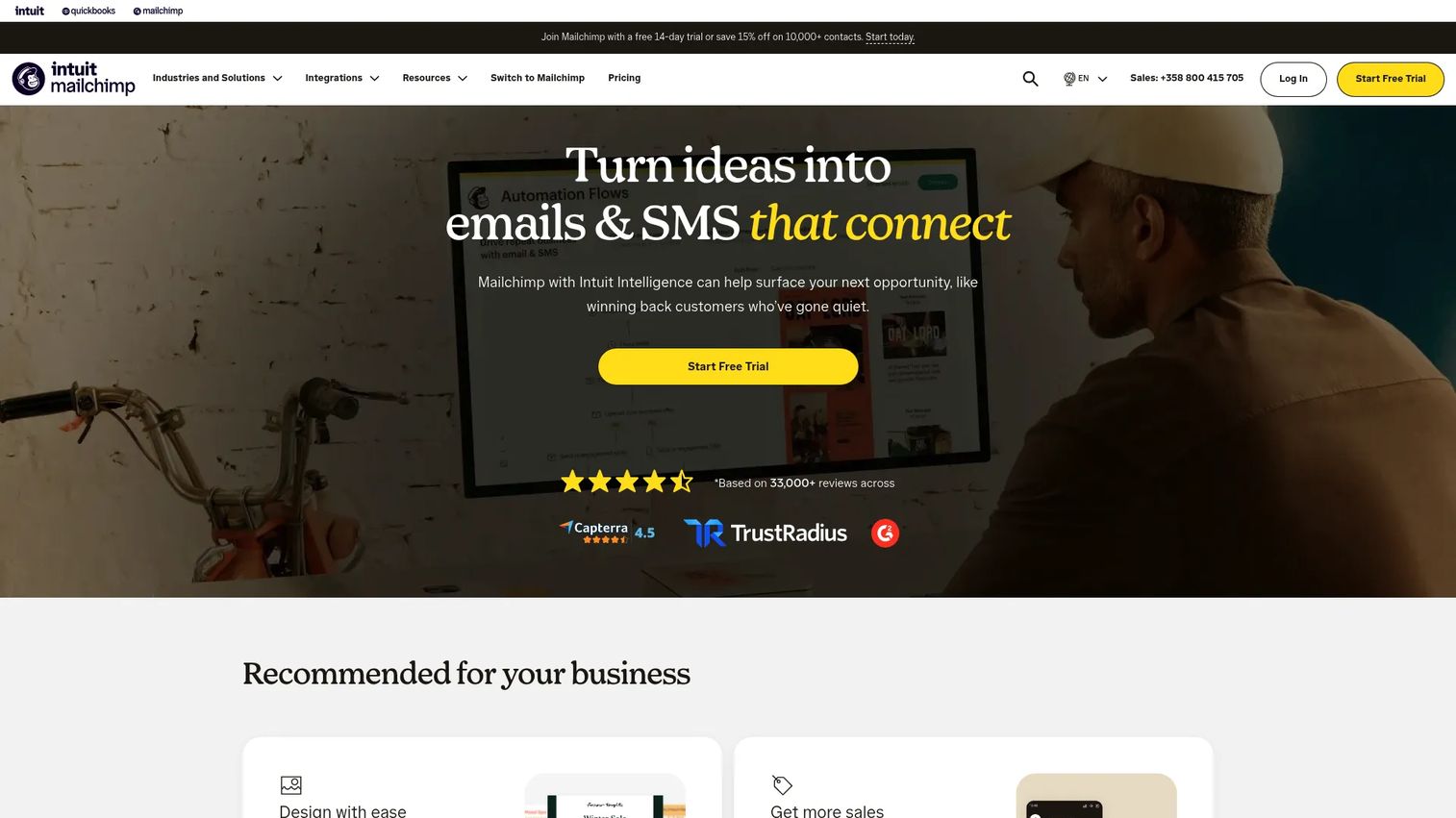
Mailchimp is an email and SMS marketing platform with audience management and automation flows. Behavioral targeting and ecommerce integrations make it relevant for campaigns built around subscriber or shopper activity. It fits an email-first buying decision without requiring the article’s enterprise marketing model.
Best for: Small marketing teams and ecommerce businesses building audience-based nurture email sequences.
Key features
- Email builder and automation flows
- Audience segmentation and behavioral targeting
- Landing pages and signup forms
- A/B testing and marketing reports
- Ecommerce platform integrations
For an evaluation, choose one acquisition source and one conversion goal. Build the path between them before designing a large network of campaigns.
A lead magnet campaign, for example, needs a clear promise after signup and a relevant next action. Decide what should happen when the contact already completed that action.
Mailchimp’s integrations include Shopify and WooCommerce. For ecommerce use, ask which customer events are available to your intended automation.
B2B teams should separately test the sales handoff. Email engagement is useful context, but the receiving rep still needs an owner and a reason to follow up.
Audience size also deserves attention. Forecast the contacts you expect to retain and understand how that changes the subscription.
Why choose Mailchimp: Choose it when email campaigns and audience management dominate the requirement. It is a sensible fit for lighter nurturing programs with clearly defined conversion actions.
Mailchimp pricing: Free supports up to 250 contacts; Essentials starts at $13/month and Standard at $20/month. Premium starts at $350/month, with costs increasing by contact configuration.
11. Constant Contact
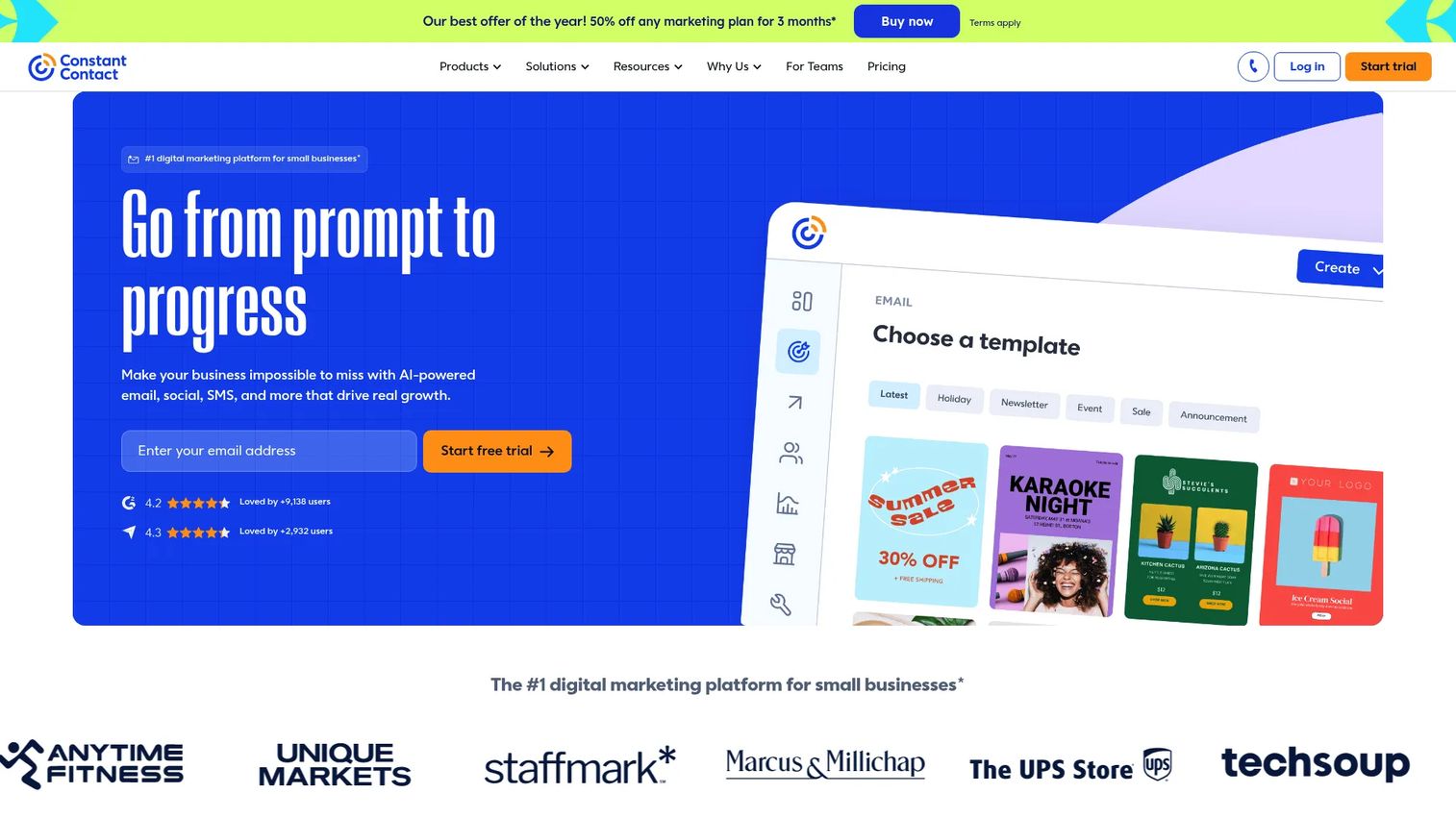
Constant Contact offers email marketing and automation for small businesses and organizations. Its capabilities also include event promotion and campaign reporting. It is relevant when nurturing revolves around a recurring program of communications rather than elaborate qualification models.
Best for: Local businesses, service organizations, nonprofits, and event-led marketers.
Key features
- Email automation and multistep workflows
- Contact management and segmentation
- Signup forms
- Event promotion and management
- Campaign reporting and A/B testing
An event-led marketer can evaluate the platform around registration and subsequent follow-up. Distinguish someone who attended from a contact who expressed interest but never participated.
Use that difference to plan the next message. One audience may need a recording; another may be ready for a service inquiry.
The buying exercise should also include routine work. Ask the person responsible for weekly campaigns to build an email and review its results.
For a small team, administrative ownership is a meaningful selection criterion. A sophisticated plan is a poor purchase if nobody has time to maintain the program.
Contact count and email volume affect pricing. Include peak event periods in your forecast rather than budgeting only around an average month.
Why choose Constant Contact: Choose it when consistent small-business communication matters more than complex lead scoring. Its event capabilities make it worth considering for relationship-driven marketing.
Constant Contact pricing: Lite starts at $12/month, Standard at $35, and Premium at $80; annual equivalents are $10.20, $29.75, and $68. A free trial is available.
G2 rating: 4.1/5.
12. GetResponse
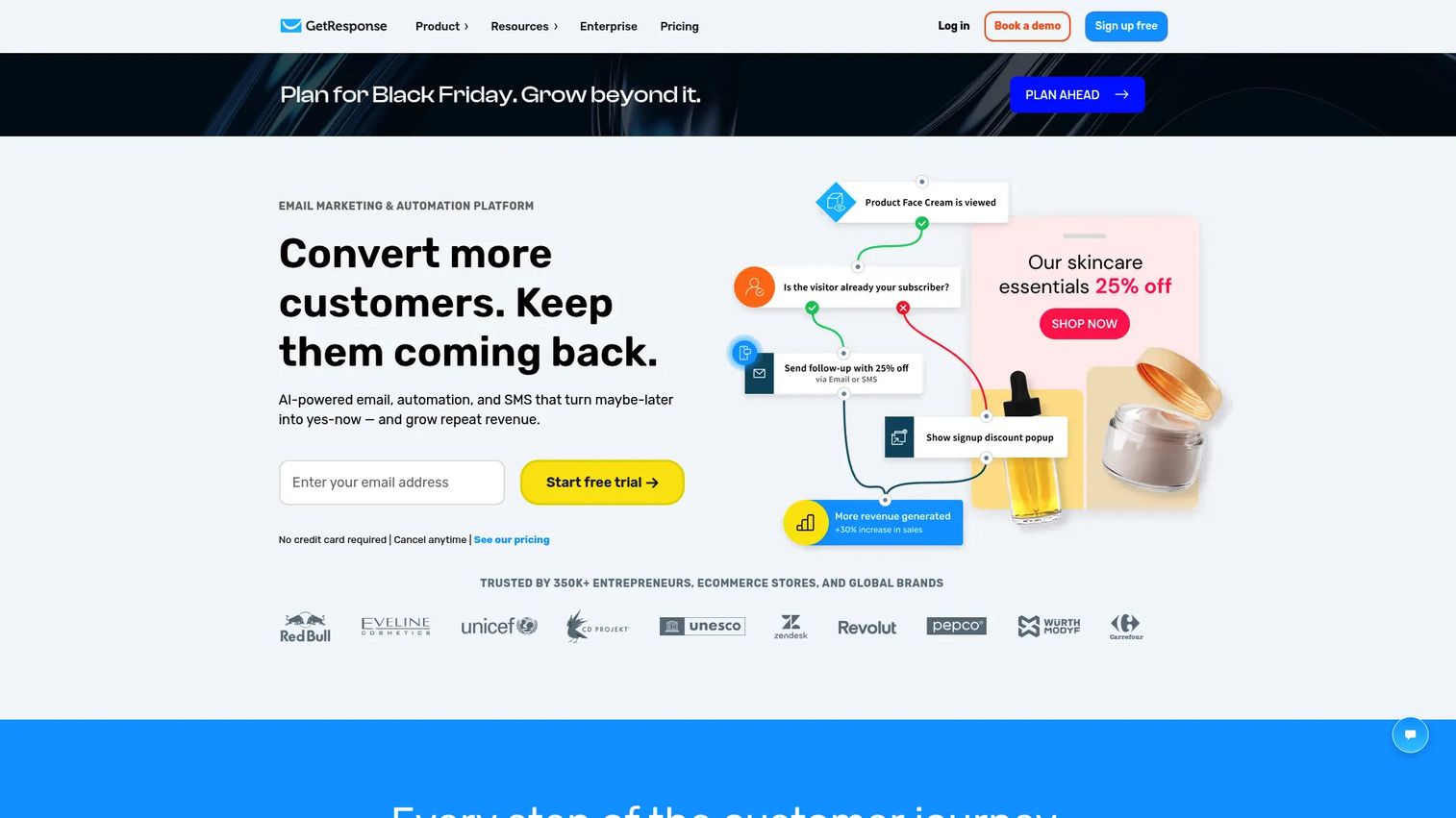
GetResponse combines email marketing with visual automation and audience-building tools. Its product range also includes webinars and content monetization capabilities. This makes it relevant when educational content is a central part of your lead nurturing campaigns.
Best for: Teams connecting email follow-up with landing pages and educational events.
Key features
- Visual marketing automation workflows
- Email marketing and autoresponders
- Landing pages and signup forms
- SMS and web push notifications
- Webinars and course tools
Evaluate the journey around the content you already produce. A webinar program should have a clear next step for attendees and a different response for absent registrants.
For lead magnets, decide whether the next message should teach another concept or invite a buying conversation. Avoid treating every download as permission to accelerate the sales process.
GetResponse’s packaging separates core email marketing from more advanced use cases. Marketer adds automation and segmentation, while Creator adds webinar and course-related tools.
That distinction deserves a line in your budget. Choose the tier around the campaign you intend to run rather than the entry price.
Also test how you will connect engagement to your commercial reporting. A content campaign needs a conversion definition beyond registration totals.
Why choose GetResponse: Choose it when education is the main route into a purchase and you want related campaign tools together. Compare the content-production benefits alongside email automation.
GetResponse pricing: Starter costs $19/month, Marketer $59, and Creator $69; annual equivalents are $15.58, $48.38, and $56.58. Free account or trial access is offered.
G2 rating: 4.3/5.
Considerations when choosing lead nurturing software
Automation depth
Map the decisions your program needs before comparing builders. Include entry rules and exit conditions, plus what happens after a contact purchases or starts a sales conversation.
A scheduled email sequence and an account-level qualification process justify different investments.
CRM and data quality
Specify which system owns lifecycle stage, lead source, contact ownership, and campaign attribution. Test updates in both directions where your workflow requires them.
Ask how duplicates and conflicting values are handled before importing the full database. Poor field definitions will follow you into a new platform.
Scoring and handoff logic
Evaluate fit separately from engagement. A target-account executive exploring pricing deserves different treatment from a student downloading a template.
Ask about lead score decay so old activity does not permanently inflate readiness. Require a clear reason for each sales alert.
Reporting and attribution
Define the outcome before choosing a dashboard. Connect nurture participation to accepted handoffs, meetings, opportunity creation, and revenue where your data supports it.
Separate influenced pipeline from incremental results. Compare equivalent audiences or use a holdout group when you need stronger evidence of campaign impact.
Pricing at scale
Budget the coming year rather than the initial subscription. Include audience growth, message volume, seats, and additional packages.
Document implementation ownership and ongoing maintenance too. Consolidation has value only when you can retire existing costs without losing necessary workflows.
Choose around the conversation you need to create
HubSpot is the broad connected-platform choice when marketing and CRM consolidation drive the purchase. ActiveCampaign deserves a close look when behavioral automation is the central requirement.
Enterprise B2B teams should compare Marketo Engage with Salesforce Marketing Cloud Account Engagement against their existing data architecture and operating resources.
For sales-led nurturing, evaluate Pipedrive and Zoho CRM around ownership and process control. monday CRM is another option when shared workflow visibility carries more weight.
Email-first teams can compare Brevo and Mailchimp, then consider Constant Contact for event-led communication or GetResponse for educational campaigns. Keap belongs in the conversation when customer operations also need attention.
Before booking vendor presentations, audit your lead sources and identify where qualified interest disappears. Select the nurture moments that lose the most pipeline.
Turn those moments into evaluation scripts with a named owner and an expected outcome. Ask shortlisted vendors to demonstrate the complete path, including the handoff and return to nurture.
Choose the software that supports those workflows at a sustainable cost. Feature volume should come second.
FAQs
Lead nurturing software helps teams maintain relevant contact with prospects until they are ready for a buying conversation or another conversion action. It combines automated workflows with segmentation and readiness tracking, often using CRM information or lead scoring. Inbound lead nurturing commonly starts after a content request, while other programs reactivate earlier inquiries or support customer expansion.
The best choice depends on what the business needs to connect. Keap fits teams managing consultations and customer operations, while Brevo and Mailchimp suit email-first marketing. Constant Contact deserves consideration for straightforward campaigns and event-led communication. Compare the required workflow with the paid package, because a low starting price does not establish the cost of your complete program.
HubSpot is a strong shortlist choice for B2B teams seeking connected marketing and CRM. Marketo Engage fits enterprise programs with more involved audience management and reporting requirements. Salesforce Marketing Cloud Account Engagement is relevant when Salesforce already anchors the sales operation. Evaluate buying-group context and the return-to-nurture process alongside campaign creation.
Prioritize an automation builder and segmentation, then assess CRM connectivity and reporting against your buying process. Lead scoring matters when sales needs a consistent method for prioritizing attention. Messaging channels should match customer permissions and the purpose of each interaction. During evaluation, require the vendor to demonstrate suppression rules and exit conditions, rather than showing only how contacts enter a campaign.
The categories overlap, but their operating scope can differ. Email marketing software supports campaigns and subscriber communication; lead nurturing adds progression logic tied to behavior or customer context. Some products cover both jobs, while CRM-led approaches emphasize seller activity. Compare the decisions the platform supports before assuming that sending automated messages provides qualification or sales coordination.
Lead scoring assigns relative priority using fit information and engagement. Fit can include job responsibilities or company characteristics, while engagement can include pricing interest or webinar participation. Keep those dimensions distinguishable so repeated low-value activity does not outweigh poor account fit. Review recency too, and reduce the influence of older actions when they no longer reflect current intent.
Measure commercial progression, including accepted handoffs, meetings booked, opportunities created, and resulting revenue. Track MQL-to-SQL conversion and reactivation alongside sales cycle movement to understand where performance changes. Include software costs and operating effort when calculating return. Email opens can help diagnose delivery or messaging, but they should not serve as the primary evidence that nurturing improved revenue.
Yes, it can organize follow-up around inactivity and a contact’s last known interest. Use a relevant update or offer, with clear suppression rules for people who should not receive further outreach. Decide what response returns the person to active nurture and what stronger behavior warrants sales attention. Review the resulting opportunity quality before expanding the campaign to a larger audience.