

You started with three clusters. Now you have thirty. Each one has its own dashboard, its own RBAC config, its own quirks. Nobody remembers why that staging cluster runs a different ingress controller. Drift is winning.
This is the moment most platform teams start shopping for a kubernetes management platform. Not because Kubernetes stopped working, but because managing it by hand stopped scaling. According to CNCF and IBM's State of Kubernetes research (2024), 93 to 96% of organizations now use, pilot, or evaluate Kubernetes for production workloads. Near-ubiquitous adoption means near-ubiquitous operational sprawl.
The tools below solve different pieces of that sprawl. Some give you a single control plane across cloud, on-prem, and edge. Some focus on developer workflow. Some center on GitOps delivery. The trick is matching the tool to how your team actually operates, not to a feature checklist.
This guide is built for platform engineers, DevOps teams, SREs, and the presales folks who help enterprises evaluate these platforms. If you sell into infrastructure buyers, understanding these categories helps you explain fit fast, and a clear interactive demo of your own product can shorten those technical validation cycles. Let's get into it.
What's inside
This guide covers seven kubernetes management tools worth evaluating in 2026, from open-source baselines to enterprise control planes. We chose tools based on four criteria that matter for production:
- Multi-cluster control: can you manage a fleet, not just one cluster
- Governance and security: RBAC, policy enforcement, and audit support
- Hybrid and multi-cloud fit: coverage across cloud, on-prem, and edge
- Operator UX: does the interface reduce friction or add another console
Every tool here targets real production operations. No toy dashboards, no abandoned side projects. We include verified pricing and G2 ratings where public data exists, and we write around figures that vendors keep behind sales.
TL;DR
- Best for enterprise multi-cluster control: Rancher, centralized fleet management across hybrid environments.
- Best for hands-on learning and the management baseline: Kubernetes itself, the orchestration layer everything else builds on.
- Best for lightweight cluster and container operations: Portainer, an operator-friendly control plane with less UI overhead.
- Best for developer-friendly IDE workflows: Lens, contextual inspection and troubleshooting in one place.
- Best for GitOps delivery: Codefresh, deployment automation built on Argo workflows.
- Best for managed hybrid operations: Platform9, managed Kubernetes across on-prem, cloud, and edge.
- Best for a broader container platform: Mirantis Kubernetes Engine, centralized management with Swarm support.
What is kubernetes management software
Kubernetes management software is a category of tooling that gives platform and DevOps teams a unified way to deploy, operate, secure, and govern Kubernetes clusters across environments, rather than administering each cluster by hand.
The category exists because raw kubernetes orchestration solves scheduling, not operations. Kubernetes will place and heal your workloads. It will not, on its own, give you fleet-wide visibility or consistent policy across thirty clusters. That gap is what management platforms fill.
Core capabilities you will find across the category:
- Multi-cluster visibility: one view across every cluster, cloud, region, and edge site
- Workload and lifecycle management: provision, upgrade, and retire clusters from one place
- Policy and governance: enforce standards and compliance rules at scale
- RBAC and access control: map identity and permissions consistently across the fleet
- Secrets and configuration management: handle sensitive values and config without drift
- Autoscaling and self-healing: keep workloads sized right and recovering automatically
- Deployment and rollout support: ship changes with rollouts, rollbacks, and progressive delivery
- Hybrid and multi-cloud portability: run the same operating model everywhere
For platform teams, the payoff is operational consistency. One team can safely run infrastructure for dozens of application teams without every cluster becoming a snowflake. For DevOps teams, it means less context switching and fewer 2 a.m. pages caused by a config that only exists in one place.
The category matters more every year. Mordor Intelligence (2025) projects the overall Kubernetes market to grow from $2.57B in 2025 to $8.41B by 2031 at a 21.85% CAGR, and the management and orchestration tooling around it is expanding just as fast.
When to use kubernetes management software
Not every team needs a full platform. Here is how to tell when you do.
Manage multiple clusters from one control plane
The moment you have more than a handful of clusters spread across cloud, on-prem, and edge, cluster-by-cluster administration breaks down. You need multi-cluster management that gives one control plane over the whole fleet. This is where drift dies: templates, consistent rollouts, and centralized imports keep every cluster looking the way you decided it should, not the way it evolved by accident.
Enforce governance and security at scale
When you hit compliance reviews, regulated data, or a growing number of application teams touching production, ad hoc RBAC stops being safe. You need policy enforcement, consistent access control, secrets management, and audit trails across every cluster. Enterprise kubernetes management earns its keep here. Security reviewers want to see one governance model, not thirty variations.
Simplify day-two operations for platform teams
Day one is deploying a cluster. Day two is everything after: observability, upgrades, rollouts, recovery, and autoscaling. This is where operator productivity lives or dies. A good platform reduces context switching so your team spends time on the roadmap, not on remembering which cluster runs which version of which controller.
Comparison table
This table compares each platform by its best use case, its key differentiator, current public pricing, and G2 rating. Use it to shortlist two or three tools before reading the full sections. Pricing reflects verified public figures as of August 2026; where a vendor keeps pricing behind sales, the section below explains what's available.
| # | Product | Best for | Key differentiator | Pricing | G2 rating |
|---|---|---|---|---|---|
| 1 | Rancher | Enterprise multi-cluster control | Centralized fleet management across datacenter, cloud, and edge | Free open source; Prime is subscription | 4.4/5 |
| 2 | Kubernetes | The orchestration baseline | Open-source standard everything else builds on | Free, open source | 4.6/5 |
| 3 | Portainer | Lightweight cluster and container ops | Control plane across Docker, Swarm, and Kubernetes | From $1,045/yr; free 3-node tier | 4.8/5 |
| 4 | Lens | Developer and operator IDE workflow | Desktop IDE for cluster inspection | Free Personal; Pro from $199/yr | 4.2/5 |
| 5 | Codefresh | GitOps delivery and CD | Managed CI/CD and GitOps on Argo | Sales-led pricing | 4.6/5 |
| 6 | Platform9 | Managed hybrid operations | Managed Kubernetes across on-prem, cloud, edge | From $1,000/mo (PCSP launch) | 4.8/5 |
| 7 | Mirantis Kubernetes Engine | Broader container platform | Kubernetes plus Swarm on one instance | Sales-led pricing | 4.4/5 |
Best 7 kubernetes management software tools for 2026
1. Rancher
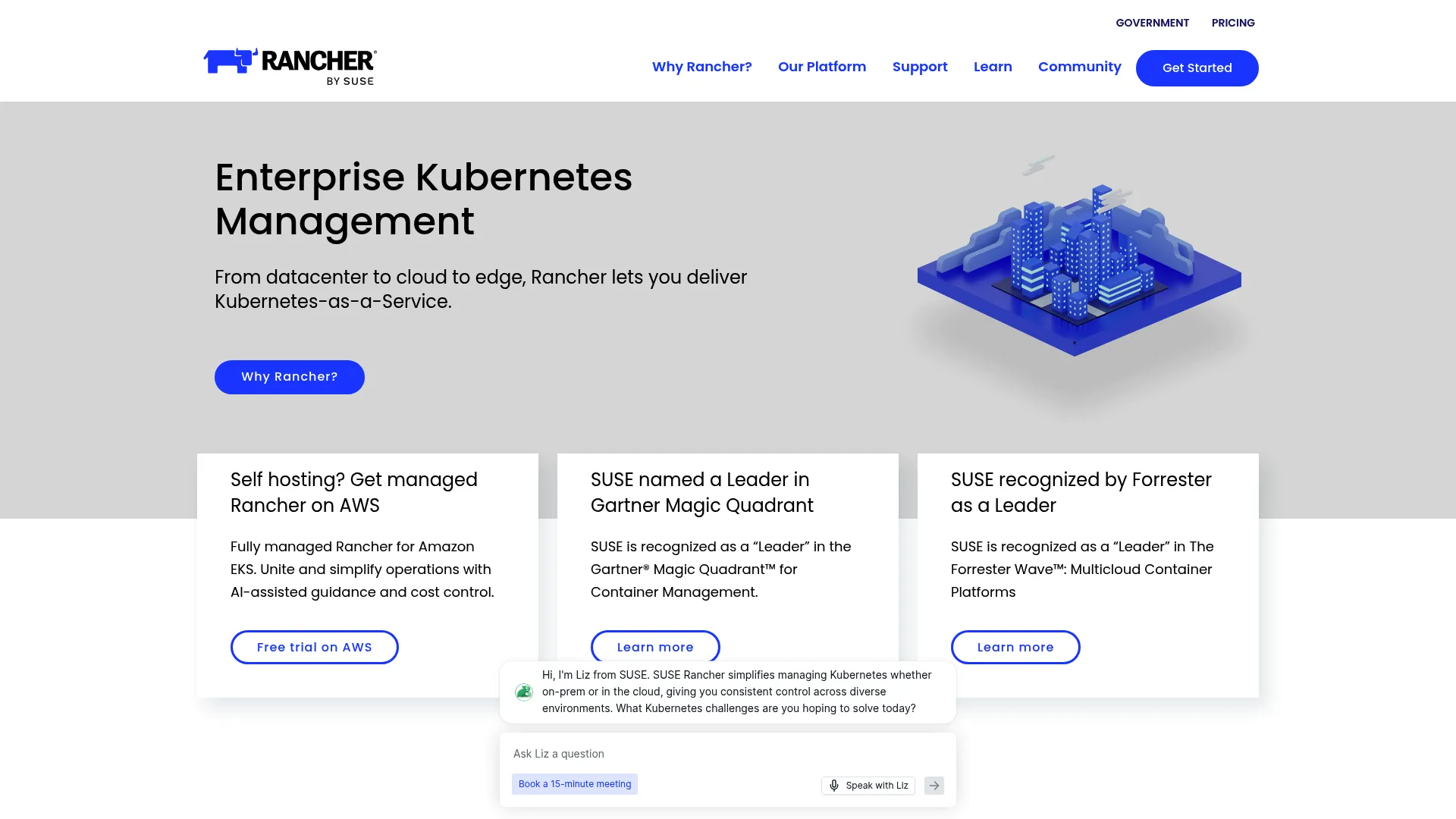
Rancher is an enterprise Kubernetes management platform for running and managing clusters across datacenter, cloud, and edge from a single control plane. It is one of the most recognized names in the category, and for good reason: it treats the fleet as the unit of management, not the individual cluster. If your pain is thirty clusters and no unified way to govern them, this is the archetype of the tool you are looking for.
Where Rancher stands out is centralized operations. You import existing clusters or provision new ones, then apply consistent security, policy, and user management across all of them. That matters for enterprise platform teams supporting many application teams, because it turns governance from a per-cluster chore into a fleet-wide default.
Best for: Enterprise platform teams that need centralized Kubernetes management across hybrid and multi-cloud environments.
Key strengths
- Multi-cluster Kubernetes management from one control plane
- Centralized cluster operations and lifecycle management
- Security, policy, and user management across the fleet
Why choose Rancher: If your operating model spans on-prem, cloud, and edge, and you need one governance layer over all of it, Rancher is the reference implementation. It fits teams standardizing at scale rather than tuning a single cluster.
Rancher pricing: Rancher itself is 100% open source and free to run. Rancher Prime is the enterprise subscription, and Rancher Prime Hosted is a managed offering. Public numeric pricing is not listed; both paid tiers are quote-based through SUSE.
2. Kubernetes
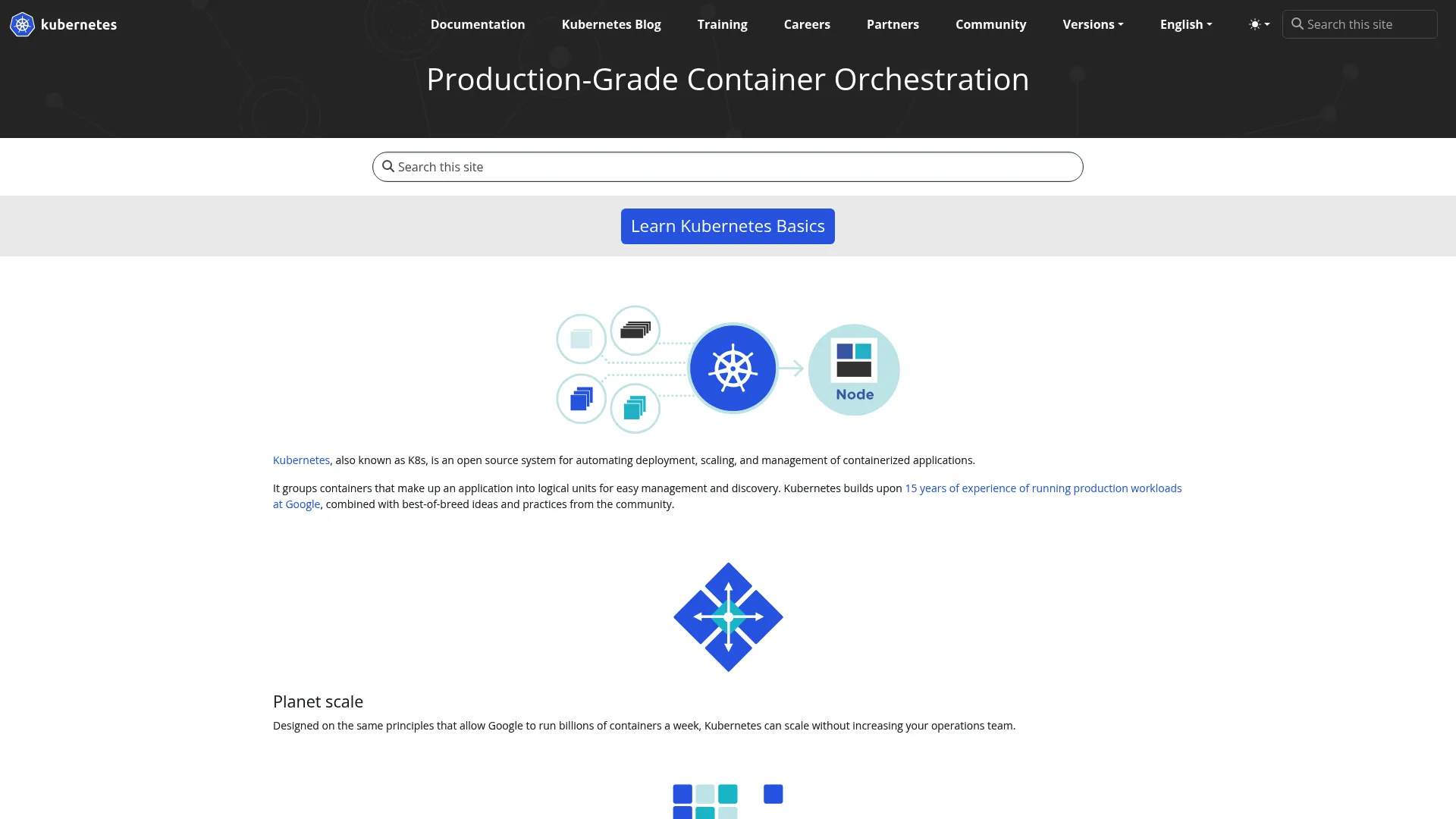
Kubernetes is the open-source platform for managing containerized workloads and services. It belongs on this list not as a wrapper platform but as the baseline: every other tool here builds on top of it. Understanding what Kubernetes does natively is how you judge what a management layer actually adds.
Out of the box, Kubernetes handles automated deployment, scaling, and management of containerized workloads. It gives you service discovery, load balancing, self-healing, and automated rollouts and rollbacks. Persistent volumes, autoscaling, and a deep extensibility model round it out. This is the orchestration engine. What it does not give you is fleet-wide governance or a single console across many clusters, which is exactly why the management category exists.
Best for: Teams that need a widely adopted open-source container orchestration platform as their foundation.
Key strengths
- Automated deployment, scaling, and management of workloads
- Service discovery and load balancing
- Self-healing and automated rollouts and rollbacks
Why choose Kubernetes: Choose it because you have no choice, and that's the point. It is the substrate. The real question is not whether to run Kubernetes, but what management software you layer on top when one cluster becomes many.
Kubernetes pricing: Kubernetes is an open-source project and free to use. There is no vendor and no license fee. Your costs come from the infrastructure you run it on and the people who operate it.
3. Portainer
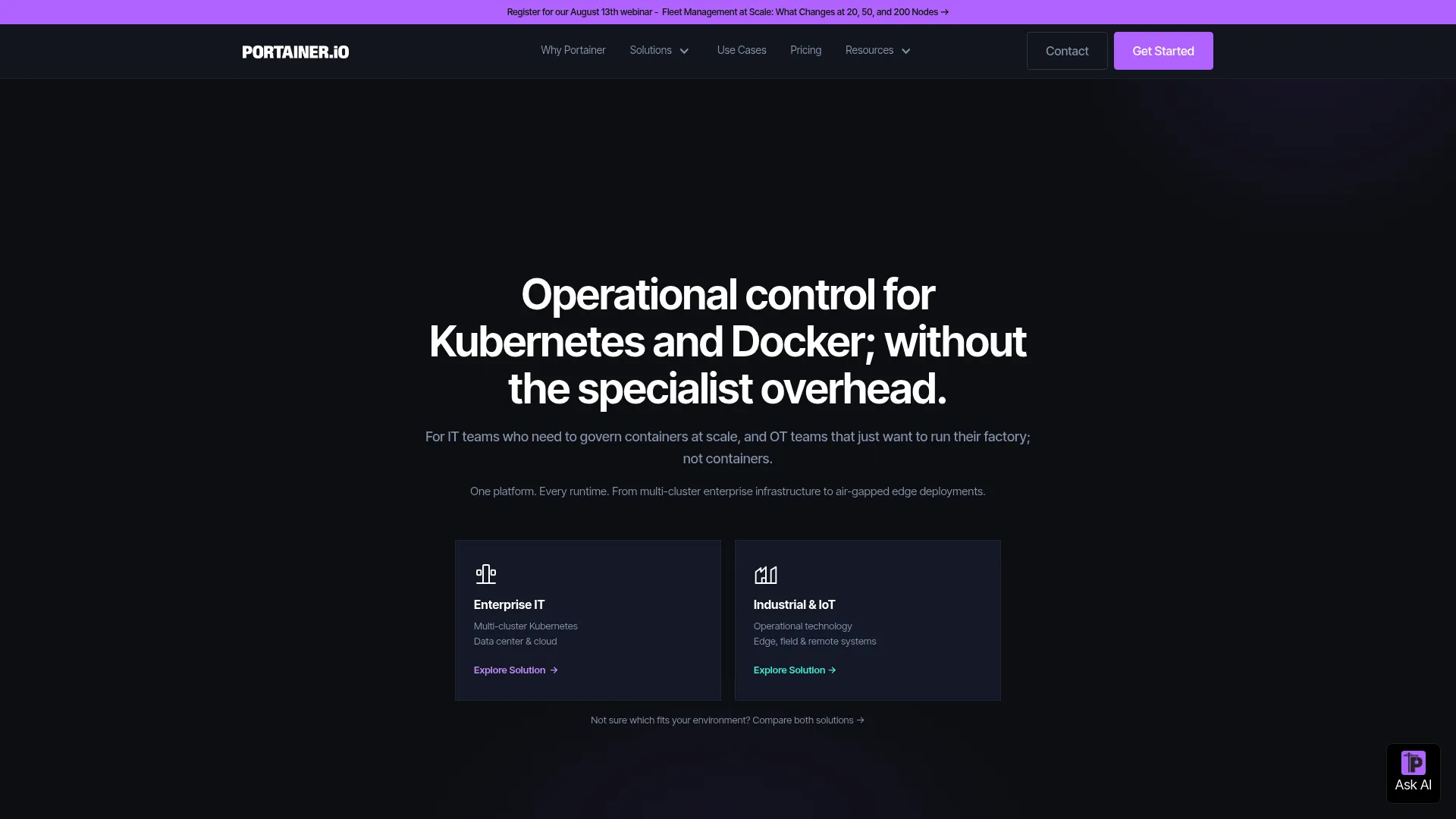
Portainer is a container management control plane for Docker and Kubernetes, with editions for enterprise IT, industrial IoT, and personal use. It appeals to teams that want fleet visibility and day-two control without a heavy console. If part of your estate is still Docker or Swarm alongside Kubernetes, Portainer manages both from one place.
The draw here is operator accessibility. Portainer gives you RBAC and access control, GitOps and deployment automation, and fleet governance across multiple environments, wrapped in a UI that operators can actually navigate. That makes it a fit for smaller platform teams and edge deployments where you want governance without a full enterprise rollout.
Best for: Teams needing a self-hosted container management layer across Docker, Swarm, and Kubernetes.
Key strengths
- RBAC and access control
- GitOps and deployment automation
- Fleet governance and multi-environment management
Why choose Portainer: It hits a sweet spot for teams that want real governance and fleet visibility without standing up a large platform. Mixed Docker and Kubernetes estates benefit most.
Portainer pricing: The Business Edition includes a free tier for up to 3 nodes. Paid Starter plans begin at $1,045/yr and Scale at $2,095/yr, both billed annually. Enterprise is quote-based, and a non-commercial Home & Student plan is $155/year.
4. Lens
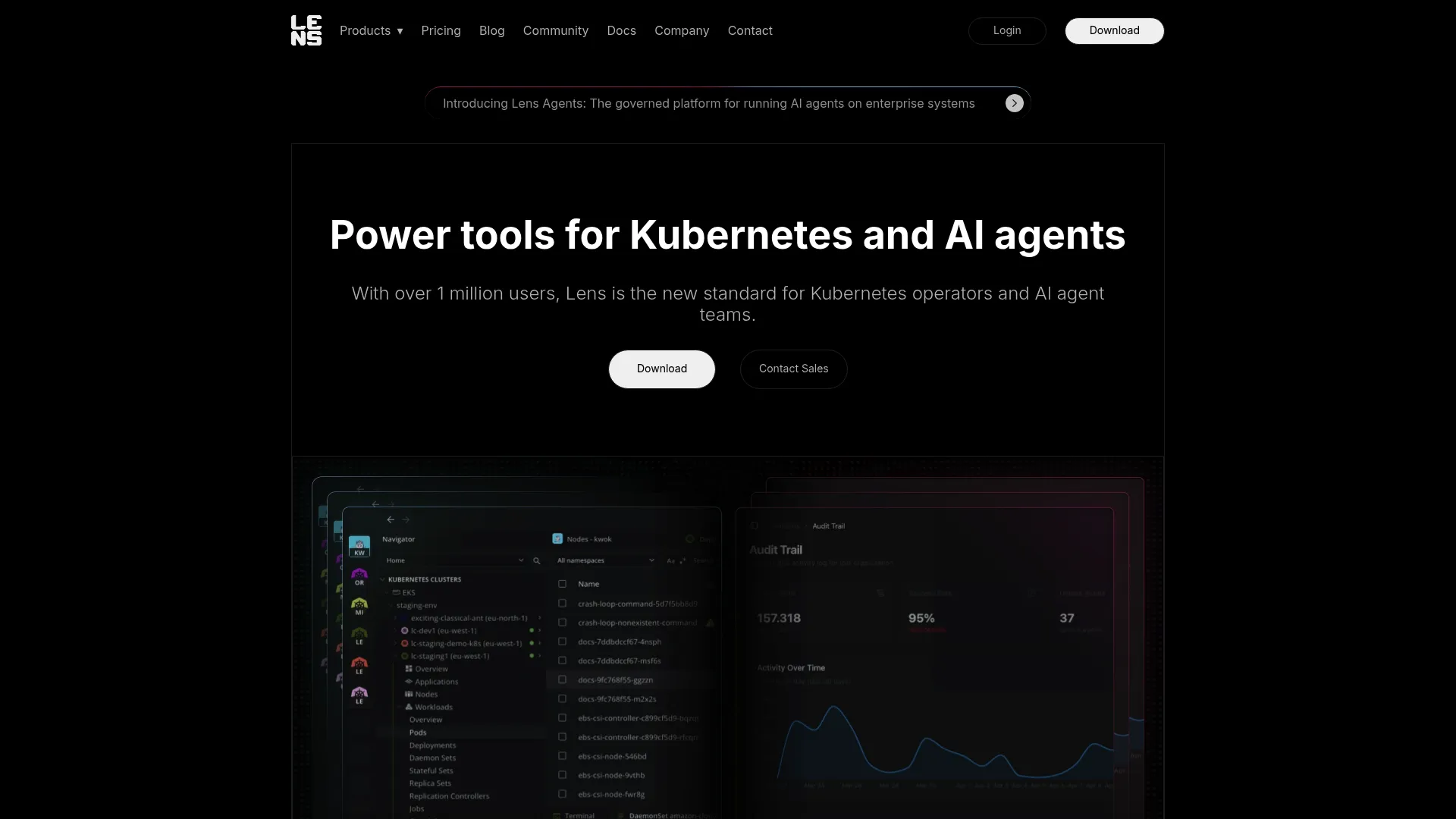
Lens is a Kubernetes IDE for managing, monitoring, and troubleshooting clusters. It takes a different angle from the fleet-control platforms: it optimizes for the person at the keyboard. If your developers and operators live in kubectl all day and switch between too many tools, Lens pulls cluster inspection into one contextual workspace.
The value is in day-to-day workflow. Lens auto-discovers your clusters and resources, then gives you tabbed navigation, a hotbar, and detailed cluster views so you can move fast during troubleshooting. Premium features add cloud connectors, AI assistance, and security scanning. It reduces the tool switching that quietly eats operator hours.
Best for: Teams managing Kubernetes clusters who want a desktop-based IDE for inspection and troubleshooting.
Key strengths
- Auto-discovers Kubernetes clusters and resources
- Tabbed navigation, hotbar, and detailed cluster views
- Premium cloud connectors, AI, and security scanning
Why choose Lens: Choose Lens when operator and developer productivity is the bottleneck. It complements a fleet-governance platform rather than replacing it, giving individuals a fast lens into what any cluster is actually doing.
Lens pricing: The Personal plan is free. Pro is $19.90 per seat per month, or $199 per seat per year. Enterprise is quote-based, and new Personal subscribers get a 30-day free trial.
5. Codefresh
Codefresh is a cloud-native CI/CD and GitOps platform for building, testing, deploying, and promoting software changes. It sits in a specific slice of the category: delivery. Where a control plane governs clusters, Codefresh governs how code gets to those clusters, built on Argo CD and Argo Workflows.
Its strength is deployment consistency. Codefresh gives you CI/CD pipelines, a GitOps runtime with promotions, and product, environment, and release dashboards that show what shipped where. For platform teams standardizing delivery across many services and clusters, that turns releases from bespoke scripts into a repeatable, auditable flow.
Best for: Teams needing a managed CI/CD and GitOps platform with Argo-based deployment workflows.
Key strengths
- CI/CD pipelines
- GitOps runtime and promotions
- Product, environment, and release dashboards
Why choose Codefresh: Pick Codefresh when your gap is delivery, not cluster governance. It pairs naturally with a management platform: one governs the clusters, the other governs what lands on them.
Codefresh pricing: Codefresh does not list public numeric pricing. Plans are handled through sales and order forms, and the free Hosted GitOps Runtime is no longer offered. Contact their team for a quote scoped to your delivery volume.
6. Platform9
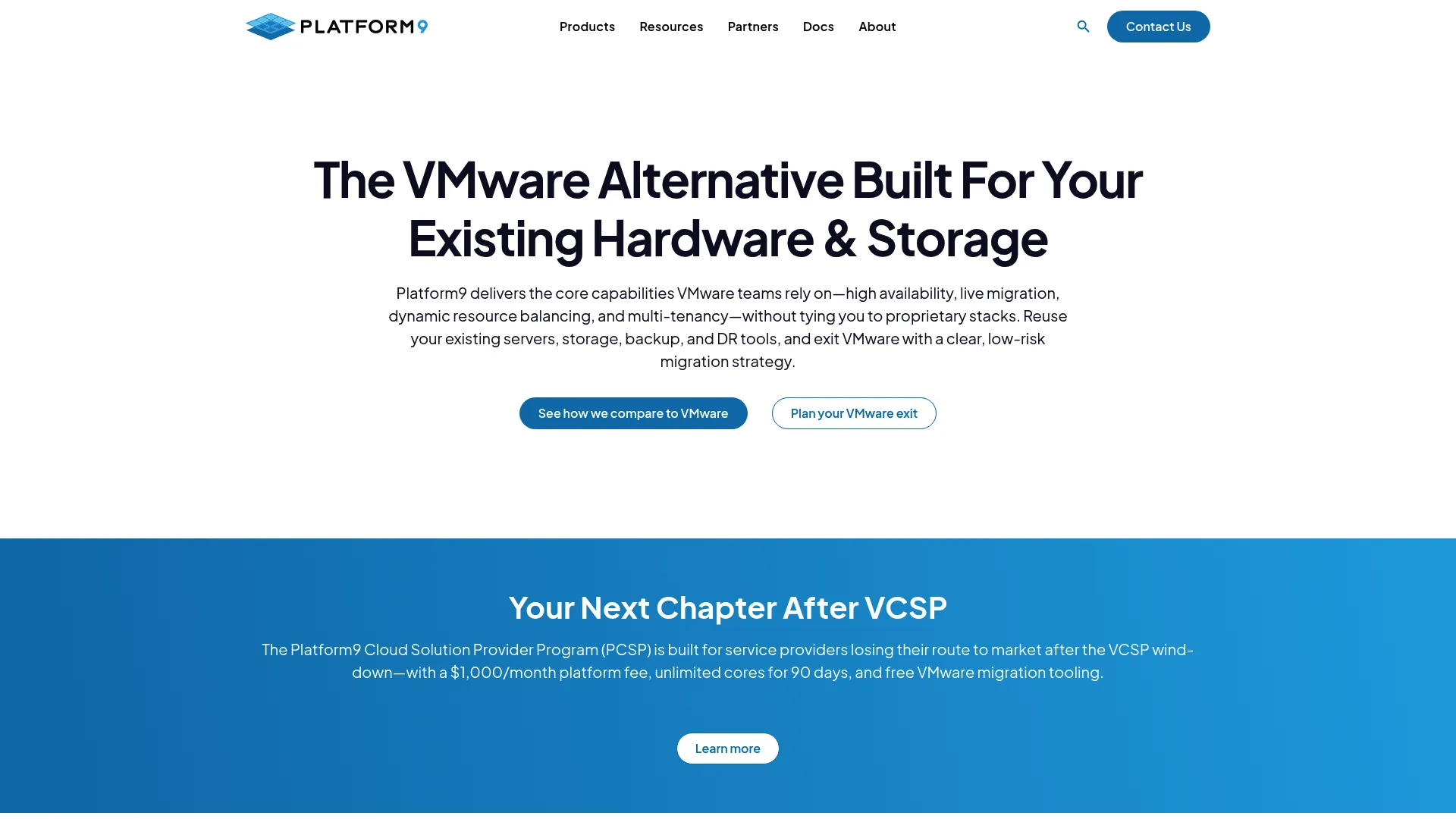
Platform9 is enterprise private cloud and Kubernetes management software for on-prem, cloud, and edge environments. It targets teams that want operational support baked in rather than a self-managed control plane. If you would rather offload day-two operations while keeping portability across environments, this is the managed angle.
The appeal is simplification across environments. Platform9 offers managed Kubernetes across on-premises, public cloud, and edge, plus a Private Cloud Director for VM and container management. You can deploy it SaaS-managed, self-hosted, or air-gapped, which matters for regulated and disconnected sites. For hybrid cloud Kubernetes without building the operations team from scratch, it fits.
Best for: Teams modernizing private cloud or running Kubernetes across distributed infrastructure.
Key strengths
- Private Cloud Director for VM and container management
- Managed Kubernetes across on-premises, public cloud, and edge
- SaaS-managed, self-hosted, or air-gapped deployment options
Why choose Platform9: Choose it when you want managed operations and portability together. Teams without the headcount to run a large control plane get enterprise-grade operations without hiring for it.
Platform9 pricing: Public pricing includes a service-provider launch period at $1,000/month, then $10.40 per core per month after 90 days. Historical plans show a free Freedom tier and a Growth tier under $500/month, with Enterprise custom-quoted. Confirm current terms with their team.
7. Mirantis Kubernetes Engine
Mirantis Kubernetes Engine is an enterprise Kubernetes platform for managing Kubernetes and Swarm workloads across private clouds, public clouds, and bare metal. It fits teams that want broader container platform control, including estates that still run Swarm alongside Kubernetes. If standardization across a mature, mixed container platform is the goal, this is built for it.
The differentiator is breadth. MKE gives you a centralized graphical UI for managing and monitoring Kubernetes and Swarm clusters, multi-tenant environment isolation, and the ability to deploy Kubernetes, Swarm, or both on a single instance. For enterprises with established container operations, that consolidation reduces the number of platforms in play.
Best for: Enterprises needing centralized Kubernetes management with Swarm support.
Key strengths
- Centralized graphical UI for Kubernetes and Swarm clusters
- Multi-tenant environment isolation and resource separation
- Deploy Kubernetes, Swarm, or both on one MKE instance
Why choose Mirantis Kubernetes Engine: Choose it when you run a mature container estate that includes Swarm, or when multi-tenant isolation and a single management surface across cluster types matter more than a Kubernetes-only tool.
Mirantis Kubernetes Engine pricing: Mirantis does not publish public numeric pricing for MKE. Pricing is quote-based and scoped to your deployment. Contact their sales team for a figure tied to node count and support level.
Considerations
Before you commit, run each shortlisted tool through these five checks.
Multi-cluster visibility
Does the tool give true fleet-wide oversight, or just a nicer per-cluster dashboard? Check how it imports existing clusters, whether it supports templates for consistent provisioning, and how it keeps rollouts uniform. Real multi-cluster management means you manage the fleet as one thing, not thirty things in a shared window.
Governance and access control
Look hard at RBAC, policy enforcement, auditability, and secrets management. Ask how the platform maps to your identity provider and how it surfaces an audit trail for compliance reviews. Enterprise kubernetes management stands or falls here, because security reviewers will test exactly these controls.
Hybrid and multi-cloud fit
Confirm real support for on-prem, cloud, and edge, including any air-gapped sites you run. The failure mode to avoid is a tool that technically supports hybrid but forces a separate operations model for each environment. You want one operating model everywhere, not a parallel one per location.
Operator and developer UX
Does the interface reduce friction, or is it another console to babysit? Weigh troubleshooting speed, contextual insights, and how long it takes a new operator to become productive. A tool your team avoids because it's awkward delivers none of its promised value.
Integrations and ecosystem
Check compatibility with your CI/CD, observability, cloud providers, and adjacent DevOps tools. The best fit is the tool that slots into the stack you already run rather than demanding you rebuild around it.
Conclusion
There is no single best kubernetes management platform, only the best fit for how your team operates. Narrow by your actual bottleneck.
If your problem is thirty clusters and no unified governance, start with Rancher for enterprise multi-cluster control. If you need a lightweight control plane across mixed Docker and Kubernetes, look at Portainer. If operator productivity is the drag, Lens gives your team a fast IDE into any cluster. If delivery is the gap, Codefresh brings GitOps and CD discipline. If you'd rather offload operations while keeping portability, Platform9 delivers managed hybrid Kubernetes, and Mirantis Kubernetes Engine suits mature container estates that still run Swarm. Kubernetes itself remains the baseline underneath all of them.
Pick two or three, run them against the five considerations above, and validate with a real workload before you sign anything. The right choice is the one that matches your operating model, not the one with the longest feature list.
FAQs
Kubernetes management software is tooling that lets platform and DevOps teams deploy, operate, secure, and govern Kubernetes clusters across environments from a unified control plane. It adds fleet-wide visibility, governance, and lifecycle management on top of what Kubernetes does natively. The goal is operational consistency as you scale from a few clusters to many.
For enterprise kubernetes management, prioritize multi-cluster control, RBAC and access control, policy enforcement, secrets management, and audit trails. Hybrid and multi-cloud support matters if you run across on-prem, cloud, and edge. Strong integrations with your CI/CD and observability stack keep the platform from becoming an island.
Kubernetes is the open-source orchestration engine that schedules, scales, and heals containerized workloads on a cluster. Kubernetes management software sits on top and adds fleet-wide governance, a single console across many clusters, and consistent policy and access control. Put simply, Kubernetes runs your workloads; management software runs your Kubernetes.
For true multi-cluster management across hybrid and multi-cloud environments, Rancher is the common enterprise choice because it treats the fleet as the unit of management. Platform9 fits teams that want managed operations across distributed infrastructure. Portainer works well for smaller or mixed Docker and Kubernetes estates that still need fleet governance.
Often yes, once you run more than one cluster or span more than one environment. A single cloud provider's managed service governs its own clusters well but rarely gives you one control plane across other clouds, on-prem, or edge. Kubernetes management tools give you a consistent operating model and governance layer across all of them.
Platform teams should look for fleet-wide multi-cluster visibility, consistent RBAC and policy enforcement, hybrid and multi-cloud portability, and an operator UX that reduces context switching. Integrations with your existing DevOps stack matter as much as features. The best tool slots into how you already work rather than forcing a rebuild.
Compare RBAC depth, policy enforcement, auditability, and secrets management side by side, then test how each maps to your identity provider. Ask each vendor how they surface audit trails for compliance reviews and how policy applies across the whole fleet. The strongest k8s management software gives you one governance model, not a different configuration per cluster.


.avif)