Most teams don’t buy investment management software because they love software. They buy it because the spreadsheet starts hiding risk.
Portfolio data sits across custodians, brokerages, private funds, and manually maintained files. Quarterly reporting becomes a reconstruction exercise. Rebalancing relies on someone catching model drift before a client does.
The category is growing alongside that operational pressure. Research and Markets valued the global investment management software market at $4.94 billion in 2025. Its report forecasts the market will reach $10.79 billion by 2032.
Choosing a platform starts with one question: What operating model must the software support? An individual investor needs a different system from an RIA, private capital manager, or institutional investment team.
Pick the tool that matches that model, not the one with the longest feature list.
What's inside
This guide compares 17 investment management software platforms for 2026. Each tool was selected for its category relevance and fit with a distinct investment workflow.
You’ll find:
- Professional portfolio operations alongside individual investment trackers
- Clear fit by investor type, including RIAs, family offices, funds, and institutions
- Evaluation criteria covering data coverage, analytics, reporting, rebalancing, and compliance
- Current pricing and G2 ratings where a relevant listing exists
- Practical guidance for replacing spreadsheets without adding unnecessary operational weight
TL;DR
- Best for consolidated wealth tracking: Kubera covers traditional holdings, private funds, crypto, property, debts, and multiple entities
- Best for institutional research: Morningstar Direct combines manager research with multi asset portfolio analytics and presentation tools
- Best for market data: FactSet supports research teams requiring financial data, screening, portfolio analysis, and workflow technology
- Best for investment operations: Enfusion connects portfolio management with trading, accounting, compliance, and operational workflows
- Best for private markets: Allvue Systems and eFront support alternative investment operations, portfolio monitoring, and investor reporting
- Best for automated investing: [Wealthfront and Betterment manage individual portfolios through automated allocation and tax tools
What is investment management software](https://www.guideflow.com/blog/wealth-management-software)?
Investment management software helps investors, advisors, fund managers, and institutions track portfolios, analyze performance, manage risk, generate reports, and support investment decisions.
The category spans lightweight investment tracking software and complex institutional investment software. Some products concentrate on portfolio visibility. Others support investment accounting, trading, research, client reporting, or private market operations.
Core capabilities include:
- Portfolio aggregation: Connect accounts, custodians, assets, and holdings
- Performance reporting: Track returns, benchmarks, attribution, fees, and cash flows
- Portfolio rebalancing: Compare current allocations against models and target weights
- Risk analysis: Monitor exposure, concentration, volatility, and drawdown
- Client reporting: Create reports for clients, boards, committees, and investors
- Compliance support: Prepare relevant policy, audit, GIPS, UCITS, or AIFMD reports
- Research workflows: Screen investments, compare funds, and document decisions
- Data importing: Pull brokerage, custodian, fund administration, and manual asset data
Several subcategories sit under this broader label.
Personal trackers consolidate household investments and calculate returns. RIA portfolio management software adds client reporting, account aggregation, billing, and rebalancing. Institutional platforms provide deeper performance attribution software, market data, and risk analysis.
Fund portfolio management software supports accounting, investor relations, portfolio monitoring, and private market workflows. Research platforms focus on screening and investment evaluation. Robo advisors automate portfolio construction and ongoing management for individuals.
The boundary matters. A polished personal tracker won’t replace portfolio accounting software for a fund. Likewise, an institutional terminal can create needless cost for a family office that primarily needs consolidated reporting.
Start with the recurring workflow your team must own. Then evaluate the data, controls, and reporting needed to run it without founder intervention.
When to use investment management software
Replace portfolio spreadsheets
Spreadsheets work while portfolios remain small and reporting stays informal. They become fragile as positions, entities, currencies, and asset classes multiply.
Investment portfolio management software creates repeatable imports, calculations, and reporting workflows. It also reduces dependence on the person who built the original workbook.
Standardize client and investor reporting
RIAs, family offices, and fund managers often rebuild similar reports every month or quarter. That process consumes time and invites inconsistent calculations.
Investment reporting software can standardize performance views, capital activity, tax reports, and client communication. The leadership team gets numbers it can review without reconstructing them first.
Tighten risk, rebalancing, and compliance workflows
Model drift and concentration checks become harder to manage as portfolios scale. Portfolio rebalancing software can compare current positions with target allocations and surface required changes.
Relevant institutional systems may also support investment policy monitoring and regulatory reporting. Confirm the exact framework coverage before procurement.
Investment management software comparison
The table below separates personal trackers, advisor platforms, fund operations systems, research tools, and automated investing services.
Pricing varies sharply by operating model. Individual subscriptions can cost less than $10 monthly. Institutional platforms commonly use custom pricing tied to users, data packages, modules, and implementation.
| # | Product | Best for | Key differentiator | Pricing | G2 rating |
|---|---|---|---|---|---|
| 1 | Kubera | Complex personal and family wealth | Traditional and alternative asset coverage | From $250/year | 4.0/5 |
| 2 | Morningstar Direct | Institutional research teams | Manager research and portfolio analytics | Custom pricing | N/A |
| 3 | FactSet | Market data and investment analytics | Integrated financial data and research workflows | Custom pricing | 4.2/5 |
| 4 | Enfusion | Hedge funds and asset managers | Front to back investment operations | Custom pricing | N/A |
| 5 | Allvue Systems | Private capital operations | Alternative investment accounting and reporting | Custom pricing | N/A |
| 6 | eFront | Institutional private markets | Private market monitoring and risk oversight | Custom pricing | N/A |
| 7 | Appfolio Investment Manager | Real estate investment managers | Investor relations and fundraising workflows | From $650/month | 4.5/5 |
| 8 | MRI Real Estate Investment Software | Real estate portfolio operations | Asset modeling and property level analysis | Custom pricing | 4.2/5 |
| 9 | Axys | Advisor portfolio accounting | Established accounting and performance reporting | Custom pricing | 5.0/5 |
| 10 | Blueleaf | RIA client reporting | Client portal, reporting, billing, and rebalancing | Rebalancing from $295/month | N/A |
| 11 | Sharesight | Listed investment tracking | Tax aware performance and dividend reporting | Free, paid from $7/month annually | 3.5/5 |
| 12 | MProfit | India focused wealth reporting | Multi asset tax and capital gains reports | From ₹18,000/year plus GST | 4.2/5 |
| 13 | Portseido | Individual portfolio analytics | Visual performance and allocation analysis | Free, paid from $10/month annually | N/A |
| 14 | StockRover | Equity research | Screening, ratings, and portfolio analysis | Free, paid from $29/month annually | N/A |
| 15 | Wealthfront | Automated investing | Automated portfolios and tax management | From 0.09% annually | N/A |
| 16 | Betterment | Goal based automated investing | Automated portfolios with cash management | From $5/month | 4.3/5 |
| 17 | Quicken Premier | Household finance and investing | Personal finance with advanced investment tracking | $7.99/month billed annually | 4.3/5 |
Best 17 tools for investment management software
1. Kubera
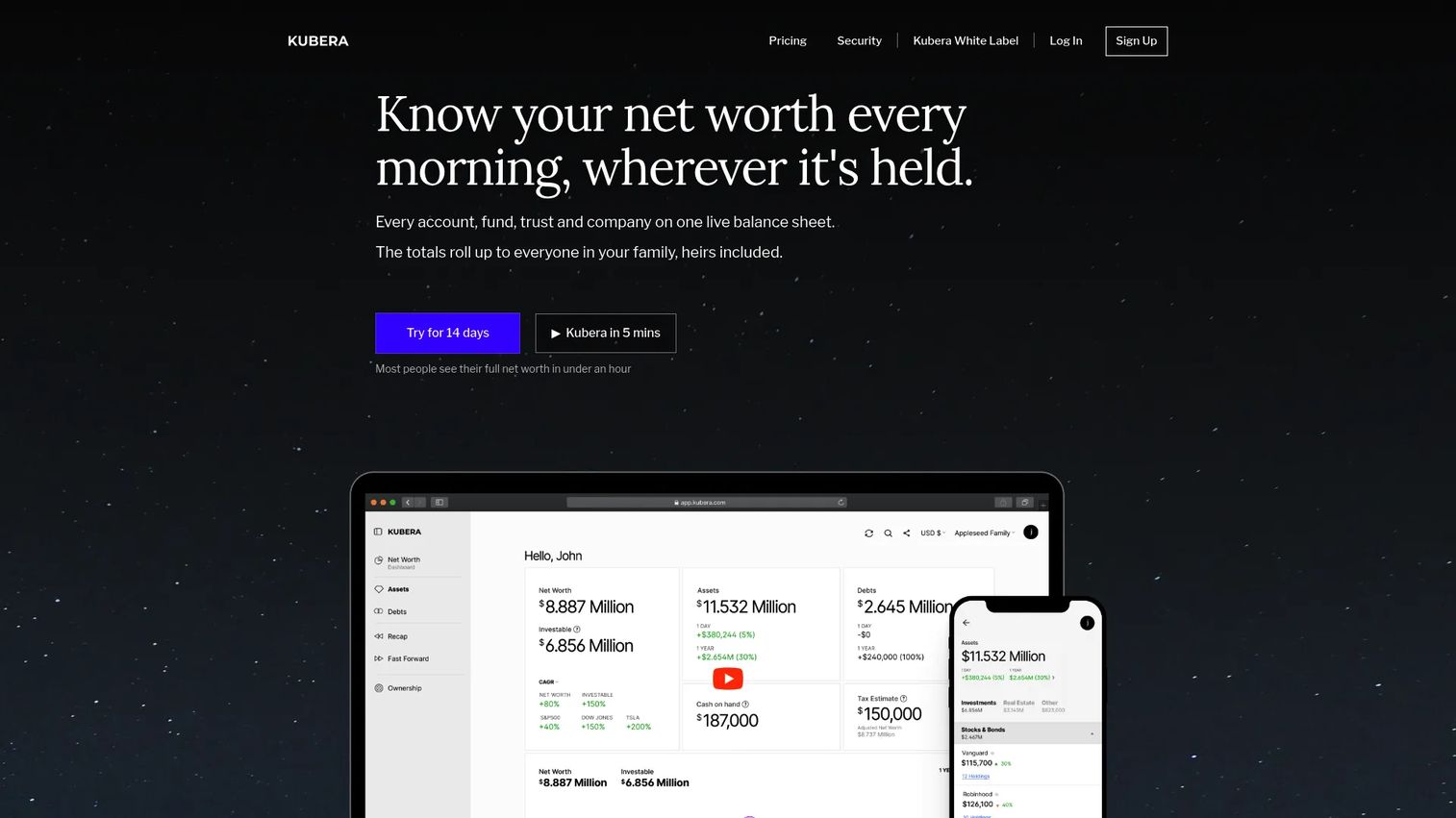
Kubera consolidates traditional investments, crypto, DeFi, private funds, real estate, debts, and other assets. It gives founders, families, and wealth managers a current view of complex wealth across entities and currencies.
The platform tracks secured assets alongside associated liabilities. Daily net worth history and performance metrics help users monitor changes without maintaining a custom spreadsheet.
Best for: Founders, families, and wealth managers tracking complex multi asset wealth.
Key features
- Traditional and alternative asset tracking
- Bank and brokerage connections
- Multi entity wealth consolidation
- Daily net worth history
- Beneficiary and legacy planning
Why choose Kubera: Breadth is the main reason. It suits users whose wealth extends beyond listed securities into property, private funds, digital assets, and multiple ownership structures.
Kubera concentrates on consolidated visibility rather than institutional trading or fund accounting. Choose it when the leadership problem is fragmented information, not portfolio operations.
Kubera pricing: Essentials costs $250 per year for one household. Black costs $2,500 per year and adds nested portfolios, ownership tags, guided onboarding, and VIP support.
A 14 day trial is available. Kubera doesn’t offer a permanent free tier.
G2 rating: 4.0/5.
2. Morningstar Direct
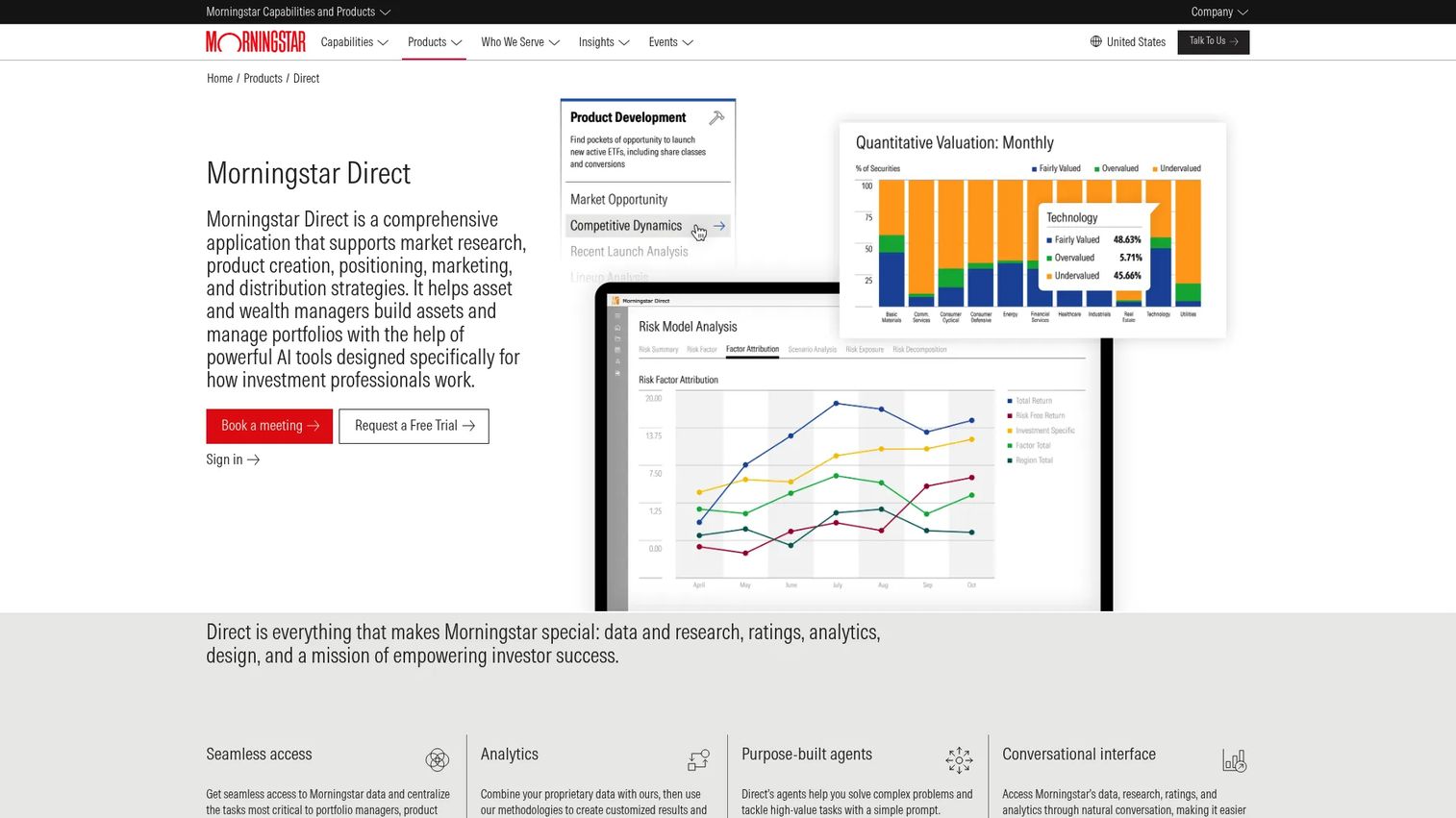
Morningstar Direct combines investment data and research with analytics, portfolio tools, and reporting. It supports institutional asset managers, wealth teams, consultants, and product development groups.
Teams can research managers, compare investments, evaluate performance, and create client or committee materials. Presentation Studio and Report Portal support repeatable reporting without rebuilding every output manually.
Best for: Institutional teams that need defensible research and multi asset portfolio analytics.
Key features
- Fund and manager research
- Portfolio creation and analysis
- Risk and exposure evaluation
- Custom investment reports
- Natural language investment analysis
Why choose Morningstar Direct: Research depth separates it from basic portfolio management software. It fits teams that must defend manager selection, product comparisons, and allocation decisions.
The platform covers far more than personal investment tracking. Smaller teams should assess whether they need its research scope and reporting infrastructure before adding another large system.
Morningstar Direct pricing: Custom pricing. Licensing may also include fees for distribution or publication use cases.
No permanent free tier was confirmed.
3. FactSet
FactSet provides financial data, analytics, software, APIs, and AI supported investment workflows. Investment professionals use it for market research, screening, portfolio analysis, and decision support.
Its portfolio capabilities cover performance, attribution, and risk analytics. Data feeds and APIs also let firms connect FactSet information with existing research and operational systems.
Best for: Asset managers and analysts requiring deep market data and investment analytics software.
Key features
- Investment research and market intelligence
- Portfolio performance attribution
- Risk analytics
- Financial data feeds and APIs
- Market news and research
Why choose FactSet: Data depth and workflow coverage make it relevant for institutional teams. It can support research through portfolio construction and ongoing performance analysis.
The platform will be larger than many smaller firms require. Buyers should map required data packages and user groups before requesting a proposal.
FactSet pricing: Custom pricing. The price depends on data packages, users, selected modules, and integrations.
FactSet directs prospective customers to sales for a personalized proposal.
4. Enfusion
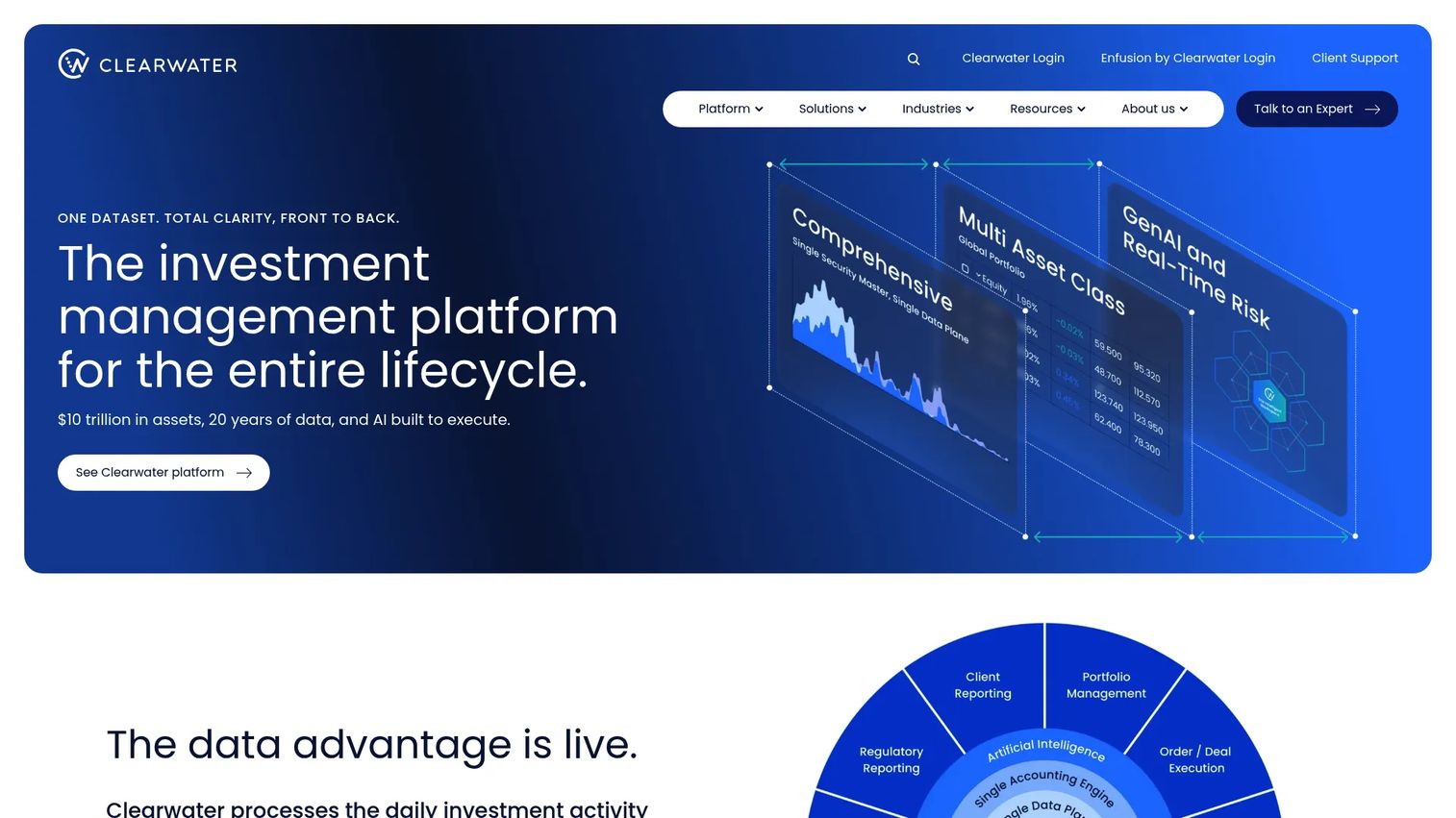
Enfusion is a front to back investment management system for hedge funds and asset managers. It connects portfolio management, trading, risk, accounting, and investment operations.
The platform supports multi asset trading with connectivity to more than 300 liquidity sources. Integrated positions, profit and loss data, cash, cost basis, and accounting give teams a shared operational record.
Best for: Fund managers that need trading and portfolio operations in a connected workflow.
Key features
- Portfolio and order management
- Multi asset trading
- Pretrade compliance
- Factor risk analysis
- Investment accounting and reconciliation
Why choose Enfusion: Operational depth is the central draw. It fits managers replacing disconnected systems across the front, middle, and back office.
This is fund portfolio management software rather than a personal tracker. Its value depends on whether your firm needs trading connectivity, accounting, and automated operational controls.
Enfusion pricing: Custom pricing. Pricing figures and named plans were not available from the provided research.
Buyers should request a quote covering users, required workflows, connectivity, and implementation.
5. Allvue Systems
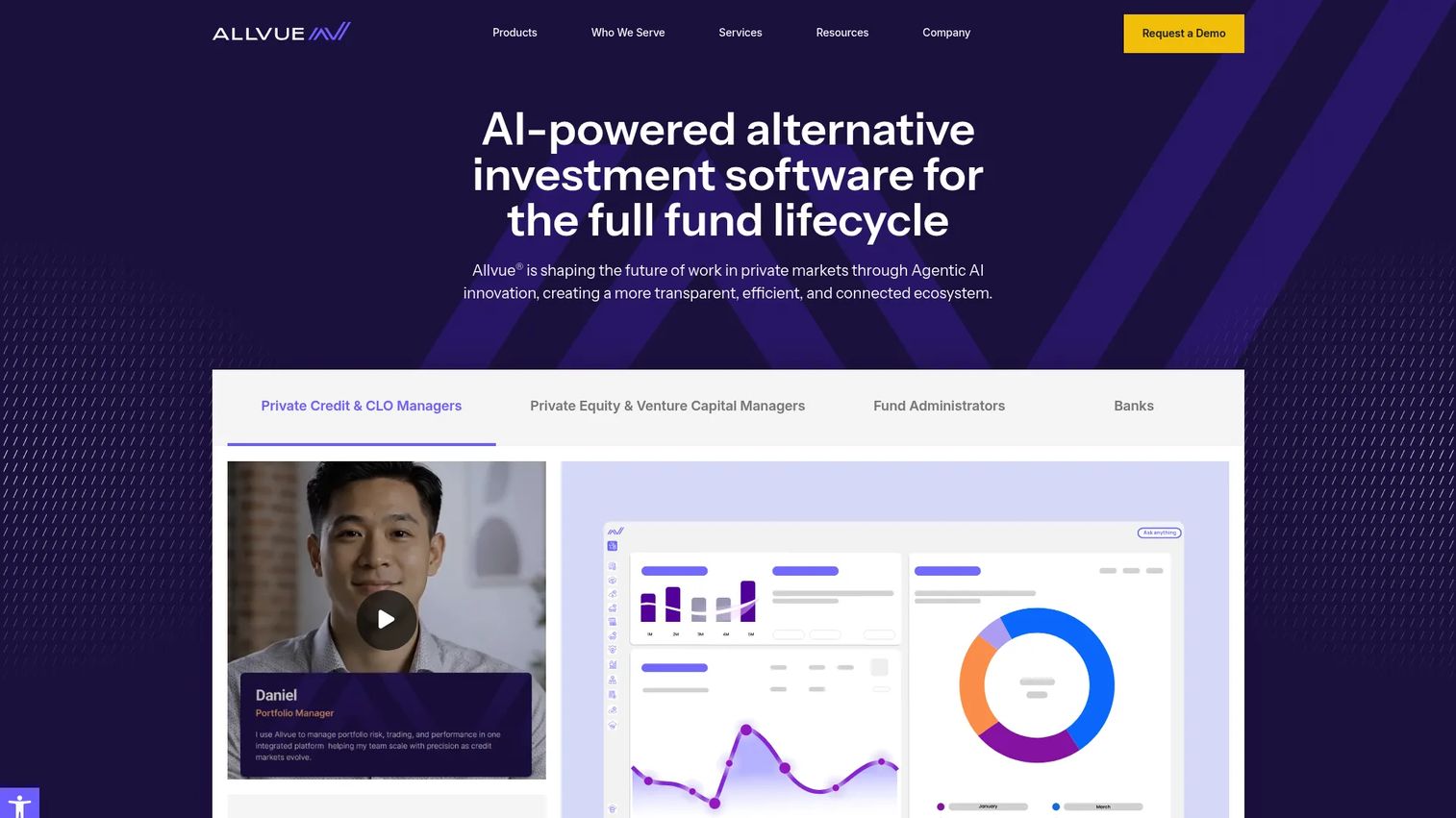
Allvue Systems provides cloud software for private equity, private credit, fund administration, and banking organizations. Its coverage extends from fundraising and research through fund accounting and investor reporting.
Allvue also supports portfolio monitoring, deal tracking, trade order management, and compliance workflows. Nexius adds data, analytics, benchmarks, and reporting for private capital teams.
Best for: Private capital managers needing connected fund accounting and investor operations.
Key features
- Fund and investment accounting
- Portfolio monitoring
- Investor reporting
- Fundraising and investor relations
- Credit management
Why choose Allvue Systems: Alternative investment specialization makes it relevant for private capital firms. It connects investment activity with the accounting and reporting work that follows.
Teams focused only on listed securities may need a different research or portfolio analysis platform. Allvue fits best where private fund structures drive operational complexity.
Allvue Systems pricing: Custom pricing. The provided research found no numeric plan figures or named tiers.
Request a proposal covering required modules, implementation scope, users, and data workflows.
6. eFront
eFront is BlackRock’s private markets technology platform. It supports asset owners, asset managers, and servicers overseeing private equity, private debt, real estate, and infrastructure.
Its workflows cover fundraising, fund administration, accounting, portfolio monitoring, and reporting. Teams can also use eFront for due diligence, benchmarking, portfolio construction, fee validation, and risk oversight.
Best for: Institutional investors managing complex private market portfolios.
Key features
- Private market investment management
- Portfolio monitoring and reporting
- Fund administration and accounting
- Due diligence and benchmarking
- Investor portals and onboarding
Why choose eFront: Private market breadth makes it useful for institutional portfolios with alternatives exposure. The platform supports investment work alongside LP reporting and operational oversight.
Its scope fits larger teams with dedicated investment and operations functions. A simpler alternative investment tracker may suit smaller organizations with limited reporting requirements.
eFront pricing: Custom pricing. No numeric figures or plan names were confirmed in the provided research.
The quote should account for private market workflows, reporting needs, users, and implementation.
7. Appfolio Investment Manager
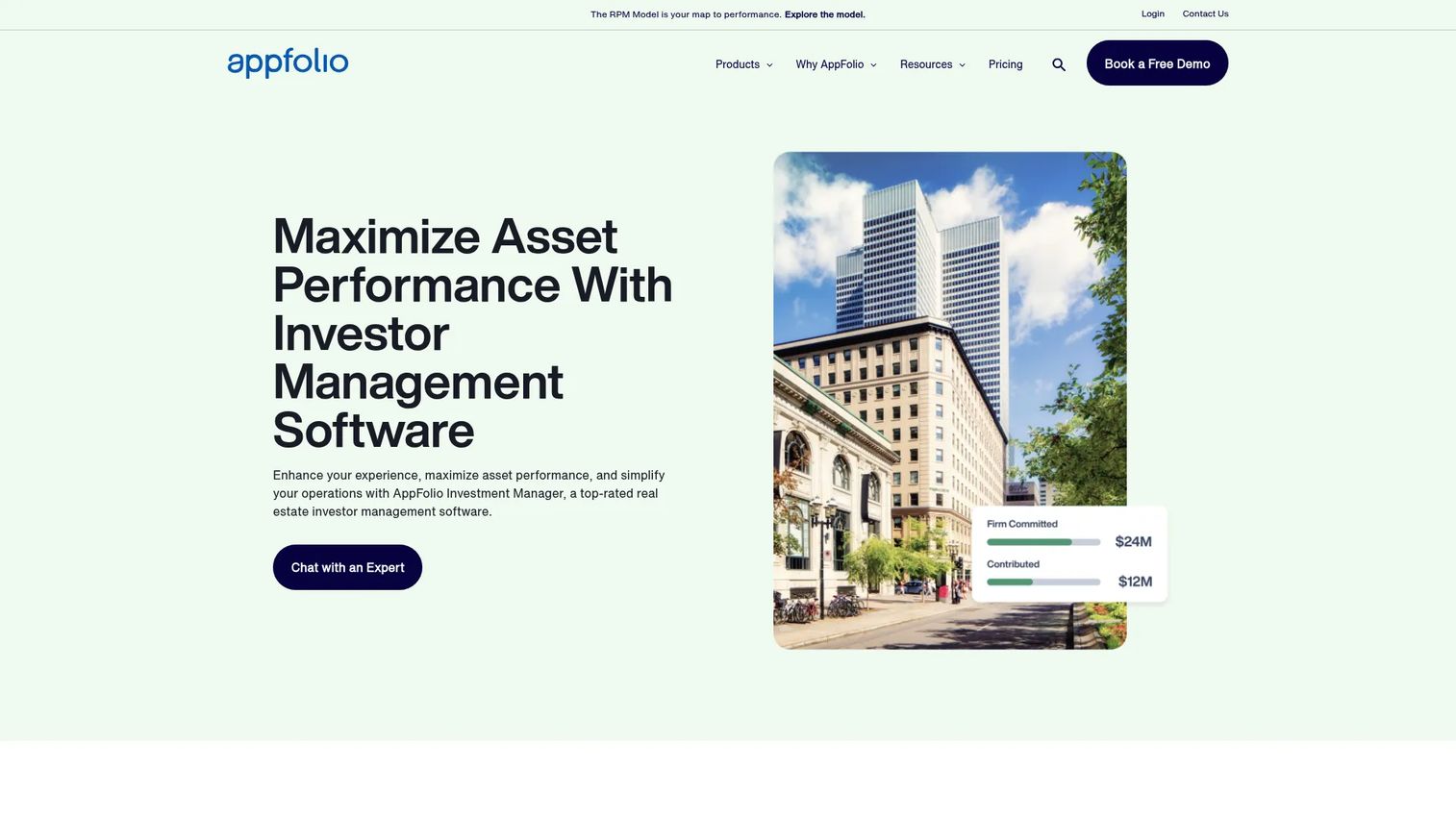
Appfolio Investment Manager serves real estate investment firms managing fundraising, investor relationships, fund structures, distributions, and reporting. It brings investor relations and investment operations into the same system.
The investor portal displays capital activity, documents, dashboards, and performance metrics. Appfolio also supports electronic signatures, capital calls, contributions, distributions, and waterfall calculations.
Best for: Real estate sponsors managing fundraising and ongoing investor communication.
Key features
- Investor relationship management
- Fundraising workflows
- Investor portal
- Distribution calculations
- Asset KPI tracking
Why choose Appfolio Investment Manager: Investor experience sits at the center of the product. It fits firms that need automated client reporting alongside fundraising and real estate investment operations.
Public market research is outside its main focus. Choose it when property investments and investor administration define the operating model.
Appfolio Investment Manager pricing: Core starts at $650 per month. Premier uses custom pricing.
Core includes investor CRM, fundraising workflows, an investor portal, financials, asset tracking, and customer care.
G2 rating: 4.5/5.
8. MRI Real Estate Investment Software
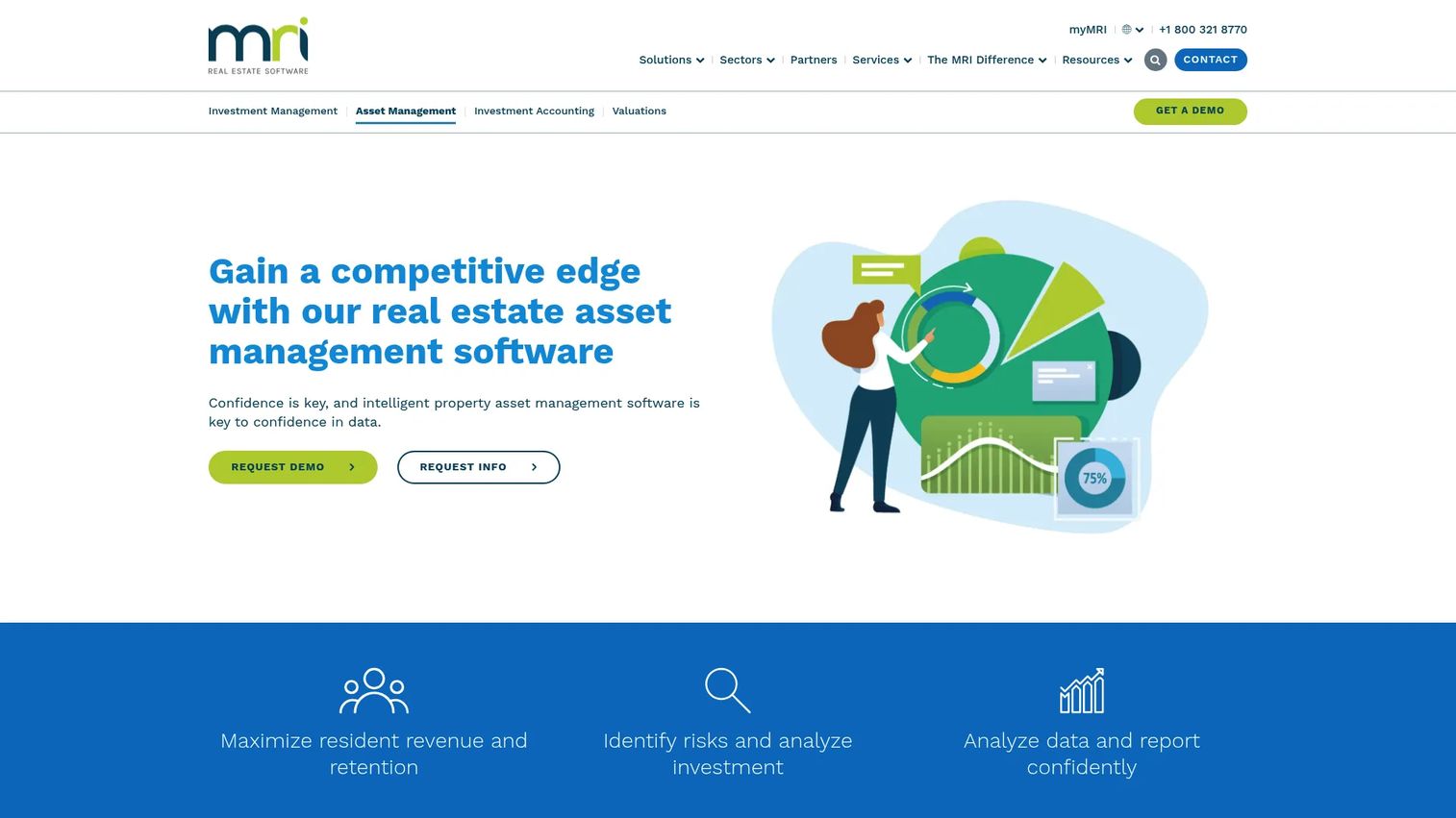
MRI Real Estate Investment Software supports real estate investment analysis, asset modeling, fund modeling, valuations, and portfolio reporting. Its workflows center on property and fund performance.
Investment Central provides a shared source for investment data and investor reporting. Asset Modeling supports development feasibility, scenario work, capital projects, and target internal rate of return analysis.
Best for: Real estate investment firms managing property portfolios and fund performance.
Key features
- Real estate asset management
- Investment data management
- Asset and fund modeling
- Property valuations
- Portfolio performance reporting
Why choose MRI Real Estate Investment Software: Property level workflows give MRI a clearer fit than broad investment platforms. It connects investment analysis with real estate accounting and operational data.
Firms with diversified public securities may require other investment analytics software. MRI makes the strongest case when real estate is the core asset class.
MRI Real Estate Investment Software pricing: Custom pricing. MRI directs prospective buyers to request information or book a product demonstration.
The quote will reflect selected capabilities and implementation requirements.
G2 rating: 4.2/5.
9. Axys
Axys is portfolio accounting and investment reporting software from SS&C Advent. It serves asset managers, wealth managers, and family offices that need established accounting workflows.
The system supports diverse security types, fixed income characteristics, multicurrency reporting, and withholding tax calculations. Performance measurement includes blended benchmarks, time weighted returns, internal rates of return, and composites.
Best for: Advisory firms needing portfolio accounting and configurable performance reporting.
Key features
- Portfolio accounting
- Performance measurement
- Customizable client reports
- Multicurrency reporting
- Automated reconciliation
Why choose Axys: Accounting maturity is the main attraction. It suits firms that need consistent books, reports, and return calculations more than modern personal wealth visualization.
Buyers should evaluate its workflow against newer cloud systems. Data interfaces and reporting configuration matter more than visual polish for this use case.
Axys pricing: Custom pricing. Prospective customers can request a personalized product demonstration.
10. Blueleaf

Blueleaf combines client engagement, investment reporting, billing, and portfolio rebalancing for registered investment advisors. It gives advisors a client portal alongside operational tools.
The portal includes web and mobile access, automated messaging, report delivery, and a document vault. Interactive reporting supports alerts, branded formats, and scheduled distribution.
Best for: RIAs that prioritize client reporting and household level portfolio workflows.
Key features
- Client portal
- Account aggregation
- Interactive investment reporting
- Automated advisor billing
- Household portfolio rebalancing
Why choose Blueleaf: Client visibility is a core strength. It suits wealth firms looking for client reporting software for financial advisors rather than institutional trading infrastructure.
Billing and rebalancing modules extend its operational value. Confirm which components your team needs before comparing the total cost with narrower reporting products.
Blueleaf pricing: Rebalancing starts at $295 per month for up to 50 households under an annual contract. Additional households cost $5 each per month.
Core platform, standalone Billing, and Enterprise plans use custom pricing.
11. Sharesight
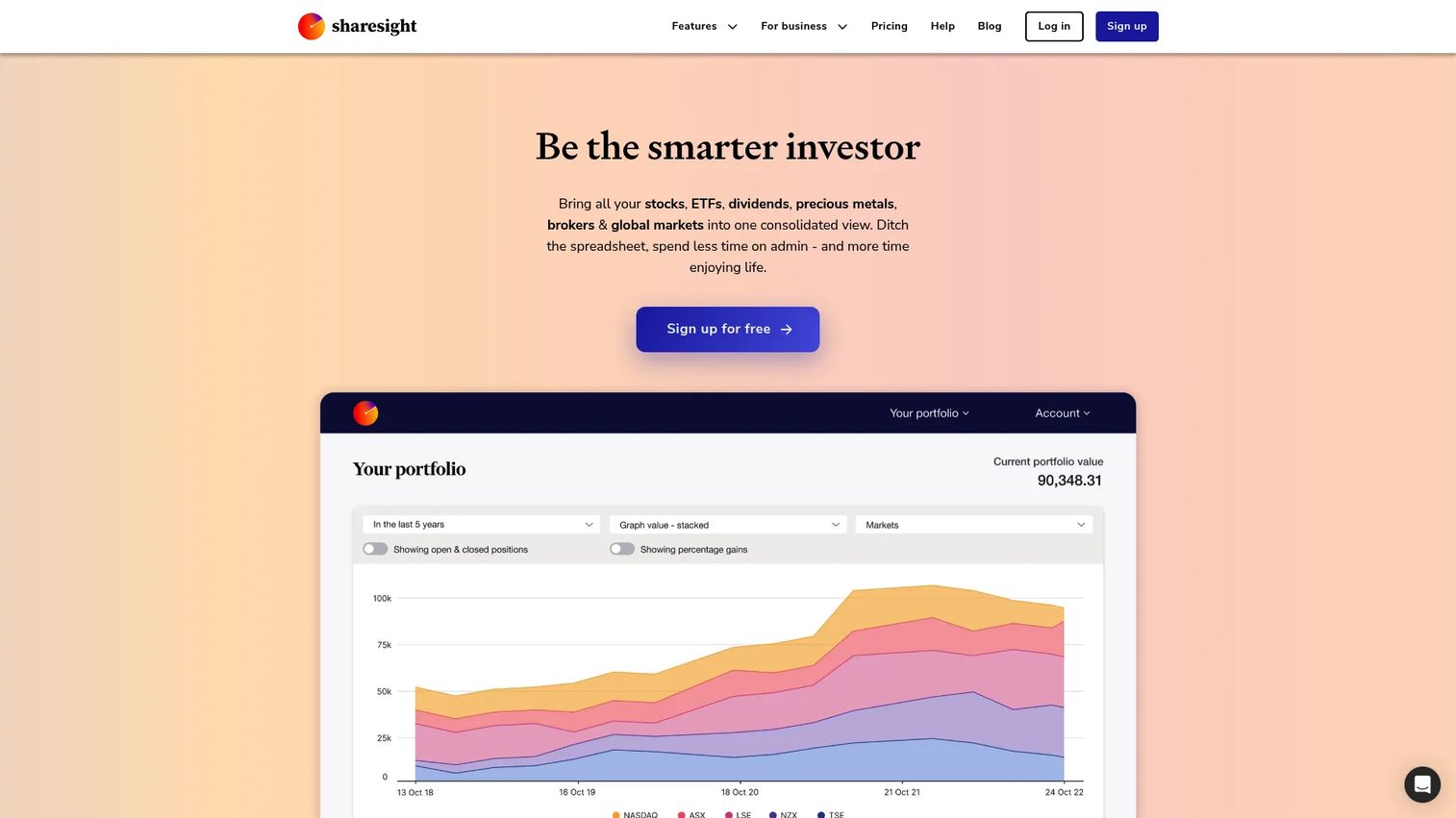
Sharesight tracks stocks, ETFs, dividends, funds, precious metals, brokers, and global markets. It serves self directed investors, accountants, and advisors seeking tax aware portfolio visibility.
The platform updates portfolio performance and corporate actions automatically. Reporting covers dividends, benchmarking, diversification, and tax obligations.
Best for: Investors and advisors tracking listed securities and tax aware performance.
Key features
- Portfolio performance tracking
- Dividend and corporate action tracking
- Tax reporting
- Broker data imports
- Benchmark comparisons
Why choose Sharesight: Tax and dividend reporting make it more useful than a basic brokerage dashboard. Portfolio sharing also helps investors work with accountants or financial advisors.
It won’t replace fund portfolio management software or institutional portfolio accounting. Its fit is strongest for listed holdings and straightforward reporting.
Sharesight pricing: Free supports one portfolio and 10 holdings. Starter costs $7 per month annually or $9.33 monthly.
Standard costs $18 per month annually. Premium costs $23.25 per month annually.
G2 rating: 3.5/5.
12. MProfit
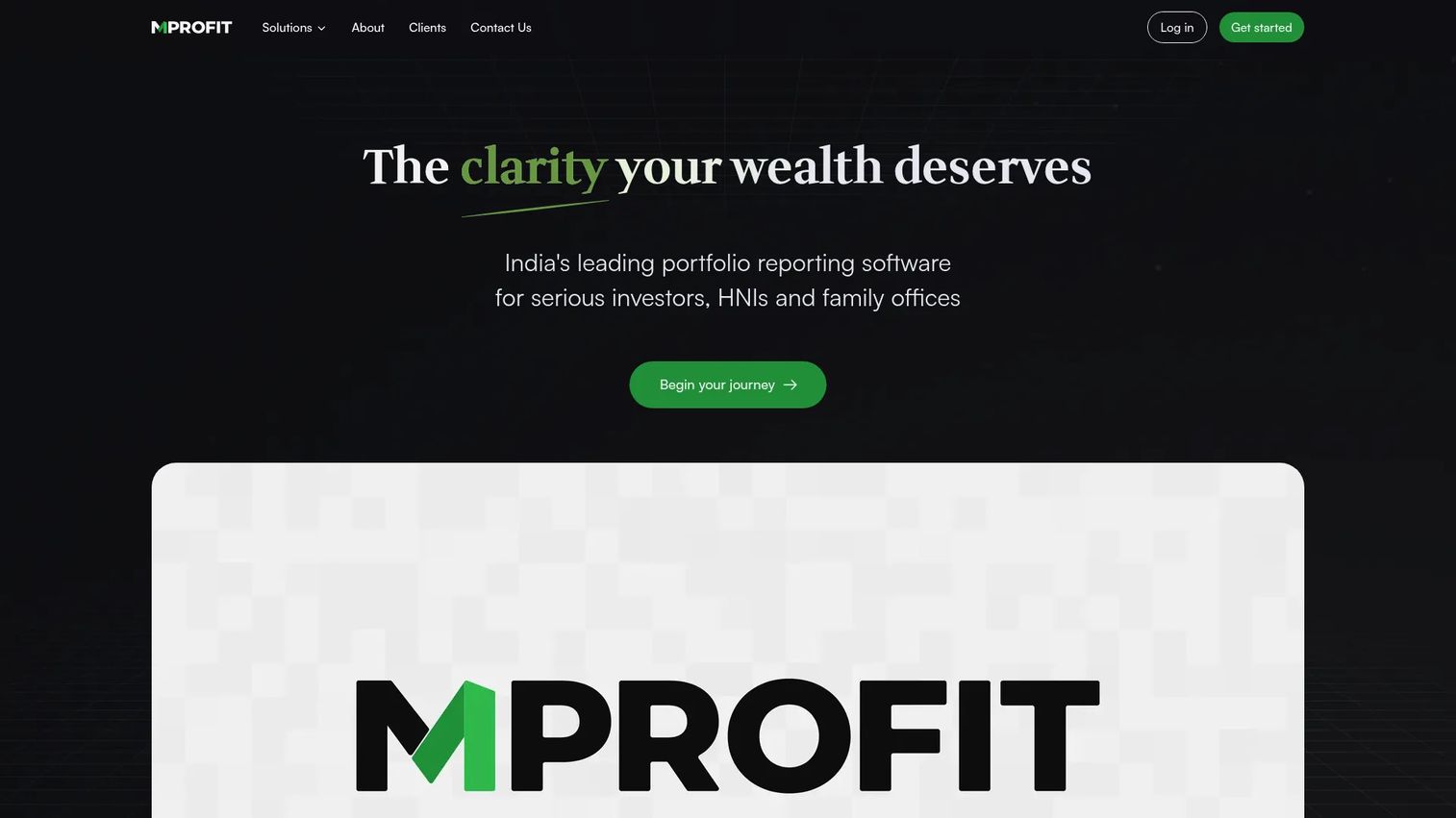
MProfit provides portfolio reporting for investors, high net worth individuals, family offices, wealth managers, and trusteeship firms. Its workflows have a strong India focus.
The platform tracks stocks, futures and options, mutual funds, bonds, fixed deposits, NPS, PMS, and AIF holdings. Reporting includes XIRR, asset allocation, benchmark analysis, and capital gains for income tax filing.
Best for: Indian investors and wealth teams managing multi asset portfolios and tax reports.
Key features
- Multi asset investment tracking
- Automated transaction imports
- Capital gains reporting
- XIRR performance analysis
- Family portfolio views
Why choose MProfit: India focused tax reporting and broad asset support make it useful for complex family portfolios. Web, Android, and iOS access support distributed wealth teams.
International buyers should examine market and tax coverage before purchasing. The strongest fit is an India based portfolio requiring consolidated reporting.
MProfit pricing: HNI costs ₹18,000 per year plus GST for investments below ₹25 Crore. Family Office uses custom pricing for portfolios above ₹25 Crore.
A free trial is available.
G2 rating: 4.2/5.
13. Portseido
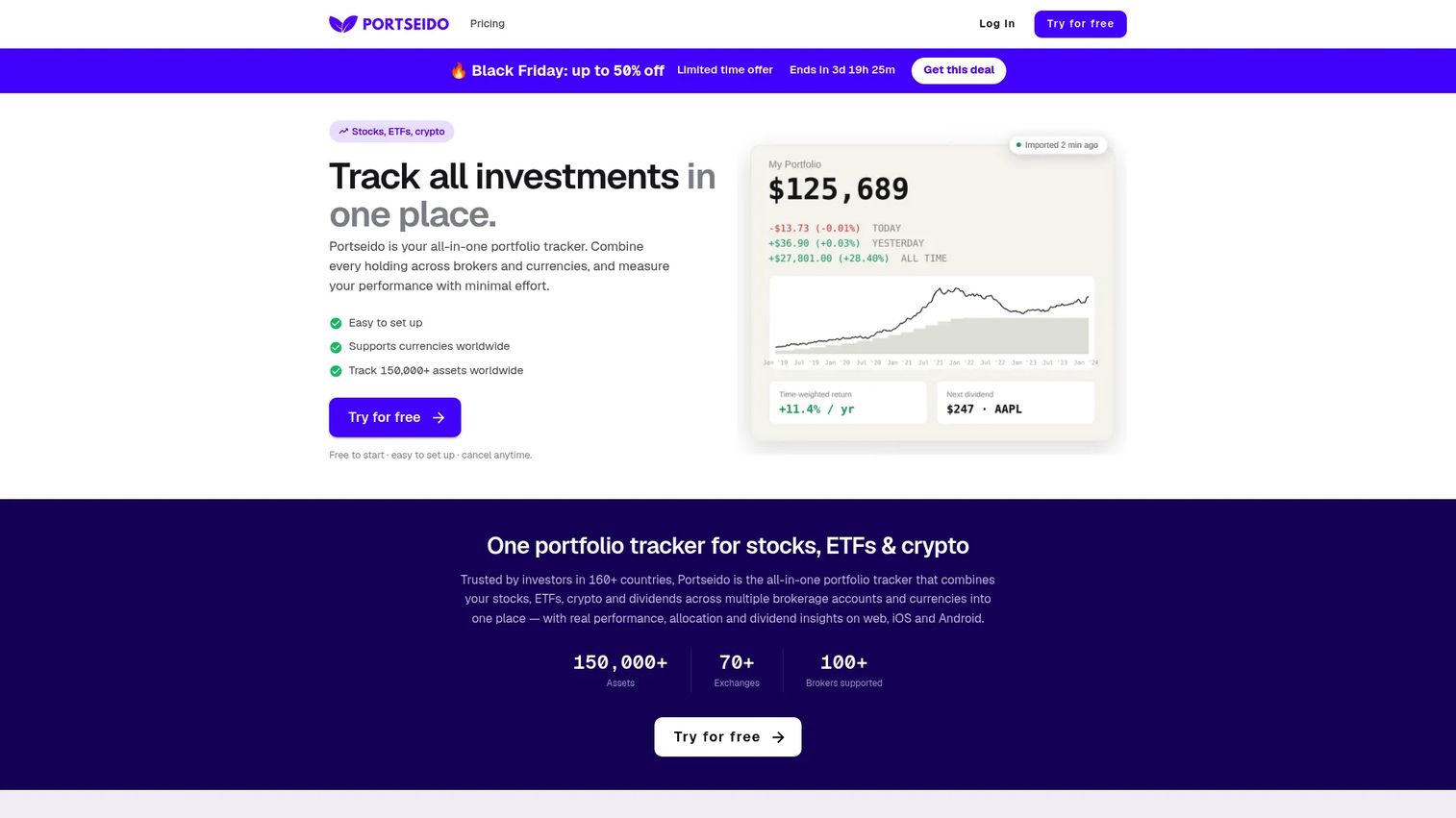
Portseido is a portfolio tracker for stocks, ETFs, crypto, dividends, and allocation analysis. It consolidates several portfolios, brokers, currencies, and asset types.
Performance reporting includes time weighted returns, money weighted returns, and benchmark comparisons. Users can also analyze allocation across industries, sectors, businesses, and asset classes.
Best for: Individual investors wanting visual portfolio performance analysis.
Key features
- Multi broker portfolio consolidation
- Time weighted return analysis
- Dividend tracking
- Allocation analysis
- Trade performance review
Why choose Portseido: Visual analytics give investors more context than a spreadsheet or brokerage summary. It works well for tracking performance and understanding allocation changes.
The product is not designed as an advisor back office or fund accounting system. Choose it for investor level analysis rather than regulated investment operations.
Portseido pricing: Free includes 100 transactions and one portfolio. Plus costs $10 per month annually, while Pro costs $15 per month annually.
Paid plans include a 14 day trial without a credit card..
14. StockRover
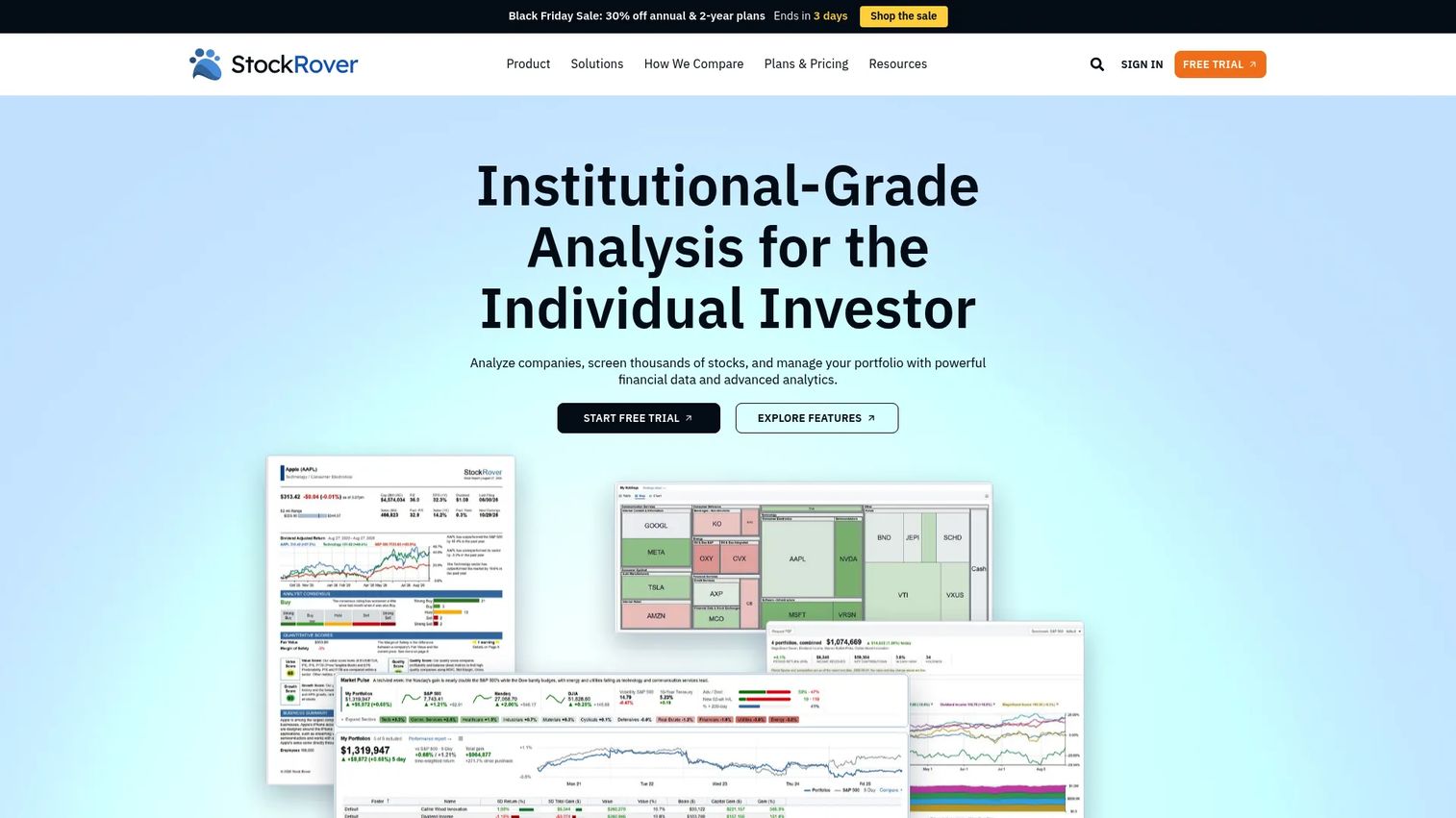
StockRover combines equity research, screening, and portfolio analytics. It covers stocks, ETFs, mutual funds, and connected investment portfolios.
Its research tools include fundamental analysis, technical charts, stock screeners, custom metrics, and research reports. Brokerage integrations bring holdings into the same analytical view.
Best for: Equity investors who prioritize screening and investment research management software.
Key features
- Stock and ETF screening
- Fundamental and technical charting
- Portfolio analytics
- Custom metrics and watchlists
- Investment research reports
Why choose StockRover: Research is the buying reason. It helps investors compare securities and review portfolios using a deeper analytical toolkit than most personal finance products.
StockRover doesn’t serve private capital accounting or LP reporting. Use it when security selection and public market analysis drive the workflow.
StockRover pricing: Free covers basic research. Premium starts at $29 per month when billed annually at $348.
Premium Plus costs $49 monthly annually. Ultimate starts at $79 monthly annually, and paid plans include a 14 day trial.
15. Wealthfront
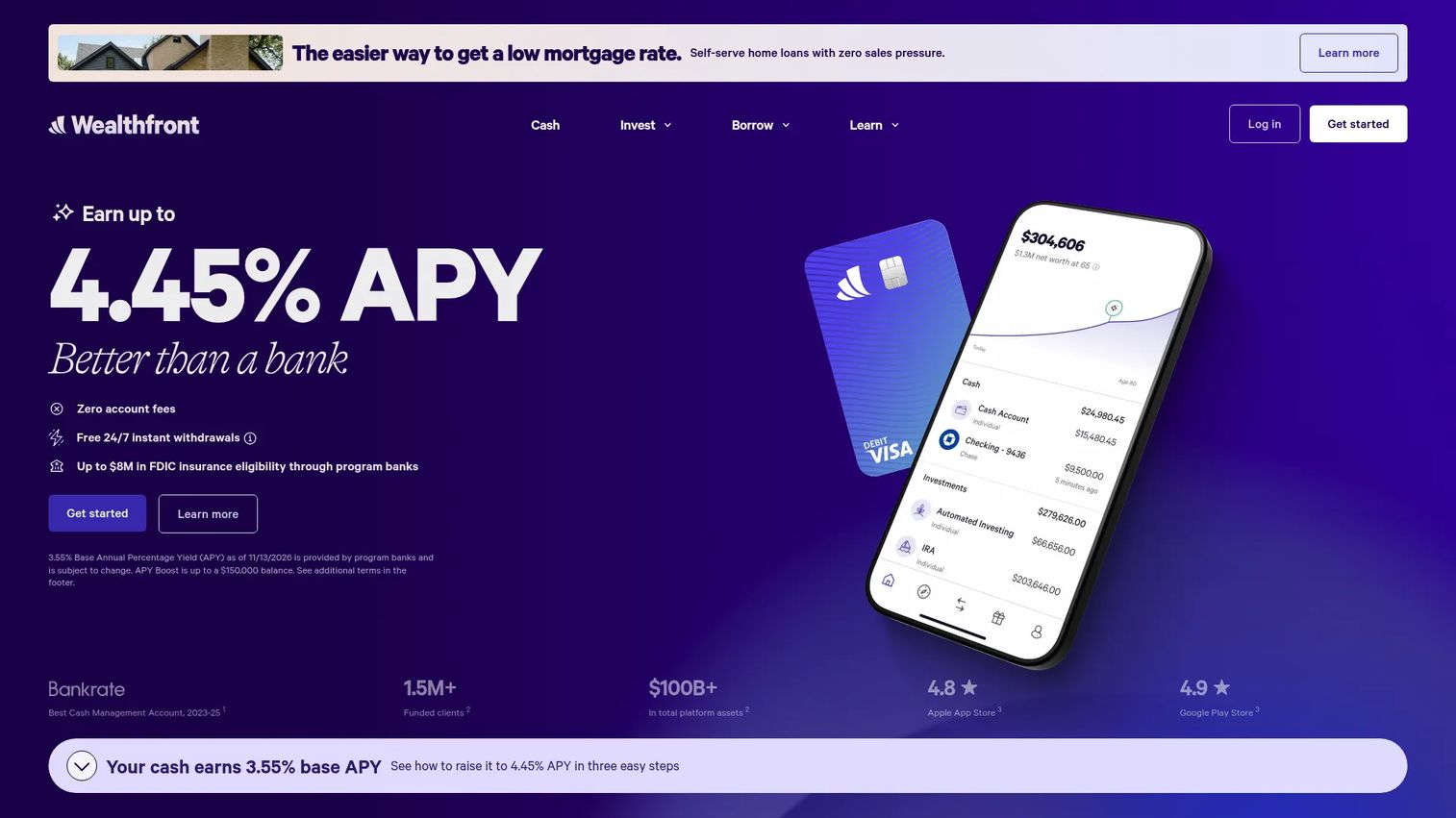
Wealthfront is a digital wealth platform offering automated investing, self directed brokerage, cash management, planning, and lending products. It targets individuals rather than professional investment firms.
Automated portfolios use expert built allocations with ongoing rebalancing and tax loss harvesting. Users can also access direct portfolios, bond products, cash accounts, and commission free stock investing.
Best for: Individuals seeking delegated portfolio management and tax efficient automation.
Key features
- Automated investment portfolios
- Tax loss harvesting
- Automatic rebalancing
- Self directed stock investing
- Cash management
Why choose Wealthfront: Automation reduces the ongoing work required from the investor. It fits people who want managed allocations rather than hands on portfolio operations.
Wealthfront is a robo advisor, not institutional investment software. It won’t provide custom client reporting, fund accounting, or investment committee workflows.
Wealthfront pricing: Automated and bond portfolios charge 0.25% annually. The S&P 500 Direct Portfolio starts at 0.09% annually.
Brokerage and Stock Investing Accounts carry no account or commission fees.
16. Betterment

Betterment offers automated investing, goal based planning, cash management, retirement accounts, and self directed investing. Its expert built ETF portfolios target individuals who want ongoing portfolio management.
Tax loss harvesting and tax aware tools support taxable accounts. Betterment also rebalances portfolios and connects investment choices with defined financial goals.
Best for: Individuals seeking automated, goal based investing with cash management.
Key features
- Automated ETF portfolios
- Goal based financial planning
- Tax management tools
- Portfolio rebalancing
- Cash management products
Why choose Betterment: Goal based automation gives individuals a clear route from financial objectives to managed portfolios. It also covers retirement and cash products within the same service.
The product doesn’t replace performance attribution software or fund reporting systems. Professional teams should look to advisor, fund, or institutional platforms.
Betterment pricing: Digital costs $5 per month below $24,000 without qualifying recurring deposits. It costs 0.25% annually for eligible balances or deposits.
Premium costs 0.65% annually and requires a $100,000 eligible investing balance.
G2 rating: 4.3/5.
17. Quicken Premier
Quicken Premier is desktop personal finance software with advanced investment tracking. It combines household budgeting, bill management, tax reports, retirement planning, and portfolio analysis.
Users can review investments alongside debts, spending, and wider financial plans. Account reconciliation helps keep household records aligned with connected financial accounts.
Best for: Individuals wanting household finance and investment tracking together.
Key features
- Personal finance tracking
- Investment portfolio analysis
- Built in tax reports
- Retirement planning
- Bill and debt management
Why choose Quicken Premier: Context is its advantage. Investments sit beside the household budget, taxes, retirement assumptions, and liabilities.
It is built for individuals rather than advisors, funds, or institutions. Teams that need client portals or compliance reporting should choose a professional platform.
Quicken Premier pricing: Premier costs $7.99 per month and is billed annually. The plan supports Windows and Mac desktop use.
G2 rating: 4.3/5.
Considerations when choosing investment management software
Match the tool to your operating model
Separate personal tracking, RIA workflows, fund operations, and institutional research before comparing features. A system designed for individuals won’t replace portfolio accounting for a private fund.
Ask who will own the platform after implementation. The right product should reduce founder dependence rather than create another specialist bottleneck.
Verify reporting depth before you buy
Request sample client reports, board outputs, tax statements, and performance attribution. A polished dashboard doesn’t prove the system can produce your required deliverables.
Check whether teams can schedule reports and maintain consistent calculation methods. Board confidence disappears quickly when two systems produce different returns.
Check data sources and reconciliation
List every custodian, brokerage, fund administrator, bank feed, and manual file you use. Confirm how the platform imports each source and handles exceptions.
Data importing for investment portfolios is only useful when reconciliation remains manageable. Poor source data can turn every leadership review into a debate.
Test rebalancing and risk workflows
Review model drift, target allocations, concentration reports, and investment policy monitoring. Portfolio rebalancing software should show how proposed trades affect the whole account.
Institutional buyers should also test portfolio performance analysis across currencies and asset classes. Risk outputs must match the decisions your investment committee makes.
Understand pricing before procurement
Calculate the full cost across users, assets, modules, data feeds, and implementation. Some products charge by household, while others price through annual institutional contracts.
Include internal migration time in the business case. A platform earns its stack position by replacing recurring manual work.
Conclusion
The right investment management software reflects how your organization invests and reports.
Kubera fits founders and families consolidating traditional and alternative assets. Morningstar Direct and FactSet serve research heavy institutional teams.
Enfusion connects portfolio management with fund operations. Allvue Systems and eFront focus on private capital and alternative investment workflows.
Blueleaf suits RIAs prioritizing the client experience, while Axys offers established portfolio accounting. Sharesight, MProfit, Portseido, and StockRover serve investors who want stronger tracking or research.
Wealthfront and Betterment fit individuals seeking automated portfolios. Quicken Premier makes sense when investment tracking belongs inside a broader household finance system.
Narrow the shortlist by reporting need and asset coverage first. Then assess rebalancing, risk controls, compliance requirements, and implementation effort.
If your company sells complex software, help buyers understand its value before a call. Start your journey with Guideflow today!
FAQs
Investment management software supports portfolio tracking, performance analysis, risk monitoring, rebalancing, reporting, and investment decisions. More advanced platforms may add research, trading workflows, portfolio accounting, or compliance support.
The category serves individual investors through large institutions. Tool fit depends on asset complexity and operational requirements.
The best RIA portfolio management software depends on client reporting, billing, custodian connections, and rebalancing requirements. Blueleaf focuses on client engagement and advisor operations, while Axys emphasizes portfolio accounting.
Morningstar Direct fits research heavy wealth teams requiring deeper investment analysis. Test reporting outputs and data reconciliation before selecting a platform.
Enfusion suits hedge funds and asset managers requiring connected portfolio, trading, accounting, and operational workflows. Allvue Systems targets private capital firms, while eFront serves institutional private market portfolios.
Fund managers should prioritize accounting, investor reporting, and portfolio monitoring. Robo advisors don’t cover these professional requirements.
Portfolio management software usually concentrates on holdings, returns, allocation, and rebalancing. Investment management software can cover a wider operating scope.
That broader scope may include market research, trading, accounting, compliance, investor relations, and risk analysis. Vendors often use both labels, so evaluate the documented workflows rather than the category name.
Kubera fits investors with complex assets and multiple entities. Sharesight focuses on listed investments, dividends, and tax reporting, while MProfit serves India focused portfolios.
Portseido provides visual analytics, and StockRover emphasizes equity research. Wealthfront and Betterment automate investing, while Quicken Premier combines portfolios with household finance.
Pricing ranges from free individual tools to custom institutional contracts. Personal subscriptions in this list start below $10 per month, while specialized platforms use quote based pricing.
Institutional cost can reflect users, assets, data packages, modules, and implementation. Compare the total cost with the manual work and existing systems the platform replaces.
Core features should include portfolio aggregation, performance reporting, risk analysis, benchmark comparisons, and reliable data imports. Rebalancing becomes important for model based portfolios.
Tax reports, client reporting, or compliance support may also matter. Required capabilities depend on whether you are an individual, advisor, fund manager, or institution.
Excel can support simple portfolios and occasional analysis. It becomes fragile when asset classes, entities, stakeholders, and reporting obligations expand.
Dedicated software improves repeatability and reduces manual reconciliation. It also makes the process easier to transfer from a founder or analyst to an operating team.