A claimant uploads the same document twice. An adjuster waits for missing information that was never requested clearly. A support agent fields another "what is the status of my claim?" ticket, the fourth one this hour. And the supervisor can't tell where the delay actually lives.
This is claims friction, and it costs more than time. According to J.D. Power (2025), insurers provide adequate digital claims updates only 22% of the time. A separate InvoiceCloud study (2025) found that 83% of consumers surveyed would consider switching carriers after a poor claims experience. The gap between what claimants expect and what most claims operations deliver is wide, and spreadsheets, disconnected portals, and email threads make it wider.
Good insurance claims management software changes the equation. It structures the intake, automates the routing, keeps documentation in one place, and gives claimants clear visibility at every stage. For support teams specifically, that visibility matters most: A claimant who knows what happens next doesn't need to call.
What's inside
This guide compares 21 insurance claims management software options for 2026. Tools were drawn from insurance claims system directories, SERP research, and category relevance across claim types.
Selection criteria:
- Claims lifecycle coverage from first notice of loss through settlement
- Automation, routing, and triage capabilities
- Document and medical record handling
- Analytics, fraud detection, and claimant communication tools
- Integration fit with policy, billing, and customer systems
Pricing and G2 ratings were verified against vendor pages and live G2 listings.
TL;DR
- Best overall enterprise claims platform: Guidewire ClaimCenter for large P&C carriers managing complex, high-volume claims across multiple lines
- Best for digital claims collaboration: ClaimXperience for teams whose main bottleneck is evidence collection and policyholder participation
- Best for medical document intelligence: Wisedocs for adjusters and reviewers spending too much time on large claim files
- Best for claims automation: Five Sigma Claims Management System or Azentio Claim Automation for teams automating repeatable claim paths
- Best for claimant experience: Snapsheet Claims or Benekiva where communication clarity and status visibility matter most
- Best CRM-native option: Salesforce Financial Services Cloud for teams that want claims service workflows inside an existing CRM
What is insurance claims management software?
Insurance claims management software is a digital system that helps insurers, TPAs, and claims teams manage the full claim lifecycle, from first notice of loss through validation, investigation, adjudication, settlement, payment, and closure.
It replaces manual handoffs, disconnected inboxes, and status calls with structured workflows that keep everyone, including the claimant, informed at each stage.
Key capabilities to look for
- FNOL intake and claim creation: Structured intake across web forms, mobile uploads, and call centers
- Workflow routing and assignment: Automated triage by claim type, complexity, severity, or adjuster availability
- Document and evidence management: Centralized file handling, photo and video uploads, and medical record processing
- Fraud detection and claim scoring: Rules, anomaly flags, and investigator workflow support
- Adjuster task management: Workbench tools, notes, deadlines, and vendor coordination
- Policy and coverage integration: Real-time access to coverage data during claim review
- Claimant communication tools: Status portals, automated notifications, and document request workflows
- Payment and settlement support: Reserve management, payment processing, and settlement tracking
- Reporting and operational analytics: Cycle time, adjuster productivity, leakage, and outcome dashboards
- Compliance controls and audit trails: Decision logging, PII protection, and regulatory documentation
For support teams, the most important question is whether the system reduces repetitive status tickets. Look for claim status portals that claimants can check themselves, automated document requests that reduce back-and-forth, and communication histories that agents can access without digging through emails.
When to use insurance claims management software
Modernize first notice of loss intake
Paper forms and call-only intake create incomplete submissions and slow downstream workflows. Structured FNOL tools let claimants start a claim through a web form, mobile app, or agent portal, with required fields that prevent missing information from the start. The result is cleaner data at the point of intake, which makes everything downstream faster.
Route claims without manual triage
Manual assignment means supervisors spending hours deciding which adjuster gets which file. Automated routing by claim type, severity, geography, or line of business cuts that overhead significantly. It also keeps workloads balanced and reduces the gap between intake and first contact.
Reduce claimant support volume
Every "what is the status of my claim?" ticket that reaches your queue is a gap in visibility. Claims portals with real-time status, automated notifications at key milestones, and clear next-step instructions address the question before the claimant picks up the phone. J.D. Power (2025) found that 22% of customers use multiple channels to find the same claims answer, which signals a visibility problem, not a customer problem.
Improve investigation and fraud controls
Fraud detection embedded in claims workflows, with anomaly scoring, rules engines, and documentation trails, helps teams catch suspicious patterns earlier. This matters especially in high-volume operations where manual review at scale isn't realistic.
Insurance claims management software comparison
The table below covers all 21 tools in this guide. Pricing across this category is almost entirely quote-based, so the pricing column reflects that reality. G2 ratings reflect verified live listings where available.
| # | Product | Best for | Key differentiator | Pricing | G2 rating |
|---|---|---|---|---|---|
| 1 | Guidewire ClaimCenter | Large P&C enterprise claims | End-to-end claims lifecycle with deep insurer workflows | Custom pricing | 4.5/5 |
| 2 | ClaimXperience | Digital evidence collection | Live video and photo collaboration with policyholders | Custom pricing | 4.3/5 |
| 3 | Wisedocs | Medical document processing | AI medical summaries and claim file organization | Custom pricing | 4.0/5 |
| 4 | BriteCore | P&C carriers on a core platform | Claims inside a cloud-native policy, billing, and agent suite | Custom pricing | 4.3/5 |
| 5 | ClaimsPro | Outsourced claims adjusting | Adjusting services backed by proprietary claims technology | Custom pricing | N/A |
| 6 | EIS Suite | Multi-line core insurance transformation | Configurable API-first platform across policy, billing, and claims | Custom pricing | N/A |
| 7 | AdInsure Claims | Configurable P&C, life, and commercial claims | Full lifecycle from FNOL through reinsurance and recoveries | Custom pricing | N/A |
| 8 | ALFRED | Contact vendor to verify current scope | Claims workflow and case tracking | Custom pricing | N/A |
| 9 | Altkom Insurance Suite | Modular insurance platform buyers | Composable architecture with AI-enabled claims and policy modules | Custom pricing | 5.0/5 |
| 10 | Azentio Claim Automation | Automating repetitive claim workflows | OCR, fraud scoring, SLA monitoring, and multi-party collaboration | Custom pricing | N/A |
| 11 | Benekiva | Life and annuity claims experience | Beneficiary portals, AI examiner support, and straight-through processing | Custom pricing | N/A |
| 12 | Duck Creek Claims | P&C claims administration modernization | Cloud-native claims with AI-assisted decisioning and subrogation | Custom pricing | 4.4/5 |
| 13 | Five Sigma Claims Management System | AI-native claims automation | Omnichannel comms, no-code workflows, and AI-driven claim insights | Custom pricing | N/A |
| 14 | InsureEdge | Unified policy, claims, and billing operations | All-in-one administration across P&C, life, and general insurance | Custom pricing | 4.5/5 |
| 15 | Insurity Platform | P&C and specialty insurance operations | AI, analytics, and bureau-managed content on a cloud platform | Custom pricing | 3.7/5 |
| 16 | Majesco Claims | Configurable core claims administration | AI-assisted triage, assignment, and inquiry handling | Custom pricing | 1.5/5 |
| 17 | NSure | Consumer insurance comparison and purchase | Side-by-side quotes from 100+ carriers with no consumer fee | Free to use | N/A |
| 18 | Snapsheet Claims | Auto and P&C digital claims | AI agents, smart assignment, and integrated digital payments | Custom pricing | 4.1/5 |
| 19 | Salesforce Financial Services Cloud | CRM-native insurance service workflows | Unified customer view with case management and AI automation | From $325/user/month | 4.3/5 |
| 20 | Sapiens ClaimsMaster | Mid-to-large P&C claims administration | Rules-driven automation with configurable dashboards and case management | Custom pricing | 4.4/5 |
| 21 | Sapiens Automation & AI | AI augmentation for insurance operations | Autonomous AI agents for underwriting, claims, and analytics workflows | Custom pricing | 4.4/5 |
Best 21 insurance claims management software tools
1. Guidewire ClaimCenter
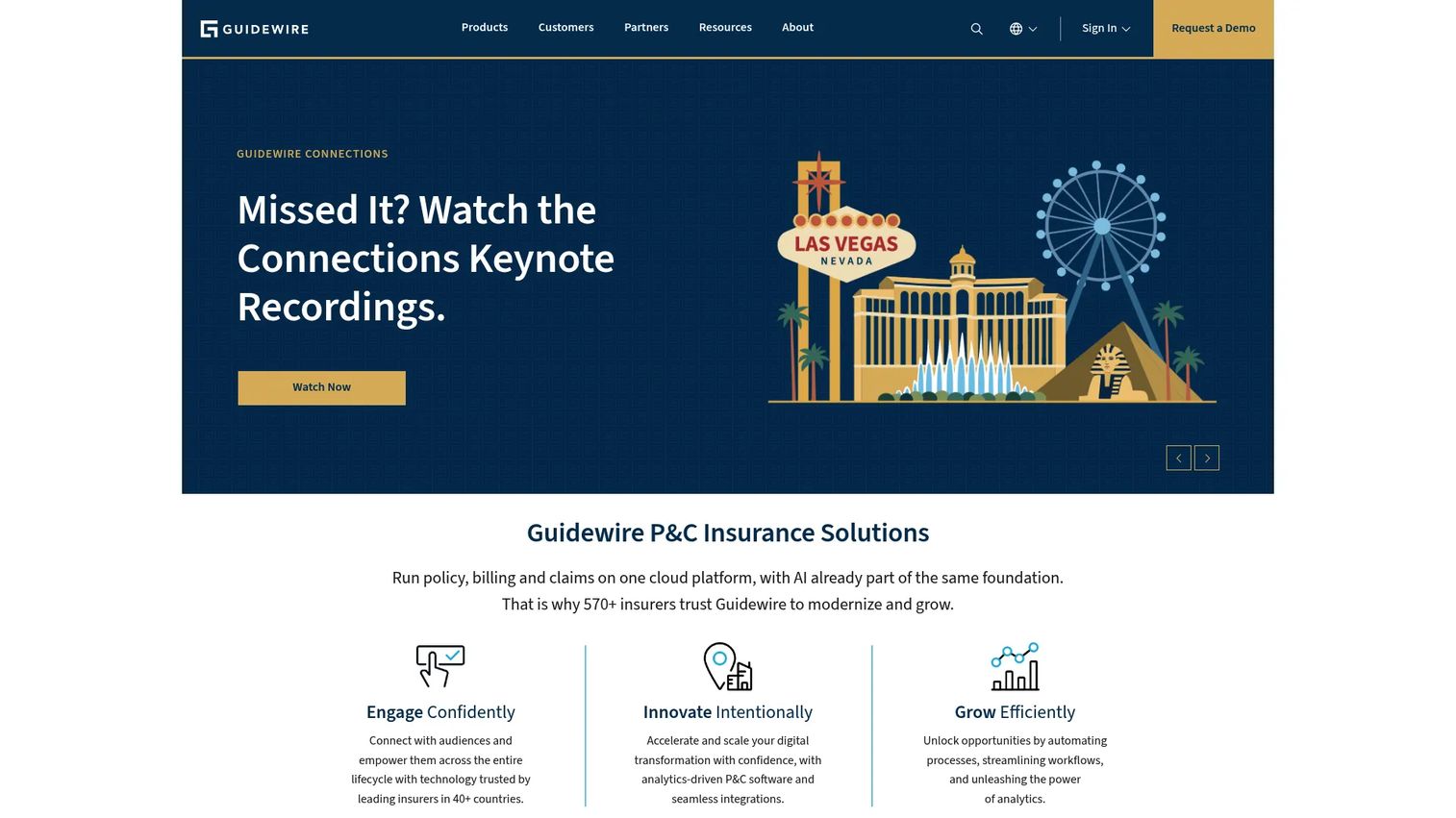
Guidewire ClaimCenter is an enterprise claims management platform built for property and casualty insurers. It handles the full claims lifecycle, from digital intake and policy retrieval through investigation, vendor management, settlement, and closure. The platform integrates in real time with underwriting, policy, and billing systems, so adjusters have coverage data available at the moment they need it.
Best for: Large and mid-sized P&C carriers managing complex, high-volume claims operations across multiple lines of business.
Key features
- Wizard-based digital FNOL with policy search and retrieval
- Automated triage and assignment by severity, location, or line of business
- Real-time integration with underwriting, policy, and billing systems
- Vendor management for repair, legal, and medical services
- Embedded analytics and configurable adjuster workflows
Why choose Guidewire ClaimCenter: Choose this when you need a mature, deeply documented claims platform with broad ecosystem support and enterprise implementation resources. It's suited to carriers where claims complexity and volume make a point solution insufficient.
Guidewire ClaimCenter pricing: Pricing is handled through Guidewire sales after product scope, implementation model, and deployment needs are reviewed. Contact Guidewire directly for a quote.
G2 rating: 4.5/5 (42 reviews)
2. ClaimXperience
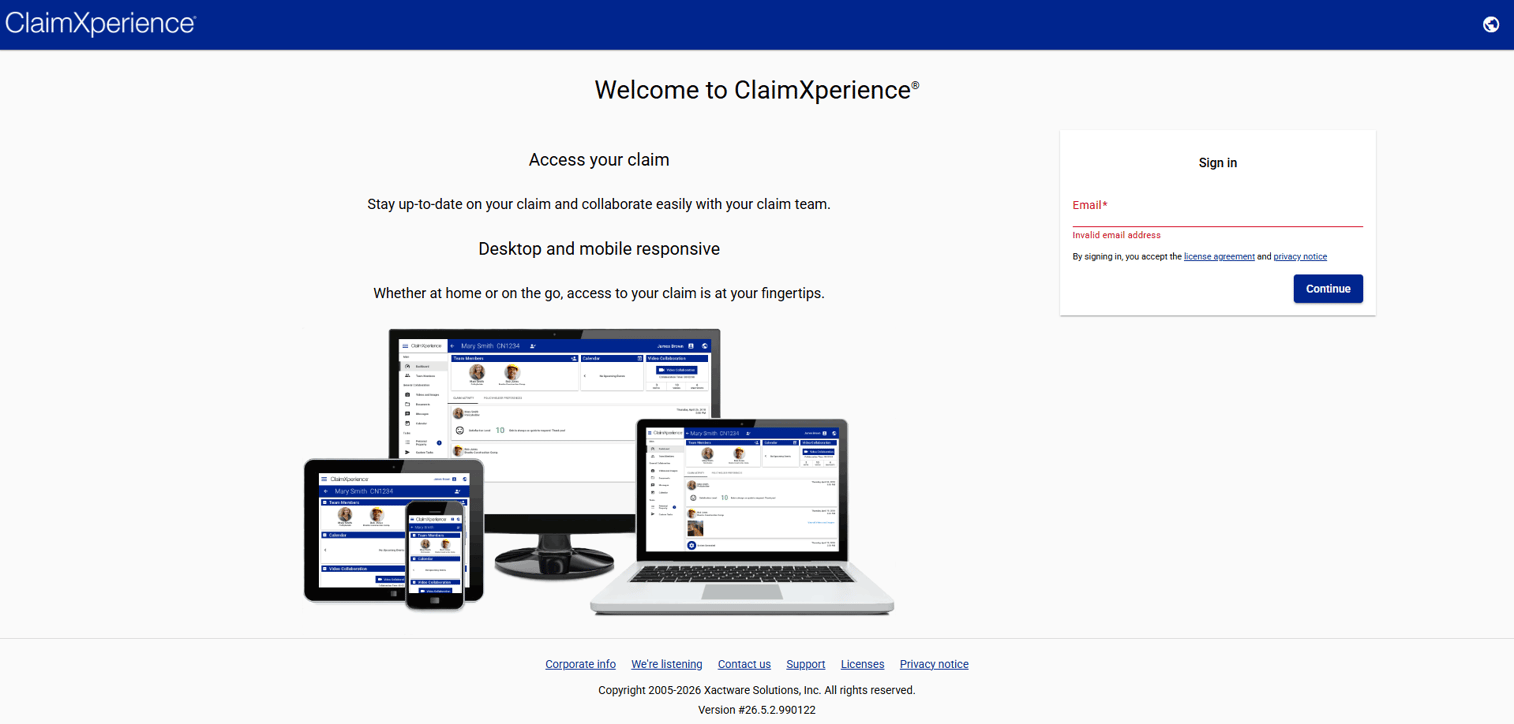
ClaimXperience is a cloud-based collaboration platform that helps insurers and policyholders navigate property claims together. It focuses on the evidence-collection bottleneck: Rather than waiting for a field visit or emailing back and forth for photos, adjusters and policyholders can collaborate directly through live video, self-service inventory tools, and AI-powered receipt categorization.
Best for: Insurance carriers whose biggest claims delays come from incomplete evidence, missed field visits, or slow back-and-forth with policyholders on property claims.
Key features
- Live video collaboration for remote property inspections
- Self-service personal property inventory tools for policyholders
- AI-powered receipt categorization and transcription
- Policyholder document and photo upload workflows
- Digital claim collaboration and communication tools
Why choose ClaimXperience: Use this when the primary friction is evidence collection and customer participation, not core claims administration. It works well alongside an existing claims system to improve the front-end experience without replacing the entire backend.
ClaimXperience pricing: Pricing is quote-based. Contact the vendor with claim volume, deployment scope, and module requirements to receive pricing details.
G2 rating: 4.3/5 (6 reviews)
3. Wisedocs
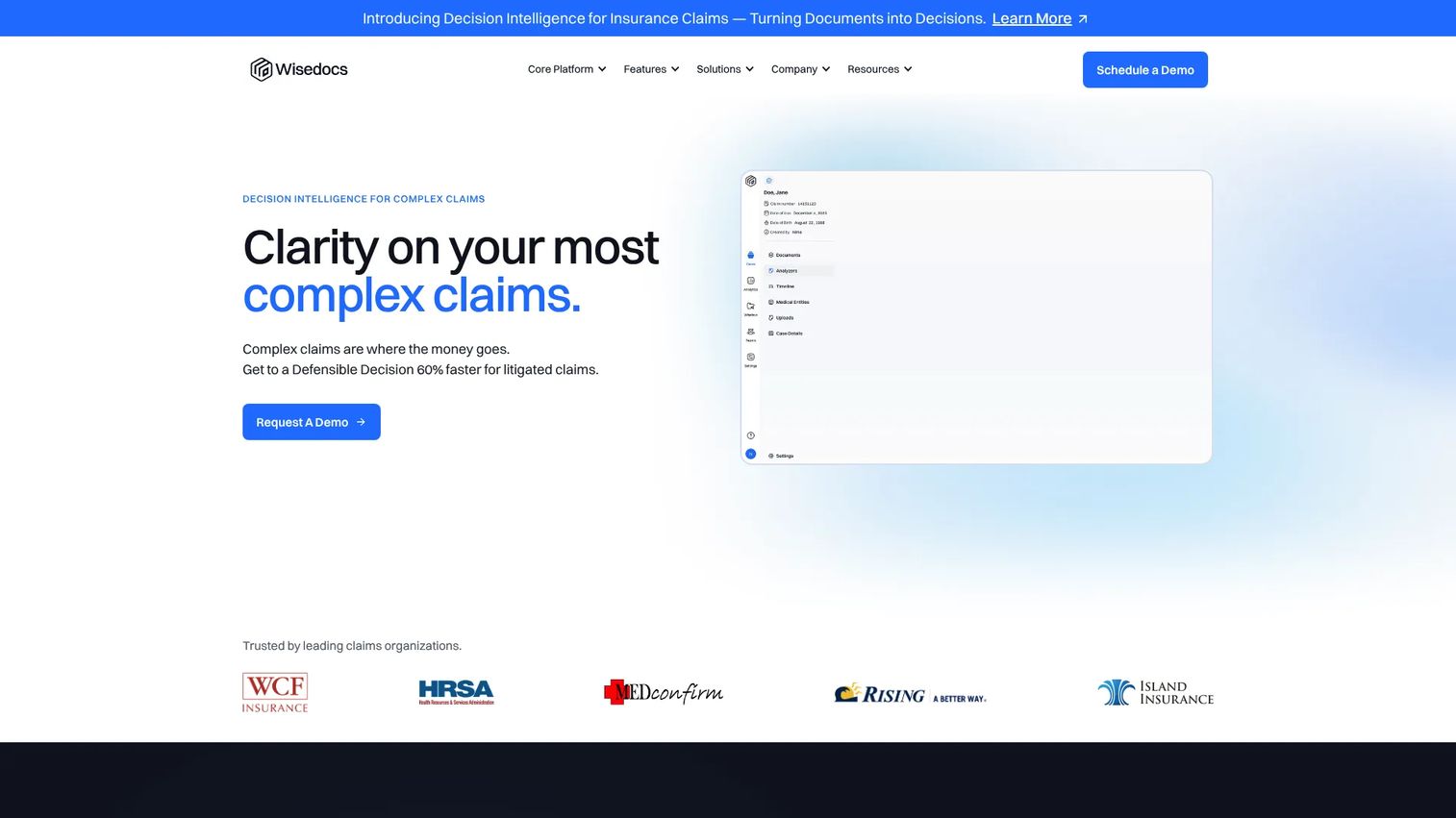
Wisedocs is an AI-powered claims decision intelligence platform focused on medical record and document processing. It handles the parts of a claim file that slow reviewers down most: Sorting hundreds of pages, identifying co-mingled records, generating chronologies, and surfacing risk signals. WiseChat lets teams ask questions directly against the claim documents, and WiseShare enables secure collaboration with permissions and audit trails.
Best for: Insurance carriers, TPAs, legal defense teams, and medical reviewers handling large, complex claim files, particularly in workers' compensation, disability, personal injury, or healthcare claims.
Key features
- AI-generated medical chronologies and document summaries
- Automated deduplication and co-mingled-record detection
- Source-cited AI insights and risk-signal analysis
- WiseChat question answering against claim documents
- WiseShare secure collaboration with audit trails
Why choose Wisedocs: Choose this when adjusters or medical reviewers are spending hours just reading and organizing files before they can make a decision. It complements a core claims system rather than replacing it, targeting the document intelligence layer specifically.
Wisedocs pricing: Wisedocs directs prospects to book a demo for pricing. Contact the vendor to discuss document volume, workflow requirements, and implementation scope.
G2 rating: 4.0/5
4. BriteCore
BriteCore is a cloud-native core insurance platform for property and casualty carriers. Claims are one part of a broader suite that also covers policy administration, billing, agent portals, and reporting. The platform includes AI-assisted claims workflows alongside configurable product definition, underwriting, and rating tools, all accessible through REST APIs and third-party integrations.
Best for: Mid-size P&C carriers and fast-growing MGAs that need claims tools tightly connected with policyholder, billing, and agent data inside a single platform.
Key features
- Claims management with AI-assisted workflows
- Policy administration and management
- Billing and accounts receivable with payment processing
- Agent and policyholder portals
- Reporting, analytics, and third-party integrations via REST APIs
Why choose BriteCore: Use this when claims can't be evaluated in isolation from the rest of the insurance operation. If you need policy data, billing context, and agent workflows to be part of the same system rather than integrated separately, BriteCore's platform approach fits.
BriteCore pricing: Contact BriteCore directly for pricing.
G2 rating: 4.3/5 (24 reviews)
5. ClaimsPro
ClaimsPro provides independent claims adjusting services supported by proprietary claims-management and risk-management technologies. The core products include iAdjust for claims management, ClaimsPro Connect for real-time claims access and reporting, OpticRisk for incident and risk tracking, and SMART Field Inspections for remote and 360-degree property inspections. This is a services-backed model, not a software-only platform.
Best for: Insurers and organizations that need outsourced claims adjusting capacity alongside technology-enabled operations, particularly for catastrophe response or specialized lines.
Key features
- iAdjust claims management and data repository
- ClaimsPro Connect real-time claims access and customizable reporting
- OpticRisk incident, claims, and risk-management tracking
- SMART Field Inspections with remote mobile and 360-degree capability
- Loss management support and catastrophe claims services
Why choose ClaimsPro: Use this when internal teams need operational claims capacity or field expertise rather than an additional software platform to manage internally. The services-backed model suits insurers dealing with volume spikes or specialized claim types.
ClaimsPro pricing: Pricing reflects claim type, service model, volume, and geography. Contact the vendor for a quote specific to your adjusting needs.
6. EIS Suite
EIS Suite is a cloud-native, API-first insurance core platform covering policy, billing, claims, and customer operations. It supports multiple insurance lines and is designed for insurers that want configurable workflows without heavy customization overhead. The platform includes omnichannel customer experiences, integrated customer data, analytics, document management, and open API integration.
Best for: Insurance carriers modernizing multiple core systems together, where claims modernization is part of a larger policy, billing, and customer transformation.
Key features
- Policy, billing, claims, and customer-management applications
- Omnichannel customer experiences and integrated customer data
- Product, rating, billing, claims, workflow, and rules configuration
- Analytics, reporting, and document management
- Open API integration with cloud, on-premises, or hybrid deployment
Why choose EIS Suite: Use EIS when claims modernization is a component of a broader core system project rather than a standalone effort. The configurable, multi-line architecture suits carriers replacing several legacy systems at once.
EIS Suite pricing: Contact EIS for pricing. Drivers include modules selected, deployment model, and implementation complexity.
7. AdInsure Claims
AdInsure Claims is an end-to-end claims management module within the AdInsure insurance platform, built by Adacta. It covers the claims lifecycle from FNOL and claim registration through reserves, liquidation, payments, recoveries, reinsurance, fraud management, catastrophe management, and document management. It supports P&C, life, and commercial lines.
Best for: Insurers that need a configurable, multiline claims module connected to policy administration, finance, and reporting workflows.
Key features
- FNOL and claim registration with workflow configuration
- Claims handling, assignment, reserves, and payment processing
- Reinsurance, recoveries, and legal procedure support
- Fraud management and catastrophe management tools
- Document management and operational reporting
Why choose AdInsure Claims: Choose this when your insurer needs structured claim handling that connects directly to policy administration and financial workflows without relying on a separate integration layer.
AdInsure Claims pricing: Contact Adacta for pricing. Cost drivers include modules, lines of business, and implementation scope.
8. ALFRED
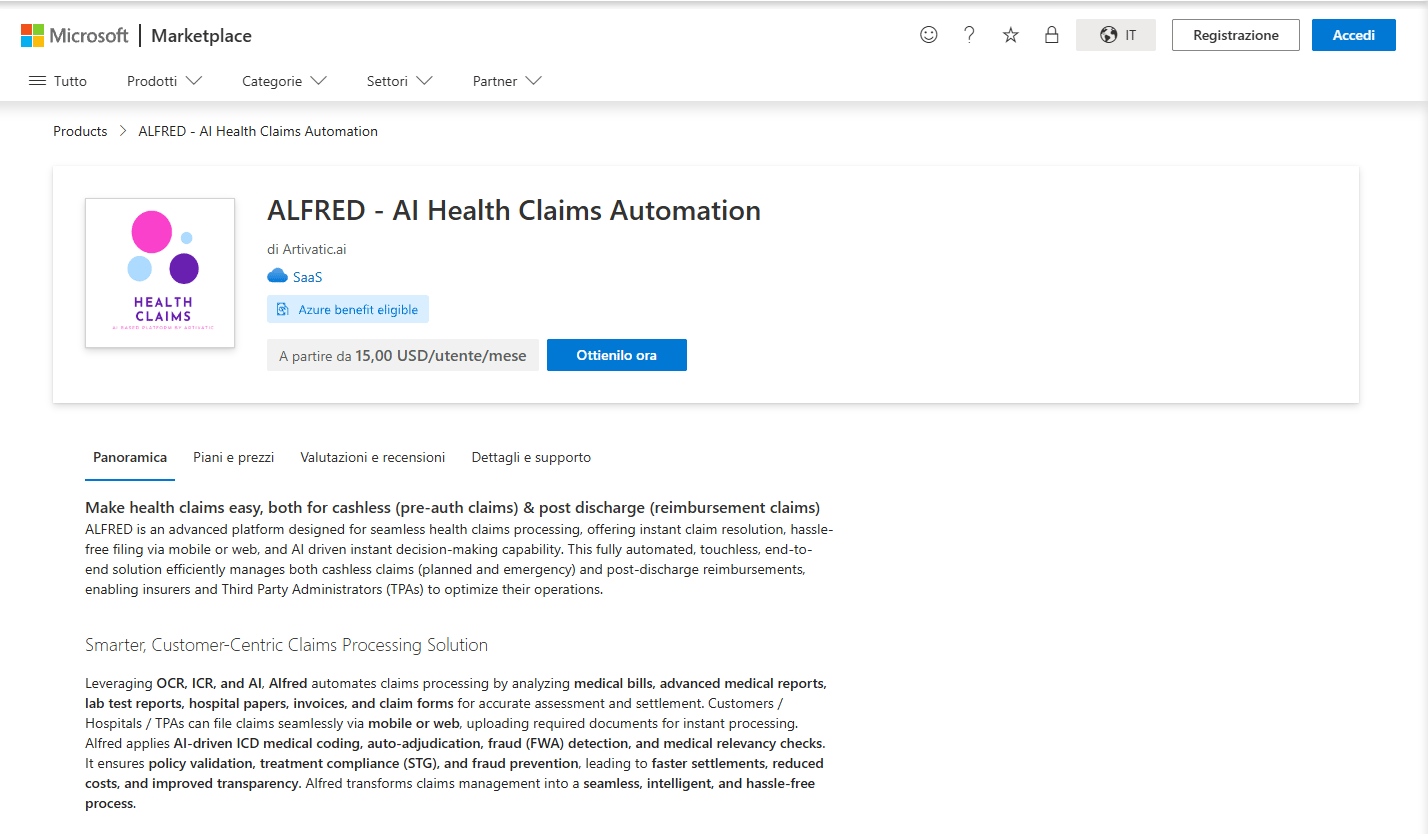
ALFRED is listed as an insurance claims management platform. At the time of research, the vendor's website was inaccessible, and no first-party feature detail, pricing, or independent rating could be verified. The brief notes claims workflow support, case tracking, document handling, and reporting as expected capabilities.
Best for: Claims teams that match ALFRED's verified market, region, and product scope. Contact the vendor to confirm current capabilities before evaluating.
Key features
- Claims workflow support
- Case tracking and task management
- Document handling
- Communication tools
- Reporting views
Why choose ALFRED: Contact the vendor directly to understand current deployment model, regional focus, and workflow design before including ALFRED in your shortlist.
ALFRED pricing: Contact the vendor for pricing details.
9. Altkom Insurance Suite
Altkom Insurance Suite is a composable insurance platform from Altkom Software & Consulting. It covers product and pricing management (AIS Product Factory), policy and billing (AIS Policy Center), and end-to-end claims handling (AIS Claim Center). The platform is built on API-first, microservices-based architecture and supports cloud and on-premise deployment, with AI-powered document analysis and case assessment.
Best for: Insurance carriers and agencies that need a modular platform for product configuration, policy administration, claims, portals, and automation, and prefer to adopt components selectively.
Key features
- End-to-end claims intake and handling through AIS Claim Center
- Product and pricing management with AIS Product Factory
- Policy, billing, and collections management through AIS Policy Center
- Customer, agent, and partner portals
- AI-powered document analysis and case assessment
Why choose Altkom Insurance Suite: Use this when you want modular modernization rather than replacing an entire insurance stack at once. The composable architecture lets teams add capabilities incrementally.
Altkom Insurance Suite pricing: Contact the vendor for pricing. The website promotes tailored consultations and implementation plans rather than published tiers.
G2 rating: 5.0/5
10. Azentio Claim Automation
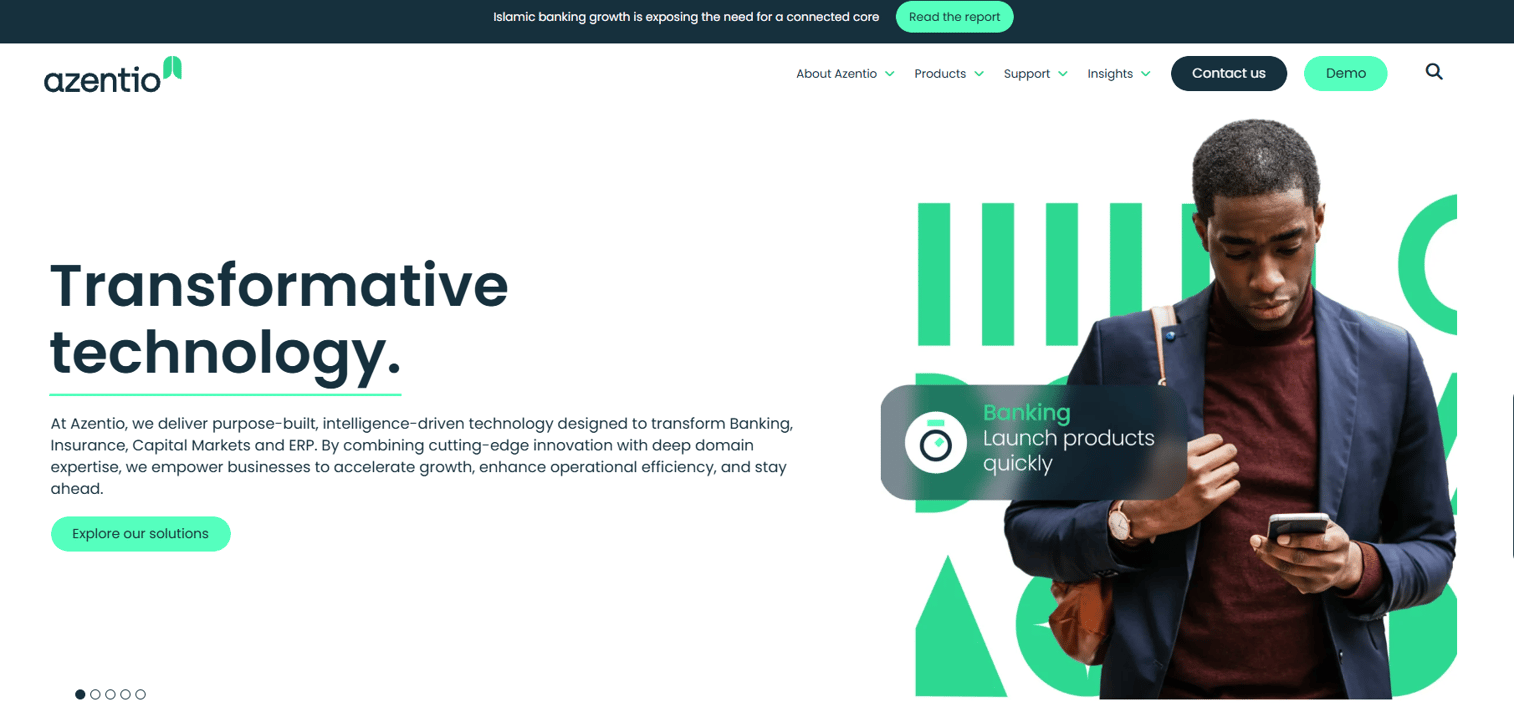
Azentio Claim Automation is a cloud-based claims automation platform for insurers that handles the claims lifecycle from FNOL through settlement. It includes configurable automated workflows, OCR-powered document capture, fraud detection scoring, real-time SMS and email communication, SLA monitoring with escalation management, and multi-party collaboration for insurers, surveyors, garages, and suppliers.
Best for: Insurance companies that want configurable, cloud-based automation for end-to-end claims processing with built-in fraud scoring and multi-party coordination.
Key features
- Configurable automated workflows and rule-based approvals
- OCR-powered document capture and processing
- Fraud detection scoring
- Real-time communication via SMS and email
- SLA monitoring, alerts, and escalation management
Why choose Azentio Claim Automation: Use this when claims teams need structured automation for repeatable claim paths and faster processing queues, with multi-party coordination built into the workflow rather than managed separately.
Azentio Claim Automation pricing: Contact Azentio for pricing.
11. Benekiva
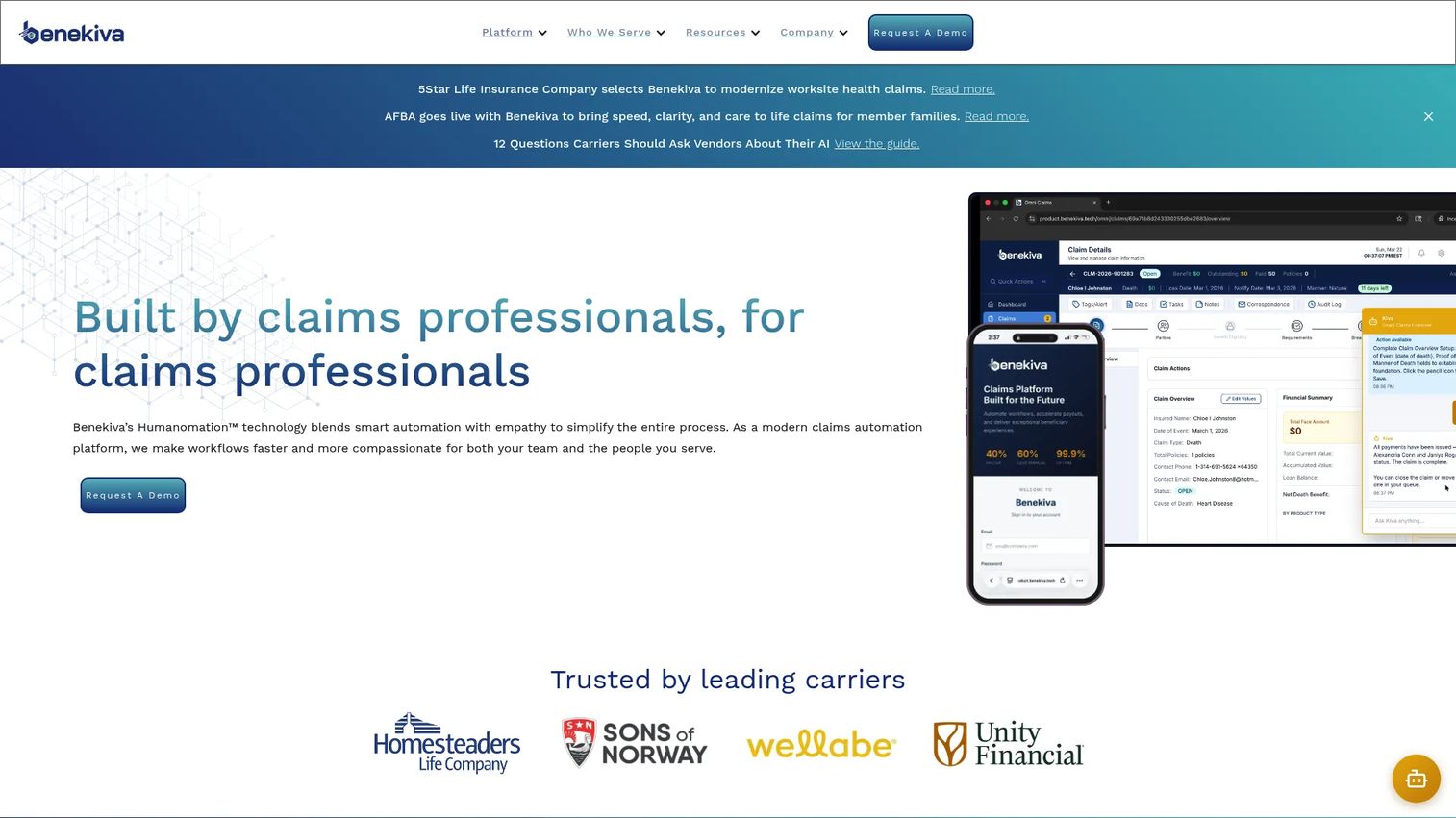
Benekiva is a cloud-native claims automation platform for life, annuity, long-term care, living benefits, final expense, and preneed insurance carriers. Its Claims Workbench offers configurable workflows, task assignment, correspondence, audit trails, and straight-through processing. The AI examiner assistant, Kiva, helps examiners identify missing information, provides next-step guidance, and surfaces contextual questions. Beneficiary portals give claimants real-time status visibility, document upload access, and secure messaging.
Best for: Life insurance carriers that need a better beneficiary claims experience alongside efficient back-office workflows, particularly for sensitive claims moments.
Key features
- Digital claim submission and FNOL automation
- Claims Workbench with configurable workflows and audit trails
- Kiva AI examiner support for missing-information detection and next-step guidance
- Automated interest calculation
- Stakeholder portals with document upload, status visibility, and secure messaging
Why choose Benekiva: Choose this when the claimant experience during a life insurance claim matters as much as processing efficiency. The beneficiary portal and AI examiner tools both reduce manual follow-up and repetitive status calls.
Benekiva pricing: Contact the vendor with carrier size, claims volume, and module requirements to receive a quote.
12. Duck Creek Claims
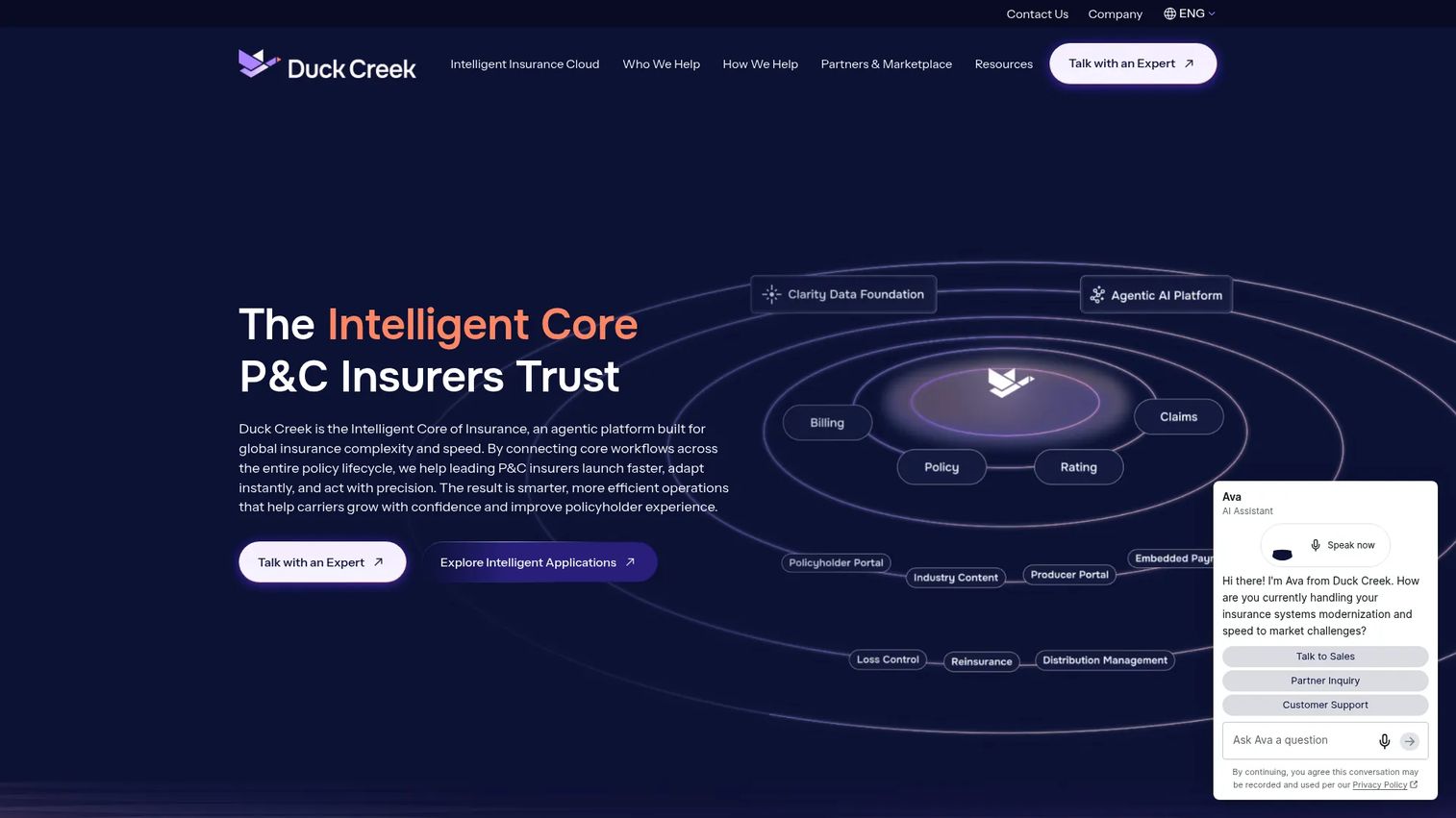
Duck Creek Claims is a cloud-delivered P&C insurance claims management product that handles the claims lifecycle from FNOL through settlement, subrogation, and recovery. It includes AI-assisted decisioning, straight-through processing for eligible claims, and cloud-native scalability for handling catastrophe-event volume spikes. Coverage verification, investigation management, reserves, and payments are all managed within the platform.
Best for: Property and casualty insurers modernizing claims administration inside a broader insurance technology stack, particularly those experiencing high-volume events or complex subrogation needs.
Key features
- Assignment, routing, and coverage verification
- Investigation management and reserves tracking
- Subrogation and recovery workflows
- AI-assisted decisioning and straight-through processing
- Cloud-native scalability for catastrophe events
Why choose Duck Creek Claims: Use Duck Creek when claims modernization needs to connect with core P&C policy and billing operations and when catastrophe scalability is a real operational concern.
Duck Creek Claims pricing: Contact Duck Creek for pricing. Cost varies by carrier scale, implementation scope, and selected modules.
G2 rating: 4.4/5 (11 reviews)
13. Five Sigma Claims Management System
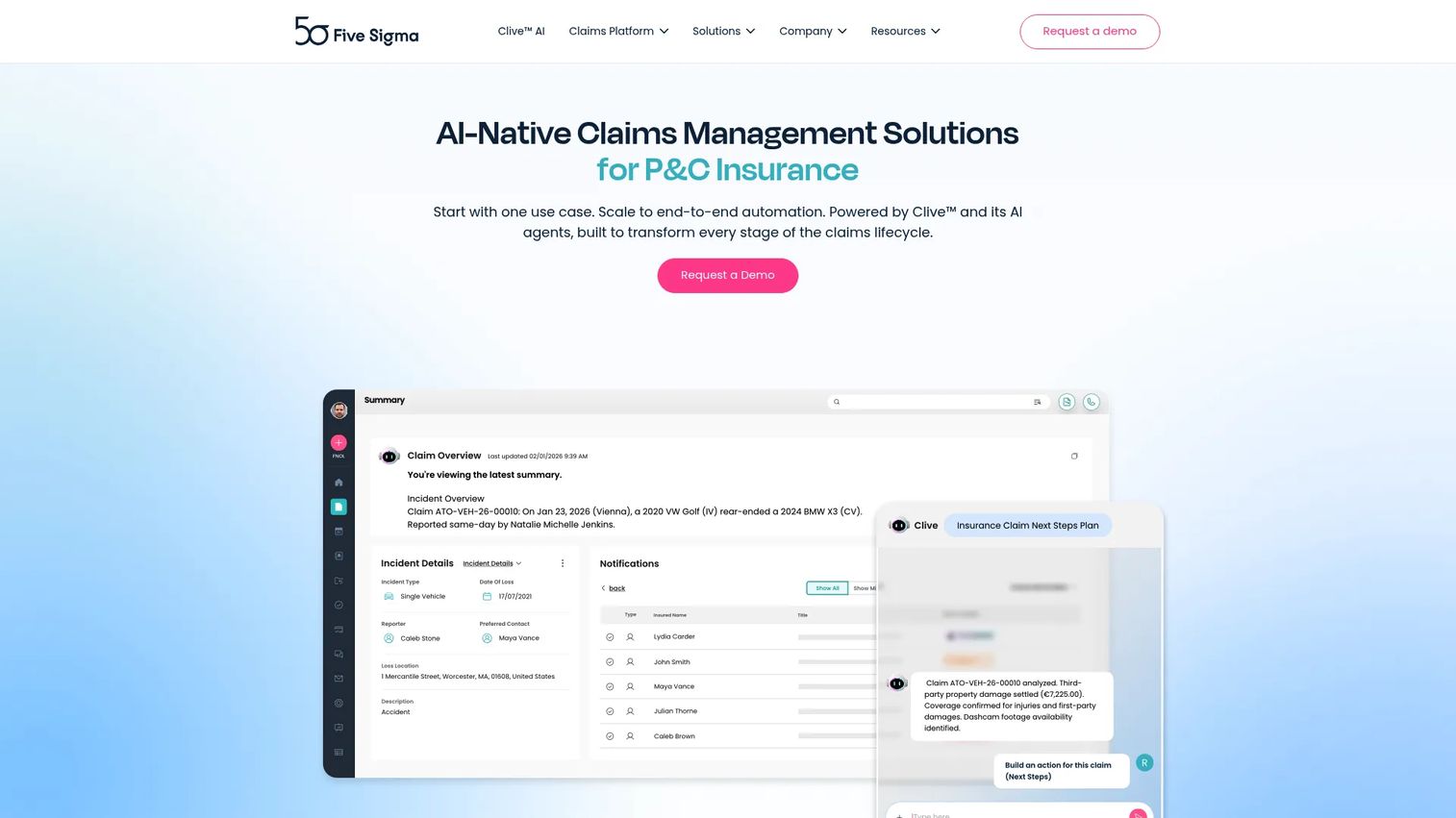
Five Sigma is an AI-native, cloud-based claims management platform for P&C insurers, MGAs, TPAs, and self-insured organizations. It handles automated claims handling from FNOL to settlement, with AI-driven insights and recommendations surfaced throughout the workflow. No-code workflow configuration means teams can adjust claim paths without developer involvement. Omnichannel communication, including SMS, WhatsApp, email, voice, and video, is built into the platform alongside API-based integrations.
Best for: P&C carriers, MGAs, and TPAs that want AI-assisted claims automation and configurable workflows without framing the project as a full core system replacement.
Key features
- Automated claims handling from FNOL to settlement
- AI-driven claims insights and workflow recommendations
- No-code workflow and configuration management
- Omnichannel communications: SMS, WhatsApp, email, voice, video
- API-based integrations with core and specialized systems
Why choose Five Sigma: Use this when the team wants modern claims automation with strong workflow visibility and claimant communication built in. The no-code configuration suits teams that need to adjust processes without engineering support.
Five Sigma Claims Management System pricing: Five Sigma describes flexible SaaS pricing and directs prospects to request a demo. Contact the vendor for pricing based on claim volume and modules.
14. InsureEdge
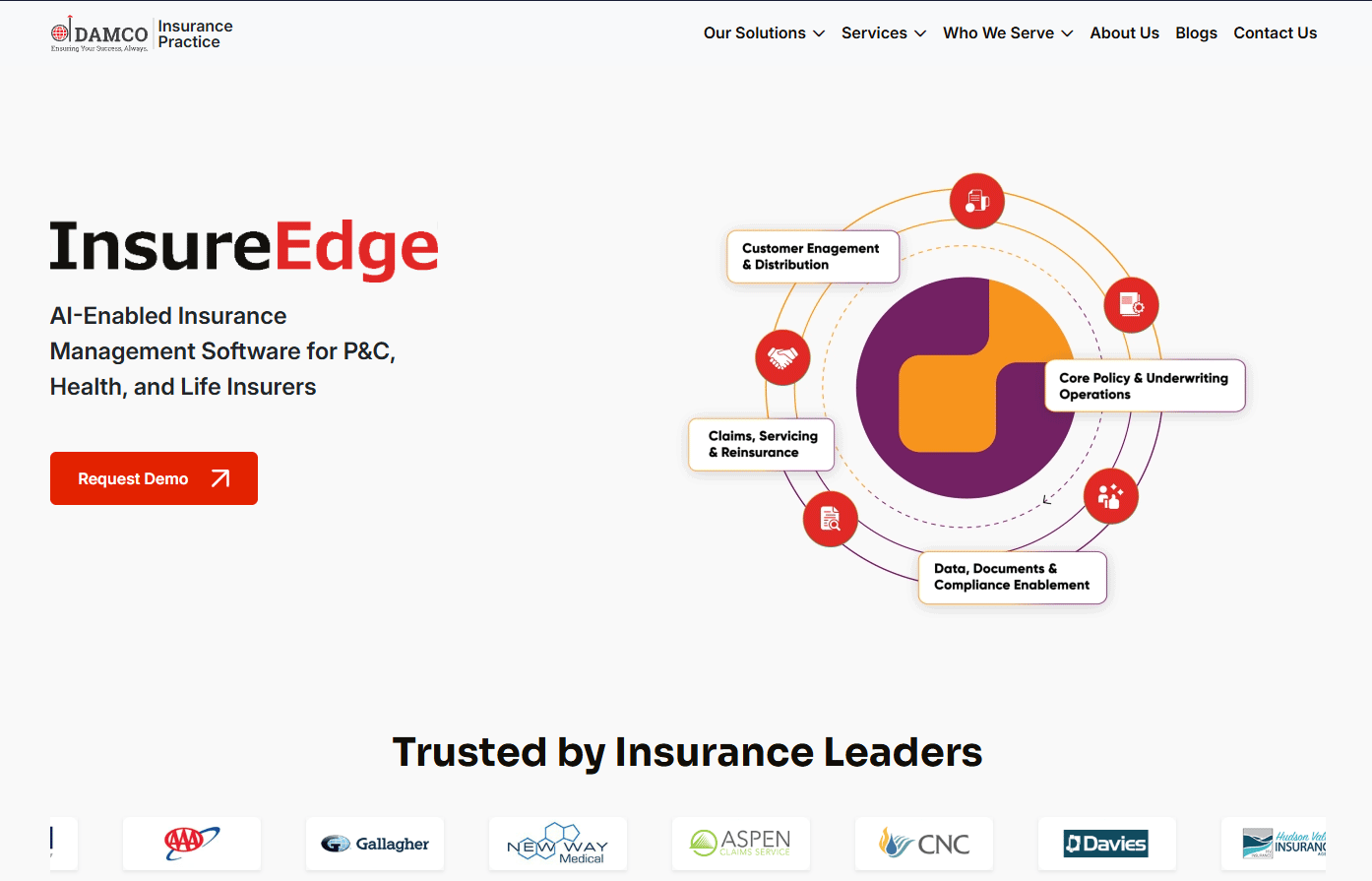
InsureEdge is an all-in-one insurance software platform for policy administration and claims management across P&C, Life, and General Insurance lines. It brings claims management, policy administration, document management, billing, and payment workflows into one system, reducing the number of separate tools a carrier needs to maintain.
Best for: Insurers that need claims management connected to policy administration, billing, and document workflows inside a single system rather than assembled from separate point solutions.
Key features
- Claims administration and management
- Policy administration and management
- Billing support and payment workflows
- Document management
- Reporting and analytics tools
Why choose InsureEdge: Choose this when claims processes need to stay connected with policy administration, billing, and reporting, and when maintaining multiple separate systems creates operational overhead.
InsureEdge pricing: Contact the vendor for pricing.
G2 rating: 4.5/5
15. Insurity Platform
Insurity Platform is a cloud-based insurance software platform combining AI, analytics, and core systems for P&C insurers, MGAs, brokers, and specialty insurance organizations. It covers policy administration with bureau-managed content and regulatory updates, underwriting, billing, claims, document management, and geospatial analytics for portfolio risk insights. The platform is browser-based and API-first.
Best for: P&C insurers and MGAs that need claims capabilities within a broader platform that also covers underwriting, analytics, and bureau content management.
Key features
- Claims processing and document management
- Policy administration with managed bureau content
- Underwriting, rating, and configurable workflow automation
- Geospatial analytics and portfolio risk insights
- API-first, browser-based cloud platform
Why choose Insurity Platform: Use this when claims modernization is part of a broader underwriting, policy, and analytics effort. The bureau content management is particularly useful for standard lines carriers managing regulatory updates.
Insurity Platform pricing: Contact Insurity for pricing. The vendor directs prospective customers to reach out directly; cost depends on product mix, implementation services, and carrier size.
G2 rating: 3.7/5
16. Majesco Claims
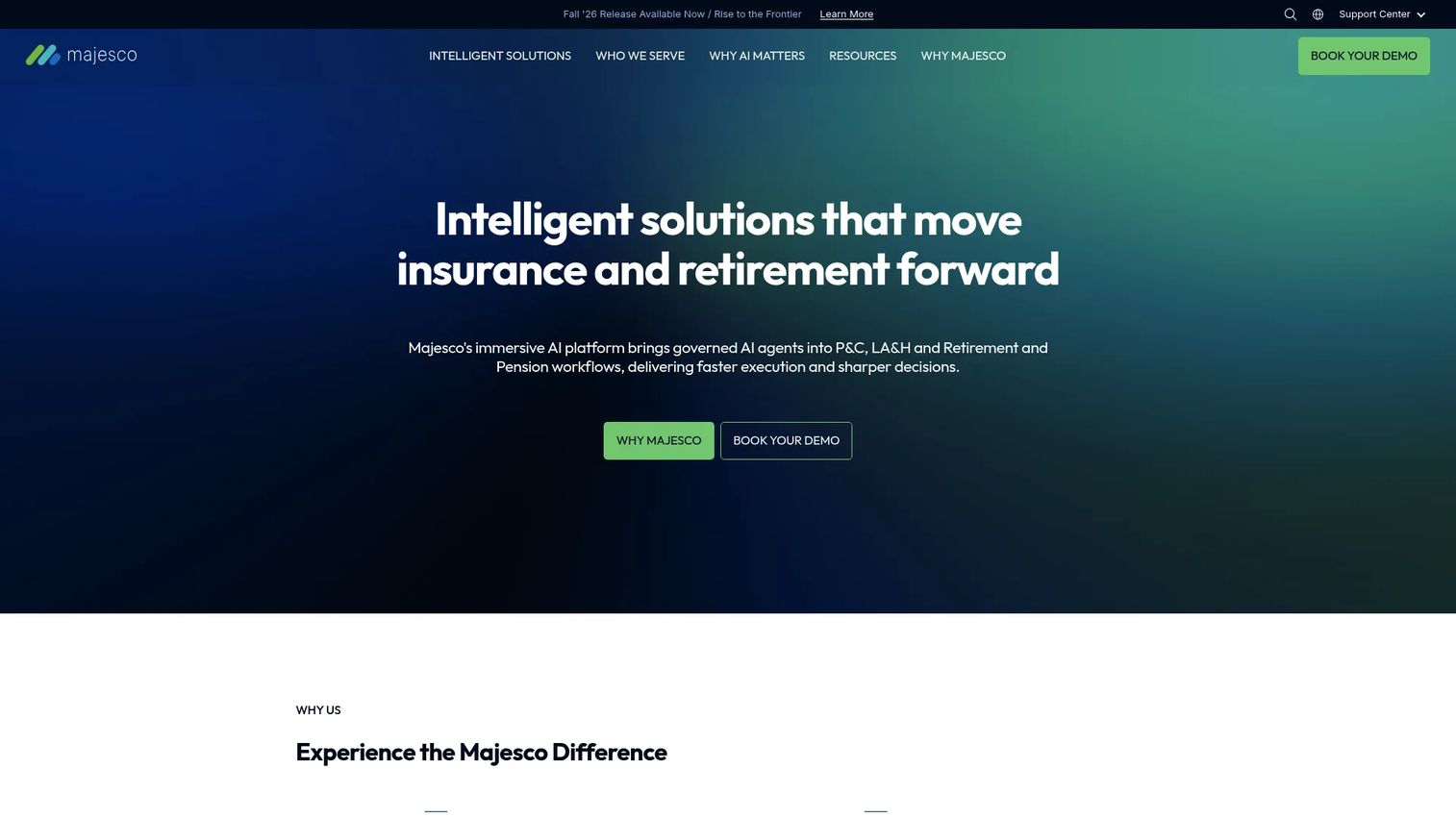
Majesco Claims is a core claims management platform for insurance carriers, MGAs, and MGUs. It supports the full claims lifecycle from FNOL and FROI through centralized claim management, configurable workbench and task tools, vendor coordination, and embedded reporting. AI-assisted capabilities include inquiry handling, claim summarization, triage, and task creation.
Best for: Insurance carriers, MGAs, and MGUs that need configurable core claims administration across the claims lifecycle, with AI assistance for triage and adjuster productivity.
Key features
- FNOL and FROI workflows
- Configurable workbench, workflows, and task management
- Vendor coordination and third-party integrations
- Embedded reporting and business intelligence
- AI-assisted inquiry, summarization, triage, and assignment
Why choose Majesco Claims: Use this when teams need structured claims administration backed by broader core insurance platform capabilities. The AI-assisted triage and task tools suit operations looking to reduce manual adjuster overhead on routine claims.
Majesco Claims pricing: Pricing is tailored to each organization. Contact Majesco with module requirements, line of business, and implementation size for a quote.
17. NSure
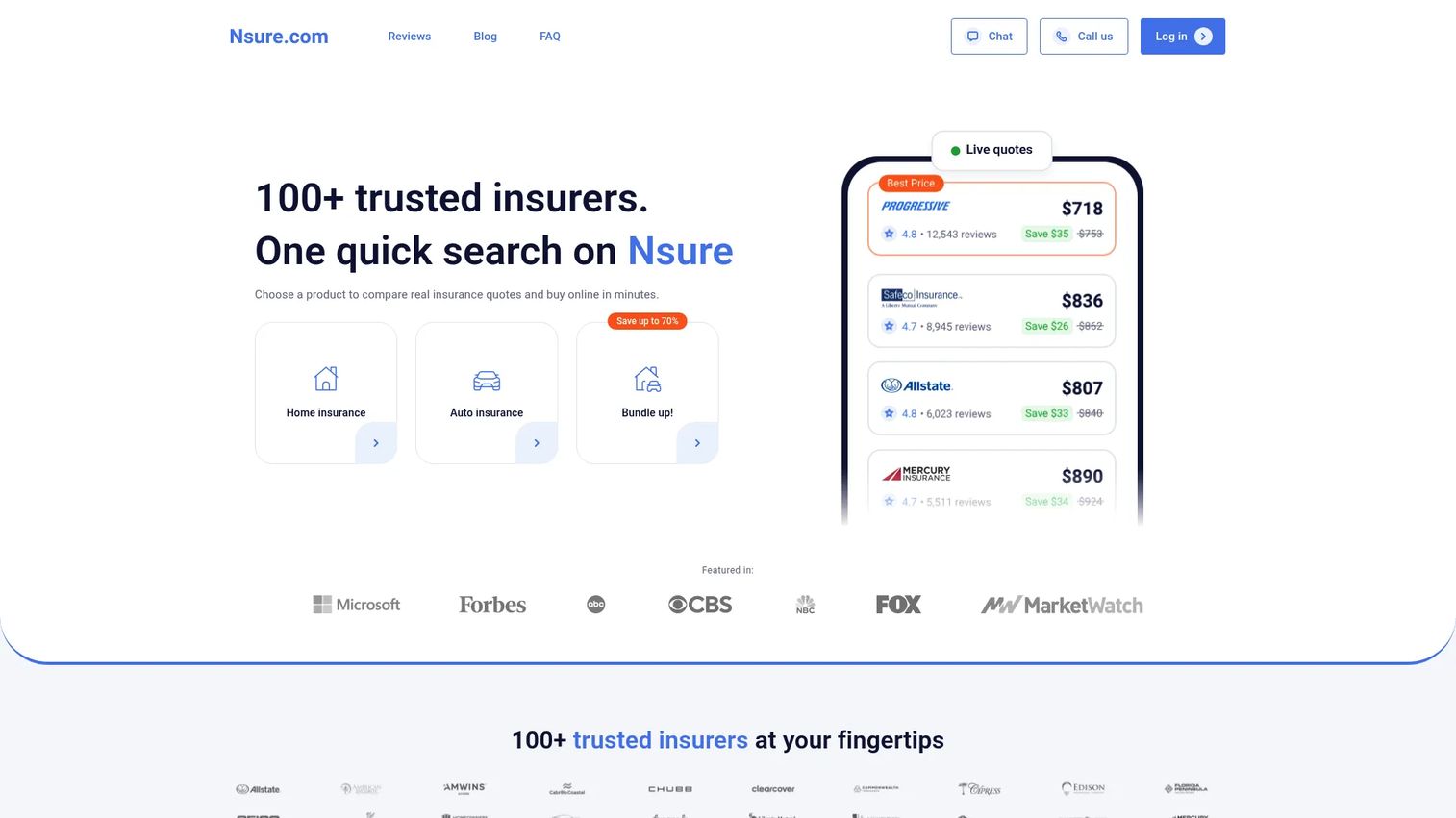
NSure is a digital insurance agency that lets consumers compare and purchase home and auto insurance from multiple carriers online. It offers side-by-side quotes from more than 100 insurers, automatic renewal re-shopping, online purchase and policy management, and licensed-agent assistance via chat or phone. NSure earns commissions from carriers and is free for consumers to use.
Best for: Consumers comparing and purchasing home or auto insurance online, not insurance operations teams building a claims management stack.
Key features
- Side-by-side comparison of quotes from 100+ insurers
- Online purchase and policy management
- Automatic renewal re-shopping
- Coverage recommendations and adjustable options
- Licensed-agent assistance via chat or phone
Why choose NSure: NSure is not a claims management system for insurers or TPAs. Consider it if the goal is a consumer-facing insurance marketplace rather than a back-office claims operations platform.
NSure pricing: Free for consumers. NSure earns commissions from insurers when a policy is purchased.
18. Snapsheet Claims
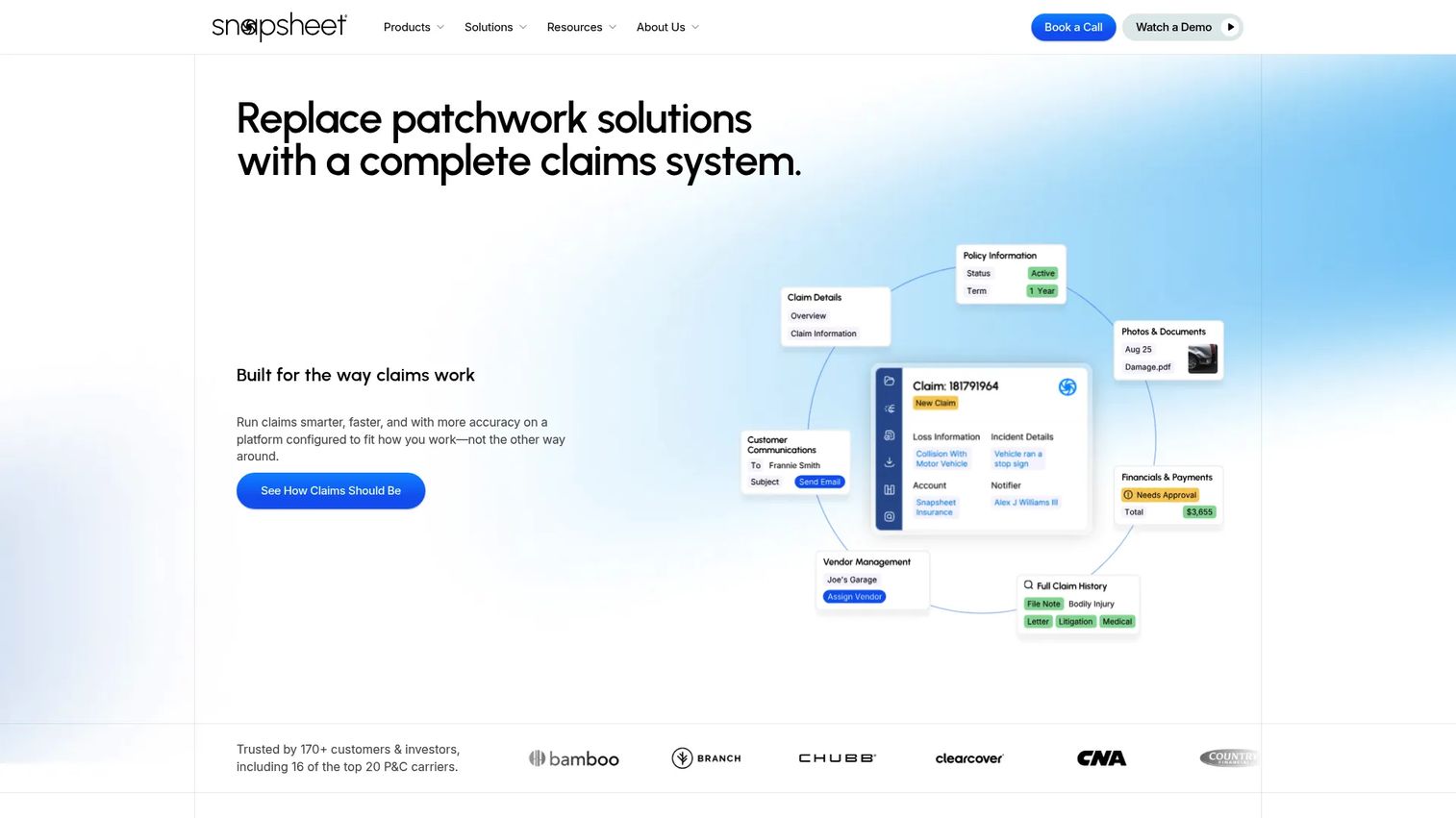
Snapsheet Claims is a cloud-based P&C claims management platform for carriers, MGAs, TPAs, and fleet or logistics organizations. It covers the full claims lifecycle with a unified claim view that consolidates documents, communications, notes, vendors, and actions. AI agents, configurable with no-code prompt engineering, handle repeatable claim steps. Smart assignment, integrated digital payments, and reserve management are all part of the core platform.
Best for: Auto and P&C claims teams that need digital claims workflows with strong claimant communication, payment processing, and AI-assisted claim handling.
Key features
- Unified claim view: Documents, communications, notes, vendors, actions
- AI agents configurable with no-code prompt engineering
- No-code workflow automation and multi-step actions
- Smart assignment with rules and guardrails
- Integrated digital payments, reserves, and vendor payments
Why choose Snapsheet Claims: Use this when claimants need clearer digital communication and claims teams need faster coordination across appraisal, assignment, and settlement. The AI agents and payment integration reduce manual steps at both ends of the claim.
Snapsheet Claims pricing: Contact Snapsheet for pricing.
G2 rating: 4.1/5 (13 reviews)
19. Salesforce Financial Services Cloud
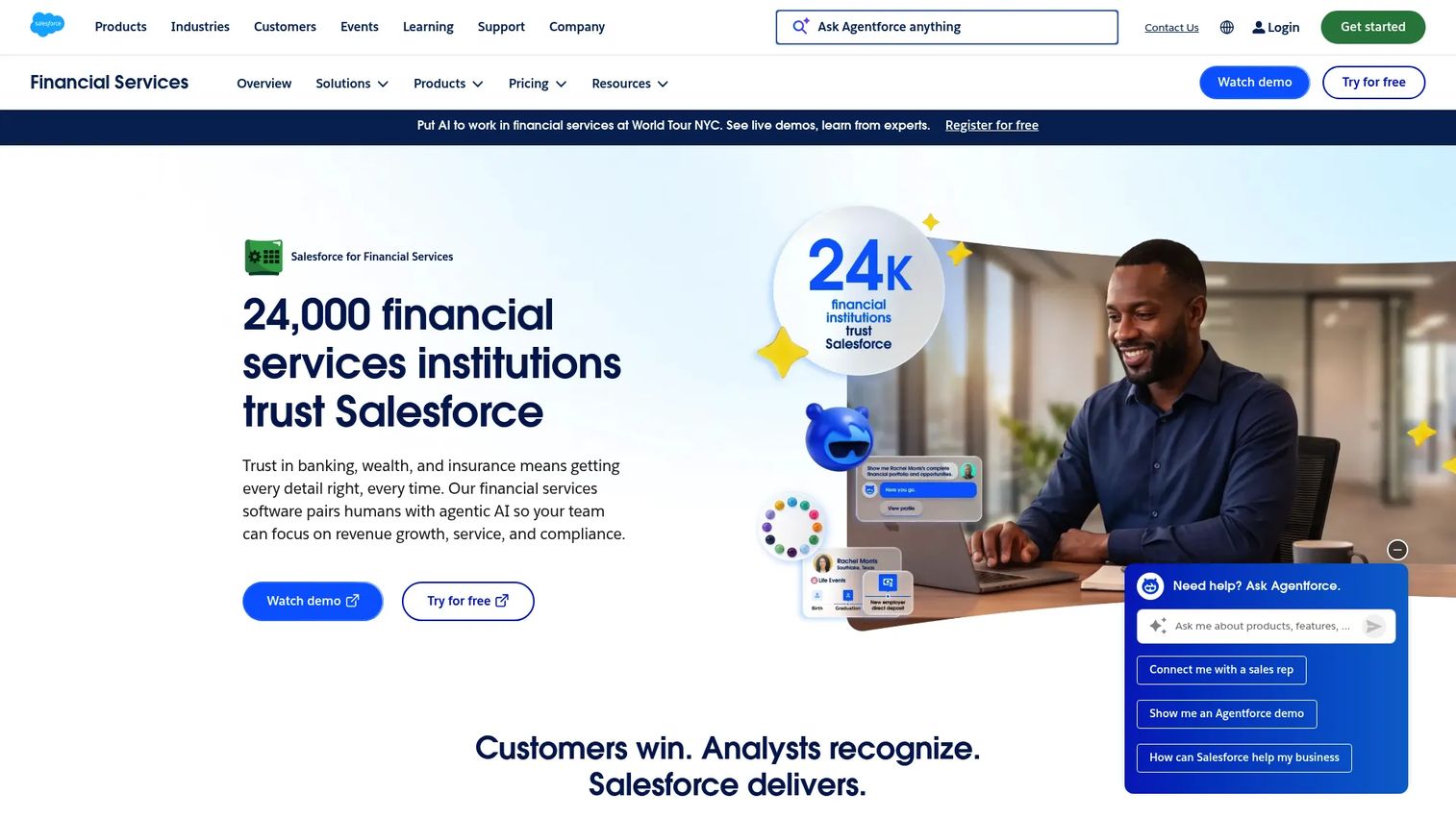
Salesforce Financial Services Cloud is an industry-specific CRM for banks, wealth managers, and insurance companies. For insurance, it provides unified customer and financial-account views, claims service case management, AI agents and automation for service workflows, and an industry-specific data model. It's commonly used alongside dedicated core claims systems to handle the customer-facing service layer.
Best for: Mid-market and enterprise insurers that want claims service workflows, case management, and claimant communication inside an existing CRM rather than a separate claims portal.
Key features
- Industry-specific data model and insurance workflows
- Unified customer, financial-account, and interaction views
- Claims service case management and AI automation
- AI agents for sales, service, banking, and insurance workflows
- 30-day free trial available
Why choose Salesforce Financial Services Cloud: Use this when customer communication, agent productivity, and claimant service history matter as much as backend claims administration. It complements rather than replaces dedicated claims platforms, handling the relationship and service layer.
Salesforce Financial Services Cloud pricing: Plans start at $325 per user per month (billed annually) for the Sales Core or Service Core edition. The Sales and Service Core combined edition starts at $350 per user per month. Advanced and Max tiers go up to $500 and $700 per user per month respectively. A 30-day free trial is available.
G2 rating: 4.3/5
20. Sapiens ClaimsMaster
Sapiens ClaimsMaster is an end-to-end P&C claims management platform with rules-driven workflow, automated claim assignment, straight-through processing, and configurable dashboards. It supports complex claims and fraud case management alongside role-based processing and configurable metadata and rules. API integration with third-party ecosystems allows connections to external data sources, vendors, and analytics tools.
Best for: Mid-size to large property-and-casualty insurers managing complex, end-to-end claims operations that need configurable automation and fraud case management.
Key features
- Rules-driven workflow and automated claim assignment
- Straight-through processing and automated claims decisioning
- Configurable dashboards with drill-down capabilities
- Case management for complex claims and fraud
- API integration with third-party ecosystems
Why choose Sapiens ClaimsMaster: Use this when the insurer needs full claims administration and wants to standardize claims handling across teams or lines with rules-based automation and fraud investigation support.
Sapiens ClaimsMaster pricing: Contact Sapiens for pricing. No pricing tiers were found on the vendor's official materials; cost depends on modules, deployment, and line-of-business complexity.
G2 rating: 4.4/5 (Sapiens seller profile)
21. Sapiens Automation & AI
Sapiens Automation & AI represents Sapiens's autonomous insurance platform, SapiensAIP, which applies AI agents to underwriting, claims, and analytics workflows. AI agents handle claims-related tasks including inquiry processing, document summarization, triage, and next-step recommendations. The platform includes audit trails, explainability controls, configurable guardrails, and human-in-the-loop oversight, so teams can automate high-volume steps while keeping accountability intact.
Best for: Insurance carriers seeking to add AI automation to claims and underwriting workflows without replacing core administration systems, with governance and auditability as requirements.
Key features
- AI agents for underwriting and claims workflows
- Natural-language reports, dashboards, and actionable insights
- Audit trails, explainability, and human-in-the-loop oversight
- Persona-based digital experiences
- Deployment agents for discovery, migration, validation, and configuration
Why choose Sapiens Automation & AI: Use this when teams want to automate repetitive claims steps and route exceptions with governance controls in place. The AI-first framing suits organizations adding automation without committing to a full platform replacement.
Sapiens Automation & AI pricing: Contact Sapiens for pricing. The vendor directs prospects to sales; cost depends on automation scope, data integrations, and implementation effort.
G2 rating: 4.4/5 (Sapiens seller profile)
Considerations when choosing insurance claims management software
Map the tool to your claims lifecycle
Not every tool covers the same scope. Full claims administration systems (like Guidewire, Duck Creek, and Majesco) handle end-to-end claim management. Document intelligence tools (like Wisedocs) target a specific layer. Claimant experience platforms (like Benekiva and ClaimXperience) focus on the front end. Know which part of your lifecycle needs attention before shortlisting platforms, because the wrong category of tool adds overhead rather than reducing it.
Check integration with policy, billing, and customer systems
Claims teams need policy data, coverage details, billing context, and claimant history during review. Ask vendors specifically about API depth, data migration approach, event trigger support, and how updates sync across systems. A claims platform that can't pull coverage data in real time forces adjusters to context-switch, which slows handling time.
Evaluate claimant communication and self-service
For support operations specifically, this is the highest-value question. A claims portal where claimants can check their own status, upload documents on request, and receive automated notifications at key milestones significantly reduces incoming ticket volume. Ask vendors to show you what a claimant sees, not just what an adjuster sees.
Review fraud detection and audit controls
Ask how the system flags unusual patterns, supports investigator workflows, protects personally identifiable information, and maintains decision audit trails. AI-based fraud scoring adds value, but human review workflows and documentation controls are equally important for compliance and defensibility. Don't accept vague "AI-powered fraud detection" claims without specifics on what triggers an alert.
Plan implementation before signing
Data migration, user training, adjuster adoption, and customer-facing communication changes all carry real effort. Establish performance baselines before go-live so you can measure the impact clearly. Pilot scope, change management planning, and clear success criteria reduce the risk of an implementation that takes twice as long as projected.
Conclusion
The right choice depends heavily on what part of your claims operation is breaking most visibly right now.
For enterprise P&C carriers that need end-to-end claims lifecycle management, start with Guidewire ClaimCenter, Duck Creek Claims, Majesco Claims, Sapiens ClaimsMaster, or Insurity Platform. If claims automation or AI assistance is the primary goal, evaluate Five Sigma Claims Management System, Azentio Claim Automation, Wisedocs, and Sapiens Automation & AI. For teams where claimant experience and communication drive the project, look at ClaimXperience, Snapsheet Claims, Salesforce Financial Services Cloud, and Benekiva. If you need claims tools inside a broader core insurance platform, consider BriteCore, EIS Suite, AdInsure Claims, Altkom Insurance Suite, and InsureEdge.
One note: NSure is a consumer insurance marketplace, not a claims management system for insurers, so exclude it from operational shortlists.
The most useful next step isn't reading more product marketing. Shortlist three vendors by claim type, integration fit, and claimant communication requirements. Then ask each vendor to walk through the same claim scenario from FNOL to settlement, using real data where possible, before you evaluate pricing or negotiate terms.
FAQs
Insurance claims management software is a digital system that manages the full claim lifecycle, from first notice of loss through validation, investigation, adjudication, settlement, payment, and closure. It replaces manual handoffs and email-based tracking with structured workflows, automated routing, and centralized documentation. Most platforms include tools for adjusters, claimants, and reporting teams within the same system.
Claims management software typically covers the full lifecycle, including intake, investigation, communication, and settlement. Claims processing software may focus more narrowly on workflow execution, adjudication, document review, or payment steps. Vendors use the terms differently, so check what a specific product actually covers rather than relying on the label.
Essential features include FNOL intake, automated workflow routing, document and evidence management, fraud detection and claim scoring, adjuster task tools, payment and settlement support, claimant communication tools, compliance controls, and integration with policy and billing systems. Analytics and reporting for cycle time, adjuster productivity, and leakage round out a complete platform.
Claimant portals with real-time claim status, automated notifications at key milestones, and clear next-step instructions address the most common support trigger, which is "I don't know what's happening with my claim." When claimants can check status and upload documents without calling, support volume drops. J.D. Power (2025) found that 22% of customers use multiple channels just to find the same claims answer, which signals that most operations still have a visibility gap to close.
AI is applied across claims in several ways: Document extraction and summarization, claim triage and routing, fraud anomaly scoring, claim summarization for adjusters, and chatbot support for claimants. Roots' State of AI Adoption in Insurance (2025) found that more than 90% of insurers are exploring or testing AI, but only 22% have solutions in production. Human review and audit trails remain important regardless of automation level, particularly for complex or contested claims.
Yes, most enterprise claims platforms include fraud detection rules, anomaly scoring, and investigator workflow tools. These systems flag unusual patterns, such as duplicate claims, inconsistent documentation, or provider billing anomalies, and route them for manual review. AI-based scoring improves detection speed, but the system still requires defined investigation workflows, documented decisions, and audit trails to be defensible.
The standard claims handling process moves through intake, validation, investigation, assessment, decision, settlement, and closure. FNOL captures the initial report. Validation checks coverage and completeness. Investigation gathers evidence. Assessment determines liability or coverage amount. The decision approves, partially pays, or denies. Settlement arranges payment. Closure archives the file and records outcomes. Claims management software coordinates each stage and tracks handoffs between them.
Start by mapping the claim types you handle, the volume you process, and where the current operation loses time or makes errors. Then evaluate integration requirements with existing policy, billing, and customer systems. Consider adjuster workflow needs, claimant communication tools, fraud controls, and reporting depth. Implementation effort, vendor support, and total cost of ownership all affect the decision as much as features do. Asking vendors to demonstrate the same claim scenario end to end is the fastest way to compare them honestly.