Your customer wants to know where the technician is. Support asks dispatch, dispatch calls the driver, and the ticket sits open.
That familiar loop creates longer handle times and vague customer updates. It also leaves agents without evidence when someone disputes a delivery or service visit.
GPS tracking software gives support, dispatch, and operations a shared record. Live location answers immediate questions. Route history helps teams investigate what happened after the event.
Adoption reflects that operational value. According to the 2026 Verizon Connect Fleet Technology Trends Report, 80% of surveyed fleet professionals use GPS fleet tracking. That figure rose 11 percentage points year over year.
The right platform depends on your fleet size, hardware, reporting needs, and privacy policy. Some products offer basic vehicle tracking. Others connect location data with maintenance, safety workflows, and fleet telematics.
What’s inside
This guide compares GPS tracking solutions for customer facing field operations, commercial fleets, and mobile assets.
We selected the tools using these criteria:
- Category fit and market visibility
- GPS tracking depth and reporting quality
- Hardware options and device compatibility
- Pricing clarity and buyer relevance
- Mobile access and operational usability
- Driver privacy and access controls
The comparison also considers how support teams use location data. That includes answering ETA questions, investigating service disputes, and finding missing field equipment.
TL;DR
- Best overall for enterprise telematics: Geotab offers deep fleet data, compliance workflows, vehicle diagnostics, and open platform integrations
- Best for connected fleet operations: Samsara combines GPS data with cameras, equipment monitoring, maintenance, and safety workflows
- Best for support friendly pricing clarity: One Step GPS starts at $13.95 per month without contracts
- Best open source option: Traccar supports self hosting, managed hosting, mobile apps, and broad tracker compatibility
- Best for route history and driver reporting: Quartix provides trip records, mileage reports, and driver behavior scores
- Best for hosted tracking services: GPSWox offers fleet and white label platform options
What is gps tracking software?
GPS tracking software is a platform that uses device, vehicle, mobile, or telematics data to show location, movement history, status, and activity.
A GPS tracking platform usually combines a map interface with alerts, reports, and administrative controls. The data may come from dedicated hardware, a connected vehicle, or a fleet tracking app.
Support teams use these records to answer customer questions without chasing drivers. Operations teams rely on them for dispatch visibility, asset tracking, safety reviews, and service verification.
Core data sources
GPS monitoring software can collect data from several device types:
- Dedicated vehicle GPS trackers
- OBD or plug in vehicle devices
- Hardwired tracking units
- Battery or solar asset trackers
- Mobile phone applications
- Connected vehicle systems from manufacturers
Each option suits a different operating model. A phone app may work for temporary field assignments. Dedicated hardware provides a more consistent record for vehicles and long term assets.
Core outputs
A fleet tracking system can provide:
- Live map location
- Arrival and departure events
- Route history and trip replay
- Geofence entry and exit logs
- Speeding and idling events
- Harsh braking or acceleration alerts
- Maintenance reminders
- Customer ETA records
- Proof of service data
- Reports and data exports
Driver behavior monitoring depends on the hardware and platform. Some products focus on basic movement data. Advanced fleet management GPS platforms may add cameras, diagnostic codes, fuel data, or EV insights.
GPS tracking versus fleet management software
GPS tracking software focuses on location and movement visibility. Vehicle tracking software often includes alerts, geofences, and historical trip records.
Fleet management software has a broader remit. It may add maintenance scheduling, dispatch, fuel reporting, compliance tools, cameras, and operational analytics.
Check which capabilities are included before comparing prices. A low subscription cost means little if essential hardware or reporting modules cost extra.
Privacy matters too. Define who can view location data, when tracking operates, and how long records remain available.
When to use gps tracking software
Track vehicles without chasing drivers
Use real time GPS tracking when support or dispatch needs a reliable ETA. Agents can check the shared map rather than calling drivers during customer conversations.
A fleet tracking app also helps mobile managers respond while away from a desk. Clear access permissions keep each team focused on the information it needs.
Protect field assets and equipment
Track trailers, equipment, containers, and other mobile assets with suitable hardware. Geofencing alerts can flag unexpected movement or activity outside approved hours.
Choose rugged or battery powered trackers for assets without a vehicle power source. Solar devices may fit equipment that stays outdoors for long periods.
Investigate disputes with route history
Route history helps teams review missed appointment claims and delivery questions. Arrival timestamps can also support technician accountability and proof of service.
Set practical retention rules before rollout. Access should reflect each employee’s role, while off hours tracking requires a clear company policy.
GPS tracking software comparison
The ten tools below cover enterprise fleet telematics, straightforward GPS fleet tracker products, and self hosted systems. Several also support equipment or field asset monitoring.
Prices reflect the verified vendor information supplied for this comparison. Custom pricing means you must request a quote from the vendor or an authorized reseller.
| # | Product | Best for | Key differentiator | Pricing | G2 rating |
|---|---|---|---|---|---|
| 1 | Geotab | Enterprise telematics | Open platform with marketplace and deep fleet data | Custom pricing | 4.5/5 |
| 2 | Samsara | Connected operations | Fleet visibility with cameras and equipment monitoring | Custom pricing | 4.5/5 |
| 3 | GPS Insight | Operational fleet management | Tracking with safety and field service workflows | Custom pricing | 4.5/5 |
| 4 | One Step GPS | Small fleets seeking clear costs | No contract tracking with equipment provided | From $13.95/month | N/A |
| 5 | Traccar | Technical teams and self hosting | Open source software with broad protocol support | Free, hosting from $9.95/month | 4.8/5 |
| 6 | Quartix | Route and driver reporting | Three years of history on the entry plan | From $14/vehicle/month | N/A |
| 7 | Rhino Fleet Tracking | Service fleets | Vehicle and asset visibility with scorecards | From $19.95/month for 20 vehicles | 3.5/5 |
| 8 | GPSWox | Hosted tracking businesses | Fleet and white label platform options | Personal from $3.67 | 4.5/5 |
| 9 | Mitti | Broader workplace operations | Inspections and asset management in one system | Free, Premium from $24/seat/month | 4.6/5 |
| 10 | AutoWiz | Connected vehicle monitoring | Vehicle health with driving behavior data | From Rs. 1,416/year | N/A |
Best 10 tools for gps tracking software
1. Geotab
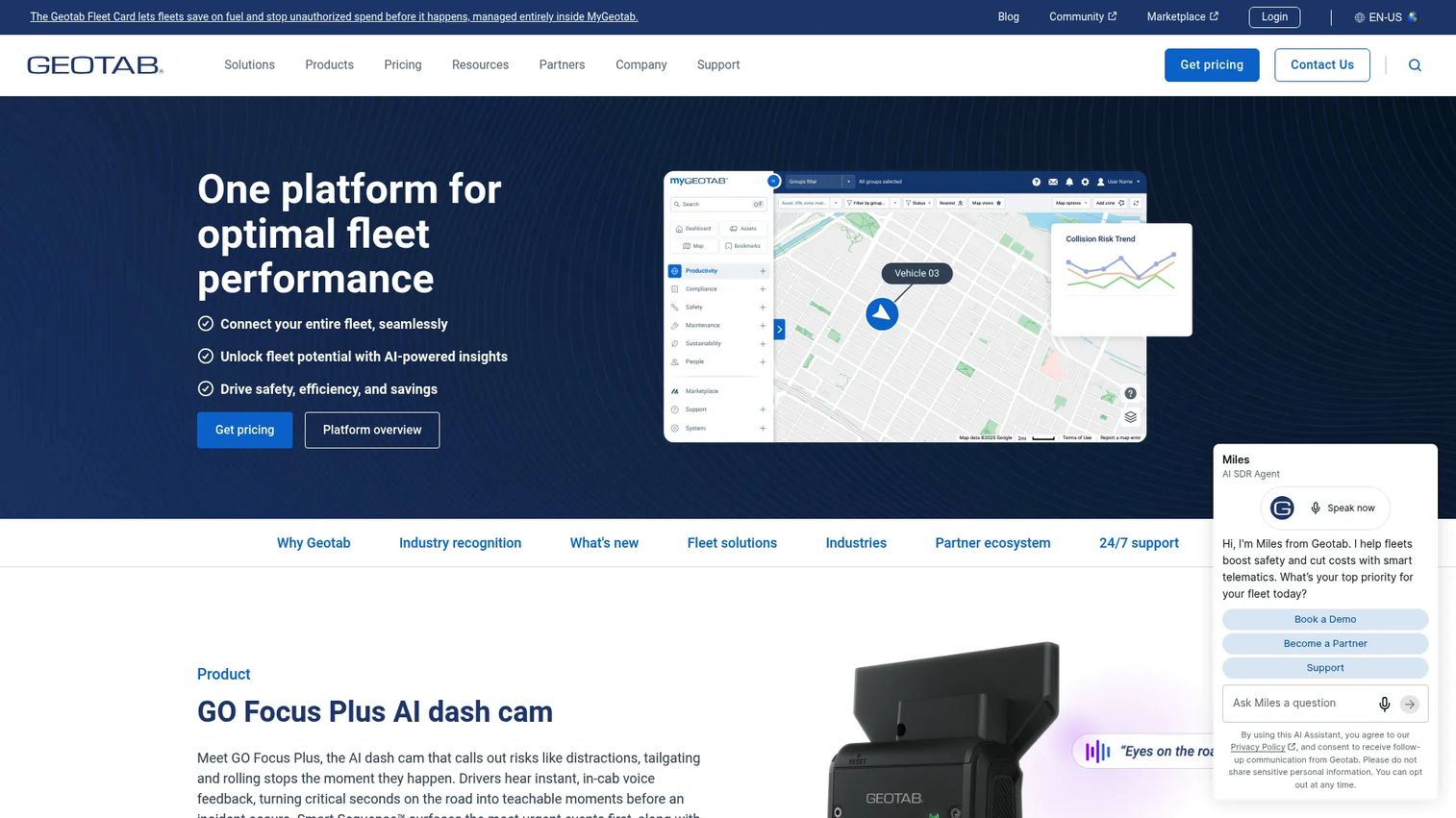
Geotab provides connected fleet management, commercial telematics, and vehicle data through its MyGeotab platform. It suits organizations that need location records alongside maintenance, compliance, safety, and EV insights.
Support teams benefit from shared arrival data and historical activity. They can answer ETA or service questions without waiting for dispatch to contact a driver.
Best for: Enterprise and midmarket fleets that need scalable telematics and open platform integrations.
Key features
- Real time vehicle tracking
- Driver safety and coaching
- Fleet compliance reporting
- Vehicle diagnostics and maintenance
- Marketplace and SDK access
Why choose Geotab: Geotab fits organizations that treat GPS data as part of a wider fleet intelligence program. Its open platform supports integrations and marketplace add ons.
The platform covers vehicle health and fuel management alongside fleet compliance. EV capabilities also help mixed fleets monitor energy use and vehicle performance.
This breadth matters when several departments need the same operational record. Support can see location history, while fleet managers review maintenance or driver activity.
Buyers seeking a basic GPS fleet tracker may not need this depth. Ask the reseller to separate core tracking costs from devices and optional capabilities.
Geotab pricing: Custom pricing through authorized resellers. Costs include an upfront device payment and an ongoing monthly service payment.
G2 rating: 4.5/5
2. Samsara
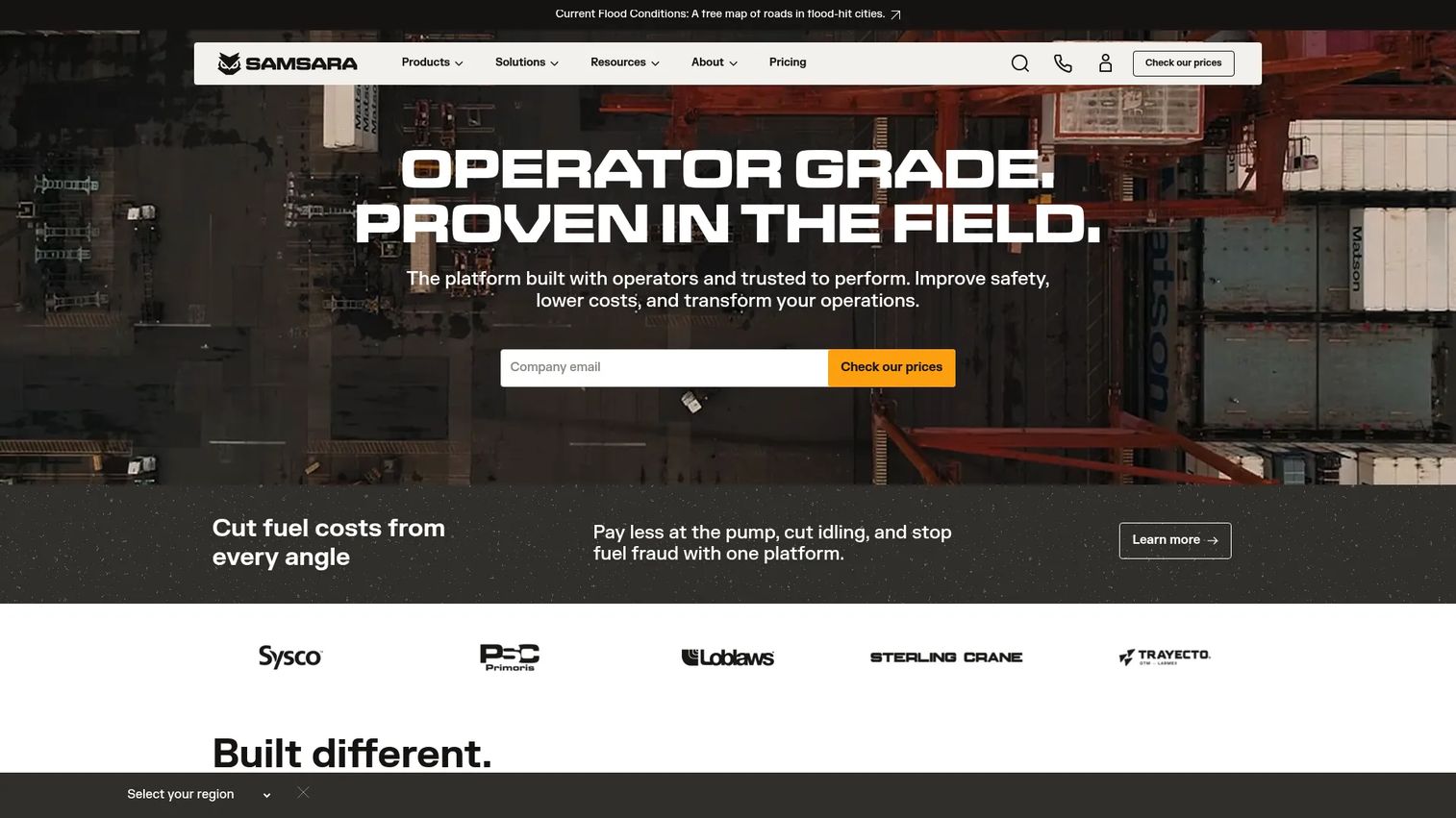
Samsara is a connected operations platform for fleets, equipment, worksites, and workforce activity. Its fleet tracking software combines location data with cameras, diagnostics, safety reports, and maintenance records.
The shared visibility can reduce internal handoffs during customer escalations. Support and dispatch can reference the same vehicle status before replying.
Best for: Organizations connecting fleet visibility with safety, equipment, and operational analytics.
Key features
- Real time fleet visibility
- AI camera workflows
- Equipment location monitoring
- Driver safety alerts
- Maintenance and compliance tools
Why choose Samsara: Choose Samsara when vehicles represent one part of a broader physical operation. The platform connects GPS tracking with driver coaching and equipment diagnostics.
That combined view suits transportation, construction, logistics, and field service organizations. Managers can review location and safety events without switching between separate systems.
Support leaders should check how access is configured. Frontline agents may need live location and route records without seeing broader driver performance information.
Contract structure also deserves close review. Ask sales to identify every software module, hardware item, camera charge, and contract term.
This approach helps finance compare the complete operating cost. It also prevents support teams from discovering that required data sits inside an unpurchased module.
Samsara pricing: Custom pricing. Quotes reflect vehicle or asset counts and selected modules.
G2 rating: 4.5/5
3. GPS Insight
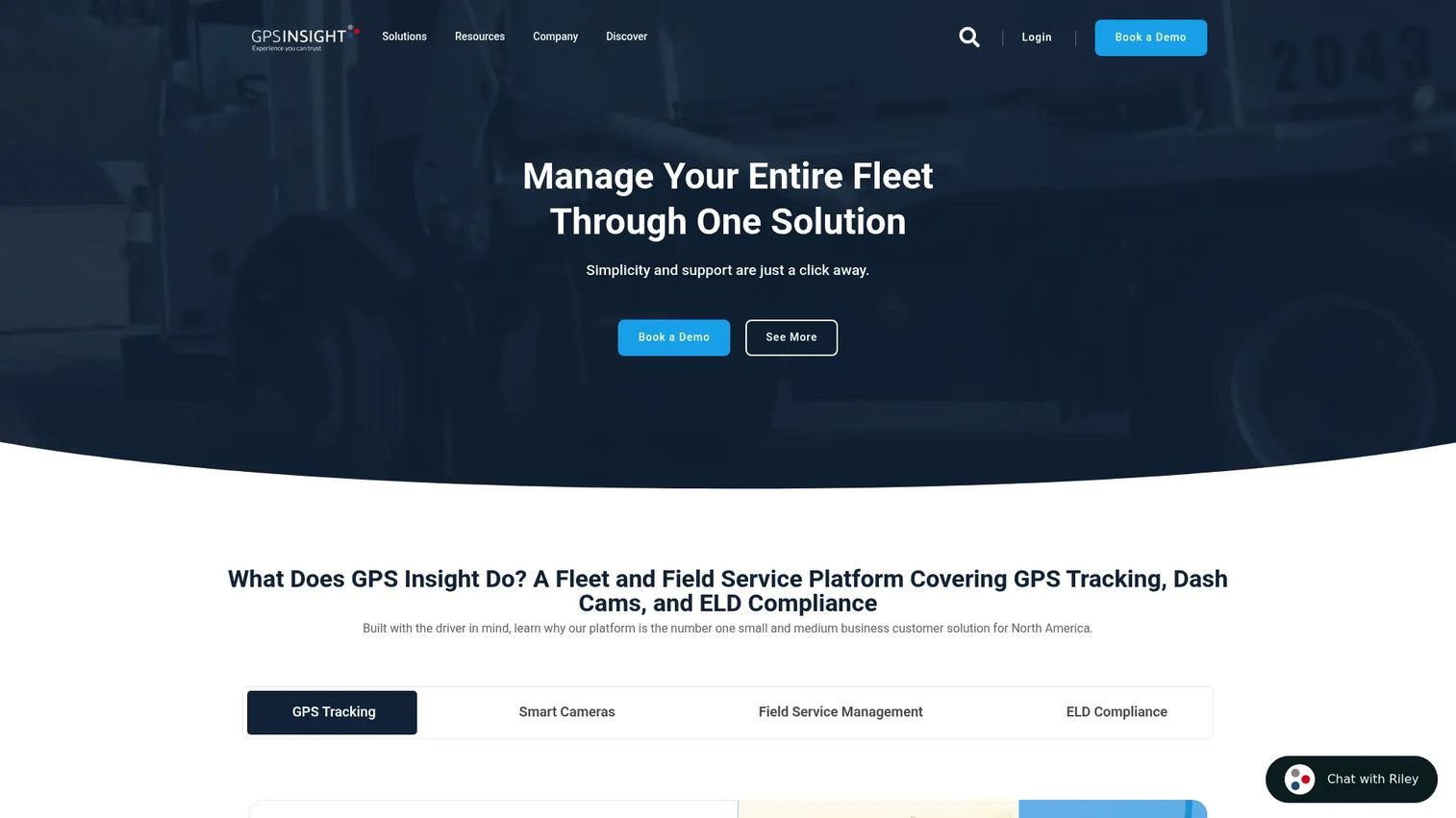
GPS Insight provides fleet tracking for vehicles, mobile assets, drivers, and field service operations. It combines current location data with historical activity, reports, alerts, and safety monitoring.
For customer support teams, route history can settle questions about technician arrivals or missed appointments. Scheduled reports also reduce manual requests to operations.
Best for: Service fleets needing tracking plus dispatch, maintenance, and driver safety workflows.
Key features
- Vehicle and asset tracking
- Current and historical fleet maps
- Custom alerts and reports
- Driver behavior monitoring
- Mobile fleet management
Why choose GPS Insight: This platform fits organizations that need operational workflows beyond map visibility. Field service teams can combine tracking information with safety monitoring and scheduled reports.
Historical activity gives support a usable record during disputes. Instead of asking a driver to reconstruct yesterday’s route, an agent can reference the stored journey.
GPS Insight can also suit organizations with several fleet stakeholders. Dispatch needs current positions, while management may care more about trends and reports.
Define access by role before launch. A support agent usually needs arrival history and current status, while fleet leaders require wider driver data.
The company now also owns Rhino Fleet Tracking. Buyers considering both should ask how the products differ in features, onboarding, and ongoing support.
GPS Insight pricing: Custom pricing through a personalized quote. Ask which modules and hardware items are included.
G2 rating: 4.5/5
4. One Step GPS
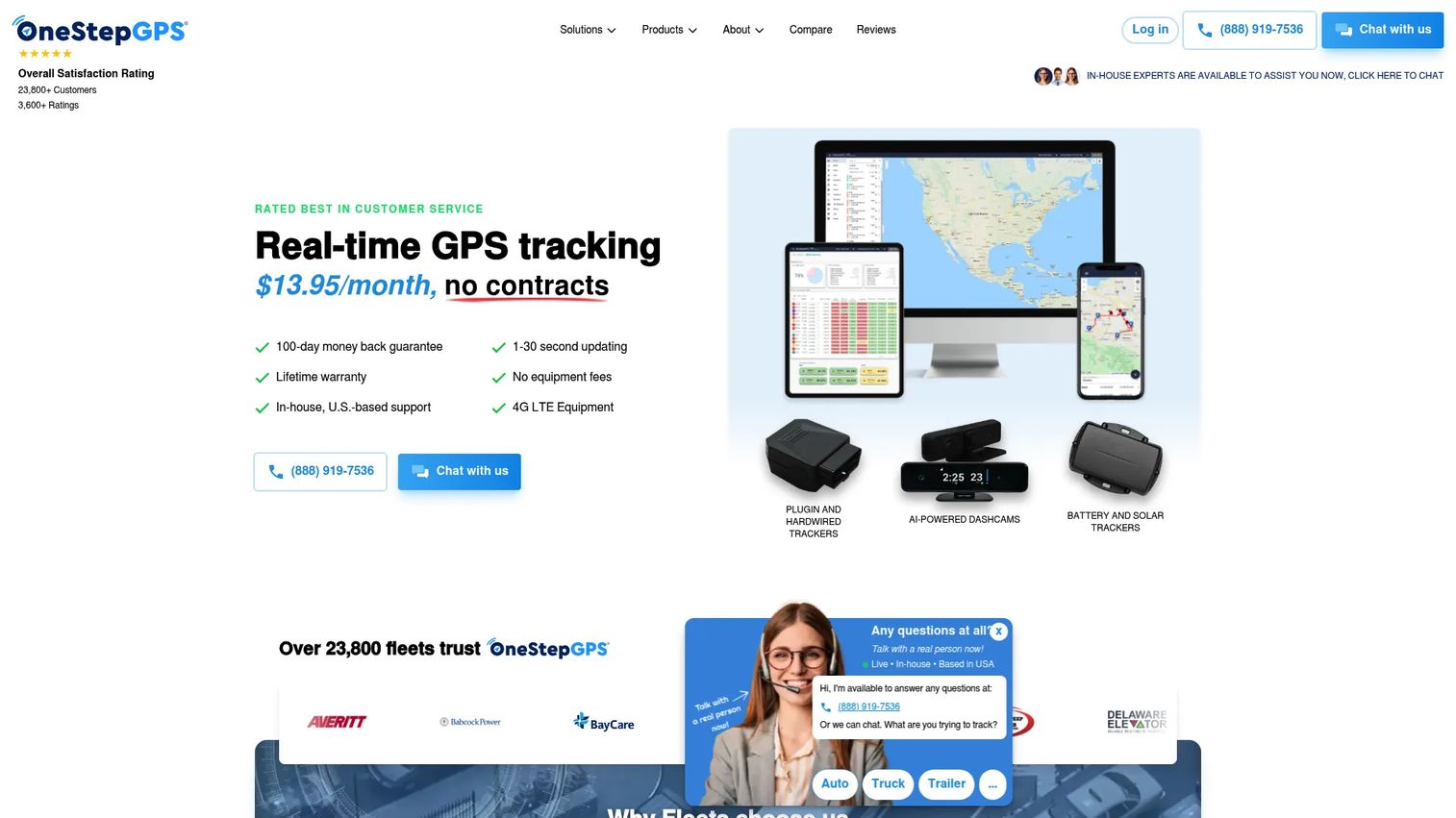
One Step GPS provides web based fleet tracking with straightforward monthly pricing. It includes live vehicle visibility, route history, driver behavior monitoring, geofences, and maintenance reminders.
Route, stop, address, and duration records remain available for up to three years. That history can help support teams investigate repeat complaints or older service disputes.
Best for: Small and mid sized fleets seeking predictable costs and practical vehicle tracking.
Key features
- Live vehicle tracking
- Three years of route history
- Geofencing and after hours alerts
- Driver behavior reports
- Vehicle service reminders
Why choose One Step GPS: Pricing clarity is the main draw. The vendor offers service without contracts and provides equipment without an equipment fee.
Devices must be returned when service ends. Buyers should include that requirement in offboarding procedures for vehicles or teams.
The platform also allows unlimited users with access controls. Support can receive location visibility without sharing a single operations login across the department.
Google Maps views and live traffic data help agents give more informed updates. Historical trip details provide evidence after a disputed arrival or missed appointment.
This product fits teams that value straightforward tracking over a large telematics program. Confirm device suitability for each vehicle or field asset before rollout.
One Step GPS pricing: Plans start at $13.95 per month. Service has no contract, and equipment is provided without an equipment fee.
5. Traccar
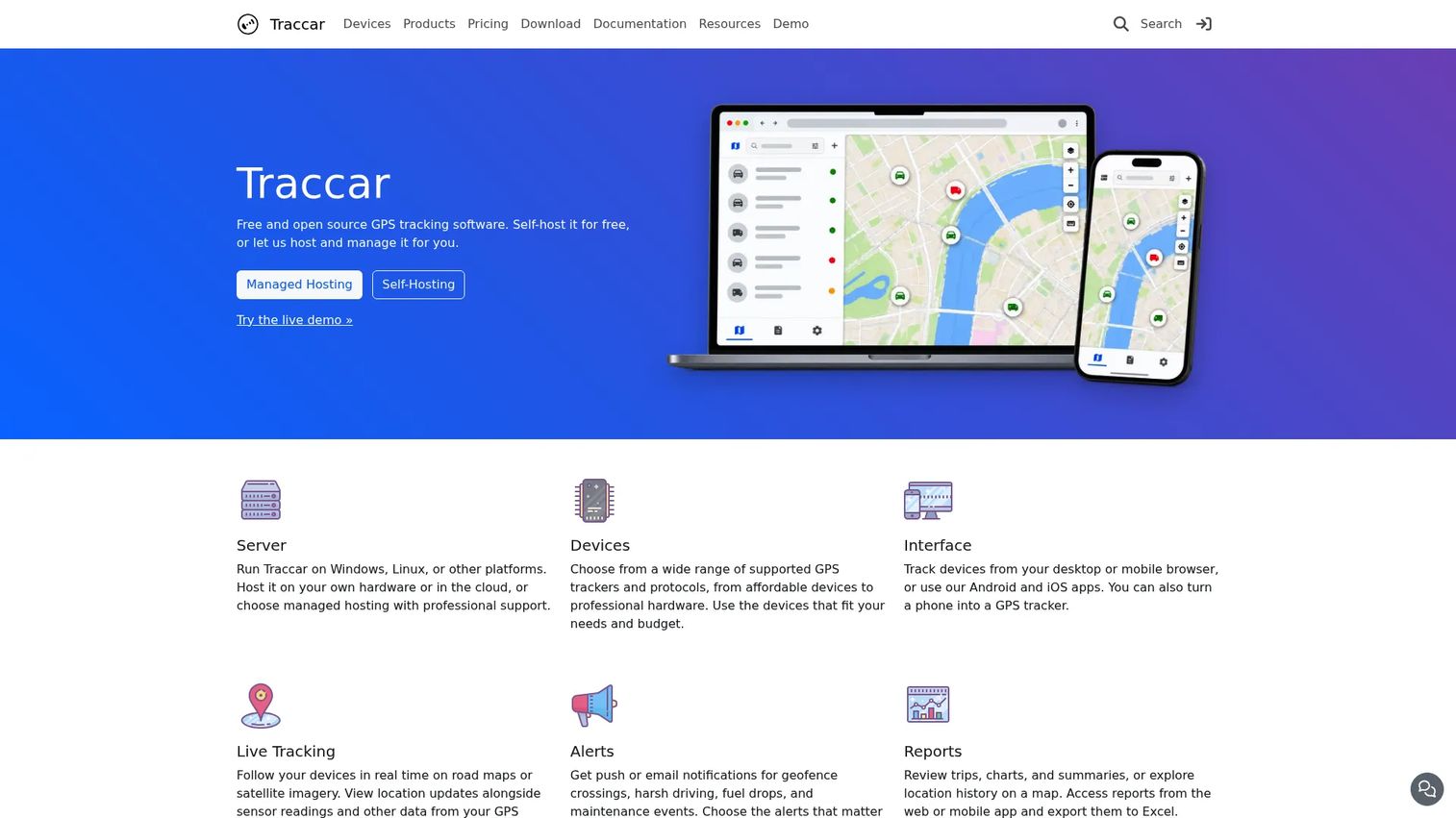
Traccar is free, open source GPS tracking software for self hosting or managed deployment. It supports web access, mobile applications, and more than 200 GPS tracker protocols.
Technical teams can control hosting and device integrations directly. Mobile tracker applications also support phone based location reporting.
Best for: Organizations with technical resources that want self hosting or broad device compatibility.
Key features
- Free open source software
- Self hosted deployment
- Managed hosting plans
- More than 200 tracker protocols
- Web and mobile applications
Why choose Traccar: Traccar gives technical teams control over infrastructure and tracking data. Its protocol coverage helps organizations working with mixed device fleets.
Reports cover trips, summaries, charts, and location history. Data can also be exported to Excel for investigation or operational analysis.
Alerts include geofence crossings and harsh driving events. The system can also monitor fuel drops or maintenance events when connected devices provide the required data.
Self hosting shifts system ownership to your organization. Internal teams must manage infrastructure, updates, device setup, and user support.
That workload matters when customer facing agents depend on the system during live escalations. Managed hosting may suit teams without dedicated technical capacity.
Traccar pricing: Self hosted software is free. Managed accounts start at $9.95 per month, while dedicated servers start at $49.95 per month.
G2 rating: 4.8/5
6. Quartix
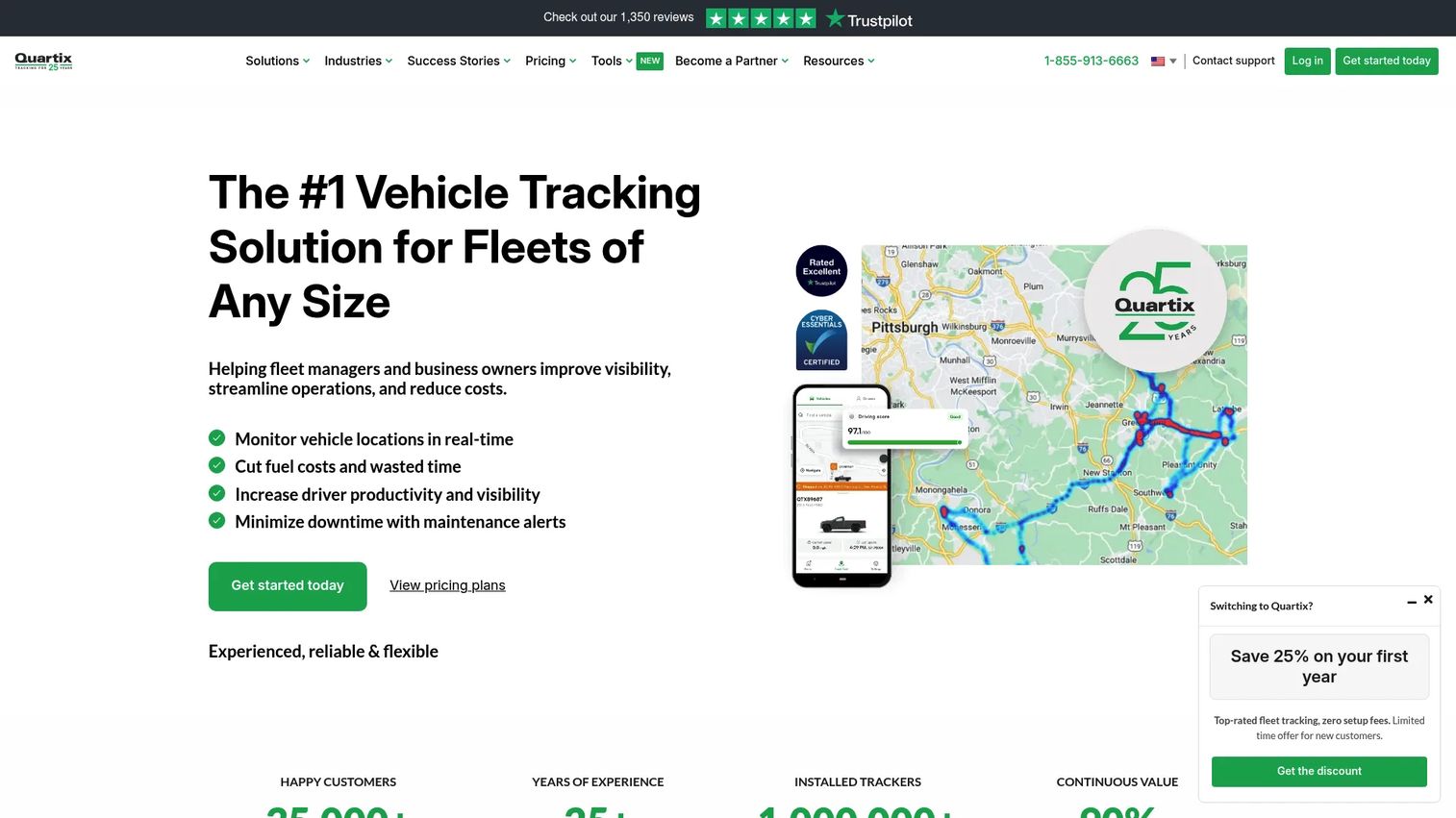
Quartix provides real time vehicle tracking with driver behavior scores, mileage reporting, and automated fleet reports. Its entry plan includes mobile access and three years of reporting history.
That retention period can support customer dispute reviews and repeated service investigations. Detailed trip reporting arrives on the Info Plus plan.
Best for: Fleets prioritizing route history, mileage records, and driver performance reporting.
Key features
- Real time GPS tracking
- Three year reporting history
- Driver behavior scoring
- Automated mileage reports
- Geofence alerts
Why choose Quartix: Quartix suits buyers who care about historical proof as much as current vehicle positions. The reporting structure is useful for teams handling disputed visits or route questions.
Support agents can reference trip records before escalating a case. Operations managers can review driver scores and fleet performance through separate reporting views.
The entry plan provides one minute GPS updates. Info Plus adds geofencing, detailed trips, and driver behavior monitoring.
Enterprise customers receive API access and a dedicated account manager. Compare that tier when tracking data must feed other operational systems.
Pricing rises by vehicle, so model costs using the full expected fleet. Include vehicles planned for the next contract period.
Quartix pricing: Info Point costs $14 per vehicle each month. Info Plus costs $15, while Enterprise uses custom pricing.
7. Rhino Fleet Tracking
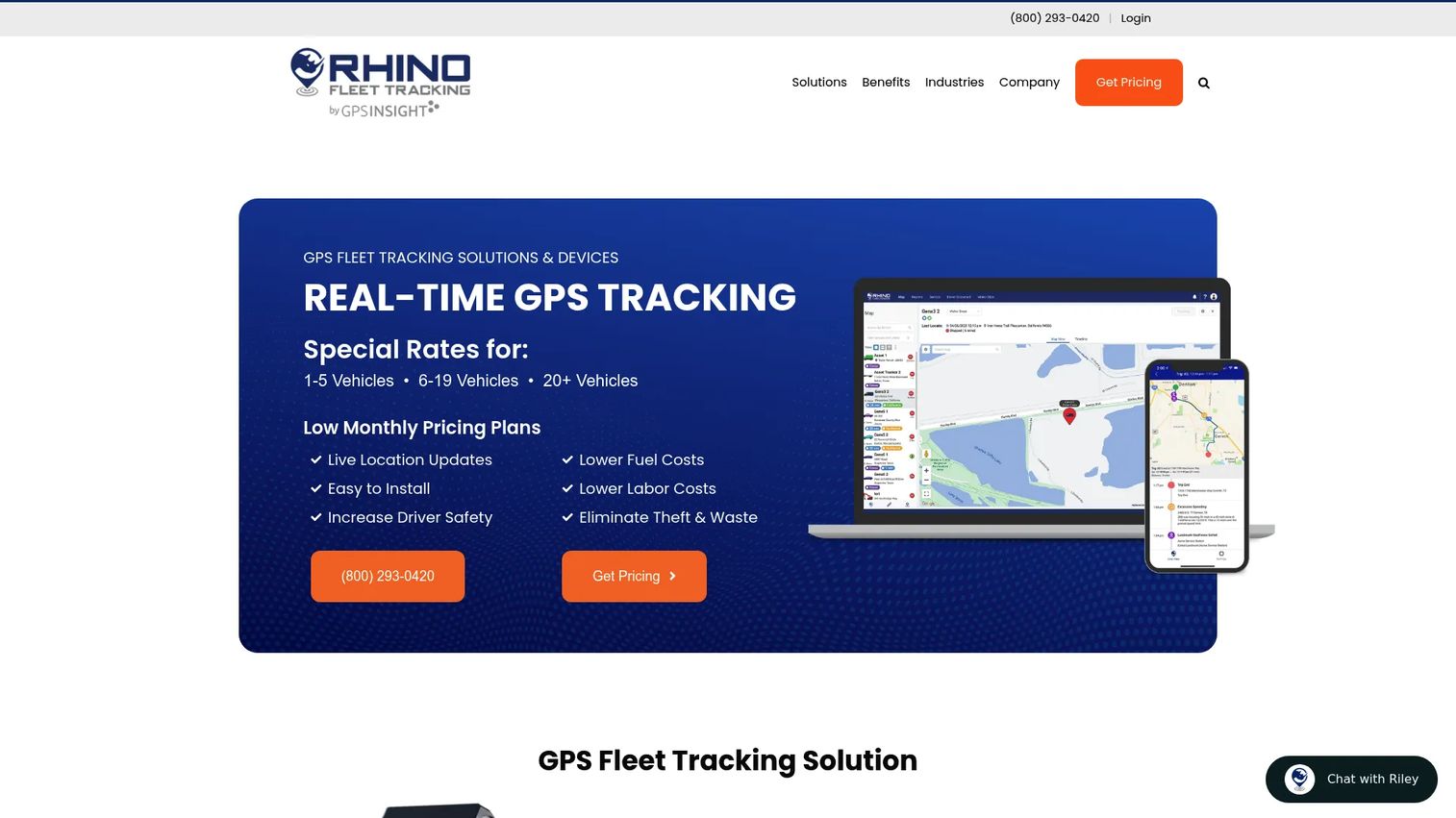
Rhino Fleet Tracking provides vehicle and asset monitoring for small and midsize service fleets. Its capabilities include live GPS visibility, route reports, geofences, maintenance reminders, and mobile access.
Field service businesses can monitor work vehicles and trailers from the same operational context. This reduces internal searching when equipment generates a customer escalation.
Best for: Local and regional service fleets tracking vehicles, trailers, and field assets.
Key features
- Real time vehicle tracking
- Asset and trailer monitoring
- Driver behavior scorecards
- Geofencing and custom alerts
- Maintenance reminders
Why choose Rhino Fleet Tracking: Rhino fits teams that need practical tracking without adopting a broad enterprise telematics system. Its vehicle and asset coverage supports mixed field operations.
Route history gives support teams evidence when customers question a visit. Custom alerts can notify operations about movement or location events requiring attention.
Driver scorecards are more relevant to fleet managers than frontline agents. Use role permissions to keep customer support focused on current status and service records.
The starting price applies to fleets with at least 20 vehicles. Smaller operators should request a quote and compare minimum commitments.
Device pricing varies. Ask how hardware replacement, installation, and support affect the final monthly cost.
Rhino Fleet Tracking pricing: Basic service starts at $19.95 per month for fleets with 20 or more vehicles. Device costs require a personalized quote.
G2 rating: 3.5/5
8. GPSWox
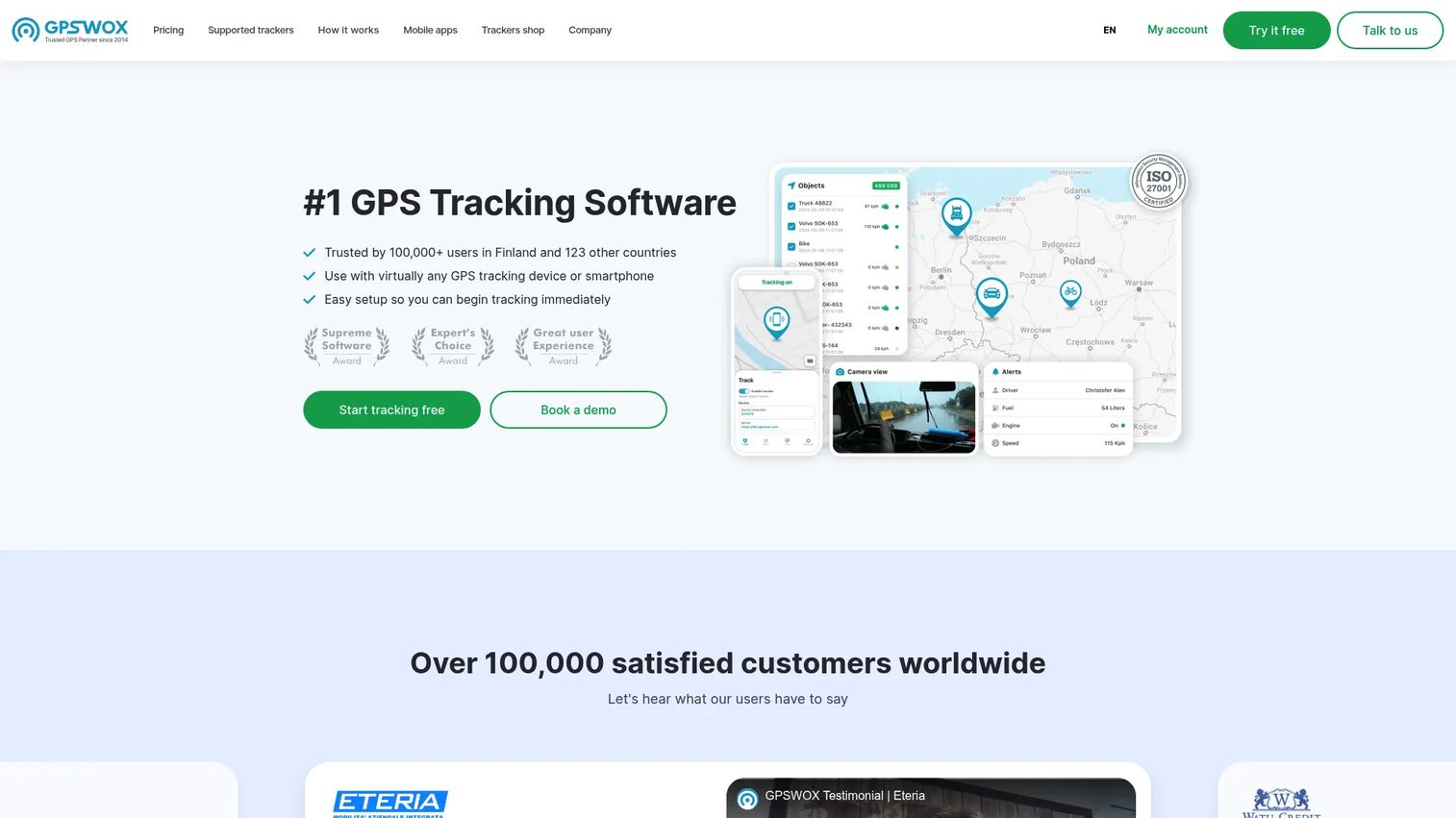
GPSWox provides hosted GPS monitoring software for vehicles, cargo, people, phones, and other assets. It also offers white label software for organizations selling tracking services under their own brand.
The platform supports more than 900 tracker models. Mobile apps, geofences, reports, and API access cover both operational and reseller use cases.
Best for: Tracking providers and technical teams needing hosted or white label software.
Key features
- Hosted GPS tracking
- White label branding
- More than 900 supported trackers
- Mobile applications
- Reports and API access
Why choose GPSWox: GPSWox stands apart through its white label option. A business can offer tracking under its own brand rather than developing the underlying platform.
That model introduces extra support responsibilities. Buyers should inspect user administration and reporting before offering the service to customers.
The system also supports fleet tracking, fuel monitoring, and driving behavior data. Available information depends on the connected device.
Technical teams should confirm protocol compatibility before purchasing hardware. They should also test how quickly data appears across web and mobile views.
A 14 day free trial is available. Use it to test alerts and customer facing workflows with your intended devices.
GPSWox pricing: Personal Tracking Account pricing starts at $3.67. Fleet Tracking Software and White Label Software start at $129, with billing intervals unspecified.
G2 rating: 4.5/5
9. Mitti
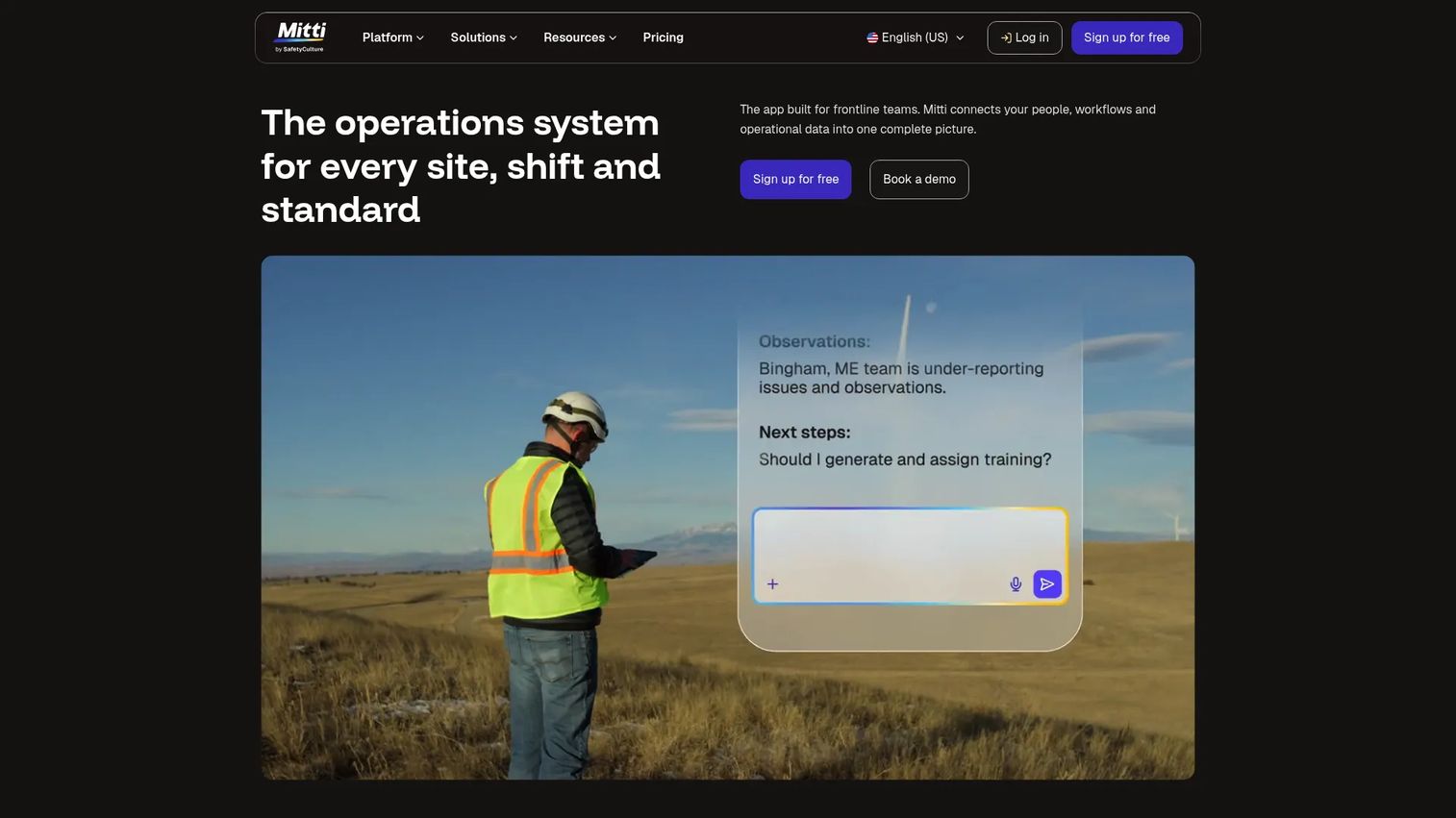
Mitti is a workplace operations system for inspections, training, issue management, assets, and incident investigations. Its verified profile is broader than dedicated fleet tracking software.
The platform can support mobile field operations through checklists, tasks, sensors, and asset records. Buyers requiring vehicle location should confirm the tracking workflow before shortlisting it.
Best for: Teams seeking broader workplace operations tools alongside mobile field processes.
Key features
- Mobile inspections and checklists
- Asset management and maintenance
- Incident investigation workflows
- Task and issue management
- Sensors and IoT support
Why choose Mitti: Mitti fits organizations that place field tracking within a wider operational process. A team can connect inspections and asset maintenance with incident records.
Customer support may benefit from shared issue details and frontline activity. That context can reduce repeated questions when operational incidents reach the ticket queue.
However, the verified feature set does not establish Mitti as a dedicated GPS fleet tracker. Confirm live vehicle maps, route history, and geofencing before purchase.
This distinction matters for location sensitive workflows. Inspection records cannot replace reliable route data during a disputed service visit.
The free tier gives smaller teams a way to assess the broader system. Larger organizations can compare Premium and Enterprise controls.
Mitti pricing: Free supports teams of up to 10. Premium costs $24 per seat monthly with annual billing, or $29 with monthly billing.
G2 rating: 4.6/5
10. AutoWiz
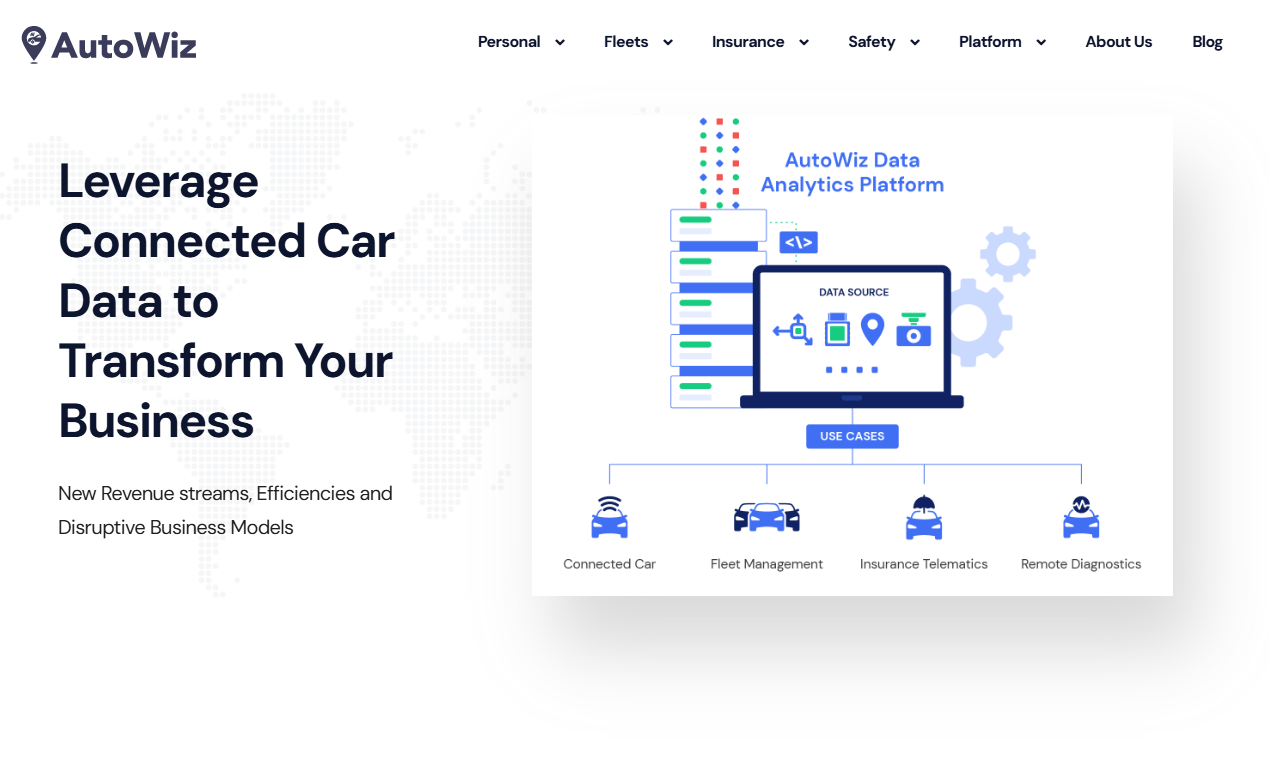
AutoWiz provides connected vehicle telematics for car owners, fleets, insurers, and automotive businesses. Its verified capabilities include location tracking, driving behavior alerts, vehicle health data, and fuel mileage monitoring.
The product can support basic mobile GPS tracking alongside diagnostic information. Market availability and hardware compatibility require review before deployment.
Best for: Buyers comparing connected vehicle tracking with health and driver safety data.
Key features
- Real time vehicle location
- Driving behavior alerts
- Driver safety scoring
- Vehicle health diagnostics
- Fuel mileage monitoring
Why choose AutoWiz: AutoWiz fits use cases where vehicle condition matters alongside location. Diagnostic data covers the battery, coolant, odometer, and fuel mileage.
This context may help support teams distinguish a route delay from a vehicle issue. Operations can also use safety notifications when reviewing incidents.
AutoWiz uses connected vehicle hardware rather than phone tracking alone. Confirm compatibility with your vehicle models before purchasing devices.
The active first party site uses the Indian market and INR pricing. Buyers outside that market should check product availability and support coverage.
AutoWiz pricing: Annual subscriptions start at Rs. 1,416. The OBD device costs Rs. 6,790 and includes one subscription year.
Considerations when choosing gps tracking software
Hardware compatibility
List every vehicle and asset before comparing platforms. Check support for OBD devices, hardwired units, rugged trackers, battery hardware, solar equipment, phones, and connected vehicles.
Existing trackers may use unsupported protocols. Confirm compatibility using exact device models rather than broad hardware categories.
Geofencing and alert quality
Test whether geofencing alerts arrive quickly enough for your workflow. Useful events include entry, exit, after hours movement, speeding, idling, and unauthorized use.
Too many alerts create noise. Assign each notification to a specific owner and action.
Route history and data retention
Ask how long route history remains available. Confirm whether support agents can search and export records without administrator access.
Retention matters during customer disputes and repeat incidents. Match the period to your operational review process.
Driver privacy and access controls
Create clear rules for tracking hours and permitted uses. Define who can see location data, how long records remain, and whether personal vehicle use is hidden.
Use role based permissions and audit trails where available. Involve HR and legal when writing employee monitoring policies.
Total cost and contracts
Compare subscriptions alongside hardware, installation, data plans, cameras, support, warranties, and add ons. Include cancellation requirements and device return terms.
Calculate the expected fleet size across the contract period. A low starting price can change once required modules enter the quote.
Conclusion
The right GPS tracking software should answer operational questions without creating another queue for support to manage.
Choose Geotab when deep telematics and platform extensibility matter. Samsara suits connected operations spanning vehicles, cameras, safety workflows, and equipment.
One Step GPS offers straightforward costs for smaller fleets. Traccar gives technical teams open source control through self hosting or managed plans.
Quartix works well when route history and driver reporting drive the decision. GPS Insight combines location data with broader service fleet workflows.
GPSWox fits hosted or white label tracking businesses. Rhino serves practical vehicle and asset monitoring. Mitti requires closer evaluation because its verified strengths sit in broader workplace operations.
Before booking vendor calls, write down your tracking jobs. Consider live ETAs, asset protection, route history, driver safety, compliance, and customer dispute resolution.
The best fleet tracking system answers those questions without forcing agents to chase dispatch for every update.
FAQs
GPS tracking software monitors vehicles, drivers, equipment, and field assets. It can provide live location, route history, geofencing alerts, and movement reports.
Support teams often use this information for ETA updates and service investigations. Operations may also use it for asset protection or driver safety.
GPS tracking software focuses on location, movement, and historical trip visibility. It usually includes live maps, alerts, geofences, and route records.
Fleet management software may add maintenance, dispatch, fuel data, compliance tools, cameras, EV information, and broader analytics. Many enterprise platforms combine both categories.
Small fleets should prioritize clear pricing, practical installation, mobile access, geofencing, and usable route history. One Step GPS offers a published monthly starting price without contracts.
Quartix provides per vehicle pricing and reporting. Rhino serves service fleets, while Traccar suits teams with technical self hosting resources.
Geotab, Samsara, and GPS Insight fit larger or more complex fleets. These products connect GPS data with safety workflows, reporting, integrations, and fleet operations.
Enterprise buyers should also evaluate APIs, data governance, hardware support, and implementation resources. Contract details can affect the total cost substantially.
Yes. Many platforms support trailers, equipment, containers, and other mobile assets.
Hardware options include rugged devices, battery powered trackers, rechargeable units, and solar trackers. Match the device to the asset’s power source and operating environment.
Yes. Location data can reveal working patterns and off hours movement.
Companies should define when tracking runs, who can access records, and how long data remains available. Clear policies should also address personal use and employee consent.
Some platforms support mobile GPS tracking through Android or iOS applications. GPS tracker software for Android can suit temporary field teams or employees carrying company phones.
Dedicated hardware usually provides more consistent vehicle and asset monitoring. Phones depend on battery life, application permissions, and reliable network access.
Cost depends on software, hardware, fleet size, contract length, installation, and optional modules. Some vendors publish per vehicle or per device rates.
Enterprise fleet telematics vendors commonly use custom quotes. Ask for the complete cost across devices, cameras, data service, support, and cancellation terms.