

Your team set quarterly goals in a spreadsheet. Three weeks later, nobody has opened it.
That is the pattern. Goals get written down once, then drift. Ownership blurs. Progress lives in someone's head instead of a system. When leadership asks how the quarter is tracking, you spend a day rebuilding a status report from Slack threads and half-updated docs.
The problem is not motivation. It is infrastructure. Goals need a place to live, a way to roll up, and a rhythm of review that does not depend on someone remembering to nag. That is what goal setting software does when it works.
The market agrees. The global goal setting software market was valued at USD 2.78 billion in 2023 and is projected to reach USD 7.09 billion by 2032 at a 9.8% CAGR, according to Market Research Store (2024). Employee goal setting software specifically is growing even faster, at a 12.5% CAGR through 2033 per Verified Market Reports (2024).
So the question is not whether to move off spreadsheets. It is which goal management software fits how your team actually operates.
What's inside
This guide covers business goal setting, goal tracking software, and broader goal management platforms built for teams, not personal habit trackers.
We chose tools based on four things that matter when you are replacing spreadsheet chaos:
- Reporting and roll-up: Can progress aggregate from individual goals to team and org level?
- Templates and structure: Does it standardize goal creation, including SMART goals and OKRs?
- Ownership and check-ins: Are owners, due dates, and weekly check-ins built in?
- Integrations and maintenance: Does it connect to your work systems and stay current without manual upkeep?
Every tool below is evaluated against those criteria, with verified pricing and G2 ratings where available.
TL;DR
Short on time? Here are the shortcuts by use case:
- Best for goals tied to work execution: Asana connects goals directly to the projects and tasks that move them.
- Best for enterprise performance alignment: Betterworks pairs OKR alignment with continuous performance workflows.
- Best for an all-in-one workspace: ClickUp puts goals, tasks, and docs in one place.
- Best for HR-connected employee goal setting software: Deel HR ties goals to review cycles and people ops.
- Best for a full people management platform: Lattice combines performance, growth, and OKRs.
- Best for Jira-native teams: OKR Board for Jira (Oboard) links goals to engineering work.
- Best lightweight OKR software: OKRs Tool offers flat pricing with no per-seat fees.
What is goal setting software?
Goal setting software is a platform that helps teams create, assign, track, and report on goals in one shared system instead of scattered spreadsheets and documents. It standardizes how objectives are defined, connects them to owners and deadlines, and rolls individual progress up into team and organizational views.
It differs from adjacent tools in a few clear ways:
- Versus spreadsheets: Goals become structured records with owners, status, and history, not static cells someone has to update by hand.
- Versus task management tools: Tasks track work; goal management software tracks outcomes and how work maps to them.
- Versus performance management suites: Performance tools center on reviews and ratings; goal tracking software centers on ongoing progress and alignment.
The category spans a few overlapping types:
- Goal management software: Broad platforms for setting, tracking, and reporting goals across teams.
- OKR software: Tools built around the Objectives and Key Results framework, with alignment maps and cascading goals.
- Goal tracking software: Systems focused on progress updates, check-ins, and status visibility over time.
- Performance management platforms: Suites where goals sit alongside reviews, feedback, and employee development.
Most modern goal setting tools blend these. The right pick depends on whether you want goals close to daily work, close to HR cycles, or standing on their own as a dedicated alignment layer.
When to use goal setting software
Not every team needs a dedicated goal management platform on day one. Here is when the switch pays off.
Replace spreadsheet-based goal reviews
When your quarterly review means rebuilding a deck from stale cells, you have outgrown spreadsheets. Goal setting software keeps status current and generates roll-up views on demand, so review prep drops from hours to minutes.
Standardize goal creation with templates and SMART goals
Inconsistent goals are hard to compare and harder to report on. Templates enforce a shared structure, whether you run SMART goals or OKRs, so every team writes objectives the same way. That consistency is what makes org-wide reporting possible.
Roll up progress from work systems and dashboards
Goals should reflect real work, not a separate manual update. The strongest goal tracking software pulls progress from connected task tools, CRMs, and dashboards, so a goal moves when the underlying work does.
Run team goals and quarterly check-ins in one place
Weekly check-ins and quarterly reviews scatter across meetings and threads. A team goals software brings cadence into one system, prompting owners for updates and surfacing risks before the quarter closes.
Comparison table
Read the table by intent first. Some tools are lightweight goal tracking and OKR systems; others are broad goal management or full performance platforms. Pricing reflects verified starting tiers, and G2 ratings are shown where a current rating was available.
| # | Product | Intent | Key differentiation | Pricing | G2 rating |
|---|---|---|---|---|---|
| 1 | Asana | Work management with goals | Goals linked directly to projects and tasks | Free; paid from $10.99/user/mo | - |
| 2 | Betterworks | Enterprise performance + OKRs | AI-native performance and goal alignment | From $1–$8/user/mo | 4.3/5 |
| 3 | ClickUp | All-in-one workspace | Goals, tasks, docs, and chat in one OS | Free; paid from $7/user/mo | - |
| 4 | Deel HR | HR-connected goals | Employee goals inside a global HRIS | From $5/employee/mo | 4.8/5 |
| 5 | Hive | Goals inside project execution | Goals tied to daily team work | Free; paid from $5/user/mo | 4.6/5 |
| 6 | Lattice | People management platform | Performance, growth, and OKRs combined | From $4/seat/mo (modular) | 4.7/5 |
| 7 | monday | Flexible work platform | AI-assisted, customizable goal workflows | Free; paid from $9/seat/mo | 4.7/5 |
| 8 | Mooncamp | OKR + strategy execution | Alignment maps, check-ins, dashboards | From €7/user/mo | 4.8/5 |
| 9 | OKR Board for Jira | Jira-native OKRs | OKRs synced to Jira work items | From $10/user/mo | 4.6/5 |
| 10 | OKRs Tool | Lightweight OKRs | Flat pricing, no per-seat fees | Free; paid from $49/mo | 4.6/5 |
Best 10 goal setting software tools for 2026
1. Asana
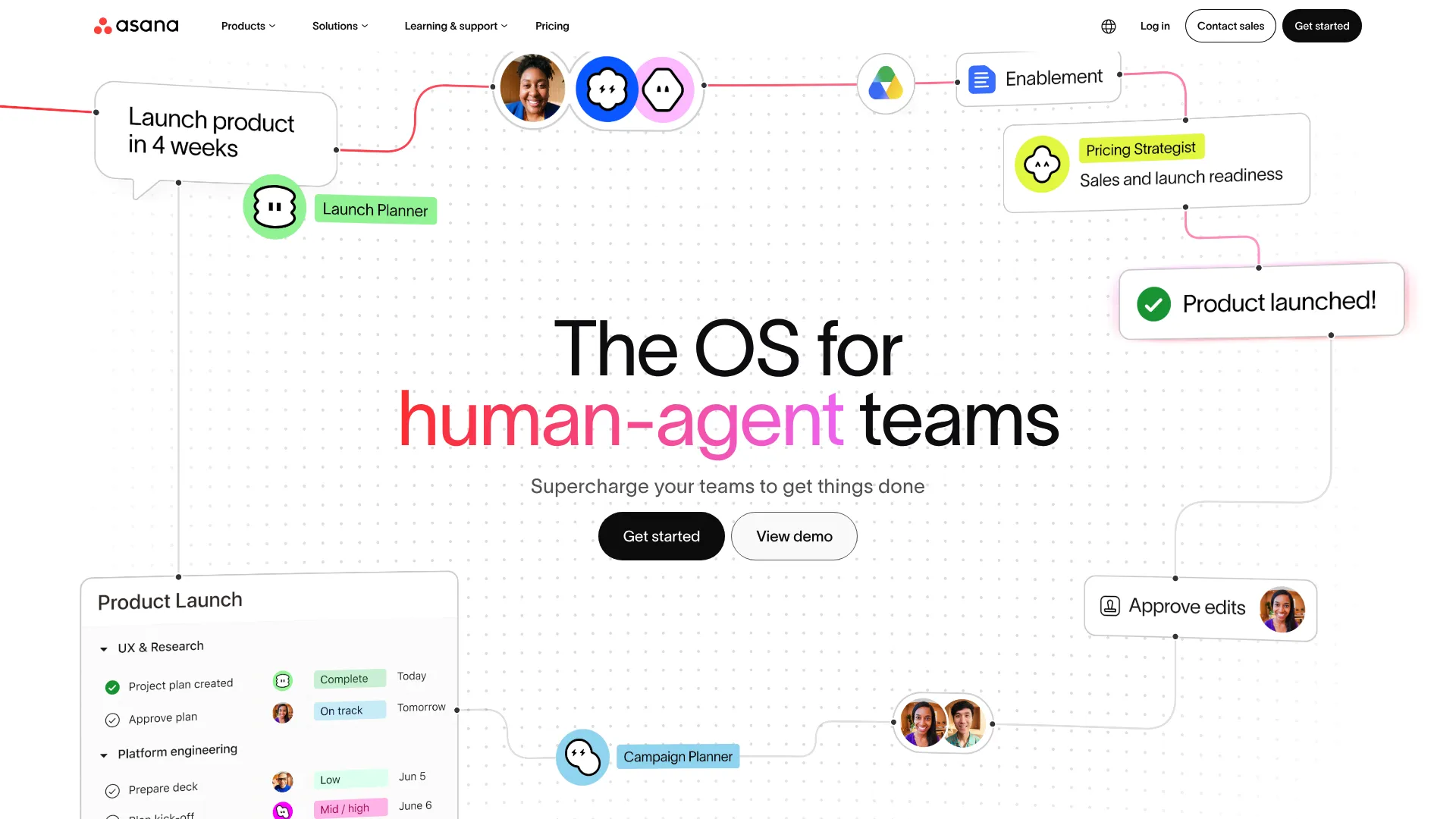
Asana is a work management platform that connects goals directly to the work that delivers them. Instead of goals sitting in a separate document, Asana links each objective to the projects and tasks underneath it, so progress updates as work moves. For teams that already run projects in Asana, adding goal management on top removes the gap between planning and execution.
Best for: Teams that want goals connected to project and task execution in one system.
Key strengths
- Goal roll-up from tasks and projects to team and company level
- Dashboards and reporting across list, board, timeline, and Gantt views
- Goal templates and AI-assisted goal drafting
- Automation and reporting integrations
Why choose Asana: If your team lives in a work management tool and wants goals tied to real projects, Asana closes the loop between objectives and daily work. Teams that need a formal, standalone OKR framework with heavy alignment mapping may layer that structure on top, but for goal-to-work linkage Asana is hard to beat.
Asana pricing: Personal is free forever for up to 2 users. Starter is $10.99 per user per month billed annually, or $13.49 billed monthly. Advanced is $24.99 per user per month billed annually. Enterprise and Enterprise+ require contacting sales.
2. Betterworks
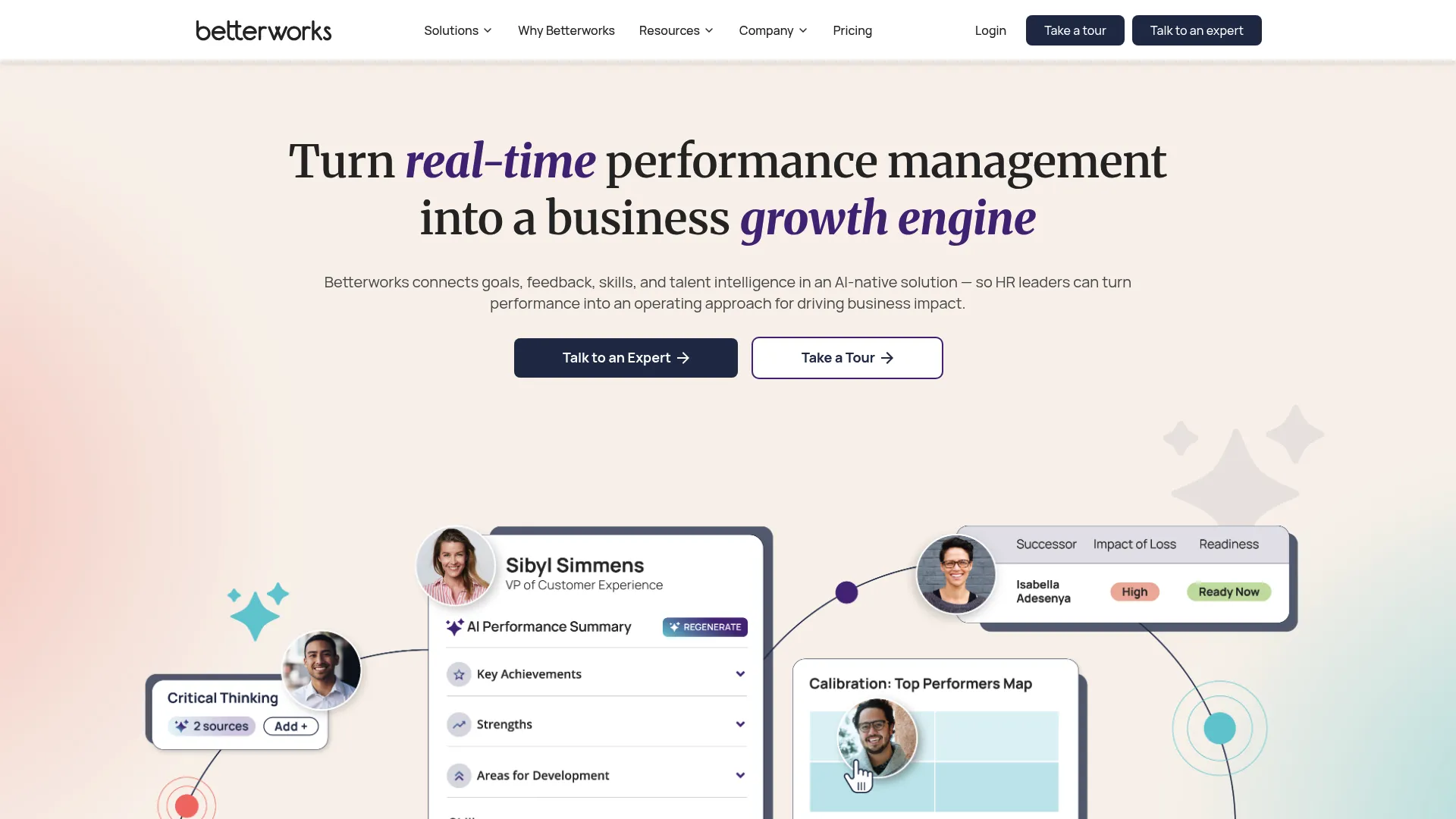
Betterworks is an AI-native performance management and talent platform built around goal alignment. It ties OKRs to continuous performance workflows, so goals are not just tracked but connected to feedback, 1:1s, and manager visibility. This makes it a fit for organizations that treat goal setting as part of a broader performance discipline rather than a standalone tracker.
Best for: Mid-market and enterprise teams that need OKR alignment plus continuous performance management.
Key strengths
- Goals and OKRs with alignment across the org
- Real-time feedback and structured 1:1s
- AI-generated performance summaries and insights
- Manager visibility and governance controls
Why choose Betterworks: When goals need process discipline, ownership, and a clear line to performance conversations, Betterworks provides that structure. Smaller teams that only want lightweight goal tracking may find it broader than they need, but for enterprises standardizing execution it delivers depth.
Betterworks pricing: The Performance plan is listed at $1 to $8 per user per month, with a limited-time promotional rate starting at $1 per user per month for the first contract year on a qualifying agreement. Pricing is tailored by workforce size, packages, and support level, so final cost varies.
3. ClickUp
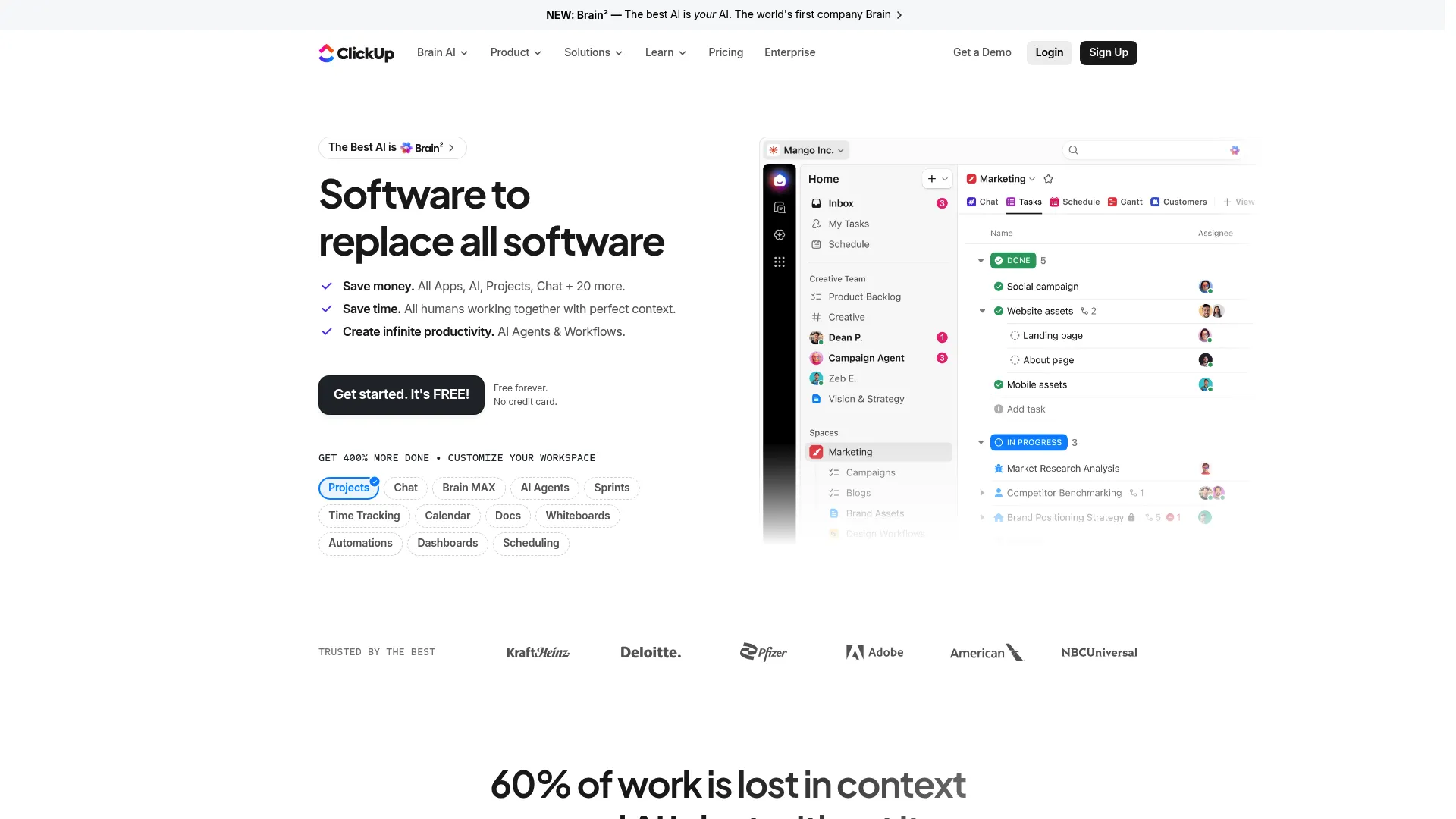
ClickUp is an all-in-one work platform that puts goals, tasks, docs, and chat in a single workspace. Its Goals feature lets teams set targets and connect them to the tasks and projects that drive them, with dashboards for progress tracking. For teams that want one system instead of a stack of separate tools, ClickUp consolidates goal management with everything else.
Best for: Teams that want goals, tasks, and collaboration in one customizable workspace.
Key strengths
- Goals connected to tasks and projects
- Custom dashboards for goal progress tracking
- Templates for goals and OKRs
- Docs, wikis, and chat in the same platform
Why choose ClickUp: ClickUp fits teams that want to consolidate their stack into one flexible OS. The tradeoff worth naming: its breadth means more configuration up front. Teams willing to invest in setup get a highly adaptable system; teams wanting an opinionated OKR flow out of the box may prefer a dedicated tool.
ClickUp pricing: Free Forever is $0. Unlimited is $7 per user per month billed yearly. Business is $12 per user per month billed yearly. Enterprise is custom pricing. AI add-on plans are available on top.
4. Deel HR
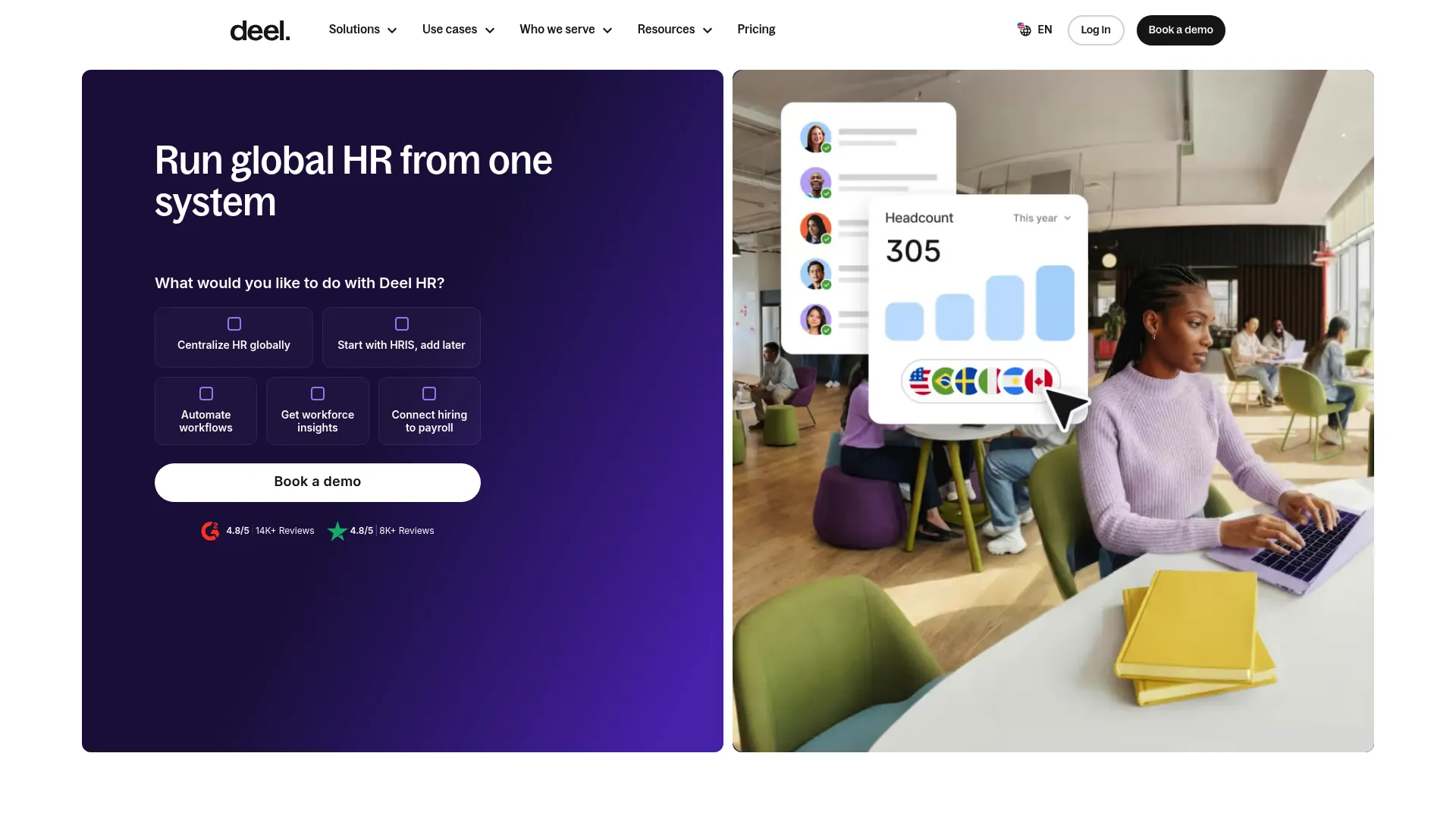
Deel HR is a global HR platform that connects employee goal setting to core HR workflows. Goals sit alongside worker profiles, performance, and review cycles inside a single HRIS built for distributed teams across 150+ countries. For people ops teams managing goals as part of the employee lifecycle, Deel keeps everything in one system.
Best for: People ops and distributed teams that want employee goal setting software tied to HR and review cycles.
Key strengths
- HRIS with worker profiles, workflows, and people analytics
- Employee goals connected to performance and reviews
- Modules for Recruit, Engage, Compensation, and Workforce Planning
- Built for global teams with contractors, employees, and EOR workers
Why choose Deel HR: If goals belong inside your HR system rather than a separate tool, Deel connects them to reviews, compensation, and headcount planning. Teams wanting a pure OKR alignment layer for cross-functional execution may pair it with a dedicated OKR tool, but for HR-anchored goal setting Deel is a strong fit.
Deel HR pricing: Core HR starts at $5 per employee per month. Recruit is $14 per employee per month, Develop is $22 per employee per month, and the full HR solution is $56 per employee per month. Pricing is modular, so you add the modules you need.
5. Hive
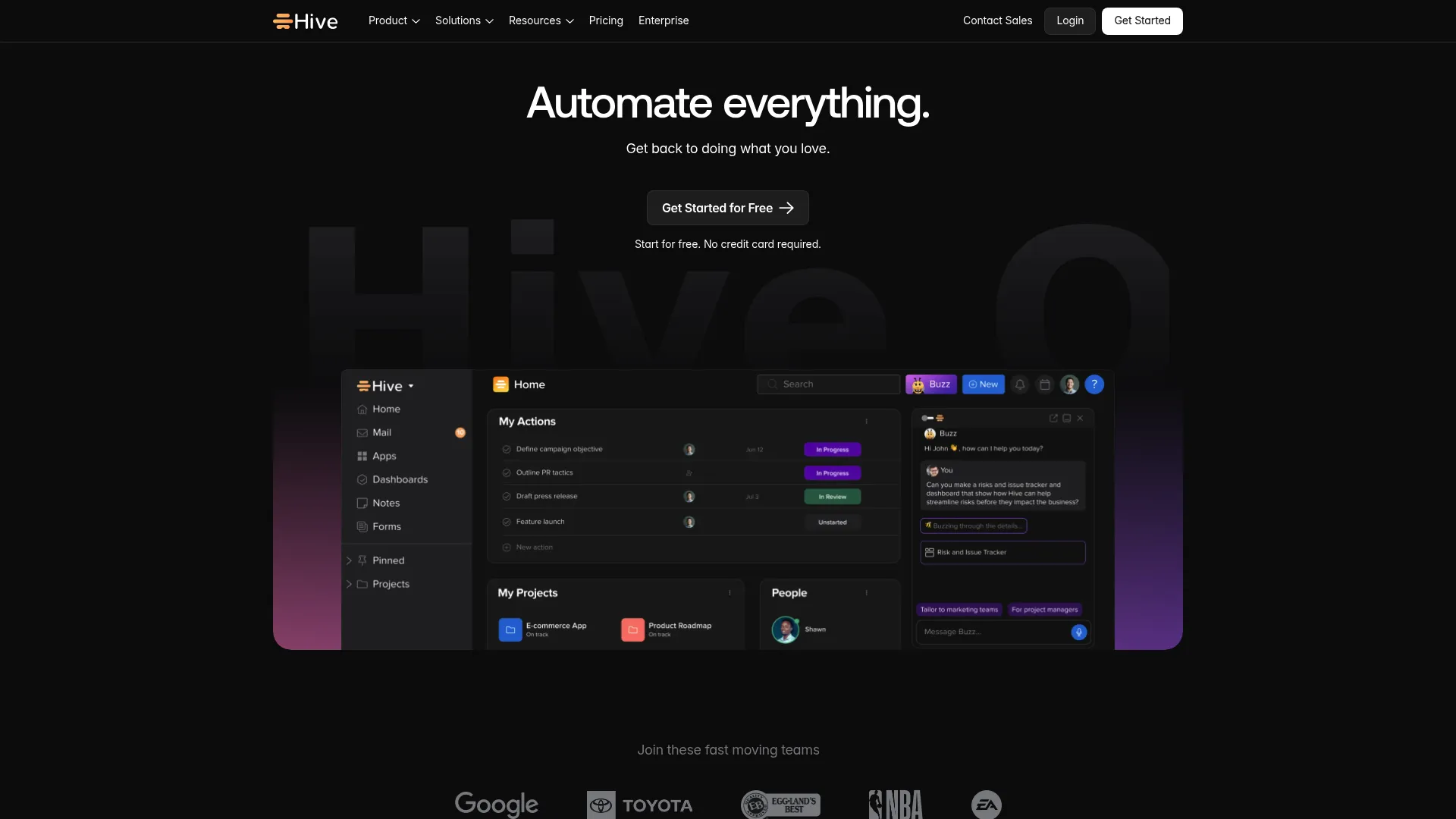
Hive is a project management platform that keeps goals inside daily execution. Teams plan work, collaborate, and track goals in the same workspace, with multiple views for how work maps to objectives. For smaller teams that want goals tied to the projects they run every day, Hive keeps planning and doing close together.
Best for: Smaller teams that want goals connected to project execution and daily work.
Key strengths
- Project and task management with goal tracking
- Gantt, Kanban, Calendar, Table, and Portfolio views
- Dashboards for work visibility and progress
- Time tracking, forms, automations, and AI features
Why choose Hive: Hive fits teams that want one workspace for both work and goals without a heavy configuration lift. Larger orgs needing formal org-wide OKR cascades and deep performance workflows may look to a dedicated platform, but for team-level goals tied to execution Hive is practical and quick to adopt.
Hive pricing: Free is $0, free forever. Starter is $5 per user per month. Teams is $12 per user per month. Enterprise requires contacting sales. Yearly billing is offered at a lower effective rate.
6. Lattice
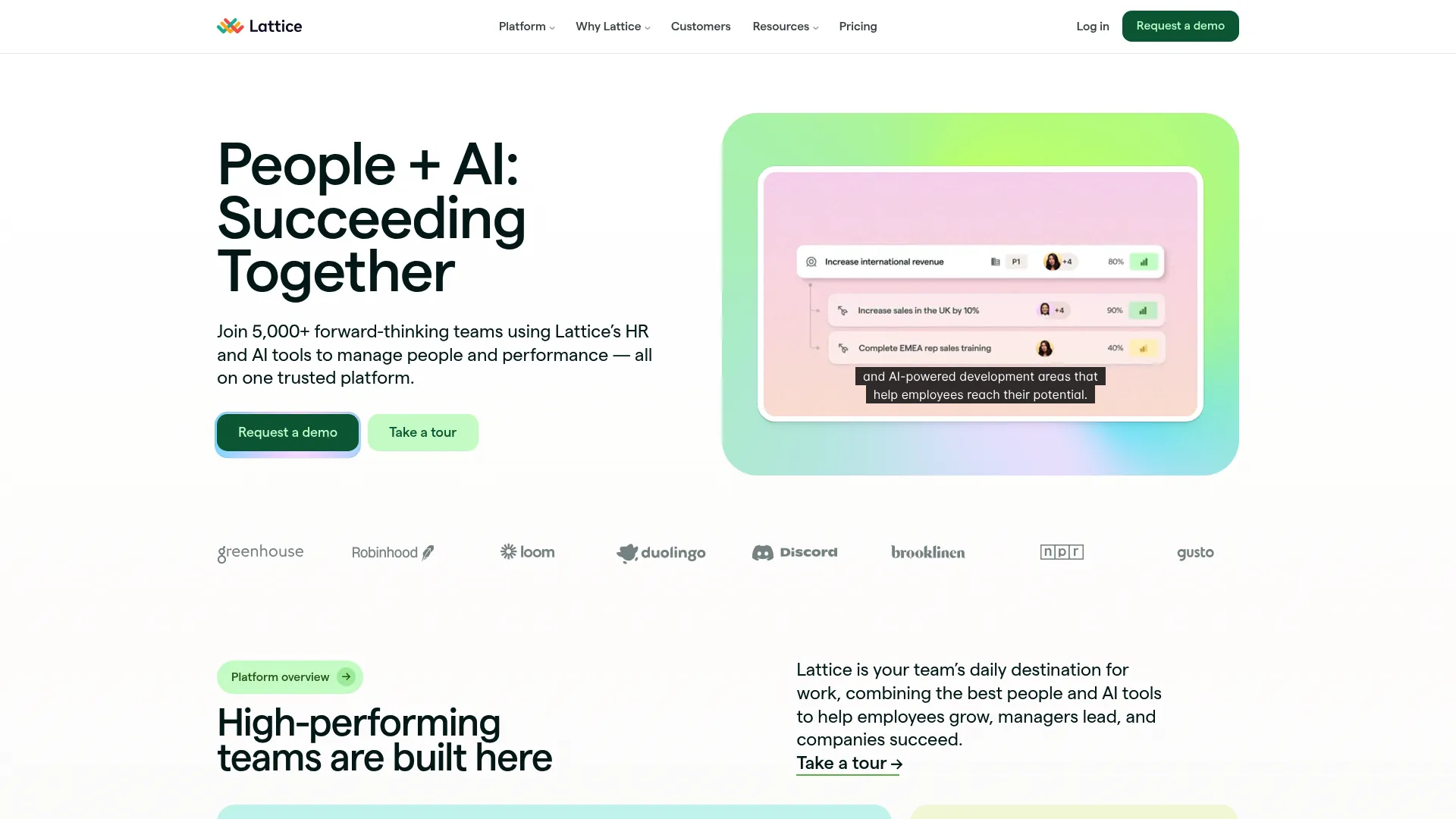
Lattice is a people management platform with goals and OKRs built into a broader performance and growth system. It pairs goal management with review cycles, manager coaching, 1:1s, and employee development, so goals connect to how people grow and perform. For HR teams that see goals as part of the full employee experience, Lattice ties them together.
Best for: Mid-market and enterprise teams wanting a modular people platform with performance, growth, and OKRs.
Key strengths
- Goals and OKRs with alignment
- Performance reviews, PIPs, promotions, and calibration
- 1:1s, weekly updates, and continuous feedback
- Engagement surveys, analytics, and an AI Agent
Why choose Lattice: Lattice works when goals should live inside a performance management system rather than stand alone. Its modular pricing lets you start with the pieces you need. Teams that only want goal tracking without the broader people suite may find it more than required, but for connecting goals to growth it is comprehensive.
Lattice pricing: Pricing is modular. Goals & OKRs is $8 per seat per month, Engagement is $4, Performance is $10, and Foundations is $13. Add-ons include Compensation and Grow. Lattice bills annually in USD with a $4,000 minimum annual agreement.
7. monday AI Work Platform
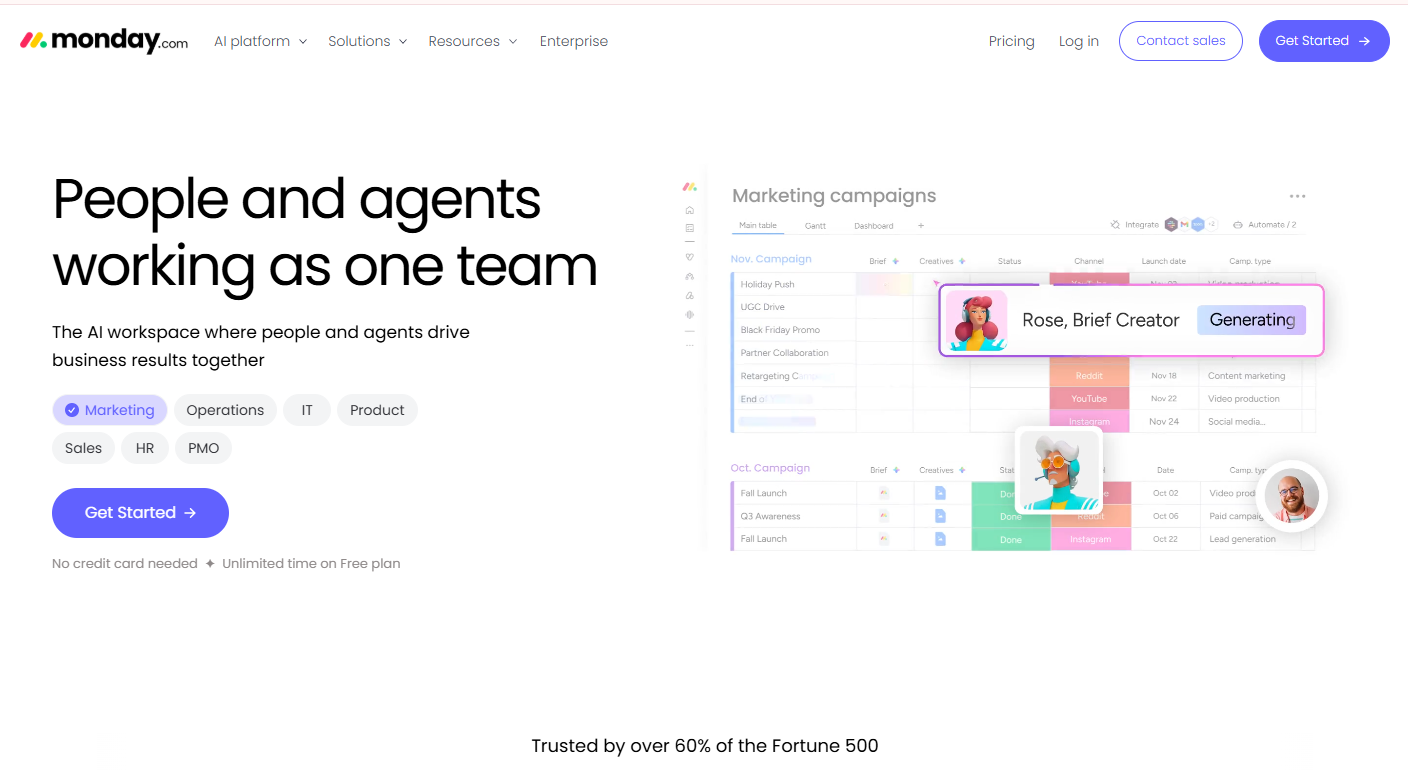
monday is a flexible work platform with goal tracking built into customizable workflows. Teams configure boards to track goals, connect them to work, and roll progress into dashboards across teams. With AI-assisted setup and no-code customization, monday adapts to how each team wants to structure and monitor its goals.
Best for: Teams that want adaptable, customizable goal workflows with cross-team visibility.
Key strengths
- AI assistants and agents for setup and updates
- Custom dashboards for cross-team goal visibility
- No-code workflow automation
- Custom business apps built on the platform
Why choose monday: monday suits teams that want to shape goal tracking to their own process rather than adopt a fixed framework. That flexibility is the draw. Teams wanting a prescriptive OKR structure out of the box may prefer a dedicated OKR tool, but for adaptable goal workflows monday is versatile.
monday pricing: Free is $0. Basic is $9 per seat per month billed annually. Standard is $17 per seat per month billed annually. Pro is $28 per seat per month billed annually. Enterprise is quote-based. Monthly billing is also available.
8. Mooncamp
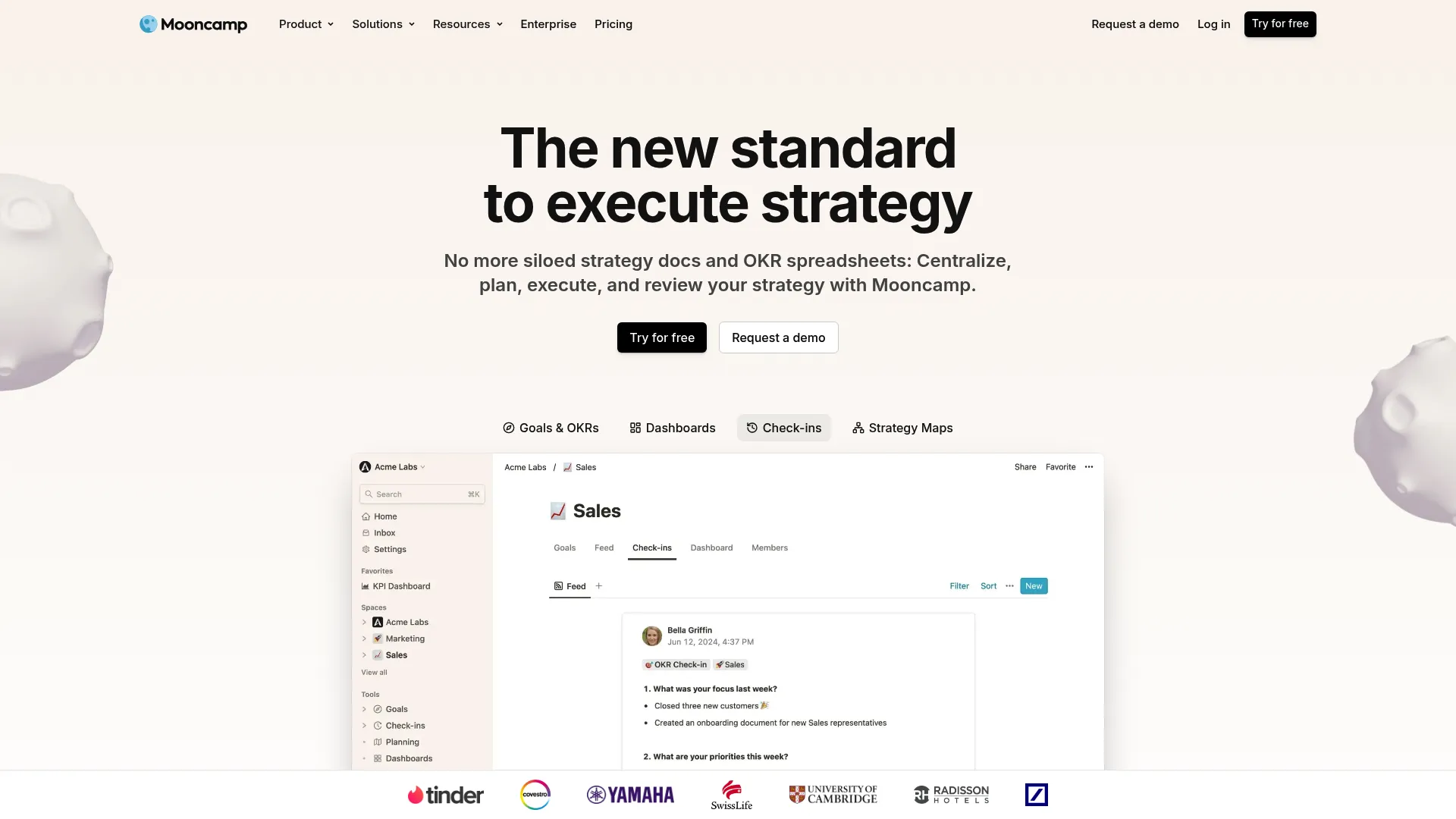
Mooncamp is a focused OKR and strategy execution platform built around alignment, check-ins, and reporting. It keeps goal management simple: teams set OKRs, run regular check-ins, and view progress through dashboards and strategy maps. For teams that want a dedicated goal setting tool without the weight of a full work or HR platform, Mooncamp stays focused on goals.
Best for: Teams that want a focused OKR and goal management platform with alignment and check-ins.
Key strengths
- Goals and OKRs with alignment
- Dashboards and progress reporting
- Regular check-ins and strategy maps
- Integrations with Slack, Microsoft Teams, and Jira
Why choose Mooncamp: Mooncamp fits teams that want OKR software focused on alignment and reporting rather than a broad platform. Its simplicity is the point. Organizations needing goals embedded in daily task execution may prefer a work platform, but for dedicated OKR management Mooncamp is clean and purpose-built.
Mooncamp pricing: Essential is €7 per user per month billed annually. Professional is €10 per user per month billed annually. Enterprise requires contacting sales with a 100-user minimum. A 14-day free trial is offered.
9. OKR Board for Jira (Oboard)
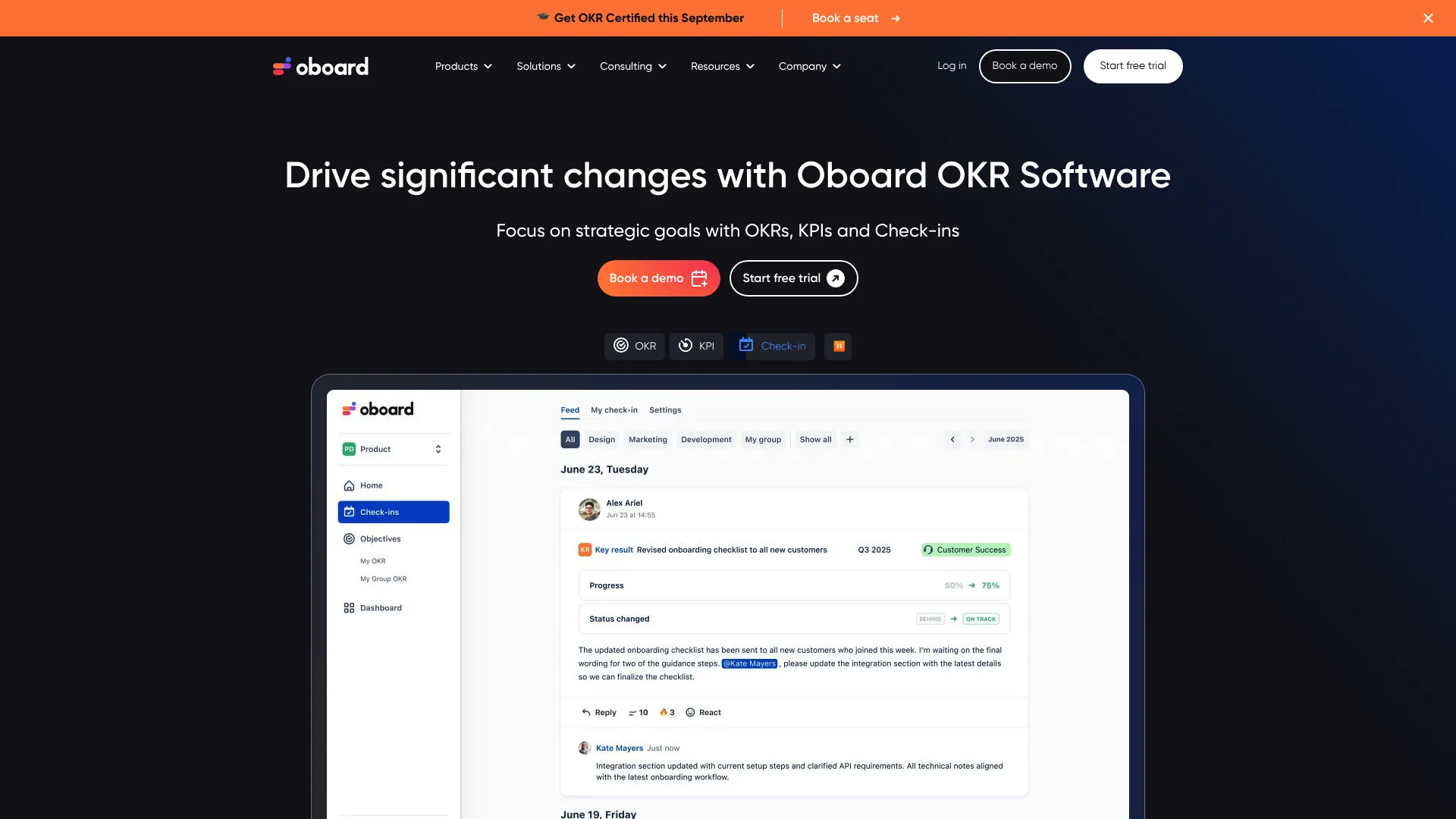
OKR Board for Jira by Oboard brings OKR tracking directly into Jira. For engineering and product teams that already run their work in Jira, it connects goals to the issues and epics that deliver them, updating OKR progress automatically as work moves. That native connection removes the manual gap between shipping work and reporting on goals.
Best for: Engineering and product teams working in Jira that want OKRs connected to their existing work.
Key strengths
- Jira integration for automated OKR updates
- OKR strategy maps, roadmaps, and dashboards
- Check-ins, notifications, and custom fields
- Reporting tied to Jira work items
Why choose OKR Board for Jira: If your team lives in Jira, this keeps OKRs where the work already happens. Teams that do not use Jira will not get the core benefit and are better served by a standalone goal tracking tool, but for Jira-native orgs the integration is the whole point.
OKR Board for Jira pricing: Public pricing lists Essential and Professional tiers, with Enterprise available as a custom quote. The page states a 14-day free trial and an 18% discount on annual plans. Confirm the current Jira Cloud edition and per-tier pricing on the Oboard site, as packaging is updated periodically.
10. OKRs Tool
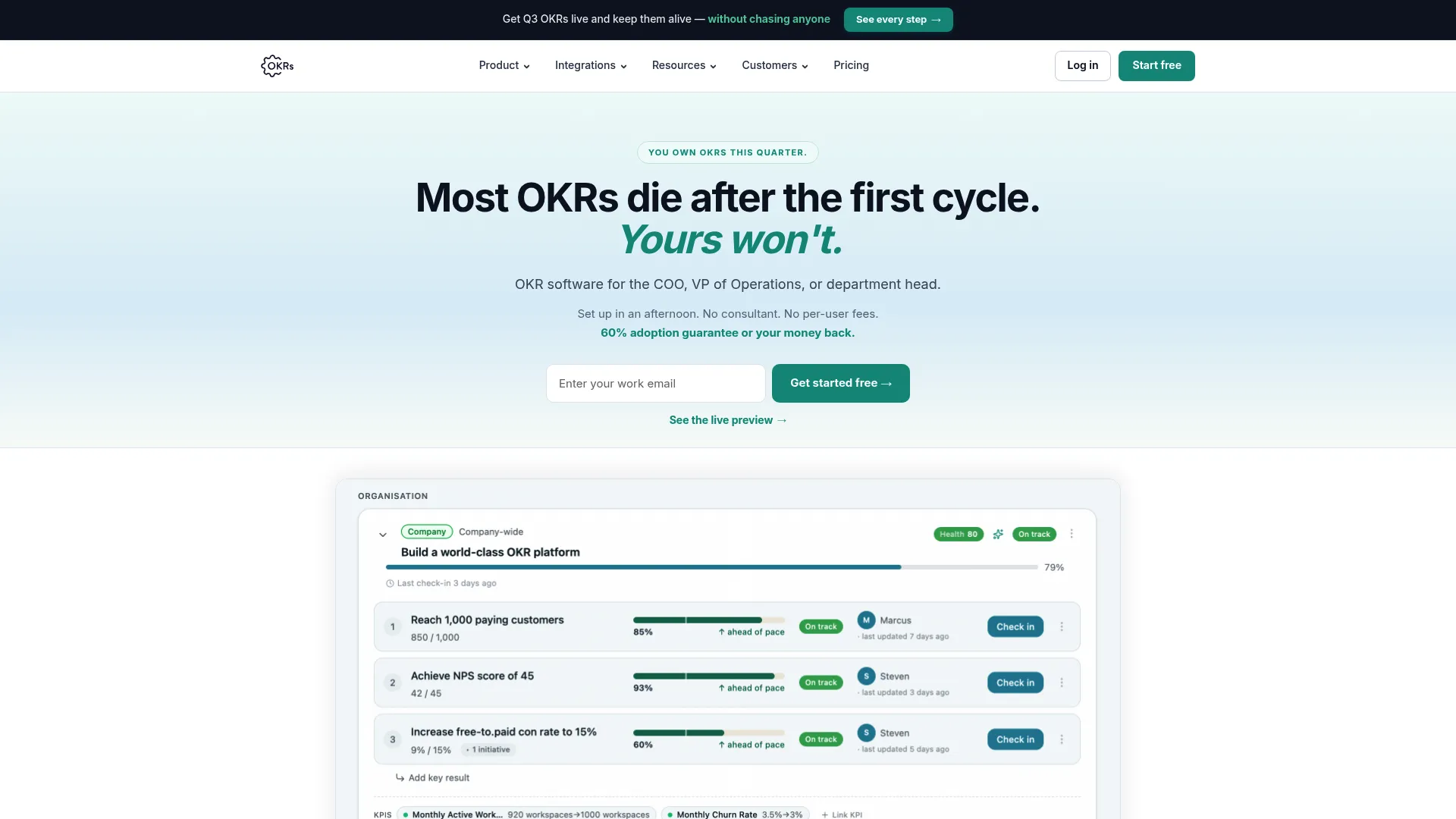
OKRs Tool is a lightweight OKR platform built for operators and team leaders, with flat pricing instead of per-seat fees. It covers the essentials of goal setting: unlimited OKRs, weekly check-ins, an alignment map, and KPI tracking, plus AI features for coaching and risk insights. For teams that want dedicated OKR software without complex pricing, it is a straightforward benchmark against the broader platforms above.
Best for: Teams wanting lightweight OKR software with flat pricing and no per-seat charges.
Key strengths
- Unlimited OKRs and weekly check-ins
- Alignment map and KPI tracking
- AI Coach, AI Insights, and predicted risks
- Flat pricing with no per-seat fees
Why choose OKRs Tool: OKRs Tool fits teams that want focused OKR management and predictable cost. Its flat pricing scales well as you add people. Organizations needing goals wired into a full work or HR platform may prefer a broader tool, but for standalone OKRs at a fixed price this is a clean option.
OKRs Tool pricing: Launch is free forever for 1 to 5 users with no credit card required. Scale is $49 per month for 6 to 50 users. Expand is $129 per month for 51+ users. Annual billing saves 20%.
Considerations before you buy
The right goal setting software depends less on features and more on how your team already works. Run through this checklist before committing.
Reporting and roll-up
Look at how progress aggregates. Can individual goals roll up to team and org views without manual work? Weak roll-up means you are back to rebuilding status reports by hand, which is the problem you are trying to solve.
Ownership and approvals
Every goal needs a clear owner and, in larger orgs, an approval path. Check whether the tool enforces ownership, tracks history, and supports governance so goals do not drift or duplicate across teams.
Integrations
Goals should reflect real work. Verify the tool connects to your task systems, CRM, and communication tools like Slack or Teams, so progress updates flow in rather than requiring manual entry.
Ease of maintenance
A goal management platform only works if people keep it current. Favor tools with templates, automated check-in prompts, and low upkeep, so the system stays accurate without constant nagging.
Team size and maturity
Match the tool to your stage. Small teams often want lightweight goal tracking; mid-market teams need alignment and reporting; enterprises need performance workflows and governance. Buying above your maturity adds friction; buying below it means you outgrow the tool fast.
Conclusion
The best goal setting software is the one that fits how your team already operates, not the one with the longest feature list.
If goals should live next to daily work, Asana, ClickUp, Hive, and monday keep objectives connected to projects and tasks. If you want dedicated OKR software, Mooncamp and OKRs Tool stay focused on alignment and check-ins, while OKR Board for Jira serves Jira-native teams. If goals belong inside people management, Betterworks, Lattice, and Deel HR tie them to performance and HR cycles.
Your next step: match your team size and maturity to the shortlist above. Small teams should start with a free tier and lightweight goal tracking. Mid-market teams should prioritize roll-up reporting and integrations. Enterprises should evaluate governance and performance workflows.
Whatever you choose, the win is the same: goals that stay visible, owners who stay accountable, and business goal tracking software that replaces spreadsheet chaos with a system your team actually uses.
FAQs
Goal setting software is the broad category for creating, tracking, and reporting goals in any format. OKR software is a subset built specifically around the Objectives and Key Results framework, with alignment maps and cascading goals. If you follow OKRs strictly, choose an OKR tool; if you want flexible goal formats including SMART goals, a broader goal management platform gives you more room.
Small teams can often start with a spreadsheet, but the switch pays off once goals span multiple people or quarters. A lightweight tool with a free tier, like Asana, Hive, or OKRs Tool, adds ownership and check-ins without much overhead. The trigger is usually when manual status updates start eating real time.
Yes, and that is the main reason teams adopt it. Spreadsheets store goals as static cells that someone has to update manually; goal tracking software turns them into structured records with owners, history, and automatic roll-up. The result is current status without the day-long rebuild before a review.
At minimum it should report progress against target, owner, status, and due date for every goal. Stronger tools add roll-up from individual to team and org level, trend over time, and risk flags for goals that are stalling. Good progress reporting is what makes quarterly reviews fast and honest.
Most teams run weekly check-ins for progress updates and quarterly reviews for setting and scoring goals. Weekly cadence catches problems early; quarterly cadence resets priorities. The best goal setting tools automate check-in prompts so the rhythm holds without manual chasing.
Prioritize integrations with the systems where work actually happens: task and project tools, your CRM, and communication apps like Slack or Microsoft Teams. These let progress flow into goals automatically instead of requiring manual entry. For engineering teams, a Jira integration is often the single most important one.
They solve different problems. Goal setting software centers on ongoing progress and alignment; performance management software centers on reviews, ratings, and development. Many platforms like Betterworks and Lattice combine both. If you want goals tied to performance cycles, choose a combined platform; if you want a focused alignment layer, a dedicated goal or OKR tool is the better fit.