You quoted a custom oak dining set on Tuesday. By Thursday, the sales rep promised a delivery date the shop floor never agreed to. Purchasing already ordered the wrong hardware because the bill of materials lived in a spreadsheet three versions behind. Nobody did anything wrong. The system did.
That is the real friction furniture makers hit at scale. Quote, bill of materials, inventory, and production stop living in the same place. Every handoff becomes a chance to lose a number. The right furniture manufacturing software closes those gaps by keeping one source of truth across sales, production, procurement, and finance.
This matters more than it used to. The global furniture manufacturing software market is projected to grow from USD 13.20 billion in 2024 to USD 20.10 billion by 2032, a 5.4% CAGR, according to Data Bridge Market Research (2024). Manufacturers running comprehensive digital tools saw productivity climb 12% between 2020 and 2023, versus 3% for traditional shops, per International Labour Organization data cited by Emergen Research (2024). The gap is widening.
Furniture is harder than generic manufacturing. Variable configurations, mixed make-to-order and make-to-stock runs, materials that move at different speeds (wood, fabric, hardware, finishes), and long lead times all compound. A furniture ERP software has to handle that complexity without turning every quote into a fire drill. This guide breaks the choice down by workflow, so you can match a system to how your shop actually runs.
What's inside
This guide covers eight furniture manufacturing ERP and operations tools built for inventory, production planning, scheduling, order flow, procurement, and traceability. Some are lean cloud MRP systems for small shops. Others are full ERP platforms for teams that need finance, distribution, and multi-warehouse control in one place.
We picked and ranked these tools on five criteria:
- Furniture fit: how well it handles configurable products, BOMs, and mixed production modes
- Workflow coverage: inventory, production, scheduling, order management, procurement, traceability
- SMB friendliness: whether a smaller team can implement and run it without a large IT function
- Integrations: accounting, eCommerce, and CRM connections that match real workflows
- Implementation practicality: time-to-value and ongoing maintenance realities
The list is sorted by relevance to furniture manufacturing buyers, not brand popularity.
TL;DR
- Best overall for small to mid-sized furniture makers: MRPeasy. Cloud MRP with production planning, BOMs, inventory, and shop floor reporting at a per-user price that suits smaller shops.
- Best for real-time inventory control: Katana. Live stock visibility across make-to-order and make-to-stock workflows, built for product businesses that want fast operational clarity.
- Best for deeper, industry-specific ERP: SYSPRO. Configuration-heavy furniture operations, multi-warehouse distribution, and production scheduling rigor.
- Best for finance plus operations in one platform: Acumatica. Cloud ERP breadth with unlimited users and manufacturing modules.
- Best for concept-to-production visibility: Epicor. A robust ERP stack tuned for furniture and fixtures manufacturers.
- Best for modular, open flexibility: Odoo and ERPNext. Assemble the exact stack you want, with free tiers and heavy customization.
What is furniture manufacturing software?
Furniture manufacturing software is a category of ERP and operations tools that connect inventory, bills of materials, production planning, order management, procurement, and traceability into one system so furniture makers can run quote-to-delivery workflows without spreadsheet drift.
The stronger platforms in this category share a core set of capabilities. If a tool is missing several of these, it is a partial fit at best.
- Inventory and BOMs: real-time inventory visibility plus accurate, multi-level bill of materials software so every product knows exactly what it consumes.
- Production planning and scheduling: production planning software for furniture that sequences jobs, balances capacity, and holds delivery dates that sales can trust.
- Shop floor control: shop floor control and reporting so operators log progress, scrap, and time against real work orders.
- Order and quotation management: order management for quotes, sales orders, and configurable products, often with a product configurator for custom builds.
- Procurement and supplier coordination: procurement management and supplier management that turn material demand into purchase orders before you run short.
- Traceability and reporting: lot and batch traceability plus reporting for costing, margins, and compliance.
Two production modes shape everything. Make-to-order furniture software builds against confirmed orders, so configuration accuracy and scheduling matter most. Make-to-stock furniture software builds ahead of demand, so inventory turns and forecasting matter more. Most real shops run both, which is why the best furniture manufacturing ERP handles a mix without forcing you into one mode.
When to use furniture manufacturing software
Manage make-to-order and custom builds
Custom furniture businesses live and die on configuration accuracy. A dining table might have eight wood options, four finishes, and three edge profiles, and each combination changes the BOM, the cost, and the build time. Without a system tying configuration to production, quotes drift from reality and the shop floor inherits the confusion.
Make to order furniture software reduces quoting and scheduling errors by locking configuration choices to a real BOM and a real capacity plan. When a rep quotes a lead time, the system checks against actual load. Fewer promised dates get broken. Fewer wrong parts get ordered.
Control inventory, BOMs, and lead times
Furniture materials do not move at the same speed. Kiln-dried lumber has one lead time, imported hardware another, upholstery fabric another still. When those items live in separate spreadsheets, you either overstock to feel safe or stock out mid-build. Both cost money.
Furniture inventory management software gives you real-time inventory visibility tied to your BOMs and open orders. The system knows what is committed, what is available, and what needs reordering based on lead time. That means less waste, fewer stockouts, and cleaner cash tied up in the right materials.
Connect sales, production, and finance
The best systems are not just shop floor tools. They connect the quote a rep sends to the work order the floor builds to the invoice finance sends. One record flows across every function.
When a quote becomes an order, production sees it instantly, procurement reacts to the material demand, and finance recognizes the revenue on the right terms. That single-system handoff is what separates ERP for furniture manufacturing from point tools that only solve one slice of the workflow. If you want a repeatable operation that does not route every decision through the owner, this connection is the whole point.
Comparison table
Here is the shortlist at a glance. Pricing and ratings reflect verified figures from each vendor's site and G2 as of mid-2026. Where a vendor gates pricing behind a quote, we note that plainly rather than guess.
| # | Product | Intent | Key differentiation | Pricing | G2 rating |
|---|---|---|---|---|---|
| 1 | MRPeasy | SMB cloud MRP/ERP | Affordable per-user MRP with production, BOMs, inventory, shop floor | From $49/user/mo | 4.6/5 |
| 2 | Katana | Real-time inventory + production | Live stock visibility across make-to-order and make-to-stock | Free; Core from $299/mo | 4.4/5 |
| 3 | SYSPRO | Industry ERP depth | Configuration-heavy manufacturing, distribution, scheduling | Custom quote | Not listed |
| 4 | Acumatica | Cloud ERP breadth | Unlimited users, manufacturing plus full financials | Custom quote | 4.4/5 |
| 5 | Epicor | Robust ERP stack | Furniture and fixtures focus, concept-to-production visibility | Custom quote | 4.1/5 |
| 6 | Odoo | Modular all-in-one | Free tier, modular manufacturing plus every business app | Free; Standard $24.90/user/mo | 4.2/5 |
| 7 | ERPNext | Open-source ERP | Full source control, low license cost, manufacturing modules | Free (open source) | 4.3/5 |
| 8 | SAP Business One | Mature SMB ERP | Established finance-first ERP with production workflows | Custom quote | 4.3/5 |
1. MRPeasy
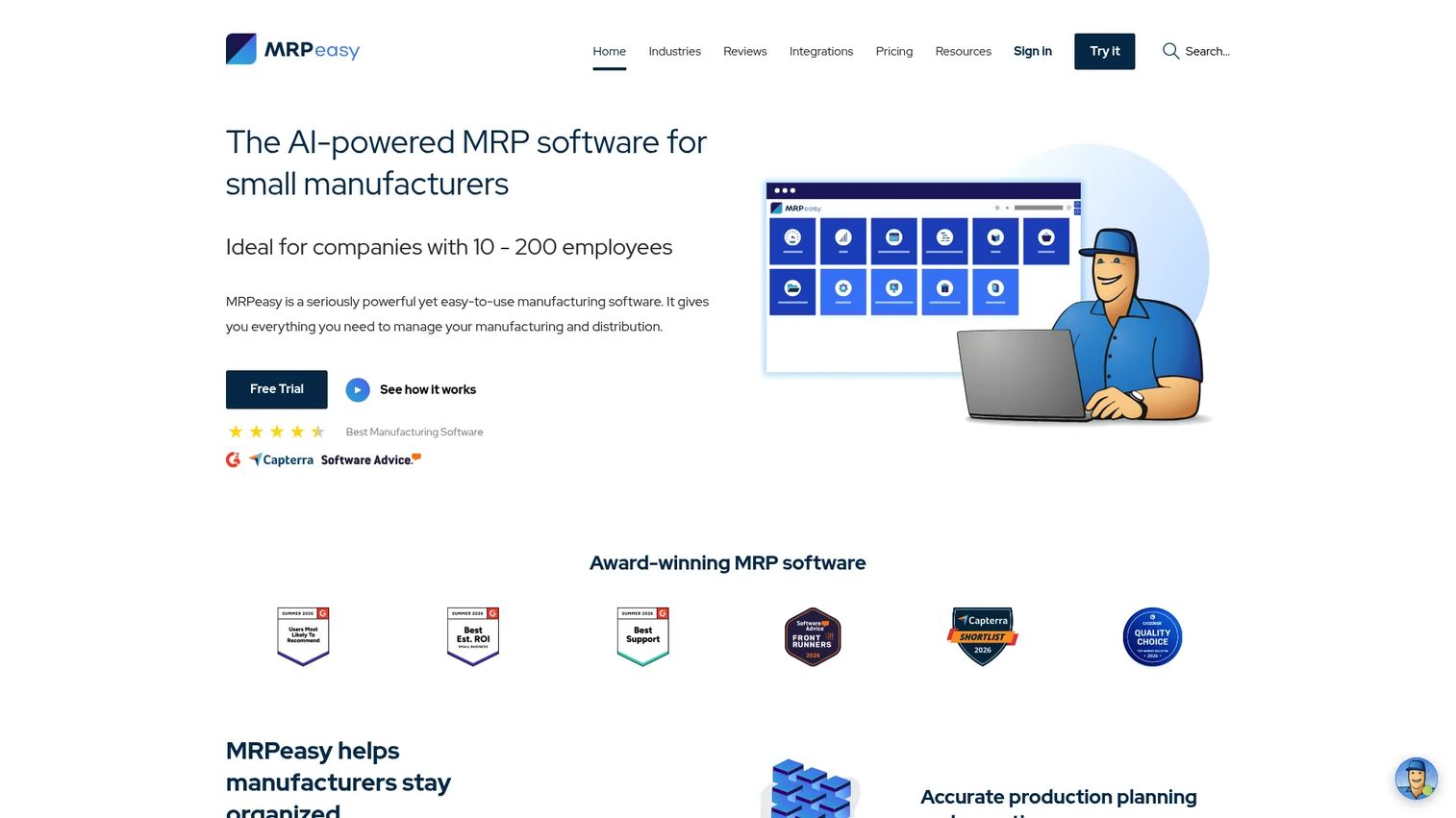
MRPeasy is cloud-based manufacturing ERP and MRP software built for small and midsize manufacturers and distributors. For furniture and woodworking shops, it hits the sweet spot: enough depth to run production and inventory properly, without the weight and cost of a full enterprise ERP. You get production planning, BOM management, and MRP without hiring a systems team to keep it running.
The furniture fit is strong because MRPeasy handles multi-level BOMs, capacity planning, and shop floor reporting in one place. A custom cabinet with sub-assemblies, hardware, and finishes maps cleanly to a structured BOM, and the MRP engine turns confirmed orders into material and production requirements automatically.
Best for: small and midsize furniture makers that need affordable cloud MRP with real production and inventory control.
Key strengths
- Production planning and MRP: Sequences jobs, plans capacity, and converts orders into material and work-order requirements automatically.
- BOM and inventory management: Multi-level bill of materials software tied to real-time inventory and warehouse tracking for accurate consumption.
- Shop floor and MES reporting: Operators log progress and time against work orders, giving you traceability and real production data.
Why choose MRPeasy: It fits the founder-minded operator who wants a repeatable system without an enterprise implementation. Built-in CRM and integrations connect sales and procurement, so quote-to-production handoffs stop living in email. It earns its place in the stack fast because you can run a real shop on it inside weeks, not quarters.
MRPeasy pricing: Four public plans, all billed per user per month: Starter at $49, Professional at $69, Enterprise at $99, and Unlimited at $149. MRPeasy also offers a free trial period (15 + 15 days) so you can test it against real orders before committing.
2. Katana
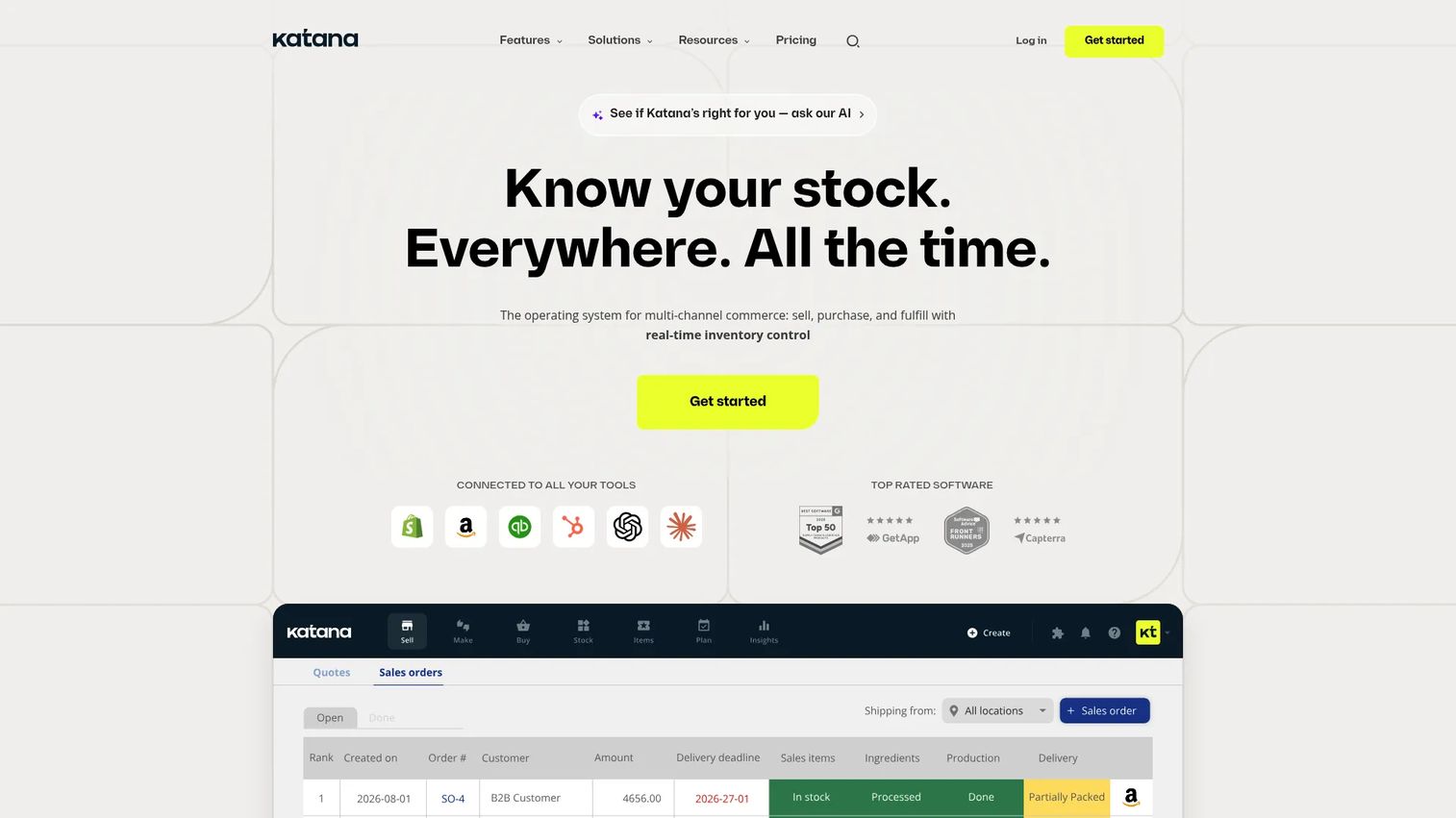
Katana is cloud inventory and manufacturing management software for product businesses. Its strongest angle for furniture makers is real-time inventory visibility. You see stock move as orders come in, materials get committed, and builds progress, all on a live view rather than a nightly batch report.
Katana handles both make-to-order and make-to-stock workflows in the same system, which matches how most furniture shops actually operate. A shop building stock-standard shelving while also taking custom commissions can plan both without switching tools or reconciling two sets of numbers.
Best for: growing furniture businesses that want fast operational visibility across inventory, production, and purchasing.
Key strengths
- Real-time inventory management: Live stock movement and material commitment so you always know what is available versus reserved.
- Manufacturing and production tracking: Production orders tied to inventory, with clear visibility into what is in progress and what is done.
- Purchasing and order management: Order management and reordering built into the same flow, so procurement reacts to real demand.
Why choose Katana: It leans SMB-usable, so a small operations team gets clarity without a heavy rollout. The real-time model is the differentiator: instead of reconstructing what happened, you watch it happen. For a founder trying to remove themselves as the bottleneck, that visibility is the point.
Katana pricing: A Free plan covers 30 SKUs and 3 locations, useful for testing. The Core plan starts at $299/month. The Advantage tier moves to custom pricing on an annual contract with more advanced capability. Billing scales with the size and complexity of your operation.
3. SYSPRO
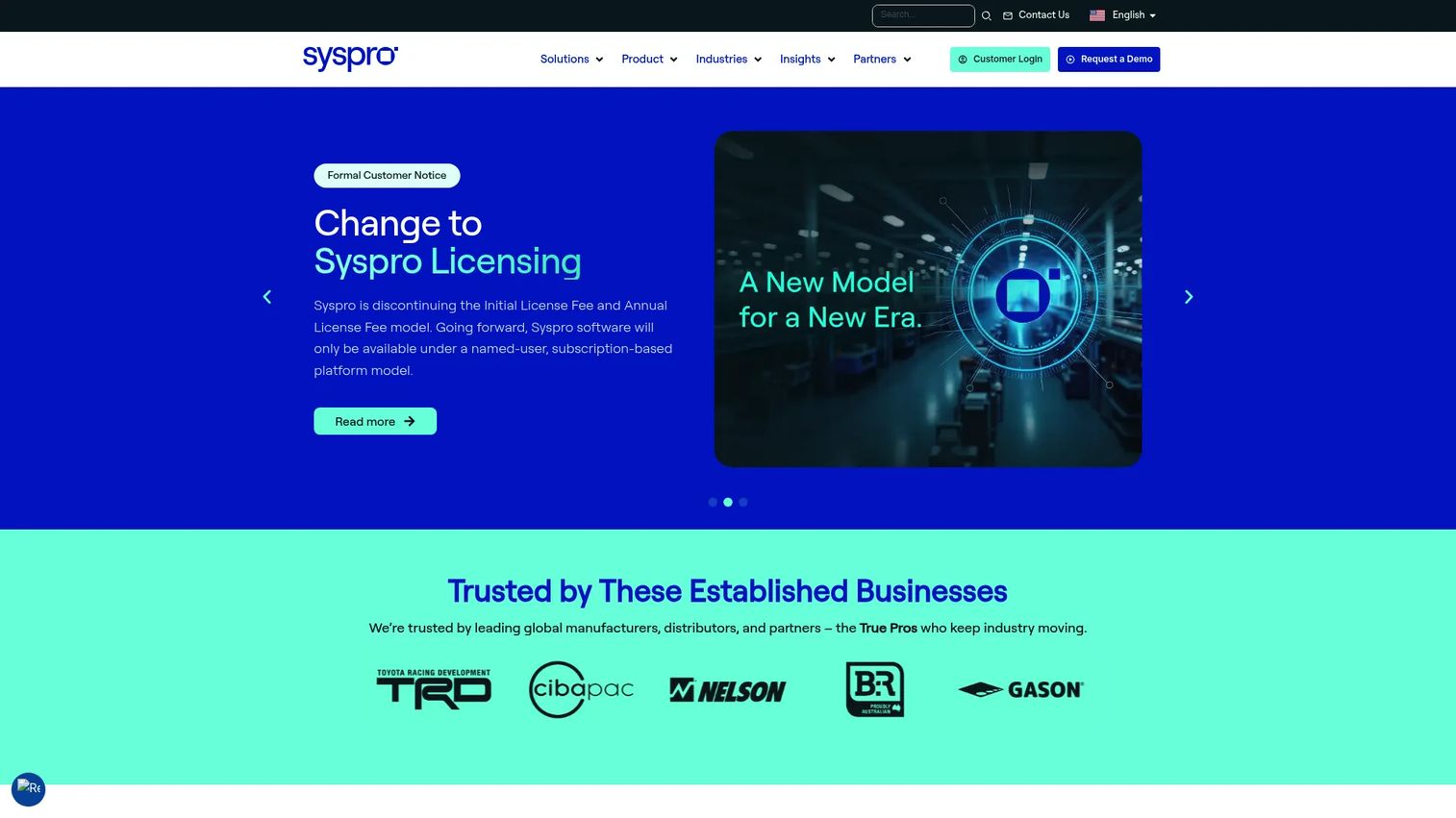
SYSPRO is an ERP platform built specifically for manufacturers and distributors, and it brings more operational depth than lean MRP tools. For furniture businesses with heavy configuration, multiple warehouses, and complex distribution, that depth is the draw. It runs as a cloud ERP on Microsoft Azure with embedded analytics and real-time dashboards.
Configuration-heavy furniture operations are where SYSPRO earns its keep. If your product lines have deep option trees, agreed customer pricing, and multi-site fulfillment, SYSPRO's sales order management, BOM costing, and production scheduling give you the rigor to keep it all straight.
Best for: mid-sized furniture manufacturers and distributors that need industry-specific ERP with distribution and scheduling depth.
Key strengths
- Sales order management: Handles agreed pricing, offers, and complex order structures common in configured furniture lines.
- Production scheduling and BOM costing: Sequences jobs and costs multi-level BOMs so margins stay visible on custom work.
- Embedded analytics and dashboards: Real-time operational and financial visibility across warehouses and sites.
Why choose SYSPRO: Choose it when process rigor and multi-warehouse distribution matter more than a fast, lightweight rollout. It suits operations that have outgrown SMB tools and need supplier management, procurement management, and scheduling in one industry-tuned platform. The tradeoff is scope: this is a deeper commitment than a cloud MRP.
SYSPRO pricing: SYSPRO does not publish numeric pricing. Its site states that cost depends on organization size, number of users, modules, customization, deployment method, and services. You will need a scoped quote to get a real figure.
4. Acumatica
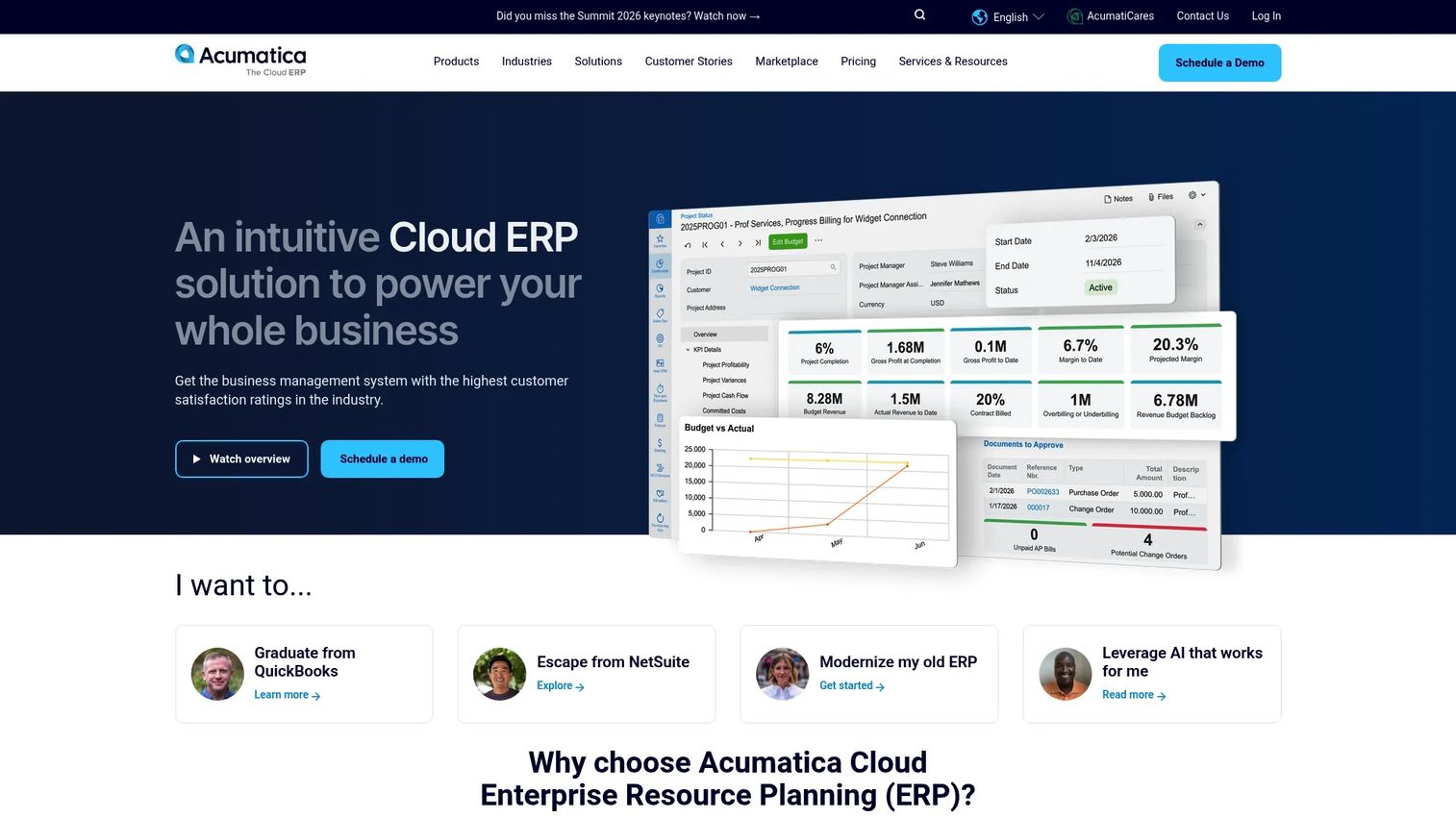
Acumatica is cloud ERP software for mid-market businesses, with industry-specific editions including manufacturing. Its distinguishing move is pricing by resources rather than per user, so you can add people across sales, production, and finance without seat-based penalties. For furniture makers who want one platform spanning operations and financials, that model matters.
The manufacturing edition covers product configuration, shop floor data collection, inventory, and production planning, while the wider ERP handles financials and reporting. That breadth suits teams where finance and operations need to work from the same data instead of reconciling two systems.
Best for: mid-market furniture companies that want a customizable cloud ERP with unlimited users spanning operations and finance.
Key strengths
- Unlimited users: Resource-based pricing lets the whole team into the system without per-seat cost pressure.
- Manufacturing plus financials: Product configuration, shop floor data collection, inventory, and full accounting integration in one platform.
- Low-code customization: Adapt workflows and add automation without heavy developer dependency.
Why choose Acumatica: Reach for it when finance and operations need a single source of truth and you expect to add users as you scale. The unlimited-user model rewards growth, and the manufacturing modules give you real production planning software for furniture alongside your general ledger. It is a broader bet than a shop-floor-only tool.
Acumatica pricing: Acumatica uses custom, quote-based pricing tailored to the applications you license, your usage and resource needs, and your deployment preference. There is no public entry price, so expect a scoping conversation.
5. Epicor
Epicor builds industry-specific ERP for manufacturers, distributors, and retailers, and it has a recognized presence in furniture and fixtures. If you want a more robust ERP stack that carries a product from concept through engineering to production and after-sale service, Epicor is built for that end-to-end view.
Concept-to-production visibility is the headline for furniture makers. Epicor ties BOM visibility, production, engineering, customer service, and finance together, so a custom design flows through the same system it was quoted in. That continuity reduces the handoff losses that plague multi-tool shops.
Best for: furniture and fixtures manufacturers that want a robust, integrated ERP stack across engineering, production, and finance.
Key strengths
- Industry-specific ERP: Furniture and fixtures functionality rather than a generic manufacturing template.
- Concept-to-production visibility: BOM, engineering, production, and finance connected across the full product lifecycle.
- Supply chain and commerce: Procurement, distribution, and digital commerce for shops selling across channels.
Why choose Epicor: Choose it when you want ERP depth and are ready to invest in a more substantial platform. It fits operations that need engineering-to-shop-floor continuity and finance in the same system. The rigor is the payoff: fewer gaps between what was designed, what was built, and what was billed.
Epicor pricing: Epicor does not publish a public price. Product pages route to a contact or demo request, and pricing is scoped per implementation. Plan for a quote based on modules, users, and deployment.
6. Odoo
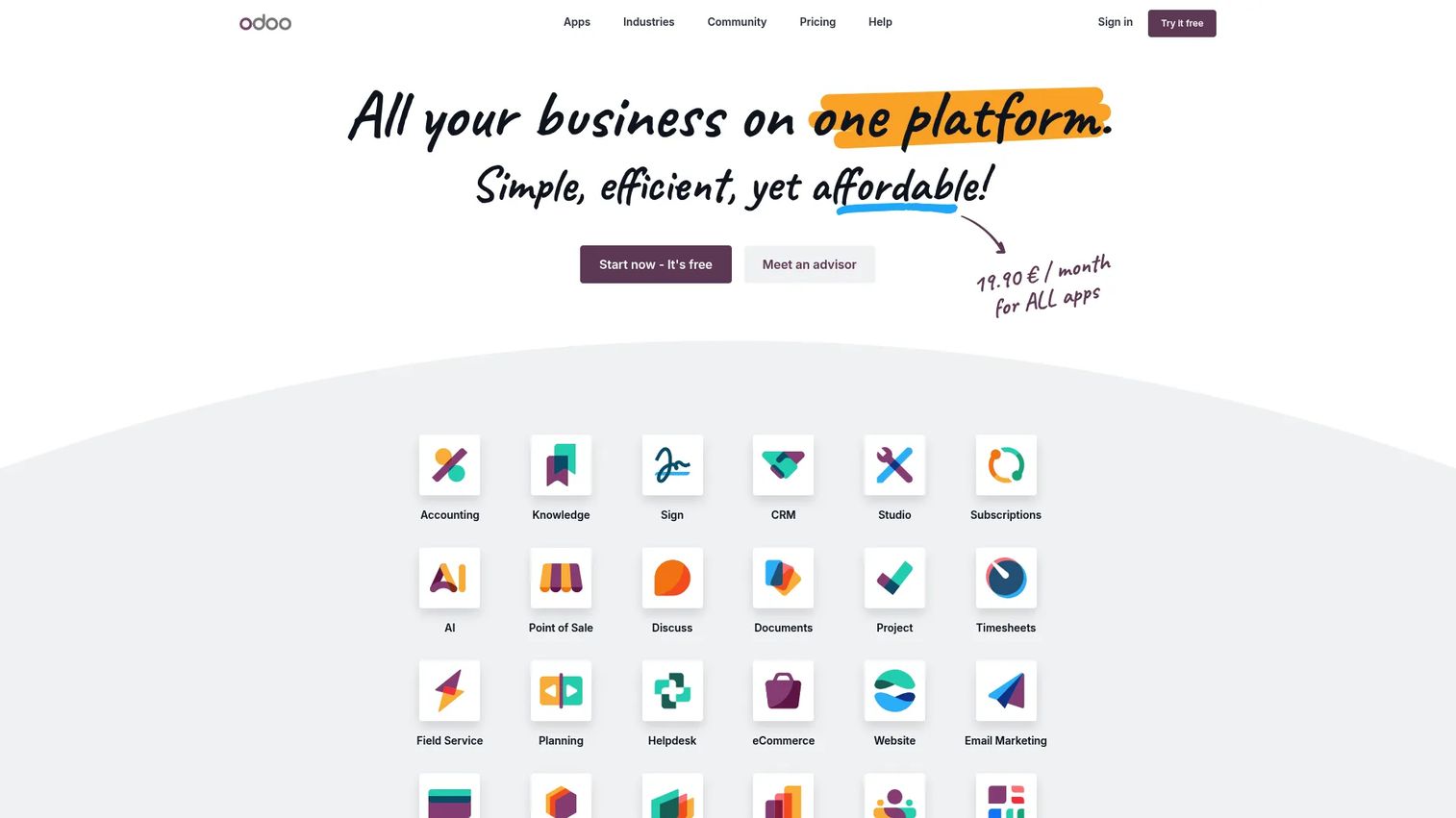
Odoo is a modular, all-in-one business suite spanning ERP, CRM, accounting, inventory, manufacturing, and eCommerce. For furniture makers who want to assemble exactly the stack they need, the modular model is the appeal. Start with manufacturing and inventory, then add accounting integration, a customer portal, or eCommerce as you grow.
The manufacturing app covers work orders, routing, and BOMs, and it plugs directly into inventory and purchasing. Because every module shares one database, a work order automatically reflects in stock and procurement without connectors. That configurability suits teams comfortable owning and shaping their own setup.
Best for: furniture teams that want modular control and are comfortable assembling and configuring their own stack.
Key strengths
- Modular apps: Manufacturing, inventory, accounting, CRM, and eCommerce integration that you turn on as needed.
- Work orders and routing: Production routing and multi-level BOMs tied directly to real-time inventory.
- Flexible deployment: Odoo Online, Odoo.sh, or on-premise, with a genuinely free single-app tier.
Why choose Odoo: It rewards teams that want to configure rather than accept defaults. One database across apps means quote, production, inventory, and accounting stay in sync without middleware. For a cost-conscious operator, the free and low-priced tiers make it easy to start small and expand deliberately.
Odoo pricing: The One App Free plan supports unlimited users on a single app at $0. The Standard plan runs $24.90/user/month and the Custom plan $49.00/user/month, unlocking all apps and deployment options. Yearly pricing is also published on their site.
7. ERPNext
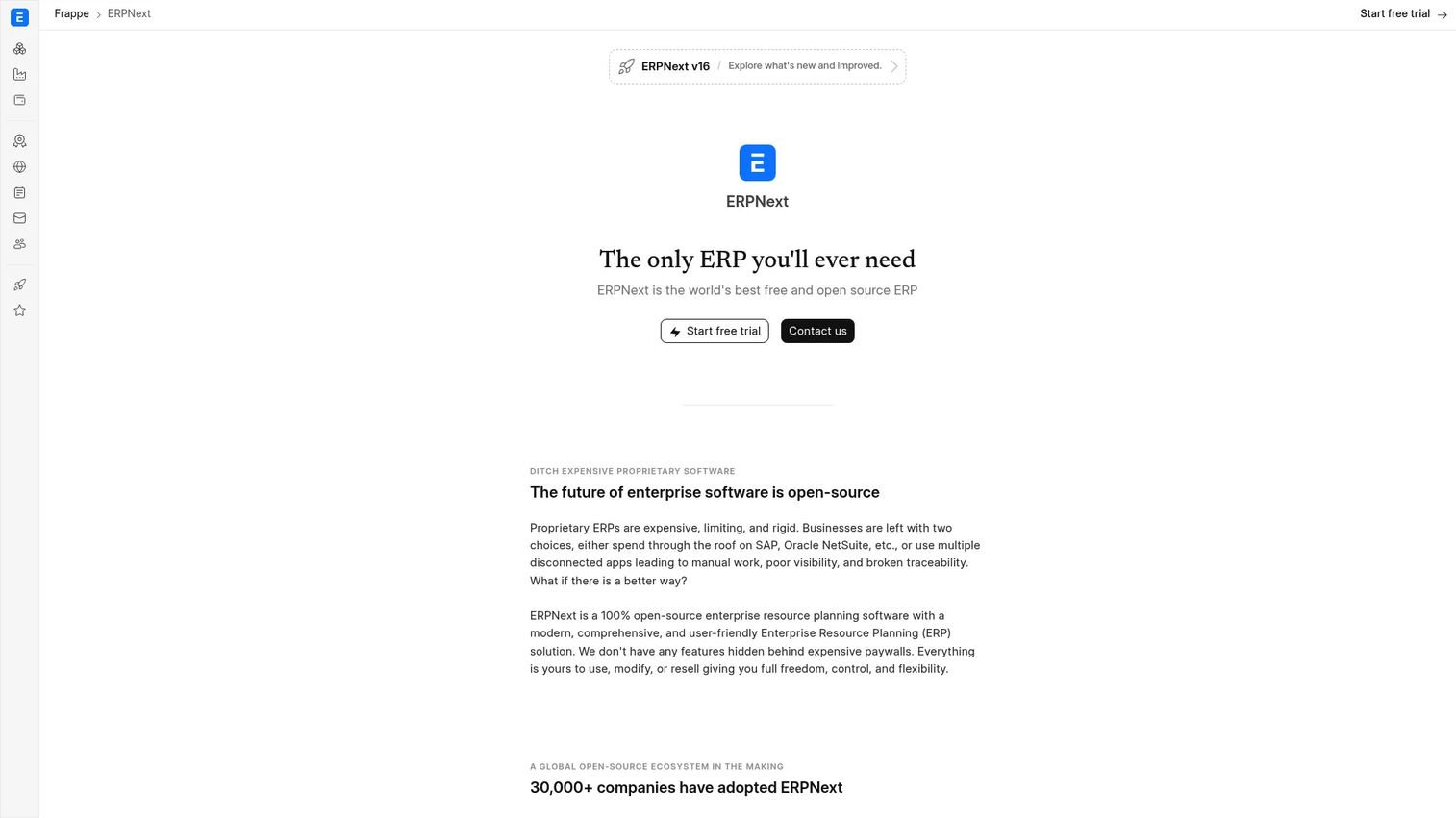
ERPNext is open-source ERP software covering manufacturing, inventory, accounting, CRM, HR, and projects. For furniture makers who want low license cost and deep customization, the open-source model is the draw. You get manufacturing modules, BOMs, work orders, and procurement without per-seat license fees, and full access to the code if you want to extend it.
The manufacturing capabilities cover multi-level BOMs, work orders, capacity planning, and procurement, which handles a furniture shop's core operational needs. Because it is open source, technical ownership matters: you either run and maintain it yourself or buy a managed hosting and support plan. That is the honest tradeoff versus a fully managed commercial ERP.
Best for: furniture businesses that want a customizable open-source ERP and have (or can buy) the technical capacity to run it.
Key strengths
- Open-source manufacturing: BOMs, work orders, and capacity planning with no per-seat license cost.
- Full-suite coverage: Accounting, CRM, inventory, and procurement in one integrated platform.
- Deep customization: Source access and a flexible framework to shape the system to your workflow.
Why choose ERPNext: Choose it when you want to lower license cost and keep control of your own stack. It fits teams with in-house technical capacity or a partner who can host and maintain it. The upside is flexibility and cost; the requirement is owning the technical side rather than outsourcing all of it to a vendor.
ERPNext pricing: The core software is free and open source. Managed services and support are available as paid plans, with professional services reported starting around $300 per site per month. Actual cost varies by the support and hosting model you choose.
8. SAP Business One
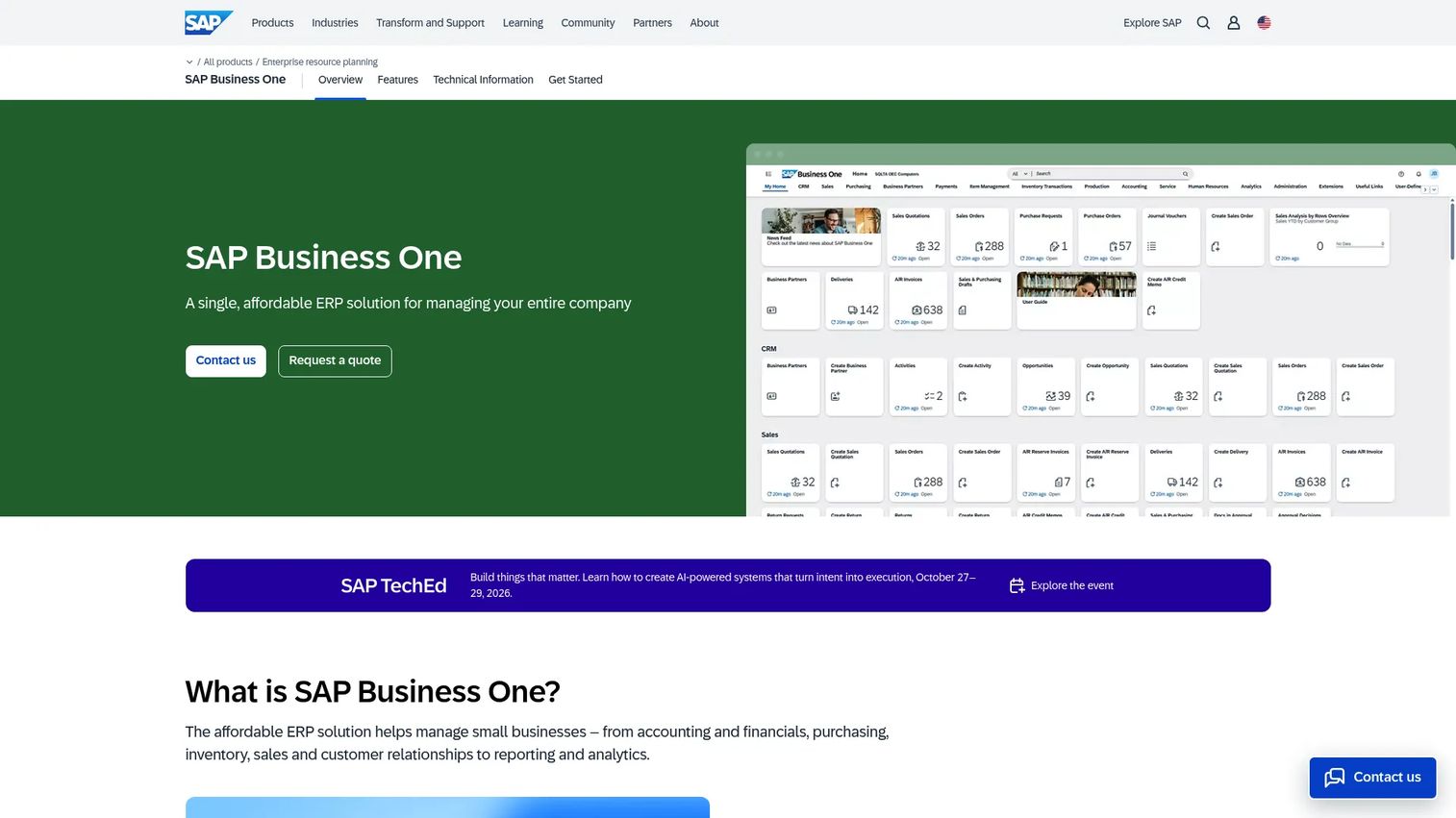
SAP Business One is an ERP built for small and midsize businesses, covering accounting, purchasing, inventory, sales, CRM, and reporting. For furniture makers who value a mature, established platform over a fast, lightweight rollout, it brings the process rigor and integrated business intelligence that a name like SAP implies.
It handles inventory, order flow, procurement, and production-related workflows, with integration to SAP HANA for analytics. Implementation typically runs through an SAP partner, which means more upfront scoping but a proven path. It suits buyers who prioritize a durable system of record over speed to first value.
Best for: SMB furniture makers that want a single, established ERP for finance, inventory, sales, and reporting.
Key strengths
- Integrated business intelligence: Built-in analytics and reporting across finance and operations.
- SAP HANA integration: Fast in-memory analytics for real-time visibility.
- Broad SMB ERP scope: Accounting, purchasing, inventory, sales, and CRM in one platform.
Why choose SAP Business One: Choose it when process rigor and a mature platform matter more than the fastest possible rollout. Partner-led implementation gives you experienced hands on setup, and the SAP ecosystem offers a long runway as you grow. It is a considered, established choice rather than a plug-and-play one.
SAP Business One pricing: SAP does not publish a public price for Business One. The product page routes to a quote request, and pricing is typically scoped through an implementation partner based on users, modules, and deployment.
Considerations before you buy
Before you shortlist, pressure-test each option against how your shop actually runs. These criteria separate a system that sticks from one that becomes shelfware.
Production mode fit
Confirm the system handles your real mix of make-to-order and make-to-stock work. A tool tuned only for stock production will fight you on custom commissions, and vice versa. Most furniture shops run both, so favor systems that treat mixed modes as normal, not an edge case.
Configuration and BOM depth
Furniture BOMs go multiple levels deep with sub-assemblies, hardware, and finish options. Test whether the product configurator and bill of materials software can model your most complex product without workarounds. If configuration is clumsy in the demo, it will be worse in production.
Integration reality
Map the integrations you actually need: accounting integration for your general ledger, eCommerce integration if you sell online, and CRM for quotes. A system that connects cleanly to your existing accounting and sales tools saves months of manual reconciliation. Verify the specific connectors, not just that integration exists.
Implementation and ownership
Be honest about your team's capacity. SMB-friendly implementation matters if you do not have an IT function. Cloud ERP options reduce infrastructure burden, while open-source systems trade license cost for technical ownership. Match the model to who will actually run it day to day.
Traceability and reporting
If you need lot or batch traceability for compliance or warranty, confirm it is built in, not bolted on. Reporting should give you real costing and margin visibility on custom work, not just top-line revenue.
Conclusion
The right furniture manufacturing software depends on how your operation runs, not on which vendor has the loudest brand. For most small to mid-sized furniture makers, MRPeasy is the best overall fit: real production, BOM, and inventory control at a price a smaller shop can carry, without an enterprise rollout. If real-time inventory visibility across make-to-order and make-to-stock is your priority, Katana delivers fast operational clarity.
For deeper ERP, SYSPRO, Acumatica, Epicor, and SAP Business One each bring more rigor, distribution depth, and finance-plus-operations breadth for teams that have outgrown lean MRP. For modular flexibility and lower license cost, Odoo and ERPNext let you assemble and own the exact stack you want.
Your next step comes down to one question. If you need inventory and production control fast, start a trial with MRPeasy or Katana. If you need broader ERP for furniture manufacturing across finance, distribution, and multi-site operations, scope a quote with SYSPRO, Acumatica, Epicor, or SAP Business One. Pick the workflow you struggle with most, and let that decide.
FAQs
Furniture manufacturing software connects inventory, bills of materials, production planning, order management, procurement, and traceability in one system. It lets furniture makers run quote-to-delivery workflows without juggling disconnected spreadsheets. The stronger tools also tie in accounting and sales so one record flows across the whole operation.
It depends on scope. MRP software focuses on production, materials, and inventory, which suits smaller shops that mainly need shop floor and material control. ERP adds finance, distribution, and broader business functions, which suits teams that want one platform across operations and accounting. Many furniture makers start with MRP and move to full furniture ERP software as they scale.
Prioritize multi-level BOM accuracy, real-time inventory visibility, production planning and scheduling, and a product configurator for custom builds. Procurement management and supplier coordination keep materials flowing, while traceability and reporting protect margins and compliance. The features that matter most are the ones tied to how your shop actually produces.
Yes. Make to order furniture software locks configuration choices to a real BOM and checks lead times against actual capacity before a rep promises a date. That reduces quoting errors and broken delivery promises. Systems like MRPeasy, Katana, and SYSPRO handle configured, order-driven production well.
It ties real-time inventory to your BOMs and open orders, so the system knows what is committed, available, and due to reorder based on lead time. For furniture, where lumber, fabric, hardware, and finishes move at different speeds, that visibility cuts both overstock and stockouts. The result is less cash tied up in the wrong materials and fewer mid-build shortages.
Generic manufacturing ERP covers standard production, but furniture adds heavy configuration, mixed make-to-order and make-to-stock runs, and materials with very different lead times. Furniture-tuned systems handle deep option trees, finish variations, and sub-assembly BOMs without workarounds. A generic tool can be forced to fit, but industry-specific ERP for furniture manufacturing reduces the customization you have to bolt on.
For small to mid-sized furniture makers, MRPeasy and Katana are the strongest SMB-friendly options. MRPeasy offers affordable per-user cloud MRP with production, BOMs, and shop floor reporting. Katana emphasizes real-time inventory visibility across mixed production modes. Both implement without a large IT team, and Odoo and ERPNext add low-cost, modular alternatives.
Yes. Most platforms on this list offer accounting integration and eCommerce integration, either natively or through connectors. Odoo bundles accounting and eCommerce as modules in one database, while MRPeasy, Katana, and the larger ERPs connect to common accounting and online sales tools. Always verify the specific connectors you need before committing.