Fifty-nine percent of employees say they are stressed about their finances right now, according to PwC's Employee Financial Wellness Survey (2026). That stress does not stay at home. It shows up in distraction, in sick days, in the slow erosion of focus that no amount of free snacks fixes. For a founder watching retention numbers and trying to hold a leadership team together, a benefit that actually reduces money stress is not a nice-to-have. It is operating leverage.
Most companies still answer that problem with a one-time lunch-and-learn or a PDF nobody opens. Static financial education informs. It rarely changes behavior. That is why employee financial wellness software has moved from a perk line item to a measured benefits investment. The category has grown into a real software market, valued at USD 3.07 billion in 2025 and projected to reach USD 8.15 billion by 2035, per SNS Insider (2025), with software making up more than 70 percent of that spend.
The hard part is choosing. Financial wellness platforms range from white-glove enterprise benefit suites to coaching-led services to app-first tools. They differ on delivery model, coaching depth, retirement support, and mobile access. This guide ranks eight financial wellness companies so you can shortlist fast, match a vendor to your headcount and benefits philosophy, and move on. If you are also building out the wider employee experience, our roundup of the best employee advocacy software tools pairs well with this one.
What's inside
This guide is for HR leaders, benefits owners, founders, and finance operators comparing employee financial wellness software for a growing company. We focused on tools that serve employers, not consumer-only apps. We ranked each vendor on five criteria: breadth of services across spending, saving, debt, and retirement; employee experience and mobile access; delivery model (digital tools, coaching, or both); employer reporting; and fit for SaaS teams at growth stage that do not want internal overhead. Pricing for most enterprise vendors in this category is custom and quote-based, so we noted what is publicly verifiable and wrote around the rest.
TL;DR
- Best for complex employer programs: Morgan Stanley at Work, which bundles equity compensation, retirement, and financial wellness under one roof.
- Best for a recognizable benefits brand: Bank of America Workplace Benefits, strong on retirement and integrated benefits.
- Best coaching-led option: Financial Finesse, with unlimited access to certified coaches across life stages.
- Best app-first and global experience: LearnLux, built around digital planning plus 1:1 guidance from credentialed planners.
- Best for student debt: Summer, specialized in loan repayment, forgiveness tracking, and education benefits.
- Decision shortcut for founders: pick the delivery model first (digital, coaching, or hybrid), then compare reporting and employee experience.
What is financial wellness software?
Financial wellness software is a workplace benefit platform that helps employees manage spending, saving, debt, retirement, and long-term planning through digital tools, education, and human guidance. It sits inside the broader total rewards stack alongside health benefits and retirement plans, and it gives employers a measurable way to support financial wellbeing in [the workplace.
A strong financial wellness program usually combines several capabilities:
- Financial education for employees: courses, webinars, calculators, and content covering budgeting tools, debt support, and saving and planning support.
- Coaching and advisor guidance: 1:1 sessions with credentialed coaches or planners for personalized help.
- Retirement planning support: projections, plan education, and guidance tied to 401(k)](https://www.irs.gov/retirement-plans/401k-plans) and equity decisions.
- Mobile access: apps and responsive tools that meet employees where they actually are.
- Employer reporting: engagement, adoption, and outcome data that justifies the spend.
The distinction worth understanding: employee financial wellness programs are ongoing systems, not one-time events. Corporate financial wellness done well is a continuous layer that adapts as employees move through life stages, from a first paycheck to a mortgage to retirement. That is what separates real workplace financial wellness from a benefits checkbox.
When to use financial wellness software
Improve retention with a more relevant benefits package
Benefits are a hiring and retention lever, especially for SaaS companies competing with deeper-pocketed employers for the same talent. A financial wellness benefit signals that you take employees' real lives seriously. PwC research has consistently found that financially stressed employees are more likely to look for a new job, which makes this part of the retention conversation, not a side perk. Treat it as a line in your total rewards story, not an afterthought.
Support employees through spending, saving, debt, and retirement questions
Money stress is not only about retirement decades away. It is the credit card balance, the student loan, the question of whether to buy a house. Good financial wellness platforms meet employees at every life stage. A 23-year-old paying down loans and a 52-year-old modeling retirement need different things from the same benefit. The software has to flex across both without forcing either into a generic flow.
Give employees self-serve support without adding internal overhead
You are not going to staff an in-house financial counseling practice. Nor should you. The point of this category is to add a scalable support layer that runs without your People team becoming financial advisors. Low-friction access, mobile delivery, and lifecycle support mean employees get help on their own terms while your team stays focused on the work only they can do.
Comparison table
Here is the quick-read shortlist. Pricing across this category is overwhelmingly custom and per-employee-per-month, so we listed verified ratings where available and noted where pricing is quote-based.
| # | Product | Best for | Key differentiation | Pricing | G2 rating |
|---|---|---|---|---|---|
| 1 | Morgan Stanley at Work | Complex enterprise benefit programs | Equity, retirement, and wellness in one suite | Custom / contact sales | 3.8/5 |
| 2 | Bank of America Workplace Benefits | Recognizable, integrated benefits brand | Retirement plus health and wellness ecosystem | Custom / contact sales | Not listed |
| 3 | BeBalanced Financial Wellness | Coaching plus education on a nonprofit model | 1:1 coaching with webinars and toolkits | Free / partner-based | Not listed |
| 4 | My Secure Advantage (MSA) | Confidential coaching plus self-serve tools | Telephonic coaching with budgeting software | Custom / contact sales | Not listed |
| 5 | LearnLux | App-first, global financial wellbeing | Digital planning plus CFP-led guidance | Custom PEPM | Not listed |
| 6 | Your Money Line | One-on-one coaching and engagement | Coaching, budgeting, and tax filing | Custom PEPM | 4.6/5 |
| 7 | Summer | Student debt and education benefits | Loan repayment and forgiveness tracking | Custom / contact sales | Not listed |
| 8 | Financial Finesse | Conflict-free coaching across life stages | Unlimited coaches plus an AI coach | Employer-paid / custom | Not listed |
1. Morgan Stanley at Work
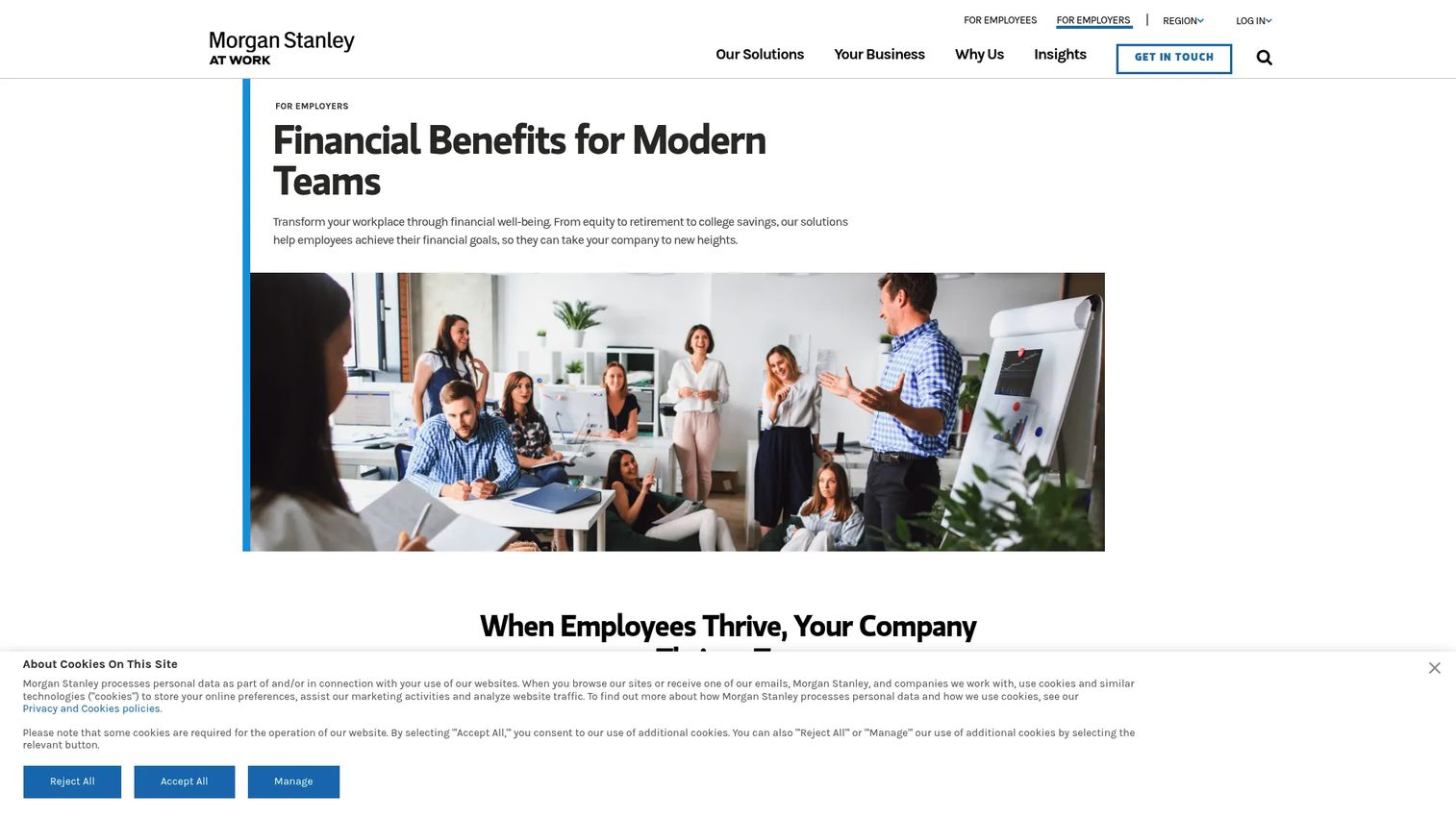
Morgan Stanley at Work is the workplace financial benefits arm of Morgan Stanley, built for employers who want equity compensation, retirement, and financial wellness managed under one institutional roof. It is the most enterprise-leaning option on this list, and that is the point. For companies with equity plans, complex compensation, and a benefits committee that expects a recognizable financial brand, it carries weight that a startup-stage vendor cannot.
The platform connects equity management, retirement plan support, and employee financial education into a single relationship. That bundling matters for growing SaaS companies that already manage equity for employees and want the wellness layer to sit alongside it rather than in a separate tool. The "Beyond the Workplace" framing extends advisor access to executives and key employees, which can be a real differentiator when you are recruiting senior leaders.
Best for: Mid-market and enterprise employers that need workplace financial benefits and equity plan support in one place.
Key strengths
- Equity compensation administration: manages equity plans alongside the rest of the benefits stack, useful for SaaS companies issuing options.
- Retirement plan support and consulting: retirement guidance and plan consulting backed by institutional expertise.
- Financial wellness and employee education: structured education programs that span saving, planning, and long-term goals.
Why choose Morgan Stanley at Work: If your benefits program is complex, your buying committee values brand authority, and you already manage equity, this consolidates a lot under one trusted vendor. It is heavier than a coaching-only tool, which is exactly what larger or equity-heavy programs need.
Morgan Stanley at Work pricing: Pricing is not publicly displayed. The site uses a contact and demo-request motion, so you will get a quote based on company size, plan complexity, and the services you bundle. Expect an enterprise-style sales process rather than a self-serve signup.
2. Bank of America Workplace Benefits
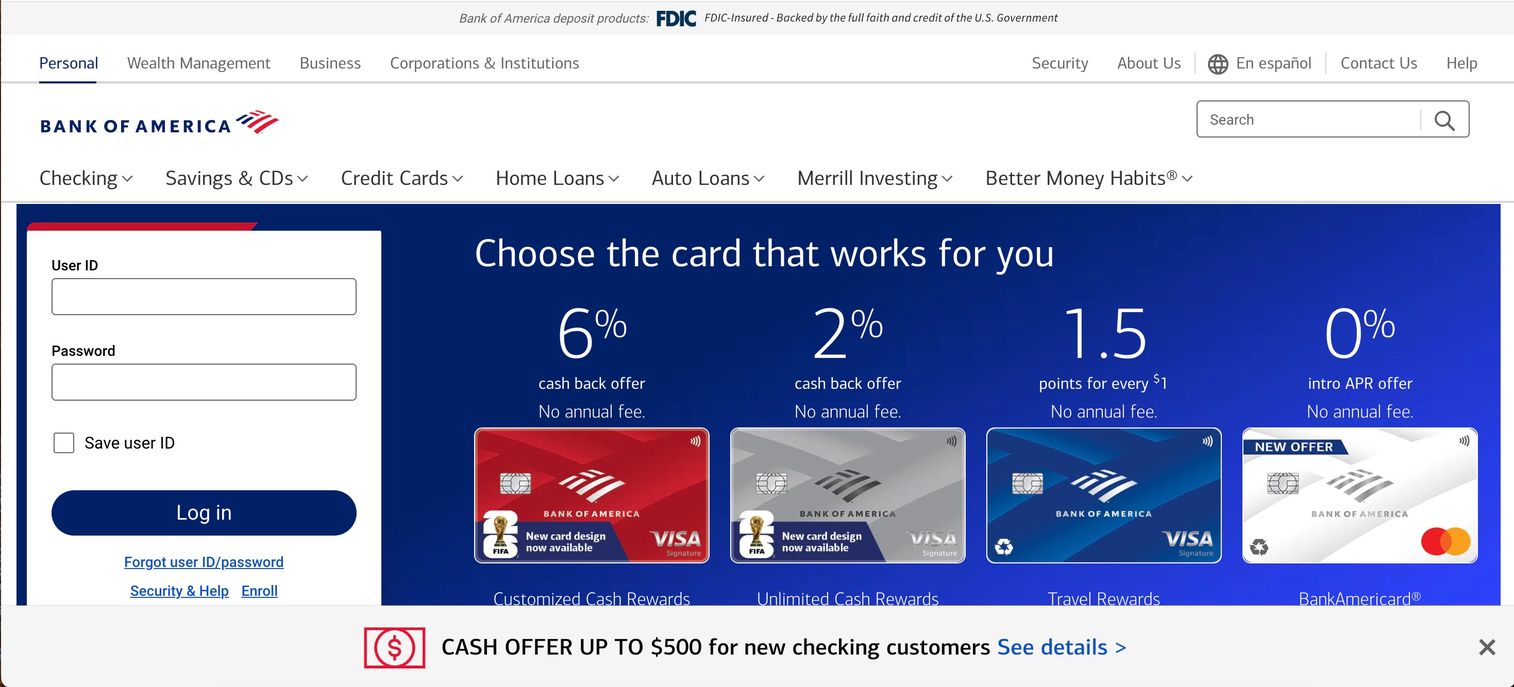
Bank of America Workplace Benefits is the institutional retirement and benefits business of Bank of America, serving employers with retirement plans, health benefit solutions, and financial wellness resources. Like Morgan Stanley at Work, it leans on a recognizable financial brand, which carries real weight with benefits committees and employees who already trust the institution with their money.
The strength here is the integrated journey. Bank of America frames financial wellness as a guided employee experience that supports healthy money habits from everyday expenses to long-term goals, delivered through multiple formats. For employers who want retirement, health benefits, and financial wellness coordinated rather than stitched together from separate vendors, the breadth of the ecosystem is the draw.
Best for: Employers seeking integrated retirement and employee benefits from a major financial institution.
Key strengths
- Retirement plans: 401(k), IRA, and pooled employer plans backed by institutional scale.
- Health benefit solutions: benefits that sit alongside retirement in one coordinated ecosystem.
- Financial wellness resources: multi-format education that supports employees across life stages.
Why choose Bank of America Workplace Benefits: This fits employers who want a single, recognizable institution behind retirement and wellness, with an accessible employee journey that does not require a separate financial wellness vendor. The brand familiarity reduces the trust hurdle for employees.
Bank of America Workplace Benefits pricing: No public pricing page with visible figures was found. Pricing is handled through the institutional benefits sales process, so plan on a custom quote based on plan type, headcount, and services.
3. BeBalanced Financial Wellness
BeBalanced Financial Wellness is a nonprofit financial wellness provider that pairs 1:1 money coaching with digital tools, webinars, and educational content. The nonprofit model gives it a distinct posture: guidance over product sales. For employers who want coaching that feels genuinely in the employee's corner, that framing resonates.
The program covers the five themes employees actually wrestle with: spending, saving, debt, retirement, and planning. Coaching spans budgeting, debt, student loans, housing, and credit report reviews, and the digital layer adds monthly webinars, a communications library, and a turnkey collection of instructional modules, toolkits, and calculators. Some partner and member access is free, which makes this an unusually low-barrier entry point for smaller programs.
Best for: Employers, financial institutions, and nonprofits seeking coaching-led, mission-driven financial wellness guidance.
Key strengths
- Financial coaching: budgeting, debt, student loans, housing, and credit report reviews with a human coach.
- Employer and partner programs: financial wellness programs designed for employers and partner organizations.
- Educational content: calculators, webinars, and e-learning modules that support self-serve learning.
Why choose BeBalanced Financial Wellness: Choose this when you want a coaching-led, conflict-free option with a nonprofit mission and a meaningful free or partner-based access path. It is a strong fit for employees who need personalized help rather than another app to log into.
BeBalanced Financial Wellness pricing: No public numeric pricing was found. The site indicates some partner and member access is free, with employer program pricing handled directly. That free-access angle is worth a conversation if budget is tight.
4. My Secure Advantage (MSA)
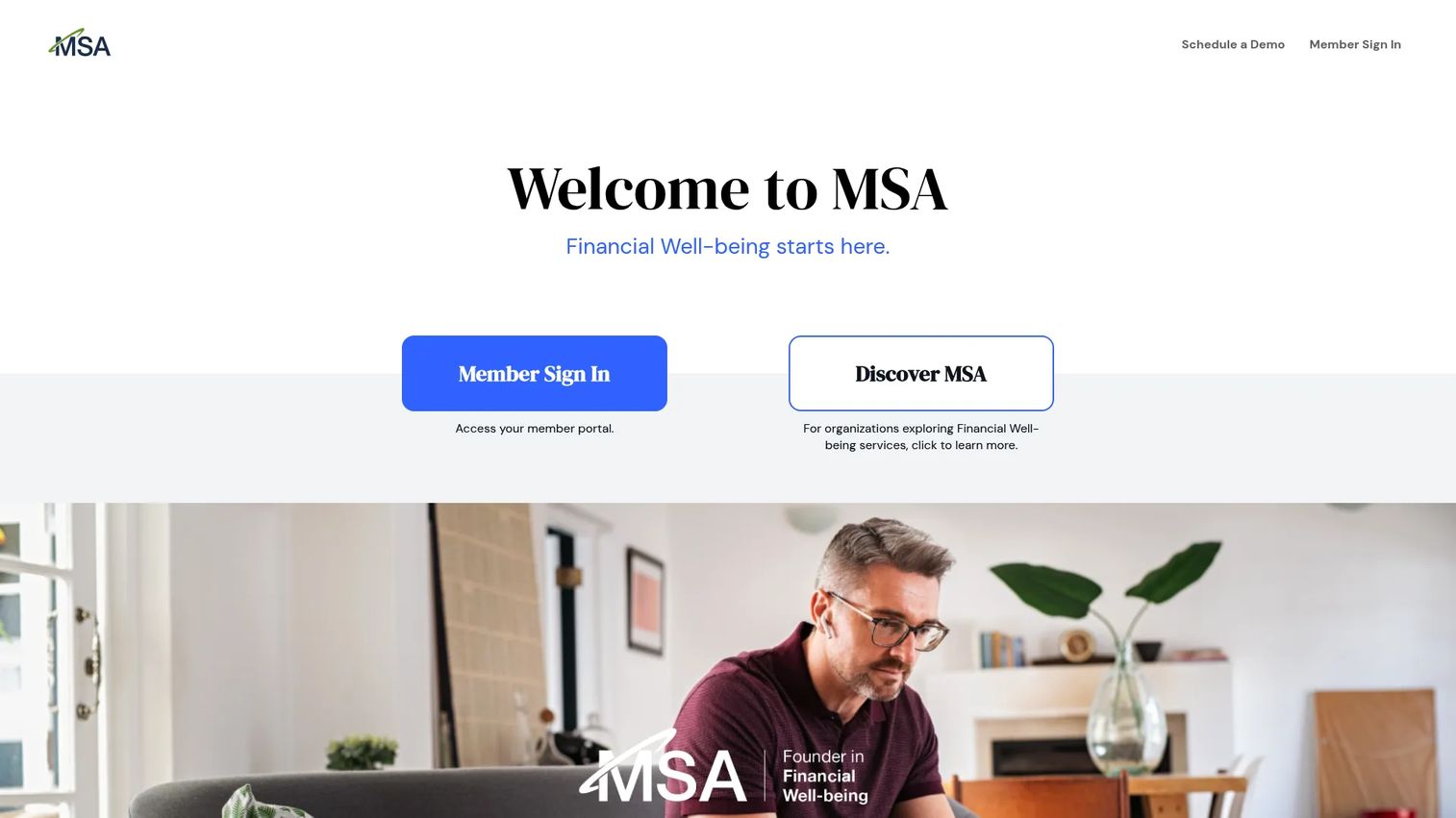
My Secure Advantage has run financial well-being programs since 1986, combining 1:1 telephonic coaching with a full set of self-service tools. It is the option for buyers who want human support and digital access in the same package, without choosing one over the other.
The model starts with a financial assessment and a personalized action plan, then pairs employees with a coach for confidential, telephonic guidance. The self-serve side is genuinely deep: the MSA Wallet budgeting tool with bank syncing, on-demand video courses, calculators, a knowledge center, identity monitoring, live chat, and legal forms. That combination covers everyday money management and the messier life events that derail budgets.
Best for: Employers or individuals who want confidential financial coaching plus a robust self-service toolset.
Key strengths
- 1:1 telephonic coaching: confidential sessions with a financial coach, anchored by a personalized action plan.
- MSA Wallet budgeting tool: bank-synced budgeting that makes day-to-day money management concrete.
- On-demand learning and protection: video courses, calculators, identity monitoring, and legal forms in one place.
Why choose My Secure Advantage: Nearly four decades of operating history and a hybrid coaching-plus-tools model make this a safe shortlist pick for buyers who refuse to compromise between human help and self-serve access.
My Secure Advantage pricing: No public pricing figure was found. The terms reference membership fees and multiple plans, but the amounts are not disclosed, so expect a custom quote based on your program scope.
5. LearnLux
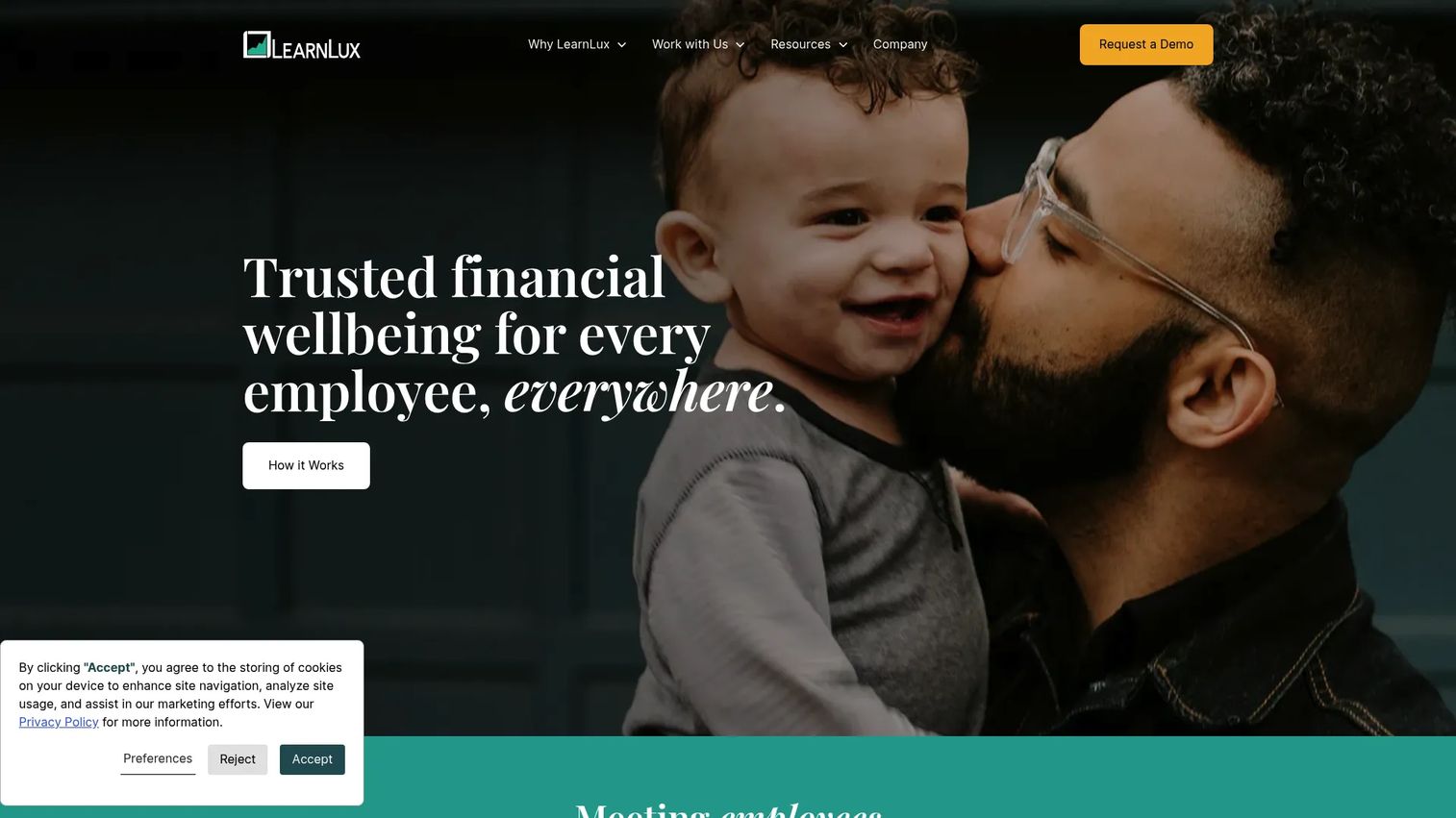
LearnLux is a B2B financial wellbeing platform built for employers, combining polished digital planning tools with unlimited 1:1 guidance from Certified Financial Planner professionals or locally credentialed financial professionals. If you want a modern, app-first employee experience that still includes real human advice, this is the closest fit on the list.
The product centers on personalized financial checkups and plans, cashflow and budgeting tools, and on-demand access to credentialed planners. The experience is designed to feel less like a corporate benefit and more like a consumer-grade app, which matters for adoption. LearnLux also supports a global workforce, making it relevant for SaaS companies with distributed or international teams.
Best for: Employers seeking a polished, global financial wellbeing benefit with strong employee self-service.
Key strengths
- Personalized financial checkups and plans: tailored plans that give each employee a clear next step.
- Cashflow and budgeting tools: practical day-to-day money management built into the experience.
- Unlimited 1:1 planner guidance: access to CFP professionals or locally credentialed financial professionals.
Why choose LearnLux: This is the pick when employee experience and global reach matter as much as the underlying advice. The combination of self-serve planning and unlimited credentialed guidance fits modern, distributed SaaS teams well.
LearnLux pricing: LearnLux uses a custom, per-employee-per-month (PEPM) model. No public price is displayed, so you will get a quote scaled to headcount. The PEPM structure makes budgeting predictable as you grow.
6. Your Money Line
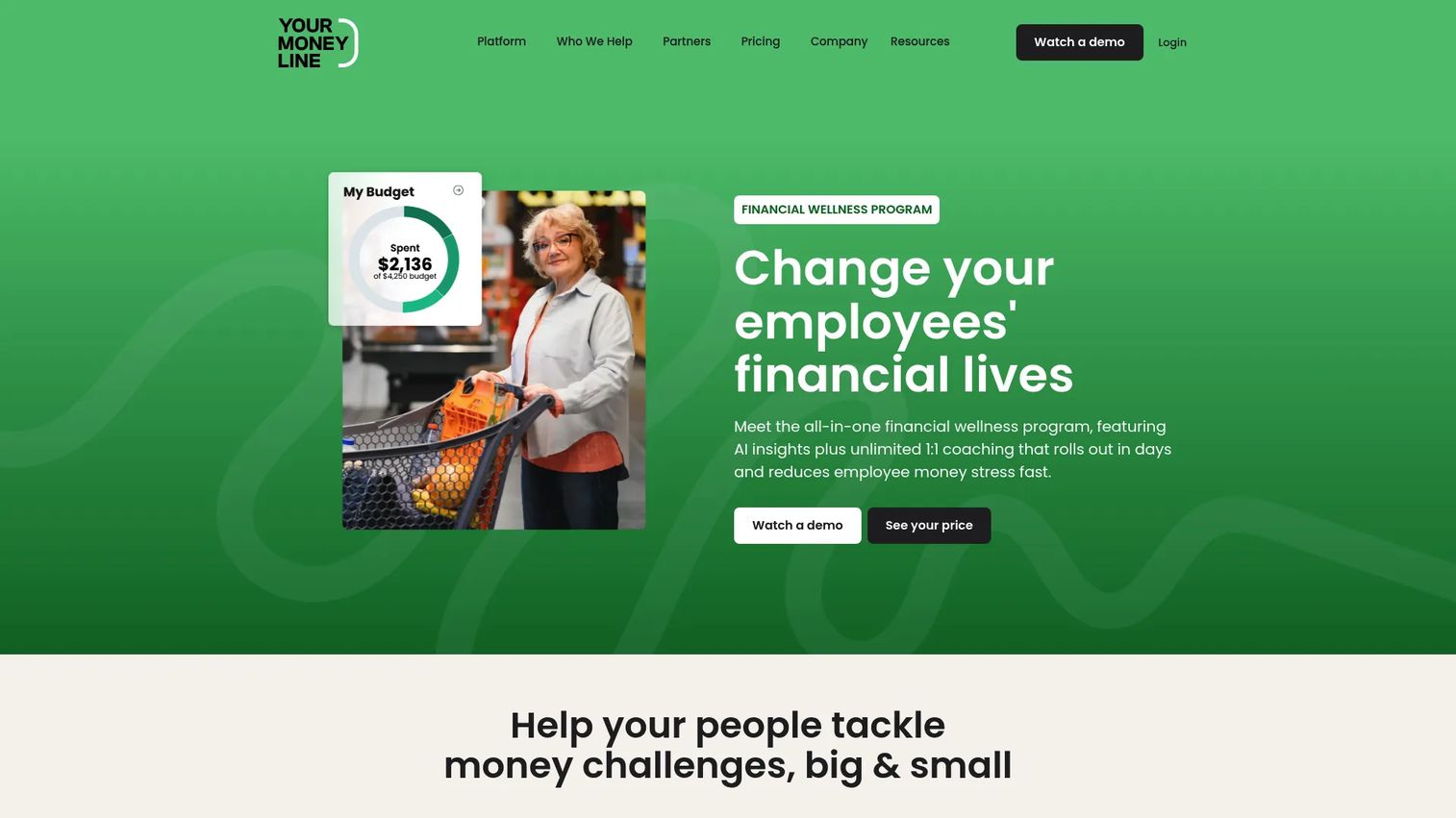
Your Money Line is an employer-sponsored financial wellness platform centered on 1:1 coaching, paired with budgeting tools, education, and even tax filing support. Built on more than 20 years of financial coaching experience and founded by Peter Dunn, it is a strong fit for buyers who prioritize human guidance over a tools-only experience.
The platform covers employees from their first paycheck to retirement planning, which is exactly the life-stage breadth this category needs. Beyond coaching, it adds smart budgeting and insights, a personalized money podcast, credit monitoring, and tax filing. That mix keeps employees engaged between coaching sessions rather than only at moments of crisis. With a verified 4.6/5 rating on G2, it carries the strongest public review signal on this list.
Best for: Employers who want a coaching-first financial wellness benefit with real engagement features.
Key strengths
- 1:1 financial coaching: personal guidance across spending, debt, and long-term planning.
- Smart budgeting and insights: day-to-day money management with personalized prompts.
- Engagement extras: a personalized money podcast, credit monitoring, and tax filing support.
Why choose Your Money Line: When one-on-one guidance is the priority and you want features that keep employees engaged between sessions, this is a clean choice. The 4.6/5 G2 rating backs up the experience.
Your Money Line pricing: Pricing is per-employee-per-month and varies by company size, package, and deal terms. No public numeric price is listed, so request a quote scaled to your headcount.
7. Summer
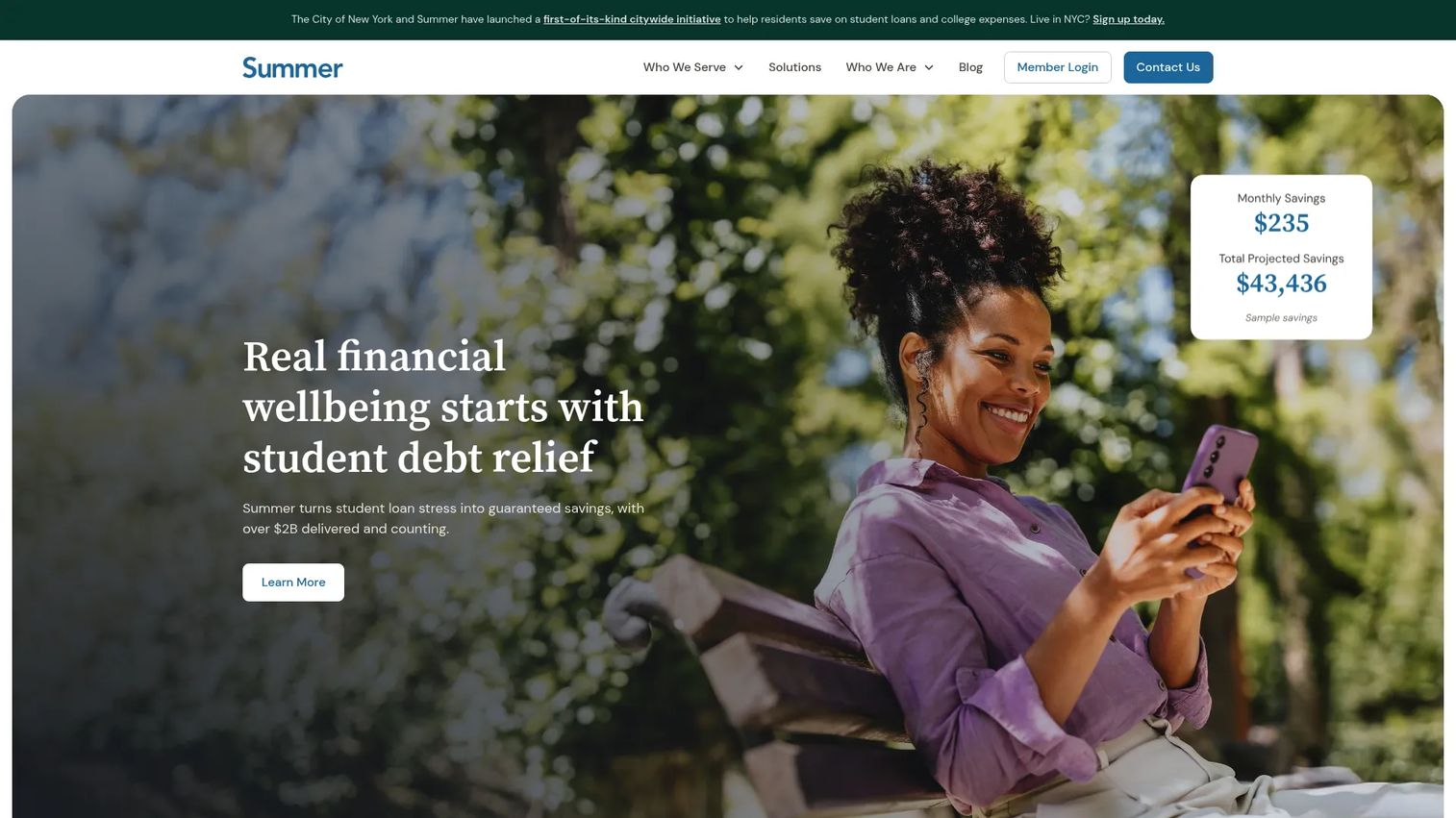
Summer is a specialized student debt relief and education-assistance platform for employers, government agencies, recordkeepers, and individuals. Where the broader vendors on this list cover the full money spectrum, Summer goes deep on one of the most stressful problems facing younger employees: student loans.
The platform syncs loans, runs eligibility checks, provides income-driven repayment guidance, tracks forgiveness, and handles college-cost planning. For SaaS companies hiring early-career talent, student debt is often the single largest financial stressor on the team, and a general wellness tool only skims it. Summer is the right call when loan support is a meaningful part of your employee experience and you want a specialist rather than a generalist.
Best for: Employers and public-sector organizations where student loans are a material part of the workforce's financial reality.
Key strengths
- Loan syncing and eligibility checks: connects employee loans and surfaces what they qualify for.
- Repayment and forgiveness guidance: income-driven repayment plans and forgiveness tracking.
- Education benefits: college-cost planning and employer student loan benefit support.
Why choose Summer: If student debt is a top stressor for your team, a specialist beats a generalist. Summer handles the loan complexity that broader platforms touch only lightly, making it a strong complement to a wider wellness benefit.
Summer pricing: No public pricing was displayed. The site uses demo and contact prompts and describes the service as available through sponsoring organizations, so pricing is handled directly with their team.
8. Financial Finesse
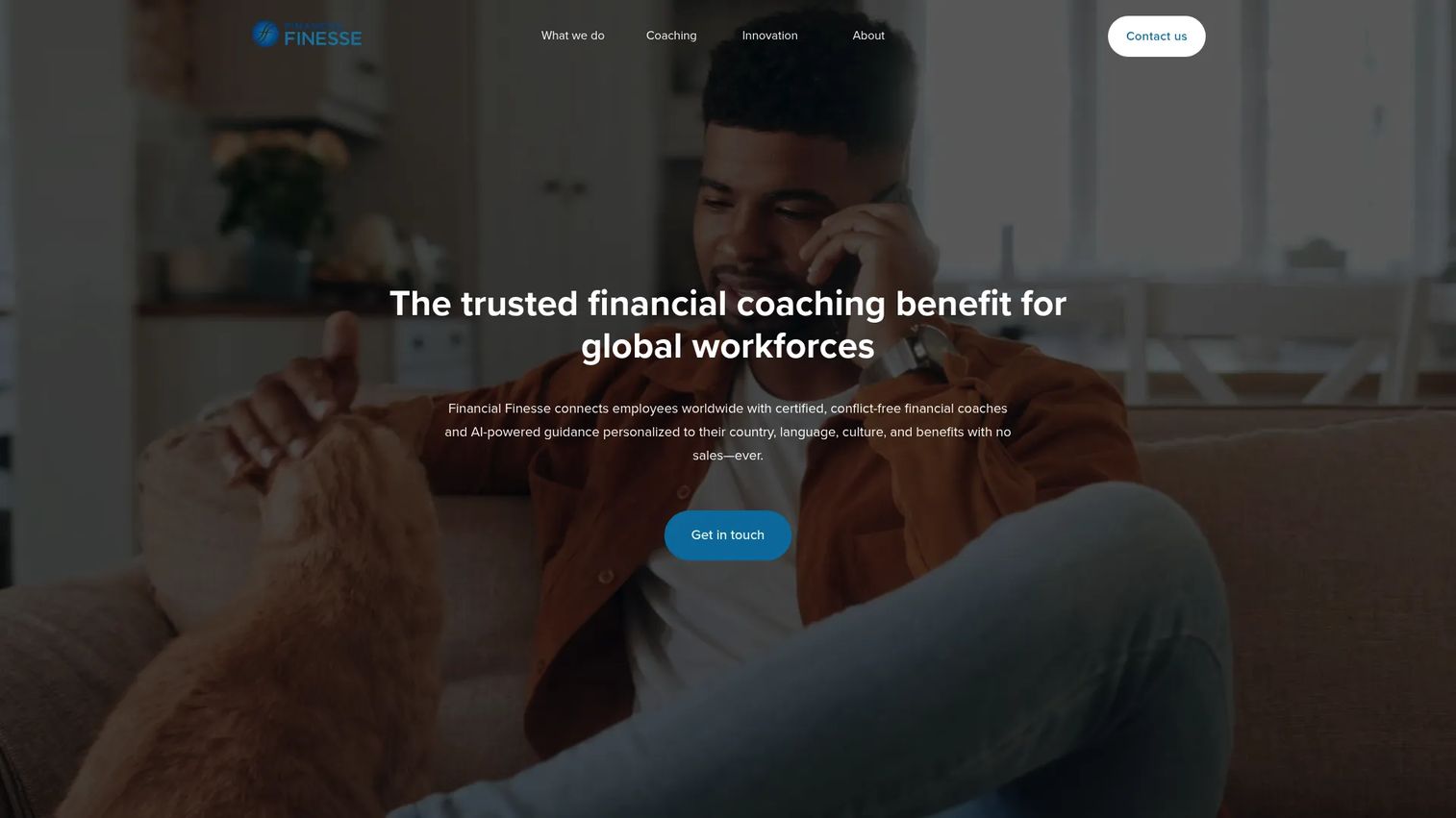
Financial Finesse is an employer-paid financial coaching and financial wellness benefit, pairing unlimited access to certified financial coaches with an AI-powered coach named Aimee. As a classic workplace financial wellness vendor, it is built around conflict-free guidance: coaches do not sell products, which removes the trust friction that undermines some financial benefits.
The platform supports employees across life stages and localizes guidance by country, language, culture, and benefits, making it a fit for global teams. The combination of unlimited human coaches and an always-on AI coach means employees can get quick answers anytime and deeper guidance when they need a person. That blend covers both the 2 a.m. budgeting question and the major life decision.
Best for: Employers seeking a global, conflict-free financial wellness benefit with broad coaching access.
Key strengths
- Unlimited certified coaches: employees get unlimited access to certified financial coaches.
- AI-powered coach (Aimee): an always-on coach for quick questions between human sessions.
- Localized guidance: support by country, language, culture, and benefits for global teams.
Why choose Financial Finesse: The conflict-free model and unlimited coaching make this a trustworthy, broadly applicable choice. The AI coach plus human coaches combination scales support without forcing employees to wait for a session.
Financial Finesse pricing: Pricing is not publicly displayed and the benefit is employer-paid. There is no free tier; the site directs buyers to contact sales for a custom quote.
Considerations before you buy
Before you sign, run the shortlist through a few practical filters.
Decide on the delivery model first
The biggest split in this category is digital-first versus coaching-first versus hybrid. LearnLux leans app-first with credentialed guidance. Financial Finesse and Your Money Line lead with coaching. MSA and BeBalanced blend both. Pick the model that matches how your employees actually want help before you compare anything else.
Check the coaching depth and credentials
Not all coaching is equal. Some vendors use certified financial planners, others use trained coaches. Confirm credentials, whether sessions are unlimited or capped, and whether guidance is conflict-free, meaning coaches do not earn commissions on products they recommend.
Confirm mobile access and employee experience
Adoption lives or dies on experience. If employees cannot get help from their phone, engagement will lag. Test the mobile experience and the onboarding flow the way an employee would, not the way a sales deck presents it.
Verify employer reporting
You will need to defend this spend to your board or finance lead. Ask what engagement, adoption, and outcome reporting you get, and how it ties to retention and productivity. A vendor that cannot show you a sample dashboard is a flag.
Match retirement and debt support to your team
A team full of early-career hires needs strong debt support; an older team needs deeper retirement planning support. Map the vendor's strengths to your actual demographics rather than buying the broadest brand.
Conclusion
The right financial wellness software depends on your buyer profile, not a feature checklist. Morgan Stanley at Work is the strongest fit for complex employer programs with equity and retirement to manage. Bank of America Workplace Benefits suits employers who want a broad, recognizable benefits ecosystem. For teams that want personalization, the coaching-led vendors, Financial Finesse, Your Money Line, MSA, and BeBalanced, deliver the human guidance employees trust. LearnLux fits app-first, global teams, and Summer is the specialist when student debt dominates.
The practical next step is simple. Choose your delivery model first, digital, coaching, or hybrid. Then compare reporting depth, coaching credentials, and the employee experience on mobile. Shortlist two or three vendors that match your headcount and demographics, request quotes, and test the employee flow yourself before committing. A financial wellness program only pays back when employees actually use it.
FAQs
Financial wellness software for employees is a workplace benefit platform that helps people manage spending, saving, debt, retirement, and planning through digital tools, education, and coaching. Employers offer it to reduce financial stress and support employees across life stages. It is delivered as an ongoing program, not a one-time event.
A financial education program informs employees through content, webinars, and courses. Financial wellness software adds personalization, coaching, tracking, and reporting on top of education. Education alone tells employees what to do; software helps them act and lets employers measure whether it is working.
Look for breadth across budgeting tools, debt support, and saving and planning support; coaching and advisor guidance with clear credentials; retirement planning support; mobile access; and employer reporting. Conflict-free coaching, where advisors do not sell products, is a meaningful trust signal. Match the feature set to your team's actual demographics.
PwC research consistently finds that financially stressed employees are more likely to seek a new job, which makes financial wellness programs for employees a credible retention lever. The benefit signals that an employer takes employees' real lives seriously. Retention impact is strongest when adoption is high, so employee experience matters as much as the feature list.
For many employees, yes. Self-serve tools handle budgeting and education well, but coaching helps people work through debt, major decisions, and moments of crisis. Vendors like Financial Finesse and Your Money Line lead with coaching because personalized guidance drives engagement and behavior change.
Most financial wellness platforms provide engagement and adoption metrics, content usage, coaching session volume, and aggregate outcome trends. Strong reporting ties activity to business outcomes like retention and productivity. Ask each vendor for a sample dashboard before signing so you can defend the spend to finance or your board.
Employees under financial stress benefit most, and that spans every life stage. Early-career hires often need debt support and budgeting help, while mid-career and older employees lean on retirement planning support. The best programs flex across all of these rather than serving only one group.
Start by deciding the delivery model, digital, coaching, or hybrid, that matches how your team wants help. Then compare per-employee pricing, mobile experience, coaching credentials, and employer reporting. Favor vendors with predictable PEPM pricing and a quick setup so the benefit earns its place in your stack without adding overhead.