A double-booking is the fastest way to lose a client and a reputation in the same afternoon. Two events, one ballroom, both deposits paid. Someone on your team missed the overlap because the calendar lived in a spreadsheet, the inquiry lived in an inbox, and the invoice lived somewhere nobody could find.
That is the operational chaos event venue software is built to fix. It pulls bookings, inquiries, contracts, payments, staffing, and reporting into one system so nothing falls through the cracks between rooms and calendars.
The category is growing fast. The global event venue management software market hit USD 1.4B in 2025 and is projected to reach USD 3.2B by 2034 at an 11.2% CAGR, according to MarketIntelo (2025). Cloud-based deployment already accounts for 68.5% of that revenue, so most of what you will shortlist runs in the browser and updates in real time.
If you are running a venue on scattered tools, the question is not whether to consolidate. It is which platform matches how your team actually books, staffs, and invoices events.
What's inside
This guide is for venue operators, hospitality groups, and event space managers comparing software to run bookings and operations from one place.
We picked seven platforms based on the criteria that decide fit for real venue teams:
- Booking workflow and calendar control, including double-booking prevention
- Inquiry-to-confirmation flow with proposals, contracts, and payments
- Staff coordination and task management
- Integrations with accounting, CRM, calendar, and payments
- Reporting and operational visibility
Every pricing figure and rating below reflects verified vendor and G2 data at the time of writing.
TL;DR
Short on time? Here is the fast read on which venue booking software fits which team.
- Best for all-in-one venue ops: EventPro
- Best for inquiry-to-revenue workflows: Perfect Venue
- Best for automation and mobile access: Releventful
- Best for venue evaluation and live-event booking: Opendate
- Best for restaurants and hospitality groups: Tripleseat
- Best for hotels and larger venue groups: iVvy Venue Management Software
- Best for hotel sales and catering teams: Event Temple
What is event venue software?
Event venue software is a platform that centralizes venue bookings, inquiries, contracts, payments, staffing, and reporting so a team can run every event from one system instead of disconnected calendars and spreadsheets.
At its core, event venue management software combines a shared booking calendar with the sales and operations tools a venue needs to move an inquiry to a confirmed, paid event.
The core features that define the category:
- Booking calendars: Shared calendars and room availability views that prevent double-booking across spaces
- Room and resource allocation: Assign rooms, equipment, and inventory to each event
- Inquiry capture and sales workflow: Turn leads into proposals and confirmed bookings
- Contracts, invoicing, and payments: Send contracts, collect deposits, and take online payments
- Staff coordination: Assign staff, tasks, and event-day responsibilities
- Reporting and analytics: Track pipeline, revenue, occupancy, and performance
- Integrations: Connect accounting, calendar, CRM, and payment tools like Stripe
The best venue management software ties these together so a change in one place, a new booking, a signed contract, a collected payment, updates everywhere without manual re-entry.
When to use event venue software
Prevent double-booking across rooms and spaces
The single most expensive mistake a venue makes is selling the same space twice. Shared calendars and real-time room availability views close that gap. When every booking, hold, and inquiry lives on one calendar, your team sees conflicts before they confirm anything. Venue scheduling software with automated availability checks stops the overlap at the point of booking, not after the deposits clear.
Turn inquiries into confirmed bookings faster
Every hour an inquiry sits in an inbox is an hour a competitor can win the date. Event venue booking software keeps proposals, contracts, and payment collection in one flow. A lead comes in, you send a branded proposal, the client signs, and the deposit lands, all without switching tools. That inquiry-to-confirmation workflow is where venue booking software earns its cost, because faster responses close more dates.
Coordinate staff, tasks, and event day execution
Booking the event is half the job. Executing it is the other half. As event volume grows, staff scheduling and task management stop being something you can hold in your head. Venue software assigns staff to events, tracks task completion, and gives teams mobile access so the floor manager sees the run sheet on a phone. Event space booking software that includes operations keeps the day itself from unraveling.
Comparison table
Use this table as a fast scan of fit, price, and ratings before you read the full write-ups. It maps each platform to its best-fit venue type, its key differentiator, verified pricing, and current G2 rating where available.
| # | Product | Best for | Key differentiator | Pricing | G2 rating |
|---|---|---|---|---|---|
| 1 | EventPro | All-in-one venue ops | Venue, event, and catering in one customizable system | Custom pricing | Not listed |
| 2 | Perfect Venue | Inquiry-to-revenue workflows | AI-assisted replies and fast event sales | From $59/month billed annually | 4.8/5 |
| 3 | Releventful | Automation and mobile access | Combined CRM, booking, invoicing, and operations | Quote-based | 4.8/5 |
| 4 | Opendate | Live-event venue booking | Booking, ticketing, and reporting in one platform | Free plan; Marquee from $4K/year | Not listed |
| 5 | Tripleseat | Restaurants and hospitality | Lead-to-booking for restaurants and unique venues | Quote-based | 4.5/5 |
| 6 | iVvy Venue Management Software | Hotels and venue groups | Live availability, contracts, and BEOs for hotels | Custom quote | Not listed |
| 7 | Event Temple | Hotel sales and catering | Sales CRM plus event and catering for properties | From $249/month, annual | 4.8/5 |
Best 7 event venue software tools for 2026
1. EventPro
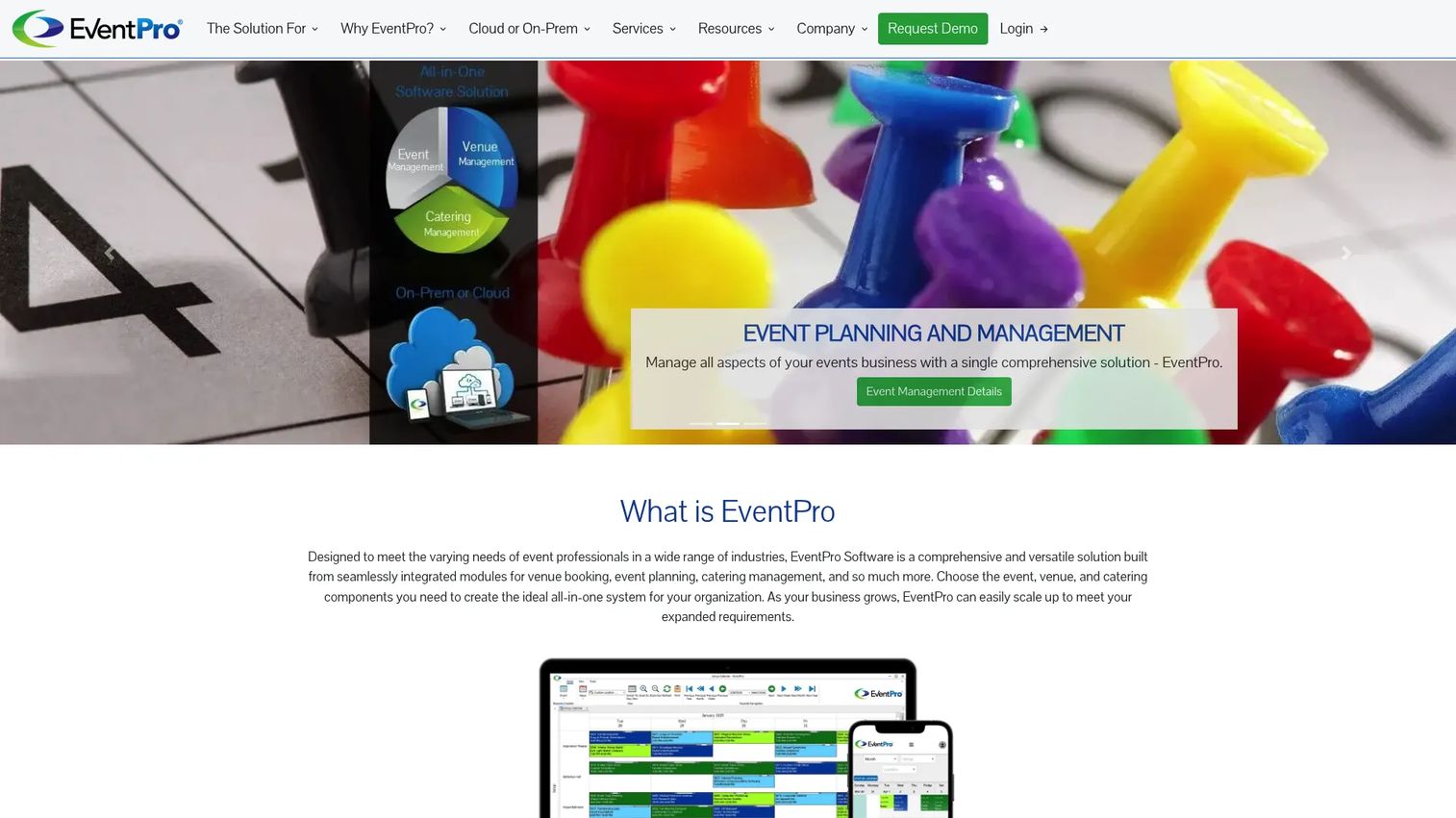
EventPro is built for venue teams that want booking, event planning, and catering managed inside one configurable system. It leans into end-to-end operations, so the shared booking calendar sits alongside resource management, staffing, and invoicing rather than in a separate tool. Teams that outgrew spreadsheets and want a system they can shape around their own workflow tend to land here.
Best for: Organizations that need customizable venue, event, and catering management in one platform.
Key strengths
- Venue management with a shared booking calendar
- Event planning and management in one system
- Catering management built in
- Resource and staffing coordination
- Custom configuration to match venue workflows
Why choose EventPro: If your venue runs complex catered events and wants one system to control bookings, resources, and invoicing, EventPro's breadth fits. It suits teams that value a customizable all-in-one over a lighter, sales-first tool.
EventPro pricing: Pricing is custom and based on your organization's needs. The site directs prospects to contact an account consultant for a complimentary assessment rather than listing set plans.
On ratings, EventPro does not have a current G2 score we could verify, though Capterra reviewers give it a 4.3 out of 5.
2. Perfect Venue
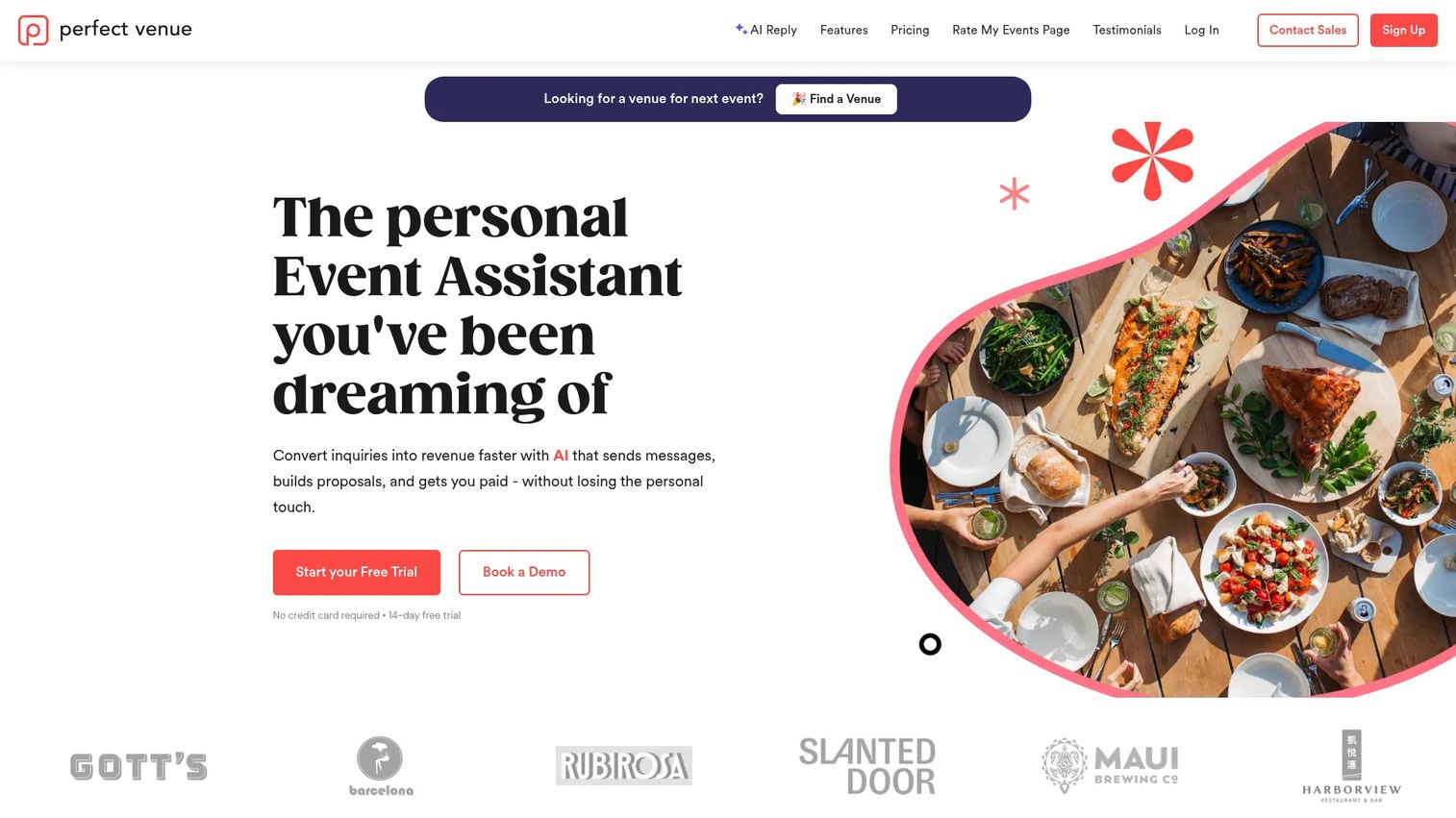
Perfect Venue is event management software built for independent venues and hospitality groups that want to move inquiries to revenue fast. Its AI email replies help teams respond to leads quickly, and the guest portal, proposals, and online payments keep the whole inquiry-to-confirmation flow in one place. A central event calendar and Express Book round out the booking side.
Best for: Independent venues and hospitality teams managing private events who prioritize fast sales workflows.
Key strengths
- Central event calendar
- AI email reply for fast lead responses
- Guest portal and proposals
- Online payments and analytics
- Unlimited users and integrations
Why choose Perfect Venue: Choose it when speed on inquiries is your bottleneck. The AI replies and Express Book are built to shorten the gap between a lead landing and a date getting confirmed, with unlimited users so the whole team works in one system.
Perfect Venue pricing: Plans start at $59/month for the Basic tier billed annually, with Professional at $119/month and Premium at $189/month. Per-location monthly pricing starts at $99/month, and an Enterprise plan is available on request.
Perfect Venue holds a strong 4.8 out of 5 rating on G2.
3. Releventful
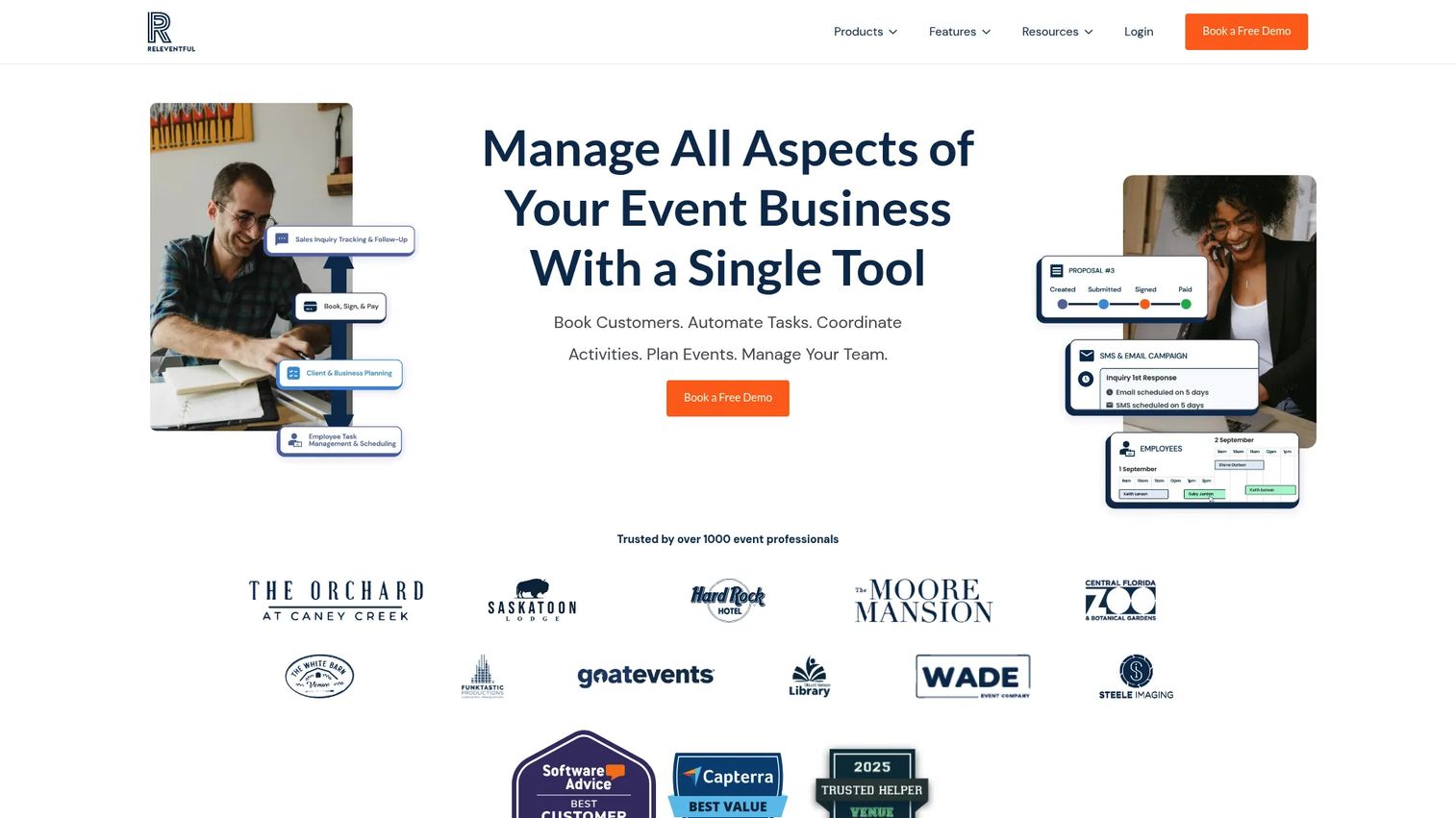
Releventful combines CRM, booking, invoicing, and operations for event businesses that want automation and mobile coordination in one platform. It covers lead capture through to Quick-Close invoicing, with a client and vendor portal, employee scheduling, and inventory management. An SMS texting add-on and business automation help teams stay on top of events without manual chasing.
Best for: Event businesses that need a combined CRM, booking, invoicing, and operations platform across multiple locations.
Key strengths
- Quick-Close invoicing
- Client and vendor portal
- Business automation workflows
- Employee scheduling and inventory management
- Multi-business support
Why choose Releventful: If you run more than one venue or business line and want automation plus mobile access, Releventful's multi-business support and portals fit. It works well for teams that want operations and invoicing tightly linked.
Releventful pricing: Releventful exposes pricing through a demo and quote flow rather than published plans, so you will request a tailored quote based on your setup.
Releventful earns a 4.8 out of 5 on G2, based on a small number of reviews.
4. Opendate
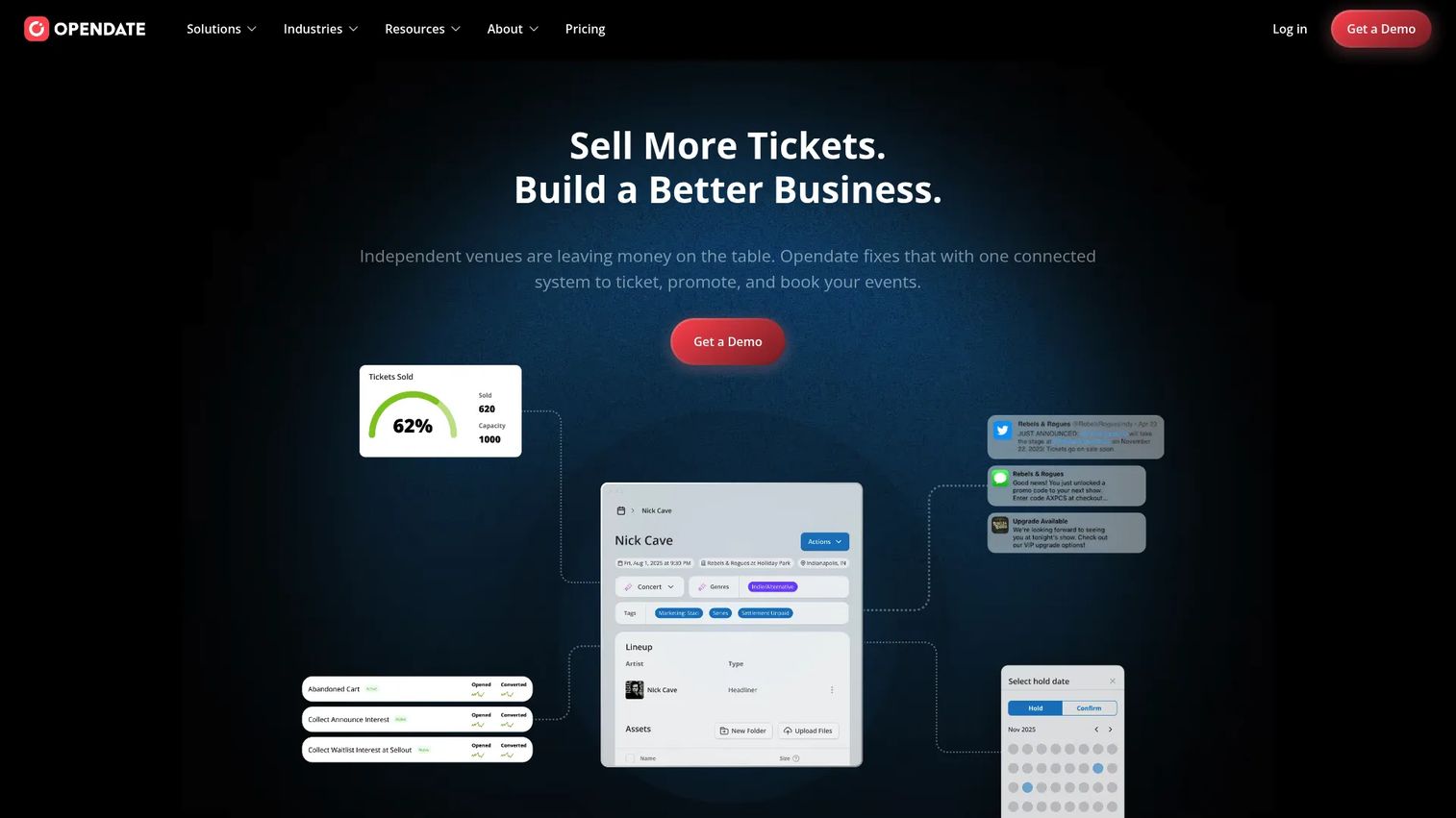
Opendate is a venue management and ticketing platform built for live events. It brings calendar management, offer management, ticketing, and advanced reporting into one system, so venues booking artists and shows can run the whole lifecycle in one place. Inbound artist submission and fan management make it a fit for music and live-event venues specifically.
Best for: Venues and event operators who need one platform for booking, ticketing, marketing, and reporting.
Key strengths
- Calendar and offer management
- Inbound artist submission
- Ticketing and fan management
- Advanced reporting
- API access
Why choose Opendate: Choose Opendate when your venue books live events and wants booking and ticketing under one roof. The free Opener plan lets smaller venues start without upfront cost, and reporting scales as volume grows.
Opendate pricing: The Opener plan is free. Marquee starts at $4K per year, and the Headliner plan is free when you use Opendate's ticketing.
Opendate does not have a G2 rating we could verify at the time of writing.
5. Tripleseat
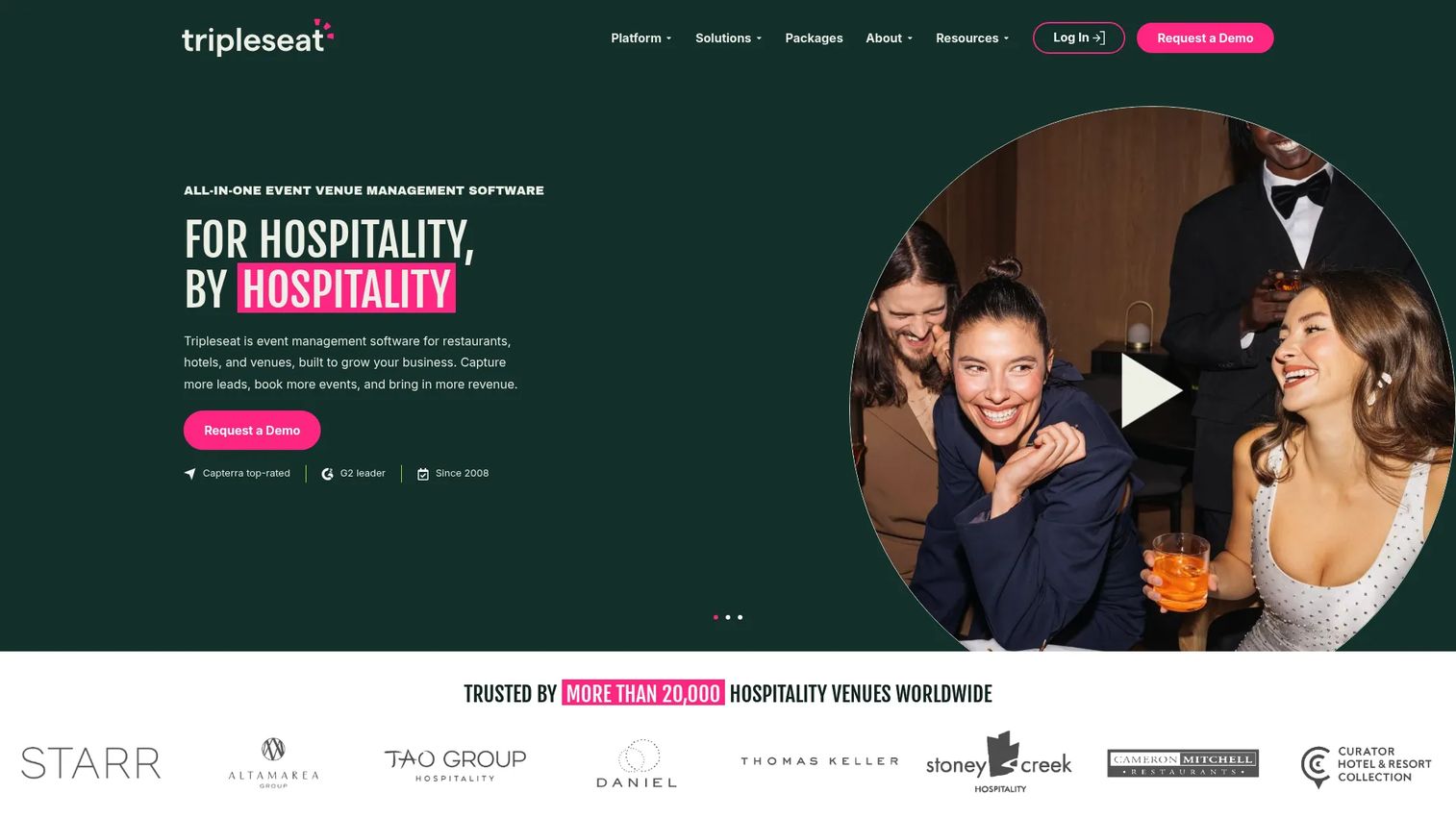
Tripleseat is event management software built for restaurants, hotels, and unique venues that run private events and catering. It handles lead capture and booking management, then moves into contracts, BEOs, calendars, and payments. Floor plans and ticketing round out a hospitality-first workflow that keeps sales visibility high across the team.
Best for: Hospitality teams that need to manage private events, catering, and group sales in one system.
Key strengths
- Lead capture and booking management
- Contracts, BEOs, calendars, and payments
- Floor plans and ticketing
- Hospitality-focused event workflows
- Sales visibility across the team
Why choose Tripleseat: If you run a restaurant or hospitality venue and private events are a core revenue line, Tripleseat's BEO and lead-to-booking flow fit the way hospitality teams actually work. It is built around restaurant and group-sales workflows.
Tripleseat pricing: Pricing is quote-based. Tripleseat directs prospects to request a pricing call rather than publishing subscription figures.
Tripleseat holds a 4.5 out of 5 rating on G2.
6. iVvy Venue Management Software
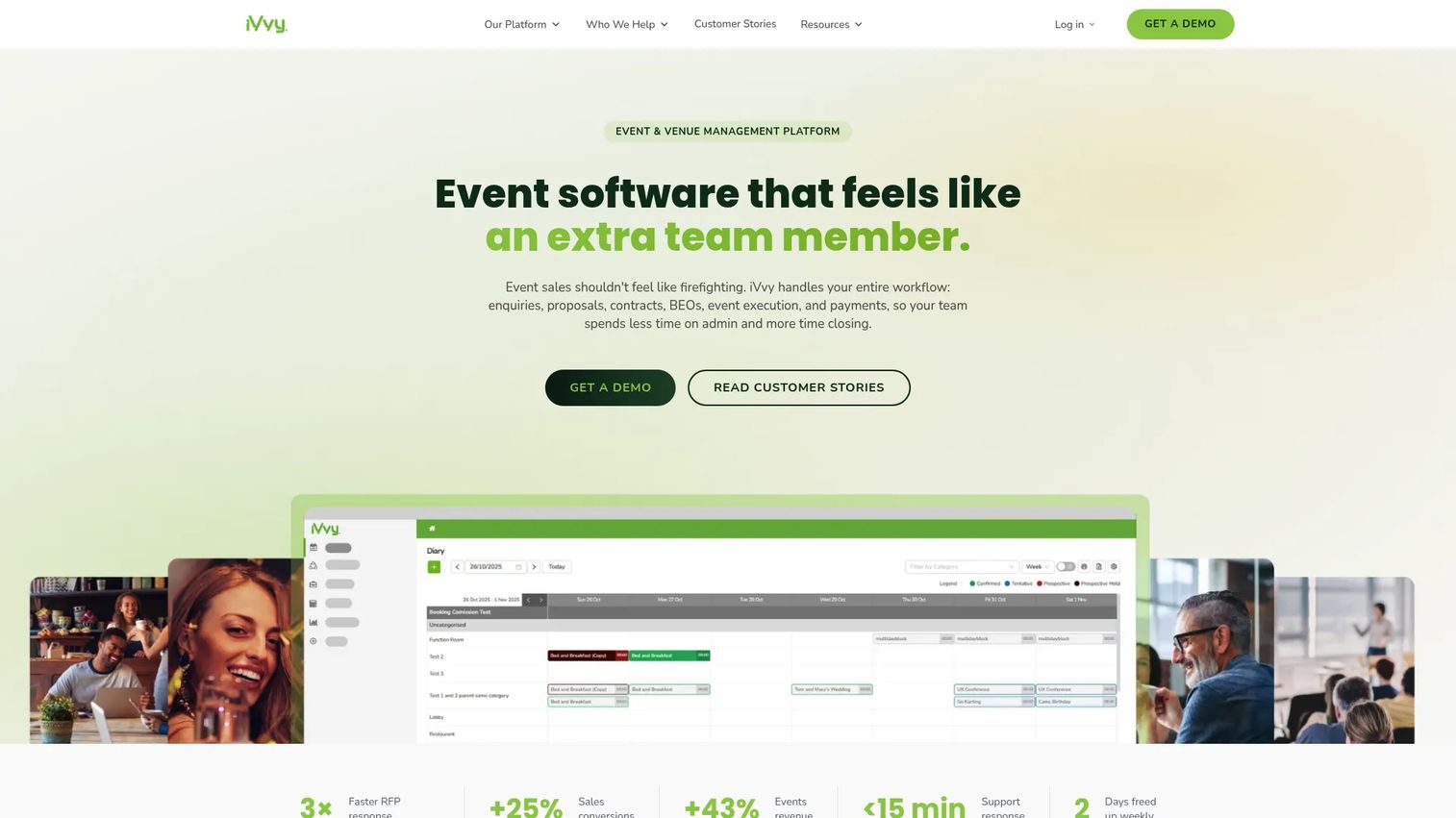
iVvy Venue Management Software is a cloud-based platform for venues, hotels, and hospitality groups managing sales, catering, and event operations. It covers live availability and booking, proposals, contracts, and e-signatures, plus CRM, reporting, and forecasting. The feature set leans toward larger operations that need visibility across bookings, sales, and catering in one system.
Best for: Venues, hotels, and hospitality groups managing sales, catering, and event operations in one system.
Key strengths
- Live availability and booking
- Proposals, contracts, and e-signatures
- CRM and sales management
- Reporting and forecasting
- Catering and event operations
Why choose iVvy: Choose iVvy when you operate hotels or larger venue groups and need live availability, contracts, and forecasting in one platform. It fits teams that manage sales and catering at scale rather than a single small space.
iVvy pricing: iVvy does not publish set prices. Pricing depends on venue size, number of users, and features, so you contact iVvy for a tailored quote.
iVvy does not have a G2 rating we could verify at the time of writing.
7. Event Temple
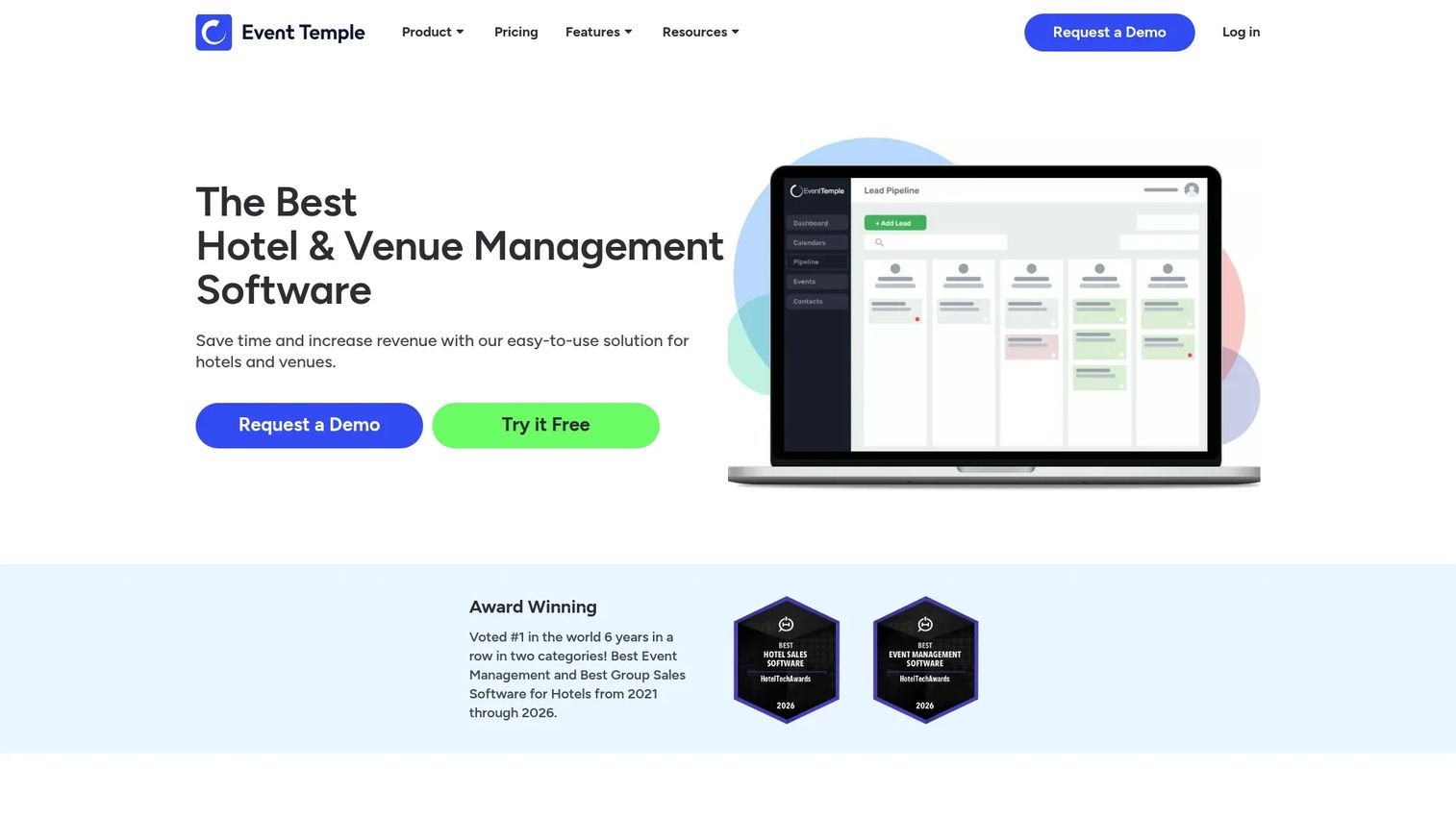
Event Temple is cloud-based hotel and venue management software focused on sales, events, and catering. It pairs a pipeline and sales CRM with event management, e-proposals, and digital invoicing, so property teams can drive revenue and run bookings in one place. The platform is built for hotels and venues that treat event sales as a growth engine.
Best for: Hotels, venues, and properties needing an all-in-one event sales and catering platform.
Key strengths
- Pipeline and sales CRM
- Event management and catering
- E-proposals and digital invoicing
- Cloud-based access
- Built for hotel and property sales teams
Why choose Event Temple: If your property runs on event sales and you want a CRM-led platform to grow revenue, Event Temple fits. It suits hotels and venues that want pipeline visibility alongside event and catering operations.
Event Temple pricing: Public pricing starts as low as $249 per month with a custom quote based on your needs. Plans are annual payment only with a minimum one-year term, and a free trial is available.
Event Temple holds a 4.8 out of 5 rating on G2.
Considerations
Before you commit to any platform, run your shortlist against the operational realities your venue faces every week.
Booking calendar and availability control
The calendar is the heart of any venue system. Check whether it shows every room and space on one view and whether it blocks double-booking automatically. Ask how holds, tentative bookings, and confirmed events are visually distinct. A calendar that surfaces conflicts before you confirm is worth more than any other single feature.
Invoicing, contracts, and payment flow
Look at how a lead becomes a paid event. Can you send a proposal, get a contract signed, and collect a deposit without leaving the tool? Verify online payment support and whether deposits and balances track automatically against each booking. The tighter this flow, the less manual reconciliation your team does.
Integrations with the rest of your stack
Your venue software should connect to what you already run. Check for accounting integrations, calendar sync, CRM connections, and payment processors like Stripe. Weak integrations mean double data entry, which is exactly the chaos you are trying to escape. Confirm the specific tools you depend on are supported.
Staff and task coordination
As volume grows, staffing and task management decide whether event day runs smoothly. Evaluate whether you can assign staff to events, track task completion, and give the floor team mobile access. A run sheet on a phone beats a printout that is out of date by noon.
Reporting and operational visibility
You cannot optimize what you cannot see. Look for pipeline reporting, revenue tracking, occupancy views, and performance analytics. The best systems tie booking, sales, and payment data into dashboards you can act on rather than export and rebuild in a spreadsheet.
Conclusion
The right event venue software depends on your venue type and how you make money. For all-in-one venue operations with catering, EventPro gives you breadth and configuration. If moving inquiries to revenue fast is your priority, Perfect Venue's AI replies and sales workflow fit. Releventful suits multi-location event businesses that want automation and mobile coordination.
For live-event venues booking artists and shows, Opendate combines booking with ticketing and a free entry plan. Tripleseat is the strong pick for restaurants and hospitality groups running private events. And for hotels and larger venue groups, iVvy Venue Management Software and Event Temple both bring sales, catering, and event operations into one system.
Your next step: shortlist two or three platforms that match your venue type, then request a demo or trial from each. Compare them against your real booking, invoicing, and staffing workflows rather than the feature list alone. The best venue management software is the one your team will actually run every day.
FAQs
At minimum, look for a shared booking calendar with double-booking prevention, inquiry and proposal management, contracts, invoicing, and online payments. Strong platforms add staff scheduling, room and resource allocation, reporting, and integrations with accounting, CRM, and payment tools. The goal is running an event from inquiry to paid confirmation in one system.
It puts every room, space, hold, and confirmed event on one shared calendar with real-time availability. When you try to book a space that is already taken, the system flags the conflict before you confirm. Automated availability checks in venue scheduling software stop overlaps at the point of booking rather than after deposits are paid.
They overlap, but the focus differs. Event venue software centers on venue operations: room bookings, availability, and running the physical space. Broader event management software often covers registration, attendee experience, and marketing for events themselves. Many venue platforms include both booking and event operations, so check which side a tool emphasizes against your needs.
Accounting integrations reduce manual invoice re-entry, payment processors like Stripe let you collect deposits online, and calendar sync keeps availability accurate. CRM integrations help you track leads and clients across the pipeline. Confirm the specific tools your team already runs are supported before you commit, because weak integrations recreate the double-entry problem you are trying to solve.
Pricing varies widely. Some platforms publish plans, such as Perfect Venue starting at $59/month billed annually and Event Temple starting at $249/month. Others, including EventPro, Releventful, Tripleseat, and iVvy, use custom or quote-based pricing tied to venue size, users, and features. Opendate offers a free Opener plan with paid tiers from $4K per year.
Tripleseat is built specifically for restaurants, hotels, and unique venues running private events and catering, with BEOs, contracts, and lead-to-booking workflows. Perfect Venue also fits hospitality groups managing private events with fast sales workflows. Both center on the group-sales and catering motion that hospitality venues rely on for event revenue.
iVvy Venue Management Software and Event Temple both target hotels and larger venue groups. iVvy brings live availability, contracts, e-signatures, and forecasting for sales and catering at scale. Event Temple pairs a sales CRM with event and catering management for property teams that treat event sales as a growth engine. Choose based on whether CRM-led sales or broad operations matter more.