You can survive early rental volume with spreadsheets, text threads, and one person who knows where everything is. You can’t scale that way.
The first break often appears as a double booked tent, an unpaid balance, or a truck route nobody checked. Each mistake exposes the same issue: Your operating process depends on memory instead of a shared system.
The market is growing alongside that operational pressure. Gaugius projected U.S. event rental revenue at $5.6 billion in 2025, up from $5.3 billion in 2024, in its 2026 market analysis.
The right event rental software connects availability, paperwork, payment, delivery, and return workflows. Your team gets a source of truth that doesn’t require the owner to answer every question.
What’s inside
This guide compares 17 event rental business software platforms for owners and operators moving beyond spreadsheets or disconnected apps.
- Who it is for: Party, AV, tent, furniture, decor, inflatable, and production rental businesses
- How tools were chosen: Rental workflow fit, inventory control, delivery operations, and financial visibility
- What to compare: Availability rules, booking flow, dispatch, damage tracking, integrations, and onboarding
- What to verify: Migration support, implementation time, accounting setup, and total cost
The focus is operational fit. A useful shortlist should match your rental model, warehouse process, delivery footprint, and growth stage.
TL;DR
- Best overall for event rental operators: Goodshuffle Pro connects inventory, quoting, payments, client records, and dispatch
- Best party rental software: Event Rental Systems and InflatableOffice support online booking, local delivery, and high weekend order volume
- Best for AV and production rentals: Rentman, Flex, Current RMS, and IntelliEvent Lightning fit gear intensive workflows
- Best for ecommerce led rentals: Booqable and Reservety prioritize customer booking and catalog management
- Best for larger operations: Point of Rental Software, Texada, and MCS Rental Software offer broader operational control
- Best starting points for smaller teams: RentKit, HireHop, and Booqable balance accessibility with core rental workflows
What is event rental software?
Event rental software is a business management system that connects inventory availability, bookings, quotes, payments, delivery schedules, returns, damage records, and customer communication.
Unlike generic scheduling tools, event rental management software tracks physical assets through a complete rental cycle. A chair can be available today, reserved tomorrow, delivered Friday, and unavailable during cleaning on Monday.
That physical lifecycle makes rental inventory management more complicated than calendar booking. A useful system must account for quantities, bundles, maintenance status, warehouse location, and expected return times.
The core workflow usually runs from customer inquiry to quote. It then continues through reservation, payment, fulfillment, return, and reporting. When those stages use separate tools, staff reenter information and lose context.
Party rental management software often emphasizes online reservations and local delivery. AV and production platforms go deeper into labor scheduling, equipment preparation, transport, and job profitability. Broader rental business software may add service management, fleet controls, or multiple location support.
Key capabilities include:
- Inventory availability and conflict prevention
- Online booking and reservation intake
- Quotes, contracts, signatures, and customer approvals
- Deposits, invoices, balances, and payment reminders
- Delivery routing, dispatch, crew assignments, and vehicle planning
- Customer records and automated communication
- Return check in, damage notes, and maintenance tracking
- Utilization, revenue, margin, and open balance reporting
- Accounting, payment, mapping, and marketing integrations
Cloud event rental software also gives office, warehouse, and delivery staff access through a browser or mobile app. The practical value comes from shared data. Sales should see what operations can fulfill before promising it to a customer.
When to use event rental software
Prevent double bookings before they reach the customer
Use event rental inventory software when multiple people quote or reserve the same stock. Availability should reflect active quotes, temporary holds, confirmed orders, maintenance, and return buffers.
A conflict creates more than an awkward phone call. It can force refunds, expensive subrentals, or last minute substitutions that erode customer trust.
Move quotes, contracts, deposits, and payments into one workflow
Rental quote software becomes useful when paperwork and payment status live across email, PDFs, and accounting records. A connected order shows what the customer approved, signed, paid, and still owes.
Party rental booking software can also move simple orders directly from an online catalog into the operational schedule. Staff spend less time copying website requests into internal documents.
Coordinate delivery, pickup, staff, vehicles, and returns
Physical inventory needs a route, crew, vehicle, setup window, and pickup time. Delivery routing software for rentals helps operations teams assign those resources before event day.
The return matters just as much. Staff need to check items back in, record damage, schedule maintenance, and block unavailable stock before the next quote.
Event rental software comparison
The best event rental software depends on what you rent and how orders move through your business. Party operators may prioritize website bookings. Production companies often need deeper gear and labor planning.
Pricing below reflects vendor information supplied for November 2026. G2 ratings appear only where a current listing was available. “N/A” means a current G2 rating wasn’t available in the research.
| # | Product | Best for | Key differentiator | Pricing | G2 rating |
|---|---|---|---|---|---|
| 1 | Goodshuffle Pro | Event rental teams needing quote to fulfillment control | Integrated inventory, client, payment, and dispatch workflows | From $39 monthly | 3.4/5 |
| 2 | Event Rental Systems | Party rental businesses with online booking | Reservations, delivery planning, and customer communication | From $79.95 monthly | N/A |
| 3 | TapGoods | Customer facing booking and back office operations | Portals, contracts, routing, and inventory visibility | From $19 per user monthly, billed annually | N/A |
| 4 | RentKit | Small and growing rental operators | Inventory, invoicing, routes, and mobile crew tools | From $99 monthly | N/A |
| 5 | Booqable | Ecommerce style rental storefronts | Online store with inventory and payment management | From $29 monthly, billed annually | 4.8/5 |
| 6 | Rentman | AV and production rental teams | Modular equipment, crew, and project management | From €14 per power user monthly, plus platform fee | N/A |
| 7 | EZRentOut | Asset heavy rental operations | Maintenance, scanning, checkouts, and damage photos | From $399 monthly, billed annually | 4.5/5 |
| 8 | Point of Rental Software | Larger rental companies | Broad inventory, billing, maintenance, and location controls | Custom pricing | 4.8/5 |
| 9 | Flex | Production and staging companies | Specialized inventory scheduling and warehouse workflows | Custom pricing | 2.8/5 |
| 10 | HireHop | Cloud based hire management | Stock, jobs, logistics, and billing in one system | Free plan, paid from about $64 monthly | 5.0/5 |
| 11 | Current RMS | AV and production rentals | Inventory, services, resources, and customer management | From $84.50 monthly | 3.5/5 |
| 12 | InflatableOffice | Inflatable and party rentals | Inventory based plans with booking and route tools | From $39 monthly | N/A |
| 13 | Quipli | Equipment rental ecommerce | Storefront, dispatch, maintenance, and payment workflows | From $6,000 yearly per location | 5.0/5 |
| 14 | Reservety | Booking led rental businesses | Website, reservations, dispatch, and customer inbox | From $59 monthly | N/A |
| 15 | Texada | Equipment and multiple branch operations | Rental, service, field, and fleet management | Custom pricing | 3.7/5 |
| 16 | MCS Rental Software | Larger rental organizations | Full rental lifecycle with transport and service controls | Custom pricing | 5.0/5 |
| 17 | IntelliEvent Lightning | Event production and rental teams | Inventory, labor, logistics, and event reporting | Custom pricing | N/A |
Best 17 tools for event rental software
1. Goodshuffle Pro
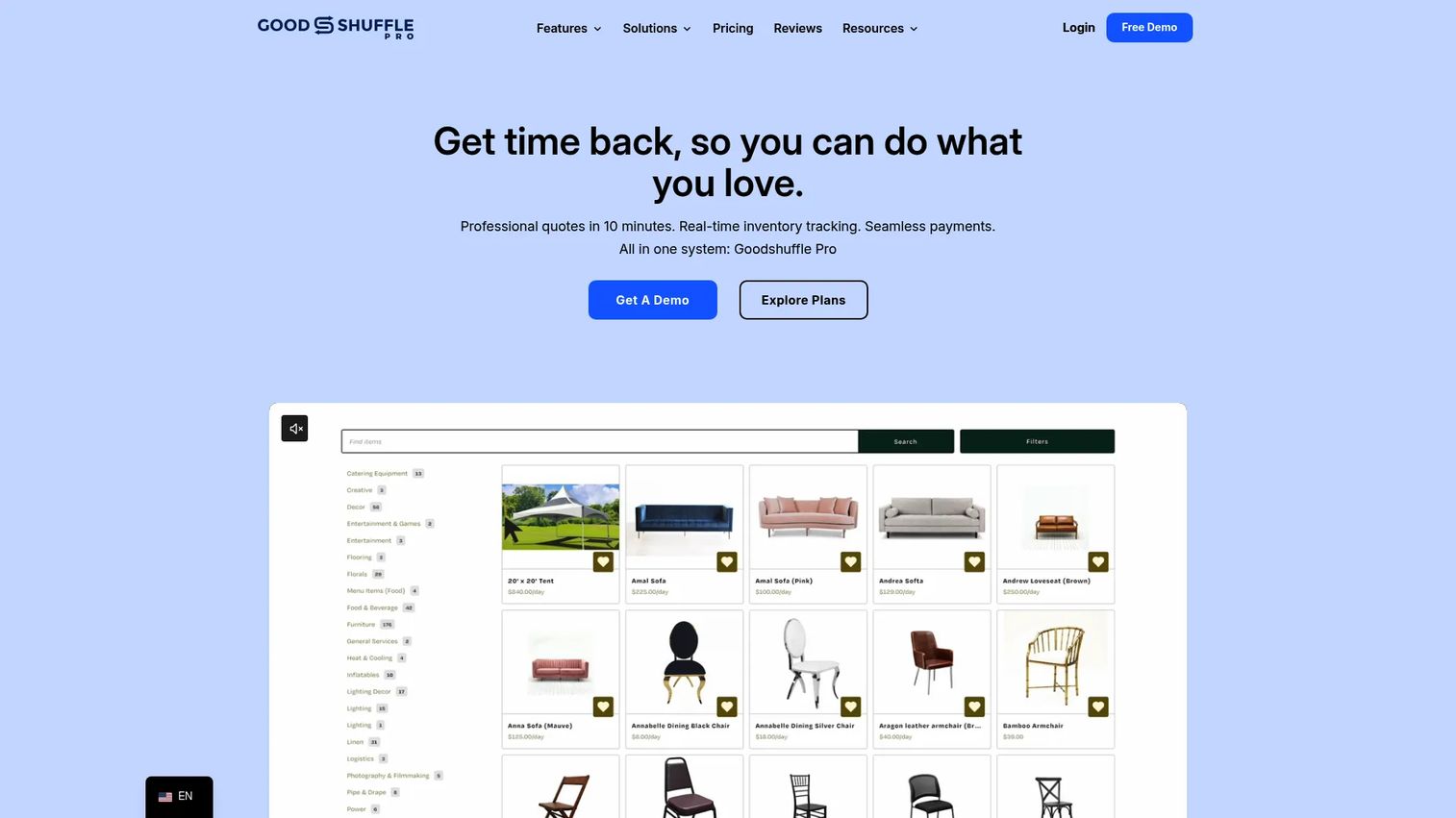
Goodshuffle Pro brings inventory, quoting, contracts, payment collection, client management, and dispatch into one event rental workflow. Its conflict detection and barcoding features help teams understand what can be promised before a proposal goes out.
The platform serves event professionals that need sales and fulfillment records to stay connected. Standard adds warehouse, delivery, dispatch, onboarding, and team capabilities.
Best for: Event rental businesses that want one workflow from quote through fulfillment.
Key features
- Real time inventory tracking
- Drag and drop quotes
- Digital signatures and deposits
- Automated payment reminders
- Delivery and dispatch tools
Why choose Goodshuffle Pro: Choose it when disconnected sales and warehouse processes create owner dependency. It gives growing teams stronger control over availability and fulfillment.
Goodshuffle Pro pricing: Lite costs $39 monthly. Standard costs $99 monthly with annual billing or $139 month to month, and a free trial is available.
G2 rating: 3.4/5
2. Event Rental Systems
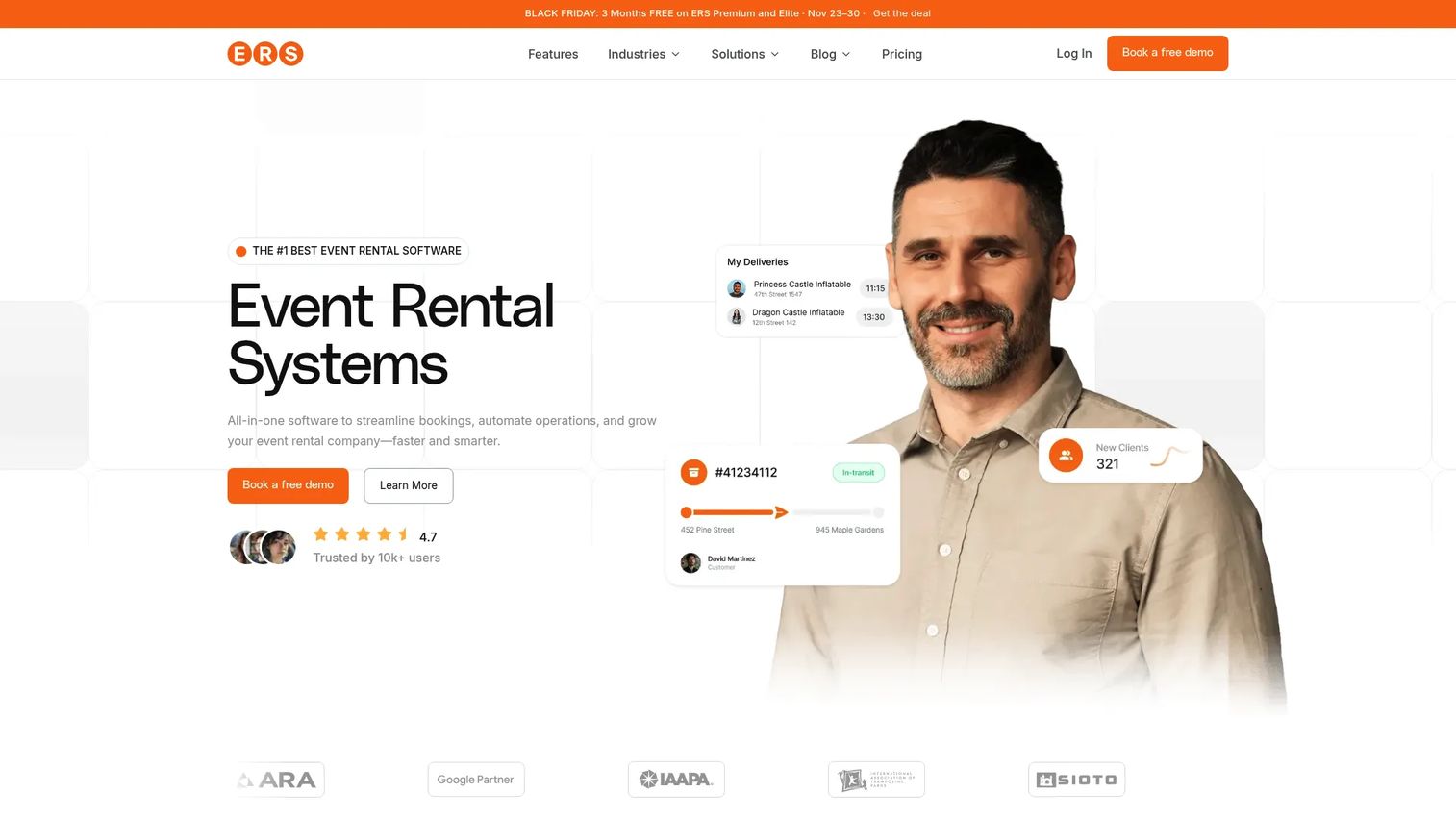
Event Rental Systems is party rental software for online reservations, inventory management, payments, route planning, and driver workflows. Its industry focus includes inflatable, tent, photo booth, casino, and local event rental operators.
The platform connects customer bookings with schedules and delivery operations. That fit matters when weekend volume makes manual coordination risky.
Best for: Party rental businesses that need online booking and delivery coordination.
Key features
- Online reservations
- Real time availability
- Digital contracts
- Route planning
- Driver tools
Why choose Event Rental Systems: It suits operators that want party rental booking software alongside scheduling and customer communication. Higher plans add more operational capacity.
Event Rental Systems pricing: Launch starts at $79.95 monthly. Standard costs $149.95, Pro costs $249.95, and Elite costs $399.95 monthly, plus applicable setup and hosting fees.
3. TapGoods
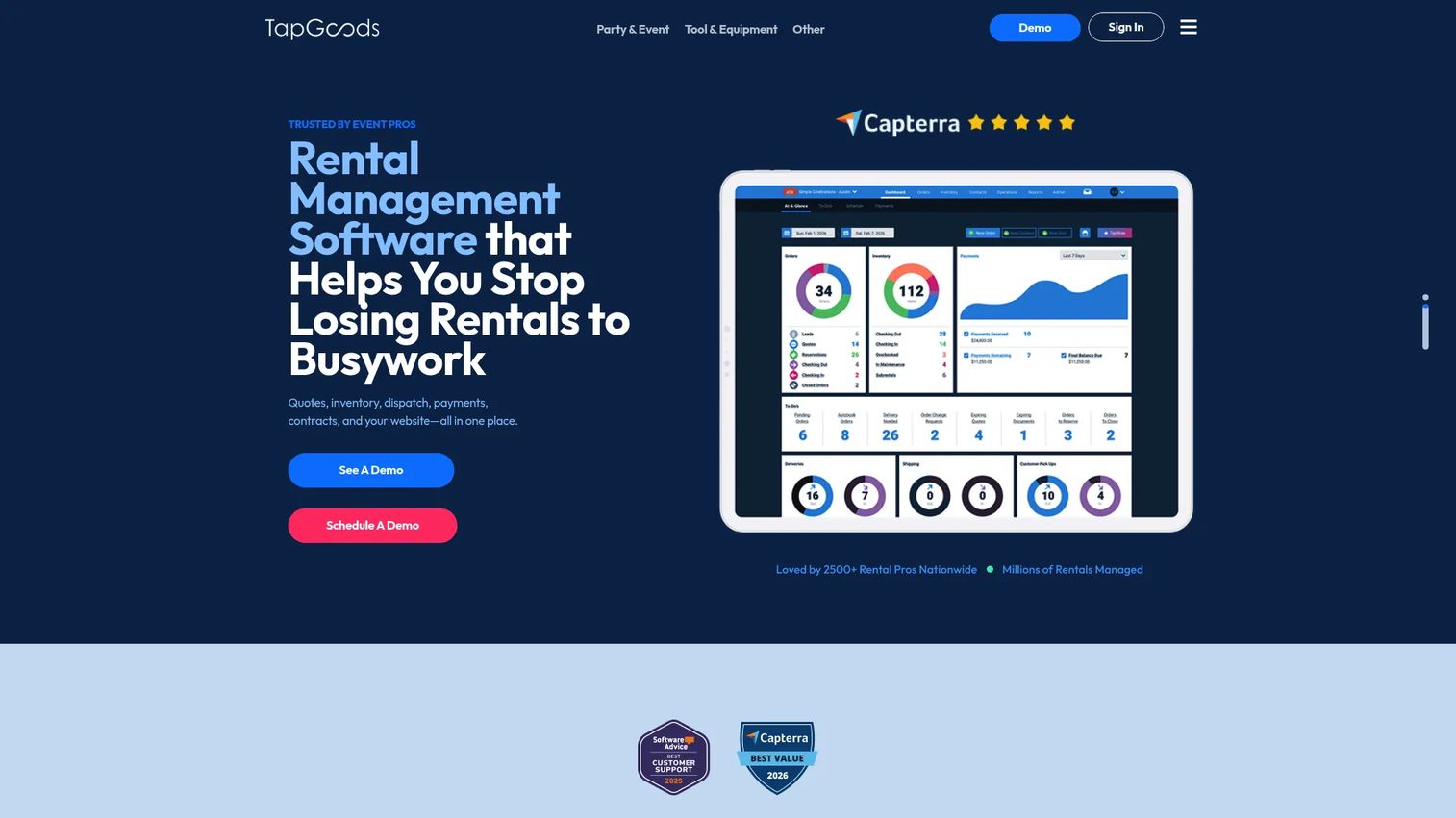
TapGoods manages inventory, quotes, contracts, payments, delivery tracking, and dispatch. Its customer facing tools support online rental bookings while the operations side handles availability and order movement.
The pricing structure lets smaller teams start with limited inventory. Growing operators can add proposals, routing, subrentals, reporting, and accounting connections through higher tiers.
Best for: Rental businesses connecting website intake with back office operations.
Key features
- Inventory availability management
- Quotes and proposals
- Electronic signatures
- Payment processing
- Delivery tracking and dispatch
Why choose TapGoods: Evaluate it when customers need online access and staff need an operational record behind every order. Its tier structure supports gradual adoption.
TapGoods pricing: Launch starts at $19 per user monthly with annual billing. Grow costs $59, Scale costs $99, and enterprise packages use custom pricing.
4. RentKit
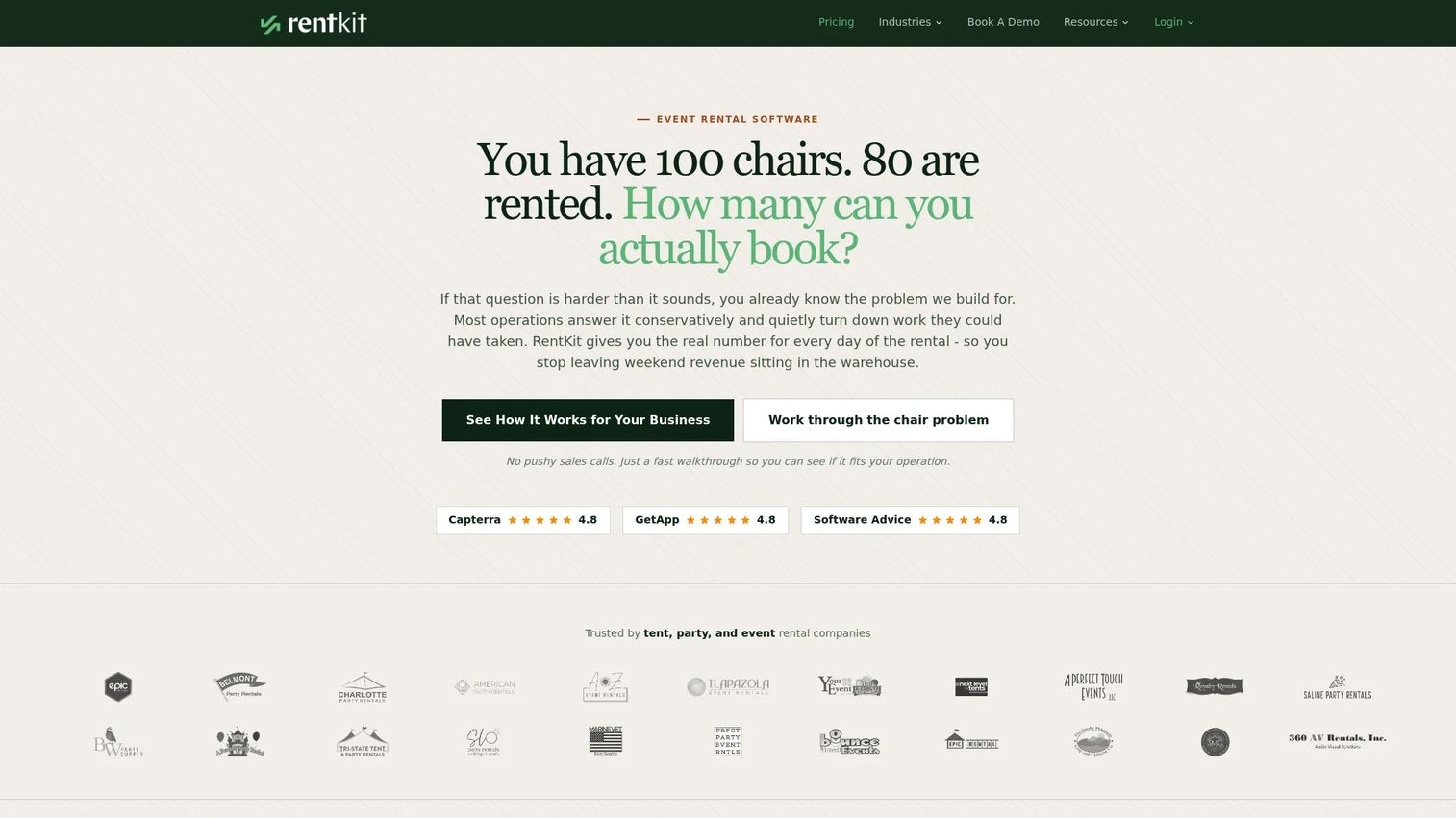
RentKit combines inventory availability, online booking, invoicing, routing, warehouse documents, and mobile crew workflows. It also synchronizes invoices, refunds, customers, and inventory items with its supported accounting connection.
The base subscription includes all core features and two users. Additional user types let operators control costs for office staff, warehouse workers, and time tracking users.
Best for: Growing rental teams that want broad operational coverage without enterprise packaging.
Key features
- Inventory and bundle tracking
- Embeddable booking catalog
- Route planning
- Mobile crew tools
- Accounting synchronization
Why choose RentKit: It fits operators replacing spreadsheets who still need routes and warehouse documents. Clear user categories help founders model adoption costs.
RentKit pricing: The base subscription costs $99 monthly for two users. Additional full users cost $35 monthly, with lower prices for restricted user types.
5. Booqable
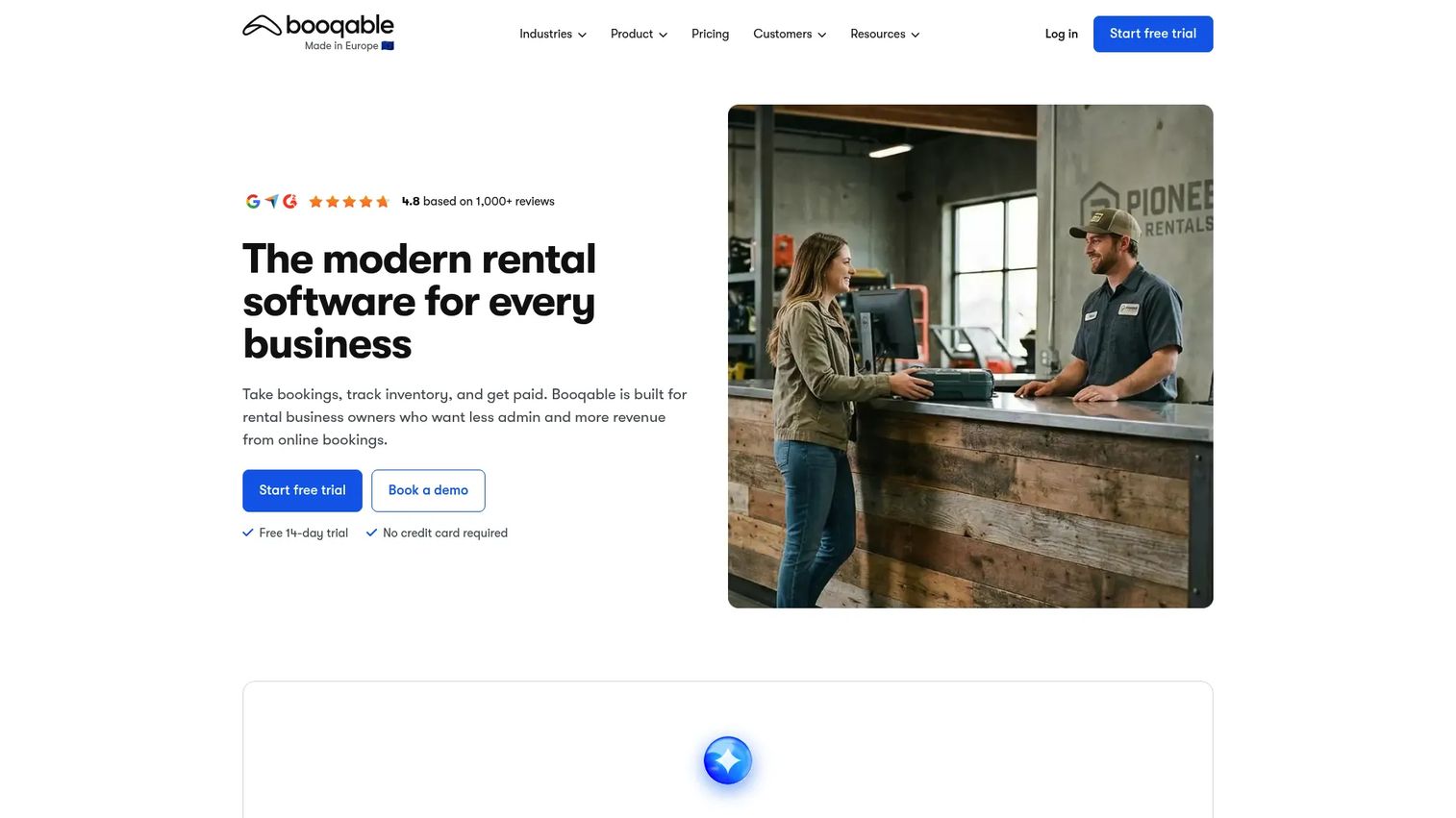
Booqable focuses on online rental storefronts, bookings, inventory availability, payments, and order management. Customers can browse a catalog and reserve available items through booking pages or website integrations.
The platform also supports quotes, contracts, invoices, and electronic signatures. That combination makes it useful for catalog driven rental models where the website handles initial demand.
Best for: Rental companies that want customers to book inventory online.
Key features
- Online rental store
- Real time stock tracking
- Reservation calendar
- Customizable checkout
- Contracts and invoices
Why choose Booqable: Pick it when your website acts as the front door to the business. It offers party rental software for small business teams that prioritize online checkout.
Booqable pricing: Start costs $29 monthly with annual billing, Grow costs $69, and Scale costs $149. Monthly billing costs more, and a 14 day trial is available.
G2 rating: 4.8/5
6. Rentman
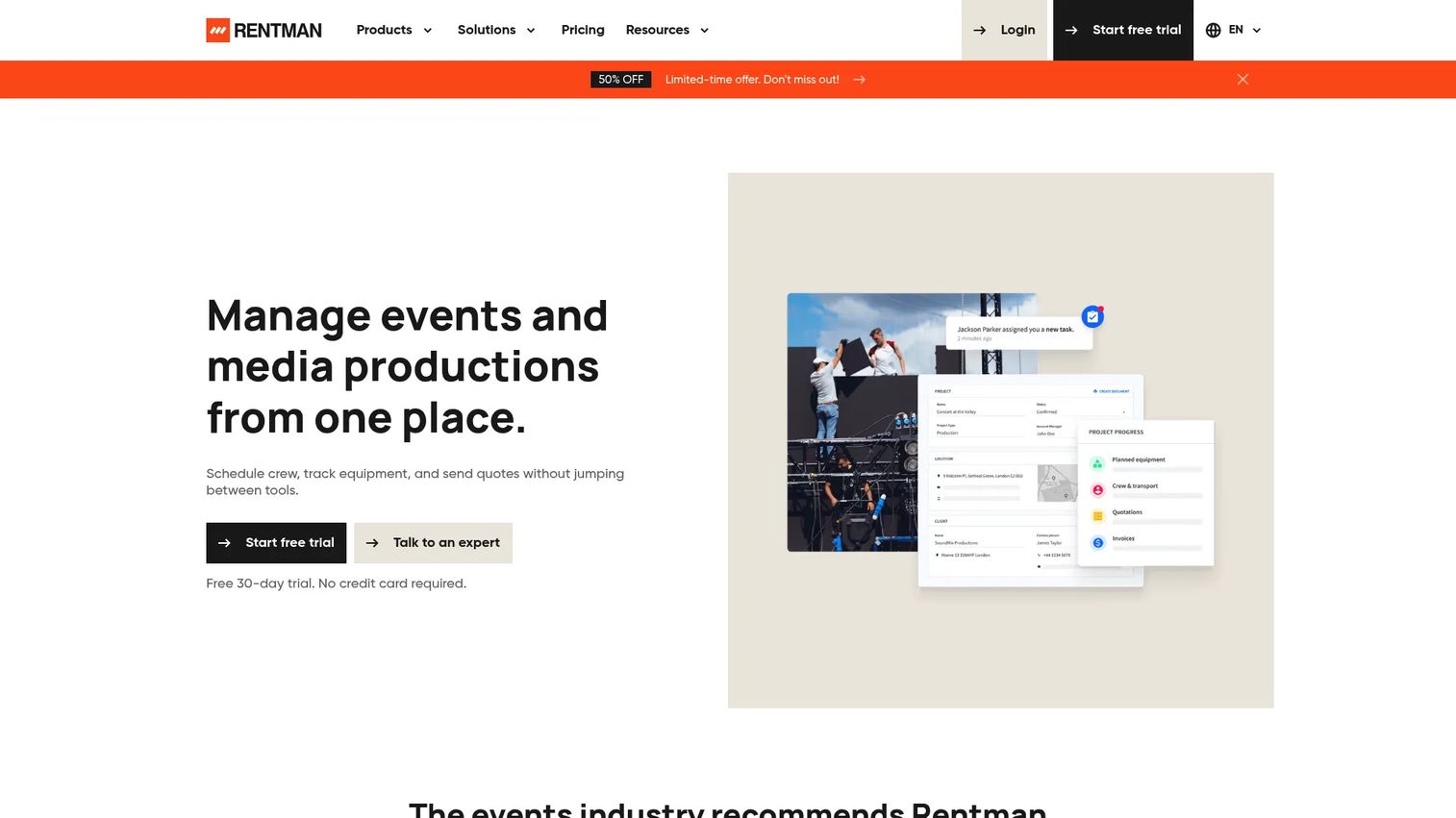
Rentman serves AV, media, equipment rental, and event production teams. Its modular system covers gear availability, crew scheduling, projects, quoting, invoicing, time tracking, and operational reporting.
This structure suits businesses where inventory is part of a wider production job. Managers can plan equipment and labor without maintaining separate schedules.
Best for: AV and production teams managing equipment, crew, and projects.
Key features
- Equipment planning
- Crew scheduling
- Project bookings
- Quoting and invoicing
- Time tracking
Why choose Rentman: Choose it when labor and production planning carry as much weight as stock availability. Modular packaging lets teams select inventory or crew capabilities.
Rentman pricing: Inventory Standard starts at €14 per power user monthly. A €39 monthly platform fee applies, while advanced modules and enterprise packaging cost more.
7. EZRentOut
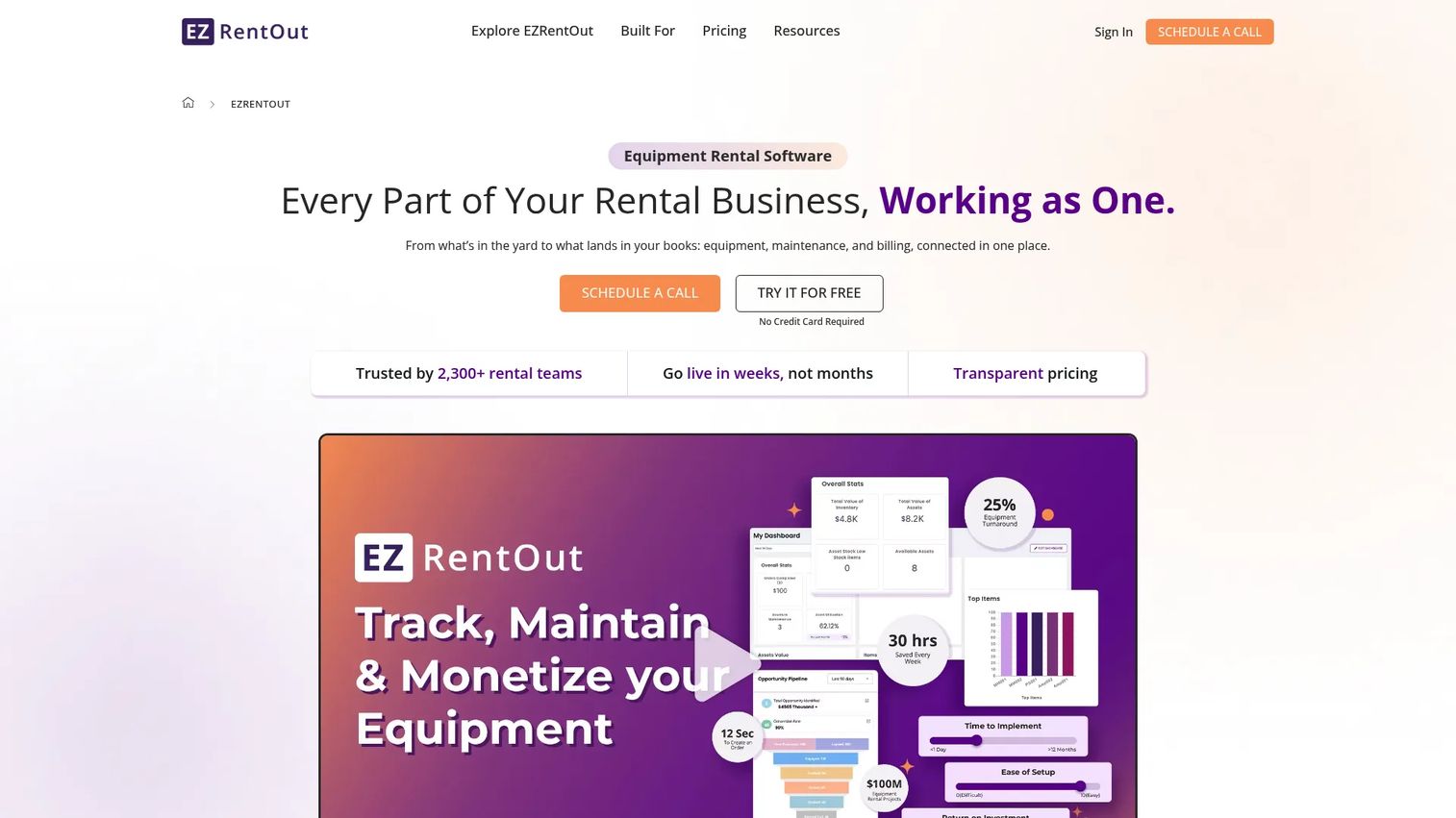
EZRentOut is equipment rental and asset management software for reservations, maintenance, billing, webstores, and mobile checkouts. Staff can scan items during rent outs and returns, then attach damage photos when condition issues appear.
Its maintenance tools help prevent unavailable equipment from returning to bookable stock. Higher plans add work orders, subrenting, multiple sites, and deeper operational controls.
Best for: Asset heavy rental operations that need condition and maintenance records.
Key features
- Equipment tracking
- Availability calendar
- Maintenance work orders
- Mobile barcode scanning
- Return damage photos
Why choose EZRentOut: It fits teams whose margin depends on knowing asset location and condition. The system gives rental damage tracking a clear place in the return process.
EZRentOut pricing: Growth starts at $399 monthly with annual billing. Premium costs $499 monthly, while Enterprise uses custom pricing.
G2 rating: 4.5/5
8. Point of Rental Software
Point of Rental Software covers inventory, rental tracking, invoicing, maintenance, reporting, ecommerce, and multiple location operations. Its broader scope fits companies that need mature process controls beyond a basic reservation calendar.
The platform supports event, equipment, specialty, and general tool rental models. Teams can manage asset balancing and service records alongside core rental activity.
Best for: Larger rental businesses with complex inventory and location requirements.
Key features
- Inventory and rental tracking
- Automated invoicing
- Maintenance management
- Multiple location controls
- Reporting and analytics
Why choose Point of Rental Software: Consider it when operating depth matters more than a lightweight booking experience. Its location and maintenance controls suit established rental processes.
Point of Rental Software pricing: Custom pricing covers Elite and Essentials packages. Cost reflects users, locations, deployment requirements, and selected capabilities.
G2 rating: 4.8/5
9. Flex
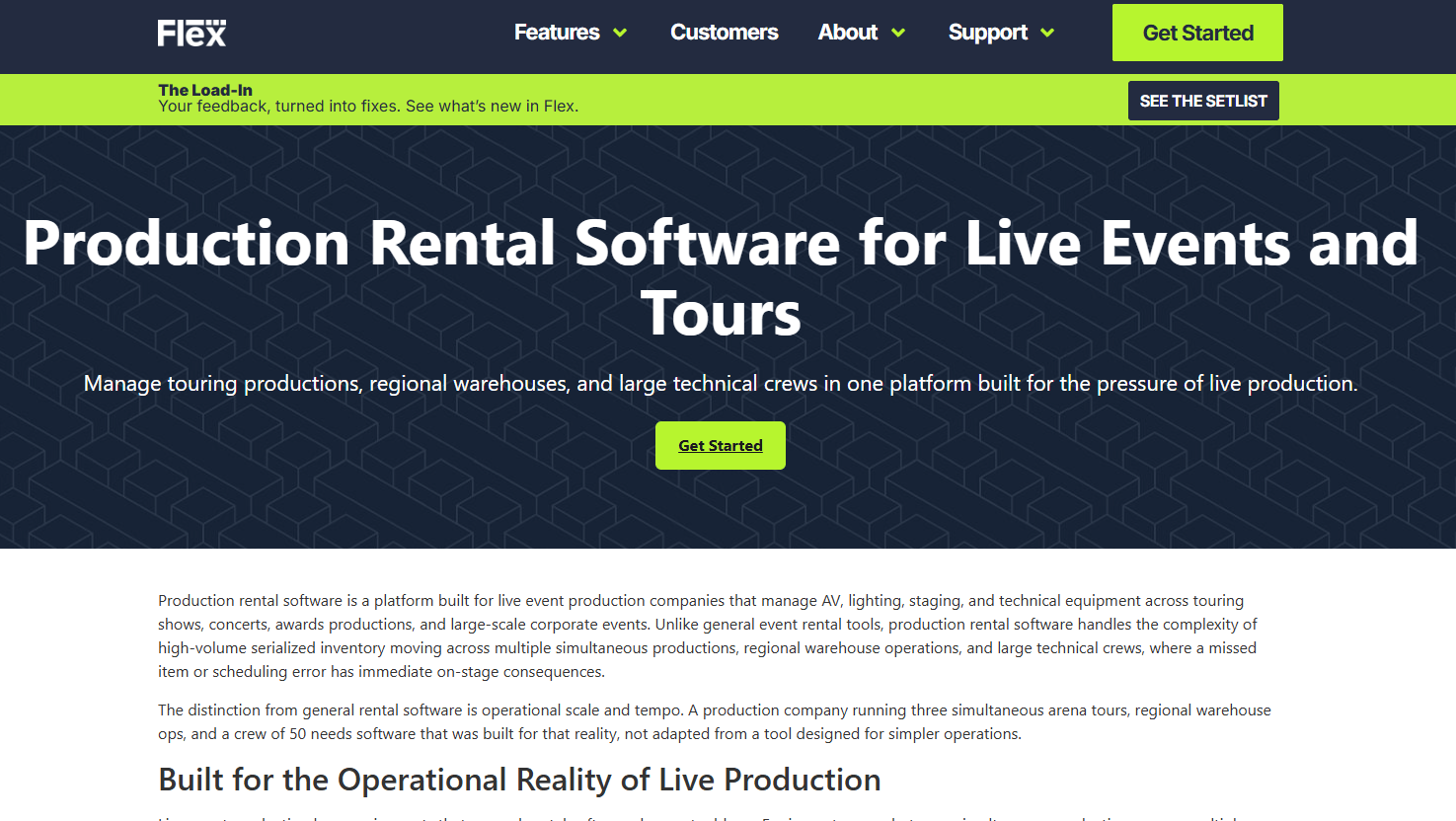
Flex is cloud based rental software for live events and production operations. Its verified capabilities include inventory management, equipment scheduling, barcode scanning, and maintenance tracking.
The platform’s production focus suits organizations managing specialized gear and warehouse movements. It belongs on shortlists where pull preparation and equipment scheduling drive daily work.
Best for: Production and staging companies managing complex equipment lists.
Key features
- Production inventory management
- Equipment scheduling
- Barcode scanning
- RFID scanning
- Maintenance tracking
Why choose Flex: Evaluate it when warehouse control and production inventory matter more than a storefront led booking process. Ask the vendor to demonstrate your complete pull and return workflow.
Flex pricing: Custom pricing. Request a quote for the required users, implementation, and operating setup.
G2 rating: 2.8/5
10. HireHop
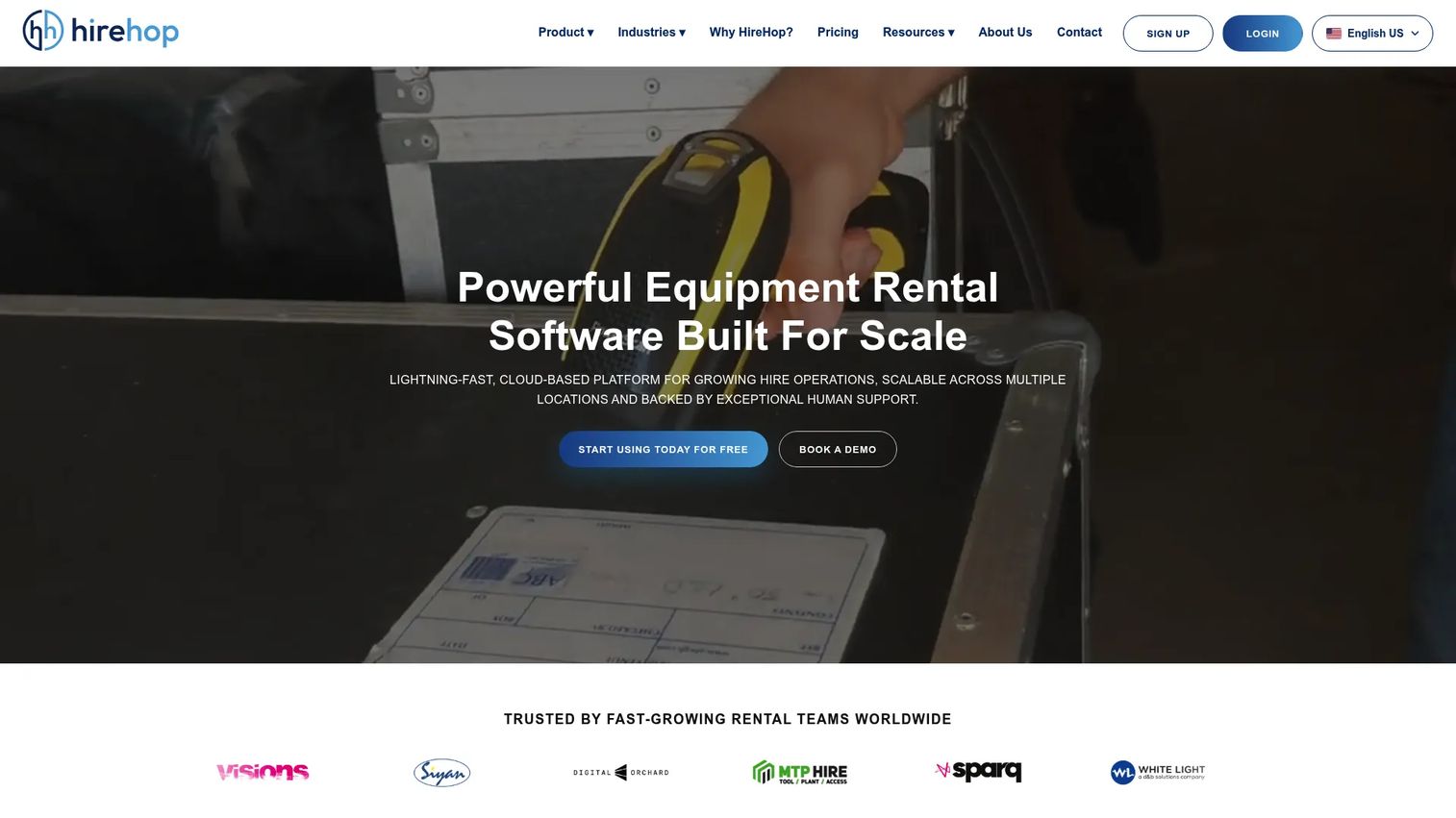
HireHop manages stock, jobs, quotes, purchase orders, invoicing, dispatch, and returns through a cloud platform. Mobile scanning and driver workflows connect warehouse activity with rental logistics.
A free Starter plan gives smaller operators a lower risk entry point. Professional adds the complete toolkit through user based pricing.
Best for: Rental businesses that want browser based stock and job management.
Key features
- Real time stock control
- Quotes and bookings
- Job profitability
- Mobile barcode scanning
- Route and driver workflows
Why choose HireHop: It works for operators that need rental depth without maintaining local software. The free tier also supports initial process testing before a paid rollout.
HireHop pricing: Starter is free. Professional costs about $64 monthly for the first user and $32 for each additional user, with billing collected in GBP.
G2 rating: 5.0/5
11. Current RMS
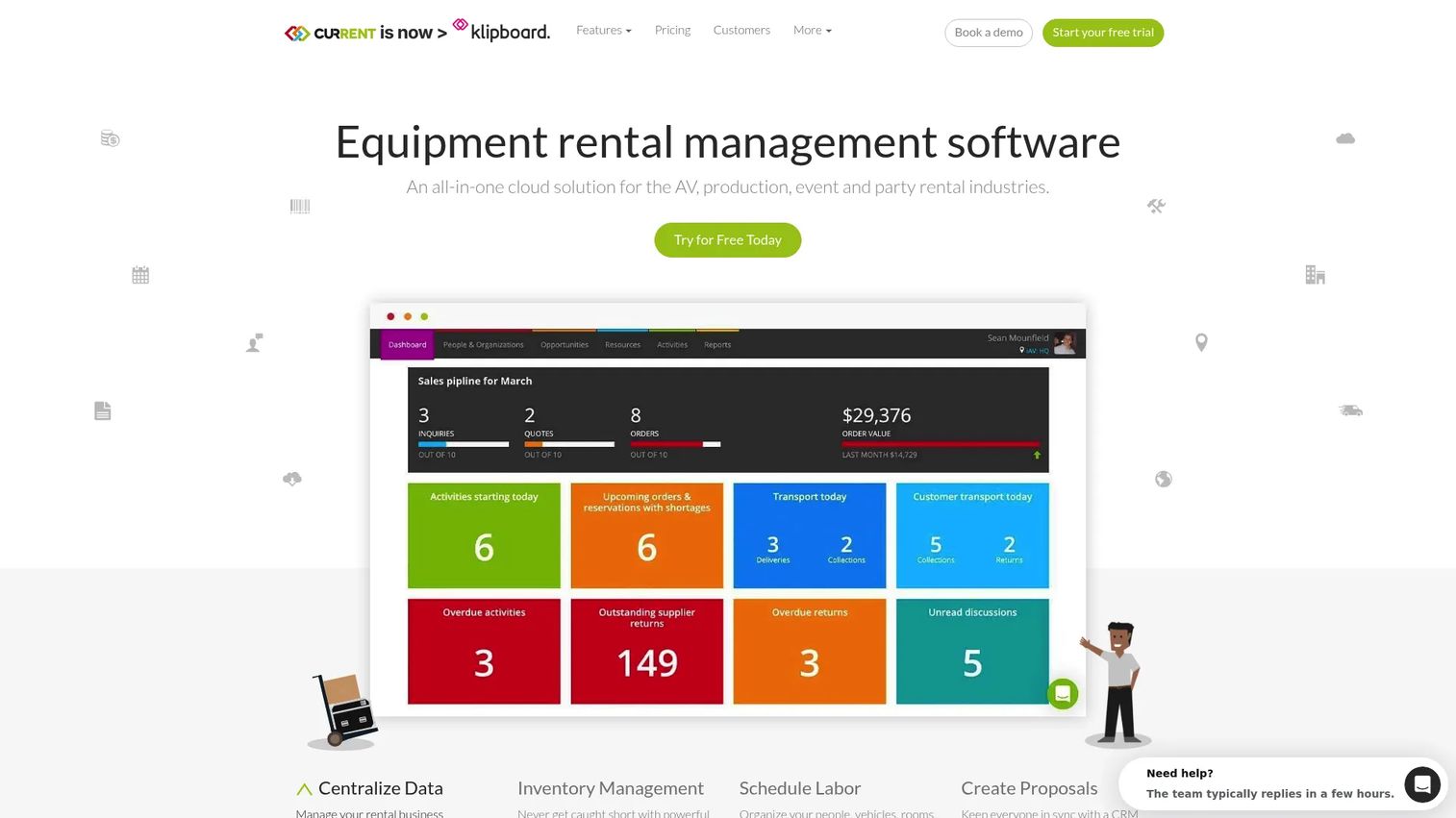
Current RMS connects rental inventory, services, scheduling, customer records, documents, and billing workflows. It supports barcode and QR scanning, plus labor and transport resource planning.
The product is being rebranded as OnRent Events, while its core functions remain the same. Its single package includes support, training, updates, and backups.
Best for: AV and production rental teams connecting customer demand with resources.
Key features
- Inventory availability
- Barcode and QR scanning
- Labor scheduling
- Transport planning
- Customer activity management
Why choose Current RMS: It suits teams that want opportunities and operational resources connected. The single package reduces tier comparison during evaluation.
Current RMS pricing: The first user costs $84.50 monthly. Additional users cost $52.50 each, and a 30 day trial requires no card.
G2 rating: 3.5/5
12. InflatableOffice
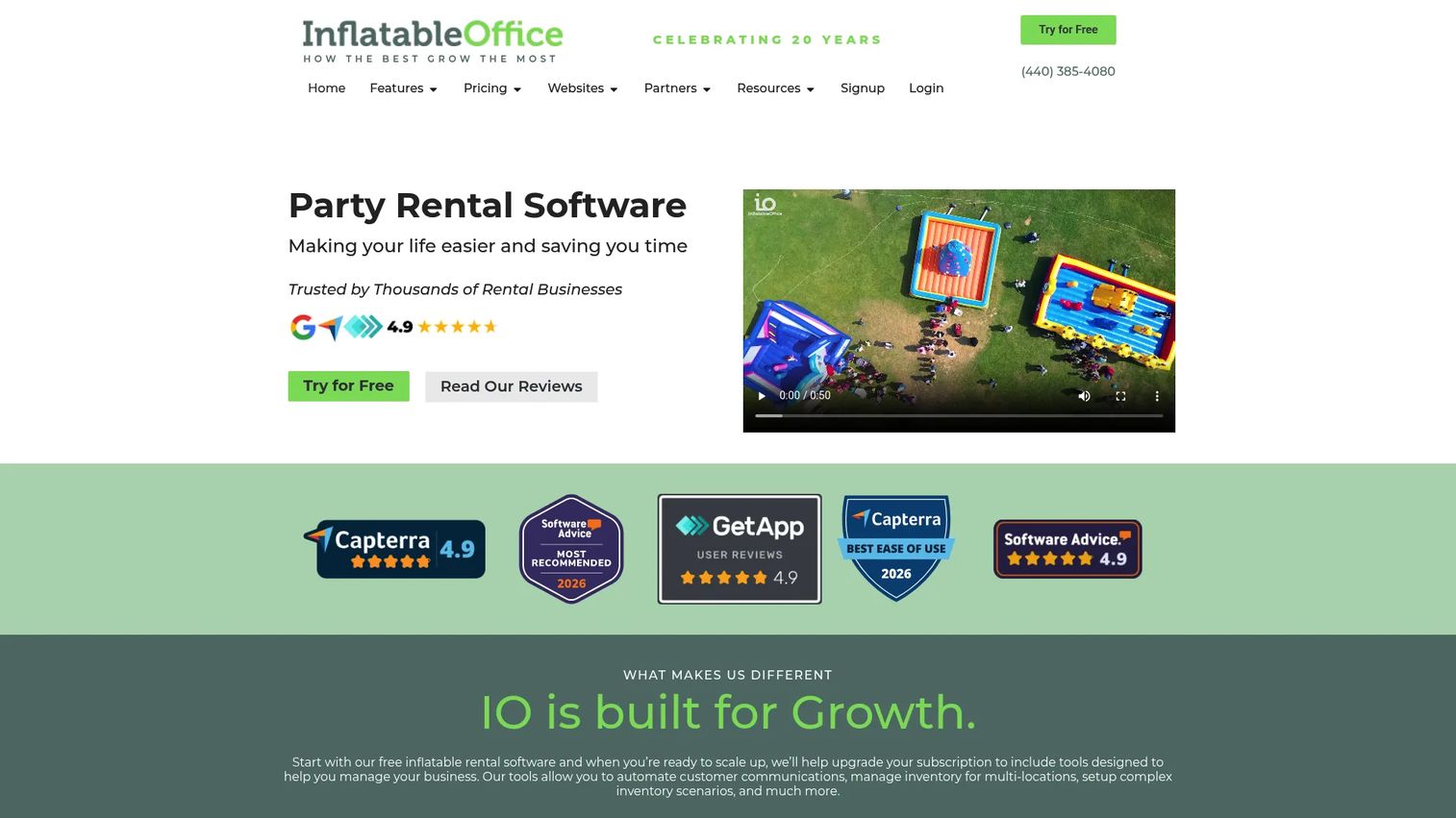
InflatableOffice is party rental management software for bookings, contracts, payments, inventory, and delivery planning. It supports packages, accessories, maintenance, route optimization, and crew scheduling.
Plans scale by inventory size, which fits inflatable operators growing from a small catalog. Website and API access may add a separate monthly charge.
Best for: Inflatable and party rental operators managing local delivery volume.
Key features
- Online quotes and bookings
- Digital contracts
- Inventory packages
- Route optimization
- Crew scheduling
Why choose InflatableOffice: It matches businesses built around weekend demand, waivers, and delivery routes. Inventory based plans provide a clear growth path.
InflatableOffice pricing: Starter is listed at $39 monthly, with a limited promotion for qualifying new customers. Basic costs $124, Plus costs $164, and Elite costs $264 monthly.
13. Quipli
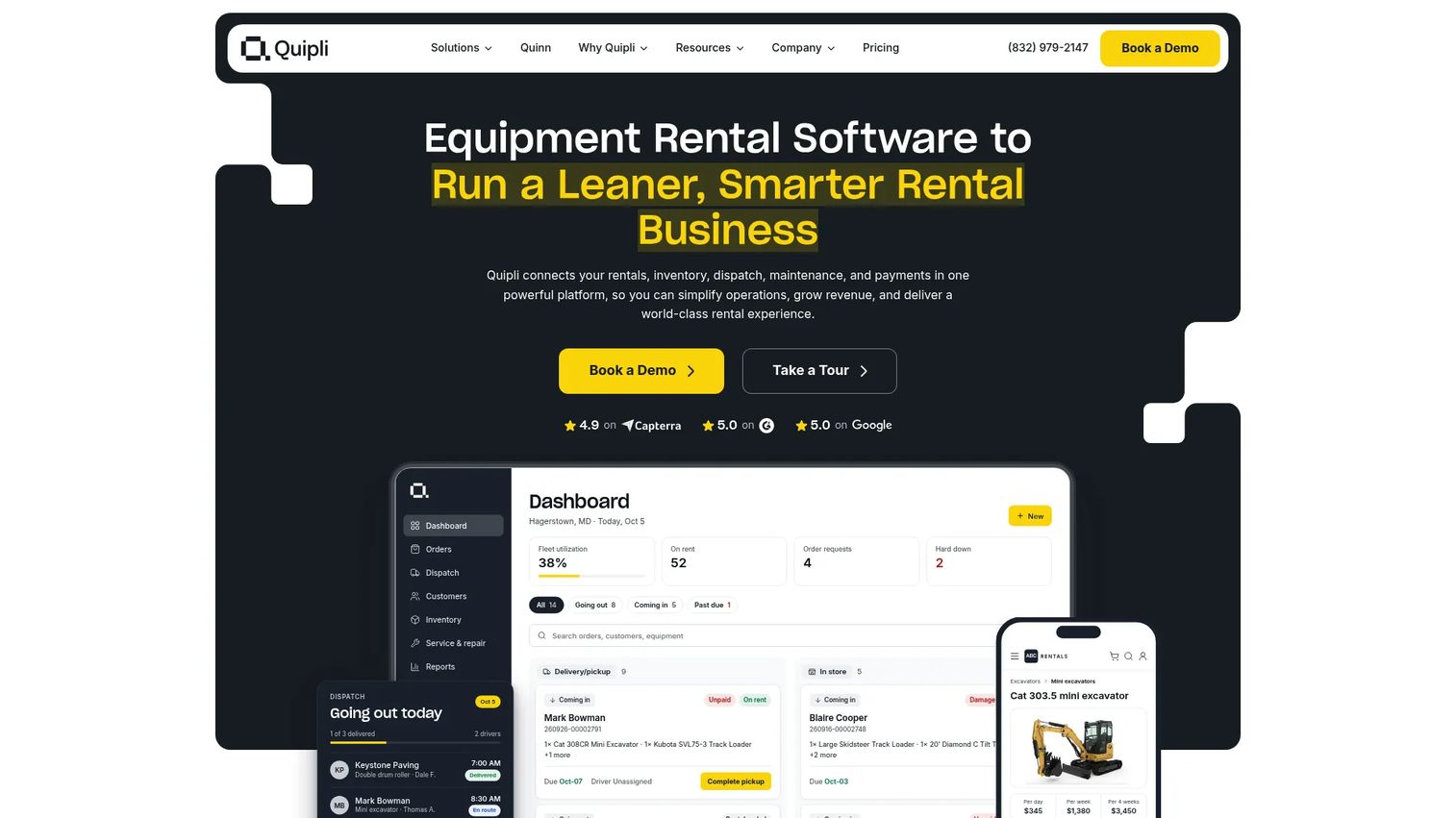
Quipli combines an online rental storefront with inventory, dispatch, maintenance, payments, and reporting. Its customer portal supports self service booking while operational tools manage equipment movement.
The platform focuses more heavily on equipment and general tool rentals than event decor. Its annual, location based price also positions it above entry level party rental software.
Best for: Equipment rental businesses wanting ecommerce tied to operations.
Key features
- Online rental storefront
- Customer portal
- Inventory and dispatch
- Service tracking
- Damage waiver tools
Why choose Quipli: Choose it when online customer experience and equipment operations must share data. Smaller party operators should compare the annual cost against their order volume.
Quipli pricing: Core costs $6,000 yearly per location. Plus Powered by Quinn costs $10,000 yearly per location.
G2 rating: 5.0/5
14. Reservety
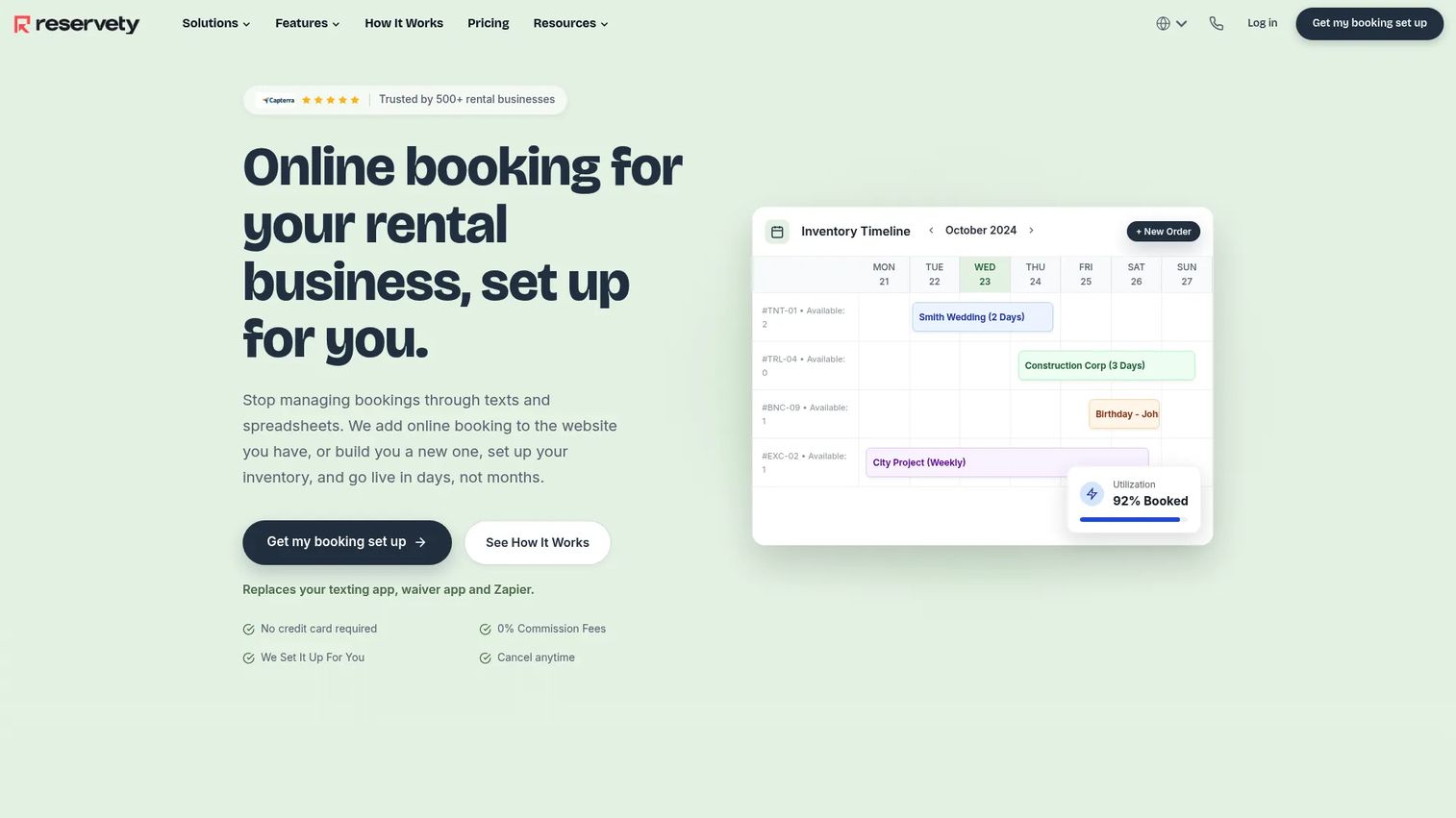
Reservety combines booking websites, inventory tracking, payments, dispatch, maintenance scheduling, and customer communication. Its booking engine also supports appointments, events, memberships, and subscriptions.
For rentals, the platform tracks availability and check in activity. Operations plans add delivery zones, driver tools, dispatch boards, and route planning.
Best for: Booking led rental businesses that need customer reservations and scheduling.
Key features
- Online booking engine
- Unlimited inventory
- Security deposit holds
- Maintenance scheduling
- Driver and dispatch tools
Why choose Reservety: It suits operators that prioritize a customer facing booking flow. Seasonal businesses can also retain their website through a lower cost hibernation plan.
Reservety pricing: Starter costs $59 monthly and Professional costs $99. Operations starts at $179 monthly, while a 14 day trial requires no card.
15. Texada
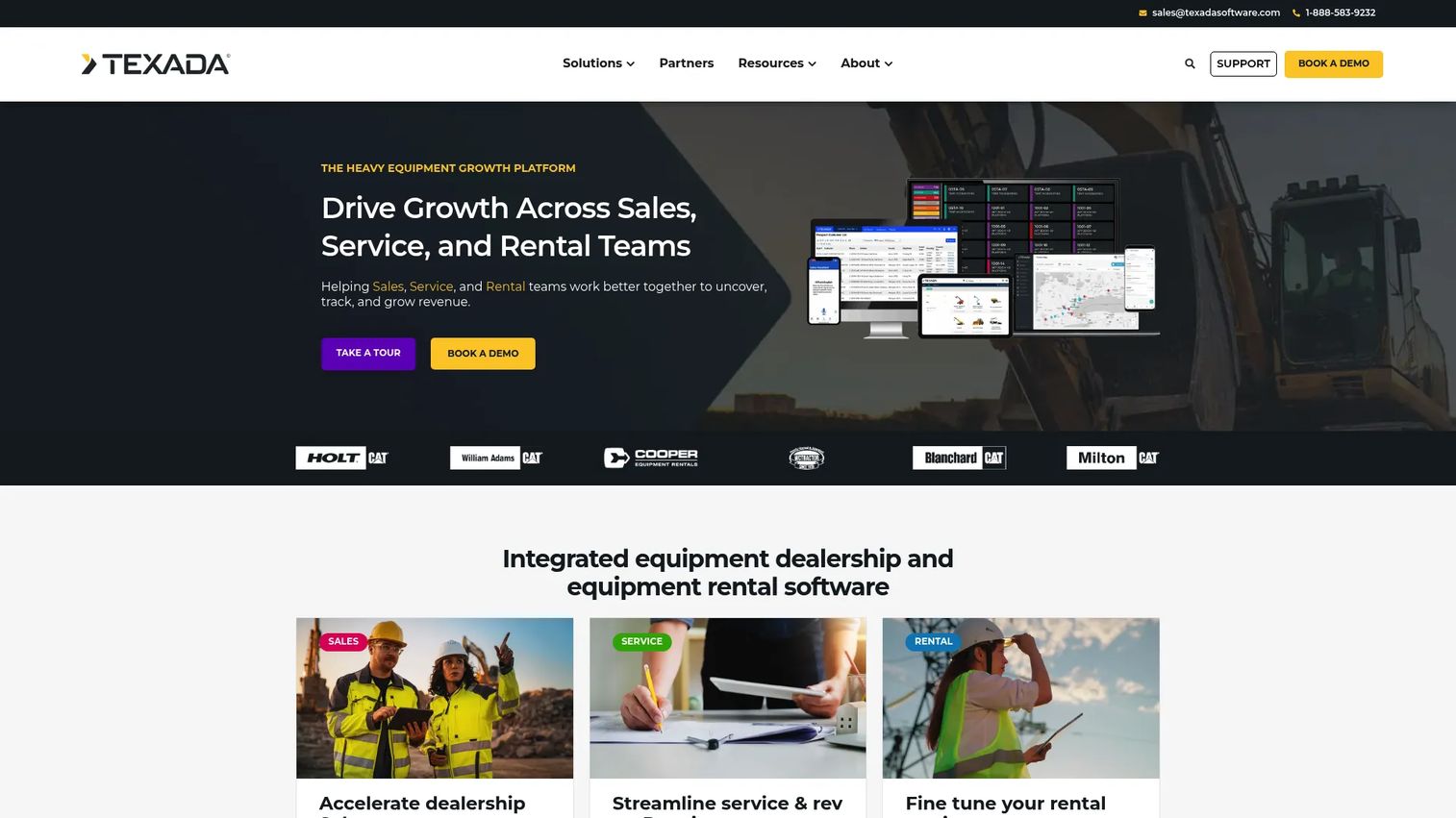
Texada serves heavy equipment sales, rental, and service businesses. Its rental capabilities cover reservations, contracts, dispatch, fleet tracking, inventory, mobile inspections, and electronic signatures.
The platform extends into service management and field work. That breadth fits larger operators with branches, equipment fleets, and maintenance teams.
Best for: Equipment rental organizations with fleet and branch complexity.
Key features
- Rental contracts and dispatch
- Fleet tracking
- Service work orders
- Mobile inspections
- Rental ecommerce
Why choose Texada: Consider it when rental, service, and field operations need connected records. Event businesses with lighter inventories may find its equipment focus broader than required.
Texada pricing: Custom pricing. Cost reflects business size and user count after a sales consultation.
G2 rating: 3.7/5
16. MCS Rental Software
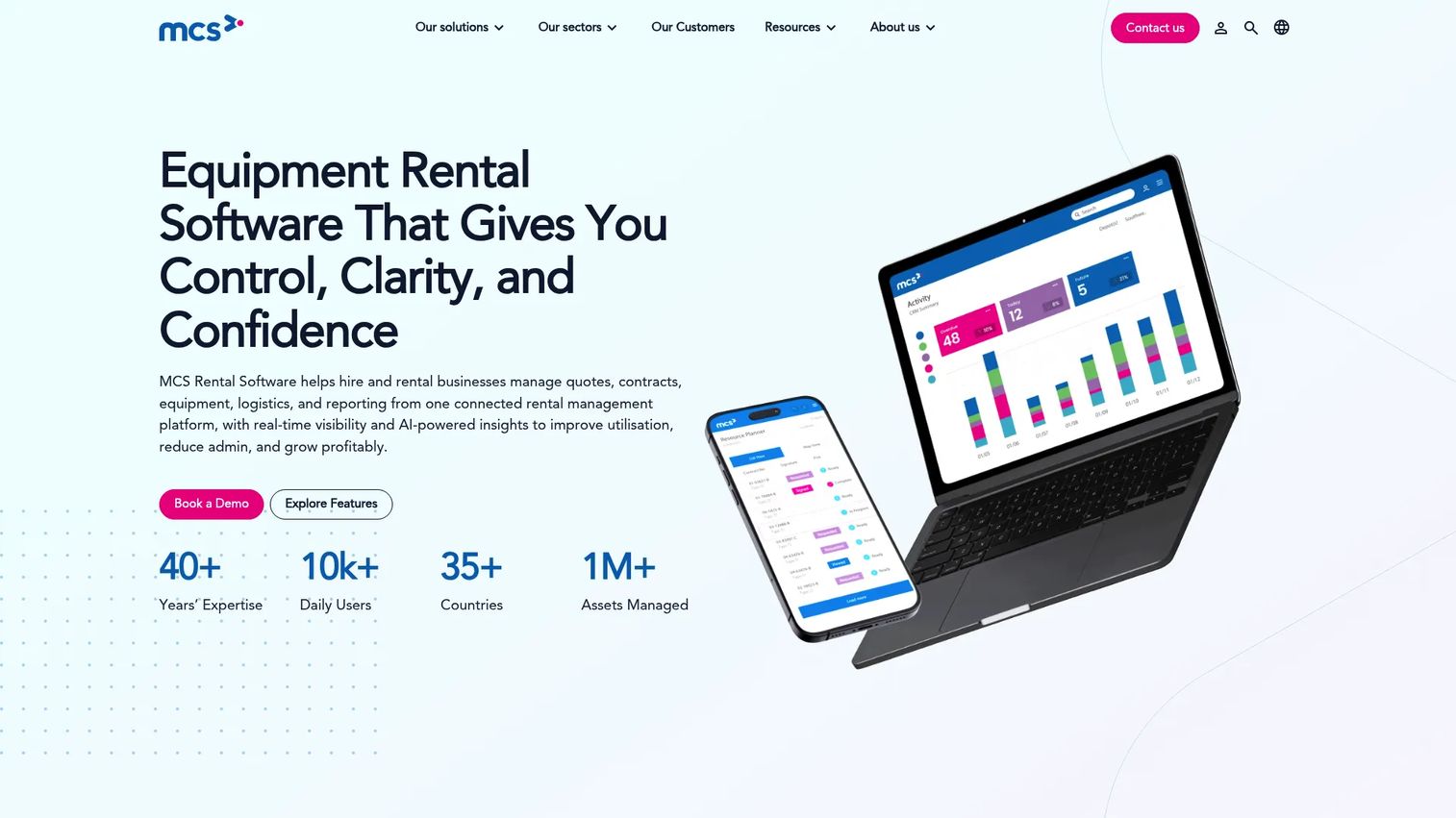
MCS Rental Software connects quotations, contracts, inventory, logistics, billing, service management, and reporting. It serves equipment, construction, event, tool, and specialist rental companies.
The platform also includes customer self service, telematics, digital signatures, and mobile access. Its scope suits mature organizations coordinating several teams across the rental lifecycle.
Best for: Larger rental companies requiring lifecycle and transport control.
Key features
- Quote and contract management
- Equipment control
- Transport planning
- Automated billing
- Workshop maintenance
Why choose MCS Rental Software: It fits businesses that have outgrown booking centered systems. Evaluate implementation effort and ownership before committing to its wider process model.
MCS Rental Software pricing: Custom pricing. Contact MCS for a package covering users, modules, implementation, and operating requirements.
G2 rating: 5.0/5
17. IntelliEvent Lightning
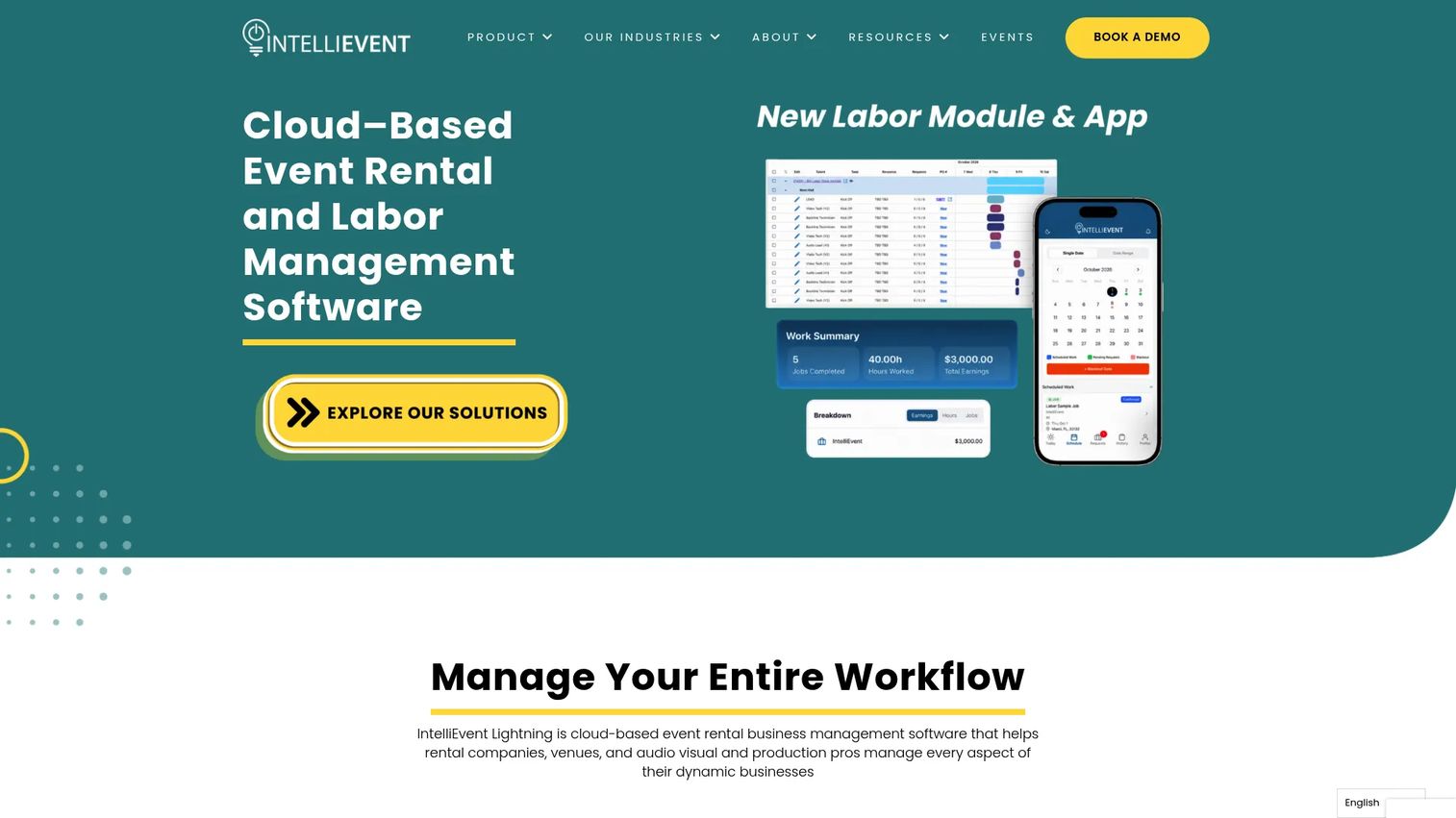
IntelliEvent Lightning is cloud based event rental business software for AV, production, venue, and equipment rental companies. It combines inventory tracking, labor scheduling, logistics, customer records, and billing.
The system supports barcode and RFID tracking across multiple locations. More than 250 reports help managers monitor operational and financial activity.
Best for: Event production teams connecting inventory with labor and logistics.
Key features
- Multiple location inventory
- Barcode and RFID tracking
- Labor scheduling
- Routing and dispatch
- Custom operational reports
Why choose IntelliEvent Lightning: It fits teams where event details and rental orders must remain connected. Ask for a demonstration using one of your production jobs.
IntelliEvent Lightning pricing: Custom pricing. Request a quote covering the chosen pricing structure, implementation, and user requirements.
Considerations when choosing event rental software
Inventory availability and conflict rules
Availability is the core system test. Confirm how the tool treats quotes, temporary holds, confirmed orders, cleaning, repairs, substitutions, and delayed returns.
Ask staff to create two competing orders during evaluation. The system should expose the conflict before either customer receives a promise.
Quote to payment workflow
The quote should connect directly to the contract, deposit, invoice, remaining balance, and reminders. Rebuilding an order at each stage creates avoidable work and reconciliation errors.
Test discounts, partial payments, refunds, and security deposits. These cases reveal more than a polished standard checkout.
Delivery routing and dispatch
Check how the platform handles routes, vehicles, crews, setup windows, pickup timing, and order changes. A map alone doesn’t equal usable dispatch.
Ask who can view updates from the warehouse or road. Owners should avoid becoming the message relay between sales and drivers.
Damage, maintenance, and return check in
Lost condition data quietly erodes margin. Confirm whether staff can record notes, attach photos, assign maintenance status, and block damaged inventory.
The return workflow should be quick enough for busy warehouse teams. A feature nobody uses won’t protect availability data.
Accounting and reporting
Accounting integration matters when data arrives in a usable structure. Test deposits, taxes, invoices, refunds, partial payments, and customer records.
Reporting should help operators understand utilization, open balances, revenue, and margin. Choose metrics your team will review every week.
Conclusion
The best event rental software should remove owner dependency from routine decisions. Staff should know what is available, what is paid, where each order goes, and what returned damaged.
Goodshuffle Pro, TapGoods, and Event Rental Systems fit broad event or party rental operations. Rentman, Flex, Current RMS, and IntelliEvent Lightning suit AV and production workflows.
Booqable, Quipli, Reservety, and RentKit serve booking or ecommerce led models. Point of Rental Software, Texada, and MCS Rental Software fit larger operational environments. EZRentOut stands out for asset tracking, while InflatableOffice focuses on party specialists.
Shortlist three tools. Then map one order from quote through return in every platform.
Ask each vendor to show availability rules, delivery changes, return check in, and damage handling. Verify migration time and total first year cost. The winner should earn its place by reducing risk within the first quarter.
FAQs
Smaller operators should prioritize online booking, availability, payment collection, and straightforward accounting setup. RentKit, Booqable, InflatableOffice, and Event Rental Systems fit different small business models.
Compare implementation requirements alongside subscription prices. A cheaper platform can still cost more if catalog migration and process setup consume owner time.
Party rental software is a narrower category for inflatables, tents, furniture, decor, games, and local delivery. It often emphasizes website bookings and weekend route planning.
Event management rental software may also support AV equipment, staging, production labor, venues, or complex project workflows. The right category depends on what you rent and how fulfillment works.
Strong systems reduce double booking risk through live availability, holds, reservations, conflict alerts, maintenance status, and return buffers. They also connect availability to the quoting process.
Software still depends on clean inventory data. Teams need clear rules for quote holds, substitutions, and late returns.
Many platforms include routing, dispatch, staff assignments, vehicle coordination, or map integrations. The depth varies considerably between products.
Test multiple stops, delivery windows, pickups, crew assignments, and same day changes. Confirm whether drivers receive updates without calling the office.
Entry plans in this comparison start below $100 monthly, while advanced platforms cost several hundred dollars or use annual contracts. Larger systems commonly use custom pricing.
Total cost can include users, locations, implementation, payment processing, modules, and migration. Compare first year spend instead of looking only at the subscription.
Prioritize availability, conflict prevention, barcode scanning, substitutions, maintenance status, damage notes, and return check in. Utilization reporting also helps owners decide what to buy or retire.
Inventory should connect directly to quotes and delivery schedules. A separate asset list leaves important decisions split across systems.
Many tools synchronize or export invoices, payments, refunds, customer records, and tax data. Some offer deeper accounting connections only on higher plans.
Ask which fields move in each direction. Test deposits, partial payments, credit notes, and refunds before approving the integration.
Replace spreadsheets when several people quote the same inventory or delivery schedules change daily. Missed deposits and lost damage records are also clear warning signs.
The strongest trigger is owner dependency. If staff need the owner to confirm availability or resolve routine conflicts, the business needs a shared operating system.