Your device launch is three weeks out. The eSIM profiles still need provisioning, the security team wants proof of accreditation, and operations is asking how this scales past ten thousand activations. None of those problems are about whether eSIMs exist. They exist. The question is which platform manages the full lifecycle without turning provisioning into a bottleneck.
That gap matters more every quarter. Global eSIM devices will grow from 1.2 billion in 2025 to 4.9 billion by 2030, according to shnb. GSMA Intelligence (2025) projects 76% of all smartphone connections will run on eSIM by 2030. When volume moves like that, the platform you pick decides whether remote SIM provisioning stays secure and fast, or becomes the thing that stalls every rollout.
Standards support, deployment scale, and security accreditation separate a platform that handles one device category from one that survives consumer, automotive, and IoT programs at once. Here are the four worth evaluating.
What's inside
This guide is for mobile operators, IoT teams, automotive programs, and product teams evaluating connectivity infrastructure. We chose these four eSIM management platforms using four criteria that matter most when the decision gets forwarded to engineering, security, and procurement.
- Standards support: alignment with GSMA specifications including SGP.32 and SAS-SM accreditation
- Deployment scale: how the platform handles thousands to millions of activations
- Security and trust: accreditation, access control, and data protection
- Use-case fit: coverage across consumer devices, automotive, IoT devices, and M2M and fleet
The article covers consumer, automotive, IoT, and M2M/fleet deployments so you can match a platform to your actual rollout shape.
TL;DR
- Best for consumer device provisioning: IDEMIA, with just-in-time SM-DP+ provisioning and cloud hosting built for activation volume.
- Best for IoT scale and orchestration: Kigen, with SGP.32 alignment and an eSIM IoT Manager built for large-scale IoT deployment.
- Best for multi-vertical solution families: G+D, covering consumer, automotive, IoT, and M2M/fleet from one lifecycle management platform.
- Best for security-first operator messaging: Thales, with strong access management and data protection positioning across connectivity and identity.
- Decision shortcut: consumer volume points to IDEMIA, IoT fleets point to Kigen, mixed portfolios point to G+D, security governance points to Thales.
What is an eSIM management platform
An eSIM management platform is software that handles the full lifecycle of embedded SIM profiles, from creation and remote provisioning through activation, updates, and retirement, without physically swapping a card. It is the control layer for eSIM management across every device that carries an eUICC.
Remote SIM provisioning (RSP) is the core function. Instead of inserting a physical SIM, the platform delivers an operator profile over the air to the device's eUICC, the embedded chip that stores one or more profiles. The GSMA defines the architecture that makes this work, and the SM-DP+ (Subscription Manager Data Preparation Plus) is the server that prepares and delivers those profiles to consumer devices.
Two GSMA specifications dominate vendor evaluation. SGP.22 governs consumer RSP. GSMA SGP.32 is the newer IoT specification that simplifies remote provisioning for devices without a user interface, using an eSIM IoT Manager (eIM) to trigger profile downloads. SAS-SM is the GSMA security accreditation scheme for subscription management sites, and it is often the first question a security reviewer asks.
Core capabilities to expect:
- Remote provisioning: deliver profiles over the air to any eUICC device
- Profile creation and activation: generate and activate operator profiles on demand
- Lifecycle updates and reprocessing: enable, disable, swap, and reprocess profiles remotely
- Standards compliance: alignment with GSMA SGP.22, SGP.32, and SAS-SM accreditation
- Cloud deployment and resilience: cloud-based deployment with geo-redundancy for uptime and scale
Cloud-based deployment now dominates the category. Cloud-based eSIM management platforms command 71.2% of the enterprise eSIM management market, according to MarketIntelo (2026). That market itself is projected at $3.8 billion in 2025 per MarketIntelo (2025).
When to use an eSIM management platform
Manage consumer device activations at scale
Consumer programs need just-in-time profile generation and activation the moment a customer taps to connect. A phone, tablet, or wearable launch can drive activation spikes that a manual process cannot absorb. Use an eSIM management platform when you are running operator onboarding, recurring activation workflows, or a device launch where profiles must be ready on demand.
Run IoT or fleet deployments
Industrial IoT and M2M programs put thousands of devices in the field with no screen and no user to tap "activate." These deployments need remote profile handling plus long-term lifecycle control, often across regions and carriers. Reach for a platform with GSMA SGP.32 support when you manage sensor fleets, connected assets, or fleet operations that must reprovision profiles over years.
Support automotive or multi-device programs
Connected vehicles and multi-device portfolios need segmented solution families and stronger trust and orchestration. Automotive eSIM connectivity carries long product lifecycles, safety-relevant systems, and in-factory profile provisioning before the vehicle ever ships. Choose a platform with broad vertical coverage when a single program spans consumer, automotive, and IoT at once.
Comparison table
The table below compares the four platforms by use-case fit, key differentiator, and deployment model. Pricing in this category is largely quote-based, and public ratings are thin, so verify current figures from live vendor and review sources before you commit.
| # | Product | Best for | Key differentiator | Pricing | G2 rating |
|---|---|---|---|---|---|
| 1 | G+D | Multi-vertical solution families across consumer, automotive, IoT, M2M/fleet | Broad lifecycle coverage plus in-factory profile provisioning | IoT Shop items from €5.00 (excl. VAT); platform quote-based | Not rated |
| 2 | IDEMIA | Consumer device provisioning at activation scale | Just-in-time SM-DP+ and DPS on cloud hosting | Contact sales | Not published |
| 3 | Kigen | IoT orchestration and large-scale IoT deployment | SGP.32-aligned eSIM IoT Manager with existing SM-DP+ compatibility | iSIM eval kit $50; platform quote-based | Not confirmed |
| 4 | Thales | Security-first operator and connectivity programs | Access management and data protection across identity and connectivity | DPoD public pricing in EUR; trials available | 4.5/5 |
Best 4 eSIM management platforms for 2026
1. G+D
G+D (Giesecke+Devrient) is a global SecurityTech company covering digital security, connectivity, and identity infrastructure. Its eSIM management platform handles remote SIM provisioning and lifecycle management across the widest set of verticals on this list. That breadth is the reason it leads for teams whose portfolio does not fit one neat category.
G+D segments its remote SIM management into consumer, automotive eSIM connectivity, IoT devices, and M2M and fleet. It covers in-factory profile provisioning (IFPP) for devices provisioned on the production line, and works across form factors including eUICC, nano SIM, SMD, and iSIM. That range lets one vendor relationship span a phone program, a connected-car program, and an industrial sensor fleet.
Best for: enterprises and operators running mixed portfolios that touch consumer, automotive, and IoT at the same time.
Key features
- Connectivity and IoT security solutions across verticals
- Remote SIM provisioning for consumer, automotive, IoT, M2M/fleet
- In-factory profile provisioning (IFPP) for production lines
- Form-factor coverage: eUICC, nano SIM, SMD, iSIM
- Identity technology and digital infrastructure security
Why choose G+D: if your programs cross device categories, consolidating onto one platform with broad standards and trust coverage beats stitching together specialists per vertical.
G+D pricing: the G+D IoT Shop lists specific products publicly, starting at €5.00 (excl. VAT) for an IoTgo Connect Global SIM Standard, with a test kit at €76.00. Broader platform deployments are quote-based and region-dependent.
G+D's G2 seller page currently shows no meaningful customer rating, so treat review scores as unavailable rather than low.
2. IDEMIA
IDEMIA is a global identity and security technology company, and its consumer eSIM management is built around activation volume. The Smart Connect Consumer offering pairs an SM-DP+ with a Discovery and Provisioning Service (DPS) so devices can find and download the right operator profile. For consumer programs, that architecture is the core of a smooth activation.
Just-in-time provisioning generates and delivers profiles the moment a user activates, which suits device launches and recurring onboarding where you cannot pre-stage every profile. IDEMIA runs this on cloud hosting, giving operators the operational scale and customization needed to absorb activation spikes. Security accreditation, including SAS-SM alignment for subscription management, is central to how it positions the platform to operator security teams.
Best for: mobile operators and device programs prioritizing consumer-device provisioning and cloud reliability.
Key features
- Smart Connect Consumer with SM-DP+ and DPS architecture
- Just-in-time provisioning for on-demand activation
- Cloud hosting for operational scale and customization
- Security accreditation aligned with subscription management schemes
- Reporting and IT integration for operator workflows
Why choose IDEMIA: when consumer activation volume and cloud reliability are the priority, IDEMIA's SM-DP+ and DPS architecture is purpose-built for that motion.
IDEMIA pricing: IDEMIA does not display numeric pricing for its enterprise eSIM management; product pages route buyers to sales for a quote. An IDEMIA Experience Portal page shows Free and pay-as-you-go options for a separate identity proofing product, but not for the eSIM platform.
A current, verified G2 rating for IDEMIA's eSIM management was not available at publication, so weigh reviews from primary sources during evaluation.
3. Kigen
Kigen builds SIM, eSIM, iSIM, and remote SIM provisioning software for cellular IoT connectivity. Its eSIM IoT Manager (eIM) is the standout for large-scale IoT deployment, because it is aligned with GSMA SGP.32, the specification written specifically for provisioning devices that have no screen or user to drive activation.
SGP.32 support enables indirect profile downloads, where the eIM triggers a device to fetch its profile rather than relying on user action. Kigen also emphasizes compatibility with existing SM-DP+ infrastructure, so operators do not have to rebuild their provisioning backend to adopt IoT-scale orchestration. For teams running fleets across regions, the platform's hybrid cloud and geo-redundancy support the uptime that long-lived IoT programs demand.
Best for: IoT OEMs and connectivity providers needing standards-led architecture for large device fleets.
Key features
- eSIM OS for IoT connectivity and remote provisioning
- eSIM IoT Manager (eIM) aligned with GSMA SGP.32
- Indirect profile downloads for headless devices
- Compatibility with existing SM-DP+ infrastructure
- iSIM software and Kigen Pulse orchestration
Why choose Kigen: if your deployment is IoT-first and you want SGP.32-native orchestration without replacing your current provisioning stack, Kigen fits that architecture.
Kigen pricing: Kigen publishes a $50 price for an iSIM evaluation kit, while broader platform pricing is quote-based through its sales team. The eval kit is a low-cost way to validate the technology before a larger commitment.
Kigen reports strong customer sentiment, but the G2 listing surfaced in search referenced a different product, so treat any specific score as unconfirmed until verified on Kigen's own listing.
4. Thales
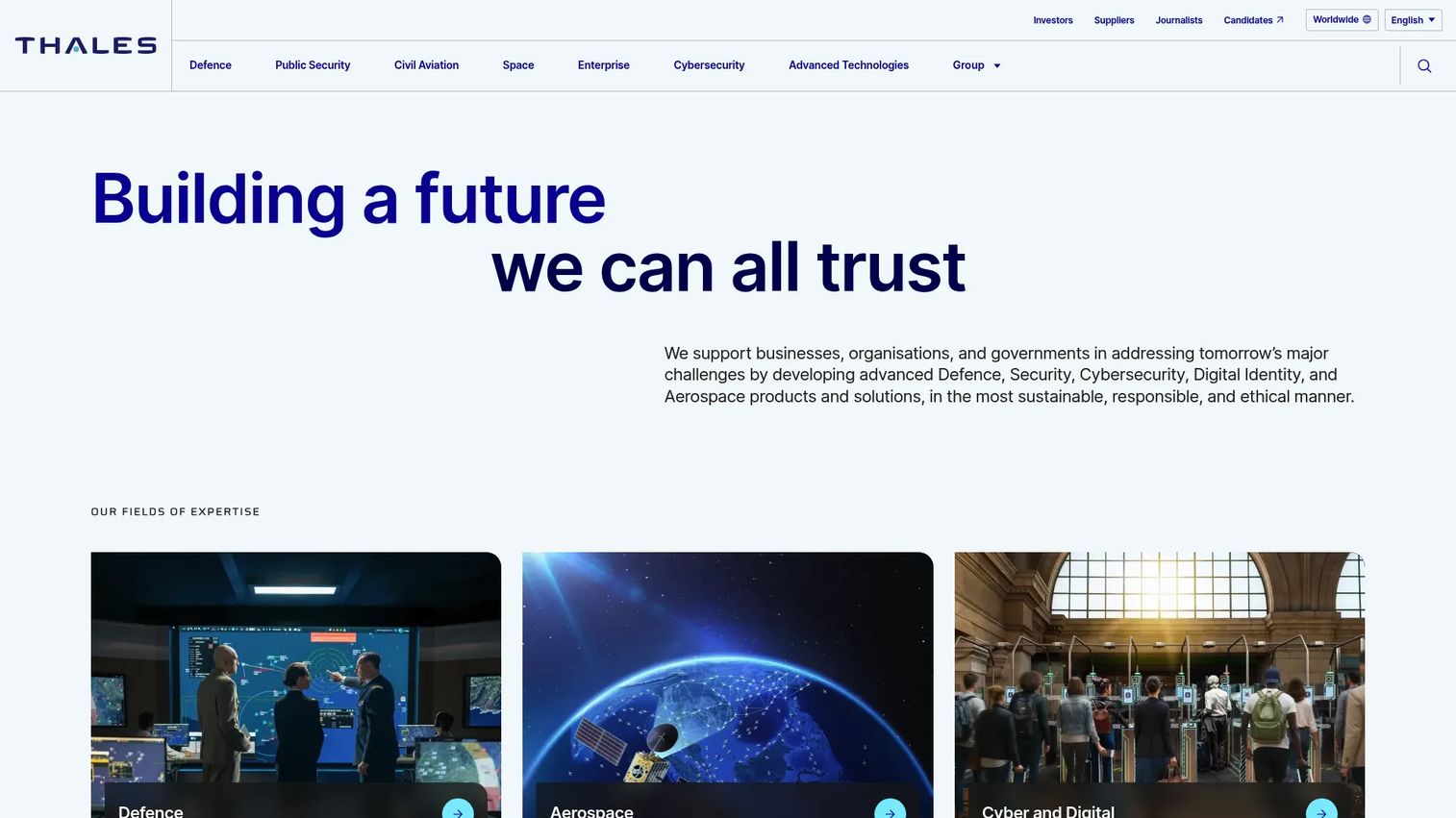
Thales is a global cybersecurity and digital identity company whose eSIM and connectivity work sits inside a deep security portfolio. Where the other platforms lead with provisioning breadth, Thales leads with trust: access management, data protection, and the governance that regulated operators need before any profile moves.
Security governance matters in this category because remote SIM provisioning touches identity, keys, and network access. Thales brings SafeNet Trusted Access for access management and authentication, plus CipherTrust and HSM-based key management and data protection. For operators whose first question is how credentials and keys are protected, that security-first posture is the differentiator. Public product detail on the eSIM platform specifically is lighter than the others here, so pair this positioning with a direct vendor conversation.
Best for: operators and enterprises where security accreditation and identity governance drive the platform decision.
Key features
- SafeNet Trusted Access for access management and authentication
- CipherTrust and HSM-based data protection and key management
- Data Security On Demand (DPoD) delivery model
- Identity and cybersecurity depth across connectivity
- Security governance suited to regulated environments
Why choose Thales: when security and privacy controls are the deciding factor and you need identity governance alongside provisioning, Thales's cybersecurity depth is the reason to shortlist it.
Thales pricing: Thales publishes list pricing for its Data Security On Demand services online in Euros, and SafeNet Trusted Access offers a 30-day free trial. Exact per-service prices vary and specific eSIM platform pricing is quote-based.
Thales holds a 4.5 out of 5 rating on its G2 seller page, reflecting its broader security portfolio rather than the eSIM platform alone.
Considerations before you choose
Standards support
Confirm the platform aligns with the GSMA specifications your deployment needs. Consumer programs lean on SGP.22 and SM-DP+, while IoT fleets need GSMA SGP.32 and an eSIM IoT Manager. Ask for the specific specification versions supported, not a general "GSMA compliant" claim.
Security accreditation
SAS-SM accreditation is the baseline security question for subscription management sites. Verify current accreditation status and how the platform handles keys, access control, and data protection. Security and privacy controls will be scrutinized by your own security team before procurement signs.
Deployment scale and resilience
Ask how the platform handles your projected activation volume and whether cloud-based deployment includes geo-redundancy. Scalability is not just peak throughput; it is sustained lifecycle operations across years for IoT and consistent uptime for consumer activation spikes.
Use-case fit
Match the platform to your actual device mix. A consumer-only program has different needs than a mixed portfolio spanning automotive eSIM connectivity, IoT devices, and M2M and fleet. Consolidating onto one broad platform can simplify operations when your programs cross verticals.
Operational model and integration
Check how the provisioning workflow, reporting, and profile lifecycle updates plug into your existing operator or IT stack. The cleaner the integration, the less ongoing overhead your team carries as the deployment scales.
Conclusion
The right eSIM management platform depends on the shape of your deployment, not a single ranking. For consumer device provisioning at activation scale, IDEMIA's just-in-time SM-DP+ and DPS architecture on cloud hosting is the strongest fit. For IoT scale and orchestration, Kigen's SGP.32-aligned eSIM IoT Manager handles large-scale IoT deployment while working with your existing SM-DP+. For mixed portfolios spanning consumer, automotive, IoT, and M2M/fleet, G+D's broad lifecycle management covers the most ground from one vendor. For programs where security governance and accreditation lead the decision, Thales brings the deepest identity and data protection posture.
Start your evaluation by comparing three things first: standards support (SGP.22, GSMA SGP.32, SAS-SM), the remote provisioning model, and cloud resilience with geo-redundancy. Those three decide whether provisioning stays fast and secure as your device count climbs from thousands to millions. Get engineering, security, and procurement into that comparison early, then run a scoped proof with your top pick before you scale.
FAQs
An eSIM is the embedded SIM concept, the idea of a SIM built into the device rather than a removable card. The eUICC (embedded Universal Integrated Circuit Card) is the actual chip hardware and software that stores and manages one or more operator profiles. Put simply, eUICC is the component that makes an eSIM work.
Remote SIM provisioning (RSP) is the process of delivering an operator profile to a device over the air, with no physical SIM swap. The eSIM management platform prepares the profile, sends it to the device's eUICC, and can enable, disable, or update it remotely. RSP is what lets a phone activate a carrier or an IoT fleet switch networks without a field visit.
For consumer devices, SGP.22 defines the RSP architecture built around the SM-DP+. For IoT, GSMA SGP.32 is the newer specification that simplifies provisioning for headless devices using an eSIM IoT Manager. SAS-SM is the GSMA security accreditation scheme for subscription management sites, and it is a common gate for vendor selection.
IoT devices often have no screen and no user to trigger activation, so the platform uses SGP.32 and an eSIM IoT Manager to push or trigger profile downloads remotely. This handles indirect profile downloads across large fleets and supports long lifecycle operations, including reprovisioning over years. Geo-redundancy and cloud-based deployment keep those fleets connected across regions.
SM-DP+ (Subscription Manager Data Preparation Plus) is the server that prepares operator profiles and delivers them to consumer devices under the SGP.22 standard. It works alongside a Discovery and Provisioning Service (DPS) that helps devices find the correct profile. Together they enable just-in-time provisioning when a user activates a device.
Start with SAS-SM accreditation status and how the platform manages keys, access control, and data protection. Confirm the security and privacy controls your own security team will require, including HSM-based key management where relevant. A platform that leads with identity governance and accreditation reduces the risk of a stalled security review.
Cloud-based deployment lets the platform absorb activation spikes and scale provisioning without you managing physical infrastructure. Geo-redundancy keeps profiles available across regions and supports uptime for both consumer activation and long-running IoT fleets. Cloud-based platforms already command 71.2% of the enterprise eSIM management market, according to MarketIntelo (2026).
Yes. Broad platforms like G+D segment their lifecycle management across consumer, automotive eSIM connectivity, IoT devices, and M2M and fleet from one vendor relationship. Consolidating onto one multi-vertical platform can simplify operations when a program spans device categories, though specialists may fit better when your deployment is purely consumer or purely IoT.