Your ranking report shows progress. Organic pipeline tells a less convincing story. Now leadership wants an explanation, and your team is reconciling exports from overlapping subscriptions.
An enterprise rank tracker should help you investigate that gap. Useful search visibility monitoring covers traditional results, SERP features, local listings, and AI-generated answers. It also preserves enough context to explain what changed.
The software market keeps expanding. Research and Markets’ 2026 report valued the global SEO software market at $14.6 billion in 2025. More options make the buying decision harder, especially when broad platforms and specialized trackers promise similar outcomes.
Start with the report you need to defend. Rank tracking for enterprise SEO should reveal which markets gained visibility and which commercial topics lost ground. Attribution still requires analytics and revenue data.
Before adding another subscription, ask what it replaces and who will own the reporting workflow.
What’s inside
- The shortlist: Sixteen options covering dedicated enterprise SERP tracking, broader SEO platforms, AI visibility monitoring, and first-party search performance.
- Who it serves: Enterprise SEO leaders, growth marketers, agencies, and marketing operations teams preparing a purchase or renewal.
- Selection criteria: Tracking depth, reporting usefulness, search-surface coverage, and fit with your existing data workflow.
- Commercial detail: Available vendor pricing and G2 scores, with billing terms separated from enterprise capacity.
- Buying guidance: Practical pilot questions for evaluating exports, governance, and total operating cost before committing.
The comparison uses vendor product information and review listings collected on November 24, 2026. It is a research-based shortlist, not a hands-on performance benchmark.
TL;DR
- Best overall enterprise rank tracker: STAT Search Analytics for large keyword portfolios requiring granular daily SERP monitoring across markets and devices.
- Best for enterprise platform consolidation: BrightEdge or Conductor when search reporting must connect with content operations and technical website work.
- Best for focused daily monitoring: AccuRanker, particularly when reporting and API requirements justify a dedicated tracking platform.
- Best for technical reporting teams: Nozzle for detailed SERP analysis; Advanced Web Ranking for flexible reporting across international search markets.
- Best for AI visibility monitoring: AccuLLM as a complementary layer for generated answers, rather than a replacement for classic rankings.
- Best free baseline: Google Search Console for owned-site performance. Pair it with competitor and location tracking when those questions matter.
What is enterprise rank tracking software?
Enterprise rank tracking software monitors keyword positions and search visibility across large portfolios, markets, devices, and search surfaces.
The enterprise distinction comes from the operating model. Different teams need consistent definitions, repeatable reporting, and access to data outside the vendor dashboard. An enterprise rank checker must fit those requirements alongside its tracking capacity.
Enterprise keyword rankings also need context. A position change on a branded query means something different from losing visibility on a high-intent category term. Segment enterprise keyword tracking around business questions before building executive dashboards.
Key capabilities to evaluate
- Portfolio capacity: Calculate keyword-location-device combinations rather than relying on a headline keyword allowance.
- Geographic precision: Request the countries and local targeting levels your business needs, including ZIP code rank tracking where relevant.
- Device coverage: Separate mobile rank tracking from desktop rank tracking when comparing visibility.
- SERP features: Evaluate coverage for local packs, featured snippets, shopping placements, and Google AI Overviews tracking.
- Competitive context: Use share of voice SEO tracking to compare a defined topic set against relevant rivals.
- Historical analysis: Establish how long rankings and search-result evidence remain accessible.
- Data delivery: Inspect the rank tracking API, scheduled exports, and compatibility with your reporting architecture.
- Enterprise controls: Assess permissions and support commitments alongside SSO and procurement requirements.
AI search visibility tracking adds another measurement layer. LLM visibility tracking examines brand appearances or citations in generated answers, often against a defined prompt set. Its methodology differs from collecting a conventional search-results snapshot.
How it differs from adjacent tools
A site audit identifies website issues. Keyword rank monitoring records search visibility. Platforms can include both, but each answers a different question.
Google Search Console reports performance for properties you own. It does not provide the same neutral competitor snapshots as a dedicated enterprise SERP tracking platform.
Likewise, position movement alone cannot establish revenue impact. Connect visibility segments with landing-page performance and qualified conversions. Keep the distinction between observed correlation and attributed pipeline explicit.
When to use enterprise rank tracking
Prove visibility across markets
Use enterprise tracking when national averages hide changes across countries or business locations. Global rank tracking and multilingual rank tracking need market-specific keyword sets, not literal translations alone. For local rank tracking at scale, pilot the geographic resolution your regional teams use. Compare commercial segments separately from broad informational demand.
Report SEO impact to executives
Build this reporting layer when leadership needs an explanation of organic performance beyond traffic totals. Combine competitive visibility with landing-page outcomes, then identify where changes deserve investigation. Agencies should test white-label rank tracking reports against their client reporting process. The useful output is a decision-ready account of visibility, with attribution handled separately.
Investigate AI search exposure
Add AI monitoring when stakeholders ask where the brand appears in generated answers. Start with prompts tied to buying questions and compare citations with the pages your team wants discovered. Record each tracked surface and its sampling method. Treat these observations as a parallel visibility signal rather than a universal measure of demand.
Enterprise rank tracker comparison
The best enterprise rank trackers fit different operating models. A dedicated tracker supports focused SERP analysis, while an enterprise SEO platform can consolidate related work. AI-specific monitoring and first-party performance data fill separate roles.
Use the table to shortlist by job before comparing subscription costs. Entry prices rarely describe a complete enterprise deployment. Your quote should reflect tracking volume, reporting access, AI monitoring, and support requirements.
Inspect the rank tracking API separately from standard dashboard access. API data export can determine whether the purchase supports your existing BI workflow or creates another reporting destination.
Prices and ratings below reflect the supplied November 2026 research. Blank rating cells indicate that no score is included. Entry prices do not imply enterprise capacity or a particular feature entitlement.
| # | Product | Best for | Key differentiator | Pricing | G2 rating |
|---|---|---|---|---|---|
| 1 | STAT Search Analytics | Large keyword portfolios | Daily SERP tracking across markets and devices | Request current pricing | 4.3/5 |
| 2 | seoClarity | Enterprise SEO consolidation | Rankings alongside technical and content analysis | Rankings custom; Enterprise from $4,500/month | 4.5/5 |
| 3 | BrightEdge | Executive search reporting | Content performance and ROI dashboards | Custom pricing | 4.4/5 |
| 4 | Conductor | Organic marketing operations | AEO reporting, content workflows, website monitoring | Custom pricing | 4.5/5 |
| 5 | AccuRanker | Dedicated daily monitoring | Reporting and tiered API capabilities | Professional €229/month | 4.8/5 |
| 6 | Advanced Web Ranking | International reporting | Broad search coverage and configurable outputs | Pro $139/month | |
| 7 | Nozzle | Technical SERP analysis | Historical result comparisons and BigQuery exports | SERP-volume pricing | 3.8/5 |
| 8 | Semrush | Marketing toolkit consolidation | SEO research alongside AI visibility | Free; SEO $139/month | 4.4/5 |
| 9 | Ahrefs | Research-led SEO teams | Rank Tracker alongside backlink intelligence | Starter $29/month; Enterprise custom | 4.5/5 |
| 10 | SE Ranking | Agencies and growing teams | Integrated SEO research and reporting | Core $129/month or $103.20/month annually | 4.7/5 |
| 11 | Nightwatch | Search and AI monitoring | Search-engine rankings alongside AI citations | Starter €79/month | 4.7/5 |
| 12 | Moz Pro | Established SEO workflows | Research, auditing, and keyword monitoring | Request current pricing | 4.3/5 |
| 13 | AccuLLM | Generated-answer visibility | Prompt-level mentions and citation analysis | Request current pricing | |
| 14 | Keyword.com | Dedicated search visibility | Separate search, AI, and combined packages | Search Visibility $4/month or $3/month annually | 4.7/5 |
| 15 | Sitechecker | Rankings and website monitoring | SERP history alongside site-change analysis | Basic $99/month | 4.6/5 |
| 16 | Google Search Console | Owned-site performance | First-party Google search data | Free | 4.7/5 |
16 best enterprise rank trackers for 2026
1. STAT Search Analytics
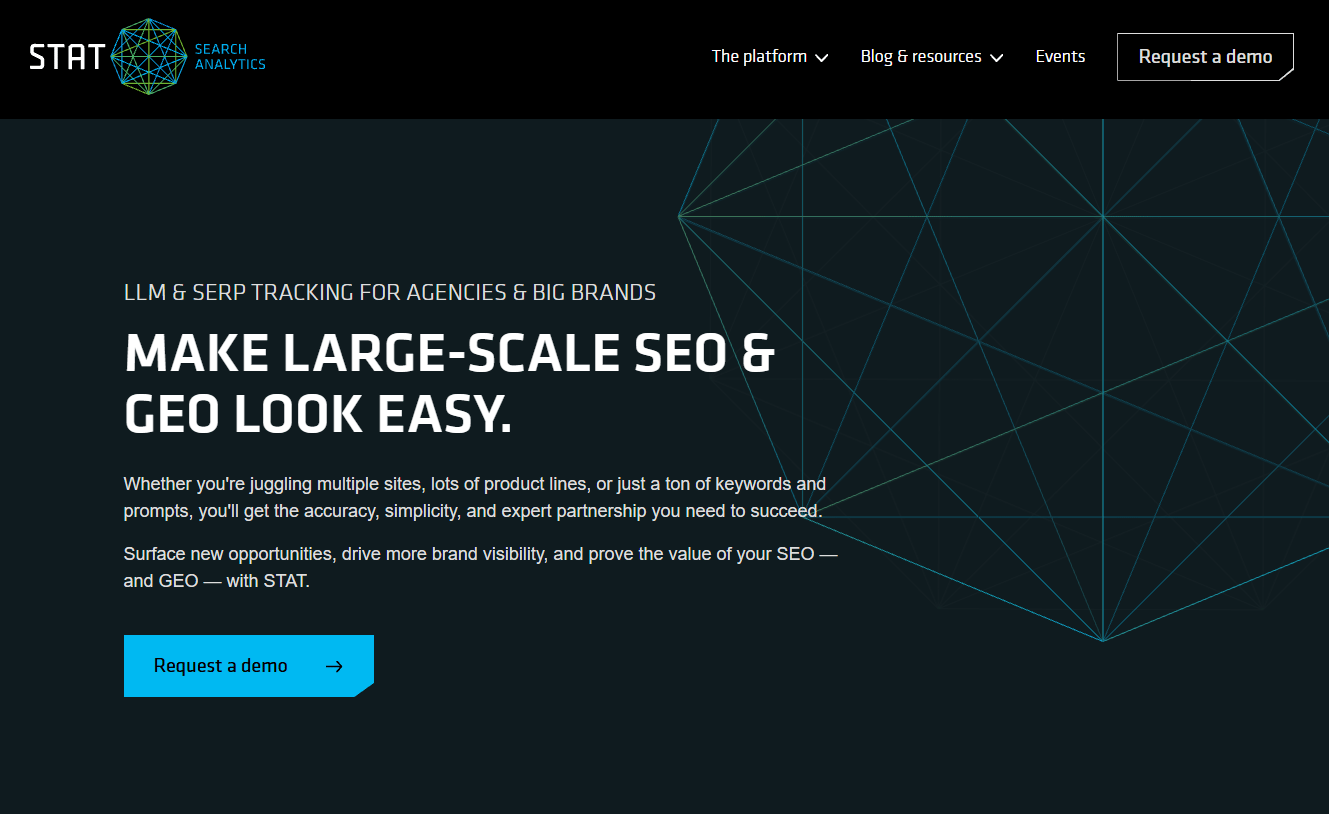
STAT Search Analytics is a SERP tracking and analytics platform built around large-scale SEO monitoring. Its focus makes it a relevant starting point when the central requirement is understanding search-result movement across a substantial keyword portfolio. Teams can evaluate it as a dedicated measurement layer alongside their existing research and analytics tools.
Best for: Enterprise SEO teams and agencies managing extensive keyword sets across markets and devices.
Key features
- Daily SERP rank tracking
- Local and mobile search monitoring
- Competitor intelligence
- SERP feature monitoring
- API access
A useful STAT pilot should test the questions hidden by your current reporting averages. Separate branded queries from commercial categories, then examine visibility by market. Ask the vendor to demonstrate how those groupings flow into recurring reports and exports.
Include terms where competitors occupy different result types. A ranking table alone can miss why one brand receives more prominent exposure. Review the underlying SERP evidence alongside position changes.
The buying question is whether this focused layer improves reporting enough to justify its place beside your other subscriptions. Compare the analyst time required to produce the same executive report from your current stack.
If content production or technical remediation drives the purchase, evaluate broader platforms in parallel. That keeps the shortlist aligned with the work your team intends to consolidate.
Why choose STAT Search Analytics: Choose it when granular SERP monitoring is the primary job. Its specialist positioning suits teams that already have separate content and technical SEO workflows.
STAT Search Analytics pricing: Request current pricing from the vendor.
G2 rating: 4.3/5.
2. seoClarity
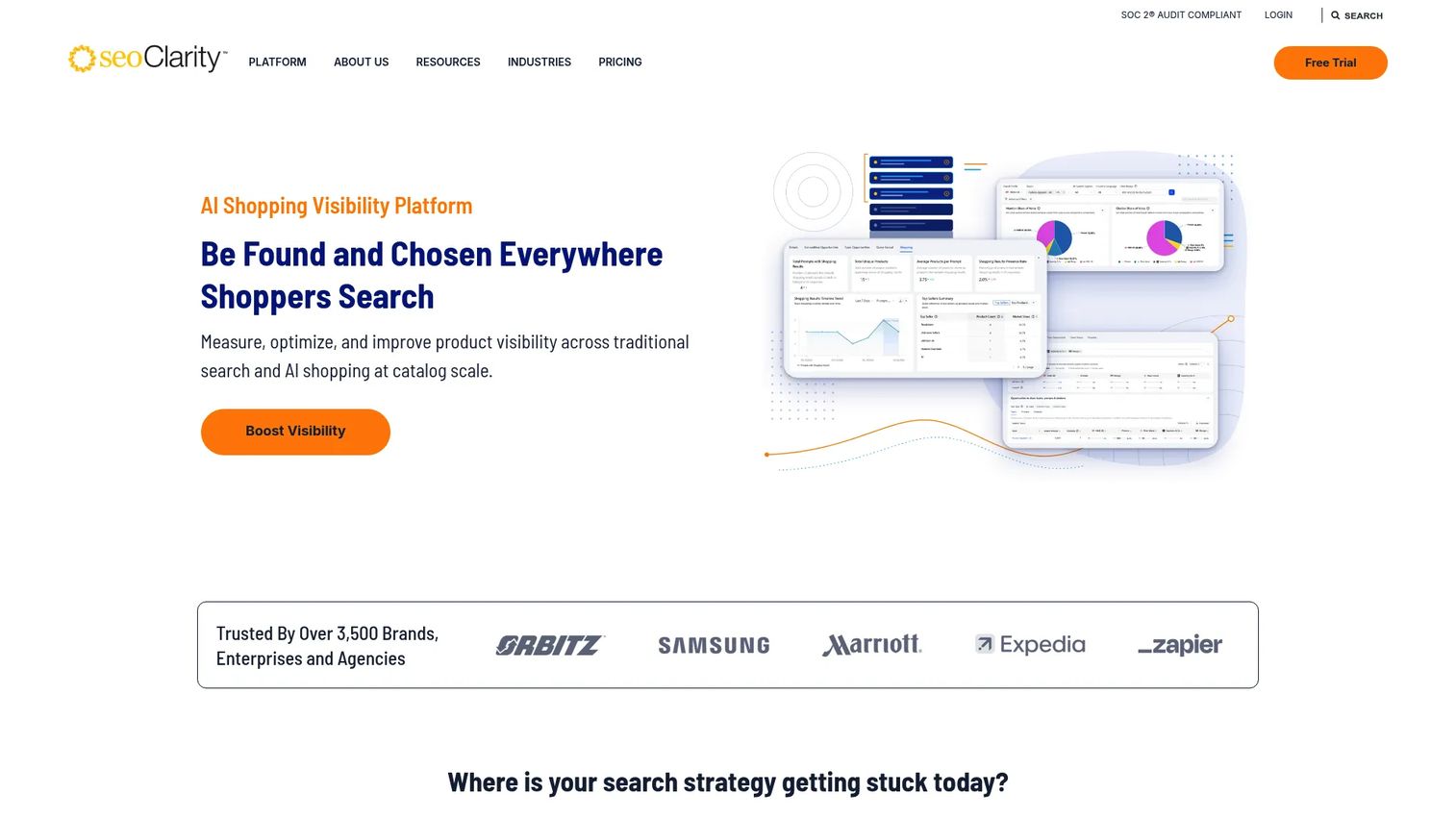
seoClarity combines enterprise ranking analysis with content optimization and technical SEO. Its platform also covers AI-search visibility, giving large organizations several related workflows to evaluate together. The appeal is strongest when separate teams need shared search intelligence rather than another isolated rank report.
Best for: Large in-house SEO organizations consolidating measurement with technical and content operations.
Key features
- Interactive ranking analysis
- Content analysis and optimization
- Website crawling and auditing
- Log file analysis
- AI-search visibility tracking
Start the evaluation with an operational question. Can a visibility decline become an investigation that the content owner and technical lead can both follow? Ask the vendor to demonstrate that process using one of your priority landing pages.
Then test how reporting handles organizational boundaries. A regional SEO manager needs market detail, while leadership needs an understandable portfolio view. Establish which outputs your team can create without repeated manual reconciliation.
Packaging deserves attention because the named offers serve different jobs. A content package should not become the assumed price of enterprise rank tracking. Map the workflows you intend to replace before comparing quotes.
Also assign ownership for implementation. A broad platform earns its cost when teams use the connected capabilities, not when its dashboards duplicate existing reports. Include those adoption responsibilities in the business case.
Why choose seoClarity: Evaluate it when ranking analysis must connect with content decisions and technical investigations. A focused tracker remains worth comparing if those other workflows are already well served.
seoClarity pricing: Rankings uses custom pricing; Research & Content starts at $2,500/month, Technical SEO at $3,200/month, and Enterprise at $4,500/month. A free trial is available.
G2 rating: 4.5/5.
3. BrightEdge
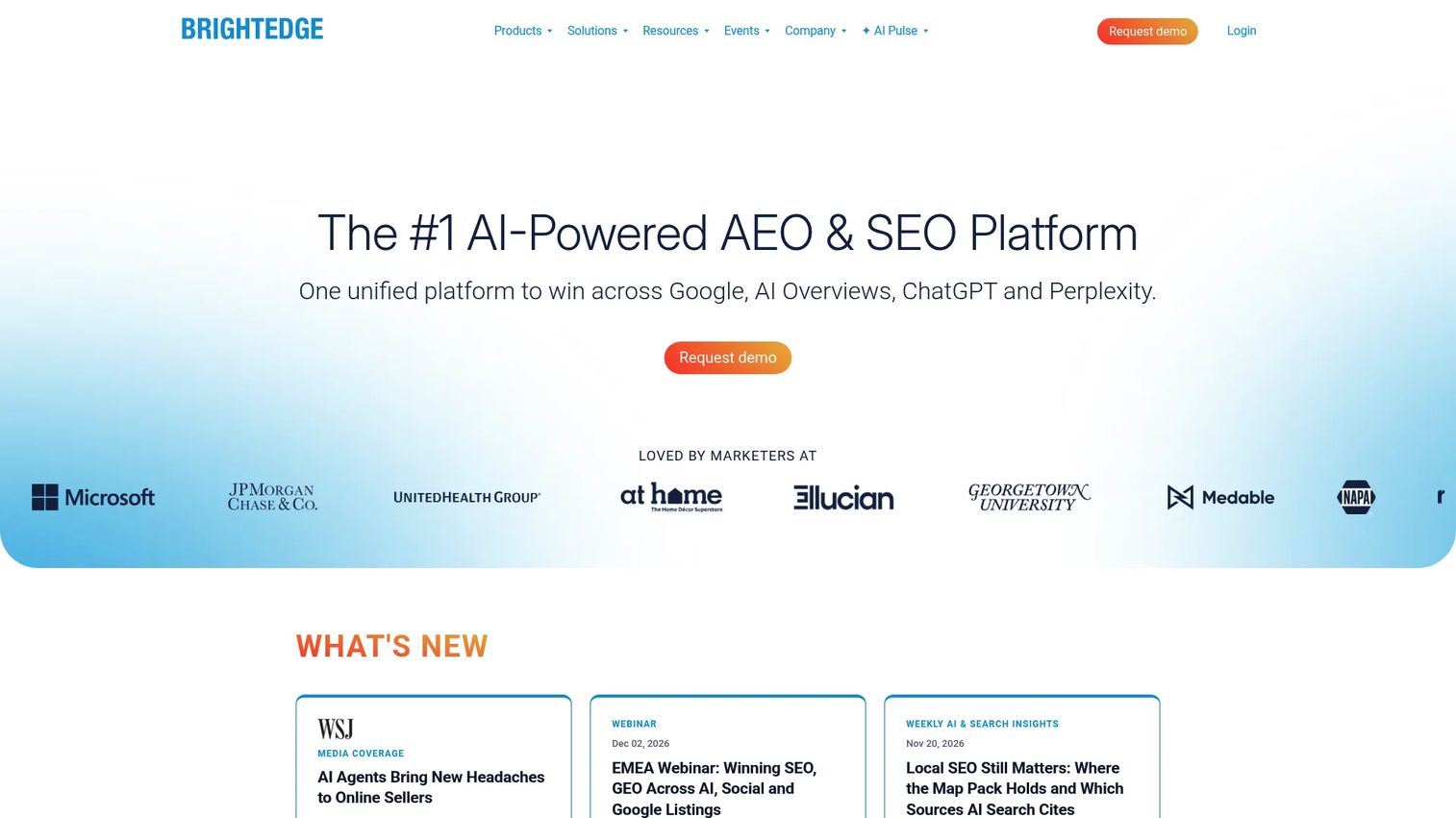
BrightEdge is an enterprise SEO and AI-search visibility platform focused on digital content performance. It combines ranking research with recommendations and reporting. Marketing leaders evaluating a shared search measurement system should consider how that broader coverage fits their content operations.
Best for: Enterprise SEO and content teams that need executive reporting alongside operational analysis.
Key features
- Keyword research and rank tracking
- AI search visibility measurement
- ContentIQ technical auditing
- Competitive share-of-voice reporting
- Customizable dashboards and ROI reporting
The most important pilot artifact is an executive report built from your own business segments. Ask for separate views of priority products and markets. Then inspect the methodology behind any summarized visibility score.
ROI reporting also deserves a precise discussion. Establish which metrics come directly from search data and which require connected analytics. Your finance team should understand the assumptions before those figures enter a board presentation.
BrightEdge supports local, global, mobile, and Amazon search tracking. Test the surfaces that matter to your acquisition model rather than awarding points for unused breadth.
For consolidation, list the subscriptions and recurring work this purchase would replace. Include the people who currently maintain those processes. A platform-wide purchase needs a platform-wide adoption plan.
Finally, evaluate the path from recommendation to execution. Ask who receives the work, how priorities are determined, and how completed changes return to performance reporting. This helps separate dashboard appeal from operational fit.
Why choose BrightEdge: Consider it when search measurement belongs inside a coordinated content performance program. Buyers seeking only position checks should compare dedicated trackers before committing to broader packaging.
BrightEdge pricing: Custom pricing.
G2 rating: 4.4/5.
4. Conductor
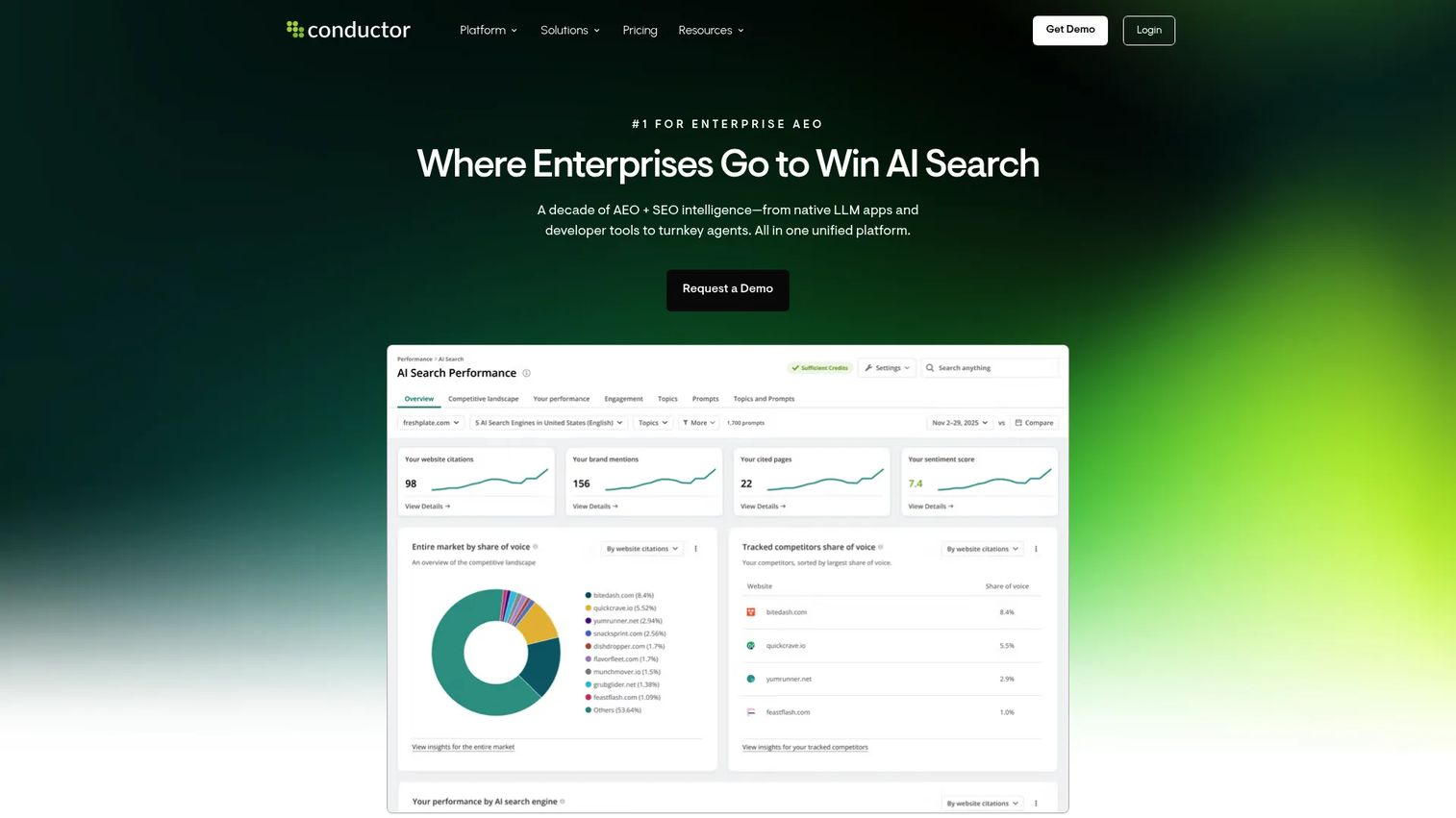
Conductor brings SEO and answer engine optimization into a broader organic marketing platform. Its coverage includes content creation and website monitoring alongside performance measurement. That makes it a platform-consolidation candidate rather than a like-for-like substitute for every specialist rank tracker.
Best for: Enterprise teams coordinating organic measurement with content production and technical website health.
Key features
- SEO and AEO performance reporting
- AI-search visibility analysis
- AI content generation and optimization
- Continuous website monitoring
- Real-time technical alerts
Evaluate Conductor around the handoffs between teams. A marketing manager noticing weaker visibility needs a clear route to the person responsible for the affected content. A technical alert needs an owner who can assess its commercial relevance.
Use a pilot to inspect those workflows rather than reviewing each module separately. Follow one page from performance review through investigation and planned action. Record where your team still needs spreadsheets or another application.
Tracking requirements should remain explicit within that broader evaluation. Request the markets and keyword sets you need, with the intended reporting cadence. Avoid assuming that a broad platform automatically provides every granular rank-checking configuration.
Its Essentials, Growth, and Enterprise packaging uses a usage-based buying model. Build a realistic usage specification before discussing a contract. Include expected expansion so finance can compare the proposal against your renewal cycle.
The consolidation case is strongest when multiple functions will use the platform. If only one analyst needs recurring rank exports, compare a specialist option alongside it.
Why choose Conductor: Shortlist it when organic search is a cross-functional operating program. The decision should reflect shared workflow value as well as measurement coverage.
Conductor pricing: Custom pricing across Essentials, Growth, and Enterprise plans.
G2 rating: 4.5/5.
5. AccuRanker
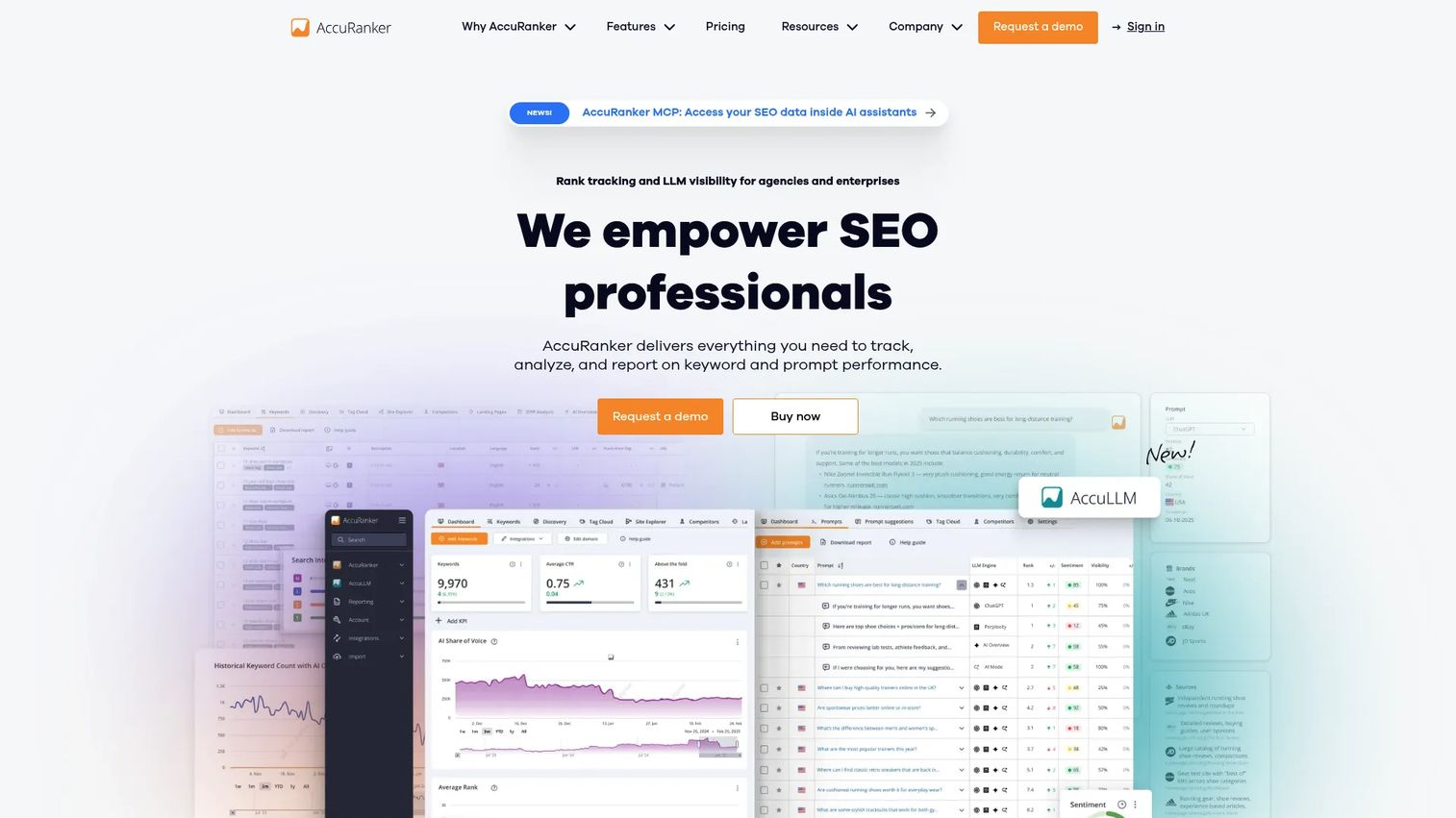
AccuRanker focuses on keyword rankings, with reporting and SERP analysis supporting that core workflow. Its wider offering includes keyword research and AccuLLM visibility monitoring. For enterprise buyers, the distinction between plans matters particularly when data must leave the dashboard.
Best for: SEO teams and agencies prioritizing dedicated daily tracking with structured reporting requirements.
Key features
- Daily ranking updates
- Search intent and keyword tagging
- Advanced filtering
- Reporting and exports
- API and data integrations
Professional includes daily updates and connections to Google Search Console and Google Analytics. Expert adds dynamic tagging and unlimited read API access. Enterprise adds BigQuery and unlimited write API access, plus raw SERP HTML.
Those differences give marketing operations a concrete evaluation agenda. Define whether the team only reads ranking data or needs to automate changes to tracked portfolios. Then map that requirement to the appropriate commercial package.
A useful pilot should include the recurring report your team struggles to maintain. Test filtering and grouping against product categories rather than accepting a generic portfolio average. Ask how new keywords enter those segments over time.
For daily monitoring, document collection timing and the handling of exceptional refresh requests. The reporting team needs to know when a daily comparison is complete.
Also inspect whether raw search-result evidence matters to your analysis. That requirement can change the appropriate plan even when keyword volume remains unchanged.
Why choose AccuRanker: Choose it when a dedicated tracking workflow is the priority. Its documented API packaging provides useful starting questions for enterprise data requirements.
AccuRanker pricing: Professional costs €229/month and Expert €809/month. Enterprise uses custom pricing for requirements above 20,000 keywords.
G2 rating: 4.8/5.
6. Advanced Web Ranking
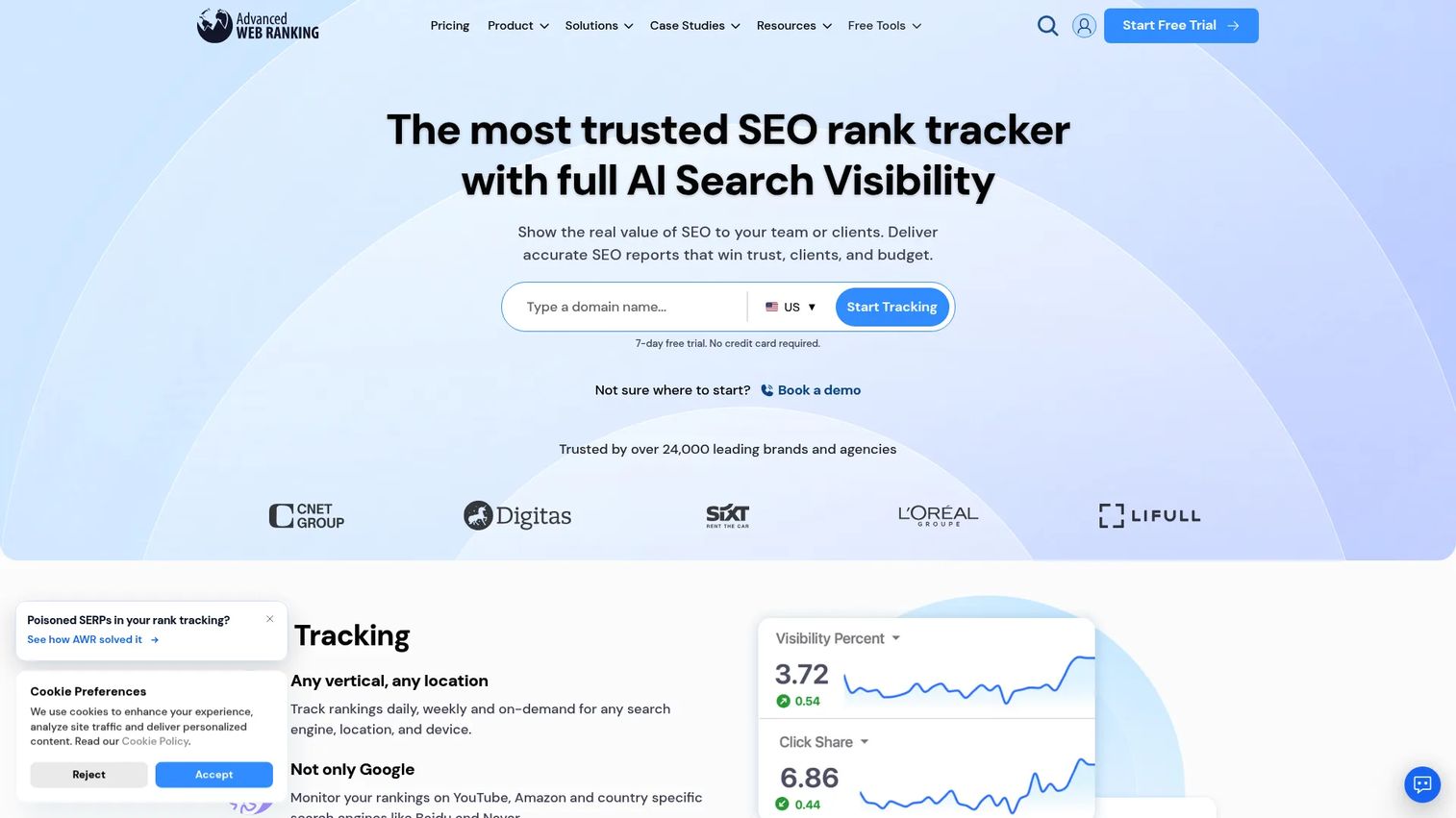
Advanced Web Ranking combines rank tracking with competitor analysis and configurable reporting. The platform also covers forecasting and AI search visibility. Agencies and international teams should evaluate it when report delivery matters as much as collecting positions.
Best for: Agencies and in-house teams managing location-specific reporting across international search markets.
Key features
- International and location-specific rank tracking
- Customizable dashboards and reports
- Exports and reporting alerts
- Competitive market-share analysis
- Keyword gap analysis
Advanced Web Ranking states in its 2026 product information that tracking covers more than 4,000 search engines across over 170 countries. Treat that breadth as a starting point. Test the exact engines and local configurations required by your program.
Reporting should receive equal attention. Give the vendor an existing client or executive report and ask how closely the platform can reproduce it. Inspect filters and scheduled outputs, then record what still requires manual work.
The plans include unlimited projects and users. That can matter when account structure or collaboration would otherwise complicate the purchase. Tracking allowances and refresh cadence still need their own evaluation.
For agencies, model the cost around reporting obligations rather than client count alone. A local portfolio with many geographic combinations can behave differently from a national content site.
Ask the reporting owner to complete the pilot without relying on the vendor presenter. The practical test is whether your team can maintain the process after onboarding.
Why choose Advanced Web Ranking: Consider it when international coverage and configurable reporting drive the shortlist. Compare its tracking economics against your required refresh frequency.
Advanced Web Ranking pricing: Pro costs $139/month, Agency $279/month, and Enterprise $699/month. A seven-day trial is available; annual billing receives a 10% discount.
7. Nozzle
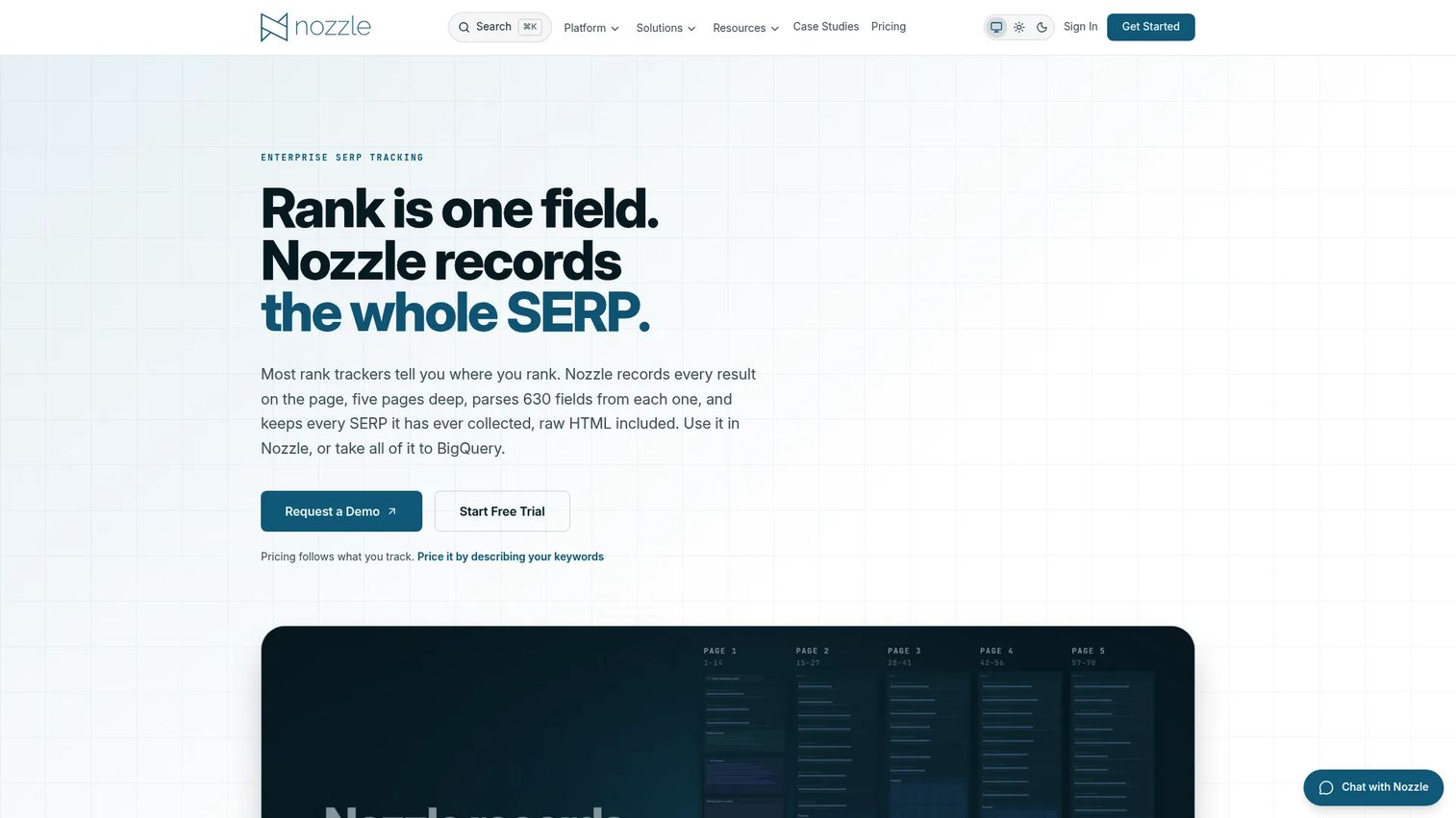
Nozzle approaches rank tracking as a detailed SERP data problem. Its platform covers competitive visibility and brand monitoring, with historical search-result comparisons. Technical SEO teams should evaluate it when they need to investigate changes beneath a summarized position metric.
Best for: Technical SEO and data teams building detailed search visibility analysis.
Key features
- AI Overview citation tracking
- Historical SERP comparisons with Nozzle Vision
- Flexible keyword-set scheduling
- Competitive share-of-voice analysis
- API and BigQuery exports
Historical result comparisons are useful evaluation material when a ranking change needs an explanation. Ask the vendor to demonstrate how your team would inspect a shift in result composition. Compare that evidence with the summary metrics you currently report.
Flexible scheduling also changes the buying discussion. Your highest-priority commercial terms may deserve a different collection schedule from a broader research portfolio. Define those groups before requesting a price.
Nozzle prices by monthly SERP volume, with the same features across plans. Build a usage estimate that reflects your intended collection pattern. A keyword count alone will not describe that workload.
Data access creates opportunity, but your team still needs an analysis owner. Identify who will maintain warehouse tables and document the meaning of exported fields. Include that work when estimating total operating cost.
During the pilot, ask the analyst to reproduce one investigation and one recurring dashboard. This tests both exploratory depth and the practicality of ongoing reporting.
Why choose Nozzle: Shortlist it when detailed SERP evidence and warehouse access are central requirements. Teams seeking primarily presentation-ready reports should evaluate the configuration work during their pilot.
Nozzle pricing: Pricing follows monthly SERP volume. A 14-day free trial is available.
G2 rating: 3.8/5.
8. Semrush
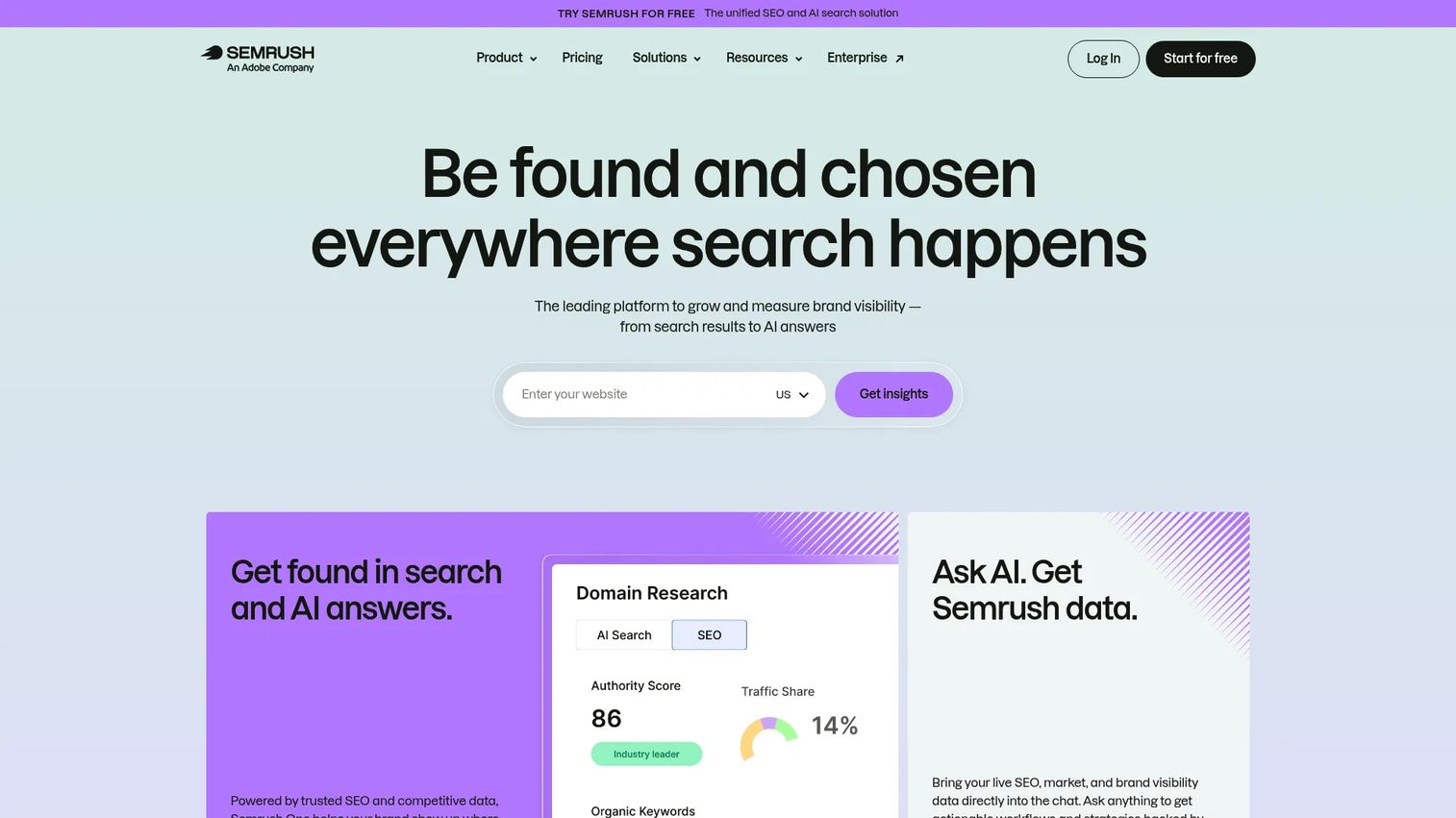
Semrush covers rank tracking within a broader brand visibility platform. Its capabilities span SEO research and AI visibility, alongside technical analysis and reporting. The main buying question is whether that breadth replaces enough existing work to justify consolidation.
Best for: Marketing teams combining search measurement with competitive research and content planning.
Key features
- Rank tracking
- Keyword and competitor research
- AI visibility and sentiment tracking
- Technical audits and content optimization
- Marketing reports and dashboards
Start by mapping your current research workflow. Identify which subscriptions support competitor analysis and which support recurring reporting. Then test whether the proposed Semrush package covers the tasks your team performs regularly.
Keep rank tracking requirements separate from the platform-wide feature list. Request a quote against your tracked portfolio and geographic requirements. The entry subscription price should not become the assumed cost of an enterprise deployment.
AI visibility deserves a separate pilot question. Choose a defined set of commercial topics and inspect how generated-answer exposure appears beside conventional search performance. Establish which outputs belong in an executive report.
For consolidation, measure the work that disappears. Fewer subscriptions are useful only if your team avoids rebuilding the missing functionality elsewhere. Include data exports and reporting maintenance in that assessment.
Also review who needs access. Research users and dashboard consumers can have different requirements. Give procurement a clear description of both before comparing contract proposals.
Why choose Semrush: Evaluate it when ranking data is part of a broader marketing research process. A dedicated enterprise SEO rank tracker remains worth comparing for specialized monitoring requirements.
Semrush pricing: A free tier is available; SEO costs $139/month, Starter $199/month, and Pro+ $299/month. Annual-billing equivalents are $117.33, $165.17, and $248.17 per month, respectively; Advanced uses custom pricing.
G2 rating: 4.4/5.
9. Ahrefs
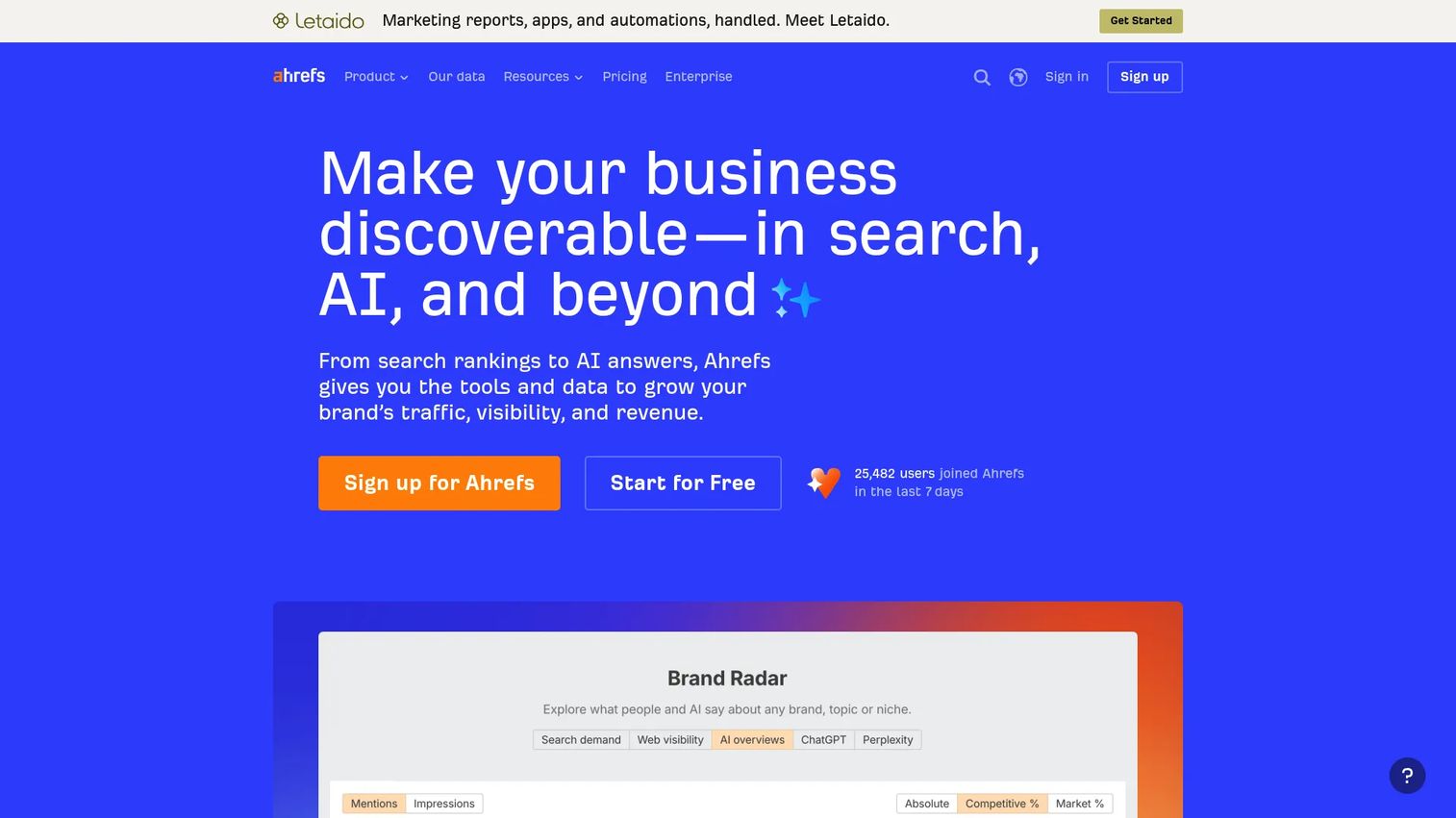
Ahrefs combines Rank Tracker with backlink intelligence and keyword research. Its broader platform includes technical auditing and AI-search visibility through Brand Radar. Teams already using its research capabilities should evaluate whether its tracking workflow also meets their enterprise reporting requirements.
Best for: SEO teams connecting ongoing measurement with backlink analysis and competitive content research.
Key features
- Rank Tracker
- Site Explorer competitive intelligence
- Keywords Explorer
- Site Audit
- Brand Radar AI-search visibility
The strongest evaluation begins with a research-to-measurement workflow. Take a topic your team identified through competitive analysis and follow it into ongoing tracking. Inspect how that process supports the report your stakeholders expect.
Existing familiarity can help adoption, but it should not substitute for capacity checks. Document required locations and update frequency. Ask which plan and any additional purchases cover the complete workload.
Brand Radar introduces another buying dimension. Treat conventional keyword tracking and generated-answer analysis as distinct measurement jobs, even when the vendor provides both. Define the questions each dataset will answer.
Ahrefs also lists API and MCP access among its capabilities. Establish the specific access terms relevant to your reporting architecture. Do not infer enterprise export capacity from the presence of an API alone.
For procurement, request a package-level proposal that includes the people and workflows involved. Compare that total with keeping your current research subscription and adding a specialist tracker. This avoids making consolidation an automatic goal when the operating models differ.
Why choose Ahrefs: Choose it when backlink and keyword intelligence already shape your SEO decisions. Validate tracking allowances and reporting outputs before selecting it as the primary enterprise measurement system.
Ahrefs pricing: Starter costs $29/month, Lite $129/month, Standard $249/month, and Advanced $449/month. Enterprise uses custom pricing; Ahrefs Free is also available.
G2 rating: 4.5/5.
10. SE Ranking
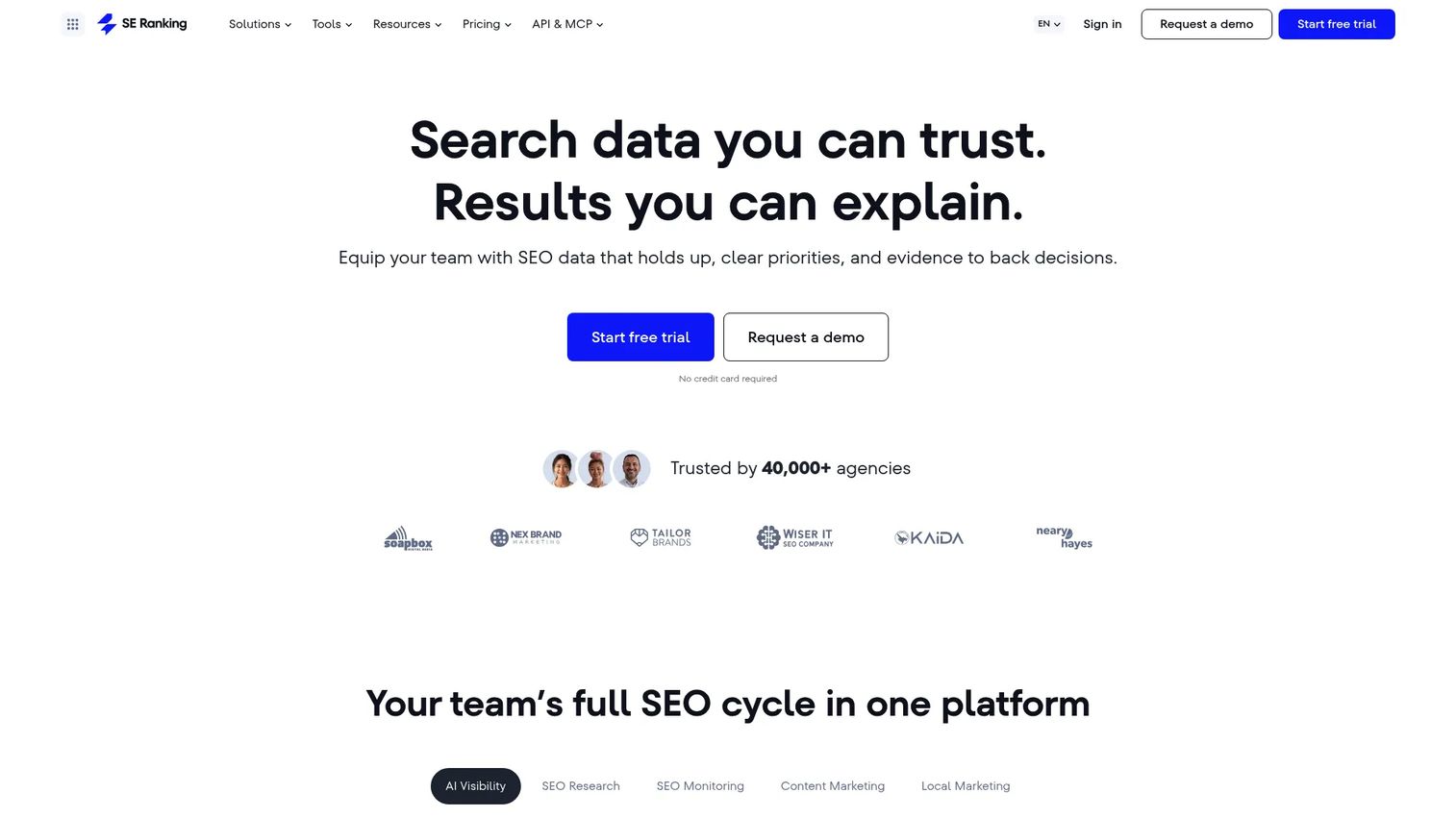
SE Ranking combines rank tracking with research and website auditing. Its platform also includes local SEO and reporting capabilities. Agencies and growing in-house teams can evaluate it as a way to consolidate recurring SEO work without starting with a broad enterprise contract.
Best for: Agencies and mid-market teams expanding their tracking and reporting operations.
Key features
- Keyword rank tracking
- Competitive and keyword research
- Website and on-page audits
- Backlink monitoring
- Reporting and integrations
The commercial starting point is clear, but enterprise fit still needs a workload test. Model the accounts and markets your team expects to support. Include expansion rather than sizing the purchase only around today's portfolio.
For agencies, report production is a useful acceptance test. Ask an account manager to build the output a client receives each month. Record the steps that require another application or manual explanation.
Local SEO and listing management can also influence consolidation value. Determine whether those capabilities replace an existing subscription or introduce a new process. Budget for the work your team will use, not the breadth of the feature catalogue.
Large organizations should bring security and procurement into the pilot early. Ask for the access controls and service commitments your organization requires. Avoid treating an Enterprise plan name as evidence that every requirement is included.
Finally, compare the complete cost with specialist alternatives. The best value comes from the combination of usable capacity and reduced operational work, rather than the lowest advertised entry figure.
Why choose SE Ranking: Consider it when integrated SEO work and predictable entry pricing matter. Validate enterprise governance and portfolio capacity against your own acceptance criteria.
SE Ranking pricing: Core costs $129/month or $103.20/month annually; Growth costs $279/month or $223.20/month annually. Enterprise uses custom pricing, and a 14-day trial is available.
G2 rating: 4.7/5.
11. Nightwatch
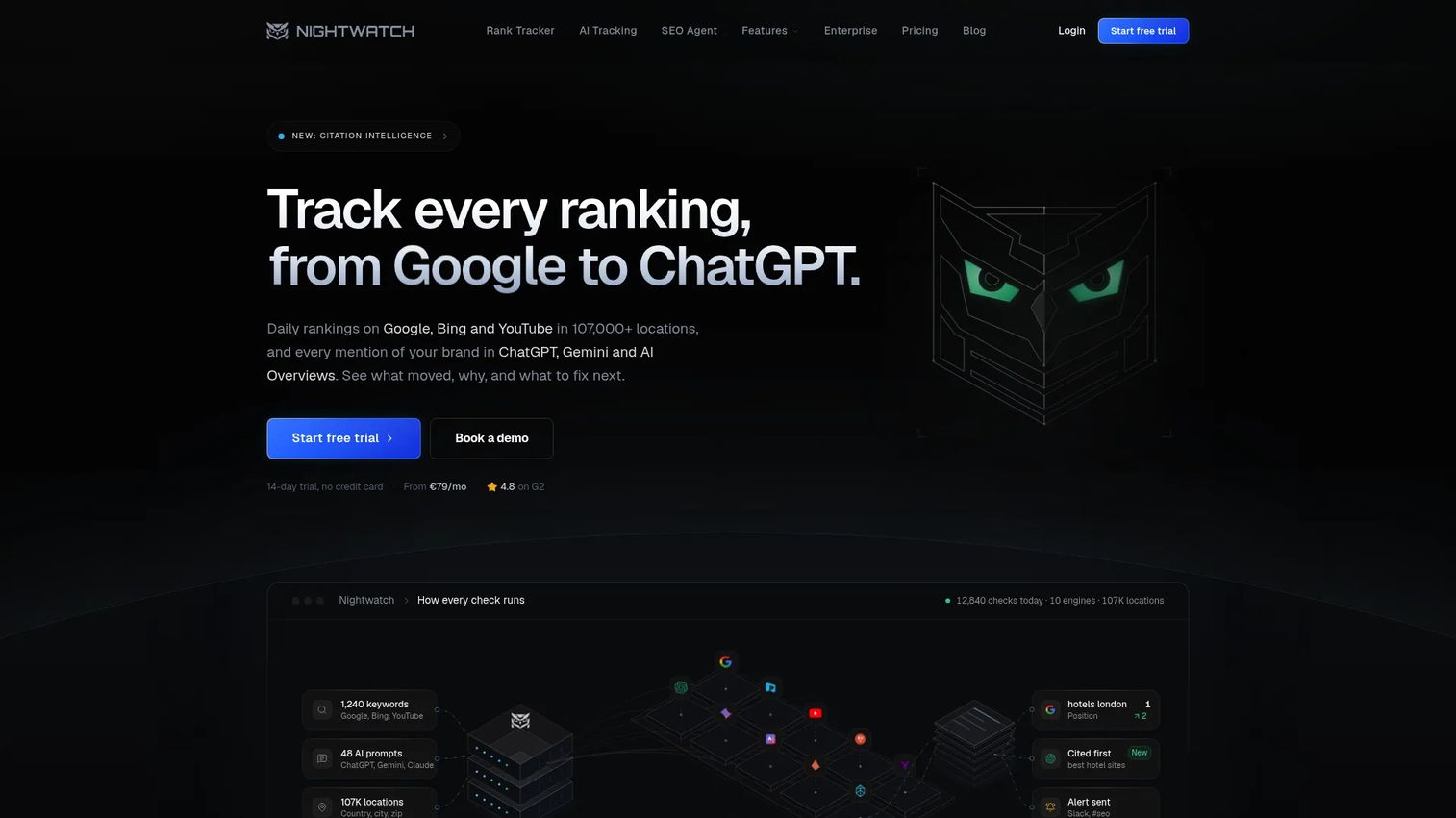
Nightwatch combines daily ranking measurements with AI visibility monitoring. Its search coverage includes Google Maps and several conventional search engines. Teams evaluating local visibility alongside generated-answer exposure should test whether those datasets support their reporting model together.
Best for: SEO teams and agencies monitoring conventional search results and AI citations.
Key features
- Daily search-engine rank tracking
- Google Maps monitoring
- AI citation analysis
- Keyword and prompt research
- Reporting and site auditing
Nightwatch documents AI monitoring across ChatGPT, Gemini, Perplexity, Google AI Mode, and AI Overviews. That breadth warrants a methodological review. Ask what constitutes a tracked observation and how results are grouped for reporting.
For a location-heavy program, test specific market configurations rather than a broad geographic claim. Use locations where your team already understands the competitive landscape. Differences are easier to investigate when the sample is familiar.
The platform includes unlimited user seats across plans, with packages varying primarily by tracking volume and usage limits. This changes the budget conversation for teams with many report consumers. Usage still needs careful sizing.
A productive pilot should produce separate views for conventional rankings and AI exposure. Combine them only after the reporting owner understands their definitions. An aggregate score without a clear methodology creates more executive questions.
Also examine how account managers explain changes to clients. The output should make the tracked surface clear enough that a citation increase is not mistaken for a ranking gain.
Why choose Nightwatch: Evaluate it when your team wants search rankings and AI visibility within one reporting environment. Make geographic precision and measurement definitions central pilot requirements.
Nightwatch pricing: Starter costs €79/month, Professional €159/month, and Agency €399/month. Enterprise uses custom pricing; a 14-day trial is available.
G2 rating: 4.7/5.
12. Moz Pro
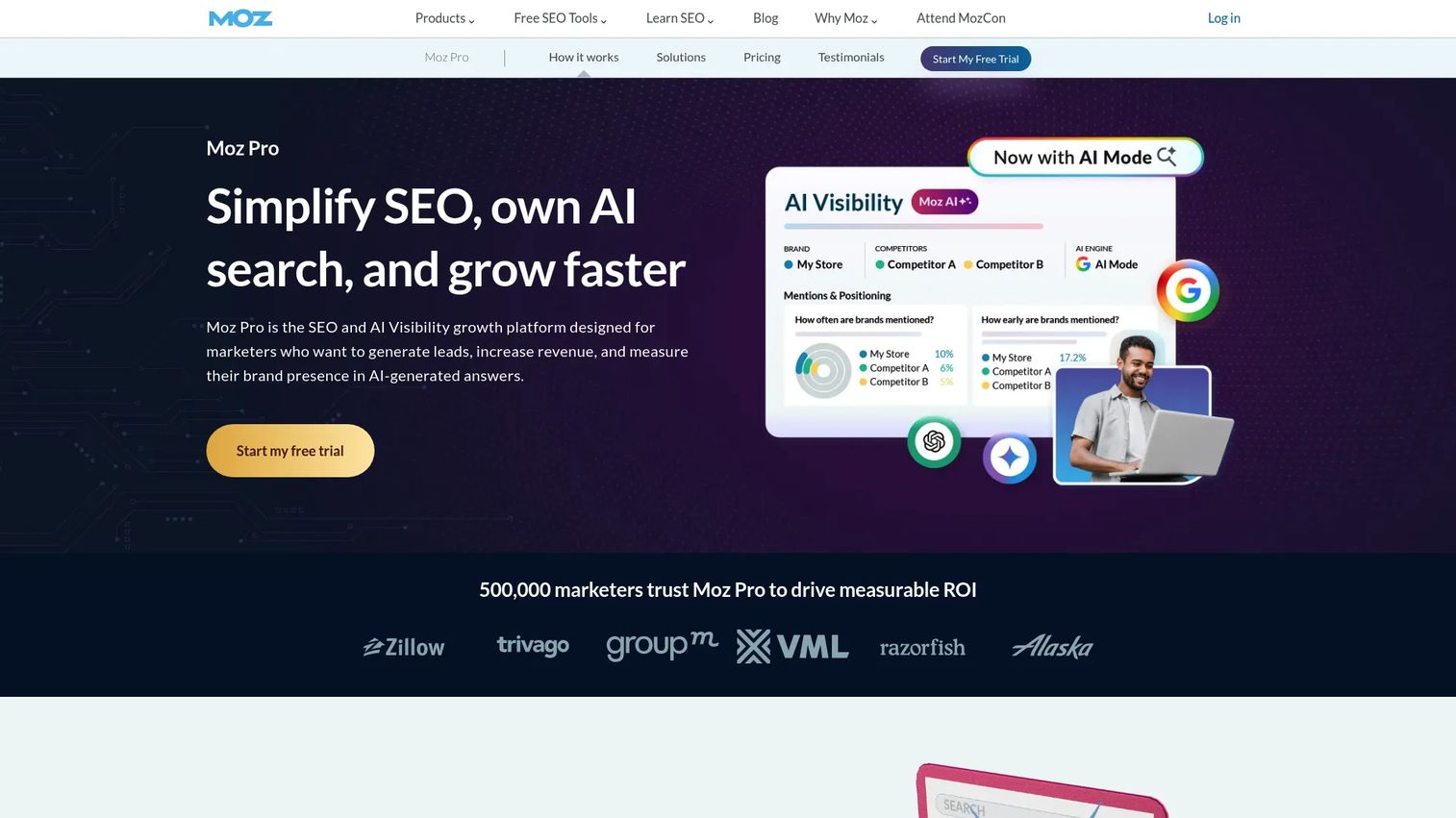
Moz Pro brings keyword tracking into a broader SEO toolkit. Research and site auditing sit alongside backlink analysis and reporting. It belongs on a consolidation shortlist when those established workflows matter more than purchasing a dedicated SERP data platform.
Best for: Marketing teams maintaining an established SEO research and optimization process.
Key features
- Keyword research and SERP analysis
- Rank tracking and visibility monitoring
- Site crawling and auditing
- Backlink analysis
- SEO reporting
Begin with the people who will use the tool each week. Ask them to complete a ranking review and identify the next optimization task. The evaluation should show whether the workflow makes sense without extensive help from the presenter.
Then test the enterprise requirements separately. Request evidence for the tracking volume and geographic configurations you need. Treat API access and AI visibility requirements as specific procurement questions rather than assumed inclusions.
An existing Moz workflow can make consolidation attractive. Compare the proposed setup against the cost of keeping research and rank monitoring in separate systems. Include reporting preparation time in that comparison.
For executive communication, inspect whether the available outputs support your business segments. A ranking report organized around a generic keyword list may need additional work before leadership can use it.
The pilot should also identify the owner of recurring maintenance. Document how new commercial priorities will enter the tracked portfolio and how retired terms will be handled. Those routines matter regardless of which SEO rank tracking tool you choose.
Why choose Moz Pro: Consider it when research and optimization workflows drive adoption. Teams prioritizing specialized data infrastructure should compare dedicated trackers against the same requirements.
Moz Pro pricing: Request current plan pricing from Moz.
G2 rating: 4.3/5.
13. AccuLLM
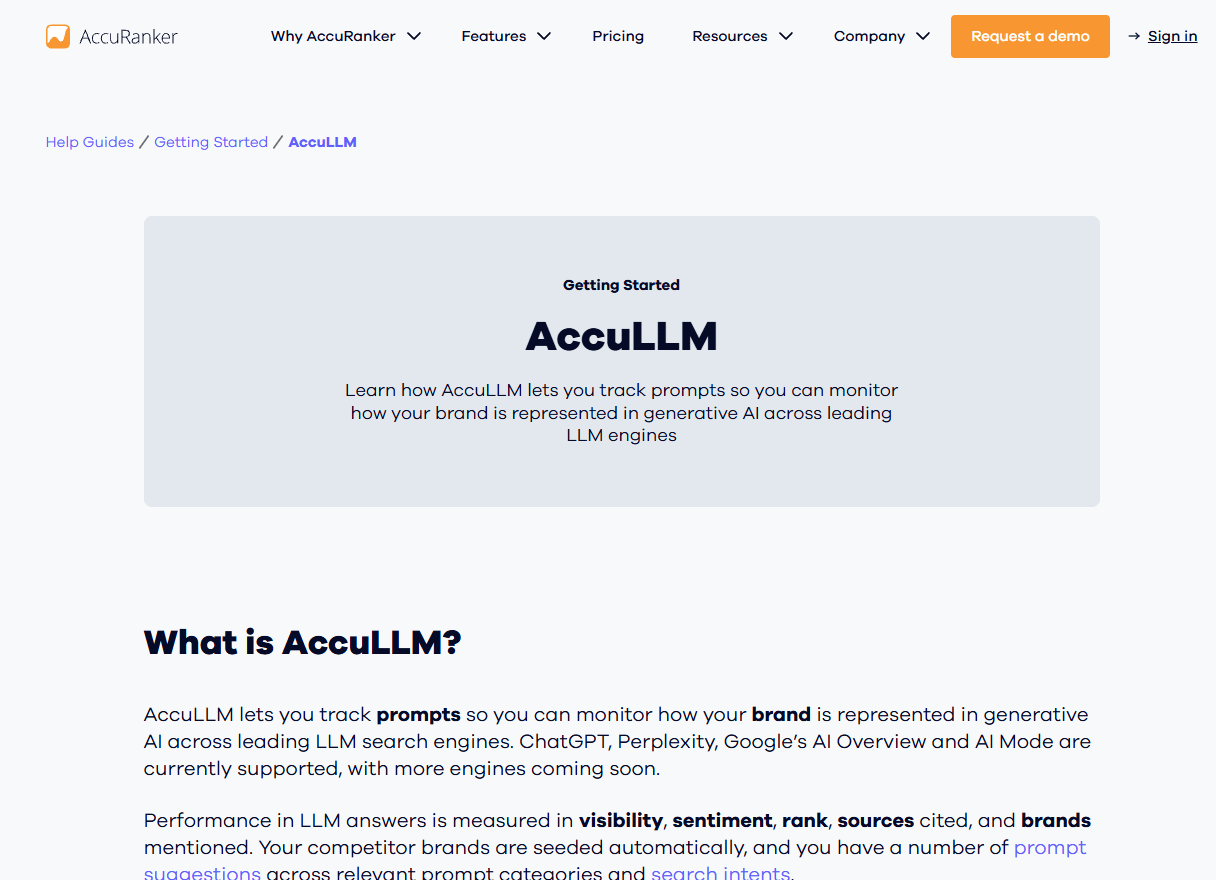
AccuLLM monitors brand visibility in generated answers. It covers ChatGPT and Perplexity alongside Google AI Overviews and AI Mode. Its role in this shortlist is complementary AI measurement, rather than conventional keyword-position tracking.
Best for: Enterprise SEO teams investigating brand mentions and citations across AI search surfaces.
Key features
- Brand visibility and sentiment tracking
- Prompt-level competitor monitoring
- Citation analysis
- Prompt suggestions
- Source and landing-page analysis
AccuLLM is part of AccuRanker's offering. Evaluate the relationship between the two products before treating them as separate purchasing decisions. Ask for a proposal covering the combination of conventional and AI measurement you need.
The prompt set is the important starting point. Build it around commercial questions your buyers ask, including category comparisons and implementation concerns. Avoid basing the entire program on branded prompts that already mention your company.
Citation analysis should also connect to an action. Inspect which pages appear as sources and decide who will investigate missing or unexpected references. A report that counts mentions without a response process creates another monitoring task.
For executive reporting, distinguish presence from preference. A brand mention, a citation, and favorable sentiment represent different observations. Give each a defined role instead of collapsing them into a single success claim.
The pilot should establish repeatability and collection methodology. Ask how the platform handles variation between generated responses. Keep those explanations beside the results when sharing them with leadership.
Why choose AccuLLM: Choose it when generated-answer exposure has become a specific business question. Retain a classic tracker for conventional search positions and geographic competitor analysis.
AccuLLM pricing: Request package pricing through AccuRanker's sales team.
14. Keyword.com
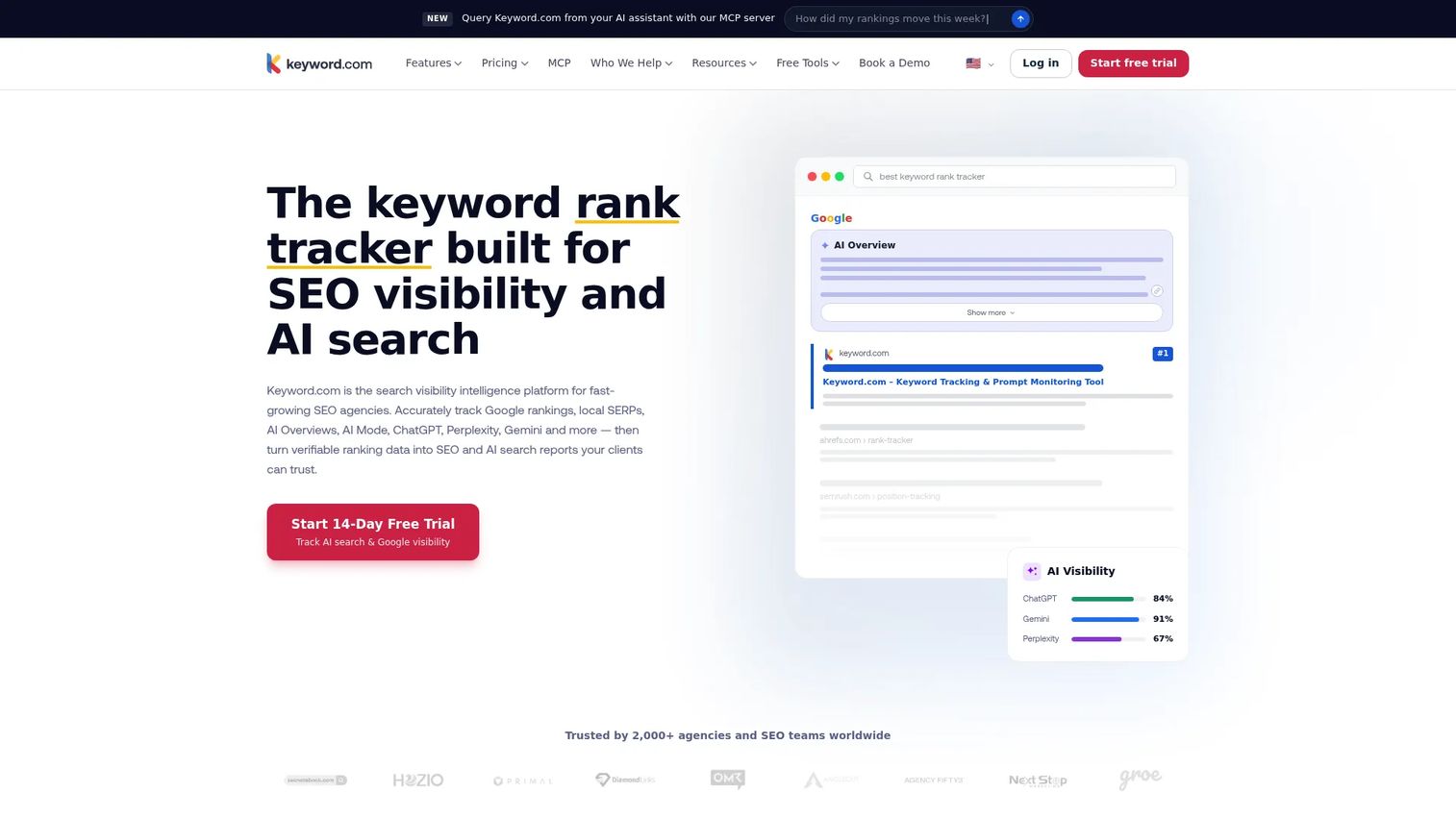
Keyword.com offers Google rank tracking alongside AI-search visibility monitoring. Buyers can choose search-only, AI-only, or combined packages. That structure helps teams evaluate a specific visibility gap without assuming every measurement layer belongs in the initial purchase.
Best for: SEO and growth teams seeking dedicated ranking analysis with an optional AI visibility layer.
Key features
- Google SERP rank tracking
- Competitor and share-of-voice analysis
- City, device, and language targeting
- Citation and brand-sentiment analysis
- Reporting, exports, and API access
The low entry price needs context. Build your quote around the complete tracked portfolio rather than a starter configuration. Include geographic targeting and the AI workload you expect to maintain.
Share-of-voice reporting also requires a stable comparison set. Ask how competitors enter the calculation and what happens when tracked keywords change. Leadership needs to understand whether a score moved because performance changed or because measurement changed.
For agency workflows, inspect the white-label package independently. The vendor prices that capability as an add-on. Compare the complete reporting cost with alternatives that package outputs differently.
API and MCP access are documented capabilities, but commercial terms still matter. Give the vendor a sample export requirement and request the corresponding limits. This turns a feature checkbox into a usable implementation specification.
A strong pilot should reproduce a recurring report and an unexpected-change investigation. The first tests routine delivery. The second tests whether your team can explain a movement without opening several additional tools.
Why choose Keyword.com: Shortlist it when dedicated search visibility measurement is the priority. Its separate packages suit teams introducing AI monitoring alongside an established ranking program.
Keyword.com pricing: Search Visibility starts at $4/month or $3/month annually; combined 360° Visibility starts at $33/month or $26/month annually. A 14-day trial is available; white-label reporting adds $29/month or $278/year.
G2 rating: 4.7/5.
15. Sitechecker
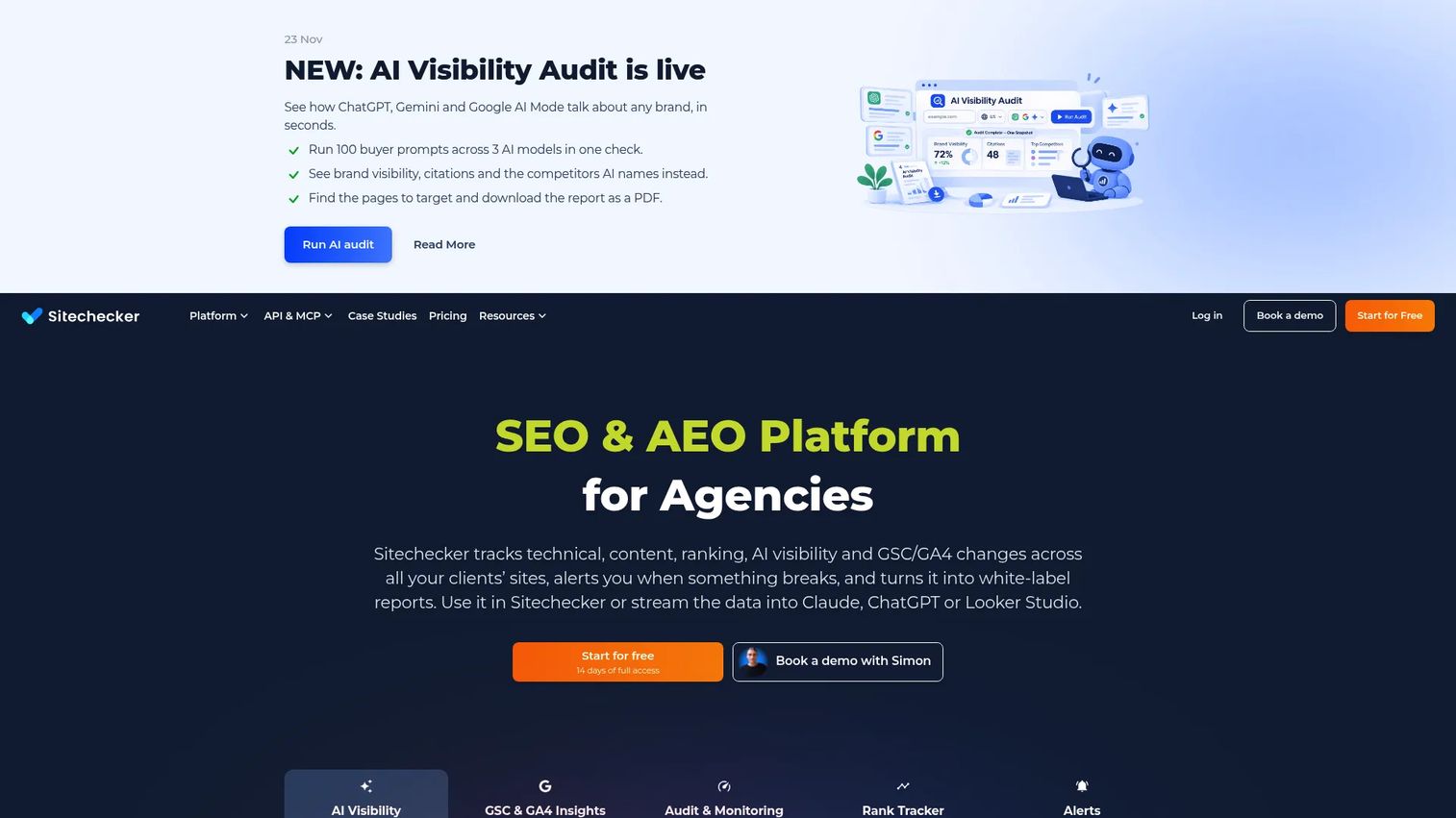
Sitechecker combines rank tracking with technical website monitoring. Its platform also includes AI visibility and analysis of Google Search Console and GA4 changes. Agencies can evaluate it when explaining performance requires connecting search movement with changes on the website.
Best for: Teams managing multiple websites and coordinating ranking reports with site health investigations.
Key features
- Rank tracking with SERP history
- Website crawling and technical audits
- Content and site-change monitoring
- GSC and GA4 insights
- White-label reports and alerts
The key pilot question is whether a ranking change becomes easier to investigate. Select a page with a known content or technical change. Examine how the platform presents that context beside search performance.
Do not confuse a useful timeline with proven causation. A site change and a visibility decline can occur together without one causing the other. Your reporting process should preserve that distinction.
Sitechecker documents AI visibility across ChatGPT, Gemini, and Google AI Mode. Test those surfaces against your reporting requirements rather than assuming coverage of every AI platform.
All plans include unlimited users and recrawls, along with ranking and AI visibility capabilities. Capacity and usage limits still require evaluation. Request a workload-based proposal for your website portfolio.
For agencies, inspect how the report changes between client-facing and analyst-facing views. Clients need a clear account of what happened and what the team will do next. Analysts need the underlying detail.
Finally, test alert ownership. Decide who receives each type of notification and what makes it actionable. Consolidating tools should also consolidate responsibility rather than multiply notifications.
Why choose Sitechecker: Evaluate it when ranking analysis frequently leads into site health investigations. Its combined monitoring approach fits teams trying to reduce disconnected SEO workflows.
Sitechecker pricing: Basic costs $99/month, Standard $149/month, and Premium $449/month; Enterprise uses custom pricing. A 14-day full-access trial is available.
G2 rating: 4.6/5.
16. Google Search Console
Google Search Console provides first-party information about your property's Google Search performance. It also supports indexing investigations and technical diagnostics. Every enterprise shortlist should account for this baseline, even though it serves a different role from a dedicated competitor rank tracker.
Best for: Teams measuring owned-site Google performance alongside broader search visibility monitoring.
Key features
- Search clicks and impressions
- Query and page performance
- Average position reporting
- URL Inspection and indexing diagnostics
- Core Web Vitals and search appearance reports
Use Search Console to ground the discussion in what happened to your own property. Then use a dedicated tracker to investigate the competitive environment. These datasets answer related questions without being interchangeable.
Average position needs careful interpretation in executive reporting. Avoid presenting it as the exact position every searcher saw. Explain which query or page segment the figure represents.
The diagnostic capabilities also make this a practical operational tool. URL Inspection supports index-status checks and live testing. Sitemap submission and crawling reports help teams investigate whether important pages are discoverable.
For a consolidated dashboard, define the role of each data source before combining charts. Search performance should describe owned-site outcomes. External ranking observations should explain visibility within the selected competitive sample.
Keep those definitions in the report rather than relying on the analyst to repeat them during every meeting. Consistent interpretation is part of reporting quality.
Search Console is also useful during a vendor pilot. Compare the questions a proposed purchase answers beyond your existing first-party baseline. This helps identify incremental value.
Why choose Google Search Console: Use it as a foundational source for Google performance and diagnostics. Add dedicated tracking when precise competitive or location-specific observations are required.
Google Search Console pricing: Free.
G2 rating: 4.7/5.
Considerations when choosing an enterprise rank tracker
Match capacity to your reporting model
Calculate keyword-location-device combinations and collection frequency before comparing plans. Ask whether competitor monitoring and AI prompts consume separate quotas, then establish the cost per SERP check.
Include historical retention in the specification. A low entry price offers little guidance on the cost of maintaining your required dataset.
Test the report before the feature list
Ask the reporting owner to recreate an existing executive dashboard. Evaluate white-label rank tracking reports and scheduled delivery alongside segment definitions.
For a Looker Studio SEO dashboard, inspect connector behavior. BigQuery SEO reporting or Snowflake SEO reporting also requires a documented export path and maintenance owner.
Validate AI coverage separately
Request the supported surfaces, prompt controls, citation data, and collection methodology. Establish whether AI monitoring shares a quota with conventional tracking.
Report these observations alongside classic rankings. Keep each metric's meaning visible to stakeholders.
Inspect data access early
Review API rate limits and bulk exports before designing your implementation. Include historical access and data freshness in the acceptance criteria.
For buy vs build rank tracking, estimate engineering ownership as well as collection costs. A hybrid setup can preserve vendor collection while supporting internal analysis.
Bring procurement into the pilot
Enterprise SEO governance includes permissions and accountability. Ask about SSO for SEO tools, security documentation, service commitments, and migration support.
Make these requirements part of SEO tool procurement from the start. Do not postpone mandatory controls until after the team selects a favorite interface.
How to choose the right enterprise rank tracker
If your program spans global markets
Start with STAT Search Analytics when dedicated SERP measurement is the central requirement. Evaluate seoClarity alongside BrightEdge or Conductor when broader workflow consolidation matters.
Advanced Web Ranking also belongs on an international reporting shortlist. Use the same regional keyword sets across candidates and inspect the resulting reports.
Assign a regional stakeholder to review the output. Central teams can miss local terminology or targeting assumptions that affect usefulness.
If daily monitoring drives decisions
Compare AccuRanker with Nightwatch, Nozzle, and Keyword.com. Choose based on the detail your team needs to investigate changes, rather than a general speed claim.
Record expected collection timing and refresh behavior. Ask each vendor to demonstrate the export process your reporting team will maintain.
If consolidation is the business case
Evaluate Semrush or Ahrefs when research is central to the workflow. Compare SE Ranking, Moz Pro, and Sitechecker when their broader capabilities align with recurring work.
List the subscriptions each candidate would replace. Add analyst time and implementation ownership to the cost comparison.
A platform that reduces licenses but increases manual reporting has not necessarily improved the operating model.
If AI visibility is the board question
AccuLLM is a focused candidate for generated-answer monitoring. Keyword.com and Nightwatch also offer documented AI coverage alongside conventional search measurement.
Select prompts before selecting dashboards. Decide what business action would follow a change in mentions or citations.
Keep classic rankings and first-party performance in the reporting stack. Each provides context that a generated-answer visibility score does not describe.
Choose the reporting model before the subscription
The best enterprise rank tracker fits the way your team makes decisions. Keyword capacity matters, but so does the work required to turn collected data into a credible explanation.
STAT Search Analytics leads this shortlist for focused enterprise SERP monitoring. Broader platform buyers should compare seoClarity with BrightEdge and Conductor against the workflows they intend to consolidate.
AccuRanker and Advanced Web Ranking offer dedicated tracking approaches with different reporting considerations. Nozzle deserves attention when technical analysis and warehouse access drive the purchase.
AccuLLM addresses generated-answer visibility, while Google Search Console remains the owned-site baseline. Neither should be evaluated as an interchangeable replacement for every tracking job.
Shortlist several candidates and give each the same keyword portfolio. Require the same executive report, then compare data quality and maintenance effort. Bring procurement requirements into that exercise before commercial negotiations begin.
For software marketers, measurement is one part of the job. Showing product value is another. Guideflow supports clickable product experiences across landing pages, sales follow-ups, customer education, and partner enablement.
Start your journey with Guideflow today!
FAQs
An enterprise rank tracker monitors search visibility across large keyword portfolios and multiple targeting configurations. Enterprise rank tracking adds requirements around recurring reporting, data delivery, organizational access, and operational support. Evaluate it against the decisions your team must make, including market expansion or declining visibility on commercial topics. A useful system gives stakeholders enough context to interpret movement without treating position changes as revenue attribution.
Google Search Console measures performance for your owned properties, including query and page outcomes from Google Search. Dedicated rank trackers collect search-result observations that support competitor comparisons and configured geographic analysis. Use both, but label their metrics separately because they describe different samples and measurement methods. Disagreement between them should trigger investigation rather than an assumption that one dataset must be wrong.
Capacity varies by product and package, while the meaning of a tracked keyword can also vary commercially. Calculate the complete workload across locations and devices, then add required collection frequency. Ask vendors to price that specification and explain how additional search surfaces affect usage. Request a growth scenario covering your next market expansion so the initial purchase does not hide a substantial renewal increase.
Some tools include Google AI Overviews tracking, while others offer broader generated-answer visibility packages. The important distinction is whether the system records presence, citations, brand mentions, or another defined observation. Ask for examples from your own commercial queries and request an explanation of collection frequency and geographic coverage. Also establish whether AI monitoring uses a separate allowance before incorporating it into recurring enterprise SEO reporting.
Give each vendor a sample portfolio and ask them to produce the report your leadership already expects. Inspect targeting, collection timing, SERP evidence, and the treatment of missing observations before reviewing presentation quality. Then test exports and permissions with the people who will maintain the system. The strongest evaluation demonstrates the entire operating process, including how your team investigates a surprising result after the sales presentation ends.
Cost reflects the tracked workload and the commercial package, rather than keyword count alone. Compare location-device combinations and refresh frequency, then account for reporting access, AI monitoring, and support. Separate the advertised entry subscription from the proposal that satisfies your enterprise requirements. Include implementation and ongoing analyst time in the calculation, since a lower subscription can still produce a more expensive reporting process.
AI visibility tracking adds another view of search exposure rather than replacing conventional rankings. Generated-answer monitoring evaluates a defined prompt sample, while classic tracking examines configured search-result observations. Keep those measures separate until their methodology and business meaning are clear to stakeholders. Connect both with owned-site performance to investigate discovery changes without claiming that an increase in mentions automatically produces traffic or qualified pipeline.
Agencies should prioritize repeatable client reporting and portfolio economics, then test the geographic configurations their accounts require. Advanced Web Ranking and AccuRanker are relevant dedicated-tracking candidates; SE Ranking and Sitechecker offer broader SEO workflows. Nightwatch and Keyword.com also merit evaluation when conventional rankings and AI visibility need coordinated reporting. Ask an account manager to deliver a sample client report before deciding, and compare the complete cost against account margins.