An incident gets logged three days late. An audit identifies a recurring hazard, but the corrective action stays buried in a spreadsheet. Then leadership asks for a risk summary before the board meeting.
That operating model breaks as companies add employees, sites, contractors, and reporting obligations.
The U.S. Bureau of Labor Statistics reported 2.5 million nonfatal workplace injuries and illnesses among private employers in 2024. Its 2026 release makes the scale of the problem hard to ignore.
Environmental health and safety software gives operations leaders a shared system for incidents, inspections, training records, chemical data, and regulatory reporting. The right product creates accountability without routing every issue through the founder or COO.
What's inside
This guide compares 17 EHS management software tools for teams replacing paper forms, spreadsheets, and disconnected point products.
- Who this is for: Safety, operations, compliance, procurement, and executive teams
- How tools were selected: Workflow coverage, deployment fit, reporting depth, and review presence
- What to compare: Incidents, audits, CAPA, training, chemical safety, and contractor controls
- What to verify: Implementation ownership, integrations, mobile adoption, security, and total cost
The goal is a shortlist you can forward to an EHS owner without becoming the project manager yourself.
TL;DR
- Best broad enterprise EHS platform: VelocityEHS connects safety, chemical, environmental, compliance, and industrial hygiene programs
- Best configurable option: Donesafe supports no code workflows across EHSQ and workforce processes
- Best chemical and SDS focus: 3E Protect combines chemical inventory, regulatory screening, SDS governance, and emergency support
- Best mobile inspections: SafetyCulture suits frontline teams standardizing checklists, observations, actions, and field reporting
- Best for complex global programs: CorityOne, Enablon Platform, and SpheraCloud support extensive risk and reporting requirements
- Best lightweight training fit: Workhub gives smaller teams an accessible starting point for training and compliance administration
What is EHS management software?
EHS management software is a digital system for managing environmental, health, and safety workflows across an organization.
These products replace fragmented paper forms, spreadsheets, shared drives, and isolated point tools. They give teams a system of record for safety activity, regulatory evidence, environmental data, and assigned follow up work.
An EHS management system commonly covers:
- Incident reporting and investigations
- Hazard identification and risk assessment
- Inspections, audits, and checklist management
- Corrective and preventive actions
- Compliance calendars and regulatory reporting
- Training and competency records
- Chemical inventory and SDS management
- Contractor safety management
- Document and policy control
- Dashboards and KPI reporting
- Mobile access and offline capture
- Connections with HRIS, ERP, LMS, and identity systems
Corrective and preventive action management is often shortened to CAPA. CAPA software connects a finding to its owner, due date, evidence, and final verification.
Incident management software handles injuries, illnesses, near misses, investigations, and related records. Regulatory reporting software uses that data to prepare required logs or environmental submissions. Buyers should still verify every jurisdiction specific workflow with the vendor.
EHS and HSE usually describe the same broad category. The order changes, but both refer to environmental, occupational health, and workplace safety management.
Safety management software can have a narrower scope. It may concentrate on inspections, training, and incidents without environmental reporting or chemical governance. An EHS platform generally covers more modules and provides broader executive visibility.
The global EHS software market is projected to reach $2.48 billion in 2026, according to Mordor Intelligence. Yet Novara and EHS Leaders reported in 2026 that only 6% of surveyed organizations had fully integrated digital safety management.
That gap explains why implementation quality matters as much as the feature list.
When to use EHS management software
Standardize incident reporting across sites
Use EHS safety software when every facility records injuries, near misses, and observations differently. Consistent forms make trend analysis possible and preserve evidence for investigations.
A strong workflow assigns follow up work automatically. Leadership can then see recurring hazards without reading individual reports.
Turn inspections and audits into closed loop action
EHS inspection software connects checklists and findings with owners, deadlines, CAPA, and verification. This prevents audit results from becoming static PDFs.
The same approach applies to scheduled inspections, field observations, and EHS audit software. Accountability matters more than the number of forms available.
Prepare regulatory reports without spreadsheet archaeology
Health and safety software can centralize incident logs, training records, permits, and supporting evidence. Environmental modules may also track waste, emissions, or other reporting data.
These systems help teams prepare regulatory submissions and respond to audits. They do not guarantee compliance, certification, or a specific regulatory outcome.
EHS management software comparison
EHS management software varies widely by operating model. Some vendors provide broad enterprise platforms. Others concentrate on mobile inspections, chemical safety, workforce training, or operational execution.
Use this table to narrow the market before booking product evaluations. Ratings marked “Not available” were not confirmed from a current G2 listing.
| # | Product | Best for | Key differentiator | Pricing | G2 rating |
|---|---|---|---|---|---|
| 1 | VelocityEHS | Broad enterprise EHS programs | Connected EHS portfolio with analytics and AI intelligence | Custom pricing | 4.4/5 |
| 2 | Donesafe | Configurable multi module EHSQ | No code workflows across safety and workforce programs | Custom pricing | Not available |
| 3 | 3E Protect | Chemical safety and SDS programs | Chemical data, SDS governance, and emergency support | Custom pricing | Not available |
| 4 | SafetyCulture | Mobile inspections and field checklists | Fast inspection, issue, action, and training workflows | Free, Premium from $24/seat/month annually | 4.6/5 |
| 5 | KPA EHS Software | Midmarket safety and compliance teams | EHS workflows combined with compliance training | Custom pricing | Not available |
| 6 | EcoOnline EHS | EHS and chemical safety teams | Chemical risk management within a broader EHS platform | Custom pricing | 4.3/5 |
| 7 | Intelex EHS Software | Enterprise EHS and quality teams | Configurable EHSQ workflows across multiple sites | From $44/user/month annually, 25 user minimum | 4.1/5 |
| 8 | CorityOne | Enterprise operational risk and EHS | Health, environmental, quality, and analytics depth | Custom pricing | 4.0/5 |
| 9 | Enablon Platform | Global enterprises and regulated industries | EHSQ, process safety, risk, and ESG coverage | Custom pricing | 4.1/5 |
| 10 | Benchmark Gensuite | Global EHS and operational risk teams | Broad application portfolio without per user licensing | Custom pricing | 4.0/5 |
| 11 | SpheraCloud | Industrial EHS and environmental programs | Operational intelligence across risk and sustainability data | Custom pricing | 4.0/5 |
| 12 | EHS Insight | Practical EHS management teams | Core EHS workflows with mobile offline capture | From $5,000/year | 4.6/5 |
| 13 | Quentic | EHS and sustainability programs | Legal compliance, training, chemical, and environmental modules | Custom pricing | Not available |
| 14 | Frontline EHS | Safety operations and contractor workflows | Operational change, training, and contractor controls | Custom pricing | 4.1/5 |
| 15 | Vector EHS Management | Safety teams needing training plus EHS | OSHA recordkeeping with inspections and hazard controls | Custom pricing | 4.4/5 |
| 16 | Workhub | Smaller teams and safety training | More than 30 workplace compliance tools | Free, Standard from $3/user/month | 4.6/5 |
| 17 | Safetymint | Incident, audit, and permit workflows | Structured operational safety execution | Custom pricing | Not available |
Best 17 EHS management software tools for 2026
1. VelocityEHS
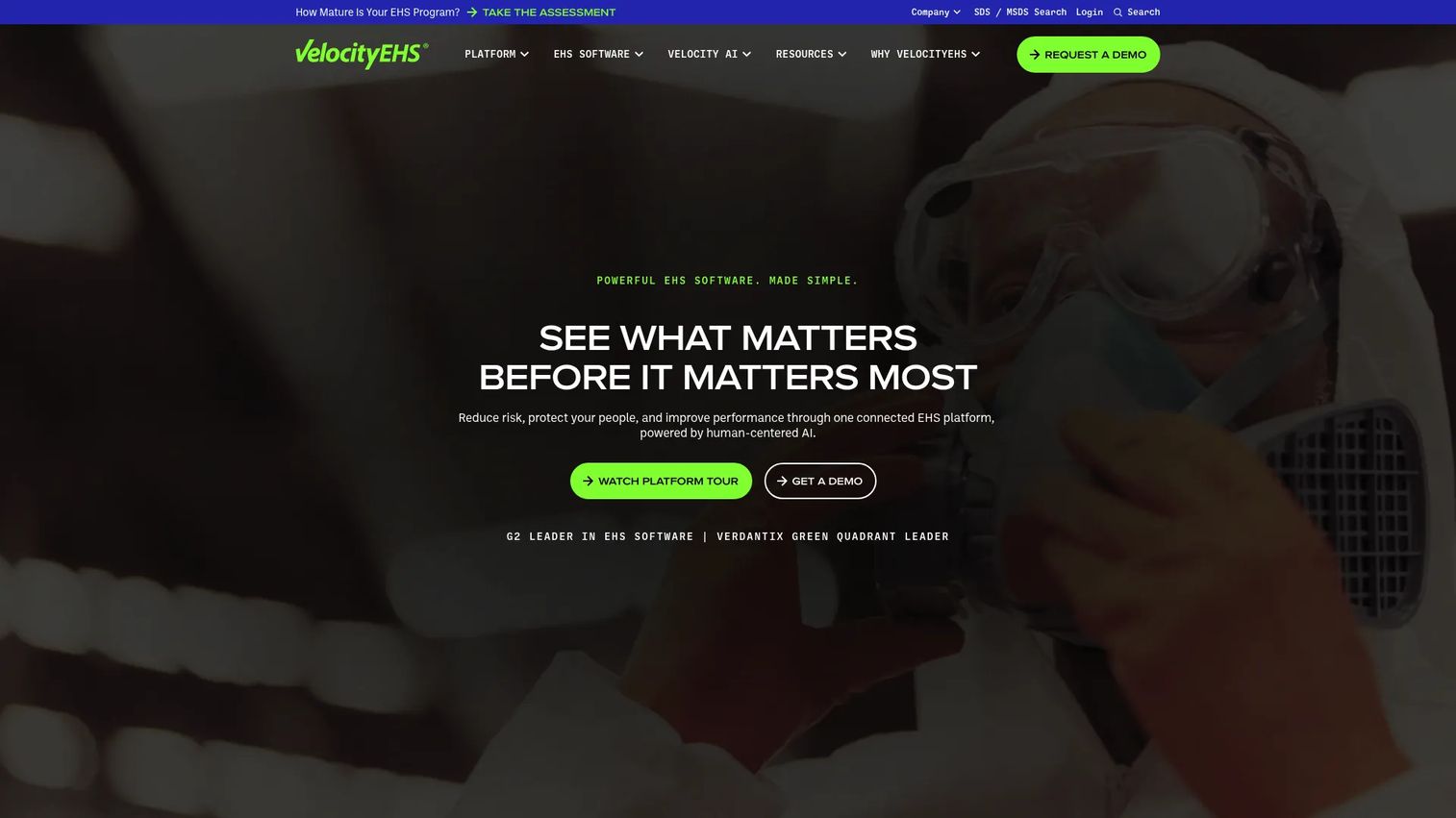
VelocityEHS provides connected environmental health and safety software for safety, chemical, ergonomic, operational risk, sustainability, and environmental compliance programs.
Its scope suits organizations replacing several point tools with a central EHS management system. Mobile execution and connected analytics help site teams collect data while leadership monitors broader risk patterns.
Best for: Midmarket and enterprise EHS teams managing multiple sites or safety disciplines.
Key features
- Incident management and investigations
- Audits and job safety analysis
- Chemical and SDS management
- Mobile enabled field execution
- Connected EHS analytics
Why choose VelocityEHS: Its breadth supports teams seeking an EHS system of record rather than a checklist application. Unlimited users are included within its pricing model.
VelocityEHS pricing: Custom pricing. Cost depends on selected products, company structure, employee or site count, and implementation.
G2 rating: 4.4/5
2. Donesafe
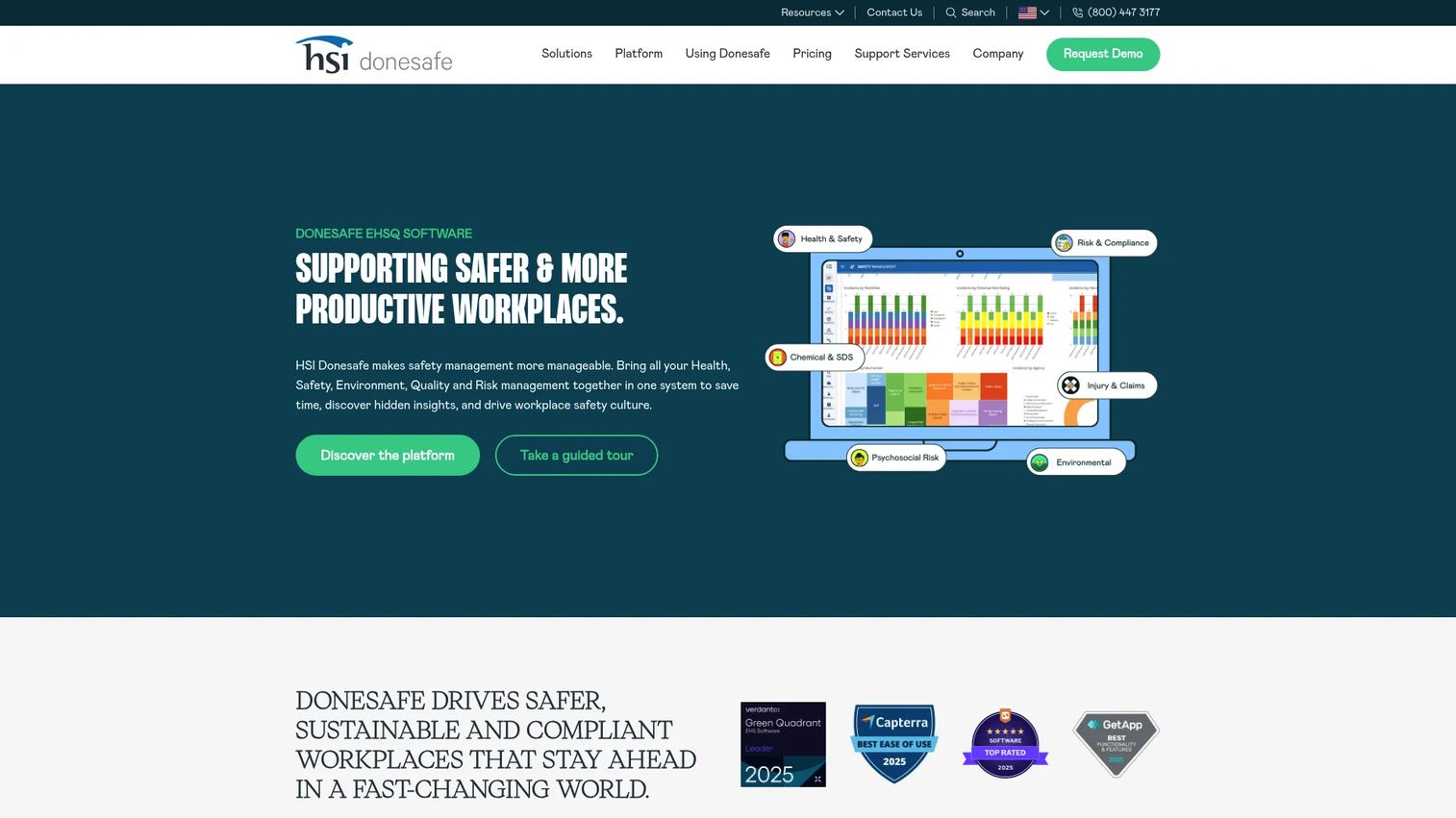
Donesafe is a configurable EHSQ platform covering health, safety, risk, quality, environmental, and sustainability processes. EHSQ means environmental, health, safety, and quality management.
No code configuration lets teams adapt applications and workflows around existing processes. Dashboards provide a shared reporting layer across operational programs.
Best for: Organizations that need configurable workflows without developing an internal EHS system.
Key features
- No code workflow configuration
- Incident and hazard management
- Audits and corrective actions
- Custom dashboards and reporting
- Risk and quality applications
Why choose Donesafe: The platform fits organizations with distinct processes across sites or business units. Assign internal ownership for configuration, reporting, and ongoing administration before rollout.
Donesafe pricing: Custom pricing. Cost depends on organization size, worker count, selected modules, and support services.
3. 3E Protect
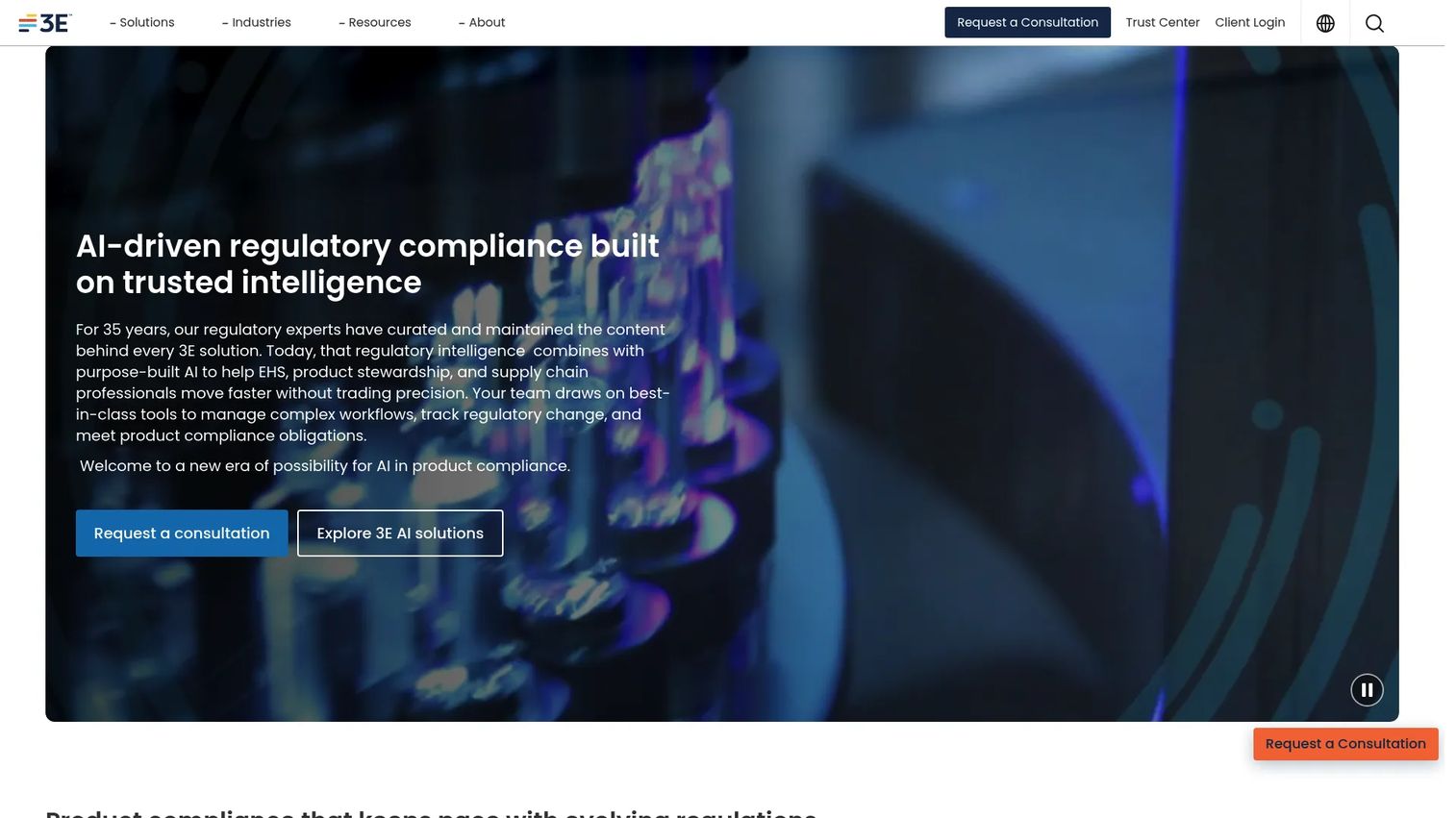
3E Protect focuses on chemical safety software, SDS governance, regulatory screening, and emergency response. Its SDS library contains more than 20 million documents.
The product connects chemical inventory data with regulatory frameworks and hazard communication workflows. It also offers round the clock EHS emergency support.
Best for: Distributed organizations where chemical data and SDS access are central operational requirements.
Key features
- Global SDS document library
- Chemical inventory management
- Regulatory framework screening
- Barcode and mobile access
- EHS emergency response support
Why choose 3E Protect: Its specialized chemical and regulatory depth distinguishes it from general safety platforms. Buyers needing broad incident or audit coverage should map those requirements separately.
3E Protect pricing: Custom pricing. The subscription includes unlimited users, documents, and EHS hotline access.
4. SafetyCulture
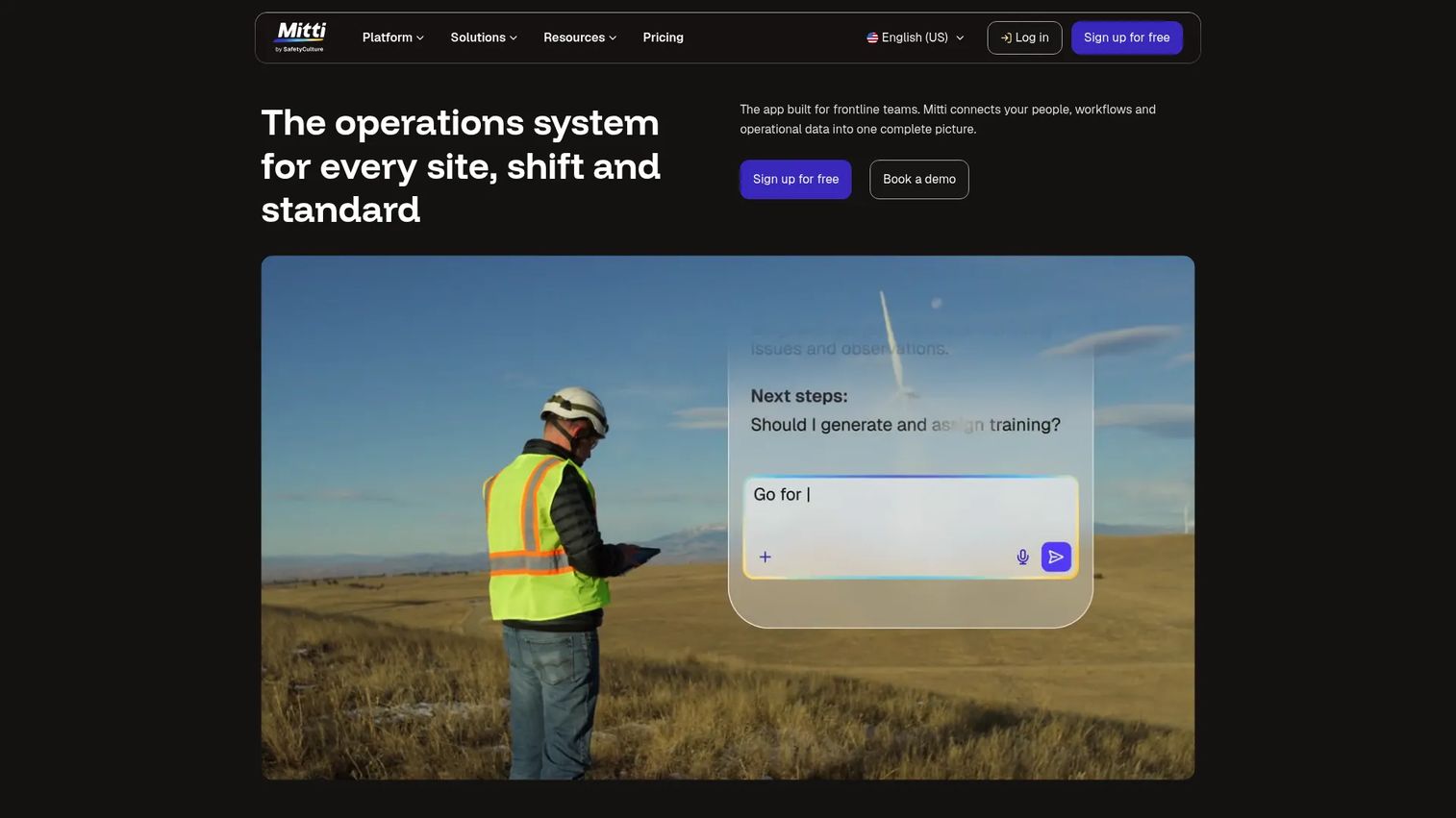
SafetyCulture is a mobile first operations platform for inspections, checklists, issue reporting, workplace training, and investigations.
Its EHS inspection software supports fast field deployment across frontline teams. Digital forms and action tracking turn observations into assigned work instead of isolated records.
Best for: Field teams standardizing inspections, audits, observations, and corrective actions.
Key features
- Mobile inspections and checklists
- Issue and action tracking
- Investigation management
- Workplace training
- Operational analytics
Why choose SafetyCulture: It fits teams prioritizing field adoption and quick checklist deployment. Enterprise buyers should verify environmental reporting, chemical governance, and data architecture requirements.
SafetyCulture pricing: Free for up to 10 seats. Premium costs $24 per seat monthly with annual billing, or $29 monthly.
G2 rating: 4.6/5
5. KPA EHS Software
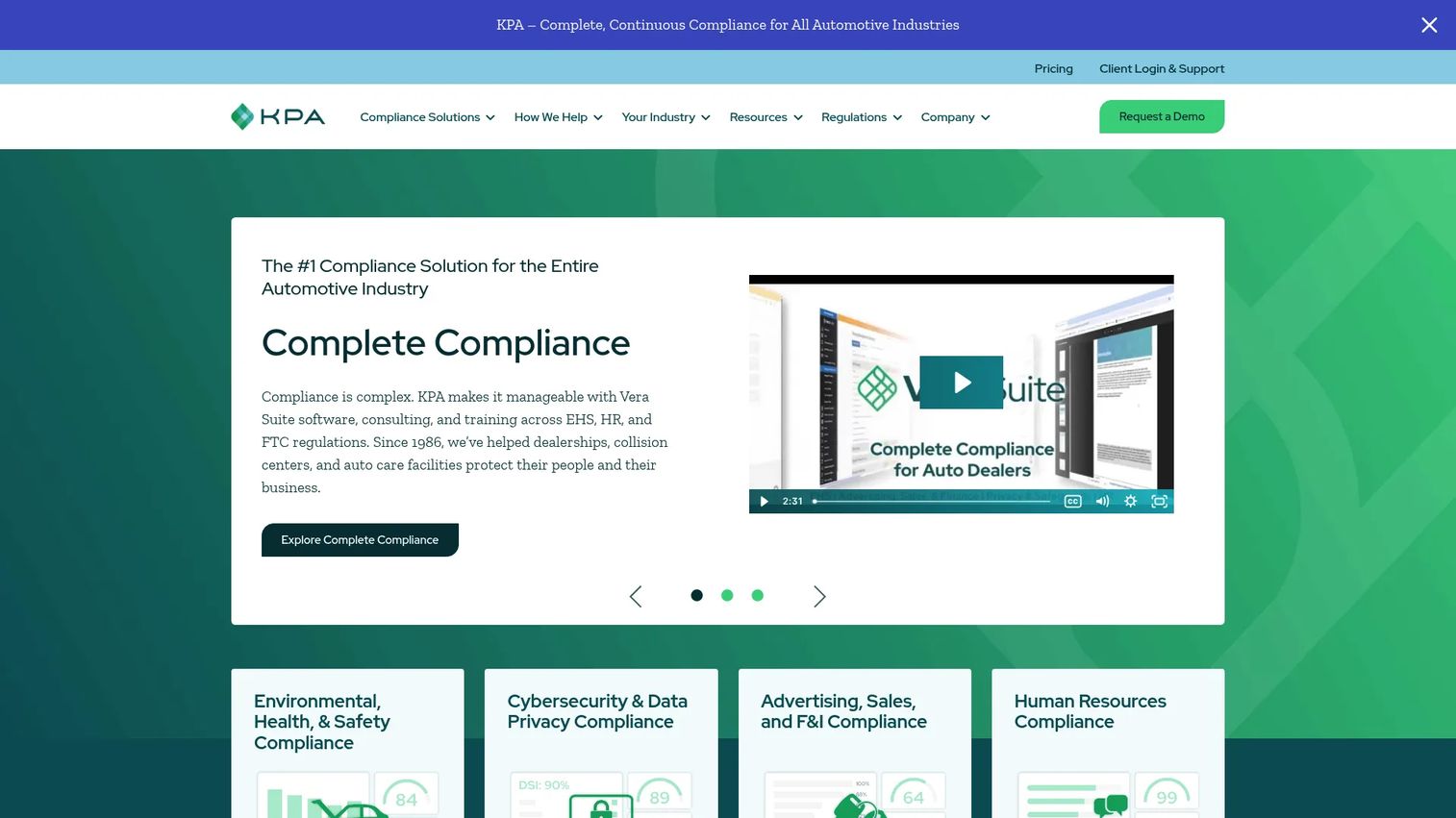
KPA EHS Software combines incident management, audits, inspections, compliance training, asset records, and document control.
The platform covers practical safety administration through mobile workflows and reporting. Its training capabilities make it relevant when workforce readiness sits inside the EHS remit.
Best for: Midmarket organizations combining safety operations with compliance training.
Key features
- Incident management
- Audits and inspections
- Compliance training
- Mobile field access
- SDS and document management
Why choose KPA EHS Software: It brings safety workflows and learning management into the same buying decision. Verify industry coverage if environmental or chemical requirements drive the project.
KPA EHS Software pricing: Custom pricing. Ask sales for module, employee, location, and implementation costs.
6. EcoOnline EHS
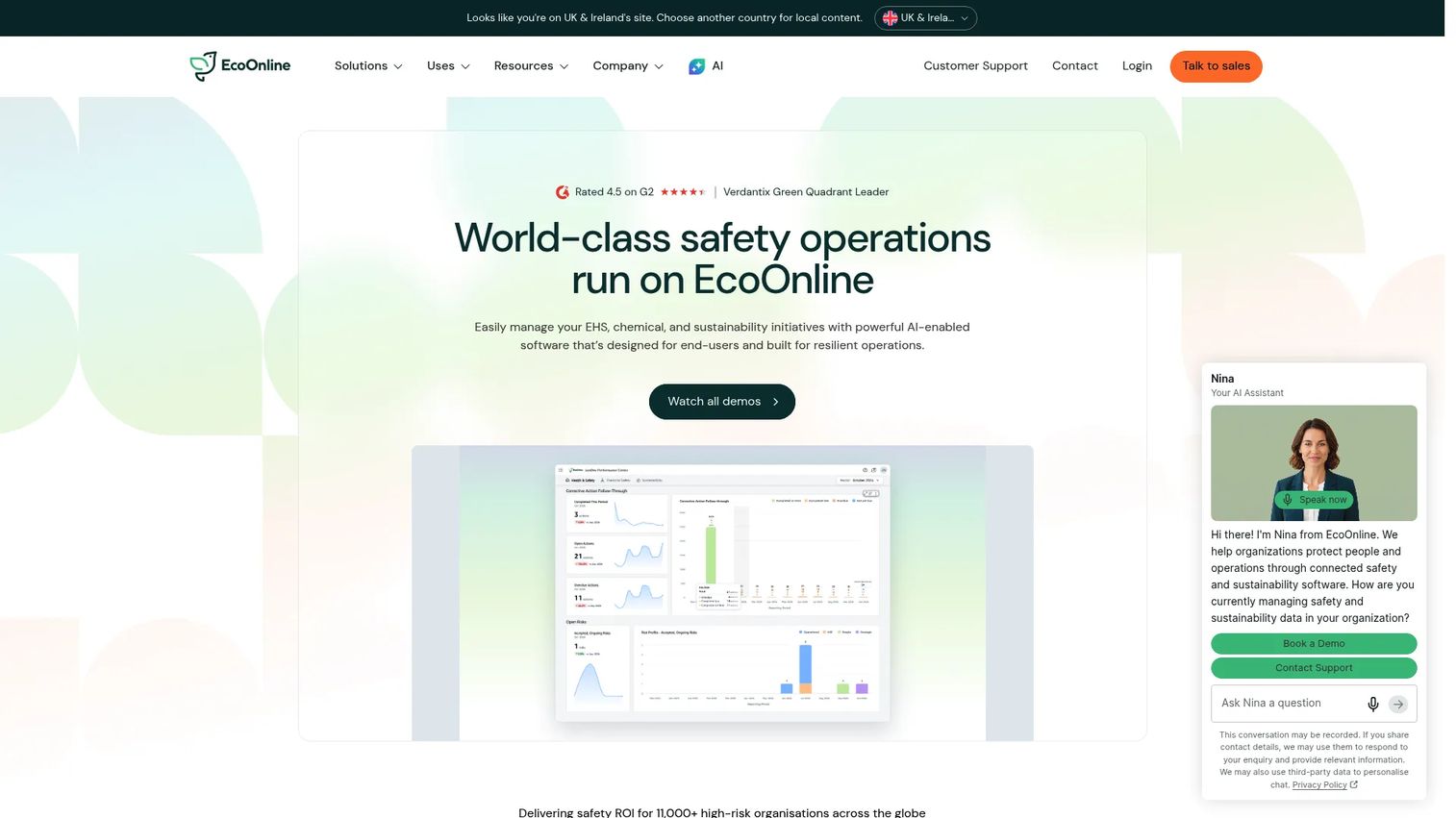
EcoOnline EHS supports incidents, audits, risk assessments, chemical safety, permits, contractor management, and emergency response.
Its chemical modules cover inventory, SDS management, exposure tracking, and chemical risk analysis. Mobile reporting helps distributed teams collect incident and near miss information.
Best for: Multisite organizations combining general EHS workflows with chemical risk management.
Key features
- Incident and near miss reporting
- Chemical inventory and SDS management
- Audits and configurable inspections
- Permit to work processes
- Contractor and lone worker safety
Why choose EcoOnline EHS: The platform connects chemical safety with broader operational risk workflows. Buyers should confirm regional support and required system connections during evaluation.
EcoOnline EHS pricing: Custom pricing. Cost depends on features, users, chemical requirements, and configuration.
G2 rating: 4.3/5
7. Intelex EHS Software
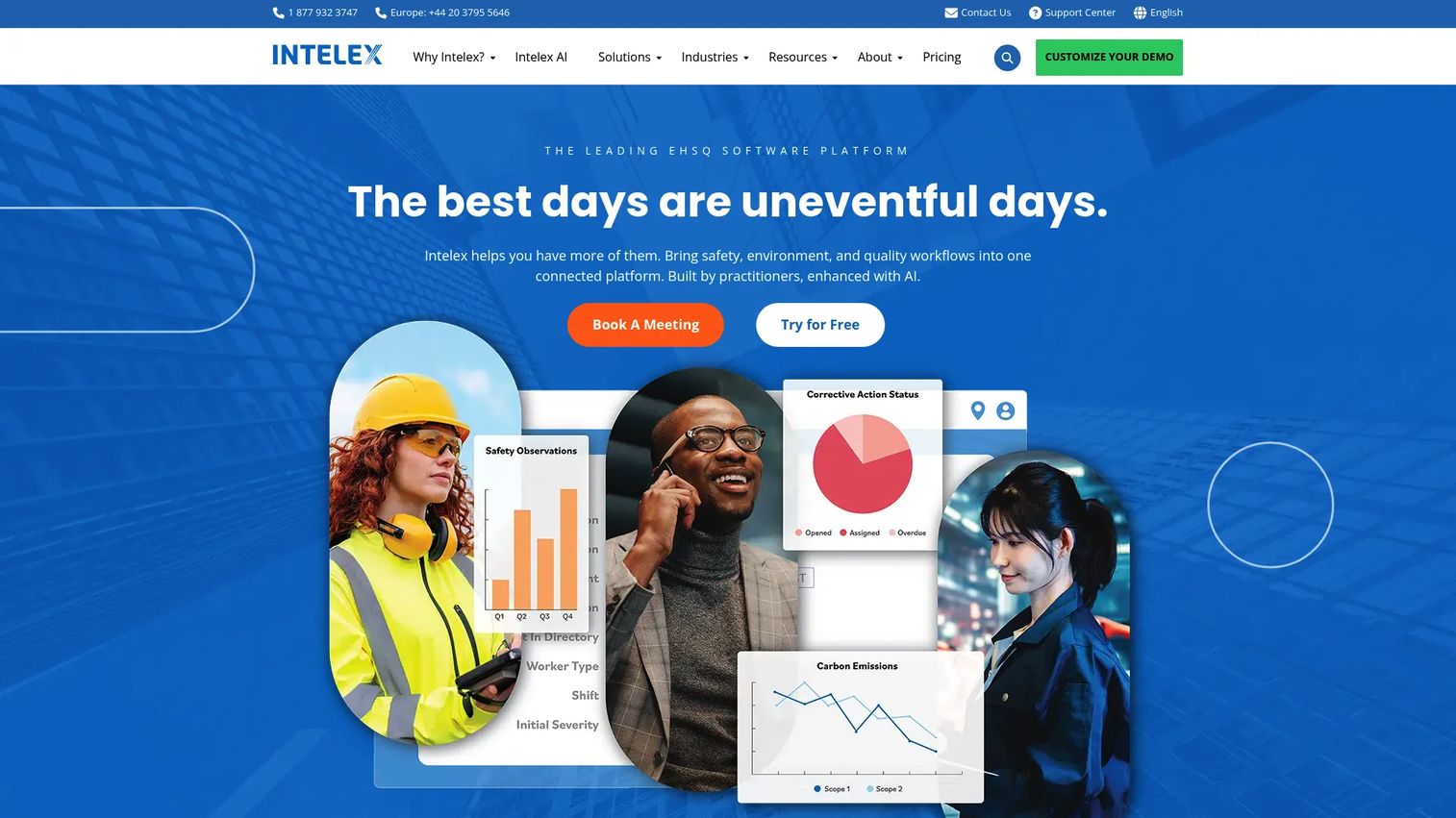
Intelex EHS Software is an EHSQ and sustainability platform for safety, environmental, quality, risk, and ESG programs.
Configurable forms and workflows support incidents, audits, compliance activity, and corrective action management. Mobile offline access covers field teams working without reliable connectivity.
Best for: Enterprise teams bringing EHS and quality workflows into one system.
Key features
- Incident and audit management
- Corrective action workflows
- Environmental management
- Mobile offline access
- Configurable forms and dashboards
Why choose Intelex EHS Software: It offers broad EHSQ coverage with a published entry plan. Assess administrative capacity and integration work before committing to a larger rollout.
Intelex EHS Software pricing: Safety Essentials starts at $44 per user monthly, billed annually. It requires at least 25 users.
G2 rating: 4.1/5
8. CorityOne
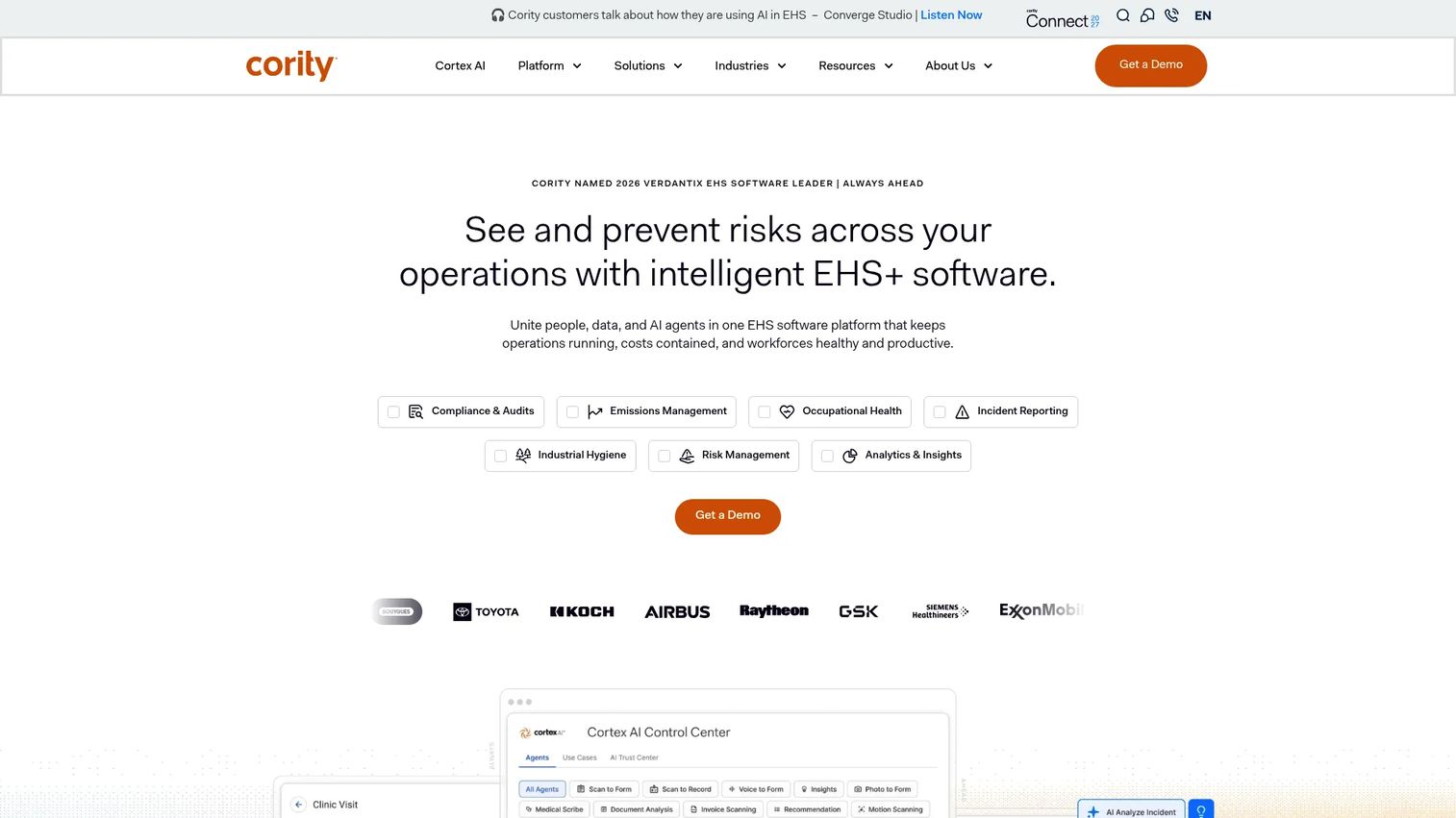
CorityOne unifies safety, occupational health, environmental, quality, sustainability, and operational risk workflows.
The platform includes audits, inspections, incident management, industrial hygiene, and learning management. Its Cortex AI uses governed agents across EHS processes.
Best for: Large organizations needing depth across health, safety, environment, quality, and risk teams.
Key features
- Occupational health management
- Industrial hygiene workflows
- Environmental and sustainability reporting
- Audits and corrective actions
- Cortex AI agents
Why choose CorityOne: Its scope fits complex and regulated operating models. Establish a dedicated internal owner for rollout, governance, and data quality.
CorityOne pricing: Custom pricing. Cost depends on products, users, integrations, and subscription structure. Implementation carries a separate fee.
G2 rating: 4.0/5
9. Enablon Platform
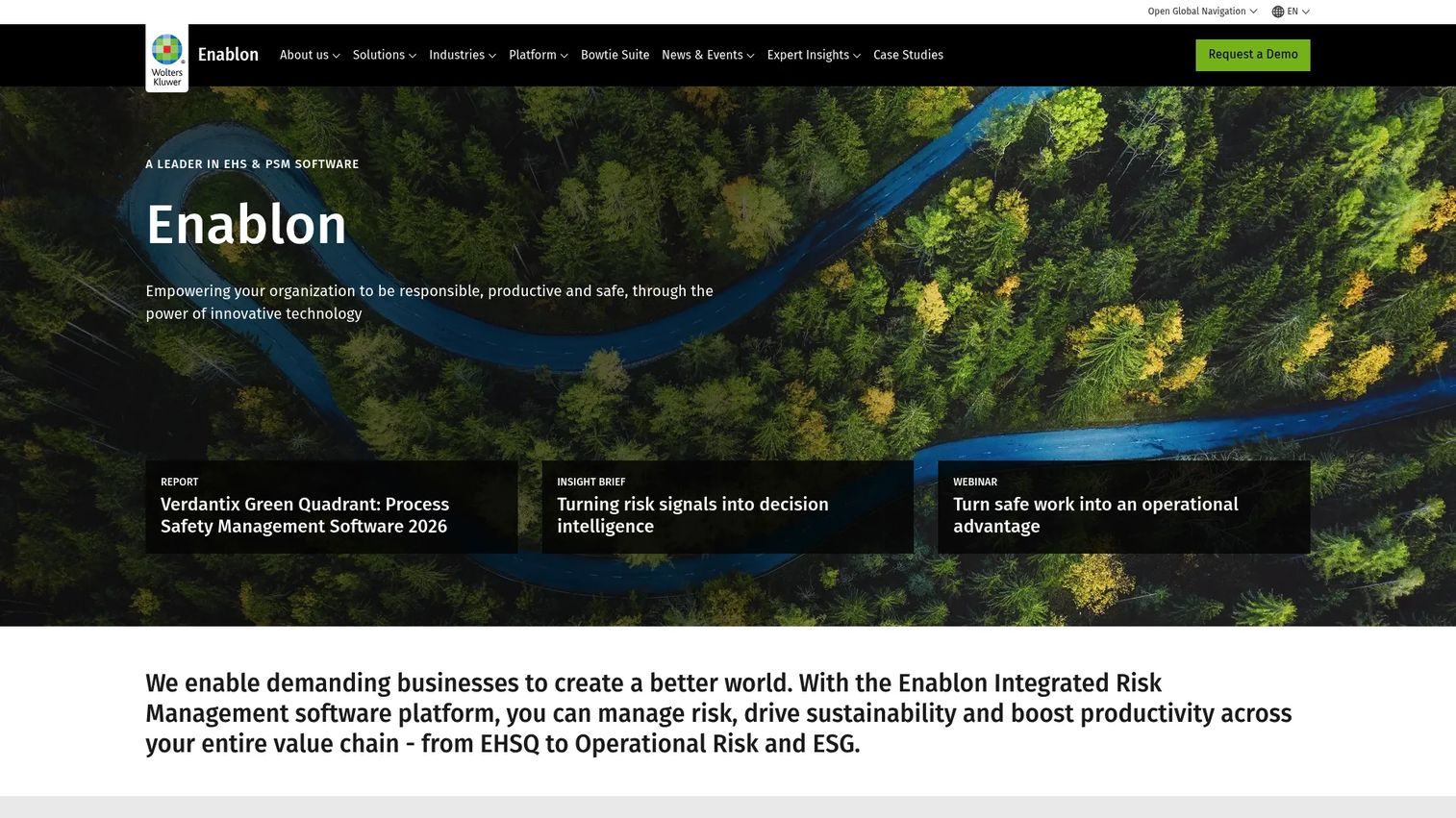
Enablon Platform covers EHSQ, operational risk, process safety, compliance, engineering operations, and ESG management.
Control of work capabilities include permit and isolation management. Mobile applications support field access across iOS and Android devices.
Best for: Global enterprises managing process safety, operational risk, and EHS compliance across complex operations.
Key features
- Process safety management
- Permit to work controls
- EHSQ and sustainability workflows
- Integrated risk management
- Mobile field applications
Why choose Enablon Platform: It suits organizations treating EHS as part of a wider risk architecture. Validate licensing, implementation timing, and reporting ownership before selection.
Enablon Platform pricing: Custom pricing. Ask sales for module, region, user, integration, and deployment costs.
G2 rating: 4.1/5
10. Benchmark Gensuite
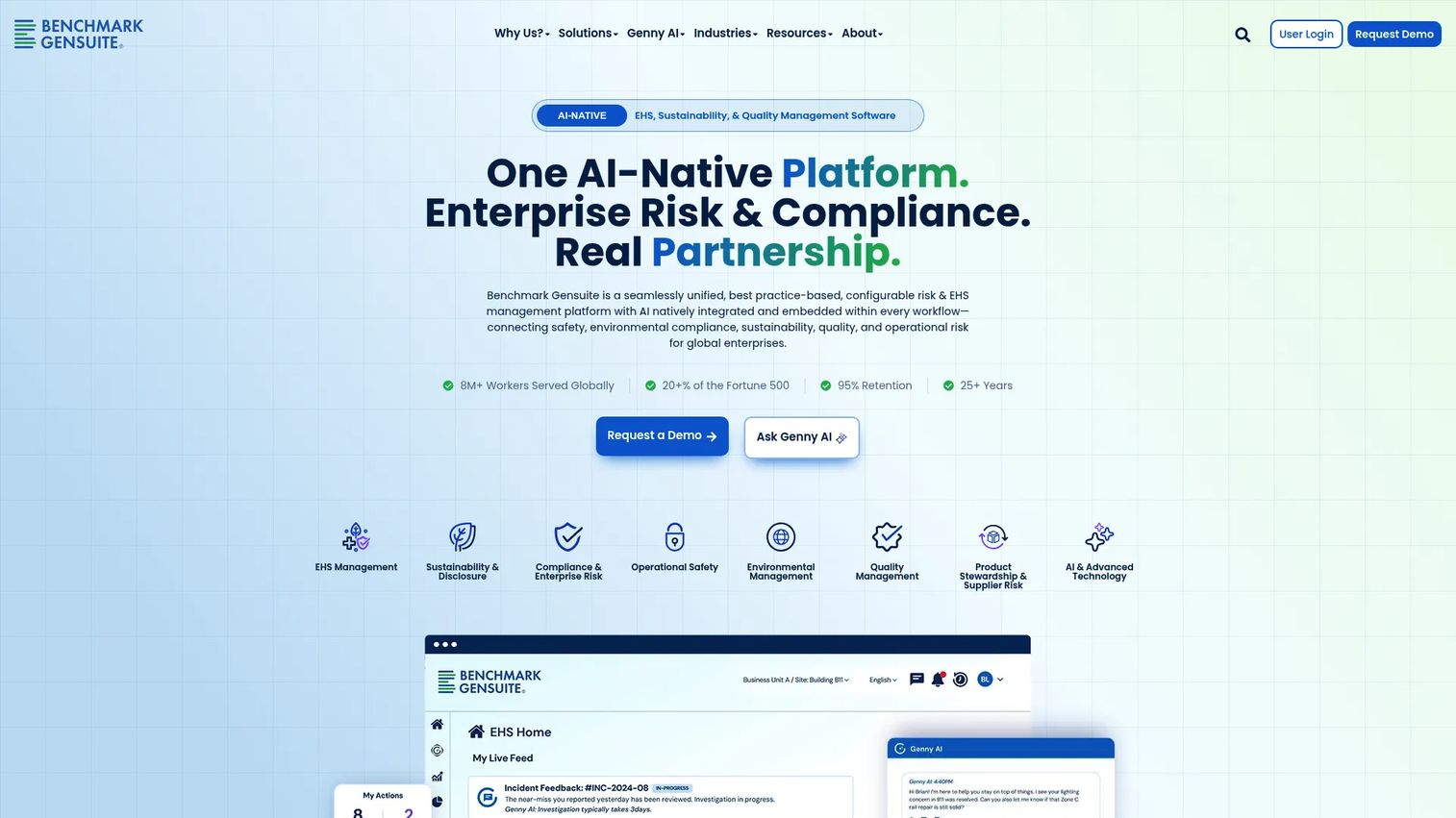
Benchmark Gensuite provides applications for EHS, sustainability, quality, compliance, and operational risk programs.
Its portfolio covers incidents, inspections, corrective actions, contractor management, control of work, and process safety. Genny AI supports document summarization, risk analysis, and workflow automation.
Best for: Global organizations standardizing broad EHS and risk programs across sites.
Key features
- Incident and inspection management
- Quality and CAPA workflows
- Sustainability reporting
- Contractor and control of work
- Genny AI capabilities
Why choose Benchmark Gensuite: Its application breadth supports phased standardization across global operations. Map required applications before requesting a commercial proposal.
Benchmark Gensuite pricing: Custom pricing. The vendor uses an application based model without per user licensing.
G2 rating: 4.0/5
11. SpheraCloud
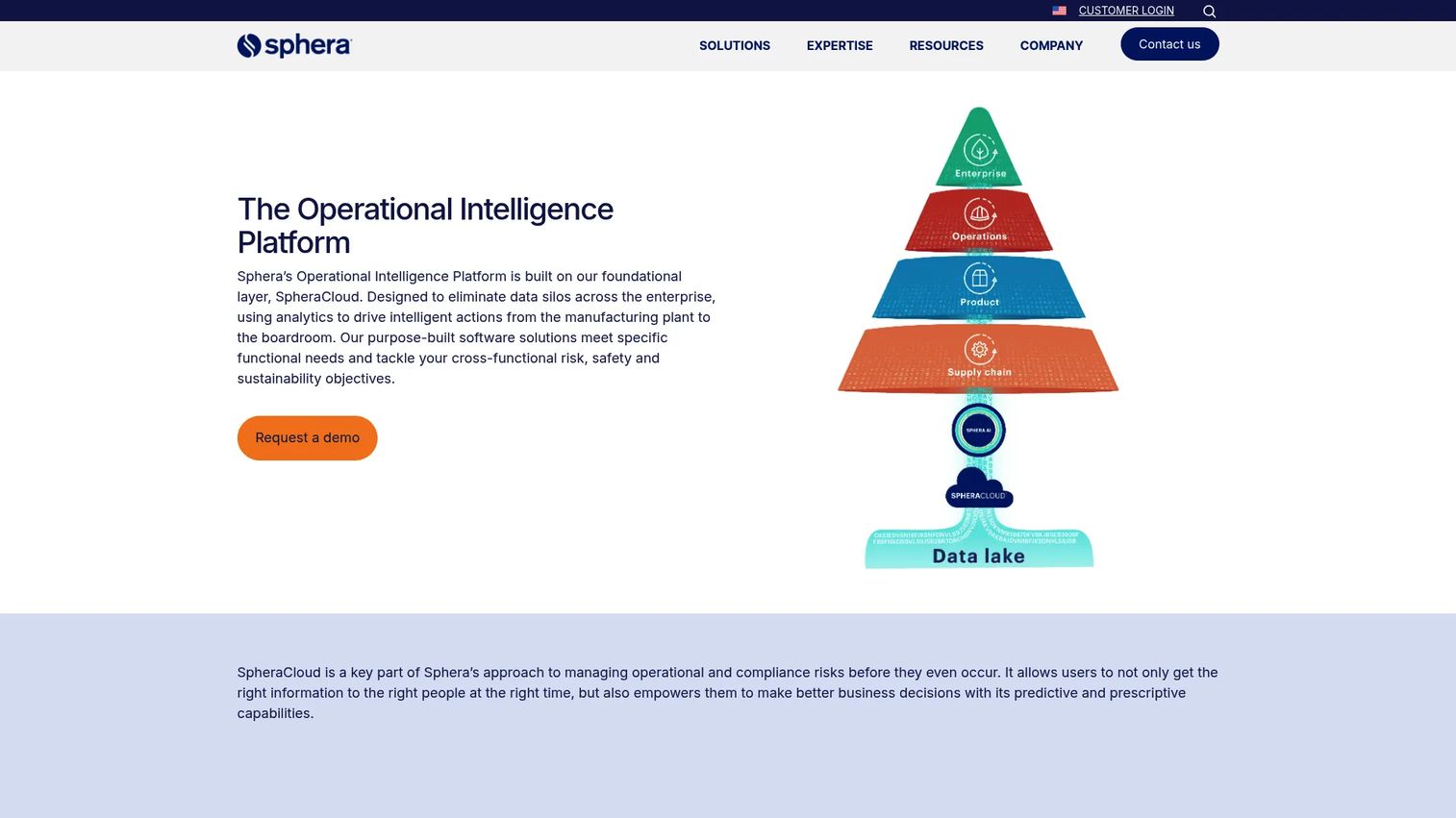
SpheraCloud is a SaaS operational intelligence platform for enterprise risk, safety, sustainability, and compliance management.
Normalized enterprise data supports operational risk insights across complex programs. Mobile capabilities help field teams capture information where work occurs.
Best for: Industrial organizations managing EHS, ESG, operational risk, and product stewardship programs.
Key features
- Mobile field data capture
- Operational risk insights
- Predictive intelligence
- Enterprise action management
- Sustainability data guidance
Why choose SpheraCloud: Its operating model fits companies managing complex industrial risk and sustainability data. Confirm the exact modules required before comparing proposals.
SpheraCloud pricing: Custom pricing. Ask sales for module, facility, reporting, data connection, and implementation costs.
G2 rating: 4.0/5
12. EHS Insight
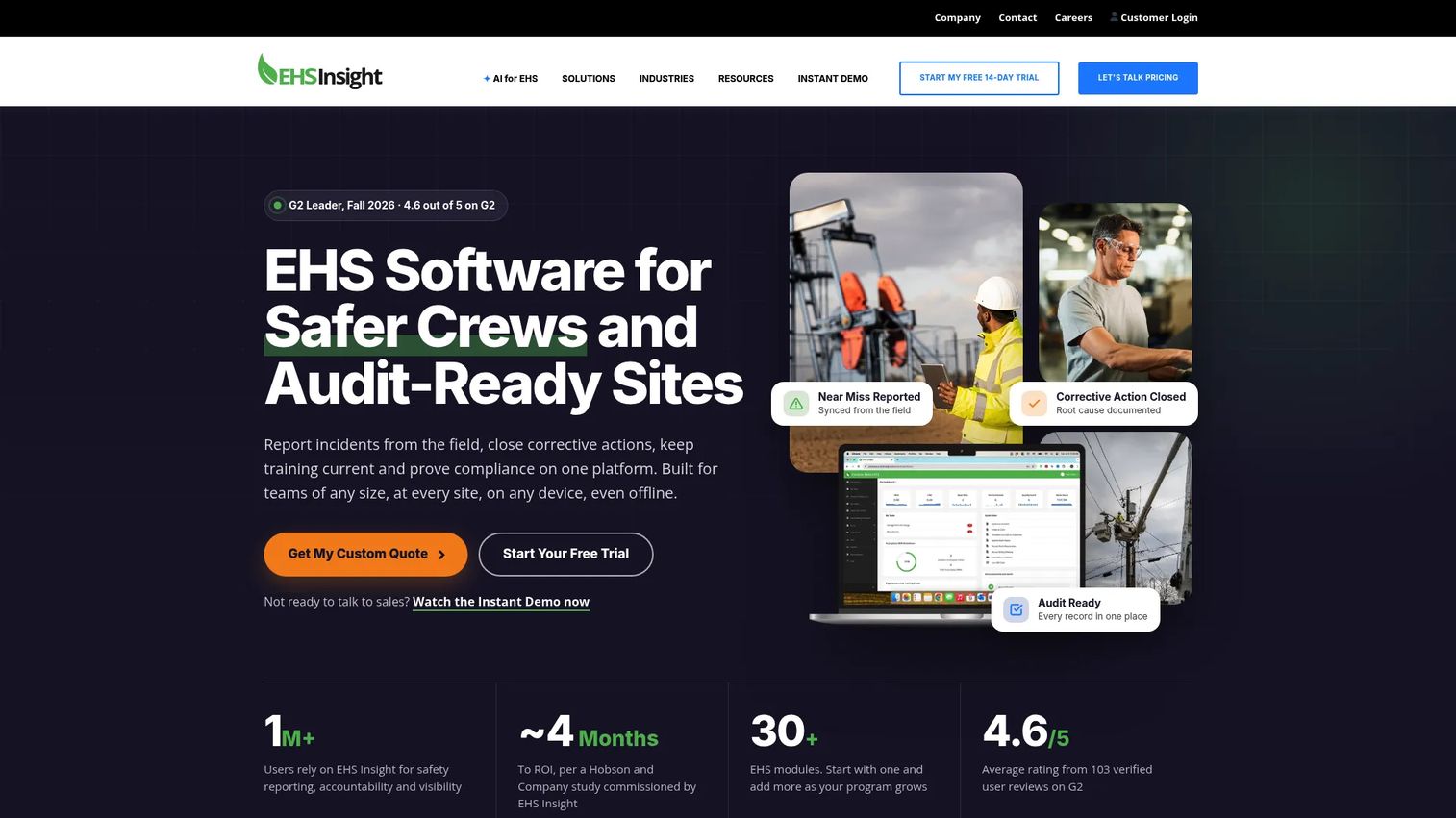
EHS Insight covers incident management, audits, inspections, CAPA, training, risk, and compliance reporting.
Its mobile application supports offline form submission. That matters for facilities and field teams with inconsistent network access.
Best for: Teams formalizing core EHS workflows without adopting the broadest enterprise platform.
Key features
- Incident management
- Audits and inspections
- CAPA tracking
- Training management
- Offline mobile forms
Why choose EHS Insight: It covers core workflows with a published starting price. Buyers should separately assess advanced environmental, chemical, and enterprise integration requirements.
EHS Insight pricing: The Small and Medium Business plan starts at $5,000 annually. Enterprise pricing is custom.
G2 rating: 4.6/5
13. Quentic
Quentic is a cloud platform for EHS, quality, legal compliance, and sustainability management.
Its modules include incident management, risk assessment, training, hazardous chemical controls, and environmental reporting. Mobile access supports reporting and task completion.
Best for: International organizations managing structured EHS and sustainability programs across multiple sites.
Key features
- Occupational safety workflows
- Environmental and sustainability management
- Legal compliance management
- Training and online instructions
- Hazardous chemical controls
Why choose Quentic: Its module set supports organizations connecting compliance work with sustainability reporting. Buyers should verify regional service and integration coverage.
Quentic pricing: Custom pricing. Ask sales for module, user, region, and implementation costs.
14. Frontline EHS
Frontline EHS manages incidents, corrective actions, operational changes, employee training, and contractor safety.
Its contractor workflows include prequalification, training verification, document review, and site access management. Management of change adds approvals and risk reviews.
Best for: High risk operations needing structured safety, training, and contractor controls.
Key features
- Incident and corrective action tracking
- Management of change
- Employee training and certification
- Contractor prequalification
- Audit and inspection workflows
Why choose Frontline EHS: The platform connects frontline safety activity with workforce readiness. Compare the Standard and Enterprise packages against your required modules.
Frontline EHS pricing: Custom pricing. Cost depends on modules, employee or contractor counts, and service level.
G2 rating: 4.1/5
15. Vector EHS Management
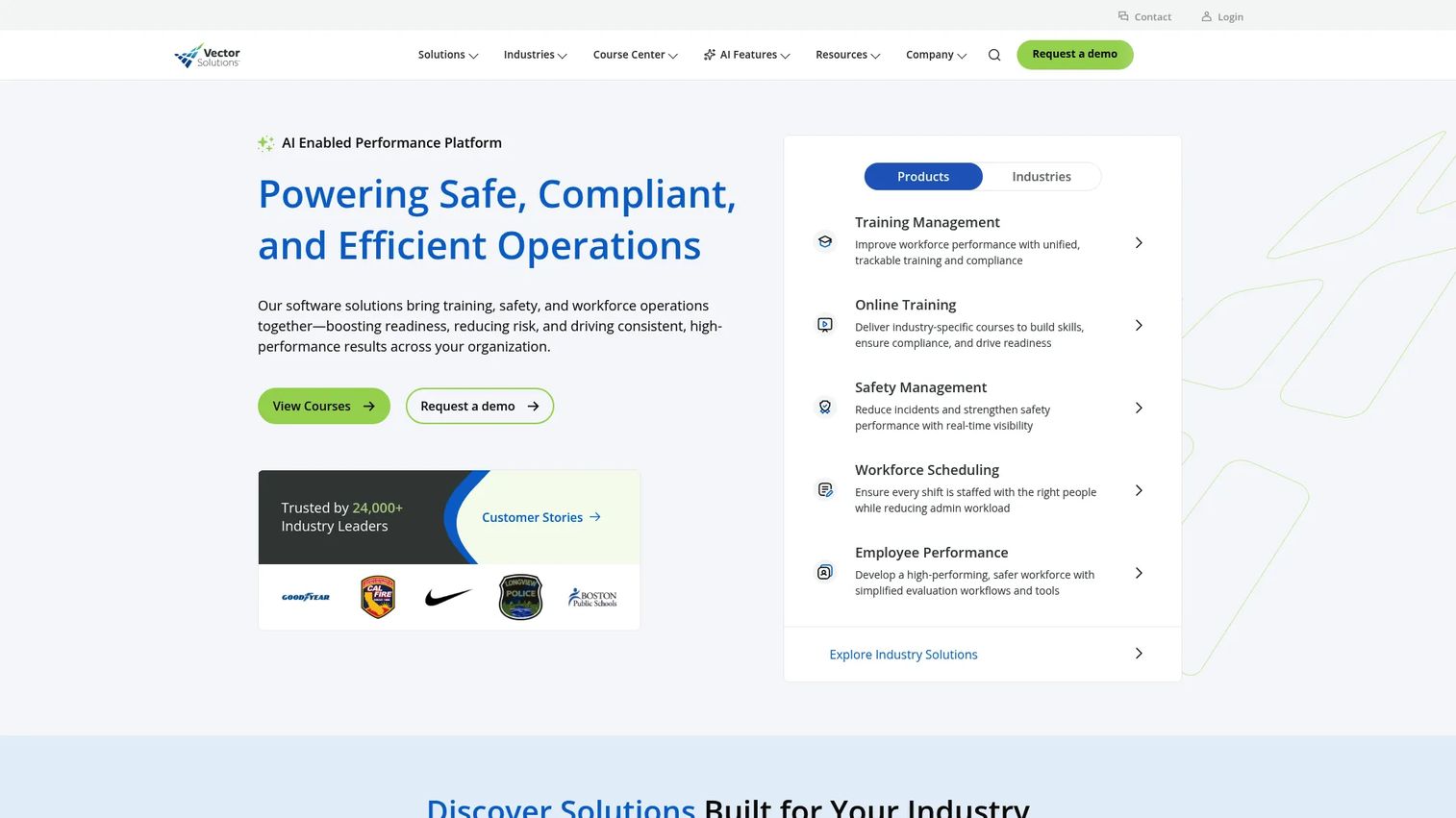
Vector EHS Management supports incidents, OSHA recordkeeping, inspections, audits, hazards, corrective actions, and safety metrics.
Its relationship with workforce learning makes it relevant when safety training software and operational EHS belong in the same evaluation.
Best for: Organizations connecting workforce training with incident, inspection, and compliance workflows.
Key features
- Incident and OSHA recordkeeping
- Inspections and audits
- Hazard and risk assessment
- Corrective action tracking
- SDS and chemical management
Why choose Vector EHS Management: It fits teams aligning training completion with field safety processes. Confirm whether environmental reporting depth meets your operating requirements.
Vector EHS Management pricing: Custom pricing. Ask sales for user, training content, module, and support costs.
G2 rating: 4.4/5
16. Workhub
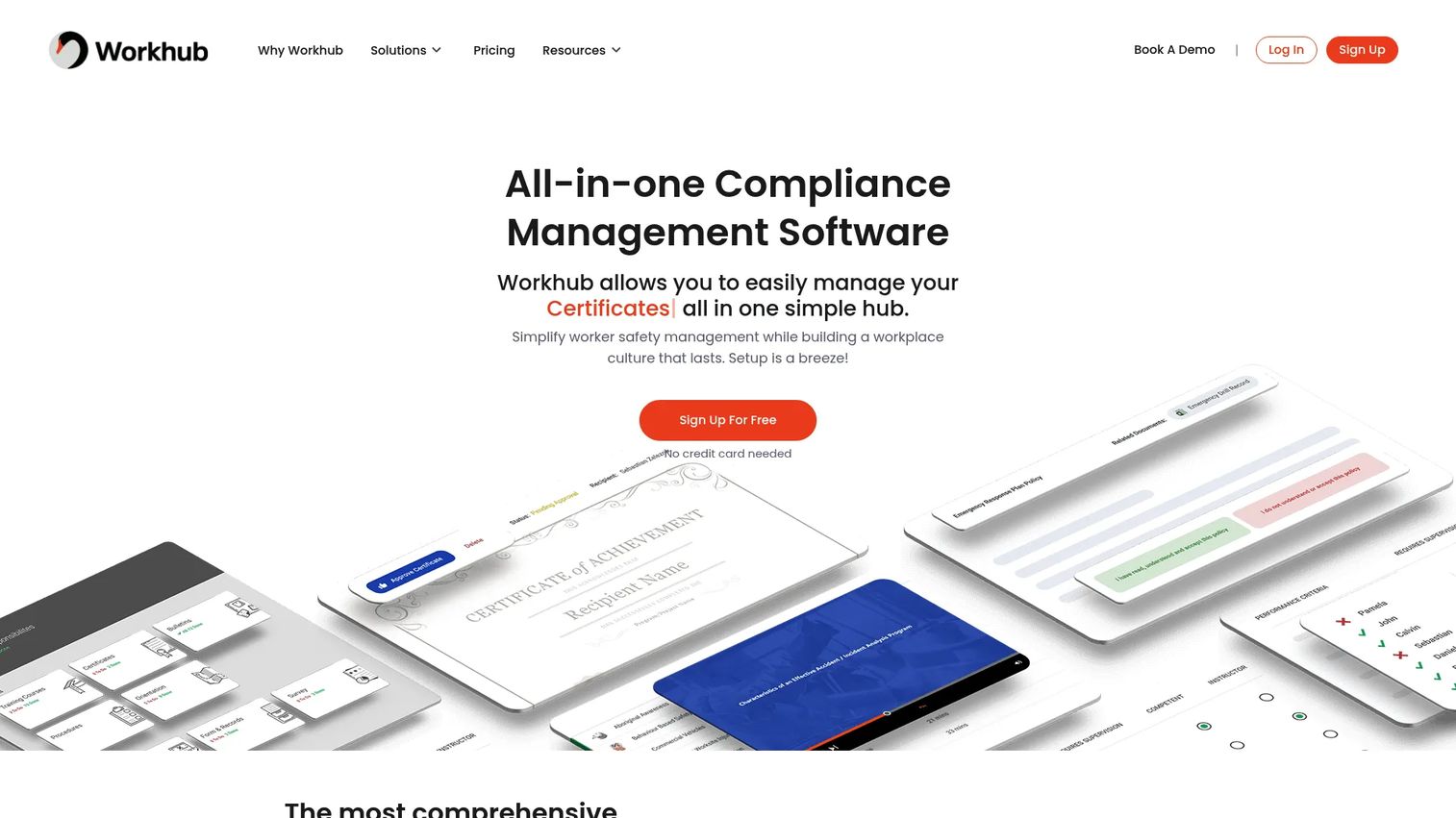
Workhub provides more than 30 tools for workplace safety, training, policy management, inspections, certificates, and worker records.
Its pricing gives smaller teams an accessible starting point. The platform also supports incident reporting, action items, surveys, and whistleblower reporting.
Best for: Small and midsized teams needing safety training and compliance administration without a large implementation.
Key features
- Online training and certificates
- Policy acknowledgements
- Inspections and incident reporting
- Worker compliance records
- Surveys and action items
Why choose Workhub: It offers a low cost path into structured safety administration. Larger organizations should examine environmental modules, analytics depth, and integration requirements.
Workhub pricing: Free plan available. Standard costs $3 per user monthly, requires three users, and includes a 30 day trial.
G2 rating: 4.6/5
17. Safetymint
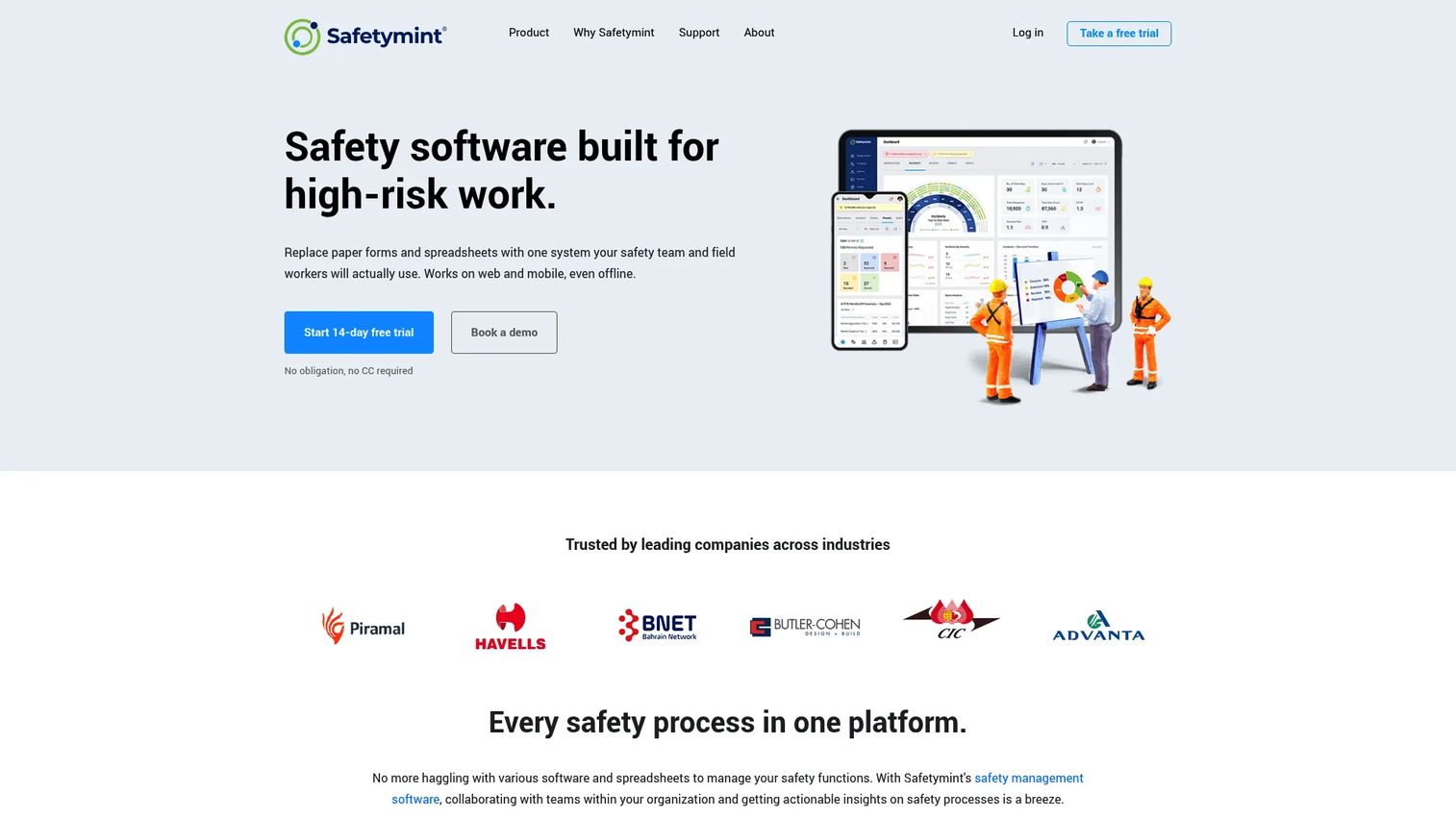
Safetymint is safety management software for incidents, near misses, permits, observations, audits, inspections, and corrective actions.
Its modules focus on operational execution across sites. Permit to work management makes it relevant for controlled, higher risk activities.
Best for: Teams structuring incident, permit, audit, observation, and CAPA workflows.
Key features
- Permit to work management
- Incident and near miss reporting
- Safety observations
- Audits and inspections
- Corrective action management
Why choose Safetymint: Its scope fits organizations prioritizing operational safety processes. Validate system connections, reporting depth, and regional support during evaluation.
Safetymint pricing: Custom pricing. Ask sales for module, user, site, and implementation costs.
Considerations when choosing EHS management software
Match the tool to your highest risk workflows
Start with the workflow creating the most exposure today. That may be incidents, audits, chemical safety, contractor access, or environmental reporting.
Ask your EHS owner one question: Which process breaks most often, and what does that failure cost?
Verify implementation ownership before buying
Assign responsibility for forms, permissions, reports, training records, and site adoption. Without an owner, even capable EHS compliance software becomes another neglected system.
For a scaling company, clear ownership matters more than buying every module immediately.
Check reporting depth
A polished dashboard can hide weak underlying reporting. Test OSHA logs, CAPA aging, audit trails, leading indicators, and contractor records using representative data.
If ISO 45001 support matters, ask how the product supports your management system. Software cannot guarantee certification.
Confirm integrations and identity management
List required connections before vendor evaluations. Common targets include HRIS, LMS, ERP, business intelligence, SSO, and document storage.
Ask which connections are native. Price any API work and ongoing maintenance separately.
Pressure test mobile adoption
Novara and EHS Leaders found in 2026 that 55% of surveyed safety leaders prioritized ease of use and adoption. That finding deserves attention because field data drives the reports executives see.
Test offline access, photo capture, inspections, and action assignment with frontline users. Clean dashboards mean little when source data is incomplete.
Choose an EHS system your team can own
There is no universal top EHS software product. The right choice follows your operating model and highest risk workflows.
VelocityEHS, CorityOne, Enablon Platform, Benchmark Gensuite, and SpheraCloud fit broad enterprise programs. Chemical intensive operations should examine 3E Protect, EcoOnline EHS, and SpheraCloud.
SafetyCulture and Frontline EHS stand out for field execution. KPA, EHS Insight, and Safetymint cover practical midmarket workflows. Vector EHS Management and Workhub suit training heavy safety programs.
Build a shortlist of three to five EHS software companies. Then run each through the same scenarios, data sample, mobile test, and reporting request.
The winner should earn its place in your stack within the first quarter. It should also let your EHS owner run the program without founder escalation.
Start your journey with Guideflow today!
If your company sells complex software, interactive demos can show landing page visitors, sales prospects, and customers how critical workflows operate. They also support partner enablement, training, product launches, and sales follow ups.
EHS vendors can demonstrate inspections, incident reporting, corrective actions, and regulatory dashboards before a live call.
Start your journey with Guideflow today!
FAQs
EHS management software is a system for environmental, health, and safety workflows. It can manage incidents, audits, inspections, CAPA, training, chemical safety, contractor controls, and regulatory reporting.
These products replace fragmented paper forms, spreadsheets, and disconnected tools. They also create a shared record for field teams and leadership.
EHS software and HSE software usually describe similar product categories. EHS is common in the United States, while HSE appears frequently in other regions and industries.
Both support environmental management, occupational health, and workplace safety. Buyers should compare workflow coverage rather than focusing on the acronym.
Core features include incident reporting, risk assessments, inspections, audits, and corrective actions. Many systems also cover training, SDS records, contractor management, compliance calendars, and analytics.
Prioritize the workflows carrying the greatest operational risk. A broad feature list has little value when the central process remains awkward for frontline users.
Pricing varies by modules, users, sites, contractor access, integrations, implementation, and support. Some vendors publish entry prices, while many enterprise products use custom pricing.
Request an itemized quote covering subscriptions, implementation, migration, and support. Include any integration work needed after launch.
Smaller organizations usually need quick setup, mobile inspections, safety training, policy acknowledgements, and straightforward reporting. Workhub, SafetyCulture, EHS Insight, and Safetymint address different parts of that requirement.
Choose according to the most important workflow. Confirm the product can scale across additional sites before signing.
Enterprise buyers need multisite governance, permissions, integrations, regulatory coverage, and implementation support. VelocityEHS, CorityOne, Enablon Platform, Benchmark Gensuite, SpheraCloud, Intelex, and EcoOnline serve parts of this market.
Run scenario based evaluations using your workflows and sample data. Make vendors demonstrate reporting, mobile use, and cross site permissions.
Many products support incident logs, OSHA recordkeeping workflows, evidence capture, and report preparation. Vector EHS Management specifically lists OSHA recordkeeping among its capabilities.
Software does not guarantee regulatory compliance. U.S. buyers should verify current OSHA specific functionality and reporting formats with each vendor.
Start with the riskiest workflow and define what successful execution looks like. Build your shortlist around incidents, inspections, CAPA, training, chemical safety, contractors, or environmental reporting.
Then compare implementation ownership, system connections, mobile adoption, analytics, security, pricing, and support. Include frontline users in the evaluation before procurement begins.