A critical lab result lands in a group inbox. The assigned clinician finished her shift an hour ago. Someone now has to manually work through a directory to find who's covering, and the clock is running.
That's the failure mode clinical communication software is supposed to prevent. Yet according to TigerConnect's State of Healthcare Collaboration Report (2024), 85% of clinicians experience communication inefficiencies at least sometimes. The reasons are predictable: Pagers that don't confirm delivery, personal phones used for clinical messaging without governance, on-call schedules that nobody remembers to update, and alert systems that fire into the same inbox as routine messages.
The clinical communication and collaboration software market reached $2.88 billion in 2025 and is projected to hit $6.41 billion by 2031 (Mordor Intelligence, 2026). That growth reflects how high the stakes are when the operating problem scales across thousands of beds, rotating staff, and dozens of integrated clinical systems.
This guide gives you a clean shortlist of seven platforms, an honest comparison, and a buying framework that goes beyond "secure texting."
What's inside
- Who this guide is for: Healthcare CIOs, clinical informatics leaders, nursing executives, IT directors, and operators evaluating a platform for acute, ambulatory, or post-acute organizations
- How tools were chosen: Verified G2 ratings, product documentation, interoperability scope, and evidence of clinical adoption
- Selection criteria:
- Secure clinical messaging and care team collaboration depth
- Schedule-aware routing and escalation reliability
- EHR integration approach and interoperability breadth
- Implementation fit and operational governance model
TL;DR
- Best for EHR-centered health systems: Epic. Organizations already standardized on Epic should evaluate whether native workflow alignment reduces system switching before adding a separate clinical communication layer.
- Best for coverage-aware routing: PerfectServe. Strongest candidate when the core problem is getting messages to whoever is actually covering right now, not whoever was scheduled last week.
- Best for enterprise clinical collaboration: TigerConnect. Broad care team messaging, alert orchestration, and closed-loop workflows across acute and ambulatory settings.
- Best for role-based communication and on-call scheduling: symplr. Worth evaluating when communication must reflect dynamic clinical roles and shift assignments.
- Best for critical alerting and escalation: OnPage. Published pricing, a 7-day trial, and persistent alert delivery make it the most accessible entry point for organizations focused on fail-safe escalation.
- Best for complex enterprise communication infrastructure: Spok. Relevant when modernization involves legacy system consolidation alongside clinical messaging.
- Best for MEDITECH-centered organizations: MEDITECH. Strongest fit for organizations that want clinical communication evaluated as part of their existing EHR strategy.
What is clinical communication software?
Clinical communication software is a healthcare platform that helps care teams securely send messages, route urgent alerts, coordinate coverage, and connect communication workflows across clinical systems.
The category covers more than group chat. A mature clinical communication and collaboration software platform typically includes:
- Secure clinical messaging: HIPAA-oriented protected messaging for care teams, with audit trails and message logs
- Role and schedule-aware routing: Getting the message to the clinician currently responsible, not whoever is listed in a static directory
- Critical alerts and escalation: Persistent delivery, acknowledgement requirements, and escalation paths when the first recipient doesn't respond
- Voice and video: Calling or video consultation where clinical workflows require it
- EHR integration: Patient context, clinician assignment data, and documentation hooks inside the clinical record
- On-call schedules and provider directories: Live coverage data that routing logic can actually use
- Task and workflow coordination: Handoffs, care team activation, and closed-loop acknowledgement
- Governance and auditability: Access controls, message retention, and security controls that satisfy organizational and regulatory requirements
What it is not
Clinical communication software is not consumer messaging with a HIPAA checkbox bolted on. It's also not a complete replacement for every EHR workflow. Most organizations run it alongside scheduling, nurse call, monitoring, and patient engagement systems.
The evaluation question isn't "does this do messaging?" It's "does this route the right message to the right clinician, confirm receipt, and escalate when nobody responds?"
That distinction determines whether you're buying a messaging app or a clinical communication platform. The former adds another inbox. The latter removes a failure point.
When to use clinical communication software
Replace fragmented messaging and pager workflows
Hospitals relying on a mix of pagers, personal phones, overhead paging, and departmental tools face an audit problem as much as a speed problem. There's no consistent record of who received what and when. A clinical communication platform creates structured escalation, role-based contact, and an audit trail that fragmented channels can't provide. Pager replacement is the most common deployment trigger, but the case for clinical communication software applies whenever communication lacks governance.
Route urgent alerts to whoever is currently covering the patient
A static provider directory is accurate when it's built and wrong by Tuesday. Coverage-aware routing uses live on-call schedules, shift assignments, and role definitions to find the responsible clinician. This matters most for after-hours escalation, cross-coverage scenarios, and critical results where a missed message has direct clinical consequences. Test this specifically in vendor demos: Ask what happens when the scheduled clinician doesn't respond within two minutes.
Coordinate care across EHR, monitoring, nurse call, and operational systems
Critical information often originates outside the communication platform: A lab result in the EHR, an alarm from a patient monitor, a pharmacy interaction flag. A clinical communication layer that integrates with these sources allows alerts to route through a single escalation policy rather than generating separate notification streams. The integration architecture, not the feature checklist, determines whether this works in practice.
Clinical communication software comparison
Pricing in this category is almost universally quote-based. Deployments vary significantly by facility size, module selection, integration scope, and support model, so list prices rarely apply. Verify directly with each vendor before any budget conversation. The table below reflects current G2 ratings verified in October 2026.
| # | Product | Best for | Key differentiator | Pricing | G2 rating |
|---|---|---|---|---|---|
| 1 | Epic | Epic-centered health systems | Native EHR workflow alignment | Contact vendor | 4.2/5 |
| 2 | PerfectServe | Coverage-aware routing | Dynamic routing using live schedules and escalation logic | Contact vendor | 3.5/5 |
| 3 | TigerConnect | Enterprise clinical collaboration | Secure messaging, care team activation, and closed-loop workflows | Contact vendor | 4.5/5 |
| 4 | symplr | Role-based communication and on-call workflows | Clinical communication, scheduling, alerts, and VoIP | Contact vendor | 4.3/5 |
| 5 | OnPage | Critical alerting and escalation | Persistent alerts, published pricing, and 7-day trial | From $13.99/user/month | 4.3/5 |
| 6 | Spok | Complex healthcare communication infrastructure | Enterprise clinical communication with legacy modernization | Contact vendor | 3.8/5 |
| 7 | MEDITECH | MEDITECH-centered environments | EHR ecosystem alignment for existing MEDITECH customers | Contact vendor | 3.1/5 |
Best 7 clinical communication software tools for 2026
1. Epic
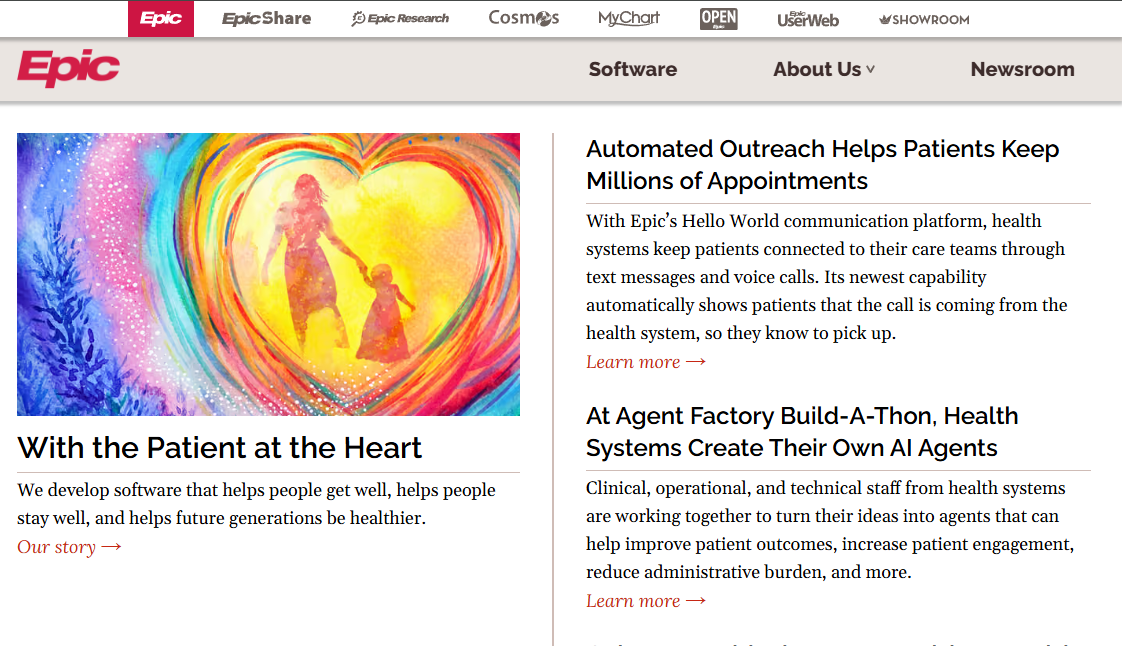
Epic is the dominant EHR platform for large health systems in the United States, providing integrated clinical, financial, operational, and patient-experience workflows. For organizations already standardized on Epic, the clinical communication question isn't "should we add a separate platform?" but "does Epic's native capability cover what we need?" Its care team communication tools surface inside the workflows clinicians already use, reducing the context-switch that standalone messaging apps require.
Best for: Health systems that use Epic broadly and want communication evaluated alongside their existing EHR operating model.
Key features
- EHR-connected care team communication inside existing workflows
- Mobile clinician access via Haiku and Canto applications
- Patient context and care team assignments within messaging
- Integrated clinical documentation and workflow hooks
- Enterprise governance and access controls
Why choose Epic: Epic makes the most sense when workflow consistency inside the EHR is the strategic priority. If your clinical teams already live in Epic and context-switching is the documented problem, native alignment matters more than a separate platform's feature depth. The trade-off is that specialized escalation logic, third-party alert routing, and advanced on-call scheduling may require additional configuration or supplemental tools.
Epic pricing: Epic negotiates enterprise contracts based on organization size, modules, implementation services, and hosting model. Contact Epic directly for scope-specific pricing.
G2 rating: 4.2/5
2. PerfectServe
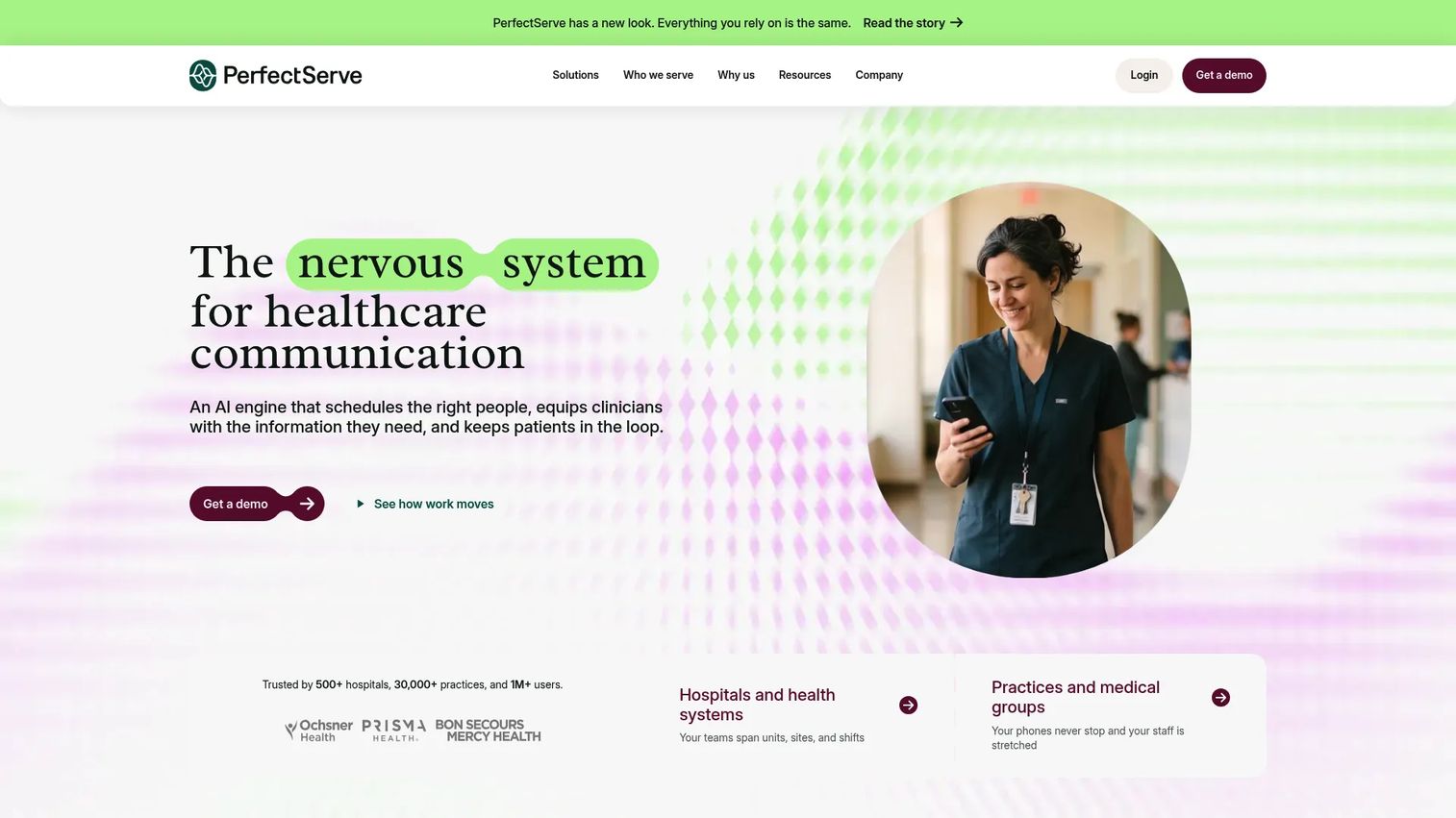
PerfectServe is a clinical communication and care-coordination platform built around the problem of reaching the clinician who is actually responsible right now. Its Dynamic Intelligent Routing uses live schedule data, role assignments, and coverage rules to send messages to the right person across voice, text, and secure messaging channels. PerfectServe also covers physician scheduling, shift management, patient and family engagement, and EHR-enriched communication for acute, ambulatory, and post-acute settings.
Best for: Health systems and medical practices where communication breakdowns trace to changing roles, shift swaps, and stale coverage data.
Key features
- Dynamic Intelligent Routing based on live schedules and coverage rules
- HIPAA-compliant secure messaging with escalation and fallback paths
- Physician scheduling and shift management
- Patient and family secure messaging and video
- EHR-enriched communication with patient context
Why choose PerfectServe: Shortlist PerfectServe when the documented failure mode is messages reaching the wrong person because coverage data is out of date. Its routing depth is the differentiator. Validate during the demo that routing rules handle shift swaps, temporary cross-coverage, and after-hours escalation correctly with your specific schedule structure.
PerfectServe pricing: PerfectServe sells through custom enterprise contracts. Pricing reflects organization size and the combination of modules selected. Contact PerfectServe for a quote.
G2 rating: 3.5/5, based on a small review sample
3. TigerConnect
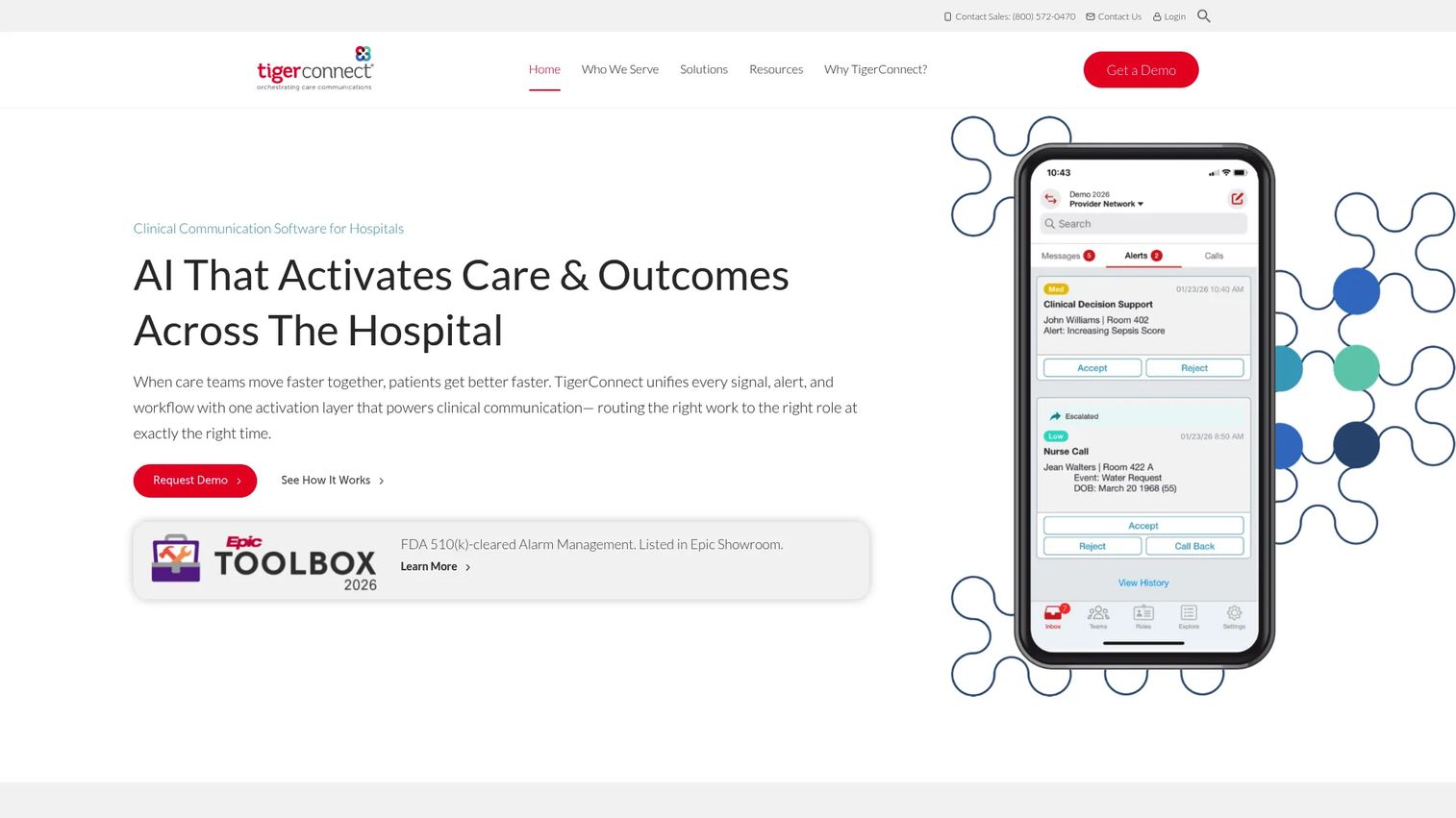
TigerConnect is a clinical communication and care-orchestration platform that routes clinical signals, alerts, and workflows to the right teams. It covers secure role-based messaging with patient context, real-time alert routing and closed-loop workflow orchestration, and patient engagement through secure messaging and video without requiring patient apps or passwords. TigerConnect is used across acute, ambulatory, and post-acute settings and has a broader deployment footprint than many category peers.
Best for: Healthcare organizations seeking a platform-grade clinical communication layer with strong care team messaging, alert management, and enterprise deployment experience.
Key features
- Role and team-based secure messaging with patient context
- Real-time alert routing with closed-loop escalation and acknowledgement
- Patient engagement via secure text and video without patient-side app installation
- Care team activation and workflow coordination
- Healthcare system integrations across EHR, scheduling, and monitoring sources
Why choose TigerConnect: TigerConnect is worth prioritizing when the operating need spans more than one care setting or one alert type. Its breadth covers the clinical trial management software workflows that some research-affiliated health systems also need to coordinate. Verify module-level fit before committing: Total cost and configuration scope vary based on which capabilities you actually activate.
TigerConnect pricing: TigerConnect uses a fixed-price subscription model and requires direct contact with sales for quote details. G2 lists four product editions: Clinical Collaboration Platform, Alarm Management and Event Notifications, Physician Scheduling, and Patient Engagement.
G2 rating: 4.5/5
4. symplr
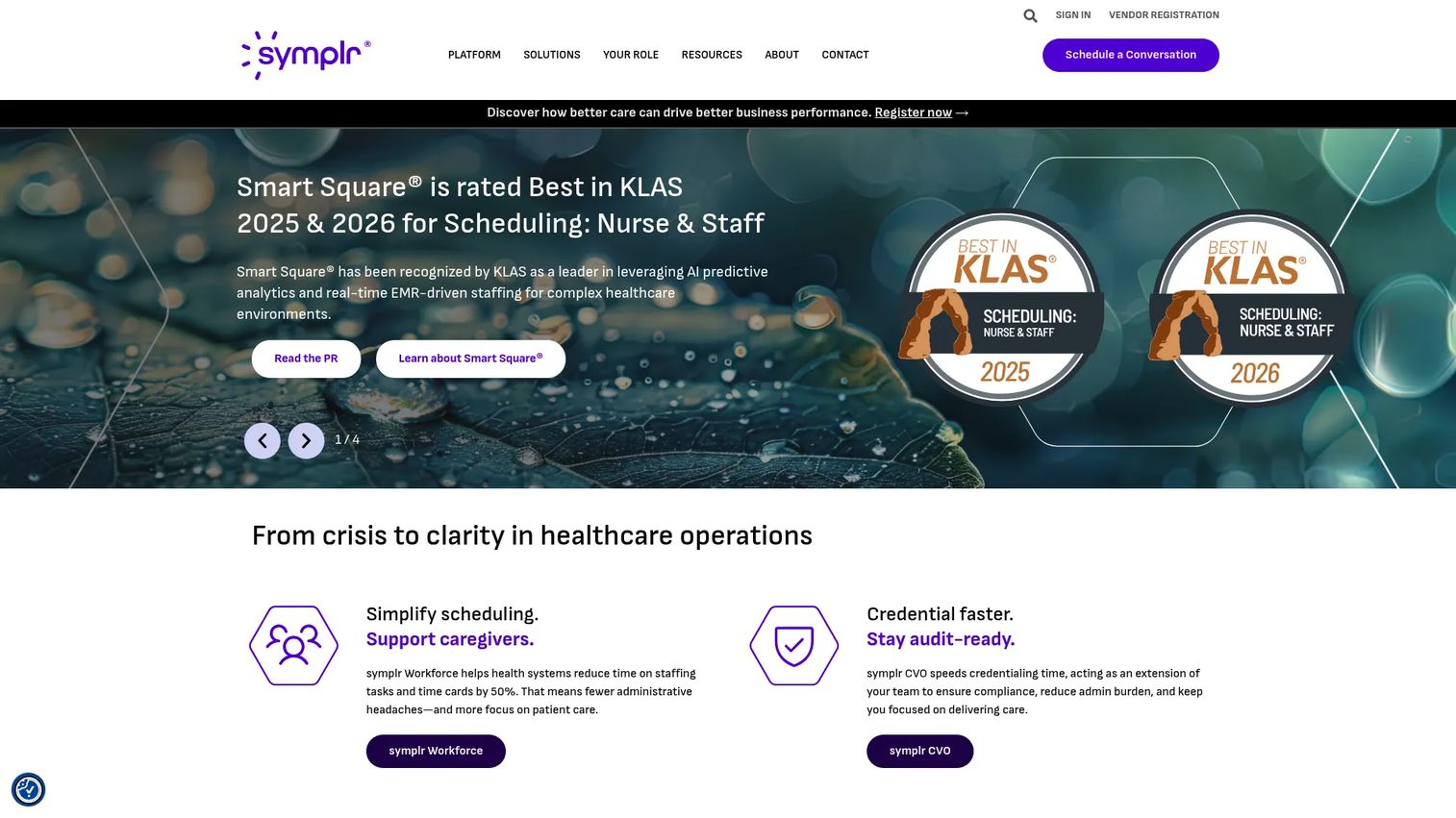
symplr is a healthcare operations software platform that covers workforce management, provider data, compliance, scheduling, talent, and clinical communication. Its clinical communication module, built on the Halo platform, includes role-based secure messaging, on-call scheduling, VoIP clinical calling, and critical results routing. For hospitals that want communication tied closely to workforce operations rather than managed as a standalone layer, symplr's breadth is relevant.
Best for: Hospitals that want clinical communication tied directly to scheduling, on-call assignments, and workforce coordination workflows.
Key features
- Role-based secure messaging through the Halo clinical communication platform
- On-call scheduling with coverage-aware routing
- VoIP clinical calling integrated with scheduling data
- Critical results and alert routing
- AI-driven workforce forecasting alongside communication tools
Why choose symplr: Choose symplr when the evaluation includes both clinical communication and workforce scheduling, and you want those systems to share data rather than sync across integrations. The platform's strength is operational breadth. Organizations evaluating symplr for communication alone should confirm that the module meets their specific alerting and escalation requirements without requiring the full workforce management suite.
symplr pricing: symplr directs buyers to request a demo for pricing. No numeric pricing is shown on the product pages. Contact symplr for a quote that reflects your specific module selection.
G2 rating: 4.3/5
5. OnPage
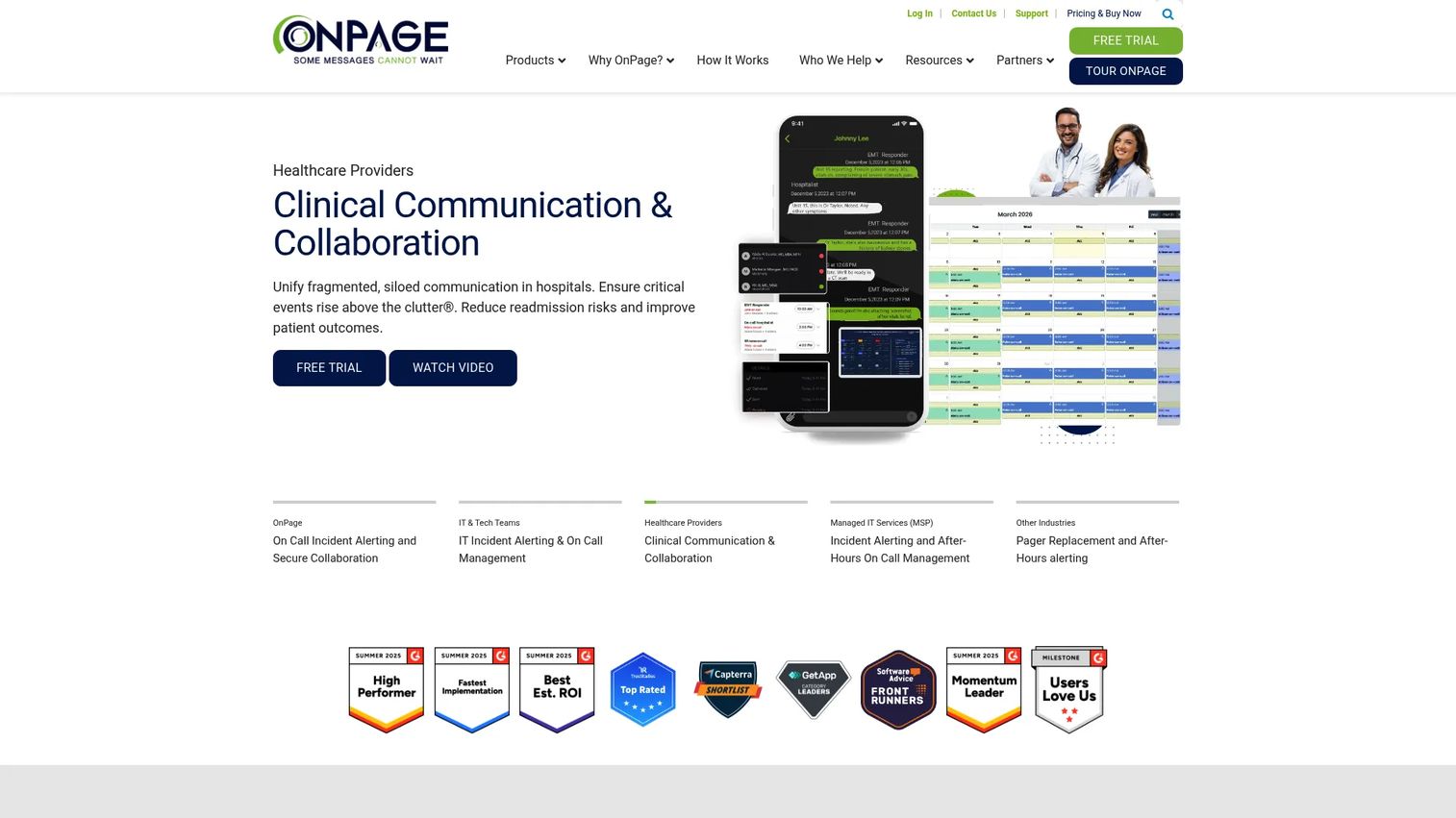
OnPage is a critical alerting and incident-management platform built around the problem of urgent messages that get buried, ignored, or never confirmed. Its persistent alert-until-read mechanism, escalation policies, and redundant delivery via phone, SMS, and email distinguish it from general-purpose secure messaging. OnPage covers secure two-way messaging, on-call scheduling, HIPAA-compliant messaging, and integrations with EHR, monitoring, nurse call, pharmacy, and IT systems.
Best for: Organizations where the core concern is fail-safe delivery of critical alerts, with verifiable acknowledgement and escalation when recipients don't respond.
Key features
- Persistent alert-until-read notifications with redundant delivery
- Configurable escalation policies with defined timer thresholds
- Secure two-way messaging with full audit trails and message logs
- On-call scheduling with integrated alert routing
- HIPAA-compliant messaging with reporting and analytics
Why choose OnPage: OnPage is the most accessible starting point on this list for organizations evaluating critical alerting specifically, because it publishes pricing and offers a trial. Its persistent delivery model makes it a strong candidate for pager replacement in contexts where message acknowledgement is a non-negotiable requirement. Test escalation policy configuration and mobile failover behavior during the trial period.
OnPage pricing: Plans start at $13.99 per user per month (billed annually) or $16.99 per user per month (billed quarterly) for the base OnPage plan. Enterprise Silver runs $22.99 per user per month and Enterprise Gold $28.99 per user per month (both billed annually). A 7-day free trial is available.
G2 rating: 4.3/5
6. Spok
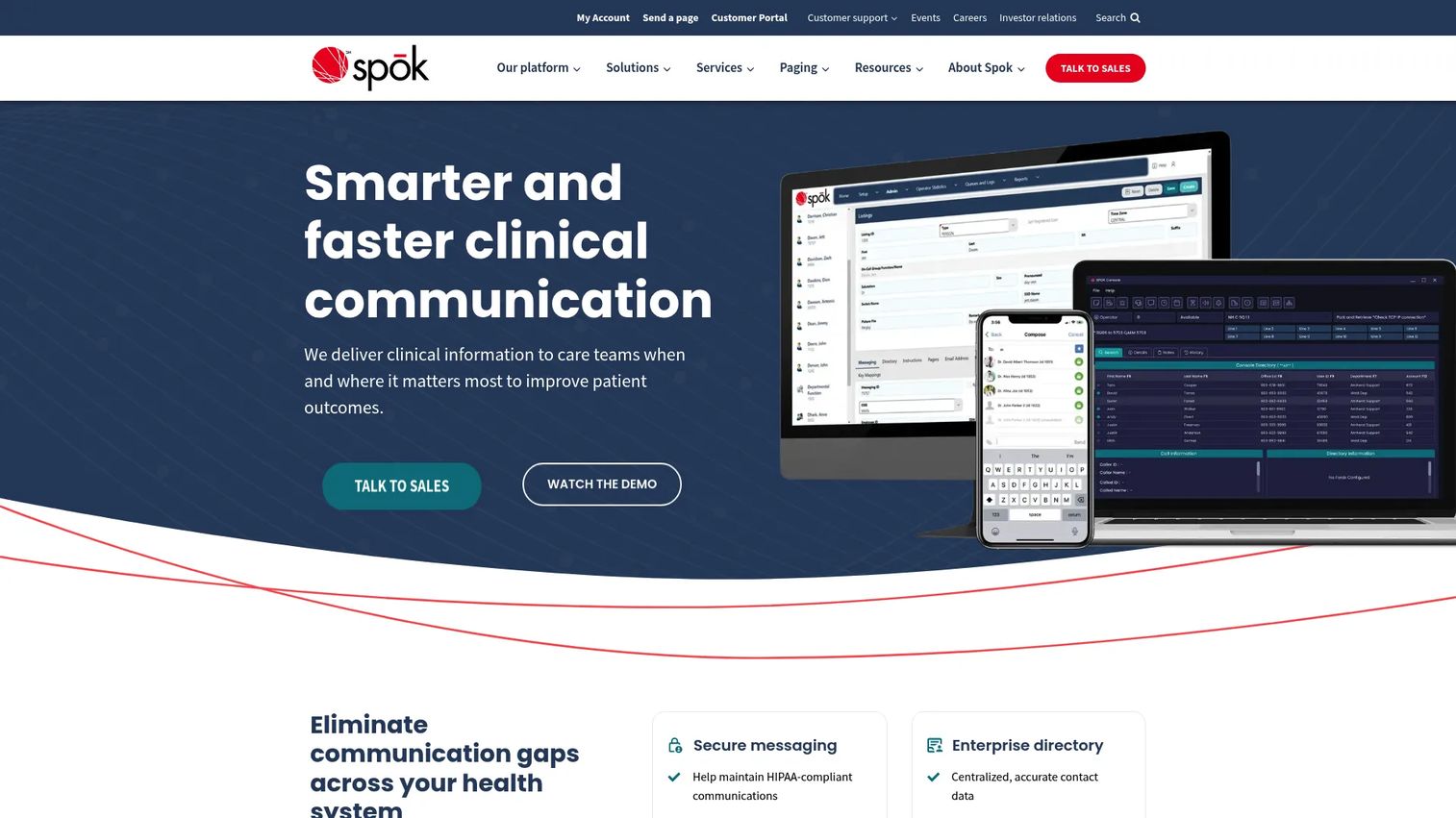
Spok provides unified clinical communication for hospitals and health systems, covering secure messaging, on-call scheduling, enterprise directory management, clinical alerting, and emergency notification. Its relevance is strongest in large organizations where communication modernization means consolidating legacy paging infrastructure, multiple departmental systems, and enterprise directory management alongside contemporary secure messaging.
Best for: Large health systems evaluating clinical communication as part of a broader enterprise communication modernization and interoperability strategy.
Key features
- Secure messaging designed to support HIPAA compliance requirements
- On-call scheduling and enterprise directory management
- Clinical alerting, emergency notification, and care team workflows
- Legacy communication system integration and modernization path
- Enterprise governance and access controls
Why choose Spok: Spok fits when the purchasing decision includes legacy pager system migration alongside modern clinical messaging. Organizations with significant installed infrastructure, multiple campuses, and complex directory requirements will find more in scope than those evaluating a clean-slate messaging deployment. Map the required workflows and integration dependencies before comparing Spok's scope against a more focused clinical messaging platform.
Spok pricing: Spok uses negotiated enterprise contracts. No numeric pricing is shown on the vendor site. Contact Spok for organization-specific pricing.
G2 rating: 3.8/5
7. MEDITECH
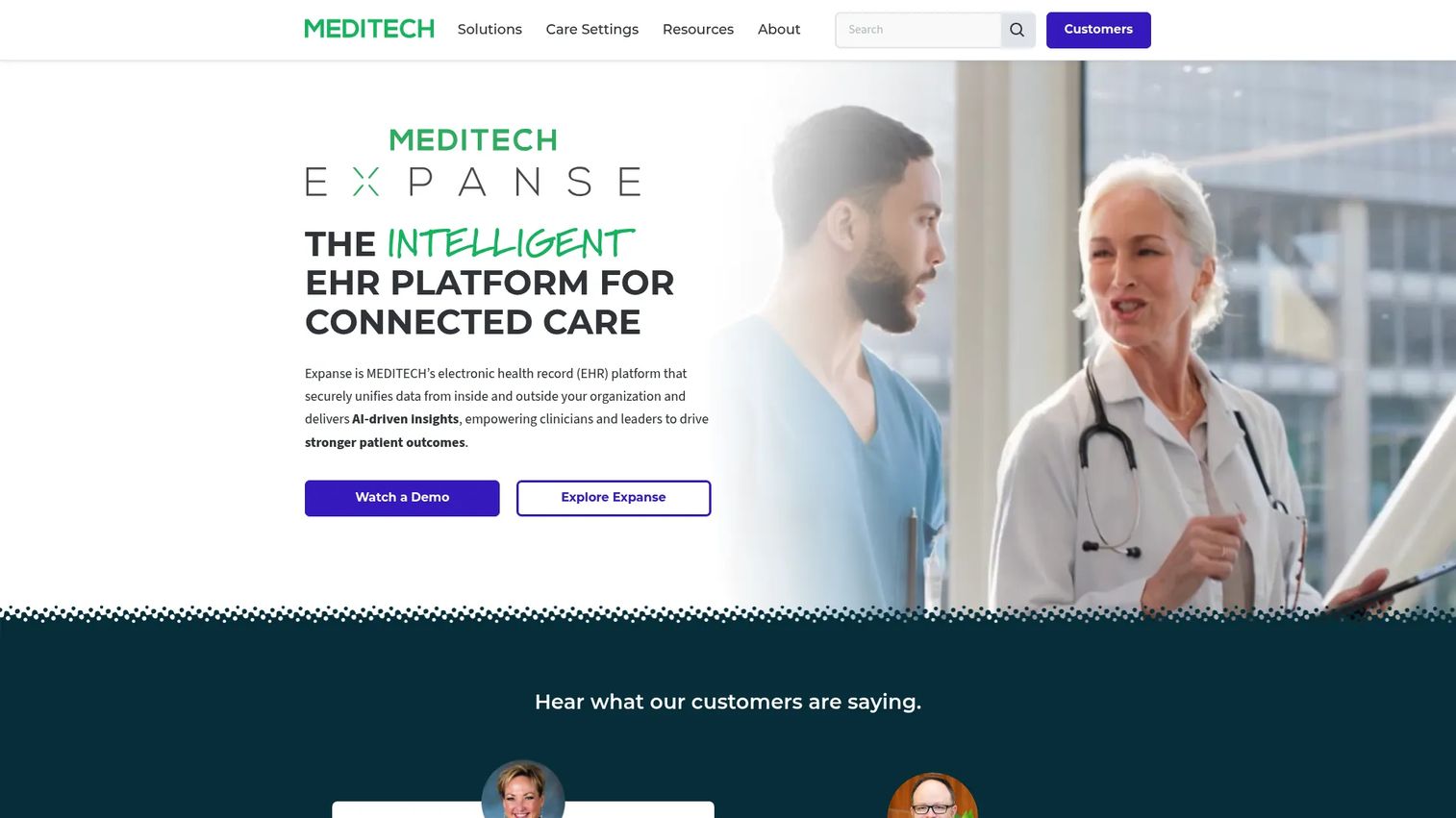
MEDITECH provides Expanse, a cloud-native electronic health record platform for hospitals and health systems. Its clinical communication capabilities sit inside the EHR, covering mobile clinician workflows via Expanse Now and Expanse Point of Care, ambient intelligence for clinical documentation, AI-powered search, and patient engagement through virtual care and population health tools. For organizations already operating on MEDITECH, the communication evaluation starts with whether Expanse's native capabilities meet care team messaging and alerting needs before adding a separate platform.
Best for: MEDITECH customers seeking communication capabilities that align with their existing EHR strategy and reduce workflow fragmentation.
Key features
- Mobile clinician workflows through Expanse Now and Expanse Point of Care
- EHR-embedded care team coordination and communication
- Ambient intelligence for clinical documentation
- Interoperability through Traverse Exchange
- Patient engagement and virtual care capabilities
Why choose MEDITECH: MEDITECH makes sense when the organization's strategic goal is reducing the number of systems clinicians switch between, and the EHR is already Expanse. Validate whether the available communication capabilities meet your specific alerting, escalation, and on-call routing requirements. Organizations with advanced critical results routing or after-hours escalation needs should confirm how Expanse handles those workflows before ruling out a supplemental communication platform.
MEDITECH pricing: MEDITECH negotiates enterprise contracts and does not show numeric pricing on its product pages. Contact MEDITECH for organization-specific scope and pricing.
G2 rating: 3.1/5
Considerations when choosing clinical communication software
Validate routing with live coverage data
A provider directory is not routing logic. Ask each vendor how the platform identifies the clinician currently responsible for a patient, role, location, or service line. Test shift changes, temporary cross-coverage, after-hours handoffs, and escalation rules with a scenario from your own schedule before signing.
Separate urgent alerts from routine conversation
Routine messages and critical alerts should not behave identically. Evaluate acknowledgement requirements, escalation timers, audit trails, and what happens when the first recipient doesn't respond. The path from "alert sent" to "alert acknowledged by the right person" is the thing that breaks. Make sure you can see that path in a live demo.
Map interoperability before comparing feature lists
List every system that creates, receives, or depends on communication events: The EHR, nurse call, patient monitoring, pharmacy, scheduling, identity systems, and mobile device management. Confirm which of those each platform integrates with natively, which require middleware, and who owns the integration after go-live. You can also explore how related healthcare software categories approach interoperability by looking at aged care management software and clinical documentation software to understand adjacent workflow dependencies.
Treat rollout as a clinical change program
A platform that clinicians don't adopt doesn't solve the problem. Assign clinical, IT, security, and operational owners before signing a contract. Start with one high-consequence workflow, prove routing accuracy and adoption, then expand. Organizations that treat this as an IT project rather than a clinical change program consistently report lower adoption.
Measure operational outcomes, not message volume
Track time to acknowledgement, escalation frequency, time to reach the correct clinician, and legacy device reliance. Establish baselines before go-live. Message volume tells you the platform is in use. Acknowledgement time and escalation rates tell you whether it's working.
Conclusion
The seven platforms on this list cover a wide range of clinical communication problems, but they don't all solve the same one. Before requesting demos, identify the specific failure mode you need to eliminate.
Epic and MEDITECH make the most sense when the strategic goal is EHR consistency and your organization is already deep in either ecosystem. PerfectServe is the clearest candidate when coverage-aware routing is the documented problem. TigerConnect covers the broadest clinical collaboration scope for organizations that need a platform-grade layer across multiple care settings. symplr fits when communication must integrate directly with workforce scheduling and role management. OnPage is the most accessible starting point for organizations focused on critical alerting with a clear escalation model. Spok addresses legacy modernization alongside clinical messaging for large, complex environments.
Pick one high-consequence workflow, such as critical results routing, after-hours escalation, or nurse-to-physician handoffs, and use it as the evaluation scenario for every vendor demo. That single test will tell you more than any feature matrix.
For healthcare software vendors evaluating how to communicate product value to clinical buyers, Start your journey with Guideflow today!
FAQs
Clinical communication software is a healthcare platform that connects care teams through secure messaging, alert routing, on-call scheduling, and clinical system integration. It goes beyond protected text messaging to include escalation logic, coverage-aware routing, workflow coordination, and audit trails across clinical environments.
Core features include HIPAA-oriented secure messaging, role-based and schedule-aware routing, critical alert escalation with acknowledgement requirements, mobile access for clinical staff, EHR integration for patient context, on-call schedule management, and governance controls for access and message retention. The right feature set depends on the specific workflow you need to fix first.
Many organizations evaluate these platforms specifically for pager replacement. The decision should include device policy for clinical staff, downtime workflow coverage, urgent alert delivery guarantees, escalation when the first recipient doesn't respond, and staff adoption planning. A platform that replaces pagers without reliable escalation creates a new failure mode instead of eliminating the old one.
Common integration goals include pulling patient context and care team assignments into messages, routing alerts from EHR-generated events such as lab results or order flags, writing communication events back to the clinical record, and using EHR-based clinician directories as the source of routing data. Integration depth varies significantly by platform, EHR version, and configuration scope. Validate specific integration behavior during the demo, not during contract negotiation.
Secure messaging handles protected communication between clinical staff, with audit trails and basic delivery confirmation. Clinical collaboration software adds scheduling-aware routing, on-call management, critical alert escalation, care team activation, closed-loop acknowledgement, and workflow coordination across multiple clinical source systems. The distinction matters because a secure messaging tool alone may pass a security audit without solving the operational problem.
Run a scenario test during the vendor demo: A critical result arrives after hours, the assigned clinician is unavailable, the first escalation attempt fails, and the system must route to the next valid recipient. Evaluate whether acknowledgement is required, how the audit trail captures each step, how quickly escalation triggers, and whether the fallback path matches your actual clinical structure. This scenario exposes gaps that a feature checklist won't show.
Yes. Ambulatory networks use it for after-hours coverage and critical results routing between primary care and specialists. Post-acute organizations use it for care transitions and staff coordination across facilities. Specialty clinics use it to manage on-call coverage and urgent patient communication. The specific workflow, staffing model, and system integration requirements determine which platform fits a given setting.