A storm hits at 3 a.m. Your routes need to change because one crew called out sick. Half your commercial clients want to know when their lots will be cleared. Your office manager is fielding calls while trying to figure out who plowed what last night so you can invoice it. And you still have a stack of estimates to send before the next system moves in.
That is the real problem snow contractors face. Not the snow. The coordination around the snow. Routes, crews, documentation, and cash collection all peak at the exact same moment, and the office becomes the bottleneck.
The right snow removal software fixes that by turning scattered manual work into a repeatable operation. It keeps routes organized, crews informed, jobs documented, and money moving without every decision routing through you. The market backs the shift. According to MarketIntelo (2025), the global snow removal management software market was valued at $0.8 billion in 2025 and is projected to reach $1.7 billion by 2034, growing at a 9.2% CAGR. Cloud-based deployments already account for 62.3% of that market, so most operators are running on connected, mobile-ready systems rather than spreadsheets.
This guide ranks seven tools worth evaluating for the 2026 season, covering full snow plowing software platforms plus a few specialized layers for weather and fleet visibility.
What's inside
This is a practical shortlist for snow contractors, lawn care companies that add winter work, and owner-operators who want fewer callbacks and faster cash collection. We looked at snow removal management software across five criteria that actually matter in the field: operational fit for storm-driven scheduling and dispatch, accounting sync depth including QuickBooks integration, mobile workflow quality for crews on the road, field visibility for proof of service, and winter-specific features like weather context and subcontractor access. Some entries are full back-office platforms. Others are supporting layers you pair with a core system.
TL;DR
- Best overall: Jobber, for broad all-in-one coverage across quoting, scheduling, dispatch, invoicing, and QuickBooks sync.
- Best for automation-heavy crews: Service Autopilot, for one-click routing and deep workflow automation across service lines.
- Best for process-driven operations: WorkWave, for deeper routing, dispatch, and customer portal workflows at scale.
- Best for all-season plus proof of service: Yeti Software, for snow and lawn care with GPS crew tracking, site photos, and liability documentation.
- Best for weather-driven decisions: WeatherWorks, for certified snowfall totals and storm intelligence that support bidding and deployment.
- Best for fleet visibility: Fleetmatics, now part of Verizon Connect, for near real-time GPS tracking across your trucks and assets.
What is snow removal software?
Snow removal software is a business management platform that helps snow and ice contractors quote, schedule, dispatch, route, document, and bill recurring and per-event snow work from one system. It replaces the whiteboard, the group text, and the shoebox of paper tickets with a connected workflow that runs on both desktop and a snow removal mobile app.
The strongest snow removal business software covers the full operational cycle. Core capabilities to expect:
- Quoting and estimating: Build snow removal estimates and seasonal contract quotes, then convert accepted bids into scheduled work.
- Scheduling and dispatch: Assign crews, adjust routes mid-storm, and update a live dispatch board as conditions change.
- Route optimization: Sequence stops so crews cover more sites with less windshield time.
- Job completion tracking: Capture proof of service with timestamps, notes, and site photos.
- Invoicing and payments: Generate invoices automatically, accept card payments, and reduce manual follow-up.
- QuickBooks integration: Sync invoices, payments, and customers so the books stay clean.
- Customer portal: Give clients self-service access to service history, invoices, and updates.
- Mobile field app: Let crews see routes, log completions, and communicate from the truck.
Most operators adopt a platform that bundles a snow removal CRM with scheduling and billing, then add specialized weather or fleet layers where the core system leaves a gap. The subscription model has become the norm here. Coherent Market Insights (2026) projects subscription-based contracts will account for 62.7% of snow removal services revenue in 2026, which mirrors how the software itself is sold.
When to use snow removal software
Software earns its place when manual coordination starts costing you jobs, hours, or cash. Three moments make the case clearly.
Reduce chaos during storm events
Storms do not respect your plan. A truck breaks down, a client adds a site, or a crew falls behind, and your route sequence collapses. Snow removal scheduling software lets you reassign stops from a dispatch board and push the change straight to the crew's phone. Route optimization keeps drive time down when you are covering dozens of sites in a compressed window. Instead of calling each driver to re-explain the plan, you update it once and everyone sees the current version.
Collect money faster after each job
Cash flow tightens when invoicing lags behind the work. Snow removal billing software generates invoices from completed jobs automatically, so a plowed lot at 4 a.m. can be billed before breakfast. Built-in card payments and QuickBooks integration mean fewer manual entries and fewer follow-up calls. For seasonal contracts, the system bills recurring amounts on schedule without anyone touching a spreadsheet.
Give crews and customers better visibility
Confusion drives office calls. A snow removal mobile app puts routes, site notes, and customer history in the crew's hand, so they know which entrance to clear and where the salt goes. Proof of service, timestamps, and site photos settle disputes before they become chargebacks. A customer portal lets clients check status and invoices themselves, cutting the calls your office fields during every storm.
Comparison table
Pricing and ratings below reflect what each vendor publishes on its own site. Where a vendor gates pricing behind a sales call or does not publish a figure, that is noted directly.
| # | Product | Intent | Key use case | Pricing | G2 rating |
|---|---|---|---|---|---|
| 1 | Jobber | All-in-one field service | Quoting, scheduling, invoicing, QuickBooks sync | From $49/mo | 4.8/5 |
| 2 | Service Autopilot | Automation-heavy operations | One-click routing, automation, QuickBooks | Contact vendor | Not published |
| 3 | WorkWave | Process-driven field service | Routing, dispatch, customer portal, billing | Contact vendor | Not published |
| 4 | Yeti Software | All-season snow and lawn | Dispatch, GPS tracking, site photos, subcontractors | Free plan; from $95/mo | Not published |
| 5 | Snow Wolf | Operations reference ecosystem | Workflow ideas and tool landscape | Not published | Not published |
| 6 | Fleetmatics | Fleet tracking layer | GPS fleet and asset visibility | Contact vendor | 3.8/5 |
| 7 | WeatherWorks | Weather intelligence layer | Certified snowfall totals, storm alerts | Request a quote | Not published |
1. Jobber
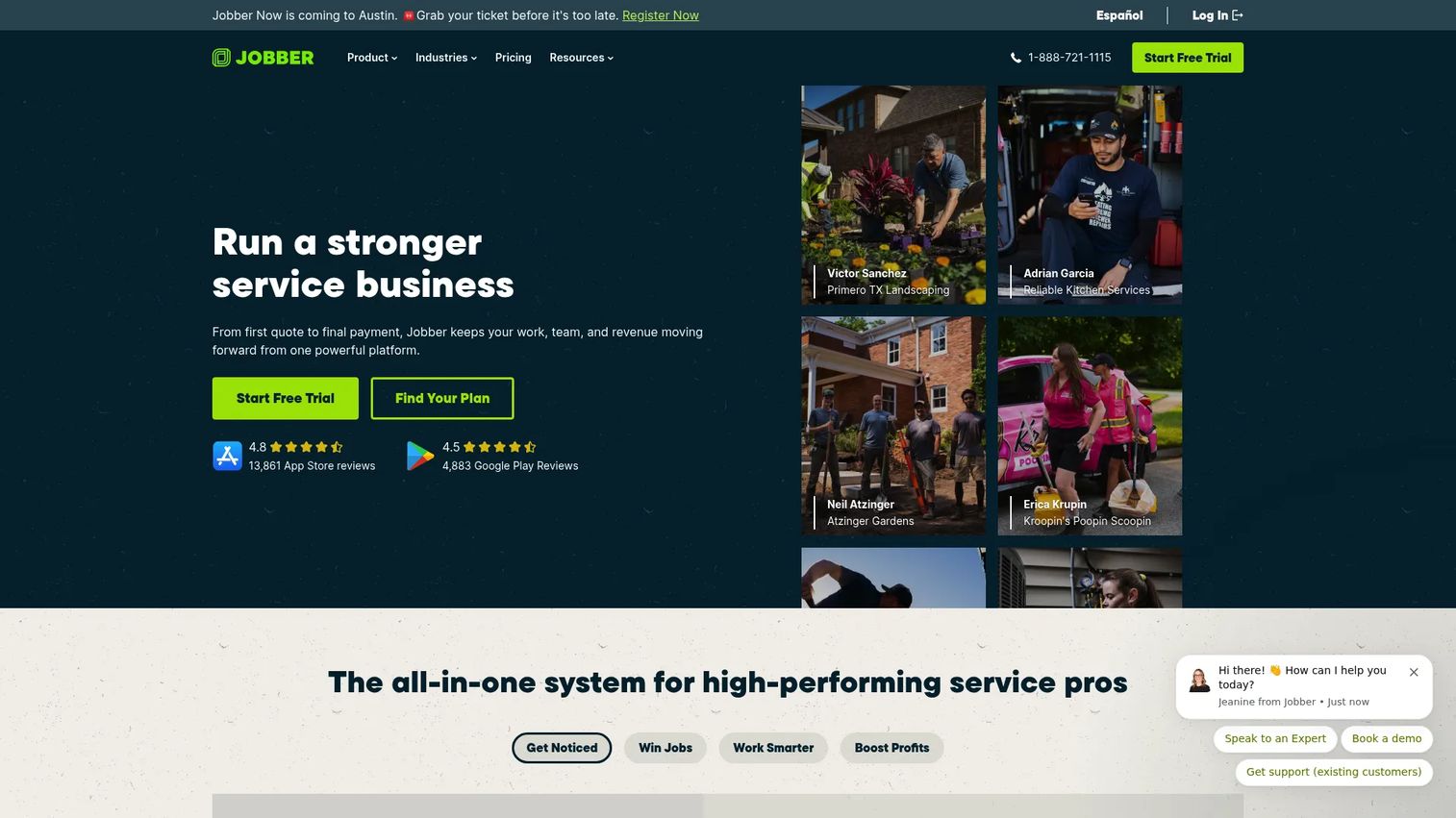
Jobber is field service management software built for home and commercial service businesses, and it works well as the operational backbone for a snow contractor. It covers online booking, request management, quoting, scheduling, job checklists, invoicing, and client communication in a single platform. For operators who want one system instead of a stack of point tools, Jobber is the broadest all-around choice on this list.
Where Jobber fits snow work: you build quotes and snow removal estimates, convert accepted bids into scheduled jobs, and dispatch crews from a central calendar. The snow removal mobile app gives crews their route, job notes, and checklists, then lets them mark work complete from the field. When the job is done, Jobber generates the invoice, accepts card payments, and syncs to QuickBooks Online so your books stay current without double entry.
Best for: Snow and home service teams that want quoting, scheduling, invoicing, and client communication running in one connected system.
Key strengths
- All-in-one workflow: Quoting, scheduling, job management, invoicing, and payments live in one platform instead of scattered tools.
- Client-facing communication: Automated reminders, follow-ups, and a customer portal cut the calls your office fields during storms.
- QuickBooks Online sync: Invoices, payments, and customers flow to your accounting system automatically.
Why choose Jobber: If your bottleneck is coordination across quoting, dispatch, and billing, Jobber consolidates all of it. It suits growing operations that want a repeatable process without a heavy implementation. The trade-off is that Jobber is a horizontal field service platform, so it leans less on deep snow-specific features like weather monitoring than a purpose-built snow tool.
Jobber pricing: Jobber publishes four plans on its pricing page: Core at $49/mo, Connect at $139/mo, Grow at $199/mo, and Plus at $499/mo. A 14-day free trial is available, and annual billing options are shown. Jobber's own materials cite a 4.8/5 rating. There is no free tier.
2. Service Autopilot
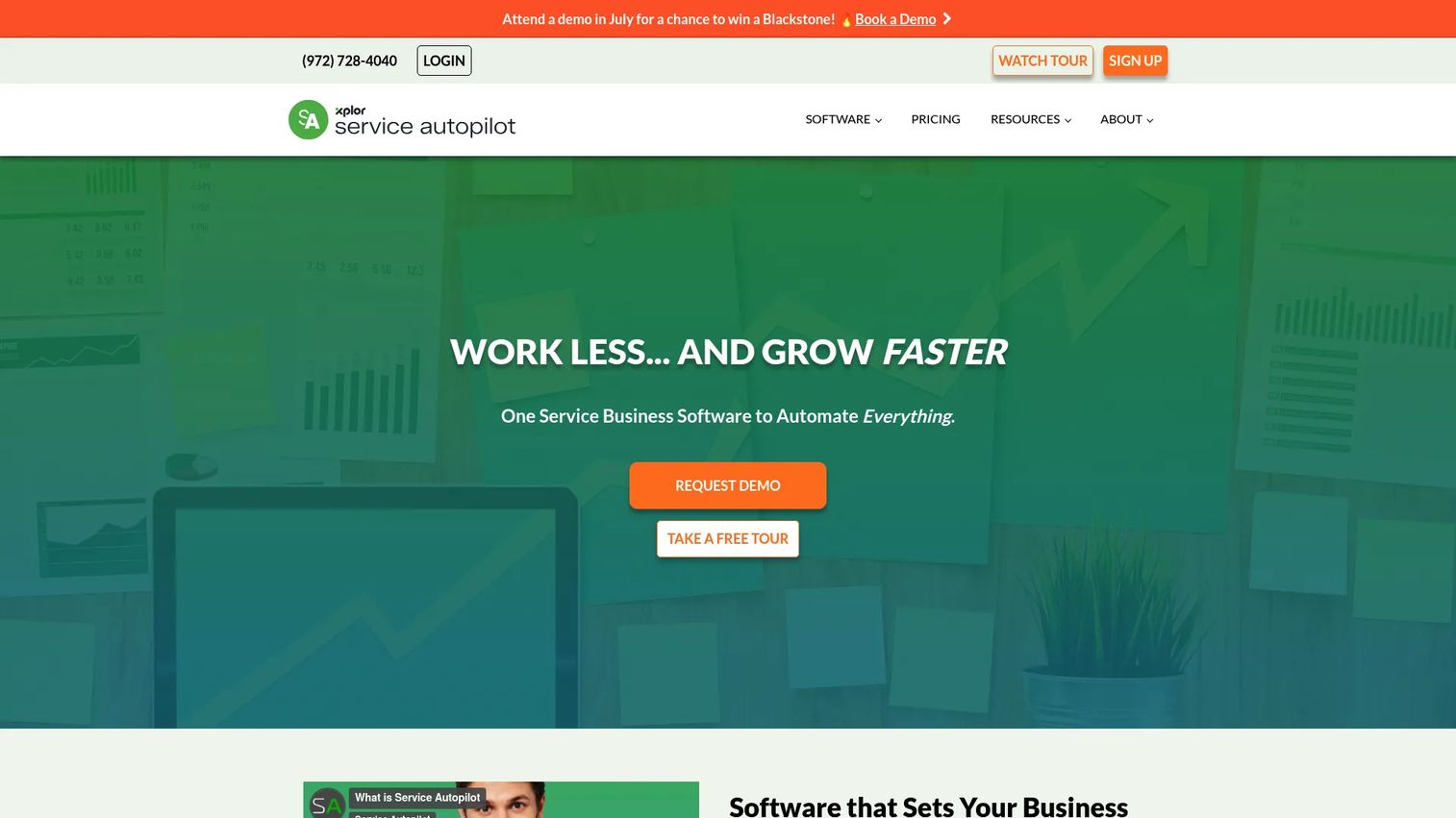
Service Autopilot is field service management software built for service businesses including lawn care, cleaning, landscaping, and snow. Its calling card is automation: it schedules and routes jobs with one click, tracks GPS and team hours, handles invoicing and credit card payments, and layers on automations, reporting, and estimates. For snow operators running high job volumes, that automation depth is the draw.
For snow work specifically, Service Autopilot handles dispatch and route optimization for recurring plow routes, then automates the repetitive back-office steps: triggering invoices, sending client updates, and applying recurring charges for seasonal contracts. It integrates with QuickBooks, so your snow removal billing and accounting stay aligned. The automation engine is where operators with many similar jobs recover the most time.
Best for: Service businesses running high-volume, repeatable snow and lawn work that want automation to handle routing, billing, and client communication.
Key strengths
- One-click scheduling and routing: Assign and sequence jobs fast, then adjust as storms shift conditions.
- Automation engine: Trigger invoices, follow-ups, and recurring charges without manual steps.
- GPS and time tracking: See crew locations and hours to keep routes and payroll accurate.
Why choose Service Autopilot: If you run a multi-service operation and want to automate the repetitive work around scheduling and billing, Service Autopilot is built for that. Its tier ladder scales from a startup plan up to more advanced automation and multi-location support, so growing crews can add capability as they need it.
Service Autopilot pricing: Service Autopilot lists four plans on its pricing page: Startup, Pro, Pro Plus, and Elite. The page does not publish specific price figures and directs visitors to book a call for the details. Snow operators focused on automation typically evaluate the Pro or higher tiers, where the automation and multi-location features live.
3. WorkWave
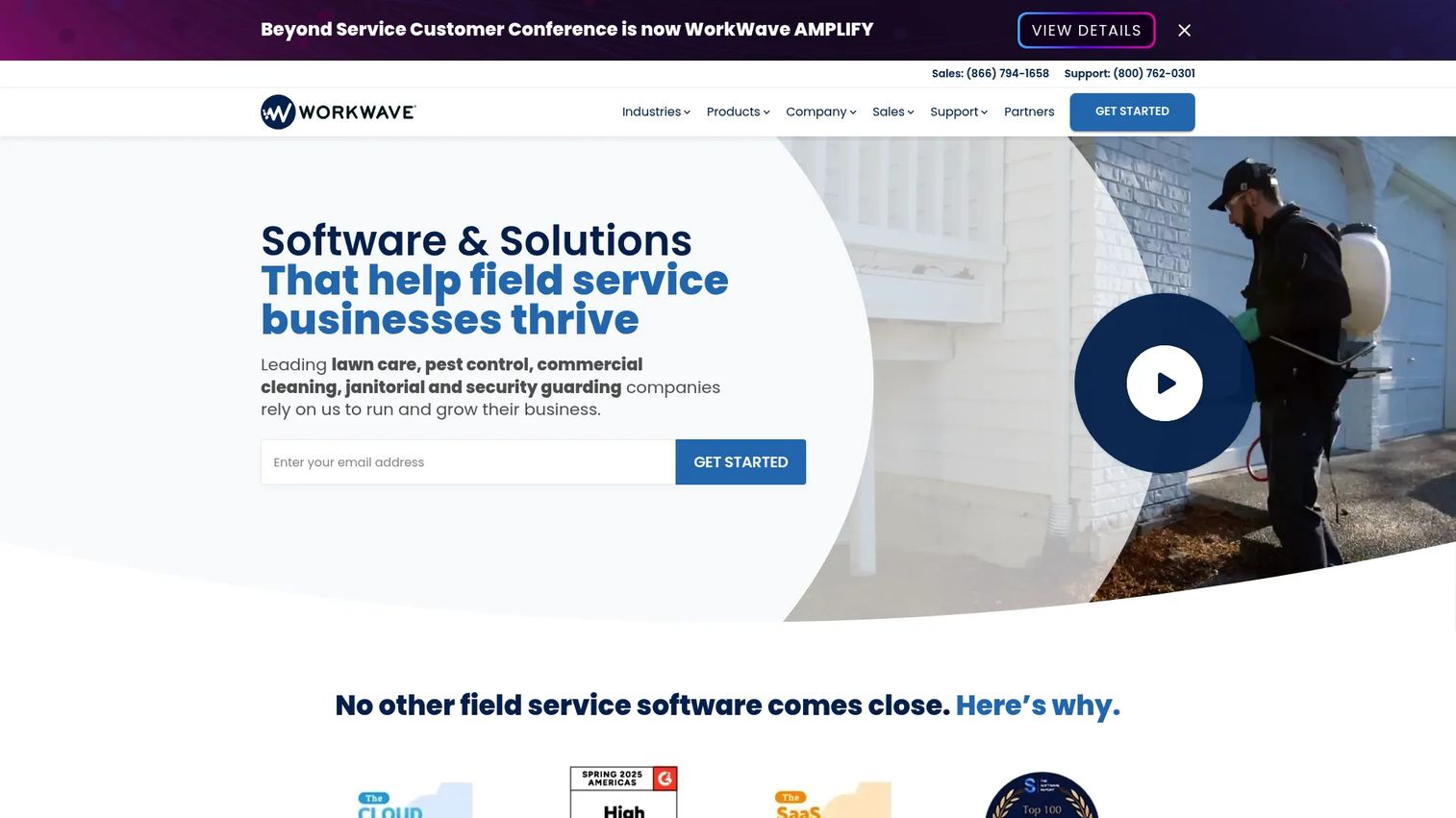
WorkWave builds vertical software for field service, delivery, and mobile-workforce businesses. It leans into industry-specific workflow depth: scheduling, dispatching, routing, invoicing, a customer portal, and billing and payments, all built for teams that run structured, repeatable operations. For larger or more process-driven snow operations, WorkWave's routing and dispatch depth is the appeal.
For snow contractors, WorkWave supports the full operational cycle from route planning through billing. Its customer portal gives clients self-service access to service history and invoices, digital forms capture field data, and reporting gives you visibility across routes and crews. The platform is generally a fit for operators who have outgrown lighter tools and want more configurable workflows and reporting. QuickBooks and API options support connecting WorkWave to the rest of your stack.
Best for: Larger, process-driven snow and field service operations that want deep routing, dispatch, and reporting with a customer portal.
Key strengths
- Deep scheduling and dispatch: Built for teams coordinating many crews and routes across a service area.
- Customer portal and digital forms: Clients self-serve while crews capture structured field data.
- Reporting and route planning: Visibility across routes, jobs, and crews for operational control.
Why choose WorkWave: WorkWave fits operators who need configurable, process-driven workflows rather than a lightweight setup. If your operation has grown past simple scheduling and you want reporting and routing depth, it is worth a look. Because it targets more complex teams, expect a more involved evaluation than with an entry-level tool.
WorkWave pricing: WorkWave does not publish a public price on its site. Its pages route visitors to a demo or sales conversation for pricing, which is common for vertical platforms aimed at mid-sized and larger operations. Ask about tier structure and whether pricing is seat-based or route-based during that conversation.
4. Yeti Software
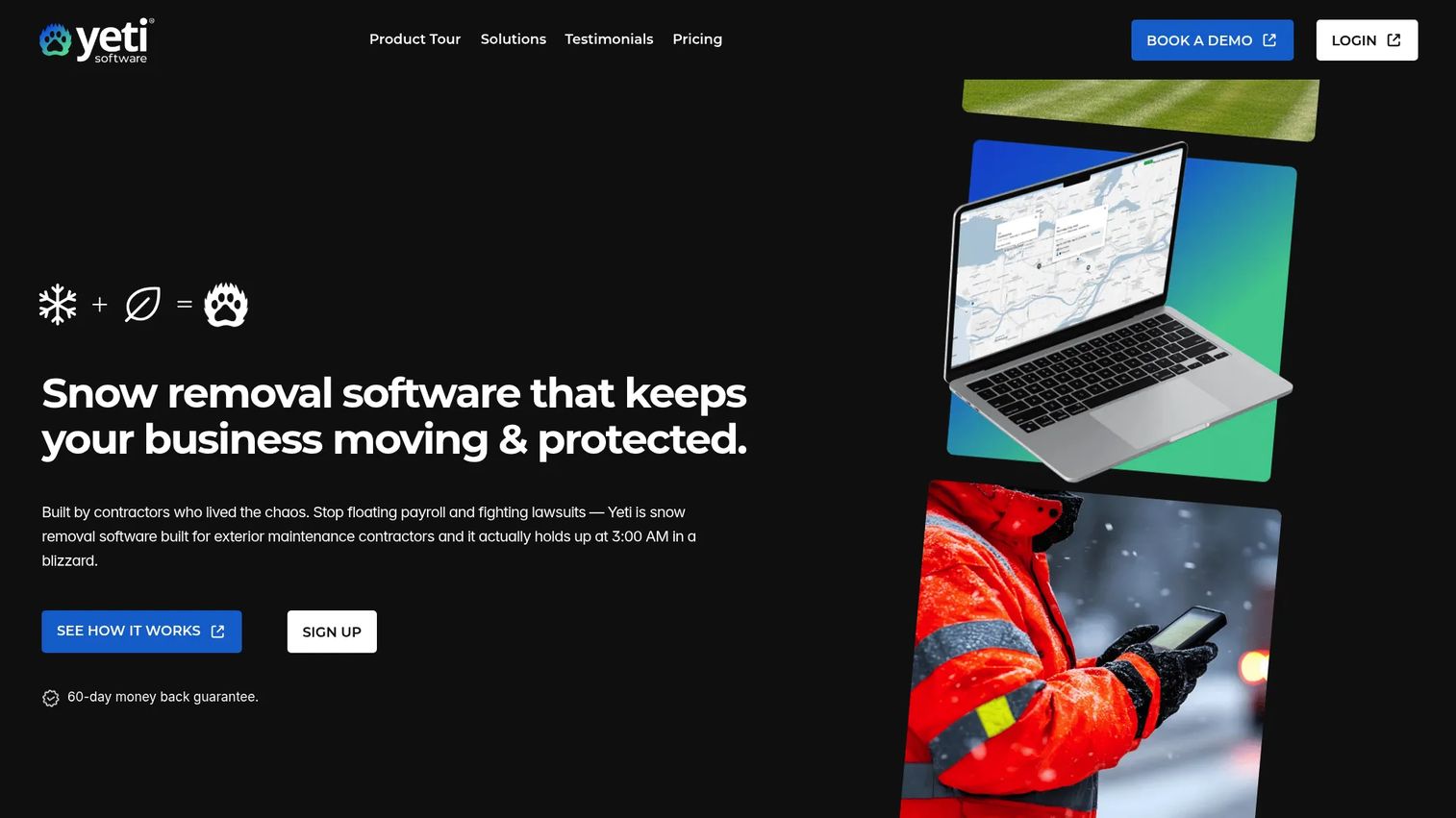
Yeti Software is purpose-built for snow removal and lawn care operations, which makes it the standout all-season lawn care and snow software on this list. It combines real-time dispatch and crew tracking, route and site map building, subcontractor management, quoting, billing, and reporting, with QuickBooks Online and Xero integrations. If you run snow in winter and lawn care the rest of the year, Yeti is designed for exactly that swing.
Proof of service is where Yeti earns its keep for snow contractors. Real-time dispatch and GPS crew tracking show you who is where, site photos document each cleared lot, and weather monitoring supports deployment timing. That documentation is not a nice-to-have. In snow work, a timestamped photo and a logged service record are your first line of liability protection when a client disputes whether a lot was cleared or salted. Subcontractor access lets you extend routes to outside crews without losing that documentation trail.
Best for: Snow and lawn care companies that need year-round scheduling plus strong proof of service and liability documentation.
Key strengths
- Real-time dispatch and GPS tracking: See crew locations live and adjust routes mid-storm.
- Site photos and weather monitoring: Document every job and time deployments to conditions.
- Subcontractor management: Extend routes to outside crews while keeping proof of service intact.
Why choose Yeti Software: Yeti is built for the snow-and-lawn operating model, so its features map directly to how these businesses run across seasons. The proof-of-service and subcontractor tools make it especially strong for contractors managing liability exposure and mixed in-house and outside crews.
Yeti Software pricing: Yeti publishes its pricing openly. A free Test Drive plan is available at $0/mo, a High Performance plan starts at $95/mo, and an Enterprise plan is priced by sales contact. The site notes a 30% annual discount. The free plan makes it easy to trial the workflow before committing.
5. Snow Wolf
Snow Wolf shows up in the snow software landscape more as a reference point than as a full back-office platform. Its blog content surveys the broader tool ecosystem, pointing operators toward established platforms like Service Autopilot and Fleetmatics alongside adjacent tools such as Go iLawn, CrewTracker, and WeatherWorks. If you are mapping out your winter stack, that landscape view is genuinely useful for understanding which categories of tools exist.
Treat this entry honestly: as a direct software platform, Snow Wolf is thinner than the dedicated vendors above, and its site was not consistently reachable during research. Use it as a jumping-off point for ideas about workflows and adjacent tools, not as the system you run your operation on. When you find a category it references that matters to you, such as fleet tracking or weather data, evaluate the specialized vendor directly.
Best for: Operators researching the snow software landscape who want a survey of tool categories and adjacent options.
Key strengths
- Ecosystem overview: Surfaces the range of tools operators pair together for winter work.
- Adjacent tool references: Points to fleet, measurement, and weather tools worth evaluating.
- Category education: Helpful for operators new to building a snow software stack.
Why choose Snow Wolf: Reach for Snow Wolf's content when you are still scoping which tool categories your operation needs, not when you are ready to commit to a platform. For core scheduling, dispatch, and snow removal job management software, the dedicated vendors on this list are the direct choices.
Snow Wolf pricing: No public pricing was verifiable during research, and the site was not consistently reachable. Because it functions more as a reference resource than a purchased platform, evaluate the specialized tools it points to rather than expecting a standard software subscription here.
6. Fleetmatics
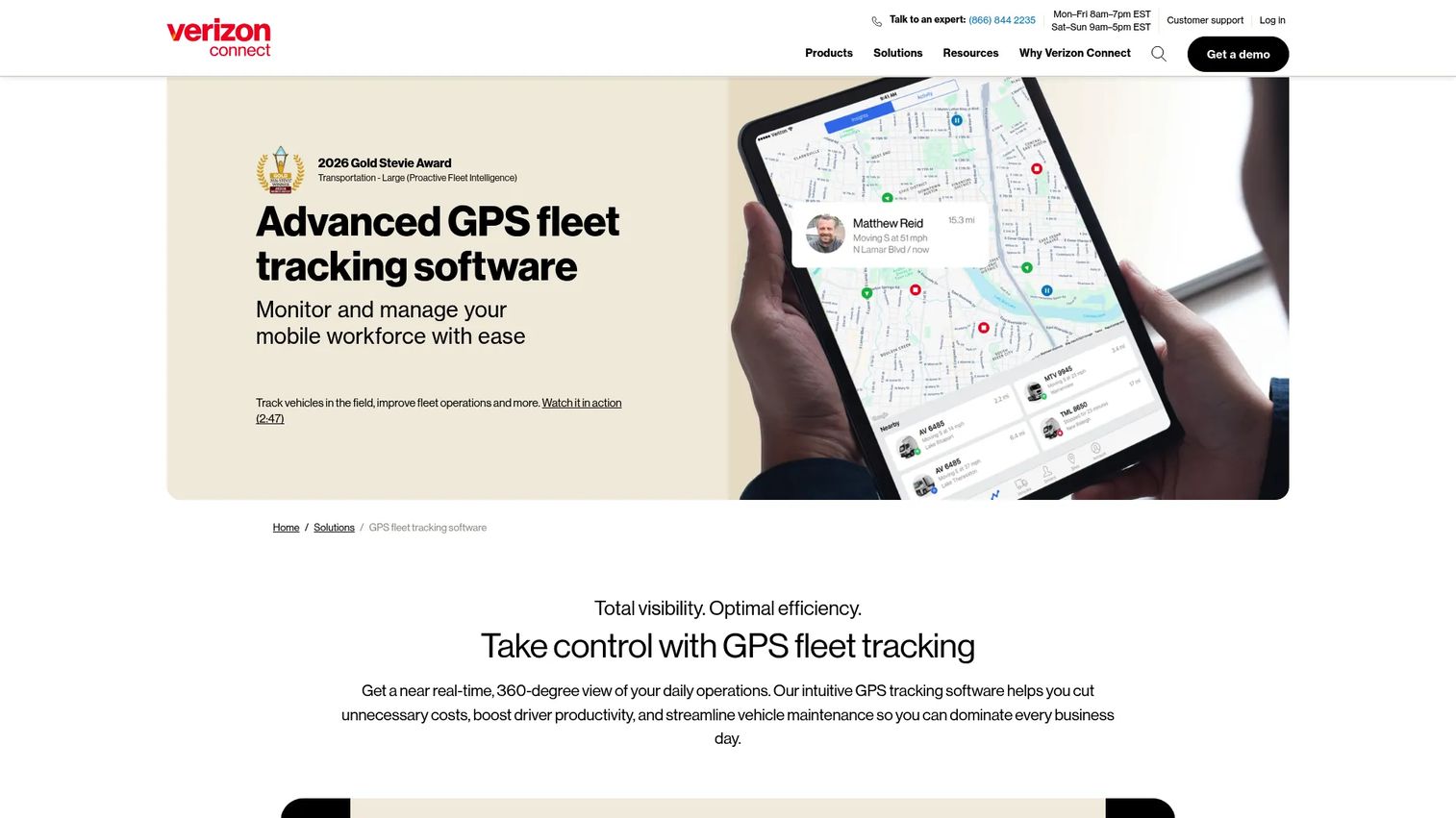
Fleetmatics is now part of Verizon Connect's fleet management and telematics platform, and it addresses one specific layer of snow operations: knowing where your trucks and assets are in near real time. It provides GPS fleet tracking, asset tracking, and compliance and ELD features. For a snow contractor, that visibility answers the storm-night question of which truck is on which route and how far along it is.
Fleetmatics is a fleet layer, not a full snow business platform. It does not quote jobs, generate invoices, or run a customer portal. What it does well is give you crew and vehicle movement across your service area, which is why some operators pair fleet visibility with a scheduling and billing tool like Jobber or Service Autopilot. The core platform handles the office workflow; the fleet layer confirms what is actually happening on the road.
Best for: Snow operators with a larger truck fleet who want near real-time GPS visibility layered onto their scheduling and billing system.
Key strengths
- Near real-time GPS tracking: See crew and vehicle locations across your routes during storms.
- Asset tracking: Monitor plows and equipment, not just trucks.
- Compliance and ELD: Support driver logs and fleet compliance requirements.
Why choose Fleetmatics: Choose it when fleet visibility is your gap and you already run a platform for scheduling and billing. As part of Verizon Connect, it sits within a broader telematics product family, so evaluate it as your fleet layer rather than as a replacement for snow removal management software.
Fleetmatics pricing: Fleetmatics does not publish a public price; pricing runs through Verizon Connect's sales process. Its G2 listing shows a 3.8/5 rating. Confirm current product naming and packaging during the sales conversation, since the product now sits under the Verizon Connect and Reveal family.
7. WeatherWorks

WeatherWorks provides meteorological services and weather-risk products built for operations that live and die by the forecast. Its offerings include Certified Snowfall Totals, Storm Alert, Weather Risk, a Forecast Management System, Past Weather Reports, Snowtistics, and VeriFreeze. For snow contractors, this is the decision-support layer that tells you what fell, where, and when.
WeatherWorks supports operational timing rather than back-office management. Certified snowfall totals back your billing and settle disputes over per-event triggers, storm alerts help you stage crews before conditions worsen, and past weather reports strengthen bids and defend liability claims. This kind of weather reporting is a differentiator many operators overlook until a client challenges an invoice or a slip-and-fall claim lands. It complements a scheduling and billing platform rather than replacing one.
Best for: Snow contractors who need certified, site-specific weather data to support bidding, deployment timing, and liability defense.
Key strengths
- Certified Snowfall Totals: Documented totals that back per-event billing and settle disputes.
- Storm Alert: Advance notice so you stage crews before conditions turn.
- Past weather reports: Historical records that strengthen bids and defend liability claims.
Why choose WeatherWorks: Reach for WeatherWorks when weather documentation drives your money and your risk exposure. It is a supporting layer, so pair it with the platform that runs your scheduling, dispatch, and billing. The value is in defensible weather data, not operational management.
WeatherWorks pricing: WeatherWorks does not publish public pricing. Its product pages, including Weather Risk, direct visitors to request a quote. Because pricing depends on service scope and coverage area, plan to request a tailored quote based on your route footprint.
Considerations
Before you commit to a platform for the 2026 season, weigh these factors against how your operation actually runs.
Accounting sync depth
Look past whether a tool "has QuickBooks integration" and check what actually syncs. Invoices, payments, and customer records should flow automatically without manual re-entry. Jobber and Service Autopilot both connect to QuickBooks, and Yeti supports QuickBooks Online and Xero. Confirm the sync matches your accounting setup before you buy.
Mobile field workflow
Your crews live in the snow removal mobile app during storms. Test whether drivers can see their route, log job completion, add site notes, and capture photos without friction. If the mobile experience is clumsy, adoption stalls and your proof of service breaks down exactly when you need it.
Proof of service and documentation
Timestamped completions, site photos, and service logs are your liability protection. Evaluate how each tool captures and stores this documentation, and how easily you can pull it when a client disputes an invoice or files a claim. Yeti and WeatherWorks are strong here for different reasons: one documents the work, the other documents the weather.
Route and dispatch flexibility
Storms force last-minute changes. Check how fast you can reassign stops, adjust a dispatch board, and push updates to crews mid-event. The tools that shine on a calm day are not always the ones that hold up at 3 a.m. with a truck down.
Seasonal and recurring billing
If you sell seasonal contracts, confirm the tool bills recurring amounts on schedule and handles per-event triggers cleanly. Automated, accurate billing is where snow removal billing software pays for itself across a season.
Conclusion
The right snow removal software depends on where your operation breaks down today. Start there, not with the longest feature list.
If your bottleneck is coordination across quoting, scheduling, and billing, Jobber gives you the broadest all-in-one coverage with clean QuickBooks sync. If you run high-volume, repeatable work and want automation to carry the load, Service Autopilot is built for that. WorkWave suits larger, process-driven teams that need deeper routing, dispatch, and reporting. Yeti Software is the pick for all-season snow and lawn operators who need strong proof of service and subcontractor access.
For supporting layers, WeatherWorks delivers certified weather data that backs your billing and defends your liability, while Fleetmatics adds near real-time fleet visibility on top of your core platform.
Pick the tool that matches your current operational bottleneck, trial it before the season ramps, and get your crews on the mobile workflow early so adoption is solid when the first storm hits. A repeatable operation beats winter hustle every time.
FAQs
Snow removal software is a business management platform that helps snow and ice contractors quote, schedule, dispatch, route, document, and bill snow work from one system. It replaces manual whiteboards and paper tickets with a connected workflow across desktop and mobile. Some tools are full back-office platforms, while others are supporting layers for weather data or fleet tracking.
Most full platforms include a snow removal mobile app so crews can view routes, log job completion, add site notes, and capture photos from the truck. Jobber, Service Autopilot, WorkWave, and Yeti Software all offer mobile access for field crews. The mobile workflow is where proof of service gets captured, so test it before you commit.
Yes. Most platforms support recurring and seasonal contract billing, applying scheduled charges automatically and handling per-event triggers for pay-per-push work. This matters because subscription and seasonal contracts make up a large and growing share of snow revenue. Confirm the tool bills recurring amounts on schedule and matches how you price contracts.
Snow removal billing software generates invoices from completed jobs automatically, so work done overnight can be billed the same morning. Built-in card payments and accounting sync reduce manual entry and follow-up calls. The result is faster cash collection and fewer disputes, because invoices tie directly to documented, timestamped jobs.
Jobber syncs with QuickBooks Online, Service Autopilot integrates with QuickBooks, and Yeti Software supports both QuickBooks Online and Xero. QuickBooks integration keeps invoices, payments, and customer records aligned without double entry. Always confirm the specific sync depth matches your accounting setup before buying.
Yes. Yeti Software is purpose-built as all-season lawn care and snow software, covering both operating models in one platform. Service Autopilot and Jobber also serve lawn care and snow operators who run year-round. If you swing between seasons, a single platform keeps your CRM, scheduling, and billing consistent all year.
Yes. Many platforms include GPS crew tracking so you can see who is where during a storm and adjust routes in real time. Yeti Software offers real-time dispatch and crew tracking, and Fleetmatics, now part of Verizon Connect, provides near real-time GPS fleet and asset tracking. Some operators pair a dedicated fleet layer with their scheduling and billing tool.
It depends on how you bill and how much liability you carry. If you run per-event contracts or face slip-and-fall exposure, certified weather data is worth having. WeatherWorks provides certified snowfall totals, storm alerts, and past weather reports that back your billing and defend claims. It works as a supporting layer alongside your core scheduling and billing platform.