Most dealership problems don't start on the lot. They start in the software.
A lead comes in through the website but never syncs to the CRM. Inventory shows a car online that sold three days ago. The general manager pulls a report that contradicts the one finance just built. None of these are big failures on their own. Stacked together across a month, they quietly bleed deals, hours, and trust.
The market is voting with its budget. The global auto dealer software market is projected to grow from USD 21.2 billion in 2025 to USD 39.24 billion by 2033, at an 8.0% CAGR, according to SkyQuest (2024). Roughly 95% of dealerships now run a dealer management system to handle inventory, operations, and digital leads, per Research Nester (2025). And over 66% of dealerships worldwide are shifting to cloud-based software, with about 54% reporting a roughly 30% improvement in lead-to-sale conversion from digital retailing, according to Global Growth Insights (2025).
The real question isn't whether you need car dealer software. It's which platform actually reduces the fragmentation across inventory, leads, websites, reporting, and lender workflows, instead of adding another disconnected tab. That's the lens this guide uses.
What's inside
This guide is for dealership owners, general managers, used-car operators, and BHPH teams choosing or replacing their software stack. We compared platforms on four criteria that decide whether the system makes the dealership easier to run: operational breadth (DMS, inventory, accounting), CRM and lead handling quality, dealer website and inventory syndication tooling, and reporting plus integration depth.
TL;DR
- Best all-in-one for independent dealers: DealerCenter combines DMS, CRM, inventory, and websites in one platform.
- Best used-car stack from one vendor: AutoManager pairs DMS, websites, and marketing without stitching tools together.
- Best modern operating platform: MotorDesk unifies stock, leads, checkout, and website in a clean interface.
- Best for shortlisting and research: Capterra is where you compare listings and reviews before you buy.
- Best for large dealer groups: CDK Global brings enterprise DMS depth and a broad retail ecosystem.
- Best for finance-heavy deal flow: Dealertrack leads on lender connectivity and digital contracting.
- Best dealer CRM focus: AutoRaptor CRM if your gap is sales follow-up, not the full DMS.
What is car dealer software?
Car dealer software is a category of platforms that run the core operations of an automotive dealership, including inventory management, lead and customer relationship management, dealer websites, deal and finance processing, accounting, reporting, and lender connectivity. It covers everything from a full dealership management system (DMS) to a focused dealer CRM, and increasingly bundles digital retailing so buyers can start deals online.
The category exists because dealership work is deeply interconnected. A single sale touches inventory, pricing, financing, compliance, titling, and follow-up. When those live in separate tools, data drifts and staff spend hours reconciling records instead of selling cars. Auto dealer software consolidates that flow so one record moves cleanly from lead to delivery.
Most dealer software programs cluster around a few core capabilities:
- Dealer management system (DMS): the operational backbone for inventory, deals, accounting integrations, forms, and payment processing.
- Dealer CRM: lead management, automated follow-up, omnichannel messaging, and customer records.
- Dealer websites: responsive storefronts with inventory syndication to marketplaces and classified listings.
- Inventory management: VIN scan, merchandising, pricing tools, and cross-channel sync.
- Reporting: sales, aging, gross, and lender performance dashboards for weekly decisions.
- Lender connectivity and F&I: submitting deals to lenders, digital contracting, and compliance checks.
- BHPH software: buy-here-pay-here loan servicing, payment tracking, and collections for in-house financing.
The right mix depends on your dealership type. A franchise group needs enterprise DMS depth. An independent used-car lot may want an all-in-one platform. A team whose only gap is follow-up may just need a stronger dealer CRM.
When to use car dealer software
Replace a fragmented tool stack
If your inventory tool, website provider, and CRM don't talk to each other, you're paying a hidden tax in reconciliation time and lost leads. A consolidated auto dealership software platform makes one record flow from listing to sale. This is the most common trigger for switching, and the one where breadth matters most.
Scale used-car operations without adding headcount
Independent and used car dealer software shines when volume grows faster than staff. Automated follow-up, inventory syndication, and mobile workflows like VIN scan and driver's license scan let a small team handle more units without dropping the ball on lead response.
Bring financing and compliance in-house
Dealers who run heavy F&I or BHPH need lender connectivity, digital contracting, payment processing, and compliance tooling built in. Bolting these onto a general CRM creates gaps that show up during audits. Purpose-built DMS platforms handle underwriting, deal flow, and titling as one connected workflow.
Comparison table
Here is how the seven platforms compare on intent, core strength, pricing, and rating. Pricing reflects publicly listed starting figures where available; several enterprise vendors route pricing through a demo request.
| # | Product | Best for | Key differentiator | Pricing | G2 rating |
|---|---|---|---|---|---|
| 1 | DealerCenter | All-in-one DMS + CRM | Independent dealers needing one platform | From $75/mo | 4.6/5 |
| 2 | AutoManager | Used-car stack | DMS, website, and marketing in one vendor | From $70/mo | Not listed |
| 3 | MotorDesk | Modern operating platform | Stock, leads, checkout, website | From £79/mo | Not listed |
| 4 | CDK Global | Enterprise DMS | Dealer groups and franchise stores | Custom | Not listed |
| 5 | Dealertrack | Finance and F&I | Lender connectivity and contracting | Custom | 4.4/5 |
| 6 | AutoRaptor CRM | Dealer CRM | Sales follow-up and lead management | Custom | 4.5/5 |
| 7 | Selly Automotive | CRM + BHPH | Lean independent and BHPH sales workflows | Custom | 5.0/5 |
1. DealerCenter
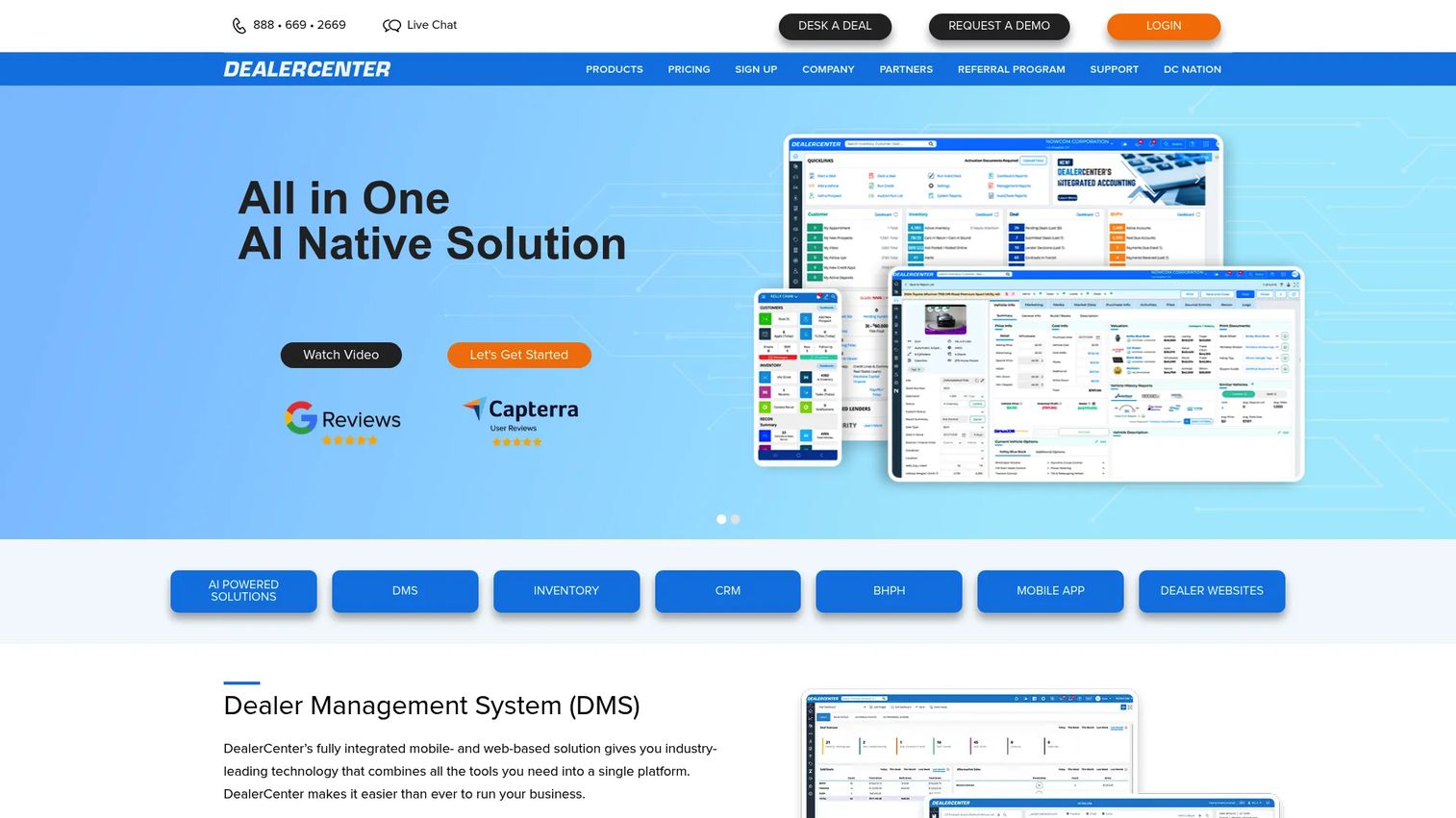
DealerCenter is a cloud-based dealership management platform built for independent dealers who want one system instead of five. It combines DMS, CRM, inventory merchandising, dealer websites, lender connectivity, and a mobile app under a single login. For an operator tired of exporting spreadsheets between tools, that consolidation is the whole pitch, and it holds up.
Best for: Independent auto dealers who want an all-in-one DMS and CRM without wiring together separate vendors.
Key strengths
- Deal and lender management: Structure deals and submit to lenders inside the same workflow, so financing doesn't live in a separate portal.
- Inventory merchandising: Price, photograph, and syndicate units to marketplaces and classified listings from one inventory record.
- CRM and lead management: Capture, assign, and follow up on leads with omnichannel messaging tied to each customer record.
Why choose DealerCenter: The appeal is breadth for the money. Independent lots rarely have staff to babysit integrations, and DealerCenter covers inventory, deals, financing, websites, and follow-up as one connected flow. It also supports BHPH and mobile workflows, which matter for smaller operators running in-house financing from their phones on the lot.
DealerCenter pricing: Publicly listed website plans start at $75 per month for the Premium plam, with a Pro website plan at $99 per month. The CRM Plus plan is $99 billed monthly and CRM Pro is $199 billed monthly. DealerCenter states some offerings are free for 30 days, so you can trial before committing. DealerCenter carries a 4.6/5 rating on G2.
2. AutoManager

AutoManager is dealer management, website, marketing, and CRM software aimed squarely at used-car dealerships. Its DMS handles inventory, F&I, BHPH, forms, payments, and a mobile app, while its WebManager side runs dealer websites with inventory syndication and posting integrations. If you want one vendor covering the operational spine and the storefront, that's the fit.
Best for: Used-car dealerships that want DMS, website, and marketing tools from a single vendor rather than three.
Key strengths
- Full DMS core: Inventory, F&I, BHPH, forms, and payment processing in one system, so deals and accounting stay connected.
- Websites and inventory syndication: Dealer websites that push listings to marketplaces and classified channels automatically.
- CRM and text marketing: Lead management with follow-up automation and text campaigns to keep prospects warm.
Why choose AutoManager: The value is a used-car oriented stack that doesn't force you to pick between operations and marketing. Inventory posted through WebManager stays in sync with what the DMS shows, which kills the classic problem of selling a car online that's already gone. For a lot doing steady used volume, that alignment is worth more than any single flashy feature.
AutoManager pricing: Pricing covers four offerings. Car Dealer Website & Marketing starts at $70 per month, the Dealer Management System is $88 per month, Automotive CRM & Text Marketing is $140 per month, and the bundled DMS + Dealer Website is $144 per month. That modular structure lets you start with the piece you're missing and add the rest as you grow.
3. MotorDesk
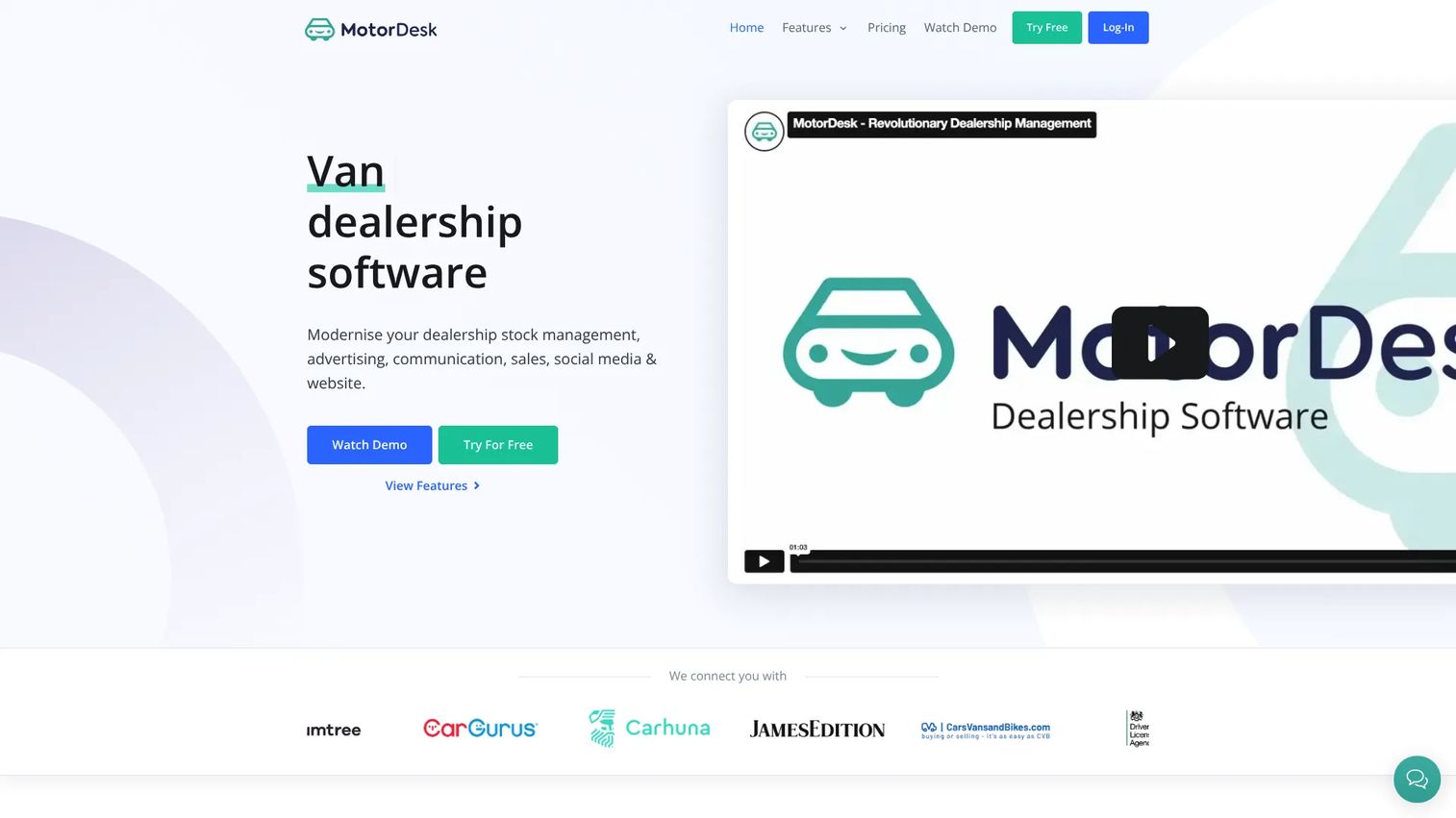
MotorDesk is a modern dealership operating platform that pulls stock management, leads, websites, online checkout, and automation into one clean interface. Where legacy DMS tools can feel like software from a decade ago, MotorDesk leans into the operating-platform framing, with omnichannel communication and cross-device access built in from the start.
Best for: Independent car dealerships that want an all-in-one DMS and website platform with a modern feel.
Key strengths
- Stock management: Manage inventory, pricing, and merchandising with syndication to listing channels.
- Leads and communication: Live chat, SMS, WhatsApp, and a built-in CRM keep every conversation in one thread.
- Websites and online checkout: A website editor plus a deal builder and online checkout so buyers can start purchases digitally.
Why choose MotorDesk: The draw is a genuinely integrated, modern platform rather than a bundle of aging modules. Omnichannel messaging means a lead from WhatsApp, SMS, or live chat lands in the same CRM as your web inquiries. The online checkout and deal builder push you toward digital retailing without a separate integration, which is where the market is clearly heading.
MotorDesk pricing: Plans are structured by vehicles for sale and staff accounts. Starter is £79 per month and includes 5 vehicles and 1 staff account, scaling up through Growth (£149), Scale (£269), Conquer (£499), Command (£849), and Excel (£1,349) per month, with a custom Prevail tier for the largest operations. A free trial is available, so you can test the workflow before choosing a tier.
4. CDK Global
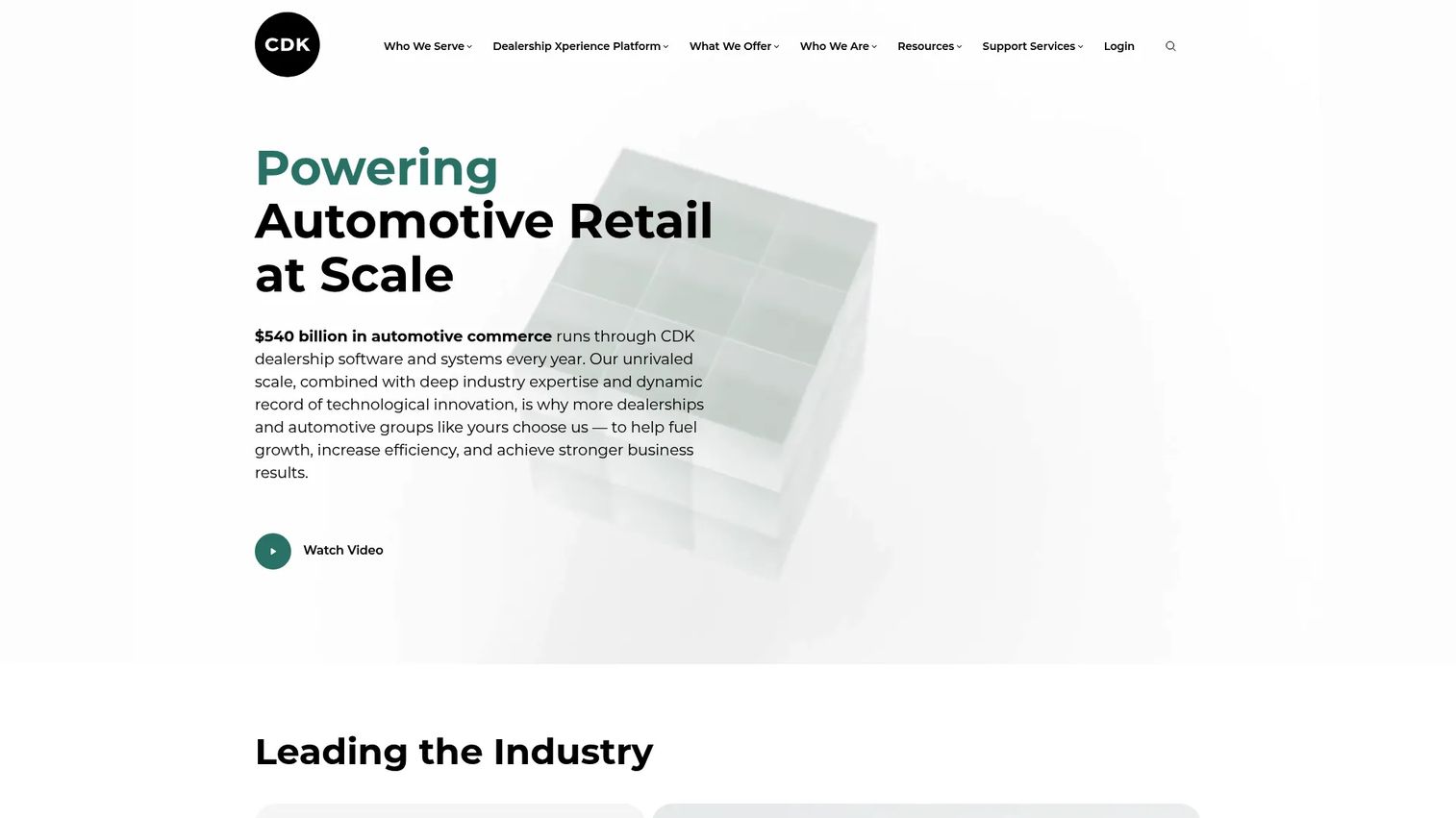
CDK Global is enterprise automotive retail technology built for dealerships, dealer groups, and OEMs. Its Dealership Xperience Platform spans a full DMS, digital retail, CRM, F&I, fixed operations, inventory, and intelligence. This is the deep end of the category, the kind of system a multi-rooftop franchise group evaluates when point tools stop scaling.
Best for: Auto dealerships and dealer groups that need integrated retail operations software across multiple stores.
Key strengths
- Dealership Xperience Platform: A unified platform connecting DMS, CRM, digital retail, and F&I across the operation.
- Fixed operations and service: Service workflow support alongside sales, so the whole store runs on one system.
- Inventory and intelligence: Inventory management paired with reporting and analytics for group-level visibility.
Why choose CDK Global: The case is depth and ecosystem. When you're running multiple rooftops, franchise reporting requirements, and heavy service departments, the breadth of an enterprise DMS earns its cost. CDK connects sales, F&I, fixed ops, and accounting integrations in a way point tools can't match at scale. Smaller independents will find it more platform than they need, but for dealer groups it's a serious contender.
CDK Global pricing: CDK does not publish pricing. The platform is quoted based on dealership size, modules, and store count, so you'll route through a demo and sales conversation. Budget for an enterprise commitment rather than a monthly subscription.
5. Dealertrack
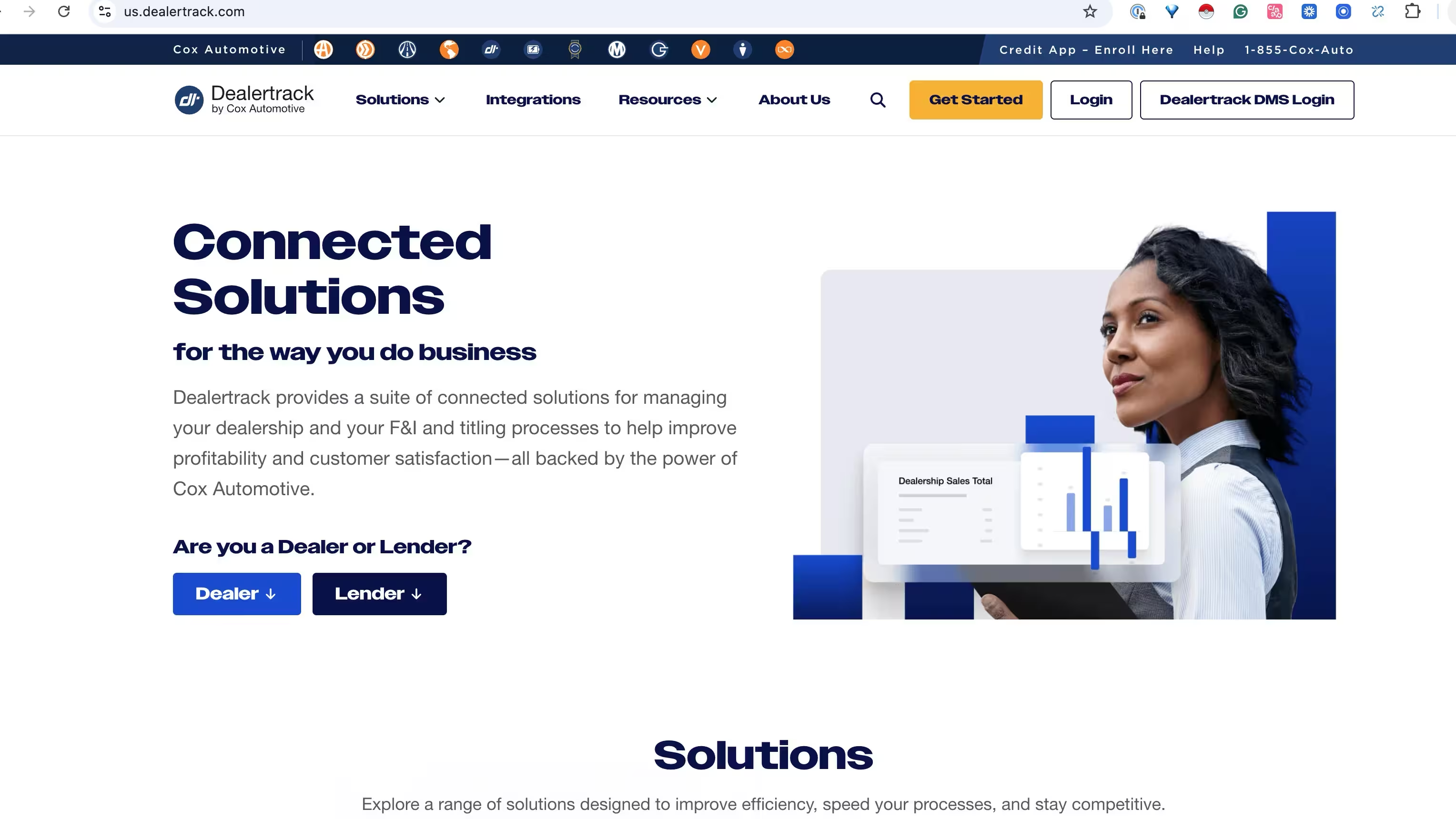
Dealertrack is connected dealership software with a clear center of gravity: finance. Its DMS pairs with digital contracting and signing, compliance tooling, and titling, and it plugs into a broad lender network. For dealers where the F&I office drives the business, that lender connectivity is the reason to look here first.
Best for: Auto dealerships that need an integrated DMS with strong F&I and lender workflows.
Key strengths
- Dealer management system: A DMS that keeps deals, accounting, and operations connected.
- Digital contracting and signing: Move deals to e-contracts and digital signatures to shorten transaction time.
- Compliance tools: Fraud checks, disclosure verification, and compliance safeguards built into the deal flow.
Why choose Dealertrack: If underwriting, lender access, and clean transaction workflow are your priorities, Dealertrack is built around exactly that. The digital contracting and compliance tooling reduce the manual paperwork that slows deliveries and creates audit risk. Dealers who prioritize financing speed and lender breadth over an all-in-one marketing suite will find the trade worthwhile. It holds a 4.4/5 rating on G2.
Dealertrack pricing: Dealertrack does not list pricing. The suite is quoted based on your operation and the modules you need, routed through a demo request. Expect enterprise-style packaging rather than a flat monthly rate.
6. AutoRaptor CRM
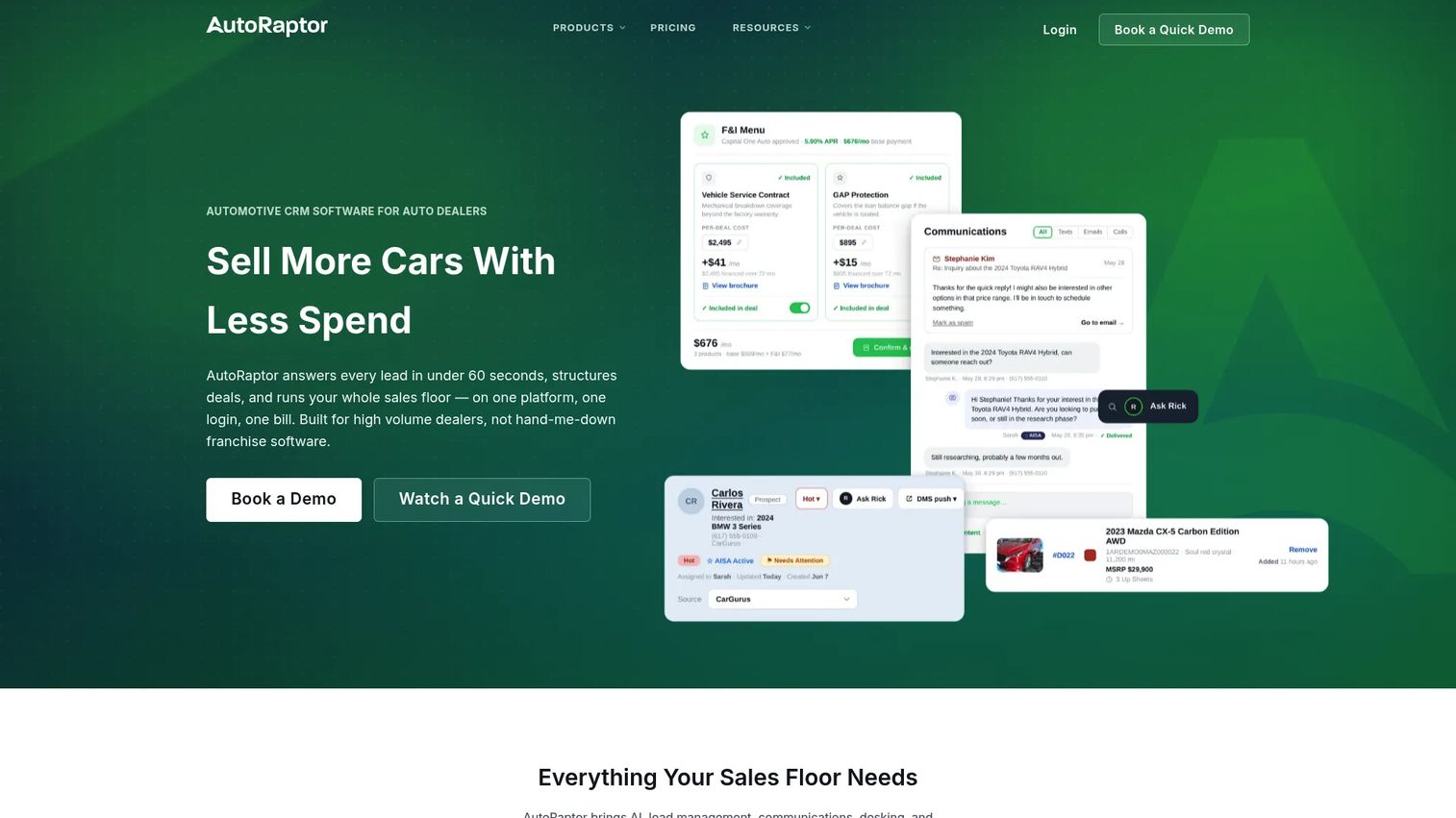
AutoRaptor CRM is an AI-powered automotive CRM for dealerships that already have a DMS but keep losing deals to weak follow-up. It focuses on lead management, a unified communications hub, and reporting, so the sales team stops letting warm leads go cold. If your gap is the sales process rather than the operational spine, this is the targeted fix.
Best for: Independent dealerships that need a dealership-specific CRM to tighten sales follow-up.
Key strengths
- Lead management: Capture, assign, and route leads so no inquiry sits unworked.
- Communications hub: Text, email, and calls in one place, tied to each lead's history.
- Reporting and analytics: Visibility into rep activity, response times, and pipeline health.
Why choose AutoRaptor CRM: Not every dealer needs to rip out their DMS. Sometimes the leak is follow-up, and a purpose-built dealer CRM plugs it faster and cheaper than a full platform migration. AutoRaptor's automation and lead assignment keep reps accountable, and the omnichannel hub means texts and calls log automatically. Choose it when your operations are fine but your response times aren't.
AutoRaptor CRM pricing: AutoRaptor uses custom pricing based on dealership size, user count, messaging volume, integrations, and subscription terms. The published plans are Starter (3-5 users), Pro (6-10 users), Power (11-15 users), and Power+ (unlimited users), with pricing quoted per dealership. It holds a 4.5/5 rating on G2.
7. Selly Automotive
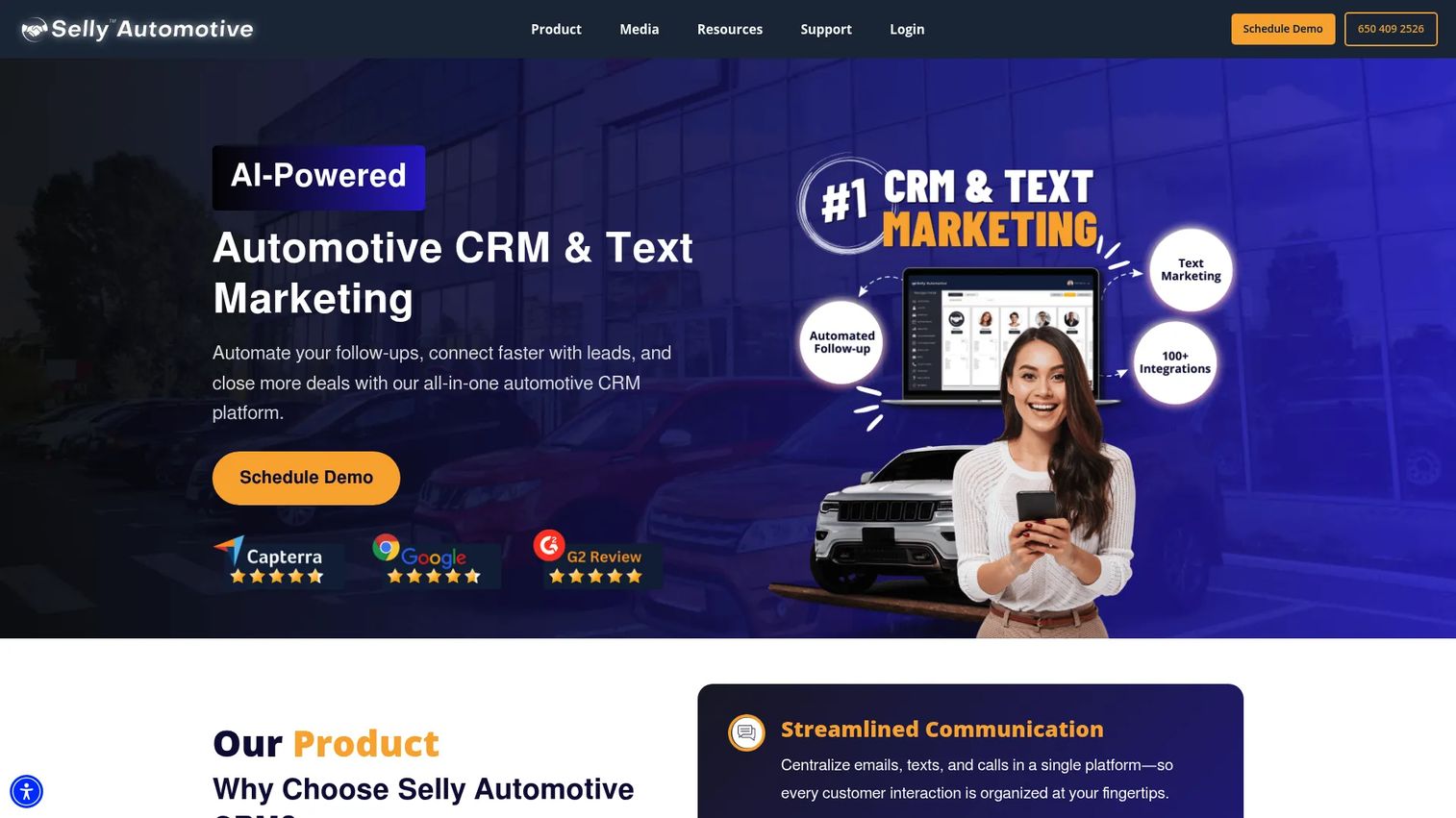
Selly Automotive is an automotive CRM and text marketing platform built for independent and BHPH car dealers. It combines AI-powered CRM automation, text marketing with blast campaigns, and a deal desking and proposal tool, aimed at teams that want a leaner sales workflow without enterprise overhead.
Best for: Independent and BHPH dealerships that need CRM, texting, and automation in one tool.
Key strengths
- AI-powered CRM automation: Automate lead routing and follow-up so small teams stay on top of every prospect.
- Text marketing: Blast campaigns and one-to-one texting to keep inventory in front of buyers.
- Deal desking and proposals: Build and share proposals to move deals forward faster.
Why choose Selly Automotive: For a lean independent or BHPH lot, Selly hits the sweet spot between capability and simplicity. The AI automation handles the repetitive follow-up that small teams skip when they get busy, and the text marketing keeps aged inventory moving. If you've outgrown spreadsheets but a full enterprise DMS is overkill, this is a right-sized alternative. It holds a 5.0/5 rating on G2.
Selly Automotive pricing: Pricing is provided by quote based on your dealership, so request a demo to get specifics. The positioning leans toward affordability for smaller independent operators.
Considerations before you choose
Shortlisting is easy. Choosing well takes a checklist. Run every finalist through these before you sign.
Operational breadth vs. focus
Decide whether you need a full DMS or just a stronger dealer CRM. An all-in-one platform reduces fragmentation but costs more and takes longer to implement. A focused CRM fixes a specific leak fast. Match the breadth to the actual gap, not the longest feature list.
Website and inventory sync
Confirm that inventory syncs cleanly between your DMS, your dealer website, and marketplace listings. A car that sells should disappear everywhere automatically. Ask each vendor to show the sync in a live account, not a slide, so you know the classic "sold online but still listed" problem is solved.
Lender connectivity and F&I depth
If financing drives your business, verify lender network coverage, digital contracting, and compliance tooling. General CRMs bolt these on; purpose-built DMS platforms bake them in. For BHPH operators, confirm loan servicing, payment processing, and collections are handled natively.
Reporting you'll actually use
You need clean sales, aging, gross, and lender performance data for weekly decisions. Ask to see the exact reports your GM will pull. If the data is trapped or contradicts other modules, the platform will create the same reconciliation mess you're trying to escape.
Switching and implementation cost
The real cost isn't the subscription, it's the migration. Ask about data import, downtime, training, and how long until the team is fully productive. A platform that's better on paper can still lose if the switch stalls your lot for a month.
Conclusion
There's no single best car dealer software, only the right fit for your dealership type. Independent lots that want one system usually land on DealerCenter or AutoManager for their all-in-one breadth. Dealers chasing a modern, digital-retail-ready platform should look hard at MotorDesk. Large groups and franchise stores evaluate CDK Global for enterprise DMS depth, while finance-heavy operations lean on Dealertrack for lender connectivity and contracting. If your only real gap is sales follow-up, a focused dealer CRM like AutoRaptor CRM, Vincent, or Selly Automotive fixes it without a full migration.
The decision comes down to five factors: DMS breadth, CRM quality, website and inventory tooling, reporting, and integrations. Start with Capterra to research, then shortlist two or three finalists and put each through a live demo with your own data. Weigh implementation and switching costs as seriously as the monthly price, because the platform that runs your dealership cleanly is worth far more than the one with the longest feature list.
FAQs
Car dealer software is a category of platforms that run dealership operations, including inventory management, dealer CRM, websites, deal and finance processing, accounting integrations, reporting, and lender connectivity. It ranges from a full dealership management system (DMS) to a focused dealer CRM, and it consolidates work that would otherwise live in disconnected tools.
The features that matter most are inventory management with syndication, a dealer CRM with automated follow-up, dealer websites, reporting for weekly decisions, and lender connectivity for F&I. The right weighting depends on your dealership type. A franchise group prioritizes reporting depth and service workflows, while an independent used-car lot may care more about inventory sync and follow-up.
Often yes, and many platforms bundle both. A DMS runs the operational backbone: inventory, deals, accounting, and payment processing. A CRM runs the sales relationship: lead management, omnichannel messaging, and follow-up. All-in-one auto dealership software combines them, but if your operations are solid and only follow-up is weak, adding a standalone dealer CRM is often the faster fix.
For used car dealer software, AutoManager and DealerCenter are strong all-in-one choices because they combine DMS, websites, inventory syndication, and CRM in one vendor. MotorDesk is a modern alternative with online checkout and omnichannel messaging. Independent and BHPH lots that mainly need CRM and texting often prefer Selly Automotive.
Pricing varies widely by model. Entry platforms start around $70 to $99 per month, with DealerCenter website plans from $75 per month and AutoManager offerings from $70 per month. Modular CRMs and DMS bundles run higher, and enterprise systems like CDK Global and Dealertrack use custom quotes based on dealership size, modules, and store count.
Yes. Most modern auto dealer software includes dealer websites with inventory syndication, so a single inventory record pushes to your site, marketplaces, and classified listings, then disappears everywhere once a unit sells. Confirm the sync works in a live account during evaluation, because inconsistent inventory across channels is one of the most common dealer software complaints.
Ask about data migration, downtime, training time, and how long until the team is fully productive. Confirm inventory sync, lender connectivity, and the exact reports your GM needs, all in a live account with your own data. The switching and implementation cost usually outweighs the subscription, so evaluate it as seriously as the monthly price.
Yes. BHPH software adds buy-here-pay-here loan servicing, payment tracking, and collections for dealers who finance in-house, capabilities a standard DMS or dealer CRM may not include. Platforms like DealerCenter, AutoManager, and Selly Automotive support BHPH workflows, so if in-house financing is core to your business, confirm native loan servicing and payment processing before you commit.