You built the sequence. You sourced the list. You hit send. Then 30% of your emails bounced, another 20% went to generic inboxes, and the phone numbers were months out of date.
Bad contact data is one of the most expensive invisible problems in outbound. It wastes touches, kills deliverability, and sends your best sequences into the void. The root cause is almost always the same: One data source can only cover so much. No single provider has complete, fresh coverage across every industry, region, or contact type.
That's where waterfall enrichment changes the math. Instead of betting everything on one vendor, you run contacts through multiple providers in sequence, each filling the gaps the previous one missed. According to Prospeo (2026), teams using a two-to-three-provider waterfall stack achieve 85 to 95% contact find rates, compared to 50 to 60% with a single-source approach. The B2B data enrichment market reflects that urgency, with Grand View Research projecting growth from $1.97 billion in 2025 to $5.48 billion by 2034.
The tools in this guide cover the full waterfall enrichment workflow: Contact discovery, email and phone verification, CRM activation, and data governance.
What's inside
This guide covers 13 tools built for waterfall enrichment workflows, CRM data hygiene, and contact coverage improvement. It's written for SDRs, RevOps operators, and sales ops teams evaluating their data stack.
Tools were selected based on:
- Coverage across email, phone, and company data
- Workflow fit with common CRMs and sequencing tools
- Verification and deliverability controls
- Practical fit for SDR and RevOps use cases
TL;DR
- Best overall waterfall enrichment: Apollo combines a large B2B database with built-in sequencing, making it a strong starting point for most outbound teams
- Best for multi-provider workflow automation: Clay routes contacts through 150+ enrichment providers in a single no-code workflow
- Best for verified mobile numbers: Datagma specializes in direct mobile discovery alongside verified work email
- Best for LinkedIn-sourced prospecting: LeadDelta enriches contacts directly from LinkedIn profiles and network data
- Best for CRM-native enrichment: HubSpot and Salesforce act as the operational destination where waterfall-enriched data gets activated and routed
- Best for enterprise data infrastructure: Snowflake centralizes enriched data at warehouse scale before distribution downstream
What is waterfall enrichment?
Waterfall enrichment is a contact data strategy that runs records through multiple data providers in sequence, using each vendor's output to fill the gaps left by the one before it. The logic is simple: No single provider achieves complete coverage, so each successive lookup raises the overall match rate until the record is complete or the chain ends.
A typical waterfall for email enrichment works like this: Provider A finds a verified work email for 60% of your contacts. Provider B then processes the remaining 40% and finds another 20%. A third provider closes more of the gap. The end result is significantly higher coverage than any one source alone.
Key capabilities to evaluate in any waterfall enrichment setup:
- Multi-provider sequencing: Ability to route contacts through two or more data vendors in a defined order
- Email finder and verifier: Discovery of work email addresses with syntax, domain, and SMTP validation
- Phone number enrichment: Direct dial and mobile number lookup across business and personal databases
- CRM enrichment: Push of completed records into Salesforce, HubSpot, or other CRMs with field mapping
- Data validation: Catch-all detection, bounce prediction, and deliverability scoring before outreach
- Workflow automation: Triggers, conditions, and routing logic that run enrichment without manual steps
- Governance controls: Deduplication, data freshness tracking, and GDPR-compliant sourcing
Understanding which tier of the waterfall a tool belongs to (source, orchestrator, or destination) helps you build the right stack rather than duplicating capabilities.
When to use waterfall enrichment
Improve email coverage for outbound sequences
Outbound sequences only work when the email address is valid. If your current source leaves gaps in coverage, or your bounce rate is creeping above 3%, adding a second provider in sequence is the fastest fix. Waterfall enrichment lets you maximize fill rates without manually querying multiple tools.
Fill phone numbers for call-heavy motions
Direct dials are harder to find than work emails, and most providers cover different subsets of the market. SDRs running call-first sequences benefit from stacking a specialist phone enrichment tool behind a broader database. Running both sources in sequence produces a fuller calling list without duplicate effort.
Clean and validate CRM records before routing
Stale CRM data is a quiet pipeline tax. Contacts change jobs, companies restructure, and email domains expire. Running your existing records through a waterfall enrichment workflow before a campaign launch validates what you have, updates what's changed, and flags what should be removed before it damages deliverability.
Waterfall enrichment tools comparison
Use this table to compare the 13 tools at a glance. Pricing reflects verified plan data from each vendor's site as of August 2026.
| # | Product | Best for | Key differentiator | Pricing | G2 rating |
|---|---|---|---|---|---|
| 1 | Apollo | All-in-one prospecting and enrichment | Database plus sequencing in one platform | Free to $79/seat/mo | 4.7/5 |
| 2 | Clay | Multi-provider waterfall automation | 150+ enrichment providers in one workflow | Free to $495/mo | 4.6/5 |
| 3 | Datagma | Verified mobile number enrichment | Direct mobile finder with verification | Free to $249/mo | 4.7/5 |
| 4 | HubSpot | CRM-native data activation | All-in-one CRM with enrichment integration | Free to $3,600/mo | 4.4/5 |
| 5 | Salesforce | Enterprise CRM and routing workflows | Configurable data model with deep integrations | Free to $550/user/mo | 4.5/5 |
| 6 | ZoomInfo | Large-team GTM intelligence | Buying signals plus enrichment | Custom pricing | 4.5/5 |
| 7 | LeadDelta | LinkedIn-sourced contact enrichment | LinkedIn CRM with enrichment workflows | $17.50/user/mo | 4.7/5 |
| 8 | ContactOut | Email and phone discovery from LinkedIn | Chrome extension plus bulk enrichment | Custom pricing | 4.5/5 |
| 9 | DropContact | GDPR-compliant email enrichment | File and CRM enrichment with deduplication | From €24/mo | 4.6/5 |
| 10 | Prospeo | Verified work email and mobile lookup | Email and mobile finder with Chrome extension | Free plan available | 4.6/5 |
| 11 | Snowflake | Warehouse-layer data centralization | Cloud data platform for enrichment pipelines | Free trial; usage-based | 4.6/5 |
| 12 | Salesforce CRM | CRM destination for enriched records | AI-powered CRM spanning sales and service | Free to $100/user/mo | 4.5/5 |
| 13 | SyncGTM | Signal-driven enrichment and GTM activation | 25+ providers with buying-signal tracking | From $529/yr | Not yet rated |
13 best waterfall enrichment tools for 2026
1. Apollo
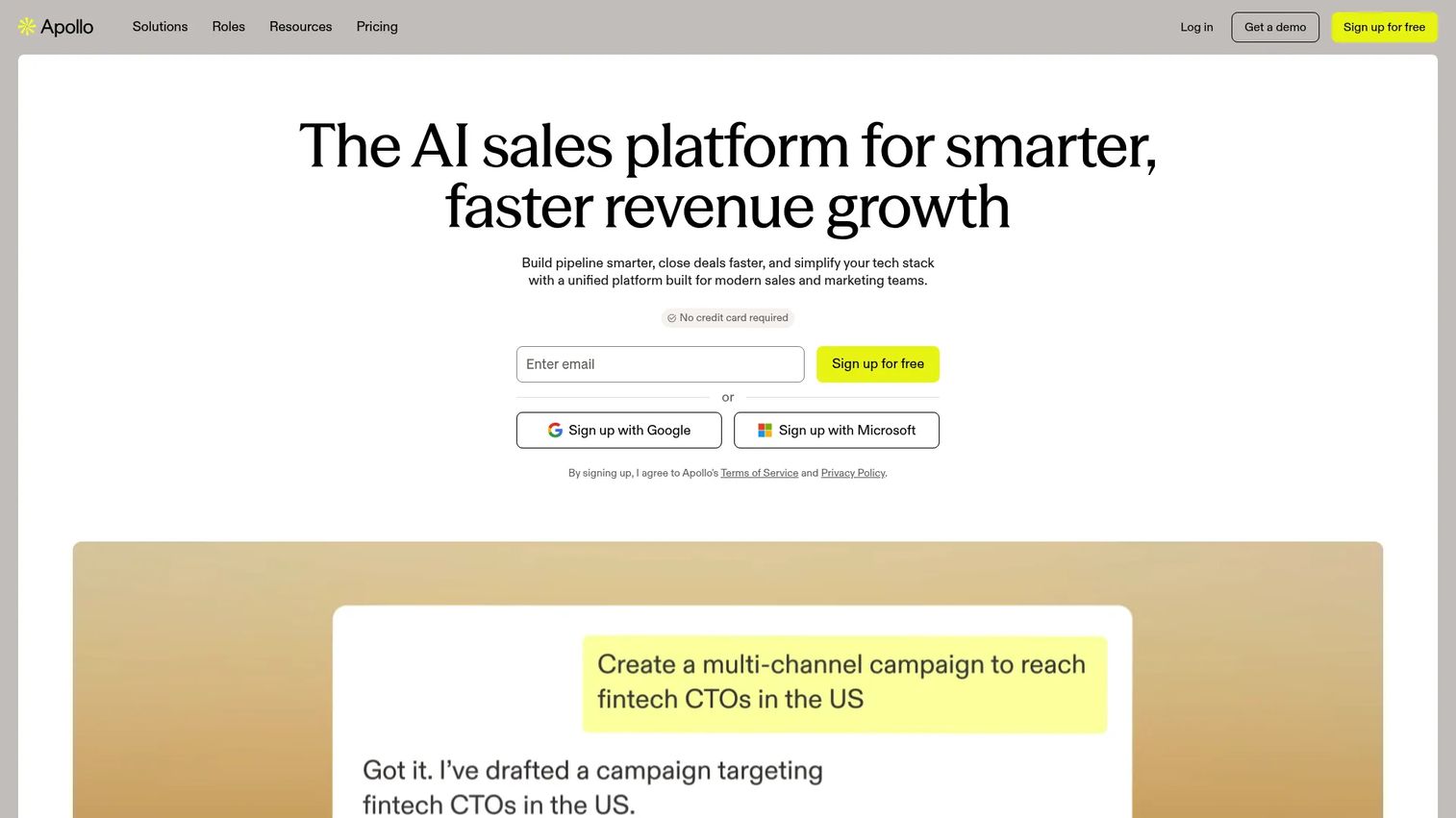
Apollo is a B2B go-to-market platform that combines a large contact and company database with built-in sequencing, dialer, and workflow automation. For SDRs, it means enrichment and outreach live in the same tool, removing the friction of exporting lists between systems. Apollo's database covers hundreds of millions of contacts and companies, with filters across job title, company size, technology stack, and funding stage.
Best for: Sales and revenue teams that want prospecting, enrichment, and outbound execution in one platform without a complex stack.
Key features
- B2B contact and company database with advanced search filters
- AI assistant and AI-powered research for account prioritization
- Sequences, dialer, meetings, and workflow automation built in
- CRM integrations with Salesforce and HubSpot
Why choose Apollo: Apollo works well as the first provider in a waterfall stack because of its breadth. When it doesn't find a contact, the record is ready to route to a specialist source. Teams that want to consolidate data sourcing and outreach execution will find it cuts the number of tabs open during prospecting.
Apollo pricing: Free plan available with basic access. Basic plan is $49 per seat per month billed annually, and Professional is $79 per seat per month billed annually. An Organization plan is also listed on the pricing page; contact Apollo for those details.
Apollo holds a 4.7/5 on G2.
2. Clay
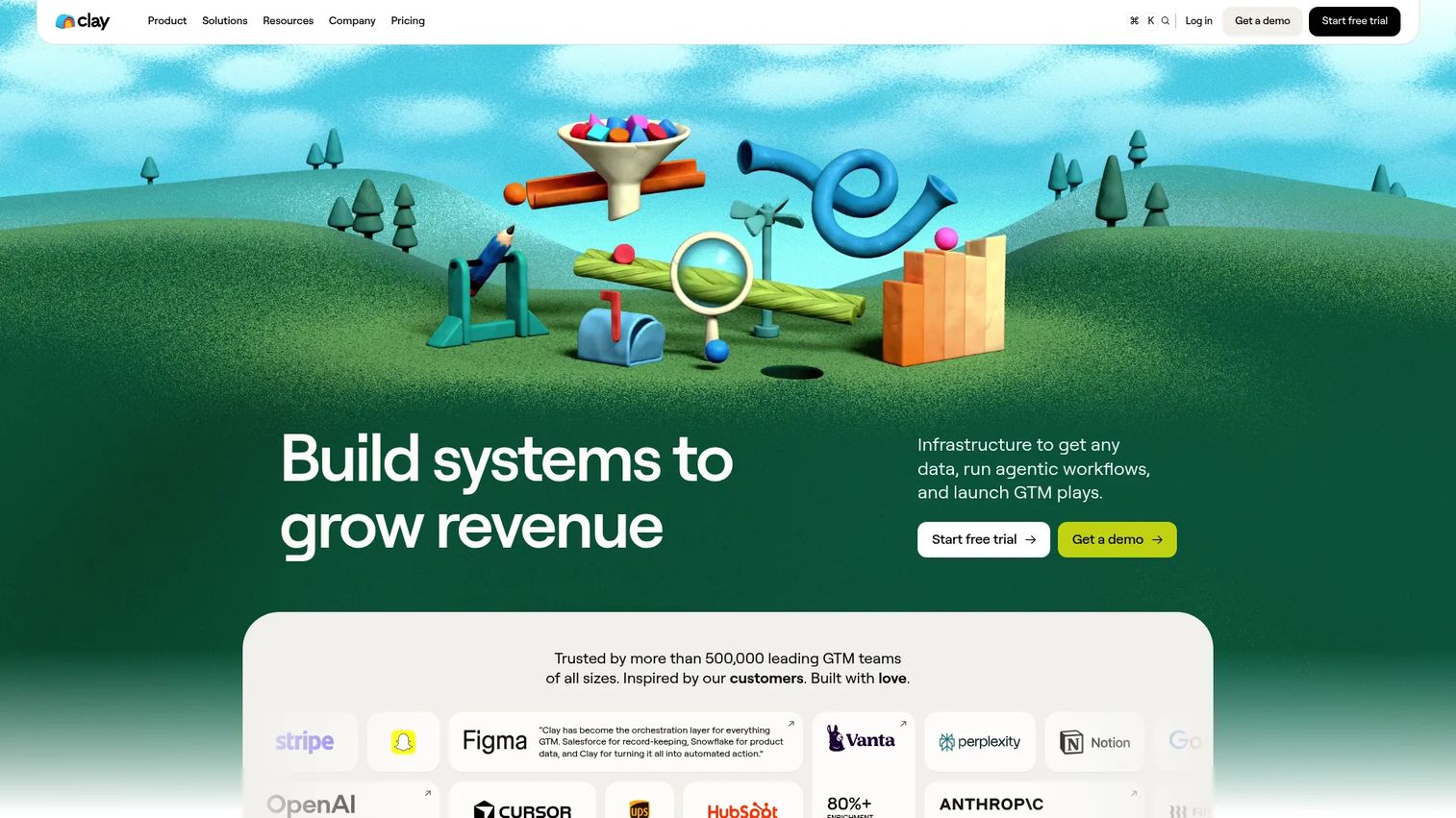
Clay is a GTM automation platform built around waterfall enrichment. It connects to 150+ data providers, letting you build multi-provider sequences that automatically try each source in order until a field is filled. Beyond contact data, Clay supports AI-driven web research (Claygent), personalization at scale, and email sequencing, making it one of the most flexible tools for building enrichment workflows without writing code.
Best for: RevOps and growth teams that need a flexible, no-code environment to build and maintain complex waterfall enrichment logic.
Key features
- 150+ enrichment providers accessible from one interface
- Waterfall logic with conditional routing between providers
- Claygent AI for web research and data extraction
- Unlimited seats across all plans
Why choose Clay: Clay is the orchestration layer in a waterfall stack. Rather than choosing one data vendor, you configure a cascade that tries each source in sequence, then stops when the field is found. It's particularly useful when your outreach varies by segment and each segment needs different enrichment sources.
Clay pricing: Free plan available. Launch plan starts at $185 per month, Growth at $495 per month, and Enterprise uses custom pricing with an annual commitment.
Clay holds a 4.6/5 on G2.
3. Datagma
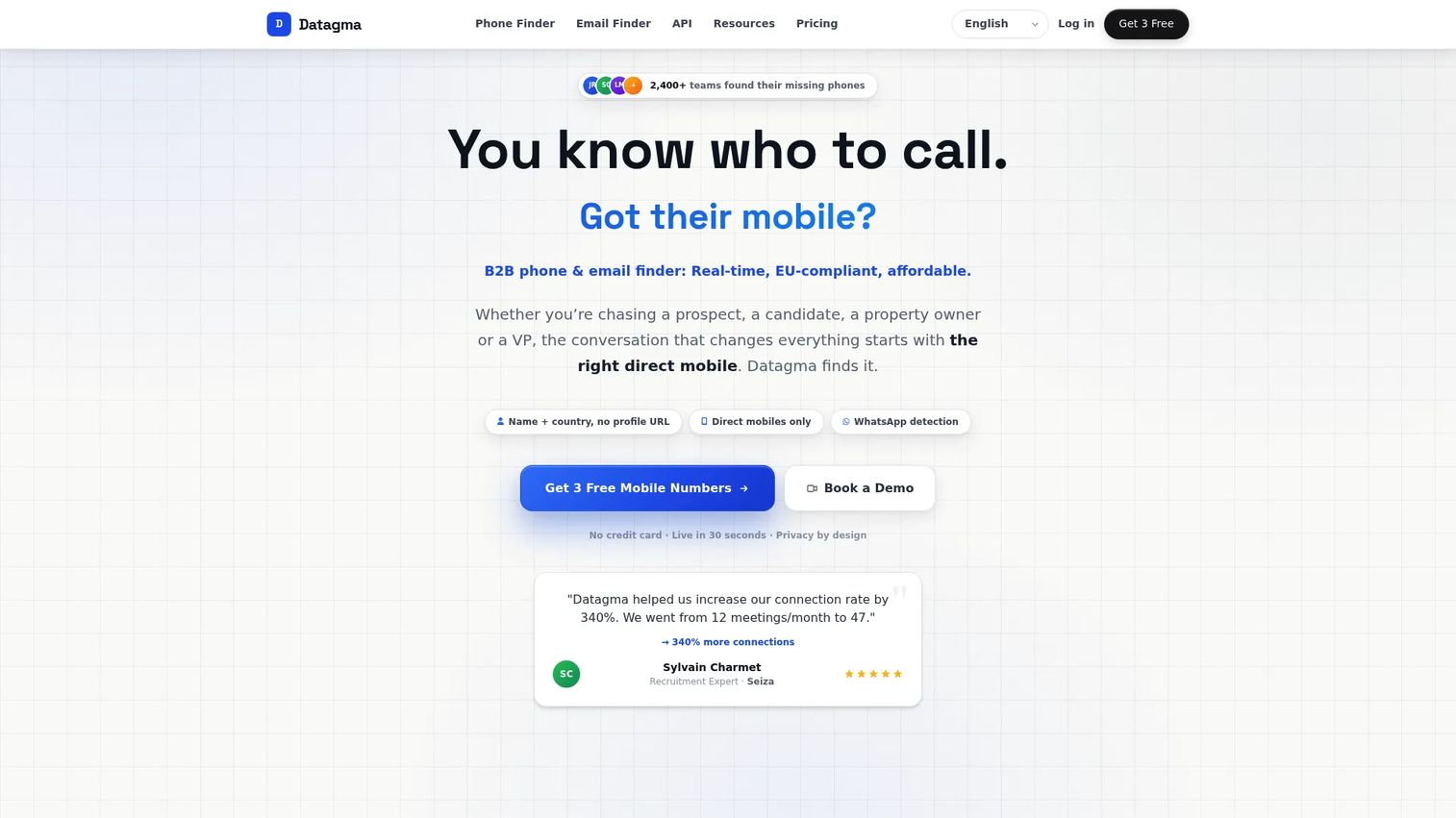
Datagma is a B2B data enrichment platform focused on verified work emails and direct mobile numbers. It's built to slot into existing stacks via API, Chrome extension, or native integrations with tools like Zapier, Make, n8n, and Clay. For SDRs running call-heavy sequences, Datagma's mobile number coverage makes it a practical second or third layer in a waterfall stack where broader databases have already been tried.
Best for: Teams that prioritize phone number enrichment and need a focused, affordable source for verified direct mobiles.
Key features
- Direct mobile number finder with verification
- Work email finder with catch-all detection
- API and Chrome extension for flexible integration
- Native connectors for Clay, Zapier, Make, and n8n
Why choose Datagma: Most broad databases underindex on direct mobile numbers. Datagma addresses that gap specifically, making it a strong pick as a specialist layer in a multi-provider waterfall rather than a primary source. Annual billing reduces cost by around 20% across paid plans.
Datagma pricing: Free tier available. Regular plan is $49 per month ($39 annually), Popular is $99 per month ($79 annually), and Expert is $249 per month ($209 annually). Enterprise pricing is available on request.
Datagma holds a 4.7/5 on G2.
4. HubSpot
HubSpot is a customer platform covering marketing, sales, service, content, and data. In a waterfall enrichment context, it plays the role of the CRM destination where enriched records land, get scored, and trigger downstream actions. HubSpot's native data enrichment features and third-party integrations mean enriched contact fields from upstream tools can flow directly into contact records, sequences, and lead routing rules.
Best for: Businesses that want an all-in-one CRM and go-to-market platform with strong enrichment integration support.
Key features
- Smart CRM with native contact and company data management
- Marketing Hub and Sales Hub for campaign and sequence execution
- Data Hub for data management and enrichment integrations
- AI-powered features across the platform
Why choose HubSpot: HubSpot's strength in a waterfall enrichment workflow is as the activation layer. Once contacts are enriched by upstream tools like Clay or Apollo, HubSpot handles scoring, segmentation, and triggering sequences or alerts. Teams already running HubSpot as their CRM benefit from keeping enrichment outputs native to the platform.
HubSpot pricing: Free plan available. Starter starts at $7 per seat per month. Professional starts at $800 per month, and Enterprise starts at $3,600 per month.
HubSpot holds a 4.4/5 on G2.
5. Salesforce
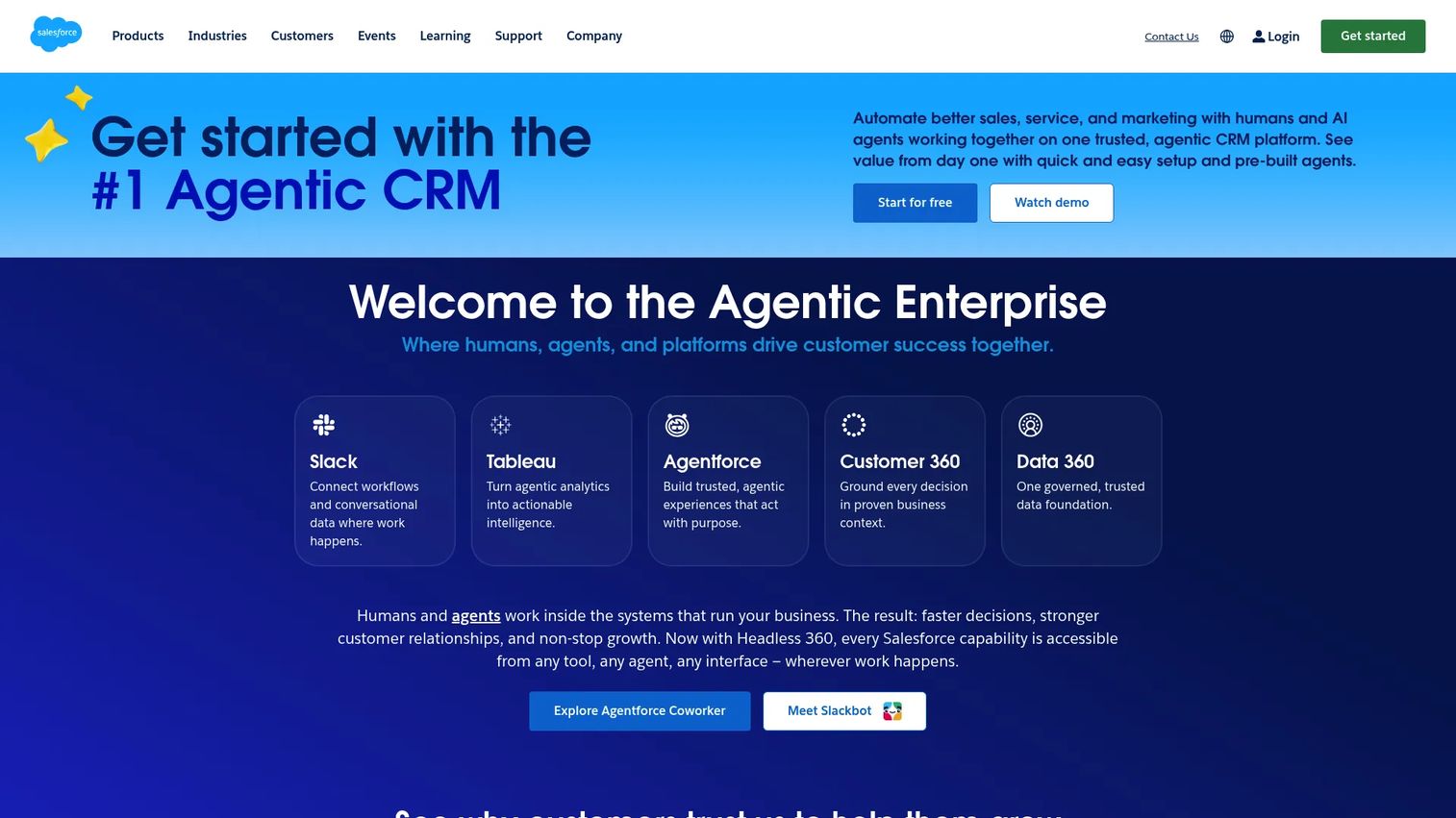
Salesforce is the dominant enterprise CRM platform, used by large GTM teams to manage leads, opportunities, and customer relationships. In waterfall enrichment workflows, Salesforce typically sits at the end of the pipeline: Enriched records flow in, triggers fire, and routing rules direct contacts to the right SDR or AE queue. Its configurable data model and deep integration ecosystem make it the most flexible destination for complex enrichment outputs.
Best for: Organizations running enterprise-scale sales processes that need a configurable CRM with deep integration support for enrichment data.
Key features
- Lead, opportunity, and customer case management
- Agentforce AI assistant for automated workflows
- Marketing automation and campaign management
- Extensive integration ecosystem via AppExchange
Why choose Salesforce: Salesforce matters in a waterfall enrichment stack because of its position as the system of record. When enrichment tools push verified data into Salesforce fields, routing logic, lead scoring, and assignment rules can fire automatically. For large teams with complex territory and routing requirements, that automation removes manual handoffs.
Salesforce pricing: Free Suite available. Starter Suite is $25 per user per month. Pro Suite is $100 per user per month billed annually, and Enterprise is $175 per user per month billed annually. Unlimited is $350 and Agentforce 1 Sales is $550 per user per month billed annually.
6. ZoomInfo
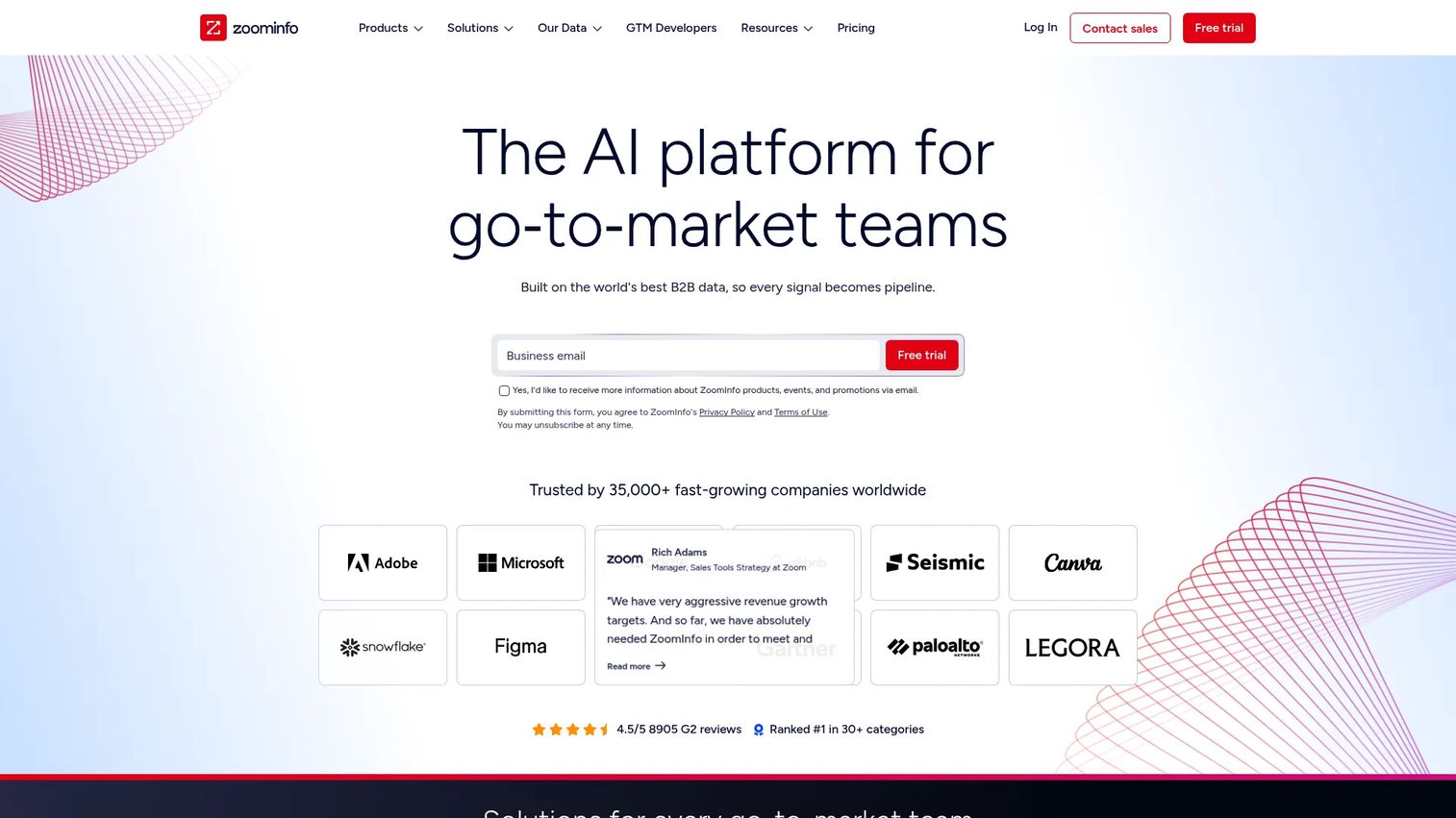
ZoomInfo is a go-to-market intelligence platform covering B2B contact data, company data, and buying signals. For larger GTM teams, it serves as a primary enrichment source with strong coverage across enterprise accounts, combined with intent data and technographic signals that help prioritize which enriched contacts to contact first.
Best for: Teams that need B2B prospecting, enrichment, and GTM intelligence in one place, particularly for mid-market and enterprise account coverage.
Key features
- B2B contact and company database with intent and technographic data
- Go-to-market intelligence including buying signals
- Sales, marketing, and recruiting workflow integrations
- CRM enrichment and routing automation
Why choose ZoomInfo: ZoomInfo's differentiation in a waterfall stack is the combination of contact data with intent signals. You're not just getting an email address; you're getting context on whether that company is actively researching a solution. For SDRs managing a large territory, that prioritization signal reduces wasted touches on cold accounts.
ZoomInfo pricing: Custom pricing. Contact ZoomInfo directly for plan details and a quote based on team size and data needs.
ZoomInfo holds a 4.5/5 on G2.
7. LeadDelta
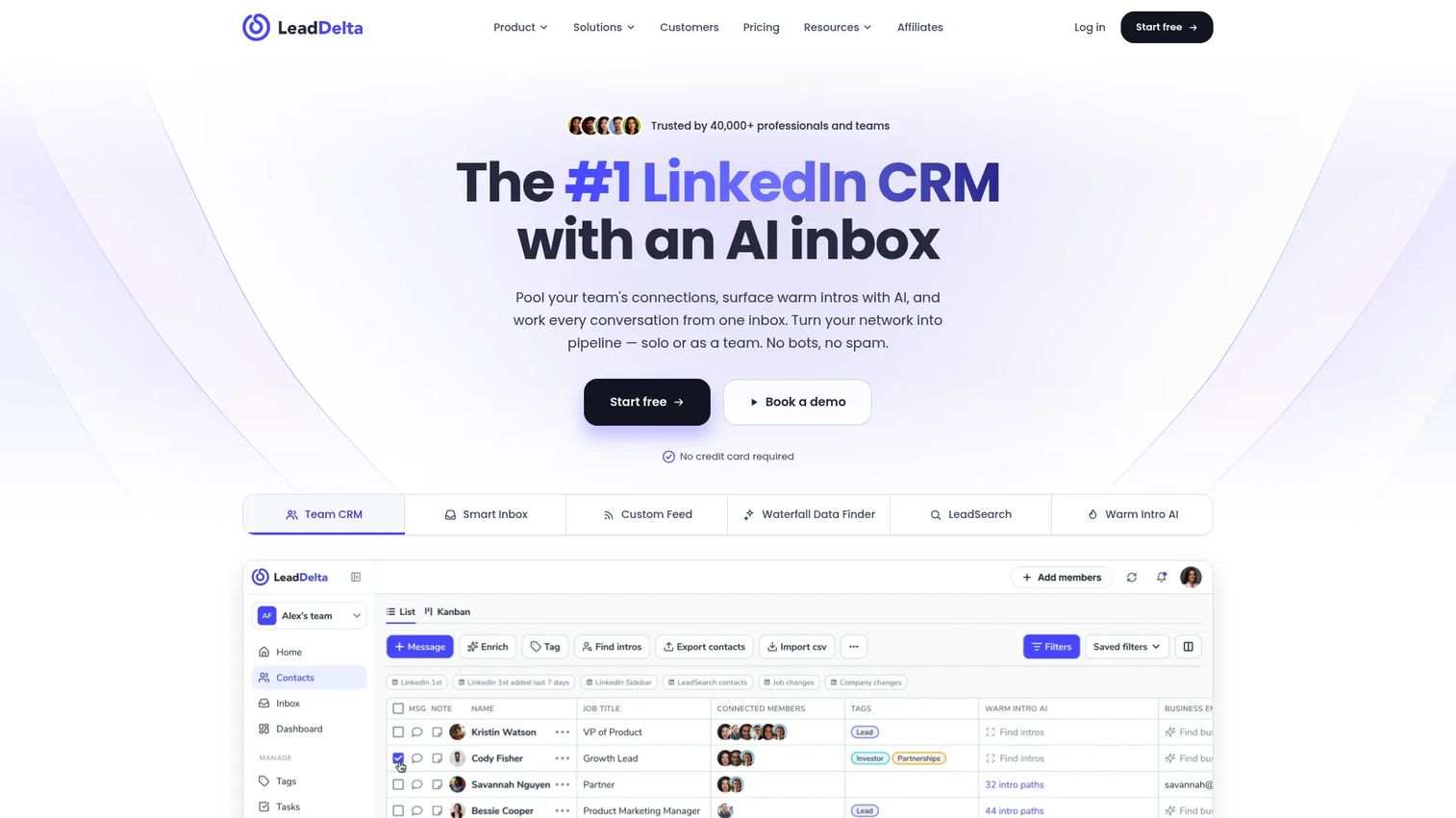
LeadDelta is a LinkedIn CRM and AI inbox platform built for teams that prospect primarily through LinkedIn. It lets you manage your LinkedIn connections as a structured contact database, enrich records with business contact data, and run follow-up workflows from inside the same interface. For SDRs who spend significant time on LinkedIn, LeadDelta reduces the gap between social prospecting and CRM-ready records.
Best for: SDRs and team leads who source prospects from LinkedIn and need enriched contact data without exporting CSVs between tools.
Key features
- LinkedIn CRM with sync, search, and filtering
- AI inbox with notes, tasks, and follow-up management
- Contact enrichment from LinkedIn profile and network data
- Warm-intro path discovery and team collaboration features
Why choose LeadDelta: LeadDelta fits specifically into LinkedIn-first prospecting workflows. Instead of copying LinkedIn data manually into a spreadsheet or CRM, you enrich and organize contacts directly inside LeadDelta, then push the clean records downstream. Teams with a 7-day trial available can test fit before committing to a paid seat.
LeadDelta pricing: No permanent free plan, but a 7-day free trial is available with no credit card required. Starter is $17.50 per user per month, Pro is $38.50, and Business is $69.30. Annual billing saves 30% across plans.
LeadDelta holds a 4.7/5 on G2.
8. ContactOut
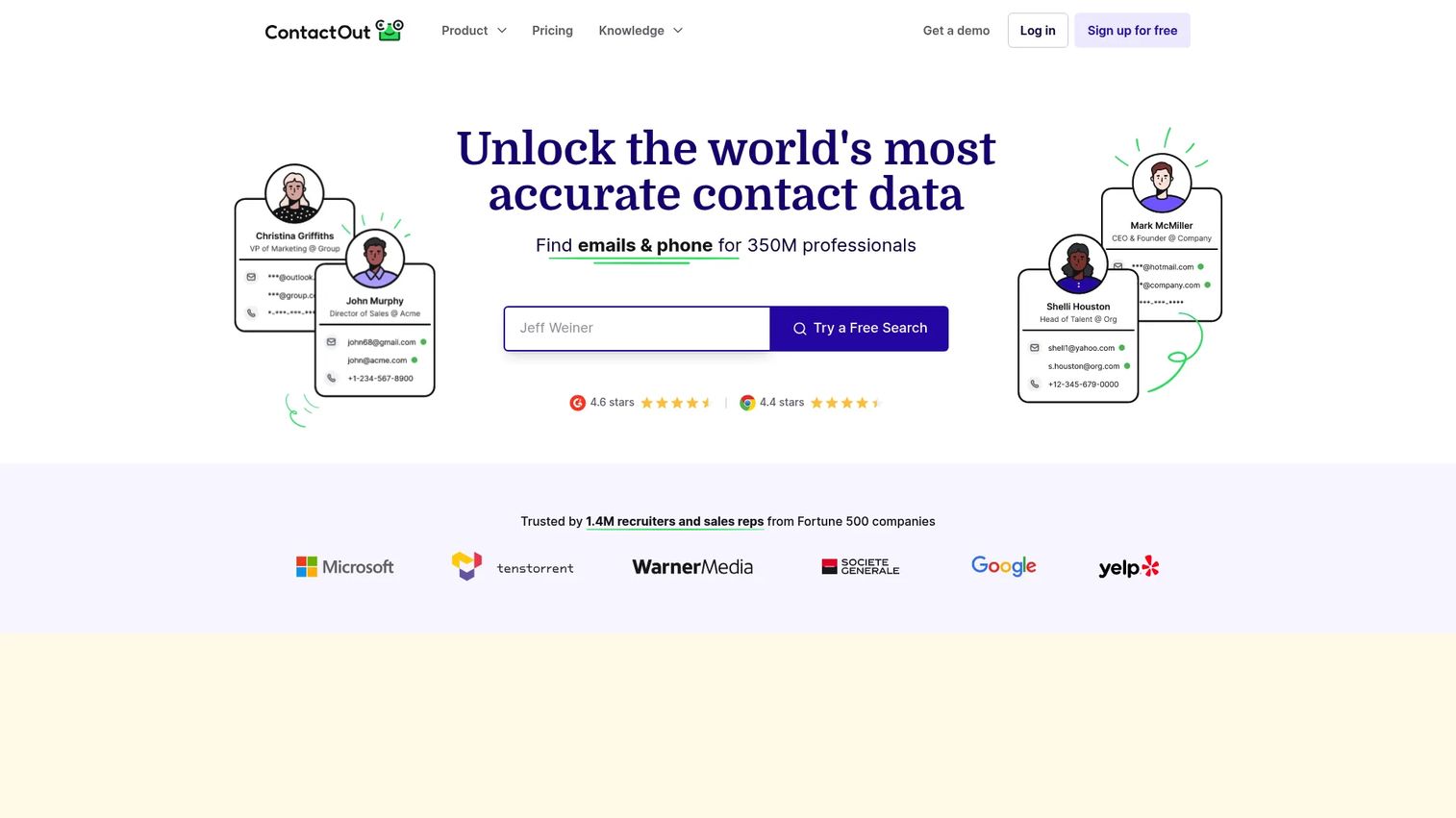
ContactOut is a B2B contact data platform offering a Chrome extension for finding emails and phone numbers directly on LinkedIn and GitHub profiles, alongside a search portal for bulk prospecting and enrichment. It also supports AI-native MCP access for lead generation. For SDRs who work profile-by-profile on LinkedIn, ContactOut removes the manual step of searching for contact details after identifying a prospect.
Best for: Recruiting and sales teams that need quick email and phone discovery from LinkedIn profiles at the point of research.
Key features
- Chrome extension for email and phone discovery on LinkedIn and GitHub
- Search portal with filters and bulk enrichment capability
- CRM and ATS exports with native integrations
- AI-native MCP access for lead generation workflows
Why choose ContactOut: ContactOut works well as a point-of-research enrichment tool. When you're reviewing a LinkedIn profile and need contact details immediately, the extension surfaces them without switching tabs. It's a practical layer in a waterfall stack for teams doing high-volume LinkedIn prospecting where speed at the individual profile level matters.
ContactOut pricing: A free tier is available. Team Plan and API Access are priced on a per-user basis; contact ContactOut for current rates.
ContactOut holds a 4.5/5 on G2.
9. DropContact
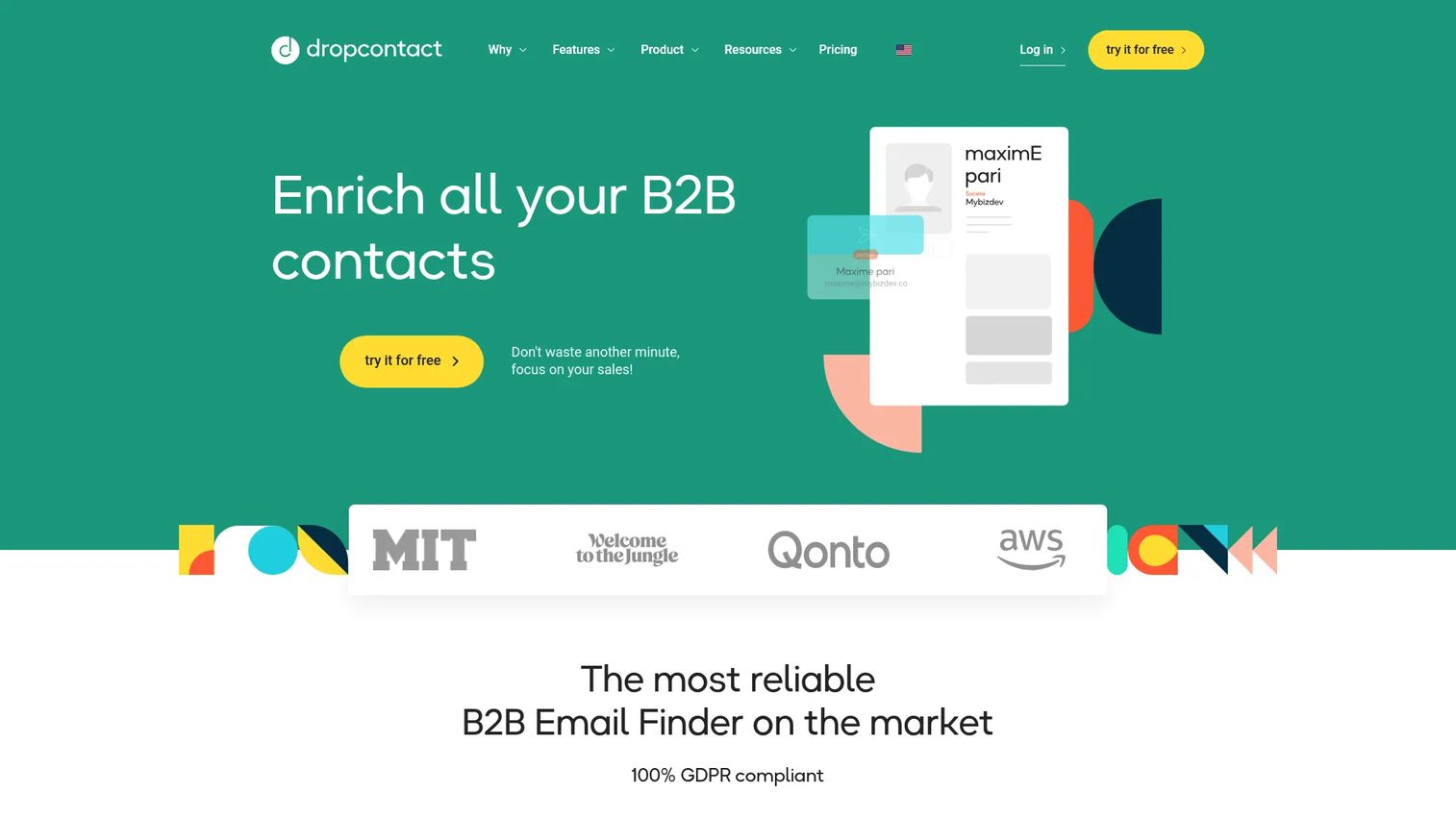
DropContact is a GDPR-compliant B2B email finding and data enrichment tool focused on CRM integration and file-based enrichment. It finds work email addresses, verifies them, detects duplicates, and merges records inside connected CRMs. For European sales teams or any team handling contacts under GDPR, DropContact's compliance-first design removes a category of risk from the enrichment workflow.
Best for: Sales and marketing teams that need GDPR-compliant B2B contact enrichment with automatic deduplication and CRM integration.
Key features
- Email finding and verification with catch-all detection
- CRM integration for automatic enrichment and field updates
- Duplicate detection and record merging
- File-based enrichment for CSV or spreadsheet workflows
Why choose DropContact: DropContact's GDPR-compliant sourcing is its clearest differentiator. Many enrichment tools source data in ways that create compliance questions for European operations. DropContact addresses that upfront. The deduplication and merge capabilities also reduce the CRM hygiene overhead that builds up when multiple enrichment sources push records independently.
DropContact pricing: A free trial is available. Email search and enrichment starts at €24 for 1,000 credits per month. CRM integration starts at €39 per user per month. Pricing figures are sourced from G2 reviewer data.
DropContact holds a 4.6/5 on G2.
10. Prospeo
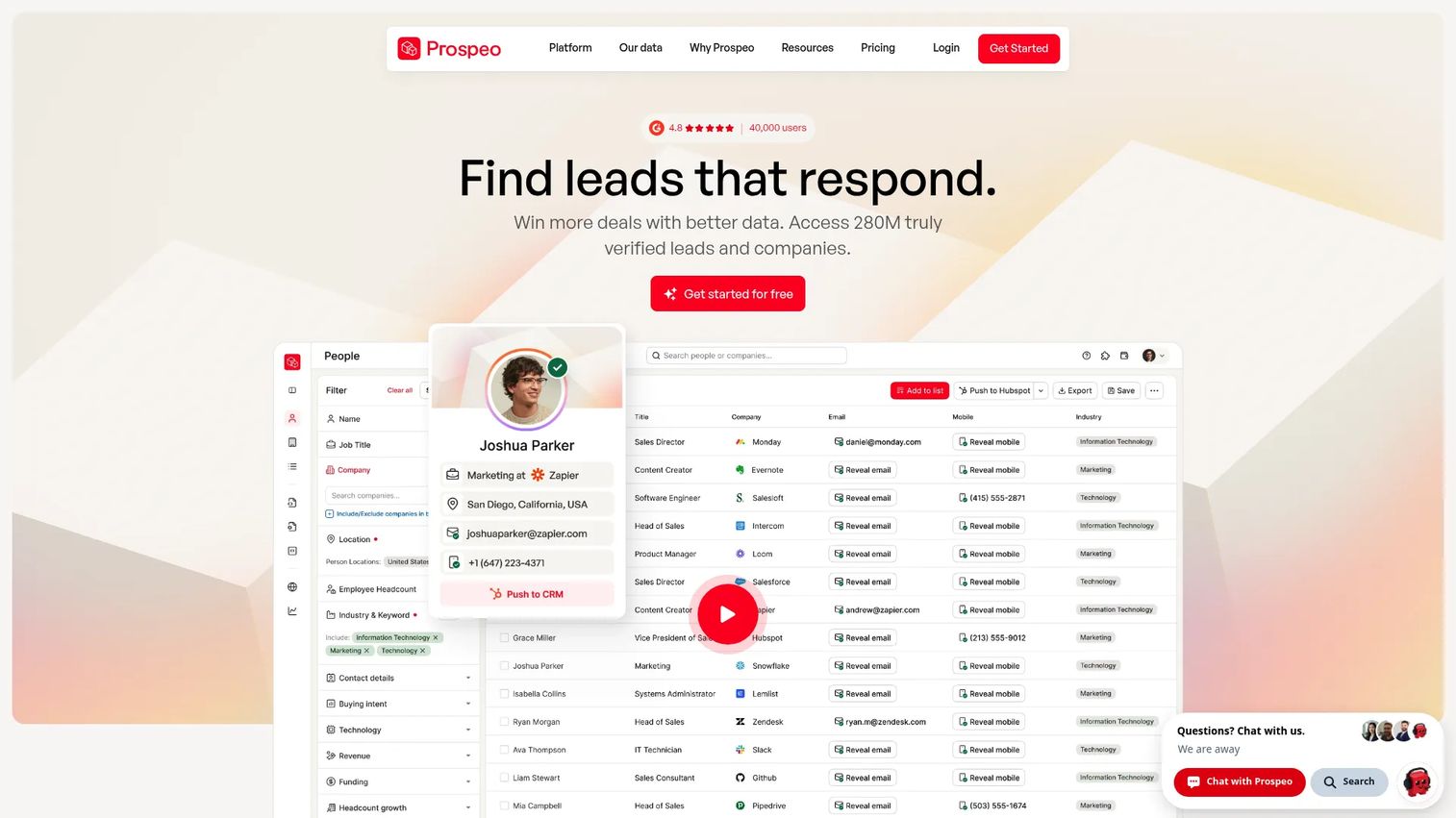
Prospeo is a B2B prospecting and data enrichment platform for finding verified work emails and mobile numbers with a Chrome extension, API access, and a searchable B2B database. For SDRs building outbound lists, Prospeo provides a direct way to find and verify contact data without committing to an enterprise contract.
Best for: Sales and RevOps teams that need verified B2B contact data with flexible pricing and a tool that's quick to adopt.
Key features
- Verified work email finder with validation
- Mobile number lookup and enrichment
- B2B database search with company and role filters
- Chrome extension and API for integration into existing workflows
Why choose Prospeo: Prospeo fits naturally as a secondary or tertiary layer in a waterfall stack. If your primary provider missed an email address, Prospeo's coverage adds another attempt without requiring a major contract. According to Prospeo's own 2026 research, teams using a two-to-three-provider stack reach 85 to 95% find rates versus 50 to 60% from a single source, which is the core argument for using a tool like this in sequence.
Prospeo pricing: A free plan is available. Paid plans (Starter, Growth, Pro) are billed monthly or annually; contact Prospeo for current per-plan pricing.
Prospeo holds a 4.6/5 on G2.
11. Snowflake
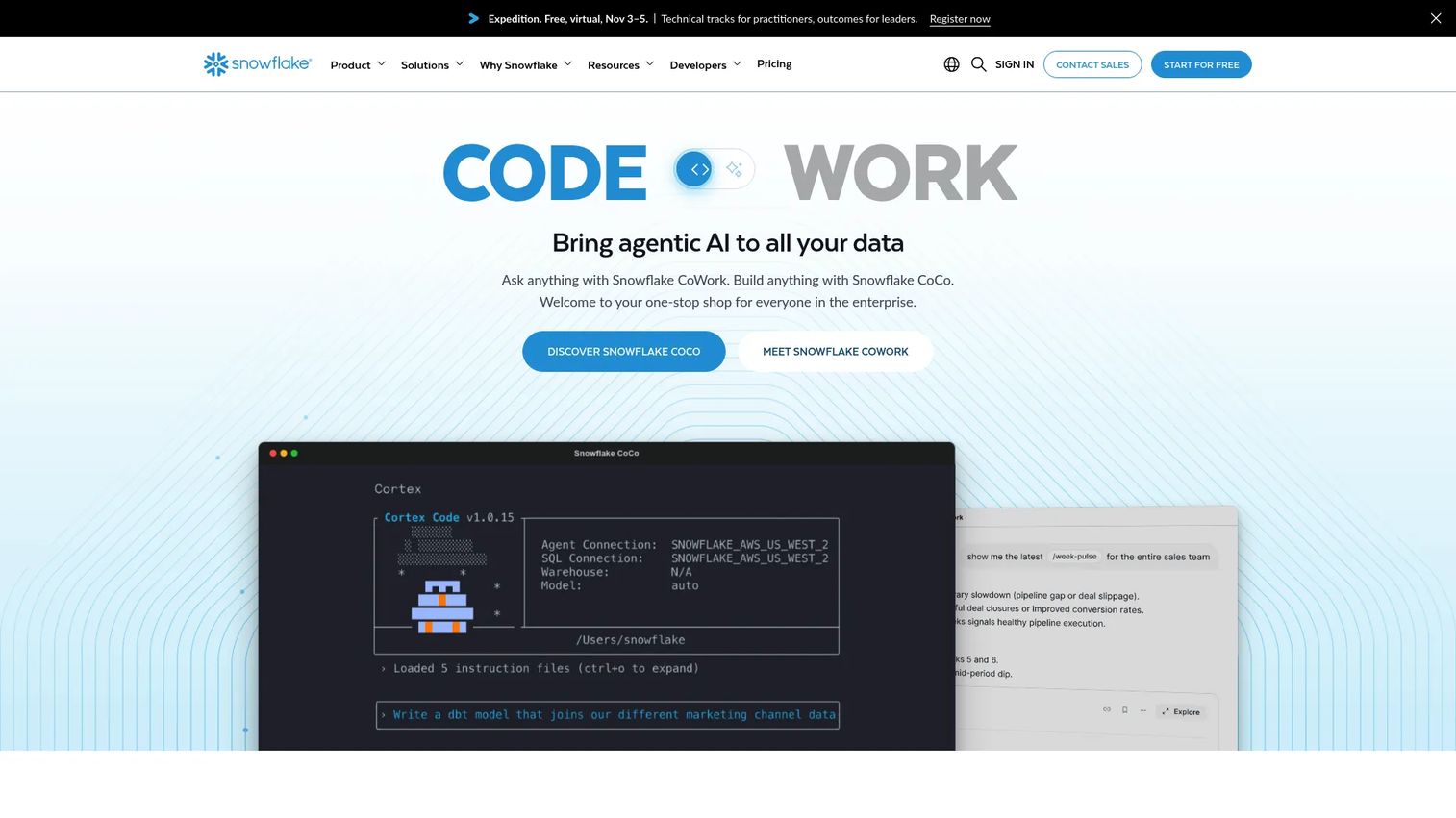
Snowflake is a cloud data and AI platform used for storing, processing, and sharing large volumes of data across cloud environments. In a waterfall enrichment architecture, Snowflake typically sits at the warehouse layer: Enriched contact and account data from multiple providers gets centralized in Snowflake before being pushed downstream into CRMs, sequencing tools, and analytics platforms.
Best for: Enterprise data teams that need a managed warehouse to centralize enrichment outputs before distributing them across a GTM stack.
Key features
- Fully managed, multi-cloud data warehouse with near-unlimited scale
- Data sharing and collaboration across organizations and cloud regions
- Strong security, governance, and compliance controls
- Data marketplace for accessing third-party enrichment datasets directly
Why choose Snowflake: Snowflake becomes relevant when enrichment runs at scale and outputs need to flow to multiple downstream systems reliably. Rather than each tool sending data directly to a CRM, teams route through Snowflake for transformation, deduplication, and governance before distribution. It's an infrastructure decision more than a front-line SDR tool.
Snowflake pricing: A free trial is available. Snowflake uses usage-based pricing across Standard, Enterprise, Business Critical, and Virtual Private Snowflake plans. Contact Snowflake for a usage-based quote.
Snowflake holds a 4.6/5 on G2.
12. Salesforce CRM
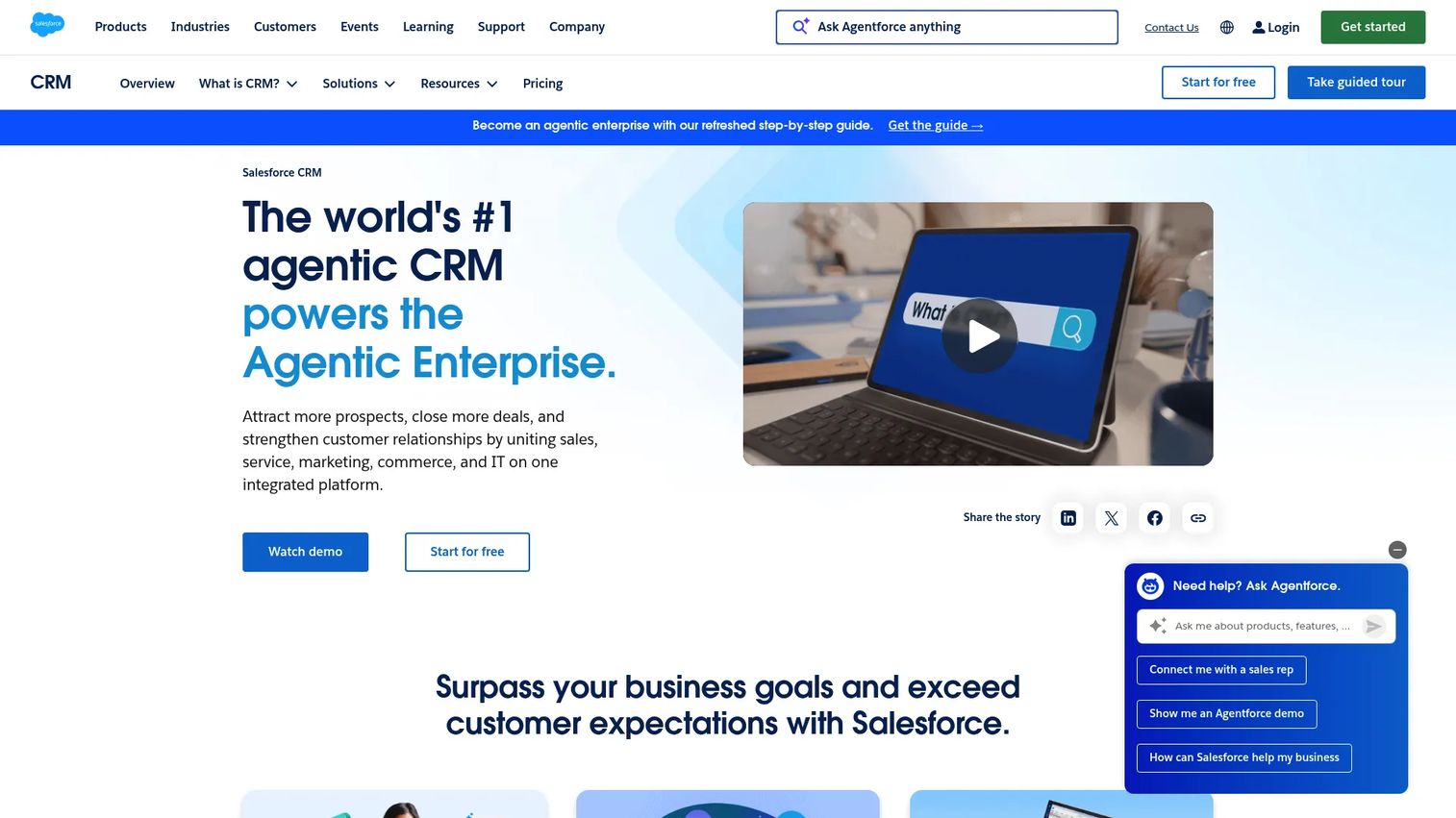
Salesforce CRM is the cloud-based, AI-powered CRM platform that unifies sales, service, marketing, and commerce into one system of record. As a destination in a waterfall enrichment workflow, Salesforce CRM receives enriched contact and account data, fires routing logic, updates lead scores, and triggers outreach workflows automatically.
Best for: Businesses that need an enterprise-grade CRM spanning sales, service, and marketing with strong governance and automation support.
Key features
- Lead, opportunity, and customer case management
- Agentforce AI for automated workflow and assistant tasks
- Single-send email campaigns, forms, and reporting
- AppExchange ecosystem for extending enrichment integrations
Why choose Salesforce CRM: Salesforce CRM's value in a waterfall enrichment workflow comes from its routing and automation depth. When enriched data lands in Salesforce fields, assignment rules, lead scoring models, and sequence triggers can fire without manual intervention. Teams running complex territory models or multi-step routing benefit most from keeping enriched records native to Salesforce.
Salesforce CRM pricing: Free Suite available at no cost for up to two users. Starter Suite is $25 per user per month. Pro Suite is $100 per user per month billed annually. Enterprise and Unlimited tiers are also available; contact Salesforce for those details.
Salesforce CRM holds a 4.5/5 on G2.
13. SyncGTM
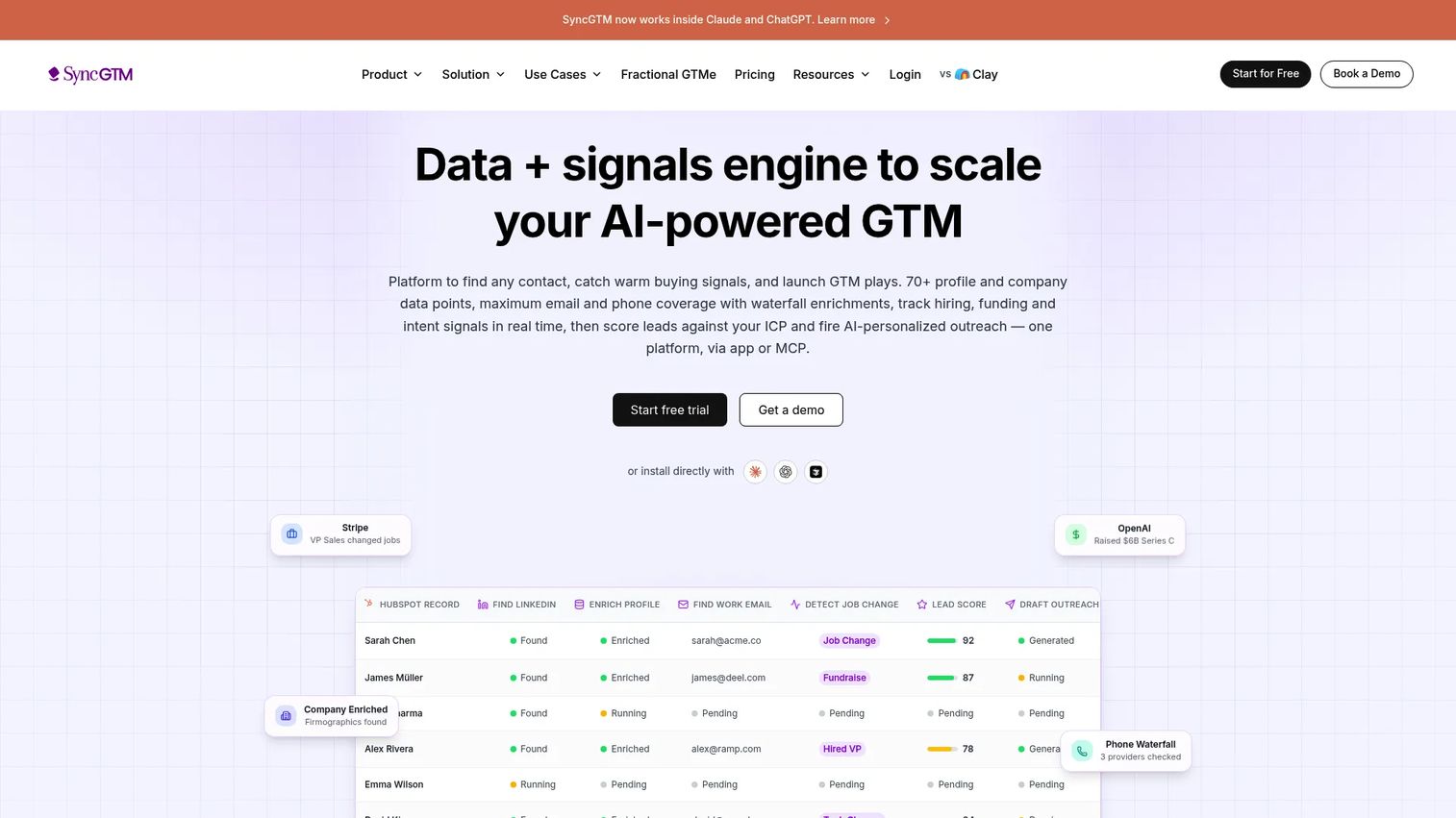
SyncGTM is a B2B data and signals engine built for AI-native GTM teams. It connects to 25+ data providers in a waterfall configuration, layers in buying-signal tracking and lead scoring, and includes no-code workflow automation with CRM and outreach integrations. For teams that want enrichment, signals, and activation in one workspace rather than stitching multiple tools together, SyncGTM covers the full loop.
Best for: AI-native GTM teams that want multi-provider enrichment, buying-signal tracking, and outreach workflow automation in one platform.
Key features
- Waterfall enrichment across 25+ data providers
- Buying-signal tracking with lead scoring integration
- No-code workflow builder with CRM and outreach connectors
- All plans include a free trial to test before committing
Why choose SyncGTM: SyncGTM fits teams that have already experienced the complexity of managing separate tools for enrichment, signals, and activation. Consolidating those into one workspace reduces configuration overhead and makes it easier to build waterfall logic that responds to signal changes. For SDRs, that means outreach triggers based on real-time account activity, not just static list uploads.
SyncGTM pricing: Yearly billing across all plans. Solo is $529 per year, Growth is $1,069, Pro is $2,689, and Business is $7,009. Enterprise is custom pricing. A free trial is available to start.
G2 rating is not yet available for SyncGTM at time of publication.
Considerations before you buy
Email and phone coverage quality
Ask each vendor what percentage of contacts in your target market they can fill, and request a sample run on a test list. Coverage varies significantly by geography, industry, and company size. A provider with strong North American coverage may underperform in EMEA or SMB accounts.
Validation and deliverability controls
Enrichment that adds unvalidated emails creates more problems than it solves. Confirm that any tool you add to the stack runs SMTP verification, identifies catch-all domains, and flags risky addresses before they enter your sequences. Protecting your sender reputation is as important as improving your fill rate.
CRM and sequencer fit
Enriched data is only useful if it lands cleanly in your CRM and triggers the right actions. Check whether the tool supports native field mapping to your CRM, handles deduplication on existing records, and can trigger sequence enrollment or lead routing automatically. Manual exports and imports add friction that offsets the value of enrichment.
Workflow automation depth
Point-and-click enrichment works for small lists. At scale, you need conditional logic, fallback routing between providers, and error handling when a source returns no result. Evaluate whether the tool supports these workflow patterns natively or requires a third-party automation layer like Zapier or Make.
Data freshness and governance
Contact data decays. Job changes, company restructures, and email domain migrations make enriched records stale within months. Ask vendors how often their underlying data is refreshed, whether they track job change signals, and how their sourcing holds up under GDPR or CCPA requirements if those apply to your market.
Conclusion
Waterfall enrichment works because no single data source has complete coverage. The teams that consistently hit 85%+ contact find rates are the ones running two or three providers in sequence, validating before they send, and routing clean records directly into their CRM and sequences.
For most SDR teams starting with waterfall enrichment, Apollo or Clay is the right entry point. Apollo gives you enrichment and outreach in one platform. Clay gives you the flexibility to orchestrate 150+ providers without writing code. Stack a specialist like Datagma for mobile numbers or DropContact for GDPR-compliant European contacts behind whichever primary source you choose.
Larger RevOps teams with complex routing needs will want Salesforce or HubSpot as the CRM destination, with Snowflake as the warehouse layer when enrichment outputs need to serve multiple downstream systems.
Data quality is revenue quality. Cleaner records mean fewer wasted touches, better deliverability, and higher reply rates across every sequence you run.
Start your journey with Guideflow today!
FAQs
Waterfall enrichment is a data strategy that routes contact records through multiple data providers in sequence. Each provider attempts to fill missing fields (like work email or phone number), and the next provider only processes what the previous one couldn't find. The result is higher overall contact coverage than any single source can achieve.
You define an ordered list of providers. A contact record enters the chain, and provider one attempts to find the missing field. If it succeeds, the record exits the chain. If it fails, the record moves to provider two, and so on until all providers have been tried or the field is filled. Tools like Clay automate this logic across 150+ data vendors without manual exports between sources.
For most outbound teams, yes. According to Prospeo's 2026 research, teams using a two-to-three-provider stack reach 85 to 95% contact find rates versus 50 to 60% with a single provider. The trade-off is higher cost and additional configuration, so the benefit is clearest for teams running high-volume sequences where missing contact data directly reduces reply rates.
Email waterfall: One provider attempts work email lookup, a second fills gaps, and a third validates the results before records enter sequences. Phone waterfall: A broad database covers the most common records, and a specialist provider like Datagma adds direct mobile coverage for contacts the first source missed. Both approaches run automatically when set up through an orchestration tool.
It does when validation is part of the workflow. Running contacts through a provider that verifies SMTP responses, flags catch-all domains, and identifies role-based addresses before they enter your sequences reduces hard bounces. Keeping your bounce rate below 3% protects sender reputation, which directly affects inbox placement for future sends.
Focus on four things: Coverage for your specific target market (ask for a test run, not just global averages), built-in email and phone validation so bad data doesn't enter your sequences, native integration with your CRM and sequencing tool, and pricing that scales with your list size rather than penalizing growth. A tool that ticks two of these but misses the third will create friction in your workflow.
Yes, but it requires more manual effort. Without a tool like Clay, you export your contact list, run it through provider one, identify gaps, export the gaps to provider two, and repeat. This works for small lists or one-time campaigns, but it doesn't scale. Dedicated orchestration tools automate the fallback logic and keep records updated without manual intervention.
B2B contact data decays faster than most teams expect. Job changes, company restructures, and email domain migrations mean that a percentage of enriched records become inaccurate within months. Running a re-enrichment pass on your CRM records before major campaign launches, and choosing providers with regular data refresh cycles, reduces the compounding effect of stale data on deliverability and reply rates.