If you're evaluating Allego alternatives, the search usually starts with one of two realizations: The platform covers more ground than you need right now, or one job you care about most (coaching, content governance, conversation intelligence, buyer-facing demos) is not where it's strongest for your team.
This roundup covers 12 Allego competitors across categories: Readiness and coaching (Mindtickle, SalesHood, Bigtincan), sales content management (Highspot, Seismic, Showpad, Spekit, Mediafly), conversation intelligence (Gong), digital sales rooms and proposals (Dock, Qwilr), and demo automation (Guideflow). Guideflow is the top pick when the missing piece is buyer-facing interactive demo content that reps can use in outreach, follow-up, and buying committee enablement. It does not replace Allego's call recording or coaching workflows.
The global sales enablement platform market was valued at $4.21 billion in 2025 and is growing at a 19.65% CAGR through 2031, according to Mordor Intelligence (2026). The field has expanded well past "content library" into distinct specializations, and picking the right tool means knowing which enablement job you are solving first.
TL;DR
- Best for sales readiness and coaching: Mindtickle, built around readiness programs, certification, coaching, and manager inspection dashboards.
- Best for content governance: Highspot for guided selling and plays; Seismic for enterprise content operations at scale.
- Best for conversation intelligence: Gong, the clearest pick for call recording, deal intelligence, and coaching from live customer conversations.
- Best for buyer-facing interactive demos: Guideflow, a demo automation platform covering interactive demos, demo pages, demo centers, sandboxes, live demos, and mobile demos.
- Best for in-workflow rep guidance: Spekit, which surfaces knowledge and plays where reps are already working.
- Pricing reality: Most enterprise enablement suites (Mindtickle, Highspot, Seismic, Showpad, SalesHood, Spekit, Bigtincan, Gong, Mediafly) use quote-based annual contracts. Guideflow has a free plan and paid plans from $35/user/month. Dock's Standard plan starts at $350/month. Qwilr's Starter plan starts at $35/user/month.
- Category reality: No single alternative replaces every Allego job. Map the workflow you need to improve first, then pick.
What's inside
- What Allego is and why teams look elsewhere
- How the 12 alternatives differ by category
- Comparison table with pricing, G2 rating, free plan, and best fit
- Ranked tool cards with pricing and shortfalls
- Use-case picks for coaching, content, demos, digital rooms, and cost
- FAQs for sales enablement managers comparing Allego competitors
What is Allego?
Allego is a revenue enablement platform covering modern learning, coaching, sales content management, conversation intelligence, digital sales rooms, and mobile sales enablement. It is designed for organizations that want one system to handle rep readiness, peer-to-peer video learning, asynchronous coaching, content access, and conversation feedback from calls.
Its strongest position is internal enablement: Helping reps learn from actual sales conversations, complete certifications, and access approved assets during active deals. Allego also offers digital sales rooms for buyer collaboration.
"Allego alternatives" can mean different things depending on what your team is actually solving:
- A dedicated readiness and certification platform
- Deeper conversation intelligence
- Sales content management with stronger governance
- In-workflow enablement surfaced at the moment of execution
- Digital sales rooms for deal collaboration
- Buyer-facing interactive product demo content
Allego's internal coaching and learning capabilities are its core strength. Creating controlled, shareable buyer-facing product demos is a related but distinct job, and one where purpose-built demo automation tools carry more depth.
Why teams look for Allego alternatives
Teams often start looking for Allego alternatives when the platform's breadth outgrows the specific job they need done, when rollout or cost feels heavy relative to the return, or when reps are not using what enablement builds.
Platform breadth can outpace actual use
Enterprise enablement platforms bundle readiness, coaching, content, and conversation intelligence in one contract. G2 reviewers of Allego note that the depth of some features can require significant admin time and configuration to surface real value. Teams that only need one or two of those jobs often pay for unused capabilities.
Enterprise pricing and rollout commitments
Allego, like most revenue enablement suites, uses quote-based annual contracts. Implementation timelines, admin resources, and add-ons add to the total cost of ownership. Reviewers on G2 mention pricing transparency as an area where buyers would benefit from more clarity before committing.
Reps ignore content that is hard to find
The core Sales Enablement Manager pain: 61% of B2B buyers prefer a rep-free buying experience, according to Gartner (2025). If reps cannot locate the right asset for the stage they're in, they skip the library and reach for whatever's in their inbox. Poor content findability is a governance problem, and it's one of the most common G2 themes across broad enablement suites.
Recorded calls and static decks rarely travel to buyers
Recorded call snippets and slide decks help managers coach reps and help peers learn from real conversations. They are rarely the asset a champion forwards to a buying committee for self-evaluation. For buyer-facing proof, enablement teams increasingly need controlled product experiences: Clickable, shareable, and trackable. That is where demo automation tools add a layer that general enablement platforms do not cover.
Measurement needs to connect behavior to outcomes
Enablement leaders face pressure to prove that training completion and content usage translate into win rate, ramp time, and pipeline influence. Tools that separate internal metrics (certification, call score) from external engagement signals (demo completion, buyer interaction) make that attribution harder, not easier.
How we picked these Allego alternatives
Each tool on this list has clear overlap with at least one Allego job, is relevant to sales enablement and revenue enablement managers, and has pricing context from its vendor page or reputable sources alongside a G2 rating. We prioritized category diversity across readiness, coaching, content governance, conversation intelligence, demo automation, and buyer rooms. 84% of B2B buyers say self-service tools are critical when choosing a vendor, according to Contentful (2025), which is why buyer-facing formats appear as a distinct category here.
The list includes both like-for-like enablement platforms and specialized adjacent tools. The Category column in the table lets readers distinguish a direct replacement from a focused upgrade.
Allego alternatives at a glance
The best Allego alternative depends on which enablement job you need to improve first. Mindtickle and SalesHood fit readiness, Gong fits conversation intelligence, Highspot and Seismic fit content governance, and Guideflow fits buyer-facing demo content.
| # | Tool | Category | Best for | G2 rating | Free plan | Starting price |
|---|---|---|---|---|---|---|
| 1 | Guideflow | Demo automation | Buyer-facing interactive demo content | 5.0/5 | Yes | Free; Solo $35/user/month |
| 2 | Mindtickle | Sales readiness and enablement | Readiness, certification, and coaching programs | 4.7/5 | No | Quote-based |
| 3 | Highspot | Sales content management and enablement | Content governance and guided selling | 4.7/5 | No | Quote-based |
| 4 | Gong | Conversation intelligence and revenue intelligence | Call recording, deal intelligence, and coaching | 4.7/5 | No | Quote-based |
| 5 | Seismic | Enterprise sales enablement | Enterprise content operations and governance | 4.7/5 | No | Quote-based |
| 6 | Showpad | Sales enablement and content experiences | Field sales content and buyer engagement | 4.6/5 | No | Quote-based |
| 7 | SalesHood | Sales readiness and coaching | Repeatable onboarding and coaching programs | 4.6/5 | No | Quote-based |
| 8 | Spekit | In-workflow enablement | Knowledge surfaced in the flow of work | 4.6/5 | No | Quote-based |
| 9 | Bigtincan | Sales enablement and readiness | Broad enablement across content, readiness, and engagement | 4.3/5 | No | Quote-based |
| 10 | Dock | Digital sales rooms and customer portals | Buyer collaboration, mutual action plans, and portals | 4.6/5 | Yes | Free; Standard $350/month |
| 11 | Mediafly | Revenue enablement and buyer engagement | Value selling, content, and buyer engagement analytics | 4.4/5 | No | Quote-based |
| 12 | Qwilr | Interactive proposals and buyer pages | Proposals, quotes, and shareable buyer-facing deal content | 4.6/5 | No | Starter $35/user/month |
The best Allego alternatives in 2026
1. Guideflow (demo automation platform)
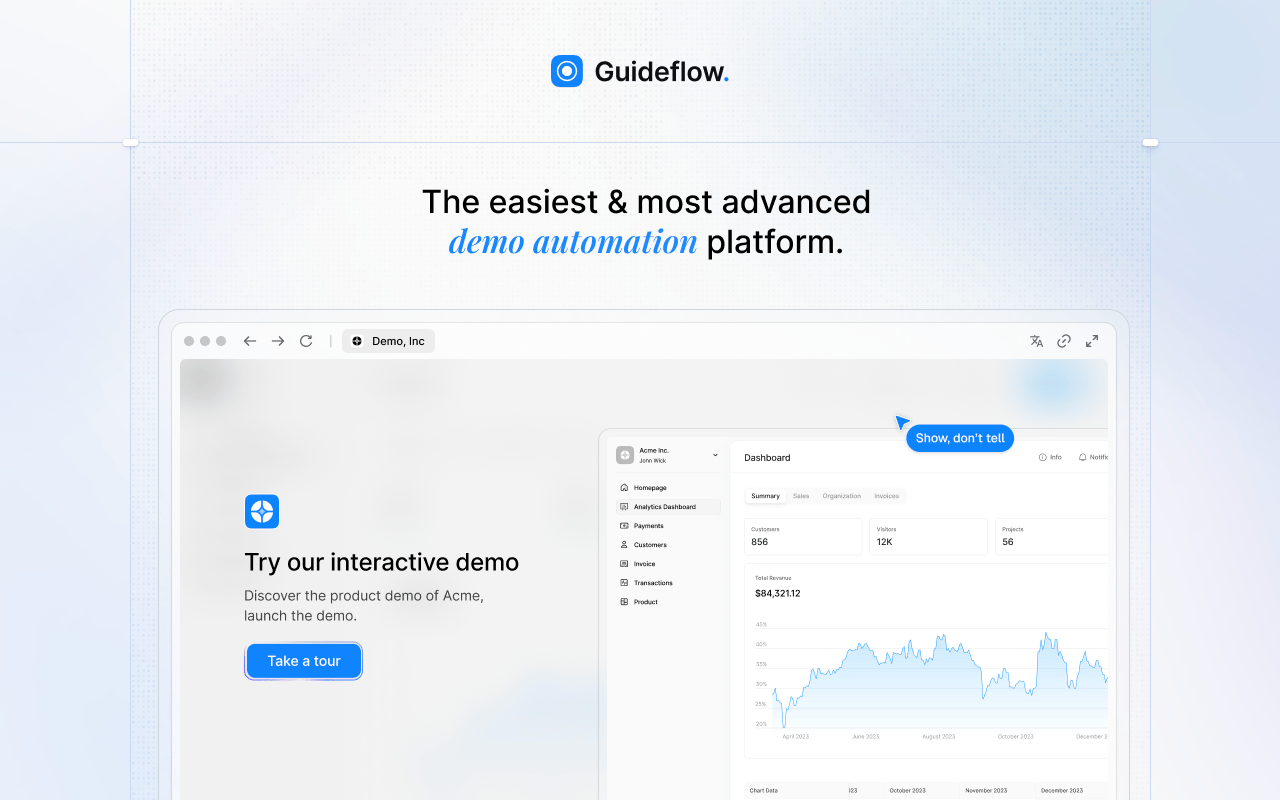
Guideflow fits the enablement workflow where most platforms stop: The buyer-facing side. When reps need a shareable product experience to send after a call, embed in a play, or forward to a buying committee, Guideflow gives enablement teams a way to build that asset once and deploy it everywhere.
Best for: Enablement teams that need buyer-facing interactive demo content sellers can use in outreach, follow-up, demo centers, and customer education.
What it is: Guideflow is a demo automation platform for creating, personalizing, sharing, and analyzing interactive demos. Teams capture product flows through the Chrome extension or the native app, and step content is written automatically. The editor supports text, images, graphs, and branching. More than 500,000 guideflows have been created on the platform.
Key features:
- Six demo formats: Interactive demos, demo pages, demo centers, sandboxes, live demos, and mobile demos
- Capture through the Chrome extension or the native app, with screenshot, HTML, and video modes
- Personalize text, images, and graphs; translation into more than 30 languages; AI voiceover
- Step-level completion, drop-off, and viewer flow analytics
- CRM records created when a viewer identifies through an in-demo form or a personalized link; integrations with HubSpot, Salesforce, Pipedrive, Zoho, and Marketo
Where Guideflow falls short:
- Guideflow has no call recording, no conversation analysis, and no coaching workflow. Teams that score calls or coach from live customer conversations need a conversation intelligence tool alongside it.
- Guideflow is purpose-built for buyer-facing product demos and demo libraries. Teams that need formal certification paths or LMS-style training should pair it with a readiness platform.
Pricing: Free plan at $0. Solo at $35/user/month. Growth at $499/month. Advanced at $1,499/month. Enterprise from $2,999/month, adding SSO, advanced governance, and enterprise security.
G2: 5.0
How it compares to Allego: Allego helps teams coach from calls, run readiness programs, and manage sales content. Guideflow helps teams turn product knowledge into buyer-facing interactive demos that generate impressions, completion signals, leads collected through forms, and conversion data. The two serve different moments in the enablement chain.
2. Mindtickle (sales readiness and enablement)
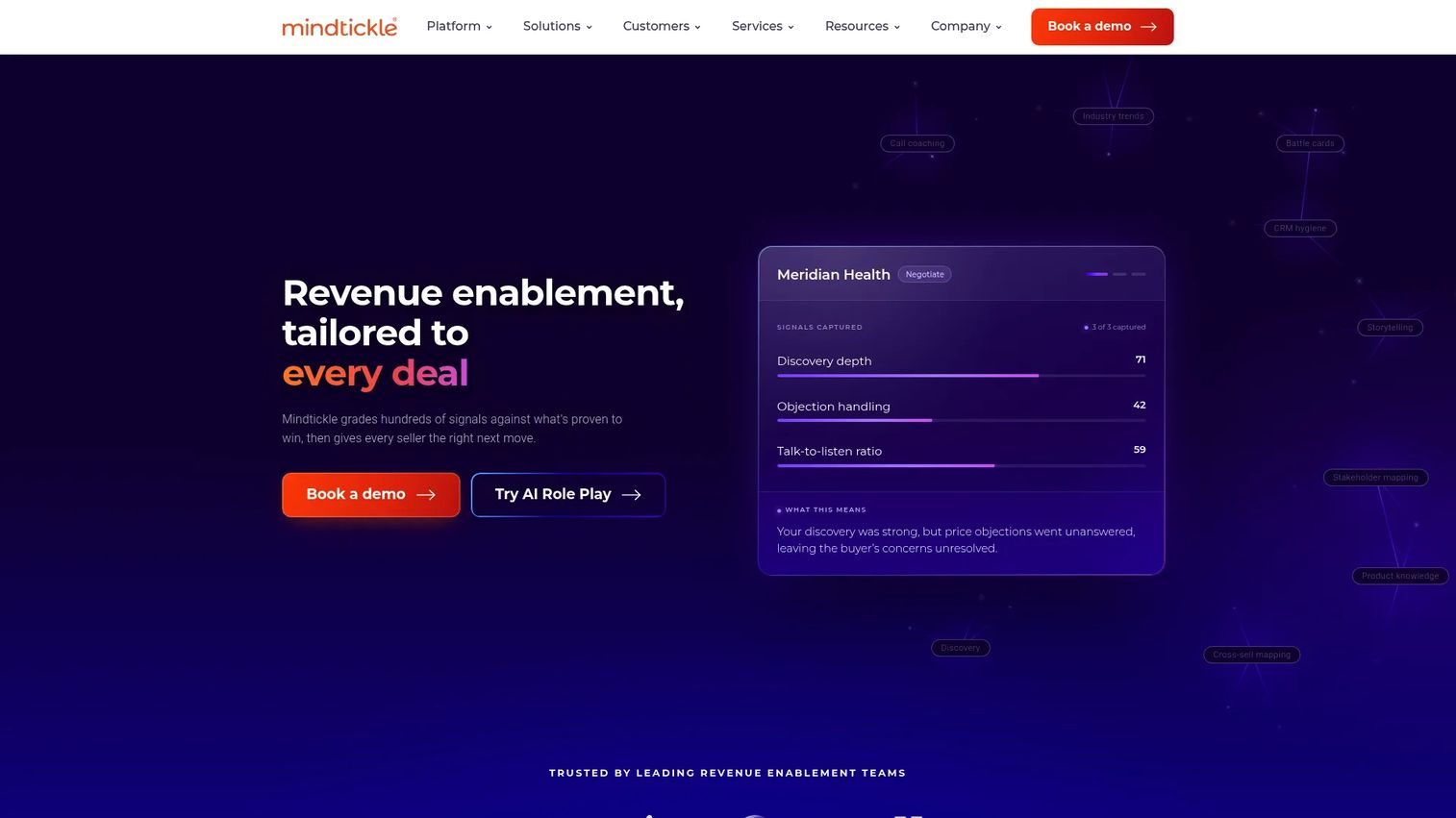
Mindtickle is one of the closest like-for-like Allego alternatives for teams that treat readiness, certification, and structured coaching as the core enablement job. Where Allego offers a broad mix of learning, content, and conversation intelligence, Mindtickle goes deeper on the readiness and skill-measurement side.
Best for: Enterprise revenue teams that need formal readiness programs, role-play coaching, manager inspection dashboards, and skill development at scale.
What it is: Mindtickle is an AI-powered revenue enablement platform that combines sales training, content management, coaching, conversation intelligence, analytics, and buyer engagement. It is built around the idea that seller performance is measurable and improvable through structured programs.
Key features:
- Readiness programs, learning paths, and onboarding structures
- AI role-plays and sales coaching with call recording, transcription, and scoring
- Readiness Index and seller-performance analytics for manager inspection
- Sales content management and digital sales rooms
- CRM and sales stack integrations
Where Mindtickle falls short:
- G2 reviewers note that initial setup and configuration can be time-consuming, particularly for organizations without a dedicated enablement admin.
- Some reviewers mention that reporting customization requires effort before dashboards deliver the insights managers actually want.
- Pricing is quote-based with no public tier breakdown, which makes budget planning harder during vendor evaluation.
Pricing: Quote-based annual contract.
G2 rating: 4.7/5
How it compares to Allego: Mindtickle is the stronger pick when readiness depth matters more than a broad bundle. Its skill measurement and manager dashboards go further than Allego's readiness layer for teams where certification and coaching cadence are the central program.
3. Highspot (sales content management and enablement)
If the main Allego pain is content chaos, scattered assets, or reps reverting to old decks because they cannot find the approved version, Highspot addresses that more directly than a broad readiness suite.
Best for: Enablement teams where the central problem is surfacing approved content to reps by stage, persona, and motion, with analytics on what buyers actually engage with.
What it is: Highspot by Seismic is an AI-powered go-to-market platform covering sales content management, buyer engagement, training, coaching, and execution analytics. Its content search, recommendations, and guided selling capabilities are what most distinguishes it in the field.
Key features:
- AI-powered content search, recommendations, personalization, and governance
- Sales plays, digital sales rooms, and buyer engagement analytics
- Training, adaptive learning, role-play, and coaching feedback
- Meeting intelligence, deal intelligence, and GTM analytics
- CRM, Slack, Teams, and email integrations
Where Highspot falls short:
- G2 reviewers report that implementation is substantial, with some teams requiring months before the platform delivers its full value.
- Admin overhead and content governance maintenance can be demanding, particularly as content libraries grow.
- Pricing is contact-sales only across all three packages, which creates friction early in the evaluation process.
Pricing: Three packages (Equip and engage, Train and practice, Coach and reinforce), all quote-based.
G2 rating: 4.7/5
How it compares to Allego: Highspot is the stronger fit when content governance is the central job. If the buyer's main need is video-based learning and peer coaching from call snippets, Allego may still have an edge there.
4. Gong (conversation intelligence and revenue intelligence)
The clearest pick when conversation intelligence is the driver: Gong is what teams reach for when they want to coach from actual customer conversations rather than from scripted role-plays or static training content.
Best for: Revenue teams that want call recording, deal intelligence, coaching moments surfaced from live interactions, and forecast signals in one system.
What it is: Gong is a Revenue AI operating system capturing and analyzing customer interactions across calls, meetings, emails, and CRM data. It surfaces deal health signals, coaching opportunities, and forecast risks from real pipeline activity.
Key features:
- Call and meeting capture, transcription, and conversation analytics
- AI-powered deal health tracking and pipeline intelligence
- Sales engagement and coaching from live customer interactions
- Forecast accuracy signals and risk alerts
- CRM integration for deal and rep data
Where Gong falls short:
- G2 reviewers frequently cite cost as a barrier, particularly for smaller or mid-market teams evaluating it against lighter-weight alternatives.
- Getting maximum value from Gong's dashboards and alerts requires consistent CRM hygiene, which some teams struggle to maintain.
- The platform fee plus per-seat structure means total annual cost scales quickly as teams grow.
Pricing: Customized per-user licenses plus a platform fee.
G2 rating: 4.7/5
How it compares to Allego: Gong is not a readiness or content replacement. It is the right choice when the core job is learning from real calls and improving deal execution, which is a narrower, deeper capability than what Allego bundles into its broader platform.
5. Seismic (enterprise sales enablement)
Seismic sits at the enterprise end of the sales content management market, covering content, learning, coaching, automation, and buyer engagement in a governance-first package.
Best for: Large enterprise enablement teams with complex content libraries, multiple sales motions, strict governance requirements, and cross-functional content operations.
What it is: Seismic is an AI-powered sales enablement platform for customer-facing teams. Its Essential, Advanced, and Ultimate packages address content management, personalization, learning, coaching, and buyer engagement at enterprise scale.
Key features:
- Sales content management and AI-powered personalization
- LiveSend and digital sales rooms for buyer engagement
- Learning, coaching, and practice workflows
- Analytics and enablement program management
- CRM and business-system integrations
Where Seismic falls short:
- G2 reviewers cite implementation time and change management requirements as significant, with enterprise rollouts often running several months.
- Admin complexity and content governance maintenance require dedicated resources; organizations without a content operations function may underutilize the platform.
- Pricing is contact-sales with no public figures, adding friction to competitive evaluations.
Pricing: Essential, Advanced, and Ultimate packages; all quote-based.
G2 rating: 4.7/5
How it compares to Allego: Seismic is the stronger pick when enterprise content governance is central. Allego remains more competitive where video-based learning and coaching from call recordings are the primary program requirement.
6. Showpad (sales enablement and content experiences)
Showpad focuses on the intersection of content experiences and seller readiness, particularly for field sales teams that need to present confidently and share polished assets with buyers.
Best for: Mid-market and enterprise field-selling organizations that need unified sales content, readiness, and buyer-facing sharing experiences.
What it is: Showpad is an AI-native revenue effectiveness platform covering content management, seller readiness, buyer engagement through Shared Spaces, and analytics. Professional, Advanced, and Expert packages are available on request.
Key features:
- Content management and distribution
- Seller readiness, training, coaching, and AI role-play
- Buyer engagement through Shared Spaces
- Analytics and insights across content and engagement
- AI assistants and agents for rep guidance
Where Showpad falls short:
- G2 reviewers note that content search and navigation can be inconsistent as content libraries grow, making findability harder for large asset sets.
- Some reviewers report that analytics dashboards require configuration before they produce actionable insights for managers.
- Pricing is quote-based across all tiers, with no public starting figures.
Pricing: Professional, Advanced, and Expert packages; all require a quote.
G2 rating: 4.6/5
How it compares to Allego: Showpad is the better fit when polished content presentation and buyer sharing are the priority. Teams whose first requirement is call-level coaching will find Allego or Gong a stronger match.
7. SalesHood (sales readiness and coaching)
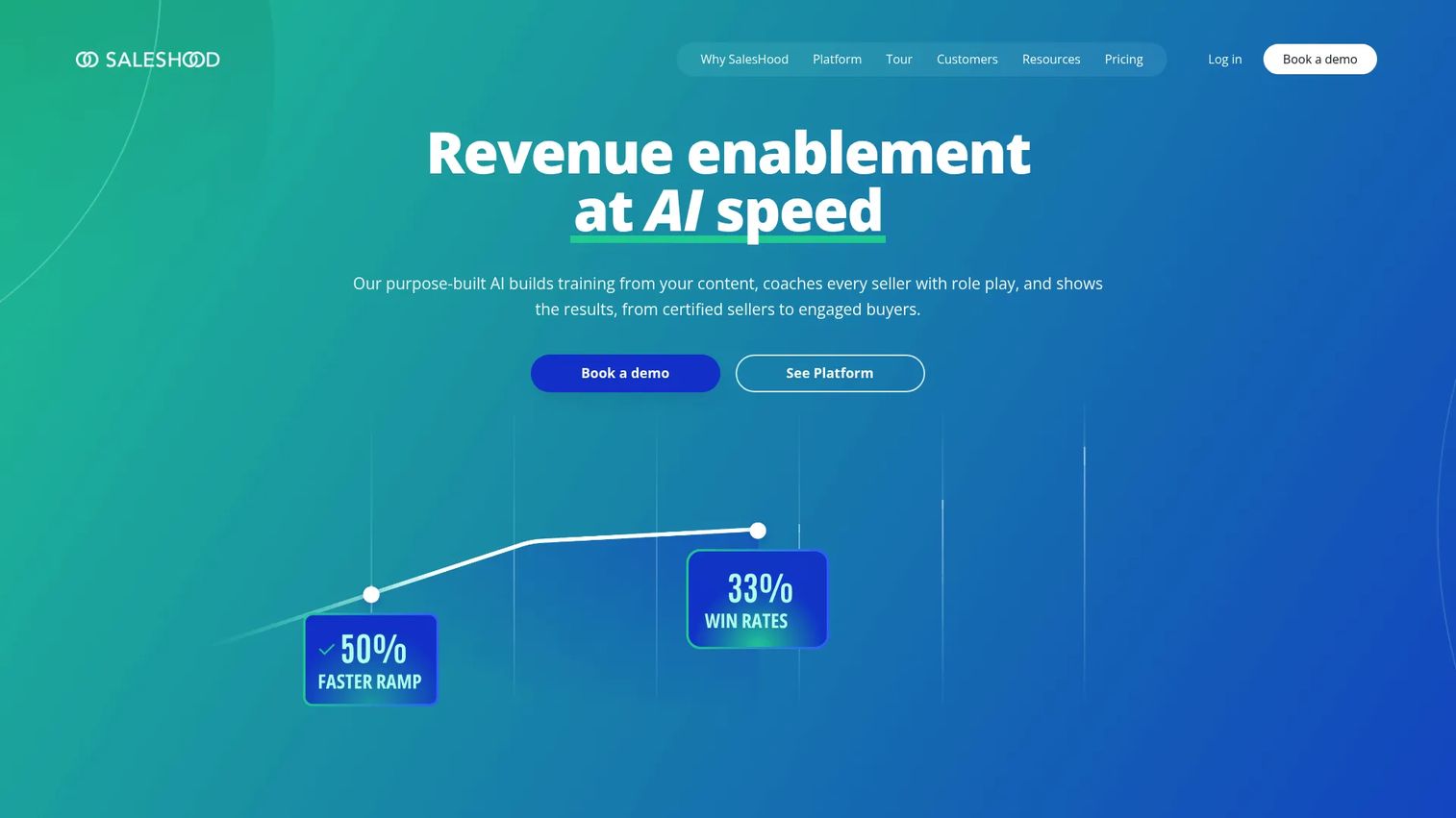
SalesHood positions itself as a readiness and coaching alternative for teams that want structured enablement programs without the heaviest enterprise platform footprint. 90% of organizations are using or planning to use AI in their go-to-market efforts, according to Highspot's State of Sales Enablement report (2025), and SalesHood's AI coaching capabilities sit inside that trend.
Best for: Revenue teams that need repeatable onboarding paths, coaching workflows, and launch enablement under a unified program structure.
What it is: SalesHood is an agentic AI sales enablement platform for activating content, improving seller readiness, personalizing buyer engagement, and measuring revenue impact. Essential, Pro, and Unlimited editions are available.
Key features:
- Centralized sales content and knowledge management
- Training, onboarding, and seller readiness programs
- AI coaching, pitch practice, and guidance
- Digital sales rooms and mutual action plans
- AI search, content writing, and performance insights
Where SalesHood falls short:
- G2 reviewers note that reporting configuration takes time and that some advanced reporting features require setup before they surface useful cohort-level data.
- Reviewers mention that the UX for certain admin workflows can feel dated compared to newer platforms.
- No public numeric pricing is available; all editions require a sales conversation.
Pricing: Essential, Pro, and Unlimited editions; all contact-sales.
G2 rating: 4.6/5
How it compares to Allego: SalesHood is a practical readiness and coaching alternative when the buyer prioritizes onboarding programs and launch enablement over a broad revenue enablement suite. Allego's conversation intelligence capabilities give it an edge for teams that heavily weight coaching from real call data.
8. Spekit (in-workflow enablement)
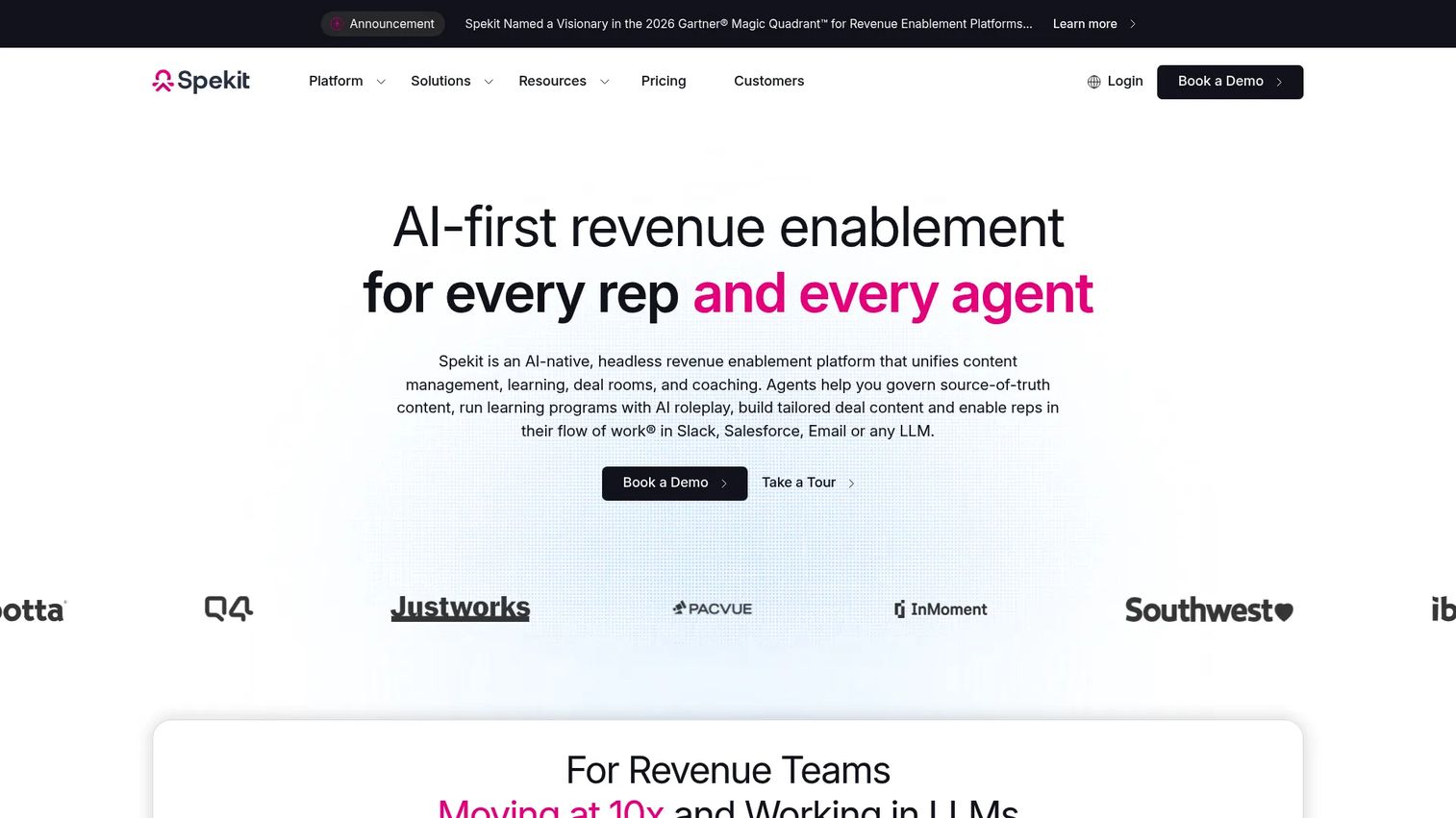
Spekit approaches the enablement problem from a different angle: Rather than a training environment reps visit, it brings knowledge to where reps are already working.
Best for: Revenue and enablement teams where the central problem is adoption at the moment of execution, not content creation or readiness certification.
What it is: Spekit is an AI-powered revenue enablement platform unifying governed content, learning, coaching, and deal execution in the flow of work. Its AI Sidekick surfaces contextual answers, coaching nudges, and content recommendations directly inside CRM and browser-based tools.
Key features:
- AI Sidekick with contextual answers and content recommendations
- Governed content management with approval workflows and freshness scoring
- Dynamic learning paths, knowledge checks, and AI role-play practice
- AI Deal Rooms with buyer engagement analytics
- Integrations with Salesforce, Slack, Gmail, Outlook, Gong, and others
Where Spekit falls short:
- G2 reviewers note that Spekit is not a full LMS and does not cover deep call coaching or conversation intelligence natively.
- Setup and ongoing content maintenance can be significant, particularly for teams without a dedicated enablement admin who owns knowledge card hygiene.
- Pricing is per-seat and quote-based, with AI role-play available as a paid add-on.
Pricing: Foundation and Rep Acceleration packages; per-seat custom quote. AI role-play is an add-on.
G2 rating: 4.6/5
How it compares to Allego: Spekit works when the problem is adoption at the point of execution inside tools reps already use. For teams whose primary Allego use case is readiness programs or conversation intelligence, Spekit is not the replacement; it is a complementary layer.
9. Bigtincan (sales enablement and readiness)
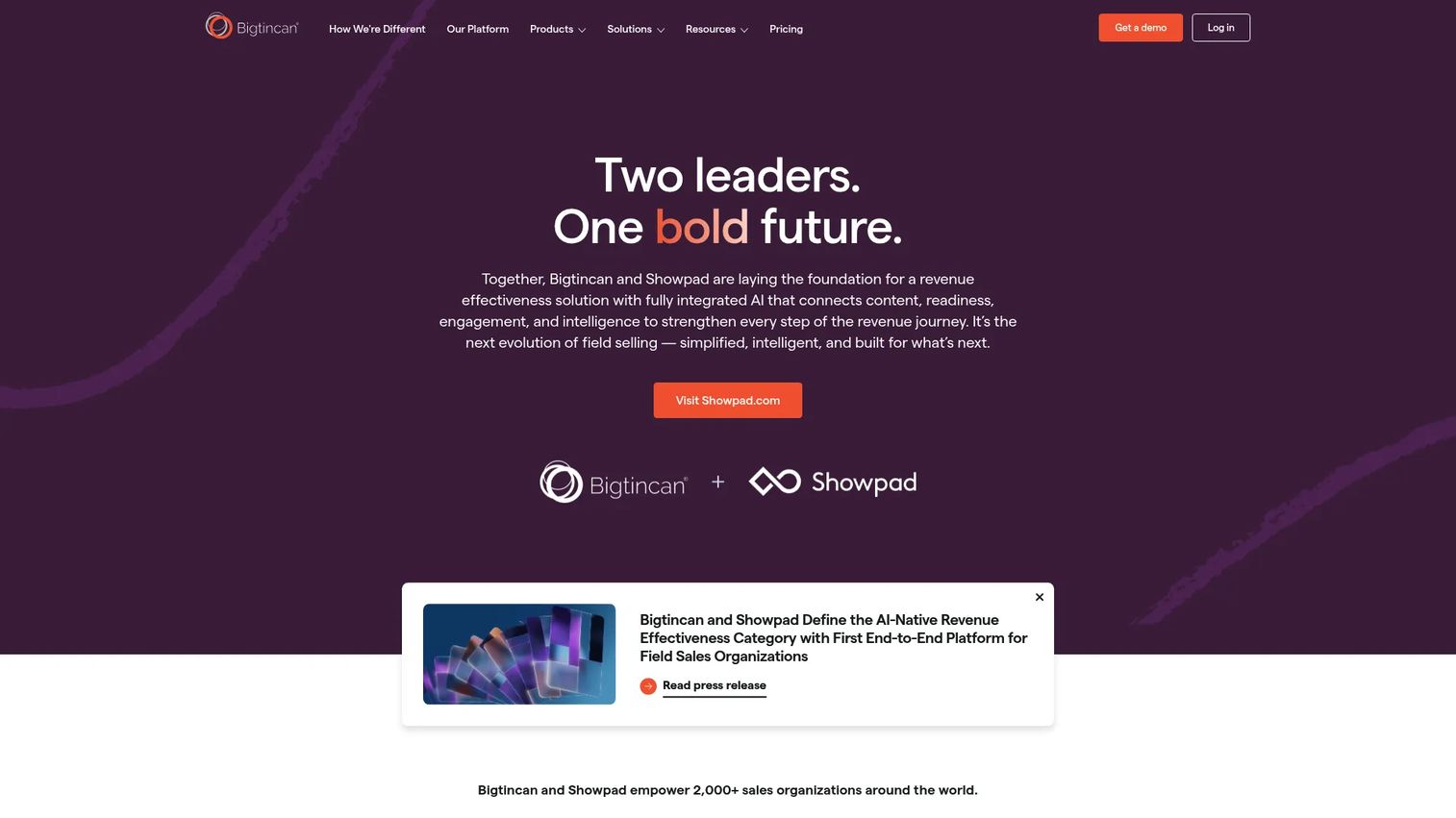
Bigtincan covers a broad set of enablement capabilities under one system, with AI-powered features across content, readiness, coaching, and buyer engagement.
Best for: Enterprise customer-facing teams seeking an integrated platform for sales readiness, content enablement, buyer engagement, and AI-powered revenue insights.
What it is: Bigtincan is an AI-powered revenue enablement platform combining readiness, content, engagement, analytics, and sales intelligence. Essential and Elite editions are available, covering Readiness, Content, and Engagement solution areas.
Key features:
- AI-powered sales enablement with GenieAI
- Content management and AI search
- Training, coaching, and AI role-play
- Digital Sales Rooms and buyer engagement tracking
- MeetingsAI for meeting insights and summaries
Where Bigtincan falls short:
- G2 reviewers cite platform complexity and a steep learning curve, particularly during initial rollout and admin configuration.
- Some reviewers note that the UI can feel inconsistent across modules, which affects rep adoption.
- No public numeric pricing; both editions are contact-sales only.
Pricing: Essential and Elite editions; all contact-sales.
G2 rating: 4.3/5
How it compares to Allego: Bigtincan is worth evaluating when teams want a multi-capability platform rather than a single-job point tool. Its lower G2 rating relative to Mindtickle and Highspot reflects reviewer feedback on platform complexity during configuration.
10. Dock (digital sales rooms and customer portals)
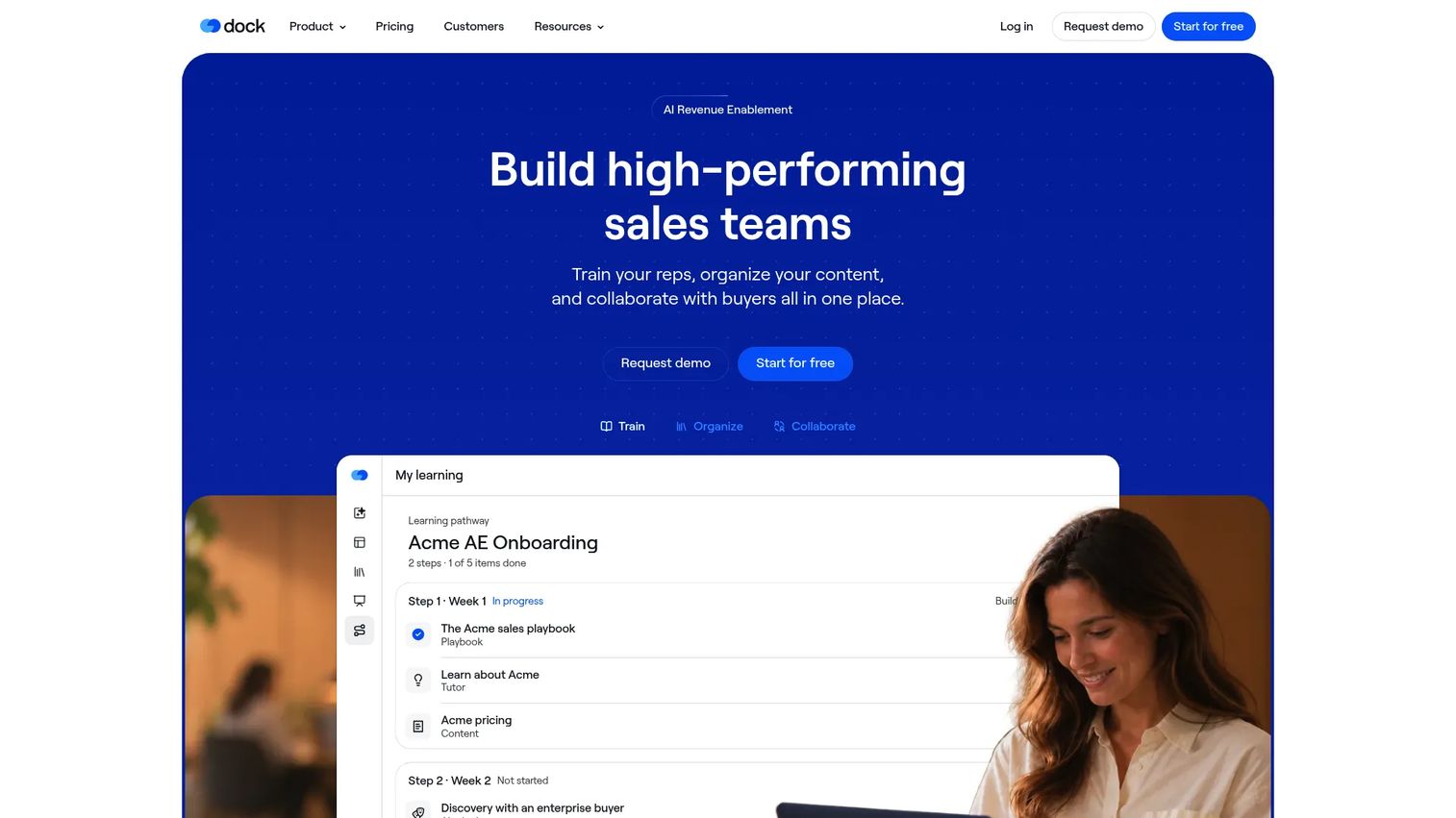
Dock covers a focused slice of the enablement stack: The shared buyer space where deals move from proposal to close and onboarding. It is not a readiness or conversation intelligence replacement.
Best for: Sales teams that need shared buyer workspaces, mutual action plans, customer portals, and content sharing with engagement tracking.
What it is: Dock is an AI revenue enablement platform for training sales teams, organizing content, and collaborating with buyers. Free, Standard, Premium, and Enterprise tiers are available on its published pricing page.
Key features:
- Digital sales rooms and buyer workspaces
- Content library and content management
- Sales training with playbooks and courses
- AI-generated workspaces and documents
- Salesforce and HubSpot integrations
Where Dock falls short:
- G2 reviewers note that Dock does not cover readiness, certification, or conversation intelligence, limiting its scope compared to full enablement suites.
- Some reviewers mention that advanced CMS capabilities and branding removal require the Premium tier ($1,000/month billed annually).
- Portal setup and configuration take time for teams building complex multi-stage buyer journeys.
Pricing: Free tier (limited features). Standard at $350/month for 5 users. Premium at $1,000/month billed annually for 10 users. Enterprise at a custom annual contract.
G2 rating: 4.6/5
How it compares to Allego: Dock replaces the buyer-room and deal-collaboration slice of what Allego offers. Teams looking to replace Allego's learning, call analysis, or content governance will need additional tools alongside it.
11. Mediafly (revenue enablement and buyer engagement)
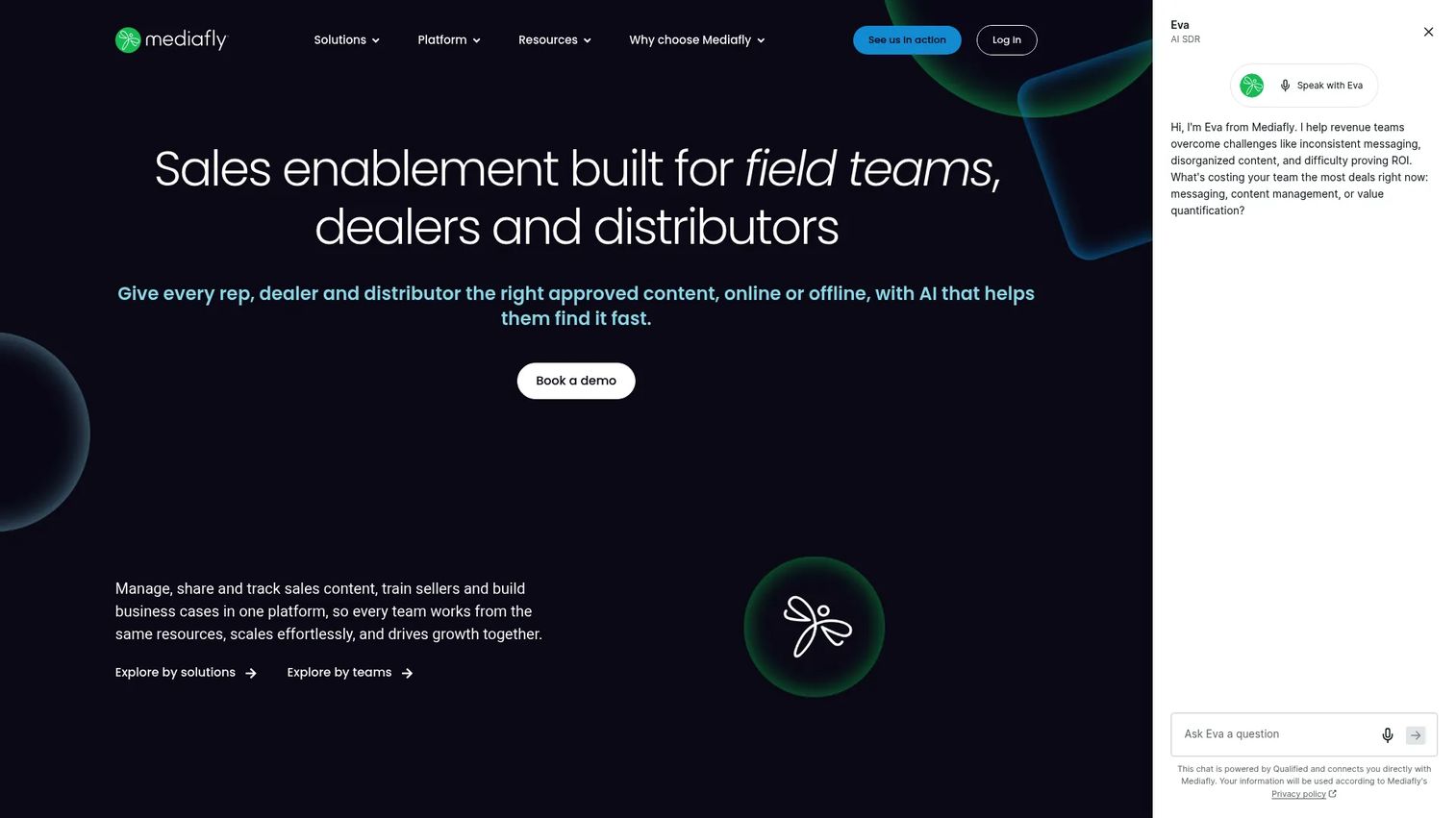
Mediafly distinguishes itself with value selling tools alongside its content and buyer engagement capabilities, making it a stronger fit for complex B2B sales where ROI justification is part of the conversation.
Best for: Large or complex B2B revenue organizations that need unified content governance, value selling tools, learning, and seller enablement analytics.
What it is: Mediafly is an enterprise revenue enablement platform combining sales content management, value selling and realization tools, learning, coaching, and AI-powered analytics. CRM integrations include Salesforce, HubSpot, Pipedrive, SAP Sales Cloud, and Microsoft Dynamics 365.
Key features:
- Governed sales content management with approval workflows and engagement analytics
- Digital sales rooms and online/offline presentation across devices
- Value selling tools: ROI calculators, TCO estimators, and business case builders
- Learning, onboarding, coaching, and performance tracking
- AI-powered content search, recommendations, and Command Center
Where Mediafly falls short:
- G2 reviewers note that setup and onboarding require meaningful admin investment before the platform delivers consistent value.
- Analytics configuration can be complex, and some reviewers find the dashboard customization options limited without deeper implementation work.
- Pricing is fully customized based on modules and user counts; no public figures exist.
Pricing: Contact-sales pricing customized by selected modules and user counts.
G2 rating: 4.4/5
How it compares to Allego: Mediafly is the stronger pick when buyer engagement and value selling are as important as internal readiness. Teams whose primary Allego use case is video coaching or conversation intelligence will find Mediafly less directly targeted at that need.
12. Qwilr (interactive proposals and buyer pages)
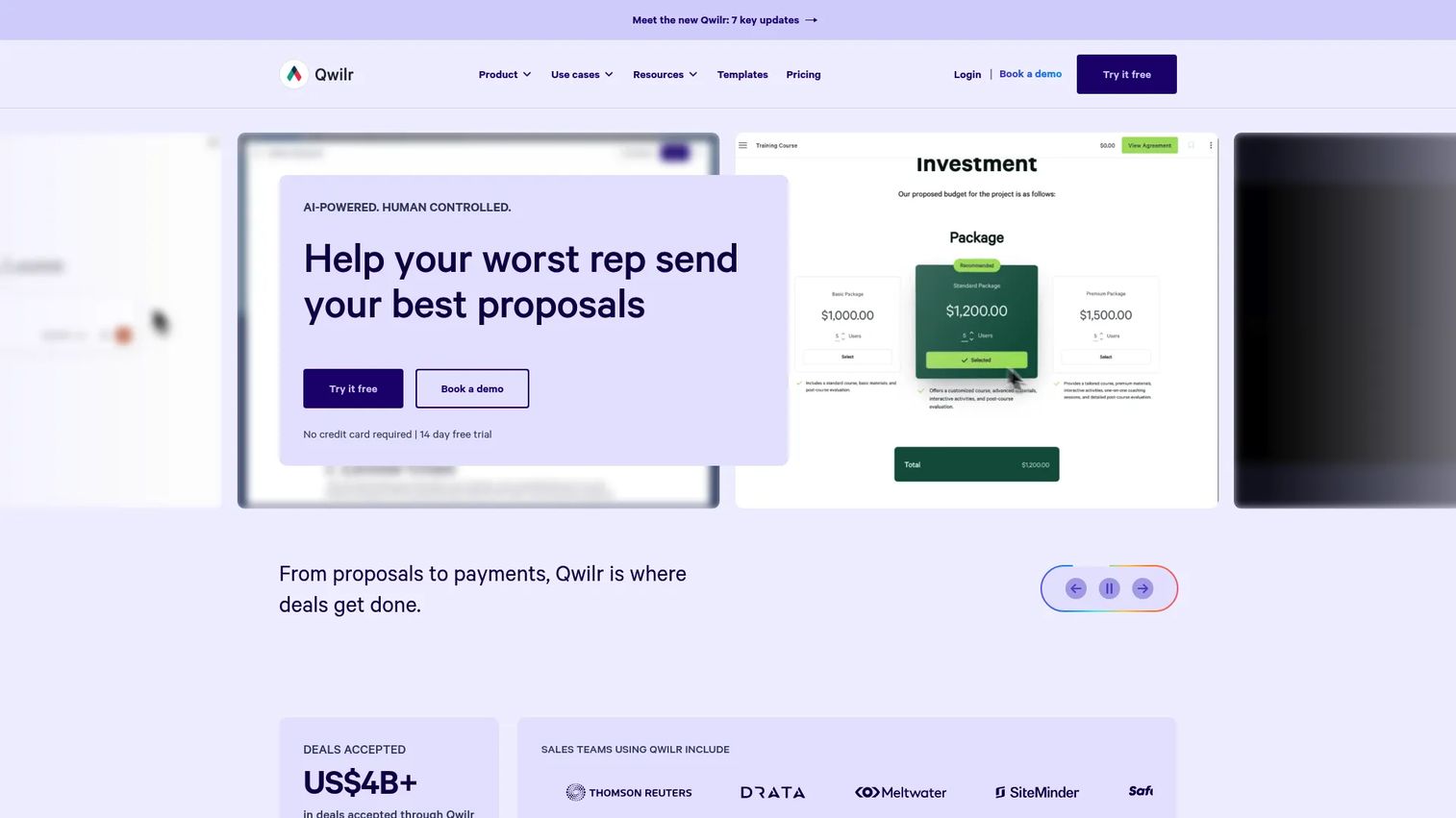
Qwilr covers the buyer-facing deal content moment, specifically proposals, quotes, and shareable pricing pages. It is a focused alternative for one part of what Allego offers, not a broad replacement.
Best for: Sales teams that need interactive proposals, pricing pages, and shareable deal content with engagement tracking and e-signature.
What it is: Qwilr is software for creating interactive, automated sales proposals and quotes. Its Starter, Growth, and Scale plans cover proposal pages, interactive quotes, payment collection, ROI calculators, and proposal engagement analytics.
Key features:
- Interactive, link-based proposal pages
- Electronic signatures
- Interactive quotes and ROI calculators
- Proposal engagement analytics
- Payment collection through QwilrPay
Where Qwilr falls short:
- G2 reviewers note that Qwilr does not cover sales readiness, coaching, or conversation intelligence, so it is a narrow replacement rather than an Allego substitute across the board.
- Some reviewers report that proposal formatting options can feel constrained when building highly customized deal documents.
- The Growth plan (minimum 5 users) and Scale plan (minimum 10 users) add seat minimums that affect small-team pricing.
Pricing: Starter at $35/user/month billed annually ($49/user/month billed monthly). Growth at $55/user/month billed annually, minimum 5 users. Scale at $75/user/month billed annually, minimum 10 users. No permanent free tier; a 14-day Starter trial is available.
G2 rating: 4.6/5
How it compares to Allego: Qwilr is best when the Allego job to replace is buyer-facing deal content, specifically proposals and pricing pages. Teams looking to replace Allego's rep training, conversation intelligence, or content governance will need a different tool or combination.
Which Allego alternative is best for sales coaching?
Mindtickle for formal programs; Gong for coaching from real calls; SalesHood for structured onboarding.
Mindtickle is the top pick for teams that need certification, role-play coaching, and manager dashboards built into a formal readiness program. Gong is the right answer when coaching needs to come from actual customer conversations, with call recordings, transcriptions, and deal signals driving manager feedback. SalesHood fits teams that want repeatable onboarding and launch enablement without the full enterprise footprint. Guideflow does not provide call scoring or conversation analysis.
What is the best Allego alternative for buyer-facing demos?
Guideflow, for enablement teams that need interactive demo content sellers can use at every buyer stage.
Guideflow lets enablement teams build a demo once and deploy it in outreach, follow-up emails, demo centers, and customer education. The same asset can train a rep internally and travel to a buying committee externally. Analytics cover impressions, completion rate, leads collected through in-demo forms or personalized links, and viewer flow. Guideflow does not record sales calls or run coaching workflows; it covers the buyer-facing demo content job that general enablement platforms leave as an afterthought.
Which Allego competitor is best for content governance?
Highspot or Seismic, depending on enterprise depth and content operations maturity.
Highspot is the stronger pick for guided selling and rep-facing content access, with AI-powered search and sales plays surfacing approved assets at the right deal stage. Seismic fits large enterprise content operations with strict governance, content automation, and personalization at scale. Showpad and Mediafly also apply when buyer presentation and engagement matter alongside content management.
Which Allego alternative is best for conversation intelligence?
Gong is the clearest pick for call recording, transcription, and deal intelligence.
Conversation intelligence is a distinct category from sales enablement content or readiness. Gong records and analyzes calls, surfaces deal risks, and gives managers coaching context from real customer interactions. Teams that use Allego primarily for peer coaching from call recordings will find Gong goes deeper on the analysis and deal-intelligence side. No other tool on this list covers conversation intelligence with the same depth.
Which Allego alternative is best for digital sales rooms?
Dock for buyer collaboration and mutual action plans; Qwilr for proposal-led buyer pages.
Dock is the focused pick for teams that need shared workspaces, mutual action plans, onboarding portals, and deal collaboration with engagement tracking. Qwilr fits when the primary job is interactive proposals with pricing blocks and e-signature. Mediafly applies when buyer engagement and value selling tools need to sit alongside a broader enablement capability.
What is the cheapest Allego alternative?
Guideflow and Dock both publish starting prices; most enterprise enablement suites are quote-based.
Guideflow has a free plan at $0 and paid plans starting with Solo at $35/user/month. Dock's Standard plan starts at $350/month for up to 5 users, with a free tier available for limited use. Qwilr's Starter plan is $35/user/month billed annually. Enterprise enablement platforms including Mindtickle, Highspot, Seismic, Showpad, SalesHood, Spekit, Bigtincan, Gong, and Mediafly all use quote-based annual contracts. Total annual cost across those suites includes platform fees, seat counts, implementation, and add-ons, so point-to-point price comparison requires a direct conversation with each vendor.
When should you stay with Allego?
Stay with Allego if your team is using it successfully for rep learning, peer coaching, video-based readiness, content access, and conversation intelligence in one environment.
Three scenarios where switching is likely not worth it:
- Managers are actively coaching from Allego call data, and reps complete certifications regularly. Splitting that system would require two separate platforms to replicate the same program.
- Adoption is working. Sellers find content, complete training, and use the platform inside active deals. The switching cost and change management overhead outweigh any point-tool upgrade.
- Your readiness program runs on Allego's learning paths and certification structure. Rebuilding that program in a new system is a significant enablement project, not a simple migration.
The case for switching is strongest when adoption is poor, one enablement job dominates your budget, or a renewal gives you room to right-size to purpose-built tools.
Why teams switch from Allego to Guideflow
Allego helps teams learn from calls, run readiness programs, and manage sales content. Guideflow solves a different problem: Giving sellers interactive product experiences they can share with buyers.
Enablement teams that add Guideflow typically have one of these gaps: Reps send static decks after calls and cannot track whether buyers engaged, demo content lives in a recording that champions cannot share safely, or buying committees need to self-evaluate the product outside of a live call.
Guideflow covers those gaps through six demo formats: Interactive demos, demo pages, demo centers, sandboxes, live demos, and mobile demos. Build a demo in about two and a half minutes using the Chrome extension or the native app. Step content is written automatically. The editor handles text, images, graphs, and branching without code.
Distribution is straightforward. Share via link, embed on a landing page or in an email sequence, or organize multiple demos inside a demo center. Analytics surface step-level completion, drop-off, and viewer flow. When a viewer identifies through an in-demo form or a personalized link, a CRM record is created. Integrations with HubSpot, Salesforce, Pipedrive, Zoho, and Marketo route those signals into existing pipeline workflows.
The limitation to keep in front of this decision: Guideflow does not record sales calls, analyze conversations, or run coaching workflows. Teams that need those capabilities should keep a conversation intelligence tool. Guideflow covers the buyer-facing demo content job that sits at the other end of the enablement chain.
Start your journey with Guideflow today!
FAQs
The answer depends on the enablement job you're solving. Mindtickle fits structured readiness, certification, and coaching programs. Highspot or Seismic fit content governance and guided selling. Gong fits conversation intelligence and coaching from real calls. Guideflow fits buyer-facing interactive demo content. No single tool replaces every Allego capability.
Formal readiness programs and role-play coaching point to Mindtickle or SalesHood. Coaching from actual customer conversations points to Gong, which records, transcribes, and analyzes calls to surface deal risks and manager feedback opportunities. The coaching model you use determines the tool.
No. Guideflow replaces the buyer-facing demo content job, not Allego's call recording, conversation analysis, or coaching workflows. Teams that use Allego primarily for readiness, certification, or conversation intelligence will still need a platform that covers those jobs. Guideflow adds interactive demo creation, sharing, and tracking that Allego and most enablement suites do not cover.
Guideflow publishes its full pricing page: Free at $0, Solo at $35/user/month, Growth at $499/month, Advanced at $1,499/month, and Enterprise from $2,999/month. Dock publishes its Standard ($350/month), Premium ($1,000/month), and Enterprise (custom) plans. Qwilr publishes Starter ($35/user/month), Growth ($55/user/month), and Scale ($75/user/month) plans. Mindtickle, Highspot, Seismic, Showpad, SalesHood, Spekit, Bigtincan, Gong, and Mediafly all use quote-based annual contracts.
Map the workflows Allego currently supports: Readiness and certification, call coaching, content findability, in-workflow guidance, digital rooms, and buyer-facing demo content. For each, evaluate the alternative on CRM integrations, analytics depth, admin workload, adoption history with your rep population, implementation timeline, and total annual cost including seats and add-ons.
Sales enablement software organizes content, training, coaching programs, and sales plays so reps find the right asset and develop the right skills. Conversation intelligence software records and analyzes actual sales calls to improve manager coaching, deal inspection, and forecast confidence. The two categories overlap in some platforms (Allego, Mindtickle, Gong's coaching features), but their core jobs are distinct.
Guideflow for interactive product demos that buyers can click through and share. Dock for digital sales rooms and mutual action plans. Qwilr for interactive proposals and pricing pages. Mediafly for broader buyer engagement alongside value selling tools. Each covers a different moment in the buyer experience.
Replacing a broad platform with focused tools can improve depth in each job, but it increases admin load, vendor relationships, and potential integration gaps. The practical answer: Map which Allego job drives most of your program value, replace that job with a purpose-built tool first, and assess what else you need from there. Teams that need readiness, coaching, and buyer-facing demos often run a readiness platform and a demo automation tool side by side rather than searching for a single all-in replacement.