Your organic dashboard explains rankings and clicks. Then leadership asks whether AI search recommends your product, and you’re back to collecting screenshots.
AEO trackers address that reporting gap. They help you monitor buyer questions repeatedly and see which competitors appear beside your brand. But another subscription needs to earn its place in a crowded marketing stack.
McKinsey reported in 2025 that 50% of U.S. consumers intentionally seek out AI-powered search. That finding establishes the channel’s relevance, though it doesn’t describe your specific B2B audience.
For growth teams, the useful question is operational. Can AEO tracking tools turn brand visibility tracking into decisions your content and demand generation teams can act on?
Start with a recurring process. Monitor priority prompts, compare competitor visibility, inspect cited sources, and assign follow-up work. A dashboard earns its cost when it helps you decide what to change next.
What’s inside
- Dedicated AEO trackers: Platforms for recurring AI visibility monitoring, with prompt analysis and competitive benchmarks.
- SEO suite options: Tools that connect answer engine reporting with existing organic search workflows, helping you assess subscription overlap.
- Content execution and diagnostics: Platforms for acting on visibility gaps, plus a lightweight AEO checker for an initial assessment.
- Buying criteria: Engine coverage and prompt controls, citation evidence, reporting compatibility, and total cost.
The comparisons below use vendor product information and pricing research dated November 24, 2026, alongside available G2 listings. Recommendations focus on workflow fit for growth marketers. A free diagnostic, a specialist tracker, and an enterprise platform serve different purchasing needs.
TL;DR
- Best for enterprise AI visibility: Profound combines answer engine intelligence with topic analysis and marketing workflows.
- Best for lean monitoring: Otterly.ai offers a small entry plan; LLMrefs suits teams wanting focused tracking with weekly reports.
- Best for SEO teams expanding into AEO: Semrush AI Toolkit connects custom prompt monitoring with broader organic search work.
- Best for brand intelligence: Ahrefs Brand Radar combines AI share of voice with visibility research across influential channels.
- Best for content execution: Frase connects AI search visibility tools with research, publishing, and content maintenance.
- Best for an initial check: HubSpot AEO Grader provides a free assessment. AthenaHQ also offers a free tier for starting ongoing monitoring.
What is AEO tracker software?
AEO tracker software monitors how brands and sources appear in generated answers across AI search engines.
AEO means answer engine optimization. Tracking measures visibility within answers, including whether an engine names your company, recommends its product, or cites a page.
Those outcomes deserve separate reporting. A mention establishes presence. A recommendation places your product among suggested choices. A citation identifies a source supporting the response, which may belong to your company or a third party.
Coverage varies by platform. ChatGPT visibility tracking and Perplexity visibility tracking may sit alongside Gemini visibility tracking, Google AI Overviews tracking, and other search experiences.
The useful unit is a defined prompt under recorded conditions. Keep its wording and location consistent when comparing results over time. Treat changes in the engine or collection method as measurement events.
Key features to look for
- Prompt tracking with repeatable settings
- Multiple answer engine coverage
- Citation tracking at URL level
- Brand mention and recommendation monitoring
- Competitor share of voice
- Source analysis and answer inspection
- Reporting dashboards and exports
- Segment and location controls
- Alerts for meaningful visibility changes
- BI compatibility and integration options
AEO trackers versus SEO rank trackers
| Capability | SEO rank tracker | AEO tracker |
|---|---|---|
| Main unit | Keyword ranking | Prompt and generated answer |
| Output | Search result position | Brand presence and cited sources |
| Variability | Search result changes | Prompt, model, location, and context changes |
| Useful metrics | Rankings and traffic | Visibility and AI share of voice |
| Follow-up action | Improve search performance | Address answer gaps and source coverage |
Answer engine optimization tools often extend beyond measurement. Some include content production or site auditing, while others concentrate on monitoring.
You’ll also see the label “generative engine optimization tools.” Evaluate the underlying functionality rather than treating terminology as a capability difference.
For a weekly operating cadence, keep a stable measurement set and a separate experimental set. Use the former for reporting progress. Reserve the latter for exploring new questions without changing the baseline every week.
When to use AEO trackers
Track AI visibility before traffic drops
Start monitoring when buyers discuss discovering products through AI search, even if your analytics don’t yet show a clear referral pattern. Establish a baseline before redesigning content around assumptions. Review answer presence alongside organic traffic rather than interpreting either measure alone.
Benchmark competitors in buyer prompts
Use commercial questions such as “best accounting software for a distributed finance team” to test recommendation coverage. Group prompts around the buying decisions your campaigns support. Compare AI share of voice within those groups, keeping the competitor set consistent between reporting periods.
Turn citations into content and PR priorities
Citation sources give your team concrete pages to investigate. Review whether the answer cites your documentation, an outdated comparison, a review site, or an industry publication. Assign the appropriate action, such as correcting product information or pursuing an editorial relationship. Record that intervention before assessing subsequent visibility movement.
AEO tracker comparison table
These tools cover different jobs within AI visibility monitoring. Dedicated platforms focus on recurring measurement, while broader suites connect those findings to SEO execution or content production.
Use the table to build a shortlist, then compare the commercial prompt set you intend to monitor. An entry price alone won’t tell you the cost of covering additional engines or markets.
Ratings also need context. The Semrush and Ahrefs scores cover their broader platforms, rather than the specific modules listed here. N/A means a distinct product rating wasn’t established in the available research.
Prices retain their original currencies and billing terms. The table separates free diagnostics from paid monitoring rather than treating them as equivalent AEO reporting software.
| # | Product | Best for | Key differentiator | Pricing | G2 rating |
|---|---|---|---|---|---|
| 1 | Profound | Enterprise AI visibility teams | Answer intelligence and topic demand research | Custom pricing | 4.5/5 |
| 2 | Peec AI | Brand recommendation monitoring | Prompt analysis and URL-level citation research | From $95/month | 4.7/5 |
| 3 | Scrunch AI | Visibility and AI experience teams | Monitoring plus AI-oriented page delivery | From $250/month | 4.6/5 |
| 4 | Otterly.ai | Lean AEO monitoring | Broad engine coverage and readiness audits | From €29/month | 4.7/5 |
| 5 | AthenaHQ | Monitoring with optimization | Visibility analysis and action workflows | Free; paid from $295/month | 4.9/5 |
| 6 | LLMrefs | Focused LLM visibility tracking | Weekly reports with geographic targeting | $79/month | N/A |
| 7 | Semrush AI Toolkit | Existing SEO workflows | Custom prompt tracking and AI readiness auditing | $99/domain/month, billed annually | 4.4/5, Semrush |
| 8 | Ahrefs Brand Radar | Brand and market intelligence | AI visibility alongside channel research | From $199/month per index | 4.5/5, Ahrefs |
| 9 | HubSpot AEO Grader | Initial brand assessment | Free diagnostic without an account | Free | N/A |
| 10 | Conductor | Enterprise organic marketing | AI tracking with content and site monitoring | Custom pricing | 4.5/5 |
| 11 | SearchAtlas | SEO execution and automation | LLM monitoring within a broader marketing platform | From $79/month, billed annually | 4.6/5 |
| 12 | Frase | Content optimization after tracking | Research, scoring, publishing, and monitoring | From $39/month, billed annually | 4.8/5 |
Best 12 AEO trackers and related tools
1. Profound
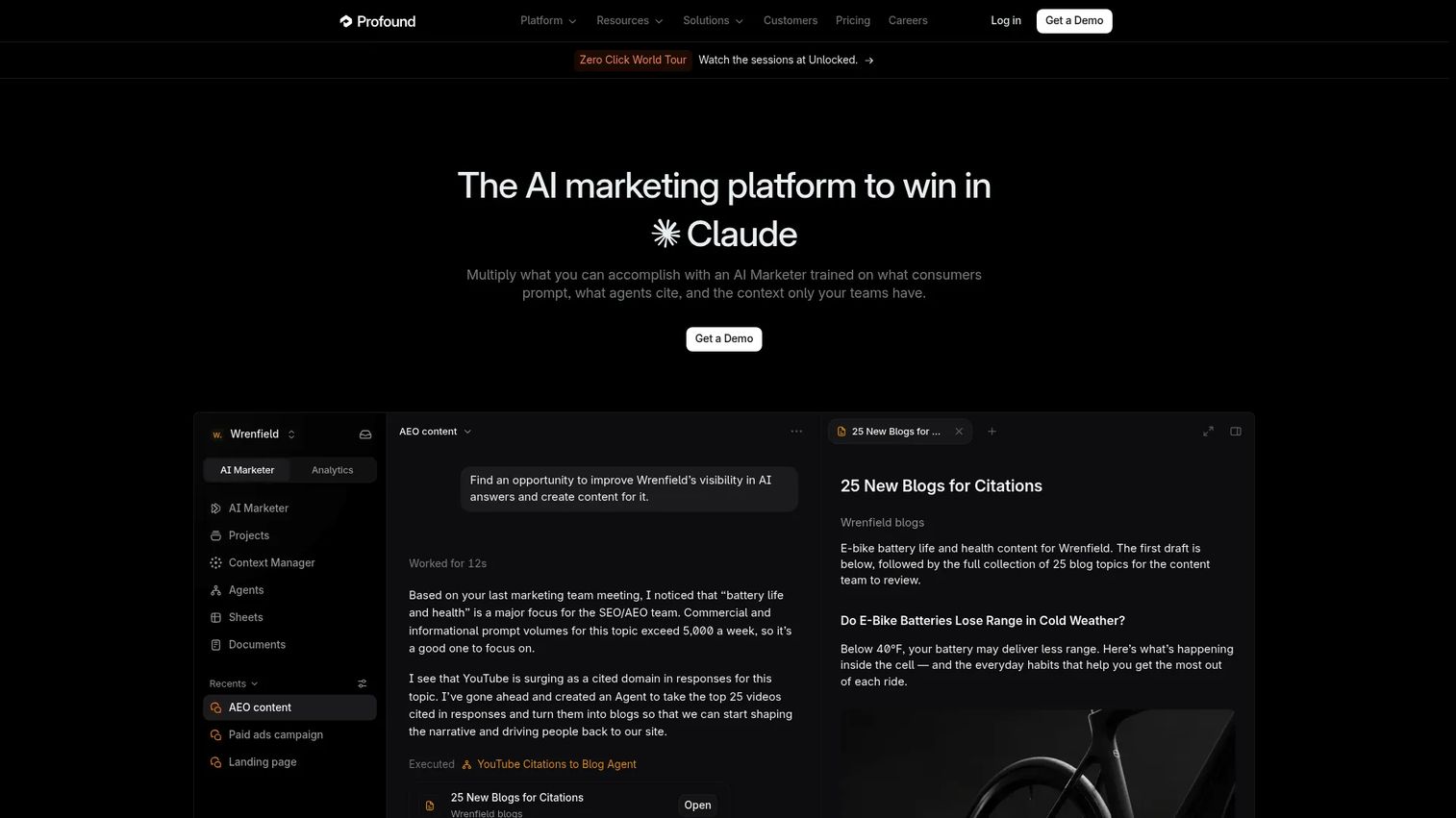
Profound is an AI marketing platform built around measuring and improving brand presence in answer engines. Its Answer Engine Insights connects visibility measurement with sentiment and competitive context. Prompt Volumes adds topic demand analysis, while AI Marketer agents support research and content workflows.
Best for: Enterprise marketing teams that need an ongoing AI visibility program with dedicated ownership.
Key features
- Answer Engine Insights
- Citation and competitor tracking
- Sentiment analysis
- Prompt Volumes topic research
- AI Marketer workflow agents
For a demand generation team, the evaluation should begin with commercial questions attached to priority product lines. Ask to see the underlying answers behind an aggregate score. Then assess whether the findings support a decision about messaging or content investment.
Profound’s category fit is strongest when several stakeholders need to interpret the same evidence. Brand teams can examine positioning while organic marketers investigate the sources appearing in responses.
Keep the rollout focused. Choose a business unit and assign someone to turn observations into an action backlog. Expanding coverage before establishing ownership risks creating a reporting exercise without corresponding execution.
Its current enterprise packaging also matters for procurement. Profound retired Starter and Growth in September 2026, according to its pricing page. Evaluate the present offer rather than relying on older entry-plan comparisons.
Why choose Profound: It fits organizations treating AI visibility as a recurring marketing discipline. A team seeking an occasional diagnostic should start with a smaller commitment.
Profound pricing: Enterprise uses custom pricing.
G2 rating: 4.5/5.
2. Peec AI
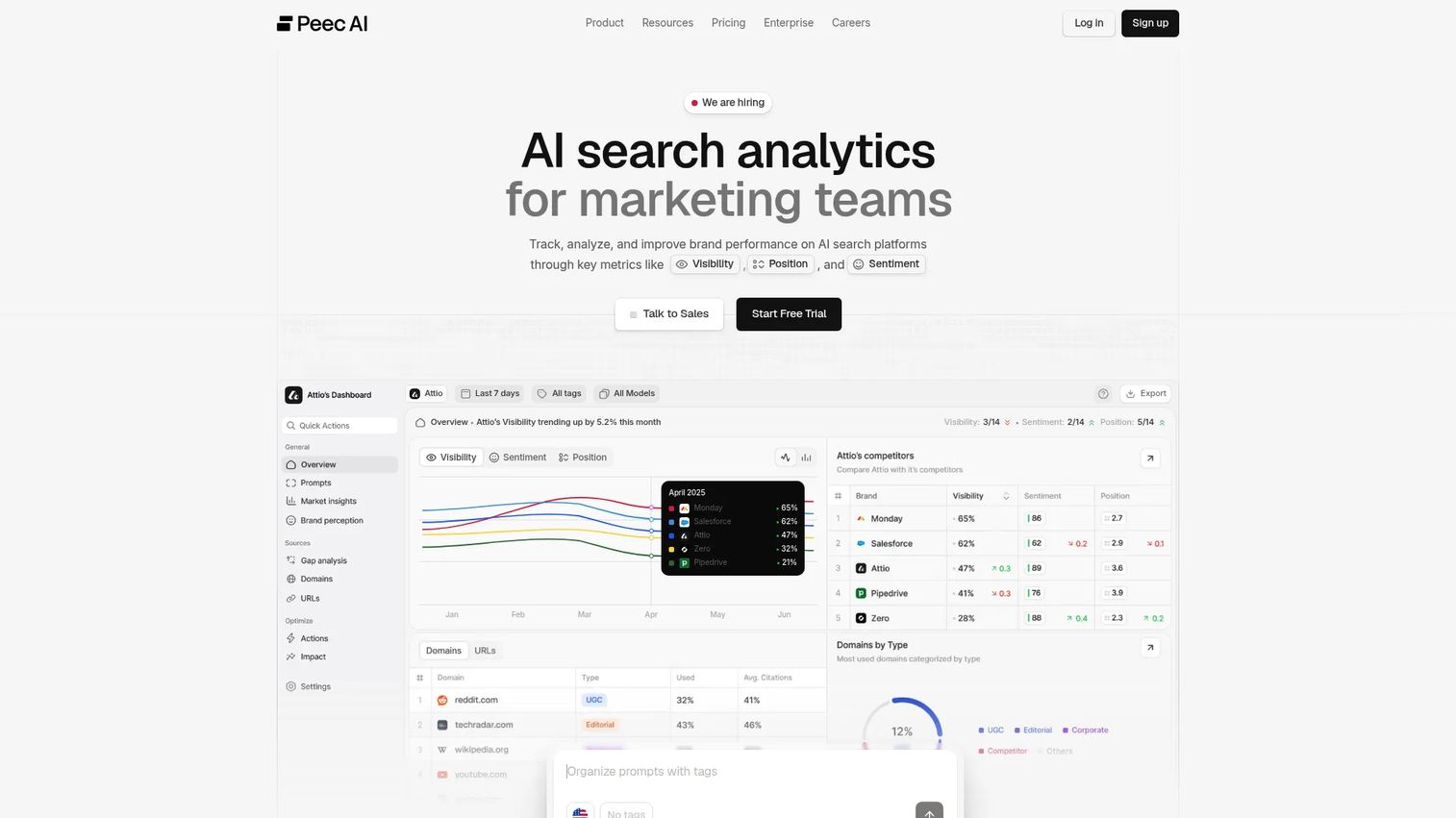
Peec AI concentrates on AI search analytics for marketing teams and agencies. It tracks performance across models, countries, and individual prompts. Source analysis reaches domain and URL level, giving marketers specific pages to investigate.
Best for: Brands that want a specialist platform for measuring recommendation visibility and competitor movement.
Key features
- Visibility, position, and sentiment metrics
- Domain and URL citation analytics
- Competitor share-of-voice benchmarks
- AI shopping and SKU tracking
- CSV exports and Looker Studio integration
Peec AI is worth evaluating when a headline visibility score leaves too many unanswered questions. A URL-level source view helps you distinguish an owned-content gap from a third-party coverage issue.
For example, review a prompt group where a competitor repeatedly appears. Inspect the referenced pages before commissioning another article. The appropriate next action may involve an existing comparison or a retail listing rather than your blog.
Reporting compatibility deserves attention during a trial. Take an export into the dashboard your team already uses and assess whether it preserves useful segmentation. Avoid buying on presentation alone.
Packaging provides another practical distinction. Starter includes 50 prompts and one project, while larger plans expand both allocations. Count intended prompt groups before estimating the subscription you’ll need.
Why choose Peec AI: It suits marketers who want detailed visibility analysis without making a broader SEO platform their primary workspace.
Peec AI pricing: Starter costs $95/month; Pro costs $245/month; Advanced costs $495/month. A free trial is available.
G2 rating: 4.7/5.
3. Scrunch AI
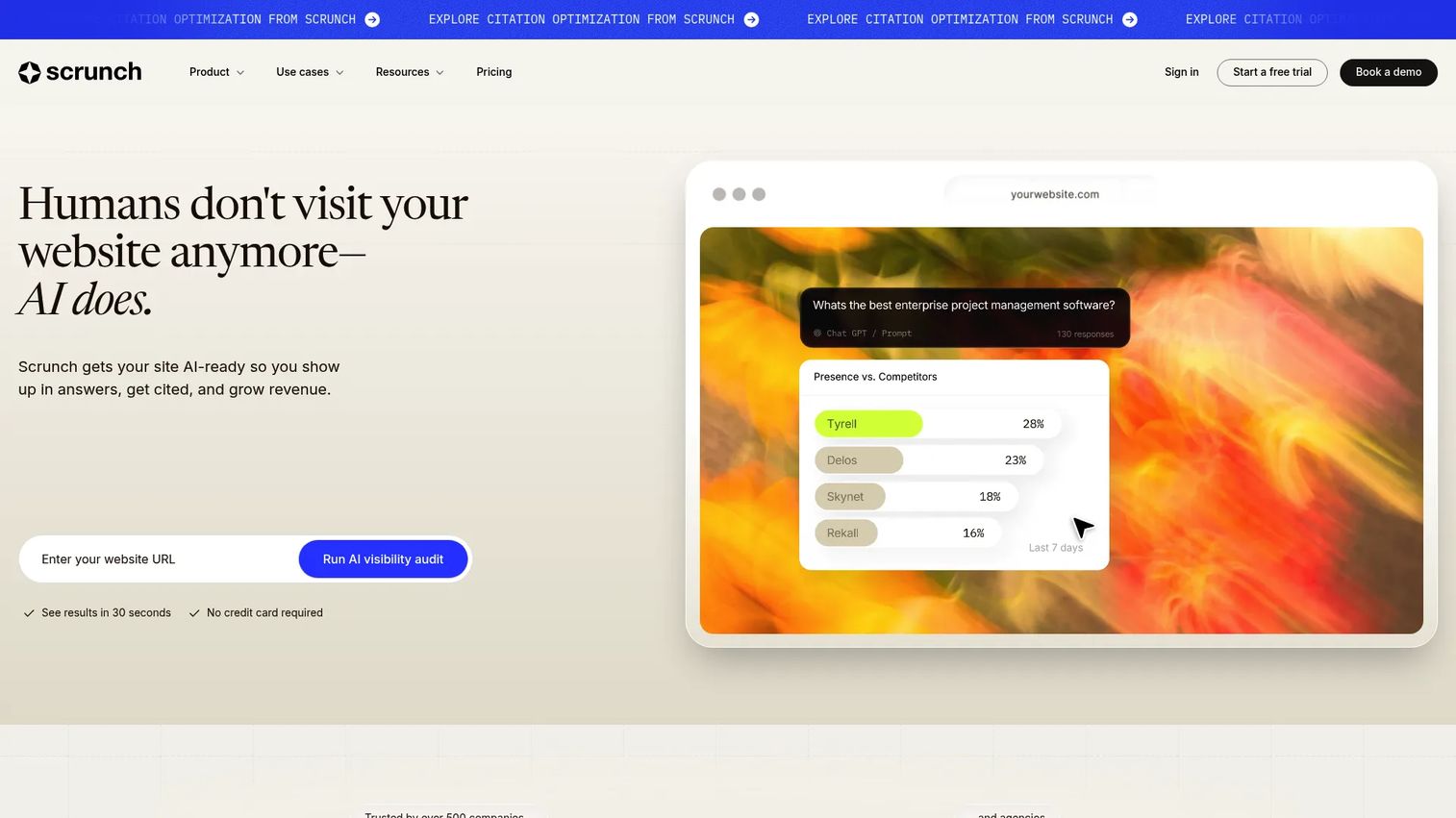
Scrunch AI combines AI visibility monitoring with work on how agents encounter website content. Its platform includes Agent Pages, page optimization, and AI referral analytics. That makes it relevant to teams evaluating both brand representation and the content delivered to AI systems.
Best for: Marketing teams that want to investigate visibility issues and manage related website changes.
Key features
- AI answer and citation monitoring
- Agent Pages content delivery
- Page optimization and generation
- AI referral and agent traffic analytics
- Competitive visibility analysis
The distinction here is between observing an answer and changing the information available behind it. Scrunch’s scope invites involvement from website owners alongside SEO and brand teams.
Use the buying process to clarify those responsibilities. Ask who approves generated pages and how your team reviews changes before deployment. Establish a route for correcting inaccurate product descriptions without creating conflicting versions of your message.
Capacity is important for brands with several product lines. The Core package includes one brand and five seats, with 15,000 AI responses per month. Map those allowances against your planned coverage rather than counting prompts alone.
Enterprise adds custom limits and unlimited brands and seats. Its API access and SSO options are relevant when procurement requires centralized access management.
Why choose Scrunch AI: Consider it when AI-search work includes website delivery and optimization. A monitoring-only requirement warrants a narrower evaluation.
Scrunch AI pricing: Core costs $250/month. A seven-day free trial is available; Enterprise uses custom annual pricing.
G2 rating: 4.6/5.
4. Otterly.ai
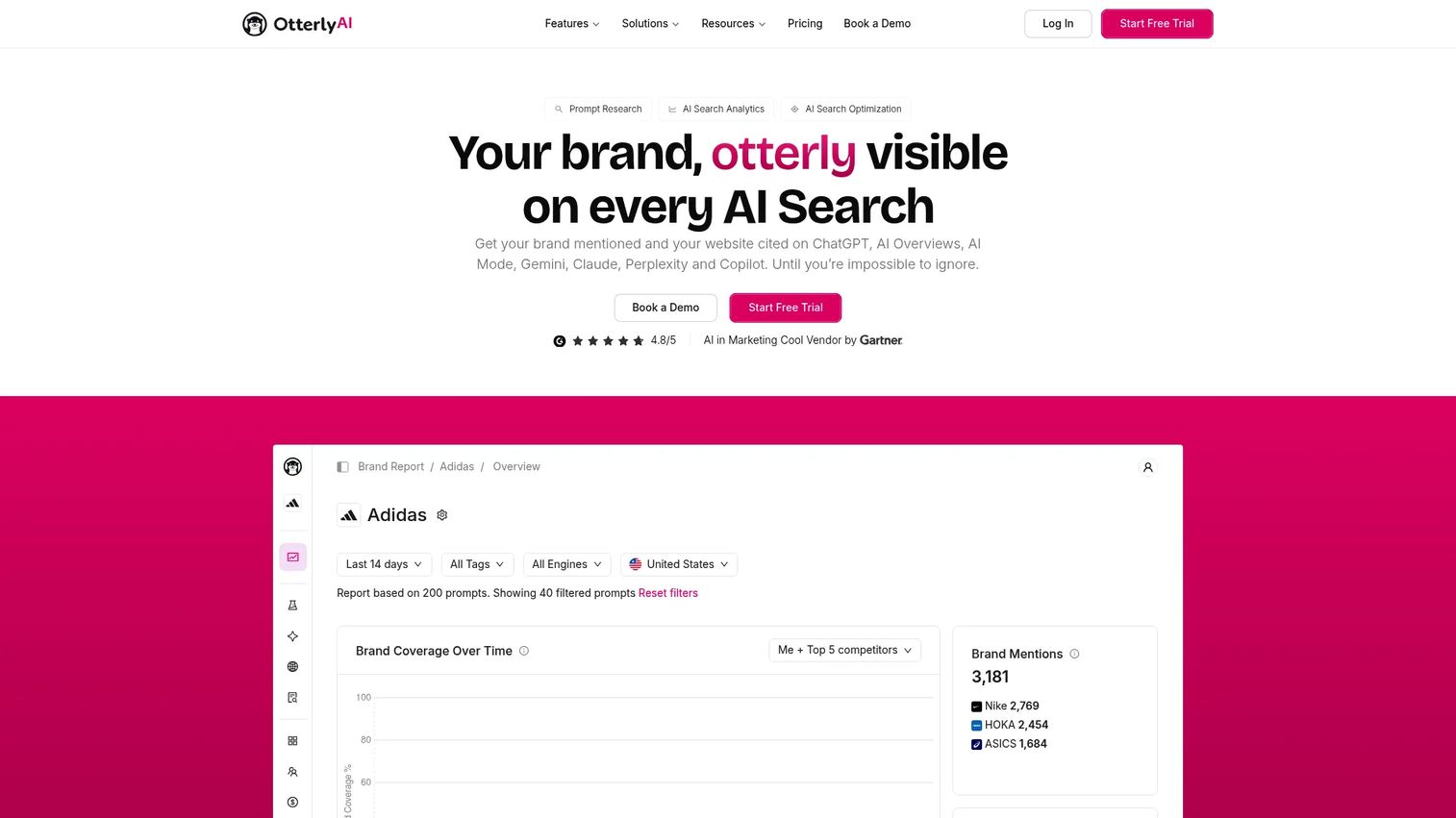
Otterly.ai combines prompt research with AI search monitoring and content readiness audits. Its documented coverage includes ChatGPT and Perplexity, plus Google’s AI search experiences. Gemini, Claude, and Microsoft Copilot are also supported.
Best for: Lean SEO and content teams establishing a repeatable AEO review process.
Key features
- AI prompt research
- Brand visibility analytics
- Citation source tracking
- Crawlability and readiness audits
- Generative engine optimization recommendations
The practical starting point is a manageable portfolio of buyer questions. Use it to identify gaps that your team can address within an existing content cycle.
A small subscription can help you test the operating model before making a wider commitment. During evaluation, compare the time spent interpreting results with the number of useful actions produced. An inexpensive tool still needs an owner.
Otterly’s pricing page states that all plans include unlimited brands and team members, alongside countries and languages. That structure is relevant for agencies or distributed teams. Assess monitoring allowances separately before deciding how much coverage the entry plan provides.
Its audit functionality also creates a connection between visibility findings and website work. Keep that assessment distinct from your existing technical SEO reporting to avoid duplicating the same backlog.
Why choose Otterly.ai: It offers a practical starting point for marketers who want recurring monitoring before expanding into a larger AEO program.
Otterly.ai pricing: Lite costs €29/month; Standard costs €189/month; Premium costs €489/month. A free trial is available.
G2 rating: 4.7/5.
5. AthenaHQ
AthenaHQ connects AI visibility analysis with optimization actions. Its scope includes prompt inspection and competitive insights, supported by content recommendations. Hallucination detection also helps teams investigate inaccurate brand representation.
Best for: Growth teams that want monitoring findings connected to an actionable content workflow.
Key features
- Cross-platform visibility monitoring
- Prompt and response analysis
- Competitive and citation insights
- Content optimization agent
- AI hallucination detection
AthenaHQ deserves attention when your team already has enough dashboards but struggles to decide what to do next. Evaluate whether its recommendations identify a specific change and provide evidence for making it.
Keep approval ownership clear. Automated suggestions should enter the same editorial process as other product claims. Assign accuracy checks to someone who understands the underlying capability or positioning.
The free Essential tier includes 300 credits and coverage across several major answer engines. Starter expands the allowance to 3,600 credits and adds integrations, exports, and optimization actions.
Credits require a different budget calculation from a simple prompt count. Ask how your planned checks and execution tasks consume the allowance. Model routine monitoring separately from periods of active content production.
For multinational programs, Enterprise adds multi-region and multi-language support alongside governance controls. Compare those requirements with the markets you intend to report on first.
Why choose AthenaHQ: It suits teams that want to connect measurement with execution while retaining human review of recommended changes.
AthenaHQ pricing: Essential is free; Starter costs $295/month. Enterprise uses custom pricing.
G2 rating: 4.9/5.
6. LLMrefs
LLMrefs provides AI search analytics focused on visibility and competitive position. It includes source tracking and geographic targeting, with weekly reports for recurring review. CSV exports and API access support reporting outside the product.
Best for: Small marketing teams and agencies that want focused LLM visibility tracking.
Key features
- AI visibility and ranking analysis
- Citation source tracking
- Share-of-voice competitor benchmarks
- Geographic targeting
- Weekly reports and data exports
A useful evaluation is to recreate your intended weekly report during the trial. Inspect whether the outputs answer a business question without requiring substantial spreadsheet cleanup.
For a startup, that question might concern one product category. An agency may need separate views for client accounts. LLMrefs includes unlimited projects and team members, which is relevant to that organizational structure.
Geographic controls also support more precise comparisons. Keep local prompt variants separate from a global baseline, then examine whether differences justify country-specific content work.
The product’s focused scope makes it worth considering before adding another broad suite. However, assess it against the jobs you need completed rather than assuming fewer categories automatically mean lower operating effort.
A missing review score should prompt a deeper trial rather than an automatic rejection. Test data interpretation and export usability with the person who will own reporting.
Why choose LLMrefs: It fits teams seeking a dedicated measurement layer while keeping their existing content and analytics tools.
LLMrefs pricing: All in One costs $79/month, with a seven-day free trial.
7. Semrush AI Toolkit
Semrush AI Toolkit is described on current product pages as the AI Visibility Toolkit. It combines domain visibility reporting with custom prompt tracking and AI readiness auditing. The surrounding SEO platform makes it relevant to teams reviewing subscription overlap.
Best for: Organic growth teams that want AI-search reporting connected to an established SEO workflow.
Key features
- Domain AI visibility reports
- Custom prompts and daily rankings
- AI competitor and prompt research
- Site audits for AI readiness
- Sentiment and share-of-voice monitoring
The consolidation question needs a practical test. List the tasks handled by your current SEO subscription, then identify the additional AI reporting requirements. Shared branding alone doesn’t establish that every module belongs to the same package.
During evaluation, use commercial questions that differ from your conventional keyword list. A phrase that performs well in search may require a more specific buyer prompt for meaningful answer analysis.
The toolkit monitors mentions across ChatGPT and Google AI, alongside Gemini and Perplexity. Compare the exact surfaces and available controls with the markets your campaigns target.
Its per-domain pricing deserves attention if you manage several brands or regional websites. Estimate the full portfolio cost before comparing it with a specialist tracker.
Why choose Semrush AI Toolkit: It is a strong candidate when your team wants continuity with existing organic workflows. Evaluate specialist platforms if your reporting requirements extend beyond that fit.
Semrush AI Toolkit pricing: Base costs $99 per domain per month, billed annually. A free Semrush plan includes limited AI Visibility features.
G2 rating: 4.4/5
8. Ahrefs Brand Radar
Ahrefs Brand Radar connects AI visibility research with broader brand intelligence. It benchmarks mentions and citations while also examining search demand and web presence. Custom prompt tracking supports configurable platforms, locations, and collection frequencies.
Best for: Marketing teams investigating category visibility across AI answers and influential online channels.
Key features
- AI mention and citation benchmarks
- Competitor share-of-voice analysis
- Custom prompt monitoring
- Search demand and web visibility
- YouTube, Reddit, and TikTok research
Brand Radar is relevant when the question extends beyond whether your company appears for a fixed prompt set. A brand team may also need to understand where competitors attract attention elsewhere.
Keep those views distinct in executive reporting. Channel visibility provides context, while your defined prompt portfolio supplies a repeatable performance baseline.
The budgeting model also needs careful reading. Access to an AI platform index differs from a custom prompt-check allowance. Compare the breadth of research you need with the recurring monitoring volume.
All-platform access includes 2,500 custom prompt checks per month. Separate prompt packages are also listed, making it important to specify the configuration in any purchasing comparison.
Ask the evaluator to complete a concrete research task. For example, investigate a competitor’s citation advantage in one category and identify the pages worth reviewing.
Why choose Ahrefs Brand Radar: It suits teams treating AI visibility as part of market intelligence, especially when broader channel research influences content priorities.
Ahrefs Brand Radar pricing: Single-platform access costs $199/month per index; all-platform access costs $699/month. Custom prompt packages start at $50/month.
G2 rating: 4.5/5
9. HubSpot AEO Grader
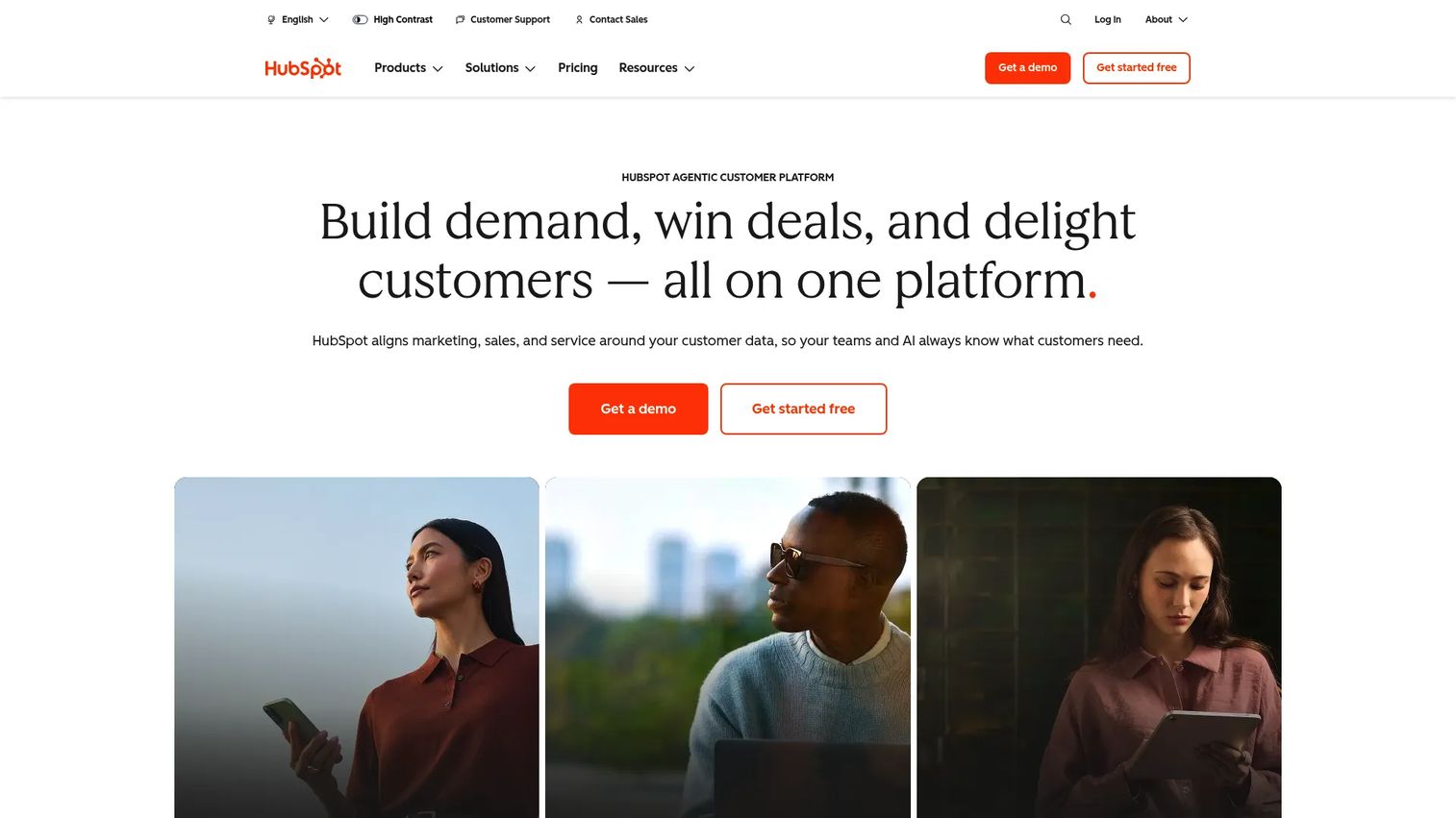
HubSpot AEO Grader provides a one-time assessment of how answer engines represent a brand. It evaluates ChatGPT, Perplexity, and Gemini responses. Written interpretation accompanies scores covering presence quality and market position.
Best for: Marketers who need an initial assessment before committing to ongoing tracking.
Key features
- Brand representation analysis
- Sentiment and recognition scoring
- Share-of-voice assessment
- Written recommendations
- Access without an account
Treat the grader as a starting document for a team discussion. Review where the description matches your positioning and where it raises questions worth investigating.
A diagnostic can help you decide what a future tracking portfolio should contain. Translate broad observations into specific buyer questions, then decide which ones merit repeated measurement.
The purchasing distinction is important. HubSpot AEO Grader is a free check, while HubSpot AEO is a separate continuous-monitoring product. A review score for the latter shouldn’t be presented as a rating for the grader.
Avoid interpreting a single assessment as a trend. Preserve the report as an initial observation and document the conditions under which it was produced.
For teams still agreeing on ownership, this is a useful way to make the discussion concrete. Ask content and brand stakeholders to identify the corrections they would prioritize first.
Why choose HubSpot AEO Grader: It fits early investigation when you need evidence to frame the problem. Recurring measurement calls for a tracking workflow.
HubSpot AEO Grader pricing: Free for a one-time brand analysis.
10. Conductor
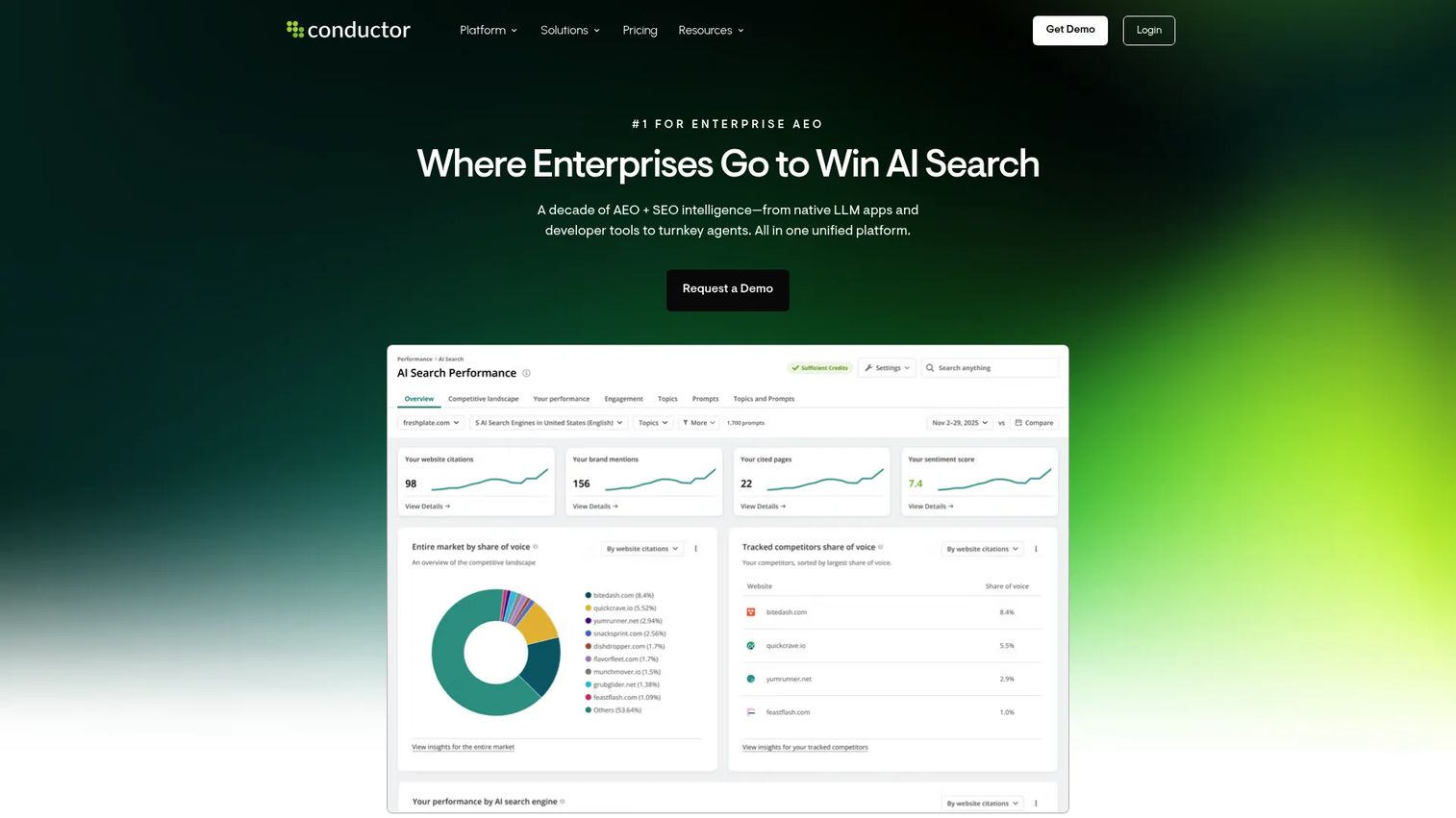
Conductor combines enterprise AEO and SEO capabilities with content creation and website monitoring. Its AI-search tracking includes answer engines such as ChatGPT and Perplexity. Competitive intelligence and performance reporting support a broader organic marketing program.
Best for: Enterprise teams managing visibility alongside content operations and technical site health.
Key features
- AI-search visibility tracking
- Content assistance and scoring
- Website monitoring and alerts
- Topic and keyword research
- Competitive performance reporting
Conductor’s scope matters when AI findings need to enter an existing enterprise workflow. A visibility gap may require a content revision or investigation by the website team.
Evaluate how that handoff will work before selecting a package. Ask each stakeholder to follow an observation through to a proposed action and subsequent reporting.
A broader platform can support consolidation, but that outcome requires an explicit retirement plan. Identify which existing subscriptions or reporting tasks the purchase would replace. Keep capabilities that remain necessary outside the new arrangement.
For procurement, compare Essentials, Growth, and Enterprise against the same written requirements. Request a proposal covering the intended usage rather than allowing different assumptions to obscure the comparison.
This is also a useful point to define executive reporting. Separate AI answer visibility from website health and content production metrics, even when they appear in the same workspace.
Why choose Conductor: It fits organizations incorporating AEO into a wider enterprise organic marketing program rather than purchasing an isolated tracker.
Conductor pricing: Essentials, Growth, and Enterprise use custom pricing.
G2 rating: 4.5/5.
11. SearchAtlas
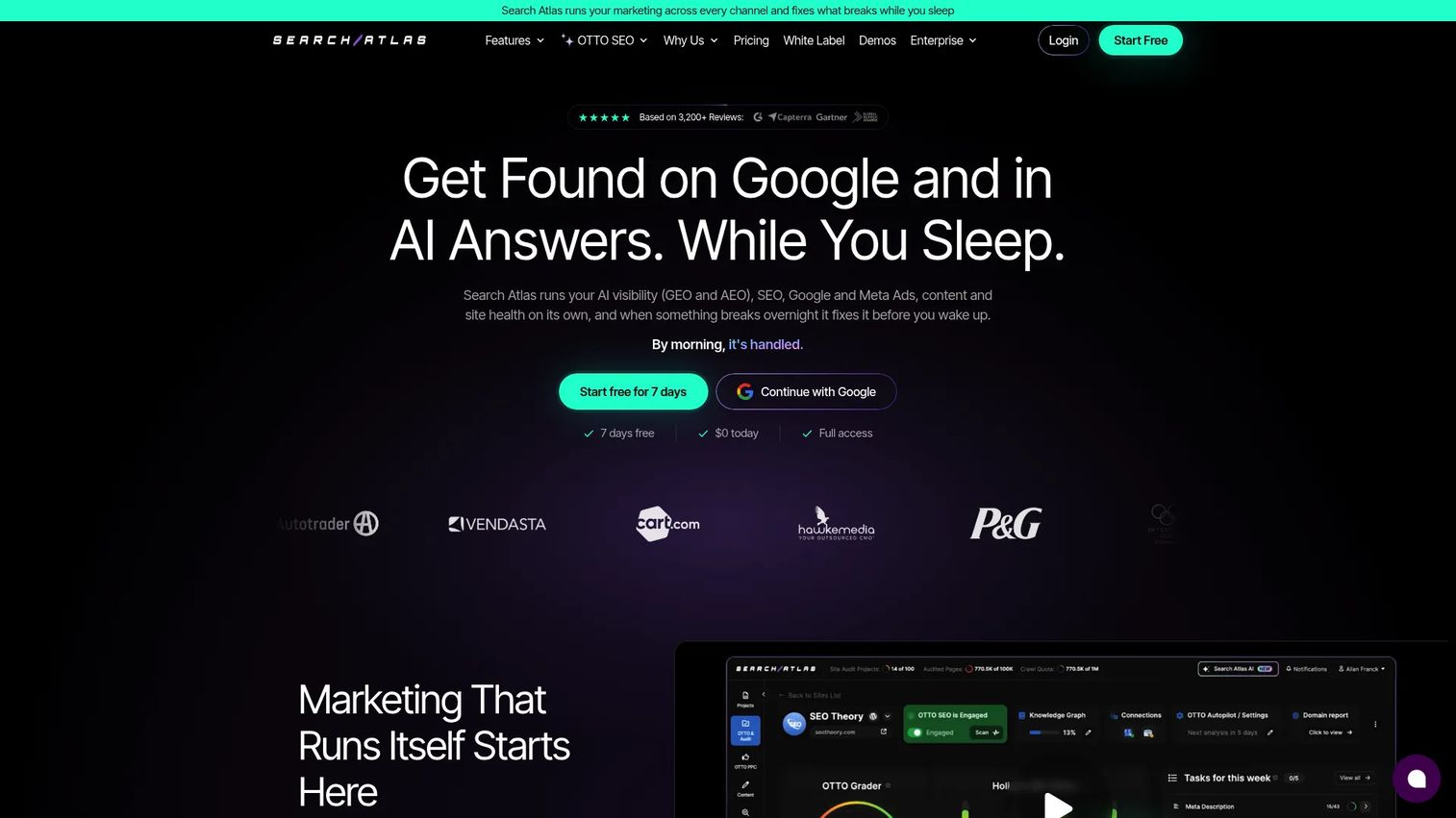
SearchAtlas combines LLM Visibility tracking with a broader performance marketing platform. Its scope includes SEO execution and content publishing, alongside paid acquisition and local marketing. OTTO SEO handles automation for technical and on-page work.
Best for: Marketing teams and agencies evaluating AI visibility within an automation-heavy operating model.
Key features
- LLM Visibility tracking
- OTTO SEO automation
- Technical audits and rank tracking
- AI content creation and publishing
- Agency reporting
The important distinction is that SearchAtlas includes direct LLM monitoring, rather than supporting AEO only through adjacent optimization tasks. Evaluate that module separately from the broader platform.
Start with the reporting question you need answered. Then examine whether the accompanying execution capabilities replace work your team already performs elsewhere.
Automation warrants a review process. Decide who approves proposed changes and how outcomes will be recorded. Keep that decision independent of the appeal of combining several subscriptions.
Agencies should also model the economics across client accounts. A platform-wide starting price doesn’t establish the cost of every intended workflow or monitoring configuration.
During the trial, assign one visibility investigation and one related optimization task. Compare the output quality with your existing process before expanding the rollout.
Why choose SearchAtlas: It is worth evaluating when stack consolidation includes SEO execution and agency reporting. Monitoring-only buyers should assess whether the broader scope earns its cost.
SearchAtlas pricing: Starter costs $79/month; Growth costs $159/month; Pro costs $319/month, all billed annually. A seven-day free trial is available.
G2 rating: 4.6/5.
12. Frase
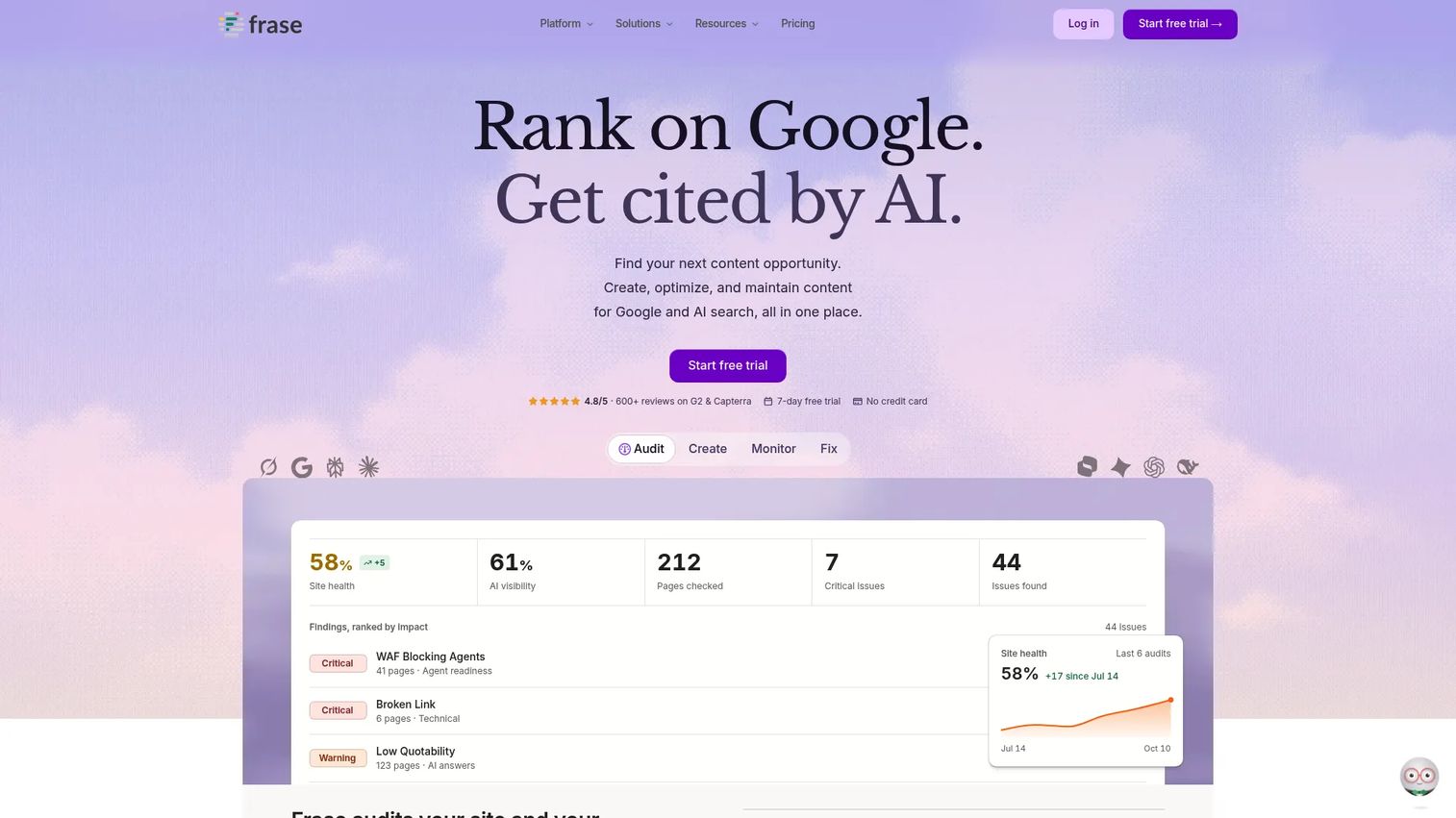
Frase connects content research and production with SEO and GEO scoring. Its current platform also includes AI Visibility tracking, site auditing, and content decay monitoring. That makes it more than an adjacent editor for acting on another tracker’s findings.
Best for: Content teams that want visibility insights connected to page creation and maintenance.
Key features
- Topic research and content briefs
- SEO and GEO scoring
- AI Visibility tracking
- Site audits and decay monitoring
- Publishing to supported CMS platforms
Frase is particularly relevant when reporting has already exposed a content backlog. Evaluate whether a finding can become a useful brief without losing its underlying evidence.
Give writers the buyer question and the information gap, rather than asking them to improve a score in isolation. Product accuracy should remain part of the editorial review.
Publishing support includes WordPress and Webflow, alongside other supported CMS platforms. Test the destination your team uses before assuming the publishing workflow replaces an existing process.
Its monitoring functionality also changes the stack discussion. Content teams should assess whether it covers their required prompt portfolio before automatically purchasing a separate specialist tracker.
Keep the hosting offer distinct from the main subscription. FraseCMS has a free hosting tier included with Frase plans; that doesn’t establish a free AEO tracking plan.
Why choose Frase: It suits teams prioritizing content optimization for AI search alongside measurement. Assess its tracking depth against the reporting requirements your stakeholders have agreed on.
Frase pricing: Starter costs $39/month billed yearly, or $49 month to month. Professional starts at $103/month billed yearly; Scale starts at $239/month billed yearly.
G2 rating: 4.8/5.
Considerations when choosing an AEO tracker
Engine coverage
Match coverage to buyer behavior rather than maximizing a vendor checklist. Evaluate ChatGPT and Perplexity alongside relevant Google experiences, then add other engines your audience uses. Confirm whether each surface receives equivalent reporting depth.
Prompt portfolio design
Group prompts by buying stage and commercial intent, with separate views for important markets. Preserve a stable baseline while testing new questions elsewhere. Record wording changes so an expanded portfolio doesn’t masquerade as performance improvement.
Citation and source quality
Strong AI citation monitoring distinguishes a linked source from an unlinked brand mention. Inspect the referenced URL and the claim it supports. Use that evidence to choose between owned-content revisions and outreach to third-party publishers.
Competitor share of voice
Keep the named competitor set consistent within each category. Ask how the platform calculates AI share of voice and handles answers mentioning several companies. Avoid comparing scores across vendors without understanding their denominators.
Reporting and workflow fit
Test exports with the person responsible for monthly reporting. Check that location and engine context survive outside the dashboard. Build a weekly review around changed results, an assigned action, and a record of what was implemented.
Conclusion
Choose AEO trackers around the work your team will perform after opening the report.
Profound fits an enterprise visibility program. Peec AI offers specialist brand analytics, while Scrunch AI connects monitoring with AI-oriented website work.
For a focused starting point, compare Otterly.ai with LLMrefs. AthenaHQ deserves consideration when your team wants optimization actions alongside measurement.
Existing SEO customers should assess Semrush AI Toolkit or Ahrefs Brand Radar against their current subscriptions. Conductor and SearchAtlas suit broader operating models where content or execution also needs attention.
Frase is worth evaluating when the content team owns both monitoring and publishing. HubSpot AEO Grader provides an initial diagnostic before you commit to that recurring process.
Start with a written prompt portfolio and a reporting owner. Run a pilot using the same buying questions you expect to review each week.
Then judge the purchase by what changed. Did the findings produce a defensible content priority? Could your team explain competitor movement without rebuilding the report?
Those answers matter more than adding another AI search optimization dashboard.
FAQs
An AEO tracker measures how a brand appears in generated answers for defined buyer questions. Useful AEO tracking tools preserve the underlying responses and cited sources, allowing marketers to investigate changes rather than relying on a headline score. Their practical output is a recurring evidence base for deciding which content gaps or positioning issues deserve attention.
An SEO rank tracker follows page positions in search results; an AEO tracker examines generated responses and their sources. A citation and a product recommendation represent different outcomes, even when both increase visibility. Keep those measures separate from conventional rankings so your report explains what changed without presenting unlike metrics as equivalent.
Prioritize engines your buyers use, then evaluate coverage across ChatGPT, Perplexity, Gemini, Google AI Overviews, Google AI Mode, Claude, and Microsoft Copilot. Google’s separate AI experiences deserve explicit consideration rather than being grouped into an undefined coverage label. Ask vendors how location and collection settings affect results before comparing performance across platforms or markets.
For most teams, AEO trackers complement the technical and content work supported by SEO software. Some broader platforms combine both categories, creating an opportunity to consolidate subscriptions. Before canceling anything, map each existing task to its replacement and test the required reporting. The labels “answer engine optimization tools” and “generative engine optimization tools” don’t establish equivalent functionality.
Prioritize recommendation frequency and prompt-level visibility, supported by citation quality and competitor share of voice. Examine brand mentions separately, because appearing in a response doesn’t establish a positive recommendation. Report movement within consistent prompt groups and retain examples explaining the change. A useful executive view connects those observations to actions rather than presenting every available metric.
Use weekly reviews for priority prompts and monthly reporting for leadership, even when the software collects results more frequently. Keep collection conditions consistent and annotate changes to prompts or markets. Investigate unusual movements before treating them as durable trends. This cadence gives the team time to act while preserving a useful record of visibility changes.
Free checkers can support an initial assessment and help teams define what they need to investigate. Recurring monitoring becomes valuable when you need historical comparisons across a stable portfolio of questions. Evaluate free tiers separately from one-time diagnostics, since their purposes differ. Buy additional capacity when a defined reporting requirement exceeds what your existing workflow can cover.
Map tracked prompts to buying stages and identify the questions closest to product evaluation. Compare visibility movement with attributable referral activity and assisted pipeline evidence where your analytics support it. Keep correlations separate from claims that an AI mention caused an opportunity. Pair each content intervention with its date so revenue discussions reflect the sequence of work and observed outcomes.