Branch networks used to be a router refresh and a new MPLS circuit. Today that same network has to carry SaaS traffic, cloud workloads, remote users, security inspection, and real-time applications across dozens of locations, often simultaneously. The old architecture was not designed for any of that.
According to TeleGeography's 2025 WAN survey, 63% of WAN managers had already deployed SD-WAN on at least part of their network, and 53% had implemented at least some SASE elements. The shift is not theoretical. It is happening in production environments right now, and the tooling decision has real consequences for POC complexity, security posture, and day-two operations.
The problem for presales and infrastructure teams is that "WAN edge infrastructure software" covers a wide range: SD-WAN platforms, SASE architectures, cloud WAN services, virtual routers, enterprise routing hardware, and network-as-a-service products. Each solves a different layer of the problem.
This guide cuts through the category to help you match the right WAN edge infrastructure software to your network architecture, security model, and deployment team in 2026.
What's inside
This guide is built for presales engineers, solutions consultants, network architects, and IT leaders evaluating WAN modernization options. Tools were chosen based on four criteria:
- Deployment model coverage: Physical appliances, virtual instances, cloud-native services, and managed options
- SD-WAN and security convergence depth: Whether networking and security are genuinely integrated or loosely stitched
- Cloud and SaaS connectivity fit: AWS-heavy, multi-cloud, and branch-heavy architectures each need different answers
- Pricing and G2 rating transparency: All figures verified against vendor pricing pages and live G2 listings
TL;DR
- Best overall for SASE-led WAN edge: Cato SASE Cloud converges SD-WAN, a global backbone, and security under one cloud-native platform
- Best for security-first SD-WAN: FortiGate SD-WAN combines branch firewall and SD-WAN in one operating model
- Best for application reliability: Bigleaf Networks keeps SaaS and cloud voice running across commodity internet links
- Best for AWS-heavy networks: AWS Cloud WAN manages global network policy from within the AWS console
- Best for open-source routing teams: VyOS gives engineering teams full control over routing, VPN, and firewall without vendor lock-in
- Best for cloud network-as-a-service: Alkira delivers multi-cloud connectivity without deploying traditional appliances everywhere
- Best for secure cloud-to-on-prem connectivity: Trustgrid starts at $20/month and handles zero-trust mesh networking between cloud and private environments
What is WAN edge infrastructure software?
WAN edge infrastructure software connects, secures, and manages traffic between branch locations, remote users, data centers, public cloud environments, and SaaS applications from the network edge.
The category is broader than SD-WAN alone. SD-WAN is a major component, but WAN edge infrastructure also includes SASE platforms, cloud WAN services, virtual routers, enterprise routing hardware, WAN optimization appliances, and network-as-a-service products.
Core capabilities
- SD-WAN path selection and application-aware traffic steering
- Branch and cloud connectivity across broadband, LTE, 5G, and MPLS
- Centralized policy management and network segmentation
- Routing, BGP/OSPF support, and policy-based routing
- Network edge security including firewall, ZTNA, SWG, CASB, and FWaaS
- High availability, failover, and WAN optimization
- Visibility, telemetry, and troubleshooting dashboards
- Cloud and SaaS access optimization
WAN edge software vs. SD-WAN vs. SASE
These terms overlap, but they are not interchangeable.
| Concept | What it does | Scope |
|---|---|---|
| WAN edge infrastructure software | Connects, secures, and manages edge traffic | Broad buying category |
| SD-WAN | Software-defined traffic routing across WAN links | Connectivity and path control layer |
| SASE (Secure Access Service Edge) | Converges SD-WAN with cloud-delivered security services | Networking plus SSE |
| Cloud WAN | Managed WAN policy delivered through a cloud provider | Infrastructure-as-a-service |
| Virtual router | Software-based routing and firewalling | Virtualized or cloud-native deployment |
A SASE architecture typically integrates SD-WAN with SSE services such as SWG, CASB, ZTNA, and FWaaS. Not every SD-WAN product qualifies as SASE, and not every organization needs to converge both layers under one vendor.
When to use WAN edge infrastructure software
Connect distributed branches without MPLS dependency
Organizations moving away from expensive private circuits use WAN edge software to run over broadband, LTE, or 5G while maintaining centralized policy control. The traffic-steering logic decides which path each application uses, and failover happens automatically when a link degrades.
Improve application performance across cloud and SaaS
When traffic patterns have shifted away from a central data center, a hub-and-spoke MPLS design routes every packet through a bottleneck. WAN edge software with application-aware routing and direct cloud access keeps voice quality, SaaS responsiveness, and cloud latency consistent across locations.
Converge networking and security at the edge
Security teams pushing toward SASE or zero trust need the firewall, segmentation, and ZTNA capabilities tied to the same platform managing connectivity. WAN edge software that integrates security inspection removes the need to stitch a separate firewall into every branch.
WAN edge infrastructure software comparison
Pricing and G2 ratings change frequently. Verify each vendor's pricing page and G2 listing before making a shortlist decision. The table below reflects data verified at generation time.
| # | Product | Best for | Key differentiator | Pricing | G2 rating |
|---|---|---|---|---|---|
| 1 | Cato SASE Cloud | SASE-led WAN edge | Cloud-native SD-WAN, global backbone, and integrated security | Quote-based | 4.5/5 |
| 2 | FortiGate SD-WAN | Security-first SD-WAN | SD-WAN integrated with FortiGate NGFW and FortiOS | Quote-based | 4.6/5 |
| 3 | Bigleaf Networks | Application reliability | Intelligent traffic steering for business internet | Quote-based | 4.8/5 |
| 4 | AWS Cloud WAN | AWS-centric cloud networks | Global network management through AWS, from $0.50/hour per edge | $0.50/hr per core network edge | 4.5/5 |
| 5 | Ericsson Enterprise Wireless Solutions | Wireless branch connectivity | Cellular-first WAN edge with 5G and private wireless | Quote-based | 4.6/5 |
| 6 | VyOS | Open-source routing teams | Community-driven network OS; Corporate plan from $8,000/year | From $8,000/year | 4.5/5 |
| 7 | Check Point Quantum Edge | Branch security edge | Security-focused edge with centralized threat prevention | Quote-based | N/A |
| 8 | SC// Connect Secure SD-WAN Solutions | Managed secure SD-WAN | Secure SD-WAN for distributed enterprise | Quote-based | 4.1/5 |
| 9 | vSRX | Virtual firewall and routing | Juniper virtual security gateway for cloud and NFV | Quote-based | 4.5/5 |
| 10 | FatPipe MPVPN / IPVPN | Multi-link WAN reliability | Multi-path VPN bonding and failover across ISPs | Quote-based | 4.5/5 |
| 11 | Huawei Enterprise Routers | Large enterprise routing | Carrier-grade routing across WAN, campus, and data center | Quote-based | N/A |
| 12 | Versa Secure SD-WAN | Secure SD-WAN and SASE | SD-WAN with integrated security, routing, and orchestration | Quote-based | 4.3/5 |
| 13 | Alkira Network Infrastructure as-a-Service | Cloud NaaS | Drag-and-drop multi-cloud network infrastructure as a service | Custom pricing | N/A |
| 14 | HPE Enterprise Routers | Campus and branch routing | Enterprise routing within HPE networking stack | Quote-based | 4.5/5 |
| 15 | Benu Virtual Broadband Network Gateway (vBNG) | Service provider broadband edge | Cloud-native virtual BNG for subscriber management | Quote-based | N/A |
| 16 | Trustgrid | Secure cloud-to-on-prem networking | Zero-trust mesh; Trustgrid Express starts at $20/month | From $20/month | 4.8/5 |
Best 16 WAN edge infrastructure software tools for 2026
1. Cato SASE Cloud
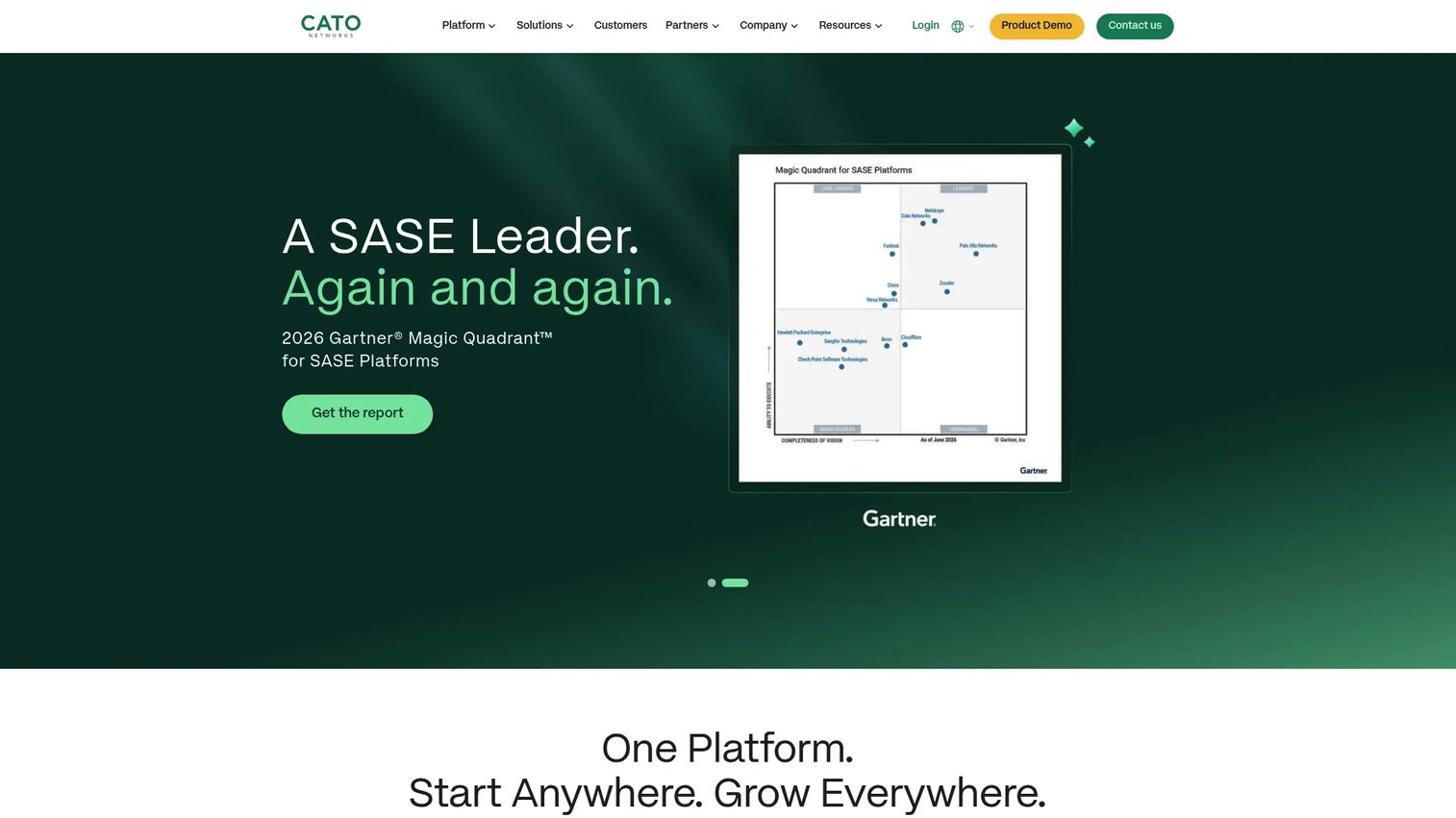
Cato SASE Cloud is a cloud-native SASE platform that converges SD-WAN, a global private backbone, zero-trust access, and integrated security services under a single management plane. Rather than assembling separate SD-WAN, firewall, and remote access products, Cato delivers all of these through a cloud-managed architecture. Organizations connect branches, cloud environments, and remote users to the Cato network, which handles routing, security inspection, and policy enforcement globally.
Best for: Enterprises standardizing WAN edge and network security under a single-vendor SASE architecture.
Key features
- Global private backbone with SD-WAN traffic optimization
- SSE 360 security stack: FWaaS, SWG, IPS, CASB, DLP, and ZTNA
- Endpoint detection and response through Cato Client
- Unified analytics, monitoring, and API integrations
- Zero-touch branch provisioning
Why choose Cato SASE Cloud: Choose it when the buyer wants to stop managing separate SD-WAN, firewall, and remote access tools. The single-vendor model reduces vendor coordination overhead and gives a consistent policy view across every connection type.
Cato SASE Cloud pricing: Cato prices by user licenses, site bandwidth, and modular capabilities. Numeric pricing is not published and requires a quote from sales. Buyers should ask specifically about per-site bandwidth tiers and security module pricing, since the final number moves significantly based on scope.
G2 rating: 4.5/5
2. FortiGate SD-WAN
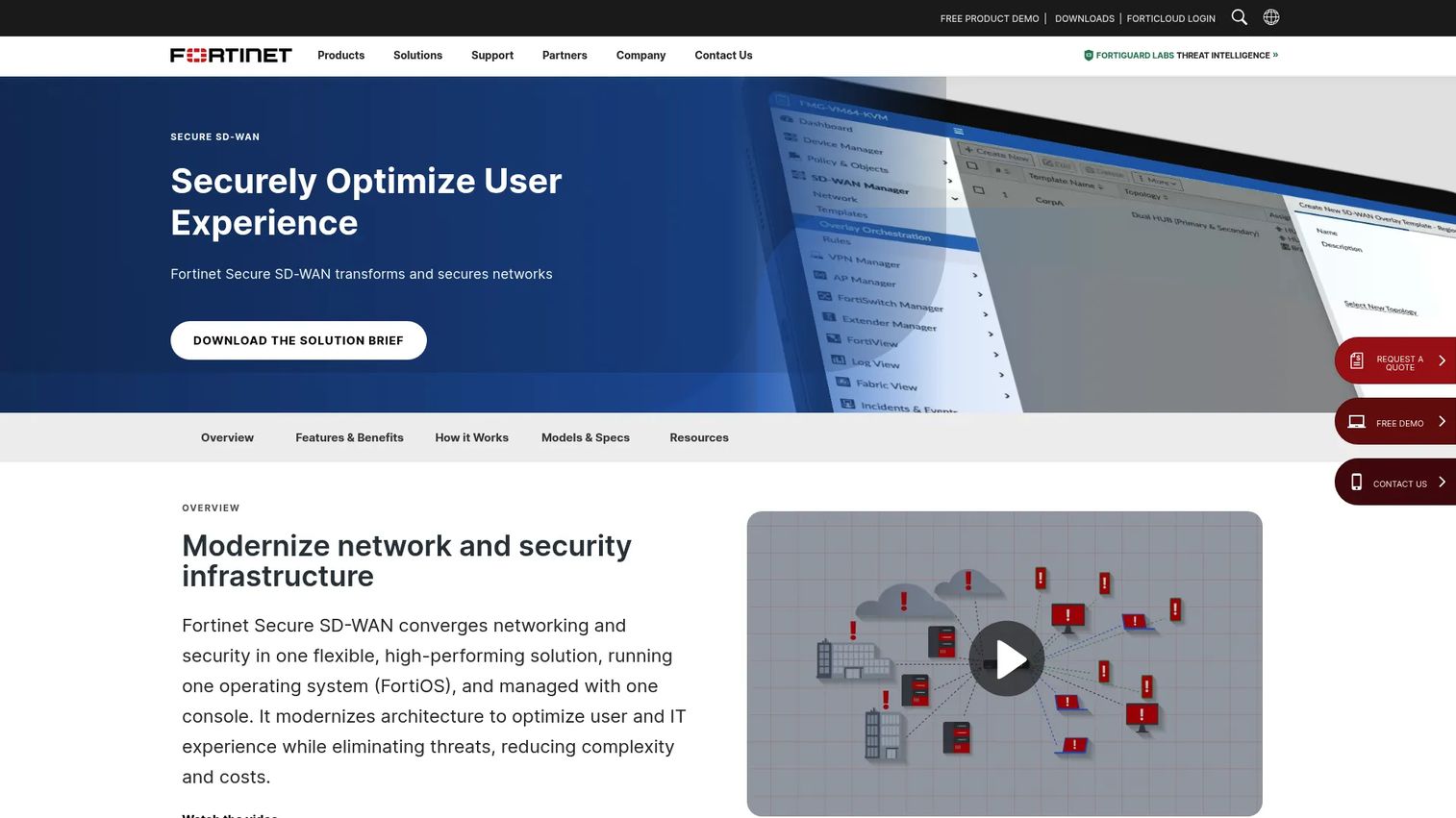
FortiGate SD-WAN runs on FortiGate hardware and FortiOS, combining application-aware traffic steering with an integrated next-generation firewall. Fortinet explicitly states that Secure SD-WAN carries no bandwidth-based licensing, which matters when comparing WAN edge costs across vendors. Centralized deployment, configuration, and reporting happen through FortiManager, covering branch connectivity and security inspection from the same console.
Best for: Security-led network teams that want SD-WAN and branch firewall in one operating model, especially those already standardized on Fortinet.
Key features
- Application-aware SD-WAN with dynamic path selection across broadband, 5G, and MPLS
- Integrated NGFW with zero-trust access and local traffic inspection
- Centralized management through FortiManager
- Multi-cloud connectivity with zero-touch provisioning
- ASIC-accelerated networking and security processing
Why choose FortiGate SD-WAN: Choose it when the firewall and SD-WAN decision are the same project. Teams already running FortiGate for perimeter security can extend that model to every branch without adding a separate SD-WAN controller.
FortiGate SD-WAN pricing: Pricing covers hardware, FortiOS licensing, and support bundles and requires a quote. Cost drivers include appliance model, throughput requirements, and security subscription tiers. Fortinet does not display numeric prices on the product page.
G2 rating: 4.6/5 (based on 57 reviews)
3. Bigleaf Networks
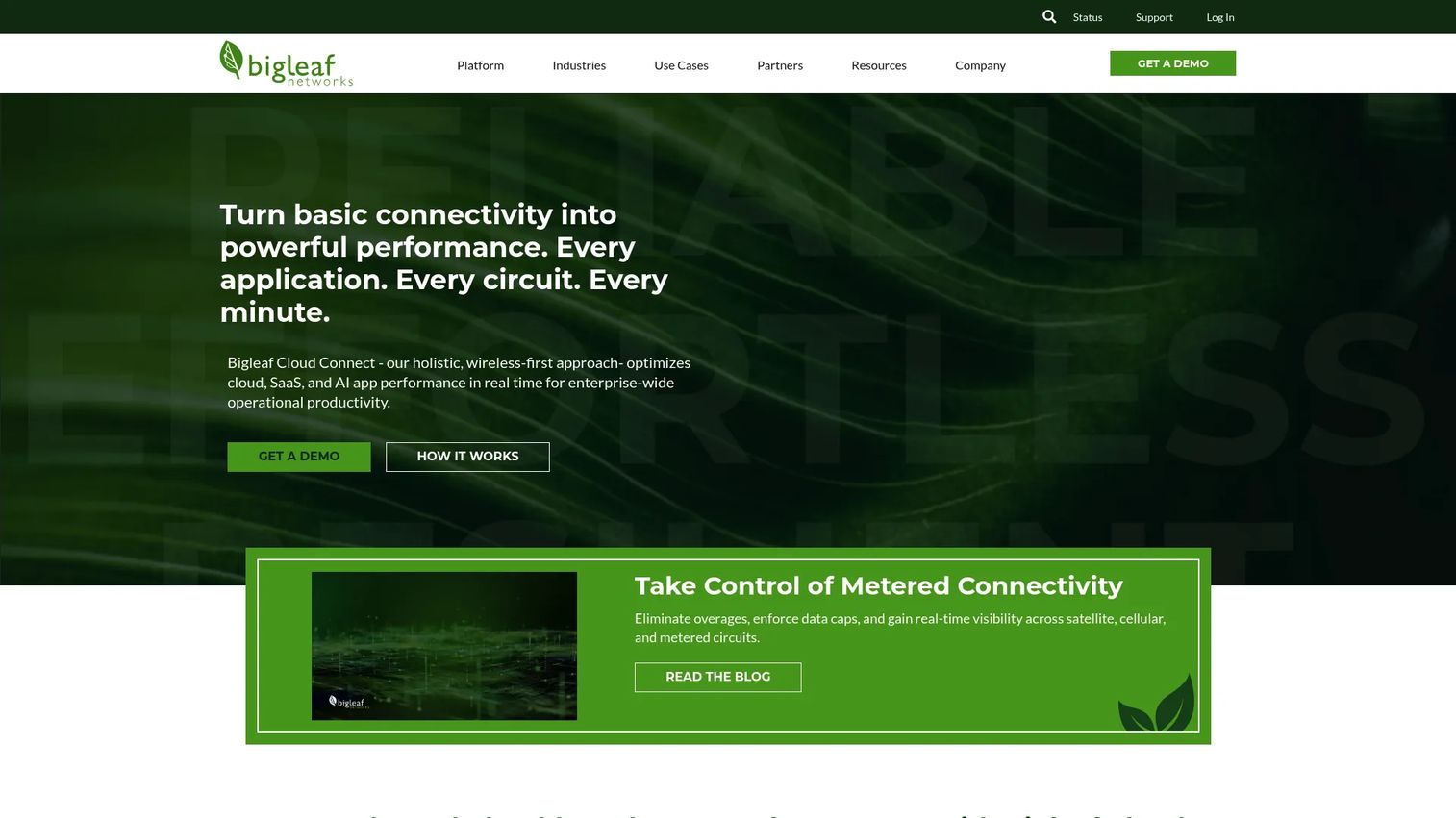
Bigleaf Networks is a cloud-first SD-WAN and hybrid-WAN service focused on application reliability across commodity internet circuits. Its core strength is intelligent traffic steering that detects real-time link quality and reroutes traffic before an application notices a problem. For distributed businesses running cloud voice, SaaS, POS systems, or payment infrastructure across multiple locations, Bigleaf keeps those applications running when one ISP circuit degrades.
Best for: Businesses that need application uptime across multiple internet circuits, particularly cloud-dependent organizations with distributed locations.
Key features
- Dynamic QoS with automatic traffic classification and prioritization
- Real-time circuit monitoring for latency, jitter, packet loss, and capacity
- Same-IP automatic failover during ISP outages
- Intelligent load balancing across up to four broadband circuits
- Symmetric speed options from 75 Mbps to 3 Gbps
Why choose Bigleaf Networks: Choose Bigleaf when the main buying problem is SaaS and cloud voice reliability, not full SASE transformation. It fits organizations that want application performance improvements without rebuilding their entire network architecture.
Bigleaf Networks pricing: Bigleaf offers service plans at symmetric speeds from 75/75 Mbps up to 3/3 Gbps on 12-, 24-, or 36-month terms. Pricing requires a quote; cost varies by location count, bandwidth tier, and service package selected. Their pricing page documents plan capabilities and router rental terms.
G2 rating: 4.8/5 (based on 85 reviews)
4. AWS Cloud WAN
AWS Cloud WAN is a managed wide-area networking service for building, managing, and monitoring global networks across AWS regions and on-premises environments. It uses a central dashboard and centralized policy management to define network segmentation and routing across AWS Transit Gateway attachments, VPCs, and connected branches. For organizations already running significant workloads in AWS, Cloud WAN keeps network policy closer to cloud infrastructure rather than routing through external appliances.
Best for: AWS-heavy organizations that want WAN policy and global network management handled through the AWS console.
Key features
- Centralized network dashboard and policy management
- Network segmentation with segment-based routing
- AWS Transit Gateway integration and VPC attachments
- Built-in automation through network policies
- Centralized security inspection across the global network
Why choose AWS Cloud WAN: Choose it when AWS is the strategic cloud platform and the team wants to manage global WAN policy within the same environment where workloads run. It is a poor fit for multi-cloud-first architectures or environments with minimal AWS investment.
AWS Cloud WAN pricing: AWS charges $0.50 per hour per core network edge, plus data processing fees per GB and attachment charges per connection. This is usage-based pricing, so total cost scales with the number of regions, attachments, and traffic volume. The full pricing breakdown is available on the AWS Cloud WAN pricing page.
G2 rating: 4.5/5
5. Ericsson Enterprise Wireless Solutions

Ericsson Enterprise Wireless Solutions covers private 5G networks, enterprise neutral-host 5G coverage, Wireless WAN for fixed locations and IoT, and 5G-optimized zero-trust security combined with SD-WAN. The portfolio is built for organizations where the access network itself is a major part of the WAN edge decision, especially retail, field operations, industrial IoT, and distributed branches where wired circuits are unavailable or unreliable.
Best for: Distributed enterprises that need cellular-first WAN edge connectivity, particularly sites where 5G or LTE is the primary or backup access method.
Key features
- Private 5G network deployment and management
- Wireless WAN across fixed sites, vehicles, and IoT deployments
- 5G-optimized zero-trust security and SD-WAN integration
- Enterprise neutral-host 5G coverage for indoor environments
- Ericsson Indoor Manager for wireless infrastructure control
Why choose Ericsson Enterprise Wireless Solutions: Choose it when cellular connectivity is central to the WAN edge architecture, not a secondary failover. Organizations with mobile assets, industrial sites, or locations where fiber deployment is impractical benefit most from this portfolio.
Ericsson Enterprise Wireless Solutions pricing: Pricing involves devices, subscriptions, support, and optional managed service components. No numeric pricing is published on Ericsson's enterprise pages. Buyers work directly with Ericsson enterprise sales or authorized channel partners to receive deployment-specific pricing.
G2 rating: 4.6/5 (based on 41 reviews)
6. VyOS
VyOS is an open-source network operating system covering routing, firewalling, VPN, NAT, QoS, and load balancing. It runs on commodity hardware, virtual machines, or cloud platforms. Network engineering teams use it to design and operate their own WAN edge architecture instead of buying a packaged SD-WAN platform. VyOS supports BGP, OSPF, IS-IS, EVPN, and MPLS, along with IPsec, WireGuard, OpenVPN, and GRE tunneling.
Best for: Network engineering teams that want open-source routing, full protocol flexibility, and automation-friendly deployment without vendor lock-in.
Key features
- Full routing protocol suite: BGP, OSPF, IS-IS, EVPN, MPLS, and policy-based routing
- VPN and tunneling: IPsec, WireGuard, OpenVPN, VXLAN, GRE, and GENEVE
- Stateful and zone-based firewalling with source and destination NAT
- REST and GraphQL APIs, Ansible, Terraform, and cloud-init automation
- High availability through VRRP, ECMP, and connection-state synchronization
Why choose VyOS: Choose VyOS when engineering control and protocol depth matter more than packaged SASE features. It fits teams that can design, automate, and operate their own stack. It is not the right choice for organizations that need a managed platform or vendor-supported GUI.
VyOS pricing: The rolling release is free. LTS subscriptions start at $8,000/year for the Corporate tier (discounted five-year term) or $10,000/year at standard annual pricing. The Global tier runs $16,000/year and the Alliance tier starts at $25,000/year. All subscriptions are billed annually.
G2 rating: 4.5/5
7. Check Point Quantum Edge
Check Point Quantum Edge is a virtual security gateway for protecting SD-WAN branch deployments with centralized threat prevention. It integrates firewall, IPS, identity awareness, HTTPS inspection, anti-bot, antivirus, application filtering, and threat emulation. Management runs through Check Point's Security Management Portal or R81 Security Management, giving teams a consistent policy model across headquarters, branches, and remote users.
Best for: Enterprises that want branch edge security controls integrated with existing Check Point security operations.
Key features
- Firewall, IPS, antivirus, web security, and threat emulation at the branch
- HTTPS inspection and application and URL filtering
- Centralized management through Security Management Portal or R81
- Integration with SD-WAN management consoles for automated deployment
- Identity-aware policy enforcement
Why choose Check Point Quantum Edge: Choose it when edge security controls are the primary approval gate and the team is already standardized on Check Point. Buyers evaluating Quantum Edge as a standalone SD-WAN solution should verify current SD-WAN feature depth, since its core strength is security rather than traffic optimization.
Check Point Quantum Edge pricing: Pricing is not published on Check Point's product pages. Cost is determined by appliance model, licensing bundle, security subscription tiers, and support level. Buyers work through Check Point sales or authorized partners for deployment-specific pricing.
8. SC// Connect Secure SD-WAN Solutions
SC// Connect Secure SD-WAN Solutions is positioned as a secure SD-WAN option for distributed enterprise networks seeking structured WAN transformation. The product is listed on G2 in the WAN edge infrastructure category and carries a 4.1/5 rating from 11 reviews. Buyers evaluating this product should verify current feature documentation and deployment scope directly with the vendor, as detailed first-party product pages were limited at time of research.
Best for: Distributed organizations looking for a guided secure SD-WAN deployment path.
Key features
- Secure SD-WAN branch connectivity
- Centralized network policy control
- Branch traffic optimization
- Policy-based routing
- Managed deployment support options
Why choose SC// Connect Secure SD-WAN Solutions: Choose it when your team wants a secure SD-WAN path without building every operational layer internally. Validate current feature availability and deployment scope with the vendor before a POC commitment.
SC// Connect Secure SD-WAN Solutions pricing: Pricing requires a quote through vendor or partner channels. Cost drivers include site count, bandwidth, and service model. No numeric pricing was available on the vendor's published pages at time of research.
G2 rating: 4.1/5 (based on 11 reviews)
9. vSRX
vSRX is Juniper's virtual next-generation firewall, providing security and networking services in private cloud, public cloud, and virtualized data-center environments. It supports AWS, Azure, Google Cloud, IBM Cloud, Oracle Cloud, VMware, and KVM deployments. Teams building virtual WAN edge architectures use vSRX to place firewalling and routing close to workloads or virtual network functions without buying dedicated hardware at every location.
Best for: Enterprises deploying virtualized security and routing at the network edge, especially in cloud or NFV environments.
Key features
- Core firewall, VPN, and NAT for virtual and cloud deployments
- Application security and visibility with IPS and IDP
- Content security including enhanced web filtering and antivirus
- Automated lifecycle management for cloud environments
- Support for all major public clouds and virtualization platforms
Why choose vSRX: Choose vSRX when the WAN edge is virtualized and the buyer wants Juniper security controls without physical appliances. It fits organizations using NFV infrastructure or multi-cloud environments where a software firewall needs to follow the workload.
vSRX pricing: Juniper offers pay-as-you-go and bring-your-own-license models depending on the deployment platform. Numeric pricing is not displayed on Juniper's product pages. Cost depends on throughput, licensing model, cloud marketplace consumption, and support tier. Buyers should request a deployment-specific quote from Juniper or a channel partner.
G2 rating: 4.5/5
10. FatPipe MPVPN / IPVPN
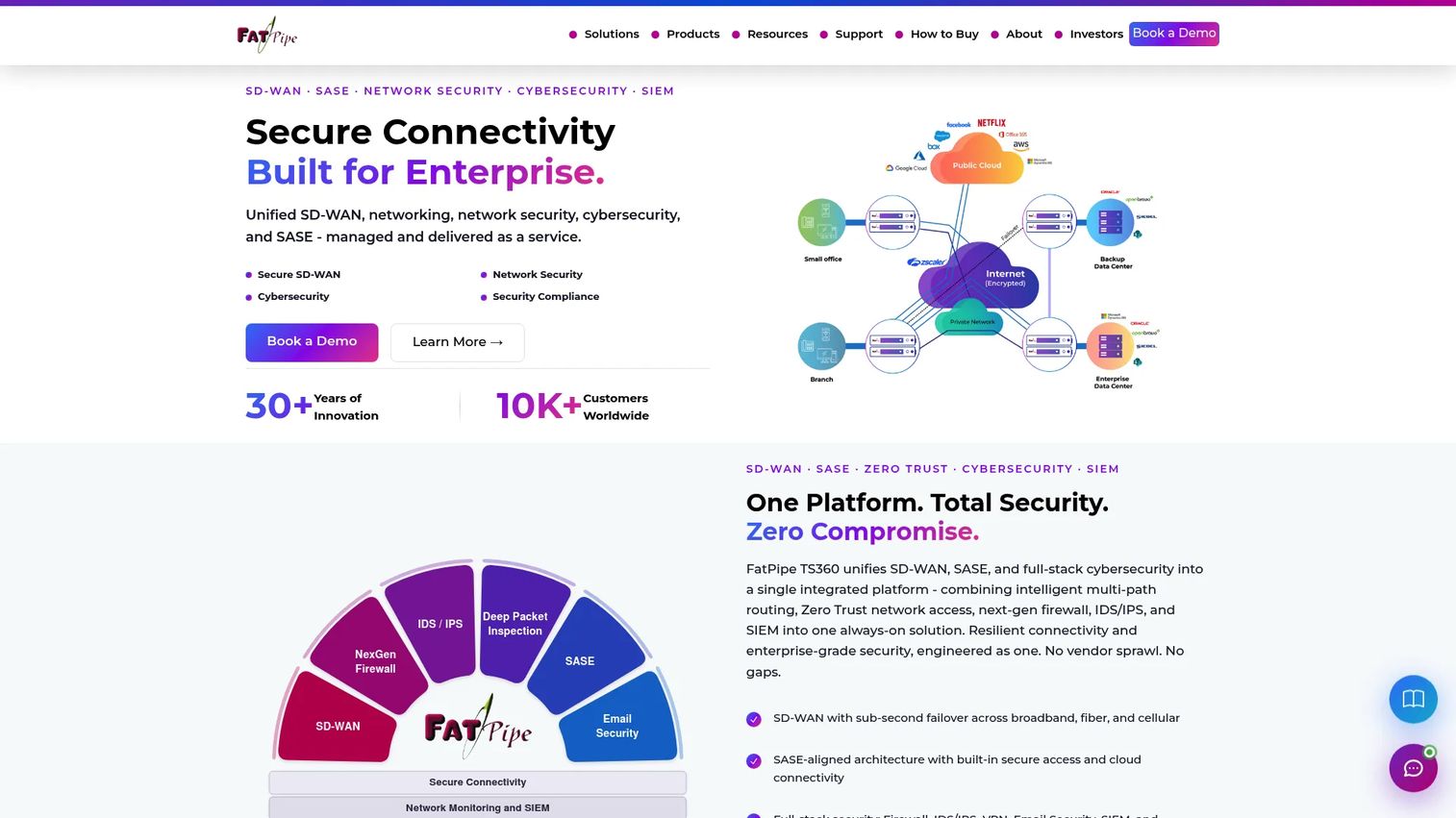
FatPipe MPVPN / IPVPN aggregates multiple WAN connections across different ISPs and line types into a single bonded path with automatic failover and session continuity. Its patented MPSec multi-path security applies selective encryption across the aggregate, while the integrated firewall, IPS/IDS, web filtering, and geofencing layer security on top of the connectivity. For teams replacing MPLS or reducing dependence on a single ISP, FatPipe delivers multi-link resilience without a full SD-WAN rebuild.
Best for: Organizations modernizing WAN reliability across multiple circuits, particularly those reducing MPLS dependency or supporting branch continuity.
Key features
- Multi-WAN aggregation across different ISPs and line types
- Intelligent load balancing with automatic failover and session continuity
- Patented MPSec multi-path security and selective encryption
- Policy routing, dynamic BGP/OSPF support, and split tunneling
- Integrated firewall, IPS/IDS, and web filtering
Why choose FatPipe MPVPN / IPVPN: Choose FatPipe when the main goal is resilient multi-link connectivity rather than full SASE transformation. It is a practical fit for buyers who need continuity across multiple circuits today and are not ready to restructure the entire security architecture.
FatPipe MPVPN / IPVPN pricing: FatPipe sells through direct sales and channel partners. Pricing is quote-based and was not publicly listed on the vendor's pages. Cost will depend on appliance model, number of WAN links, site count, and support options.
G2 rating: 4.5/5 (based on 3 reviews)
11. Huawei Enterprise Routers
Huawei Enterprise Routers cover WAN core, enterprise access, DCI, campus, data-center egress, and branch interconnection deployments. The portfolio runs Huawei's Versatile Routing Platform (VRP) operating system and includes models supporting SD-WAN, LTE/5G, VPN, cloud management, voice, and industrial connectivity. For large enterprises where routing scale, hardware portfolio depth, and existing Huawei network investment drive the buying decision, the product family covers those requirements.
Best for: Large networks needing enterprise routing infrastructure with hardware options spanning branch to WAN core.
Key features
- SD-WAN, routing, switching, security, and wireless across product families
- Huawei VRP operating system across the entire router portfolio
- WAN core, enterprise access, DCI, and branch-interconnection deployment options
- Selected models support LTE/5G, VPN, and cloud management
- Centralized management through Huawei's iMaster NCE platform
Why choose Huawei Enterprise Routers: Choose Huawei where routing scale and existing Huawei network investment drive the decision. Buyers must separately validate regional availability, procurement rules, and compliance requirements before shortlisting, since these factors vary significantly by country and sector.
Huawei Enterprise Routers pricing: Huawei's product pages offer a "GET PRICING/INFO" contact option rather than published prices. Cost depends on hardware model, licensing, support tier, and region. Channel partners can provide deployment-specific pricing.
12. Versa Secure SD-WAN
Versa Secure SD-WAN combines application-driven WAN connectivity, centralized orchestration, integrated routing, and next-generation firewall capabilities under one platform. It offers four licensing tiers (Prime, Prime Secure, Premier Secure, and Premier Elite) on one-, three-, or five-year subscriptions, though numeric prices are not published. Multi-tenant management makes it relevant for service providers building managed SD-WAN services alongside enterprise buyers running their own deployments.
Best for: Large and mid-sized enterprises, and service providers, building secure SD-WAN or managed SASE services with centralized orchestration.
Key features
- Secure SD-WAN with application-aware traffic steering and WAN edge routing
- Integrated NGFW with URL, IP, and DNS filtering
- Deep packet inspection and attack analysis
- Zero-touch provisioning and centralized policy orchestration
- Multi-tenant management for enterprise and service-provider deployments
Why choose Versa Secure SD-WAN: Choose Versa when the buyer needs a secure SD-WAN platform that scales across service-provider, enterprise, or managed deployment models. Its multi-tenant orchestration gives it a distinct advantage for service providers building WAN-as-a-managed-service offerings.
Versa Secure SD-WAN pricing: Versa offers four tiers (Prime, Prime Secure, Premier Secure, Premier Elite) on one-, three-, or five-year subscriptions. Numeric pricing is contact-sales only. Cost drivers include deployment scope, bandwidth, security service depth, and whether the deployment is single-tenant or multi-tenant.
G2 rating: 4.3/5 (based on 3 reviews)
13. Alkira Network Infrastructure as-a-Service
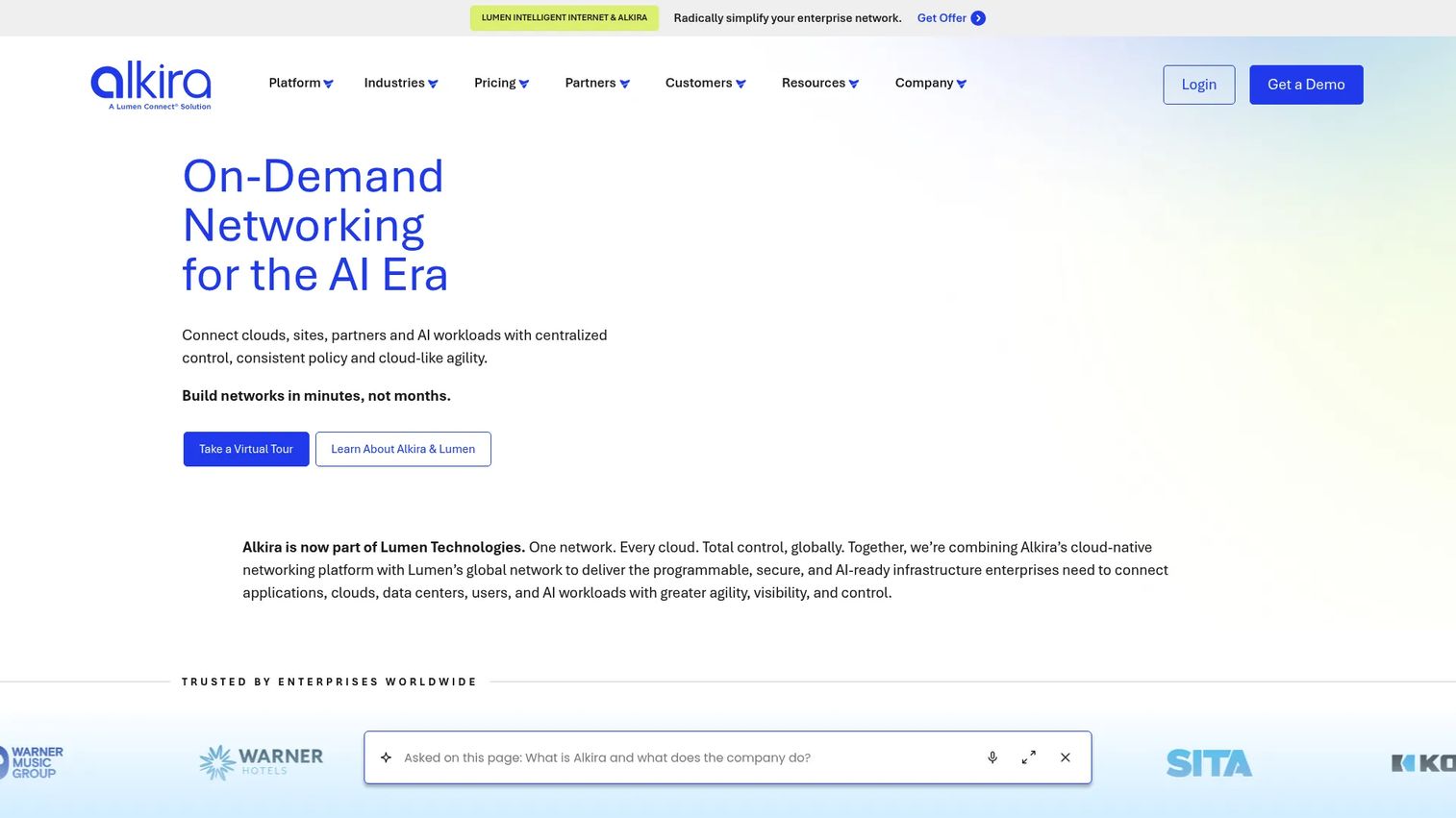
Alkira delivers cloud network infrastructure as a service, connecting enterprise networks across multiple clouds, sites, partners, data centers, and AI workloads through a drag-and-drop design interface. Rather than deploying traditional routing and security appliances at every cloud on-ramp, teams provision network services through the Alkira platform and manage segmentation, security, and visibility from a centralized control plane. REST APIs, SDKs, and Terraform interfaces support infrastructure-as-code workflows.
Best for: Cloud-first teams that need multi-cloud connectivity and network segmentation without managing appliances at every cloud boundary.
Key features
- Multi-cloud and hybrid-cloud networking from a single platform
- Global Backbone-as-a-Service with integrated ZTNA and NGFW options
- Drag-and-drop network design with rapid provisioning
- Centralized visibility, governance, and policy management
- REST APIs, SDKs, and Terraform for infrastructure-as-code integration
Why choose Alkira: Choose Alkira when the WAN edge problem centers on cloud and multi-cloud networking rather than physical branch connectivity. It fits teams that want to reduce appliance sprawl and manage connectivity through a cloud service with consumption-based or commitment-based pricing.
Alkira pricing: Alkira uses custom pricing based on the quantity and size of network and security elements deployed, with both consumption-based and commitment-based options. No numeric starting price was published. Buyers request a quote on Alkira's pricing page, where pricing scales with the number of cloud environments, sites, and network services consumed.
14. HPE Enterprise Routers
HPE Enterprise Routers cover branch, WAN, data-center, and AI-networking deployments through HPE Comware routers and Juniper PTX routers within the HPE portfolio. The product family includes modular and fixed-port options with integrated routing, switching, security, VPN, IPv6, MPLS, and QoS capabilities. High-density connectivity options span 1GbE through 800GbE depending on the platform.
Best for: Enterprises standardizing routing infrastructure within the HPE networking stack, from branch to data-center core.
Key features
- Modular and fixed-port router options for branch, WAN, and data-center roles
- Integrated routing, switching, security, VPN, IPv6, and MPLS capabilities
- High-density connectivity from 1GbE through 400GbE and 800GbE
- High availability and scalable forwarding capacity
- Campus integration with the broader HPE networking portfolio
Why choose HPE Enterprise Routers: Choose HPE when routing infrastructure needs to align with existing HPE networking operations and the team prefers established hardware and support models. Buyers who want cloud-first NaaS or managed WAN services should evaluate other options in this list.
HPE Enterprise Routers pricing: HPE lists routers as "Request a quote" with no published numeric pricing. Cost depends on hardware model, licensing, support tiers, and services. HPE channel partners and the HPE direct sales team handle deployment-specific pricing.
G2 rating: 4.5/5 (based on 1 review)
15. Benu Virtual Broadband Network Gateway (vBNG)
Benu Networks vBNG is a cloud-native virtual broadband network gateway software for telecommunications and broadband service providers. It handles subscriber management, dynamic routing, device-level policies, DPI, CGNAT, authentication, bandwidth management, and lawful intercept at carrier scale. The platform deploys on Intel or ARM bare metal, VMware/OpenStack virtual machines, and containers, with open APIs for low-latency data-plane application integration. Note that Benu Networks was acquired by Ciena in 2022.
Best for: Telecommunications and broadband service providers modernizing subscriber edge infrastructure with virtualized BNG capabilities.
Key features
- Advanced subscriber management and dynamic routing
- DPI, CGNAT, AAA, bandwidth management, and lawful intercept
- Open APIs for third-party data-plane application integration
- Deployment on bare metal, virtual machines, and containers
- High availability through 1:1 or N:1 configurations with cloud orchestration APIs
Why choose Benu vBNG: Choose Benu when the WAN edge lives in broadband service delivery rather than enterprise branch networking. This is a service-provider tool, not an enterprise SD-WAN product. Enterprise teams evaluating branch SD-WAN should look at other entries in this list.
Benu Virtual Broadband Network Gateway (vBNG) pricing: Pricing is not published and requires a quote tied to subscriber scale, deployment architecture, and support. Buyers should contact Ciena (Benu's parent company) or authorized partners for current pricing.
16. Trustgrid
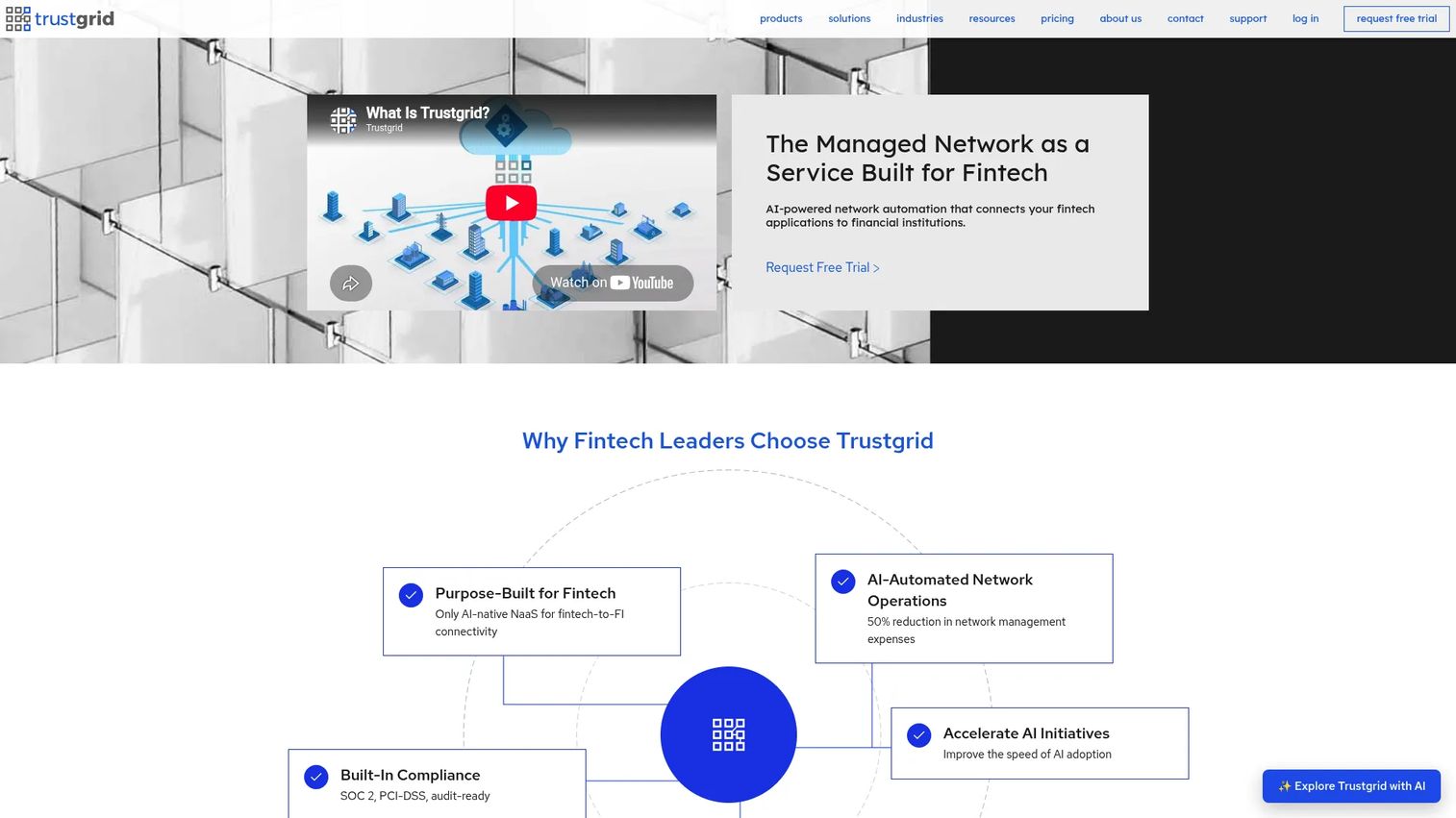
Trustgrid is an AI-managed network-as-a-service platform for secure connectivity between fintech applications, cloud environments, financial institutions, data centers, and edge locations. It uses certificate-based zero-trust networking, centralized configuration management, automated patching, and failover to connect cloud-to-on-premises environments without relying on sprawling VPN estates. The platform supports AWS, Azure, Google Cloud, Oracle Cloud, private data centers, and on-premises infrastructure from a single management console.
Best for: Fintech and SaaS providers needing centrally managed, zero-trust connectivity between cloud and on-premises environments at scale.
Key features
- Layer 3 and Layer 4 networking with zero-trust certificate-based authentication
- Centralized monitoring, configuration management, and troubleshooting
- Automated patching, failover, and disaster recovery
- Connectivity across all major clouds and private environments
- Mesh networking across distributed edge locations
Why choose Trustgrid: Choose Trustgrid when the architecture problem is connecting private applications, cloud workloads, and distributed environments without managing VPN sprawl. It is purpose-built for fintech and SaaS organizations with strict connectivity and compliance requirements.
Trustgrid pricing: Trustgrid Express starts at $20/month. Trustgrid Connect runs $80/month per node. The Trustgrid Management Platform starts at $250/month, and the Enterprise SLA also starts at $250/month. Managed Edge Install is available from $350/appliance. Hardware is priced separately. All service plans are subscription-based, and volume discounts are available at scale.
G2 rating: 4.8/5 (based on 3 reviews)
Considerations
Match the tool to your deployment model
Before shortlisting, decide who will operate the network day to day. DIY SD-WAN (VyOS, vSRX) requires engineering depth. Managed SD-WAN (SC// Connect, Bigleaf) offloads operations. Cloud WAN (AWS Cloud WAN, Alkira) works best when the team already manages infrastructure as code. SASE-first platforms (Cato, Versa) consolidate vendors but require a procurement and change-management decision.
Validate security convergence before committing
SD-WAN and SASE are not synonyms. Ask each vendor specifically which security services are native versus third-party integrations, and which require separate licensing. Confirm whether ZTNA, SWG, CASB, and FWaaS are included or sold as add-ons.
Test failure conditions, not just steady-state performance
A POC that runs over a stable link does not prove production resilience. During evaluation, test failover speed, packet loss behavior, jitter impact on voice and video, SaaS access latency, and recovery from complete link failure. Presales teams should insist that POC environments reflect real branch traffic patterns, not a sanitized demo scenario. For teams running technical product evaluations, organizing POC assets into a structured application performance monitoring tools workflow can help track what was tested and how each tool performed.
Check cloud and SaaS architecture fit
AWS-heavy environments benefit from AWS Cloud WAN's native integration. Multi-cloud environments benefit from Alkira's NaaS model. Branch-heavy organizations with commodity internet should evaluate Bigleaf or FortiGate SD-WAN. Service providers virtualizing subscriber infrastructure need Benu vBNG. Matching architecture to the product avoids expensive re-evaluation after POC.
Verify pricing against real deployment drivers
WAN edge cost calculations are more complex than a per-seat SaaS tool. Price depends on site count, bandwidth per site, appliance choices, security service add-ons, cloud attachments, support tiers, and managed service fees. Collect a deployment-specific quote for each finalist and calculate total cost of ownership over a three-year term before comparing vendors side by side.
Conclusion
WAN edge infrastructure software is not one category with one right answer. The right choice depends on your operating model, security strategy, cloud footprint, and who maintains the network after deployment.
For SASE-led transformation, Cato SASE Cloud consolidates SD-WAN, security, and remote access under a cloud-native architecture. For security-first branch SD-WAN within a Fortinet environment, FortiGate SD-WAN is the natural extension. Bigleaf Networks solves the application reliability problem across commodity internet links without requiring a full architecture change.
AWS Cloud WAN suits organizations that have committed to AWS as their network backbone. Alkira handles multi-cloud NaaS for teams that want to reduce appliance operations. VyOS gives engineering-led teams full control through open-source routing. Trustgrid handles the secure cloud-to-on-prem connectivity problem at transparent, published prices. For service providers modernizing subscriber edge infrastructure, Benu vBNG is the specialized fit.
Start with your architecture, not the vendor grid. Decide whether you need SASE, secure SD-WAN, cloud WAN, virtual routing, or provider-grade broadband edge. Then shortlist the tools that match how your team will operate the network in 2026.
Start your journey with Guideflow today!
FAQs
WAN edge infrastructure software connects, secures, and manages traffic between branch locations, remote users, data centers, public cloud environments, and SaaS applications from the network edge. The category includes SD-WAN platforms, SASE architectures, cloud WAN services, virtual routers, enterprise routing hardware, and network-as-a-service products. Each type addresses a different layer of the WAN modernization problem.
SD-WAN is a major component of WAN edge infrastructure, but the two terms are not interchangeable. SD-WAN focuses specifically on software-defined traffic routing across WAN links. WAN edge infrastructure is the broader category that also includes SASE platforms, cloud WAN, virtual routers, WAN optimization, and branch security appliances. Most modern WAN edge deployments include SD-WAN as a core element, but the buying decision involves more than just the SD-WAN layer.
SASE (Secure Access Service Edge) combines networking and security services delivered through a cloud-oriented architecture. It typically integrates SD-WAN with SSE capabilities including SWG, CASB, ZTNA, and FWaaS under one platform. WAN edge software may be part of a SASE architecture when SD-WAN integrates with those security services, but not every SD-WAN product qualifies as SASE. Organizations should verify whether a vendor's security services are native or require third-party integration before calling a platform "SASE."
AWS Cloud WAN is the strongest fit for AWS-heavy organizations managing global networks through AWS infrastructure. Alkira handles multi-cloud connectivity through a network-as-a-service model that avoids appliance deployment at every cloud boundary. Cato SASE Cloud provides cloud-access optimization as part of a broader SASE architecture across cloud and branch environments.
Bigleaf Networks performs best when the goal is application uptime across commodity internet circuits, with automatic failover and same-IP continuity during outages. FortiGate SD-WAN handles branch reliability alongside security inspection for teams that need both functions integrated. FatPipe MPVPN / IPVPN addresses multi-link path control and VPN bonding for organizations that need resilient connectivity across multiple ISPs without rebuilding their security architecture.
Many SD-WAN and WAN edge platforms reduce MPLS dependency by using broadband, LTE, 5G, and cloud backbones as primary or backup transport. Organizations commonly retain MPLS for specific latency-sensitive applications, contractual obligations, or compliance requirements where a private circuit provides guarantees that public internet cannot match. The practical approach is to evaluate which traffic genuinely requires MPLS and migrate the rest to software-defined transport.
A WAN edge POC should cover failover speed, jitter and packet loss behavior under load, voice and video quality during link degradation, SaaS application latency from branch locations, security policy enforcement, cloud routing paths, and day-two troubleshooting workflows. Test with traffic patterns that reflect real branch usage, not a sanitized demo environment. Reporting and alerting depth should also be evaluated, since teams often discover gaps after deployment rather than during a clean-network POC.
Pricing varies considerably across the category. AWS Cloud WAN charges $0.50 per hour per core network edge with additional usage-based fees. VyOS LTS subscriptions start at $8,000 per year. Trustgrid starts at $20 per month for the Express tier. Most other vendors in this list, including Cato, FortiGate, Bigleaf, Alkira, and Versa, require a deployment-specific quote because cost depends on site count, bandwidth, appliance choices, security services, cloud attachments, support level, and whether the deployment is self-managed or includes managed services. Request a three-year total cost of ownership calculation from each finalist before comparing.