You have 40,000 contacts to reach by Friday. A payment reminder, an event alert, a get-out-the-vote push. Your team of six cannot dial that list by hand without burning the week.
Most marketers assume the fix is more headcount. It is not. It is throughput. The bottleneck is not how many people you have, it is how fast you can put a consistent message in front of thousands of numbers and route the ones who respond into a real conversation.
That is what voice broadcasting software does. And the market is growing fast: the global voice broadcast dialer software market was valued at USD 1.2 billion in 2024 and is projected to reach USD 3.8 billion by 2033 at a 15.2% CAGR, according to a LinkedIn Market Outlook (2024). Buyers are shifting spend here because manual calling does not scale and static channels do not convert the way a live voice does.
This guide ranks seven platforms by how well they handle scale, automation, compliance, reporting, and stack fit, so you can pick one without reading every vendor spec sheet.
What's inside
Here is the scope before you scroll:
- Who it's for: digital marketers, growth teams, and campaign owners running mass outbound voice at scale
- How we selected tools: we weighed outreach volume, automation depth, response routing, compliance controls, analytics, and CRM integration
- What matters most: the ability to reach thousands fast, detect answering machines, route press-1 responses, and prove campaign ROI
- What you'll get: a comparison table, seven detailed tool breakdowns, a buyer's checklist, and answers to the questions that stall most purchases
TL;DR
Short on time? Here are the decision shortcuts:
- Best for white-label enterprise outreach: ICTBroadcast, with multi-tenant billing and five dialing modes
- Best for political and advocacy campaigns: CallHub, built for grassroots multichannel outreach
- Best for straightforward broadcast execution: Callex Solutions, an AI-driven omnichannel contact center
- Best for outbound call-center campaigns: DialerAI, a multi-tenant predictive dialer with voicemail drop
- Best for developer-led automation: Telnyx, programmable voice infrastructure with usage-based pricing
- Best for a broader comms stack: RingCentral, message, video, and phone in one app
What is voice broadcasting software
Voice broadcasting software is a system that automates outbound voice messaging to thousands of contacts at once, delivering prerecorded or synthesized calls without manual dialing.
Instead of a rep dialing each number, the platform sends a single message across a large contact list, detects who picks up, and routes interested listeners into the next step. Marketers use it for reminders, alerts, announcements, surveys, and lead generation at a scale no manual team can match.
Core capabilities to expect from any serious voice broadcasting service:
- Prerecorded or synthesized voice delivery: upload audio or generate speech from text
- Press-1 and IVR response routing: let listeners connect to an agent or opt in with a keypress
- Answering machine detection: identify voicemail and drop a tailored message
- Caller ID management: control the number recipients see and rotate IDs where allowed
- Voicemail handling and transcription: leave messages and capture responses
- Scheduling, retries, and real-time reporting: time campaigns, retry no-answers, and track results live
- CRM and campaign tool integrations: sync contacts, outcomes, and lead data into your stack
A capable voice broadcasting system turns a passive blast into a measurable campaign. The difference between a basic voice broadcast dialer and a real platform is in the routing, the reporting, and the integrations.
When to use
Voice broadcasting earns its place in a stack in a few specific moments. Here is how to pattern-match to your own situation.
Reach thousands of contacts at once
When you need a message in front of a large list fast, automated voice broadcasting beats every manual option. Payment reminders, appointment alerts, service outages, event notifications, and time-sensitive announcements all fit here. You record once, schedule the send, and the system handles delivery and answering machine detection across the whole list. Volume that would take a team days goes out in minutes.
Route responses into a live queue
A broadcast that only talks is a missed opportunity. Press-1 campaigns and IVR turn a one-way message into a two-way conversation. A listener hears your alert, presses a key, and lands in a live queue or a callback flow. This is how advocacy teams connect supporters to legislators and how sales teams surface warm leads from a cold list. The routing is what converts passive reach into pipeline.
Replace repetitive manual calling
If your team spends hours reading the same script to a list, that time is better spent elsewhere. A voice broadcasting service delivers a consistent message every time, with no fatigue and no variation. You get operational scale, predictable messaging, and staff freed for higher-value work. For lean marketing teams, this is often the whole reason to buy.
Comparison table
The table below is built to help you match a tool to your situation, not just scan feature counts. Focus on the "best for" and "key differentiator" columns to find your fit, then read the full section for the two or three that match. Pricing and ratings are current as of August 2026 and pulled from each vendor's own pages and G2 where available.
| # | Product | Best for | Key differentiator | Pricing | G2 rating |
|---|---|---|---|---|---|
| 1 | ICTBroadcast | White-label multi-tenant outreach | Five dialing modes plus multi-channel messaging | From USD 299 one-time | 4.8/5 |
| 2 | CallHub | Political and advocacy campaigns | Unified call, text, and email outreach | From $0.045/dial | 4.8/5 |
| 3 | Callex Solutions | AI omnichannel broadcast execution | AI call center across voice, chat, email, SMS | Custom pricing | Not available |
| 4 | DialerAI | Outbound call-center campaigns | Port-based predictive dialer with voicemail drop | From $299/mo | Not rated |
| 5 | Voxplivo | Programmable voice outreach | API-led voice delivery and automation | Not available | Not available |
| 6 | Telnyx | Developer-led custom workflows | Usage-based programmable voice infrastructure | From $0.004/msg | 4.7/5 |
| 7 | RingCentral | Broader business comms stack | Message, video, and phone in one platform | From $19.99/user/mo | 4.3/5 |
Best 7 voice broadcasting software tools for 2026
Below is the full breakdown. Each section covers what the tool does, who it fits, its strengths, and current pricing. Read the two or three that match your campaign type and stack.
1. ICTBroadcast
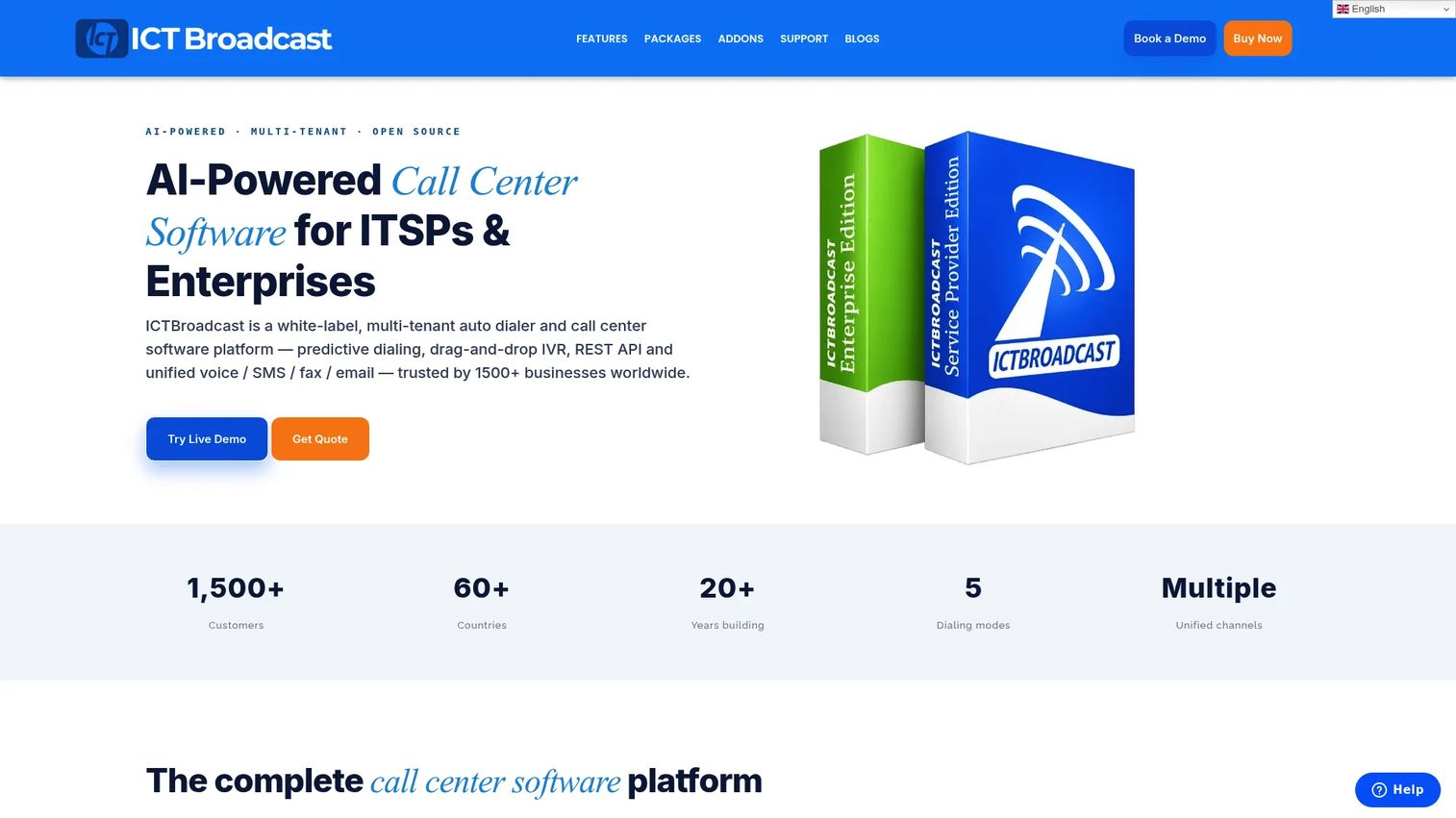
ICTBroadcast is an AI-powered, white-label, multi-tenant call center and autodialer platform built for enterprises and service providers. It handles outbound broadcast, IVR, surveys, and live monitoring in one system. For marketers running large-scale alerts, reminders, and voice campaigns, it offers the kind of telephony-grade control that lighter tools skip.
The platform supports five dialing modes and delivery across voice, SMS, fax, email, WhatsApp, and live chat, so a single campaign can span more than one channel. Its white-label multi-tenant billing makes it a fit for agencies and ITSPs reselling capacity to clients.
Best for: ITSPs and call centers needing a white-label multi-tenant outbound and inbound communications platform.
Key features
- Predictive, progressive, power, preview, and manual dialing modes
- Voice, SMS, fax, email, WhatsApp, and live chat channels
- White-label multi-tenant billing and routing
- REST API, IVR, surveys, and live monitoring
Why choose ICTBroadcast: Choose it if you need deep telephony control and want to run or resell a multi-tenant platform rather than rent a fixed seat. It suits teams comfortable managing their own infrastructure.
ICTBroadcast pricing: Enterprise licenses are one-time payments starting at USD 299 for the 5-channel edition, rising to USD 4999 for 1000 channels. A separate Service Provider Edition is offered with pricing arranged directly.
2. CallHub
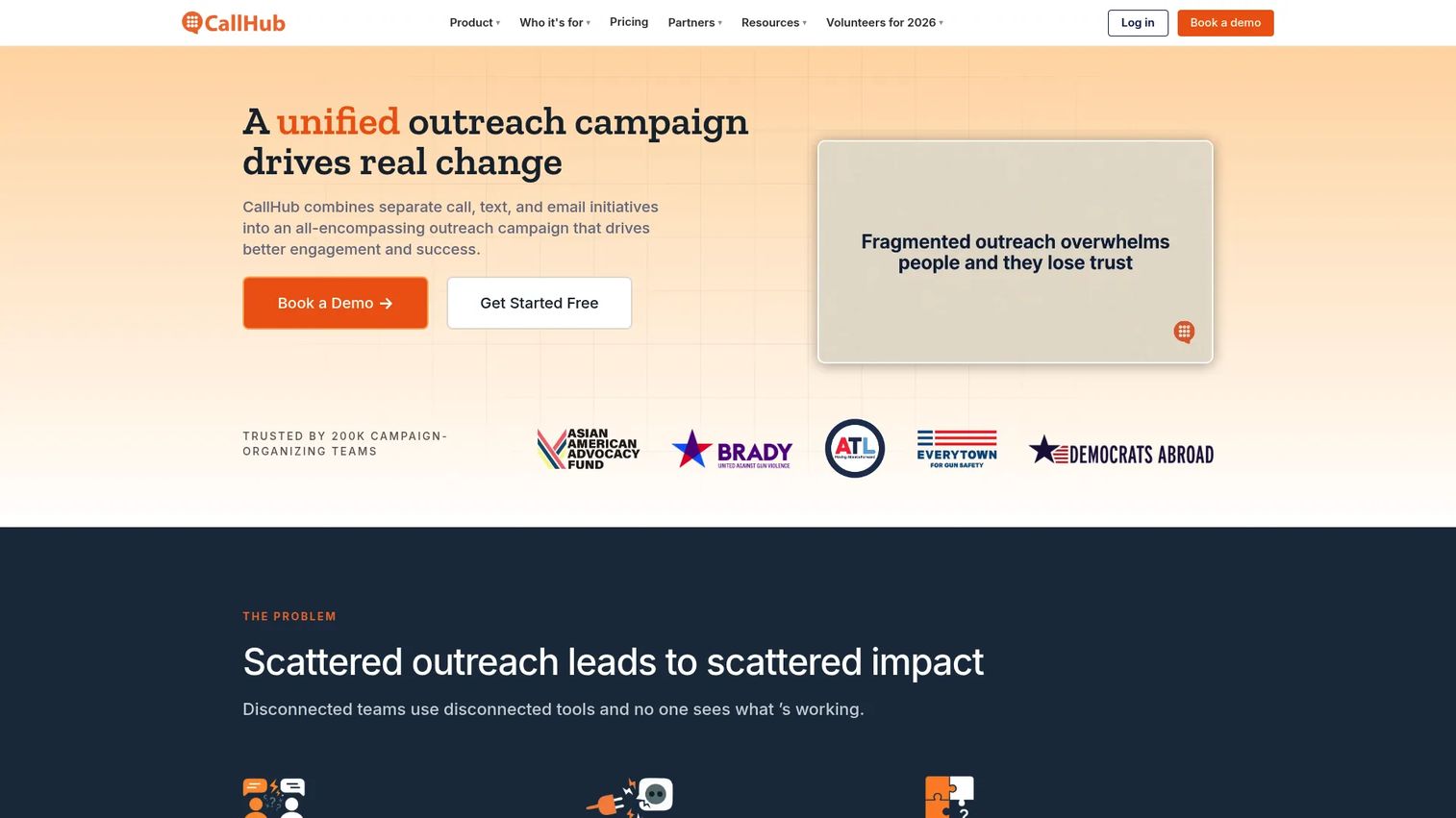
CallHub is a unified outreach platform for calling, texting, and email, built around organizing campaigns across channels. Its voice broadcast, auto dialer, and peer-to-peer texting tools work together, which makes it a strong fit for teams running fast multichannel pushes. Political campaigns, nonprofits, and labor unions lean on it for grassroots outreach.
The value for marketers is speed to launch across channels. You can pair a voice blast with a follow-up text and route responders into a live conversation without stitching three tools together.
Best for: Political campaigns, nonprofits, labor unions, and grassroots teams running multichannel outreach.
Key features
- Voice broadcasting to large contact lists
- Auto dialer for live agent campaigns
- Peer-to-peer texting alongside voice
- Campaign organization across channels
Why choose CallHub: Choose it if your outreach spans voice and text and you want press-1 style follow-up baked in. It fits advocacy and nonprofit teams that need to move fast on a budget.
CallHub pricing: Essentials is self-serve and pay-as-you-go, starting at $0.045 per dial, with free credits to start. The Scale plan is custom-quoted for higher volume with a minimum commitment of $2,500 and enterprise support.
3. Callex Solutions
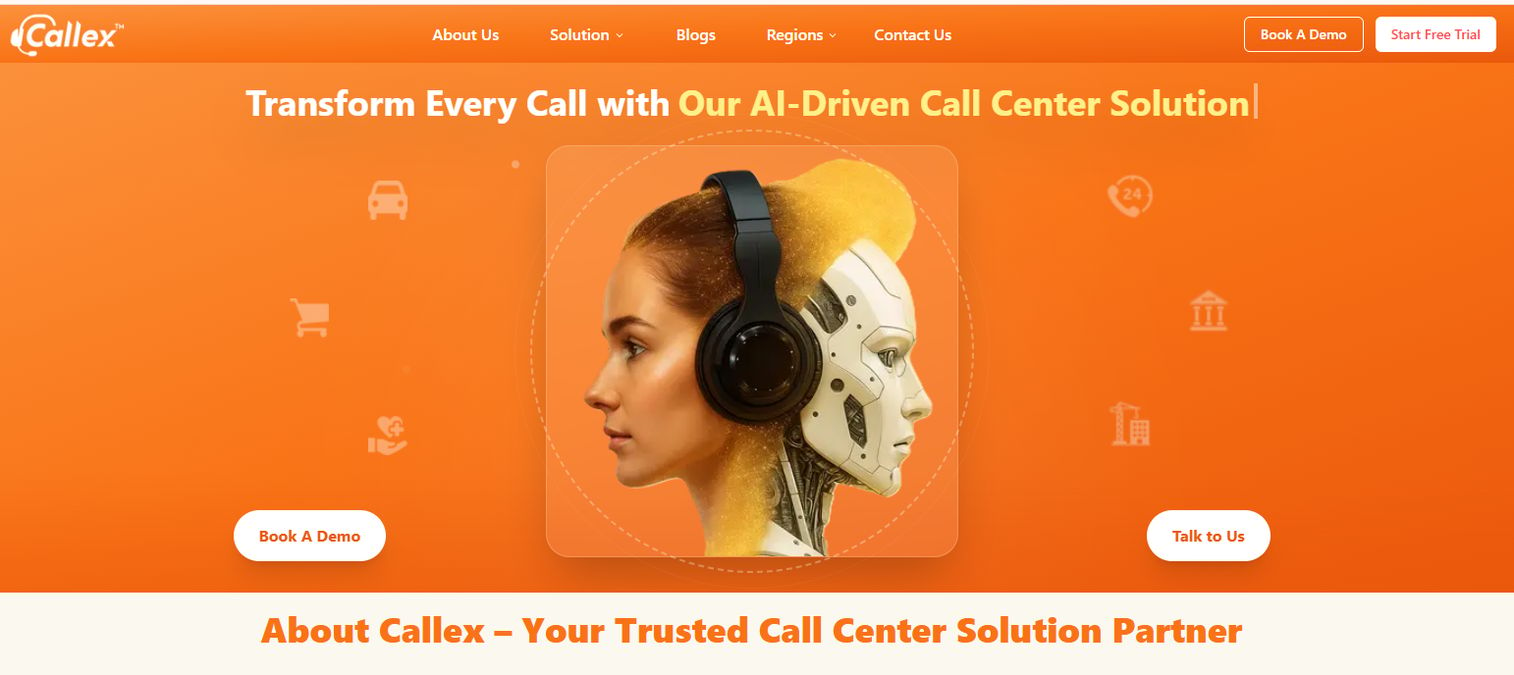
Callex Solutions is an AI-powered call center and omnichannel contact center provider with inbound, outbound, and voice broadcast capabilities. It positions itself around straightforward broadcast execution paired with automation across voice, chat, email, SMS, and WhatsApp. For teams that want a unified platform without assembling parts, it consolidates the pieces.
The draw here is omnichannel breadth under one roof. A marketer can run a voice broadcast, catch responders on chat or SMS, and keep the whole exchange in one contact center view.
Best for: Businesses needing a unified call center platform with AI and omnichannel features.
Key features
- AI call center automation
- Voice broadcast alongside inbound and outbound
- Omnichannel across voice, chat, email, SMS, WhatsApp
- Unified contact center management
Why choose Callex Solutions: Choose it if you want AI-assisted broadcast execution combined with omnichannel follow-up in a single platform rather than a specialist voice-only tool.
Callex Solutions pricing: Public pricing is not listed on the site. The platform points buyers to a sales conversation or demo booking, so request a quote to match capacity to your campaign volume.
4. DialerAI
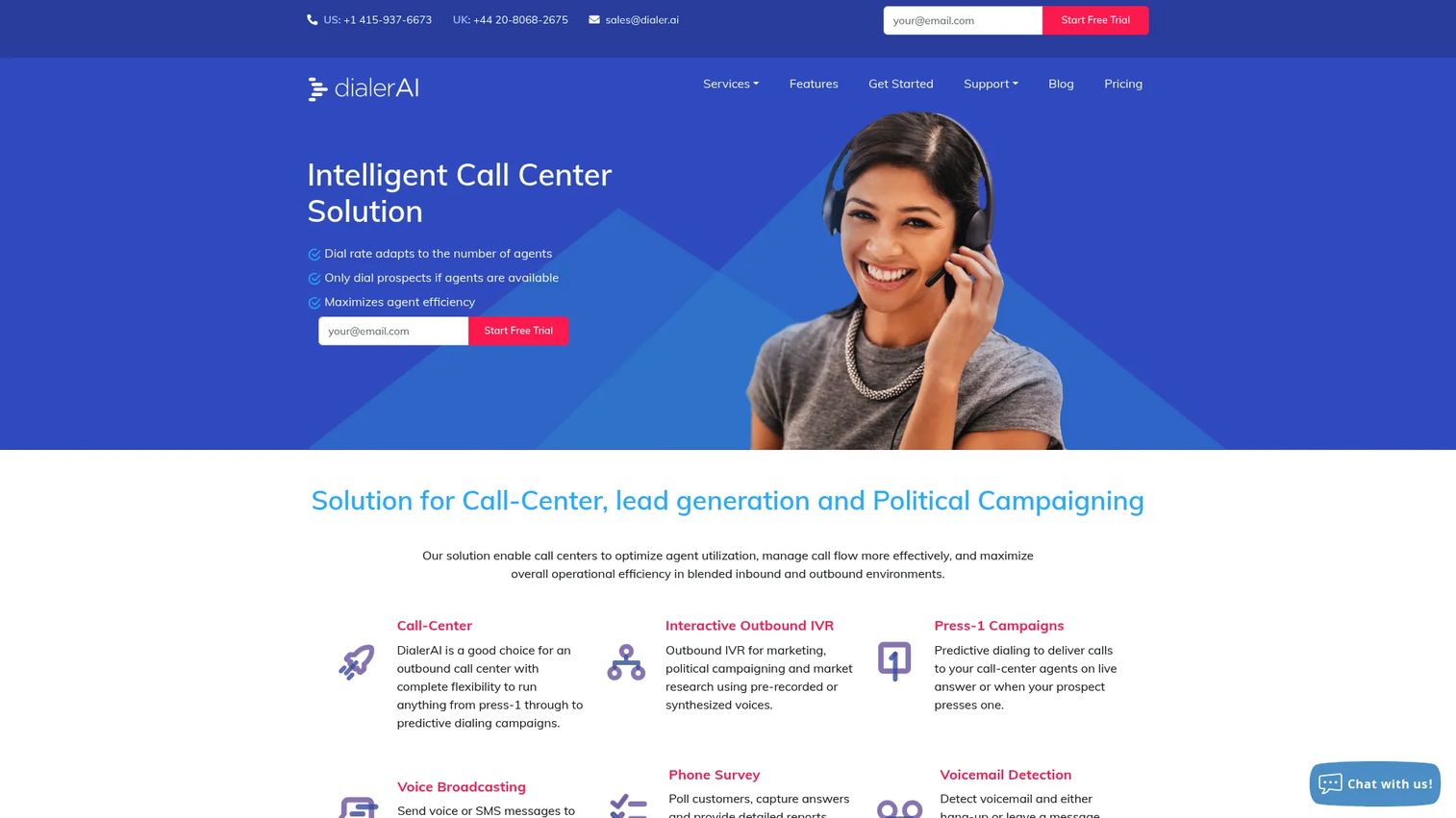
DialerAI is a cloud-based, multi-tenant predictive dialer and call-center platform for outbound calling, voice and SMS broadcasting, and billing. It is oriented toward contact-center-style campaigns, with voicemail detection and after-the-beep drop that make broadcasts land cleanly. Teams running lead generation, surveys, and reminder campaigns are the core fit.
Its port-based pricing keeps the model simple: buy the capacity you need and scale ports up as campaigns grow. White-label and billing support make it usable for resellers too.
Best for: Teams needing a customizable outbound dialer for lead generation, surveys, and voice or SMS broadcasting.
Key features
- Predictive dialing and auto-dialing
- Voicemail detection and after-the-beep drop
- Multi-tenant, white-label, and billing support
- Voice and SMS broadcasting
Why choose DialerAI: Choose it if you want a straightforward port-based dialer for outbound campaigns and value voicemail drop and predictable capacity pricing over a broad comms suite.
DialerAI pricing: Plans are port-based and billed monthly, starting at $299 per month for 25 ports. Larger tiers scale to $499 for 100 ports, $899 for 250 ports, and up through $3499 for 2000 ports, with on-demand options above that.
5. Voxplivo
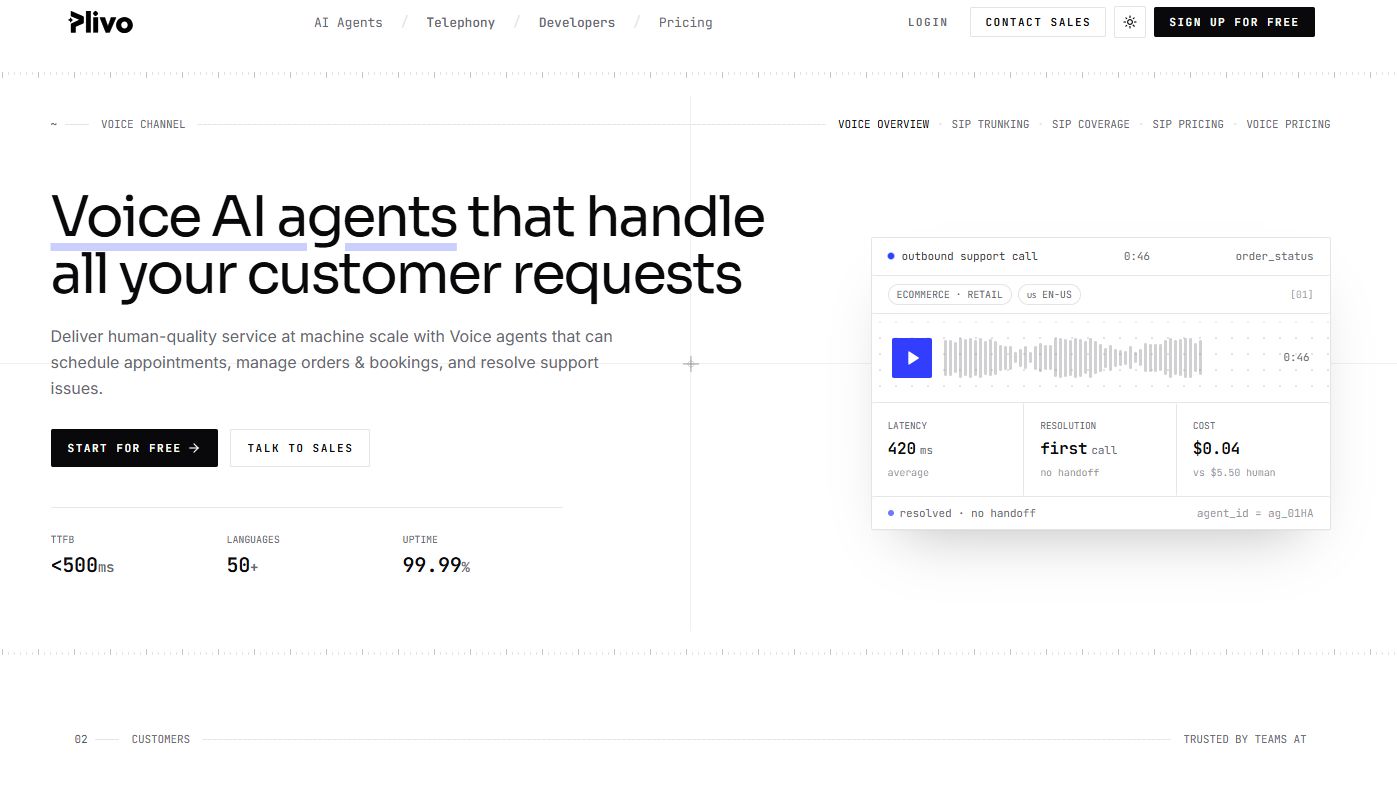
Voxplivo positions itself around programmable voice delivery and API-led outreach automation. For teams that want developer flexibility to build custom broadcasting flows rather than click through a fixed dashboard, an API-first approach fits how they already work. It suits engineering-supported marketing teams comfortable wiring their own campaign logic.
The appeal of a programmable model is control. You decide how contacts flow, how responses route, and how outcomes sync back to your systems, all through code rather than a preset UI.
Best for: Developer-supported teams that want programmable, API-led voice outreach and automation.
Key features
- Programmable voice delivery
- API-led campaign automation
- Custom outreach flow control
- Integration-friendly architecture
Why choose Voxplivo: Choose it if you have developer bandwidth and want to build broadcasting workflows to your own spec instead of adapting to a fixed dashboard.
Voxplivo pricing: Public pricing was not available at the time of writing. Contact the vendor directly to confirm current plans and usage rates before committing.
6. Telnyx
Telnyx is a cloud communications platform offering voice, messaging, phone numbers, SIP trunking, IoT, and AI-powered telephony infrastructure. It is built for technically mature teams that want to assemble custom broadcasting workflows on programmable voice rather than buy a packaged campaign tool. Its Voice API, text-to-speech, and Voice AI workflows give engineering teams the building blocks.
The strength is flexibility and call control at the infrastructure layer. You get global reach, granular routing, and usage-based pricing that tracks actual volume instead of fixed seats.
Best for: Teams needing programmable global communications infrastructure with usage-based pricing.
Key features
- Messaging API for SMS and MMS
- Elastic SIP trunking and Voice API
- Text-to-speech API and Voice AI workflows
- Global numbers and call control
Why choose Telnyx: Choose it if you have the engineering resources to build on APIs and want infrastructure-level control and pay-as-you-go economics over a turnkey broadcast dashboard.
Telnyx pricing: Pricing is usage-based and product-specific. The Messaging API starts at $0.004 per message part plus carrier fees, SIP trunking from $0.005 per minute, numbers from $1 per month, and Voice AI at $0.05 per minute.
7. RingCentral
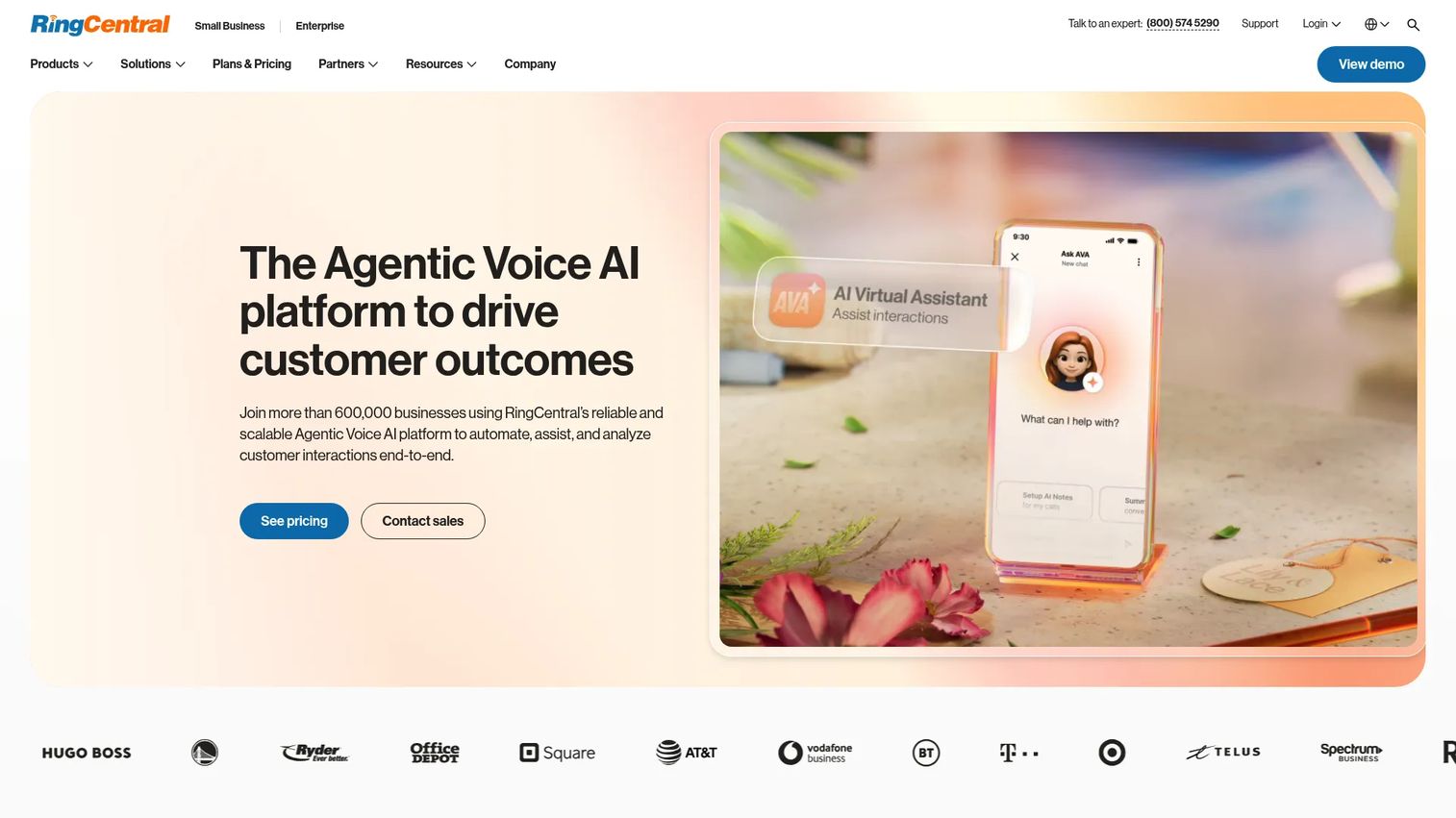
RingCentral is a cloud communications platform combining business messaging, video, and phone in one app. It is not a specialist voice broadcasting service, but its outbound voice capabilities make it a fit for teams that want broadcasting adjacent to a larger communications stack rather than a standalone dialer. If your team already lives in one comms app, keeping outbound voice there reduces tool sprawl.
The trade-off is scope. You gain an all-in-one platform for message, video, and phone, but a dedicated voice broadcast dialer will go deeper on press-1 routing, answering machine detection, and mass-campaign reporting.
Best for: Businesses wanting an all-in-one cloud phone, messaging, and video platform with outbound voice.
Key features
- Message, video, and phone in one app
- Team messaging and video meetings
- Business phone and VoIP calling
- Fax and SMS support
Why choose RingCentral: Choose it when you want unified business communications and outbound voice in a single platform, and mass broadcasting is one job among many rather than your primary motion.
RingCentral pricing: RingEX plans start at $19.99 per user per month on annual billing for Essentials, with Standard at $27.99, Premium at $34.99, and Ultimate at $49.99. Monthly billing runs higher. Free video meetings and team messaging are available through RingCentral Video.
Considerations
Before you commit, run your shortlist through this checklist. These are the criteria that separate a tool that fits from one you outgrow in a quarter.
Compliance and consent
Outbound voice is heavily regulated. In the US, TCPA rules govern consent, and requirements vary by jurisdiction and campaign type. Confirm the platform supports documented opt-in, easy opt-out, calling-window controls, and do-not-call list management. Political and nonprofit exemptions exist but are narrow, so verify your use case before you send a single call.
Answering machine detection and call routing
Answering machine detection decides whether a live listener hears your pitch or your voicemail message plays to nobody. Good AMD raises live-answer efficiency and cuts wasted spend. Pair it with press-1 or IVR routing so responders reach a live queue instead of dropping off. Together these two features drive most of the conversion difference between platforms.
Reporting and attribution
Call counts are not campaign data. As a marketer, you need completion rates, press-1 conversion, drop-off points, and the ability to tie outcomes back to lists and segments. Look for real-time dashboards and exportable reports so you can prove ROI and optimize the next send, not just confirm calls went out.
CRM and campaign stack integration
A broadcast that does not sync is a silo. Check for native or API integration with Salesforce, HubSpot, your marketing automation platform, and contact sync so responses update records automatically. Clean integration turns a voice campaign into a signal your whole funnel can act on.
Scalability and ease of setup
Compare launch speed, retry logic, and operational overhead. A port-based or usage-based model scales differently than a per-seat license, so match the pricing shape to your volume pattern. Ask how fast a first campaign goes live and how retries handle no-answers, because those details decide whether the tool saves time or adds it.
Conclusion
The right voice broadcasting software depends on your campaign type, scale, and stack. For white-label, multi-tenant outreach with deep telephony control, ICTBroadcast leads. For political and advocacy teams running multichannel pushes, CallHub is the natural pick. For AI-driven omnichannel broadcast execution, Callex Solutions consolidates the pieces, while DialerAI serves outbound call-center campaigns with predictable port-based pricing.
If your team has engineering bandwidth, Voxplivo and Telnyx give you programmable, API-led control to build broadcasting workflows to spec. And if you want outbound voice inside a broader communications stack, RingCentral keeps message, video, and phone in one app.
Start by matching your primary motion to two or three tools above, then pressure-test each against the compliance, routing, reporting, and integration checklist. Request a demo or a trial credit before you commit, and run a small campaign to confirm live-answer rates and reporting depth match your goals.
Start your journey with Guideflow today!
FAQs
Voice broadcasting software sends prerecorded or synthesized voice messages to thousands of contacts at once, without manual dialing. Marketers use it for reminders, alerts, announcements, surveys, and lead generation. It replaces repetitive manual calling with a single scheduled send that scales to large lists in minutes.
Yes, when used with proper consent. In the US, the TCPA governs outbound calls and generally requires prior consent, with narrow exemptions for some political and nonprofit outreach. Rules vary by jurisdiction, so confirm opt-in records, honor opt-outs, and respect calling windows. Compliance is a feature to check, not an afterthought.
Look for prerecorded and synthesized voice delivery, press-1 and IVR response routing, answering machine detection, caller ID management, voicemail handling and transcription, scheduling and retries, real-time reporting, and CRM integration. The routing and reporting features matter most, since they turn a passive blast into a measurable campaign.
Answering machine detection analyzes call audio to decide whether a live person or a voicemail system answered. When it detects voicemail, the system can drop a tailored message after the beep or skip the number. Good AMD raises live-answer efficiency and cuts wasted calls, which lowers cost per meaningful contact.
Voice broadcasting sends one automated message to many contacts, with no live agent required unless a listener presses a key. A predictive dialer connects live agents to answered calls, dialing ahead to keep agents busy. Broadcasting is one-to-many messaging; predictive dialing is a one-to-one conversation engine. Some platforms offer both.
Political campaigns, nonprofits, and advocacy groups use it heavily for outreach and get-out-the-vote pushes. Healthcare uses it for appointment reminders, finance for payment alerts, and education and government for notifications. Any organization that needs to reach a large audience with a consistent, time-sensitive message is a candidate.
Most capable platforms integrate with CRMs like Salesforce and HubSpot, plus marketing automation tools, through native connectors or an API. Integration syncs contacts, logs call outcomes, and updates records when someone responds. Confirm the specific integrations you need before buying, since depth varies widely between a basic dialer and a full platform.
Track completion rate, live-answer rate, press-1 or IVR conversion, drop-off points, and opt-outs, then tie those outcomes back to specific lists and segments. Call counts alone tell you little. Real-time dashboards and exportable reports let you prove ROI and optimize the next campaign rather than just confirm that calls went out.