

You post a unit, screen an applicant in one app, build the lease in another, chase rent over email, and log a maintenance request on a sticky note. Then tax season arrives and you spend a weekend reconciling three spreadsheets.
That workflow holds together at two units. It breaks at twenty.
The market has already moved. According to Market Growth Reports (2024), more than 58% of property management companies worldwide used digital software solutions in 2024, and cloud-based platforms made up 62% of global deployments. Mordor Intelligence (2026) puts the global property management software market at USD 6.53 billion in 2026, on track for USD 9.93 billion by 2031. Landlords who still run on spreadsheets are the exception now, not the norm.
The real question is not whether to adopt rental management software. It is which platform fits the workflows you actually run: screening, leasing, rent collection, maintenance, and accounting. This guide compares seven of them by that standard.
What's inside
This guide is for landlords, property managers, and operations leads choosing rental property management software in 2026. It covers the workflows that matter day to day and ranks tools by how well they support them.
We selected the seven platforms below on four criteria:
- Workflow coverage: screening, leases, rent, maintenance, and accounting in one place
- Pricing transparency: clear public pricing or documented plan structure
- Reporting and reconciliation depth: the accounting a growing portfolio needs
- Scalability: whether the tool holds up from a handful of doors to hundreds
No spreadsheets. No single-feature point tools. Only platforms built to run tenant operations end to end.
TL;DR
- Best for more advanced property management operations: AppFolio, built for larger portfolios that need automation, accounting, and portals in one platform.
- Best all-in-one for landlords and managers: TenantCloud covers screening, leasing, rent collection, and accounting with broad role support.
- Best for landlords who want simpler workflows: TurboTenant is free to start and easy to onboard for independent landlords.
- Best for straightforward leasing and rent collection: Avail offers free core tools with optional premium upgrades.
- Best for teams that need accounting depth: Buildium pairs a mature feature set with strong accounting and portals.
- Best for simpler operations at scale: DoorLoop and Yardi Breeze both offer established platforms for growing operators.
What is tenant management software
Tenant management software is a platform that helps landlords and property managers run tenant-facing workflows, from screening and leasing through rent collection, maintenance, and accounting, in one system instead of scattered tools. It is a subset of broader property management software, focused on the parts of the job that touch the tenant directly.
The category overlaps heavily with rental management software and general property management programs. Most vendors use the terms interchangeably, so treat them as one market when you shop.
Core capabilities to expect from any serious platform:
- Tenant screening and applications: credit, background, and eviction checks with online applications
- Lease management software: lease creation, e-signing, renewals, and stored lease templates
- Rent collection software: online rent collection, autopay, reminders, and payment tracking
- Maintenance requests and communication: tenant portals, work orders, and tenant communication logs
- Accounting and reporting: accounting and reconciliation, owner statements, and tax-ready reports
- Rental listings and lead management: listing syndication and applicant tracking
The strongest rental property management software connects these so one action updates everything downstream. A signed lease populates the rent ledger. A logged payment updates the books. That connective tissue is what separates a real platform from a bundle of features.
When to use
Centralize tenant operations
You know you have outgrown spreadsheets when a single move-in touches four tools and two of them never sync. Once you manage more than a handful of units, a central system for tenant workflows stops being a nice-to-have. One platform for screening, leases, rent, and maintenance removes the manual copying that eats your evenings and hides errors until they cost you.
Reduce rent collection and follow-up work
Chasing rent is the most repetitive job in property management. Rent collection software automates the parts you hate: scheduled reminders, autopay, late fees, and a running ledger of who paid what and when. You stop reconstructing payment history from your inbox and start seeing it on one screen.
Improve screening and lease management
Bad tenants are expensive. Structured tenant screening software gives you consistent credit, background, and eviction checks instead of gut calls. Pair that with lease management software that stores lease templates and handles e-signing, and every application follows the same defensible process from inquiry to signed lease.
Comparison table
Here is how the seven platforms compare on intent, differentiation, pricing, and property management reviews from G2. Use it as a shortlist filter, then read the sections below for workflow detail.
| # | Product | Best for | Key differentiator | Pricing | G2 rating |
|---|---|---|---|---|---|
| 1 | AppFolio | Larger property management operations | End-to-end leasing, accounting, and maintenance at scale | Quote-based (Core, Plus, Max) | 4.6/5 |
| 2 | TenantCloud | All-in-one for landlords and managers | Broad role support with screening, leasing, and accounting | From $25/mo | 4.4/5 |
| 3 | TurboTenant | Independent landlords | Free-to-start all-in-one rental management | Free; paid from $12.42/mo | 4.5/5 |
| 4 | Avail | Straightforward landlord workflows | Free core tools with optional premium upgrades | Free; Plus $9/unit/mo | 4.8/5 |
| 5 | Buildium | Teams needing a mature feature set | Strong accounting plus leasing and portals | From $62/mo | 4.4/5 |
| 6 | DoorLoop | All-in-one rental operations | Rent, screening, and maintenance in one system | From $69/mo | 4.8/5 |
| 7 | Yardi Breeze | Small to mid-sized operators | Established platform with per-unit pricing | From $1/unit/mo | 4.1/5 |
Best 7 tenant management software tools for 2026
1. AppFolio

AppFolio is cloud-based real estate and property management software built for firms that run operations, leasing, accounting, and maintenance from one platform. It targets property managers and investors who have moved past the landlord-with-a-few-doors stage and need automation across a larger portfolio. If your problem is scale rather than getting started, this is the platform that assumes it.
Best for: Property management firms that need an all-in-one platform for operations, leasing, accounting, and maintenance.
Key features
- Property accounting and reporting
- End-to-end marketing and leasing
- Work order management and maintenance workflows
- Tenant and owner portals
- Listing syndication and applicant tracking
Why choose AppFolio: Choose AppFolio when your accounting and reconciliation needs outgrow entry-level tools and you want marketing, leasing, and maintenance under one roof. It fits larger operators who value depth over the fastest possible setup. Smaller landlords may find more than they need here, which is the point: it scales up rather than down.
AppFolio pricing: AppFolio offers three property management plans, Core, Plus, and Max, priced by quote rather than a public number. Some plans carry minimum spend or unit minimums, so pricing scales with portfolio size.
2. TenantCloud
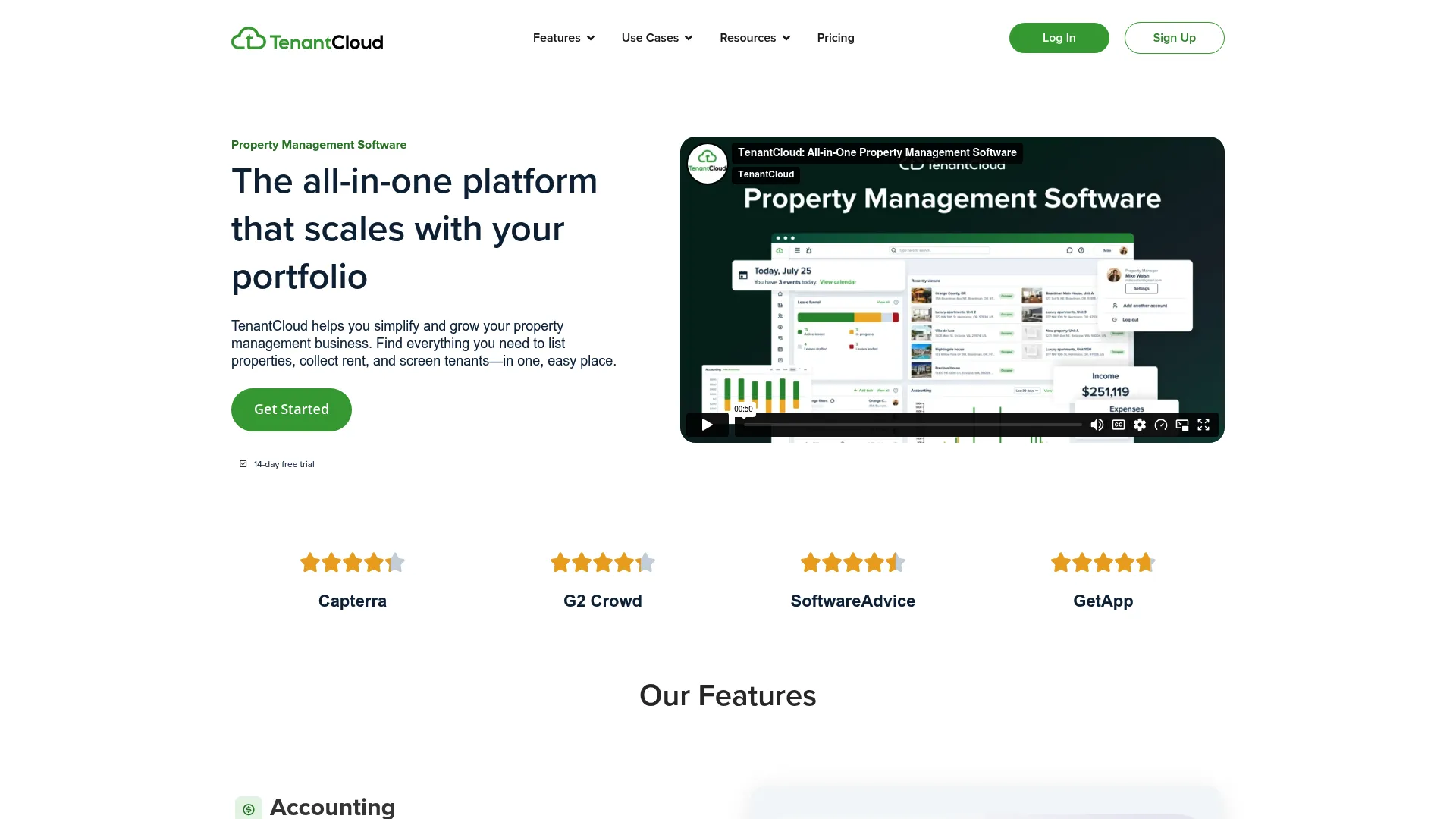
TenantCloud is cloud-based property management software for landlords and managers who want broad coverage without stitching tools together. It supports multiple roles, landlords, tenants, and service pros, and covers the tenant lifecycle from listing to accounting. The appeal is breadth: one login for screening, leasing, rent, and books.
Best for: Landlords and property managers who need rent collection, screening, and accounting in one platform.
Key features
- Online rent collection
- Tenant screening
- Listing syndication and custom listing website
- Lease management and e-signing
- Accounting and reporting
Why choose TenantCloud: Choose TenantCloud when you want a single system that serves landlords and tenants and includes accounting without jumping to enterprise pricing. It fits growing portfolios that need more than a free tool but do not want quote-based complexity. The multi-role framing also helps if you work with owners or service pros.
TenantCloud pricing: TenantCloud starts at $25/mo for the Starter plan, with Growth at $35/mo and Pro at $60/mo. Business pricing starts at $100/mo. Annual billing discounts apply to Starter, Growth, and Pro, and a 14-day free trial is available.
3. TurboTenant
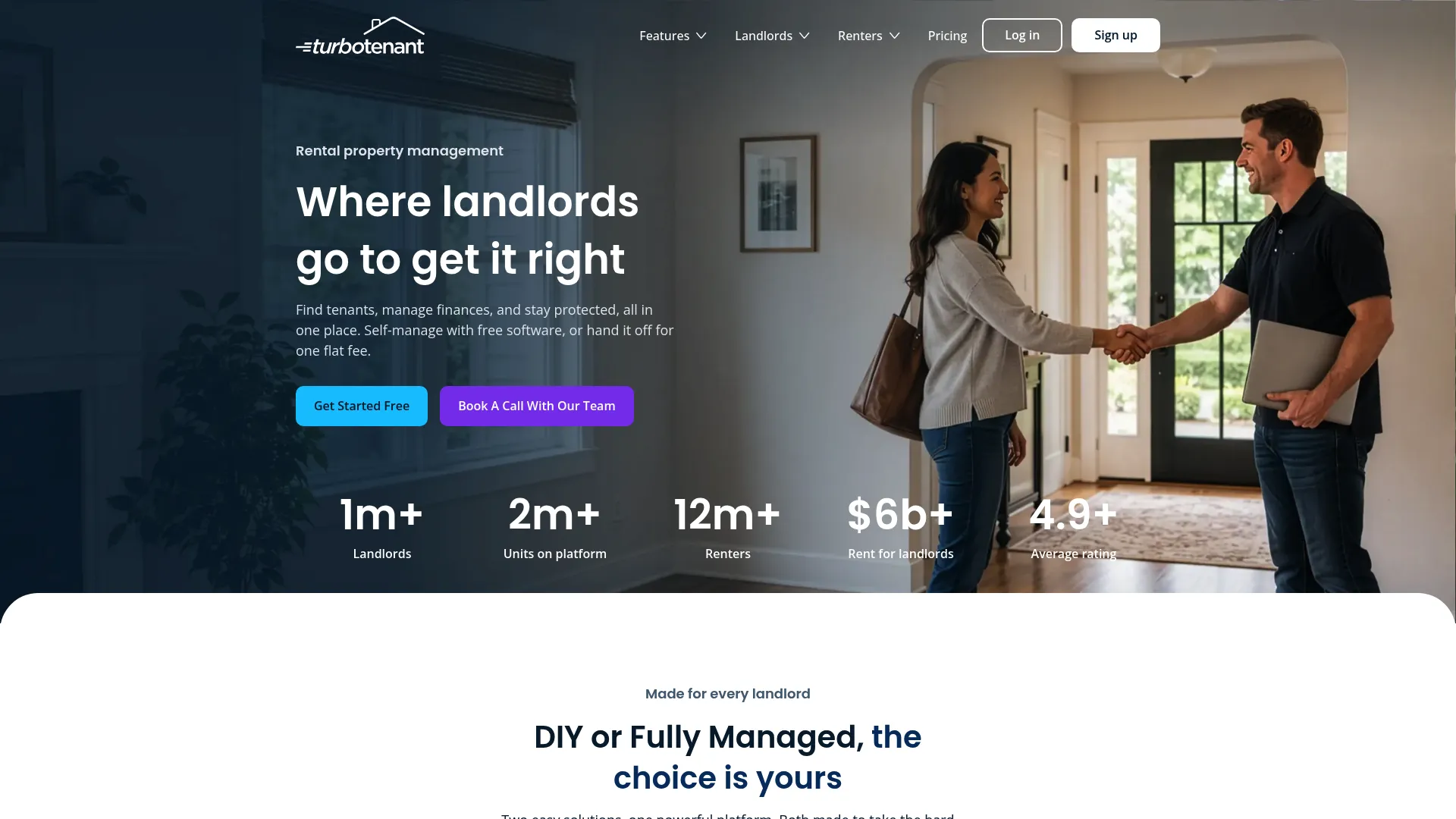
TurboTenant is property management software built for self-managing landlords who want an all-in-one rental tool they can start using for free. It covers advertising, applications, screening, lease building, rent collection, and maintenance requests. Onboarding is fast, which matters when you manage rentals on top of a day job.
Best for: Self-managing landlords who want a free-to-start all-in-one rental management tool.
Key features
- Rental advertising and listing syndication
- Tenant applications and screening
- Lease building and lease templates
- Online rent collection
- Maintenance requests
Why choose TurboTenant: Choose TurboTenant when you run a small portfolio and want to get moving today without committing budget. The free tier covers real workflows, not just a demo, and paid plans stay inexpensive. Larger operators needing deep accounting will eventually want more, but for independent landlords the price-to-coverage ratio is hard to beat.
TurboTenant pricing: TurboTenant has a Free plan at $0/mo. Paid plans are Essentials at $12.42/mo ($149/year) and Pro at $16.58/mo ($199/year), both billed annually.
4. Avail
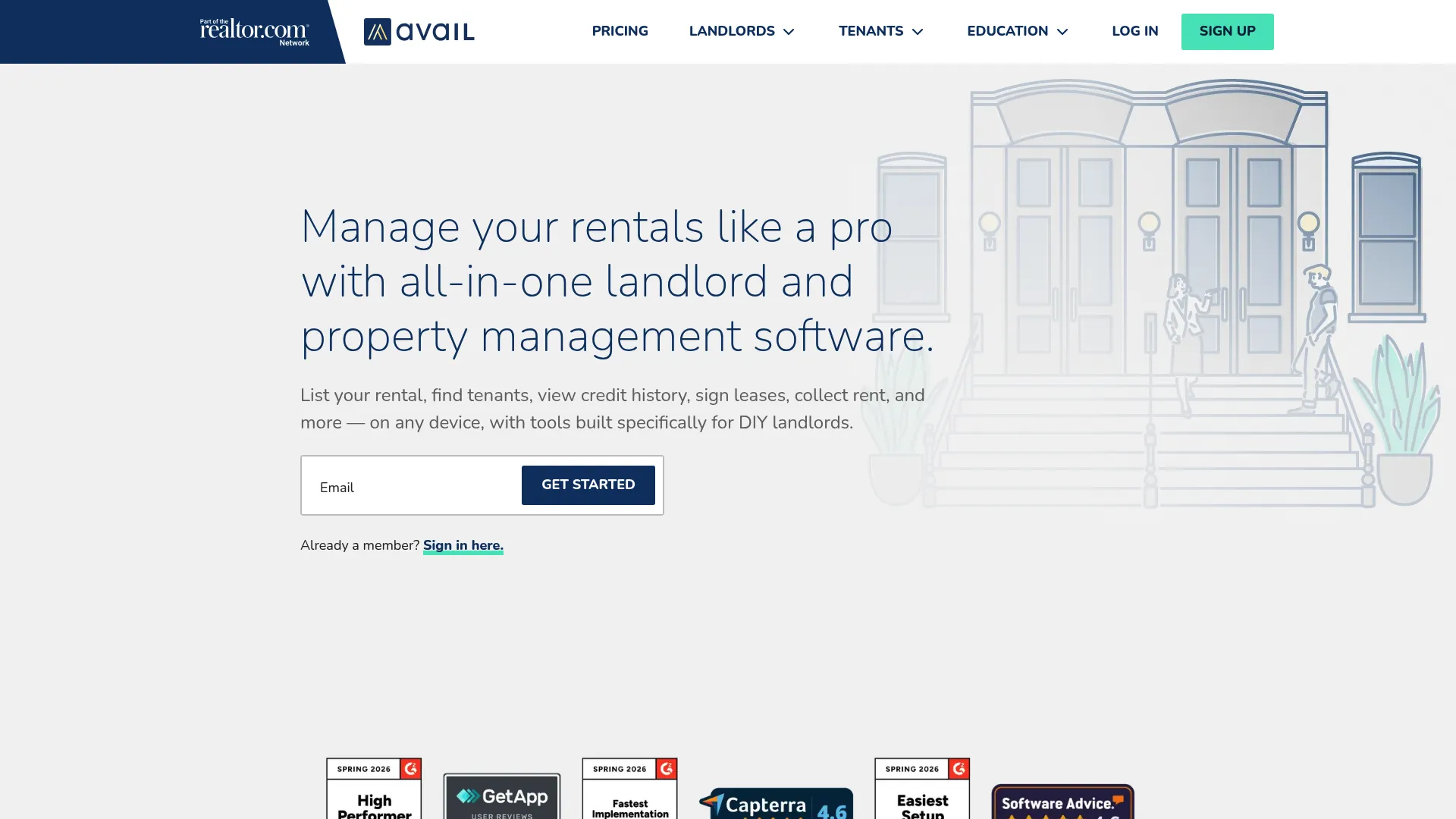
Avail is property management software for independent landlords who want straightforward workflows without a steep learning curve. It handles rental listings, tenant screening, online rent collection, maintenance tracking, and accounting basics. The design leans toward landlords who manage their own units and want tools that stay out of the way.
Best for: Independent landlords who want free core property management tools with optional premium upgrades.
Key features
- Rental listings
- Tenant screening
- Online rent collection
- Maintenance tracking
- Lease creation and e-signing
Why choose Avail: Choose Avail when you want free core tools and the option to pay only for the premium features you actually use. The per-unit upgrade model keeps costs predictable as you add doors. It suits landlords who prefer simple, direct workflows over a dense operations suite.
Avail pricing: Avail offers a free Unlimited plan at $0/unit per month. The paid Unlimited Plus plan is $9/unit per month for premium features.
5. Buildium

Buildium is all-in-one property management software for residential, community association, commercial, and student housing portfolios. It pairs strong property accounting with online leasing, screening, maintenance, and resident portals. Teams that have outgrown basic tools tend to land here for the accounting depth.
Best for: Property managers who want a unified platform for leasing, accounting, maintenance, and communication.
Key features
- Property accounting
- Online leasing and rental applications
- Tenant screening
- Maintenance requests and work orders
- Resident and owner communication and portals
Why choose Buildium: Choose Buildium when reconciliation, owner statements, and reporting are as important to you as day-to-day tenant workflows. It fits managers running multiple property types who need one mature system across them. The accounting and reconciliation strength is the clearest reason to pick it over lighter tools.
Buildium pricing: Buildium publishes three plans: Essential at $62/month, Growth at $192/month, and Premium at $400/month.
6. DoorLoop
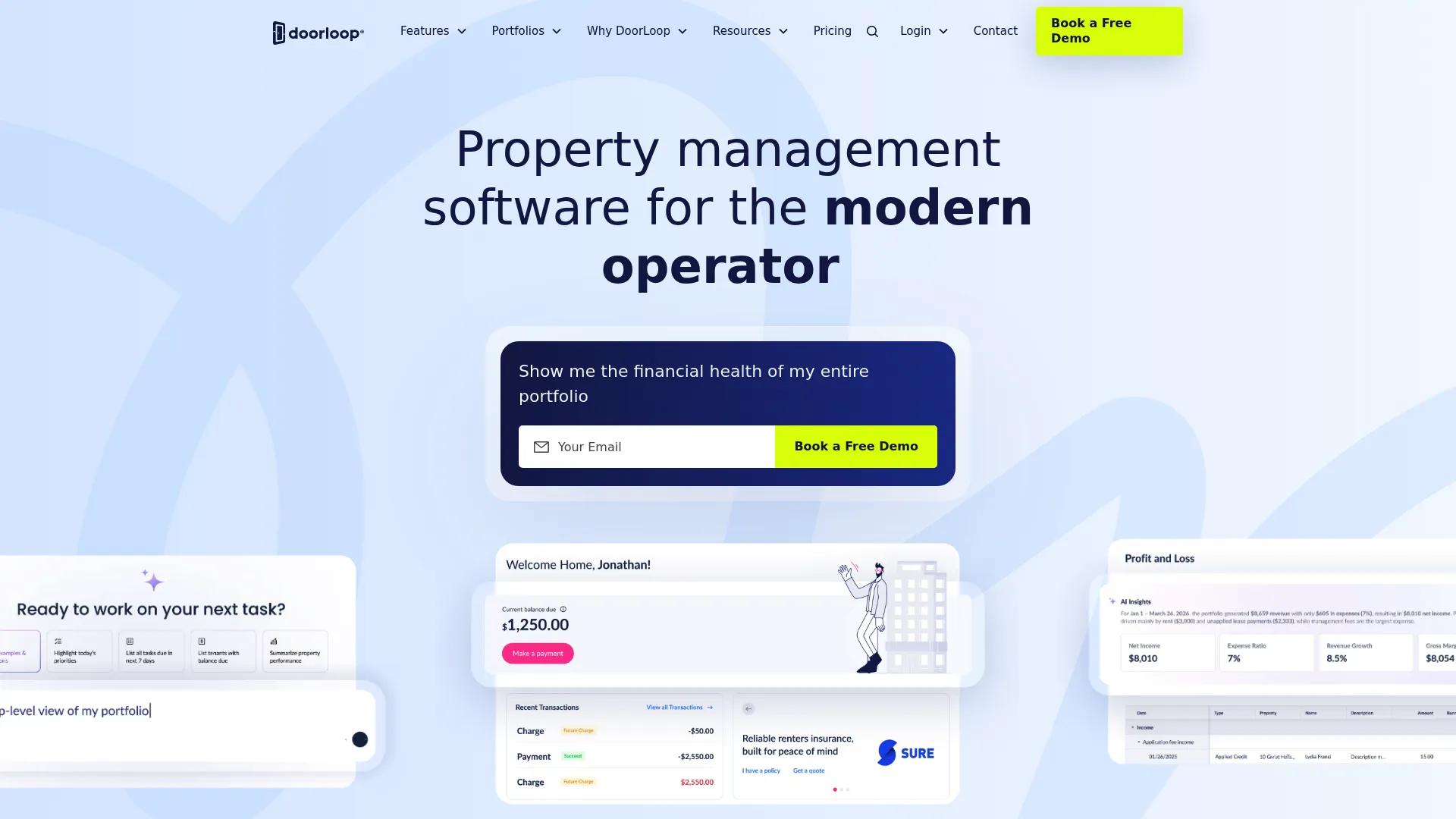
DoorLoop is cloud-based property management software for landlords and managers who want an all-in-one rental operations platform that stays easy to use. It covers rent collection, tenant screening, maintenance tracking, and tenant communication in one system. The pitch is a full feature set without an intimidating interface.
Best for: Landlords and property managers who need an all-in-one rental operations platform.
Key features
- Rent collection
- Tenant screening
- Maintenance tracking
- Lease management
- Tenant communication and portals
Why choose DoorLoop: Choose DoorLoop when you want broad operational coverage but do not want to trade ease of use for it. It fits teams that value a simpler system without giving up rent collection software, screening, and maintenance in one place. The per-unit starting structure keeps it approachable for growing portfolios.
DoorLoop pricing: DoorLoop offers three plans: Starter at $69/month, Premium at $139/month, and Pro at $199/month. The starting price covers the first 10 units, with monthly or annual billing.
7. Yardi Breeze
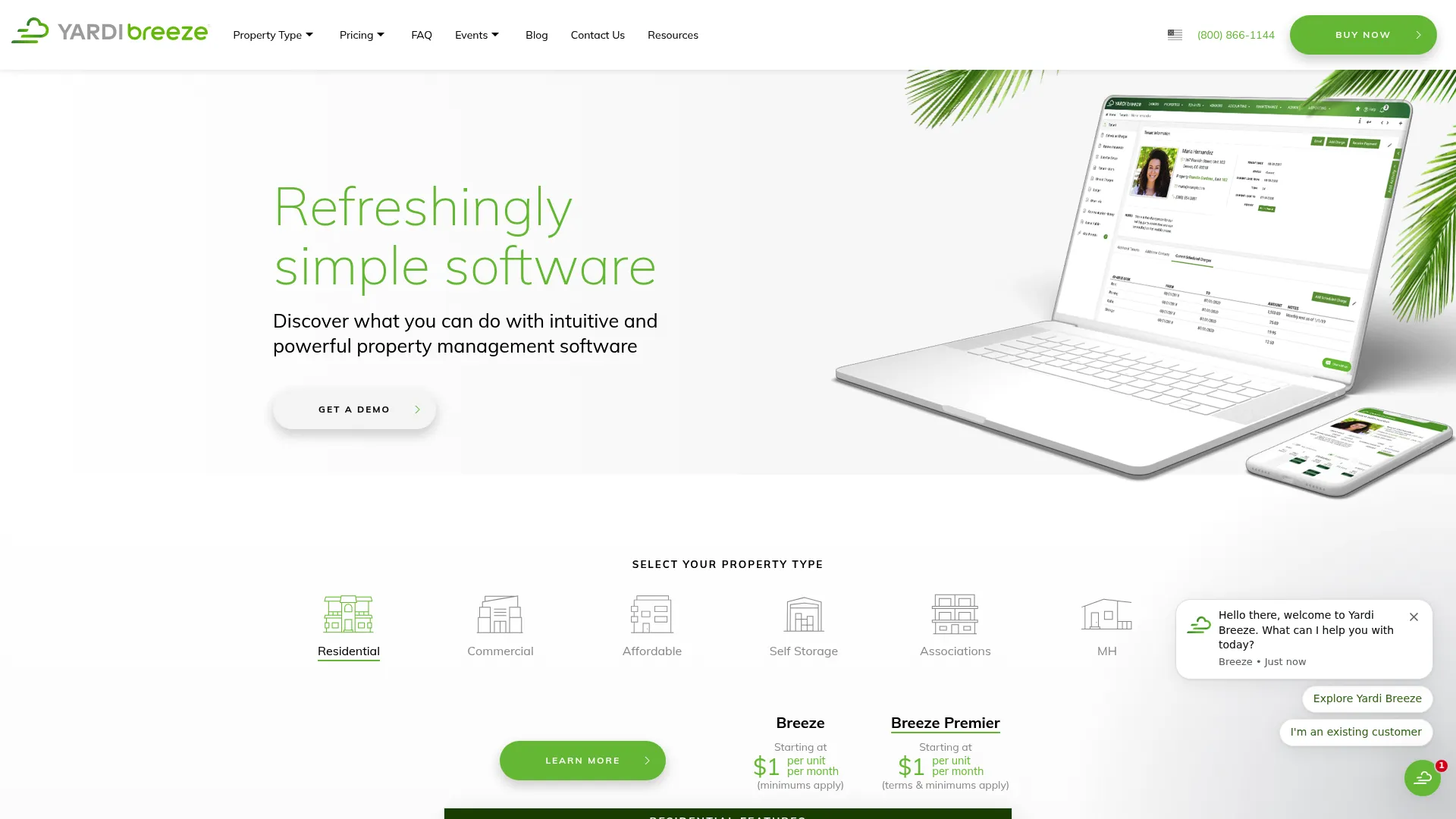
Yardi Breeze is cloud-based property management software for residential, commercial, affordable housing, self storage, HOA and condo, and manufactured housing portfolios. It comes from an established property management vendor and covers accounting, rent collection, maintenance, and owner tools. Operators who want a mature platform with per-unit pricing gravitate here.
Best for: Small to mid-sized property managers who need an all-in-one cloud platform.
Key features
- Property management
- Accounting
- Rent collection
- Maintenance
- Owner tools
Why choose Yardi Breeze: Choose Yardi Breeze when you want the backing of an established platform and manage across property types that vary in structure. The per-unit model scales with your portfolio, and the accounting depth suits operators who take reconciliation seriously. It fits small to mid-sized managers who want room to grow.
Yardi Breeze pricing: Yardi Breeze and Breeze Premier start at $1 per unit per month based on an annual agreement, with property-type minimums. Commercial pricing starts at $2 per unit per month, and some property types require contacting the vendor for pricing.
Considerations
Before you commit, run any shortlist through these checks. The right choice is the one that matches your actual workflows, not the one with the longest feature list.
Workflow coverage
Map the tasks you run every week: screening, leases, rent, maintenance, messaging. Then confirm the platform covers all of them, not just the ones in the marketing headline. A tool that nails rent collection but forces screening into a separate app recreates the fragmentation you are trying to escape.
Accounting depth
If you manage more than a handful of units, accounting and reconciliation stop being optional. Check for owner statements, bank reconciliation, and tax-ready reporting. Buildium and Yardi Breeze lean into this; lighter landlord software may keep it basic, which is fine at small scale and painful at larger scale.
Tenant experience
Tenants judge you by the portal. Look at how easy online rent collection, payment history, and maintenance requests are from their side. A clean tenant portal reduces the messages you field and the late payments you chase.
Integrations
Check what the platform connects to: accounting exports, screening providers, listing syndication, and payment processors. The fewer manual handoffs between systems, the fewer errors creep in. Confirm the integrations you depend on exist before you migrate.
Pricing and scale
Property management software pricing shifts with units, features, and growth. Per-unit models like Avail and Yardi Breeze scale smoothly. Flat-tier models like Buildium and DoorLoop are predictable but jump at tier boundaries. Quote-based pricing like AppFolio suits larger portfolios. Model your cost at your next milestone, not just today.
Conclusion
There is no single best tenant management software. There is the one that fits how you work.
If you run a larger portfolio and need automation with deep accounting, AppFolio is built for that scale. For a broad all-in-one that serves landlords and tenants alike, TenantCloud covers the lifecycle without enterprise pricing. Independent landlords who want to start today should look at TurboTenant or Avail, both free to begin. Teams that live in their books will value Buildium and Yardi Breeze for accounting and reconciliation. DoorLoop sits in the middle for operators who want full coverage with an easy interface.
Shortlist two, run your real workflows through their free trials, and pick the one that removes the most manual work. The best rental property management software is the one you stop noticing because it just runs.
If you build software and want prospects to experience it before they buy, you can create interactive demos with Guideflow that let buyers explore your product through guided walkthroughs, self-serve sandboxes, and branded demo centers, across landing pages, sales follow-ups, onboarding, and support. Teams use it to capture a product flow in clicks, personalize it per prospect, share it anywhere, and analyze engagement in real time.
Start your journey with Guideflow today!
FAQs
Tenant management software helps landlords and property managers run tenant-facing workflows in one system: screening, leasing, rent collection, maintenance, and accounting. It replaces the mix of spreadsheets, email, and single-purpose apps that most landlords start with. As your portfolio grows, that consolidation is what keeps operations from breaking.
At minimum, look for tenant screening, lease management software with e-signing, rent collection software with autopay and reminders, maintenance request tracking, and accounting and reconciliation. Listing syndication and a tenant portal round out a complete platform. The best tools connect these so one action, like a signed lease, updates the rest automatically.
Mostly yes. Tenant management software is the tenant-facing slice of broader property management software, and most vendors use the terms interchangeably. If a tool markets itself as rental management software or property management programs, expect the same core workflows. Judge it by coverage, not by the label on the homepage.
Property management software pricing ranges from free to hundreds of dollars a month. Landlord software like TurboTenant and Avail start free, TenantCloud starts at $25/mo, Buildium at $62/mo, and DoorLoop at $69/mo. Per-unit models like Yardi Breeze start around $1 per unit per month, while AppFolio uses quote-based pricing for larger operations.
Small landlords usually do best with free-to-start tools. TurboTenant and Avail both cover screening, leasing, rent collection, and maintenance at no cost to begin, which suits a handful of units. TenantCloud is a strong next step when you want accounting and multi-role support without moving to enterprise pricing.
Every platform on this list handles both, so the differentiator is fit. For free rent collection software and tenant screening software in one place, TurboTenant and Avail are strong starting points. For deeper workflows tied to accounting, TenantCloud, Buildium, and DoorLoop offer more structure as you scale.
Most full platforms do, though the depth varies. Buildium and Yardi Breeze offer strong accounting and reconciliation, including owner statements and tax-ready reports. Lighter landlord software keeps accounting basic, which works at small scale but can feel thin once you manage many units.
Confirm the new platform covers every workflow you run today, check that it integrates with your accounting and payment tools, and review property management reviews for migration friction. Test your real data in a free trial before you commit. The goal is fewer manual handoffs, not a new set of workarounds.