Your performance staff exports GPS data after Tuesday's session. Your video analyst tags 40 clips from the weekend match. Your coach walks into Wednesday's meeting and still makes decisions from gut feel because nobody had time to connect those two inputs into a single clear picture.
The bottleneck is not data collection. It is turning the right data into a repeatable decision workflow that coaches can act on every week without a specialist present to interpret every number.
Sports analytics software accounted for over 60% of global sports analytics market revenue in 2025, according to Grand View Research (2026). Yet most programs still operate with disconnected tools, inconsistent collection, and reports that take longer to produce than they take to read.
This guide gives you a practical shortlist of 10 sports performance analytics software tools, clear category boundaries, and a buying framework built for operators who want one fewer decision to make on Monday morning.
What's inside
This guide is for performance directors, coaching staffs, sports scientists, video analysts, and executives evaluating a sports technology stack. It is also useful for SaaS founders and GTM leaders selling into sports organizations who need to understand how buying decisions get made.
Items were selected based on:
- Category fit: Does the tool solve a specific, well-defined performance job?
- Workflow clarity: Can a non-specialist act on the output without a dedicated analyst in the room?
- Market presence: Does the vendor have a documented track record across professional, collegiate, or academy programs?
- Pricing transparency: Is enough information available to evaluate total operating cost?
TL;DR
- Best for broad performance stack: Catapult covers GPS monitoring, video analysis, and athlete workflows in one platform
- Best for video workflows: Hudl for coaching staffs where film review drives the purchase decision
- Best for athlete management: Kitman Labs for organizations connecting performance, medical, and availability data
- Best for GPS tracking: STATSports for teams focused on physical output and training load monitoring
- Best for individual football data: Playermaker for foot-mounted movement tracking in soccer programs
- Best for automated video capture: Spiideo for programs that need cloud-based recording at scale without a production crew
What is sports performance analytics software?
Sports performance analytics software collects, organizes, and analyzes athlete, team, training, and game data so coaches and performance staff can improve preparation, tactical decisions, player development, and workload management.
What data does sports performance analytics software use?
The category spans several distinct data types:
- Video and tagged events: Match footage, practice recordings, clip collections, and annotated tactical events
- GPS and sensor data: Distance, speed, acceleration, high-speed running, and sprint counts from wearable devices
- Training load: Session volume, intensity, and cumulative workload trends across a training block
- Wellness and medical records: Athlete readiness, sleep, recovery status, injury history, and availability
- Game statistics and tactical patterns: Event data, heat maps, positional sequences, and opponent analysis
Core capabilities to look for
- Video capture, tagging, and clip sharing
- Athlete and team performance dashboards
- GPS and wearable data ingestion
- Workload and recovery monitoring
- Tactical and opponent analysis
- Predictive alerts and anomaly detection
- Role-based reporting for coaches, analysts, and medical staff
- Data export and API access for integration with other systems
What sports performance analytics software does not replace
Software supports coaching judgment. It cannot compensate for inconsistent data collection, unclear performance definitions, or a staff that does not agree on how to act on a weekly report. A 2025 survey published in the journal Data analytics in the football industry found that 76% of surveyed football organizations used tracking data for performance analysis. Adoption is broad, but impact still depends on whether the staff has a defined process for what happens after the data comes in.
The product is only as good as the workflow behind it.
When to use sports performance analytics software
Turn video review into a structured coaching workflow
Film is available for most programs, but clips, feedback loops, and player learning often remain scattered across devices and group chats. Video analysis software becomes valuable when the coaching staff commits to a structured review cadence: Pre-match scouting, halftime corrections, post-match feedback sessions, and individual player development meetings. The tool only saves time if the process already exists in rough form.
Monitor workload before availability becomes a problem
GPS and sensor data help physical preparation teams understand changes in distance, high-speed running, acceleration exposure, and session intensity across a training block. The signal matters most when you track trends over time, not single sessions. Teams that define internal thresholds and review them weekly get more from wearable data than teams that collect it and never open the dashboard.
Connect coaching, performance, and medical decisions
When match availability data, training load records, and medical status live in separate spreadsheets or systems, departments make decisions without full context. Athlete management platforms create a shared record so a return-to-play decision involves the same data the strength coach sees and the head coach sees. The integration is the value, not any single number.
Sports performance analytics software comparison
No single platform automatically fits every organization. The shortlist below spans broad performance stacks, specialist tracking systems, athlete management platforms, and automated video tools. Pricing for most enterprise sports technology is quote-based; contact each vendor for a current cost model that reflects your sport, team size, and hardware requirements.
| # | Product | Best for | Key use case | Pricing | G2 rating |
|---|---|---|---|---|---|
| 1 | Catapult | Elite teams needing a connected performance stack | GPS monitoring, video analysis, and athlete workflows | Contact sales | 4.3/5 |
| 2 | Hudl | Coaching staffs centered on film review | Video analysis, feedback, and scouting | From $1,500/program/year | 4.4/5 |
| 3 | Kitman Labs | Organizations connecting performance and medical ops | Athlete management and availability planning | Contact sales | 4.5/5 |
| 4 | KINEXON Sports | Teams needing high-precision location intelligence | LPS, athlete tracking, and movement data | Contact sales | N/A |
| 5 | STATSports | Teams focused on GPS-based physical performance | Training load, sprint, and intensity monitoring | From $320 one-off | N/A |
| 6 | Spiideo | Programs needing automated video capture at scale | Recording, analysis, and remote video review | Contact sales | N/A |
| 7 | Playermaker | Football programs tracking individual movement | Foot-mounted wearable data and player development | From $159 | N/A |
| 8 | Teamworks AMS | Multi-department performance organizations | Athlete management and staff coordination | Contact sales | 4.2/5 |
| 9 | Genius Sports | Organizations needing enterprise data infrastructure | AI-supported video and competition intelligence | Contact sales | 4.5/5 |
| 10 | Sportlogiq | Teams using computer vision for tactical analysis | Automated game analysis and scouting insights | Contact sales | N/A |
Best 10 sports performance analytics software tools for 2026
1. Catapult
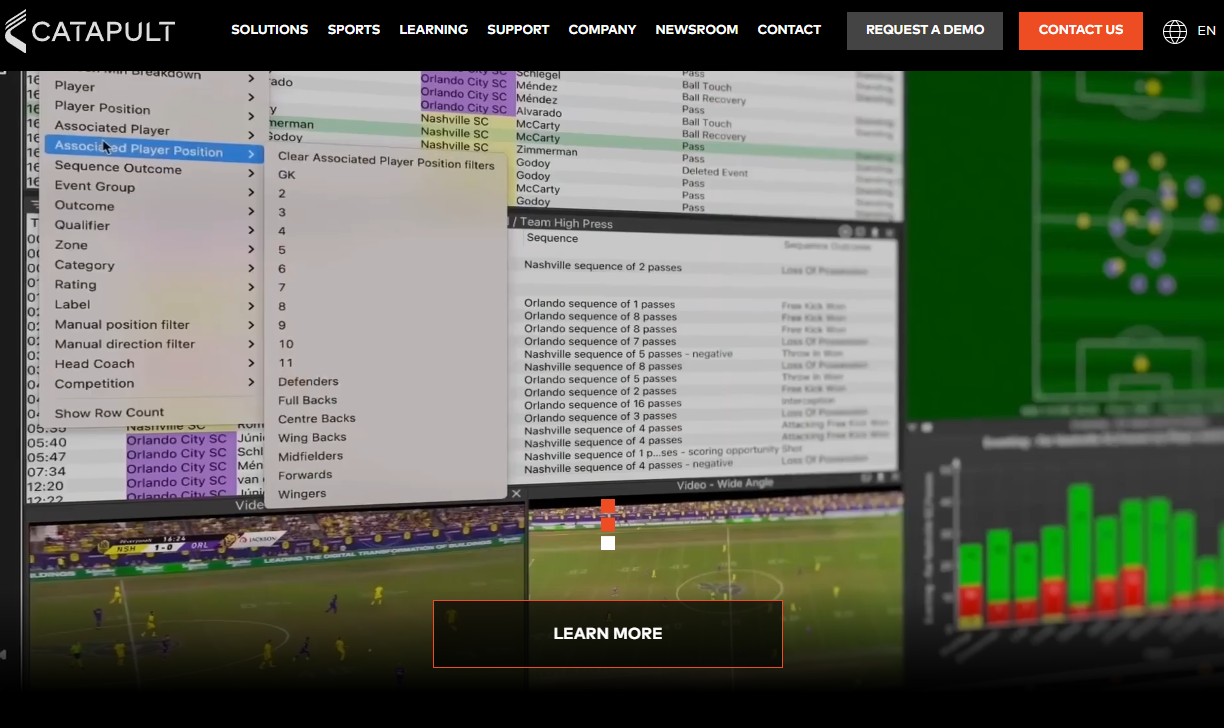
Catapult is a sports technology platform that spans GPS and inertial athlete monitoring, video analysis, weight-room performance, and athlete management workflows. Used across professional, collegiate, and national team programs, it is designed for organizations that want performance data, video context, and physical preparation tools operating from a connected system rather than separate point tools.
The platform combines GPS and local positioning hardware with software for workload management, injury risk monitoring, return-to-play tracking, and velocity-based training in the weight room. Video analysis sits alongside athlete monitoring rather than operating as a standalone module, which makes it relevant for staff who need to connect physical output data with tactical context.
Best for: Professional and high-performance programs with sports science staff and formal reporting routines who want integrated athlete monitoring and video under one platform.
Key features
- GPS, LPS, heart-rate, and inertial athlete monitoring
- Workload, injury-risk, and return-to-play insights
- Integrated athlete data and video analysis
- Weight-room programming and velocity-based training
Why choose Catapult: It fits organizations that need physical preparation data and video analysis to talk to each other, particularly when a sports scientist or analyst owns the reporting process and can act on combined outputs.
Catapult pricing: Catapult directs all pricing inquiries to its sales team, with costs varying by product modules, hardware, team size, and sport. Contact sales for a quote that reflects your organization's full operating model.
Catapult holds a 4.3/5 rating on G2.
2. Hudl
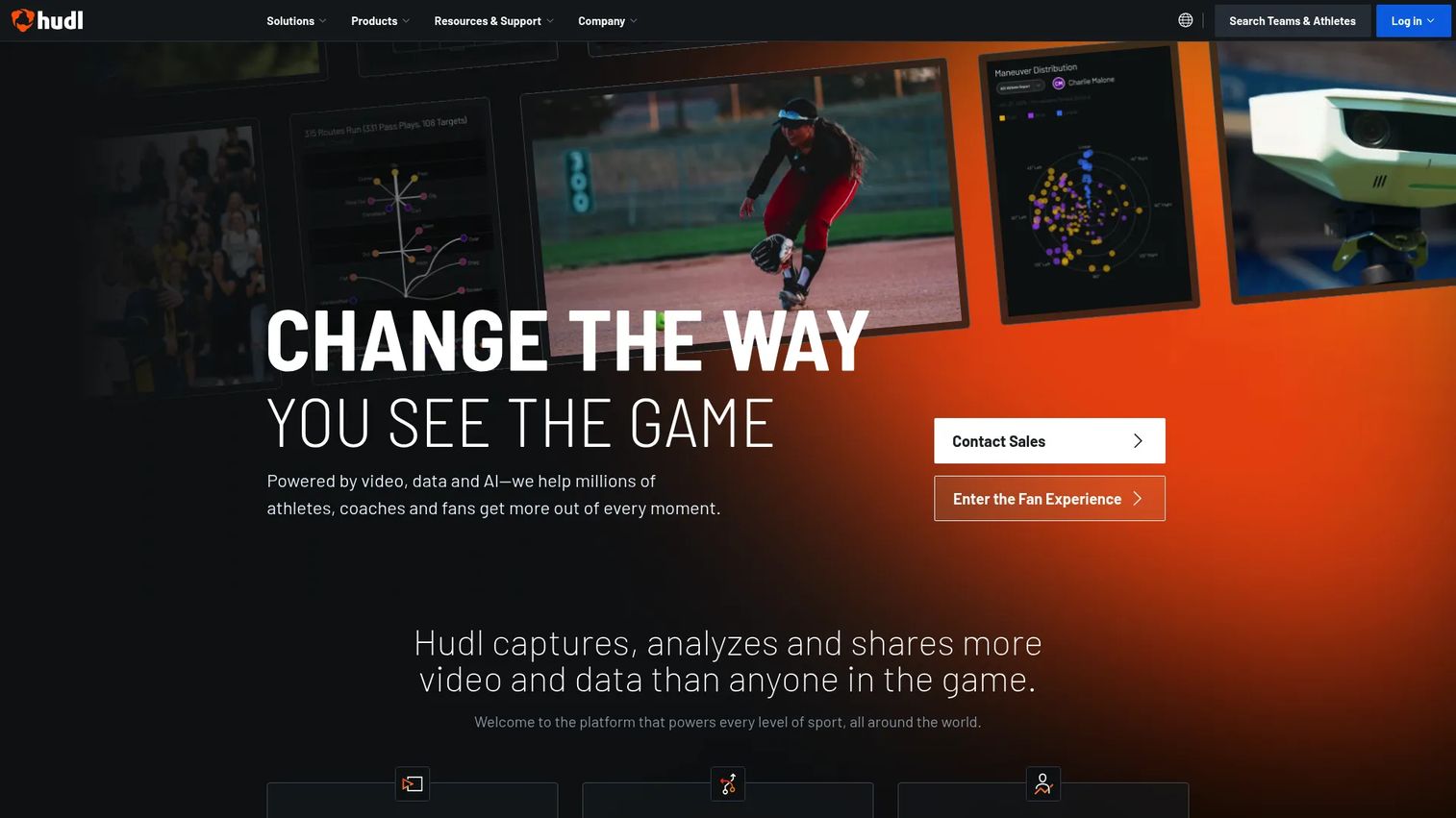
Hudl is a sports technology platform built around video capture, analysis, sharing, and athlete feedback. It supports game and practice recording, clip tagging, playlist creation, presentation tools, scouting, and recruiting workflows. Widely adopted across high school, collegiate, academy, and professional environments, it is the default video platform for many coaching staffs.
Beyond film review, Hudl includes automated reports, statistics linked to video, and athlete performance tracking. The fan engagement side of the platform (livestreams, highlights, and ticketing) is separate from the coaching workflow and does not affect the core analysis offering.
Best for: Teams where film review is the most visible coaching workflow and where adoption across the full coaching staff matters more than a specialist athlete monitoring stack.
Key features
- AI-powered video capture, recording, and sharing
- Clip tagging, playlists, and annotated presentations
- Automated reports and video-linked statistics
- Scouting, recruiting, and athlete feedback tools
Why choose Hudl: Choose it when the primary bottleneck is getting coaches and players to review film consistently, not when the priority is GPS workload analysis. Teams with advanced wearable requirements typically need a monitoring system alongside it.
Hudl pricing: High-school program subscriptions start at $1,500 per program per year for the Silver+ plan, $2,500 for Gold+, and $4,000 for Platinum+. Athletic department packages and professional pricing require contacting sales.
Hudl holds a 4.4/5 rating on G2.
3. Kitman Labs
Kitman Labs provides iP: Intelligence Platform, described as a unified operating system for sports organizations. It centralizes athlete performance, medical, development, and operational data so departments work from a shared record rather than disconnected spreadsheets or siloed software.
The platform covers training load management, injury lifecycle tracking, return-to-play planning, session participation, and wellness inputs. Dashboards are self-service, and the platform supports more than 150 third-party integrations, making it relevant for organizations that already use specialist GPS or video tools and need a central system to aggregate the outputs.
Best for: Multi-team organizations with performance, medical, and operations staff who need shared athlete data rather than a single-department monitoring tool.
Key features
- Centralized performance, wellness, and medical records
- Training, session, workload, and participation tracking
- Injury lifecycle, rehabilitation, and availability monitoring
- Self-service dashboards and role-based reporting
- 150+ third-party integrations
Why choose Kitman Labs: It fits organizations where the challenge is coordination across departments, not just data collection. The platform earns its place when a return-to-play decision requires input from the medical team, strength coach, and head coach simultaneously.
Kitman Labs pricing: Pricing is not displayed and requires contacting the company directly. API pricing varies by enabled solutions and access scope.
Kitman Labs holds a 4.5/5 rating on G2 based on six reviews.
4. KINEXON Sports
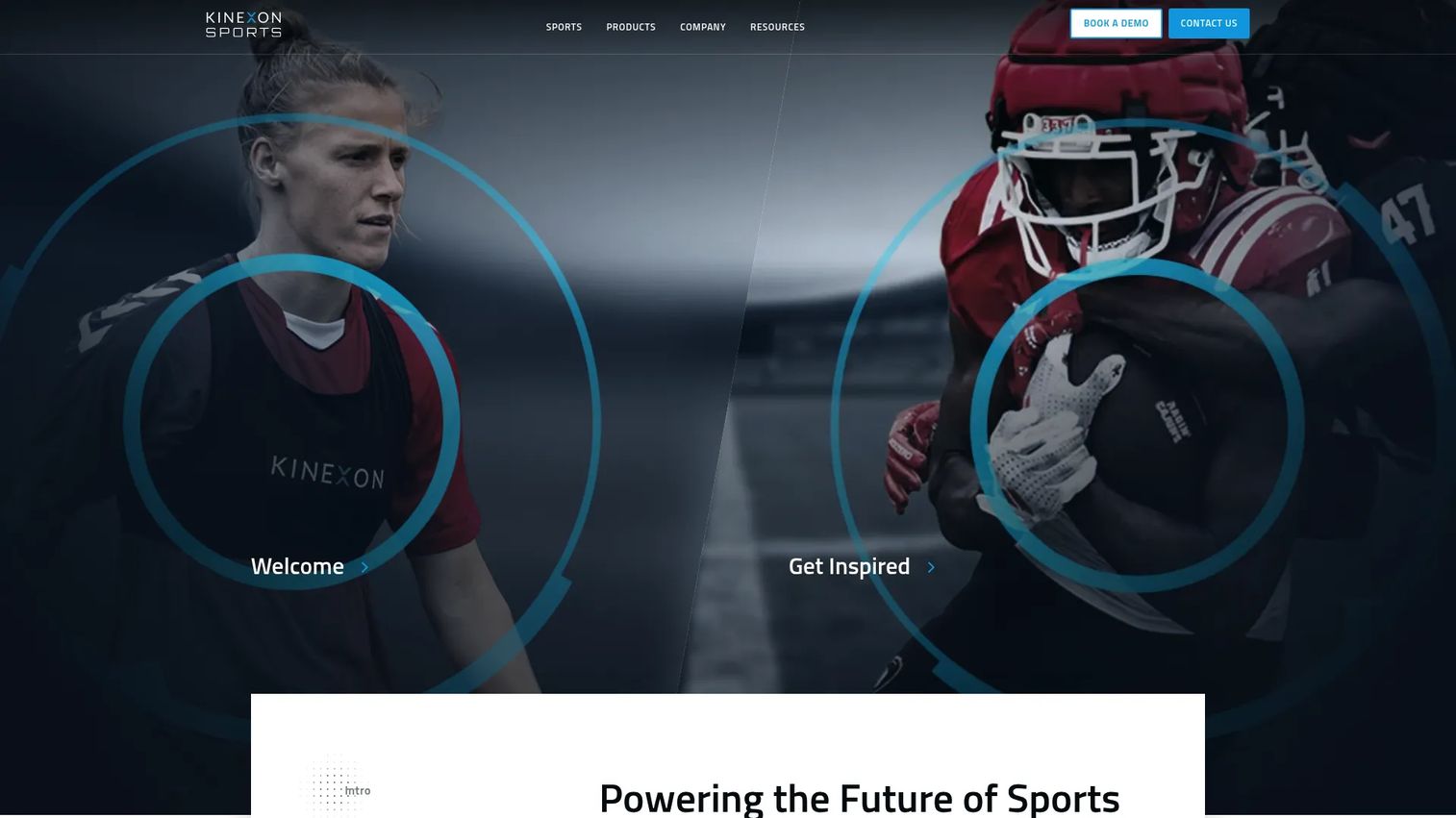
KINEXON Sports provides real-time player and ball tracking through local positioning systems, wearable sensors, and computer vision. The platform is built for sports where spatial precision and live data feedback matter most, including basketball, handball, hockey, and American football. Indoor venues without GPS signal are a core use case.
Beyond athlete tracking, KINEXON supports semi-automated offside and touch detection for officiating, and real-time data feeds for broadcast and fan engagement. The performance analytics side covers workload monitoring, movement patterns, player spacing, and training intensity feedback delivered during the session.
Best for: Professional teams and leagues that need precise location intelligence for training design, tactical work, and live performance monitoring, particularly in indoor environments or sports with dense positional requirements.
Key features
- Real-time player and ball tracking via LPS
- Wearable sensor data and movement metrics
- Automated tracking through COMPETE Vision
- Semi-automated officiating tools (offside, touch detection)
- Live fan engagement and broadcast data feeds
Why choose KINEXON Sports: Choose it when GPS accuracy is insufficient for the sport or venue, and when real-time positional data needs to inform training decisions during the session rather than only after it.
KINEXON Sports pricing: KINEXON states that pricing varies by team size, hardware requirements, and additional services. Contact sales for a tailored offer.
5. STATSports
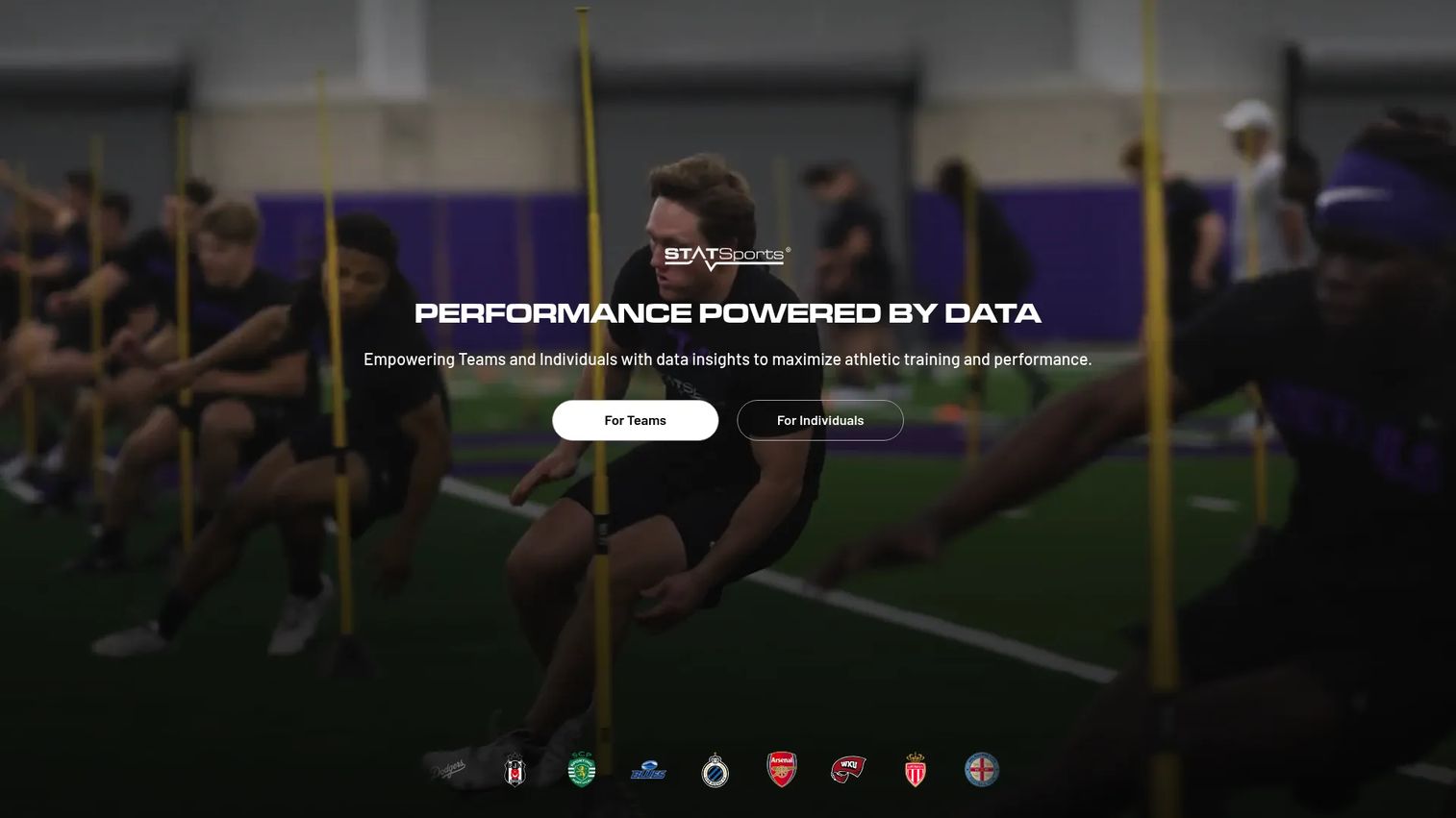
STATSports provides GPS-based athlete monitoring focused on physical output measurement. The wearable devices track 24 performance metrics including distance, speed, acceleration, high-speed running, and sprint counts. Team dashboards display workload trends, player comparison views, and development tracking across a training block.
The platform also includes training content covering drills, masterclasses, recovery guidance, strength programming, and nutrition resources. STATSports serves both individual athletes and team programs, though team-level workflows require direct engagement with the sales team for configuration and pricing.
Best for: Physical preparation teams that want reliable GPS workload data without committing to a larger athlete management platform first, and individual athletes who want to self-monitor training load.
Key features
- GPS tracking with 24 performance metrics
- Team dashboards for workload and player comparison
- Sprint, speed, and high-intensity running reports
- Training content including 200+ drills and masterclasses
Why choose STATSports: A focused option when physical output reporting is the most urgent analytics need. It does not carry the cross-department athlete management scope of platforms like Kitman Labs, which is appropriate for programs that want to start with one clear data source.
STATSports pricing: Individual Academy packages start at $320 as a one-off purchase (Academy), $340 (Academy Pro), and $360 (Academy Elite), each including the GPS tracker, app access, and performance vest. Team solution pricing requires a demo request.
6. Spiideo
Spiideo provides cloud-based, AI-powered sports video tools covering automated capture, analysis, live broadcasting, and officiating replay. The AutoFollow system captures games and practices without a camera operator, uploading footage directly to a cloud library where coaching staff can access recordings, tag clips, build playlists, and share presentations remotely.
The platform separates into distinct product lines: Spiideo Perform handles coaching and analysis workflows, Spiideo Play manages broadcasting and streaming, and Spiideo Replay supports officiating. Each addresses a different operational job, making it relevant for clubs, leagues, federations, and media rights holders with distinct video production and review requirements.
Best for: Programs that need to make video capture and review more repeatable across multiple locations, squads, or sessions without a dedicated production crew on site.
Key features
- AI-powered automated video capture with AutoFollow
- Cloud video library with tagging, clip collections, and presentations
- Data Explorer for video-linked performance analysis
- Automated live broadcasting and instant replay tools
- Multi-angle officiating review workflows
Why choose Spiideo: It is a strong fit when the operational constraint is fast, consistent access to match and practice footage across a distributed coaching staff. Organizations that also need GPS workload data will require a separate monitoring system.
Spiideo pricing: Spiideo documents subscription tiers (League Exchange, LITE, Pro, and Pro Plus for Perform; LITE, PRO, and Media for Play) but does not display prices. Contact sales for current rates.
7. Playermaker
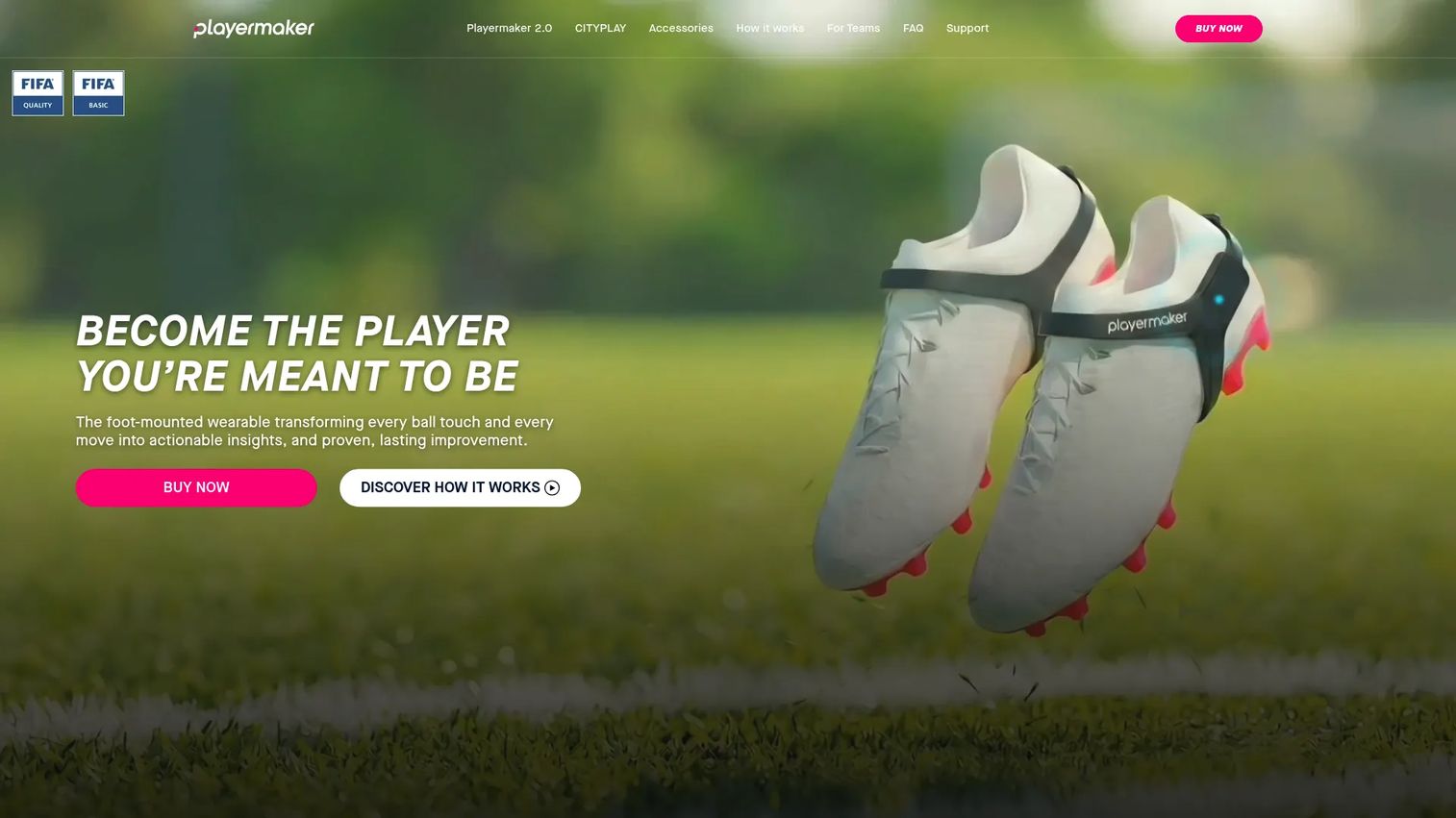
Playermaker builds shoe-mounted AI sensors for soccer players that capture technical and physical performance data at the foot level. The system tracks left and right foot activity separately, measuring movement mechanics, technical events, game-day output, and practice load. A coach dashboard aggregates individual player data for comparison and development tracking.
The foot-mounted approach is specific to soccer. It captures technical context, such as ball contacts and foot movement patterns, that GPS vests worn on the torso cannot measure. That distinction matters for academies and development programs where individual player technique is part of the coaching conversation.
Best for: Soccer academies, clubs, and development programs that want individual player movement data designed around the technical demands of the sport rather than broad physical workload metrics.
Key features
- Real-time foot-level motion tracking
- Left/right foot analysis and technical metrics
- Game-day and training session tracking
- Personalized app insights and individual development goals
- Coach dashboard for player comparison
Why choose Playermaker: Use it when the coaching staff needs individual technical data connected to player development conversations, not when the priority is team-level GPS workload trends or medical availability management.
Playermaker pricing: The Playermaker 2.0 starts at $159 (discounted from $199) as a one-time purchase, including sensors, straps, charging case, and 12 months of performance tracking. The CITYPLAY bundle is $229. Annual membership renews at $149 per year. Team packages are available by contacting sales.
8. Teamworks AMS
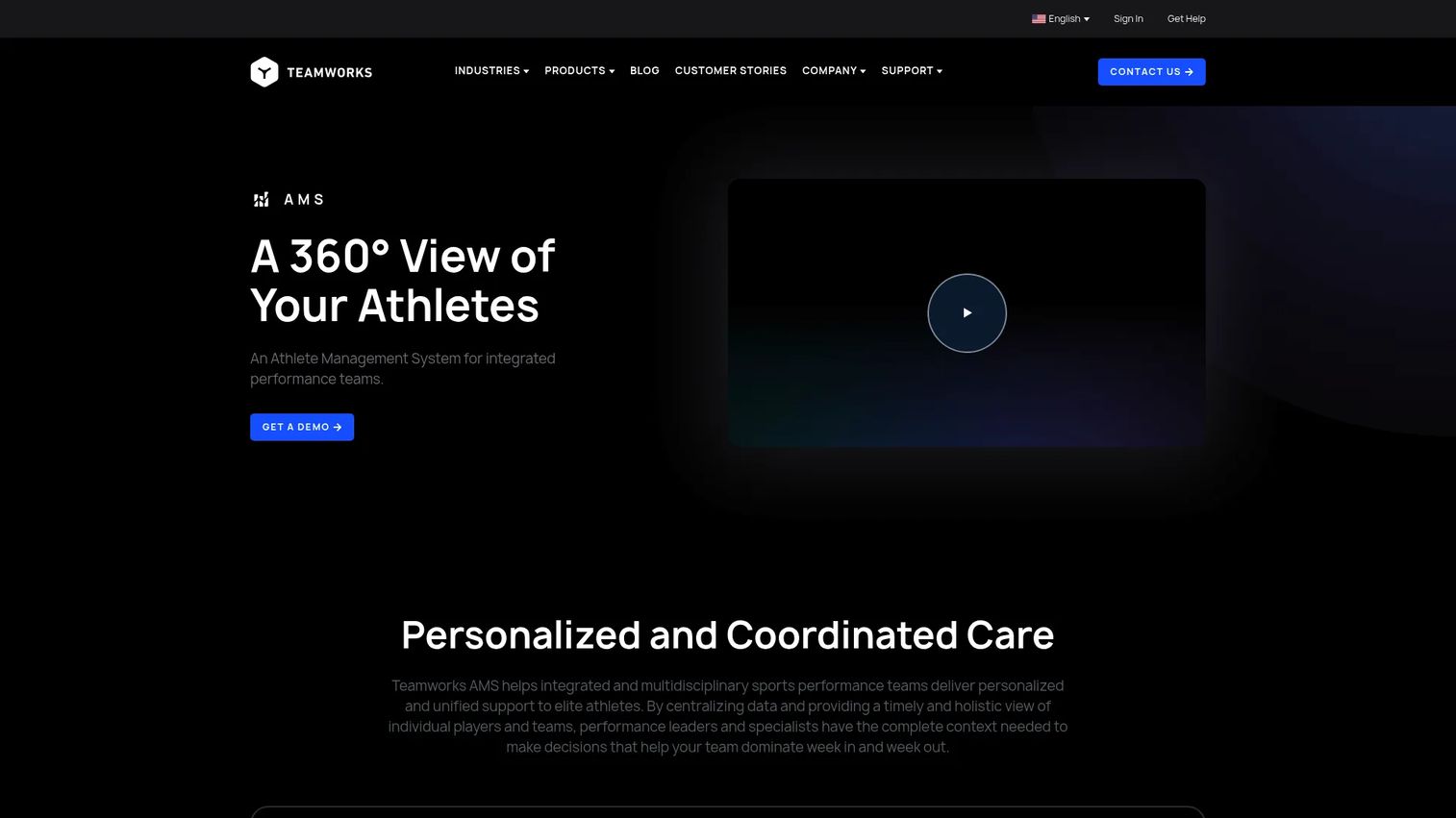
Teamworks AMS is an athlete management system designed for integrated sports performance teams. It centralizes performance data, health records, medical workflows, wellness questionnaires, training schedules, and staff communication in a single platform. More than 100 third-party integrations and an R analytics package extend the platform's analytical depth.
The system is built for organizations with multiple internal departments, including strength and conditioning, sports medicine, nutrition, and coaching, that need a shared operating layer rather than a collection of siloed tools. Custom dashboards, forms, alerts, and workflows can be configured without engineering involvement.
Best for: Elite sports organizations managing integrated athlete data across performance, medical, and operations departments, including collegiate athletic programs with multiple sports.
Key features
- Centralized athlete performance, health, and medical data
- Custom dashboards, reports, forms, and automated alerts
- Wellness questionnaires and training plan coordination
- Staff communication and scheduling tools
- 100+ integrations and API access
Why choose Teamworks AMS: Evaluate it as process infrastructure rather than a standalone analytics product. The return on spend depends on how consistently departments adopt the shared record. Organizations where data still lives in separate department silos are the primary fit.
Teamworks AMS pricing: The official AMS page does not display plan prices and directs visitors to request a demo. Contact sales for current pricing.
Teamworks holds a 4.2/5 rating on G2 across its broader product profile.
9. Genius Sports
Genius Sports provides sports data, AI analytics, performance tools, fan engagement technology, and sportsbook infrastructure. The performance side covers AI-powered sports video analysis, automated data capture, mesh tracking, and multi-angle camera systems. The broader platform also includes semi-automated officiating technology, interactive live betting experiences, and broadcast augmentation.
For performance organizations, the relevant capabilities are the AI video analysis pipeline and the data capture infrastructure, which can serve leagues, federations, and collegiate programs that need large-scale automated data collection alongside coaching and analysis workflows.
Best for: Sports leagues, federations, and large collegiate programs that need enterprise-scale data infrastructure, competition intelligence, and video analysis in an integrated stack.
Key features
- AI-powered performance analytics and video analysis
- Automated sports data capture and mesh tracking
- Semi-automated offside technology for officiating
- Interactive fan engagement and broadcast augmentation
- Sports advertising and sportsbook data infrastructure
Why choose Genius Sports: Consider it when performance analysis connects to competition administration, live statistics, or large-scale data capture rather than as a standalone coaching tool. Smaller programs should validate whether the platform's breadth matches their staff capacity before committing.
Genius Sports pricing: Contact sales for pricing. No public plan structure or pricing page was found.
Genius Sports holds a 4.5/5 rating on G2 based on 16 reviews.
10. Sportlogiq
Sportlogiq uses AI computer vision and machine learning to generate tracking data and analytics from sports video. The platform is active in hockey and American football, with products covering coaching analysis, player evaluation, scouting, automated highlights, heatmaps, and physical and contextual performance metrics. The Sportlogiq API makes raw tracking and analytics data available for integration into third-party systems.
The computer vision approach means insights are generated from existing video without the need for additional wearable hardware. Teams that already capture game footage can access automated event detection, player tracking, and tactical pattern data without a manual coding team building those outputs.
Best for: Professional and elite organizations in hockey and football that want to expand tactical analysis and scouting capacity using video they already capture, without relying on manual tagging alone.
Key features
- AI computer vision and machine learning for video analysis
- Automated event detection and player tracking
- Tactical pattern insights and physical metrics
- Player evaluation and opponent scouting tools
- Sportlogiq API for data integration and custom workflows
Why choose Sportlogiq: It fits organizations with meaningful video volume and an established coaching review cadence who want more automated insight from that footage. Test whether generated outputs match your coaching staff's tactical model before scaling the workflow.
Sportlogiq pricing: Fees are specified in customer order forms. Contact sales for current pricing and packaging.
Considerations when choosing sports performance analytics software
Start with the decision you need to improve
Define the specific coaching or operations decision before evaluating any platform. Is it player availability for Thursday training? Workload planning for a congested fixture schedule? Tactical preparation for an upcoming opponent? The clearest signal of a useful purchase is whether you can name one weekly decision the tool will improve. If you cannot name it, the category is not the right starting point.
Match the tool to your data collection reality
Assess whether you have reliable video infrastructure, wearable hardware, trained analysts, and consistent athlete records before committing to a platform that requires all four. A data-rich platform cannot repair inconsistent collection. Start with the data source you already collect reliably, then expand.
Check whether staff can act on the output
Ask each vendor to walk through the path from raw data to a coaching action. A dashboard that requires a specialist to interpret every report before Monday's meeting creates dependency rather than capability. Smaller programs need platforms that produce outputs coaches can read directly.
Evaluate integrations and data ownership
Confirm how the platform ingests data from GPS hardware, video systems, wellness tools, and scheduling software. Ask about data export formats, API access, historical data portability after contract end, and permission controls. Ownership of your athlete data is a procurement question, not a product question.
Price the full operating model
The subscription is only one cost component. Hardware, setup, staff training, camera deployment, data migration, and analyst time all add to the annual figure. Request a total cost of ownership estimate before comparing line items from different vendors.
Which sports performance analytics software should you choose?
Choose Catapult if you need a broad high-performance stack
Catapult suits organizations combining GPS monitoring, video analysis, and performance operations. The platform's value compounds when a sports scientist, video analyst, and strength coach work from connected data rather than parallel systems. Adoption requires defined reporting ownership across coaching and performance staff before purchase.
Choose Hudl or Spiideo if video review is the bottleneck
Hudl fits programs where coaches need a structured film review workflow and players need to receive clip-based feedback between sessions. Spiideo is the stronger option when the constraint is automated capture across multiple locations or squads, and when remote coaching staff need cloud access to footage without a production crew. Both tools address video; the difference is whether the priority is tagging and feedback or capture and distribution.
Choose Kitman Labs or Teamworks AMS if data fragmentation is the problem
Athlete management systems become valuable when medical, performance, wellness, and coaching operations departments need shared context around the same athlete. If your current situation has a doctor updating one spreadsheet and a strength coach using another, a shared platform resolves that before it affects availability decisions. Evaluate both Kitman Labs and Teamworks AMS based on which departments will adopt the system and what integrations your existing GPS and video tools require.
Choose STATSports, KINEXON Sports, or Playermaker if movement data is the priority
STATSports is the most accessible entry point for GPS-based workload monitoring, particularly for programs that want to start with a focused hardware-and-dashboard solution. KINEXON Sports fits indoor sports and environments where GPS signal is unreliable and precise positional intelligence during the session is the operational need. Playermaker addresses a different question: Individual foot-level technical data for soccer players, which is complementary to, not a substitute for, team-level GPS workload tracking.
Choose Genius Sports or Sportlogiq if AI-driven analysis needs to scale
These platforms suit organizations with substantial video volume, existing analyst capacity, and a defined process for incorporating automated insights into tactical preparation or competition administration. The technology is mature; the organizational readiness requirement is the higher bar.
Conclusion
The sports performance analytics market is well-developed, with platforms ranging from individual GPS trackers to enterprise data infrastructure covering entire competitions. The category that current SERP results miss is the selection framework: What does your organization actually need to improve one repeatable decision?
Catapult covers the broadest performance stack for organizations with dedicated sports science staff. Hudl and Spiideo address video workflows at different scales. Kitman Labs and Teamworks AMS solve the athlete management coordination problem. STATSports, KINEXON Sports, and Playermaker each address a distinct movement tracking need. Genius Sports and Sportlogiq fit programs ready to extract more from large-scale video through AI.
The practical next step is not to evaluate all ten. Identify the one weekly decision your staff needs to make faster and more consistently, then run a focused demo evaluation against the two or three platforms that address that specific workflow. Start narrow, prove the process, and expand the stack when the first investment produces a clear return.
FAQs about sports performance analytics software
Sports performance analytics software collects and analyzes data from video, wearables, GPS devices, athlete records, and game statistics to support coaching, player development, and workload decisions. It organizes inputs from multiple sources so coaching and performance staff can act on a shared view of athlete data rather than disconnected reports. The category spans video analysis tools, GPS monitoring platforms, athlete management systems, and AI-powered computer vision products.
Sports performance analytics software typically focuses on generating insight from video, physical tracking, and training data. Athlete management software organizes athlete records, wellness inputs, medical context, training schedules, and departmental workflows. Many organizations use both: A GPS or video tool generates the data, and an athlete management platform like Kitman Labs or Teamworks AMS centralizes it into a shared record for medical, coaching, and performance staff.
Yes, but the right fit depends on staff time, budget, sport, and collection consistency. Smaller programs benefit most from tools with a low maintenance requirement and outputs coaches can read directly. A video platform like Hudl or a focused GPS system like STATSports is often more appropriate than a multi-module enterprise platform that requires a dedicated analyst to operate. Start with the simplest workflow that improves one real decision before adding complexity.
Start with a small set tied to a real coaching decision. For physical preparation, useful starting points include total session distance, high-speed running distance, and week-on-week workload change. For video analysis, start with a consistent clip-tagging structure around two or three tactical themes per match. Adding more metrics before the staff has a defined action for existing ones slows the adoption process rather than improving it.
Performance analytics tools help teams monitor workload changes, recovery signals, and readiness trends over time. Identifying a spike in training load relative to a baseline, or a drop in reported wellness scores before a congested fixture period, gives medical and performance staff earlier context for individual athlete management. Medical and performance staff should interpret that data within their own clinical processes. No software predicts or prevents injuries on its own.
They answer different questions, so the comparison is not a ranking. GPS and wearable data describe physical output: How far, how fast, how often, and at what intensity. Video describes tactical execution, technical decisions, and opponent behavior. The right first purchase depends on which question the staff most needs to answer consistently each week. A team that already watches every match but has no structured physical monitoring has a different priority than a team with GPS data that no one reviews.
Cost varies significantly based on hardware requirements, athlete count, competition level, camera systems, and the scope of software modules. Individual GPS packages like STATSports Academy start around $320 as a one-off device purchase. Team-level video platforms like Hudl start at $1,500 per program per year for high-school programs. Enterprise platforms covering athlete management, video, and GPS integration across a full professional roster are priced by custom quote. Always request a total annual cost model that includes hardware, setup, training, and contract terms, not just the subscription figure.
A focused demo evaluation covers the path from data collection to coaching action. Ask the vendor to show: The full workflow from a training session to a post-session report a coach can read without a specialist, how data from GPS hardware or external video systems connects to the platform, what a medical or strength coach sees versus what the head coach sees, how data exports and integrations work with your existing tools, how long initial setup and staff training take, and who owns the athlete data and what happens to it when the contract ends.
A 2026 research paper on data analytics practices in senior football found that 76 to 79% of practitioners in first- and second-tier football and national teams regularly used live data to modify training. That adoption rate suggests that data-driven workflows are now standard, but it does not mean every platform fits every context. Buying decisions in sports organizations typically involve a performance director or head of sport science alongside a coaching lead, with final budget approval from a club or department executive. Pilots, peer references from comparable programs, and implementation timelines are common evaluation factors.